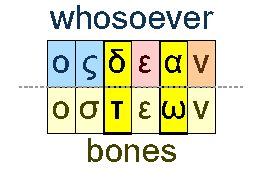
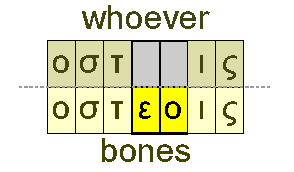
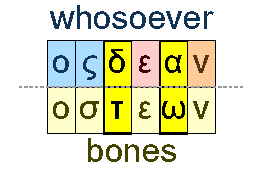
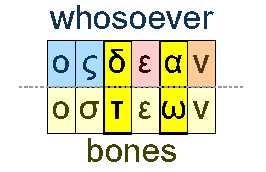
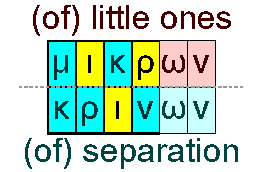
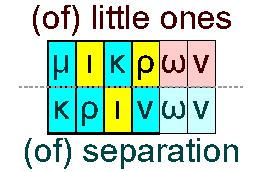
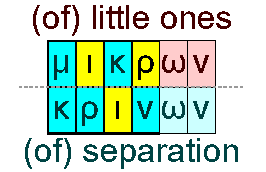
28. Matthew 18:6 Sea of the sea of the sea
Matthew 18:6 But whoso shall offend one of these little ones which believe in me, it were better for him that a millstone were hanged about his neck, and that he were drowned in the depth of the sea. [kjv]
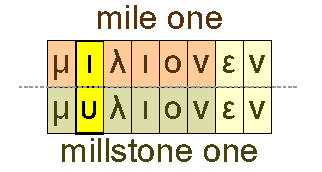
ος δ αν σκανδαλιση ενα των μικρων τουτων των πιστευοντων εις εμε συμφερει αυτω ινα κρεμασθη μυλος ονικος επι περι τον τραχηλον αυτου και καταποντισθη εν τω πελαγει της θαλασσης [gnt]
The following are
synonyms in Greek:
"πόντος" ≈ "sea" and
"πέλαγος" ≈ "sea" and
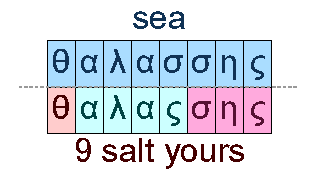
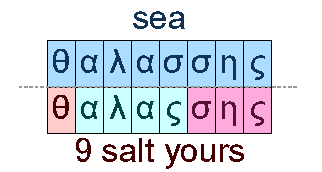
"θάλασσα" ≈ "sea". The verse does not mention "
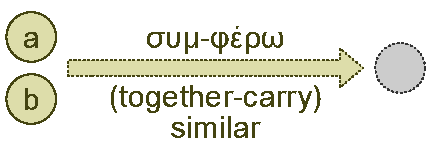
drowning". The idea is that of going in a downward direction. To carry two ideas together, this might be called the
"millstone" "entrapment" or
"deception".
Paraphrase:
... and sank down in the sea in the sea of the sea.
[the pit or abyss, Jonah going down, down, down,
one sheep going down the mountain]
[many chances - but keep sinking deeper]
29. Hellespont
The
ancient Greek word
"πόντος" ≈ "sea".
The
ancient Greek word
"ἡλεσπόντις" ≈ "Hellespont" refereed to the
Dardanelles and meant, literally,
"sea" of
"Helle", named after
"Helle", a daughter of King Athamas of Orchomenus in Boeotia.
The
"Hellespont" connected the
Aegean Sea and the
Black Sea, separating Europe and Asia. Both Xerxes I and Alexander the Great crossed the
"Hellespont".
The English word
"pontoon" comes, through French and Latin, from the Latin word
"ponto" ≈ "ferry boat" which comes from
"pons" ≈ "bridge" which is related to the Greek word.
30. Hellespont
|
|
|

USS Haynsworth
|
The English word
"strait" means "
narrow". How did the huge Persian army get across the Dardanelles?
For the Persian army to get from Asia Minor (Turkey) to Greek, it was necessary to cross over. The best places to do this is called the Dardanelles or the Bosporus (literally, "
cow crossing" in folk etymology). These crossing points separate the Aegean Sea and the Black Sea.
31. Psalms 52:4
Psalms 52:4 Thou lovest all devouring words, O thou deceitful tongue. [kjv]
ηγαπησας παντα τα ρηματα καταποντισμου γλωσσαν δολιαν [lxx]
32. Psalms 52:4
KJV: Thou lovest all devouring words, O thou deceitful tongue.
Hebrew: אהבת כל דברי בלע לשון מרמה׃
Greek: ηγαπησας παντα τα ρηματα καταποντισμου γλωσσαν δολιαν
33. Ecclesiastes 10:12
Ecclesiastes 10:12 The words of a wise man's mouth are gracious; but the lips of a fool will swallow up himself. [kjv]
λογοι στοματος σοφου χαρις και χειλη αφρονος καταποντιουσιν αυτον [lxx]
34. Ecclesiastes 10:12
KJV: The words of a wise man's mouth are gracious; but the lips of a fool will swallow up himself.
Hebrew: דברי פי חכם חן ושפתות כסיל תבלענו׃
Greek: λογοι στοματος σοφου χαρις και χειλη αφρονος καταποντιουσιν αυτον
35. Matthew 18:6 Sinking in the sea
Matthew 18:6 But whoso shall offend one of these little ones which believe in me, it were better for him that a millstone were hanged about his neck, and that he were drowned in the depth of the sea. [kjv]
ος δ αν σκανδαλιση ενα των μικρων τουτων των πιστευοντων εις εμε συμφερει αυτω ινα κρεμασθη μυλος ονικος επι περι τον τραχηλον αυτου και καταποντισθη εν τω πελαγει της θαλασσης [gnt]
The
ancient Greek word
"καταποντίζω" ≈ "sink in the sea" which could, in context, mean drowning, comes from two Greek words.
"κατά" ≈ "back, downwards, against, fully, completely" and "πόντος" ≈ "sea" (eye, bird).
The
ancient Greek word
"καταποντισθῇ" ≈ "sink in the sea" (as used) is a play on words with the Latin word
"pontifex" ≈ "pontiff". Both words have the same
PIE (Proto Indo-European) root meaning "
bridge".
36. Pontifex Maximus
Mark 15:11 But the chief priests moved the people, that he should rather release Barabbas unto them. [kjv]
οι δε αρχιερεις ανεσεισαν τον οχλον ινα μαλλον τον βαραββαν απολυση αυτοις [gnt]
pontifices … [v]
The Latin word
"pontifex maximus" ≈ "supreme pontiff" was a chief high priest in ancient Rome. The Latin word
"pontifex" ≈ "pontiff" comes from
"pons" ≈ "bridge" and
"facere" ≈ "maker". This office was a bridge between the gods and the people.
This title was revived by the Catholic Church in the Middle Ages. The name was inspired from the Latin word
"pontifices" ≈ "chief priests" in the Latin Vulgate, for example, in Mark 15:11. The Latin word appears many times in Hebrews where Jesus is the top-level pontiff. Would Jesus really covet that role (e.g., in a human hierarchy)?
The English word
"pontoon" comes, through French and Latin, from the Latin word
"ponto" ≈ "ferry boat" which comes from
"pons" ≈ "bridge".
37. Mark 15:11
KJV: But the chief priests moved the people, that he should rather release Barabbas unto them.
Greek: οι δε αρχιερεις ανεσεισαν τον οχλον ινα μαλλον τον βαραββαν απολυση αυτοις
Latin: pontifices autem concitaverunt turbam ut magis Barabban dimitteret eis
38. Pits and wells
Joseph gets put in a
"pit". Since a
"pit" usually had water in it, it is pointed out that there was no water in this
"pit".
Genesis 37:24 And they took him, and cast him into a pit: and the pit was empty, there was no water in it. [kjv]
και λαβοντες αυτον ερριψαν εις τον λακκον ο δε λακκος κενος υδωρ ουκ ειχεν [lxx]
Daniel 6:19 Then the king arose very early in the morning, and went in haste unto the den of lions. [kjv]
τοτε ο βασιλευς ανεστη το πρωι εν τω φωτι και εν σπουδη ηλθεν επι τον λακκον των λεοντων [lxx]
Well, a well is a
pit. There are many Greek words for a
pit or a
well.
It can be a source of water.
It can be dry, perhaps having been a source of water.
The ancient Greek word
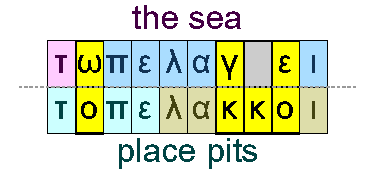
"λάκκος" ≈ "pond, cistern, pit" and is related to the English words
"lake" and
"loch" as in the
Loch Ness Monster. This is the pit into which Joseph and Daniel were thrown. The modern Greek word
"λάκκος" (LAK-kos) ≈ "pit".
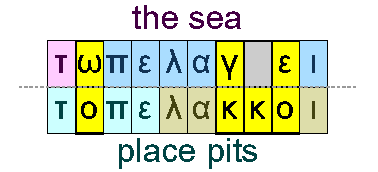
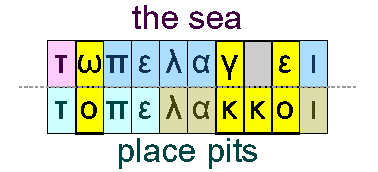
39. Matthew 18:6 Place of pits
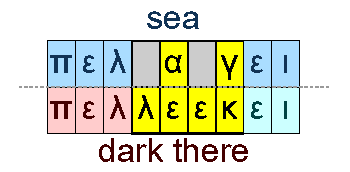
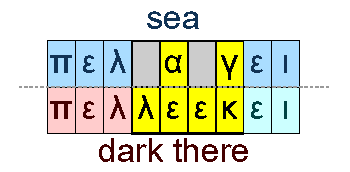
40. Matthew 18:6 Dark there
Matthew 18:6 But whoso shall offend one of these little ones which believe in me, it were better for him that a millstone were hanged about his neck, and that he were drowned in the depth of the sea. [kjv]
ος δ αν σκανδαλιση ενα των μικρων τουτων των πιστευοντων εις εμε συμφερει αυτω ινα κρεμασθη μυλος ονικος επι περι τον τραχηλον αυτου και καταποντισθη εν τω πελαγει της θαλασσης [gnt]
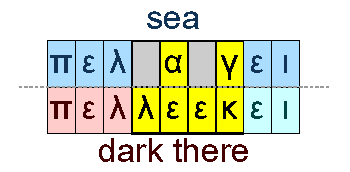
"πελάγει" ≈ "sea" from "πέλαγος" ≈ "sea".
"πελλέ" ≈ "dark-colored" (vocative) from "πελλός" ≈ "dark-colored".
"ἐκεῖ" ≈ "there, in that place"
Might the
"sinking down" in the
"sea" be a
"place" where it is
"dark" "there"?
41. Matthew 18:6 Sea
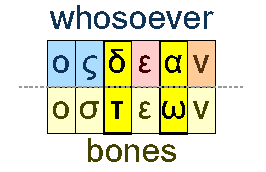
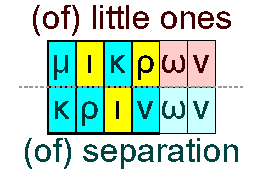
42. Other words
43. Matthew 18:6 Sinking in the sea of the sea of the sea
Matthew 18:6 But whoso shall offend one of these little ones which believe in me, it were better for him that a millstone were hanged about his neck, and that he were drowned in the depth of the sea. [kjv]
ος δ αν σκανδαλιση ενα των μικρων τουτων των πιστευοντων εις εμε συμφερει αυτω ινα κρεμασθη μυλος ονικος επι περι τον τραχηλον αυτου και καταποντισθη εν τω πελαγει της θαλασσης [gnt]
Might the
"sinking down" in the
"sea" be a
"place" of
"pits" or the "
abyss" where it is
"dark" "there"?
44. Matthew 18:6 Play on words
Matthew 18:6 But whoso shall offend one of these little ones which believe in me, it were better for him that a millstone were hanged about his neck, and that he were drowned in the depth of the sea. [kjv]
ος δ αν σκανδαλιση ενα των μικρων τουτων των πιστευοντων εις εμε συμφερει αυτω ινα κρεμασθη μυλος ονικος επι περι τον τραχηλον αυτου και καταποντισθη εν τω πελαγει της θαλασσης [gnt]
45. Matthew 18:7 Woe
Matthew 18:7 Woe unto the world because of offences! for it must needs be that offences come; but woe to that man by whom the offence cometh! [kjv]
ουαι τω κοσμω απο των σκανδαλων αναγκη γαρ εστιν ελθειν τα σκανδαλα πλην ουαι τω ανθρωπω εκεινω δι ου το σκανδαλον ερχεται [gnt]
The ancient Greek word
"οὐαί" ≈ "woe, alas" and can be associated as the sound of a
"bird" of "
prey", and perhaps, as a
false leader , a
"bird" of "
pray".
Perhaps a "
sheep" becomes a
"bird" or "
eye" or "
leader" to become
"greatest" to attract "
fish" or "
feet" or "
many" with their "
opinion" or "
candle" to a "
city" (that cannot be "
hid") on a "
mountain" . The
"bird" promotes "
pigs" or "
hands" as "
bad" "
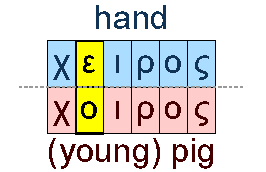
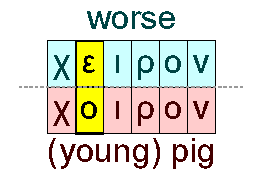
salt" to get in the way of sinners wanting to repent.
How should one deal with such a situation? Not to "
cut off" this inquiry now, but this is answered in a few verses.
46. Matthew 18:7 Translations
Matthew 18:7 Woe unto the world because of offences! for it must needs be that offences come; but woe to that man by whom the offence cometh! [kjv]
ουαι τω κοσμω απο των σκανδαλων αναγκη γαρ εστιν ελθειν τα σκανδαλα πλην ουαι τω ανθρωπω εκεινω δι ου το σκανδαλον ερχεται [gnt]
NIV (New International Version):
Woe to the world because of the things that cause people to stumble! Such things must come, but woe to the person through whom they come!
NLT (New Living Translation):
“What sorrow awaits the world, because it tempts people to sin. Temptations are inevitable, but what sorrow awaits the person who does the tempting.
Berean Literal Bible:
Woe to the world because of the causes of sin. For the stumbling blocks are necessary to come, but woe to the man by whom the offense comes!
Note: The Greek verse has no words in it for "
tempt", "
sin", "
cause". The Greek for "
stumbling block" (as used by Paul) is a different word. The
"compulsion" is translated as
"cause",
"inevitable",
"necessary" and the word order changed, if necessary, to fit the meaning change.
47. Matthew 18:7 Compulsion trap
Matthew 18:7 Woe unto the world because of offences! for it must needs be that offences come; but woe to that man by whom the offence cometh! [kjv]
ουαι τω κοσμω απο των σκανδαλων αναγκη γαρ εστιν ελθειν τα σκανδαλα πλην ουαι τω ανθρωπω εκεινω δι ου το σκανδαλον ερχεται [gnt]
The word
"woe" in Greek is that of a
"bird" of prey sound.
The TR adds the word "be", adds some connecting words, and rearranges some words.
"ἀπό" ≈ "away from" as in "from" but with an idea of a separating distance.
"σκάνδαλον" ≈ "trap, snare" and is used as a noun, three times in this verse and once in the previous verse.
"ανάγκη" ≈ "necessity, constraint, compulsion, force" and is used as a noun. The word is associated with the "yoke" of "compulsion" by Amos, Isaiah, Jesus, Barnabas, etc.
"πλήν" ≈ "with the exception of, except for".
48. Matthew 18:7
Matthew 18:7 Woe unto the world because of offences! for it must needs be that offences come; but woe to that man by whom the offence cometh! [kjv]
ουαι τω κοσμω απο των σκανδαλων αναγκη γαρ εστιν ελθειν τα σκανδαλα πλην ουαι τω ανθρωπω εκεινω δι ου το σκανδαλον ερχεται [gnt]
Thus, the
compound noun is that of a
"compulsion" "trap" or
"trap" of
"compulsion". Jesus talks of this in the Sermon on the Mount in terms of the
dead "
gift" "
on" top of the "
alter" (
"trap" of
"compulsion") and the
living "
gift" "
in front of" the "
alter".
The
modern Greek word
"πλην" (pleen) ≈ "except for" and is used as a "
minus sign" for the subtraction operation as in
5 "except for" 3 is
2.
49. Matthew 18:7 Compulsion trap
Matthew 18:7 Woe unto the world because of offences! for it must needs be that offences come; but woe to that man by whom the offence cometh! [kjv]
ουαι τω κοσμω απο των σκανδαλων αναγκη γαρ εστιν ελθειν τα σκανδαλα πλην ουαι τω ανθρωπω εκεινω δι ου το σκανδαλον ερχεται [gnt]
Paraphrase:
Woe (with respect to) the (people in the) world apart from the trap of compulsion because the entrapments come (but) with the exception of woe (with respect to) the man through whom [not] the entrapment comes.
This appears to provide an
out of sorts to those who have been
"entrapped" by the
"compulsion" provided they do the other things that they are expected by Jesus to do. This would be the "
sheep".
However, this does not appear to provide an
out to those who have supported or promoted the
"compulsion" "entrapments". This would be the
"birds" and "
pigs". What Jesus says about "
idle words" might explain how ambiguity of intention is disambiguated.
[woe as a bird of prey cry, gift on the alter, last farthing]
50. Matthew 10:29 Not one sparrow
Matthew 10:29 Are not two sparrows sold for a farthing? and one of them shall not fall on the ground without your Father. [kjv]
ουχι δυο στρουθια ασσαριου πωλειται και εν εξ αυτων ου πεσειται επι την γην ανευ του πατρος υμων [gnt]
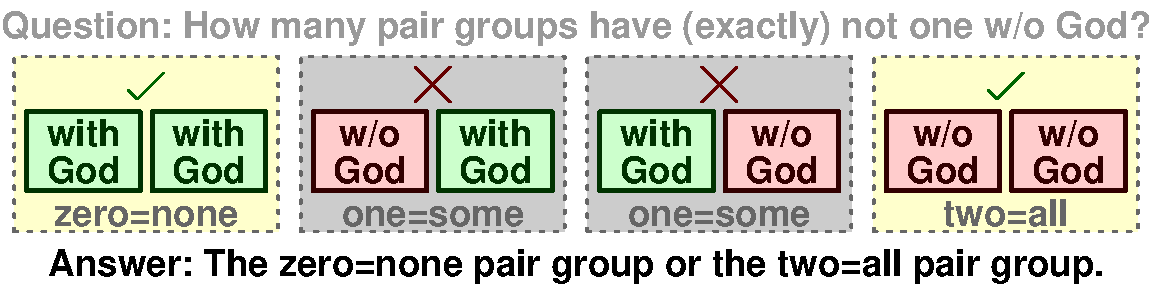
Here then is a paraphrase that fits the specific context of the verse and the general idea of birds being the of the evil one.
The "
one cookie rule" can be applied here.
Paraphrase:
All the sparrows (of the evil one) who sell themselves (or others) out for earthly gain will fall on that earthly ground because they are without God the Father.
Discuss: Provide instances of people (as sparrows) selling themselves (or others) out for money. This could be influence peddling, pay for play, etc.
51. Matthew 10:28 Soul and body
Matthew 10:28 And fear not them which kill the body, but are not able to kill the soul: but rather fear him which is able to destroy both soul and body in hell. [kjv]
και μη φοβηθητε φοβεισθε απο των αποκτεινοντων το σωμα την δε ψυχην μη δυναμενων αποκτειναι φοβηθητε φοβεισθε δε μαλλον τον δυναμενον και ψυχην και σωμα απολεσαι εν γεεννη [gnt]
Jesus tells us that the "
body" and the "
soul" are different. Jesus tells us who we should
"fear" and it is not
"fear" about the
cares and
concerns of this world. The most dangerous attacks are not from the outside but from the inside and involve
deception.
One cannot "
destroy the soul" by
"killing" the body is in persecution (e.g., by the Roman administrations). The primary way to
"destroy" the "
soul" is through
deception so that you "
sell yourself out" or are "
sold out".
Jesus provides an example in the
next verse.
52. Matthew 10:29-31 Soul and body
Matthew 10:29 Are not two sparrows sold for a farthing? and one of them shall not fall on the ground without your Father. [kjv]
ουχι δυο στρουθια ασσαριου πωλειται και εν εξ αυτων ου πεσειται επι την γην ανευ του πατρος υμων [gnt]
10:30 But the very hairs of your head are all numbered. [kjv]
υμων δε και αι τριχες της κεφαλης πασαι ηριθμημεναι εισιν [gnt]
10:31 Fear ye not therefore, ye are of more value than many sparrows. [kjv]
μη ουν φοβηθητε φοβεισθε πολλων στρουθιων διαφερετε υμεις [gnt]
Discuss: [killing me softly with his song]
How might "sparrows" (birds of the evil one) deceive to "destroy the soul" in order to achieve "earthly gain" (money) by "selling out"?
Do "sparrows" succeed because those being deceived do not "understand"? This is what Jesus says of the birds in the Parable of the Sower in Matthew 13.
Have those "deceived" separated themselves from the love of Christ?
53. Strongs - compulsion
- *G318 *17 ἀναγκή (an-ang-kay') : from G303 and the base of G43; constraint (literally or figuratively); by implication, distress:--distress, must needs, (of) necessity(-sary), needeth, needful.
- αναγκη *7
- Matthew 18:7 ... of offences! for it must needs be that offences ...
- Luke 21:23 ... for there shall be great distress in the land, and ...
- Romans 13:5 Wherefore ye must needs be subject, not only for ...
- 1 Corinthians 9:16 ... nothing to glory of: for necessity is laid upon me; yea, ...
- 1 Thessalonians 3:7 ... our affliction and distress by your faith:
- Hebrews 9:16 For where a testament is, there must also of necessity be the death of the testator.
- Hebrews 9:23 It was therefore necessary that the patterns of things in the heavens ...
- αναγκην *6
- Luke 14:18 ... I have bought a piece of ground, and I must needs go and see ...
- 1 Corinthians 7:26 ... good for the present distress, I say, that it is good for a man ...
- 1 Corinthians 7:37 ... his heart, having no necessity, but hath power ...
- Philemon 1:14 ... be as it were of necessity, but willingly.
- Hebrews 7:27 Who needeth not daily, as those high priests, ...
- Jude 1:3 ... the common salvation, it was needful for me to write unto you, ...
- αναγκαις *2
- 2 Corinthians 6:4 ... in afflictions, in necessities, in distresses,
- 2 Corinthians 12:10 ... in reproaches, in necessities, in persecutions, in ...
- αναγκης *2
- 2 Corinthians 9:7 ... grudgingly, or of necessity: for God loveth ...
- Hebrews 7:12 ... being changed, there is made of necessity a change also of the law.
54. Usage - compulsion
*G318 *17 ἀναγκή (an-ang-kay') : from G303 and the base of G43; constraint (literally or figuratively); by implication, distress:--distress, must needs, (of) necessity(-sary), needeth, needful.
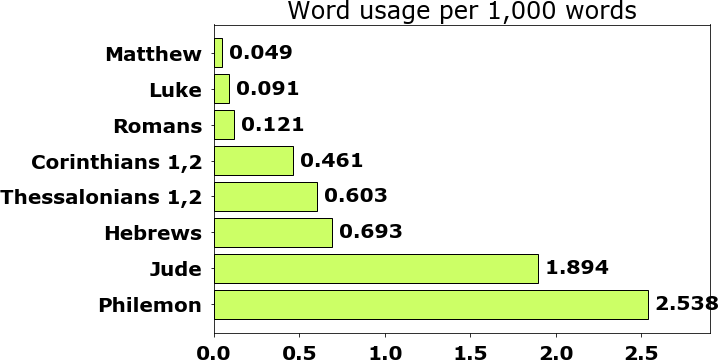 |
Words: αναγκαις=2 αναγκη=7 αναγκην=6 αναγκης=2
|
"ανάγκη" ≈ "necessity, constraint, compulsion, force" and is used as a
noun. The word is associated with the "
yoke" of
"compulsion" by Amos, Isaiah, Jesus, Barnabas, etc.
Since the
KJV (King James Version) sometimes translates this word as
"distress" those verses may not mean exactly what they appear to mean in the English.
 |
Details are left as a future topic.
|
55. Matthew 18:8 Good or better
Matthew 18:8 Wherefore if thy hand or thy foot offend thee, cut them off, and cast them from thee: it is better for thee to enter into life halt or maimed, rather than having two hands or two feet to be cast into everlasting fire. [kjv]
ει δε η χειρ σου η ο πους σου σκανδαλιζει σε εκκοψον αυτα αυτον και βαλε απο σου καλον σοι εστιν εισελθειν εις την ζωην χωλον η κυλλον η χωλον η δυο χειρας η δυο ποδας εχοντα βληθηναι εις το πυρ το αιωνιον [gnt]
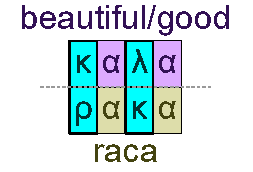
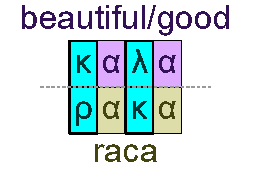
What is
"good" to do? How might this be
"raca"?
- The "hand" refers to the "pig" (muscle) who works for the "bird".
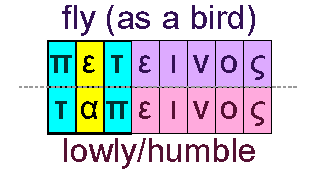
- The "foot" refers to the "fish" attracted by the "bird" to a "city" on a "hill" that cannot be "hid" (in a not good sense).
56. Matthew 18:9 Good or better
Matthew 18:9 And if thine eye offend thee, pluck it out, and cast it from thee: it is better for thee to enter into life with one eye, rather than having two eyes to be cast into hell fire. [kjv]
και ει ο οφθαλμος σου σκανδαλιζει σε εξελε αυτον και βαλε απο σου καλον σοι εστιν μονοφθαλμον εις την ζωην εισελθειν η δυο οφθαλμους εχοντα βληθηναι εις την γεενναν του πυρος [gnt]
What is
"good" to do? How might this be
"raca"?
- The "eye" refers to the "leader". In the case of a false "leader" it is a "bird".
57. Strongs - thrown
*G906 *125 βάλλω (bal'-lo) : a primary verb; to throw (in various applications, more or less violent or intense):--arise, cast (out), X dung, lay, lie, pour, put (up), send, strike, throw (down), thrust. Compare G4496.
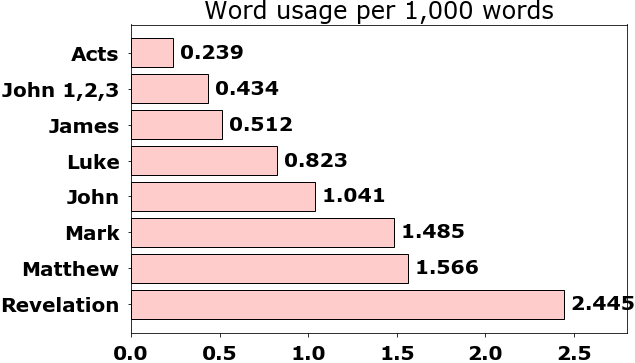 |
Words: αμφιβαλλοντας βαλε=9 βαλει βαλειν=9 βαλετε βαλετω=2 βαλη=2 βαλητε βαλλει=5 βαλλεται=3 βαλλομεν βαλλομενα βαλλομενον=2 βαλλοντας=2 βαλλοντες βαλλοντων=2 βαλλουσα βαλλουσαν βαλλουσιν=4 βαλλω=2 βαλοντες βαλουσα βαλουσιν=3 βαλω=3 βαλωσιν βεβληκεν βεβληκοτος βεβλημενην βεβλημενον=3 βεβλημενος βεβληται=2 βληθεις βληθειση βληθεν βληθη βληθηναι=4 βληθησεται βληθηση βληθητι=2 εβαλαν εβαλεν=21 εβαλλον εβαλον=8 εβεβλητο εβληθη=9 εβληθησαν=3
|
58. Matthew 18:8 Cast into oblivion yes
Matthew 18:8 Wherefore if thy hand or thy foot offend thee, cut them off, and cast them from thee: it is better for thee to enter into life halt or maimed, rather than having two hands or two feet to be cast into everlasting fire. [kjv]
ει δε η χειρ σου η ο πους σου σκανδαλιζει σε εκκοψον αυτα αυτον και βαλε απο σου καλον σοι εστιν εισελθειν εις την ζωην χωλον η κυλλον η χωλον η δυο χειρας η δυο ποδας εχοντα βληθηναι εις το πυρ το αιωνιον [gnt]
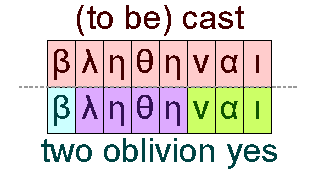
- "βληθῆναι" ≈ "to be cast" (as used).
- "β" ≈ "two" (number) and "λήθη" ≈ "oblivion, forgetfulness" and "ναι" ≈ "yes".
In each case where Jesus uses this word there are
"two" going into
"oblivion" "yes".
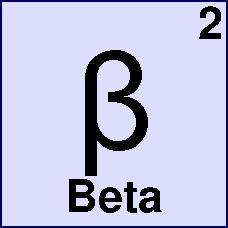
The numeric value of
"β" ≈ "beta" was
two. The
ancient Greek word
"βάλλω" ≈ "throw" which is the source of the English word
"ballistic".
59. Usage - thrown
60. Matthew 18:8 Disjunction parsing
Matthew 18:8 Wherefore if thy hand or thy foot offend thee, cut them off, and cast them from thee: it is better for thee to enter into life halt or maimed, rather than having two hands or two feet to be cast into everlasting fire. [kjv]
ει δε η χειρ σου η ο πους σου σκανδαλιζει σε εκκοψον αυτα αυτον και βαλε απο σου καλον σοι εστιν εισελθειν εις την ζωην χωλον η κυλλον η χωλον η δυο χειρας η δυο ποδας εχοντα βληθηναι εις το πυρ το αιωνιον [gnt]
The
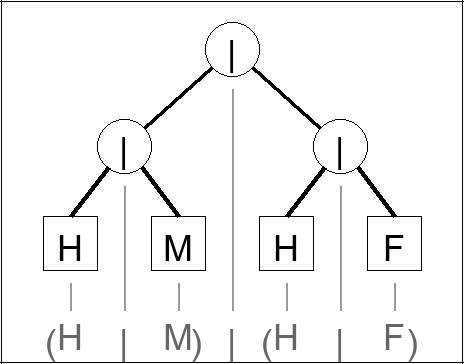
disjunctions need an appropriate
parsing.
Greek:
... enter into the life halt or maimed or two hands or two feet having been thrown into the fire (of) the ages.
- (halt or maimed) or (two hands or two feet)
- (halt or maimed or two hands) or two feet
- halt or (maimed or two hands or two feet)
61. Matthew 7:14
KJV: Because strait is the gate, and narrow is the way, which leadeth unto life, and few there be that find it.
Greek: οτι στενη η πυλη και τεθλιμμενη η οδος η απαγουσα εις την ζωην και ολιγοι εισιν οι ευρισκοντες αυτην
62. Strongs - maimed
63. Usage - maimed
- *G2948 *4 κυλλός (kool-los') : from the same as G2947; rocking about, i.e. crippled (maimed, in feet or hands):--maimed.
κυλλους *2
Matthew 15:30 ... those that were lame, blind, dumb, maimed, and many others, ...
Matthew 15:31 ... when they saw the dumb to speak, the maimed to be whole, the lame to walk, ...
κυλλον *2
Matthew 18:8 ... life halt or maimed, rather than having two ...
Mark 9:43 And if thy hand offend thee, cut it off: it is better for thee to enter into life maimed, than having two hands to go into hell, into the fire that never shall be quenched:
64. Matthew 18:8 Maimed and Lord
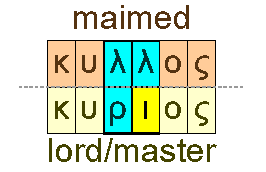
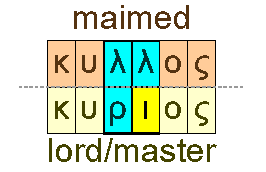
Matthew 18:8 Wherefore if thy hand or thy foot offend thee, cut them off, and cast them from thee: it is better for thee to enter into life halt or maimed, rather than having two hands or two feet to be cast into everlasting fire. [kjv]
ει δε η χειρ σου η ο πους σου σκανδαλιζει σε εκκοψον αυτα αυτον και βαλε απο σου καλον σοι εστιν εισελθειν εις την ζωην χωλον η κυλλον η χωλον η δυο χειρας η δυο ποδας εχοντα βληθηναι εις το πυρ το αιωνιον [gnt]
- Do you want to go through life with "one" "lord/master"?
65. Matthew 18:8
Matthew 18:8 Wherefore if thy hand or thy foot offend thee, cut them off, and cast them from thee: it is better for thee to enter into life halt or maimed, rather than having two hands or two feet to be cast into everlasting fire. [kjv]
ει δε η χειρ σου η ο πους σου σκανδαλιζει σε εκκοψον αυτα αυτον και βαλε απο σου καλον σοι εστιν εισελθειν εις την ζωην χωλον η κυλλον η χωλον η δυο χειρας η δυο ποδας εχοντα βληθηναι εις το πυρ το αιωνιον [gnt]
The
ancient Greek word
"χωλός" ≈ "lame, limping". Figuratively, it meant maimed, imperfect, defective, etc.
- "κῶλον" ≈ "part of something, member, leg/arm". Synonym is "μέλος" ≈ "member".
- "κόλον" ≈ "colon"
66. Matthew 18:9 Members
Matthew 18:9 And if thine eye offend thee, pluck it out, and cast it from thee: it is better for thee to enter into life with one eye, rather than having two eyes to be cast into hell fire. [kjv]
και ει ο οφθαλμος σου σκανδαλιζει σε εξελε αυτον και βαλε απο σου καλον σοι εστιν μονοφθαλμον εις την ζωην εισελθειν η δυο οφθαλμους εχοντα βληθηναι εις την γεενναν του πυρος [gnt]
Jesus avoids using the word
"one" in this verse. Doing so would break the pattern model. Jesus then uses (makes up) the ancient Greek word
"μονόφθαλμον" ≈ "one-eyed" rather than the more usual
"one" "eye" or
"eye" "one". In this discourse, the word
"one" has an important secondary meaning and using the word for
"one" with
"eye" in this verse would
not match the pattern model.
67. Enter into or go away from into the life
Matthew 18:8 … for thee to enter into life halt or maimed, … [kjv]
… εστιν εισελθειν εις την ζωην χωλον η κυλλον η χωλον … [gnt]
7:14 Because strait is the gate, and narrow is the way, which leadeth unto life, and few there be that find it. [kjv]
οτι στενη η πυλη και τεθλιμμενη η οδος η απαγουσα εις την ζωην και ολιγοι εισιν οι ευρισκοντες αυτην [gnt]
| Matthew |
18:8 |
Matthew |
7:14 |
| English |
Greek |
Greek |
English |
| goes into |
εἰσελθεῖν |
**ἀπάγουσα |
leads away from |
| into |
εἰς |
εἰς |
into |
| *the |
τὴν |
τὴν |
*the |
| life |
ζωὴν |
ζωὴν |
life |
|
*
omitted in many English translations.
**translated as
"leads into"
68. Matthew 18:8-9 Into life
Matthew 18:8 Wherefore if thy hand or thy foot offend thee, cut them off, and cast them from thee: it is better for thee to enter into life halt or maimed, rather than having two hands or two feet to be cast into everlasting fire. [kjv]
ει δε η χειρ σου η ο πους σου σκανδαλιζει σε εκκοψον αυτα αυτον και βαλε απο σου καλον σοι εστιν εισελθειν εις την ζωην χωλον η κυλλον η χωλον η δυο χειρας η δυο ποδας εχοντα βληθηναι εις το πυρ το αιωνιον [gnt]
18:9 And if thine eye offend thee, pluck it out, and cast it from thee: it is better for thee to enter into life with one eye, rather than having two eyes to be cast into hell fire. [kjv]
και ει ο οφθαλμος σου σκανδαλιζει σε εξελε αυτον και βαλε απο σου καλον σοι εστιν μονοφθαλμον εις την ζωην εισελθειν η δυο οφθαλμους εχοντα βληθηναι εις την γεενναν του πυρος [gnt]
Twice it
two successive verses Jesus says, and appears to mean,
"enter" "into" "
the"
"life".
69. Matthew 18:10 Touched by an angel
Matthew 18:10 Take heed that ye despise not one of these little ones; for I say unto you, That in heaven their angels do always behold the face of my Father which is in heaven. [kjv]
ορατε μη καταφρονησητε ενος των μικρων τουτων λεγω γαρ υμιν οτι οι αγγελοι αυτων εν ουρανοις δια παντος βλεπουσιν το προσωπον του πατρος μου του εν ουρανοις [gnt]

It appears that
"little ones" as
"believers" have
"angels" as
"messengers", etc. The "
walk a mile" verse is of being a
"messenger" of God.
The verse applies both to "
you" as the
"one" (reflexively)
and (then) to "
others". What is the nature of any resulting communication as facilitated by the "
messenger" or "
angel"?
☐ Messages from "
child" to the "
Father".
☐ Messages from the "
Father" to the "
child".
Is "
seeing" the "
face" a "
message"? Explain. Consider the parable of the unforgiving servant. How might the lord have found out about how the servant he forgave is despising a fellow servant?
70. Matthew 18:10
Matthew 18:10 Take heed that ye despise not one of these little ones; for I say unto you, That in heaven their angels do always behold the face of my Father which is in heaven. [kjv]
ορατε μη καταφρονησητε ενος των μικρων τουτων λεγω γαρ υμιν οτι οι αγγελοι αυτων εν ουρανοις δια παντος βλεπουσιν το προσωπον του πατρος μου του εν ουρανοις [gnt]
Might
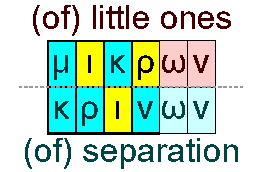
"the little ones" be those who have
"separated" themselves in some way? They could have been
"separated" from the beginning.
- Might you "despise" a "little child"?
- Might you "despise" those who have "separated" themselves by "wandering"?
- Should you "let go" or "forgive"? Is that an idea of this chapter/discourse?
71. Matthew 18:10
Matthew 18:10 Take heed that ye despise not one of these little ones; for I say unto you, That in heaven their angels do always behold the face of my Father which is in heaven. [kjv]
ορατε μη καταφρονησητε ενος των μικρων τουτων λεγω γαρ υμιν οτι οι αγγελοι αυτων εν ουρανοις δια παντος βλεπουσιν το προσωπον του πατρος μου του εν ουρανοις [gnt]
- Is it possible for "you" to "despise" yourself as the separated "little one"?
- Is it possible for you to "despise" someone else as the separated "little one"?
- Do those in churches sometimes "despise" those who have been shunned or separated from the church in some way?
The ancient Greek word
"καταφρόνησις" ≈ "hold in contempt, despise" is used in only one other place in Matthew by Jesus - in the verse on "
mammon". Note that this can be done without the other person knowing. False leaders, false teachers, etc., will show an outward appearance that is
different from their heart on the inside.
72. Strongs - despise
*G2706 *9 καταφρονέω (kat-af-ron-eh'-o) : from G2596 and G5426; to think against, i.e. disesteem:--despise.
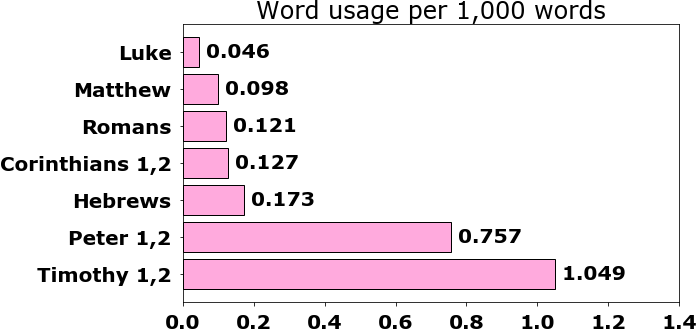 |
Words: καταφρονεις καταφρονειτε καταφρονειτω καταφρονειτωσαν καταφρονησας καταφρονησει=2 καταφρονησητε καταφρονουντας
|
The ancient Greek word
"καταφρόνησις" ≈ "hold in contempt, despise".
Note that this can be done without the other person knowing. False leaders, false teachers, etc., will show an outward appearance that is
different from their "
heart" on the "
inside" or "
secret chambers". This "
pretending" or "
acting" is captured in the Greek word for "
hypocrite".
73. Usage - despise
- *G2706 *9 καταφρονέω (kat-af-ron-eh'-o) : from G2596 and G5426; to think against, i.e. disesteem:--despise.
- καταφρονησει *2
- Matthew 6:24 ... he will hold to the one, and despise the other. Ye cannot serve ...
- Luke 16:13 ... he will hold to the one, and despise the other. Ye cannot serve ...
- καταφρονησητε
- Matthew 18:10 Take heed that ye despise not one of these ...
- καταφρονεις
- Romans 2:4 Or despisest thou the riches of his goodness and ...
- καταφρονειτε
- 1 Corinthians 11:22 ... and to drink in? or despise ye the church of God, and ...
- καταφρονειτω
- 1 Timothy 4:12 Let no man despise thy youth; but ...
- καταφρονειτωσαν
- 1 Timothy 6:2 ... believing masters, let them not despise them, because they are ...
- καταφρονησας
- Hebrews 12:2 ... him endured the cross, despising the shame, and is set down ...
- καταφρονουντας
- 2 Peter 2:10 ... the lust of uncleanness, and despise government. Presumptuous are they, selfwilled, ...
74. Matthew 6:24 A wealth of logical ideas on mammon
Matthew 6:24 No man can serve two masters: for either he will hate the one, and love the other; or else he will hold to the one, and despise the other. Ye can not serve God and mammon. [kjv]
ουδεις δυναται δυσιν κυριοις δουλευειν η γαρ τον ενα μισησει και τον ετερον αγαπησει η ενος ανθεξεται και του ετερου καταφρονησει ου δυνασθε θεω δουλευειν και μαμμωνα μαμωνα [gnt]
Jesus points out, in context,
two mutually exclusive choices: God vs.
"mammon".
- true Father God, rock.
- false Mother (harlot) god (mammon), sand.
The historical usage of
"mammon" in Hebrew is that of a confidence in one's own ability to do things (independent of God). That is a central idea of
humanism. The modern Hebrew definition is that of "
wealth".
75. Little ones
Do the verses in Matthew 18:6-10 make sense for little children? How about adults? Can they be tempted or ensnared too?
The entire chapter of Matthew 18 is that of the members of the body of the church.
Do the verses in question make sense for newer members of the church? How about older members? Can they be tempted or ensnared too?
76. Matthew 18:11 Added verse
Matthew 18:11 For the Son of man is come to save that which was lost. [kjv]
ηλθεν γαρ ο υιος του ανθρωπου σωσαι το απολωλος [gnt]
The
TR adds this verse. As often happens, the addition breaks the overall pattern of the other verses.
77. Matthew 18:11
KJV: For the Son of man is come to save that which was lost.
Greek: ηλθεν γαρ ο υιος του ανθρωπου σωσαι το απολωλος
78. Matthew 18:12-14 Sheep astray downward from the mountains
Matthew 18:12 How think ye? if a man have an hundred sheep, and one of them be gone astray, doth he not leave the ninety and nine, and goeth into the mountains, and seeketh that which is gone astray? [kjv]
18:13 And if so be that he find it, verily I say unto you, he rejoiceth more of that sheep, than of the ninety and nine which went not astray. [kjv]
Why did the chicken cross the road?
To get to the other side. And many other answers.
- Why did the one sheep go "astray"?
- Why is there such "joy" for that one "sheep" "more" than the others?
- Did the lost "sheep" ever change behavior?
How might a typical attractive refrigerator magnet sermon for these verses go?
79. Matthew 18:15-17 Conflicting and faulty resolutions
Matthew 18:15 Moreover if thy brother shall trespass against thee, go and tell him his fault between thee and him alone: if he shall hear thee, thou hast gained thy brother. [kjv]
18:16 But if he will not hear thee, then take with thee one or two more, that in the mouth of two or three witnesses every word may be established. [kjv]
18:17 And if he shall neglect to hear them, tell it unto the church: but if he neglect to hear the church, let him be unto thee as an heathen man and a publican. [kjv]
Whenever there is a group of humans in close proximity, there will be conflict. In any distributed system, whether human or machine, there should be a conflict resolution protocol.
Jesus presents a fault tolerant conflict resolution protocol for groups of believers. The world has taken the opposite approach to conflict resolution within organizations.
The
"against thee" and
"his fault" were added in the
TR.
Omitting these words puts what Jesus says in line with the Lord's Prayer and the following verses on church conflict.
Including them creates some logical continuity issues.
80. End of page














 The ancient Greek word "συμφέρω" ≈ "bring together, work with, to be carried along with" and means, literally, "carry together".