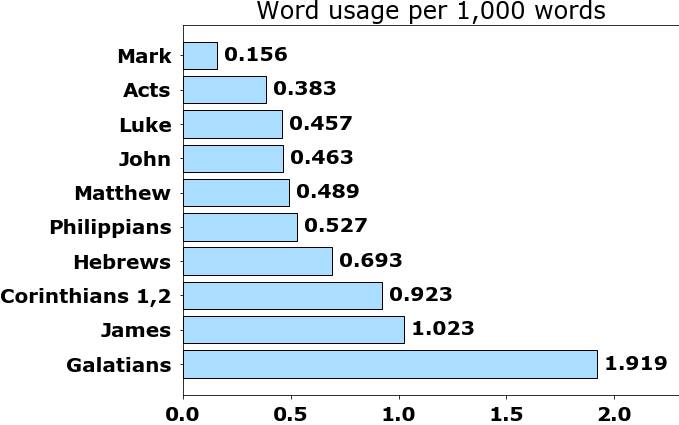
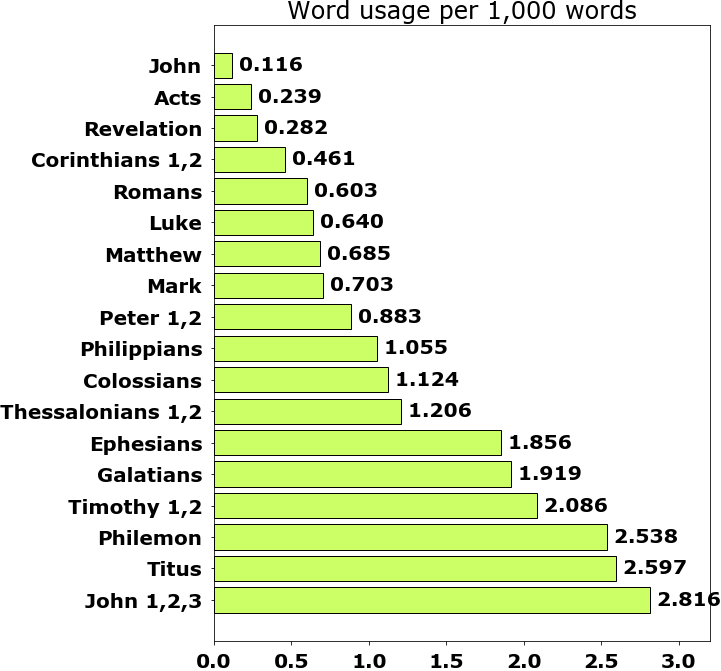
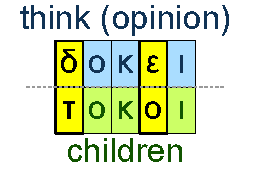
- *G5043 *98 τέκνον (tek'-non) : from the base of G5098; a child (as produced):--child, daughter, son.
- τεκνον *16 of 98
- Matthew 9:2 ... faith said unto the sick of the palsy; Son, be of good cheer; thy sins ...
- Matthew 10:21 ... and the father the child: and the children shall rise up against ...
- Matthew 21:28 ... had two sons; and he came to the first, and said, Son, go work ...
- Mark 2:5 ... faith, he said unto the sick of the palsy, Son, thy sins be forgiven thee.
- Mark 12:19 ... behind him, and leave no children, that his brother ...
- Mark 13:12 ... and the father the son; and children shall rise up against ...
- Luke 1:7 And they had no child, because that Elisabeth was ...
- Luke 2:48 ... said unto him, Son, why hast thou thus ...
- Luke 15:31 And he said unto him, Son, thou art ever ...
- Luke 16:25 But Abraham said, Son, remember that thou ...
- 1 Corinthians 4:17 ... is my beloved son, and faithful in ...
- Philippians 2:22 ... of him, that, as a son with the father, he hath served with ...
- 1 Timothy 1:18 This charge I commit unto thee, son Timothy, according to the prophecies ...
- 2 Timothy 2:1 Thou therefore, my son, be strong in the grace ...
- Revelation 12:4 ... for to devour her child as soon as it was born.
- Revelation 12:5 ... of iron: and her child was caught up unto God, ...
21. Matthew 10:21 Children
22. Isaiah 54:13
Isaiah 54:13 And all thy children shall be taught of the LORD; and great shall be the peace of thy children. [kjv]
και παντας τους υιους σου διδακτους θεου και εν πολλη ειρηνη τα τεκνα σου [lxx]
 |
Details are left as a future topic.
|
23. Isaiah 54:13
KJV: And all thy children shall be taught of the LORD; and great shall be the peace of thy children.
Hebrew: וכל בניך למודי יהוה ורב שלום בניך׃
Greek: και παντας τους υιους σου διδακτους θεου και εν πολλη ειρηνη τα τεκνα σου
24. Matthew 21:28 Two technical children
Matthew 21:28 But what think ye? A certain man had two sons; and he came to the first, and said, Son, go work to day in my vineyard. [kjv]
τι δε υμιν δοκει ανθρωπος ειχεν τεκνα δυο και προσελθων τω πρωτω ειπεν τεκνον υπαγε σημερον εργαζου εν τω αμπελωνι μου [gnt]
This is
not the usual word for
"son" or
"sons".
The
ancient Greek word
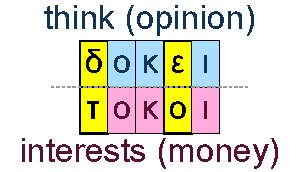
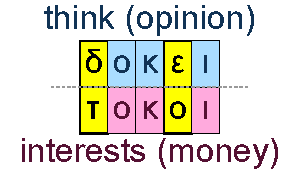
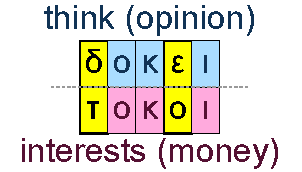
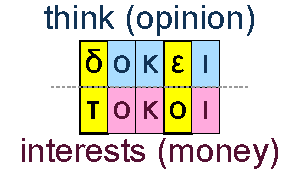
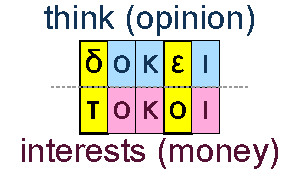
"τόκος" ≈ "childbirth, interest (loan), oppression" and is a semantic loan word from the Hebrew
"תור" ≈ "mediate/oppress". It is from
"τίκτω" ≈ "beget, bear, produce, generate" and is cognate with
"τέκνον" ≈ "child, offspring",
"τέκτων" ≈ "builder" as in "
architect" or "
carpenter" and
"τέχνη" ≈ "craft" as in
"technical".
25. Matthew 21:28 Man and two children
Matthew 21:28 But what think ye? A certain man had two sons; and he came to the first, and said, Son, go work to day in my vineyard. [kjv]
τι δε υμιν δοκει ανθρωπος ειχεν τεκνα δυο και προσελθων τω πρωτω ειπεν τεκνον υπαγε σημερον εργαζου εν τω αμπελωνι μου [gnt]
The
KJV (King James Version) adds
"certain".
Who is the "man"? Who are the "two" "children"?
The ancient Greek word
"δύο" ≈ "two". This is
not the usual word for
"son" or
"sons" but indicates a younger
"child" or
"children".
... a man had two children ...
26. Matthew 21:28 Work today
Matthew 21:28 But what think ye? A certain man had two sons; and he came to the first, and said, Son, go work to day in my vineyard. [kjv]
τι δε υμιν δοκει ανθρωπος ειχεν τεκνα δυο και προσελθων τω πρωτω ειπεν τεκνον υπαγε σημερον εργαζου εν τω αμπελωνι μου [gnt]
The ancient Greek word
"ἔργον" (er-gon) ≈ "work" is the source of the physics term
"erg" for work and is related to many other
PIE words for
"work".
The
"man" says to
"work" "today" and not some indefinite time in the future. In the previous chapter,
"workers", hired at various times during the (same) day,
"work" in the
"vineyard".
The ancient Greek word
"σήμερον" ≈ "today" from
"ἡμέρα" ≈ "day".
27. The dream of delayed procrastination
Never put off till tomorrow, what you can do the day after tomorrow.
Mark Twain (Author and Humorist, alias Samuel Clemens)
Modern saying:
I used to crastinate. I got so good at it I decided to go pro. [eager vs. lazy evaluation]
Can one reason
backwards in time?
Today, I'm doing nothing because I started doing it yesterday and I wasn't finished.
Don't give up on dreams. Go back to bed.
Why was the funeral for the man who invented Tupperware delayed?
It took a while to find the right lid for his coffin. While you are coughing (coffin) about this joke, you are probably thinking I should put a lid on it. [small basket as a coffin]
28. First things first
The ancient Greek word
"πρῶτον" ≈ "first" and is the source of English words such as "
prototype". Jesus uses the Greek word for
"first" three times in the Sermon on the Mount. In each case, upon analysis, there is a
"first" step but the "
second" step, if any, deviates from what you might otherwise expect. The ancient Greek word
"αυτου" ≈ "his, it".
Matthew 6:33 But seek ye first the kingdom of God, and his righteousness; and all these things shall be added unto you. [kjv]
ζητειτε δε πρωτον την βασιλειαν του θεου και την δικαιοσυνην αυτου και ταυτα παντα προστεθησεται υμιν [gnt]
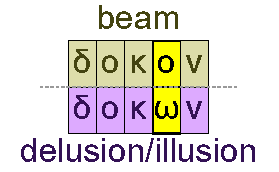
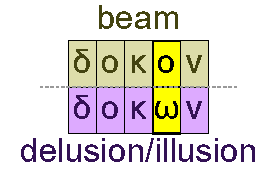
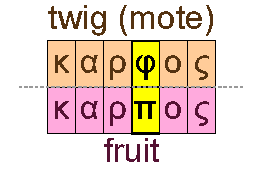
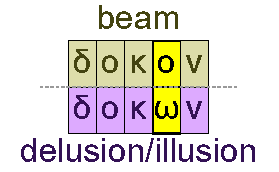
7:5 Thou hypocrite, first cast out the beam out of thine own eye; and then shalt thou see clearly to cast out the mote out of thy brother's eye. [kjv]
υποκριτα εκβαλε πρωτον την δοκον εκ του οφθαλμου σου την δοκον και τοτε διαβλεψεις εκβαλειν το καρφος εκ του οφθαλμου του αδελφου σου [gnt]
29. Matthew 21:28 First
Matthew 21:28 But what think ye? A certain man had two sons; and he came to the first, and said, Son, go work to day in my vineyard. [kjv]
τι δε υμιν δοκει ανθρωπος ειχεν τεκνα δυο και προσελθων τω πρωτω ειπεν τεκνον υπαγε σημερον εργαζου εν τω αμπελωνι μου [gnt]
The ancient Greek word
"πρῶτον" ≈ "first" and is the source of English words such as "
prototype".
The "
parable" of the
"workers" in the
"vineyard" is in the previous chapter. In that "
parable", the "
ones" that were
"first" were the "
ones" that "
complained". They had apparently created an infrastructure (house of sand) and attracted a following to make them great (in their own eyes).
30. TenWordPin summary
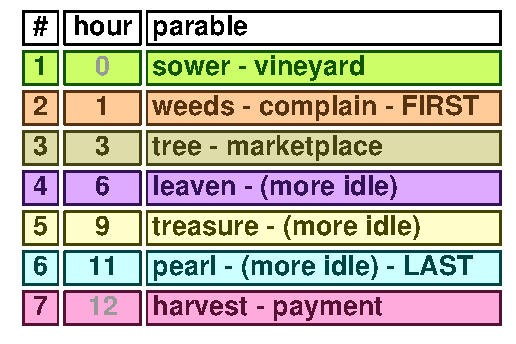
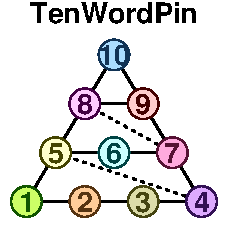
The parable of the vineyard workers can be compared with the kingdom parables in Matthew 13 using the TenWordPin model.
There are five hours, in a manner similar to five loaves (of bread).
There are the before and after, for two, in a manner similar to the two fish.
The word used for the one called "friend" (hour 1, complainer) is the same word as the one (few) without a wedding garment in the wedding feast two chapters later.
31. Matthew 21:28 Vineyard
Matthew 21:28 But what think ye? A certain man had two sons; and he came to the first, and said, Son, go work to day in my vineyard. [kjv]
τι δε υμιν δοκει ανθρωπος ειχεν τεκνα δυο και προσελθων τω πρωτω ειπεν τεκνον υπαγε σημερον εργαζου εν τω αμπελωνι μου [gnt]

The ancient Greek word
"ἀμπελών" ≈ "vineyard" and comes from
"ἄμπελος" ≈ "vine, vineyard". It was also an engine for protecting against a siege.
Whose
"vineyard" is it? The verse does not indicate. The
TR (Textus Receptus) adds
"my" as spoken by the "
man". The
KJV adds
"certain" as well as a connecting
"and".
32. Matthew 21:28 Work in the vineyard
Matthew 21:28 But what think ye? A certain man had two sons; and he came to the first, and said, Son, go work to day in my vineyard. [kjv]
τι δε υμιν δοκει ανθρωπος ειχεν τεκνα δυο και προσελθων τω πρωτω ειπεν τεκνον υπαγε σημερον εργαζου εν τω αμπελωνι μου [gnt]
Who is the "man"? Who are the "two" "children"?
... a man had two children ...
This word for
"child" is not mentioned again in these verses. Can one be a
"child" of the "
devil"? Can God be the "
father" if God only has one "
son"? What about
"children"? What about
"creations"?
Whose
"vineyard" is it? The verse does not indicate. In what
"vineyard" are they to
"work"? Might one
"child" create their own
"vineyard"? Does Satan copy ideas?
33. Synagogue of Satan
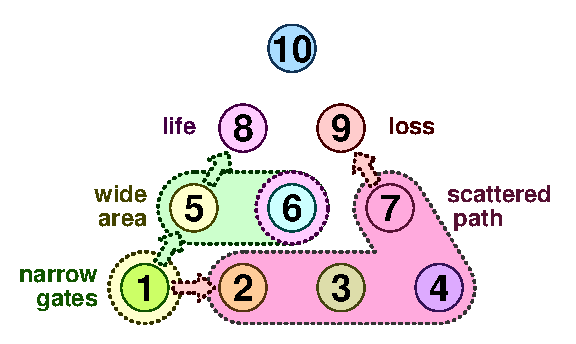
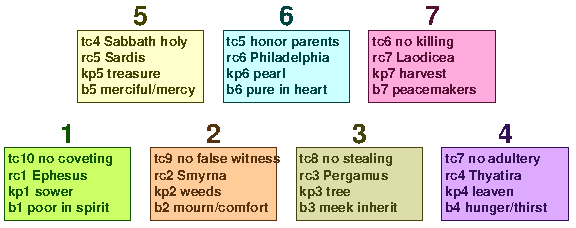
5: Field (treasure in the field)
6: Merchandise (pearl of great price)
The
"Synagogue" of
"Satan" appears in two of the
RC (Revelation Church).
RC2 as Smyrna, node 2 (weeds) from node 1.
RC6 as Philadelphia, node 6 (pearl) from node 5.
These appear to be "
on" the two "
exit ramps" of the "
paths" which "
lead (away from)" "
life".
34. Matthew 21:28 Go flee in jeopardy
Matthew 21:28 But what think ye? A certain man had two sons; and he came to the first, and said, Son, go work to day in my vineyard. [kjv]
τι δε υμιν δοκει ανθρωπος ειχεν τεκνα δυο και προσελθων τω πρωτω ειπεν τεκνον υπαγε σημερον εργαζου εν τω αμπελωνι μου [gnt]
The ancient Greek word
"ὑπάγω" ≈ "bring under, go slowly away" and is, literally,
"lead under" and comes from two Greek words.
"ὕπο" ≈ "under" and "ἄγω" ≈ "lead".
The usage in the
GNT (Greek New Testament) appears to be that of
"go away". Jesus says this word to
Satan in the
temptations (
examinations) in Matthew 4. Since both "
children" will
"answer" the father in the next verses, which might be a better way to translate what the father says (as in the game Jeopardy).
☐
Go today (to) work in the vineyard. Understand it! Confrontational approach.
☐
(Do you) go today (to) work in the vineyard? (voice raised at end). Understand it?
35. Matthew 21:28
KJV: But what think ye? A certain man had two sons; and he came to the first, and said, Son, go work to day in my vineyard.
Greek: τι δε υμιν δοκει ανθρωπος ειχεν τεκνα δυο και προσελθων τω πρωτω ειπεν τεκνον υπαγε σημερον εργαζου εν τω αμπελωνι μου
36. Matthew 21:29-30 Textual variants
Matthew 21:29 He answered and said, I will not: but afterward he repented, and went. [kjv]
ο δε αποκριθεις ειπεν ου θελω υστερον δε μεταμεληθεις εγω κυριε και ουκ απηλθεν [gnt]
21:30 And he came to the second, and said likewise. And he answered and said, I go, sir: and went not. [kjv]
και προσελθων δε τω δευτερω ετερω ειπεν ωσαυτως ο δε αποκριθεις ειπεν εγω κυριε και ουκ ου θελω υστερον μεταμεληθεις απηλθεν [gnt]
The
TR changes the order of the events which breaks the model in some following verses and parables. Here is the Greek word order.
21:29:
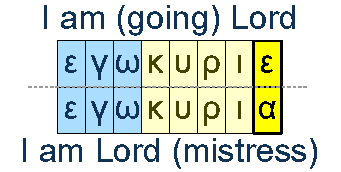
He (one) but answered (and) said I am (going) Lord and (did) not go.
21:30:
He came/went then to the second different (one) (and) said likewise he (one) but answered (and) said not desire I lagging behind repented (changed behavior) (and) went.
37. Matthew 21:29-30 Translations
Matthew 21:29 He answered and said, I will not: but afterward he repented, and went. [kjv]
ο δε αποκριθεις ειπεν ου θελω υστερον δε μεταμεληθεις εγω κυριε και ουκ απηλθεν [gnt]
21:30 And he came to the second, and said likewise. And he answered and said, I go, sir: and went not. [kjv]
και προσελθων δε τω δευτερω ετερω ειπεν ωσαυτως ο δε αποκριθεις ειπεν εγω κυριε και ουκ ου θελω υστερον μεταμεληθεις απηλθεν [gnt]
It is interesting that the
NIV (New International Version) (omitted) translates these verse in line with the
TR. But the official
NIV interlinear has English (according to the
TR) and facing Greek with word translations according to the
NA (Nestle Aland).
It is unclear why the
NIV chose to base their
GNT on the
NA but in places like this ignore the
NA and translate according to the
TR.
38. Matthew 21:29-30 Lag behind
Matthew 21:29 He answered and said, I will not: but afterward he repented, and went. [kjv]
ο δε αποκριθεις ειπεν ου θελω υστερον δε μεταμεληθεις εγω κυριε και ουκ απηλθεν [gnt]
21:30 And he came to the second, and said likewise. And he answered and said, I go, sir: and went not. [kjv]
και προσελθων δε τω δευτερω ετερω ειπεν ωσαυτως ο δε αποκριθεις ειπεν εγω κυριε και ουκ ου θελω υστερον μεταμεληθεις απηλθεν [gnt]
The ancient Greek word
"ὑστερέω" ≈ "behind, late, lag behind" and is the source of the English word
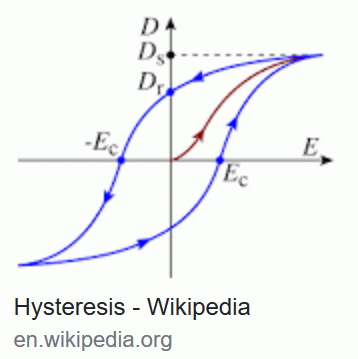
"hysteresis", a word coined by Sir James Alfred Ewing to describe magnetic memory. This memory causes the magnetic field to
"lag behind".
Saying:
Better late than never. The sermon by
Stephen in
Acts emphasizes the
"waiting" and
"lagging behind" but, finally, doing what is right.
39. Aristotle: Transitional change
English: Well then, since every transition is from something to something else (for the very word transition implies a going across from where you were before to where you are afterwards) there seem to be four ways to of transit, as follows. (Loeb#255, p. 14)
Greek: ἐπεὶ δὲ πᾶσα μεταβολή ἐστιν ἔκ τινος εἴς τι (δηλοῖ δὲ καὶ τοὔνομα μετ' ἄλλο γάρ τι καὶ τὸ μὲν πρότερον δηλοῖ, τὸ δ' ὕστερον), μεταβάλλοι ἂν τὸ μεταβάλλον τετραχῶς Aristotle: Physics 5 [225a]
To make the idea clear, Aristotle does not use
"meta" to define itself. Rather, he uses another Greek word that also means
"after".
"μετά" ≈ "after".
"ὔστερος" ≈ "after, later".
"πρότερος" ≈ "before, earlier".
Matthew 4:2 And when he had fasted forty days and forty nights, he was afterward an hungred. [kjv]
και νηστευσας ημερας τεσσαρακοντα τεσσερακοντα και νυκτας τεσσαρακοντα τεσσερακοντα υστερον επεινασεν [gnt]
40. Other similar differences
Greek has
two words for
"others" as in others that are
"similar" and others that are
"different" whereas English has the
one word
"other"
| English |
Greek |
Greek |
| other |
other (similar) |
ἄλλος |
| other |
other (different) |
ἕτερος |
|
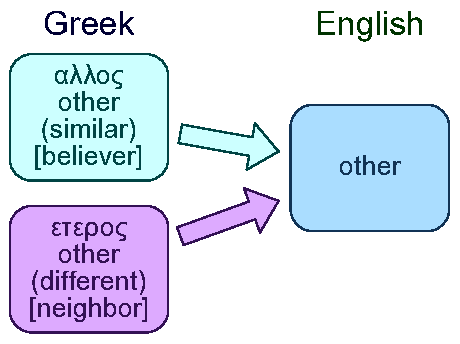 |
The ancient Greek word
"ἄλλος" ≈ "other - similar" and is related to the English word
"else".
The ancient Greek word
"ἕτερος" ≈ "other - different" and is related to the English word
"asunder" as in "
one or the other of two" and is the prefix of English words such as "
heterosexual", "
heterodoxy", etc.
41. Matthew 21:29 I am Lord
Matthew 21:29 He answered and said, I will not: but afterward he repented, and went. [kjv]
ο δε αποκριθεις ειπεν ου θελω υστερον δε μεταμεληθεις εγω κυριε και ουκ απηλθεν [gnt]
21:29:
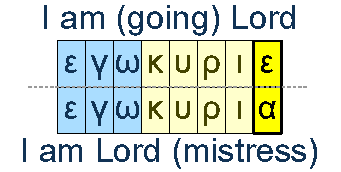
(one) but answered (and) said I am going Lord and (did) not go.
"ἐγὼ" ≈ "I (am)" needs a verb to be clear.
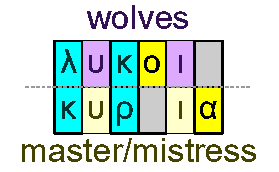
"κύριος" ≈ "lord, master" and source of the word "church".
"κύριε" ≈ "lord, master" (masculine vocative singular)
"κυρία" ≈ "lord, master" (feminine form)
The parsing is ambiguous. A comma makes all the difference (in English).
... I am (going), Lord and (did) not go.
... I am Lord, and (did) not go.
How might we resolve the ambiguity? Perhaps there are some more play on words.
42. 2 John 1:1 Elect lady
2 John 1:1 The elder unto the elect lady and her children, whom I love in the truth; and not I only, but also all they that have known the truth; [kjv]
ο πρεσβυτερος εκλεκτη κυρια και τοις τεκνοις αυτης ους εγω αγαπω εν αληθεια και ουκ εγω μονος αλλα και παντες οι εγνωκοτες την αληθειαν [gnt]
The ancient Greek word
"κυρία" ≈ "lord, master" (feminine form) and, in context,
"mistress".
43. Psalms 123:2 Master and mistress
Psalms 123:2 Behold, as the eyes of servants look unto the hand of their masters, and as the eyes of a maiden unto the hand of her mistress; so our eyes wait upon the LORD our God, until that he have mercy upon us. [kjv]
ιδου ως οφθαλμοι δουλων εις χειρας των κυριων αυτων ως οφθαλμοι παιδισκης εις χειρας της κυριας αυτης ουτως οι οφθαλμοι ημων προς κυριον τον θεον ημων εως ου οικτιρησαι ημας [lxx]
The ancient Greek word
"κυρία" ≈ "lord, master" (feminine form) and, in context,
"mistress".
"κύριος" ≈ "lord, master" and source of the word "church".
"ἐκκλησία" ≈ "assembly, called-out ones" and the word used by Jesus to refer to his church.
Discuss: Does the
"church" want to be
"lord" or
"master"? Provide some historical examples supporting your answer.
44. Psalms 123:2
KJV: Behold, as the eyes of servants look unto the hand of their masters, and as the eyes of a maiden unto the hand of her mistress; so our eyes wait upon the LORD our God, until that he have mercy upon us.
Hebrew: הנה כעיני עבדים אל יד אדוניהם כעיני שפחה אל יד גברתה כן עינינו אל יהוה אלהינו עד שיחננו׃
Greek: ιδου ως οφθαλμοι δουλων εις χειρας των κυριων αυτων ως οφθαλμοι παιδισκης εις χειρας της κυριας αυτης ουτως οι οφθαλμοι ημων προς κυριον τον θεον ημων εως ου οικτιρησαι ημας
45. Matthew 21:29 I am Lord
Matthew 21:29 He answered and said, I will not: but afterward he repented, and went. [kjv]
ο δε αποκριθεις ειπεν ου θελω υστερον δε μεταμεληθεις εγω κυριε και ουκ απηλθεν [gnt]
"εγώ" ≈ "I (am)".
"κύριε" ≈ "lord, master" (masculine vocative singular).
"κυρία" ≈ "lord, master" (feminine form).
Jesus will, in two verses, associate the harlots and tax collectors with the other child and the religious establishment with this child who said "
I am" "
Lord" [Harlot].
46. 2 Corinthians 2:17 Peddle as a huckster
2 Corinthians 2:17 For we are not as many, which corrupt the word of God: but as of sincerity, but as of God, in the sight of God speak we in Christ. [kjv]
ου γαρ εσμεν ως οι πολλοι καπηλευοντες τον λογον του θεου αλλ ως εξ ειλικρινειας αλλ ως εκ θεου κατενωπιον του κατεναντι θεου εν χριστω λαλουμεν [gnt]
The ancient Greek word
"καπηλεν" ≈ "peddle as a huckster".
*G2585 *1 καπηλεύω (kap-ale-yoo'-o) : from kapelos (a huckster); to retail, i.e. (by implication) to adulterate (figuratively):--corrupt.
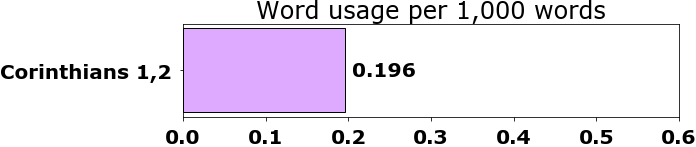 |
Words: καπηλευοντες=1
|
47. 2 Corinthians 2:17
KJV: For we are not as many, which corrupt the word of God: but as of sincerity, but as of God, in the sight of God speak we in Christ.
Greek: ου γαρ εσμεν ως οι πολλοι καπηλευοντες τον λογον του θεου αλλ ως εξ ειλικρινειας αλλ ως εκ θεου κατενωπιον του κατεναντι θεου εν χριστω λαλουμεν
48. Isaiah 1:22 Hucksters
Isaiah 1:22 Thy silver is become dross, thy wine mixed with water: [kjv]
το αργυριον υμων αδοκιμον οι καπηλοι σου μισγουσι τον οινον υδατι [lxx]
Your silver is worthless, your wine merchants mix the wine with water. [bs3]
The ancient Greek word
"καπηλεν" ≈ "peddle as a huckster".
The
LXX (Septuagint) has the word
"merchants" as
"those that peddle as a huckster" which does not appear to be present in the
HOT (Hebrew Old Testament).
Compare what Isaiah says with KP4.
49. Isaiah 1:22
KJV: Thy silver is become dross, thy wine mixed with water:
Hebrew: כספך היה לסיגים סבאך מהול במים׃
Greek: το αργυριον υμων αδοκιμον οι καπηλοι σου μισγουσι τον οινον υδατι
Brenton: Your silver is worthless, your wine merchants mix the wine with water.
50. Matthew 21:29 Not go
Matthew 21:29 He answered and said, I will not: but afterward he repented, and went. [kjv]
ο δε αποκριθεις ειπεν ου θελω υστερον δε μεταμεληθεις εγω κυριε και ουκ απηλθεν [gnt]
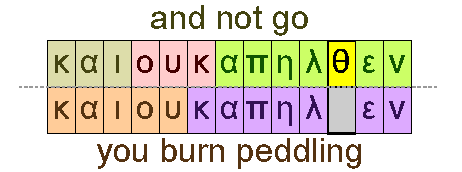
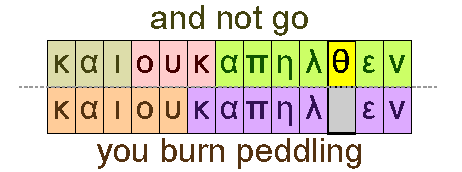
"και" ≈ "and" and "ουκ" ≈ "not".
"απηλθεν" ≈ "go" (as written).
"καιου" ≈ "burn" (second person singular imperative).
"καπηλεν" ≈ "peddle as a huckster".
Some think they will not
"burn". That is just until they meet their
match. The more modern saying would be
lighter and quite
enlightening.
Might this
"child" "burn" as a
"huckster"? What might the
"child" be
"peddling" as a
"huckster"? One might want to study the next parable on the
"householder".
51. Matthew 21:30 Put it together
Matthew 21:30 And he came to the second, and said likewise. And he answered and said, I go, sir: and went not. [kjv]
21:29 ο δε αποκριθεις ειπεν ου θελω υστερον δε μεταμεληθεις εγω κυριε και ουκ απηλθεν [gnt]
Might the one
child be assuming the role of
lord or
master? Is it a novel idea that a
child who appears to be a male will want to be a female (leader, mistress, etc.). Might the
"peddling" imply a "
merchant"?
Might such a
child, instead of
working in the
vineyard, might
work the
vineyard as someone might
work the
crowd? That is, to their own benefit. Might this be
snake-oil?
52. Matthew 21:29 Lagging behind
Matthew 21:29 He answered and said, I will not: but afterward he repented, and went. [kjv]
21:30 και προσελθων δε τω δευτερω ετερω ειπεν ωσαυτως ο δε αποκριθεις ειπεν εγω κυριε και ουκ ου θελω υστερον μεταμεληθεις απηλθεν [gnt]
21:30 (Greek):
He came/went then to the second different (one) (and) said likewise he (one) but answered (and) said not desire (I) lagging behind repented (changed behavior) (and) went.
The modern English word
"will" does not capture the idea of
"desire" or "
wish". The
second child did not
"desire", mentally, to work in the vineyard but changed (actual) behavior and then did work in the vineyard.
"θέλω" ≈ "want, wish, care to" or "ἐθέλω" ≈ "want, wish, care to".
"βούλομαι" ≈ "will, want".
53. Matthew 21:29
KJV: He answered and said, I will not: but afterward he repented, and went.
Greek: ο δε αποκριθεις ειπεν ου θελω υστερον δε μεταμεληθεις εγω κυριε και ουκ απηλθεν
54. Matthew 21:30
KJV: And he came to the second, and said likewise. And he answered and said, I go, sir: and went not.
Greek: και προσελθων δε τω δευτερω ετερω ειπεν ωσαυτως ο δε αποκριθεις ειπεν εγω κυριε και ουκ ου θελω υστερον μεταμεληθεις απηλθεν
55. Matthew 21:29-30
Matthew 21:29 He answered and said, I will not: but afterward he repented, and went. [kjv]
ο δε αποκριθεις ειπεν ου θελω υστερον δε μεταμεληθεις εγω κυριε και ουκ απηλθεν [gnt]
21:30 And he came to the second, and said likewise. And he answered and said, I go, sir: and went not. [kjv]
και προσελθων δε τω δευτερω ετερω ειπεν ωσαυτως ο δε αποκριθεις ειπεν εγω κυριε και ουκ ου θελω υστερον μεταμεληθεις απηλθεν [gnt]
The ancient Greek word
"μεταμέλεια" ≈ "change of purpose, regret, repentance" which is the modern idea of the Latin-based
"repent". This word has to do with
observed behavior and
not inferred attitude.
The ancient Greek word
"μετάνοια" ≈ "afterthought, think after" where the
"repent" (changed behavior) comes from the Latin and
not the Greek.
56. Matthew 21:31 Connect the dots
Matthew 21:31 Whether of them twain did the will of his father? They say unto him, The first. Jesus saith unto them, Verily I say unto you, That the publicans and the harlots go into the kingdom of God before you. [kjv]
τις εκ των δυο εποιησεν το θελημα του πατρος λεγουσιν αυτω ο πρωτος υστερος λεγει αυτοις ο ιησους αμην λεγω υμιν οτι οι τελωναι και αι πορναι προαγουσιν υμας εις την βασιλειαν του θεου [gnt]
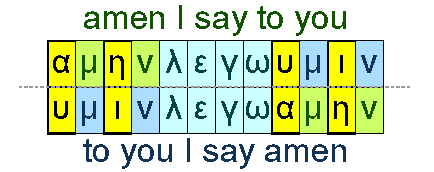
When Jesus says
"verily I say unto you", the symmetry of the Greek (as play on words) indicates that one should compare the previous (short) verses of the two children with what Jesus is going to say about the religious establishment (built on sand) in relation to the common people (the sand).
57. Matthew 21:33 Parable of the householder 1
Matthew 21:33 Hear another parable: There was a certain householder, which planted a vineyard, and hedged it round about, and digged a winepress in it, and built a tower, and let it out to husbandmen, and went into a far country: [kjv]
21:40 When the lord therefore of the vineyard cometh, what will he do unto those husbandmen? [kjv]
21:41 They say unto him, He will miserably destroy those wicked men, and will let out his vineyard unto other husbandmen, which shall render him the fruits in their seasons. [kjv]
Who is the
"householder"? Are you sure? Do the actions of this
"householder" fit the actions of the real
"householder"?
58. End of page