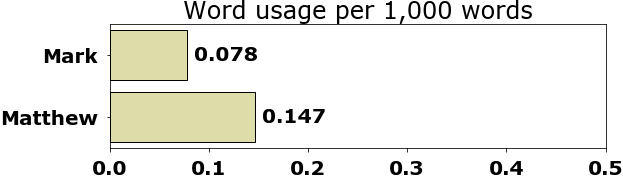
Send
Close Add comments:
(status displays here)
Got it! This site "www.creationpie.org" uses cookies. You consent to this by clicking on "Got it!" or by continuing to use this website. Note: This appears on each machine/browser from which this site is accessed.
Matthew 17:24-27 Tacky attacks on a senseless tax
1. Matthew 17:24-27 Tacky attacks on a senseless tax
Note: This page needs split into several smaller pages.
2. Matthew 19
3. Sheep and goats
Heart
Not eating fruit.
 |
Spade
Digging in sand.
 |

Sheep
|

Goat
|
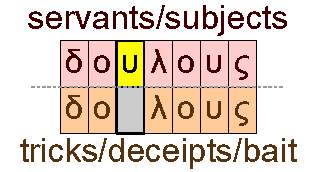
 |
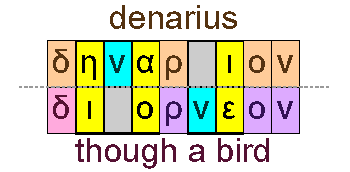 |
 |
 |
|
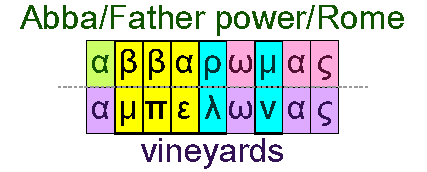
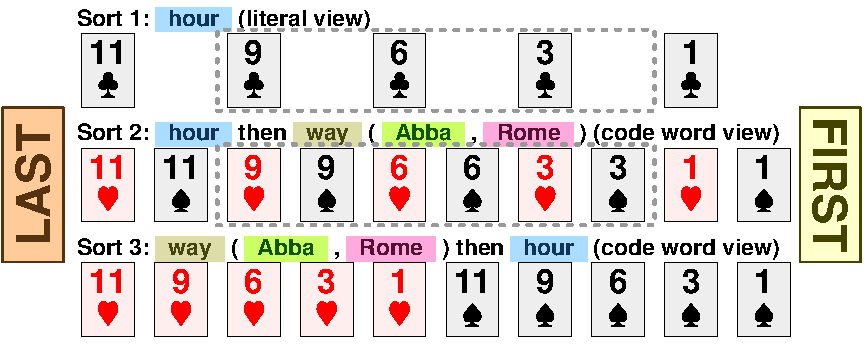
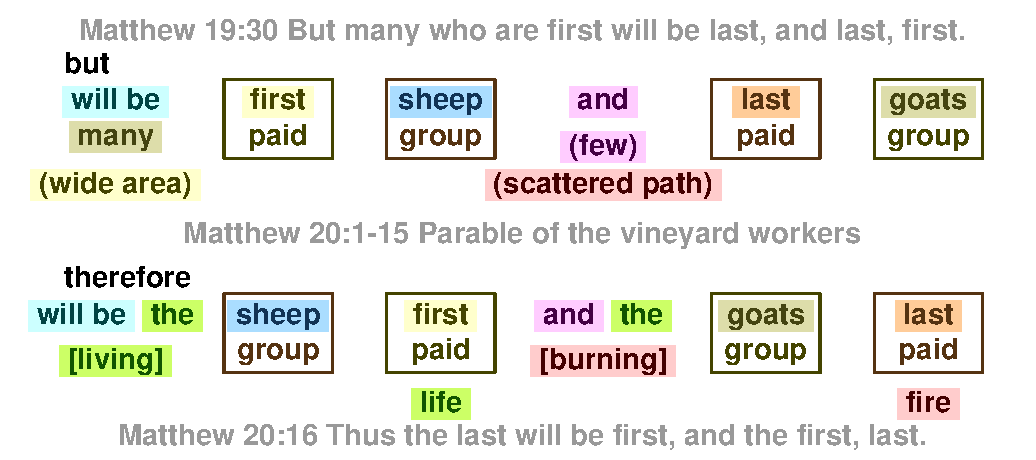
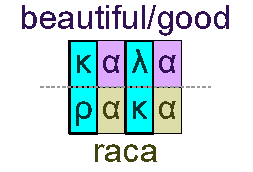
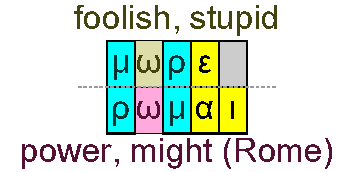
Let the ways of doing something be a "heart" or a "spade". Group by ways of doing things.
Relate "hearts" to "sheep" for working (primarily) in the "Abba" "vineyard".
Relate "spades" to "goats". for working (primarily) in the "Rome" "vineyard".
|
4. First and last sorted on way and then hour
5. First and last
6. Matthew 18 Greatest and least in the kingdom
7. Matthew 17:24-27 Verses with Greek
Matthew 17:24 And when they were come to Capernaum, they that received tribute money came to Peter, and said, Doth not your master pay tribute? [kjv]
ελθοντων δε αυτων εις καπερναουμ καφαρναουμ προσηλθον οι τα διδραχμα λαμβανοντες τω πετρω και ειπον ειπαν ο διδασκαλος υμων ου τελει τα διδραχμα [gnt]
17:25 He saith, Yes. And when he was come into the house, Jesus prevented him, saying, What thinkest thou, Simon? of whom do the kings of the earth take custom or tribute? of their own children, or of strangers? [kjv]
λεγει ναι και οτε εισηλθεν ελθοντα εις την οικιαν προεφθασεν αυτον ο ιησους λεγων τι σοι δοκει σιμων οι βασιλεις της γης απο τινων λαμβανουσιν τελη η κηνσον απο των υιων αυτων η απο των αλλοτριων [gnt]
17:26 Peter saith unto him, Of strangers. Jesus saith unto him, Then are the children free. [kjv]
λεγει αυτω ο πετρος ειποντος δε απο των αλλοτριων εφη αυτω ο ιησους αραγε ελευθεροι εισιν οι υιοι [gnt]
17:27 Notwithstanding, lest we should offend them, go thou to the sea, and cast an hook, and take up the fish that first cometh up; and when thou hast opened his mouth, thou shalt find a piece of money: that take, and give unto them for me and thee. [kjv]
ινα δε μη σκανδαλισωμεν αυτους πορευθεις εις την θαλασσαν βαλε αγκιστρον και τον αναβαντα πρωτον ιχθυν αρον και ανοιξας το στομα αυτου ευρησεις στατηρα εκεινον λαβων δος αυτοις αντι εμου και σου [gnt]
8. Matthew 17:24
KJV: And when they were come to Capernaum, they that received tribute money came to Peter, and said, Doth not your master pay tribute?
Greek: ελθοντων δε αυτων εις καπερναουμ καφαρναουμ προσηλθον οι τα διδραχμα λαμβανοντες τω πετρω και ειπον ειπαν ο διδασκαλος υμων ου τελει τα διδραχμα
Wessex: Aend þa he com to kafarnaum. þa ge-neahlahton to petre. þa þet gafel namen. & þus cweðen. Eower lareow ne gylt he gafel.
Wycliffe: And he seide, Yhis. And whanne he was comen in to the hous, Jhesus cam bifor hym, and seide, Symount, what semeth to thee? Kyngis of erthe, of whom taken thei tribute? of her sones, ether of aliens?
Luther: Da sie nun gen Kapernaum kamen, gingen zu Petrus, die den Zinsgroschen einnahmen, und sprachen: Pflegt euer Meister nicht den Zinsgroschen zu geben?
9. Matthew 17:25
KJV: He saith, Yes. And when he was come into the house, Jesus prevented him, saying, What thinkest thou, Simon? of whom do the kings of the earth take custom or tribute? of their own children, or of strangers?
Greek: λεγει ναι και οτε εισηλθεν ελθοντα εις την οικιαν προεφθασεν αυτον ο ιησους λεγων τι σοι δοκει σιμων οι βασιλεις της γης απο τινων λαμβανουσιν τελη η κηνσον απο των υιων αυτων η απο των αλλοτριων
Latin: ait etiam et cum intrasset domum praevenit eum Iesus dicens quid tibi videtur Simon reges terrae a quibus accipiunt tributum vel censum a filiis suis an ab alienis
10. Matthew 17:26
KJV: Peter saith unto him, Of strangers. Jesus saith unto him, Then are the children free.
Greek: λεγει αυτω ο πετρος ειποντος δε απο των αλλοτριων εφη αυτω ο ιησους αραγε ελευθεροι εισιν οι υιοι
Latin: et ille dixit ab alienis dixit illi Iesus ergo liberi sunt filii
Wessex: Ða cwaeð he of fremden. Ða cwaeð he. Eornestlice þa barn senden frie.
Tyndale: Peter sayde vnto him: of straungers. Then sayd Iesus vnto him agayne: Then are the chyldren fre.
Luther: Da sprach zu ihm Petrus: Von den Fremden. Jesus sprach zu ihm: So sind die Kinder frei.
11. Matthew 17:27
KJV: Notwithstanding, lest we should offend them, go thou to the sea, and cast an hook, and take up the fish that first cometh up; and when thou hast opened his mouth, thou shalt find a piece of money: that take, and give unto them for me and thee.
Greek: ινα δε μη σκανδαλισωμεν αυτους πορευθεις εις την θαλασσαν βαλε αγκιστρον και τον αναβαντα πρωτον ιχθυν αρον και ανοιξας το στομα αυτου ευρησεις στατηρα εκεινον λαβων δος αυτοις αντι εμου και σου
Latin: ut autem non scandalizemus eos vade ad mare et mitte hamum et eum piscem qui primus ascenderit tolle et aperto ore eius invenies staterem illum sumens da eis pro me et te
12. Matthew 17:24-27 Tacky attacks on a senseless tax
Matthew 17:24 And when they were come to Capernaum, they that received tribute money came to Peter, and said, Doth not your master pay tribute? [kjv]
17:25 He saith, Yes. And when he was come into the house, Jesus prevented him, saying, What thinkest thou, Simon? of whom do the kings of the earth take custom or tribute? of their own children, or of strangers? [kjv]
17:26 Peter saith unto him, Of strangers. Jesus saith unto him, Then are the children free. [kjv]
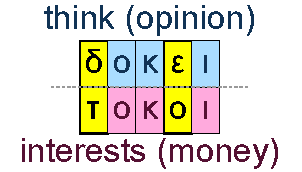
17:27 Notwithstanding, lest we should offend them, go thou to the sea, and cast an hook, and take up the fish that first cometh up; and when thou hast opened his mouth, thou shalt find a piece of money: that take, and give unto them for me and thee. [kjv]
The difference between "
children" and "
strangers" becomes important in the immediately following discourse (beginning of next chapter).
13. Ecclesiastes 1:9
KJV: The thing that hath been, it is that which shall be; and that which is done is that which shall be done: and there is no new thing under the sun.
Hebrew: מה שהיה הוא שיהיה ומה שנעשה הוא שיעשה ואין כל חדש תחת השמש׃
Greek: τι το γεγονος αυτο το γενησομενον και τι το πεποιημενον αυτο το ποιηθησομενον και ουκ εστιν παν προσφατον υπο τον ηλιον
14. Death by taxes
Certainty? In this world nothing is certain but death and taxes.
Benjamin Franklin (American scientist, inventor, philosopher, statesman) .
Which gets worse over time?
☐ Death gets worse over time.
☐ Taxes get worse over time.
He does not possess wealth; it possesses him. Benjamin Franklin.
What is the difference between a taxidermist and a tax collector?
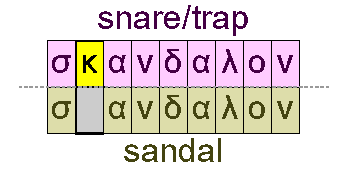
The taxidermist takes only your skin.
What does Jesus say about taxes (yokes of compulsion) by religious institutions?
15. Taxidermy
1 Corinthians 14:40 Let all things be done decently and in order. [kjv]
παντα δε ευσχημονως και κατα ταξιν γινεσθω [gnt]
Exodus 25:5 And rams' skins dyed red, and badgers' skins, and shittim wood, [kjv]
και δερματα κριων ηρυθροδανωμενα και δερματα υακινθινα και ξυλα ασηπτα [lxx]
The word
taxidermy comes from the Greek words for
class or
order (
taxonomy) and
skin or
fur as in (
dermatology).
Mark Twain (Author and Humorist, alias Samuel Clemens)
What is the difference between a taxidermist and a tax collector?
The taxidermist takes only your skin.
16. Tiberius Caesar and sheep
Luke 3:1 Now in the fifteenth year of the reign of Tiberius Caesar, Pontius Pilate being governor of Judaea, … [kjv]
Emperor
Tiberius Caesar (on taxes):
It is the duty of a good shepherd to shear his sheep, not to skin them.
At the same time, Jesus was walking and teaching in Judea. Jesus had a different idea about what it meant to be a
"good" "shepherd".
John 10:11 I am the good shepherd: the good shepherd giveth his life for the sheep. [kjv]
εγω ειμι ο ποιμην ο καλος ο ποιμην ο καλος την ψυχην αυτου τιθησιν υπερ των προβατων [gnt]
9 AD: Arminius organizes Germans and slaughters Roman Legions under Varus at Teutoburg Forest
17. Ecclesiastes 1:9 Capital punishment
Ecclesiastes 1:9 … that which shall be done: and there is no new thing under the sun. [kjv]
Capital punishment is when the government taxes you to get capital so that it can go into business in competition with you, and then taxes the profit on your business in order to pay its losses. (source unknown)
18. Genesis 47:14-27 Joseph and taxes and enslavement
Genesis 47:20 And Joseph bought all the land of Egypt for Pharaoh; for the Egyptians sold every man his field, because the famine prevailed over them: so the land became Pharaoh's. [kjv]
47:26 And Joseph made it a law over the land of Egypt unto this day, that Pharaoh should have the fifth part; except the land of the priests only, which became not Pharaoh's. [kjv]
Note that Joseph was
not an Egyptian. Many taxes, such as the income tax in the United States (to finance the Civil War effort), were started as temporary measures and were never removed.
The general rule is to add taxes for an emergency. After the emergency, remove part of the taxes, take credit for it, but leave a good part of the added taxes in place for eternity. Would a government create an emergency in order to get more control, taxes, etc.?
19. English taxes
20. Matthew 7:2 Measurement
Matthew 7:2 For with what judgment ye judge, ye shall be judged: and with what measure ye mete, it shall be measured to you again. [kjv]
εν ω γαρ κριματι κρινετε κριθησεσθε και εν ω μετρω μετρειτε αντιμετρηθησεται μετρηθησεται υμιν [gnt]
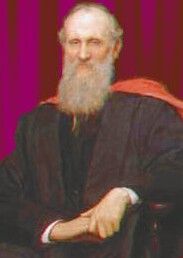 When you can measure what you are speaking about, and express it into numbers, you know something about it; but when you cannot measure it, when you cannot express it in numbers, your knowledge is of a meager and unsatisfactory kind. Lord Kelvin (Scientist)
Bureaucrat's thinking:
If it can be measured, it can be taxed. (Beer production vs. yard sales)
Many "
birds" (false leaders) do not want to put their "
opinion" or "
glory"
under the "
measure" but, instead, hold their "
opinion" up for all in the "
house" to be attracted to that (false) "
light" (darkness).
[local government in Savannah was working on a plan for taxing yard sales about 2005]
21. Matthew 7:2
KJV: For with what judgment ye judge, ye shall be judged: and with what measure ye mete, it shall be measured to you again.
Greek: εν ω γαρ κριματι κρινετε κριθησεσθε και εν ω μετρω μετρειτε αντιμετρηθησεται μετρηθησεται υμιν
22. Tacky tachometer
The word "
tachometer", which "
meters" the "
quickness" of the engine, comes from the ancient Greek word
"ταχύς" ≈ "quick, rapid, soon"
If you do not like the appearance of a tachometer, as in not having a classy appearance, you might say it appears "
tacky". This word "
tacky" comes from 1888 meaning "
in poor taste" or "
of low quality". Words from an earlier time that had about the same meaning were "
shabby" or "
seedy".
23. Ticky tacky coffin baskets
In the 1960's Malvina Reynolds coined the term "
ticky tacky" to refer to low quality material used to make something, such as cheap houses, etc.
The term is often used to refer to the linings in coffins from a song "
Little Boxes" by the "
Weeds" with lyrics including the following. "
Little coffins on the hillside. Little coffins made of ticky tacky and they all look just the same...".
Ματθαίον 14:20 και εφαγον παντες και εχορτασθησαν και ηραν το περισσευον των κλασματων δωδεκα κοφινους πληρεις [gnt]
16:9 Do ye not yet understand, neither remember the five loaves of the five thousand, and how many baskets ye took up? [kjv]
ουπω νοειτε ουδε μνημονευετε τους πεντε αρτους των πεντακισχιλιων και ποσους κοφινους ελαβετε [gnt]
The Greek word translated as
"baskets" went through Latin to become the English word
"coffin". How many
"coffins", I mean
"baskets", did they take up?
24. Tic tac

Tic tac, usually written in lowercase as tic tac, is a brand of breath mints, started in 1969, from the Italian company Ferrero.
25. Tiberius
About the 15th year of the reign of Tiberius Caesar Jesus was walking and teaching in Judea. The Roman Empire, representing the power of the world, was continually concerned with wealth and taxation of all kinds. In the first century, Emperor Tiberius Caesar (42 BC to 37 AD) would often tell his people the following about taxes.
It is the duty of a good shepherd to shear his sheep, not to skin them. Emperor Tiberius
26. Luke 3:1
KJV: Now in the fifteenth year of the reign of Tiberius Caesar, Pontius Pilate being governor of Judaea, and Herod being tetrarch of Galilee, and his brother Philip tetrarch of Ituraea and of the region of Trachonitis, and Lysanias the tetrarch of Abilene,
Greek: εν ετει δε πεντεκαιδεκατω της ηγεμονιας τιβεριου καισαρος ηγεμονευοντος ποντιου πιλατου της ιουδαιας και τετραρχουντος τετρααρχουντος της γαλιλαιας ηρωδου φιλιππου δε του αδελφου αυτου τετραρχουντος τετρααρχουντος της ιτουραιας και τραχωνιτιδος χωρας και λυσανιου της αβιληνης τετραρχουντος τετρααρχουντος
27. John 10:11,14
John 10:11 I am the good shepherd: the good shepherd giveth his life for the sheep. [kjv]
εγω ειμι ο ποιμην ο καλος ο ποιμην ο καλος την ψυχην αυτου τιθησιν υπερ των προβατων [gnt]
10:14 I am the good shepherd, and know my sheep, and am known of mine. [kjv]
εγω ειμι ο ποιμην ο καλος και γινωσκω τα εμα και γινωσκομαι υπο των εμων γινωσκουσιν με τα εμα [gnt]
In John 10, Jesus talks about the "
good"
"shepherd".
28. John 10:11
KJV: I am the good shepherd: the good shepherd giveth his life for the sheep.
Greek: εγω ειμι ο ποιμην ο καλος ο ποιμην ο καλος την ψυχην αυτου τιθησιν υπερ των προβατων
29. John 10:12-14
John 10:12 But he that is an hireling, and not the shepherd, whose own the sheep are not, seeth the wolf coming, and leaveth the sheep, and fleeth: and the wolf catcheth them, and scattereth the sheep. [kjv]
ο μισθωτος δε και ουκ ων ποιμην ου ουκ εισιν εστιν τα προβατα ιδια θεωρει τον λυκον ερχομενον και αφιησιν τα προβατα και φευγει και ο λυκος αρπαζει αυτα και σκορπιζει τα προβατα [gnt]
10:13 The hireling fleeth, because he is an hireling, and careth not for the sheep. [kjv]
ο δε μισθωτος φευγει οτι οτι μισθωτος εστιν και ου μελει αυτω περι των προβατων [gnt]
10:14 I am the good shepherd, and know my sheep, and am known of mine. [kjv]
εγω ειμι ο ποιμην ο καλος και γινωσκω τα εμα και γινωσκομαι υπο των εμων γινωσκουσιν με τα εμα [gnt]
The "
wolf" can be related to a "
wolf dog" or "
bird" who, as a false teacher and/or false leader. Sometimes, the "
hireling", as a "
pig", will "
flee"
to the "
wolf dog" or "
bird" and start working against the "
sheep".
30. John 10:12
KJV: But he that is an hireling, and not the shepherd, whose own the sheep are not, seeth the wolf coming, and leaveth the sheep, and fleeth: and the wolf catcheth them, and scattereth the sheep.
Greek: ο μισθωτος δε και ουκ ων ποιμην ου ουκ εισιν εστιν τα προβατα ιδια θεωρει τον λυκον ερχομενον και αφιησιν τα προβατα και φευγει και ο λυκος αρπαζει αυτα και σκορπιζει τα προβατα
31. John 10:13
KJV: The hireling fleeth, because he is an hireling, and careth not for the sheep.
Greek: ο δε μισθωτος φευγει οτι οτι μισθωτος εστιν και ου μελει αυτω περι των προβατων
32. John 10:14
KJV: I am the good shepherd, and know my sheep, and am known of mine.
Greek: εγω ειμι ο ποιμην ο καλος και γινωσκω τα εμα και γινωσκομαι υπο των εμων γινωσκουσιν με τα εμα
33. 1 Timothy 6:7 Take it with you
1 Timothy 6:7 For we brought nothing into this world, and it is certain we can carry no thing out. [kjv]
ουδεν γαρ εισηνεγκαμεν εις τον κοσμον δηλον οτι ουδε εξενεγκειν τι δυναμεθα [gnt]
What is
treasure? Can you take your
treasure with you? Have you ever seen a hearse (on the way to a graveyard) pulling a U-Haul (with possessions, etc.)?
In a sense, we
ourself are brought into the
"world". Jesus uses
"world" as the "
people" in the
"world".
1 Timothy 6:7 says that we cannot carry any (physical) thing out. What about non-physical things such as
information? Can you wire anything ahead?
Why was the funeral delayed when the casket fell out of the hearse?
They had to take time to rehearse again. It was a grave situation.
34. 1 Timothy 6:7 Homeowners
Do homeowners actually "
own" their home? Or do they think they own their home and are just paying "
rent" in the form of "
taxes" on it. What about inheritance taxes?
1 Timothy 6:7 For we brought nothing into this world, and it is certain we can carry no thing out. [kjv]
ουδεν γαρ εισηνεγκαμεν εις τον κοσμον δηλον οτι ουδε εξενεγκειν τι δυναμεθα [gnt]
This verse appears to assume that the "
world" is the "
universe" rather than the usual "
people" who "
adorn" the "
earth". The verse also assumes that "
we" are "
nothing" and that the "
things" are material (physical) things and
not abstract (information) things (e.g., the soul).
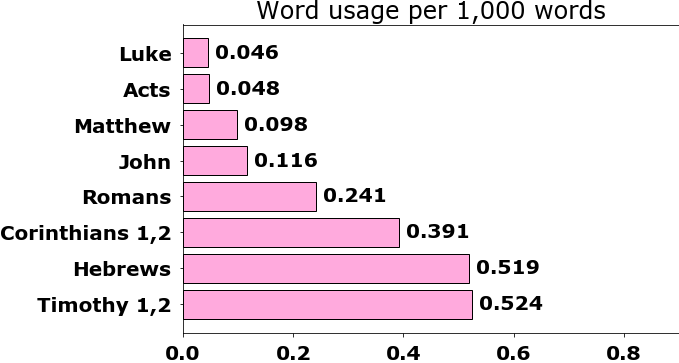
Due to certain word usages and logical issues with what, for example, Jesus says, it appears that 1 Timothy may not have been written by Paul (who uses precise logic and words, often with multiple meanings, allusions, etc.).
 |
Details are left as a future topic.
|
35. Evading or avoiding tax jokes
Sign:
THE IRS thinks that it is all
THEIR$.
Evading taxes is illegal and not prudent.
Avoiding taxes is legal and prudent.
Where do rich people who are homeless live?
In tax shelters.
Why did the IRS audit the church?
They had false profits. It was a church for profits.
Discuss: Does the government's hand (including hand-outs) grow larger over time? How about religious establishments? How did the temple expand from the time of Elijah and Solomon until the time of John the Baptist and Jesus?
36. Taxman
The Beetles song "
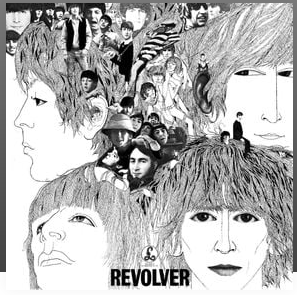
Taxman", written by George Harrison (with help by John Lennon), appeared on the 1966 album Revolver.
In the song, Harrison sings of the British government collecting a 95% tax on their earnings. This was one reason why they left Great Britain.
This brings up the question of a whether a Biblical tithe should be 10% of the gross or of the net, what is left or something else.
37. Taxman lyrics
Part of the lyrics to
Taxman by George Harrison go as follows.
Let me tell you how it will be
There's one for you, nineteen for me
'Cause I'm the taxman. Yeah, I'm the taxman
Should five percent appear too small
Be thankful I don't take it all
'Cause I'm the taxman. Yeah, I'm the taxman
38. Romans 6:23 Taxes on sin
Romans 6:23 For the wages of sin is death; but the gift of God is eternal life through Jesus Christ our Lord. [kjv]
τα γαρ οψωνια της αμαρτιας θανατος το δε χαρισμα του θεου ζωη αιωνιος εν χριστω ιησου τω κυριω ημων [gnt]
What is the
tax on the wages of sin?
Evading the penalty of sin is not possible. Ask Paul about that (this verse). Jesus (in John) talks about trying to get in over the fence rather than through the gate.
Avoiding the penalty of sin is possible. Ask Jesus about that.
It is misleading to say that you are "saved by grace" as some pastors will preach. The Greek for "grace" is that of an "offer".
To be accurate, you are "saved by accepting the offer of grace (favor)".
Paraphrase:
... but the favor of God is eternal life through (accepting the offer of) Jesus Christ our Lord.
39. Romans 6:23
KJV: For the wages of sin is death; but the gift of God is eternal life through Jesus Christ our Lord.
Greek: τα γαρ οψωνια της αμαρτιας θανατος το δε χαρισμα του θεου ζωη αιωνιος εν χριστω ιησου τω κυριω ημων
40. Better to give than to receive
In Acts, Paul refers to Jesus saying that it is "
better to give than to receive".
Acts 20:35 I have shewed you all things, how that so labouring ye ought to support the weak, and to remember the words of the Lord Jesus, how he said, It is more blessed to give than to receive. [kjv]
παντα υπεδειξα υμιν οτι ουτως κοπιωντας δει αντιλαμβανεσθαι των ασθενουντων μνημονευειν τε των λογων του κυριου ιησου οτι αυτος ειπεν μακαριον εστιν διδοναι μαλλον διδοναι η λαμβανειν [gnt]
These words by Jesus are not directly found in the Gospels. Paul makes a "
semantic match" rather than a "
syntactic match".
In
tax terms, "
It is more deductible to give than to receive.". Attributed to Henry Leabo.
41. Acts 20:35
KJV: I have shewed you all things, how that so labouring ye ought to support the weak, and to remember the words of the Lord Jesus, how he said, It is more blessed to give than to receive.
Greek: παντα υπεδειξα υμιν οτι ουτως κοπιωντας δει αντιλαμβανεσθαι των ασθενουντων μνημονευειν τε των λογων του κυριου ιησου οτι αυτος ειπεν μακαριον εστιν διδοναι μαλλον διδοναι η λαμβανειν
42. Parts
43. John 19:30 It is finished
John 19:30 When Jesus therefore had received the vinegar, he said, It is finished: and he bowed his head, and gave up the ghost. [kjv]
οτε ουν ελαβεν το οξος ο ιησους ειπεν τετελεσται και κλινας την κεφαλην παρεδωκεν το πνευμα [gnt]
The ancient Greek word
"τέλειος" ≈ "purposed, complete, perfected" and
not the modern English idea of "
perfect" as "
without error".
At the
"end", Jesus says
"it is finished". The Greek word had a meaning of
"paid in full". In Revelation, Jesus shows up to redeem the deed that was paid on the cross.
44. Revelation 5:4-5 Closing costs
Revelation 5:4 And I wept much, because no man was found worthy to open and to read the book, neither to look thereon. [kjv]
5:5 And one of the elders saith unto me, Weep not: behold, the Lion of the tribe of Juda, the Root of David, hath prevailed to open the book, and to loose the seven seals thereof. [kjv]
Jesus paid it all. John is present to see the ultimate escrow closing in Revelation.
Question: If Jesus paid it all, do we need to keep paying the religious establishment? Can we just go out and do what Jesus asks us to do?
45. Strongs - end
- *G5056 *41 τέλος (tel'-os) : from a primary tello (to set out for a definite point or goal); properly, the point aimed at as a limit, i.e. (by implication) the conclusion of an act or state (termination (literally, figuratively or indefinitely), result (immediate, ultimate or prophetic), purpose); specially, an impost or levy (as paid):--+ continual, custom, end(-ing), finally, uttermost. Compare G5411.
- τελος *33
- Matthew 10:22 ... he that endureth to the end shall be saved.
- Matthew 24:6 ... these things must come to pass, but the end is not yet.
- Matthew 24:13 But he that shall endure unto the end, the same shall be saved.
- Matthew 24:14 ... and then shall the end come.
- Matthew 26:58 ... with the servants, to see the end.
- Mark 3:26 ... stand, but hath an end.
- Mark 13:7 ... for such things must needs be; but the end shall not be yet.
- Mark 13:13 ... he that shall endure unto the end, the same shall be saved.
- Luke 1:33 ... kingdom there shall be no end.
- Luke 18:5 ... lest by her continual coming she weary me.
- Luke 21:9 ... first come to pass; but the end is not by and by.
- Luke 22:37 ... concerning me have an end.
- John 13:1 ... he loved them unto the end.
- Romans 6:21 ... now ashamed? for the end of those things is death.
- Romans 6:22 ... unto holiness, and the end everlasting life.
- Romans 10:4 For Christ is the end of the law for righteousness ...
- Romans 13:7 ... to whom tribute is due; custom to whom custom; fear to whom ...
- 1 Corinthians 15:24 Then cometh the end, when he shall have delivered up the kingdom to God, ...
- 2 Corinthians 3:13 ... not stedfastly look to the end of that which is abolished:
- 2 Corinthians 11:15 ... the ministers of righteousness; whose end shall be according to their works.
- Philippians 3:19 Whose end is destruction, whose God is their belly, ...
- 1 Thessalonians 2:16 ... upon them to the uttermost.
- 1 Timothy 1:5 Now the end of the commandment is charity out of ...
- Hebrews 6:8 ... is nigh unto cursing; whose end is to be burned.
- Hebrews 7:3 ... beginning of days, nor end of life; but made like ...
- James 5:11 ... of Job, and have seen the end of the Lord; that the Lord ...
- 1 Peter 1:9 Receiving the end of your faith, even the salvation of your souls.
- 1 Peter 3:8 Finally, be ye all of one mind, having compassion one of another, love as brethren, be pitiful, be courteous:
- 1 Peter 4:7 But the end of all things is at hand: be ye therefore ...
- 1 Peter 4:17 ... begin at us, what shall the end be of them that obey not the gospel of God?
- Revelation 21:6 ... Omega, the beginning and the end. I will give unto him that is athirst ...
- Revelation 22:13 ... Omega, the beginning and the end, the first and the last.
- τελους *6
- 1 Corinthians 1:8 ... confirm you unto the end, that ye may be blameless in the day ...
- 2 Corinthians 1:13 ... ye shall acknowledge even to the end;
- Hebrews 3:6 ... of the hope firm unto the end.
- Hebrews 3:14 ... of our confidence stedfast unto the end;
- Hebrews 6:11 ... the full assurance of hope unto the end:
- Revelation 2:26 ... my works unto the end, to him will I give power ...
- τελη *2
- Matthew 17:25 ... the kings of the earth take custom or tribute? of ...
- 1 Corinthians 10:11 ... admonition, upon whom the ends of the world are come.
46. Usage - end
*G5056 *41 τέλος (tel'-os) : from a primary tello (to set out for a definite point or goal); properly, the point aimed at as a limit, i.e. (by implication) the conclusion of an act or state (termination (literally, figuratively or indefinitely), result (immediate, ultimate or prophetic), purpose); specially, an impost or levy (as paid):--+ continual, custom, end(-ing), finally, uttermost. Compare G5411.
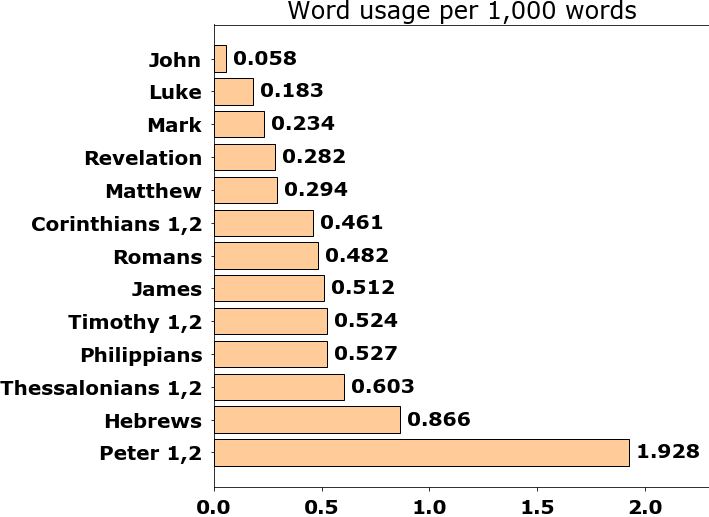 |
Words: τελη=2 τελος=33 τελους=6
|
47. Strongs - tribute
- *G1323 *2 δίδραχμον (did'-rakh-mon) : from G1364 and G1406 δραχμή; a double drachma (didrachm):--tribute.
- διδραχμα *2
- Matthew 17:24 ... Capernaum, they that received tribute money came to Peter, and said, Doth not your master pay tribute?
- *G1406 *3 δραχμή (drakh-may') : from G1405; a drachma or (silver) coin (as handled):--piece (of silver).
- δραχμην *2
- Luke 15:8 ... having ten pieces of silver, if she lose one piece, doth not ...
- Luke 15:9 ... me; for I have found the piece which I had lost.
- δραχμας
- Luke 15:8 ... having ten pieces of silver, if she lose one piece, doth not ...
48. Usage - tribute
*G1323 *2 δίδραχμον (did'-rakh-mon) : from G1364 and G1406 δραχμή; a double drachma (didrachm):--tribute.
*G1406 *3 δραχμή (drakh-may') : from G1405; a drachma or (silver) coin (as handled):--piece (of silver).
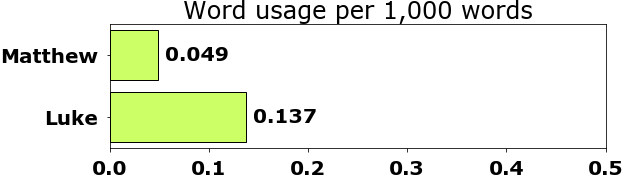 |
Words: διδραχμα=2 δραχμας δραχμην=2
|
The
"didrachma" is "
two"
"drachmas". The word
"drachma" means, literally, what would fit
"in the hand".
Both exact uses of
"didrachma" are in this verse in the
GNT.
Discuss: Does the government's hand (including hand-outs) grow larger over time? How about religious establishments? How did the temple expand from the time of Elijah and Solomon until the time of John the Baptist and Jesus?
49. Matthew 6:28 Red letter verses
Matthew 6:28 And why take ye thought for raiment? Consider the lilies of the field, how they grow; they toil not, neither do they spin: [kjv]
και περι ενδυματος τι μεριμνατε καταμαθετε τα κρινα του αγρου πως αυξανει αυξανουσιν ου κοπια κοπιωσιν ουδε νηθει νηθουσιν [gnt]
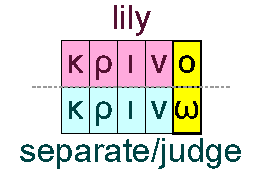
- "κρίνο" ≈ "lily".
- "κρίνω" ≈ "separate, distinguish" and, in context, "judge".
Solomon was known for his wisdom in judging. Jesus uses the
code word "field" for "
world".
The Greek word for
"lily" is a play on words on
"judging" as
"separating".
50. Matthew 6:29 Red tape analogy
Matthew 6:29 And yet I say unto you, That even Solomon in all his glory was not arrayed like one of these. [kjv]
λεγω δε υμιν οτι ουδε σολομων εν παση τη δοξη αυτου περιεβαλετο ως εν τουτων [gnt]
Here is an analogy using double-meanings in English to refer to government practices. The Greek translated as
"glory" is that of
"opinion".
- The government is known for "red tape" to slow down and burden processes.
- A red type of pansy is a flower. Call it a "red-tape pansy".
- A "pansy" is a term to refer to a "wimp".
Analogy:
Consider these red-tape pansies [separator's] of the world. They increase, they do not work, they spend. Yet even George Washington in all his glory (opinion) was not surrounded (clothed) by red-tape pansies [separator's] such as these (red-tape pansies).
51. Matthew 17:24 Temple tax
Matthew 17:24 And when they were come to Capernaum, they that received tribute money came to Peter, and said, Doth not your master pay tribute? [kjv]
ελθοντων δε αυτων εις καπερναουμ καφαρναουμ προσηλθον οι τα διδραχμα λαμβανοντες τω πετρω και ειπον ειπαν ο διδασκαλος υμων ου τελει τα διδραχμα [gnt]
The
"tribute" is a
"double drachma" or the
"amount of the payment". One must know from other sources that this is the
"temple tax". They do not
"receive" nor
"accept" the
"temple tax". They
"take" the
"temple tax" in the sense that one needs to
"take up" your "
cross" and "
follow" Jesus.
The "
temple tax" is being
"taken" and
not "received" or
"accepted"
- "λαμβάνω" ≈ "take hold of, grasp, seize".
- "δέχομαι" ≈ "receive, accept, take, believe".
52. Matthew 17:24 Questions
Matthew 17:24 And when they were come to Capernaum, they that received tribute money came to Peter, and said, Doth not your master pay tribute? [kjv]
ελθοντων δε αυτων εις καπερναουμ καφαρναουμ προσηλθον οι τα διδραχμα λαμβανοντες τω πετρω και ειπον ειπαν ο διδασκαλος υμων ου τελει τα διδραχμα [gnt]
The ancient Greek word
"τέλος" ≈ "end, purpose" as in
"complete" or
"finalize" or
"purpose" (Aristotle usage). To "
pay the last farthing" will never happen with the
religious institution. Jesus talks about making the
"final" payment.
English and Greek:
- English: "pay tribute".
- Greek: "complete/finalize the amount of the payment".
53. Matthew 3:7 Spies and vipers
Keep in mind that the religious establishment, like any totalitarian regime and most governments, have spies everywhere reporting back on what is said, etc. We see this in Matthew 3 where John the Baptist is baptizing in the Jordan.
Matthew 3:7 But when he saw many of the Pharisees and Sadducees come to his baptism, he said unto them, O generation of vipers, who hath warned you to flee from the wrath to come? [kjv]
ιδων δε πολλους των φαρισαιων και σαδδουκαιων ερχομενους επι το βαπτισμα αυτου ειπεν αυτοις γεννηματα εχιδνων τις υπεδειξεν υμιν φυγειν απο της μελλουσης οργης [gnt]
The Greek word for "
viper" is the type that is harmful and not just a "
snake".
When Jesus is talking directly to the religious establishment away from others, he tells them exactly what they are doing that is not correct without using play on words and double meanings.
54. Matthew 17:25 Yes
Many people are
quick to
agree, sometimes to avoid an argument. The disciples did this in Matthew 13 when they said they understood the parables (which they clearly did not understand). Here, Peter, without thinking, says
"yes".
Matthew 17:25 He saith, Yes. And when he was come into the house, Jesus prevented him, saying, What thinkest thou, Simon? of whom do the kings of the earth take custom or tribute? of their own children, or of strangers? [kjv]
λεγει ναι και οτε εισηλθεν ελθοντα εις την οικιαν προεφθασεν αυτον ο ιησους λεγων τι σοι δοκει σιμων οι βασιλεις της γης απο τινων λαμβανουσιν τελη η κηνσον απο των υιων αυτων η απο των αλλοτριων [gnt]
Let your
reasoning (not words) be
"yes" "yes" "no" "no".
Then Jesus needs to ask a
question to set up a
clarification.
55. Matthew 18:17 Union of sets
Matthew 18:17 And if he shall neglect to hear them, tell it unto the church: but if he neglect to hear the church, let him be unto thee as an heathen man and a publican. [kjv]
εαν δε παρακουση αυτων ειπε ειπον τη εκκλησια εαν δε και της εκκλησιας παρακουση εστω σοι ωσπερ ο εθνικος και ο τελωνης [gnt]
In providing a conflict resolution protocol, for the church, Jesus appears to separate everyone into three distinct groups.that comprise
all people.
- "sheep" as in "believers".
- "fish" as in the "sea of humanity" as the "heathen" as in, at worst, "neighbors"
- The (false) religious hierarchy of "birds" and "pigs" as the "tax collectors" as in, at worst, "neighbors".
Where does Jesus associate the religious hierarchy with "
tax collectors"? How about in the "
temple tax" verses near the end of the previous chapter, Matthew 17.
56. Hearing and listening
Matthew 13:51 Jesus saith unto them, Have ye understood all these things? They say unto him, Yea, Lord. [kjv]
λεγει αυτοις ο ιησους συνηκατε συνηκατε ταυτα παντα λεγουσιν αυτω ναι κυριε [gnt]
Man to wife:
No, you're wrong... It doesn't even go in one ear!
Mother to (three) sons:
You can all hear just fine, but you don't listen.
[German voice for
GPS (Global Positioning System) map directions]
Farmers, who have detractors, like to be outstanding in their field and know that talking to cows increases milk production.
It's a case of in one ear and out the udder.
57. Strongs - anticipation
- *G4399 *1 προφθάνω (prof-than'-o) : from G4253 and G5348; to get an earlier start of, i.e. anticipate:--prevent.
- προεφθασεν
- Matthew 17:25 ... into the house, Jesus prevented him, saying, What ...
58. Usage - anticipation
*G4399 *1 προφθάνω (prof-than'-o) : from G4253 and G5348; to get an earlier start of, i.e. anticipate:--prevent.
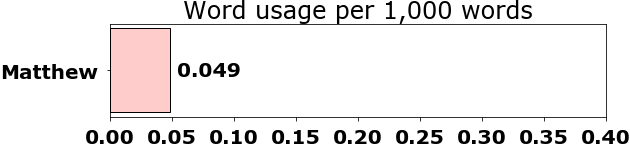 |
Words: προεφθασεν=1
|
59. Matthew 17:25 Custom anticipation
Matthew 17:25 He saith, Yes. And when he was come into the house, Jesus prevented him, saying, What thinkest thou, Simon? of whom do the kings of the earth take custom or tribute? of their own children, or of strangers? [kjv]
λεγει ναι και οτε εισηλθεν ελθοντα εις την οικιαν προεφθασεν αυτον ο ιησους λεγων τι σοι δοκει σιμων οι βασιλεις της γης απο τινων λαμβανουσιν τελη η κηνσον απο των υιων αυτων η απο των αλλοτριων [gnt]
… praevenit … tributum … censum … alienis [v]
- The Greek for "prevented" is that of "anticipated" as in, literally, "before arriving".
- The Greek for "custom" is that of "purpose" or "end" or "completion" and could be, in context, a "tax".
- The Greek for "tribute" is from the Latin word for "census" which comes from a Latin word meaning "opinion" or "think" and is the source of the English word "censure". The Latin word "census" ≈ "tribute, counting" and is the source of the English word "census".
60. Matthew 17:25 Tribute opinion
Matthew 17:25 He saith, Yes. And when he was come into the house, Jesus prevented him, saying, What thinkest thou, Simon? of whom do the kings of the earth take custom or tribute? of their own children, or of strangers? [kjv]
λεγει ναι και οτε εισηλθεν ελθοντα εις την οικιαν προεφθασεν αυτον ο ιησους λεγων τι σοι δοκει σιμων οι βασιλεις της γης απο τινων λαμβανουσιν τελη η κηνσον απο των υιων αυτων η απο των αλλοτριων [gnt]
The Greek for
"thinkest" is the word used as a play on words in Matthew 7 for the
"beam" as in an
"opinion". The "
mote" or "
twig" is a play on words with "
fruit".
61. Strongs - tribute
62. Matthew 17:25 Kings of the earth
Matthew 17:25 He saith, Yes. And when he was come into the house, Jesus prevented him, saying, What thinkest thou, Simon? of whom do the kings of the earth take custom or tribute? of their own children, or of strangers? [kjv]
λεγει ναι και οτε εισηλθεν ελθοντα εις την οικιαν προεφθασεν αυτον ο ιησους λεγων τι σοι δοκει σιμων οι βασιλεις της γης απο τινων λαμβανουσιν τελη η κηνσον απο των υιων αυτων η απο των αλλοτριων [gnt]
The
"kings" of the "
earth" and/or the
"kingdoms" of the "
earth" are controlled by Satan to which Jesus does not take issue in the
examination (temptation) of Jesus in Matthew 4.
Since the "
temple tax" is being related to the
"kings" of the "
earth", Jesus appears to be associating the
religious establishment with the power of Satan.
Does Jesus ever associate the religious establishment with "
fishing" for "
men" for the purposes of getting their money, as in a "
fish" with a "
gold" coin from the mouth?
63. Matthew 23:15 Jesus talks about recruiting friends
Jesus talks about what happens if you recruit followers (as friends, etc.) with incorrect motives (e.g., to fill the pews as a "
return on investment").
Matthew 23:15 Woe unto you, scribes and Pharisees, hypocrites ! for ye compass sea and land to make one proselyte, and when he is made, ye make him twofold more the child of hell than yourselves. [kjv]
ουαι υμιν γραμματεις και φαρισαιοι υποκριται οτι περιαγετε την θαλασσαν και την ξηραν ποιησαι ενα προσηλυτον και οταν γενηται ποιειτε αυτον υιον γεεννης διπλοτερον υμων [gnt]
A "
proselyte" is someone who is being recruited to be a part of the group, as in being a "
friend" to bring a new member or attendee into a church. Might the "
proselyte" be compared to a "
fish" that is caught for the purpose of getting a gold coin? This is a different way to be a "
fisher" of "
men". It is more like a "
snake" posing as a "
fisher".
The Greek translated as "
hypocrites" means "
acting" or "
pretending".
64. Matthew 18:17
KJV: And if he shall neglect to hear them, tell it unto the church: but if he neglect to hear the church, let him be unto thee as an heathen man and a publican.
Greek: εαν δε παρακουση αυτων ειπε ειπον τη εκκλησια εαν δε και της εκκλησιας παρακουση εστω σοι ωσπερ ο εθνικος και ο τελωνης
65. Strongs - thinking
*G1380 *62 δοκέω (dok-eh'-o) : a prolonged form of a primary verb, doko dok'-o (used only in an alternate in certain tenses; compare the base of G1166) of the same meaning; to think; by implication, to seem (truthfully or uncertainly):--be accounted, (of own) please(-ure), be of reputation, seem (good), suppose, think, trow.
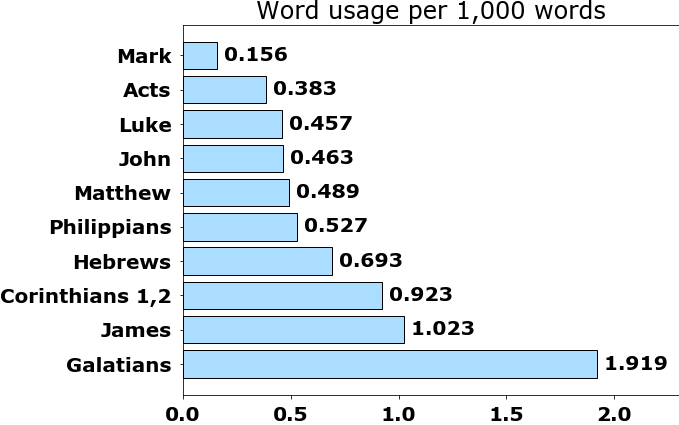 |
Words: δοκει=20 δοκειν δοκεις δοκειτε=10 δοκη δοκουμεν δοκουν δοκουντα δοκουντες=3 δοκουντων δοκουσα δοκουσιν=2 δοκω=2 δοκων δοξαντες=2 δοξη=2 δοξητε δοξω εδοκει εδοκουν=2 εδοξα εδοξαν=2 εδοξε=2 εδοξεν=2
|
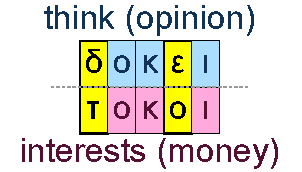
- "δοκεῖ" ≈ "think (opinion)" (third person singular) from "δοκέω" ≈ "expect, think, suppose"
- "τόκοι" ≈ "childbirths, interests (money)" (plural) from "τοκος" ≈ "childbirth, interest (money)".
Jesus uses this word
3 times in Matthew. How do each fit the idea of the play on words?
66. Matthew 17:25 Thinking interest in money
Matthew 17:25 He saith, Yes. And when he was come into the house, Jesus prevented him, saying, What thinkest thou, Simon? of whom do the kings of the earth take custom or tribute? of their own children, or of strangers? [kjv]
λεγει ναι και οτε εισηλθεν ελθοντα εις την οικιαν προεφθασεν αυτον ο ιησους λεγων τι σοι δοκει σιμων οι βασιλεις της γης απο τινων λαμβανουσιν τελη η κηνσον απο των υιων αυτων η απο των αλλοτριων [gnt]
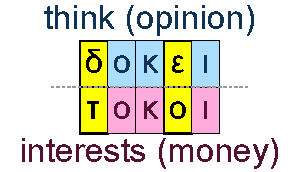
- "δοκεῖ" ≈ "think (opinion)" (third person singular) from "δοκέω" ≈ "expect, think, suppose"
- "τόκοι" ≈ "childbirths, interests (money)" (plural) from "τοκος" ≈ "childbirth, interest (money)".
How might what Jesus says here have something to do with
"thinking" about
"money (interest)" and/or
"childbirth/children"?
67. Matthew 18:12 Thinking interest in money
Matthew 18:12 How think ye? if a man have an hundred sheep, and one of them be gone astray, doth he not leave the ninety and nine, and goeth into the mountains, and seeketh that which is gone astray? [kjv]
τι υμιν δοκει εαν γενηται τινι ανθρωπω εκατον προβατα και πλανηθη εν εξ αυτων ουχι αφεις αφησει τα εννενηκονταεννεα ενενηκοντα εννεα επι τα ορη και πορευθεις ζητει το πλανωμενον [gnt]
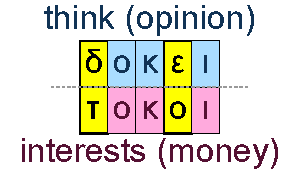
- "δοκεῖ" ≈ "think (opinion)" (third person singular) from "δοκέω" ≈ "expect, think, suppose"
- "τόκοι" ≈ "childbirths, interests (money)" (plural) from "τοκος" ≈ "childbirth, interest (money)".
How might what Jesus says here have something to do with
"thinking" about
"money (interest)" and/or
"childbirth/children"?
Might the
"sheep" have been enticed/entrapped to go "
astray" due to a deception of
"money/interest"? Might this be related to the "
millstone" "
entrapment"?
68. Matthew 21:28 Thinking interest in money
69. Matthew 17:25 Kings of the earth
Matthew 17:25 He saith, Yes. And when he was come into the house, Jesus prevented him, saying, What thinkest thou, Simon? of whom do the kings of the earth take custom or tribute? of their own children, or of strangers? [kjv]
λεγει ναι και οτε εισηλθεν ελθοντα εις την οικιαν προεφθασεν αυτον ο ιησους λεγων τι σοι δοκει σιμων οι βασιλεις της γης απο τινων λαμβανουσιν τελη η κηνσον απο των υιων αυτων η απο των αλλοτριων [gnt]
The
"kings" of the "
earth" have two choices for
"custom" or
"tribute".
- "sons" as in "children".
- "strangers" as in "belonging to another".
Would the religious establishment, in the guise of
"kings", ever extort others (or their children) for money (millstone entrapment), those who might belong to another (i.e., Jesus)?
Might a
"king" ever feel
greater than his subjects? Why might Jesus qualify
"kings" as
"kings" of the
earth? Are there other
"kings" to which what he says might not apply?
70. Strongs - belonging to another
71. Usage - belonging to another
- *G245 *14 ἀλλότριος (al-lot'-ree-os) : from G243; another's, i.e. not one's own; by extension foreign, not akin, hostile:--alien, (an-)other (man's, men's), strange(-r).
- αλλοτριων *4 of 14
- Matthew 17:25 ... children, or of strangers?
- Matthew 17:26 Peter saith unto him, Of strangers. Jesus saith unto him, ...
- John 10:5 And a stranger will they not follow, but will flee from him: for they know not the voice of strangers.
- Hebrews 11:34 ... fight, turned to flight the armies of the aliens.
72. Matthew 17:25 Children
Matthew 17:25 He saith, Yes. And when he was come into the house, Jesus prevented him, saying, What thinkest thou, Simon? of whom do the kings of the earth take custom or tribute? of their own children, or of strangers? [kjv]
λεγει ναι και οτε εισηλθεν ελθοντα εις την οικιαν προεφθασεν αυτον ο ιησους λεγων τι σοι δοκει σιμων οι βασιλεις της γης απο τινων λαμβανουσιν τελη η κηνσον απο των υιων αυτων η απο των αλλοτριων [gnt]
The Greek for
"children" is that of
"sons" and can be taken to be
Jesus, the
disciples (
Peter, etc.) and
believers in general.
Would that religious establishment give "
bad" "
gifts" to their "
children"? Can taking "
money" from their "
children" be considered a "
bad" "
gift"?
73. Matthew 17:25 Strangers
74. Matthew 17:25
Matthew 17:25 He saith, Yes. And when he was come into the house, Jesus prevented him, saying, What thinkest thou, Simon? of whom do the kings of the earth take custom or tribute? of their own children, or of strangers? [kjv]
λεγει ναι και οτε εισηλθεν ελθοντα εις την οικιαν προεφθασεν αυτον ο ιησους λεγων τι σοι δοκει σιμων οι βασιλεις της γης απο τινων λαμβανουσιν τελη η κηνσον απο των υιων αυτων η απο των αλλοτριων [gnt]
The Greek for
"strangers" is not the
usual Greek word for
"stranger". John uses this exact word for
"stranger" for the one from which "
sheep" will "
flee" as they know not the voice. John 10:5. Might this be related to the upcoming sheep that went astray in the next (related) chapter?
75. John 10:4-5 Voice recognition
John 10:4 And when he putteth forth his own sheep, he goeth before them, and the sheep follow him: for they know his voice. [kjv]
και οταν τα ιδια προβατα παντα εκβαλη εμπροσθεν αυτων πορευεται και τα προβατα αυτω ακολουθει οτι οιδασιν την φωνην αυτου [gnt]
10:5 And a stranger will they not follow, but will flee from him: for they know not the voice of strangers. [kjv]
αλλοτριω δε ου μη ακολουθησωσιν ακολουθησουσιν αλλα φευξονται απ αυτου οτι ουκ οιδασιν των αλλοτριων την φωνην [gnt]
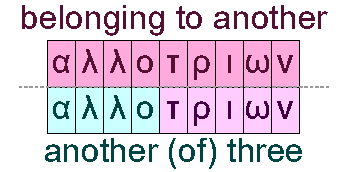
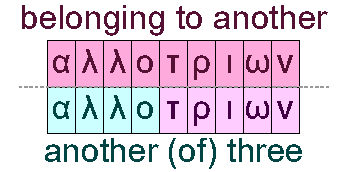
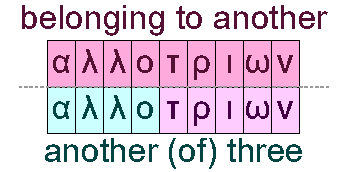
- "ἀλλοτρίων" ≈ "belonging to another, foreign" (genitive) from "ἀλλότριος" ≈ "belonging to another, foreign" .
- "ἄλλος" ≈ "other - similar" (of things that are similar in some way).
- "τριῶν" ≈ "(of) three" (plural) from "τρία" ≈ "three" .
Who might the
"stranger" be? The Greek for
"strangers" is not the
usual Greek word for
"stranger". The word used appears to be a play on words with
"other three" which could be what is sometimes called the "
Satanic trinity".
76. John 10:4
KJV: And when he putteth forth his own sheep, he goeth before them, and the sheep follow him: for they know his voice.
Greek: και οταν τα ιδια προβατα παντα εκβαλη εμπροσθεν αυτων πορευεται και τα προβατα αυτω ακολουθει οτι οιδασιν την φωνην αυτου
77. John 10:5
KJV: And a stranger will they not follow, but will flee from him: for they know not the voice of strangers.
Greek: αλλοτριω δε ου μη ακολουθησωσιν ακολουθησουσιν αλλα φευξονται απ αυτου οτι ουκ οιδασιν των αλλοτριων την φωνην
78. Matthew 17:25 Paraphrase
Matthew 17:25 He saith, Yes. And when he was come into the house, Jesus prevented him, saying, What thinkest thou, Simon? of whom do the kings of the earth take custom or tribute? of their own children, or of strangers? [kjv]
λεγει ναι και οτε εισηλθεν ελθοντα εις την οικιαν προεφθασεν αυτον ο ιησους λεγων τι σοι δοκει σιμων οι βασιλεις της γης απο τινων λαμβανουσιν τελη η κηνσον απο των υιων αυτων η απο των αλλοτριων [gnt]
Paraphrase:
... Who do the (Satan-controlled secular and religious) kings (powers) of the earth take their purpose or opinions? From the sons (Jesus, Peter, believers) or from the other three (Satanic trinity)?
The
"other three" has an interesting connection with "
pointing the finger" at someone else. The
"other three" fingers are pointing back. In psychology, the general idea is called "
projection".
79. Matthew 17:26 Strangers
Matthew 17:26 Peter saith unto him, Of strangers. Jesus saith unto him, Then are the children free. [kjv]
λεγει αυτω ο πετρος ειποντος δε απο των αλλοτριων εφη αυτω ο ιησους αραγε ελευθεροι εισιν οι υιοι [gnt]
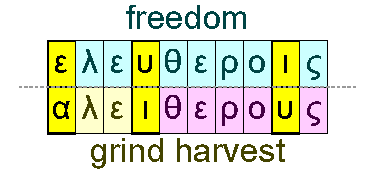
What does it mean to be
"free"? This statement appears to setup the "
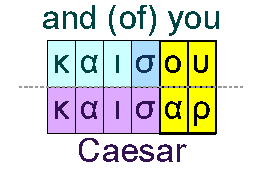
render to Caesar" trick when the religious establishment is "
ready to try anything" and translated as "
crafty".
Paraphrase:
of the other three [Satanic trinity]. ... Then the sons (Jesus, disciples, believers) are free (of bondage of sin) [that is, they are wheat harvest]
Note that the "
temple tax" is for the "
children" on "
sons" and not for the "
others".
80. Matthew 11:6: Idiomatic misinterpretations that offend
Matthew 11:6 And blessed is he, who soever shall not be offended in me. [kjv]
και μακαριος εστιν ος εαν αν μη σκανδαλισθη εν εμοι [gnt]
… beatus … non … scandalizatus … [v]
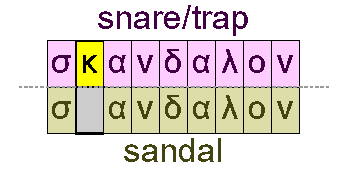
Jesus is speaking. The ancient Greek word
"σκάνδαλον" ≈ "trap, snare" as in
entice,
tempt, etc. Star Wars
Admiral Ackbar: "
It's a trap!".
The Greek word
"blessed" here means
"happy". The
"offended" means
"entrapped" as in being
"tricked" or
"deceived" or
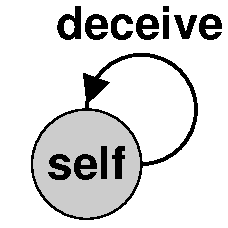
"seduced". How could someone be "
deceived" by themselves or someone else about what Jesus really means? A simple
idiom as
"misinterpret" helps to understand this word in the
GNT.
Paraphrase:
Happy is the one who does not misinterpret (entrap themselves) in what I say.
81. Matthew 17:27 Temple tax
Matthew 17:27 Notwithstanding, lest we should offend them, go thou to the sea, and cast an hook, and take up the fish that first cometh up; and when thou hast opened his mouth, thou shalt find a piece of money: that take, and give unto them for me and thee. [kjv]
ινα δε μη σκανδαλισωμεν αυτους πορευθεις εις την θαλασσαν βαλε αγκιστρον και τον αναβαντα πρωτον ιχθυν αρον και ανοιξας το στομα αυτου ευρησεις στατηρα εκεινον λαβων δος αυτοις αντι εμου και σου [gnt]
Who are the
"them" that should not be
entrapped or
misinterpreted based on some
oath,
stolen by
deception (
lying) as in a
sandal (Boaz and Ruth)?
- Is it the religious establishment?
- Is it the other people listening?
- Is it some other group?
The meaning appears to be "
lest we should ensnare or trap them" or "
lest we be misinterpreted by them".
82. Matthew 17:27 Words
Matthew 17:27 Notwithstanding, lest we should offend them, go thou to the sea, and cast an hook, and take up the fish that first cometh up; and when thou hast opened his mouth, thou shalt find a piece of money: that take, and give unto them for me and thee. [kjv]
ινα δε μη σκανδαλισωμεν αυτους πορευθεις εις την θαλασσαν βαλε αγκιστρον και τον αναβαντα πρωτον ιχθυν αρον και ανοιξας το στομα αυτου ευρησεις στατηρα εκεινον λαβων δος αυτοις αντι εμου και σου [gnt]
- The "sea" represents the "sea" of "humanity". That "salt" of the "sea" can become the "salt" of the "earth".
- The "cast" is the Greek word translated as the "plucking" out of an "eye"
- The "fish" was used as a symbol of early Christianity but was used by Jesus to represent the "sea" of "humanity" of sinners who needed to be saved. Thus, "fishers" of "men".
A better symbol might have been the "
sheep" to which the "
fish" became.
83. Fish in Greek
John 21:11 Simon Peter went up, and drew the net to land full of great fishes, an hundred and fifty and three… [kjv]
ανεβη ουν σιμων πετρος και ειλκυσεν το δικτυον επι της γης εις την γην μεστον ιχθυων μεγαλων εκατον πεντηκοντατριων πεντηκοντα τριων και τοσουτων οντων ουκ εσχισθη το δικτυον [gnt]
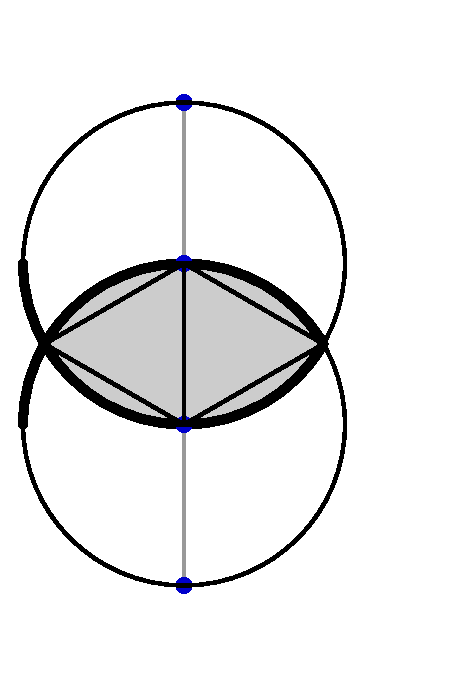 |

153 = number of the fish.
w/h = sqrt(3) = 265/153.
|
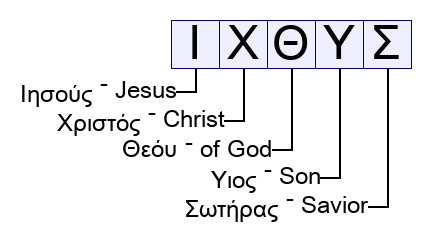 |
The ancient Greek word
"ιχθύς" ≈ "fish, ixthus" or «
ΙΧΘΥΣ» was an
acronym where each letter symbolized an important part of Christianity.
John uses a lot of computer science top-down, backward-chaining thinking in his writing.
[John 1, 1 John 1, John 14-19, etc.]
From a Greek geometric construction, the "
number of the fish" was
153 - the number of fish caught in John after the resurrection. (fish
w/h = sqrt(3) ≈ 265/153)
The approximation ratio is 265/153 and the number 153 was called the "
number of the fish". For more on approximation ratios, see Non-rational number approximation .
84. Matthew 17:27 Words
Matthew 17:27 Notwithstanding, lest we should offend them, go thou to the sea, and cast an hook, and take up the fish that first cometh up; and when thou hast opened his mouth, thou shalt find a piece of money: that take, and give unto them for me and thee. [kjv]
ινα δε μη σκανδαλισωμεν αυτους πορευθεις εις την θαλασσαν βαλε αγκιστρον και τον αναβαντα πρωτον ιχθυν αρον και ανοιξας το στομα αυτου ευρησεις στατηρα εκεινον λαβων δος αυτοις αντι εμου και σου [gnt]
- The "first" means that it does not matter which "fish" takes the "bait", just take the "first" one.
- The Greek for "hook" is that of an "angle" and is the source of the English word "anchor" and Angles, as in Anglo-Saxon, which became the word "English".
85. Hebrew vav as hook and Greek hook, anchor and hug
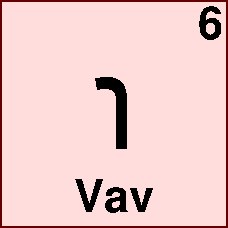
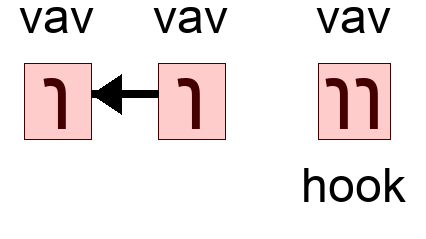
The Hebrew word
"וו" (vav) ≈ "hook" and is made of two Hebrew "
vav" letters. In some fonts, that Hebrew letter has the hook at the top end that represents a "
hook".
The ancient Greek word
"ἄγκιστρον" ≈ "hook" and comes from
"ἀγκάλη" ≈ "bend" which is translated as "
hug" in Luke. The word is related to the English word for "
anchor" and is related to the word "
Angles" from which we get the first part of the word "
Anglo-Saxon".
Job 41:1 Canst thou draw out leviathan with an hook? or his tongue with a cord which thou lettest down? [kjv]
αξεις δε δρακοντα εν αγκιστρω περιθησεις δε φορβεαν περι ρινα αυτου [lxx]
The
LXX (Septuagint) uses the word for "
dragon" or, in modern terms, "
dinosaur" for "
leviathan".
86. Open mouths
Matthew 5:2 And he opened his mouth, and taught them, saying, [kjv]
και ανοιξας το στομα αυτου εδιδασκεν αυτους λεγων [gnt]
17:27 Notwithstanding, lest we should offend them, go thou to the sea, and cast an hook, and take up the fish that first cometh up; and when thou hast opened his mouth, thou shalt find a piece of money: that take, and give unto them for me and thee. [kjv]
ινα δε μη σκανδαλισωμεν αυτους πορευθεις εις την θαλασσαν βαλε αγκιστρον και τον αναβαντα πρωτον ιχθυν αρον και ανοιξας το στομα αυτου ευρησεις στατηρα εκεινον λαβων δος αυτοις αντι εμου και σου [gnt]
The exact Greek words for
"open the mouth" appear only
two times in the
GNT and
not in the
LXX. In Greek, the word
"and" before and the word
"of his" after the phrase are also the same. Is there a connection?
Jesus
"opened his mouth" at the beginning of the Sermon on the Mount. The religious institution is apparently not interested in the words of Jesus but in
"opening mouths" of "
fish" attracted to the false "
bait" in order to get
"money".
87. Matthew 5:2
KJV: And he opened his mouth, and taught them, saying,
Greek: και ανοιξας το στομα αυτου εδιδασκεν αυτους λεγων
88. Matthew 17:27 Mouths
Matthew 17:27 Notwithstanding, lest we should offend them, go thou to the sea, and cast an hook, and take up the fish that first cometh up; and when thou hast opened his mouth, thou shalt find a piece of money: that take, and give unto them for me and thee. [kjv]
ινα δε μη σκανδαλισωμεν αυτους πορευθεις εις την θαλασσαν βαλε αγκιστρον και τον αναβαντα πρωτον ιχθυν αρον και ανοιξας το στομα αυτου ευρησεις στατηρα εκεινον λαβων δος αυτοις αντι εμου και σου [gnt]
The ancient Greek word
"στόμα" ≈ "opening, mouth" and is the source of the English medical term
"stoma" as an
"opening".
89. A peace of the mouth of the sword
Revelation 1:16 And he had in his right hand seven stars: and out of his mouth went a sharp twoedged sword: and his countenance was as the sun shineth in his strength. [kjv]
και εχων εν τη δεξια αυτου χειρι αυτου αστερας επτα και εκ του στοματος αυτου ρομφαια διστομος οξεια εκπορευομενη και η οψις αυτου ως ο ηλιος φαινει εν τη δυναμει αυτου [gnt]

The ancient Greek word
"στόμα" ≈ "mouth" and could mean the "
face", source of a body of water, opening in the earth, the front opening of something, etc. An interesting idiom in the Greek is that of letting the "
mouth of the sword" do the talking. This might be similar to saying "
let my sword do the talking".
The
"sword" here is, literally, a "
two"
"mouth" "sword".
90. Matthew 17:27 Open mouths
Matthew 17:27 Notwithstanding, lest we should offend them, go thou to the sea, and cast an hook, and take up the fish that first cometh up; and when thou hast opened his mouth, thou shalt find a piece of money: that take, and give unto them for me and thee. [kjv]
A United Methodist saying is:
Open hearts, open minds, open doors. Discuss:
- Do churches want "open " "minds" that disagree with their (sometimes secular, human-based) viewpoints?
- Do churches want "open" "doors" that allow anyone in, even those that disagree with them.
- Do churches want "open" "mouths" when what is said disagrees with their viewpoints?
Would Jesus be welcome to come in the "
door"? In Revelation, Jesus is knocking on the door of the church and they will not open it to let him in.
91. Brains and minds
A United Methodist saying is:
Open hearts, open minds, open doors.
Do not be so open-minded that your brains fall out. Attributed to G.K. Chesterton (he said something similar in other words), Carl Sagan (1996 book),, space engineer James Oberg, and others.
The general idea is that of the
Russell paradox. A version of this is the
toleration paradox, or, more recently, the
hate paradox.
- Hate has no home here.
- We effectively hate (without using that word) anyone we decide is hateful.
- Sign: Truth is the new hate speech.
Much more detailed information:
https://quoteinvestigator.com/2014/04/13/open-mind/ (as of 2024-06-13)
92. Usage - open
*G455 *77 ἀνοίγω (an-oy'-go) : from G303 and oigo (to open); to open up (literally or figuratively, in various applications):--open.
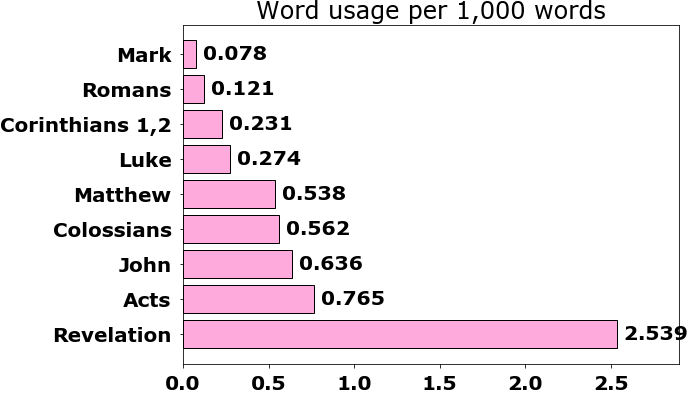 |
Words: ανεωγεν=2 ανεωγμενας ανεωγμενης ανεωγμενον ανεωγμενος ανεωγοτα ανεωξεν ανεωχθη ανεωχθηναι ανεωχθησαν=3 ανοιγει=2 ανοιγειν ανοιγησεται=2 ανοιγων ανοιγωσιν ανοιξαι=7 ανοιξαντες=3 ανοιξας=6 ανοιξει ανοιξη=2 ανοιξον=2 ανοιξω ανοιξωσιν ανοιχθησεται=2 ηνεωγμενη ηνεωγμενην ηνεωγμενον=3 ηνεωχθησαν ηνοιγη=3 ηνοιγησαν ηνοιγμενων ηνοιξεν=18 ηνοιχθη ηνοιχθησαν=2
|
93. Matthew 9:12-13 Paraphrase
Matthew 9:12 But when Jesus heard that, he said unto them, They that be whole need not a physician, but they that are sick. [kjv]
9:13 But go ye and learn what that meaneth, I will have mercy, and not sacrifice: for I am not come to call the righteous, but sinners to repentance. [kjv]
- The strong (who oppress the harmed) are righteous (in their own eyes) and do not want the healer (Jesus).
- The harmed (who are oppressed by the strong) want a healer (Jesus).
- Mercy is needed from the strong (who oppress) and not sacrifice from the harmed (as man's additions to God's laws).
- I have not come to call the righteous (in their own eyes) as they do not want the healer (Jesus). (They will not listen nor repent)
- I have come to call the sinners as they want the healer (Jesus). (They, at least, will listen and may or may not repent.)
94. Matthew 17:27 Temple tax coin
Matthew 17:27 Notwithstanding, lest we should offend them, go thou to the sea, and cast an hook, and take up the fish that first cometh up; and when thou hast opened his mouth, thou shalt find a piece of money: that take, and give unto them for me and thee. [kjv]
ινα δε μη σκανδαλισωμεν αυτους πορευθεις εις την θαλασσαν βαλε αγκιστρον και τον αναβαντα πρωτον ιχθυν αρον και ανοιξας το στομα αυτου ευρησεις στατηρα εκεινον λαβων δος αυτοις αντι εμου και σου [gnt]
The ancient Greek word
"στατήρ" ≈ "weight, standard, stater coin". This
"stater", often translated as
"piece of money", was originally a weight of precious metal but eventually became known as a silver or gold coin of various values.
The "
temple tax" was "
two drachmas". For
two this would be a
"four drachma". Some modern Greek translations use the Greek for
"quad drachma". Jesus used the word for
"stater".
95. Matthew 13:33 Satanic measures three
Matthew 13:33 Another parable spake he unto them; The kingdom of heaven is like unto leaven, which a woman took, and hid in three measures of meal, till the whole was leavened. [kjv]
αλλην παραβολην ελαλησεν αυτοις ομοια εστιν η βασιλεια των ουρανων ζυμη ην λαβουσα γυνη ενεκρυψεν εις αλευρου σατα τρια εως ου εζυμωθη ολον [gnt]
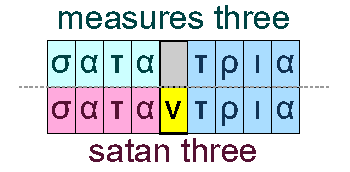
- "σατα" ≈ "measures".
- "τρια" ≈ "three".
- "σαταν" ≈ "Satan".
Can you think of ways that these allusions might be
"encrypted" in the
"wheat" or
"meal"?
☐
σατα τρια (sata tria) as "
measures three" (as written)
☐
σαταν τρια (Satan tria) as "
Satan three"
☐
σαταρίς τρια (sataris tria) as "
woman's headdress three"
☐
στατηρα τρια (statira tria) as "
temple tax coin three"
96. Strongs - coin
- *G4715 *1 στατήρ (stat-air') : from the base of G2746; a stander (standard of value), i.e. (specially), a stater or certain coin:--piece of money.
- στατηρα
- Matthew 17:27 ... his mouth, thou shalt find a piece of money: that take, and give ...
97. Usage - coin
*G4715 *1 στατήρ (stat-air') : from the base of G2746; a stander (standard of value), i.e. (specially), a stater or certain coin:--piece of money.
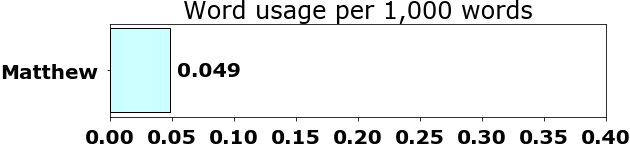 |
Words: στατηρα=1
|
The ancient Greek word
"στατήρ" ≈ "weight, standard, stater coin". This word appears one time in the
GNT and not in the
LXX.
It is a possible play on words with the "
measures three" in the fourth kingdom parable in Matthew 13.
98. Creationist assumptions
It is assumed then that Peter does what Jesus says and it works. Nothing unusual there.
It is interesting that some
creationists have gone to great lengths to find
natural reasons why a fish in that area might have a coin in the mouth.
Creationists tend to focus on the
low probability that the
first fish would have a gold coin in the mouth. On the other hand, if you can
enslave the "
fish" as "
people", then every "
fish" has something of value that can be taken from that "
fish" if the mouth is forced open. This is easier via deception rather than force.
Discuss: Does the church ever "
fish" for "
money"? If so, provide some examples of "
bait"? If you are "
hooked" on this idea, but have no clue, you will have to wait with "
baited" breath. In this case,
debate is very important.
99. Acts 3:6-7 Gold and silver
After the resurrection, a beggar in the temple expects money from Peter.
Acts 3:6 Then Peter said, Silver and gold have I none; but such as I have give I thee: In the name of Jesus Christ of Nazareth rise up and walk. [kjv]
ειπεν δε πετρος αργυριον και χρυσιον ουχ υπαρχει μοι ο δε εχω τουτο σοι διδωμι εν τω ονοματι ιησου χριστου του ναζωραιου εγειραι και περιπατει [gnt]
… surge … ambula [v]
3:7 And he took him by the right hand, and lifted him up: and immediately his feet and ancle bones received strength. [kjv]
Folklore story: (paraphrased):
- Pope to Francis of Assisi, showing him a treasure of gold and silver: "They can no longer say gold and silver have we none.".
- Francis of Assisi to Pope: "But now you cannot say, in the name of Jesus get up and walk.".
The
KJV (King James Version) uses
"have I none" where the Greek is
"does not exist".
100. Give
Uses of the second person imperative Greek word «
δος» for
"give" or
"you give" in the
GNT are interesting. The Greek word is the source of the English word
"dose" as "
something that is given". What is "
given" is the direct object (accusative).
Matthew 6:11 Give us this day our daily bread. [kjv]
τον αρτον ημων τον επιουσιον δος ημιν σημερον [gnt]
Paraphrase:
You give (subject verb)the bread (direct object) ...
14:8 And she, being before instructed of her mother, said, Give me here John Baptist's head in a charger. [kjv]
η δε προβιβασθεισα υπο της μητρος αυτης δος μοι φησιν ωδε επι πινακι την κεφαλην ιωαννου του βαπτιστου [gnt]
Paraphrase:
You give (subject verb) the head (direct object) ...
101. Matthew 6:11
KJV: Give us this day our daily bread.
Greek: τον αρτον ημων τον επιουσιον δος ημιν σημερον
102. Matthew 14:8
KJV: And she, being before instructed of her mother, said, Give me here John Baptist's head in a charger.
Greek: η δε προβιβασθεισα υπο της μητρος αυτης δος μοι φησιν ωδε επι πινακι την κεφαλην ιωαννου του βαπτιστου
103. John 4:10 Give
John 4:10 Jesus answered and said unto her, If thou knewest the gift of God, and who it is that saith to thee, Give me to drink; thou wouldest have asked of him, and he would have given thee living water. [kjv]
απεκριθη ιησους και ειπεν αυτη ει ηδεις την δωρεαν του θεου και τις εστιν ο λεγων σοι δος μοι πιειν πειν συ αν ητησας αυτον και εδωκεν αν σοι υδωρ ζων [gnt]
104. John 4:10
KJV: Jesus answered and said unto her, If thou knewest the gift of God, and who it is that saith to thee, Give me to drink; thou wouldest have asked of him, and he would have given thee living water.
Greek: απεκριθη ιησους και ειπεν αυτη ει ηδεις την δωρεαν του θεου και τις εστιν ο λεγων σοι δος μοι πιειν πειν συ αν ητησας αυτον και εδωκεν αν σοι υδωρ ζων
105. The prefix anti in place of against
Matthew 5:38 Ye have heard that it hath been said, An eye for an eye, and a tooth for a tooth: [kjv]
ηκουσατε οτι ερρεθη οφθαλμον αντι οφθαλμου και οδοντα αντι οδοντος [gnt]
The English word and prefix
"anti", from the Latin, means
"against" or
"opposite". The
ancient Greek word
"ἀντί" ≈ "in place of" and, if
context permits,
can mean
"against" or
"opposite". The same for the
modern Greek word
"αντί" (an-TEE) ≈ "in place of".
Which is it?
- "eye" "for" an "eye"
- "eye" "against" an "eye"
- "eye" "in place of" an "eye"
Thus, the "
anti-Christ" will set himself up
"in place of" Christ, as an "
impersonator" of Christ (using deception) rather than just an "
imitator" of Christ.
106. Matthew 17:27 In place of me and you
Matthew 17:27 Notwithstanding, lest we should offend them, go thou to the sea, and cast an hook, and take up the fish that first cometh up; and when thou hast opened his mouth, thou shalt find a piece of money: that take, and give unto them for me and thee. [kjv]
ινα δε μη σκανδαλισωμεν αυτους πορευθεις εις την θαλασσαν βαλε αγκιστρον και τον αναβαντα πρωτον ιχθυν αρον και ανοιξας το στομα αυτου ευρησεις στατηρα εκεινον λαβων δος αυτοις αντι εμου και σου [gnt]
The Greek translated as
"for" is that of
"in place of". The religious establishment is not so much concerned about their children such as Jesus, the disciples, believers, etc.
The religious establishment is interested in the
"money" that can be obtained from the "
mouths" of their "
children" (to fill the pews, support themselves, etc.).
107. Verses for reference
Matthew 17:25 He saith, Yes. And when he was come into the house, Jesus prevented him, saying, What thinkest thou, Simon? of whom do the kings of the earth take custom or tribute? of their own children, or of strangers? [kjv]
17:26 Peter saith unto him, Of strangers. Jesus saith unto him, Then are the children free. [kjv]
17:27 Notwithstanding, lest we should offend them, go thou to the sea, and cast an hook, and take up the fish that first cometh up; and when thou hast opened his mouth, thou shalt find a piece of money: that take, and give unto them for me and thee. [kjv]
108. Paraphrase of words of Jesus
17:25 ... of whom do the kings (and religious) powers of the earth (controlled by Satan) take their purpose or opinion? Is it from their own sons (Jesus and believers) or of strangers [the other three - references to Satanic trinity]?
17:26 ... then the sons (Jesus and believers) are free (of bondage and tax of sin) [free as in a wheat harvest].
17:27 So that they do not misinterpret (or entrap themselves with) what we are doing (good works outside of the temple), go to the sea (of humanity), cast a hook (trap as they do to their children), and take up the first fish (of humanity) available. Open the mouth (there is gold in the mouths of those fish that are attracted to the false bait), and take that gold [measures three with Satanic illusions] and give it to them in place of you and me (believers) (as all they really want or care about is the money/tax to support themselves).
This story, at the end of chapter 17, appears to be the source of the idea to entrap Jesus with the question on who to give tribute to in chapter 19. This discourse, however, continues until the end of chapter 18.
109. Bigger picture
Here is one way to look at the temple tax verses in Matthew 17:24-27.
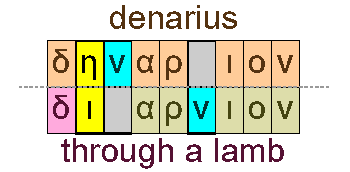
- The religious establishment grabs Peter by the throat (entrapment), so to speak, and says - will (you and) Jesus pay? How is this different from the unforgiving servant demanding that the fellow servant pay (one hundred, all together, through a lamb/bird) - if he owes?
- Instead of thinking yes-yes no-no, Peter answers for Jesus. Is it a sin to speak for Jesus without consulting him? How does Jesus handle this sin?
- Jesus interacts with Peter, reasoning with him, and gains his brother. That is, the children (they) are free (from the tax). How is this different from the persons with five and two talents gaining but five and two talents (respectively)? Who has found whom?
- Can Peter be compared to a sheep that (is led) astray through some (millstone) entrapment. Jesus (takes the initiative and) finds him and reasons with him. Is Jesus as the shepherd rejoicing to have found Peter (the lost sheep)? Is Peter (the lost sheep) rejoicing to have found Jesus (the shepherd) who has explained the way back?
- Nevertheless, to avoid entrapping the religious establishment (who think that they are great), Jesus finds a way to way to pay (avoiding conflict) that shows the true motives of the religious establishment.
110. Matthew 23:2-4 Advice summary
Matthew 23:2 Saying, The scribes and the Pharisees sit in Moses' seat: [kjv]
23:3 All therefore whatsoever they bid you observe, that observe and do; but do not ye after their works: for they say, and do not. [kjv]
παντα ουν οσα αν εαν ειπωσιν υμιν τηρειν τηρειτε ποιησατε και ποιειτε τηρειτε κατα δε τα εργα αυτων μη ποιειτε λεγεουσιν γαρ και ου ποιουσιν [gnt]
23:4 For they bind heavy burdens and grievous to be borne, and lay them on men's shoulders; but they themselves will not move them with one of their fingers. [kjv]
Paraphrase:
... The scribes (point one way with one hand) and Pharisees (point other way with other hand) sit in the seat of Moses. All (of them, emphasize hands still pointing both ways)! Therefore (lower hands), as much as if [Do not be sick/distressed when] they say to you: You do (this, point one way with one hand)! You follow (that, point other way with other hand)!(lower hands) But according to their works: Do not do! (shake head) For they (also) do not do (what they say)! (shake head again). ...
Paraphrase:
For they load/bind heavy [Rabbi] burdens [taxes] and place [view] them on the shoulder [Moses] of men but (of) the finger [then compassion] (they) do not desire [neither mercy] to move [overcome] them.
Jesus only says that there are things one should not do. He never answers the question as to what command to follow and what command to not follow. There is no easy general answer since a specific command and context would be needed to answer that question.
111. Matthew 18:1 Greatest
Matthew 18:1 At the same time came the disciples unto Jesus, saying, Who is the greatest in the kingdom of heaven? [kjv]
εν εκεινη τη ωρα προσηλθον οι μαθηται τω ιησου λεγοντες τις αρα μειζων εστιν εν τη βασιλεια των ουρανων [gnt]
|
Who is "greatest"?
|
Who is "least"?
|
 |
 |
 |
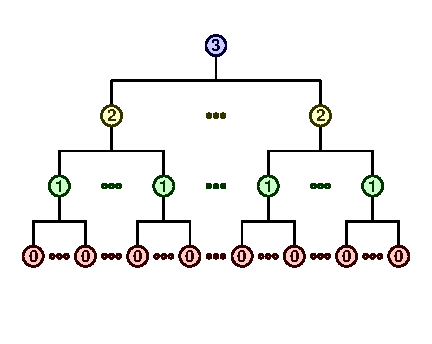 |
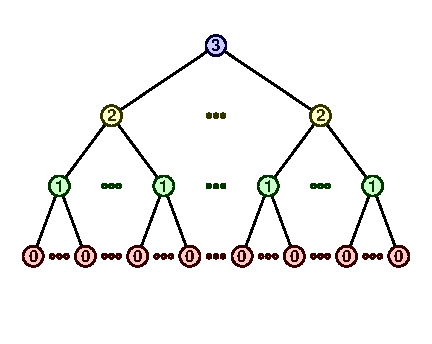
Since chapter 17 is concerned with
"greatness" and chapter 18 starts with the question to Jesus of who is
"greatest", the question might have been motivated by chapter 17 and then that idea follows through with everything Jesus says in finishing this discourse in chapter 18.
In modern times, those who think themselves
"great" are sometimes called the "
elite".
112. End of page