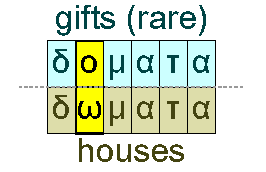
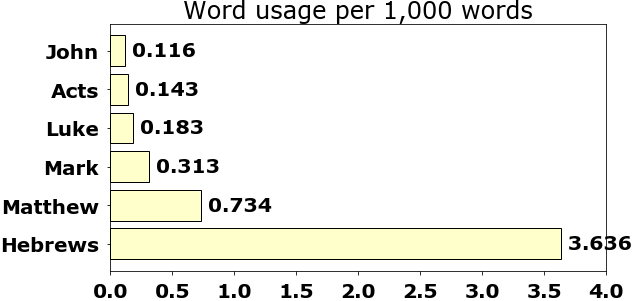
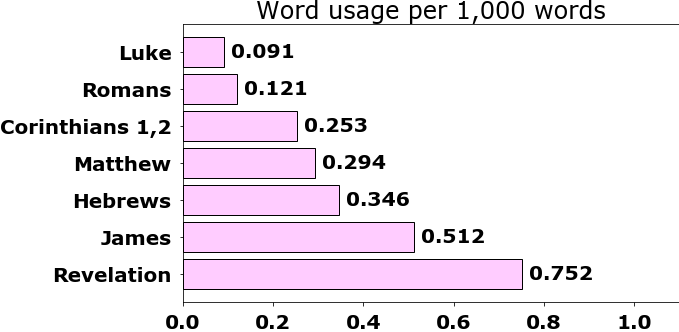
- *G2379 *23 θυσιαστήριον (thoo-see-as-tay'-ree-on) : from a derivative of G2378; a place of sacrifice, i.e. an altar (special or genitive case, literal or figurative):--altar.
- θυσιαστηριον *6 of 23
- Matthew 5:23 ... thy gift to the altar, and there rememberest that ...
- Matthew 23:19 ... is greater, the gift, or the altar that sanctifieth the gift?
- Hebrews 13:10 We have an altar, where of they have no ...
- James 2:21 ... his son upon the altar?
- Revelation 8:3 ... stood at the altar, having a golden censer; and there was given unto him much incense, that he should offer it with the prayers of all saints upon the golden altar which was before the throne.
- Revelation 11:1 ... the temple of God, and the altar, and them that worship therein.
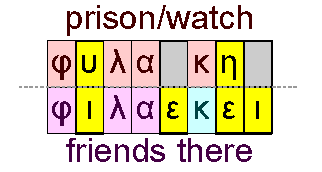
19. Matthew 5:23 Altar prison
20. John 10:10
John 10:10 The thief cometh not, but for to steal, and to kill, and to destroy: I am come that they might have life, and that they might have it more abundantly. [kjv]
ο κλεπτης ουκ ερχεται ει μη ινα κλεψη και θυση και απολεση εγω ηλθον ινα ζωην εχωσιν και περισσον εχωσιν [gnt]
The ancient Greek word
"θύω" ≈ "offer in sacrifice, kill, slaughter". An example is
"θυσία" ≈ "offering, sacrifice, victim" which is the basis for
"θυσιαστηρίων" ≈ "altar".
Discuss:
Can one "steal" using deception rather than force?
Can one "kill" using deception rather than force?
Can one "destroy" using deception rather than force?
Who is the "
great deceiver"? Can a case be made for (some) religious organizations acting as a
"thief" to
"steal" and
"kill" and "
destroy"? Provide examples.
21. Matthew 5:23 Gifts
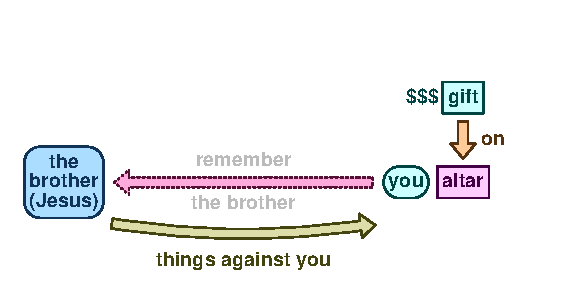
Matthew 5:23 Therefore if thou bring thy gift to the altar, and there rememberest that thy brother hath ought against thee; [kjv]
εαν ουν προσφερης το δωρον σου επι το θυσιαστηριον κακει μνησθης οτι ο αδελφος σου εχει τι κατα σου [gnt]
A
"gift" is something
given, whether for good or
not good. A similar word is "
guest" and "
ghost".
An English "gift" is something given, good to the recipient.
The German word "Gift" ≈ "poison" is something given, not good to the recipient.
There is an "
if" for
bringing a
"gift" onto the altar. Does one
need to
carry a
"gift" to the
altar? Is there a "
yoke of compulsion" to
carry a
"gift" to the
altar?
Might Jesus be "
angry" with you if you
"carry (to offer)" a
"gift" "on" the
"altar" rather than doing something else that Jesus considers
more important?
22. Amos 5:21-22 Feast days and holocausts
Amos 5:21 I hate, I despise your feast days, and I will not smell in your solemn assemblies. [kjv]
μεμισηκα απωσμαι εορτας υμων και ου μη οσφρανθω εν ταις πανηγυρεσιν υμων [lxx]
5:22 Though ye offer me burnt offerings and your meat offerings, I will not accept them: neither will I regard the peace offerings of your fat beasts. [kjv]
διοτι και εαν ενεγκητε μοι ολοκαυτωματα και θυσιας υμων ου προσδεξομαι αυτα και σωτηριου επιφανειας υμων ουκ επιβλεψομαι [lxx]
The English word
"holocaust" comes, through French and Latin, from the ancient Greek word
"ὁλόκαυστος " ≈ "wholly burnt" as in a
"burnt offering".
"ὅλος" ≈ "whole, entire" as in the first part of the English word "hologram".
"καίω" ≈ "to burn" and is related to the English word "caustic".
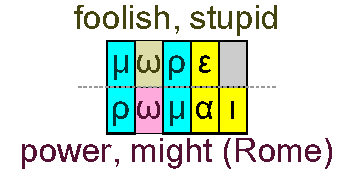
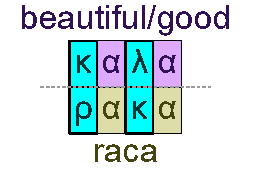
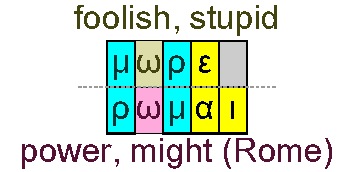
Note that a
hologram is a reality or physics-based phenomena while a
fractal (self-similar) object is a logic or information-based phenomena.
23. Matthew 11:12-14 Exploring the Kingdom of Heaven
Matthew 11:12 And from the days of John the Baptist until now the kingdom of heaven suffereth violence, and the violent take it by force. [kjv]
It is not clear if what Daniel describes as the
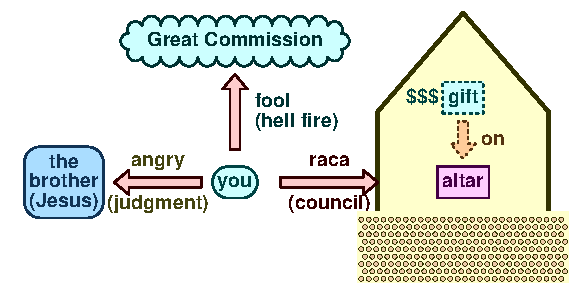
"kingdom" of
"heaven" is related to what Jesus says.
24. Barnabas 2.6 Yoke of compulsion
In the
Epistle of Barnabas, the writer explains at length, quoting verses such as found in Isaiah (and elsewhere), to point out that Jesus removes the "
yoke of compulsion".
English: Therefore he has abolished these things, in order that the new law of our Lord Jesus Christ which is free from the yoke of compulsion, might have its offering, one not made by humans. (Holmes, 2007, p. 383)
Greek: ταυτα ουν κατηργησεν, ινα ο καινος νομος του κυριου ὑμῶν Ἰησοῦ Χριστοῦ, ἄνευ ζυγοῦ ἀνάγκης, ὤν, μὴ ἀνθρωποποίητον ἔχῃ τὴν προσφοράν. Epistle of Barnabas [2.6]
Any religious establishment that profits from that "
yoke of compulsion" would not want the
Epistle of Barnabas included in the canon. Another disputed book, Hebrews, was included. Interesting, Hebrews includes many verses that appear to support a "
yoke of compulsion" while some verses in the
Epistle of Barnabas appear to be mistranslated (to provide continued support for not including it in the canon).
[Amos, Isaiah, Jesus (Matthew 23, etc.)]
25. Matthew 11:30 Yoke of compulsion
The lack of need for a religious hierarchy or
"yoke" of
"compulsion" as Barnabas explains, from the teachings of Jesus about the "
kingdom of heaven", would not have appealed to a human sand hierarchy interested in secular power.
Matthew 11:30 For my yoke is easy, and my burden is light. [kjv]
ο γαρ ζυγος μου χρηστος και το φορτιον μου ελαφρον εστιν [gnt]
The Greek for
"easy" is that of being
"useful" and is a play on words with the Greek word for
"Christ". The word
"yoke" means, literally,
"two going together".
The ancient Greek word "χρηστός" ≈ "useful, good".
The ancient Greek word "χριστός" ≈ "anointed one, Christ".
Without the play on words: My yoke is useful.
With the play on words: My yoke is Christ.
The word for
"burden" was also a word for
"tax". What is the
"tax" of the
"yoke" of "
compulsion"? Think "
altars" and "
sacrifices" and "
money tables".
"φόρτος" ≈ "load, cargo" and "φορτίον" ≈ "load, cargo" (diminutive)
"φόρος" ≈ "tribute, tax".
26. Matthew 5:23 And there remember
Matthew 5:23 Therefore if thou bring thy gift to the altar, and there rememberest that thy brother hath ought against thee; [kjv]
εαν ουν προσφερης το δωρον σου επι το θυσιαστηριον κακει μνησθης οτι ο αδελφος σου εχει τι κατα σου [gnt]
Why does Jesus say
"and there" when just an "
and" would suffice?
... gift on the altar and there remember ...
... gift on the altar and remember ...
From context it is clear that you are "
there" and
not somewhere else.
Meaningless sign:
You are here. You are not there.
The
Madela Effect happens when many people falsely remember the same thing. It is named after Nelson Mandela who many people remember dying in prison in the 1980's.
27. Matthew 5:23 And there
28. Bad play on word connection
Matthew 5:23 Therefore if thou bring thy gift to the altar, and there rememberest that thy brother hath ought against thee; [kjv]
εαν ουν προσφερης το δωρον σου επι το θυσιαστηριον κακει μνησθης οτι ο αδελφος σου εχει τι κατα σου [gnt]
6:34 Take therefore no thought for the morrow: for the morrow shall take thought for the things of itself. Sufficient unto the day is the evil thereof. [kjv]
μη ουν μεριμνησητε εις την αυριον η γαρ αυριον μεριμνησει τα εαυτης αυτης αρκετον τη ημερα η κακια αυτης [gnt]
Back in Matthew 5:23, Jesus appears to make a play on words with
"and there" being
"bad". In Matthew 6:34, later in the Sermon on the Mount, Jesus uses the word on which the play on words appears to be made - to insure that the connection, once made, is justified.
The word is not the usual Greek word for
"evil" but the word for
"bad" and, as used by Jesus, refers to those who are
"harmed" and need the "
Good News".
29. Matthew 6:34
KJV: Take therefore no thought for the morrow: for the morrow shall take thought for the things of itself. Sufficient unto the day is the evil thereof.
Greek: μη ουν μεριμνησητε εις την αυριον η γαρ αυριον μεριμνησει τα εαυτης αυτης αρκετον τη ημερα η κακια αυτης
30. Matthew 5:23,20 And there
Matthew 5:23 Therefore if thou bring thy gift to the altar, and there rememberest that thy brother hath ought against thee; [kjv]
εαν ουν προσφερης το δωρον σου επι το θυσιαστηριον κακει μνησθης οτι ο αδελφος σου εχει τι κατα σου [gnt]
For the play on words of
"and there" with "
bad", a
feminine noun is needed for the
feminine adjective form. Going back three verses one finds the word
"δικαιοσύνη" ≈ "righteousness, justice" that is of
feminine gender.
5:20 For I say unto you, That except your righteousness shall exceed the righteousness of the scribes and Pharisees, ye shall in no case enter into the kingdom of heaven. [kjv]
λεγω γαρ υμιν οτι εαν μη περισσευση υμων η δικαιοσυνη υμων πλειον των γραμματεων και φαρισαιων ου μη εισελθητε εις την βασιλειαν των ουρανων [gnt]
As written: ... and there ...
Play on words: ... bad (righteousness) ...
31. Matthew 5:20 Righteous birds
Matthew 5:20 For I say unto you, That except your righteousness shall exceed the righteousness of the scribes and Pharisees, ye shall in no case enter into the kingdom of heaven. [kjv]
λεγω γαρ υμιν οτι εαν μη περισσευση υμων η δικαιοσυνη υμων πλειον των γραμματεων και φαρισαιων ου μη εισελθητε εις την βασιλειαν των ουρανων [gnt]
Paraphrase:
Except your righteousness (as defined by the birds) exceeds the righteousness of those birds, you shall not enter and/or be promoted as a member of that birdhouse.
When will "
pigs" be allowed to become "
birds"?
When pigs fly!
32. Matthew 5:20 Righteous birds
Matthew 5:20 For I say unto you, That except your righteousness shall exceed the righteousness of the scribes and Pharisees, ye shall in no case enter into the kingdom of heaven. [kjv]
λεγω γαρ υμιν οτι εαν μη περισσευση υμων η δικαιοσυνη υμων πλειον των γραμματεων και φαρισαιων ου μη εισελθητε εις την βασιλειαν των ουρανων [gnt]
Unlike an earlier verse, there is no "
amen" or "
verily" or even "
blessed" starting this verse. The
"righteousness" can be God's
"righteousness" or man's
"righteousness" (or both). Context is important.
[good and bad salt, good and bad light, good and bad houses]
33. Usage - remember
*G3403 *23 μιμνήσκω (mim-nace'-ko) : a prolonged form of G3415 (from which some of the tenses are borrowed); to remind, i.e. (middle voice) to recall to mind:--be mindful, remember.
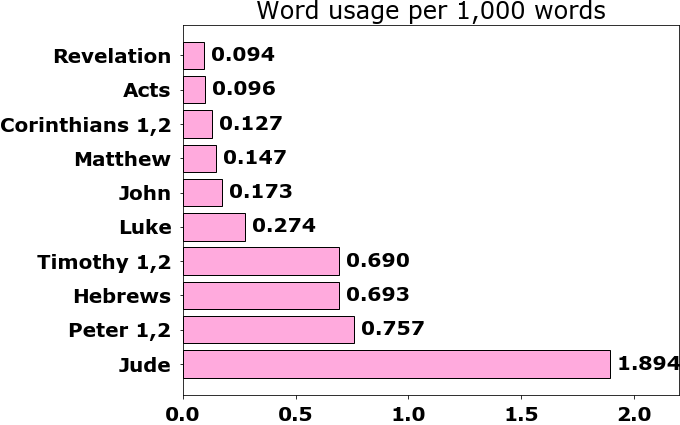 |
Words: εμνησθη=2 εμνησθημεν εμνησθην εμνησθησαν=5 μεμνημενος μεμνησθε μιμνησκεσθε μιμνησκη μνησθηναι=3 μνησθης=1 μνησθησομαι μνησθητε=2 μνησθητι=2 μνησθω
|
"μνησθης" ≈ "rememberest" as used here (appears one time in this from in the GNT).
"μνηστεία" ≈ "proposal of marriage" as a play on words.
34. Matthew 5:23 Remember
Matthew 5:23 Therefore if thou bring thy gift to the altar, and there rememberest that thy brother hath ought against thee; [kjv]
εαν ουν προσφερης το δωρον σου επι το θυσιαστηριον κακει μνησθης οτι ο αδελφος σου εχει τι κατα σου [gnt]
The second person singular (and plural) forms of the verb, as in many languages, can be used in two ways.
You remember. (statement)
Remember! (exclamation)
There are some play on word possibilities here.
"μνησθης" ≈ "rememberest" as used here (appears one time in this from in the GNT).
"μνηστεία" ≈ "proposal of marriage" as a play on words (and similar sounding words meaning wooing for marriage). This relates to Jesus being the "groom" and the church (group of believers) being the "bride".
"μῆνις" ≈ "rage, wrath" (similar sounding word related to "mania").
Paul appears to use this play on word connection in Philippians.
35. Matthew 5:23 And there remember
Matthew 5:23 Therefore if thou bring thy gift to the altar, and there rememberest that thy brother hath ought against thee; [kjv]
εαν ουν προσφερης το δωρον σου επι το θυσιαστηριον κακει μνησθης οτι ο αδελφος σου εχει τι κατα σου [gnt]
The ancient Greek word
"κατά σου" ≈ "against you" as in being
"down on you". Using the play on words, the verse is as follows.
5:23:
If therefore you offer [resemble] your gift on the altar, [bad (righteousness)], remember [as a groom wooing a bride] that the brother of yours (Jesus) has some things against (down on) you (detailed in Revelation).
The Greek phrase
"against you" is only used
here and
three times by Jesus in Revelation. This provides a hint as to the nature and substance of these things. The next verses will indicate a better way that is in line with what
"the" brother (Jesus) desires.
36. Matthew 5:23 Against thee
Matthew 5:23 Therefore if thou bring thy gift to the altar, and there rememberest that thy brother hath ought against thee; [kjv]
εαν ουν προσφερης το δωρον σου επι το θυσιαστηριον κακει μνησθης οτι ο αδελφος σου εχει τι κατα σου [gnt]
The ancient Greek words
"κατά σου" ≈ "against you" as in being
"down on you".
The ancient Greek prefix
"κατά" ≈ "back, downwards, against, fully, completely" and
"σου" ≈ "you".
"κατά" ≈ "against, opposing, into" (genitive)
"κατά" ≈ "downwards, towards, according to" (accusative)
"κᾷτα" ≈ "and then" as a short form of "καὶ εἶτᾰ" ≈ "and then".
Using the last word as a play on words, would be
that the brother Jesus has something (and then some) against you. The two Greek words for
"against you" are only used in Matthew 5:23 and in Revelation, to the churches at
Ephesus,
Smyrna and
Thyatira.
37. Matthew 5:23 The brother
Matthew 5:23 Therefore if thou bring thy gift to the altar, and there rememberest that thy brother hath ought against thee; [kjv]
εαν ουν προσφερης το δωρον σου επι το θυσιαστηριον κακει μνησθης οτι ο αδελφος σου εχει τι κατα σου [gnt]
If you have a lot of "
brothers", is it very likely that at least
one (or more) would have something
"against" or
"down on" you? Who is your "
brother"? Who is your "
neighbor"?
This is
"the" (definite article) "
brother".
Perhaps "the" (definite article) "
brother" is, as in a previous verse,
Jesus. Might
Jesus have anything
"against thee"?
This phase for
"against you" is used only
four times in the
GNT. It is used here by Jesus and three times by Jesus, one each in the letters to the churches of Ephesus, Smyrna and Thiatara. Since the "
brother" could be Jesus, let us look at those usages.
38. Revelation 2:4 To the church at Ephesus
Revelation 2:4 Nevertheless I have somewhat against thee, because thou hast left thy first love. [kjv]
αλλ αλλα εχω κατα σου οτι την αγαπην σου την πρωτην αφηκας αφηκες [gnt]

The Greek translated as
"left" is the word for
"forgive" or
"allow" or
"let go".
They had lost their
"first" "
love". When Jesus uses the word for
"first" there is often no second or third or later option.
In many cases, losing the "
love" of Jesus results in a "
love" of oneself. The "
birds" will use a false light to attract "
fish" from which "
pigs" are recruited to keep everyone in line as the "
birds" create their own "
house" built of "
sand".
39. Revelation 2:4 To the church at Ephesus
Revelation 2:4 Nevertheless I have somewhat against thee, because thou hast left thy first love. [kjv]
αλλ αλλα εχω κατα σου οτι την αγαπην σου την πρωτην αφηκας αφηκες [gnt]
The ancient Greek words
"κατά σου" ≈ "against you" as in being
"down on you". These two Greek words for
"against you" are only used in Matthew 5:23 and in Revelation, to the churches at
Ephesus,
Smyrna and
Thyatira.
If one loses their "
first" "
love", that usually means that they have new "
first" "
love". What might that be?
40. Revelation 2:14 To the church at Smyrna
Revelation 2:14 But I have a few things against thee, because thou hast there them that hold the doctrine of Balaam, who taught Balac to cast a stumblingblock before the children of Israel, to eat things sacrificed unto idols, and to commit fornication. [kjv]
αλλ αλλα εχω κατα σου ολιγα οτι εχεις εκει κρατουντας την διδαχην βαλααμ ος εδιδασκεν εν τω βαλακ βαλειν σκανδαλον ενωπιον των υιων ισραηλ φαγειν ειδωλοθυτα και πορνευσαι [gnt]
They held to the doctrine of Balaam. Balaam knew he could not go against God so he tried other ways to mislead Israel.
eat things sacrificed to idols
to commit fornication
The ancient Greek word
"σκάνδαλον" ≈ "trap, snare" as in entice, tempt, etc., but is often translated as "
stumbling block" is that of entrapping others, often by misleading logical arguments.
41. Revelation 2:14
KJV: But I have a few things against thee, because thou hast there them that hold the doctrine of Balaam, who taught Balac to cast a stumblingblock before the children of Israel, to eat things sacrificed unto idols, and to commit fornication.
Greek: αλλ αλλα εχω κατα σου ολιγα οτι εχεις εκει κρατουντας την διδαχην βαλααμ ος εδιδασκεν εν τω βαλακ βαλειν σκανδαλον ενωπιον των υιων ισραηλ φαγειν ειδωλοθυτα και πορνευσαι
42. Revelation 2:20 To the church at Thiatara
Revelation 2:20 Notwithstanding I have a few things against thee, because thou sufferest that woman Jezebel, which calleth herself a prophetess, to teach and to seduce my servants to commit fornication, and to eat things sacrificed unto idols. [kjv]
αλλ αλλα εχω κατα σου ολιγα οτι εας αφεις την γυναικα ιεζαβηλ την λεγουσαν ιεζαβελ η λεγουσα εαυτην προφητιν διδασκειν και πλανασθαι διδασκει και πλανα τους εμους δουλους πορνευσαι και φαγειν ειδωλοθυτα φαγειν [gnt]
The following issues are raised.
allowing the women Jezebel (as a prophetess)
teaching and seducing servants to commit fornication
eat things sacrificed to idols.
43. Revelation 2:20
KJV: Notwithstanding I have a few things against thee, because thou sufferest that woman Jezebel, which calleth herself a prophetess, to teach and to seduce my servants to commit fornication, and to eat things sacrificed unto idols.
Greek: αλλ αλλα εχω κατα σου ολιγα οτι εας αφεις την γυναικα ιεζαβηλ την λεγουσαν ιεζαβελ η λεγουσα εαυτην προφητιν διδασκειν και πλανασθαι διδασκει και πλανα τους εμους δουλους πορνευσαι και φαγειν ειδωλοθυτα φαγειν
44. Matthew 5:23 Gifts
Matthew 5:23 Therefore if thou bring thy gift to the altar, and there rememberest that thy brother hath ought against thee; [kjv]
εαν ουν προσφερης το δωρον σου επι το θυσιαστηριον κακει μνησθης οτι ο αδελφος σου εχει τι κατα σου [gnt]
Are any of these issues that Jesus has
"against you" to any or all of the churches in Revelation relevant to the Matthew 5:23? Review of the other church issues.
losing their "first love" (Ephesus)
eat things sacrificed to idols. This is a sacrifice. (Smyrna and Balaam)
to commit fornication (Smyrna and Balaam)
allowing the women Jezebel (as a prophetess) (Thiatara)
teaching and seducing servants to commit fornication (Thiatara)
eat things sacrificed to idols. (Thiatara)
The
"altar" and
"against thee" verses are Matthew 5:23-24. The adultery and cutoff and divorce (
fornication) verses are in Matthew 5:28-33.
45. Matthew 5:24 Forgive the leave
Matthew 5:24 Leave there thy gift before the altar, and go thy way; first be reconciled to thy brother, and then come and offer thy gift. [kjv]
αφες εκει το δωρον σου εμπροσθεν του θυσιαστηριου και υπαγε πρωτον διαλλαγηθι τω αδελφω σου και τοτε ελθων προσφερε το δωρον σου [gnt]
Discuss: Are there examples of the "
church" at any time throughout history doing the following?
☐ Offering sacrifices to idols.
☐ Eating things sacrificed to idols.
☐ Committing fornication.
Some of these ideas will be elaborated on in verses to follow. Note: Part of the story of Jezebel in the
OT (Old Testament) involves a form of inquisition to take Naboth's vineyard. Discuss whether any of the following fit the above categories.
☐ Indulgences
☐ Purgatory
☐ Traditions over scripture
☐ Sainthood [comparison with Napoleon and ribbons]
☐ Do any other ideas come to mind?
46. Matthew 5:24 Forgive the leave
Matthew 5:24 Leave there thy gift before the altar, and go thy way; first be reconciled to thy brother, and then come and offer thy gift. [kjv]
αφες εκει το δωρον σου εμπροσθεν του θυσιαστηριου και υπαγε πρωτον διαλλαγηθι τω αδελφω σου και τοτε ελθων προσφερε το δωρον σου [gnt]
The Greek for
"leave" is the word often translated as
"forgive" or
"let go" or
"allow". The word chosen can effect the meaning of the English translation. If you remember
before you bring your
"gift", should you even bother coming to the
"altar"?
The results of a (computational) question in computer science are as follows: "
yes", "
no", "
cancel" (bottom, ignore, not relevant, undefined, etc.).
If
"reconciling" or
"interacting" with your brother is never completed, then do you ever need to come back to the
"altar" to offer the
"gift"?
 |
Details are left as a future topic.
|
47. Nothing is something
Many people think of actions as having two choices, "
do it" or "
do not do it" - a logical fallacy called "
false dilemma". There is a third action that is at the heart of computer science.
1. "look and do" .
2. "look not do".
3. "do not look" - it may not be necessary and, in general, "does not matter".
Efficient algorithms in computer science rely on knowing when to look and when not to look.
Good logical arguments do not include anything not relevant (needed) for the logical argument.
Doing nothing is something and can be important.
[Apostle John, professionals]
48. Go away
Matthew 4:10 Then saith Jesus unto him, Get thee hence, Satan: for it is written, Thou shalt worship the Lord thy God, and him only shalt thou serve. [kjv]
τοτε λεγει αυτω ο ιησους υπαγε σατανα γεγραπται γαρ κυριον τον θεον σου προσκυνησεις και αυτω μονω λατρευσεις [gnt]
5:24 Leave there thy gift before the altar, and go thy way; first be reconciled to thy brother, and then come and offer thy gift. [kjv]
αφες εκει το δωρον σου εμπροσθεν του θυσιαστηριου και υπαγε πρωτον διαλλαγηθι τω αδελφω σου και τοτε ελθων προσφερε το δωρον σου [gnt]
The first and second time Jesus uses
"go away" in Matthew are in an interesting sense.
Satan is to "go away".
You are to "go away" from the "altar".
In both cases, there is distance between the two parties or objects. Is there a deeper connection? Satan's "
examination" (
temptation) centered on "
health", "
wealth" and "
power".
What are the connections between Satan's "
examination" and a
"gift" "on" the
"altar"?
49. Usage - go away
*G5217 *76 ὑπάγω (hoop-ag'-o) : from G5259 and G71; to lead (oneself) under, i.e. withdraw or retire (as if sinking out of sight), literally or figuratively:--depart, get hence, go (a-)way.
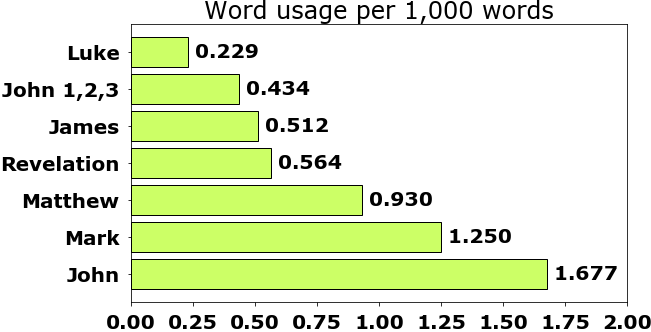 |
Words: υπαγε=26 υπαγει=10 υπαγειν=6 υπαγεις=5 υπαγετε=14 υπαγη υπαγητε υπαγοντας υπαγοντες υπαγω=11 υπηγον=2
|
The ancient Greek word
"ὑπάγω" ≈ "bring under, go slowly away" and is, literally,
"lead under" and comes from Greek words
"ὕπο" ≈ "under" and
"ἄγω" ≈ "lead". The usage in the
GNT appears to be that of
"go away".
50. First things first
The ancient Greek word
"πρῶτον" ≈ "first" and is the source of English words such as "
prototype". Jesus uses the Greek word for
"first" three times in the Sermon on the Mount. In each case, upon analysis, there is a
"first" step but the "
second" step, if any, deviates from what you might otherwise expect. The ancient Greek word
"αυτου" ≈ "his, it".
Matthew 6:33 But seek ye first the kingdom of God, and his righteousness; and all these things shall be added unto you. [kjv]
ζητειτε δε πρωτον την βασιλειαν του θεου και την δικαιοσυνην αυτου και ταυτα παντα προστεθησεται υμιν [gnt]
7:5 Thou hypocrite, first cast out the beam out of thine own eye; and then shalt thou see clearly to cast out the mote out of thy brother's eye. [kjv]
υποκριτα εκβαλε πρωτον την δοκον εκ του οφθαλμου σου την δοκον και τοτε διαβλεψεις εκβαλειν το καρφος εκ του οφθαλμου του αδελφου σου [gnt]
51. Matthew 6:33
KJV: But seek ye first the kingdom of God, and his righteousness; and all these things shall be added unto you.
Greek: ζητειτε δε πρωτον την βασιλειαν του θεου και την δικαιοσυνην αυτου και ταυτα παντα προστεθησεται υμιν
52. Matthew 7:5
KJV: Thou hypocrite, first cast out the beam out of thine own eye; and then shalt thou see clearly to cast out the mote out of thy brother's eye.
Greek: υποκριτα εκβαλε πρωτον την δοκον εκ του οφθαλμου σου την δοκον και τοτε διαβλεψεις εκβαλειν το καρφος εκ του οφθαλμου του αδελφου σου
53. Matthew 5:24,16 Before the altar
Matthew 5:24 Leave there thy gift before the altar, and go thy way; first be reconciled to thy brother, and then come and offer thy gift. [kjv]
αφες εκει το δωρον σου εμπροσθεν του θυσιαστηριου και υπαγε πρωτον διαλλαγηθι τω αδελφω σου και τοτε ελθων προσφερε το δωρον σου [gnt]
Which is more important?
A "gift" "on" the altar (that others can see that you did it).
A good work "before" men (such that others cannot see that you did it).
The Greek word for
"before", as in
"before" the
"altar", was used by Jesus
eight verses earlier. One is the allow the true light of Jesus shine
"before" men so that without seeing you, the may see your good works.
5:16 Let your light so shine before men, that they may see your good works, and glorify your Father which is in heaven. [kjv]
ουτως λαμψατω το φως υμων εμπροσθεν των ανθρωπων οπως ιδωσιν υμων τα καλα εργα και δοξασωσιν τον πατερα υμων τον εν τοις ουρανοις [gnt]
54. Matthew 5:16
KJV: Let your light so shine before men, that they may see your good works, and glorify your Father which is in heaven.
Greek: ουτως λαμψατω το φως υμων εμπροσθεν των ανθρωπων οπως ιδωσιν υμων τα καλα εργα και δοξασωσιν τον πατερα υμων τον εν τοις ουρανοις
55. Matthew 5:24 Reconcile
Matthew 5:24 Leave there thy gift before the altar, and go thy way; first be reconciled to thy brother, and then come and offer thy gift. [kjv]
αφες εκει το δωρον σου εμπροσθεν του θυσιαστηριου και υπαγε πρωτον διαλλαγηθι τω αδελφω σου και τοτε ελθων προσφερε το δωρον σου [gnt]
The ancient Greek word
"διαλασσω" ≈ "interchange, exchange". In context, it
could mean
"reconcile".
The
"exchange" or
"interchange" of ideas or opinions, etc., is in line with the conflict resolution protocols outlined by Jesus in Matthew 18 where the facts are gathered and reported
without deciding who is right and who is not right.
Paraphrase:
... go away and first interact with the brother (Jesus) ...
56. Strongs - reconcile
- *G1259 *1 διαλλάσσω (dee-al-las'-so) : from G1223 and G236; to change thoroughly, i.e. (mentally) to conciliate:--reconcile.
- διαλλαγηθι
- Matthew 5:24 ... and go thy way; first be reconciled to thy brother, ...
57. Usage - reconcile
*G1259 *1 διαλλάσσω (dee-al-las'-so) : from G1223 and G236; to change thoroughly, i.e. (mentally) to conciliate:--reconcile.
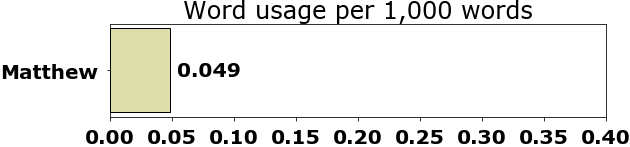 |
Words: διαλλαγηθι=1
|
The ancient Greek word
"διαλασσω" ≈ "interchange, exchange".
- "διά" ≈ "through" and is the source of the first part of the English word "diameter".
- "ἀλλάσσω" ≈ "change, alter, exchange, take a new position, have dealings with". The Attic form is "ἀλλᾰ́ττω" ≈ "change, alter, exchange, take a new position, have dealings with".
A play on words might be with the following after the prefix for "
through".
- "ἀλλαχῃ" ≈ "in another place". Should you be in another place?
Less similar are the following.
- "ἀγαθός" ≈ "good, capable, trustworthy".
- "ἀγηθής" ≈ "joyless" (of a person).
58. Matthew 18:15-17 Conflicting and faulty resolutions
Matthew 18:15 Moreover if thy brother shall trespass against thee, go and tell him his fault between thee and him alone: if he shall hear thee, thou hast gained thy brother. [kjv]
18:16 But if he will not hear thee, then take with thee one or two more, that in the mouth of two or three witnesses every word may be established. [kjv]
18:17 And if he shall neglect to hear them, tell it unto the church: but if he neglect to hear the church, let him be unto thee as an heathen man and a publican. [kjv]
Whenever there is a group of humans in close proximity, there will be conflict. In any distributed system, whether human or machine, there should be a conflict resolution protocol.
Jesus presents a fault tolerant conflict resolution protocol for groups of believers. The world has taken the opposite approach to conflict resolution within organizations.
The
"against thee" and
"his fault" were added in the
TR (Textus Receptus).
Omitting these words puts what Jesus says in line with the Lord's Prayer and the following verses on church conflict.
Including them creates some logical continuity issues.
59. Matthew 5:24 Come and go
Matthew 5:24 Leave there thy gift before the altar, and go thy way; first be reconciled to thy brother, and then come and offer thy gift. [kjv]
αφες εκει το δωρον σου εμπροσθεν του θυσιαστηριου και υπαγε πρωτον διαλλαγηθι τω αδελφω σου και τοτε ελθων προσφερε το δωρον σου [gnt]
The ancient Greek word
"ἐλθών" ≈ "go, come" comes from
"ἔρχομαι" ≈ "go, come". English uses two words with different connotations for the same Greek word. Think
"move"!
- ... go offer your gift
- ... come offer your gift
English
implies a context. In Greek, the context must be
inferred. In this context, both may have meanings and the meanings may not be the same.
60. Translator as the traitor
61. Matthew 2:8-9,23 Come and go
Matthew 2:8 And he sent them to Bethlehem, and said, Go and search diligently for the young child; and when ye have found him, bring me word again, that I may come and worship him also. [kjv]
και πεμψας αυτους εις βηθλεεμ ειπεν πορευθεντες ακριβως εξετασατε ακριβως περι του παιδιου επαν δε ευρητε απαγγειλατε μοι οπως καγω ελθων προσκυνησω αυτω [gnt]
2:9 When they had heard the king, they departed; and, lo, the star, which they saw in the east, went before them, till it came and stood over where the young child was. [kjv]
οι δε ακουσαντες του βασιλεως επορευθησαν και ιδου ο αστηρ ον ειδον εν τη ανατολη προηγεν αυτους εως ελθων εστη εσταθη επανω ου ην το παιδιον [gnt]
2:23 And he came and dwelt in a city called Nazareth: that it might be fulfilled which was spoken by the prophets, He shall be called a Nazarene. [kjv]
και ελθων κατωκησεν εις πολιν λεγομενην ναζαρετ οπως πληρωθη το ρηθεν δια των προφητων οτι ναζωραιος κληθησεται [gnt]
For each usage of the Greek for
"go" or
"went" or
"come" or
"came", which English words fit? Which English word fits best?
62. Matthew 2:8
KJV: And he sent them to Bethlehem, and said, Go and search diligently for the young child; and when ye have found him, bring me word again, that I may come and worship him also.
Greek: και πεμψας αυτους εις βηθλεεμ ειπεν πορευθεντες ακριβως εξετασατε ακριβως περι του παιδιου επαν δε ευρητε απαγγειλατε μοι οπως καγω ελθων προσκυνησω αυτω
63. Matthew 2:9
KJV: When they had heard the king, they departed; and, lo, the star, which they saw in the east, went before them, till it came and stood over where the young child was.
Greek: οι δε ακουσαντες του βασιλεως επορευθησαν και ιδου ο αστηρ ον ειδον εν τη ανατολη προηγεν αυτους εως ελθων εστη εσταθη επανω ου ην το παιδιον
64. Matthew 2:23
KJV: And he came and dwelt in a city called Nazareth: that it might be fulfilled which was spoken by the prophets, He shall be called a Nazarene.
Greek: και ελθων κατωκησεν εις πολιν λεγομενην ναζαρετ οπως πληρωθη το ρηθεν δια των προφητων οτι ναζωραιος κληθησεται
65. Matthew 5:23-24 Gifts
Matthew 5:23 Therefore if thou bring thy gift to the altar, and there rememberest that thy brother hath ought against thee; [kjv]
5:24 Leave there thy gift before the altar, and go thy way; first be reconciled to thy brother, and then come and offer thy gift. [kjv]
The ancient Greek word
"ἔμπροσθεν" ≈ "before, in front" and, in the case of time,
"earlier"
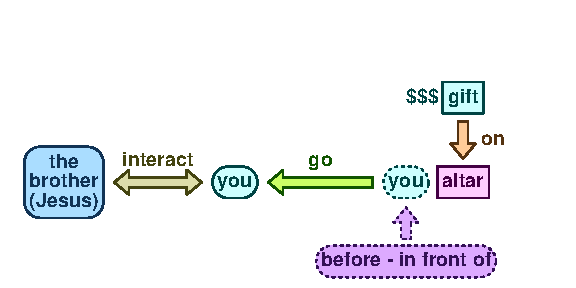
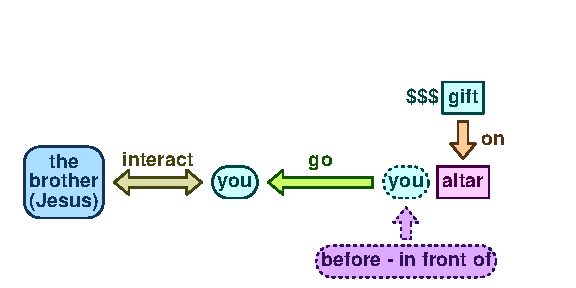
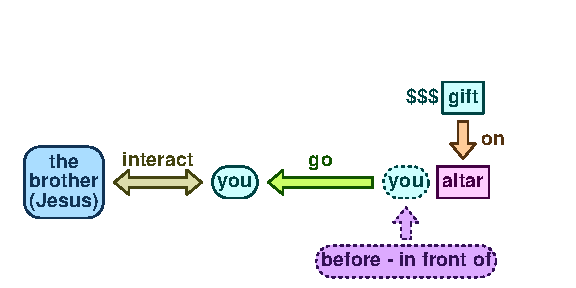
- Verse 23: Your "gift" is "on" the "altar". You are "before" the "altar".
- Verse 24: Your "gift" is "before" or "in front of" the "altar". How do you "forgive" your "gift"?
- To Jesus, you are the important "gift", not the "gift" on the "altar" used to support the religious establishment. This is the "yoke of compulsion" first stated by Amos, then Isaiah, then Jesus, etc.
- "Forgive" yourself. You may be at the "altar" in physical body, to satisfy the religious authorities, but your spirit is with Jesus and you should be where Jesus wants you to be and doing what Jesus wants you to do.
66. Matthew 23:17 Fools
Matthew 23:17 Ye fools and blind: for whether is greater, the gold, or the temple that sanctifieth the gold? [kjv]
μωροι και τυφλοι τις γαρ μειζων εστιν ο χρυσος η ο ναος ο αγιαζων αγιασας τον χρυσον [gnt]
Jesus uses the idea of "
greater" in terms of
"gold" and the "
temple".
Jesus calls the religious elite
"fools" or, in Aramaic, "
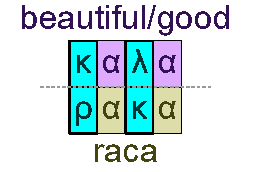
raca". Is Jesus then "
liable" or in "
danger" of the "
council"? He will be at the crucifixion.
67. Matthew 28:19-20 The Great Mandate
Matthew 28:19 Go ye therefore, and teach all nations, baptizing them in the name of the Father, and of the Son, and of the Holy Ghost: [kjv]
28:20 Teaching them to observe all things whatsoever I have commanded you: and, lo, I am with you alway, even unto the end of the world. Amen. [kjv]
Matthew ends with "
The Great Commission" and uses the Latin word
"mandani" ≈ "commanded" as in "
mandate". The Greek translated as "
nations" is that of "
people".
- Jesus does not call you to be a "leader" in the human organization sense - where part of "leadership" is to "follow the leader" and to "influence" others through dubious "manipulation".
- Jesus does not call you to be a "friend" first where one tries to use "friendship" to "influence" others.
As you go through life, you should "
teach" others what Jesus wants you to teach them.
Star Trek:
.. to go where no man has gone before .... Jesus does
not want you to do what is said in Star Trek. Jesus wants you
... to go where men have gone before - and give them the Good News ....
68. Matthew 28:19 Trinity
Matthew 28:19 Go ye therefore, and teach all nations, baptizing them in the name of the Father, and of the Son, and of the Holy Ghost: [kjv]
πορευθεντες ουν μαθητευσατε παντα τα εθνη βαπτιζοντες αυτους εις το ονομα του πατρος και του υιου και του αγιου πνευματος [gnt]
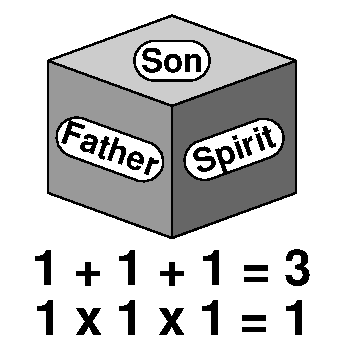
This is one place where all three parts of the "
Trinity" are explicitly mentioned.
69. Romans 12:1
Romans 12:1 I beseech you therefore, brethren, by the mercies of God, that ye present your bodies a living sacrifice, holy, acceptable unto God, which is your reasonable service. [kjv]
παρακαλω ουν υμας αδελφοι δια των οικτιρμων του θεου παραστησαι τα σωματα υμων θυσιαν ζωσαν αγιαν ευαρεστον τω θεω ευαρεστον την λογικην λατρειαν υμων [gnt]
An
"alter" is a place where a
dead "sacrifice" is made.
Paul appears to be explicitly stating what Jesus says in a more "
quick witted" and "
good mind" viewpoint (an important part of the next verse).
Will the religious establishment be upset about you not offering the gift they use to support themselves? What do you do? Jesus answers this question in the next (and following) verses, though some mistranslations hide the real meaning.
70. Daniel: Bel and the disappearing food
The "
Bel" part of the Apocryphal book "
Bel and the dragon" is about how Daniel skillfully and tactfully demonstrates convincingly to his superior, the King, that he is being deceived by the religious elite who are using the required sacrifices to their own benefit.
Discuss:
- Has this happened at other times through history?
- Does this ever happen today?
- Is Jesus and God tired of the Bar-B-Que?
Daniel sprinkled dust on the floor so that the footprints of deception became obvious in the morning. Had Jesus sprinkled dust with what he said such that the footprints of the deception become obvious at a later time?
A BBQ advertised to single young men: Come meet the grill of your dreams. She's hot. Really hot.
71. Romans 12:1
KJV: I beseech you therefore, brethren, by the mercies of God, that ye present your bodies a living sacrifice, holy, acceptable unto God, which is your reasonable service.
Greek: παρακαλω ουν υμας αδελφοι δια των οικτιρμων του θεου παραστησαι τα σωματα υμων θυσιαν ζωσαν αγιαν ευαρεστον τω θεω ευαρεστον την λογικην λατρειαν υμων
72. Gift at the alter
|
|
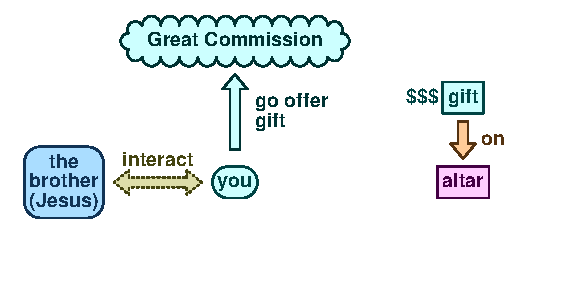
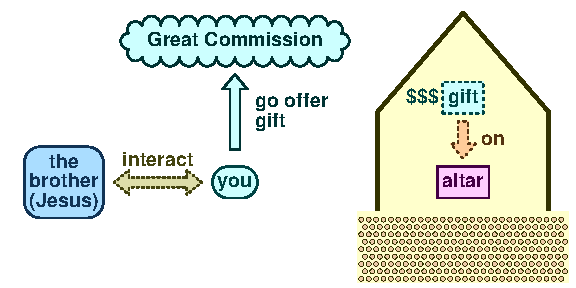
- There are two main events or competitions.
- Great Commission (what Jesus wants you to do).
- Gifts on the altar (what birds want you to do)
- Which is the most important event or competition?
- Which is just a shadow of an event or competition?
|
What happens if there are a
"hundred" "sheep" at the
"alter" and
"one" "wanders" to find out what the "
shepherd" wants and then goes and does that without returning to the
"alter"?
73. Matthew 5:23-24 Review paraphrase
Matthew 5:23 Therefore if thou bring thy gift to the altar, and there rememberest that thy brother hath ought against thee; [kjv]
5:24 Leave there thy gift before the altar, and go thy way; first be reconciled to thy brother, and then come and offer thy gift. [kjv]
5:23:
If therefore you offer [resemble] your gift on the altar, [bad (righteousness)], remember [as a groom wooing a bride] that the brother of yours (Jesus) has some things against (down on) you (detailed in Revelation).
5:24:
Forgive yourself as the gift in front of the altar, go (flee) and first interact [through being in a different place] with the brother (Jesus) and then go (as in the Great Commission) and offer your gift (yourself as a living sacrifice) (as in doing good works before men).
Will the religious establishment be upset about you not offering the gift they use to support themselves and using their establishment only as a house of prayer? What do you do? Jesus answers this question in the next verse, though some mistranslations hide the real meaning.
74. Matthew 5:22 Foolish raca
Matthew 5:22 But I say unto you, That whosoever is angry with his brother without a cause shall be in danger of the judgment: and whosoever shall say to his brother, Raca, shall be in danger of the council: but whosoever shall say, Thou fool, shall be in danger of hell fire. [kjv]
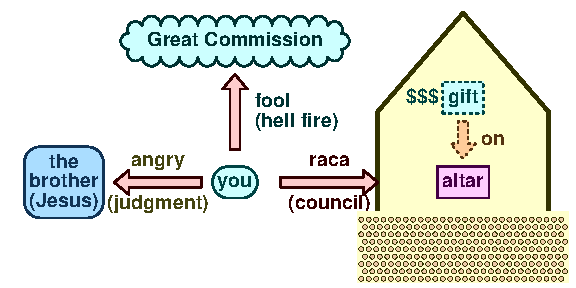
- Being "angry" with "the brother" Jesus may not be a show stopper.
- By not offering the "gift" on the "alter", one effectively calls the "council" "raca".
- Calling the "mission" (to which Jesus calls everyone) "foolish" is a show stopper and makes one "liable" for "hell" "fire".
Going back to the previous verse (i.e., reverse order), the previous verse starts to make more sense.
75. Matthew 5:25-26 Adversarial agreement
Matthew 5:25 Agree with thine adversary quickly, whiles thou art in the way with him; lest at any time the adversary deliver thee to the judge, and the judge deliver thee to the officer, and thou be cast into prison. [kjv]
5:26 Verily I say unto thee, Thou shalt by no means come out thence, till thou hast paid the uttermost farthing. [kjv]
- What does "agree" mean? (mistranslated)
- Who is "the" "adversary"? Who is the "judge"?
- What is the difference between "while" (mistranslated) and "until"?
- Who is the "officer"? What is the "prison"? (double-meaning)
- What is the "last" of the "farthings"?
76. End of page