Send
Close Add comments:
(status displays here)
Got it! This site "www.creationpie.org" uses cookies. You consent to this by clicking on "Got it!" or by continuing to use this website. Note: This appears on each machine/browser from which this site is accessed.
Matthew 13:31-32 KP3 Parable of the mustard seed
1. Matthew 13:31-32 KP3 Parable of the mustard seed
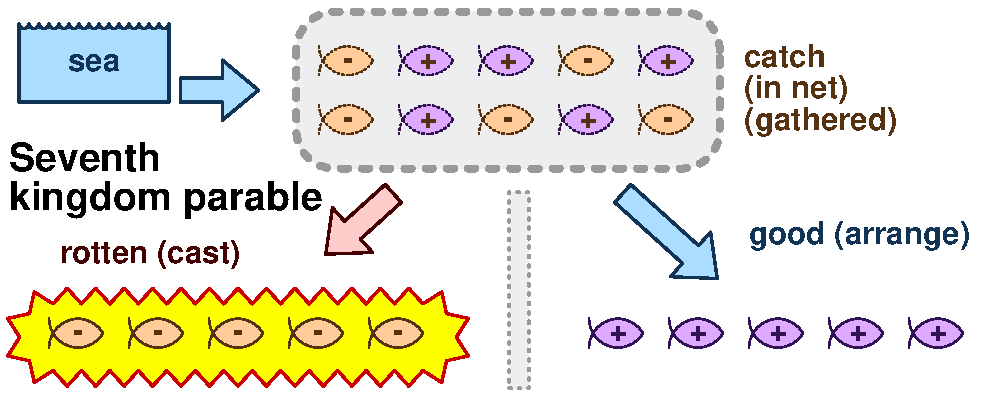
2. Matthew 13 Kingdom parables
3. Matthew 13 Kingdom parables
4. Matthew 13:3-23 KP1 Parable of the sower
The first kingdom parable in Matthew 13 is the "
parable of the sower". The explanation provided by Jesus covers three ways that one can be separated from the love of Christ.
seed by the wayside (birds, false teaching and deception)
seed among the stones (pigs, standing in the way, persecution)
seed in the thorns (fish, swimming in worldly cares and concerns)
Each of these is part of a problem-solving scenario. Let us go through an idealized problem solving scenario and then adapt it to this parable. Jesus says to "
use our ears" so we must listen for play-on-word meanings in addition to the obvious meaning.
Matthew 13:9 Who hath ears to hear, let him hear. [kjv]
ο εχων ωτα ακουειν ακουετω [gnt]
13:18 Hear ye therefore the parable of the sower. [kjv]
υμεις ουν ακουσατε την παραβολην του σπειροντος σπειραντος [gnt]
Planting seeds is a way in which to reproduce the essential part of the seed. Using creative and funny techniques, I may have "
planted" some "
seedy" "
artichokes".
5. Matthew 13:24-30,36-43 KP2 Parable of the wheat and tares
The parable of the wheat and the tares provides a
fault tolerant and realistic approach to the
tolerance paradox which, as a simple form of the Russell Paradox, has no logical solution but occurs often in society.
Parable: (encoded with code words)
Matthew 13:28 He said unto them, An enemy hath done this. The servants said unto him, Wilt thou then that we go and gather them up? [kjv]
13:29 But he said, Nay; lest while ye gather up the tares, ye root up also the wheat with them. [kjv]
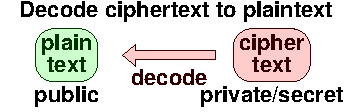
Explained: (decoded code words)
13:39 The enemy that sowed them is the devil; the harvest is the end of the world; and the reapers are the angels. [kjv]
ο δε εχθρος ο σπειρας αυτα εστιν ο διαβολος ο δε θερισμος συντελεια του αιωνος εστιν οι δε θερισται αγγελοι εισιν [gnt]
6. Matthew 13:31-32 Verses
Matthew 13:31 Another parable put he forth unto them, saying, The kingdom of heaven is like to a grain of mustard seed, which a man took, and sowed in his field: [kjv]
αλλην παραβολην παρεθηκεν αυτοις λεγων ομοια εστιν η βασιλεια των ουρανων κοκκω σιναπεως ον λαβων ανθρωπος εσπειρεν εν τω αγρω αυτου [gnt]
13:32 Which indeed is the least of all seeds: but when it is grown, it is the greatest among herbs, and becometh a tree, so that the birds of the air come and lodge in the branches thereof. [kjv]
ο μικροτερον μεν εστιν παντων των σπερματων οταν δε αυξηθη μειζον των λαχανων εστιν και γινεται δενδρον ωστε ελθειν τα πετεινα του ουρανου και κατασκηνουν κατασκηνοιν εν τοις κλαδοις αυτου [gnt]
7. Matthew 13:31-32 Mustard seeds and trees
Matthew 13:31 Another parable put he forth unto them, saying, The kingdom of heaven is like to a grain of mustard seed, which a man took, and sowed in his field: [kjv]
13:32 Which indeed is the least of all seeds: but when it is grown, it is the greatest among herbs, and becometh a tree, so that the birds of the air come and lodge in the branches thereof. [kjv]
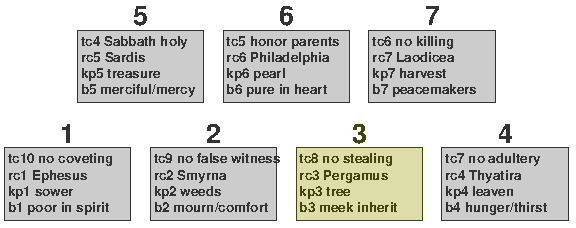
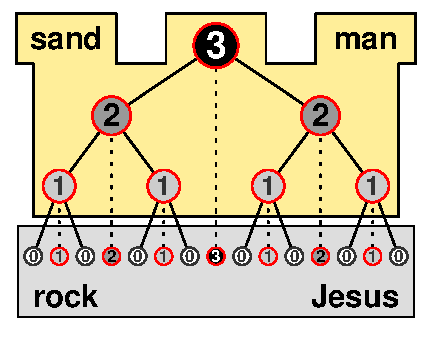
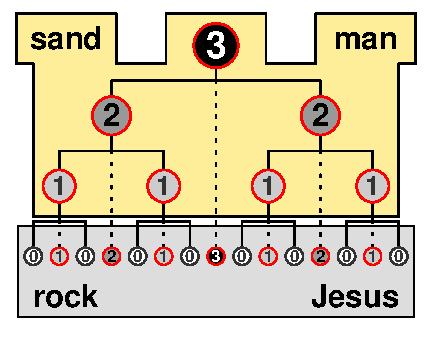
This is
node 3 of "
oaths" to the goals of the "
birds" who "
steal" from those taking the "
oaths" in the "
tree".
8. Matthew 13:31-32 KP3 Parable of the mustard seed
Matthew 13:31 Another parable put he forth unto them, saying, The kingdom of heaven is like to a grain of mustard seed, which a man took, and sowed in his field: [kjv]
13:32 Which indeed is the least of all seeds: but when it is grown, it is the greatest among herbs, and becometh a tree, so that the birds of the air come and lodge in the branches thereof. [kjv]
The
"mustard seed" :
is not the "smallest" of all "seeds".
is not the "greatest" of all "herbs".
grows into a bush, not a tree.
The
"birds" do
not (usually) nest in small bushes. Are the
"birds" good? What is a
"mustard seed"? What does a
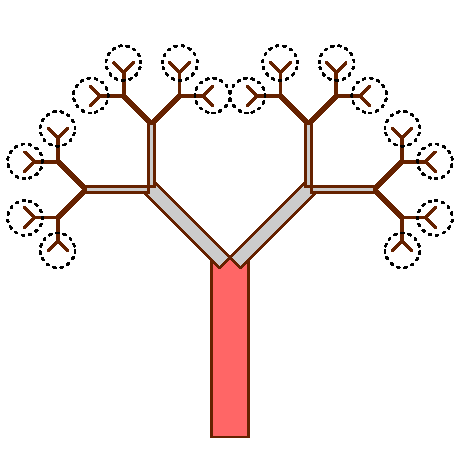
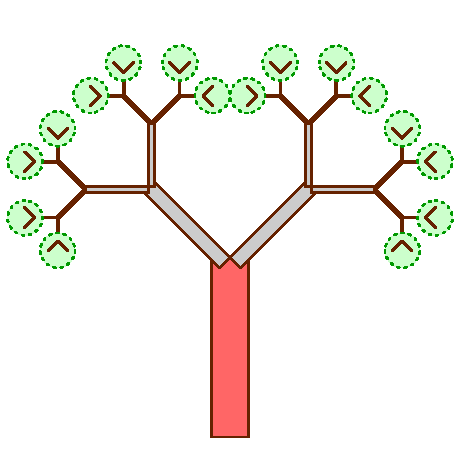
"tree" represent?
The
KJV (King James Version) translates as
"least" the Greek word that means
"smallest". There is another Greek word for
"least".
9. Matthew 13:31 Word usage
Matthew 13:31 Another parable put he forth unto them, saying, The kingdom of heaven is like to a grain of mustard seed, which a man took, and sowed in his field: [kjv]
αλλην παραβολην παρεθηκεν αυτοις λεγων ομοια εστιν η βασιλεια των ουρανων κοκκω σιναπεως ον λαβων ανθρωπος εσπειρεν εν τω αγρω αυτου [gnt]
| Matthew 13:31 |
| Strong |
Used |
Unique |
Word |
Part of speech |
| G3908 |
19 |
4 |
παρεθηκεν |
verb aorist active indicative 3rd person singular |
| G2848 |
7 |
3 |
κοκκω |
noun dative singular masculine |
| G4615 |
5 |
5 |
σιναπεως |
noun genitive singular neuter |
| G4687 |
53 |
1 |
εσπειρεν |
verb aorist active indicative 3rd person singular |
| G68 |
36 |
9 |
αγρω |
noun dative singular masculine |
10. Matthew 13:32 Word usage
Matthew 13:32 Which indeed is the least of all seeds: but when it is grown, it is the greatest among herbs, and becometh a tree, so that the birds of the air come and lodge in the branches thereof. [kjv]
ο μικροτερον μεν εστιν παντων των σπερματων οταν δε αυξηθη μειζον των λαχανων εστιν και γινεται δενδρον ωστε ελθειν τα πετεινα του ουρανου και κατασκηνουν κατασκηνοιν εν τοις κλαδοις αυτου [gnt]
| Matthew 13:32 |
| Strong |
Used |
Unique |
Word |
Part of speech |
| G3398 |
30 |
2 |
μικροτερον |
? A-NSN-C |
| G4690 |
42 |
3 |
σπερματων |
noun genitive plural neuter |
| G837 |
22 |
1 |
αυξηθη |
verb aorist passive subjunctive 3rd person singular |
| G3173 |
242 |
6 |
μειζον |
? A-NSN-C |
| G3001 |
4 |
2 |
λαχανων |
noun genitive plural neuter |
| G2798 |
11 |
2 |
κλαδοις |
noun dative plural masculine |
11. Matthew 13:31 Parables
Matthew 13:31 Another parable put he forth unto them, saying, The kingdom of heaven is like to a grain of mustard seed, which a man took, and sowed in his field: [kjv]
αλλην παραβολην παρεθηκεν αυτοις λεγων ομοια εστιν η βασιλεια των ουρανων κοκκω σιναπεως ον λαβων ανθρωπος εσπειρεν εν τω αγρω αυτου [gnt]
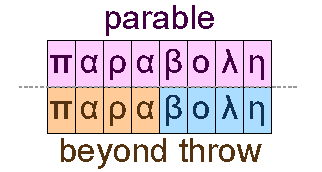
What is the difference between a
"parable" and a
"proverb"? It appears that the Hebrew/Aramaic has one word for this concept and that word can be translated into Greek as
"parable" or
"proverb".
"παραβολή" ≈ "saying, proverb"
"παρά" ≈ "beyond" and "βολή" ≈ "throw".
"παροιμία" ≈ "saying, proverb"
12. Matthew 13:31 Kingdom of heaven
Matthew 13:31 Another parable put he forth unto them, saying, The kingdom of heaven is like to a grain of mustard seed, which a man took, and sowed in his field: [kjv]
αλλην παραβολην παρεθηκεν αυτοις λεγων ομοια εστιν η βασιλεια των ουρανων κοκκω σιναπεως ον λαβων ανθρωπος εσπειρεν εν τω αγρω αυτου [gnt]
The "
kingdom" of "
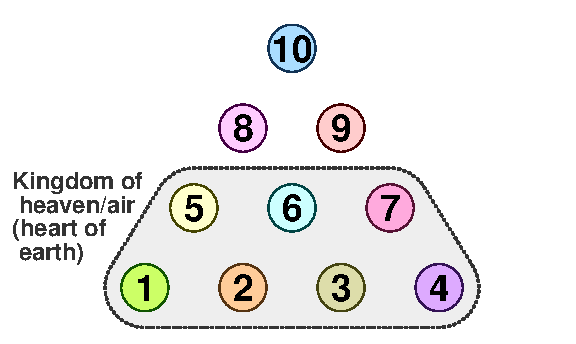
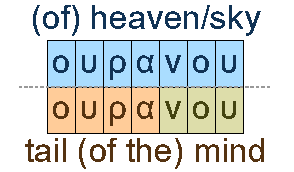
heaven" appears to be a perception of the mind and not a literal physical reality.
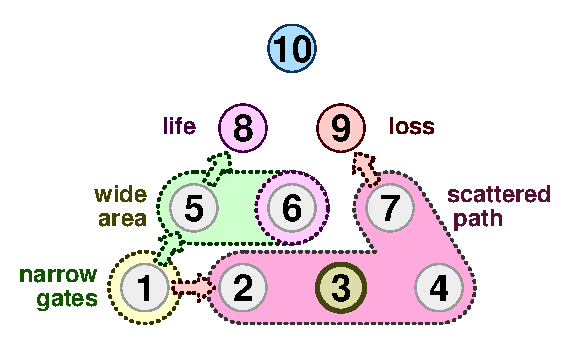
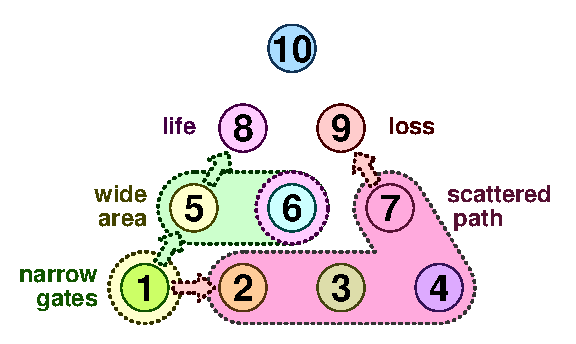
There are two perceptions.
Good kingdom of heaven/air which leads to the kingdom of God and life.
Not good kingdom of heaven/air ruled by the birds of heaven/air leading to loss.
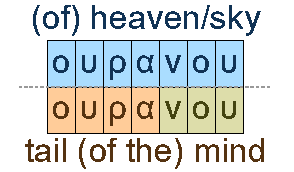 |
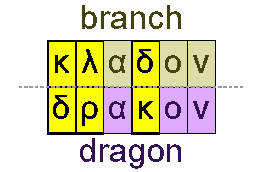
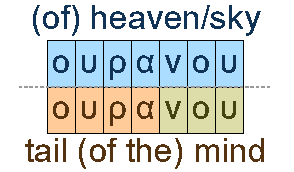
Jesus uses one inflection (genitive) of the word for the not good "heaven" that is a play on words with "tail" of the "mind". Your "mind" is supposed to be in your "head" (Christ) and not your "tail".
|
13. He that hath ears should not get behind
Before the "
children playing music in the marketplace":
Matthew 11:15 He that hath ears to hear, let him hear. [kjv]
ο εχων ωτα ακουειν ακουετω [gnt]
In the middle of the "
kingdom parables":
13:9 Who hath ears to hear, let him hear. [kjv]
ο εχων ωτα ακουειν ακουετω [gnt]
| Greek |
English |
J‑M |
O‑M |
J‑NT |
O‑NT |
LXX |
| ωτα |
ears |
4 |
0 |
11 |
7 |
68 |
| *ν ωτα |
* ears |
3 |
0 |
5 |
0 |
2 |
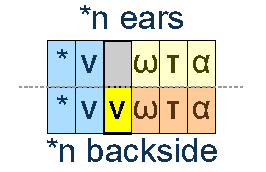
"ὦτα" ≈ "ears" (accusative plural).
"νῶτᾰ" ≈ "back sides, rear parts" (accusative plural).
Lend me a hear! To ring in the new ear, lend me a hearing!
This phrase (and variants thereof) appear to indicate that a higher level code is being presented. It appears to be used when one should listen carefully for play on words.
[ushers and sermon on divorce][play on words]
14. Matthew 13:31-32 Ears
Matthew 13:31 Another parable put he forth unto them, saying, The kingdom of heaven is like to a grain of mustard seed, which a man took, and sowed in his field: [kjv]
αλλην παραβολην παρεθηκεν αυτοις λεγων ομοια εστιν η βασιλεια των ουρανων κοκκω σιναπεως ον λαβων ανθρωπος εσπειρεν εν τω αγρω αυτου [gnt]
13:32 Which indeed is the least of all seeds: but when it is grown, it is the greatest among herbs, and becometh a tree, so that the birds of the air come and lodge in the branches thereof. [kjv]
ο μικροτερον μεν εστιν παντων των σπερματων οταν δε αυξηθη μειζον των λαχανων εστιν και γινεται δενδρον ωστε ελθειν τα πετεινα του ουρανου και κατασκηνουν κατασκηνοιν εν τοις κλαδοις αυτου [gnt]
Let us now "
use our ears" on the same text using the first verse.
15. Matthew 13:38 Field is the world
Matthew 13:38 The field is the world; the good seed are the children of the kingdom; but the tares are the children of the wicked one; [kjv]
ο δε αγρος εστιν ο κοσμος το δε καλον σπερμα ουτοι εισιν οι υιοι της βασιλειας τα δε ζιζανια εισιν οι υιοι του πονηρου [gnt]
In explaining the code words for kingdom parable 2 (wheat and tares), Jesus says that the
"field" is the
"world".
The "field" is the "world" (people in the world). There is a different Greek word for end of the "ages" or end of the "world".
The "good seed" is the "wheat" are the "children of the kingdom".
The "tares" are planted by the "evil one" (among the "good seed") and are the "children of the wicked one" (evil as "oppression").
16. Matthew 13:31-32 Mustard seeds
Matthew 13:31 Another parable put he forth unto them, saying, The kingdom of heaven is like to a grain of mustard seed, which a man took, and sowed in his field: [kjv]
13:32 Which indeed is the least of all seeds: but when it is grown, it is the greatest among herbs, and becometh a tree, so that the birds of the air come and lodge in the branches thereof. [kjv]
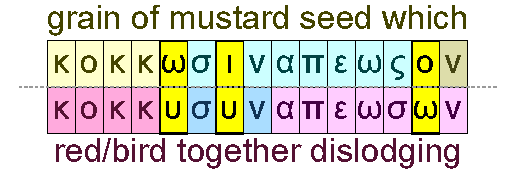
The third kingdom parable in Matthew 13 is very short - just two verses. There appears to be a play-on-words used by Jesus from the Greek language point of view.
The Greek word for
"mustard plant" is translated as
"mustard seed" and appears in only two stories (five verses) in the
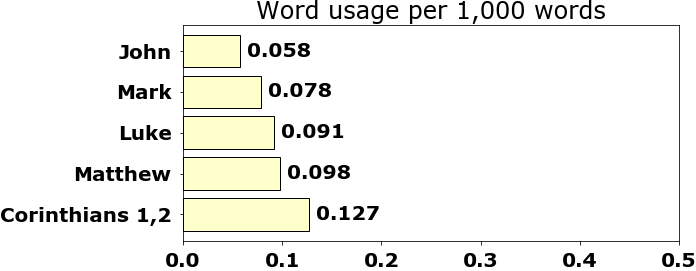
GNT (Greek New Testament).
Mustard seed parable (3)
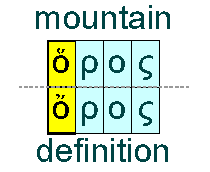
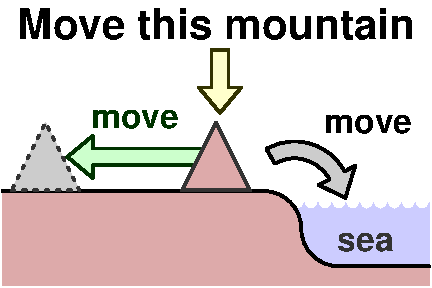
Moving the mountain (2) [definitions]
Jesus often uses
nouns as
code words. English uses
"grain" to avoid using
"seed" in
"mustard seed" twice.
Decrypted text: All seeds are the same size. Trees are empires. Birds are of the evil one.
17. Matthew 13:31
KJV: Another parable put he forth unto them, saying, The kingdom of heaven is like to a grain of mustard seed, which a man took, and sowed in his field:
Greek: αλλην παραβολην παρεθηκεν αυτοις λεγων ομοια εστιν η βασιλεια των ουρανων κοκκω σιναπεως ον λαβων ανθρωπος εσπειρεν εν τω αγρω αυτου
Latin: aliam parabolam proposuit eis dicens simile est regnum caelorum grano sinapis quod accipiens homo seminavit in agro suo
Wycliffe: Another parable Jhesus puttide forth to hem, and seide, The kyngdom of heuenes is lijk to a corn of seneuey, which a man took, and sewe in his feeld.
Tyndale: Another parable he put forthe vnto the sayinge. The kyngdome of heve is lyke vnto a grayne of mustard seued which a ma taketh and soweth in his felde
18. Matthew 13:32
KJV: Which indeed is the least of all seeds: but when it is grown, it is the greatest among herbs, and becometh a tree, so that the birds of the air come and lodge in the branches thereof.
Greek: ο μικροτερον μεν εστιν παντων των σπερματων οταν δε αυξηθη μειζον των λαχανων εστιν και γινεται δενδρον ωστε ελθειν τα πετεινα του ουρανου και κατασκηνουν κατασκηνοιν εν τοις κλαδοις αυτου
Latin: quod minimum quidem est omnibus seminibus cum autem creverit maius est omnibus holeribus et fit arbor ita ut volucres caeli veniant et habitent in ramis eius
Wessex: þaet ys alre saede laest. Soðlice þanne hyt wexað hyt ys alre wyrte maest. & hyt wurð treow. swa þaet heofene fugeles cumað & eardigeð Note: MS. eardiged. þaer on his bogen.
Wycliffe: Which is the leeste of alle seedis, but whanne it hath woxen, it is the moste of alle wortis, and is maad a tre; so that briddis of the eir comen, and dwellen in the bowis therof.
Tyndale: which is ye leest of all seedes. But when it is groune it is the greatest amoge yerbes and it is a tree: so yt the bryddes of the ayer come and bylde in the brauches of it.
Luther: welches das kleinste ist unter allem Samen; wenn es aber erwächst, so ist es das größte unter dem Kohl und wird ein Baum, daß die Vögel unter dem Himmel kommen und wohnen unter seinen Zweigen.
19. Matthew 13:32 Mustard seeds
Matthew 13:32 Which indeed is the least of all seeds: but when it is grown, it is the greatest among herbs, and becometh a tree, so that the birds of the air come and lodge in the branches thereof. [kjv]
ο μικροτερον μεν εστιν παντων των σπερματων οταν δε αυξηθη μειζον των λαχανων εστιν και γινεται δενδρον ωστε ελθειν τα πετεινα του ουρανου και κατασκηνουν κατασκηνοιν εν τοις κλαδοις αυτου [gnt]
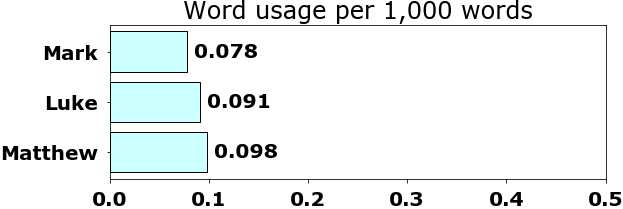
The book of Matthew was written by Matthew, a tax collector, who would have needed to remember exact details and be able to take shorthand to fulfill his duties as a tax collector. Many take Matthew's account as a verbatim transcript of what Jesus actually said.
The
KJV translates this as
"grain" of
"mustard seed".
"least" of all "seeds".
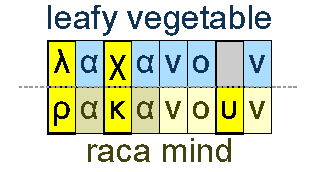
"greatest" of all "herbs" (leafy vegetables).
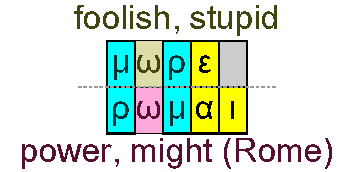
This phrase, in Greek, appears to be important.
What should you give a dog with a fever?
Mustard is great for a hot dog!
20. Mark 4:31-32 Mustard seed parable
Mark 4:31 It is like a grain of mustard seed, which, when it is sown in the earth, is less than all the seeds that be in the earth: [kjv]
ως κοκκω σιναπεως ος οταν σπαρη επι της γης μικροτερος μικροτερον ον παντων των σπερματων εστιν των επι της γης [gnt]
4:32 But when it is sown, it groweth up, and becometh greater than all herbs, and shooteth out great branches; so that the fowls of the air may lodge under the shadow of it. [kjv]
και οταν σπαρη αναβαινει και γινεται μειζον παντων των λαχανων μειζων και ποιει κλαδους μεγαλους ωστε δυνασθαι υπο την σκιαν αυτου τα πετεινα του ουρανου κατασκηνουν κατασκηνοιν [gnt]
The book of Mark is Peters account as written down by Mark. Peter is using his memory to relate, through Mark, his account. Much of Mark is shorter and more abbreviated than Matthew. Some fine details could have been missed through time and transfer of memory.
The
KJV appears to mis-translate
"smallest" as
"less than" which creates logical issues when analyzing the verse.
21. Mark 4:31
KJV: It is like a grain of mustard seed, which, when it is sown in the earth, is less than all the seeds that be in the earth:
Greek: ως κοκκω σιναπεως ος οταν σπαρη επι της γης μικροτερος μικροτερον ον παντων των σπερματων εστιν των επι της γης
Latin: sicut granum sinapis quod cum seminatum fuerit in terra minus est omnibus seminibus quae sunt in terra
Wessex: Swa swa senepes saed þanne hit beoð on eorðan ge-sawen. hit is alre saede laest þe on eorðan synt.
Wycliffe: As a corne of seneuei, which whanne it is sowun in the erthe, is lesse than alle seedis that ben in the erthe;
Tyndale: It is lyke a grayne of mustard seed which when it is sowe in the erth is the leest of all seedes that be in the erth:
Gothic: swe kaurno sinapis, thatei than saiada ana airtha, minnist allaize fraiwe ist thize ana airthai;
Luther: Gleichwie ein Senfkorn, wenn das gesäet wird aufs Land, so ist's das kleinste unter allen Samen auf Erden.
22. Mark 4:32
KJV: But when it is sown, it groweth up, and becometh greater than all herbs, and shooteth out great branches; so that the fowls of the air may lodge under the shadow of it.
Greek: και οταν σπαρη αναβαινει και γινεται μειζον παντων των λαχανων μειζων και ποιει κλαδους μεγαλους ωστε δυνασθαι υπο την σκιαν αυτου τα πετεινα του ουρανου κατασκηνουν κατασκηνοιν
23. Matthew field and Luke garden
Matthew 13:31 Another parable put he forth unto them, saying, The kingdom of heaven is like to a grain of mustard seed, which a man took, and sowed in his field: [kjv]
αλλην παραβολην παρεθηκεν αυτοις λεγων ομοια εστιν η βασιλεια των ουρανων κοκκω σιναπεως ον λαβων ανθρωπος εσπειρεν εν τω αγρω αυτου [gnt]
Mark 4:31 It is like a grain of mustard seed, which, when it is sown in the earth, is less than all the seeds that be in the earth: [kjv]
ως κοκκω σιναπεως ος οταν σπαρη επι της γης μικροτερος μικροτερον ον παντων των σπερματων εστιν των επι της γης [gnt]
Luke 13:19 It is like a grain of mustard seed, which a man took, and cast into his garden; and it grew, and waxed a great tree; and the fowls of the air lodged in the branches of it. [kjv]
ομοια εστιν κοκκω σιναπεως ον λαβων ανθρωπος εβαλεν εις κηπον εαυτου και ηυξησεν και εγενετο εις δενδρον μεγα και τα πετεινα του ουρανου κατεσκηνωσεν εν τοις κλαδοις αυτου [gnt]
Matthew: field
Mark: earth
Luke: garden
Compare these with how Jesus uses the words
"vineyard" and
"kingdom".
24. Luke 13:19 Mustard seed parable
Luke 13:19 It is like a grain of mustard seed, which a man took, and cast into his garden; and it grew, and waxed a great tree; and the fowls of the air lodged in the branches of it. [kjv]
ομοια εστιν κοκκω σιναπεως ον λαβων ανθρωπος εβαλεν εις κηπον εαυτου και ηυξησεν και εγενετο εις δενδρον μεγα και τα πετεινα του ουρανου κατεσκηνωσεν εν τοις κλαδοις αυτου [gnt]
Apparently Luke did not get enough detailed and credible accounts of the parable of the mustard seed to provide more detail.
The word
"great" is
not in some Greek manuscripts.
Matthew: "Birds" lodge (build nests) in the tree.
Luke : "Birds" lodge (build nests) in the branches of it.
Mark: "Birds" lodge under the shadow of the tree.
[fault tolerance, DVD communication, DNA, baseball card analogy]
The book of Luke is written by Luke, the physician, who assisted Paul. Luke, as a doctor, would be good at listening to stories and accounts, asking questions, and inferring what is likely true and what is not as likely to be true. This is what doctors had to do in that day and age. Luke collected his information from others long after the time when those events happened.
25. Luke 13:19
KJV: It is like a grain of mustard seed, which a man took, and cast into his garden; and it grew, and waxed a great tree; and the fowls of the air lodged in the branches of it.
Greek: ομοια εστιν κοκκω σιναπεως ον λαβων ανθρωπος εβαλεν εις κηπον εαυτου και ηυξησεν και εγενετο εις δενδρον μεγα και τα πετεινα του ουρανου κατεσκηνωσεν εν τοις κλαδοις αυτου
Latin: simile est grano sinapis quod acceptum homo misit in hortum suum et crevit et factum est in arborem magnam et volucres caeli requieverunt in ramis eius
Wessex: hit is gelic sepenes (sic) corne þe se man onfeng & seow on his wertun. & hit weox & warð mycel treow & heofene fugeles resten on his bogen.
Wycliffe: It is lijk to a corn of seneuey, which a man took, and cast in to his yerd; and it wax, and was maad in to a greet tree, and foulis of the eire restiden in the braunchis therof.
Tyndale: It is lyke a grayne of mustard seede which a man toke and sowed in his garden: and it grewe and wexed a greate tree and the foules of the ayer made nestes in the braunches of it.
26. Relational comparisons
Logically, the idea of
"least" is
not the same as
"less than". Here are the comparisons from the
KJV, where
x is the
"seed" of the
"mustard plant".
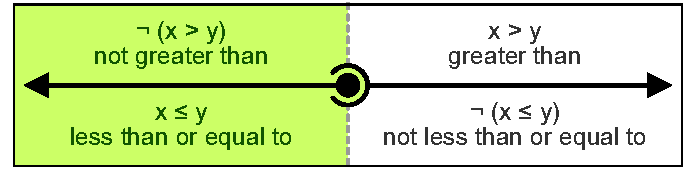
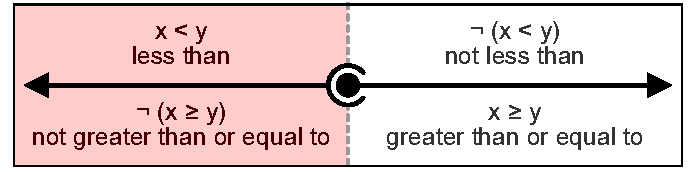
Matthew: x is the least or not greater than of all seeds.
Mark: x is less than or not greater than or equal to of all seeds.
Luke has no comparison.
According to the KJV, Mark makes x less than all the seeds while Matthew makes x the least of all seeds.
Matthew appears to leave open the possibility that other seeds are the same (size) while Mark makes the mustard seed less than all (other) seeds, not less than or equal to all (other) seeds.
This is a situation where going back to the original language can be of use.
27. The Greek
The numerical relational comparison comes down to Matthew and Mark. What does the Greek say?
Greek: Matthew: ο μικροτερον μεν εστιν παντων των σπερματων
Greek: Mark: ος ... μικροτερον ον παντων των σπερματων
At this point, it is unclear as to whether there is a difference. The difference could be in the later translations that built on each other.
 |
Details are left as a future topic.
|
28. Nothing has been found more effective than this
Which sounds better: (they say the same thing)
All the toothpastes were found to have the same effectiveness.
No toothpaste has been found more effective than "Crust".
Consider the following values:
5 5 5 5 5. We can say the following.
All numbers are equal to 5. All x are equal to y.
No number is greater than 5. No x is greater than y.
No number is less than 5. No x is less than y.
All numbers are less than or equal to 5. All y are less than or equal to x.
All numbers are greater or equal to 5. All x are greater than or equal to y.
A common self-deception is to
not realize that all the values are at the same semantic level.
The "
least" of these is the same as the "
greatest" of these if all are at the same level.
29. Latin
The Latin Vulgate terms may be useful here.
Matthew: The Latin word "minumum" ≈ "minumum" (no change from Latin to English).
Mark: The Latin word "minus" ≈ "less" as in the English of "three minus two" as "three less two" minus.
It appears that the later translators were influenced by the Latin translation using different words for the Greek. Perhaps the Greek phrasing (idiom , etc.) leads to each of the two different translations.
The German word
"kleinste" ≈ "smallest, least, minimum" as Luther uses the same word "
kleinste" in both Matthew and Mark. Today, German has other words for those related concepts.
30. Sinapis
Matthew 13:31 Another parable put he forth unto them, saying, The kingdom of heaven is like to a grain of mustard seed, which a man took, and sowed in his field: [kjv]
αλλην παραβολην παρεθηκεν αυτοις λεγων ομοια εστιν η βασιλεια των ουρανων κοκκω σιναπεως ον λαβων ανθρωπος εσπειρεν εν τω αγρω αυτου [gnt]
Sinapis, from the Latin word
"sinapi" ≈ "mustard" is from the ancient Greek word
"σίναπι" ≈ "mustard plant".
Is Jesus talking about
one "mustard seed" or can what Jesus says be generalized to
any "mustard seed"? There may be multiple meanings where all are true.
31. Matthew 13:31 Sinapis
Matthew 13:31 Another parable put he forth unto them, saying, The kingdom of heaven is like to a grain of mustard seed, which a man took, and sowed in his field: [kjv]
αλλην παραβολην παρεθηκεν αυτοις λεγων ομοια εστιν η βασιλεια των ουρανων κοκκω σιναπεως ον λαβων ανθρωπος εσπειρεν εν τω αγρω αυτου [gnt]
The German word "der Senf" ≈ "mustard".
The Middle English word "corne" ≈ "seed, grain" is a generic word.
The Gothic word "kaurno" ≈ "seed, grain" which is related to the English word "corn".
32. Code table comparison
Encoded text: "The mustard seed is the smallest of all seeds". Reality: It is not.
Encoded text: "It is greatest of all (leafy) vegetables". Reality: It is not.
Encoded text: "It grows into a tree". Reality: It does not.
| Encoded (hidden) |
Decoded (clear) |
| field |
world |
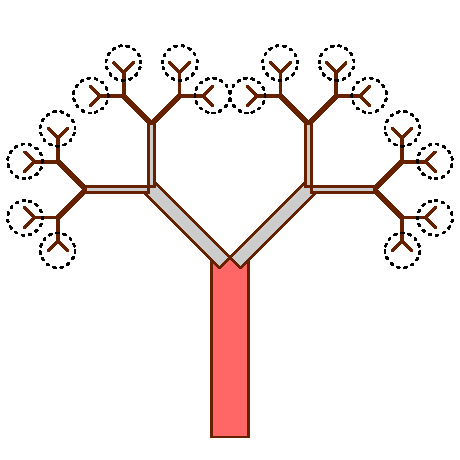
| tree |
? |
| mustard seed |
? |
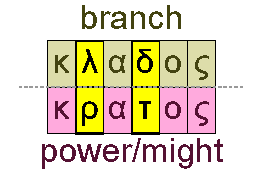
| branch |
? |
In all cases,
it does not matter. One needs the
decoded text.
Decoded text: Need to know the
code word meanings for
"mustard seed" and
"vegetable" and
"tree" and
"branch", etc.
Jesus provides many of the code word meanings, but not all of them. Let us follow the advice of Jesus and "
use our ears".
33. Strongs - grain













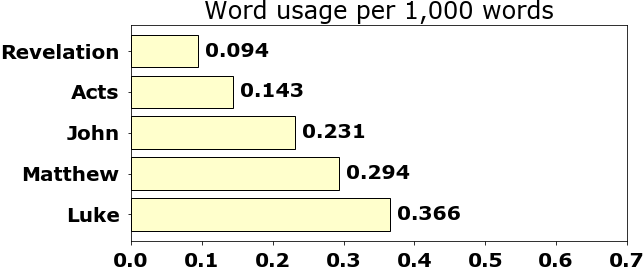










































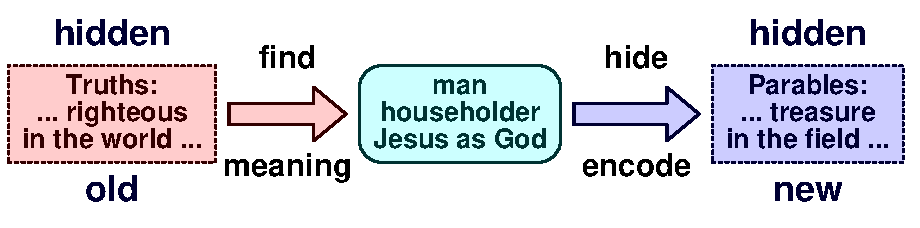 What exactly is the "treasure" and what are the "new" and "old" things that a "scribe" or "householder" brings out of that "treasure"?