- *G4190 *76 πονηρός (pon-ay-ros') : from a derivative of G4192; hurtful, i.e. evil (properly, in effect or influence, and thus differing from G2556, which refers rather to essential character, as well as from G4550, which indicates degeneracy from original virtue); figuratively, calamitous; also (passively) ill, i.e. diseased; but especially (morally) culpable, i.e. derelict, vicious, facinorous; neuter (singular) mischief, malice, or (plural) guilt; masculine (singular) the devil, or (plural) sinners:--bad, evil, grievous, harm, lewd, malicious, wicked(-ness). See also G4191.
- πονηρα *15
- Matthew 9:4 ... Wherefore think ye evil in your hearts?
- Matthew 12:35 ... and an evil man out of the evil treasure bringeth forth evil things.
- Matthew 12:39 ... and said unto them, An evil and adulterous generation ...
- Matthew 12:45 ... also unto this wicked generation.
- Matthew 16:4 A wicked and adulterous generation seeketh after a sign; ...
- Mark 7:23 All these evil things come from within, and ...
- Luke 11:29 ... This is an evil generation: they seek a sign; ...
- John 3:19 ... their deeds were evil.
- John 7:7 ... the works thereof are evil.
- Acts 19:12 ... from them, and the evil spirits went out of them.
- Acts 19:13 ... over them which had evil spirits the name of the Lord ...
- Ephesians 6:13 ... ye may be able to withstand in the evil day, and having done ...
- Hebrews 3:12 ... any of you an evil heart of unbelief, in ...
- James 4:16 ... such rejoicing is evil.
- 1 John 3:12 ... who was of that wicked one, and slew his brother. And wherefore slew he him? Because his own works were evil, and his ...
- πονηρον *12
- Matthew 5:11 ... you, and shall say all manner of evil against you falsely, ...
- Luke 6:22 ... your name as evil, for the Son of man's sake.
- Luke 6:45 ... that which is good; and an evil man out of the evil treasure of his ...
- Acts 18:14 ... a matter of wrong or wicked lewdness, O ye Jews, ...
- Acts 19:15 And the evil spirit answered and said, Jesus ...
- Acts 19:16 And the man in whom the evil spirit was leaped ...
- Acts 28:21 ... or spake any harm of thee.
- Romans 12:9 Let love be without dissimulation. Abhor that which is evil; cleave to that which is good.
- 1 Corinthians 5:13 ... from among yourselves that wicked person.
- 1 John 2:13 ... young men, because ye have overcome the wicked one. I write unto you, little children, ...
- 1 John 2:14 ... in you, and ye have overcome the wicked one.
- Revelation 16:2 ... there fell a noisome and grievous sore upon the men ...
- πονηρου *12
- Matthew 5:37 ... these cometh of evil.
- Matthew 6:13 ... deliver us from evil: For thine is ...
- Matthew 12:35 ... and an evil man out of the evil treasure bringeth forth evil things.
- Matthew 13:38 ... the tares are the children of the wicked one;
- Luke 6:45 ... that which is good; and an evil man out of the evil treasure of his ...
- John 17:15 ... thou shouldest keep them from the evil.
- Galatians 1:4 ... from this present evil world, according to the will ...
- Ephesians 6:16 ... all the fiery darts of the wicked.
- 1 Thessalonians 5:22 Abstain from all appearance of evil.
- 2 Thessalonians 3:3 ... and keep you from evil.
- 2 Timothy 4:18 ... me from every evil work, and will preserve ...
- 1 John 3:12 ... who was of that wicked one, and slew his brother. And wherefore slew he him? Because his own works were evil, and his ...
- πονηρος *8
- Matthew 6:23 ... thine eye be evil, thy whole body ...
- Matthew 12:35 ... and an evil man out of the evil treasure bringeth forth evil things.
- Matthew 13:19 ... understandeth it not, then cometh the wicked one, and catcheth away that which was sown ...
- Matthew 20:15 ... Is thine eye evil, because I am good?
- Mark 7:22 ... deceit, lasciviousness, an evil eye, blasphemy, pride, foolishness:
- Luke 6:45 ... that which is good; and an evil man out of the evil treasure of his ...
- Luke 11:34 ... but when thine eye is evil, thy body also is full of darkness.
- 1 John 5:18 ... himself, and that wicked one toucheth him not.
- πονηρους *7
- Matthew 5:45 ... sun to rise on the evil and on the good, and ...
- Matthew 7:17 ... a corrupt tree bringeth forth evil fruit.
- Matthew 7:18 A good tree cannot bring forth evil fruit, neither can a corrupt ...
- Matthew 13:49 ... shall come forth, and sever the wicked from among the just,
- Matthew 22:10 ... as many as they found, both bad and good: and ...
- Luke 6:35 ... unto the unthankful and to the evil.
- Acts 17:5 ... moved with envy, took unto them certain lewd fellows of the baser sort, and ...
- πονηροι *5
- Matthew 7:11 If ye then, being evil, know how to give good ...
- Matthew 12:34 ... how can ye, being evil, speak good things? for ...
- Matthew 15:19 For out of the heart proceed evil thoughts, murders, adulteries, ...
- Luke 11:13 If ye then, being evil, know how to give good ...
- 2 Timothy 3:13 But evil men and seducers shall wax ...
- πονηρων *5
- Luke 3:19 ... and for all the evils which Herod had done,
- Luke 7:21 ... and plagues, and of evil spirits; and unto many ...
- Luke 8:2 ... had been healed of evil spirits and infirmities, ...
- 2 Thessalonians 3:2 ... from unreasonable and wicked men: for all ...
- James 2:4 ... and are become judges of evil thoughts?
- πονηρε *3
- Matthew 18:32 ... said unto him, O thou wicked servant, I forgave thee ...
- Matthew 25:26 ... answered and said unto him, Thou wicked and slothful servant, ...
- Luke 19:22 ... mouth will I judge thee, thou wicked servant. Thou knewest that ...
- πονηροις *3
- Colossians 1:21 ... in your mind by wicked works, yet now hath he reconciled
- 2 John 1:11 ... is partaker of his evil deeds.
- 3 John 1:10 ... prating against us with malicious words: and not ...
- πονηρω *2
- Matthew 5:39 ... unto you, That ye resist not evil: but whosoever shall smite ...
- 1 John 5:19 ... world lieth in wickedness.
- πονηραι *2
- Ephesians 5:16 ... because the days are evil.
- 1 Timothy 6:4 ... envy, strife, railings, evil surmisings,
- πονηραν
- Acts 25:18 Against whom when the accusers stood up, they brought none ...
- πονηρας
- Hebrews 10:22 ... sprinkled from an evil conscience, and our bodies ...
40. Usage - evil
*G4190 *76 πονηρός (pon-ay-ros') : from a derivative of G4192; hurtful, i.e. evil (properly, in effect or influence, and thus differing from G2556, which refers rather to essential character, as well as from G4550, which indicates degeneracy from original virtue); figuratively, calamitous; also (passively) ill, i.e. diseased; but especially (morally) culpable, i.e. derelict, vicious, facinorous; neuter (singular) mischief, malice, or (plural) guilt; masculine (singular) the devil, or (plural) sinners:--bad, evil, grievous, harm, lewd, malicious, wicked(-ness).

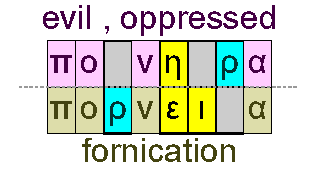
There appears to be a translation issue here.
The ancient Greek lexicons provide the meaning translated as
"evil" as "
oppressed by toils" which fits the context of what Jesus is here (and elsewhere) saying.
The Strongs concordance and theologians have translated
"evil" from the Greek (changing a consonant pair) as "
hurtful",
"evil".
41. Word slide
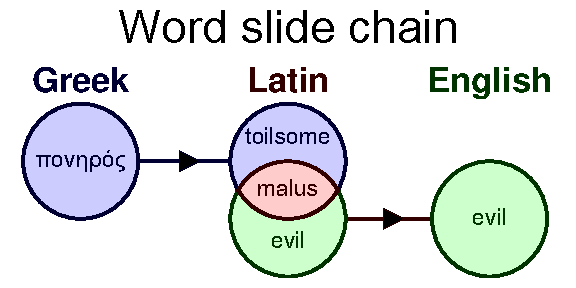
The Latin word
"malus" ≈ "unpleasant, evil".
It appears that there is a "
word slide" here in that the Latin word had more than one meaning and that other meaning was adapted in many places as the meaning of the original word.
Would such a "
semantic slide" be to the advantage or disadvantage of the church? Explain.
42. Comparison
Let us try a comparison of both meanings.
- An evil man out of the evil treasure bringeth forth evil things.
- A burdensome man out of the burdensome treasure bringeth forth burdensome things.
- A burdened man out of the burdened treasure bringeth forth burdened things.
How does this change the meaning of the verse? Which meaning fits better in the context of these verses?
43. Comparison

A common Scott Adams Dilbert cartoon theme is the following. The project gets behind schedule so the manager starts requiring more status reports, each of which take burdensome and toilsome work to complete as the project gets more behind schedule.
Burdensome things can distract one from the goal. One can think of the
"evil" resulting from being "
burdened" with other requirements.
- Burdensome things can weigh down someone such that they do not get the required work (fruit) done.
- Omitted things can get lost in the burdensome work that deception is easier.
44. Branches
John 15:5 I am the vine, ye are the branches: He that abideth in me, and I in him, the same bringeth forth much fruit: for without me ye can do nothing. [kjv]
εγω ειμι η αμπελος υμεις τα κληματα ο μενων εν εμοι καγω εν αυτω ουτος φερει καρπον πολυν οτι χωρις εμου ου δυνασθε ποιειν ουδεν [gnt]

People bear fruit but are usually not referred to as a tree in the Bible. Instead, they are a
"κλῆμα" ≈ "twig, branch (of the vine), sprout" which may be from
"κλάω" ≈ "break".
Jesus is the "
vine" and we are the "
branches" (of the vine, not the tree). There is another word for the "
branch" of a "
tree".
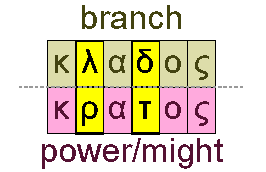
- "κλάδος" ≈ "branch".
- "κράτος" ≈ "might, strength" which is source of the word "democracy" which means "power of the people".
45. John 15:5
KJV: I am the vine, ye are the branches: He that abideth in me, and I in him, the same bringeth forth much fruit: for without me ye can do nothing.
Greek: εγω ειμι η αμπελος υμεις τα κληματα ο μενων εν εμοι καγω εν αυτω ουτος φερει καρπον πολυν οτι χωρις εμου ου δυνασθε ποιειν ουδεν
46. Trees

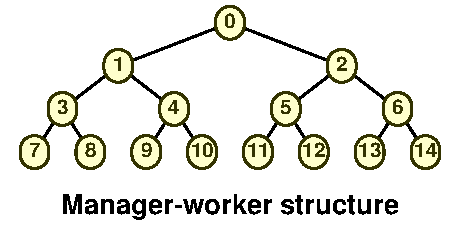
In the Bible,a tree usually represents a human hierarchy and not an individual persons. Usually, the ruler, such as Nebuchadnezzar, is the root of the tree. The common person or worker is a leaf of the tree.
47. Discuss
Discuss: Jesus in this chapter is addressing the religious establishment and shortcomings of that establishment. Does this verse refer primarily to trees as religious hierarchical establishments (including the church) or to trees as human individuals (or both)?
48. Matthew 12:33 Good and rotten trees

Matthew 12:33 Either make the tree good, and his fruit good; or else make the tree corrupt, and his fruit corrupt: for the tree is known by his fruit. [kjv]
η ποιησατε το δενδρον καλον και τον καρπον αυτου καλον η ποιησατε το δενδρον σαπρον και τον καρπον αυτου σαπρον εκ γαρ του καρπου το δενδρον γινωσκεται [gnt]
49. Matthew 12:33 Good and rotten trees

Matthew 12:33 Either make the tree good, and his fruit good; or else make the tree corrupt, and his fruit corrupt: for the tree is known by his fruit. [kjv]
η ποιησατε το δενδρον καλον και τον καρπον αυτου καλον η ποιησατε το δενδρον σαπρον και τον καρπον αυτου σαπρον εκ γαρ του καρπου το δενδρον γινωσκεται [gnt]
50. Churches
Discuss:
- In the Middle Ages, how well did the Catholic Church adapt to needed changes? Was it for good or for bad, Biblically speaking?
- In recent centuries, how well has the Protestant Church adapted to needed changes? Has it been for good or for bad, Biblically speaking?
51. Matthew 12:32

Matthew 12:32 And who soever speaketh a word against the Son of man, it shall be forgiven him: but who soever speaketh against the Holy Ghost, it shall not be forgiven him, neither in this world, neither in the world to come. [kjv]
και ος αν εαν ειπη λογον κατα του υιου του ανθρωπου αφεθησεται αυτω ος δ αν ειπη κατα του πνευματος του αγιου ουκ αφεθησεται αυτω ουτε εν τουτω τω αιωνι ουτε εν τω μελλοντι [gnt]
52. Matthew 12:31 Unpardonable sin

Matthew 12:31 Wherefore I say unto you, All manner of sin and blasphemy shall be forgiven unto men: but the blasphemy against the Holy Ghost shall not be forgiven unto men. [kjv]
δια τουτο λεγω υμιν πασα αμαρτια και βλασφημια αφεθησεται τοις ανθρωποις η δε του πνευματος βλασφημια ουκ αφεθησεται τοις ανθρωποις [gnt]
53. Forgiveness and blasphemy
Blasphemy is speaking evil of something in a way that may not be appropriate.
If one clearly blasphemes Christ, everyone knows what is happening. If one deceptively omits details and emphasizes other details and, in some cases, changes details, the resulting blaspheme against the Holy Spirit is not obvious to those listening.
54. Example
That same person lambasted worshipers in the Eastern Orthodox church there as idol worshipers as they had icons displayed - in many instances to remind them of parts of the Bible.
Such a witness is of dubious value in many respects. One can and should do better. It would be very useful to learn about the language, culture and churches in that area before doing such activities.
55. Model
One model of "
idle words" that appears to fit this passage is that "
idle words" are deceptive words or omitted words (to help the deception) that serve to allow the person saying the "
idle words" to impersonate Christ as in a
MITM (Man in the Middle) attack.
It appears that these are the "
idle words" that need to be accounted for in the day of judgment as either "
for Christ" or "
against Christ". If it cannot be determined as to the intent and/or meaning of those "
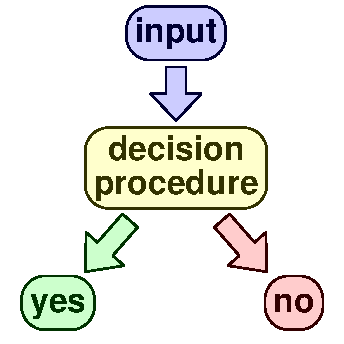
idle words", a decision procedure is needed to determine on which side the "
idle words" fall.
56. Accounting

That is the purpose of the Greek word for "
judge" used here - a separation process. Jesus provides a decision procedure, or tie-breaker, in the next verse.
- Fruit is either good or rotten.
- One is either with Christ entirely or not with Him.
- Words, at stated at the start of this verse sequence, are important.
Discuss: Can omitted words serve the same purpose or end as spoken words?
57. Matthew 12:30 Tie-breaker rule

Matthew 12:30 He that is not with me is against me; and he that gathereth not with me scattereth abroad. [kjv]
ο μη ων μετ εμου κατ εμου εστιν και ο μη συναγων μετ εμου σκορπιζει [gnt]
An analogy can be made to computational science.
58. Related ideas
The following ideas of logical truth are related.
- Russell logical paradox as in "This statement is false.".
- Mathematical incompleteness (Formal predicate logic systems, Gödel, 1924, 1931).
- Computational decidability (Turing Machine and the Halting Problem, Turing, 1936)
- Randomness determination (Algorithmic Information Theory, Kolmogorov, Chaitin)
Connections can be made of logical truth to reality truth and human truth.
Here we look to make an analogy with computational decidability in terms of the Halting Problem.
59. Alan Turing: halting problem
Alan Turing (1912-1954) developed the ideas that proved the limits of computing before the first programmable digital computer was built.
Claude Shannon (1939) showed that one could built such a computer.
The
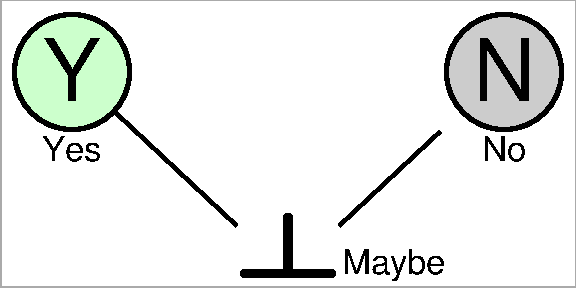
halting problem (Turing, Turing machine, 1936) result: It is impossible to write a computer program that looks at another computer program (and its data) and determines whether that other computer program eventually halts.
The possible answers for a computation of an undecidable problem are yes (true), no (false), or maybe (wait forever). One may be able to go "
outside the system" to determine a better answer.
An abstract (or physical) computer can be called a
Turing Machine. A
Turing complete programming language can compute any computable function.
[waiting for a program to stop, secure form submission, virus detection]
60. Halting problem observations
- Foundations of computation: Program cannot look at another program (and data) and (fully) determine what it will do.
- Goal/assumption of modern psychology: Person can look at another person and determine what that person will do.
- A person is more complex than a computer (machine).
The analogy of the "
idle word" problem to the "
halting problem" is as follows.
61. Idle word problem

Matthew 12:30 He that is not with me is against me; and he that gathereth not with me scattereth abroad. [kjv]
ο μη ων μετ εμου κατ εμου εστιν και ο μη συναγων μετ εμου σκορπιζει [gnt]
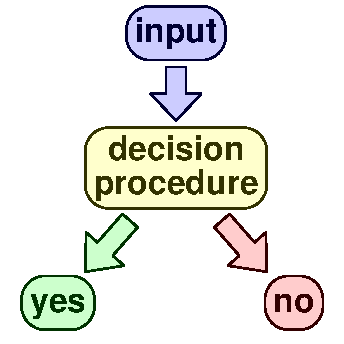
- Some "idle words" are "decidable" as "for Christ" or "against Christ".
- Some "idle words" are "undecidable" as whether they are "for Christ" or "against Christ".
The determination of "
undecidable idle words" may need some "
accounting" outside of the system due to casual or intentional deception, etc.
Some "
undecidable idle words" may still be undecidable and some
tie-breaker rule is needed for decision purposes. This verse appears to provide that tie-breaker rule.
62. Matthew 12:29 Context
 (bottom-up, forward-chaining)
 (top-down backward-chaining)
The next verse (in reverse order) is the "
strong man" verse.
Matthew 12:29 Or else how can one enter into a strong man's house, and spoil his goods, except he first bind the strong man? and then he will spoil his house. [kjv]
η πως δυναται τις εισελθειν εις την οικιαν του ισχυρου και τα σκευη αυτου διαρπα σαι αρπασαι εαν μη πρωτον δηση τον ισχυρον και τοτε την οικιαν αυτου διαρπασει [gnt]
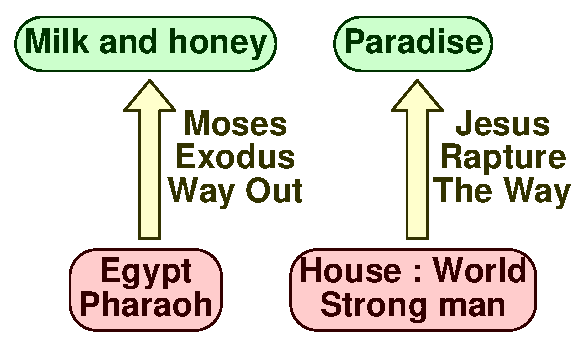
Jesus will bind the strong man and snatch (rapture) his goods (vessels as believers) - those with a good heart and good fruit and, if needed, have accounted for any "
idle words".
63. Saying
What is not said is often as important as what was said?
A husband related how he got in trouble with his wife.
- It was not what I said.
- It was not what I didn't say.
- It was the way I didn't say it.
64. Silence is golden

There is an English saying that "
Speech is silver. Silence is golden". This saying started in one form and gradually changed into the more common forms.
65. Silence is golden

A shortened form is that "
Silence is golden".
Similar sayings in English are:
- Still waters run deep.
- Empty vessels make the most sound.
66. Silence is golden

Some might prefer "
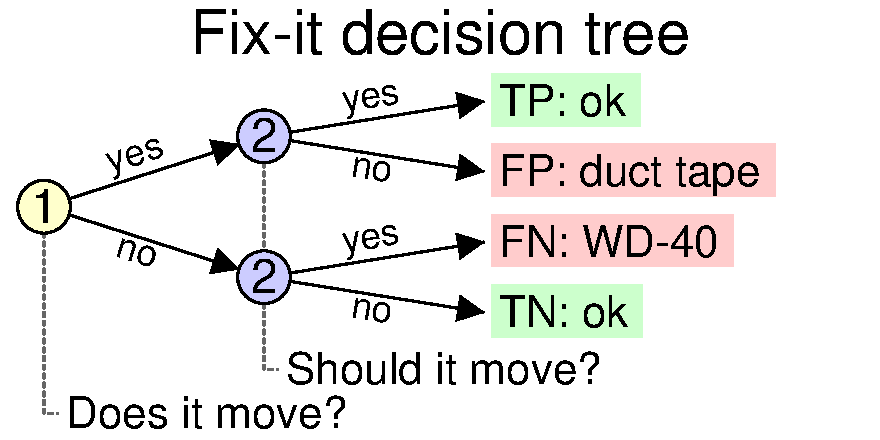
Duct tape is silver".
67. First they came
After the silence of many in the Nazi rise to power and the resulting World War II,
Martin Niemöller (German theologian and Lutheran pastor who opposed the Nazi rule) wrote a saying in 1946 that has been repeated in various forms since.
- First they came for the socialists, and I did not speak out - because I was not a socialist.
- Then they came for the trade unionists, and I did not speak out - because I was not a trade unionist.
- Then they came for the Jews, and I did not speak out - because I was not a Jew.
- Then they came for me - and there was no one left to speak for me.
68. Playing both sides
Many pastors, teachers, etc., will intentionally be vague as not to offend anyone or, in some cases, to deceive others. Some will try to "play both sides" of the table. Accountability is important.
One reason for speaking up is to make someone trying to be vague or to deceive "show their cards" which is an idiom from card games where someone might "bluff" to make others think they have a good hand (of cards).
Another idiom for this is to "force the issue".
69. Have times changed
In Matthew 12, Jesus is speaking to the religious establishment. They have constrained the people from being able to do good with rules, regulations, etc., and a lot of meaningless talk or "idle talk".
It is interesting that today the same thing appears to have happened.
The religious leadership uses a lot of "idle talk" in sermons, etc., to distract the people from the real truth and ignore parts of the Bible they prefer not to present.
The meaning of "idle talk" (of distracting from the truth by the leadership) has been shifted to the people and the idea redefined to by any talk that is "sinful" in some way. And those same pastors may try to define sin as they see it.
If so, has this constrained the people in a manner similar to that of the religious establishment in the days of Jesus?
70. Discussion
Discuss the following.
- When a pastor says "idle" reasoning in a sermon, using up time, distracting from real issues, etc., does that fall under the above description of the unpardonable sin? What if the pastor is doing it on purpose?
- When a pastor says "idle" reasoning by omitting important words from scripture, does that fall under the above description of the unpardonable sin? What if the pastor is doing it on purpose?
- When a pastor says "idle" reasoning by changing important words from scripture, does that fall under the above description of the unpardonable sin? What if the pastor is doing it on purpose?
- If people follow a false teacher, will they suffer the same fate as the false teacher?
Discuss: How does one detect "
blasphemy"? How can one get upset at false teaching if one does not understand that it is false teaching?
71. Little ones
Matthew 18:6 But whoso shall offend one of these little ones which believe in me, it were better for him that a millstone were hanged about his neck, and that he were drowned in the depth of the sea. [kjv]
In the
GNT, "
little ones" can refer to "
children" but in addition, usually refers to "
believers".
72. Discuss
You may be thinking that focusing on the pastor or leadership is not appropriate. Keep in mind that the entire context of Matthew 12 is that of Jesus speaking to the religious establishment who has accused him of doing miracles by the power of Satan.
Discuss:
- Is it satisfactory to generalize what Jesus is saying to the religious establishment to everyone in general?
- Is it satisfactory to change the meaning of what is said from "idle word" as meaningless word to "idle word" as something bad as in a lie, swear word, word said in anger, etc.?
73. Matthew 12:37,36,32,30 Review

Matthew 12:37 For by thy words thou shalt be justified, and by thy words thou shalt be condemned. [kjv]
12:36 But I say unto you, That every idle word that men shall speak, they shall give account thereof in the day of judgment. [kjv]
12:32 And who soever speaketh a word against the Son of man, it shall be forgiven him: but who soever speaketh against the Holy Ghost, it shall not be forgiven him, neither in this world, neither in the world to come. [kjv]
12:30 He that is not with me is against me; and he that gathereth not with me scattereth abroad. [kjv]
A
top-down backward-chaining view of these verses take "
idle words" to the "
unpardonable sin" and a
decision procedure. [computability, halting problem, algorithmic information theory]
74. Summary table of sheep and goats
Here is the summarized table of conditions for the sheep and goats in Matthew 25 using a one-letter abbreviation for each. How many groupings?
| h |
hungry |
gave me food |
| t |
thirsty |
gave me drink |
| s |
stranger/guest |
took me in |
| n |
naked |
clothed me |
| w |
sick/weak |
examined me |
| p |
prison/confined |
came/went to me |
|
For each condition, the meaning can be one (or all) of the following.
☐ Literal meaning
☐ Figurative meaning (as in Jesus using "sleeping" for "has died" in describing the condition of Lazarus)
☐ Something else
|
Do churches ever "
misinterpret" what Jesus is saying? Some who thought they were doing the right thing were "
surprised". Some who did not do those things were "
surprised" that they had done the right thing.
75. Matthew 13:33 KP4 Parable of the leaven
Matthew 13:33 Another parable spake he unto them; The kingdom of heaven is like unto leaven, which a woman took, and hid in three measures of meal, till the whole was leavened. [kjv]
αλλην παραβολην ελαλησεν αυτοις ομοια εστιν η βασιλεια των ουρανων ζυμη ην λαβουσα γυνη ενεκρυψεν εις αλευρου σατα τρια εως ου εζυμωθη ολον [gnt]
The
third kingdom parable in Matthew 13 is very short - just
one verse.
The ancient Greek word
"ἄλευρον " ≈ "ground grain" which was often wheat. Jesus uses this idea to represent
true doctrine or teaching.
The ancient Greek word
"ζύμη" ≈ "yeast, dough" and is used by Jesus to represent
false doctrine or teaching.
76. End of page
 (bottom-up forward-chaining)
 What is the "unpardonable" "sin"? What is an "idle word"? How might they be related? How are they related to "treasure" and "trees"?


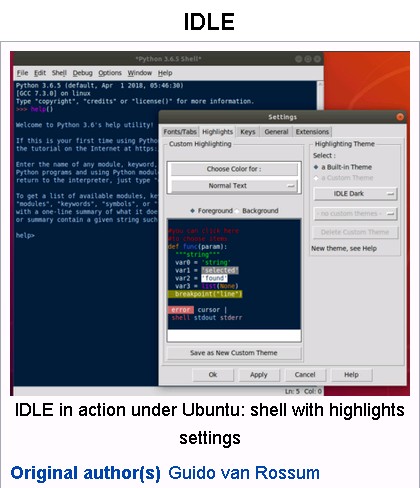 As an acronym for "idle", the Python programming IDLE (Integrated Development and Learning Environment) is a simple programming development environment.


 An empty word (or words) has no grammatical function and, if removed, does not change the meaning of the sentence. Phrases may be referred to as LIC (Low Information Content) expressions or phrases. Saying: Words empty as the wind are best left unsaid.

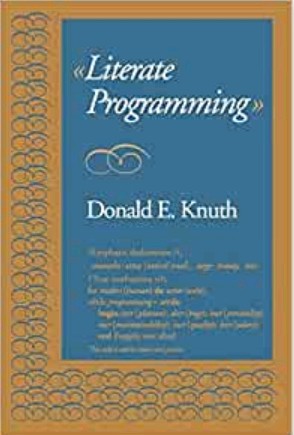 The computer scientist Donald Knuth says that, when writing very technical and dense details, one should use "filler words" to help the material flow more and give the reader's mind a short break.



 Often, "idle words" are described as viscous, negative, bad, not true, disparaging, dirty, etc. That is, they are not good words to say.



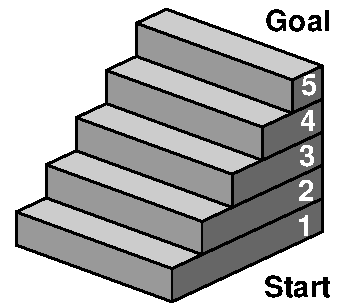
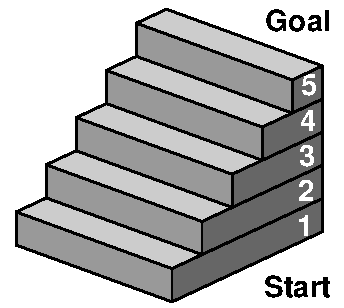 A stair analogy can be used to help understand top-down design and bottom-up implementation.










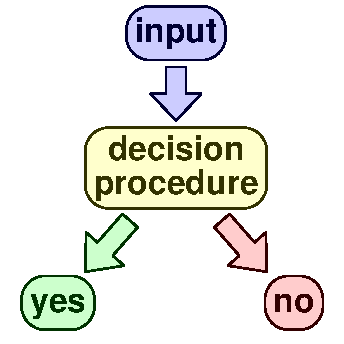 Is a word an "idle" "word" if that word is clearly "for Christ"? Does one need to account for such a word in the day of judgment?

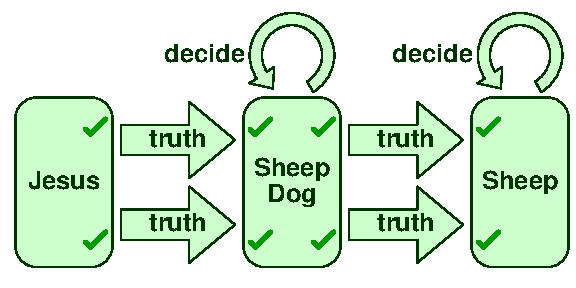





 Should the penalty be the same or worse for deceiving by omission than deceiving by delaying or avoiding the issue?
 Should the penalty by the same or worse for deceiving by omission than deceiving by delaying or avoiding the issue?



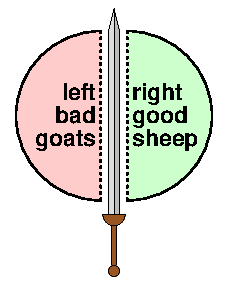
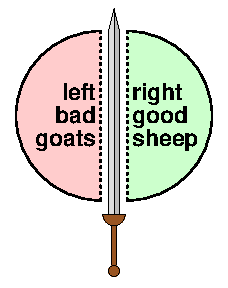 The "judgment" is the "separation" process such as the parable of the sheep and the goats in Matthew 22.