Send
Close Add comments:
(status displays here)
Got it! This site "www.creationpie.org" uses cookies. You consent to this by clicking on "Got it!" or by continuing to use this website. Note: This appears on each machine/browser from which this site is accessed.
Matthew 18:12-14 Sheep astray downward from the mountains
1. Matthew 18:12-14 Sheep astray downward from the mountains
2. Matthew 18 Greatest and least in the kingdom
3. Matthew 18:1 Greatest
Matthew 18:1 At the same time came the disciples unto Jesus, saying, Who is the greatest in the kingdom of heaven? [kjv]
εν εκεινη τη ωρα προσηλθον οι μαθηται τω ιησου λεγοντες τις αρα μειζων εστιν εν τη βασιλεια των ουρανων [gnt]
|
Who is "greatest"?
|
Who is "least"?
|
 |
 |
 |
 |
Since chapter 17 is concerned with
"greatness" and chapter 18 starts with the question to Jesus of who is
"greatest", the question might have been motivated by chapter 17 and then that idea follows through with everything Jesus says in finishing this discourse in chapter 18.
In modern times, those who think themselves
"great" are sometimes called the "
elite".
4. Matthew 18:12-14 Sheep astray downward from the mountains
Matthew 18:12 How think ye? if a man have an hundred sheep, and one of them be gone astray, doth he not leave the ninety and nine, and goeth into the mountains, and seeketh that which is gone astray? [kjv]
18:13 And if so be that he find it, verily I say unto you, he rejoiceth more of that sheep, than of the ninety and nine which went not astray. [kjv]
Why did the chicken cross the road?
To get to the other side. And many other answers.
Why did the one sheep go "astray"?
Why is there such "joy" for that one "sheep" "more" than the others?
Did the lost "sheep" ever change behavior?
How might a typical attractive refrigerator magnet sermon for these verses go?
5. Matthew 18:12 Translations
Matthew 18:12 How think ye? if a man have an hundred sheep, and one of them be gone astray, doth he not leave the ninety and nine, and goeth into the mountains, and seeketh that which is gone astray? [kjv]
NIV (New International Version):
What do you think? If a man owns a hundred sheep, and one of them wanders away, will he not leave the ninety-nine on the hills and go to look for the one that wandered off?
NLT (New Living Translation):
If a man has a hundred sheep and one of them wanders away, what will he do? Won’t he leave the ninety-nine others on the hills and go out to search for the one that is lost?
Berean Literal Bible:
What do you? think? If unto any man there should be a hundred sheep, and one of them should go astray, will he not leave the ninety-nine on the mountains and, having gone, seek the one going astray?
6. Matthew 18:1 Think about it
Remember that this entire discourse of Matthew 18 started with who is
"greatest".
Matthew 18:1 At the same time came the disciples unto Jesus, saying, Who is the greatest in the kingdom of heaven? [kjv]
εν εκεινη τη ωρα προσηλθον οι μαθηται τω ιησου λεγοντες τις αρα μειζων εστιν εν τη βασιλεια των ουρανων [gnt]
Would a
"sheep" become a "
bird" or "
eye" or "
leader" by
deception to become
"greatest" to
"entrap" or attract "
fish" or "
feet" or "
many" with their "
opinion" or "
candle" to a "
city" (that cannot be "
hid") on a
"mountain" ?
To get started, one needs to create the
deceptions or
"entrapments" as
opinions or "
candles" or "
definition". The Greek word for "
definition" and
"mountain" is the same word.
What do you
think? What is your
opinion? Would an
opinion by Jesus carry any weight?
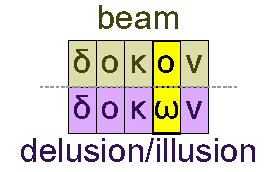
The word for
"think" is that of "
opinion" and is a play on words with the "
beam" as an "
expectation" in Matthew 7.
7. Expectations
8. A dogmatic opinion about dogmas
9. Strongs - thinking
*G1380 *62 δοκέω (dok-eh'-o) : a prolonged form of a primary verb, doko dok'-o (used only in an alternate in certain tenses; compare the base of G1166) of the same meaning; to think; by implication, to seem (truthfully or uncertainly):--be accounted, (of own) please(-ure), be of reputation, seem (good), suppose, think, trow.
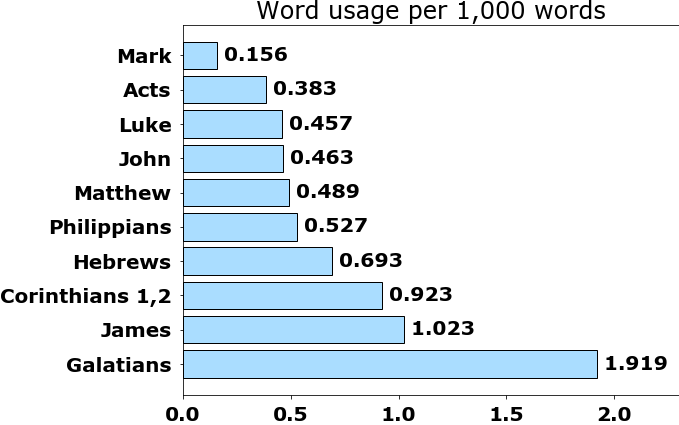 |
Words: δοκει=20 δοκειν δοκεις δοκειτε=10 δοκη δοκουμεν δοκουν δοκουντα δοκουντες=3 δοκουντων δοκουσα δοκουσιν=2 δοκω=2 δοκων δοξαντες=2 δοξη=2 δοξητε δοξω εδοκει εδοκουν=2 εδοξα εδοξαν=2 εδοξε=2 εδοξεν=2
|
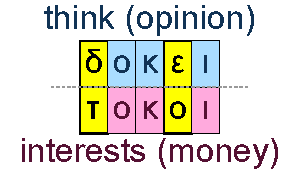
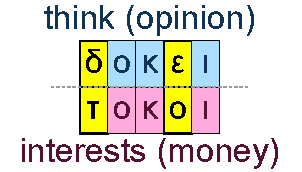
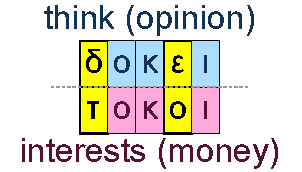
"δοκεῖ" ≈ "think (opinion)" (third person singular) from "δοκέω" ≈ "expect, think, suppose"
"τόκοι" ≈ "childbirths, interests (money)" (plural) from "τοκος" ≈ "childbirth, interest (money)".
Jesus uses this word
3 times in Matthew. How do each fit the idea of the play on words?
10. Matthew 18:12 Thinking interest in money
Matthew 18:12 How think ye? if a man have an hundred sheep, and one of them be gone astray, doth he not leave the ninety and nine, and goeth into the mountains, and seeketh that which is gone astray? [kjv]
τι υμιν δοκει εαν γενηται τινι ανθρωπω εκατον προβατα και πλανηθη εν εξ αυτων ουχι αφεις αφησει τα εννενηκονταεννεα ενενηκοντα εννεα επι τα ορη και πορευθεις ζητει το πλανωμενον [gnt]
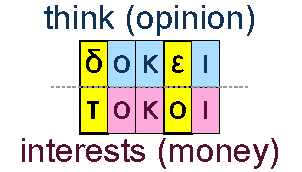
"δοκεῖ" ≈ "think (opinion)" (third person singular) from "δοκέω" ≈ "expect, think, suppose"
"τόκοι" ≈ "childbirths, interests (money)" (plural) from "τοκος" ≈ "childbirth, interest (money)".
How might what Jesus says here have something to do with
"thinking" about
"money (interest)" and/or
"childbirth/children"?
Might the
"sheep" have been enticed/entrapped to go "
astray" due to a deception of
"money/interest"? Might this be related to the "
millstone" "
entrapment"?
11. Tiberius Caesar and sheep
Luke 3:1 Now in the fifteenth year of the reign of Tiberius Caesar, Pontius Pilate being governor of Judaea, … [kjv]
Emperor
Tiberius Caesar (on taxes):
It is the duty of a good shepherd to shear his sheep, not to skin them.
At the same time, Jesus was walking and teaching in Judea. Jesus had a different idea about what it meant to be a
"good" "shepherd".
John 10:11 I am the good shepherd: the good shepherd giveth his life for the sheep. [kjv]
εγω ειμι ο ποιμην ο καλος ο ποιμην ο καλος την ψυχην αυτου τιθησιν υπερ των προβατων [gnt]
9 AD: Arminius organizes Germans and slaughters Roman Legions under Varus at Teutoburg Forest
12. Matthew 17:25 Thinking interest in money
Matthew 17:25 He saith, Yes. And when he was come into the house, Jesus prevented him, saying, What thinkest thou, Simon? of whom do the kings of the earth take custom or tribute? of their own children, or of strangers? [kjv]
λεγει ναι και οτε εισηλθεν ελθοντα εις την οικιαν προεφθασεν αυτον ο ιησους λεγων τι σοι δοκει σιμων οι βασιλεις της γης απο τινων λαμβανουσιν τελη η κηνσον απο των υιων αυτων η απο των αλλοτριων [gnt]
"δοκεῖ" ≈ "think (opinion)" (third person singular) from "δοκέω" ≈ "expect, think, suppose"
"τόκοι" ≈ "childbirths, interests (money)" (plural) from "τοκος" ≈ "childbirth, interest (money)".
How might what Jesus says here have something to do with
"thinking" about
"money (interest)" and/or
"childbirth/children"?
13. Matthew 21:28 Thinking interest in money
14. Matthew 18:12 Man
Matthew 18:12 How think ye? if a man have an hundred sheep, and one of them be gone astray, doth he not leave the ninety and nine, and goeth into the mountains, and seeketh that which is gone astray? [kjv]
τι υμιν δοκει εαν γενηται τινι ανθρωπω εκατον προβατα και πλανηθη εν εξ αυτων ουχι αφεις αφησει τα εννενηκονταεννεα ενενηκοντα εννεα επι τα ορη και πορευθεις ζητει το πλανωμενον [gnt]
Who is the man?
15. Identity of the man in dative in Matthew
Jesus tends to use nouns as key words. And Jesus tends to use nouns in a particular case (e.g., dative, genitive, etc.) in a particular way.
"ανθρωπω" ≈ "man" (dative singular)
In Matthew, Jesus uses the noun
"man" in the dative case in a particular way
nine times in Matthew. One of these verses is used in a way different than the usual interpretation.
As often happens, the
TR (Textus Receptus) uses the word in that case in an inappropriate way that breaks the model. The
TR adds this noun in the dative case one time in a way that breaks the model.
Matthew sometimes uses this word in filling in connecting commentary and appears to be unaware of any special meaning for a given word in a given case, etc. Such verses will be omitted.
... more to be added ...
16. Matthew 18:12 Sheep
Matthew 18:12 How think ye? if a man have an hundred sheep, and one of them be gone astray, doth he not leave the ninety and nine, and goeth into the mountains, and seeketh that which is gone astray? [kjv]
τι υμιν δοκει εαν γενηται τινι ανθρωπω εκατον προβατα και πλανηθη εν εξ αυτων ουχι αφεις αφησει τα εννενηκονταεννεα ενενηκοντα εννεα επι τα ορη και πορευθεις ζητει το πλανωμενον [gnt]
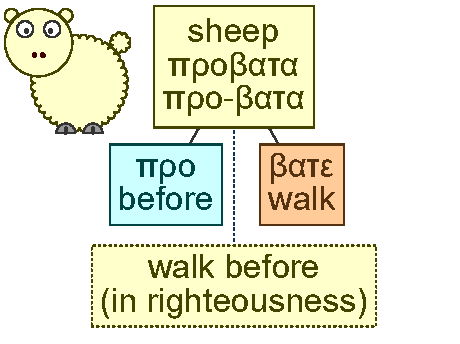 |
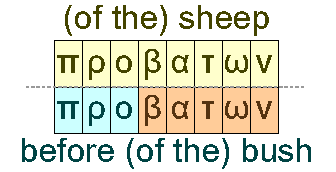
Sheep have a tendency
to "walk before"
or "wander away".
|
The ancient Greek word
"πρόβατα" ≈ "sheep" and comes from the literal words "
before" and "
walk".
Jesus wants "
believers" to "
walk" "
before" with "
good works". Might that require "
walking away" from the "
birds"?
17. Matthew 18:12
Matthew 18:12 How think ye? if a man have an hundred sheep, and one of them be gone astray, doth he not leave the ninety and nine, and goeth into the mountains, and seeketh that which is gone astray? [kjv]
τι υμιν δοκει εαν γενηται τινι ανθρωπω εκατον προβατα και πλανηθη εν εξ αυτων ουχι αφεις αφησει τα εννενηκονταεννεα ενενηκοντα εννεα επι τα ορη και πορευθεις ζητει το πλανωμενον [gnt]
The "man" does not just "have" the "sheep". The "sheep" "come into being".
The "man" does not "leave" them. They are "forgiven"or "let go". Same Greek word.
The word for "goeth" is the same word used in the Great Commission.
Why did the "one" "sheep" go "astray"?
Was it "on", "onto", or "off of " the "mountains"?
Who might this "one" "sheep" be?
Why might it be important that it is the first "one" of the "hundred" to do so?
What are some of the traditional explanations to these questions?
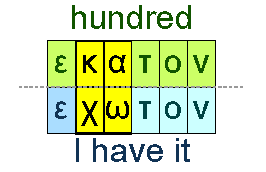
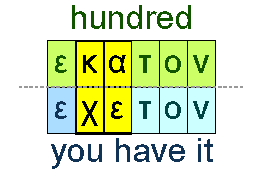
18. A hundred play on words
"ἑκατόν" ≈ "hundred".
"ἔχω" ≈ "(I) have/keep".
"ἔχε" ≈ "(you) have/keep" (imperative).
"τον" ≈ "the/it" (accusative masculine).
If everyone in a group or set of members says
"(I) have" "it" and
"(you) have" "it" then (if true) the relation on
"it" is
reflexive,
symmetric and
transitive (by induction) and thus forms an equivalence relation and induces an equivalence set (of the entire group).
Note that the reasoning only requires the
"(you) have" "it" (imperative) within the group. Sayings:
The in thing,
out of it. Jazz saying:
Be around or be square.
How well does this play on words fit for the times when Jesus uses the word for
"hundred"? That is, does the
"hundred" refer to a group that has some
relation, called
"it", that holds for the entire group (member by member)? Note: The resulting group (equivalence class) could be either "
good" or
not "
good" (in some sense).
19. Matthew 18:12 Hundred sheep
Matthew 18:12 How think ye? if a man have an hundred sheep, and one of them be gone astray, doth he not leave the ninety and nine, and goeth into the mountains, and seeketh that which is gone astray? [kjv]
τι υμιν δοκει εαν γενηται τινι ανθρωπω εκατον προβατα και πλανηθη εν εξ αυτων ουχι αφεις αφησει τα εννενηκονταεννεα ενενηκοντα εννεα επι τα ορη και πορευθεις ζητει το πλανωμενον [gnt]
… centum oves … nonaginta novem … [v]
The
ancient Greek word
"ἑκατόν" ≈ "hundred" (cardinal number). The
Latin word
"centum" ≈ "hundred".
Are these
"sheep" all "
together" as a
group? It would appear so. Are these
"sheep" together in a
"good" or
not "good" sense? If it is not clear, any decision tree modeling this idea is split into two worlds so each can be considered separately.
20. Matthew 18:12
Matthew 18:12 How think ye? if a man have an hundred sheep, and one of them be gone astray, doth he not leave the ninety and nine, and goeth into the mountains, and seeketh that which is gone astray? [kjv]
τι υμιν δοκει εαν γενηται τινι ανθρωπω εκατον προβατα και πλανηθη εν εξ αυτων ουχι αφεις αφησει τα εννενηκονταεννεα ενενηκοντα εννεα επι τα ορη και πορευθεις ζητει το πλανωμενον [gnt]
… centum oves … nonaginta novem … [v]
What happens to a "sheep" that leaves a not "good" group? Could this be the "sheep" that went "astray"?
What happens to a "sheep" that stays with a not "good" group? That is, they do not "cut off" the part of the "body" that is trying to "entrap" them?
Business saying when the ship (business) starts to sink:
The rats that can swim best jump ship first.
21. Planets as wandering stars
Matthew 24:5 For many shall come in my name, saying, I am Christ; and shall deceive many. [kjv]
πολλοι γαρ ελευσονται επι τω ονοματι μου λεγοντες εγω ειμι ο χριστος και πολλους πλανησουσιν [gnt]
How does a "
sheep" know if it has gone or is going
"astray"? How
"many" is
"many"?
The ancient Greek word
"πλάνη" ≈ "wandering, roaming" and, figuratively,
"going astray" or
"in error". as in wandering off-target. The English word
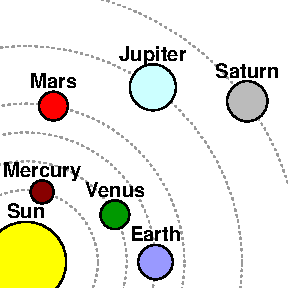
"planet" comes from this Greek word as a shortened form of
"wandering star" since planets were considered wandering stars. The modern Greek word
"πλανήτης" (pla-NEE-tees) ≈ "planet".
Discuss: Consider the billions of people throughout the ages. Are the
"many" a few insurrectionists from the first century or so who led a few thousand followers?
22. Ezekiel 14:9
Ezekiel 14:9 And if the prophet be deceived when he hath spoken a thing, I the LORD have deceived that prophet, and I will stretch out my hand upon him, and will destroy him from the midst of my people Israel. [kjv]
και ο προφητης εαν πλανηθη και λαληση εγω κυριος πεπλανηκα τον προφητην εκεινον και εκτενω την χειρα μου επ αυτον και αφανιω αυτον εκ μεσου του λαου μου ισραηλ [lxx]
The
ancient Greek word
"φαίνω" ≈ "make known, reveal" which is the source of the English words such as
"phantom" and
"phenomena" (both things that
"appear").
The alpha prefix negates the meaning of a word, so the
ancient Greek word
"αφανιζω" ≈ "conceal, disappear". A
context is needed to support the thing
concealed being
destroyed.
23. Ezekiel 14:9
KJV: And if the prophet be deceived when he hath spoken a thing, I the LORD have deceived that prophet, and I will stretch out my hand upon him, and will destroy him from the midst of my people Israel.
Hebrew: והנביא כי יפתה ודבר דבר אני יהוה פתיתי את הנביא ההוא ונטיתי את ידי עליו והשמדתיו מתוך עמי ישראל׃
Greek: και ο προφητης εαν πλανηθη και λαληση εγω κυριος πεπλανηκα τον προφητην εκεινον και εκτενω την χειρα μου επ αυτον και αφανιω αυτον εκ μεσου του λαου μου ισραηλ
24. Matthew 18:12 Sell astray
Matthew 18:12 How think ye? if a man have an hundred sheep, and one of them be gone astray, doth he not leave the ninety and nine, and goeth into the mountains, and seeketh that which is gone astray? [kjv]
τι υμιν δοκει εαν γενηται τινι ανθρωπω εκατον προβατα και πλανηθη εν εξ αυτων ουχι αφεις αφησει τα εννενηκονταεννεα ενενηκοντα εννεα επι τα ορη και πορευθεις ζητει το πλανωμενον [gnt]
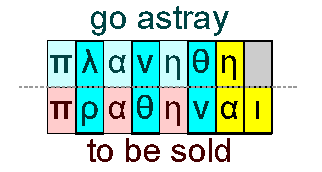
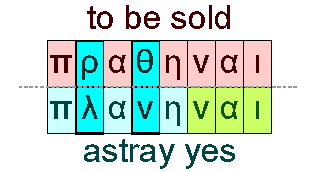
"πλανηθῇ" ≈ "go astray".
"πραθῆναι" ≈ "to be sold (into slavery)".
"πλάνη" ≈ "wander, roam" and "ναι" ≈ "yes"
In the parable of the unforgiving servant, at the end of this chapter, the lord commands to "
sell" the "
woman", "
children", etc. Might this have been what that "
servant" was doing to others? Might this be a
"sheep" that was thus "
sold"? Perhaps this was a
deceptive "wander",
"yes", the "
millstone" not being noticed by the one "
sold".
In Greek the "
L" and "
R" sounds were more similar than in English.
25. Matthew 18:12 On six
Matthew 18:12 How think ye? if a man have an hundred sheep, and one of them be gone astray, doth he not leave the ninety and nine, and goeth into the mountains, and seeketh that which is gone astray? [kjv]
τι υμιν δοκει εαν γενηται τινι ανθρωπω εκατον προβατα και πλανηθη εν εξ αυτων ουχι αφεις αφησει τα εννενηκονταεννεα ενενηκοντα εννεα επι τα ορη και πορευθεις ζητει το πλανωμενον [gnt]
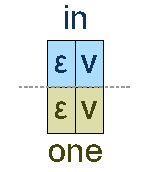
"ἐν" ≈ "in".
"ἓν" ≈ "one".
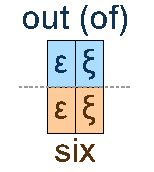
"ἐξ" ≈ "out of".
"ἕξ" ≈ "six".
The word for
"one", same Greek spelling as
"in", and the word for "
six", same Greek spelling as
"out", appear a few times near each other in the sayings of Jesus in Matthew . Might this be just a coincidence? Consider the
"one" as node 1 and
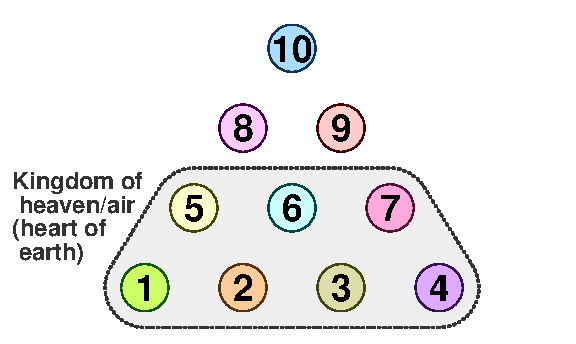
"six" as nodes 2 to 7 (day day day night night night) in the seven pins (kingdom of heaven) in the ten pin model?
26. Matthew 10:29
Matthew 10:29 Are not two sparrows sold for a farthing? and one of them shall not fall on the ground without your Father. [kjv]
ουχι δυο στρουθια ασσαριου πωλειται και εν εξ αυτων ου πεσειται επι την γην ανευ του πατρος υμων [gnt]
The exact
ancient Greek words
"εν" ≈ "one" and
"εξ" ≈ "six" appear
2 times in Matthew,
2 times in Luke (repeating the idea of the Matthew verses) and
4 times in the
LXX (Septuagint).
27. Matthew 10:29
KJV: Are not two sparrows sold for a farthing? and one of them shall not fall on the ground without your Father.
Greek: ουχι δυο στρουθια ασσαριου πωλειται και εν εξ αυτων ου πεσειται επι την γην ανευ του πατρος υμων
28. Psalms 34:20
Psalms 34:20 He keepeth all his bones: not one of them is broken. [kjv]
κυριος φυλασσει παντα τα οστα αυτων εν εξ αυτων ου συντριβησεται [lxx]
29. Psalms 34:20
KJV: He keepeth all his bones: not one of them is broken.
Hebrew: שמר כל עצמותיו אחת מהנה לא נשברה׃
Greek: κυριος φυλασσει παντα τα οστα αυτων εν εξ αυτων ου συντριβησεται
30. Exodus 31:17
Exodus 31:17 It is a sign between me and the children of Israel for ever: for in six days the LORD made heaven and earth, and on the seventh day he rested, and was refreshed. [kjv]
εν εμοι και τοις υιοις ισραηλ σημειον εστιν αιωνιον οτι εν εξ ημεραις εποιησεν κυριος τον ουρανον και την γην και τη ημερα τη εβδομη επαυσατο και κατεπαυσεν [lxx]
31. Exodus 31:17
KJV: It is a sign between me and the children of Israel for ever: for in six days the LORD made heaven and earth, and on the seventh day he rested, and was refreshed.
Hebrew: ביני ובין בני ישראל אות הוא לעלם כי ששת ימים עשה יהוה את השמים ואת הארץ וביום השביעי שבת וינפש׃
Greek: εν εμοι και τοις υιοις ισραηλ σημειον εστιν αιωνιον οτι εν εξ ημεραις εποιησεν κυριος τον ουρανον και την γην και τη ημερα τη εβδομη επαυσατο και κατεπαυσεν
32. David in Kings and Chronicles
2 Samuel 24:12 Go and say unto David, Thus saith the LORD, I offer thee three things; choose thee one of them, that I may do it unto thee. [kjv]
πορευθητι και λαλησον προς δαυιδ λεγων ταδε λεγει κυριος τρια εγω ειμι αιρω επι σε και εκλεξαι σεαυτω εν εξ αυτων και ποιησω σοι [lxx]
1 Chronicles 21:10 Go and tell David, saying, Thus saith the LORD, I offer thee three things: choose thee one of them, that I may do it unto thee. [kjv]
πορευου και λαλησον προς δαυιδ λεγων ουτως λεγει κυριος τρια αιρω εγω επι σε εκλεξαι σεαυτω εν εξ αυτων και ποιησω σοι [lxx]
33. 2 Samuel 24:12
KJV: Go and say unto David, Thus saith the LORD, I offer thee three things; choose thee one of them, that I may do it unto thee.
Hebrew: הלוך ודברת אל דוד כה אמר יהוה שלש אנכי נוטל עליך בחר לך אחת מהם ואעשה לך׃
Greek: πορευθητι και λαλησον προς δαυιδ λεγων ταδε λεγει κυριος τρια εγω ειμι αιρω επι σε και εκλεξαι σεαυτω εν εξ αυτων και ποιησω σοι
34. 1 Chronicles 21:10
KJV: Go and tell David, saying, Thus saith the LORD, I offer thee three things: choose thee one of them, that I may do it unto thee.
Hebrew: לך ודברת אל דויד לאמר כה אמר יהוה שלוש אני נטה עליך בחר לך אחת מהנה ואעשה לך׃
Greek: πορευου και λαλησον προς δαυιδ λεγων ουτως λεγει κυριος τρια αιρω εγω επι σε εκλεξαι σεαυτω εν εξ αυτων και ποιησω σοι
35. Matthew 18:12 Ninety nine
Matthew 18:12 How think ye? if a man have an hundred sheep, and one of them be gone astray, doth he not leave the ninety and nine, and goeth into the mountains, and seeketh that which is gone astray? [kjv]
τι υμιν δοκει εαν γενηται τινι ανθρωπω εκατον προβατα και πλανηθη εν εξ αυτων ουχι αφεις αφησει τα εννενηκονταεννεα ενενηκοντα εννεα επι τα ορη και πορευθεις ζητει το πλανωμενον [gnt]
… centum oves … nonaginta novem … [v]
The
ancient Greek words
"ἐνενήκοντα" ≈ "ninety" and
"ἐννέα" ≈ "nine". The Greek letter
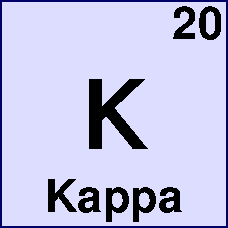
Qoppa disappeared, except as a number, as the Greeks already had the
Kappa with the same sound. Unique sounds for letters made Greek easier to learn to read and write, provided one grew up as a child learning the language.
The
modern Greek words
"ενενήντα" (eh-neh-NEE-da) ≈ "ninety" and
"εννιά" (ehn-nee-A) ≈ "nine". The Latin word
"novem" ≈ "nine".
36. Matthew 18:12 One fresh nine
Matthew 18:12 How think ye? if a man have an hundred sheep, and one of them be gone astray, doth he not leave the ninety and nine, and goeth into the mountains, and seeketh that which is gone astray? [kjv]
τι υμιν δοκει εαν γενηται τινι ανθρωπω εκατον προβατα και πλανηθη εν εξ αυτων ουχι αφεις αφησει τα εννενηκονταεννεα ενενηκοντα εννεα επι τα ορη και πορευθεις ζητει το πλανωμενον [gnt]
… centum oves … nonaginta novem … [v]
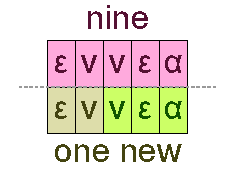
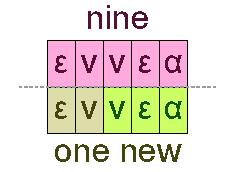
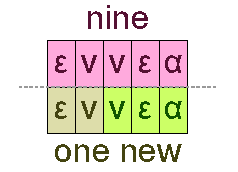
"ἐννέα" ≈ "nine".
"ἑν" ≈ "one" (neuter grammatical gender)
"νέα" ≈ "new, fresh" (feminine singular, neuter plural)
The ancient Greek word
"νεανίσκος" ≈ "young man" and comes from
"νεανίας" ≈ "young man" and comes from
"νέος" ≈ "young, new, fresh" and is related to the Latin word
"novus" ≈ "new". Who might be the
"one" "new/fresh"?
ν
37. Matthew 19:22 Young man
38. Matthew 18:12 Ninety
Matthew 18:12 How think ye? if a man have an hundred sheep, and one of them be gone astray, doth he not leave the ninety and nine, and goeth into the mountains, and seeketh that which is gone astray? [kjv]
τι υμιν δοκει εαν γενηται τινι ανθρωπω εκατον προβατα και πλανηθη εν εξ αυτων ουχι αφεις αφησει τα εννενηκονταεννεα ενενηκοντα εννεα επι τα ορη και πορευθεις ζητει το πλανωμενον [gnt]
… centum oves … nonaginta novem … [v]
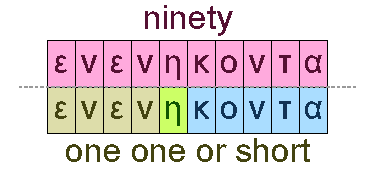
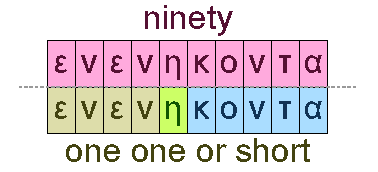
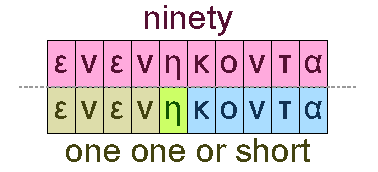
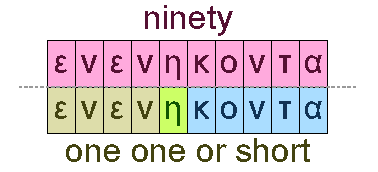
"ἐνενήκοντα" ≈ "ninety".
"ἑν" ≈ "one" (neuter grammatical gender).
"η" ≈ "or".
"κοντᾰ́" ≈ "short" (neuter plural).
Who might be the
"one" "one"? How about the "
child" and "
Jesus"
together in the "
middle"?
What about the
"or" "short"?
39. Short
40. Matthew 18:12 Put it together
Matthew 18:12 How think ye? if a man have an hundred sheep, and one of them be gone astray, doth he not leave the ninety and nine, and goeth into the mountains, and seeketh that which is gone astray? [kjv]
τι υμιν δοκει εαν γενηται τινι ανθρωπω εκατον προβατα και πλανηθη εν εξ αυτων ουχι αφεις αφησει τα εννενηκονταεννεα ενενηκοντα εννεα επι τα ορη και πορευθεις ζητει το πλανωμενον [gnt]
… centum oves … nonaginta novem … [v]
As a code word, or as part of a word in a play on words, the Greek word
"κοντά" ≈ "short" appears to mean a form of fixed-point as in reflexively collected together.
Who might be the
"one" "one" combined together (reflexive fixed point) with
"one" "new"? If there are "
two" (who agree), the "
child" and Jesus, is the use of plural valid even if there is only
one "
child" involved? Might you be a "
pearl" if you have a "
short" "
spear", being "
one" "
one" with Jesus? How about a "
short" "
sword"? Do you get the
point?
41. Matthew 6:12 Forgiving debts
Matthew 6:12 And forgive us our debts, as we forgive our debtors. [kjv]
και αφες ημιν τα οφειληματα ημων ως και ημεις αφιεμεν αφηκαμεν τοις οφειλεταις ημων [gnt]
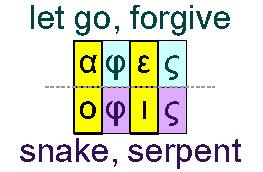
"ὄφεις" ≈ "serpents, snakes" (as a play on words).
Might the first
"debts" be those the
"snakes" think we
"owe"?
The Greek for
"forgive" as that of
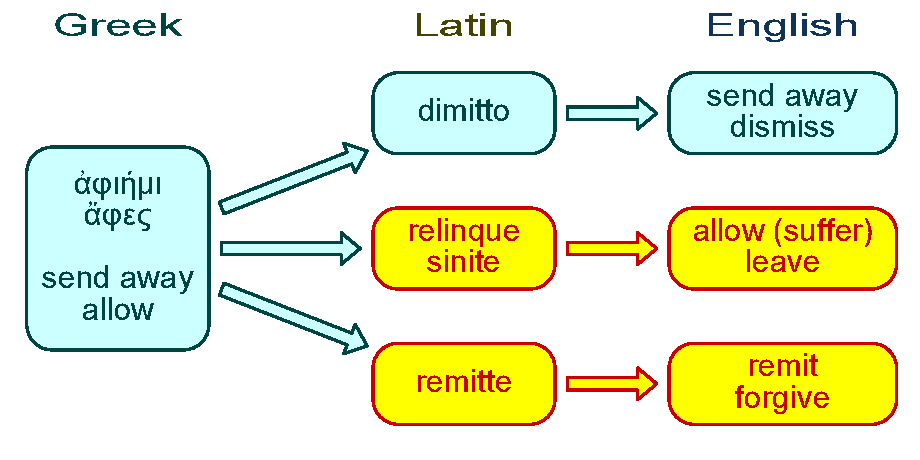
"letting go" where there is the idea of separation. The ancient Greek word
"ἀφίημι" ≈ "send away, let pass".
The Greek for
"debts" has to do with an obligation to someone, such as
"owing" money. It could be any obligation. Luke uses the word Greek word for "
sins" whereas Matthew uses the word for
"owing".
[sin not undo death]
42. Forgive the word slide
43. Matthew 18:12 Sheep and mountains
Matthew 18:12 How think ye? if a man have an hundred sheep, and one of them be gone astray, doth he not leave the ninety and nine, and goeth into the mountains, and seeketh that which is gone astray? [kjv]
τι υμιν δοκει εαν γενηται τινι ανθρωπω εκατον προβατα και πλανηθη εν εξ αυτων ουχι αφεις αφησει τα εννενηκονταεννεα ενενηκοντα εννεα επι τα ορη και πορευθεις ζητει το πλανωμενον [gnt]

100=99+1
|
The Greek says "
man" and not "
shepherd". In the parables, Jesus uses (and then explains) the code word "
man" to refer to "
Jesus as God".
Why is the
"hundred" important? Are the
99 "
on" the
"mountains" in danger when the "
man" "
leaves"? The only direction from "
on" the
"mountains" is
down,
down,
down, eventually to the "
sea".
How does Jesus reinforces the "
ninety and nine" to
avoid the "
one cookie rule"?
44. Into the sea
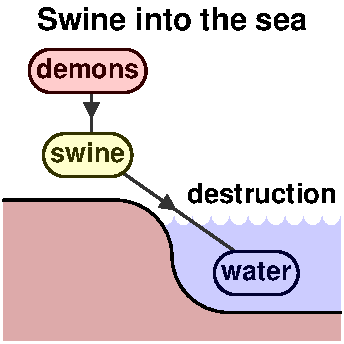
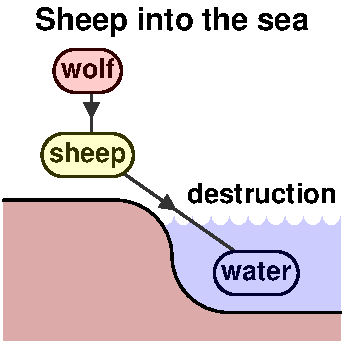 |

 |
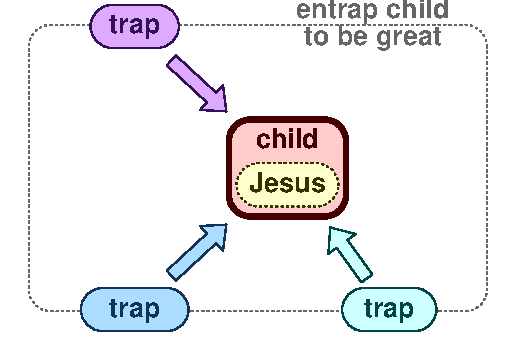
Is there a connection?
"Down" from the "mountain". Is this to "cut off" an "eye", "hand" or "foot"?
"Sea sinking" in the "sea" of the "sea" from a "millstone".
|
How might any related "
conflict" be "
resolved" within the "
church"? A "
city" on a "
hill" that is "
under water" cannot be "
hid" because it is already "
hid" "
under water" as a "
grave" which is a play on words with "
the light" (
false "
light").
45. Matthew 18:6 Sea of the sea of the sea
Matthew 18:6 But whoso shall offend one of these little ones which believe in me, it were better for him that a millstone were hanged about his neck, and that he were drowned in the depth of the sea. [kjv]
ος δ αν σκανδαλιση ενα των μικρων τουτων των πιστευοντων εις εμε συμφερει αυτω ινα κρεμασθη μυλος ονικος επι περι τον τραχηλον αυτου και καταποντισθη εν τω πελαγει της θαλασσης [gnt]
The
ancient Greek word
"καταποντίζω" ≈ "sink in the sea" which could, in context, mean drowning, comes from two Greek words.
"κατά" ≈ "back, downwards, against, fully, completely" and "πόντος" ≈ "sea" (eye, bird).
"πελάγει" ≈ "sea" (dative neuter singular) from "πέλαγος" ≈ "sea", later the islands in the sea and the source of the last part of the English word "archipelago" (foot, fish)
"θάλασσα" ≈ "sea". Some see the word "salt" as part of this word for "sea". (hand, pig)
Greek:
Sink in the sea in the sea of the sea. [downward trend into the pit or abyss]
46. Matthew 18:6 Sea of the sea of the sea
Matthew 18:6 But whoso shall offend one of these little ones which believe in me, it were better for him that a millstone were hanged about his neck, and that he were drowned in the depth of the sea. [kjv]
ος δ αν σκανδαλιση ενα των μικρων τουτων των πιστευοντων εις εμε συμφερει αυτω ινα κρεμασθη μυλος ονικος επι περι τον τραχηλον αυτου και καταποντισθη εν τω πελαγει της θαλασσης [gnt]
The following are
synonyms in Greek:
"πόντος" ≈ "sea" and
"πέλαγος" ≈ "sea" and
"θάλασσα" ≈ "sea". The verse does not mention "
drowning". The idea is that of going in a downward direction. To carry two ideas together, this might be called the
"millstone" "entrapment" or
"deception".
Paraphrase:
... and sank down in the sea in the sea of the sea.
[the pit or abyss, Jonah going down, down, down,
one sheep going down the mountain]
[many chances - but keep sinking deeper]
47. 1 Peter 5:8 Adversaries
1 Peter 5:8 Be sober, be vigilant; because your adversary the devil, as a roaring lion, walketh about, seeking whom he may devour: [kjv]
νηψατε γρηγορησατε οτι ο αντιδικος υμων διαβολος ως λεων ωρυομενος περιπατει ζητων τινα καταπιη καταπιειν [gnt]
The ancient Greek word
"ἀντίδικος" ≈ "legal opponent" but could, in general, mean any opponent. The literal meaning is that of someone
"in place of you or yours".
Peter says that
the "
devil" is
the "adversary". Can
the "adversary" work through others? In the temptation of Jesus, Jesus does not dispute who controls the kingdoms (mountains) of the world. Here is one progression.
Adversary: (snake) world power and those using world power
Judge: birds (false teachers and decision makers)
Officer: pigs (enforcers and influencers)
Prison: watch (passive spies such as the fish who observe and talk)
Discuss: Are people who offer at the
altar watched? Are there
fish (spies) reporting back through the
pigs to the
birds? What happens if the
sheep do anything wrong according to the
rules of the
bird house?
48. Matthew 5:25 Adversary
Matthew 5:25 Agree with thine adversary quickly, whiles thou art in the way with him; lest at any time the adversary deliver thee to the judge, and the judge deliver thee to the officer, and thou be cast into prison. [kjv]
ισθι ευνοων τω αντιδικω σου ταχυ εως οτου ει μετ αυτου εν τη οδω μετ αυτου μηποτε μηποτε σε παραδω ο αντιδικος τω κριτη και ο κριτης σε παραδω τω τω υπηρετη και εις φυλακην βληθηση [gnt]
The
ancient Greek word
"ἀντίδικος" ≈ "legal opponent" but could, in general, mean any opponent. The literal meaning is that of someone
"in place of you or yours".
The literal parts of the Greek word for
"adversary" are "
in place of" and "
having right".
49. Matthew 5:25 Judge
Matthew 5:25 Agree with thine adversary quickly, whiles thou art in the way with him; lest at any time the adversary deliver thee to the judge, and the judge deliver thee to the officer, and thou be cast into prison. [kjv]
ισθι ευνοων τω αντιδικω σου ταχυ εως οτου ει μετ αυτου εν τη οδω μετ αυτου μηποτε μηποτε σε παραδω ο αντιδικος τω κριτη και ο κριτης σε παραδω τω τω υπηρετη και εις φυλακην βληθηση [gnt]
The Greek for
"judge" has the meaning of
"separation" into parts. A person as a
"judge", such as Pilate, may have authority over all three parts. English uses the same word for all three parts whereas the Gerek had a different word for each part. In
context, the word for part 1 might imply parts 2 and 3.
1. Judge as in separate guilt and/or innocence.
2. Judge as in determine the penalty for the crime.
3. Judge as in enforcing the penalty for the crime.
In this context, Jesus appears to be using the word
"judge" for a "
bird" or "
false leader" in the religious institution, who tends to be involved in these three parts of the
"judge" process. [birds judging heaven and/or hell]
50. Matthew 5:25 Officer
Matthew 5:25 Agree with thine adversary quickly, whiles thou art in the way with him; lest at any time the adversary deliver thee to the judge, and the judge deliver thee to the officer, and thou be cast into prison. [kjv]
ισθι ευνοων τω αντιδικω σου ταχυ εως οτου ει μετ αυτου εν τη οδω μετ αυτου μηποτε μηποτε σε παραδω ο αντιδικος τω κριτη και ο κριτης σε παραδω τω τω υπηρετη και εις φυλακην βληθηση [gnt]
The Greek word translated as
"officer" is that of someone
"under the rowing" which later took on the meaning of someone (e.g., a "
pig") working under someone else (e.g., a "
bird").
The ancient Greek word
"ὑπηρέτης" ≈ "rower, assistant performing manual work for another" which appears to fit the model of a "
pig" working for a "
bird".
"υπό" ≈ "under" as in English words beginning with "hypo-".
"ἐρέσσω" ≈ "row, paddle" from "ἐρετής" ≈ "rower".
This exact form of the word for
"officer" is appears two times in the
GNT (Greek New Testament). In the other usage, in Luke 4:20, the translation is
"minister" as in a religious
"official" who runs a part of the religious institution.
51. Matthew 5:25 Officer
Matthew 5:25 Agree with thine adversary quickly, whiles thou art in the way with him; lest at any time the adversary deliver thee to the judge, and the judge deliver thee to the officer, and thou be cast into prison. [kjv]
ισθι ευνοων τω αντιδικω σου ταχυ εως οτου ει μετ αυτου εν τη οδω μετ αυτου μηποτε μηποτε σε παραδω ο αντιδικος τω κριτη και ο κριτης σε παραδω τω τω υπηρετη και εις φυλακην βληθηση [gnt]
In Godfather terms, the
"officer" or "
pig" as "
influencer" or "
enforcer" is the "
muscle" while the Godfather relates to a "
bird".
In Roman times the title of "
procurator" was used for those who controlled finances.
 |
Details are left as a future topic.
|
52. To see a timely prison watch
Matthew 5:25 Agree with thine adversary quickly, whiles thou art in the way with him; lest at any time the adversary deliver thee to the judge, and the judge deliver thee to the officer, and thou be cast into prison. [kjv]
ισθι ευνοων τω αντιδικω σου ταχυ εως οτου ει μετ αυτου εν τη οδω μετ αυτου μηποτε μηποτε σε παραδω ο αντιδικος τω κριτη και ο κριτης σε παραδω τω τω υπηρετη και εις φυλακην βληθηση [gnt]
The
ancient Greek word
"φυλακή" ≈ "watch, prison" where
"prison" was one way to be
"watched". The Greek word is the source of the English word
"prophylactic".
14:25 And in the fourth watch of the night Jesus went unto them, walking on the sea. [kjv]
τεταρτη δε φυλακη της νυκτος απηλθεν ηλθεν προς αυτους ο ιησους περιπατων επι της θαλασσης την θαλασσαν [gnt]
Jesus wants believers to "
walk" in "
righteousness" in the "
sea" of "
humanity" and be "
fishers" of "
men" and
not "
fishers" of "
pigs" or "
birds".
The
modern Greek word
"φυλακή" (fee-la-KEE) ≈ "watch, prison".
53. Word comparison
Matthew 18:6 … drowned in the depth of the sea. [kjv]
… καταποντισθη εν τω πελαγει της θαλασσης [gnt]
5:25 … the adversary deliver thee to the judge, and the judge deliver thee to the officer, and thou be cast into prison. [kjv]
… ο αντιδικος … κριτη και ο κριτης σε παραδω τω τω υπηρετη και εις φυλακην βληθηση [gnt]
In each case, one ends up in the
"watch" or
"prison" or
"sanctuary".
54. Matthew 18:5,12 On the mountains of definitions
Matthew 18:5 And whoso shall receive one such little child in my name receiveth me. [kjv]
και ος εαν δεξηται παιδιον τοιουτον εν παιδιον τοιουτο επι τω ονοματι μου εμε δεχεται [gnt]
18:12 How think ye? if a man have an hundred sheep, and one of them be gone astray, doth he not leave the ninety and nine, and goeth into the mountains, and seeketh that which is gone astray? [kjv]
τι υμιν δοκει εαν γενηται τινι ανθρωπω εκατον προβατα και πλανηθη εν εξ αυτων ουχι αφεις αφησει τα εννενηκονταεννεα ενενηκοντα εννεα επι τα ορη και πορευθεις ζητει το πλανωμενον [gnt]
The ancient Greek word
"επι" ≈ "on" as in the first part of the English word
"epicenter" as
"on" the "
center".
In Matthew 18:5, the KJV translates as "in" my "name" the Greek that is "on" the "name" of mine.
In Matthew 18:12, the KJV translates as "into" the mountains the Greek that that is "on" the mountains.
55. Matthew 18:5,12 Accept a one go astray
Matthew 18:5 And whoso shall receive one such little child in my name receiveth me. [kjv]
και ος εαν δεξηται παιδιον τοιουτον εν παιδιον τοιουτο επι τω ονοματι μου εμε δεχεται [gnt]
18:12 How think ye? if a man have an hundred sheep, and one of them be gone astray, doth he not leave the ninety and nine, and goeth into the mountains, and seeketh that which is gone astray? [kjv]
τι υμιν δοκει εαν γενηται τινι ανθρωπω εκατον προβατα και πλανηθη εν εξ αυτων ουχι αφεις αφησει τα εννενηκονταεννεα ενενηκοντα εννεα επι τα ορη και πορευθεις ζητει το πλανωμενον [gnt]
Changing the translation of both words tends to obscure the connection. Here are two choices using the Greek word for
"on".
☐
"accept" or
"believe" "on" my "
name".
☐ Go
"astray", starting
"on" the
"mountains" or
"definitions", and separating (oneself).
56. Matthew 18:12 Mountain and mountains
Matthew 18:12 How think ye? if a man have an hundred sheep, and one of them be gone astray, doth he not leave the ninety and nine, and goeth into the mountains, and seeketh that which is gone astray? [kjv]
τι υμιν δοκει εαν γενηται τινι ανθρωπω εκατον προβατα και πλανηθη εν εξ αυτων ουχι αφεις αφησει τα εννενηκονταεννεα ενενηκοντα εννεα επι τα ορη και πορευθεις ζητει το πλανωμενον [gnt]
The
"sheep" are
"on" the
"mountains" or
"definitions".
Which is harder?
Getting someone onto the correct physical "mountain" or "mountains".
Getting someone onto the correct abstract "definition" or "definitions".
Why might Jesus have used the
plural for
"mountains" rather than
singular?
57. Review of separation from love of Christ
Romans 8:38 For I am persuaded, that neither death, nor life, nor angels, nor principalities, nor powers, nor things present, nor things to come, [kjv]
πεπεισμαι γαρ οτι ουτε θανατος ουτε ζωη ουτε αγγελοι ουτε αρχαι ουτε δυναμεις ουτε ενεστωτα ουτε μελλοντα ουτε δυναμεις [gnt]
8:39 Nor height, nor depth, nor any other creature, shall be able to separate us from the love of God, which is in Christ Jesus our Lord. [kjv]
ουτε υψωμα ουτε βαθος ουτε τις κτισις ετερα δυνησεται ημας χωρισαι απο της αγαπης του θεου της εν χριστω ιησου τω κυριω ημων [gnt]
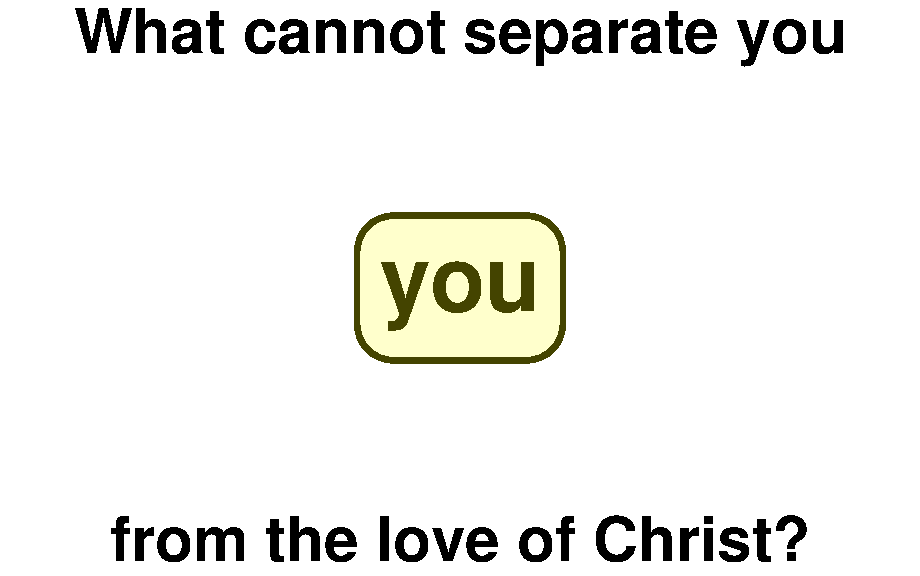
Some pastors will make the bold claim that "
Nothing can separate us from the love of Christ". From the Greek text, the only
"other (different)" "creature" that can separate "
you" from the "
love of Christ" is "
you". So, Paul's list omits "
false teaching", "
deception", and other things that he covers in following chapters.
Discussion: What might be an
ulterior motive as to why a pastor would make such a claim that does not fit the text?
Some pastors will search up to 15 different English versions to find one (or two) that have mistranslations that can then be appropriately twisted to proclaim that "
nothing can separate you from the love of Christ".
58. Separation build
Romans 8:38 For I am persuaded, that neither death, nor life, nor angels, nor principalities, nor powers, nor things present, nor things to come, [kjv]
8:39 Nor height, nor depth, nor any other creature, shall be able to separate us from the love of God, which is in Christ Jesus our Lord. [kjv]
Here is a build summary of the steps.
59. Usage - send away or let go
*G863 *142 ἀφίημι (af-ee'-ay-mee) : from G575 and hiemi (to send; an intensive form of eimi, to go); to send forth, in various applications (as follow):--cry, forgive, forsake, lay aside, leave, let (alone, be, go, have), omit, put (send) away, remit, suffer, yield up.
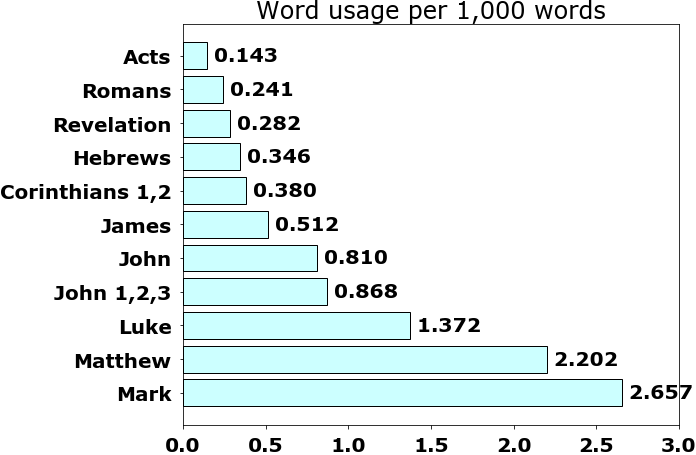 |
Words: αφεθη=3 αφεθησαν αφεθησεται=12 αφειναι=2 αφεις=7 αφεντες=15 αφες=15 αφετε=10 αφεωνται=6 αφη=3 αφηκα αφηκαμεν=3 αφηκαν=2 αφηκατε αφηκεν=19 αφηκες αφησει=2 αφησεις αφησουσιν αφησω=2 αφητε=5 αφιεναι=5 αφιενται=4 αφιεται=5 αφιετε=3 αφιετω=2 αφιημι=2 αφιησιν=4 αφιομεν αφιουσιν αφωμεν ηφιεν=2
|
The
ancient Greek word
"ἀφίημι" ≈ "send away, let pass" as in
"forgive". The exact form of the Greek word «
αφησει» is used three times in the
GNT, all by Jesus, in the sheep gone astray verse and the following verse pair. Note: The chart does not show the Greek manuscript using the word the third time [programming issue to be resolved].
60. Matthew 6:14-15 Going astray in pursuit
Matthew 6:14 For if ye forgive men their trespasses, your heavenly Father will also forgive you: [kjv]
εαν γαρ αφητε τοις ανθρωποις τα παραπτωματα αυτων αφησει και υμιν ο πατηρ υμων ο ουρανιος [gnt]
6:15 But if ye forgive not men their trespasses, neither will your Father forgive your trespasses. [kjv]
εαν δε μη αφητε τοις ανθρωποις τα παραπτωματα αυτων ουδε ο πατηρ υμων αφησει τα παραπτωματα υμων [gnt]
The word often translated as
"trespass" is the ancient Greek word
"παράπτωσις" ≈ "impetuous pursuit, going astray". The parts of the word mean, literally, going
"beyond falling" as in "
fault" of imperfection.
The ancient Greek word "παρά" ≈ "beyond" and, in this case, "excessive".
The ancient Greek word "πτῶσις" ≈ "falling, failing". In the Beatitudes, the Greek word is used to describe those who are "poor" "beggars" in "spirit" and need the "good news".
A general English phrase for this might be
"stupid things" that are done (by you or others).
61. Forgive build
62. Matthew 18:12 Sheep and mountains
Matthew 18:12 How think ye? if a man have an hundred sheep, and one of them be gone astray, doth he not leave the ninety and nine, and goeth into the mountains, and seeketh that which is gone astray? [kjv]
τι υμιν δοκει εαν γενηται τινι ανθρωπω εκατον προβατα και πλανηθη εν εξ αυτων ουχι αφεις αφησει τα εννενηκονταεννεα ενενηκοντα εννεα επι τα ορη και πορευθεις ζητει το πλανωμενον [gnt]
One "sheep" wanders (or is enticed or deceived) away. Does it want to become a "bird" and attract other "fish" as "sheep" or "pigs"?
What might the "mountains" represent? Why plural and not singular?
Are the numbers "100" and "99" and "1" important in any way?
63. Matthew 18:12 Sheep and mountains
Matthew 18:12 How think ye? if a man have an hundred sheep, and one of them be gone astray, doth he not leave the ninety and nine, and goeth into the mountains, and seeketh that which is gone astray? [kjv]
τι υμιν δοκει εαν γενηται τινι ανθρωπω εκατον προβατα και πλανηθη εν εξ αυτων ουχι αφεις αφησει τα εννενηκονταεννεα ενενηκοντα εννεα επι τα ορη και πορευθεις ζητει το πλανωμενον [gnt]
Are the numbers "100" and "99" and "1" important in any way?
Does it make a difference if the "sheep" are split, say, "80" and "20"?
Do the (multiple) "sheep" that stray need to go "on" the "mountains"?
The next verses (omitted) address church conflict resolution.
Those verses are written as "many" and "1".
Does it make a difference if the "church" is split, say, "60" and "40"?
64. Matthew 18:12
KJV: How think ye? if a man have an hundred sheep, and one of them be gone astray, doth he not leave the ninety and nine, and goeth into the mountains, and seeketh that which is gone astray?
Greek: τι υμιν δοκει εαν γενηται τινι ανθρωπω εκατον προβατα και πλανηθη εν εξ αυτων ουχι αφεις αφησει τα εννενηκονταεννεα ενενηκοντα εννεα επι τα ορη και πορευθεις ζητει το πλανωμενον
Latin: quid vobis videtur si fuerint alicui centum oves et erraverit una ex eis nonne relinquet nonaginta novem in montibus et vadit quaerere eam quae erravit
65. Matthew 18:13
KJV: And if so be that he find it, verily I say unto you, he rejoiceth more of that sheep, than of the ninety and nine which went not astray.
Greek: και εαν γενηται ευρειν αυτο αμην λεγω υμιν οτι χαιρει επ αυτω μαλλον η επι τοις εννενηκονταεννεα ενενηκοντα εννεα τοις μη πεπλανημενοις
66. Matthew 18:14
KJV: Even so it is not the will of your Father which is in heaven, that one of these little ones should perish.
Greek: ουτως ουκ εστιν θελημα εμπροσθεν του πατρος υμων μου του εν ουρανοις ινα αποληται εις εν των μικρων τουτων
67. Matthew 18:13 Rather more
Matthew 18:13 And if so be that he find it, verily I say unto you, he rejoiceth more of that sheep, than of the ninety and nine which went not astray. [kjv]
και εαν γενηται ευρειν αυτο αμην λεγω υμιν οτι χαιρει επ αυτω μαλλον η επι τοις εννενηκονταεννεα ενενηκοντα εννεα τοις μη πεπλανημενοις [gnt]
The ancient Greek word
"μᾶλλον" ≈ "rather" as in
"rather than". In a comparison, in context, it could be
"rather more". The modern Greek word
"μάλλον" (MAL-lon) ≈ "rather, more precisely".
That is, there is no need to
"rejoice" over
sheep who have not left and had no need to return.
"Rather", the rejoicing is over the
sheep that left and then returned. In that
restrictive sense it is
"more".
To emphasize or over-emphasize the
"more" is common in
ARMS (Attractive Refrigerator Magnet Sermons).
68. Matthew 18:13 Pronouns
Matthew 18:13 And if so be that he find it, verily I say unto you, he rejoiceth more of that sheep, than of the ninety and nine which went not astray. [kjv]
και εαν γενηται ευρειν αυτο αμην λεγω υμιν οτι χαιρει επ αυτω μαλλον η επι τοις εννενηκονταεννεα ενενηκοντα εννεα τοις μη πεπλανημενοις [gnt]
| * |
Masc.
Sing. |
Masc.
Plural |
Fem.
Sing. |
Fem.
Plural |
Neuter
Sing. |
Neuter
Plural |
| Nom. |
αὐτὁς |
αὐτοί |
αὐτἡ |
αὐταί |
αὐτό |
αὐτά |
| Gen. |
αὐτοῦ |
αὐτῶν |
αὐτῆς |
αὐτῶν |
αὐτοῦ |
αὐτῶν |
| Dat. |
αὐτῷ |
αὐτοῖς |
αὐτῇ |
αὐταῖς |
αὐτῷ |
αὐτοῖς |
| Acc. |
αὐτόν |
αὐτούς |
αὐτήν |
αὐτάς |
αὐτό |
αὐτά |
The first "he/it" pronoun is neuter singular (one sheep).
The second "he/it" pronoun is dative singular neuter or masculine (one sheep or one shepherd).
Greek:
... and if (he/it) comes into being finding he/it (sheep) ... that does (he/it) (shepherd/sheep) rejoice on he/it (sheep/shepherd) rather or ... ?
69. Matthew 18:13
Matthew 18:13 And if so be that he find it, verily I say unto you, he rejoiceth more of that sheep, than of the ninety and nine which went not astray. [kjv]
και εαν γενηται ευρειν αυτο αμην λεγω υμιν οτι χαιρει επ αυτω μαλλον η επι τοις εννενηκονταεννεα ενενηκοντα εννεα τοις μη πεπλανημενοις [gnt]
Greek:
... and if (he/it) comes into being finding he/it (sheep) ... that does (he/it) (shepherd/sheep) rejoice on he/it (sheep/shepherd) rather or ... ?
To which does the second part of the verse refer (since the pronouns used can refer to either shepherd or sheep)?
☐ The
shepherd rejoices on finding the
sheep. This verse does
not state any
change in the state (attitude) of the
sheep.
☐ The
sheep rejoices on finding the
shepherd. This would
imply a
change in state (attitude and altitude) of the
sheep.
Why would a
sheep that finds the
shepherd rejoice over the ones that did
not go
astray?
70. Matthew 18:3,12-13,19 Come into being
Matthew 18:3 And said, Verily I say unto you, Except ye be converted, and become as little children, ye shall not enter into the kingdom of heaven. [kjv]
18:12 How think ye? if a man have an hundred sheep, and one of them be gone astray, doth he not leave the ninety and nine, and goeth into the mountains, and seeketh that which is gone astray? [kjv]
18:13 And if so be that he find it, verily I say unto you, he rejoiceth more of that sheep, than of the ninety and nine which went not astray. [kjv]
18:19 Again I say unto you, That if two of you shall agree on earth as touching any thing that they shall ask, it shall be done for them of my Father which is in heaven. [kjv]
The
"sheep" had
"come into being". The
"one" that was lost
"came into being" again. This is the word used in John as
"born" "
again" or
"born" "
from above".
71. Matthew 18:13 Rejoice
Matthew 18:13 And if so be that he find it, verily I say unto you, he rejoiceth more of that sheep, than of the ninety and nine which went not astray. [kjv]
και εαν γενηται ευρειν αυτο αμην λεγω υμιν οτι χαιρει επ αυτω μαλλον η επι τοις εννενηκονταεννεα ενενηκοντα εννεα τοις μη πεπλανημενοις [gnt]
The words
"that sheep" are added in the
KJV since the
one that went
"astray" is, by
analogy, a
"sheep" but, in reality, a
"little one" as a "
believer".
What if the
"little ones" that are "
forgiven" decide to "
leave" and
separate themselves to follow the
one "sheep" that has gone
"astray"?
72. Matthew 18:13 Questionable statement
Consider the one lost sheep and the ninety-nine sheep that did not go astray.
Matthew 18:13 And if so be that he find it, verily I say unto you, he rejoiceth more of that sheep, than of the ninety and nine which went not astray. [kjv]
και εαν γενηται ευρειν αυτο αμην λεγω υμιν οτι χαιρει επ αυτω μαλλον η επι τοις εννενηκονταεννεα ενενηκοντα εννεα τοις μη πεπλανημενοις [gnt]
Greek word order:
and if come-into-being find he/it amen/verily I-say to-you that rejoices on he/it rather or on the ninety nine that not gone-astray.
The Greek word translated as
"than" is the ancient Greek word
"ἢ" ≈ "or" as a
disjunction. In Greek, a statement can be made a question just by changing the way the end of the statement is pronounced. You hear it. Right?
Paraphrase (as a question):
And if (it) comes into being that (he) find it (the lost sheep), verily I say to you, does (he/it) rejoices rather on him/it or on the ninety nine that did not go astray?
73. Matthew 18:13 Questionable statement
Matthew 18:13 And if so be that he find it, verily I say unto you, he rejoiceth more of that sheep, than of the ninety and nine which went not astray. [kjv]
και εαν γενηται ευρειν αυτο αμην λεγω υμιν οτι χαιρει επ αυτω μαλλον η επι τοις εννενηκονταεννεα ενενηκοντα εννεα τοις μη πεπλανημενοις [gnt]
Paraphrase (as a question):
And if (it) comes into being that (he) find it (the lost sheep), verily I say to you, does (he/it) rejoices rather on him/it or on the ninety nine that did not go astray?
There are (at least) three possible answers to the question.
He rejoices over the lost sheep more than the not-lost sheep.
He rejoices over the lost sheep the same than the not-lost sheep.
He rejoices over the lost sheep less than the not-lost sheep.
Discuss: How many sermons make deep theological points on what appears to be a question for discussion rather than a statement of fact?
[Questionable logic in James]
74. Matthew 18:14 Before the Father
Matthew 18:14 Even so it is not the will of your Father which is in heaven, that one of these little ones should perish. [kjv]
ουτως ουκ εστιν θελημα εμπροσθεν του πατρος υμων μου του εν ουρανοις ινα αποληται εις εν των μικρων τουτων [gnt]
The
KJV translates as
"of" the Greek word that means
"before" or
"in front of". The ancient Greek word
"ἔμπροσθεν" ≈ "before, in front" and, in the case of time,
"earlier"
From Matthew 5:16, one is to let the light of Jesus shine (as good works)
before men (but not so that they see you).
75. Matthew 5:16 Positive advice
Matthew 5:16 Let your light so shine before men, that they may see your good works, and glorify your Father which is in heaven. [kjv]
ουτως λαμψατω το φως υμων εμπροσθεν των ανθρωπων οπως ιδωσιν υμων τα καλα εργα και δοξασωσιν τον πατερα υμων τον εν τοις ουρανοις [gnt]
Who is your light?
If Jesus is your
"light", do you need to
"light" a "
candle" or "
opinion"?
The ancient Greek word
"ἔμπροσθεν" ≈ "before, in front" and, in the case of time,
"earlier"
Put your good works "before" or "in front of" others without letting them know who did it. (Like the original Santa Claus).
The "house" of Jesus, built on the "rock" uses the true "light" of Jesus. No man-made "light" is needed.
The "house" of men, built on the "sand" as a "mountain" or "tree" uses the false "light" of man.
Jesus is also your "
head".
76. Matthew 18:14 One of the little ones
Matthew 18:14 Even so it is not the will of your Father which is in heaven, that one of these little ones should perish. [kjv]
ουτως ουκ εστιν θελημα εμπροσθεν του πατρος υμων μου του εν ουρανοις ινα αποληται εις εν των μικρων τουτων [gnt]
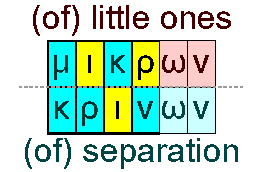
Does Jesus use the words
"little ones" to refer to believers (of all ages)?
Might
"the little ones" be those who have
"separated" themselves in some way? They could have been
"separated" from the beginning.
How might the "little ones" who are "separated" perish"?
Have these "little ones" separated themselves from the love of Christ?
The
"one" of the
"little ones" or
"sheep" includes many, perhaps
you!
To be
"greater" one needs to be a "
leader" and attract "
followers" to "
influence" other
"sheep", "
fish", etc.
77. Matthew 18:14 What might happen
Matthew 18:14 Even so it is not the will of your Father which is in heaven, that one of these little ones should perish. [kjv]
ουτως ουκ εστιν θελημα εμπροσθεν του πατρος υμων μου του εν ουρανοις ινα αποληται εις εν των μικρων τουτων [gnt]
The
"bird" attracts "
fish" and
"sheep".
Those remaining
"sheep" or
"little ones" might
glue themselves to the
"birds" and be "
lost" having
separated themselves.
Some "
fish" and/or
"sheep" are promoted to "
pigs" to
influence others as
leaders.
78. Attracting sheep and fish
Obviously, seeing
"one" "sheep" leaving
"mountain" or
"definition" to be
"great" and needing to attract others to be "
great" is a concern. What should one do about this?
The idea of "
joined" together as in "
glued" together will be the topic of the next discourse at the start of the next chapter,
22 verses later.
But what if the
"sheep" that has become a
"bird" and attracted others leave
"you" the
"one" alone?
How does the group decide which
"one" is
right and which
"one" is
wrong? Check the next verses on conflict resolution to resolve both scenarios.
79. Luke 15:3
Luke 15:3 And he spake this parable unto them, saying, [kjv]
ειπεν δε προς αυτους την παραβολην ταυτην λεγων [gnt]
Luke decides that this is a "
parable".
80. Luke 15:3
KJV: And he spake this parable unto them, saying,
Greek: ειπεν δε προς αυτους την παραβολην ταυτην λεγων
81. Luke 15:4
Luke 15:4 What man of you, having an hundred sheep, if he lose one of them, doth not leave the ninety and nine in the wilderness, and go after that which is lost, until he find it? [kjv]
τις ανθρωπος εξ υμων εχων εκατον προβατα και απολεσας εν εξ αυτων εν ου καταλειπει τα εννενηκονταεννεα ενενηκοντα εννεα εν τη ερημω και πορευεται επι το απολωλος εως ευρη αυτο [gnt]
Luke decides that the "
man" "
loses" the
"sheep" instead of the
"sheep" "
losing" the "
man" by going "
astray".
Luke uses the word for "
leave" and not the word for "
let go" or "
forgive" as recorded by Matthew.
Matthew does not mention the "
wilderness".
82. Luke 15:4
KJV: What man of you, having an hundred sheep, if he lose one of them, doth not leave the ninety and nine in the wilderness, and go after that which is lost, until he find it?
Greek: τις ανθρωπος εξ υμων εχων εκατον προβατα και απολεσας εν εξ αυτων εν ου καταλειπει τα εννενηκονταεννεα ενενηκοντα εννεα εν τη ερημω και πορευεται επι το απολωλος εως ευρη αυτο
83. Luke 15:5
Luke 15:5 And when he hath found it, he layeth it on his shoulders, rejoicing. [kjv]
και ευρων επιτιθησιν επι τους ωμους εαυτου αυτου χαιρων [gnt]
Matthew says nothing about "
shoulders" or bring the sheep back.
84. Luke 15:5
KJV: And when he hath found it, he layeth it on his shoulders, rejoicing.
Greek: και ευρων επιτιθησιν επι τους ωμους εαυτου αυτου χαιρων
85. Luke 15:6
Luke 15:6 And when he cometh home, he calleth together his friends and neighbours, saying unto them, Rejoice with me; for I have found my sheep which was lost. [kjv]
και ελθων εις τον οικον συγκαλει τους φιλους και τους γειτονας λεγων αυτοις συγχαρητε μοι οτι ευρον το προβατον μου το απολωλος [gnt]
Matthew says nothing about "
neighbors" or "
friends" or even telling anyone about "
finding" the "
lost"
"sheep".
86. Luke 15:6
KJV: And when he cometh home, he calleth together his friends and neighbours, saying unto them, Rejoice with me; for I have found my sheep which was lost.
Greek: και ελθων εις τον οικον συγκαλει τους φιλους και τους γειτονας λεγων αυτοις συγχαρητε μοι οτι ευρον το προβατον μου το απολωλος
87. Luke 15:7
Luke 15:7 I say unto you, that likewise joy shall be in heaven over one sinner that repenteth, more than over ninety and nine just persons, which need no repentance. [kjv]
λεγω υμιν οτι ουτως χαρα εσται εν τω ουρανω εσται επι ενι αμαρτωλω μετανοουντι η επι εννενηκονταεννεα ενενηκοντα εννεα δικαιοις οιτινες ου χρειαν εχουσιν μετανοιας [gnt]
The ideas in this verse appear to have been back-patched into Matthew.
88. Luke 15:7
KJV: I say unto you, that likewise joy shall be in heaven over one sinner that repenteth, more than over ninety and nine just persons, which need no repentance.
Greek: λεγω υμιν οτι ουτως χαρα εσται εν τω ουρανω εσται επι ενι αμαρτωλω μετανοουντι η επι εννενηκονταεννεα ενενηκοντα εννεα δικαιοις οιτινες ου χρειαν εχουσιν μετανοιας
89. Jeremiah 50:6
Jeremiah 50:6 My people hath been lost sheep: their shepherds have caused them to go astray, they have turned them away on the mountains: they have gone from mountain to hill, they have forgotten their restingplace. [kjv]
προβατα απολωλοτα εγενηθη ο λαος μου οι ποιμενες αυτων εξωσαν αυτους επι τα ορη απεπλανησαν αυτους εξ ορους επι βουνον ωχοντο επελαθοντο κοιτης αυτων [lxx]
In Matthew, which "
shepherds" might have caused
"sheep" to "
go astray"? Did they use the "
millstone"
deception around the "
neck"?
The Greek word for "
hill", in modern times, has become the word for "
mountain". It appears this was, in part, to avoid the same word meaning both "
mountain" and "
definition". The modern word, that used to mean "
mountain" or "
definition", today means mainly "
definition".
90. Jeremiah 50:6
KJV: My people hath been lost sheep: their shepherds have caused them to go astray, they have turned them away on the mountains: they have gone from mountain to hill, they have forgotten their restingplace.
Hebrew: צאן אבדות היה עמי רעיהם התעום הרים שובבים מהר אל גבעה הלכו שכחו רבצם׃
Greek: προβατα απολωλοτα εγενηθη ο λαος μου οι ποιμενες αυτων εξωσαν αυτους επι τα ορη απεπλανησαν αυτους εξ ορους επι βουνον ωχοντο επελαθοντο κοιτης αυτων
91. Jeremiah 50:7
Jeremiah 50:7 All that found them have devoured them: and their adversaries said, We offend not, because they have sinned against the LORD, the habitation of justice, even the LORD, the hope of their fathers. [kjv]
παντες οι ευρισκοντες αυτους καταναλισκον αυτους οι εχθροι αυτων ειπαν μη ανωμεν αυτους ανθ ων ημαρτον τω κυριω νομη δικαιοσυνης τω συναγαγοντι τους πατερας αυτων [lxx]
92. Jeremiah 50:7
KJV: All that found them have devoured them: and their adversaries said, We offend not, because they have sinned against the LORD, the habitation of justice, even the LORD, the hope of their fathers.
Hebrew: כל מוצאיהם אכלום וצריהם אמרו לא נאשם תחת אשר חטאו ליהוה נוה צדק ומקוה אבותיהם יהוה׃
Greek: παντες οι ευρισκοντες αυτους καταναλισκον αυτους οι εχθροι αυτων ειπαν μη ανωμεν αυτους ανθ ων ημαρτον τω κυριω νομη δικαιοσυνης τω συναγαγοντι τους πατερας αυτων
93. Jeremiah 50:8
Jeremiah 50:8 Remove out of the midst of Babylon, and go forth out of the land of the Chaldeans, and be as the he goats before the flocks. [kjv]
απαλλοτριωθητε εκ μεσου βαβυλωνος και απο γης χαλδαιων και εξελθατε και γενεσθε ωσπερ δρακοντες κατα προσωπον προβατων [lxx]
94. Jeremiah 50:8
KJV: Remove out of the midst of Babylon, and go forth out of the land of the Chaldeans, and be as the he goats before the flocks.
Hebrew: נדו מתוך בבל ומארץ כשדים יצאו והיו כעתודים לפני צאן׃
Greek: απαλλοτριωθητε εκ μεσου βαβυλωνος και απο γης χαλδαιων και εξελθατε και γενεσθε ωσπερ δρακοντες κατα προσωπον προβατων
95. Matthew 18:12-14 Review
Matthew 18:12 How think ye? if a man have an hundred sheep, and one of them be gone astray, doth he not leave the ninety and nine, and goeth into the mountains, and seeketh that which is gone astray? [kjv]
18:13 And if so be that he find it, verily I say unto you, he rejoiceth more of that sheep, than of the ninety and nine which went not astray. [kjv]
18:14 Even so it is not the will of your Father which is in heaven, that one of these little ones should perish. [kjv]
[how to deal with conflict within the body]
96. Matthew 18:15-17 Verses with Greek
Matthew 18:15 Moreover if thy brother shall trespass against thee, go and tell him his fault between thee and him alone: if he shall hear thee, thou hast gained thy brother. [kjv]
εαν δε αμαρτηση εις σε ο αδελφος σου υπαγε και ελεγξον αυτον μεταξυ σου και αυτου μονου εαν σου ακουση εκερδησας τον αδελφον σου [gnt]
18:16 But if he will not hear thee, then take with thee one or two more, that in the mouth of two or three witnesses every word may be established. [kjv]
εαν δε μη ακουση παραλαβε μετα σου ετι ενα η δυο ινα επι στοματος δυο μαρτυρων η τριων σταθη παν ρημα [gnt]
18:17 And if he shall neglect to hear them, tell it unto the church: but if he neglect to hear the church, let him be unto thee as an heathen man and a publican. [kjv]
εαν δε παρακουση αυτων ειπε ειπον τη εκκλησια εαν δε και της εκκλησιας παρακουση εστω σοι ωσπερ ο εθνικος και ο τελωνης [gnt]
97. Conflict resolution paraphrase of Matthew 18:15-17
Paraphrase 1:
If you think than someone has done something wrong, go and work out the details with the other person. If it is worked out, the conflict has been resolved.
Paraphrase 2:
If the conflict has not been resolved, take two or three along to document the arguments on both sides. If it is worked out, the conflict has been resolved.
Paraphrase 3:
If the conflict has not been resolved, let the church know. If it is worked out, the conflict has been resolved. If it is not worked out, then separate from that person/group.
98. End of page