- *G971 *2 βιάζω (bee-ad'-zo) : from G979; to force, i.e. (reflexively) to crowd oneself (into), or (passively) to be seized:--press, suffer violence.
- βιαζεται *2
- Matthew 11:12 ... now the kingdom of heaven suffereth violence, and the violent take ...
- Luke 16:16 ... is preached, and every man presseth into it.
- *G972 *1 βίαιος (bee'-ah-yos) : from G970; violent:--mighty.
- βιαιας
- Acts 2:2 ... heaven as of a rushing mighty wind, and it filled ...
- *G973 *1 βιαστής (bee-as-tace') : from G971 βιάζω; a forcer, i.e. (figuratively) energetic:--violent.
- βιασται
- Matthew 11:12 ... of heaven suffereth violence, and the violent take it by force.
38. Usage - violence
*G971 *2 βιάζω (bee-ad'-zo) : from G979; to force, i.e. (reflexively) to crowd oneself (into), or (passively) to be seized:--press, suffer violence.
*G972 *1 βίαιος (bee'-ah-yos) : from G970; violent:--mighty.
*G973 *1 βιαστής (bee-as-tace') : from G971 βιάζω; a forcer, i.e. (figuratively) energetic:--violent.
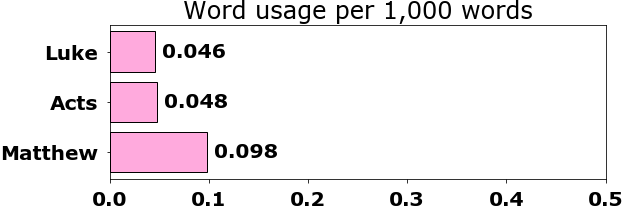 |
Words: βιαζεται=2 βιαιας βιασται
|
The ancient Greek word
"βιάζομαι" ≈ "use force, inflict on, constrain". The idea of
"force" is that of
"compulsion" as in
"forcing" someone to do something which may or may not be violent in action. The threat of physical violence would be present.
The modern Greek word
"βιάζεται" (vee-A-zeh-teh) ≈ "be in a hurry".
39. Peace
A precise definition of
peace is important.
The aggressor is always peace-loving (as Bonaparte always claimed to be); he would prefer to take over our country unopposed. Carl von Clausewitz (Prussian military theorist)
Force or compulsion or violence is only needed if you do not do what the oppressor demands.
40. Matthew 11:12
KJV: And from the days of John the Baptist until now the kingdom of heaven suffereth violence, and the violent take it by force.
Greek: απο δε των ημερων ιωαννου του βαπτιστου εως αρτι η βασιλεια των ουρανων βιαζεται και βιασται αρπαζουσιν αυτην
41. Matthew 11:13
Matthew 11:13 For all the prophets and the law prophesied until John. [kjv]
παντες γαρ οι προφηται και ο νομος εως ιωαννου προεφητευσαν επροφητευσαν [gnt]
Jesus is saying that the
OT (Old Testament) does not have "
missing years" but overlaps the
NT (New Testament).
Jesus is talking about the "
prophets" and "
law" before. This does not mean that there will not be future prophets since it says nothing about that aspect of prophecy.
42. Matthew 11:13
KJV: For all the prophets and the law prophesied until John.
Greek: παντες γαρ οι προφηται και ο νομος εως ιωαννου προεφητευσαν επροφητευσαν
43. Matthew 11:14
Matthew 11:14 And if ye will receive it, this is Elias, which was for to come. [kjv]
και ει θελετε δεξασθαι αυτος εστιν ηλιας ο μελλων ερχεσθαι [gnt]
The ancient Greek word
"δέχομαι" ≈ "accept, receive".
Jesus now associates John the Baptist with Elijah which was to come and with the Elijah that was.
This can be a
physical association. This leads to arguments about reincarnation, etc. (omitted)
This can be a
figurative association. A figurative association can still result in a physical association with the years from Elijah, about 900 BC, to when Jesus made these statements.
44. Matthew 11:12-14 Elijah and John the Baptist
Matthew 11:12 And from the days of John the Baptist until now the kingdom of heaven suffereth violence, and the violent take it by force. [kjv]
απο δε των ημερων ιωαννου του βαπτιστου εως αρτι η βασιλεια των ουρανων βιαζεται και βιασται αρπαζουσιν αυτην [gnt]
11:13 For all the prophets and the law prophesied until John. [kjv]
παντες γαρ οι προφηται και ο νομος εως ιωαννου προεφητευσαν επροφητευσαν [gnt]
11:14 And if ye will receive it, this is Elias, which was for to come. [kjv]
και ει θελετε δεξασθαι αυτος εστιν ηλιας ο μελλων ερχεσθαι [gnt]
A
figurative way is to associate
John with
Elijah, as Jesus does, so that from that time until now, about 900 years, the religious establishment has been trying to disrupt the "
kingdom of heaven". By making the figurative assumption of meaning, one can attempt to determine the meaning of "
kingdom of heaven".
45. Matthew 11:12-14
Matthew 11:12 And from the days of John the Baptist until now the kingdom of heaven suffereth violence, and the violent take it by force. [kjv]
απο δε των ημερων ιωαννου του βαπτιστου εως αρτι η βασιλεια των ουρανων βιαζεται και βιασται αρπαζουσιν αυτην [gnt]
11:13 For all the prophets and the law prophesied until John. [kjv]
παντες γαρ οι προφηται και ο νομος εως ιωαννου προεφητευσαν επροφητευσαν [gnt]
11:14 And if ye will receive it, this is Elias, which was for to come. [kjv]
και ει θελετε δεξασθαι αυτος εστιν ηλιας ο μελλων ερχεσθαι [gnt]
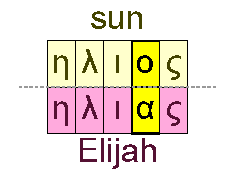
- "ἥλιος" ≈ "sun, east, day, sunshine"
- "Ἠλίας" ≈ "Elijah".
Since Jesus associates
John the Baptist with
Elijah, it is interesting to see how Jesus uses the word for "
sun".
Elijah was taken away in a chariot of fire.
46. Timeline: Elijah and John the Baptist (rough dates)
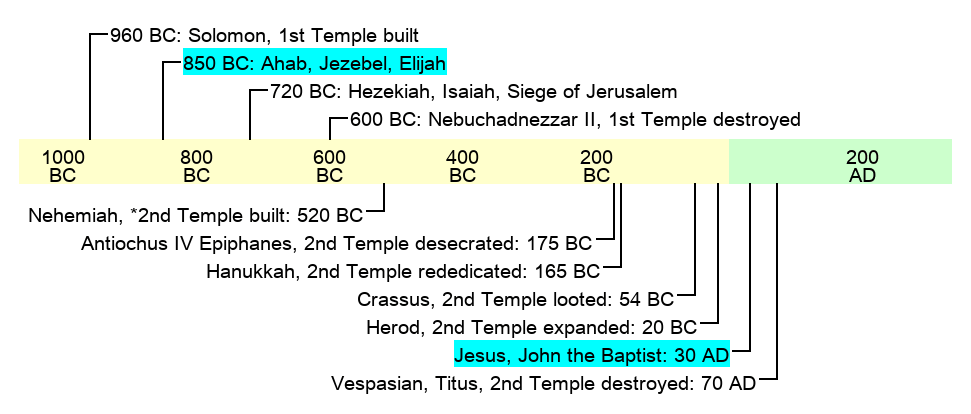
The time of Elijah has several notable events.
- Ahab and Jezebel as representing evil oppressors of the world.
- Naboth's vineyard in a form of "inquisition" later used by the Catholic Church (and others).
- Elijah's time may have a connection with the "taking by force" of the "kingdom of heaven".
- Elijah taken up via flaming chariot and horses. This may have a connection with the "flaming sword".
47. Temple connection
One connection with the second temple is the establishment and refinement of many compulsory religious rules and regulations that eventually turned into a money-making machine for both the religious establishment and the ruling government - notably Herod and then the Romans.
Matthew 21:12 And Jesus went into the temple of God, and cast out all them that sold and bought in the temple, and overthrew the tables of the moneychangers, and the seats of them that sold doves, [kjv]
και εισηλθεν ο ιησους εις το ιερον του θεου και εξεβαλεν παντας τους πωλουντας και αγοραζοντας εν τω ιερω και τας τραπεζας των κολλυβιστων κατεστρεψεν και τας καθεδρας των πωλουντων τας περιστερας [gnt]
Part of the money making involved selling birds but the money changers, as birds (doves), had sold themselves (sparrows) and their people out for Latin coins (play on words with a bird sound).
48. Matthew 21:12
KJV: And Jesus went into the temple of God, and cast out all them that sold and bought in the temple, and overthrew the tables of the moneychangers, and the seats of them that sold doves,
Greek: και εισηλθεν ο ιησους εις το ιερον του θεου και εξεβαλεν παντας τους πωλουντας και αγοραζοντας εν τω ιερω και τας τραπεζας των κολλυβιστων κατεστρεψεν και τας καθεδρας των πωλουντων τας περιστερας
49. Den of thieves
Matthew 21:13 And said unto them, It is written, My house shall be called the house of prayer; but ye have made it a den of thieves. [kjv]
και λεγει αυτοις γεγραπται ο οικος μου οικος προσευχης κληθησεται υμεις δε αυτον εποιησατε ποιειτε σπηλαιον ληστων [gnt]
The Greek for "
den" is that of a "
cave". The Greek for "
thief" is the word used for the "
thieves" on the cross at the crucifixion.
Revelation 6:15 And the kings of the earth, and the great men, and the rich men, and the chief captains, and the mighty men, and every bondman, and every free man, hid themselves in the dens and in the rocks of the mountains; [kjv]
και οι βασιλεις της γης και οι μεγιστανες και οι πλουσιοι χιλιαρχοι και οι χιλιαρχοι πλουσιοι και οι δυνατοι ισχυροι και πας δουλος και πας ελευθερος εκρυψαν εαυτους εις τα σπηλαια και εις τας πετρας των ορεων [gnt]
50. Revelation 6:15
KJV: And the kings of the earth, and the great men, and the rich men, and the chief captains, and the mighty men, and every bondman, and every free man, hid themselves in the dens and in the rocks of the mountains;
Greek: και οι βασιλεις της γης και οι μεγιστανες και οι πλουσιοι χιλιαρχοι και οι χιλιαρχοι πλουσιοι και οι δυνατοι ισχυροι και πας δουλος και πας ελευθερος εκρυψαν εαυτους εις τα σπηλαια και εις τας πετρας των ορεων
51. Matthew 21:13
KJV: And said unto them, It is written, My house shall be called the house of prayer; but ye have made it a den of thieves.
Greek: και λεγει αυτοις γεγραπται ο οικος μου οικος προσευχης κληθησεται υμεις δε αυτον εποιησατε ποιειτε σπηλαιον ληστων
52. Matthew 23:13 Shut and closed
Matthew 23:13 But woe unto you, scribes and Pharisees, hypocrites ! for ye shut up the kingdom of heaven against men: for ye neither go in yourselves, neither suffer ye them that are entering to go in. [kjv]
ουαι δε υμιν γραμματεις και φαρισαιοι υποκριται οτι κλειετε την βασιλειαν των ουρανων εμπροσθεν των ανθρωπων υμεις γαρ ουκ εισερχεσθε ουδε τους εισερχομενους αφιετε εισελθειν [gnt]
Jesus now starts a sequence of verses that start with the words
"woe" (as in a
"bird" of prey's cry),
"scribes",
"Pharisees" and "
hypocrites". The Greek for "
hypocrite" meant "
acting" or "
pretending".
The "
kingdom" of "
heaven" is something that can be "
closed" to people. That could be "
deception". It could be "
compulsion" with rules and threat of force.
The Greek for "
suffer" is that of "
allow" and the same word often translated as "
forgive". The Greek for "
shut" has the same root as the Greek word for "
key" that is used to "
shut" something.
Have they taken the "
twig" out of the "
eye" of those wanting to do the right thing so they cannot bear "
fruit"? The Greek word "
twig" is a play on words with the Greek word for "
fruit".
53. Matthew 23:23 Tithe
Matthew 23:23 Woe unto you, scribes and Pharisees, hypocrites ! for ye pay tithe of mint and anise and cummin, and have omitted the weightier matters of the law, judgment, mercy, and faith: these ought ye to have done, and not to leave the other undone. [kjv]
ουαι υμιν γραμματεις και φαρισαιοι υποκριται οτι αποδεκατουτε το ηδυοσμον και το ανηθον και το κυμινον και αφηκατε τα βαρυτερα του νομου την κρισιν και τον ελεον το ελεος και την πιστιν ταυτα δε δε εδει ποιησαι κακεινα μη αφιεναι αφειναι [gnt]
The
KJV translates as "
omitted" and then "
undone" (at the end of the verse) the (same) Greek word that means "
forgive" or "
let go".
54. Take by compulsion
Matthew 11:12 And from the days of John the Baptist until now the kingdom of heaven suffereth violence, and the violent take it by force. [kjv]
απο δε των ημερων ιωαννου του βαπτιστου εως αρτι η βασιλεια των ουρανων βιαζεται και βιασται αρπαζουσιν αυτην [gnt]
Jesus appears to talk about the "
yoke of compulsion" put on the people by the religious establishment.
Both Isaiah and others, including the writer of the
Epistle of Barnabas point this out.
55. Isaiah 1:11-14 Problem
Isaiah 1:11 To what purpose is the multitude of your sacrifices unto me? saith the LORD: I am full of the burnt offerings of rams, and the fat of fed beasts; and I delight not in the blood of bullocks, or of lambs, or of he goats. [kjv]
1:12 When ye come to appear before me, who hath required this at your hand, to tread my courts? [kjv]
1:13 Bring no more vain oblations; incense is an abomination unto me; the new moons and sabbaths, the calling of assemblies, I cannot away with; it is iniquity, even the solemn meeting. [kjv]
1:14 Your new moons and your appointed feasts my soul hateth: they are a trouble unto me; I am weary to bear them. [kjv]
Isaiah, at the start of his writings, identifies the problem. It appears to involve compulsion by the religious establishment in required ceremonies, sacrifices, meetings, etc.
Isaiah appears to elaborate on the ideas of Amos as to the "
yoke of compulsion". Barnabas refers to these ideas in his letter.
56. Isaiah 1:16-18 Solution
Isaiah 1:16 Wash you, make you clean; put away the evil of your doings from before mine eyes; cease to do evil; [kjv]
1:17 Learn to do well; seek judgment, relieve the oppressed, judge the fatherless, plead for the widow. [kjv]
1:18 Come now, and let us reason together, saith the LORD: though your sins be as scarlet, they shall be as white as snow; though they be red like crimson, they shall be as wool. [kjv]
και δευτε και διελεγχθωμεν λεγει κυριος και εαν ωσιν αι αμαρτιαι υμων ως φοινικουν ως χιονα λευκανω εαν δε ωσιν ως κοκκινον ως εριον λευκανω [lxx]
After presenting the problem, Isaiah, at the start of his writings, presents the solution. The religious establishment, however, has been using the problem (required rules, etc.) for their own personal advantage.
57. Song: What can wash away my sin
Born in Philadelphia, Robert Lowry (1826-1899) wrote the words and music to "
What can wash away my sin", "
Shall we gather at the river", and others.
Many modern churches services remove Jesus and the blood.
Romans 5:8 But God commendeth his love toward us, in that, while we were yet sinners, Christ died for us. [kjv]
5:9 Much more then, being now justified by his blood, we shall be saved from wrath through him. [kjv]

58. Verse 1
What can wash away my sin?
Nothing but the blood of Jesus;
What can make me whole again?
Nothing but the blood of Jesus.
Oh! precious is the flow
That makes me white as snow;
No other fount I know,
Nothing but the blood of Jesus.
59. Barnabas 2.6 Yoke of compulsion
In the
Epistle of Barnabas, the writer explains at length, quoting verses such as found in Isaiah (and elsewhere), to point out that Jesus removes the "
yoke of compulsion".
English: Therefore he has abolished these things, in order that the new law of our Lord Jesus Christ which is free from the yoke of compulsion, might have its offering, one not made by humans. (Holmes, 2007, p. 383)
Greek: ταυτα ουν κατηργησεν, ινα ο καινος νομος του κυριου ὑμῶν Ἰησοῦ Χριστοῦ, ἄνευ ζυγοῦ ἀνάγκης, ὤν, μὴ ἀνθρωποποίητον ἔχῃ τὴν προσφοράν. Epistle of Barnabas [2.6]
Any religious establishment that profits from that "
yoke of compulsion" would not want the
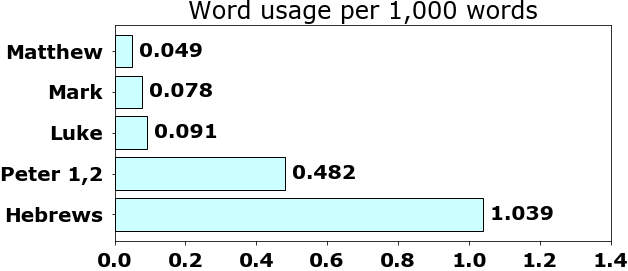
Epistle of Barnabas included in the canon. Another disputed book, Hebrews, was included. Interesting, Hebrews includes many verses that appear to support a "
yoke of compulsion" while some verses in the
Epistle of Barnabas appear to be mistranslated (to provide continued support for not including it in the canon).
[Amos, Isaiah, Jesus (Matthew 23, etc.)]
60. Matthew 11:30 Yoke of compulsion
The lack of need for a religious hierarchy or
"yoke" of
"compulsion" as Barnabas explains, from the teachings of Jesus about the "
kingdom of heaven", would not have appealed to a human sand hierarchy interested in secular power.
Matthew 11:30 For my yoke is easy, and my burden is light. [kjv]
ο γαρ ζυγος μου χρηστος και το φορτιον μου ελαφρον εστιν [gnt]
The Greek for
"easy" is that of being
"useful" and is a play on words with the Greek word for
"Christ". The word
"yoke" means, literally,
"two going together".
- The ancient Greek word "χρηστός" ≈ "useful, good".
- The ancient Greek word "χριστός" ≈ "anointed one, Christ".
- Without the play on words: My yoke is useful.
- With the play on words: My yoke is Christ.
The word for
"burden" was also a word for
"tax". What is the
"tax" of the
"yoke" of "
compulsion"? Think "
altars" and "
sacrifices" and "
money tables".
- "φόρτος" ≈ "load, cargo" and "φορτίον" ≈ "load, cargo" (diminutive)
- "φόρος" ≈ "tribute, tax".
61. New Testament
Matthew 26:28 For this is my blood of the new testament, which is shed for many for the remission of sins. [kjv]
τουτο γαρ εστιν το αιμα μου το της καινης διαθηκης το περι πολλων εκχυνομενον εκχυννομενον εις αφεσιν αμαρτιων [gnt]
Mark 14:24 And he said unto them, This is my blood of the new testament, which is shed for many. [kjv]
και ειπεν αυτοις τουτο εστιν το αιμα μου το της καινης διαθηκης το περι εκχυννομενον υπερ πολλων εκχυνομενον [gnt]
Luke 22:20 Likewise also the cup after supper, saying, This cup is the new testament in my blood, which is shed for you. [kjv]
ωσαυτως και το ποτηριον ωσαυτως μετα το δειπνησαι λεγων τουτο το ποτηριον η καινη διαθηκη εν τω αιματι μου το υπερ υμων εκχυνομενον εκχυννομενον [gnt]
Might the "
new" "
law" of Jesus described by Barnabas be the same as the "
new" "
testament" phrase used by Jesus at the Last Supper in Luke? The word "
new" is not in some Greek manuscripts in Matthew and Mark.
Some pastors overemphasize the "
new" and then claim that "
Jesus changed everything" with the idea that we can ignore God's laws which have been replaced by this "
new" law or testament.
62. Love one another
John 13:34 A new commandment I give unto you, That ye love one another. as I have loved you, that ye also love one another. [kjv]
εντολην καινην διδωμι υμιν ινα αγαπατε αλληλους καθως ηγαπησα υμας ινα και υμεις αγαπατε αλληλους [gnt]
13:35 By this shall all men know that ye are my disciples, if ye have love one to another. [kjv]
εν τουτω γνωσονται παντες οτι εμοι μαθηται εστε εαν αγαπην εχητε εν αλληλοις [gnt]
εν τουτω γνωσονται παντες οτι εμοι μαθηται εστε εαν αγαπην εχητε εν αλληλοις [gnt]
Jesus is talking to believers. Some pastors will extend this to everyone in the world such that even if the culture goes against God, one should accept that behavior. The Greek has two words for "
other": "
similar other" and "
different other". The word here is the "
similar other".
All the Gospels and Paul say "
love neighbor as yourself". Many pastors leave out the "
as yourself" which is a negative feedback loop so that one does not go against God's laws in loving one's neighbor.
63. Love one another
In the "
new" "
testament" or "
commandment" or "
law" of Jesus, did Jesus intend to rid the "
harmed" or "
oppressed" of the "
yoke of compulsion"?
- Matthew and Mark: "testament" without "new".
- Luke and Paul: "new" "testament".
- John: "new" "commandment".
- Barnabas: "new" "law".
Had this "
yoke of compulsion" done "
harm" to those in the "
kingdom of heaven"? What is the "
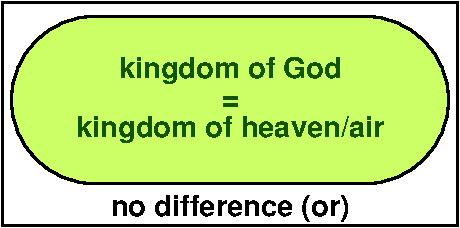
kingdom of heaven"? How might it differ from the "
kingdom of God".
64. Matthew 11:30
KJV: For my yoke is easy, and my burden is light.
Greek: ο γαρ ζυγος μου χρηστος και το φορτιον μου ελαφρον εστιν
65. Matthew 26:28
KJV: For this is my blood of the new testament, which is shed for many for the remission of sins.
Greek: τουτο γαρ εστιν το αιμα μου το της καινης διαθηκης το περι πολλων εκχυνομενον εκχυννομενον εις αφεσιν αμαρτιων
66. Mark 14:24
KJV: And he said unto them, This is my blood of the new testament, which is shed for many.
Greek: και ειπεν αυτοις τουτο εστιν το αιμα μου το της καινης διαθηκης το περι εκχυννομενον υπερ πολλων εκχυνομενον
67. Luke 22:20
KJV: Likewise also the cup after supper, saying, This cup is the new testament in my blood, which is shed for you.
Greek: ωσαυτως και το ποτηριον ωσαυτως μετα το δειπνησαι λεγων τουτο το ποτηριον η καινη διαθηκη εν τω αιματι μου το υπερ υμων εκχυνομενον εκχυννομενον
68. Matthew 17:10-12 Elias
Matthew 17:10 And his disciples asked him, saying, Why then say the scribes that Elias must first come? [kjv]
17:11 And Jesus answered and said unto them, Elias truly shall first come, and restore all things. [kjv]
17:12 But I say unto you, That Elias is come already, and they knew him not, but have done unto him whatsoever they listed. Likewise shall also the Son of man suffer of them. [kjv]
Since Jesus connects John the Baptist and Elijah the prophet, let us explore that Elijah connection.
The name "
Elias" is transliterated from the Greek as appears in the
LXX and
GNT (Greek New Testament). The name "
Elijah" is transliterated from the Hebrew of the
OT.
69. Mount Nebo
The following questions and possible answers are presented and discussed here.
- What is Mount Nebo and why is it important?
- Why is it a high mountain?
- What are the events of the transfiguration?
- Who are the two witnesses in Revelation?
- How do these places and events appear to be related?
Besides Jesus, the two people most associated with these events are Moses and Elijah.
The two witnesses in Revelation perform the same miracles as done by Moses and Elijah.
70. Matthew 17:10
KJV: And his disciples asked him, saying, Why then say the scribes that Elias must first come?
Greek: και επηρωτησαν αυτον οι μαθηται αυτου λεγοντες τι ουν οι γραμματεις λεγουσιν οτι ηλιαν δει ελθειν πρωτον
71. Matthew 17:11
KJV: And Jesus answered and said unto them, Elias truly shall first come, and restore all things.
Greek: ο δε ιησους αποκριθεις ειπεν αυτοις ηλιας μεν ερχεται πρωτον και αποκαταστησει παντα
72. Matthew 17:12
KJV: But I say unto you, That Elias is come already, and they knew him not, but have done unto him whatsoever they listed. Likewise shall also the Son of man suffer of them.
Greek: λεγω δε υμιν οτι ηλιας ηδη ηλθεν και ουκ επεγνωσαν αυτον αλλ αλλα εποιησαν εν αυτω οσα ηθελησαν ουτως και ο υιος του ανθρωπου μελλει πασχειν υπ αυτων
73. Matthew 11:14
KJV: And if ye will receive it, this is Elias, which was for to come.
Greek: και ει θελετε δεξασθαι αυτος εστιν ηλιας ο μελλων ερχεσθαι
74. He that hath ears should not get behind
Jesus says this at the end of the verses being analyzed.
Before the "
children playing music in the marketplace":
Matthew 11:15 He that hath ears to hear, let him hear. [kjv]
ο εχων ωτα ακουειν ακουετω [gnt]
In the middle of the "
kingdom parables":
13:9 Who hath ears to hear, let him hear. [kjv]
ο εχων ωτα ακουειν ακουετω [gnt]
| Greek |
English |
J‑M |
O‑M |
J‑NT |
O‑NT |
LXX |
| ωτα |
ears |
4 |
0 |
11 |
7 |
68 |
| *ν ωτα |
* ears |
3 |
0 |
5 |
0 |
2 |
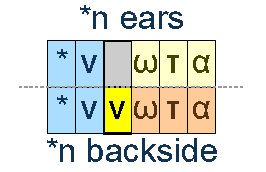
- "ὦτα" ≈ "ears" (accusative plural).
- "νῶτᾰ" ≈ "back sides, rear parts" (accusative plural).
Lend me a hear! To ring in the new ear, lend me a hearing!
This phrase (and variants thereof) appear to indicate that a higher level code is being presented. It appears to be used when one should listen carefully for play on words.
[ushers and sermon on divorce][play on words]
75. Matthew 11:15
KJV: He that hath ears to hear, let him hear.
Greek: ο εχων ωτα ακουειν ακουετω
76. Matthew 11:15-19 A pipe dream in the market place
Matthew 11:16 But whereunto shall I liken this generation? It is like unto children sitting in the markets, and calling unto their fellows, [kjv]
τινι δε ομοιωσω την γενεαν ταυτην ομοια εστιν παιδαριοις παιδιοις καθημενοις εν ταις αγοραις καθημενοις και προσφωνουσιν α προσφωνουντα τοις εταιροις αυτων ετεροις [gnt]
11:17 And saying, We have piped unto you, and ye have not danced; we have mourned unto you, and ye have not lamented. [kjv]
και λεγουσιν ηυλησαμεν υμιν και ουκ ωρχησασθε εθρηνησαμεν υμιν και ουκ εκοψασθε [gnt]
These children appear to represent the religious establishment, who do no real work and feed off of others, like a bird, such that the others cannot do the things they are supposed to do as required by God (and not the religious establishment).
These verses appear immediately after speaking about John the Baptist and Elijah in a way that provides hints as to the Kingdom of heaven.
77. Kingdom of heaven
Some additional verses of Matthew that use the "
kingdom of heaven" are now presented. How well does the idea of the "
kingdom of heaven" representing those believers and followers of God fit for each verse?
To be a follower, one should abide by both laws.
- Love God (and God's rules).
- Love neighbor as yourself (not violating God's rules).
Jesus reaffirms these two laws and then adds emphasis (and a somewhat new twist) that one needs to proclaim the Good News, love others as oneself, and be passive in not taking other actions. That is the Greek meaning that is translated as "
suffer".
78. Matthew 13:52 Kingdom of heaven
Matthew 13:52 Then said he unto them, Therefore every scribe which is instructed unto the kingdom of heaven is like unto a man that is an householder, which bringeth forth out of his treasure things new and old. [kjv]
ο δε ειπεν αυτοις δια τουτο πας γραμματευς μαθητευθεις εις την βασιλειαν τη βασιλεια των ουρανων ομοιος εστιν ανθρωπω οικοδεσποτη οστις εκβαλλει εκ του θησαυρου αυτου καινα και παλαια [gnt]
This use of
"householder" is a
comparison or
analogy to the true
"householder". What exactly is the
"kingdom" "
of"
"heaven"?
- The ancient Greek word "βασίλεια" ≈ "kingdom" as in "realm". A "basilica" is a hall of the king of the kingdom.
- The ancient Greek word "οὐρανός" ≈ "sky, heaven" as in the "atmosphere".
Is what is brought
out of the "
treasure" "
good" or
not "
good"? Might it be the "
elect" or "
chosen"?
Paraphrase:
... who [hostile, bones] casts out of the treasure [serpent] of him/it new and old.
79. Matthew 8:20 Birds of the air
Matthew 8:20 And Jesus saith unto him, The foxes have holes, and the birds of the air have nests; but the Son of man hath not where to lay his head. [kjv]
και λεγει αυτω ο ιησους αι αλωπεκες φωλεους εχουσιν και τα πετεινα του ουρανου κατασκηνωσεις ο δε υιος του ανθρωπου ουκ εχει που την κεφαλην κλινη [gnt]
… Foxis … dennes… briddis … heuene … nestis… reste … heed. [wy]
Is the
"kingdom of heaven" actually
"heaven" as in the
"kingdom of God"?
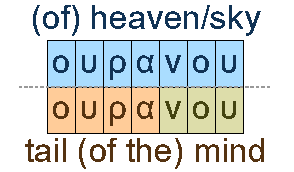
- "βασίλεια των ουρανών" ≈ "kingdom of heaven" or "kingdom of the air".
- "πετεινα του ουρανου" ≈ "birds of the air" or "birds of heaven".
- Wycliffe uses the phrase "briddis of heuene" or "birds of heaven".
Some will attempt to "
fix" a perceived "
error" in the Bible text by asserting their opinion (or glory) that
"kingdom of God" and
"kingdom of heaven" are the same thing.
If birds represent "
evil" or "
oppression" (parable 1), are there any birds in heaven?
80. Kingdom of heaven
Matthew 19:14 But Jesus said, Suffer little children, and forbid them not, to come unto me: for of such is the kingdom of heaven. [kjv]
ο δε ιησους ειπεν αφετε τα παιδια και μη κωλυετε αυτα ελθειν προς με των γαρ τοιουτων εστιν η βασιλεια των ουρανων [gnt]
Mark 10:14 … Suffer the little children to come unto me, and forbid them not: for of such is the kingdom of God. [kjv]
ιδων δε ο ιησους ηγανακτησεν και ειπεν αυτοις αφετε τα παιδια ερχεσθαι προς με και μη κωλυετε αυτα των γαρ τοιουτων εστιν η βασιλεια του θεου [gnt]
Luke 18:16 … Suffer little children to come unto me, and forbid them not: for of such is the kingdom of God. [kjv]
ο δε ιησους προσκαλεσαμενος προσεκαλεσατο αυτα ειπεν λεγων αφετε τα παιδια ερχεσθαι προς με και μη κωλυετε αυτα των γαρ τοιουτων εστιν η βασιλεια του θεου [gnt]
The "
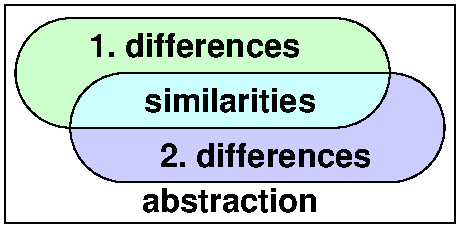
such" indicates that this is an abstract pattern that has to do with the "
kingdom of heaven" which may not be the same as the "
kingdom of God".
81. Links
Here are some links to more content on the "
Kingdom of Heaven".
This content will eventually be linked into the content on these pages.
82. End of page





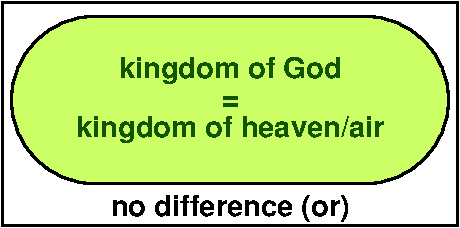
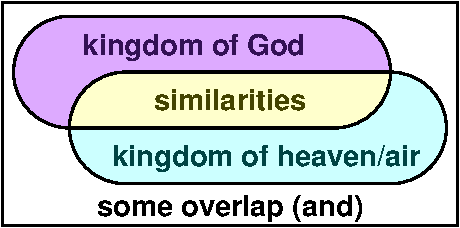
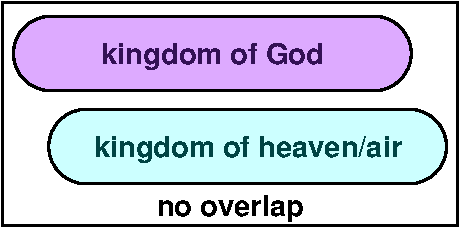
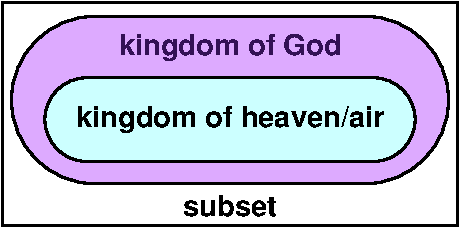
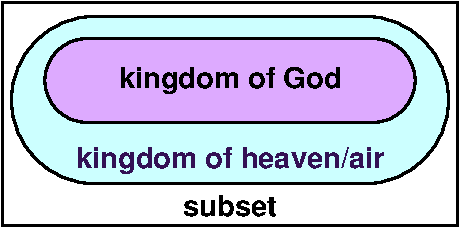




 The world seeks clothes, food, drink. The word translated as "evil" is that of "being oppressed" as in the "harmed".





















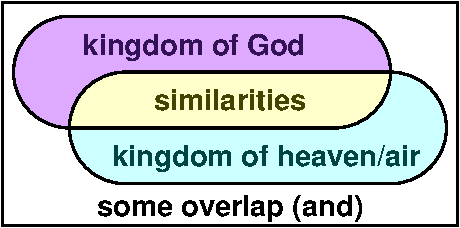
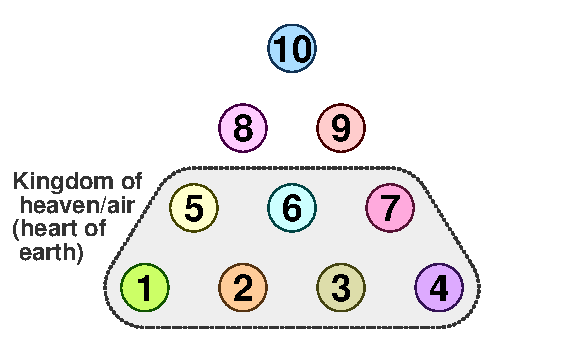
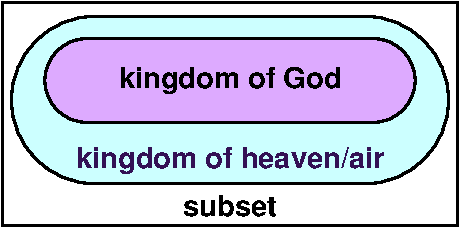
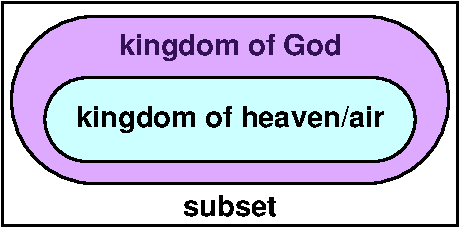 Perhaps the "Kingdom of heaven" is a subset of the "Kingdom of God".

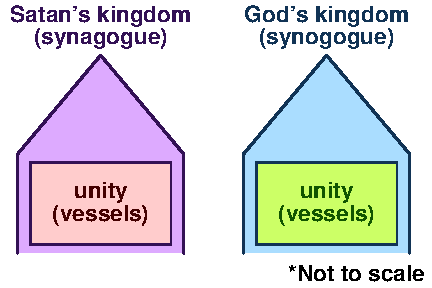
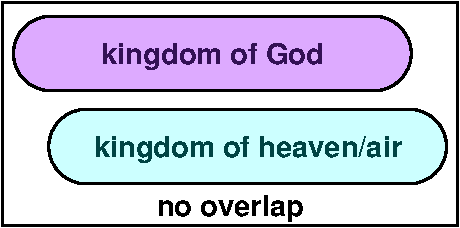 Perhaps they are completely different with no similarities. At first impression, this seems unlikely. However, there is an interesting aspect of this model.








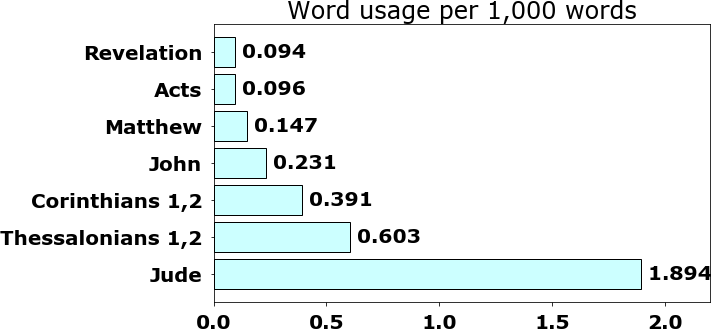













































 Perhaps the "