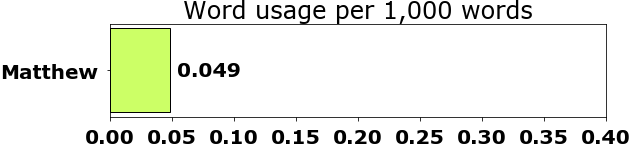
- *G1470 *1 ἐγκρύπτω (eng-kroop'-to) : from G1722 and G2928 κρύπτω; to conceal in, i.e. incorporate with:--hid in.
- ενεκρυψεν
- Matthew 13:33 ... which a woman took, and hid in three measures ...
- *G2928 *18 κρύπτω (kroop'-to) : a primary verb; to conceal (properly, by covering):--hide (self), keep secret, secret(-ly).
- εκρυβη *4
- Luke 19:42 ... peace! but now they are hid from thine eyes.
- John 8:59 ... him: but Jesus hid himself, and went out of ...
- John 12:36 ... Jesus, and departed, and did hide himself from them.
- Hebrews 11:23 By faith Moses, when he was born, was hid three months of his ...
- εκρυψεν *3
- Matthew 13:44 ... like unto treasure hid in a field; the which when a man hath found, he hideth, and for ...
- Matthew 25:18 But he that had received one went and digged in ...
- Luke 13:21 It is like leaven, which a woman took ...
- κρυβηναι *2
- Matthew 5:14 ... on an hill cannot be hid.
- 1 Timothy 5:25 ... otherwise can not be hid.
- εκρυψας
- Matthew 11:25 At that time Jesus answered and said, ...
- κεκρυμμενα
- Matthew 13:35 ... in parables; I will utter things which have been kept secret from the foundation of the world.
- κεκρυμμενω
- Matthew 13:44 ... like unto treasure hid in a field; the which when a man hath found, he hideth, and for ...
- εκρυψα
- Matthew 25:25 And I was afraid, and went and hid thy talent in ...
- κεκρυμμενον
- Luke 18:34 ... this saying was hid from them, neither ...
- κεκρυμμενος
- John 19:38 ... a disciple of Jesus, but secretly for fear of the Jews, ...
- κεκρυπται
- Colossians 3:3 ... and your life is hid with Christ in God.
- κεκρυμμενου
- Revelation 2:17 ... to eat of the hidden manna, and will give ...
- εκρυψαν
- Revelation 6:15 ... and every free man, hid themselves in the dens ...
- κρυψατε
- Revelation 6:16 ... on us, and hide us from the face ...
28. Matthew 13:33 Encryption
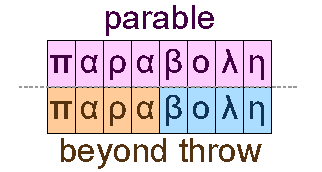
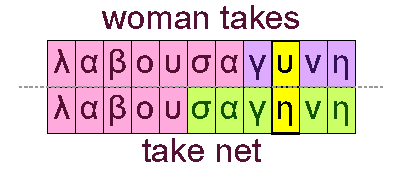
Matthew 13:33 Another parable spake he unto them; The kingdom of heaven is like unto leaven, which a woman took, and hid in three measures of meal, till the whole was leavened. [kjv]
αλλην παραβολην ελαλησεν αυτοις ομοια εστιν η βασιλεια των ουρανων ζυμη ην λαβουσα γυνη ενεκρυψεν εις αλευρου σατα τρια εως ου εζυμωθη ολον [gnt]
The ancient Greek word
"κρυπτός" ≈ "hidden, secret" and is from the ancient Greek word
"κρύπτω" ≈ "hide, cover" and whose meaning may have been influenced by the ancient Greek word
"καλύπτω" ≈ "cover" with the related "
R" and "
L" sounds.
This Greek word for
"hide" is part of the Greek word for
"Revelation" which means
"uncovering" or
"revealing" as in a
"revelation" (the Latin word).
29. Revelation 1:1 Revealing an uncovering revelation
Revelation 1:1 The Revelation of Jesus Christ, which God gave unto him, to shew unto his servants things which must shortly come to pass; and he sent and signified it by his angel unto his servant John: [kjv]
αποκαλυψις ιησου χριστου ην εδωκεν αυτω ο θεος δειξαι τοις δουλοις αυτου α δει γενεσθαι εν ταχει και εσημανεν αποστειλας δια του αγγελου αυτου τω δουλω αυτου ιωαννη [gnt]
The Greek word for "
hide" is part of the Greek word for
"Revelation" which means
"uncovering" or
"revealing" as in a
"revelation" (the Latin word). The name of the book of Revelation comes from the Greek word for
"uncovering". That ancient Greek word
"ἀποκάλυψις" ≈ "disclose, reveal" and comes from two Greek words.
- The ancient Greek word "ἀπο" ≈ "away from" which has the idea of separation from.
- The ancient Greek word "καλύπτω" ≈ "cover" which appears to be related or have influenced the meaning of the ancient Greek word "κρύπτω" ≈ "hide" as in the English words "cryptic" and "cryptographic".
30. Encryption
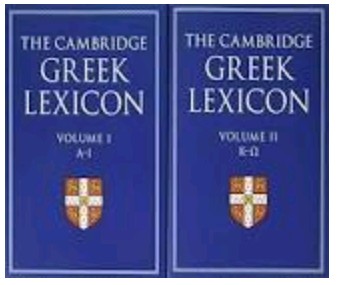
Here are some definitions from
The Cambridge Greek Lexicon.
- "κρυπτός" ≈ "hidden, secret" is related but is not the word used here.
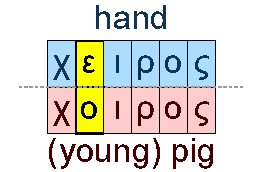
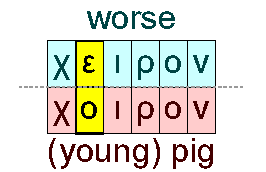
- "ἐγκρύπτω" ≈ "hide, cover" as, for example, "in ashes, to keep it smoldering" or be "hidden" (of a god). In the GNT this word is translated as baking with yeast into bread.
- "ἐγκρυφιάζω" ≈ "act secretly towards, hoodwink someone".
Might the
"woman" be
"hiding" something of or from God to
"keep it smoldering" in order to
"act secretly towards" someone to
"hoodwink" them? Do
"ashes" fit into the story in any way?
Might the parable be more than about baking some bread that is fluffy, with "
leaven", and not flat as in "
unleavened"?
31. Usage - hide
*G1470 *1 ἐγκρύπτω (eng-kroop'-to) : from G1722 and G2928 κρύπτω; to conceal in, i.e. incorporate with:--hid in.
*G2928 *18 κρύπτω (kroop'-to) : a primary verb; to conceal (properly, by covering):--hide (self), keep secret, secret(-ly).
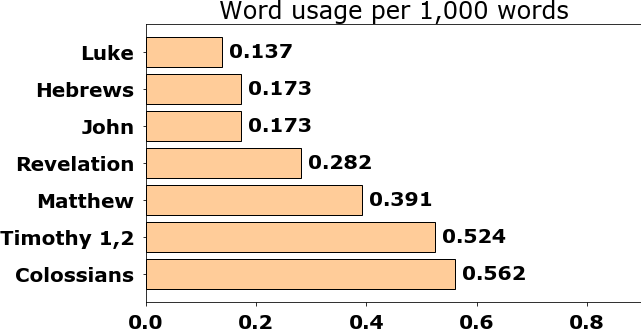 |
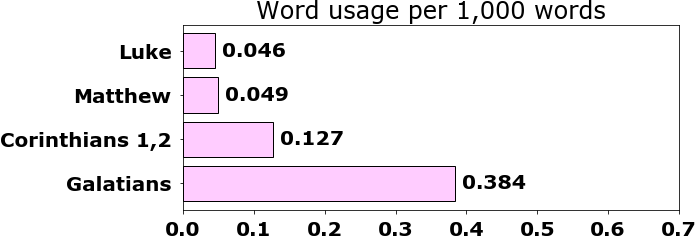
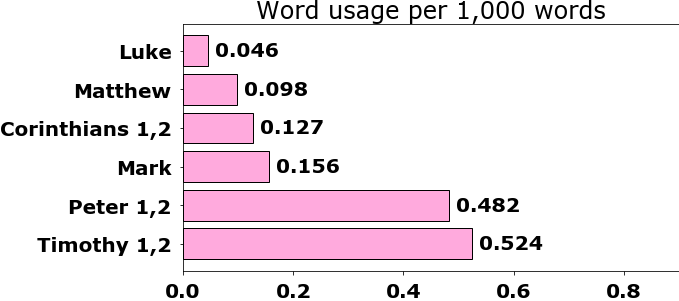
Words: εκρυβη=4 εκρυψα εκρυψαν εκρυψας εκρυψεν=3 ενεκρυψεν κεκρυμμενα κεκρυμμενον κεκρυμμενος κεκρυμμενου κεκρυμμενω κεκρυπται κρυβηναι=2 κρυψατε
|
32. Usage - hid
*G1470 *1 ἐγκρύπτω (eng-kroop'-to) : from G1722 and G2928 κρύπτω; to conceal in, i.e. incorporate with:--hid in.
*G2928 *18 κρύπτω (kroop'-to) : a primary verb; to conceal (properly, by covering):--hide (self), keep secret, secret(-ly).
It is interesting that the Matthew word appears
only here while the word used in Luke appears
many places in the
GNT.
The literal meaning in Matthew reminds one of
"encrypt" while the Luke word reminds one of
"crypt". Might there be some
"encryption" process by which the true word is being transformed into a
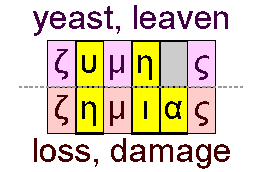
"leavened" word?
- How might someone hide "leaven" in "flour" without anyone noticing? [pizza]
- How might someone hide "false doctrine" or "false teaching" in "true doctrine" or "true teaching" within the (written) word of God without anyone noticing?
- Knowing this would happen, how might Jesus have encoded (e.g., using steganography) unnoticed hints that this would happen?
33. Encrypting the word
Here are some possible ways that
"false doctrine" might be
"encrypted" or
"hidden" in the
"true doctrine".
- Change the meanings of the words.
- Mis-translate the words.
- Redefine the words.
- Move definitions/mountains (same Greek word).
- Control who can read the original writings.
- Prohibit anyone from publishing any translations.
- Provide approved interpretations of all writings.
- Claim that the translation used is the one and only true word of God.
Exercise: Provide other ways to
"encrypt" or
"hide" the true word/teachings within the true word/teachings.
Modern way: Pick an English translation that
changes the original Greek and then allow people to think that this translation does
not change the original. Example: Here is the modern definition of this word.
34. Usage - chart
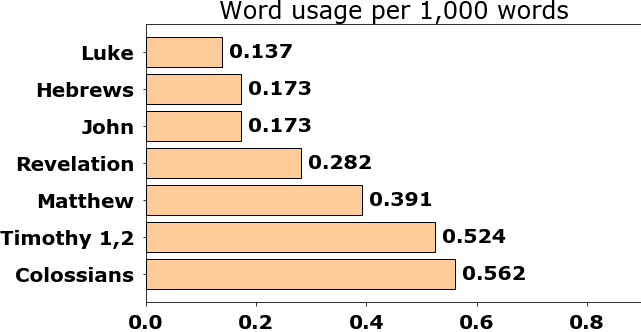 |
Words: εκρυβη=4 εκρυψα εκρυψαν εκρυψας εκρυψεν=3 ενεκρυψεν κεκρυμμενα κεκρυμμενον κεκρυμμενος κεκρυμμενου κεκρυμμενω κεκρυπται κρυβηναι=2 κρυψατε
|
35. Matthew 13:33 Three measures of meal
Matthew 13:33 Another parable spake he unto them; The kingdom of heaven is like unto leaven, which a woman took, and hid in three measures of meal, till the whole was leavened. [kjv]
αλλην παραβολην ελαλησεν αυτοις ομοια εστιν η βασιλεια των ουρανων ζυμη ην λαβουσα γυνη ενεκρυψεν εις αλευρου σατα τρια εως ου εζυμωθη ολον [gnt]
An interesting part of this parable is the
"three" "measures" of
"meal".
The ancient Greek word
"σατα" ≈ "measure" may be from the Hebrew word
"סאה" ≈ "measure". The ancient Greek word
"τρία" ≈ "three" and is related to the English word
"three".
Greek allows a flexible word order. Why might the word order matter?
- "three" "measures" (English, more common word order for Greek)
- "measures" "three" (less common Greek word order used here)
Jesus does not use the idea of
"three" in a good sense. The "
trinity" idea was developed a few hundred years later.
In the local area, Aramaic (Hebrew) terms for places, landmarks, geographic features, measures, etc., would have made their way to Greek, usually by transliteration.
36. Haggai 2:16 Measure
Haggai 2:16 Since those days were, when one came to an heap of twenty measures, there were but ten: when one came to the pressfat for to draw out fifty vessels out of the press, there were but twenty. [kjv]
τινες ητε οτε ενεβαλλετε εις κυψελην κριθης εικοσι σατα και εγενετο κριθης δεκα σατα και εισεπορευεσθε εις το υποληνιον εξαντλησαι πεντηκοντα μετρητας και εγενοντο εικοσι [lxx]
Jesus used an uncommon measure called the
"sata". The only other place that the ancient Greek word
"σατα" ≈ "measure" appears is in Haggai in the
LXX.
In Haggai, as is usual, the Greek has "
twenty measures" and not "
measures twenty".
- Haggai 2:16: "twenty measures" (normal phrasing).
- Matthew 13:33: "measures three" (not normal phrasing).
Other common measures include the "
omer" and the "
ephah".
37. Haggai 2:16
KJV: Since those days were, when one came to an heap of twenty measures, there were but ten: when one came to the pressfat for to draw out fifty vessels out of the press, there were but twenty.
Hebrew: מהיותם בא אל ערמת עשרים והיתה עשרה בא אל היקב לחשף חמשים פורה והיתה עשרים׃
Greek: τινες ητε οτε ενεβαλλετε εις κυψελην κριθης εικοσι σατα και εγενετο κριθης δεκα σατα και εισεπορευεσθε εις το υποληνιον εξαντλησαι πεντηκοντα μετρητας και εγενοντο εικοσι
38. Exodus 16:35-36 Measures
Exodus 16:35 And the children of Israel did eat manna forty years, until they came to a land inhabited; they did eat manna, until they came unto the borders of the land of Canaan. [kjv]
οι δε υιοι ισραηλ εφαγον το μαν ετη τεσσαρακοντα εως ηλθον εις γην οικουμενην το μαν εφαγοσαν εως παρεγενοντο εις μερος της φοινικης [lxx]
Greek word order: "
years" "
forty".
16:36 Now an omer is the tenth part of an ephah. [kjv]
το δε γομορ το δεκατον των τριων μετρων ην [lxx]
Now the homer was the tenth part of three measures. [bs3]
Greek word order: "
three" "
measures".
Common measures include the "
omer" and the "
ephah".
39. Exodus 16:35
KJV: And the children of Israel did eat manna forty years, until they came to a land inhabited; they did eat manna, until they came unto the borders of the land of Canaan.
Hebrew: ובני ישראל אכלו את המן ארבעים שנה עד באם אל ארץ נושבת את המן אכלו עד באם אל קצה ארץ כנען׃
Greek: οι δε υιοι ισραηλ εφαγον το μαν ετη τεσσαρακοντα εως ηλθον εις γην οικουμενην το μαν εφαγοσαν εως παρεγενοντο εις μερος της φοινικης
40. Exodus 16:36
KJV: Now an omer is the tenth part of an ephah.
Hebrew: והעמר עשרית האיפה הוא׃
Greek: το δε γομορ το δεκατον των τριων μετρων ην
Brenton: Now the homer was the tenth part of three measures.
41. Leviticus 19:36 Measures
Leviticus 19:36 Just balances, just weights, a just ephah, and a just hin, shall ye have: I am the LORD your God, which brought you out of the land of Egypt. [kjv]
ζυγα δικαια και σταθμια δικαια και χους δικαιος εσται υμιν εγω ειμι κυριος ο θεος υμων ο εξαγαγων υμας εκ γης αιγυπτου [lxx]
42. Leviticus 19:36
KJV: Just balances, just weights, a just ephah, and a just hin, shall ye have: I am the LORD your God, which brought you out of the land of Egypt.
Hebrew: מאזני צדק אבני צדק איפת צדק והין צדק יהיה לכם אני יהוה אלהיכם אשר הוצאתי אתכם מארץ מצרים׃
Greek: ζυγα δικαια και σταθμια δικαια και χους δικαιος εσται υμιν εγω ειμι κυριος ο θεος υμων ο εξαγαγων υμας εκ γης αιγυπτου
43. Aristotle: word order
Some will say that
word order matters. Some will say this for the Greek of the
GNT (e.g. Paul, Jesus, etc.). The added meaning of a word order needs to be inferred (guessed) from context.
Aristotle points this out. Note:
English: You can transpose the subject and predicate. No change in the meaning, however, of the sentence is thereby involved. Thus we say 'man is white', 'white is man'. (Loeb#325, p. 149)
Greek: Μετατιθέμενα δὲ τὰ ὀνόματα καὶ τὰ ῥήματα ταὐτὸν σημαίνει, οἷον ἔστι λευκὸς ἄνθρωπος—ἔστιν ἄνθρωπος λευκός· Aristotle: On Interpretation [20b]
English: To transpose the subject and predicate, therefore, makes no alteration in the sense of affirmations and denials. (Loeb#325, p. 151)
Greek: ὅτι μὲν οὖν μετατιθεμένου τοῦ ὀνόματος καὶ τοῦ ῥήματος ἡ αὐτὴ γίγνεται κατάφασις καὶ ἀπόφασις, δῆλον. Aristotle: On Interpretation [20b]
Word order may be important for any play on words being made.
44. Matthew 17:27 Temple tax coin
Matthew 17:27 Notwithstanding, lest we should offend them, go thou to the sea, and cast an hook, and take up the fish that first cometh up; and when thou hast opened his mouth, thou shalt find a piece of money: that take, and give unto them for me and thee. [kjv]
ινα δε μη σκανδαλισωμεν αυτους πορευθεις εις την θαλασσαν βαλε αγκιστρον και τον αναβαντα πρωτον ιχθυν αρον και ανοιξας το στομα αυτου ευρησεις στατηρα εκεινον λαβων δος αυτοις αντι εμου και σου [gnt]
The ancient Greek word
"στατήρ" ≈ "weight, standard, stater coin". This
"stater", often translated as
"piece of money", was originally a weight of precious metal but eventually became known as a silver or gold coin of various values.
The "
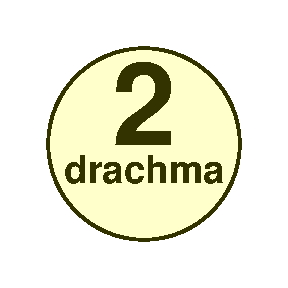
temple tax" was "
two drachmas". For
two this would be a
"four drachma". Some modern Greek translations use the Greek for
"quad drachma". Jesus used the word for
"stater".
45. Matthew 13:33 Stater coin
Matthew 13:33 Another parable spake he unto them; The kingdom of heaven is like unto leaven, which a woman took, and hid in three measures of meal, till the whole was leavened. [kjv]
αλλην παραβολην ελαλησεν αυτοις ομοια εστιν η βασιλεια των ουρανων ζυμη ην λαβουσα γυνη ενεκρυψεν εις αλευρου σατα τρια εως ου εζυμωθη ολον [gnt]
There is an interesting possible pun-like connection to the ancient Greek word
"στατήρ" ≈ "weight, standard, stater coin". This word appears one time in the
GNT and not in the
LXX.
46. Strongs - measures
- *G4568 *2 σάτον (sat'-on) : of Hebrew origin (5429); a certain measure for things dry:--measure.
- σατα *2
- Matthew 13:33 ... and hid in three measures of meal, till the whole was leavened.
- Luke 13:21 ... and hid in three measures of meal, till the whole was leavened.
- *H5429 סְאָה (seh-aw') : from an unused root meaning to define; a seah, or certain measure (as determinative) for grain:--measure.
47. Usage - measures
The ancient Greek word
"σατα" ≈ "measure" is a proper prefix of the ancient Greek word
"σατανά" ≈ "Satan".
*G4566 Σατᾶν (sat-an') : of Hebrew origin (7854); Satan, i.e. the devil:--Satan. Compare G4567.
*G4568 *2 σάτον (sat'-on) : of Hebrew origin (5429); a certain measure for things dry:--measure.
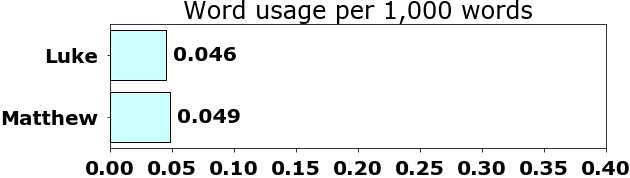 |
Words: σατα=2
|
*H5429 סְאָה (seh-aw') : from an unused root meaning to define; a seah, or certain measure (as determinative) for grain:--measure.
*H7853 שָׂטַן (saw-tan') : a primitive root; to attack, (figuratively) accuse:--(be an) adversary, resist.
*H7854 שָׂטָן (saw-tawn') : from H7853; an opponent; especially (with the article prefixed) Satan, the arch-enemy of good:--adversary, Satan, withstand.
48. Matthew 13:33: Woman's hat
Matthew 13:33 Another parable spake he unto them; The kingdom of heaven is like unto leaven, which a woman took, and hid in three measures of meal, till the whole was leavened. [kjv]
αλλην παραβολην ελαλησεν αυτοις ομοια εστιν η βασιλεια των ουρανων ζυμη ην λαβουσα γυνη ενεκρυψεν εις αλευρου σατα τρια εως ου εζυμωθη ολον [gnt]
The number
"three" creates connections with the "
Trinity" - Father, Son, Holy Spirit. Which trinity?
The form used here is
"measures" "three" with the number after the
"measures". This form creates a play-on-words with the ancient Greek word
"σαταρίς" ≈ "woman's headdress".
One historical example would be the pointed conical hat used in some Catholic areas called the Capirote. Originally for punishment, it was later adopted as a badge of honor. This style of hat was later adopted by organizations such as the
KKK (Klu Klux Clan).
49. Matthew 13:33 Satanic measures three
Matthew 13:33 Another parable spake he unto them; The kingdom of heaven is like unto leaven, which a woman took, and hid in three measures of meal, till the whole was leavened. [kjv]
αλλην παραβολην ελαλησεν αυτοις ομοια εστιν η βασιλεια των ουρανων ζυμη ην λαβουσα γυνη ενεκρυψεν εις αλευρου σατα τρια εως ου εζυμωθη ολον [gnt]
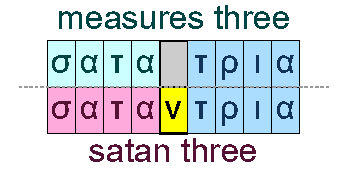
- "σατα" ≈ "measures".
- "τρια" ≈ "three".
- "σαταν" ≈ "Satan".
Can you think of ways that these allusions might be
"encrypted" in the
"wheat" or
"meal"?
☐
σατα τρια (sata tria) as "
measures three" (as written)
☐
σαταν τρια (Satan tria) as "
Satan three"
☐
σαταρίς τρια (sataris tria) as "
woman's headdress three"
☐
στατηρα τρια (statira tria) as "
temple tax coin three"
50. Build-up to the punch line play on words
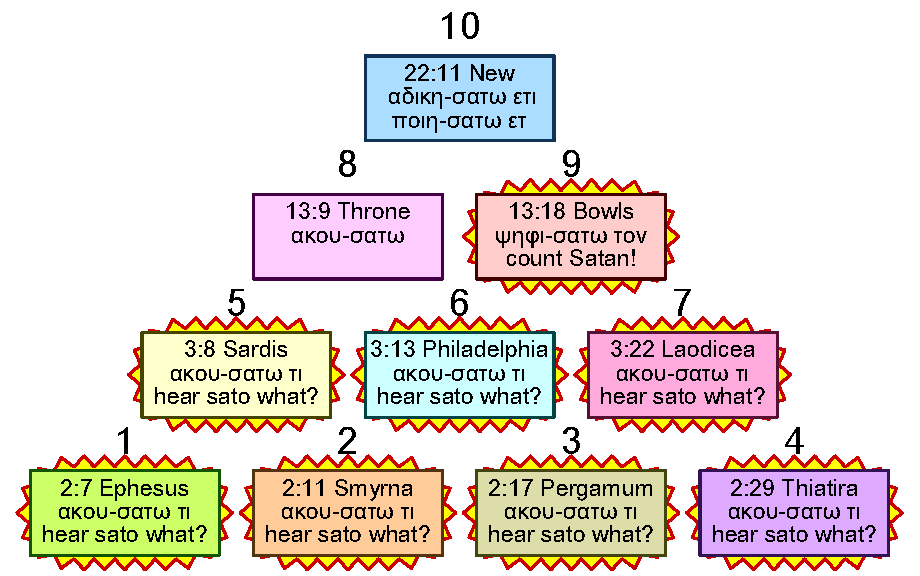 |
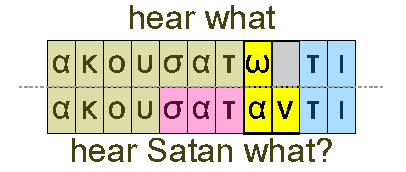
To each of the seven churches: "He that hath an ear, let him hear what the Spirit saith unto the churches ..."
|
- 1-7: Churches: "hear" "sato" "what?" Might these be related to the seven evil spirits that return to the "house" in Matthew 12?
- 9: Bowls: "count" "Satan" (serpent, dragon).
51. John 8:31-36 The true reality of a free wheat harvest
John 8:32 And ye shall know the truth, and the truth shall make you free. [kjv]
και γνωσεσθε την αληθειαν και η αληθεια ελευθερωσει υμας [gnt]
… cognoscetis veritatem … veritas liberabit … [v]
The ancient Greek word
"ἐλεύθερος" ≈ "free" as in
"freedom"
What might this often quoted verse mean?
- What does it mean to "know" something?
- What is "truth"?
- What does it mean to be "free"?
The
"make" is inferred and not in the Greek.
- As stated: You shall know the truth and the truth shall free you.
From what shall knowledge of the truth free you?
52. Freedom and ground grain
53. Freedom and ground grain harvest
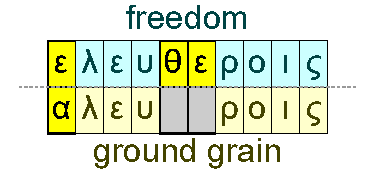
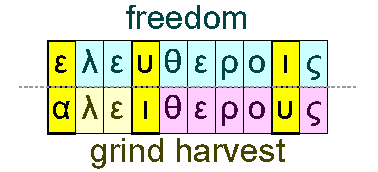
- "ἐλευθέροις" ≈ "free, freedom" (dative plural).
- "ᾰ̓́λει" ≈ "grind, bruise, mill" (imperative)
- "θέρους" ≈ "heat, summer, harvest, crop" (genitive singular)
The ancient Greek word
"αλέω" ≈ "grind, bruise, mill" and
"ᾰ̓́λει" ≈ "grind" (imperative).
The ancient Greek word
"θερίζω" ≈ "reap" as in the
"harvest". The ancient Greek word
"θερός" ≈ "heat, summer, harvest, crop".
54. Truth shall free you
John 8:32 And ye shall know the truth, and the truth shall make you free. [kjv]
και γνωσεσθε την αληθειαν και η αληθεια ελευθερωσει υμας [gnt]
- "ἐλεύθερος" ≈ "free" as in "freedom".
- "ἄλευρον " ≈ "ground grain".
- "θερίζω" ≈ "reap" as in the "harvest".
Play on words:
You shall know the reality (Jesus) and that reality (Jesus) will (make) wheat/flour harvest (of) you.
55. Historical interpretation of church history
 |
 |
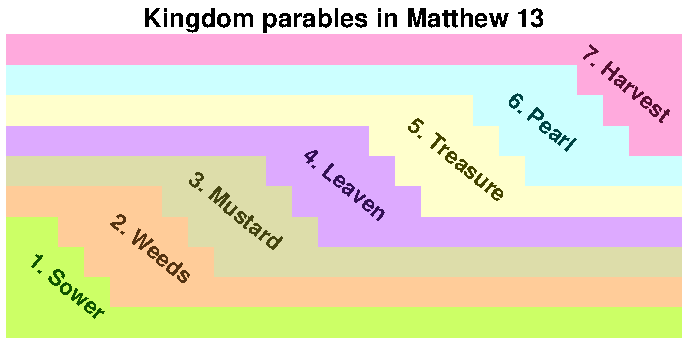 |
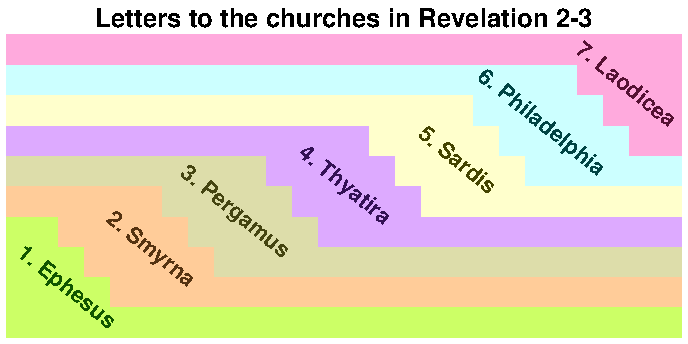
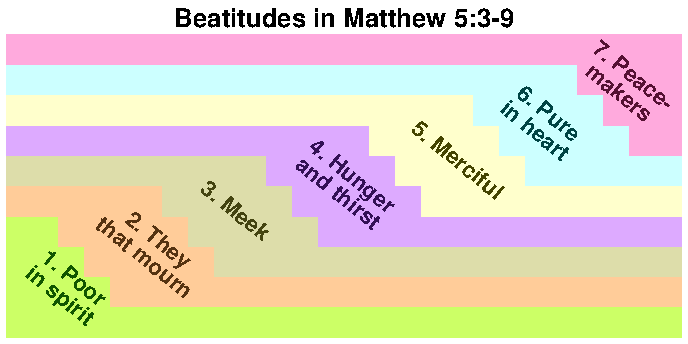
The probability that all three would be ordered together is 1 in 5040*5040*5040 or 1 in 128,024,064,000 ≈ 128 billion.
|
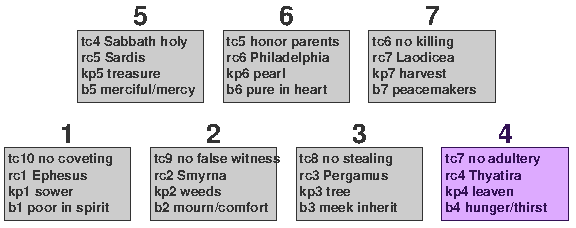
Some people prefer to just use church history to help remember the order of the churches, parables and beatitudes.
The horizontal scale is time. The vertical scale is the proportion that history evidences the traits of those verses. The historical interpretation is like a linear combination in mathematics in that what the verses say is more valid in some time periods than other time periods.
The probability that any
7 objects would be ordered at random in a given order is
7! =
7*6*5*4*3*2*1 or
1 in
5040. Note that there were many more possible churches or parables or beatitudes than used by Jesus.
In the historical interpretation, the parable of the leaven fits the time of the Catholic Church from after becoming the church of the Roman Empire until the Reformation.
56. Three grouped parables
Kingdom parables:
- 1. Sower
- 2. Wheat and tares
- 3. Mustard seed
- 4. Woman and leaven
- 5. Treasure in a field
- 6. Pearl of great price
- 7. Nets into the sea
- 8. Scribe and householder
|
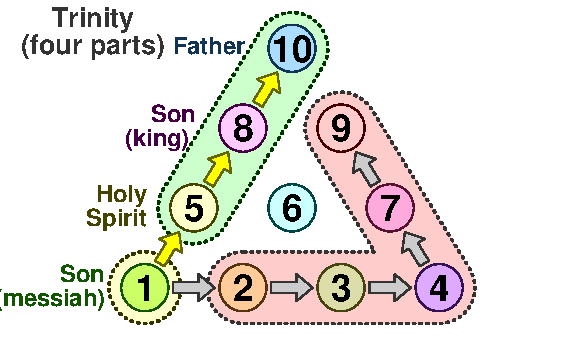 |
The "
enemy" as the
birds snatched up the seed in parable 1 and appears to have deposited the changed
seed as
weeds in parable 2.
The
birds nest in the mustard
tree in parable 3. The
false doctrine gets mixed in parable 4. Is the woman a seed, a bird, a weed or something else?
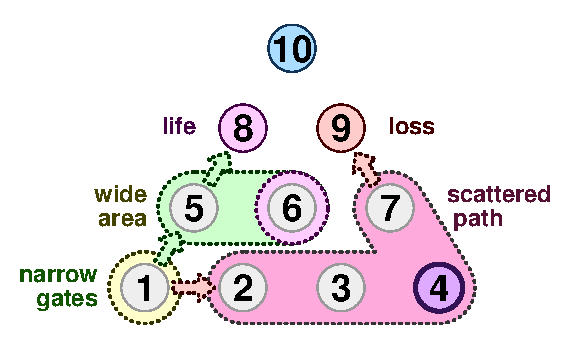
Might there be a reason why parables 2 (wheat and tares), 3 (mustard seed) and 4 (woman and leaven) have been grouped together?
- Wheat and tares starts at verse 24.
- Woman and leaven stops at verse 33.
57. United Methodist Apostle's Creed
Versions:
Traditional Ecumenical
I believe in God, the Father Almighty,
maker creator of heaven and earth;
And I believe in Jesus Christ his only Son, our Lord;
who was conceived by the Holy Spirit,
born of the Virgin Mary,
suffered under Pontius Pilate,
was crucified, dead, and was buried;
he descended to the dead
On the third day he rose from the dead;
he ascended into heaven,
|
and sitteth at the right hand of God the Father Almighty;
from thence he shall come and will come again
to judge the quick living and the dead.
I believe in the Holy Spirit,
the holy catholic church,
the communion of saints,
the forgiveness of sins,
the resurrection of the body,
and the life everlasting. Amen.
|
The
"catholic church" means the
"universal church" and
not the Catholic Church.
58. Acts 4:18 Catholic Church
59. Acts 4:18
KJV: And they called them, and commanded them not to speak at all nor teach in the name of Jesus.
Greek: και καλεσαντες αυτους παρηγγειλαν αυτοις το καθολου μη φθεγγεσθαι μηδε διδασκειν επι τω ονοματι του ιησου
60. Ignatius: Letter to the Smyrnaeans
Early church father
Ignatius of
Antioch first uses the phrase
"catholic" "church" in his letter to the Smyrnaians in about 175 AD.
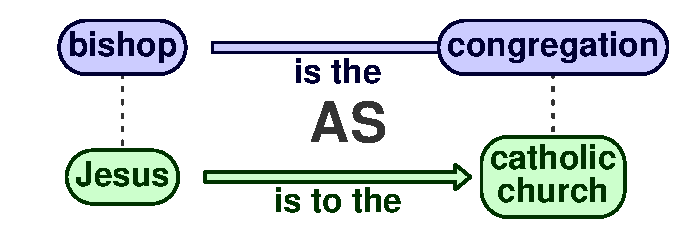
English: Wherever the bishop appears, there let the congregation be; just as wherever Jesus Christ is, there is the catholic church. (Holmes, 2007, p. 255)
Greek: Ὅπου ἂν φανῇ ὁ ἐπίσκοπος, ἐκεῖ τὸ πλῆθος ἤτω, ὥσπερ ὅπου ἂν ῇ Ἰησοῦς Χριστός, ἐκεῖ ἡ καθολικὴ ἐκκλησία. (Ignatius to the Smyrnaeans, 8.2)
In the historical interpretation, Ignatius writes this during the time of the "
wheat" and the "
tares". Some things are good. Some things are
not good.
61. Interesting connection
In the historical interpretation of the kingdom parables, the "
Catholic Church" has primary focus from parable 2 (wheat and tares) until parable 4 (woman and leaven). These three parables go from verse 24 until verse 33.
Matthew 13:24 Another parable put he forth unto them, saying, The kingdom of heaven is likened unto a man which sowed good seed in his field: [kjv]
13:25 But while men slept, his enemy came and sowed tares among the wheat, and went his way. [kjv]
εν δε τω καθευδειν τους ανθρωπους ηλθεν αυτου ο εχθρος και εσπειρεν επεσπειρεν ζιζανια ανα μεσον του σιτου και απηλθεν [gnt]
13:33 Another parable spake he unto them; The kingdom of heaven is like unto leaven, which a woman took, and hid in three measures of meal, till the whole was leavened. [kjv]
62. Matthew 13:25,33 Interesting connection
Matthew 13:25 But while men slept, his enemy came and sowed tares among the wheat, and went his way. [kjv]
εν δε τω καθευδειν τους ανθρωπους ηλθεν αυτου ο εχθρος και εσπειρεν επεσπειρεν ζιζανια ανα μεσον του σιτου και απηλθεν [gnt]
13:33 Another parable spake he unto them; The kingdom of heaven is like unto leaven, which a woman took, and hid in three measures of meal, till the whole was leavened. [kjv]
αλλην παραβολην ελαλησεν αυτοις ομοια εστιν η βασιλεια των ουρανων ζυμη ην λαβουσα γυνη ενεκρυψεν εις αλευρου σατα τρια εως ου εζυμωθη ολον [gnt]
"καθολικός," ≈ "universal" is from
"καθόλου" ≈ "at all" is from:
- "καθ" ≈ "according to" and
- "ὅλος" ≈ "whole, all".
- Verse 25 start: "καθεύδω" ≈ "lie down to sleep, be still, be idle"
- Verse 33 end: "ολον" ≈ "whole" as in "the whole lump" (verse 33)
Verse 25 has the beginning of "
catholic" near the beginning and verse 33 has the ending of "
catholic" at the end. Is this just
random chance or might this have been on purpose?
63. All gone
The English word
"all" and makes no distinction as the Greek does.
- Question: Is there any bread left?
- Answer: No, it's all. (Pennsylvania rural saying, perhaps from the French)
- Question: All what?
Apparently, it goes without saying!
That is, the saying goes without saying gone.
What did the husband say when the wife told him that she saw a fox on the way to work?
Husband: Where does the fox work?
64. Matthew 13:24
KJV: Another parable put he forth unto them, saying, The kingdom of heaven is likened unto a man which sowed good seed in his field:
Greek: αλλην παραβολην παρεθηκεν αυτοις λεγων ωμοιωθη η βασιλεια των ουρανων ανθρωπω σπειροντι σπειραντι καλον σπερμα εν τω αγρω αυτου
65. Matthew 13:25
KJV: But while men slept, his enemy came and sowed tares among the wheat, and went his way.
Greek: εν δε τω καθευδειν τους ανθρωπους ηλθεν αυτου ο εχθρος και εσπειρεν επεσπειρεν ζιζανια ανα μεσον του σιτου και απηλθεν
66. Review: Matthew 13 Woman and leaven parable 4
Matthew 13:33 Another parable spake he unto them; The kingdom of heaven is like unto leaven, which a woman took, and hid in three measures of meal, till the whole was leavened. [kjv]
αλλην παραβολην ελαλησεν αυτοις ομοια εστιν η βασιλεια των ουρανων ζυμη ην λαβουσα γυνη ενεκρυψεν εις αλευρου σατα τρια εως ου εζυμωθη ολον [gnt]
Discussion: Is there any possible connection between the following?
☐ woman
☐ headdress
☐ false doctrine (encrypted)
☐ coins (wealth)
|
☐ aspects of Satan
☐ historical context
☐ large church organization
|
The Greek for "
hide" or "
encrypt" is a word similar to the Greek word for "
bake". If "
wheat" is "
baked" before the "
leaven" rises, the "
leaven" (false doctrine) can appear as "
unleavened" (true doctrine). [pizza]
This fourth parable comes right after the third parable about the mustard seed growing into a tree and the birds.
67. Luke 13:20-21 Women and leaven parable in Luke
Luke 13:20 And again he said, Whereunto shall I liken the kingdom of God? [kjv]
και παλιν ειπεν τινι ομοιωσω την βασιλειαν του θεου [gnt]
13:21 It is like leaven, which a woman took and hid in three measures of meal, till the whole was leavened. [kjv]
ομοια εστιν ζυμη ην λαβουσα γυνη ενεκρυψεν εκρυψεν εις αλευρου σατα τρια εως ου εζυμωθη ολον [gnt]
The same parable is in Luke. Only Matthew uses the "
Kingdom of Heaven" but also uses "
Kingdom of God". Luke uses only "
Kingdom of God" (as do the other Gospels).
Interestingly, Luke records people remembering the
ancient Greek word
"ὁμοιόσω" ≈ "I liken" which is a play on words with
"ὁ Μωϋσῆ" ≈ "the Moses".
68. Luke 13:20
KJV: And again he said, Whereunto shall I liken the kingdom of God?
Greek: και παλιν ειπεν τινι ομοιωσω την βασιλειαν του θεου
69. Luke 13:21
KJV: It is like leaven, which a woman took and hid in three measures of meal, till the whole was leavened.
Greek: ομοια εστιν ζυμη ην λαβουσα γυνη ενεκρυψεν εκρυψεν εις αλευρου σατα τρια εως ου εζυμωθη ολον
Latin: simile est fermento quod acceptum mulier abscondit in farinae sata tria donec fermentaretur totum
Wessex: hit ys gelic þam beorman þe þaet wif onfeng & be-hedde on þam melewe þreo ge-mitte. oððe hit warð eall ahafen.
Luther: Es ist einem Sauerteige gleich, welchen ein Weib nahm und verbarg ihn unter drei Scheffel Mehls, bis daß es gar sauer ward.
Slavonic: Подобно есть квасу, егоже приемши жена, скры в сатех триех муки, дондеже вскисе все.
70. Leaven and muzzle
71. Matthew 13:33 Muzzled leaven
Matthew 13:33 Another parable spake he unto them; The kingdom of heaven is like unto leaven, which a woman took, and hid in three measures of meal, till the whole was leavened. [kjv]
αλλην παραβολην ελαλησεν αυτοις ομοια εστιν η βασιλεια των ουρανων ζυμη ην λαβουσα γυνη ενεκρυψεν εις αλευρου σατα τρια εως ου εζυμωθη ολον [gnt]
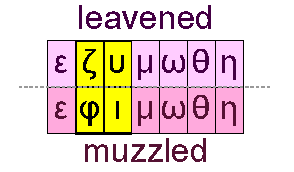
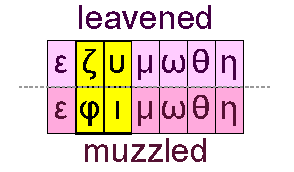
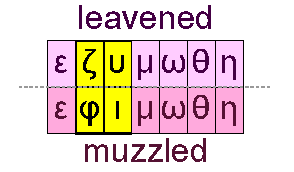
- "ἐζυμώθη" ≈ "leavened".
- "ἐφιμώθη" ≈ "muzzled, speechless".
It was
"all" "leavened". Did this, in effect, have
everyone "muzzled"?
72. Matthew 22:12 Speechless
73. Matthew 13:33 Paraphrase
Matthew 13:33 Another parable spake he unto them; The kingdom of heaven is like unto leaven, which a woman took, and hid in three measures of meal, till the whole was leavened. [kjv]
αλλην παραβολην ελαλησεν αυτοις ομοια εστιν η βασιλεια των ουρανων ζυμη ην λαβουσα γυνη ενεκρυψεν εις αλευρου σατα τρια εως ου εζυμωθη ολον [gnt]
Paraphrase:
... the kingdom of heaven is like leaven [false doctrine] which a woman took [enchanting drag-net] and encrypted into wheat [freedom] , measures [Satan] three until leavened [muzzled] all.
Don't be muzzled. Brush up on your Bible studies or you will have truth decay. I'm required to tell you this due to tooth in advertising laws.
74. Matthew 13:44 KP5 Parable of the treasure in a field
Matthew 13:44 Again, the kingdom of heaven is like unto treasure hid in a field; the which when a man hath found, he hideth, and for joy thereof goeth and selleth all that he hath, and buyeth that field. [kjv]
παλιν ομοια εστιν η βασιλεια των ουρανων θησαυρω κεκρυμμενω εν τω αγρω ον ευρων ανθρωπος εκρυψεν και απο της χαρας αυτου υπαγει και παντα πωλει οσα εχει πωλει και αγοραζει τον αγρον εκεινον [gnt]
The fourth kingdom parable in Matthew 13, just
one verse, has treasure hidden in a field. What is the "
treasure"? Why is the "
treasure" hid
again? When does the "
sell" and "
buy" take place?
In the parables, the "
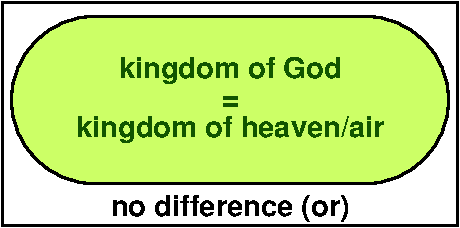
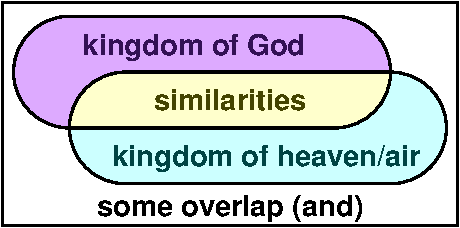
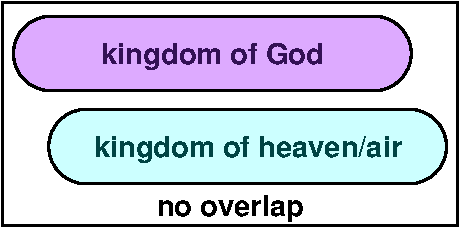
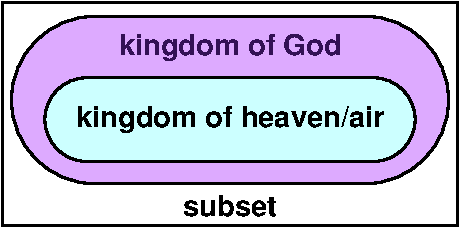
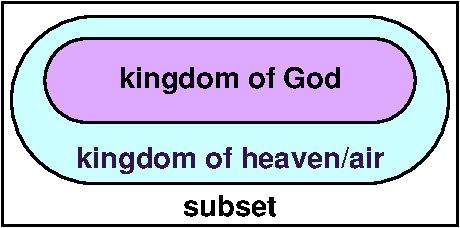
man" is "
Jesus as God". Is the "
kingdom of heaven" the same as the "
kingdom of God"?
How might these parable relate to John 3:16? Can we, in addition, make reference to the story of Ruth?
75. Matthew 13:45-46 KP6 Parable of the pearl of great price
Matthew 13:45 Again, the kingdom of heaven is like unto a merchant man, seeking goodly pearls: [kjv]
παλιν ομοια εστιν η βασιλεια των ουρανων ανθρωπω εμπορω ζητουντι καλους μαργαριτας [gnt]
13:46 Who, when he had found one pearl of great price, went and sold all that he had, and bought it. [kjv]
ος ευρων δε ενα πολυτιμον μαργαριτην απελθων πεπρακεν παντα οσα ειχεν και ηγορασεν αυτον [gnt]
The name "
Margaret" comes from the ancient Greek word
"μαργαρίτης" ≈ "pearl". The word
"pearl" appears in the
GNT but not in the
LXX, although the
KJV uses
"pearl" in Job.
What is being
"bought"? [good and raca]
76. Matthew 13:47-50: KP7 Parable of the harvest at the end of the age
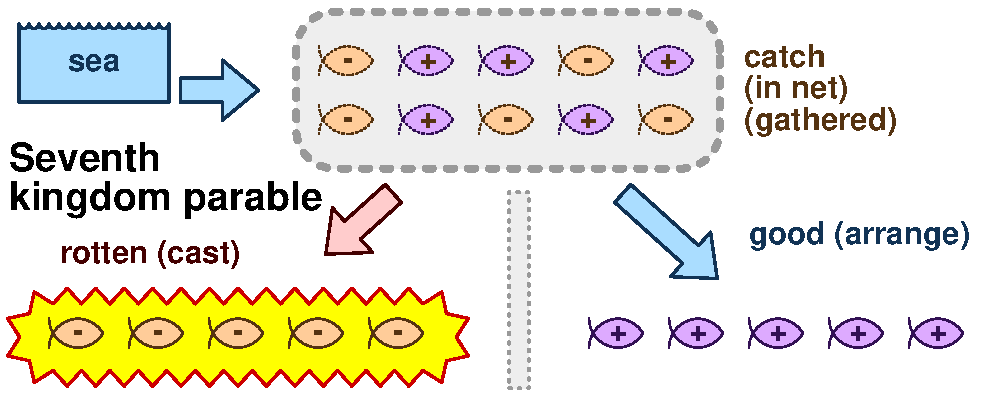
Matthew 13:47 Again, the kingdom of heaven is like unto a net, that was cast into the sea, and gathered of every kind: [kjv]
13:48 Which, when it was full, they drew to shore, and sat down, and gathered the good into vessels, but cast the bad away. [kjv]
The 7th and last of the Kingdom Parables in Matthew 13 is about the (implied) fish in the sea (of humanity).
The
"bad" is that of
"rotten" or
"putrid" or
"spoiled" (e.g., fruit). The
"vessels" may be
reflexive. Only the
"good" are
"arranged", not necessarily
"put", into
"vessels".
77. Matthew 13:51-52 KP8 Parable of new and old codes
Jesus speaks
7/8 Kingdom Parables in Matthew 13 and explains/decodes
3 of the
7/8.
Matthew 13:51 Jesus saith unto them, Have ye understood all these things? They say unto him, Yea, Lord. [kjv]
λεγει αυτοις ο ιησους συνηκατε συνηκατε ταυτα παντα λεγουσιν αυτω ναι κυριε [gnt]
13:52 Then said he unto them, Therefore every scribe which is instructed unto the kingdom of heaven is like unto a man that is an householder, which bringeth forth out of his treasure things new and old. [kjv]
ο δε ειπεν αυτοις δια τουτο πας γραμματευς μαθητευθεις εις την βασιλειαν τη βασιλεια των ουρανων ομοιος εστιν ανθρωπω οικοδεσποτη οστις εκβαλλει εκ του θησαυρου αυτου καινα και παλαια [gnt]
13:53 And it came to pass, that when Jesus had finished these parables, he departed thence. [kjv]
και εγενετο οτε ετελεσεν ο ιησους τας παραβολας ταυτας μετηρεν εκειθεν [gnt]
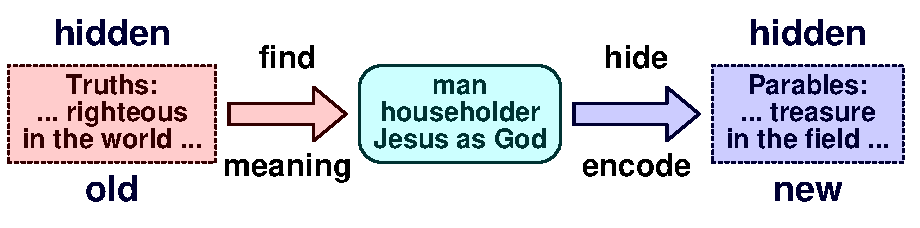
What exactly is the
"treasure" and what are the
"new" and
"old" things that a
"scribe" or
"householder" brings out of that "
treasure"?
78. End of page