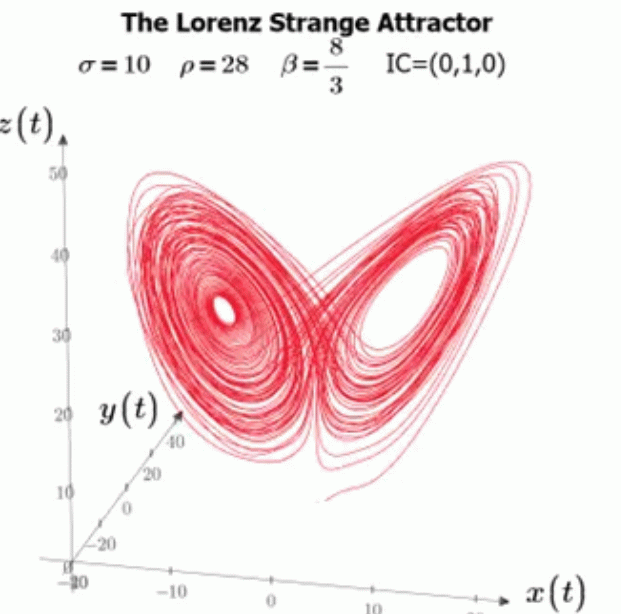
40. Strange attractor
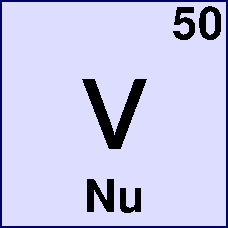
41. Movable nu
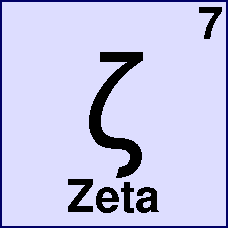
The Greek language has what is called a
"movable nu" from the letter "
nu" in the Greek alphabet.
The
ancient Greek phrase
"νῦ ἐφελκυστικόν" ≈ "nu dragged onto, nu attracted to" and comes from two Greek words.
The ancient Greek word "επι" ≈ "on".
The ancient Greek word "ἕλκω" ≈ "drag, attract"
In Greek, the
"movable nu" is used to avoid two vowels in a row, a "
hiatus". That is, a vowel at the end of one word and a vowel at the beginning of the next word. Since this is a speech-related phenomena, sometimes the
"movable nu" is optional.
42. Revelation 16:2,11 Attractive soar
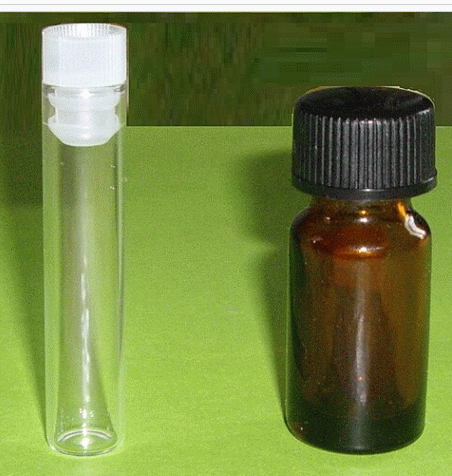
Revelation 16:2 And the first went, and poured out his vial upon the earth; and there fell a noisome and grievous sore upon the men which had the mark of the beast, and upon them which worshipped his image. [kjv]
και απηλθεν ο πρωτος και εξεχεεν την φιαλην αυτου επι εις την γην και εγενετο ελκος κακον και πονηρον εις επι τους ανθρωπους τους εχοντας το χαραγμα του θηριου και τους προσκυνουντας τη εικονι αυτου προσκυνουντας [gnt]
16:11 And blasphemed the God of heaven because of their pains and their sores, and repented not of their deeds. [kjv]
και εβλασφημησαν τον θεον του ουρανου εκ των πονων αυτων και εκ των ελκων αυτων και ου μετενοησαν εκ των εργων αυτων [gnt]
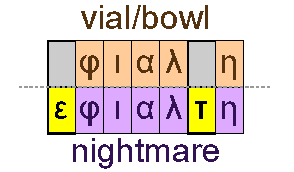
"ἕλκος" ≈ "wound, injury, ulcer" and related to the Latin word "ulcus" ≈ "ulcer".
"ἕλκω" ≈ "drag, pull" as in pull along a surface. Not related to word for wound, etc.
The words appear to be unrelated but are close enough to be play on words.
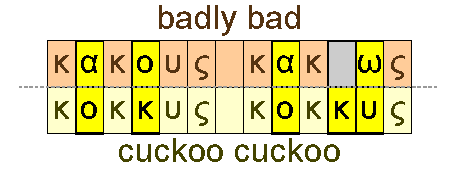
43. Revelation 16:2 In a bad way
Revelation 16:2 And the first went, and poured out his vial upon the earth; and there fell a noisome and grievous sore upon the men which had the mark of the beast, and upon them which worshipped his image. [kjv]
και απηλθεν ο πρωτος και εξεχεεν την φιαλην αυτου επι εις την γην και εγενετο ελκος κακον και πονηρον εις επι τους ανθρωπους τους εχοντας το χαραγμα του θηριου και τους προσκυνουντας τη εικονι αυτου προσκυνουντας [gnt]
The
ancient Greek word
"κακός" ≈ "bad, worthless, ugly, vile" can be a play on words with the "
cuckoo" sound made by a
bird. Jesus uses the words for
bird to refer to false leaders and false teachers.
The English word
"cacophony" comes, through French, from the
ancient Greek word
"κακοφωνία" ≈ "ill-sounding".
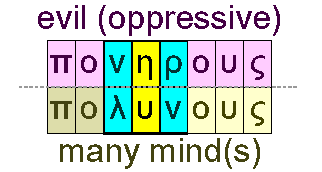
44. Revelation 16:2 Oppressive annoyance
Revelation 16:2 And the first went, and poured out his vial upon the earth; and there fell a noisome and grievous sore upon the men which had the mark of the beast, and upon them which worshipped his image. [kjv]
και απηλθεν ο πρωτος και εξεχεεν την φιαλην αυτου επι εις την γην και εγενετο ελκος κακον και πονηρον εις επι τους ανθρωπους τους εχοντας το χαραγμα του θηριου και τους προσκυνουντας τη εικονι αυτου προσκυνουντας [gnt]
"πονηρὰ" ≈ "oppressed by toils" and is often translated as "evil".
"πονηρόν" ≈ "oppressed by toils" (accusative singular) of "πονηρός" ≈ "oppressed by toils".
The English word
"noisome", is from the Middle English word
"noysom" ≈ "harmful, injurious, offensive" and was short for
"annoy" where the leading "
a" dropped off.
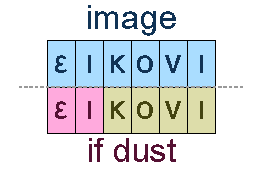
45. Revelation 16:2 If dust in the house
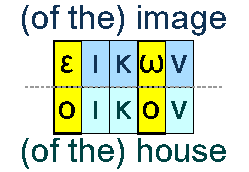
46. Matthew 22:20 Image and house
47. Revelation 16:2 First vial
Revelation 16:2 And the first went, and poured out his vial upon the earth; and there fell a noisome and grievous sore upon the men which had the mark of the beast, and upon them which worshipped his image. [kjv]
και απηλθεν ο πρωτος και εξεχεεν την φιαλην αυτου επι εις την γην και εγενετο ελκος κακον και πονηρον εις επι τους ανθρωπους τους εχοντας το χαραγμα του θηριου και τους προσκυνουντας τη εικονι αυτου προσκυνουντας [gnt]
These are those who have been
attracted with
sores to the
bad bird cackling and
oppressed with
toils and
many minds, both themselves and others.
The Greek for
"image" "(of) it/him" is ambiguous. Is the
"(of) it/him" the "
beast", the "
mark" or something else?
[absolute power corrupting, householder going away]
48. Absolute power
John Emerich Edward Dalberg-Acton (1834-1902) said that "
Power tends to corrupt, and absolute power corrupts absolutely. Great men are almost always bad men..." in a letter to an Anglican bishop (Wikipedia).
The question is this. Did the power corrupt or did the opportunity to use power show what already existed in the person?
[Augustine and innocence of babies, parents and children]
All balls are red or blue. In a very dark room, what color is a bright red ball? What happens when the light is turned on? [information]
To be "great" one needs an observable "measure" by which one can be "greater" than others.
What does Jesus say about being "great"? Who is the "greatest"?
How does wanting to be "great" relate to "evil" as "oppressing" others and/or oneself?
49. Revelation 16:2
KJV: And the first went, and poured out his vial upon the earth; and there fell a noisome and grievous sore upon the men which had the mark of the beast, and upon them which worshipped his image.
Greek: και απηλθεν ο πρωτος και εξεχεεν την φιαλην αυτου επι εις την γην και εγενετο ελκος κακον και πονηρον εις επι τους ανθρωπους τους εχοντας το χαραγμα του θηριου και τους προσκυνουντας τη εικονι αυτου προσκυνουντας
50. Revelation 16:3 Second vial
Revelation 16:3 And the second angel poured out his vial upon the sea; and it became as the blood of a dead man: and every living soul died in the sea. [kjv]
και ο δευτερος αγγελος εξεχεεν την φιαλην αυτου εις την θαλασσαν και εγενετο αιμα ως νεκρου και πασα ψυχη ζωσα ζωης απεθανεν τα εν τη θαλασση [gnt]
Greek:
... and (it) became blood as of a dead (man) and ...
KJV:
and it became as blood of a dead man and ...
Does the
KJV change the analogy in a significant way?
The
"as" indicates an
analogy and
not a literal
reality.
"αἷμα" ≈ "blood" and is the source of the English word "anemic".
"ὅς" ≈ "as far as" and "ὅς" ≈ "who, which, that".
[drops of blood, house on sand, etc.]
51. Revelation 16:3
Revelation 16:3 And the second angel poured out his vial upon the sea; and it became as the blood of a dead man: and every living soul died in the sea. [kjv]
και ο δευτερος αγγελος εξεχεεν την φιαλην αυτου εις την θαλασσαν και εγενετο αιμα ως νεκρου και πασα ψυχη ζωσα ζωης απεθανεν τα εν τη θαλασση [gnt]
Those leaving
node 5 (living bread, living water, washed in the
blood, etc.) now have
blood as those who are
dead.
[sea and forgetfulness, Greek two and second, died and birded]
52. Revelation 16:3
KJV: And the second angel poured out his vial upon the sea; and it became as the blood of a dead man: and every living soul died in the sea.
Greek: και ο δευτερος αγγελος εξεχεεν την φιαλην αυτου εις την θαλασσαν και εγενετο αιμα ως νεκρου και πασα ψυχη ζωσα ζωης απεθανεν τα εν τη θαλασση
53. Revelation 16:3-4 Second and third vials
Revelation 16:3 And the second angel poured out his vial upon the sea; and it became as the blood of a dead man: and every living soul died in the sea. [kjv]
16:4 And the third angel poured out his vial upon the rivers and fountains of waters; and they became blood. [kjv]
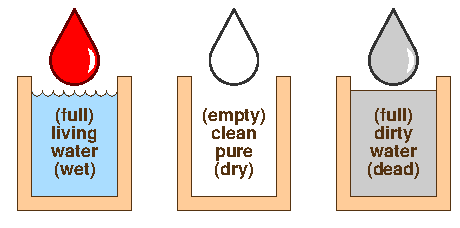
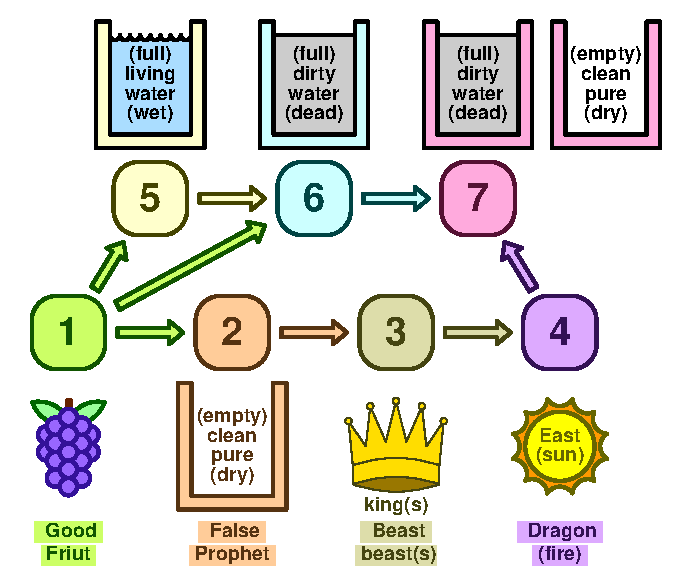
Vial 2 at
node 6 has the dirty water and dead blood.
Vial 3 at
node 5 has the living water and living blood.
To complete the three parts or ways, for all peoples, an empty dried-out (vacuously clean and pure) water is needed. That will happen at
vial 6 and
node 2.
54. Revelation 16:4-7 Third vial
Revelation 16:4 And the third angel poured out his vial upon the rivers and fountains of waters; and they became blood. [kjv]
16:5 And I heard the angel of the waters say, Thou art righteous, O Lord, which art, and wast, and shalt be, because thou hast judged thus. [kjv]
16:6 For they have shed the blood of saints and prophets, and thou hast given them blood to drink; for they are worthy. [kjv]
16:7 And I heard another out of the altar say, Even so, Lord God Almighty, true and righteous are thy judgments. [kjv]
55. Revelation 16:4 Third vial
Revelation 16:4 And the third angel poured out his vial upon the rivers and fountains of waters; and they became blood. [kjv]
και ο τριτος αγγελος εξεχεεν την φιαλην αυτου εις τους ποταμους και εις τας πηγας των υδατων και εγενετο αιμα [gnt]
There is no
"as" analogy. They
became "blood".
What type of
"rivers" and
"water" could cause a house built on "
sand" to collapse?
Could such
"rivers" and
"water" that cause destruction from the "
wind" of the Holy Spirit? How about the corresponding
Avenger of
Blood?
Greek: ... into the rivers ...
KJV: ... upon the rivers ...
56. Revelation 16:4
KJV: And the third angel poured out his vial upon the rivers and fountains of waters; and they became blood.
Greek: και ο τριτος αγγελος εξεχεεν την φιαλην αυτου εις τους ποταμους και εις τας πηγας των υδατων και εγενετο αιμα
57. John 7:38 Rivers of living water
John 7:38 He that believeth on me, as the scripture hath said, out of his belly shall flow rivers of living water. [kjv]
ο πιστευων εις εμε καθως ειπεν η γραφη ποταμοι εκ της κοιλιας αυτου ρευσουσιν υδατος ζωντος [gnt]
It is not clear to what scripture John refers. Many have pieced together various verses to support the claim made here in John. Assume that the rivers represent the "
harvest", full of fish in the water analogy. The etymology of
"river" in Greek comes from the same root that means "
fallen" as in a low area.
In John, we have the concept of
"rivers" and living
"water" from the "
wind" of the Holy Spirit. Such are beneficial to a house built on the "
rock". There are three elements in the houses built on
rock or on
sand.
rain (living water or theft)
rivers (floods in KJV)
wind (Holy Spirit or bird calls)
58. Revelation 16:5 Third vial continued
Revelation 16:5 And I heard the angel of the waters say, Thou art righteous, O Lord, which art, and wast, and shalt be, because thou hast judged thus. [kjv]
και ηκουσα του αγγελου των υδατων λεγοντος δικαιος κυριε ει ο ων και ο ην και ο οσιος οτι ταυτα εκρινας [gnt]
… audivi angelum aquarum … iustus … sanctus … iudicasti [v]
The
ancient Greek word
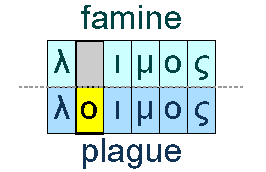
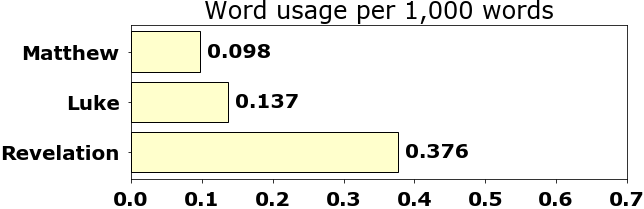
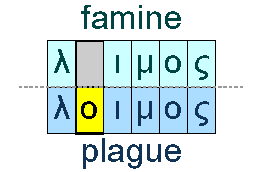
"ὑδάτων" ≈ "(of) waters". Are these living
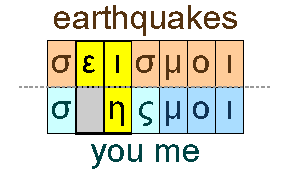
"waters"?
The
ancient Greek word
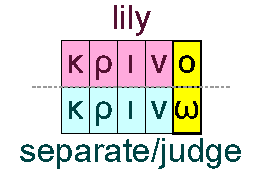
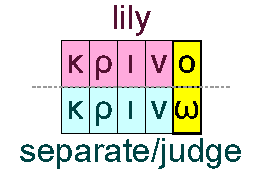
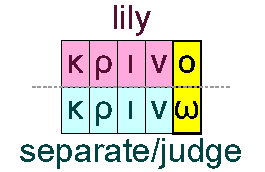
"κρίνω" ≈ "separate/distinguish". The idea of "
judged" comes from the Latin.
The
ancient Greek word
"ὅσιος" ≈ "pious, devout" does not appear to be translated in the
KJV. It is in the Latin Vulgate
"sanctus" ≈ "holy".
The
TR adds the Greek word for "
O Lord".
59. Revelation 16:5
KJV: And I heard the angel of the waters say, Thou art righteous, O Lord, which art, and wast, and shalt be, because thou hast judged thus.
Greek: και ηκουσα του αγγελου των υδατων λεγοντος δικαιος κυριε ει ο ων και ο ην και ο οσιος οτι ταυτα εκρινας
Latin: et audivi angelum aquarum dicentem iustus es qui es et qui eras sanctus quia haec iudicasti
60. Revelation 16:6 Third vial continued
Revelation 16:6 For they have shed the blood of saints and prophets, and thou hast given them blood to drink; for they are worthy. [kjv]
οτι αιμα αγιων και προφητων εξεχεαν και αιμα αυτοις εδωκας πιειν δεδωκας πειν αξιοι γαρ εισιν [gnt]
Might this
"blood" be
"living" "water"?
The Greek word translated as
"shed" is that of
"poured out". This is what the
"angels" are doing with the
"vials".
61. Revelation 16:6
KJV: For they have shed the blood of saints and prophets, and thou hast given them blood to drink; for they are worthy.
Greek: οτι αιμα αγιων και προφητων εξεχεαν και αιμα αυτοις εδωκας πιειν δεδωκας πειν αξιοιγαρ εισιν
62. Revelation 16:7 Third vial continued
Revelation 16:7 And I heard another out of the altar say, Even so, Lord God Almighty, true and righteous are thy judgments. [kjv]
και ηκουσα αλλου εκ του θυσιαστηριου λεγοντος ναι κυριε ο θεος ο παντοκρατωρ αληθιναι και δικαιαι αι κρισεις σου [gnt]
… iusta iudicia … [v]
The
ancient Greek word
"κρίσις" ≈ "decision, trial, dispute" and comes from
"κρίνω" ≈ "separate, arrange, distinguish".
The Latin uses the
same word, "
justice" as in "
judicial" for both
"righteous" and
"separation". Neither fits the Greek word very well.
63. Revelation 16:7 True
64. Revelation 16:7
KJV: And I heard another out of the altar say, Even so, Lord God Almighty, true and righteous are thy judgments.
Greek: και ηκουσα αλλου εκ του θυσιαστηριου λεγοντος ναι κυριε ο θεος ο παντοκρατωρ αληθιναι και δικαιαι αι κρισεις σου
Latin: et audivi altare dicens etiam Domine Deus omnipotens vera et iusta iudicia tua
65. Revelation 16:4
Revelation 16:4 And the third angel poured out his vial upon the rivers and fountains of waters; and they became blood. [kjv]
και ο τριτος αγγελος εξεχεεν την φιαλην αυτου εις τους ποταμους και εις τας πηγας των υδατων και εγενετο αιμα [gnt]
This vial does appears to neither good nor bad for those receiving it. One needs to be washed in the blood. That is, the water needs to become (living) blood and not blood as of the dead.
[Greek three vs. third]
66. Revelation 16:8-9 Fourth vial
67. Revelation 16:8 Tartarus
Revelation 16:8 And the fourth angel poured out his vial upon the sun; and power was given unto him to scorch men with fire. [kjv]
και ο τεταρτος αγγελος εξεχεεν την φιαλην αυτου επι τον ηλιον και εδοθη αυτω καυματισαι τους ανθρωπους εν πυρι [gnt]
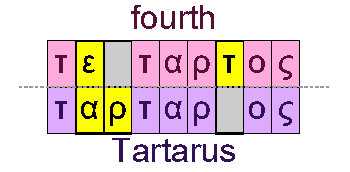
"τέταρτος" ≈ "fourth".
"Τάρταρος" ≈ "Tartarus".
In Greek mythology,
Tartarus is a region deep inside the earth and part of the underworld. It is a place of torment for the wicked and a prison for the Titans.
Might a
fire-breathing dragon appear in this node/vial?
68. Aristotle: Meteorologica
English: Plato's description of rivers and the sea in the Phaedro is impossible. He says they all flow into each other beneath the earth through channels pierced through it, and that their original source is a body of water at the center of the earth called Tartarus, from which all waters running and standing are drawn. (Loeb#397, p. 139)
Greek: τὸ δ' ἐν τῷ Φαίδωνι γεγραμμένον περί τε τῶν ποταμῶν καὶ τῆς θαλάττης ἀδύνατόν ἐστιν. λέγεται γὰρ ὡς ἅπαντα μὲν εἰς ἄλληλα συντέτρηται ὑπὸ γῆν, ἀρχὴ δὲ πάντων εἴη καὶ πηγὴ τῶν ὑδάτων ὁ καλούμενος Τάρταρος, περὶ τὸ μέσον ὕδατός τι πλῆθος, ἐξ οὗ καὶ τὰ ῥέοντα καὶ τὰ μὴ ῥέοντα ἀναδίδωσιν πάντα· Aristotle: Meteorologica [356a]
69. Aristotle: Meteorologica
English: But an this account rivers do not always flow in the same sense. For if they flow towards the centre and also away from it, they will flow uphill as much as down, according to the direction in which the surge of Tartarus inclines. And if this is so we have the proverbial impossibility of rivers flowing uphill. (Loeb#397, p. 141)
Greek: συμβαίνει δὲ τοὺς ποταμοὺς ῥεῖν οὐκ ἐπὶ ταὐτὸν ἀεὶ κατὰ τὸν λόγον τοῦτον· ἐπεὶ γὰρ εἰς τὸ μέσον εἰσρέουσιν ἀφ' οὗπερ ἐκρέουσιν, οὐδὲν μᾶλλον ῥευσοῦνται κάτωθεν ἢ ἄνωθεν, ἀλλ' ἐφ' ὁπότερ' ἂν ῥέψῃ κυμαίνων ὁ Τάρταρος. καίτοι τούτου συμβαίνοντος γένοιτ' ἂν τὸ λεγόμενον ἄνω ποταμῶν· ὅπερ ἀδύνατον. Aristotle: Meteorologica [356a]
70. Aristotle: Posterior Analytics
In his Posterior Analytics, Aristotle is providing some examples of (his four) causes and uses Tartarus in one of them.
English: If, then, an effect can obtain for two causes, can it also be brought about by two causes? e.g., if it thunders both because there must be a hissing and roaring as the fire is extinguished, and also (as the Pythagoreans hold) to threaten the souls in Tartarus and make them fear. (Loeb#391, p. 217)
Greek: ἆρ' οὖν εἰ εἶναι ἐνδέχεται, καὶ γίνεσθαι ἐνδέχεται· ὥσπερ εἰ βροντᾷ <ὅτι> ἀποσβεννυμένου τε τοῦ πυρὸς ἀνάγκη σίζειν καὶ ψοφεῖν καί, εἰ ὡς οἱ Πυθαγόρειοί φασιν, ἀπειλῆς ἕνεκα τοῖς ἐν τῷ ταρτάρῳ, ὅπως φοβῶνται; Aristotle: Αναλυτικών υστέρων/1 10:25 [94b]
71. Revelation 16:8
KJV: And the fourth angel poured out his vial upon the sun; and power was given unto him to scorch men with fire.
Greek: και ο τεταρτος αγγελος εξεχεεν την φιαλην αυτου επι τον ηλιον και εδοθη αυτω καυματισαι τους ανθρωπους εν πυρι
72. Revelation 16:9 Fourth vial continued
Revelation 16:9 And men were scorched with great heat, and blasphemed the name of God, which hath power over these plagues: and they repented not to give him glory. [kjv]
και εκαυματισθησαν οι ανθρωποι καυμα μεγα και εβλασφημησαν το ονομα του θεου του εχοντος την εξουσιαν επι τας πληγας ταυτας και ου μετενοησαν δουναι αυτω δοξαν [gnt]
73. Revelation 16:9
KJV: And men were scorched with great heat, and blasphemed the name of God, which hath power over these plagues: and they repented not to give him glory.
Greek: και εκαυματισθησαν οι ανθρωποι καυμα μεγα και εβλασφημησαν το ονομα του θεου του εχοντος την εξουσιαν επι τας πληγας ταυτας και ου μετενοησαν δουναι αυτω δοξαν
Latin: et aestuaverunt homines aestu magno et blasphemaverunt nomen Dei habentis potestatem super has plagas neque egerunt paenitentiam ut darent illi gloriam
Wycliffe: And men swaliden with greet heete, and blasfemyden the name of God hauynge power on these plagis, nether thei diden penaunce, that thei schulden yyue glorie to hym.
Tyndale: And the men raged in gret heate and spake evyll of the name of God which had power over those plages and they repented not to geve him glory.
74. Strongs - scorch
75. Usage - scorch
- *G2739 *4 καυματίζω (kow-mat-id'-zo) : from G2738; to burn:--scorch.
εκαυματισθη *2
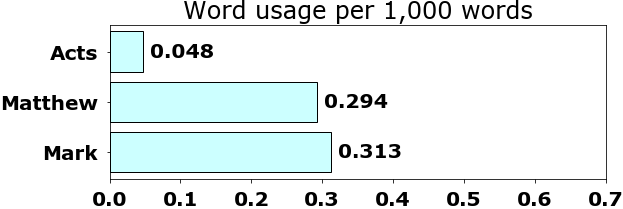
Matthew 13:6 And when the sun was up, they were scorched; and because they had ...
Mark 4:6 But when the sun was up, it was scorched; and because it had ...
καυματισαι
εκαυματισθησαν
Revelation 16:9 And men were scorched with great heat, and ...
76. Strongs - heat
- *G2738 *2 καῦμα (kow'-mah) : from G2545; properly, a burn (concretely), but used (abstractly) of a glow:--heat.
77. Strongs - intense heat
- *G2742 *3 καύσων (kow'-sone) : from G2741; a glare:--(burning) heat.
78. Revelation 16:8
Revelation 16:8 And the fourth angel poured out his vial upon the sun; and power was given unto him to scorch men with fire. [kjv]
και ο τεταρτος αγγελος εξεχεεν την φιαλην αυτου επι τον ηλιον και εδοθη αυτω καυματισαι τους ανθρωπους εν πυρι [gnt]
In creation days, this node corresponds to the moon, sun and starts. Those involved in spiritual adultery will be scorched with fire in the same manner as the destination of the goats.
"ἥλιος" ≈ "sun, east, day, sunshine".
"πῦρ" ≈ "fire" and is related to the English word "fire" through Grimm's Law.
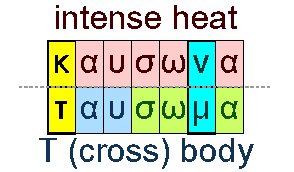
"καῦμα" ≈ "burning, glow, heat (sun), fever"
Who might endure such
"scorching"? Might it be
self-inflicted?
79. Matthew 20:12 Heat burden
80. Revelation 16:10 Fifth vial
Revelation 16:10 And the fifth angel poured out his vial upon the seat of the beast; and his kingdom was full of darkness; and they gnawed their tongues for pain, [kjv]
και ο πεμπτος αγγελος εξεχεεν την φιαλην αυτου επι τον θρονον του θηριου και εγενετο η βασιλεια αυτου εσκοτωμενη και εμασσωντο εμασωντο τας γλωσσας αυτων εκ του πονου [gnt]
In the
GNT, this Greek word is translated as
"pain" and not as work or
"toil" which is usually more like "
fatigue" than
"pain".
Consider the following verses that use this Greek word. Might each verse make more or less sense if
"toil" or "
work" is substituted for
"pain"?
Why might one "
bite" their "
tongue"?
81. Revelation 16:10 Language tongue
Revelation 16:10 And the fifth angel poured out his vial upon the seat of the beast; and his kingdom was full of darkness; and they gnawed their tongues for pain, [kjv]
και ο πεμπτος αγγελος εξεχεεν την φιαλην αυτου επι τον θρονον του θηριου και εγενετο η βασιλεια αυτου εσκοτωμενη και εμασσωντο εμασωντο τας γλωσσας αυτων εκ του πονου [gnt]
The
ancient Greek word
"γλῶσσα" ≈ "tongue, language" and is the source of the English word
"glossa" and
"glossary" through the
Latin word
"glossa" ≈ "language" (with several other meanings).
82. Revelation 16:10
KJV: And the fifth angel poured out his vial upon the seat of the beast; and his kingdom was full of darkness; and they gnawed their tongues for pain,
Greek: και ο πεμπτος αγγελος εξεχεεν την φιαλην αυτου επι τον θρονον του θηριου και εγενετο η βασιλεια αυτου εσκοτωμενη και εμασσωντο εμασωντο τας γλωσσας αυτων εκ του πονου
Latin: et quintus effudit fialam suam super sedem bestiae et factum est regnum eius tenebrosum et conmanducaverunt linguas suas prae dolore
Wycliffe: And the fifte aungel schedde out his viol on the seete of the beeste, and his kyngdom was maad derk; and thei eten togidere her tungis for sorewe,
Tyndale: And the fifte angell poured out his vyall apon the seate of the beste and his kyngdome wexed derke and they gnewe their tonges for sorowe
Luther: Und der fünfte Engel goß aus seine Schale auf den Stuhl des Tieres. Und sein Reich ward verfinstert; und sie zerbissen ihre Zungen vor Schmerzen
Spanish: Y el quintoángel derramó su copa sobre la silla de la bestia; y su reino se cubrió de tinieblas, y se mordían sus lenguas de dolor;
Portuguese: Quando o quinto anjo derramou a sua taça sobre o trono da Besta, o seu reino cobriu-se de trevas, os homens mordiam de dor as suas línguas
83. Revelation 16:11 Fifth vial continued
Revelation 16:11 And blasphemed the God of heaven because of their pains and their sores, and repented not of their deeds. [kjv]
και εβλασφημησαν τον θεον του ουρανου εκ των πονων αυτων και εκ των ελκων αυτων και ου μετενοησαν εκ των εργων αυτων [gnt]
The
ancient Greek word
"ἕλκος" ≈ "wound, injury" and could be a cut in a
tree. This word is related to the Latin word
"ulcus" ≈ "sore, ulcer,wound". The
modern Greek word
"έλκος" (EHL-kos) ≈ "ulcer".
Might they have taken "
oaths"?
84. Strongs - pain
85. Usage - pain
- *G4192 *4 πόνος (pon'-os) : from the base of G3993; toil, i.e. (by implication) anguish:--pain.
πονον
Colossians 4:13 For I bear him record, that he hath ...
πονου
Revelation 16:10 ... their tongues for pain,
πονων
Revelation 16:11 ... of heaven because of their pains and their sores, ...
πονος
86. Pain and complaints
87. Revelation 16:9,11,21 Blasphemy
Revelation 16:9 And men were scorched with great heat, and blasphemed the name of God, which hath power over these plagues: and they repented not to give him glory. [kjv]
16:11 And blasphemed the God of heaven because of their pains and their sores, and repented not of their deeds. [kjv]
16:21 And there fell upon men a great hail out of heaven, every stone about the weight of a talent: and men blasphemed God because of the plague of the hail; for the plague thereof was exceeding great. [kjv]
16:9: vial 4, node 4
16:11: vial 5: node 3
16:21: vial 7: node 1
|
The
ancient Greek word
"βλασφημία" ≈ "word of evil omen, defamation, speech against God" and comes from the words for "
bad" or "
harmful" and "
speak" or "
fame" (as in traveling news).
In
deceptive uses,
"blasphemy" may sound
eloquent and
indistinguishable by some from the truth.
88. Strongs - blasphemy
*G988 *18 βλασφημία (blas-fay-me'-ah) : from G989; vilification (especially against God):--blasphemy, evil speaking, railing.
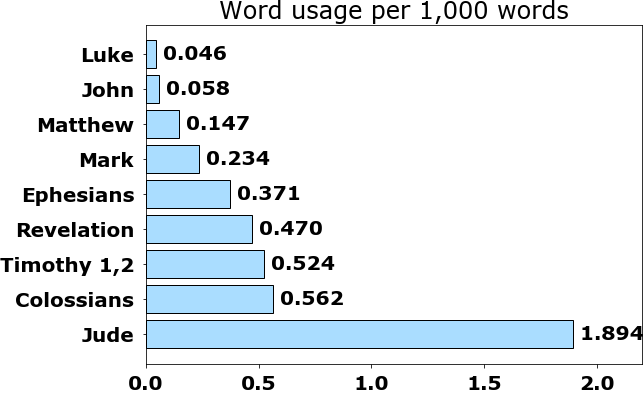 |
Words: βλασφημια=4 βλασφημιαι=3 βλασφημιαν=3 βλασφημιας=8
|
The
ancient Greek word
"βλασφημία" ≈ "word of evil omen, defamation, speech against God" and comes from the words for "
bad" or "
harmful" and "
speak" or "
fame" (as in traveling news). In
deceptive uses, "
blasphemy" may sound
eloquent and
indistinguishable by some from the truth.
This word for
"blasphemy" can be a play on words with
"plant" or
"vegetation". The "
weeds" or "
tares" are "
planted" by the "
evil one" or the
"birds".
89. Usage - blasphemy
- *G988 *18 βλασφημία (blas-fay-me'-ah) : from G989; vilification (especially against God):--blasphemy, evil speaking, railing.
- βλασφημιας *8
- Mark 14:64 Ye have heard the blasphemy: what think ye? And ...
- Luke 5:21 ... this which speaketh blasphemies? Who can forgive ...
- John 10:33 ... not; but for blasphemy; and because that thou, ...
- Jude 1:9 ... not bring against him a railing accusation, but said, ...
- Revelation 13:1 ... his heads the name of blasphemy.
- Revelation 13:5 ... speaking great things and blasphemies; and power was given ...
- Revelation 13:6 ... his mouth in blasphemy against God, to blaspheme ...
- Revelation 17:3 ... beast, full of names of blasphemy, having seven heads ...
- βλασφημια *4
- Matthew 12:31 ... sin and blasphemy shall be forgiven unto men: but the blasphemy against the Holy Ghost ...
- Mark 7:22 ... an evil eye, blasphemy, pride, foolishness:
- Ephesians 4:31 ... and clamour, and evil speaking, be put away from you, ...
- βλασφημιαι *3
- Matthew 15:19 ... fornications, thefts, false witness, blasphemies:
- Mark 3:28 ... unto the sons of men, and blasphemies wherewith soever they shall blaspheme:
- 1 Timothy 6:4 ... cometh envy, strife, railings, evil surmisings,
- βλασφημιαν *3
- Matthew 26:65 ... now ye have heard his blasphemy.
- Colossians 3:8 ... anger, wrath, malice, blasphemy, filthy communication out of your mouth.
- Revelation 2:9 ... thou art rich) and I know the blasphemy of them which say they are ...
90. Revelation 16:11 Pain
Revelation 16:11 And blasphemed the God of heaven because of their pains and their sores, and repented not of their deeds. [kjv]
και εβλασφημησαν τον θεον του ουρανου εκ των πονων αυτων και εκ των ελκων αυτων και ου μετενοησαν εκ των εργων αυτων [gnt]
The
ancient Greek word
"πόνος" ≈ "work, toil" and is cognate with the
ancient Greek word
"πένομαι" ≈ "to exert oneself". The
modern Greek word
"πόνος" (PO-nos) ≈ "pain, ache".
91. Revelation 16:11
KJV: And blasphemed the God of heaven because of their pains and their sores, and repented not of their deeds.
Greek: και εβλασφημησαν τον θεον του ουρανου εκ των πονων αυτων και εκ των ελκων αυτων και ου μετενοησαν εκ των εργων αυτων
Latin: et blasphemaverunt Deum caeli prae doloribus et vulneribus suis et non egerunt paenitentiam ex operibus suis
Spanish: y blasfemaron contra el Dios del cielo por causa de sus dolores, y por sus plagas, y no se arrepintieron de sus obras.
Portuguese: e blasfemavam contra o Deus do céu por causa do sofrimento e das chagas. Mas não se arrependeram das suas más acções.
92. Revelation 16:10-11 Fifth vial
Revelation 16:10 And the fifth angel poured out his vial upon the seat of the beast; and his kingdom was full of darkness; and they gnawed their tongues for pain, [kjv]
16:11 And blasphemed the God of heaven because of their pains and their sores, and repented not of their deeds. [kjv]
The Greek word translated as "
seat" is that of "
throne".
Were they taking "
oaths"? Were they "
biting" their "
tongues", so to speak (or not speak)?
What type of
tree kingdom had this become?
93. Revelation 16:10 Fifth vial
Revelation 16:10 And the fifth angel poured out his vial upon the seat of the beast; and his kingdom was full of darkness; and they gnawed their tongues for pain, [kjv]
και ο πεμπτος αγγελος εξεχεεν την φιαλην αυτου επι τον θρονον του θηριου και εγενετο η βασιλεια αυτου εσκοτωμενη και εμασσωντο εμασωντο τας γλωσσας αυτων εκ του πονου [gnt]
The Greek word translated as "
seat" is that of "
throne".
Greek:
... and became a kingdom of it/him darkened ...
KJV:
and his kingdom was full of darkness ...
94. Revelation 16:12-16 Sixth vial
Revelation 16:12 And the sixth angel poured out his vial upon the great river Euphrates; and the water thereof was dried up, that the way of the kings of the east might be prepared. [kjv]
16:13 And I saw three unclean spirits like frogs come out of the mouth of the dragon, and out of the mouth of the beast, and out of the mouth of the false prophet. [kjv]
16:14 For they are the spirits of devils, working miracles, which go forth unto the kings of the earth and of the whole world, to gather them to the battle of that great day of God Almighty. [kjv]
16:15 Behold, I come as a thief. Blessed is he that watcheth, and keepeth his garments, lest he walk naked, and they see his shame. [kjv]
16:16 And he gathered them together into a place called in the Hebrew tongue Armageddon. [kjv]
95. Revelation 16:12 Sixth vial and kings of the East
Revelation 16:12 And the sixth angel poured out his vial upon the great river Euphrates; and the water thereof was dried up, that the way of the kings of the east might be prepared. [kjv]
και ο εκτος αγγελος εξεχεεν την φιαλην αυτου επι τον ποταμον τον μεγαν τον ευφρατην και εξηρανθη το υδωρ αυτου ινα ετοιμασθη η οδος των βασιλεων των απο ανατολων ανατολης ηλιου [gnt]
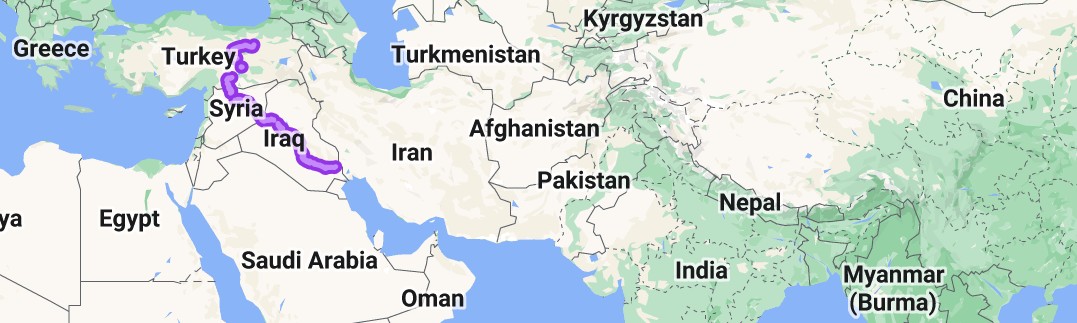
One literal prophecy of the end times in the book of Revelation concerns the "
kings of the east". It is not clear as to the identity of the "
Kings of the East". One assumption is that east appears to be east of Jerusalem and east of the Euphrates River.
As often happens, the literal view may be a distractor.
96. Revelation 21:13
97. Revelation 16:12 Sixth angel
Revelation 16:12 And the sixth angel poured out his vial upon the great river Euphrates; and the water thereof was dried up, that the way of the kings of the east might be prepared. [kjv]
και ο εκτος αγγελος εξεχεεν την φιαλην αυτου επι τον ποταμον τον μεγαν τον ευφρατην και εξηρανθη το υδωρ αυτου ινα ετοιμασθη η οδος των βασιλεων των απο ανατολων ανατολης ηλιου [gnt]
The Greek word
"ἥλιος" ≈ "sun, east, day, sunshine" is included as part of
"east" but is not usually translated. The connection relates the
fourth "vial" at
node 4 with this
sixth "vial" at
node 2
98. Revelation 9:16 Army of horsemen
Revelation 9:16 And the number of the army of the horsemen were two hundred thousand thousand: and I heard the number of them. [kjv]
και ο αριθμος των στρατευματων του ιππικου δυο δις μυριαδες μυριαδων και ηκουσα τον αριθμον αυτων [gnt]
The ancient Greek word
"ἀριθμός" ≈ "amount, number" the source of the English word
"arithmetic" and is related to
"rhyme" (number, verse).
The "
army" described in Revelation 9:16 is numbered at
200,000,000 or two hundred million. Throughout the ages, this idea was dismissed as no one could conceive of an army of two hundred million soldiers or horseman.
In modern times, China could call up that many soldiers although the logistics of getting that many soldiers fighting in one place would be very difficult. And these soldiers are riding horses! Perhaps this literal interpretation is a distractor.
99. Revelation 9:16
Revelation 9:16 And the number of the army of the horsemen were two hundred thousand thousand: and I heard the number of them. [kjv]
και ο αριθμος των στρατευματων του ιππικου δυο δις μυριαδες μυριαδων και ηκουσα τον αριθμον αυτων [gnt]
… numerus equestris exercitus … milies dena milia … numerum … [v]
Greek: 10,000 (times) 10,000.
Latin: 1,000 (times) 10 each (times) , 1,000.
English: 2(times), 100 (times) 1,000 (times) 1,000.
Greek word "δίς" ≈ "twice, doubly, again".
The Latin words "denus" ≈ "ten each" and "milia" ≈ "thousand".
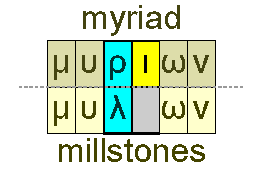
Might the Greek have to do with the
"millstone" enticement/entrapment?
100. Revelation 16:12
KJV: And the sixth angel poured out his vial upon the great river Euphrates; and the water thereof was dried up, that the way of the kings of the east might be prepared.
Greek: και ο εκτος αγγελος εξεχεεν την φιαλην αυτου επι τον ποταμον τον μεγαν τον ευφρατην και εξηρανθη το υδωρ αυτου ινα ετοιμασθη η οδος των βασιλεων των απο ανατολων ανατολης ηλιου
Latin: et sextus effudit fialam suam in flumen illud magnum Eufraten et siccavit aquam eius ut praepararetur via regibus ab ortu solis
101. Revelation 16:13 Sixth vial continued
Revelation 16:13 And I saw three unclean spirits like frogs come out of the mouth of the dragon, and out of the mouth of the beast, and out of the mouth of the false prophet. [kjv]
και ειδον εκ του στοματος του δρακοντος και εκ του στοματος του θηριου και εκ του στοματος του ψευδοπροφητου πνευματα τρια ακαθαρτα ομοια βατραχοις ως βατραχοι [gnt]
… draconis … bestiae … pseudoprophetae spiritus tres inmundos … modum ranarum [v]
These three unclean spirits are often taken as the Satanic trinity, sometimes called the Unholy Trinity.
The dragon in place of the Father.
The beast in place of Christ as in the Anti-Christ.
The false prophet in place of the Holy Spirit.
The
Latin word
"rana" ≈ "frog". The
KJV moves the
"frog" to the beginning of the verse rather than at the end as in the Greek.
102. Strongs - frog
- *G944 *1 βάτραχος (bat'-rakh-os) : of uncertain derivation; a frog:--frog.
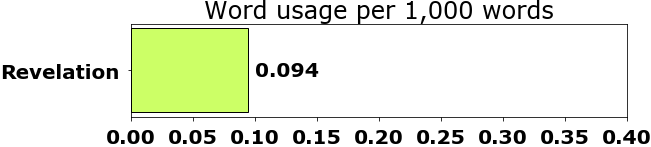 |
Words: βατραχοι
|
The
ancient Greek word
"βάτραχος" ≈ "frog, angler-fish" and appears to be onomatopoeic in origin.. The word appears one time in the
GNT, in Revelation, but appears
13 times in the
LXX,
11 times in Exodus as one of the ten plagues and
2 times in Psalms (both about the plagues in Egypt).
103. Revelation 16:13 Frogs
Revelation 16:13 And I saw three unclean spirits like frogs come out of the mouth of the dragon, and out of the mouth of the beast, and out of the mouth of the false prophet. [kjv]
και ειδον εκ του στοματος του δρακοντος και εκ του στοματος του θηριου και εκ του στοματος του ψευδοπροφητου πνευματα τρια ακαθαρτα ομοια βατραχοις ως βατραχοι [gnt]
The
ancient Greek word
"βάτραχος" ≈ "frog, angler-fish" and appears to be onomatopoeic in origin..
104. Exodus 8:2-4 Frogs
Exodus 8:2 And if thou refuse to let them go, behold, I will smite all thy borders with frogs: [kjv]
ει δε μη βουλει συ εξαποστειλαι ιδου εγω τυπτω παντα τα ορια σου τοις βατραχοις [lxx]
8:3 And the river shall bring forth frogs abundantly, which shall go up and come into thine house, and into thy bedchamber, and upon thy bed, and into the house of thy servants, and upon thy people, and into thine ovens, and into thy kneadingtroughs: [kjv]
και εξερευξεται ο ποταμος βατραχους και αναβαντες εισελευσονται εις τους οικους σου και εις τα ταμιεια των κοιτωνων σου και επι των κλινων σου και εις τους οικους των θεραποντων σου και του λαου σου και εν τοις φυραμασιν σου και εν τοις κλιβανοις σου [lxx]
8:4 And the frogs shall come up both on thee, and upon thy people, and upon all thy servants. [kjv]
και επι σε και επι τους θεραποντας σου και επι τον λαον σου αναβησονται οι βατραχοι [lxx]
105. Exodus 8:2
KJV: And if thou refuse to let them go, behold, I will smite all thy borders with frogs:
Hebrew: ואם מאן אתה לשלח הנה אנכי נגף את כל גבולך בצפרדעים׃
Greek: ει δε μη βουλει συ εξαποστειλαι ιδου εγω τυπτω παντα τα ορια σου τοις βατραχοις
106. Exodus 8:3
KJV: And the river shall bring forth frogs abundantly, which shall go up and come into thine house, and into thy bedchamber, and upon thy bed, and into the house of thy servants, and upon thy people, and into thine ovens, and into thy kneadingtroughs:
Hebrew: ושרץ היאר צפרדעים ועלו ובאו בביתך ובחדר משכבך ועל מטתך ובבית עבדיך ובעמך ובתנוריך ובמשארותיך׃
Greek: και εξερευξεται ο ποταμος βατραχους και αναβαντες εισελευσονται εις τους οικους σου και εις τα ταμιεια των κοιτωνων σου και επι των κλινων σου και εις τους οικους των θεραποντων σου και του λαου σου και εν τοις φυραμασιν σου και εν τοις κλιβανοις σου
107. Exodus 8:4
KJV: And the frogs shall come up both on thee, and upon thy people, and upon all thy servants.
Hebrew: ובכה ובעמך ובכל עבדיך יעלו הצפרדעים׃
Greek: και επι σε και επι τους θεραποντας σου και επι τον λαον σου αναβησονται οι βατραχοι
108. Psalms 78:43-45 Egyptian plagues
Psalms 78:43 How he had wrought his signs in Egypt, and his wonders in the field of Zoan: [kjv]
ως εθετο εν αιγυπτω τα σημεια αυτου και τα τερατα αυτου εν πεδιω τανεως [lxx]
78:44 And had turned their rivers into blood; and their floods, that they could not drink. [kjv]
και μετεστρεψεν εις αιμα τους ποταμους αυτων και τα ομβρηματα αυτων οπως μη πιωσιν [lxx]
78:45 He sent divers sorts of flies among them, which devoured them; and frogs, which destroyed them. [kjv]
εξαπεστειλεν εις αυτους κυνομυιαν και κατεφαγεν αυτους και βατραχον και διεφθειρεν αυτους [lxx]
109. Psalms 78:43
KJV: How he had wrought his signs in Egypt, and his wonders in the field of Zoan:
Hebrew: אשר שם במצרים אתותיו ומופתיו בשדה צען׃
Greek: ως εθετο εν αιγυπτω τα σημεια αυτου και τα τερατα αυτου εν πεδιω τανεως
110. Psalms 78:44
KJV: And had turned their rivers into blood; and their floods, that they could not drink.
Hebrew: ויהפך לדם יאריהם ונזליהם בל ישתיון׃
Greek: και μετεστρεψεν εις αιμα τους ποταμους αυτων και τα ομβρηματα αυτων οπως μη πιωσιν
111. Psalms 78:45
KJV: He sent divers sorts of flies among them, which devoured them; and frogs, which destroyed them.
Hebrew: ישלח בהם ערב ויאכלם וצפרדע ותשחיתם׃
Greek: εξαπεστειλεν εις αυτους κυνομυιαν και κατεφαγεν αυτους και βατραχον και διεφθειρεν αυτους
112. Psalms 105:29-31 Egyptian plagues
Psalms 105:29 He turned their waters into blood, and slew their fish. [kjv]
μετεστρεψεν τα υδατα αυτων εις αιμα και απεκτεινεν τους ιχθυας αυτων [lxx]
105:30 Their land brought forth frogs in abundance, in the chambers of their kings. [kjv]
εξηρψεν η γη αυτων βατραχους εν τοις ταμιειοις των βασιλεων αυτων [lxx]
105:31 He spake, and there came divers sorts of flies, and lice in all their coasts. [kjv]
ειπεν και ηλθεν κυνομυια και σκνιπες εν πασι τοις οριοις αυτων [lxx]
113. Psalms 105:29
KJV: He turned their waters into blood, and slew their fish.
Hebrew: הפך את מימיהם לדם וימת את דגתם׃
Greek: μετεστρεψεν τα υδατα αυτων εις αιμα και απεκτεινεν τους ιχθυας αυτων
114. Psalms 105:30
KJV: Their land brought forth frogs in abundance, in the chambers of their kings.
Hebrew: שרץ ארצם צפרדעים בחדרי מלכיהם׃
Greek: εξηρψεν η γη αυτων βατραχους εν τοις ταμιειοις των βασιλεων αυτων
115. Psalms 105:31
KJV: He spake, and there came divers sorts of flies, and lice in all their coasts.
Hebrew: אמר ויבא ערב כנים בכל גבולם׃
Greek: ειπεν και ηλθεν κυνομυια και σκνιπες εν πασι τοις οριοις αυτων
116. Revelation 16:13 Frogs
Revelation 16:13 And I saw three unclean spirits like frogs come out of the mouth of the dragon, and out of the mouth of the beast, and out of the mouth of the false prophet. [kjv]
και ειδον εκ του στοματος του δρακοντος και εκ του στοματος του θηριου και εκ του στοματος του ψευδοπροφητου πνευματα τρια ακαθαρτα ομοια βατραχοις ως βατραχοι [gnt]
Might these "
unclean" "
spirits" as
"frogs" "
hop" along the nodes, one for each of the "
three" "
unclean" "
spirits"?
dragon
beast
false prophet
117. Revelation 16:13 False prophet
Revelation 16:13 And I saw three unclean spirits like frogs come out of the mouth of the dragon, and out of the mouth of the beast, and out of the mouth of the false prophet. [kjv]
και ειδον εκ του στοματος του δρακοντος και εκ του στοματος του θηριου και εκ του στοματος του ψευδοπροφητου πνευματα τρια ακαθαρτα ομοια βατραχοις ως βατραχοι [gnt]
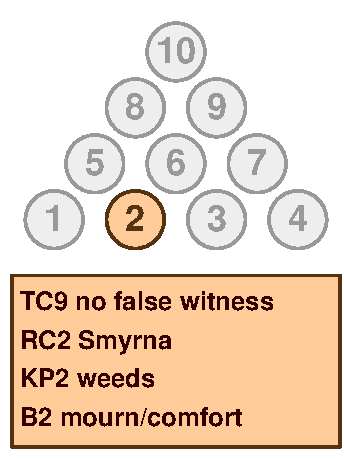
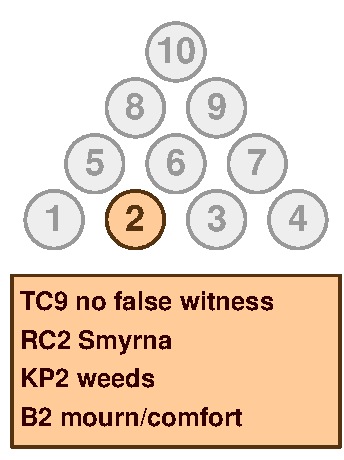
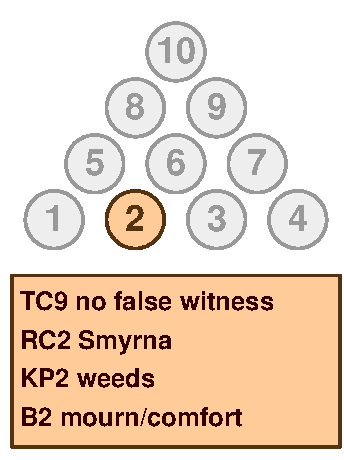
Node 2 is the node of false witness. This might be a good node for the "
false prophet".
118. Revelation 16:13 Beast
Revelation 16:13 And I saw three unclean spirits like frogs come out of the mouth of the dragon, and out of the mouth of the beast, and out of the mouth of the false prophet. [kjv]
και ειδον εκ του στοματος του δρακοντος και εκ του στοματος του θηριου και εκ του στοματος του ψευδοπροφητου πνευματα τρια ακαθαρτα ομοια βατραχοις ως βατραχοι [gnt]
119. Revelation 16:13 Dragon
Revelation 16:13 And I saw three unclean spirits like frogs come out of the mouth of the dragon, and out of the mouth of the beast, and out of the mouth of the false prophet. [kjv]
και ειδον εκ του στοματος του δρακοντος και εκ του στοματος του θηριου και εκ του στοματος του ψευδοπροφητου πνευματα τρια ακαθαρτα ομοια βατραχοις ως βατραχοι [gnt]
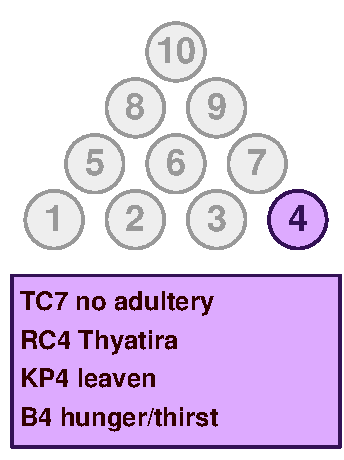
Node 4 is the node of adultery. This might be a good node for the "
dragon" that breaths "
fire" to "
scorch" as the "
sun".
Might this dragon be a fire-breathing dragon? Do such creatures exist? Perhaps Job can light the fire of imagination.
120. Job 41:1,19-20 Leviathan as a fire-breathing dragon
Job 41:1 Canst thou draw out leviathan with an hook? or his tongue with a cord which thou lettest down? [kjv]
αξεις δε δρακοντα εν αγκιστρω περιθησεις δε φορβεαν περι ρινα αυτου [lxx]
41:19 Out of his mouth go burning lamps, and sparks of fire leap out. [kjv]
εκ στοματος αυτου εκπορευονται λαμπαδες καιομεναι και διαρριπτουνται εσχαραι πυρος [lxx]
41:20 Out of his nostrils goeth smoke, as out of a seething pot or caldron. [kjv]
εκ μυκτηρων αυτου εκπορευεται καπνος καμινου καιομενης πυρι ανθρακων [lxx]
Another dinosaur-like creature, this one fire-breathing, is described as leviathan in the next chapter (verses omitted). This sounds like a fire-breathing
dragon or
dinosaur, a word coined in the 1800's.
121. Revelation 16:13
KJV: And I saw three unclean spirits like frogs come out of the mouth of the dragon, and out of the mouth of the beast, and out of the mouth of the false prophet.
Greek: και ειδον εκ του στοματος του δρακοντος και εκ του στοματος του θηριου και εκ του στοματος του ψευδοπροφητου πνευματα τρια ακαθαρτα ομοια βατραχοις ως βατραχοι
Latin: et vidi de ore draconis et de ore bestiae et de ore pseudoprophetae spiritus tres inmundos in modum ranarum
122. Revelation 16:14 Sixth vial continued - gather for battle
Revelation 16:14 For they are the spirits of devils, working miracles, which go forth unto the kings of the earth and of the whole world, to gather them to the battle of that great day of God Almighty. [kjv]
εισιν γαρ πνευματα δαιμονων δαιμονιων ποιουντα σημεια εκπορευεσθαι α εκπορευεται επι τους βασιλεις της γης και της οικουμενης ολης συναγαγειν αυτους εις τον πολεμον της ημερας εκεινης της μεγαλης του θεου του παντοκρατορος [gnt]
sunt enim spiritus daemoniorum facientes signa et procedunt ad reges totius terrae congregare illos in proelium ad diem magnum Dei omnipotentis [v]
… al erthe… [wy]
… Teufel… ganzen Kreis … [lu]
Interestingly, the two words that make up this one word appear together in only one verse in the Luther German. The German word "
Teufelskreis" has the connotation of a hopeless situation, such as a catch-22 situation, created by a series of inter-dependent events.
The Latin word
"totius terrae" ≈ "total earth". The Wycliffe follows the Latin and combines "
earth" and "
whole world".
123. Revelation 16:14
KJV: For they are the spirits of devils, working miracles, which go forth unto the kings of the earth and of the whole world, to gather them to the battle of that great day of God Almighty.
Greek: εισιν γαρ πνευματα δαιμονων δαιμονιων ποιουντα σημεια εκπορευεσθαι α εκπορευεται επι τους βασιλεις της γης και της οικουμενης ολης συναγαγειν αυτους εις τον πολεμον της ημερας εκεινης της μεγαλης του θεου του παντοκρατορος
Latin: sunt enim spiritus daemoniorum facientes signa et procedunt ad reges totius terrae congregare illos in proelium ad diem magnum Dei omnipotentis
Wycliffe: For thei ben spiritis of deuels, makynge signes, and thei gon forth to kingis of al erthe, to gadere hem in to batel, to the greet dai of almiyti God.
124. Revelation 16:14
KJV: For they are the spirits of devils, working miracles, which go forth unto the kings of the earth and of the whole world, to gather them to the battle of that great day of God Almighty.
Greek: εισιν γαρ πνευματα δαιμονων δαιμονιων ποιουντα σημειαεκπορευεσθαι α εκπορευεται επι τους βασιλεις της γης και της οικουμενης ολης συναγαγειν αυτους εις τον πολεμον της ημερας εκεινης της μεγαλης του θεου του παντοκρατορος
Latin: sunt enim spiritus daemoniorum facientes signa et procedunt ad reges totius terrae congregare illos in proelium ad diem magnum Dei omnipotentis
Wycliffe: For thei ben spiritis of deuels, makynge signes, and thei gon forth to kingis of al erthe, to gadere hem in to batel, to the greet dai of almiyti God.
Tyndale: For they are the sprettes of devyls workynge myracles to go out vnto the kynges of the erth and of the whole worlde to gaddre them to the battayle of that gret daye of God allmyghty.
Luther: Und sind Geister der Teufel; die tun Zeichen und gehen aus zu den Königen auf Erden und auf den ganzen Kreis der Welt, sie zu versammeln in den Streit auf jenen großen Tag Gottes, des Allmächtigen.
125. Revelation 16:15 Sixth vial continued
Revelation 16:15 Behold, I come as a thief. Blessed is he that watcheth, and keepeth his garments, lest he walk naked, and they see his shame. [kjv]
ιδου ερχομαι ως κλεπτης μακαριος ο γρηγορων και τηρων τα ιματια αυτου ινα μη γυμνος περιπατη και βλεπωσιν την ασχημοσυνην αυτου [gnt]
The Greek
"as" indicates an analogy is being made.
Will the day of the Lord will come as a
deceptive "thief" in the night?
126. Revelation 16:15
KJV: Behold, I come as a thief. Blessed is he that watcheth, and keepeth his garments, lest he walk naked, and they see his shame.
Greek: ιδου ερχομαι ως κλεπτης μακαριος ο γρηγορων και τηρων τα ιματια αυτου ινα μη γυμνος περιπατη και βλεπωσιν την ασχημοσυνην αυτου
127. Revelation 16:16 Armageddon
Revelation 16:16 And he gathered them together into a place called in the Hebrew tongue Armageddon. [kjv]
και συνηγαγεν αυτους εις τον τοπον τον καλουμενον εβραιστι αρμαγεδδων αρ μαγεδων [gnt]
The term Armageddon is known in modern times as a reference to the end of the world. Armageddon is in the Jezreel Valley and is near Nazareth.
Is "
Armageddon" a "
battle" as in one part of a "
war" or is "
Armageddon" a "
war" consisting of a series of battles? Most "
wars" consist of many "
battles". Does it matter?
128. Revelation 16:16
KJV: And he gathered them together into a place called in the Hebrew tongue Armageddon.
Greek: και συνηγαγεν αυτους εις τον τοπον τον καλουμενον εβραιστι αρμαγεδδων αρ μαγεδων
Latin: et congregavit illos in locum qui vocatur hebraice Hermagedon
Wycliffe: And he schal gadre hem in to a place, that is clepid in Ebreu Hermagedon.
129. Genesis 8:4 Battle at Armageddon
Genesis 8:4 And the ark rested in the seventh month, on the seventeenth day of the month, upon the mountains of Ararat. [kjv]
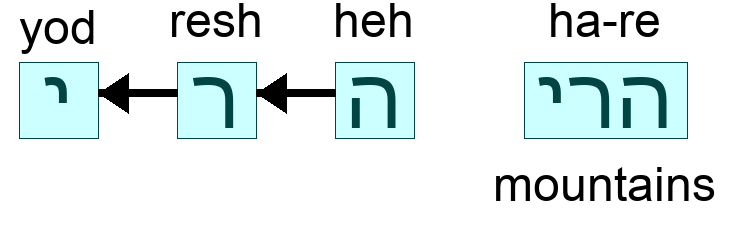
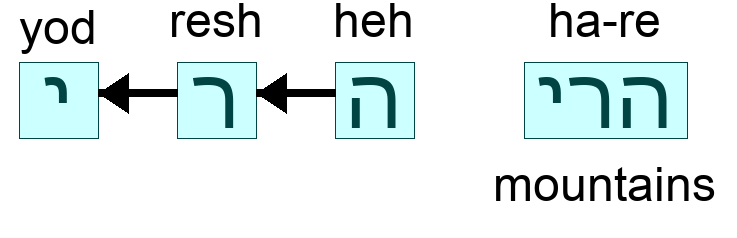
… הרי … [he]
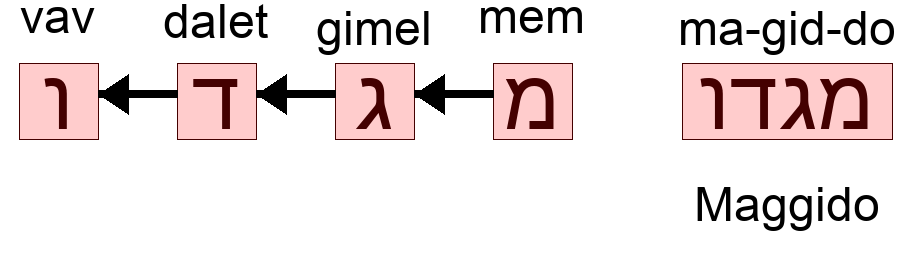
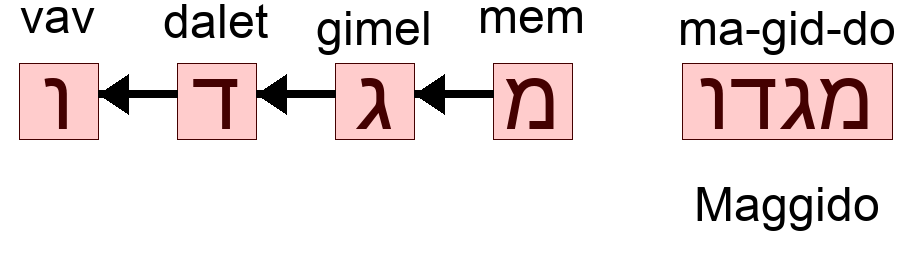
The battle of "
Armageddon" is from the Hebrew for
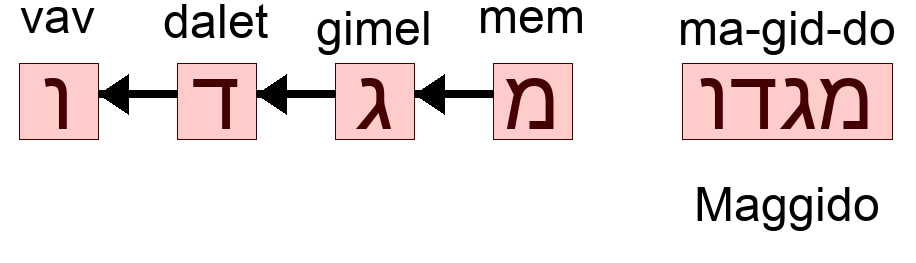
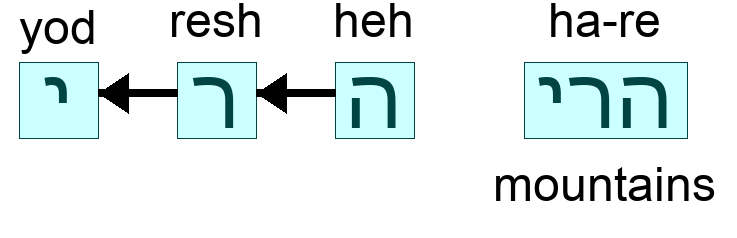
"Har" "
Megiddon", the
"Mountain" of "
Megiddo".
The mound (or city) of
Megiddo is, in Hebrew, "
Tel Megiddo". The
"mountain" is actually a
"mound" of a "
city" that has built up, layer by layer, such that it is referred to as a
"mountain".
Megiddo is found twelve times in the
OT (Old Testament) and once in Revelation.
130. Genesis 8:4
KJV: And the ark rested in the seventh month, on the seventeenth day of the month, upon the mountains of Ararat.
Hebrew: ותנח התבה בחדש השביעי בשבעה עשר יום לחדש על הרי אררט׃
Greek: και εκαθισεν η κιβωτος εν μηνι τω εβδομω εβδομη και εικαδι του μηνος επι τα ορη τα αραρατ
131. Revelation 16:16 Armageddon
Revelation 16:16 And he gathered them together into a place called in the Hebrew tongue Armageddon. [kjv]
και συνηγαγεν αυτους εις τον τοπον τον καλουμενον εβραιστι αρμαγεδδων αρ μαγεδων [gnt]
The term Armageddon is known in modern times as a reference to the end of the world. Armageddon is in the Jezreel Valley and is near Nazareth.
Is "
Armageddon" a "
battle" as in one part of a "
war" or is "
Armageddon" a "
war" consisting of a series of battles? Most "
wars" consist of many "
battles". Does it matter?
132. Genesis 8:4 Battle at Armageddon
Genesis 8:4 And the ark rested in the seventh month, on the seventeenth day of the month, upon the mountains of Ararat. [kjv]
… הרי … [he]
The battle of "
Armageddon" is from the Hebrew for
"Har" "
Megiddon", the
"Mountain" of "
Megiddo".
The mound (or city) of
Megiddo is, in Hebrew, "
Tel Megiddo". The
"mountain" is actually a
"mound" of a "
city" that has built up, layer by layer, such that it is referred to as a
"mountain".
Megiddo is found twelve times in the
OT and once in Revelation.
133. Revelation 16:16 Armageddon
Revelation 16:16 And he gathered them together into a place called in the Hebrew tongue Armageddon. [kjv]
και συνηγαγεν αυτους εις τον τοπον τον καλουμενον εβραιστι αρμαγεδδων αρ μαγεδων [gnt]
The term Armageddon is known in modern times as a reference to the end of the world. Armageddon is in the Jezreel Valley and is near Nazareth.
Is "
Armageddon" a "
battle" as in one part of a "
war" or is "
Armageddon" a "
war" consisting of a series of battles? Most "
wars" consist of many "
battles". Does it matter?
134. Genesis 8:4 Battle at Armageddon
Genesis 8:4 And the ark rested in the seventh month, on the seventeenth day of the month, upon the mountains of Ararat. [kjv]
… הרי … [he]
The battle of "
Armageddon" is from the Hebrew for
"Har" "
Megiddon", the
"Mountain" of "
Megiddo".
The mound (or city) of
Megiddo is, in Hebrew, "
Tel Megiddo". The
"mountain" is actually a
"mound" of a "
city" that has built up, layer by layer, such that it is referred to as a
"mountain".
Megiddo is found twelve times in the
OT and once in Revelation.
135. Battles
136. Joshua 12:21-22
Joshua 12:21 The king of Taanach, one; the king of Megiddo, one; [kjv]
מלך … מלך מגדו … [he]
βασιλεα καδης βασιλεα ταναχ [lxx]
rex Thenach … rex Mageddo … [v]
12:22 The king of Kedesh, one; the king of Jokneam of Carmel, one; [kjv]
מלך … מלך … [he]
βασιλεα μαγεδων βασιλεα ιεκοναμ του χερμελ [lxx]
rex Cades … rex Iachanaem Chermeli … [v]
The
LXX switches the verses from the Hebrew.
137. Joshua 12:21
KJV: The king of Taanach, one; the king of Megiddo, one;
Hebrew: מלך תענך אחד מלך מגדו אחד׃
Greek: βασιλεα καδης βασιλεα ταναχ
Latin: rex Thenach unus rex Mageddo unus
138. Joshua 12:22
KJV: The king of Kedesh, one; the king of Jokneam of Carmel, one;
Hebrew: מלך קדש אחד מלך יקנעם לכרמל אחד׃
Greek: βασιλεα μαγεδων βασιλεα ιεκοναμ του χερμελ
Latin: rex Cades unus rex Iachanaem Chermeli unus
139. Judges 5:19
Judges 5:19 The kings came and fought, then fought the kings of Canaan in Taanach by the waters of Megiddo; they took no gain of money. [kjv]
… מלכים … מגדו … [he]
ηλθον βασιλεις και παρεταξαντο τοτε επολεμησαν βασιλεις χανααν εν θενναχ επι υδατος μαγεδδω πλεονεξιαν αργυριου ουκ ελαβον [lxx]
… Mageddo … [v]
140. Judges 5:19
KJV: The kings came and fought, then fought the kings of Canaan in Taanach by the waters of Megiddo; they took no gain of money.
Hebrew: באו מלכים נלחמו אז נלחמו מלכי כנען בתענך על מי מגדו בצע כסף לא לקחו׃
Greek: ηλθον βασιλεις και παρεταξαντο τοτε επολεμησαν βασιλεις χανααν εν θενναχ επι υδατος μαγεδδω πλεονεξιαν αργυριου ουκ ελαβον
Latin: venerunt reges et pugnaverunt pugnaverunt reges Chanaan in Thanach iuxta aquas Mageddo et tamen nihil tulere praedantes
141. 2 Kings 23:29
2 Kings 23:29 In his days Pharaoh-nechoh king of Egypt went up against the king of Assyria to the river Euphrates: and king Josiah went against him; and he slew him at Megiddo, when he had seen him. [kjv]
εν δε ταις ημεραις αυτου ανεβη φαραω νεχαω βασιλευς αιγυπτου επι βασιλεα ασσυριων επι ποταμον ευφρατην και επορευθη ιωσιας εις απαντην αυτου και εθανατωσεν αυτον νεχαω εν μαγεδδω εν τω ιδειν αυτον [lxx]
… Mageddo … [v]
The Battle of Megiddo took place in 609 B.C. and is recorded in 2 Kings. King Josiah would not let the Egyptians pass and died in the battle.
142. 2 Kings 23:29
KJV: In his days Pharaoh-nechoh king of Egypt went up against the king of Assyria to the river Euphrates: and king Josiah went against him; and he slew him at Megiddo, when he had seen him.
Hebrew: בימיו עלה פרעה נכה מלך מצרים על מלך אשור על נהר פרת וילך המלך יאשיהו לקראתו וימיתהו במגדו כראתו אתו׃
Greek: εν δε ταις ημεραις αυτου ανεβη φαραω νεχαω βασιλευς αιγυπτου επι βασιλεα ασσυριων επι ποταμον ευφρατην και επορευθη ιωσιας εις απαντην αυτου και εθανατωσεν αυτον νεχαω εν μαγεδδω εν τω ιδειν αυτον
Latin: in diebus eius ascendit Pharao Necho rex Aegypti contra regem Assyriorum ad flumen Eufraten et abiit Iosias rex in occursum eius et occisus est in Mageddo cum vidisset eum
143. Carchemish
The battle of Megiddo led to the Battle of Carchemish in 605 B.C., the first large battle for which there are historical records. This battle ended the Assyrian Empire, which had a reprieve ofter the repentance recorded in the book of Jonah.
The Battle of Carchemish is mentioned in Jeremiah 46:1-12.
 |
Details are left as a future topic.
|
144. Megiddo
Napoleon visited this place and stated it would be a great place for a battle. He visited it in conjunction with his Egyptian campaign in which the
Rosetta Stone was discovered and later translated to rediscover the meaning of
Egyptian hieroglyphics.
145. Mesopotamia
The ancient Greek word
"Μεσοποταμία" ≈ "Mesopotamia" and means, literally, "
between the rivers", of the Tigris and Euphrates.
"μέσος" ≈ "middle, between" as in the (first part of the) English word "Mesopotamia".
"ποταμός" ≈ "river" and is the source of (the last part of) the English word "hippopotamus".
This is the location of Nineveh (Jonah), Babylon (Daniel) and the Ur of the Chaldea (Abraham). This ward appears
19 times in the
LXX and
GNT. Stephen, in his sermon in Acts, before being stoned, mentions Mesopotamia.
Note: The Potomac River between Maryland and Virginia is from an Algonquian Indian (Native American) name with various claimed meanings such as "
river of swans", "
place where people trade", etc.
146. Revelation 16:12 Euphrates river
Revelation 16:12 And the sixth angel poured out his vial upon the great river Euphrates; and the water thereof was dried up, that the way of the kings of the east might be prepared. [kjv]
και ο εκτος αγγελος εξεχεεν την φιαλην αυτου επι τον ποταμον τον μεγαν τον ευφρατην και εξηρανθη το υδωρ αυτου ινα ετοιμασθη η οδος των βασιλεων των απο ανατολων ανατολης ηλιου [gnt]
"Εὐφράτην" ≈ "Euphrates" (accusative) from "Εὐφράτης" ≈ "Euphrates" . The word appears borrowed, through Old Persian, from the Akkadian which meant "good" and "fruitful" as "parat" which is related to the Semitic Hebrew word "פךה" (parah) ≈ "fruitful". In Greek it is also a play on words with "good" and "father".
"ποταμός" ≈ "river" and is the source of (the last part of) the English word "hippopotamus".
[Parable of the Sower and the rocky dried up ground]
147. Luke 4:25,40 Sun and Elijah
Luke 4:25 But I tell you of a truth, many widows were in Israel in the days of Elias, when the heaven was shut up three years and six months, when great famine was throughout all the land; [kjv]
επ αληθειας δε λεγω υμιν πολλαι χηραι ησαν εν ταις ημεραις ηλιου εν τω ισραηλ οτε εκλεισθη ο ουρανος επι ετη τρια και μηνας εξ ως εγενετο λιμος μεγας επι πασαν την γην [gnt]
4:40 Now when the sun was setting, all they that had any sick with divers diseases brought them unto him; and he laid his hands on every one of them, and healed them. [kjv]
δυνοντος δε του ηλιου παντες απαντες οσοι ειχον ασθενουντας νοσοις ποικιλαις ηγαγον αυτους προς αυτον ο δε ενι εκαστω αυτων τας χειρας επιθεις εθεραπευσεν επιτιθεις εθεραπευεν αυτους [gnt]
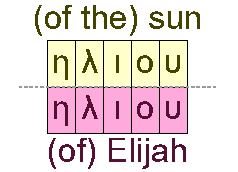
"ἡλίου" ≈ "(of the) sun".
"Ἠλίου" ≈ "(of) Elijah".
148. Matthew 11:12-14
Matthew 11:12 And from the days of John the Baptist until now the kingdom of heaven suffereth violence, and the violent take it by force. [kjv]
απο δε των ημερων ιωαννου του βαπτιστου εως αρτι η βασιλεια των ουρανων βιαζεται και βιασται αρπαζουσιν αυτην [gnt]
11:13 For all the prophets and the law prophesied until John. [kjv]
παντες γαρ οι προφηται και ο νομος εως ιωαννου προεφητευσαν επροφητευσαν [gnt]
11:14 And if ye will receive it, this is Elias, which was for to come. [kjv]
και ει θελετε δεξασθαι αυτος εστιν ηλιας ο μελλων ερχεσθαι [gnt]
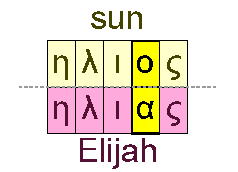
"ἥλιος" ≈ "sun, east, day, sunshine"
"Ἠλίας" ≈ "Elijah".
Since Jesus associates
John the Baptist with
Elijah, it is interesting to see how Jesus uses the word for "
sun".
Elijah was taken away in a chariot of fire.
149. Matthew 13:6
Matthew 13:6 And when the sun was up, they were scorched; and because they had no root, they withered away. [kjv]
ηλιου δε ανατειλαντος εκαυματισθη και δια το μη εχειν ριζαν εξηρανθη [gnt]
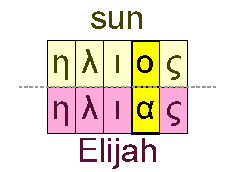
"ἥλιος" ≈ "sun, east, day, sunshine"
"Ἠλίας" ≈ "Elijah".
Since Jesus associates
John the Baptist with
Elijah, it is interesting to see how Jesus uses the word for "
sun".
Elijah was taken away in a chariot of fire.
Did
John the Baptist have anything to do with Herod being "
scorched" in any way (when he was up preaching to Herod)?
150. Matthew 13:5-6
Matthew 13:5 Some fell upon stony places, where they had not much earth: and forthwith they sprung up, because they had no deepness of earth: [kjv]
αλλα δε επεσεν επι τα πετρωδη οπου ουκ ειχεν γην πολλην και ευθεως εξανετειλεν δια το μη εχειν βαθος γης [gnt]
13:6 And when the sun was up, they were scorched; and because they had no root, they withered away. [kjv]
ηλιου δε ανατειλαντος εκαυματισθη και δια το μη εχειν ριζαν εξηρανθη [gnt]
What are the "stony places"?
What is the "deepness" of "earth"?
In the "
stony places" one might end up "
between a rock and a hard place". The corresponding Greek word is one of those things that cannot separate us from the love of Christ.
151. Strongs - dried up
152. Usage - dried up
- *G3583 *15 ξηραίνω (xay-rah'-ee-no) : from G3584; to desiccate; by implication, to shrivel, to mature:--dry up, pine away, be ripe, wither (away).
εξηρανθη *10
Matthew 13:6 ... they had no root, they withered away.
Matthew 21:19 ... And presently the fig tree withered away.
Matthew 21:20 ... How soon is the fig tree withered away!
Mark 4:6 ... it had no root, it withered away.
Mark 5:29 ... of her blood was dried up; and she felt in her body ...
Luke 8:6 ... a rock; and as soon as it was sprung up, it withered away, because it lacked moisture.
John 15:6 ... as a branch, and is withered; and men gather them, ...
1 Peter 1:24 ... the flower of grass. The grass withereth, and the flower thereof falleth away:
Revelation 14:15 ... for the harvest of the earth is ripe.
Revelation 16:12 ... and the water thereof was dried up, that the way of the kings ...
εξηραμμενην *2
Mark 3:1 ... a man there which had a withered hand.
Mark 11:20 ... as they passed by, they saw the fig tree dried up from the roots.
ξηραινεται
Mark 9:18 ... his teeth, and pineth away: and I spake to ...
εξηρανται
εξηρανεν
James 1:11 ... with a burning heat, but it withereth the grass, and the flower ...
153. Revelation 16:12 Rising sun in the east
Revelation 16:12 And the sixth angel poured out his vial upon the great river Euphrates; and the water thereof was dried up, that the way of the kings of the east might be prepared. [kjv]
και ο εκτος αγγελος εξεχεεν την φιαλην αυτου επι τον ποταμον τον μεγαν τον ευφρατην και εξηρανθη το υδωρ αυτου ινα ετοιμασθη η οδος των βασιλεων των απο ανατολων ανατολης ηλιου [gnt]
The
ancient Greek word
"ἀνατολή" ≈ "rising above the horizon, direction of sunrise, east" and similar related meanings. Since the
"sun" was not assumed, the word
"sun" was added, as in this verse, to make it more clear that
"east" is meant. The word comes from the following.
"ἀνα" ≈ "up, upwards" as in "born" from "above".
"τέλλω" ≈ "accomplish, perform, rise (of starts)". The noun form is "τέλος" ≈ "end, purpose, complete"
The
modern Greek word
"ανατολή" (a-na-to-LEE) ≈ "east, sunrise, dawn".
154. Revelation 16:12
Revelation 16:12 And the sixth angel poured out his vial upon the great river Euphrates; and the water thereof was dried up, that the way of the kings of the east might be prepared. [kjv]
και ο εκτος αγγελος εξεχεεν την φιαλην αυτου επι τον ποταμον τον μεγαν τον ευφρατην και εξηρανθη το υδωρ αυτου ινα ετοιμασθη η οδος των βασιλεων των απο ανατολων ανατολης ηλιου [gnt]
Had they assumed that they had
"good" "fruit" or perhaps a
"good" "
father"? Was their
"water" (of life) then
dried up? This node,
node 2, is the first step in the path. The next is
node 3 and the
"kingdom" of the
beast. The next is the
"sun" of adultery in
node 4. This is the progression of the "
scattered"
"path". One can
hop along this "
scattered"
"path" much as a "
frog" would
hop along a
"path".
The
ancient Greek word
"ὁδός" ≈ "way, path" as in the last part of the English words
"method" and
"exodus".
155. Revelation 16:12
Revelation 16:12 And the sixth angel poured out his vial upon the great river Euphrates; and the water thereof was dried up, that the way of the kings of the east might be prepared. [kjv]
και ο εκτος αγγελος εξεχεεν την φιαλην αυτου επι τον ποταμον τον μεγαν τον ευφρατην και εξηρανθη το υδωρ αυτου ινα ετοιμασθη η οδος των βασιλεων των απο ανατολων ανατολης ηλιου [gnt]
Where did the evil spirits
hop as
"frogs"? Did they go along the
scattered path?
False prophet to node 2 (lying node).
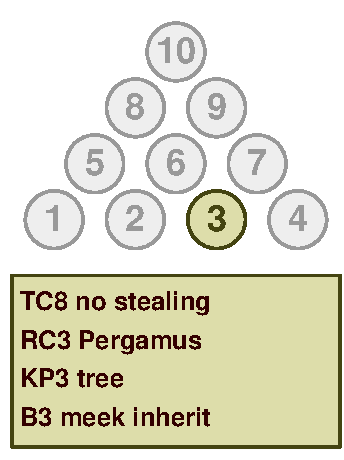
Beast to node 3 (throne of the beast, tree/oath node)
Dragon to node 4 (fire, adultery node).
156. Put it together
The great "
city" of the "
many" is of "
three" "
parts":
Good fruit and living water turned to (living) blood. Vial 3 and node 5 in the wide area.
Good fruit and dirty water turned to blood as of the dead. Vial 2 and node 6 in the wide area.
Good fruit (Euphrates river) water dried up. Vial 6 and node 2 and continued along the scattered path.
These three parts appear to include everyone.
157. Revelation 16:17-21 Seventh vial
Revelation 16:17 And the seventh angel poured out his vial into the air; and there came a great voice out of the temple of heaven, from the throne, saying, It is done. [kjv]
16:18 And there were voices, and thunders, and lightnings; and there was a great earthquake, such as was not since men were upon the earth, so mighty an earthquake, and so great. [kjv]
16:19 And the great city was divided into three parts, and the cities of the nations fell: and great Babylon came in remembrance before God, to give unto her the cup of the wine of the fierceness of his wrath. [kjv]
16:20 And every island fled away, and the mountains were not found. [kjv]
16:21 And there fell upon men a great hail out of heaven, every stone about the weight of a talent: and men blasphemed God because of the plague of the hail; for the plague thereof was exceeding great. [kjv]
158. Revelation 16:17 Seventh vial
Revelation 16:17 And the seventh angel poured out his vial into the air; and there came a great voice out of the temple of heaven, from the throne, saying, It is done. [kjv]
και ο εβδομος αγγελος εξεχεεν την φιαλην αυτου εις επι τον αερα και εξηλθεν φωνη μεγαλη απο εκ του ναου του ουρανου απο του θρονου λεγουσα γεγονεν [gnt]
Why is this
"vial" thrown into the
"air"?
"ἀέρα" ≈ "mist, haze, air, wind" (accusative singular) from "ἀήρ" ≈ "mist, haze, air, wind".
"ναου" ≈ "of the temple" from "ναός" ≈ "temple".
"θρόνους" ≈ "throne" (accusative) and "θρόνος" ≈ "throne".
"φωνή" ≈ "voice, sound".
159. John 19:30 It is finished
John 19:30 When Jesus therefore had received the vinegar, he said, It is finished: and he bowed his head, and gave up the ghost. [kjv]
οτε ουν ελαβεν το οξος ο ιησους ειπεν τετελεσται και κλινας την κεφαλην παρεδωκεν το πνευμα [gnt]
The ancient Greek word
"τέλειος" ≈ "purposed, complete, perfected" and
not the modern English idea of "
perfect" as "
without error".
At the
"end", Jesus says
"it is finished". The Greek word had a meaning of
"paid in full". In Revelation, Jesus shows up to redeem the deed that was paid on the cross.
160. Matthew 27:54
Matthew 27:54 Now when the centurion, and they that were with him, watching Jesus, saw the earthquake, and those things that were done, they feared greatly, saying, Truly this was the Son of God. [kjv]
161. Matthew 27:54
KJV: Now when the centurion, and they that were with him, watching Jesus, saw the earthquake, and those things that were done, they feared greatly, saying, Truly this was the Son of God.
Greek: ο δε εκατονταρχος και οι μετ αυτου τηρουντες τον ιησουν ιδοντες τον σεισμον και τα γενομενα γινομενα εφοβηθησαν σφοδρα λεγοντες αληθως θεου υιος ην ουτος
162. Matthew 28:2
Matthew 28:2 And, behold, there was a great earthquake: for the angel of the Lord descended from heaven, and came and rolled back the stone from the door, and sat upon it. [kjv]
και ιδου σεισμος εγενετο μεγας αγγελος γαρ κυριου καταβας εξ ουρανου και προσελθων απεκυλισεν τον λιθον απο της θυρας και εκαθητο επανω αυτου [gnt]
Since
"famines" and
"plagues" are play on words, perhaps
"earthquakes" is too. The
ancient Greek word
"σεισμός" ≈ "shaking, shock, earthquake" which is the source of the English word
"seismic".
The ancient Greek word
"σεισμοι" ≈ "earthquakes" is used
only in this exact form in the similar verses in Matthew, Mark and Luke. It is not in the
LXX.
Aristotle uses it when discussing literal earthquakes.
If Matthew had known the play on words with the genitive singular "
(of) heaven" he would not have used that word here.
163. Matthew 24:7 Earthquakes
Matthew 24:7 For nation shall rise against nation, and kingdom against kingdom: and there shall be famines, and pestilences, and earthquakes, in divers places. [kjv]
εγερθησεται γαρ εθνος επι εθνος και βασιλεια επι βασιλειαν και εσονται λιμοι και λοιμοι και σεισμοι κατα τοπους [gnt]
Since
"famines" and
"plagues" are play on words, perhaps
"earthquakes" is too. The
ancient Greek word
"σεισμός" ≈ "shaking, shock, earthquake" which is the source of the English word
"seismic".
The
ancient Greek word
"σεισμοι" ≈ "earthquakes" is used
only in this exact form in the similar verses in Matthew, Mark and Luke. It is not in the
LXX.
Aristotle uses it when discussing literal earthquakes.
164. Matthew 24:7
Matthew 24:7 For nation shall rise against nation, and kingdom against kingdom: and there shall be famines, and pestilences, and earthquakes, in divers places. [kjv]
εγερθησεται γαρ εθνος επι εθνος και βασιλεια επι βασιλειαν και εσονται λιμοι και λοιμοι και σεισμοι κατα τοπους [gnt]
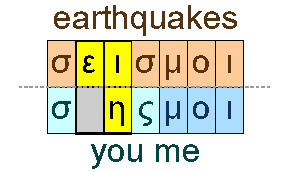
"σεισμοι" ≈ "earthquakes"
"σης" ≈ "your, yours" (genitive, used by disciples in verse 3) and "μοι" ≈ "me" (dative).
Can a
"yours" with respect to "me" (Jesus is speaking) adversarial relationship cause issues? How about
"earthquakes"?
Can the
"yours" and
"me" relationship cause spiritual
"earthquakes"?
165. Revelation 16:17
KJV: And the seventh angel poured out his vial into the air; and there came a great voice out of the temple of heaven, from the throne, saying, It is done.
Greek: και ο εβδομος αγγελος εξεχεεν την φιαλην αυτου εις επι τον αερα και εξηλθεν φωνη μεγαλη απο εκ του ναου του ουρανου απο του θρονου λεγουσα γεγονεν
166. Strongs - lightning
167. Usage - lightning
- *G796 *9 ἀστραπή (as-trap-ay') : from G797; lightning; by analogy, glare:--lightning, bright shining.
αστραπη *4
Matthew 24:27 For as the lightning cometh out of the east, ...
Matthew 28:3 His countenance was like lightning, and his raiment ...
Luke 11:36 ... full of light, as when the bright shining of a candle doth give thee light.
Luke 17:24 For as the lightning, that lighteneth out of the one ...
αστραπαι *4
Revelation 4:5 And out of the throne proceeded lightnings and thunderings and ...
Revelation 8:5 ... and thunderings, and lightnings, and an earthquake.
Revelation 11:19 ... testament: and there were lightnings, and voices, and ...
Revelation 16:18 ... and thunders, and lightnings; and there was a great ...
αστραπην
168. Revelation 16:18 Lightning
Revelation 16:18 And there were voices, and thunders, and lightnings; and there was a great earthquake, such as was not since men were upon the earth, so mighty an earthquake, and so great. [kjv]
και εγενοντο αστραπαι και φωναι και βρονται και αστραπαι και σεισμος εγενετο μεγας οιος ουκ εγενετο αφ ου οι ανθρωποι εγενοντο επι της γης τηλικουτος σεισμος ουτως μεγας [gnt]
The
ancient Greek word
"ἀστραπή" ≈ "lightning".
169. Matthew 24:27 Lightning
170. Luke 17:24
Luke 17:24 For as the lightning, that lighteneth out of the one part under heaven, shineth unto the other part under heaven; so shall also the Son of man be in his day. [kjv]
ωσπερ γαρ η αστραπη η αστραπτουσα εκ της υπ υπο τον ουρανον εις την υπ ουρανον λαμπει ουτως εσται και ο υιος του ανθρωπου εν τη ημερα αυτου [gnt]
The
ancient Greek word
"ἀστραπή" ≈ "lightning" and is used twice in the same verse.
Luke is much more general than Matthew.
171. Revelation 16:18 Voices
Revelation 16:18 And there were voices, and thunders, and lightnings; and there was a great earthquake, such as was not since men were upon the earth, so mighty an earthquake, and so great. [kjv]
και εγενοντο αστραπαι και φωναι και βρονται και αστραπαι και σεισμος εγενετο μεγας οιος ουκ εγενετο αφ ου οι ανθρωποι εγενοντο επι της γης τηλικουτος σεισμος ουτως μεγας [gnt]
The
ancient Greek word
"φωνή" ≈ "voice, sound" as in the first part of the English word
"phonograph".
172. Revelation 16:18 Thunders
Revelation 16:18 And there were voices, and thunders, and lightnings; and there was a great earthquake, such as was not since men were upon the earth, so mighty an earthquake, and so great. [kjv]
και εγενοντο αστραπαι και φωναι και βρονται και αστραπαι και σεισμος εγενετο μεγας οιος ουκ εγενετο αφ ου οι ανθρωποι εγενοντο επι της γης τηλικουτος σεισμος ουτως μεγας [gnt]
The
ancient Greek word
"βροντή" ≈ "thunder" and is from
"βρέμω" ≈ "roar, clash, shout" and is onomatopoeic in that it sounds like what it represents. The
modern Greek word
"βροντή" (vron-TEE) ≈ "thunder". The Greek word is the first part of the English word
"brontosaur".
173. Revelation 16:18 Earthquakes
Revelation 16:18 And there were voices, and thunders, and lightnings; and there was a great earthquake, such as was not since men were upon the earth, so mighty an earthquake, and so great. [kjv]
και εγενοντο αστραπαι και φωναι και βρονται και αστραπαι και σεισμος εγενετο μεγας οιος ουκ εγενετο αφ ου οι ανθρωποι εγενοντο επι της γης τηλικουτος σεισμος ουτως μεγας [gnt]
The
ancient Greek word
"σεισμός" ≈ "shaking, shock, earthquake" which is the source of the English word
"seismic".
174. Matthew 24:7 Earthquakes
Matthew 24:7 For nation shall rise against nation, and kingdom against kingdom: and there shall be famines, and pestilences, and earthquakes, in divers places. [kjv]
εγερθησεται γαρ εθνος επι εθνος και βασιλεια επι βασιλειαν και εσονται λιμοι και λοιμοι και σεισμοι κατα τοπους [gnt]
Since
"famines" and
"plagues" are play on words, perhaps
"earthquakes" is too. The
ancient Greek word
"σεισμός" ≈ "shaking, shock, earthquake" which is the source of the English word
"seismic".
The
ancient Greek word
"σεισμοι" ≈ "earthquakes" is used
only in this exact form in the similar verses in Matthew, Mark and Luke. It is not in the
LXX.
Aristotle uses it when discussing literal earthquakes.
175. Matthew 24:7
Matthew 24:7 For nation shall rise against nation, and kingdom against kingdom: and there shall be famines, and pestilences, and earthquakes, in divers places. [kjv]
εγερθησεται γαρ εθνος επι εθνος και βασιλεια επι βασιλειαν και εσονται λιμοι και λοιμοι και σεισμοι κατα τοπους [gnt]
"σεισμοι" ≈ "earthquakes"
"σης" ≈ "your, yours" (genitive, used by disciples in verse 3) and "μοι" ≈ "me" (dative).
Can a
"yours" with respect to "me" (Jesus is speaking) adversarial relationship cause issues? How about
"earthquakes"?
Can the
"yours" and
"me" relationship cause spiritual
"earthquakes"?
176. Revelation 16:18
KJV: And there were voices, and thunders, and lightnings; and there was a great earthquake, such as was not since men were upon the earth, so mighty an earthquake, and so great.
Greek: και εγενοντο αστραπαι και φωναι και βρονται και αστραπαι και σεισμος εγενετο μεγας οιος ουκ εγενετο αφ ου οι ανθρωποι εγενοντο επι της γης τηλικουτος σεισμος ουτως μεγας
177. Revelation 16:19 Three parts
Revelation 16:19 And the great city was divided into three parts, and the cities of the nations fell: and great Babylon came in remembrance before God, to give unto her the cup of the wine of the fierceness of his wrath. [kjv]
και εγενετο η πολις η μεγαλη εις τρια μερη και αι πολεις των εθνων επεσον επεσαν και βαβυλων η μεγαλη εμνησθη ενωπιον του θεου δουναι αυτη το ποτηριον του οινου του θυμου της οργης αυτου [gnt]
What are the "three" "parts"?
What is the connection with "Babylon"?
178. Revelation 16:19
KJV: And the great city was divided into three parts, and the cities of the nations fell: and great Babylon came in remembrance before God, to give unto her the cup of the wine of the fierceness of his wrath.
Greek: και εγενετο η πολις η μεγαλη εις τρια μερη και αι πολεις των εθνων επεσον επεσαν και βαβυλων η μεγαλη εμνησθη ενωπιον του θεου δουναι αυτη το ποτηριον του οινου του θυμου της οργης αυτου
179. Strongs - island
*G3520 *9 νῆσος (nay'-sos) : probably from the base of G3491; an island:--island, isle.
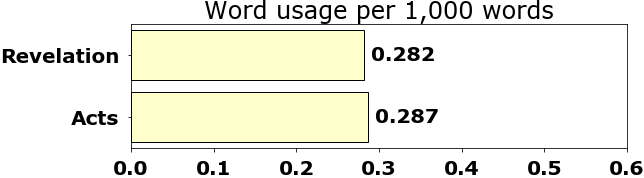 |
Words: νησον=2 νησος=3 νησου νησω=3
|
The
ancient Greek word
"νῆσος" ≈ "island".
180. Usage - island
- *G3520 *9 νῆσος (nay'-sos) : probably from the base of G3491; an island:--island, isle.
νησος *3
Acts 28:1 ... then they knew that the island was called Melita.
Revelation 6:14 ... every mountain and island were moved out of their places.
Revelation 16:20 And every island fled away, and the mountains ...
νησω *3
Acts 28:9 ... had diseases in the island, came, and were healed:
Acts 28:11 ... of Alexandria, which had wintered in the isle, whose sign was Castor and Pollux.
Revelation 1:9 ... Christ, was in the isle that is called Patmos, for ...
νησον *2
Acts 13:6 And when they had gone through the isle unto Paphos, they found ...
Acts 27:26 ... be cast upon a certain island.
νησου
Acts 28:7 ... possessions of the chief man of the island, whose name was Publius; who ...
181. Revelation 16:20
Revelation 16:20 And every island fled away, and the mountains were not found. [kjv]
και πασα νησος εφυγεν και ορη ουχ ευρεθησαν [gnt]
Why is "
island"
singular but "
mountains" is
plural?
"νῆσος" ≈ "island".
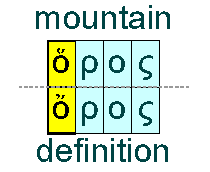
(smooth breathing) "ὄρος" ≈ "mountain".
(rough breathing) "ὅρος" ≈ "boundary, definition".
Could the appropriate
definitions be found? The Greek word for
definition and
mountain are the same.
Remember Matthew 5:14: The
many on a
mountain cannot be
hid (in a bad sense), presumably because the
mountain is
already hidden (e.g., under the water).
182. Strongs - region, boundary
183. Usage - region, boundary
- *G3725 *12 ὅριον (hor'-ee-on) : neuter of a derivative of an apparently primary horos (a bound or limit); a boundary-line, i.e. (by implication) a frontier (region):--border, coast.
- οριων *6
- Matthew 8:34 ... he would depart out of their coasts.
- Matthew 15:22 ... came out of the same coasts, and cried unto him, ...
- Mark 5:17 ... to depart out of their coasts.
- Mark 7:31 ... departing from the coasts of Tyre and Sidon, he came unto the sea of Galilee, through the midst of the coasts of Decapolis.
- Acts 13:50 ... them out of their coasts.
- ορια *4
- Matthew 15:39 ... and came into the coasts of Magdala.
- Matthew 19:1 ... and came into the coasts of Judaea beyond Jordan;
- Mark 7:24 And from thence he arose, and went into the borders ...
- Mark 10:1 ... from thence, and cometh into the coasts of Judæa by the farther side ...
- οριοις *2
- Matthew 2:16 ... and in all the coasts thereof, from two years old ...
- Matthew 4:13 ... which is upon the sea coast, in the borders of Zabulon and Nephthalim:
184. Revelation 6:13 Star falling
Revelation 6:13 And the stars of heaven fell unto the earth, even as a fig tree casteth her untimely figs, when she is shaken of a mighty wind. [kjv]
και οι αστερες του ουρανου επεσαν εις την γην ως συκη βαλλει τους ολυνθους αυτης υπο μεγαλου ανεμου μεγαλου σειομενη [gnt]
Compare the "
stars" of "
heaven" falling with "
manna" falling from "
heaven".
The children of Israel in the "
desert" wanted more than
"manna" as the
"bread" of "
life". They wanted
"birds". Later, they wanted a "
king". Today, many churches want a "
pastor". Discuss the similarities and differences.
185. Revelation 6:13 Earth
Revelation 6:13 And the stars of heaven fell unto the earth, even as a fig tree casteth her untimely figs, when she is shaken of a mighty wind. [kjv]
και οι αστερες του ουρανου επεσαν εις την γην ως συκη βαλλει τους ολυνθους αυτης υπο μεγαλου ανεμου μεγαλου σειομενη [gnt]
The Greek word for "
earth" can be "
sand".
What "
falls" "
into" or "
against" "
earth" or "
sand"?
186. Revelation 16:20
KJV: And every island fled away, and the mountains were not found.
Greek: και πασα νησος εφυγεν και ορη ουχ ευρεθησαν
187. Revelation 16:21
Revelation 16:21 And there fell upon men a great hail out of heaven, every stone about the weight of a talent: and men blasphemed God because of the plague of the hail; for the plague thereof was exceeding great. [kjv]
και χαλαζα μεγαλη ως ταλαντιαια καταβαινει εκ του ουρανου επι τους ανθρωπους και εβλασφημησαν οι ανθρωποι τον θεον εκ της πληγης της χαλαζης οτι μεγαλη εστιν η πληγη αυτης σφοδρα [gnt]
The
ancient Greek word
"πληγή" ≈ "stroke from a sword or pike" but is translated as
"plague" in the
GNT (only in Revelation) and is the source of the English word
"plague".
188. Proverbs 20:30
Proverbs 20:30 The blueness of a wound cleanseth away evil: so do stripes the inward parts of the belly. [kjv]
υπωπια και συντριμματα συναντα κακοις πληγαι δε εις ταμιεια κοιλιας [lxx]
The ancient Greek word
"πληγή" ≈ "stroke from a sword or pike" but is translated as
"plague" in the
GNT (only in Revelation) and is the source of the English word
"plague".
 |
Details are left as a future topic.
|
This is in contrast to the ancient Greek word
"βολή" ≈ "stroke from an arrow or missile".
189. Revelation 16:21
KJV: And there fell upon men a great hail out of heaven, every stone about the weight of a talent: and men blasphemed God because of the plague of the hail; for the plague thereof was exceeding great.
Greek: και χαλαζα μεγαλη ως ταλαντιαια καταβαινει εκ του ουρανου επι τους ανθρωπους και εβλασφημησαν οι ανθρωποι τον θεον εκ της πληγης της χαλαζης οτι μεγαλη εστιν η πληγη αυτης σφοδρα
190. Revelation 16:17
Revelation 16:17 And the seventh angel poured out his vial into the air; and there came a great voice out of the temple of heaven, from the throne, saying, It is done. [kjv]
και ο εβδομος αγγελος εξεχεεν την φιαλην αυτου εις επι τον αερα και εξηλθεν φωνη μεγαλη απο εκ του ναου του ουρανου απο του θρονου λεγουσα γεγονεν [gnt]
Why is
"air" mentioned?
191. Revelation 16:17
Revelation 16:17 And the seventh angel poured out his vial into the air; and there came a great voice out of the temple of heaven, from the throne, saying, It is done. [kjv]
και ο εβδομος αγγελος εξεχεεν την φιαλην αυτου εις επι τον αερα και εξηλθεν φωνη μεγαλη απο εκ του ναου του ουρανου απο του θρονου λεγουσα γεγονεν [gnt]
Were there
earthquakes and
lightnings at the crucifixion and resurrection? What are the three parts of the
many or
city?
To living water path/part to node 5 (wide area, sheep).
To dead water part/path to node 6 (wide area, goats).
To dried-up water part/path to node 2 (scattered path, birds, etc.).
Does this include everyone? Are there any left out?
192. Revelation 16:17
Revelation 16:17 And the seventh angel poured out his vial into the air; and there came a great voice out of the temple of heaven, from the throne, saying, It is done. [kjv]
και ο εβδομος αγγελος εξεχεεν την φιαλην αυτου εις επι τον αερα και εξηλθεν φωνη μεγαλη απο εκ του ναου του ουρανου απο του θρονου λεγουσα γεγονεν [gnt]
Did the islands (individuals) flee away to the
wide area,
node 5 and
node 6?
Were the mountains (definitions) not found as they got lost on the
scattered path?
Did men
blaspheme (perhaps as a false teacher) because of the
raca hail that impacted their
millstone deception/entrapments, the
talent deception/entrapment?
193. Revelation 17:1-18
Revelation 17:1 And there came one of the seven angels which had the seven vials, and talked with me, saying unto me, Come hither; I will shew unto thee the judgment of the great whore that sitteth upon many waters: [kjv]
και ηλθεν εις εκ των επτα αγγελων των εχοντων τας επτα φιαλας και ελαλησεν μετ εμου λεγων μοι δευρο δειξω σοι το κριμα της πορνης της μεγαλης της καθημενης επι των υδατων των πολλων [gnt]
The "
sea" or "
many" "
waters" is the "
sea" of "
humanity" and often spoken of as "
ethnics" or "
heathen".
To "
sit" is to "
sit" as on a "
chair" or "
throne".
194. Model of the kingdoms and births
John 3:3 Jesus answered and said unto him, Verily, verily, I say unto thee, Except a man be born again, he can not see the kingdom of God. [kjv]
απεκριθη ο ιησους και ειπεν αυτω αμην αμην λεγω σοι εαν μη τις γεννηθη ανωθεν ου δυναται ιδειν την βασιλειαν του θεου [gnt]
Four parts:
"earth",
"air",
"fire",
"water".
The "
ask", "
seek", "
knock" sequence is part of the "
flame" and "
sword" progression.
195. Details
Put the Kingdom of God outside of space and time and (since the fall) includes the "tree of life". The creation is inside space and time.
The "flaming sword" both protects and keeps the way open.
The "Kingdom of Earth" is for those "of the world".
The "Kingdom of Heaven" is for those "in the world".
The "flaming sword" is provided by Jesus who "throws" the "sword". The Holy Spirit provides the "flame".
Birth#3 is the regeneration or in-processing into the Kingdom of God.
196. Four Greek fundamental elements
Aristotle relates the following.
English: ... for Empedicles says that fire, water, air and earth are four elements and are simple ... Loeb #400, p. 165.
Greek: ... περὶ Ἐμπεδοκλέα ὁ μὲν γάρ φησι πῦρ καὶ ὕδωρ καὶ ἀέρα καὶ γῆν στοιχεῖα τέσσαρα καὶ ἁπλᾶ εἶναι ... Aristotle, Coming to be, 314a.
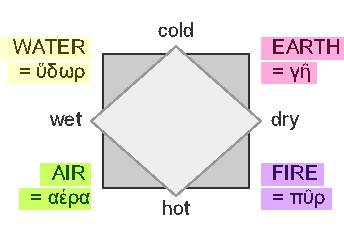 |
|
"water" as wet and cold.
"earth" as cold and dry.
"air" as hot and wet.
"fire" hot and dry.
|
197. Four elements and vials
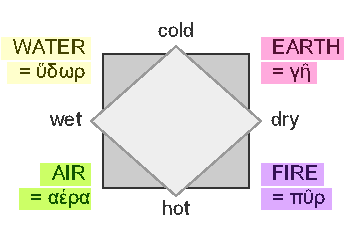
"water"
wet and cold
|
"earth"
cold and dry
|
"air"
hot and wet
|
"fire"
hot and dry
|
|
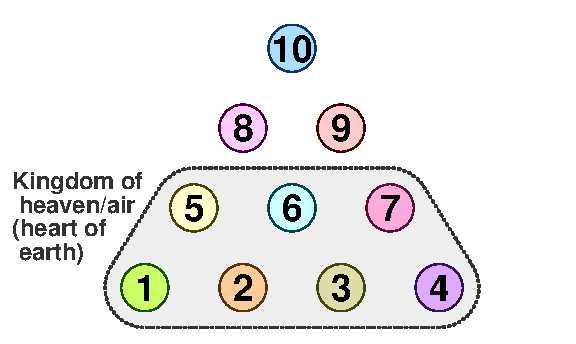
Vial 3 at
node 5: "water".
|
Vial 1 at
node 7: "earth".
|
Vial 7 at
node 1: "air".
|
Vial 4 at
node 4: "fire".
|
|
Is this correspondence a
coincidence?
What a strange idea for the Greek philosophers to develop.
198. End of page





























































 The ancient Greek word "πόνος" ≈ "work, toil" and is cognate with the ancient Greek word "πένομαι" ≈ "to exert oneself". The modern Greek word "πόνος" (PO-nos) ≈ "pain, ache".
 The modern Greek word "παράπονο" (pa-RA-po-no) ≈ "whine, complaint" and which means, literally, "beyond the pain".