44. Matthew 9:5 Sins and healing
Matthew 9:5 For whether is easier, to say, Thy sins be forgiven thee; or to say, Arise, and walk? [kjv]
τι γαρ εστιν ευκοπωτερον ειπειν αφεωνται σοι αφιενται σου αι αμαρτιαι η ειπειν εγειραι εγειρε και περιπατει [gnt]
Paraphrase:
Which is the better toil, to say your sins are forgiven or to say arise and walk?
Only one way has a
decision procedure to confirm that it has been done. How should "
better" be defined? Which of the following do most churches do?
What do most churches do?
☐ Get up, wave their hands, say your sins are forgiven, and sit down.
☐ Help people get up and help them in to walk in righteousness.
Which is
easier?
Which is the better toil? Which is more often than not actually done?
45. Which of the two is better
Matthew 9:5 For whether is easier, to say, Thy sins be forgiven thee; or to say, Arise, and walk? [kjv]
τι γαρ εστιν ευκοπωτερον ειπειν αφεωνται σοι αφιενται σου αι αμαρτιαι η ειπειν εγειραι εγειρε και περιπατει [gnt]
Mark 2:9 Whether is it easier to say to the sick of the palsy, Thy sins be forgiven thee; or to say, Arise, and take up thy bed, and walk? [kjv]
τι εστιν ευκοπωτερον ειπειν τω παραλυτικω αφεωνται σοι αφιενται σου αι αμαρτιαι η ειπειν εγειραι εγειρου και αρον σου τον κραββατον κραβαττον σου και περιπατει [gnt]
Luke 5:23 Whether is easier, to say, Thy sins be forgiven thee; or to say, Rise up and walk? [kjv]
τι εστιν ευκοπωτερον ειπειν αφεωνται σοι αι αμαρτιαι σου η ειπειν εγειραι εγειρε και περιπατει [gnt]
Which of the following make more sense?
Which is easier?
Which is a good or better toil or work?
46. Matthew 9:5
KJV: For whether is easier, to say, Thy sins be forgiven thee; or to say, Arise, and walk?
Greek: τι γαρ εστιν ευκοπωτερον ειπειν αφεωνται σοι αφιενται σου αι αμαρτιαι η ειπειν εγειραι εγειρε και περιπατει
47. Mark 2:9
KJV: Whether is it easier to say to the sick of the palsy, Thy sins be forgiven thee; or to say, Arise, and take up thy bed, and walk?
Greek: τι εστιν ευκοπωτερον ειπειν τω παραλυτικω αφεωνται σοι αφιενται σου αι αμαρτιαι η ειπειν εγειραι εγειρου και αρον σου τον κραββατον κραβαττον σου και περιπατει
48. Luke 5:23
KJV: Whether is easier, to say, Thy sins be forgiven thee; or to say, Rise up and walk?
Greek: τι εστιν ευκοπωτερον ειπειν αφεωνται σοι αι αμαρτιαι σου η ειπειν εγειραι εγειρε και περιπατει
49. Easier fashion
50. Easier or better
Matthew 9:5 For whether is easier, to say, Thy sins be forgiven thee; or to say, Arise, and walk? [kjv]
τι γαρ εστιν ευκοπωτερον ειπειν αφεωνται σοι αφιενται σου αι αμαρτιαι η ειπειν εγειραι εγειρε και περιπατει [gnt]
The "
better toil" might be to help those who cannot walk to walk.
Discuss: Is just "
saying" something a toil? There is a saying that "
talk is cheap". Does the church do the "
better toil" in helping people to walk who cannot walk - whatever walk may mean? Does the church say "
your sins are forgiven" as the easier of the options? To whom is it
"easier"? To whom is it "
better".
James 4:17 Therefore to him that knoweth to do good, and doeth it not, to him it is sin. [kjv]
51. James 4:17
KJV: Therefore to him that knoweth to do good, and doeth it not, to him it is sin.
Greek: ειδοτι ουν καλον ποιειν και μη ποιουντι αμαρτια αυτω εστιν
52. Acts 3:6-7 Gold and silver
After the resurrection, a beggar in the temple expects money from Peter.
Acts 3:6 Then Peter said, Silver and gold have I none; but such as I have give I thee: In the name of Jesus Christ of Nazareth rise up and walk. [kjv]
ειπεν δε πετρος αργυριον και χρυσιον ουχ υπαρχει μοι ο δε εχω τουτο σοι διδωμι εν τω ονοματι ιησου χριστου του ναζωραιου εγειραι και περιπατει [gnt]
… surge … ambula [v]
3:7 And he took him by the right hand, and lifted him up: and immediately his feet and ancle bones received strength. [kjv]
Folklore story: (paraphrased):
Pope to Francis of Assisi, showing him a treasure of gold and silver: "They can no longer say gold and silver have we none.".
Francis of Assisi to Pope: "But now you cannot say, in the name of Jesus get up and walk.".
The
KJV uses
"have I none" where the Greek is
"does not exist".
53. Double meanings
54. Camels and needles
The following are statements (Latin), not questions (Greek), and assume one of the two options provided, using "
than" instead of
"or". The Greek has the
"or".
Matthew 19:24 And again I say unto you, It is easier for a camel to go through the eye of a needle, than for a rich man to enter into the kingdom of God. [kjv]
παλιν δε λεγω υμιν ευκοπωτερον εστιν καμηλον δια τρυπηματος τρηματος ραφιδος διελθειν εισελθειν η πλουσιον εις την βασιλειαν του θεου εισελθειν [gnt]
Mark 10:25 It is easier for a camel to go through the eye of a needle, than for a rich man to enter into the kingdom of God. [kjv]
ευκοπωτερον εστιν καμηλον δια της τρυμαλιας της ραφιδος εισελθειν διελθειν η πλουσιον εις την βασιλειαν του θεου εισελθειν [gnt]
Luke 18:25 For it is easier for a camel to go through a needle's eye, than for a rich man to enter into the kingdom of God. [kjv]
ευκοπωτερον γαρ εστιν καμηλον δια τρυμαλιας ραφιδος τρηματος βελονης εισελθειν η πλουσιον εις την βασιλειαν του θεου εισελθειν [gnt]
55. Latin
The Latin translation appears to start the word slide. In this case, it is no longer a
"whether" between two alternatives but the decision has been made in the Latin translation that has not been made in the Greek.
Matthaeus 19:24 … facilius … quam … [v]
Marcum 10:25 facilius … quam … [v]
Lucam 18:25 facilius … quam … [v]
The Latin word "facilius" ≈ "easier".
The Latin word "quam" ≈ "than".
Thus, the Latin Vulgate appears to start the word slide from the Greek question "
Which is better, this or that?" to the Latin (and later English) statement "
It is easier for this than that."
56. Camels and needles
Luke 18:25 For it is easier for a camel to go through a needle's eye, than for a rich man to enter into the kingdom of God. [kjv]
ευκοπωτερον γαρ εστιν καμηλον δια τρυμαλιας ραφιδος τρηματος βελονης εισελθειν η πλουσιον εις την βασιλειαν του θεου εισελθειν [gnt]
Matthew 19:24 And again I say unto you, It is easier for a camel to go through the eye of a needle, than for a rich man to enter into the kingdom of God. [kjv]
παλιν δε λεγω υμιν ευκοπωτερον εστιν καμηλον δια τρυπηματος τρηματος ραφιδος διελθειν εισελθειν η πλουσιον εις την βασιλειαν του θεου εισελθειν [gnt]
The Latin changes the Greek question
"which is a better toil" to a
statement! Matthew uses
"kingdom" of
"God" rather than
"kingdom" of
"heaven/air". Is there a difference? If so, is it important?
Paraphrase:
Which is a better toil or work, to get a camel through the eye of a needle or a rich man into the kingdom of God?
Discuss: Compare and contrast the
KJV statements about a rich man in Luke 18:25 with Jesus and Zacchaeus, a rich man, in Luke 19 (start of the next chapter). Does Zacchaeus keep all or some or none of his wealth?
57. More discussion
Luke 18:25 For it is easier for a camel to go through a needle's eye, than for a rich man to enter into the kingdom of God. [kjv]
ευκοπωτερον γαρ εστιν καμηλον δια τρυμαλιας ραφιδος τρηματος βελονης εισελθειν η πλουσιον εις την βασιλειαν του θεου εισελθειν [gnt]
Possible paraphrase:
Which is a better toil or work, to get a camel through the eye of a needle or a rich man into the kingdom of God?
Discuss:
Is there a conflict of interest in having the rich turn over their wealth to the church (or others) using this verse?
Do those who turn over their wealth to the church ever have excessive (and not always good) influence on that church?
Provide an example or analogy of a church (or person) trying to get a camel through the eye of a needle.
58. Mark 10:25
KJV: It is easier for a camel to go through the eye of a needle, than for a rich man to enter into the kingdom of God.
Greek: ευκοπωτερον εστιν καμηλον δια της τρυμαλιας της ραφιδος εισελθειν διελθειν η πλουσιον εις την βασιλειαν του θεου εισελθειν
Latin: facilius est camelum per foramen acus transire quam divitem intrare in regnum Dei
59. Difficult and easy
Although the Greek word for "
easy" does not appear in the verse where the
KJV translates "
easy", the Greek word for "
difficult" appears only seven times but has an interesting etymology. That word appears in a related verse previous to the verses about a camel and a rich man.
The ancient Greek word
"δύσκολος" ≈ "annoyed, grumpy, bad-tempered" with original meaning from "
hard to satisfy with food" and comes from two Greek words.
"δυσ" ≈ "bad, hard, unfortunate".
"κολος" ≈ "keeper, tender, watcher".
The meaning of "
difficult" is only in the
GNT which follows to modern Greek.
The opposite word is
"εὔκολος" ≈ "easy". Note the same suffix but the prefix "
bad" (difficult) and prefix "
good" (easy).
60. Riches and the kingdom
Matthew 19:23 … That a rich man shall hardly enter into the kingdom of heaven. [kjv]
ο δε ιησους ειπεν τοις μαθηταις αυτου αμην λεγω υμιν οτι δυσκολως πλουσιος δυσκολως εισελευσεται εις την βασιλειαν των ουρανων [gnt]
Mark 10:23 … How hardly shall they that have riches enter into the kingdom of God ! [kjv]
και περιβλεψαμενος ο ιησους λεγει τοις μαθηταις αυτου πως δυσκολως οι τα χρηματα εχοντες εις την βασιλειαν του θεου εισελευσονται [gnt]
10:24 … how hard is it for them that trust in riches to enter into the kingdom of God ! [kjv]
οι δε μαθηται εθαμβουντο επι τοις λογοις αυτου ο δε ιησους παλιν αποκριθεις λεγει αυτοις τεκνα πως δυσκολον εστιν τους πεποιθοτας επι τοις χρημασιν εις την βασιλειαν του θεου εισελθειν [gnt]
Luke 18:24 … How hardly shall they that have riches enter into the kingdom of God ! [kjv]
ιδων δε αυτον ο ιησους περιλυπον γενομενον ειπεν πως δυσκολως οι τα χρηματα εχοντες εισελευσονται εις την βασιλειαν του θεου εισπορευονται [gnt]
Jesus is speaking in all the verses.
61. Discussion
Consider the above verses and discuss the following.
How hard is it for the "rich" to enter the kingdom?
How hard is it for the "poor" to enter the kingdom?
How hard is it for those who are neither "rich" nor "poor" to enter the kingdom?
What is the difference between the following?
Something that is easy or hard (difficult).
Something that is possible or impossible.
Is there a middle ground for each?
62. Paraphrase
Matthew 19:23 … That a rich man shall hardly enter into the kingdom of heaven. [kjv]
ο δε ιησους ειπεν τοις μαθηταις αυτου αμην λεγω υμιν οτι δυσκολως πλουσιος δυσκολως εισελευσεται εις την βασιλειαν των ουρανων [gnt]
What happens if the original meaning of the words are used?
Paraphrase:
A man with many possessions enters the kingdom of heaven in a bad-tempered or grumpy manner (since all those possessions are left behind and now worthless). Whether one gets into the kingdom of heaven is dependent on other factors (e.g., how the possessions were obtained, etc.).
Contrast this paraphrase with the parable of the workers at different times of the day. The ones who started early are "
grumpy" and "
annoyed" that the ones starting later in the day get the same reward.
63. Annoyed and distressed
Matthew 19:22 But when the young man heard that saying, he went away sorrowful: for he had great possessions. [kjv]
ακουσας δε ο νεανισκος τον λογον τουτον απηλθεν λυπουμενος ην γαρ εχων κτηματα πολλα [gnt]
… tristis … possessiones [v]
Mark 10:22 And he was sad at that saying, and went away grieved: for he had great possessions. [kjv]
ο δε στυγνασας επι τω λογω απηλθεν λυπουμενος ην γαρ εχων κτηματα πολλα [gnt]
… maerens … possessiones … [v]
The ancient Greek word
"λῡ́πη" ≈ "annoyance, distress, anguish".
Paraphrase:
The young man went away annoyed/distressed for he had many possessions.
Discuss: Did the young man want to let go of his possessions? Would he be "
grumpy" about this? Jesus said that ridding himself of his possessions and following Jesus would result in "
treasure in heaven". Can one get to heaven without transferring possessions on earth to treasure in heaven?
64. Latin
Matthew 19:22 But when the young man heard that saying, he went away sorrowful: for he had great possessions. [kjv]
ακουσας δε ο νεανισκος τον λογον τουτον απηλθεν λυπουμενος ην γαρ εχων κτηματα πολλα [gnt]
… adulescens … tristis … possessiones [v]
Mark 10:22 And he was sad at that saying, and went away grieved: for he had great possessions. [kjv]
ο δε στυγνασας επι τω λογω απηλθεν λυπουμενος ην γαρ εχων κτηματα πολλα [gnt]
… maerens … possessiones … [v]
The ancient Greek word
"λῡ́πη" ≈ "annoyance, distress, anguish" while the Latin word
"tristis" ≈ "sad, sorrowful" and
"maereo" ≈ "mournful, sad" and start the word slide that is found in English.
65. Strongs - annoyed
*G3076 *26 λυπέω (loo-peh'-o) : from G3077; to distress; reflexively or passively, to be sad:--cause grief, grieve, be in heaviness, (be) sorrow(-ful), be (make) sorry.
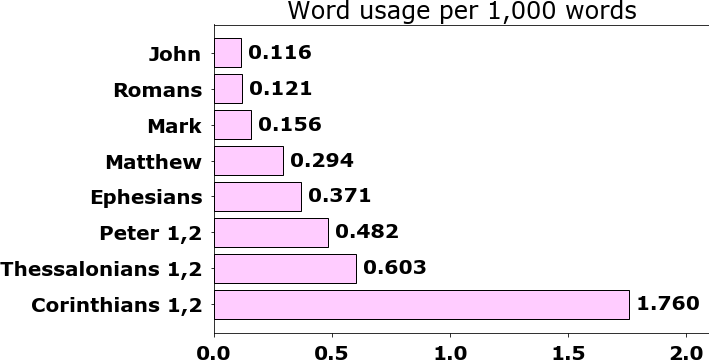 |
Words: ελυπηθη ελυπηθησαν=2 ελυπηθητε=3 ελυπησα ελυπησεν λελυπηκεν=2 λυπεισθαι=2 λυπειται λυπειτε λυπηθεις λυπηθεντες λυπηθηναι λυπηθησεσθε λυπηθητε λυπησθε λυπουμενοι=2 λυπουμενος=3 λυπω
|
The
ancient Greek word
"λύπη" ≈ "annoyance, distress, anguish, pain". The
CGL (Cambridge Greek Lexicon) does
not list
"sorrow" or
"sadness" as part of the definition. The
modern Greek word
"λύπη" (LEE-pee) ≈ "sorrow, sadness, suffering". It appears that the modern meaning comes from the meaning assumed in the
GNT from Latin, etc.
This word appears to be mistranslated (to support the desired meaning in the verses on riches) in many verses in the
GNT.
Appears 9 times in 1 Corinthians, 1 time in 1 Thessalonians, 1 time in 1 Peter.
 |
Details are left as a future topic.
|
66. Luke
Luke 18:23 And when he heard this, he was very sorrowful: for he was very rich. [kjv]
ο δε ακουσας ταυτα περιλυπος εγενετο εγενηθη ην γαρ πλουσιος σφοδρα [gnt]
… contristatus … dives … [v]
Luke changes the words for both "
sorrowful" and "
possessions". This appears to better fit in with the story of Zacchaeus at the start of the next chapter. Zacchaeus is described as being very "
rich" using the same word.
Was Zacchaeus "
sad" or "
sorrowful" at having to restore "
money" that he had falsely (through accusations) attained? Did Zacchaeus need to get rid of all of his "
wealth" or "
possessions"?
67. Young man
Matthew 19:22 But when the young man heard that saying, he went away sorrowful: for he had great possessions. [kjv]
ακουσας δε ο νεανισκος τον λογον τουτον απηλθεν λυπουμενος ην γαρ εχων κτηματα πολλα [gnt]
Mark 10:17 … there came one running, and kneeled to him, and asked him, Good Master, what shall I do that I may inherit eternal life? [kjv]
και εκπορευομενου αυτου εις οδον προσδραμων εις και γονυπετησας αυτον επηρωτα αυτον διδασκαλε αγαθε τι ποιησω ινα ζωην αιωνιον κληρονομησω [gnt]
Luke 18:18 And a certain ruler asked him, saying, Good Master, what shall I do to inherit eternal life? [kjv]
και επηρωτησεν τις αυτον αρχων λεγων διδασκαλε αγαθε τι ποιησας ζωην αιωνιον κληρονομησω [gnt]
Matthew says a "
young man". Mark uses a pronoun. Since Jesus "
loved" him and only Mark would know that, some think that this "
young man" was Mark. Luke uses the term "
certain ruler" which fits better the analogy to Zacchaeus at the start of the next chapter. Note that this could have happened more than once.
68. Strongs - sorrowful
- *G4036 *4 περίλυπος (per-il'-oo-pos) : from G4012 and G3077; grieved all around, i.e. intensely sad:--exceeding (very) sorry(-owful).
- περιλυπος *4
- Matthew 26:38 ... My soul is exceeding sorrowful, even unto death: tarry ye ...
- Mark 6:26 And the king was exceeding sorry; yet for his oath's sake, and ...
- Mark 14:34 ... My soul is exceeding sorrowful unto death: tarry ye ...
- Luke 18:23 And when he heard this, he was very sorrowful: for he was very rich.
69. Usage - sorrowful
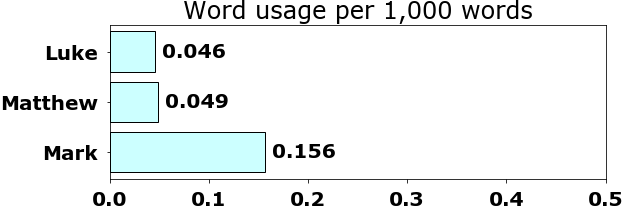 |
Words: περιλυπος=4
|
70. Matthew 19:22
KJV: But when the young man heard that saying, he went away sorrowful: for he had great possessions.
Greek: ακουσας δε ο νεανισκος τον λογον τουτον απηλθεν λυπουμενος ην γαρ εχων κτηματα πολλα
Latin: cum audisset autem adulescens verbum abiit tristis erat enim habens multas possessiones
71. Mark 10:17
KJV: And when he was gone forth into the way, there came one running, and kneeled to him, and asked him, Good Master, what shall I do that I may inherit eternal life?
Greek: και εκπορευομενου αυτου εις οδον προσδραμων εις και γονυπετησας αυτον επηρωτα αυτον διδασκαλε αγαθε τι ποιησω ινα ζωην αιωνιον κληρονομησω
72. Luke 18:18
KJV: And a certain ruler asked him, saying, Good Master, what shall I do to inherit eternal life?
Greek: και επηρωτησεν τις αυτον αρχων λεγων διδασκαλε αγαθε τι ποιησας ζωην αιωνιον κληρονομησω
Latin: et interrogavit eum quidam princeps dicens magister bone quid faciens vitam aeternam possidebo
73. Mark 10:22
KJV: And he was sad at that saying, and went away grieved: for he had great possessions.
Greek: ο δε στυγνασας επι τω λογω απηλθεν λυπουμενος ην γαρ εχων κτηματα πολλα
Latin: qui contristatus in verbo abiit maerens erat enim habens possessiones multas
74. Luke 18:23
KJV: And when he heard this, he was very sorrowful: for he was very rich.
Greek: ο δε ακουσας ταυτα περιλυπος εγενετο εγενηθη ην γαρ πλουσιος σφοδρα
Latin: his ille auditis contristatus est quia dives erat valde
75. Riches and the kingdom
Whatever Jesus means, it appears to depend on the meaning of the ancient Greek word
"δύσκολος" ≈ "annoyed, grumpy, bad-tempered". In each place, the disciples have the same reaction. Were the disciples "
rich"? Perhaps the words translated "
rich" and/or "
hard" had a somewhat different meaning.
Matthew 19:25 When his disciples heard it, they were exceedingly amazed, saying, Who then can be saved? [kjv]
ακουσαντες δε οι μαθηται αυτου εξεπλησσοντο σφοδρα λεγοντες τις αρα δυναται σωθηναι [gnt]
Mark 10:26 And they were astonished out of measure, saying among themselves, Who then can be saved? [kjv]
οι δε περισσως εξεπλησσοντο λεγοντες προς εαυτους αυτον και τις δυναται σωθηναι [gnt]
Luke 18:26 And they that heard it said, Who then can be saved? [kjv]
ειπον ειπαν δε οι ακουσαντες και τις δυναται σωθηναι [gnt]
The Greek for "
hear" assumes understanding. Why might they be concerned?
76. Matthew 19:25
KJV: When his disciples heard it, they were exceedingly amazed, saying, Who then can be saved?
Greek: ακουσαντες δε οι μαθηται αυτου εξεπλησσοντο σφοδρα λεγοντες τις αρα δυναται σωθηναι
77. Mark 10:26
KJV: And they were astonished out of measure, saying among themselves, Who then can be saved?
Greek: οι δε περισσως εξεπλησσοντο λεγοντες προς εαυτους αυτον και τις δυναται σωθηναι
78. Luke 18:26
KJV: And they that heard it said, Who then can be saved?
Greek: ειπον ειπαν δε οι ακουσαντες και τις δυναται σωθηναι
Latin: et dixerunt qui audiebant et quis potest salvus fieri
79. Impossible and possible
Matthew 19:26 But Jesus beheld them, and said unto them, With men this is impossible; but with God all things are possible. [kjv]
εμβλεψας δε ο ιησους ειπεν αυτοις παρα ανθρωποις τουτο αδυνατον εστιν παρα δε θεω παντα δυνατα εστιν [gnt]
Mark 10:27 And Jesus looking upon them saith, With men it is impossible, but not with God: for with God all things are possible. [kjv]
εμβλεψας δε αυτοις ο ιησους λεγει παρα ανθρωποις αδυνατον αλλ ου παρα τω θεω παντα γαρ δυνατα εστιν παρα τω θεω [gnt]
Luke 18:27 And he said, The things which are impossible with men are possible with God. [kjv]
ο δε ειπεν τα αδυνατα παρα ανθρωποις δυνατα εστιν παρα τω θεω εστιν [gnt]
… inpossibilia … possibilia … [v]
80. Mark 10:27
KJV: And Jesus looking upon them saith, With men it is impossible, but not with God: for with God all things are possible.
Greek: εμβλεψας δε αυτοις ο ιησους λεγει παρα ανθρωποις αδυνατον αλλ ου παρα τω θεω παντα γαρ δυνατα εστιν παρα τω θεω
81. Matthew 19:26
KJV: But Jesus beheld them, and said unto them, With men this is impossible; but with God all things are possible.
Greek: εμβλεψας δε ο ιησους ειπεν αυτοις παρα ανθρωποις τουτο αδυνατον εστιν παρα δε θεω παντα δυνατα εστιν
82. Luke 18:27
KJV: And he said, The things which are impossible with men are possible with God.
Greek: ο δε ειπεν τα αδυνατα παρα ανθρωποις δυνατα εστιν παρα τω θεω εστιν
Latin: ait illis quae inpossibilia sunt apud homines possibilia sunt apud Deum
83. Riches and the kingdom
Mark 10:24 … how hard is it for them that trust in riches to enter into the kingdom of God ! [kjv]
οι δε μαθηται εθαμβουντο επι τοις λογοις αυτου ο δε ιησους παλιν αποκριθεις λεγει αυτοις τεκνα πως δυσκολον εστιν τους πεποιθοτας επι τοις χρημασιν εις την βασιλειαν του θεου εισελθειν [gnt]
The Greek in Mark for "
that trust in" is not in some Greek manuscripts and not in Matthew or Luke or the other verse in Mark (right before this one). Might Mark have been the rich man who later changed his ways?
 |
Details are left as a future topic.
|
Discuss:
- Does how one obtains riches matter? What are ill-gotten gains?
- Does trust in riches or oneself (mammon) matter?
84. Matthew 19:23
KJV: Then said Jesus unto his disciples, Verily I say unto you, That a rich man shall hardly enter into the kingdom of heaven.
Greek: ο δε ιησους ειπεν τοις μαθηταις αυτου αμην λεγω υμιν οτι δυσκολως πλουσιος δυσκολως εισελευσεται εις την βασιλειαν των ουρανων
85. Mark 10:23
KJV: And Jesus looked round about, and saith unto his disciples, How hardly shall they that have riches enter into the kingdom of God !
Greek: και περιβλεψαμενος ο ιησους λεγει τοις μαθηταις αυτου πως δυσκολως οι τα χρηματα εχοντες εις την βασιλειαν του θεου εισελευσονται
86. Mark 10:24
KJV: And the disciples were astonished at his words. But Jesus answereth again, and saith unto them, Children, how hard is it for them that trust in riches to enter into the kingdom of God !
Greek: οι δε μαθηται εθαμβουντο επι τοις λογοις αυτου ο δε ιησους παλιν αποκριθεις λεγει αυτοις τεκνα πως δυσκολον εστιν τους πεποιθοτας επι τοις χρημασιν εις την βασιλειαν του θεου εισελθειν
87. Luke 18:24
KJV: And when Jesus saw that he was very sorrowful, he said, How hardly shall they that have riches enter into the kingdom of God !
Greek: ιδων δε αυτον ο ιησους περιλυπον γενομενον ειπεν πως δυσκολως οι τα χρηματα εχοντες εισελευσονται εις την βασιλειαν του θεου εισπορευονται
88. Difficulties in the LXX
Job 34:30 That the hypocrite reign not, lest the people be ensnared. [kjv]
βασιλευων ανθρωπον υποκριτην απο δυσκολιας λαου [lxx]
causing a hypocrite to be king, because of the waywardness of the people. [bs3]
The Greek for "
hypocrite" meant acting or pretending.
An older definition of "
difficult" as "
hard to satisfy with food" could be related to the Roman idea of keeping in power by making sure the people had "
food and circuses".
 |
Details are left as a future topic.
|
89. Job 34:30
KJV: That the hypocrite reign not, lest the people be ensnared.
Hebrew: ממלך אדם חנף ממקשי עם׃
Greek: βασιλευων ανθρωπον υποκριτην απο δυσκολιας λαου
Brenton: causing a hypocrite to be king, because of the waywardness of the people.
90. Difficulty in Jeremiah
Jeremiah 49:8 Flee ye, turn back, dwell deep, O inhabitants of Dedan; for I will bring the calamity of Esau upon him, the time that I will visit him. [kjv]
ηπατηθη ο τοπος αυτων βαθυνατε εις καθισιν οι κατοικουντες εν δαιδαν οτι δυσκολα εποιησεν ηγαγον επ αυτον εν χρονω ω επεσκεψαμην επ αυτον [lxx]
Note that Esau lost his birthright, in part, due to being "
hard to satisfy with food" in that he wanted "
instant gratification".
91. Jeremiah 49:8
KJV: Flee ye, turn back, dwell deep, O inhabitants of Dedan; for I will bring the calamity of Esau upon him, the time that I will visit him.
Hebrew: נסו הפנו העמיקו לשבת ישבי דדן כי איד עשו הבאתי עליו עת פקדתיו׃
Greek: ηπατηθη ο τοπος αυτων βαθυνατε εις καθισιν οι κατοικουντες εν δαιδαν οτι δυσκολα εποιησεν ηγαγον επ αυτον εν χρονω ω επεσκεψαμην επ αυτον
92. Tittles
Matthew 5:18 … Till heaven and earth pass, one jot or one tittle shall in no wise pass from the law, till all be fulfilled. [kjv]
Compare Luke to Matthew: (uses word for
"which is a better toil")
Luke 16:17 And it is easier for heaven and earth to pass, than one tittle of the law to fail. [kjv]
ευκοπωτερον δε εστιν τον ουρανον και την γην παρελθειν η του νομου μιαν κεραιαν πεσειν [gnt]
The
KJV does not account for the word
"whether" and introduces a "
than" for the Greek
"or". Possible paraphrase:
Which is a better toil, to get heaven and earth to pass away or to get one tittle of the law removed?
How can the idea of the "
difficulty of getting one tittle of the law removed" help relate Matthew and Luke?
93. Greek and Latin
Again, the Latin Vulgate appears to start the word slide from the Greek question "
Which is better, this or that?" to the Latin (and later English) statement "
It is easier for this than that."
Luke 16:17 And it is easier for heaven and earth to pass, than one tittle of the law to fail. [kjv]
ευκοπωτερον δε εστιν τον ουρανον και την γην παρελθειν ή του νομου μιαν κεραιαν πεσειν [gnt]
facilius … quam … [v]
- The ancient Greek word "εὐκοπώτερος" ≈ "which is good toil" (of two choices).
- The ancient Greek word "ή" ≈ "or".
- The Latin word "facilius" ≈ "easier".
- The Latin word "quam" ≈ "than".
94. Luke 16:17
KJV: And it is easier for heaven and earth to pass, than one tittle of the law to fail.
Greek: ευκοπωτερον δε εστιν τον ουρανον και την γην παρελθειν η του νομου μιαν κεραιαν πεσειν
Latin: facilius est autem caelum et terram praeterire quam de lege unum apicem cadere
95. Matthew 5:18
KJV: For verily I say unto you, Till heaven and earth pass, one jot or one tittle shall in no wise pass from the law, till all be fulfilled.
Greek: αμην γαρ λεγω υμιν εως αν παρελθη ο ουρανος και η γη ιωτα εν η μια κεραια ου μη παρελθη απο του νομου εως αν παντα γενηται
96. Luke 16:17 Tittles
Luke 16:17 And it is easier for heaven and earth to pass, than one tittle of the law to fail. [kjv]
ευκοπωτερον δε εστιν τον ουρανον και την γην παρελθειν η του νομου μιαν κεραιαν πεσειν [gnt]
Possible paraphrase:
Which is a better toil, to get heaven and earth to pass away or to get one tittle of the law removed?
For humans, good luck getting heaven and earth to pass away.
A "
tittle" in Greek is a "
horn" or "
antenna" (e.g., of an insect). The "
horns" are often taken to be parts of letters of the law. Man-made horns can be added to the law of God. How hard can it be to get those man-made horns removed? Might that be a better use of one's time and toil?
97. Software
An old software programming book (to be found in my library) had a question in the exercises at the end of a chapter that went something like this.
- Simple question: Find and summarize an obvious problem at the user site of the information systems group (which provided mainframe computer support).
- Semester (or career) research project: Try to get it changed.
98. Kudos for the glory of a Russian miracle
The Russian word
"чудо" (choo-da) ≈ "miracle". A connection has been made to the Greek word «
κυδος» meaning glory or fame, and from which we get the English word "
kudos". The Greek word «
κυδος» is used once in the
LXX.
Isaiah 14:25 That I will break the Assyrian in my land, and upon my mountains tread him under foot: then shall his yoke depart from off them, and his burden depart from off their shoulders. [kjv]
του απολεσαι τους ασσυριους απο της γης της εμης και απο των ορεων μου και εσονται εις καταπατημα και αφαιρεθησεται απ αυτων ο ζυγος αυτων και το κυδος αυτων απο των ωμων αφαιρεθησεται [lxx]
… montibus … onus … [v]
… Bergen… Bürde … [lu]
… горах … слава … [ocs]
… горах … бремя … [rus]
… montes … carga … [es]
Note that the word is in the singular but a back-formation has been mode in English to assuming that "
kudos" is plural and thus inferring a singular form of "
kudo".
99. Isaiah 14:25
KJV: That I will break the Assyrian in my land, and upon my mountains tread him under foot: then shall his yoke depart from off them, and his burden depart from off their shoulders.
Hebrew: לשבר אשור בארצי ועל הרי אבוסנו וסר מעליהם עלו וסבלו מעל שכמו יסור׃
Greek: του απολεσαι τους ασσυριους απο της γης της εμης και απο των ορεων μου και εσονται εις καταπατημα και αφαιρεθησεται απ αυτων ο ζυγος αυτων και το κυδος αυτων απο των ωμων αφαιρεθησεται
Brenton: even to destroy the Assyrians upon my land, and upon my mountains: and they shall be for trampling; and their yoke shall be taken away from them, and their glory shall be taken away from their shoulders.
Latin: sic eveniet ut conteram Assyrium in terra mea et in montibus meis conculcem eum et auferetur ab eis iugum eius et onus illius ab umero eorum tolletur
Wycliffe: That Y al to-breke the kyng of Assiriens in my lond, and that Y defoule hym in myn hillis; and his yok schal be takun awei fro hem, and his birthun schal be takun awei fro the schuldur of hem.
Luther: daß Assur zerschlagen werde in meinem Lande, und ich ihn zertrete auf meinen Bergen, auf daß sein Joch von ihnen genommen werde und seine Bürde von ihrem Halse komme.
Slavonic: еже погубити Ассириан на земли Моей и на горах Моих: и будут в попрание, и отимется от них ярем их, и слава их от рамен их отимется.
Russian: чтобы сокрушить Ассура в земле Моей и растоптать его на горах Моих; и спадет с них ярмо его, и снимется бремя его с рамен их.
Spanish: Que quebrantaré al asirio en mi tierra, y en mis montes lo hollaré; y su yugo será apartado de ellos, y su carga será quitada de su hombro.
100. Burdens
Isaiah 14:25 That I will break the Assyrian in my land, and upon my mountains tread him under foot: then shall his yoke depart from off them, and his burden depart from off their shoulders. [kjv]
του απολεσαι τους ασσυριους απο της γης της εμης και απο των ορεων μου και εσονται εις καταπατημα και αφαιρεθησεται απ αυτων ο ζυγος αυτων και το κυδος αυτων απο των ωμων αφαιρεθησεται [lxx]
- The Russian word "бремя" ≈ "burden".
- However, the corresponding Old Church Slavonic word used here is "слава" ≈ "glory", same as in modern Russian.
- The Latin word "onus" ≈ "burden" from which we get the word "onus".
- The Spanish word "carga" ≈ "burden" from which we get the word "cargo".
- The German word "Bürde" ≈ "burden".
Is the
LXX more correct in the removing the "
glory" from their shoulders, as translated into the Old Church Slavonic? Or are the other versions more correct in the removing the "
burden" from their shoulders.
101. Better toils
Greek: "
Which is the better toil, this or that?". (question)
Latin: "
Which is easier, this or that?". (question)
Matthew 9:5 For whether is easier, to say, Thy sins be forgiven thee; or to say, Arise, and walk? [kjv]
τι γαρ εστιν ευκοπωτερον ειπειν αφεωνται σοι αφιενται σου αι αμαρτιαι η ειπειν εγειραι εγειρε και περιπατει [gnt]
Latin: "
It is easer for this than that". (statement)
Luke 16:17 And it is easier for heaven and earth to pass, than one tittle of the law to fail. [kjv]
ευκοπωτερον δε εστιν τον ουρανον και την γην παρελθειν η του νομου μιαν κεραιαν πεσειν [gnt]
18:25 For it is easier for a camel to go through a needle's eye, than for a rich man to enter into the kingdom of God. [kjv]
ευκοπωτερον γαρ εστιν καμηλον δια τρυμαλιας ραφιδος τρηματος βελονης εισελθειν η πλουσιον εις την βασιλειαν του θεου εισελθειν [gnt]
102. End of page