Send
Close Add comments:
(status displays here)
Got it! This site "www.creationpie.org" uses cookies. You consent to this by clicking on "Got it!" or by continuing to use this website. Note: This appears on each machine/browser from which this site is accessed.
An August time to Biblically remember some Roman Emperors
1. Months
| # |
Latin months |
English |
# |
|
| 1 |
Martius |
March |
3 |
after Mars, God of War |
| 2 |
Aprilis |
April |
4 |
after Apru or Aphrodite |
| 3 |
Maius |
May |
5 |
after Maia |
| 4 |
Iunius |
June |
6 |
after Juno |
| 5 |
Quintilis Iulius |
July |
7 |
after Julius Caesar 44 BC |
| 6 |
Sextilis Augustus |
August |
8 |
after Augustus Caesar 8 BC |
| 7 |
September |
September |
9 |
Latin septa, Greek hepta |
| 8 |
October |
October |
10 |
octagon ‑ eight sided figure |
| 9 |
November |
November |
11 |
noon ‑ ninth hour, later 12 noon |
| 10 |
December |
December |
12 |
decimal = based on 10 |
| 11 |
Ianuarius |
January |
1 |
Latin Ianus |
| 12 |
Februarius |
February |
2 |
Latin Februa |
The months of the year are one aspect of calendars. The original Roman calendar started with March, with no (winter) months after December.
2. August: The sixth month
Genesis 1:31 And God saw every thing that he had made, and, behold, it was very good. And the evening and the morning were the sixth day. [kjv]
και ειδεν ο θεος τα παντα οσα εποιησεν και ιδου καλα λιαν και εγενετο εσπερα και εγενετο πρωι ημερα εκτη [lxx]
… sextus [v]
The Latin month of
Sextilis was renamed for Emperor
Augustus in 8 BC.
Middle Age legends attributed the 31 days in August to Augustus not wanting fewer days than July named for Julius Caesar, but the month already had 31 days before it was renamed.
3. An August time to Biblically remember some Roman Emperors
To "
remember" the past is to "
remember" what is called "
history" or a "
story" (about the past). Here we will "
remember" some Roman Emperors with a connection to the Bible.
| *Caesar |
46 ‑ 44 BC |
First Caesar |
| *Augustus |
44 ‑ 14 AD |
Jesus born |
| *Tiberius |
14 ‑ 37 |
Jesus crucified |
| Caligula |
37 ‑ 41 |
| *Claudius |
41 ‑ 54 |
Paul requests trial |
| Nero |
54 ‑ 68 |
Paul executed |
| (several) |
68‑69 |
Jewish War started |
| Vespasian |
69 ‑ 79 |
Jewish War ended |
| Titus |
79 ‑ 81 |
Son/general who took Jerusalem |
| Domitian |
81 ‑ 96 |
Persecutions |
*Mentioned in the GNT (Greek New Testament).
|
|
4. Eight-way pun
Here is a pun I created in the late 1980's using
3 words that each have
2 meanings.
|
1. "you" or "a Jew"
2. "offense" or "a fence"
3. "roaming" or "Roman"
|
All
23 =
8 ways make some sense. One can slide the pronunciation between each choice as needed.
☐ Would
you take
offense to a
roaming shepherd?
☐ Would
you take
offense to a
Roman shepherd?
☐ Would
you take
a fence to a
roaming shepherd?
☐ Would
you take
a fence to a
Roman shepherd?
☐ Would
a Jew take
offense to a
roaming shepherd?
☐ Would
a Jew take
offense to a
Roman shepherd?
☐ Would
a Jew take
a fence to a
roaming shepherd?
☐ Would
a Jew take
a fence to a
Roman shepherd?
One might add more to this pun with "
defense" and "
the fence" or with "
rushing" and "
Russian", etc.
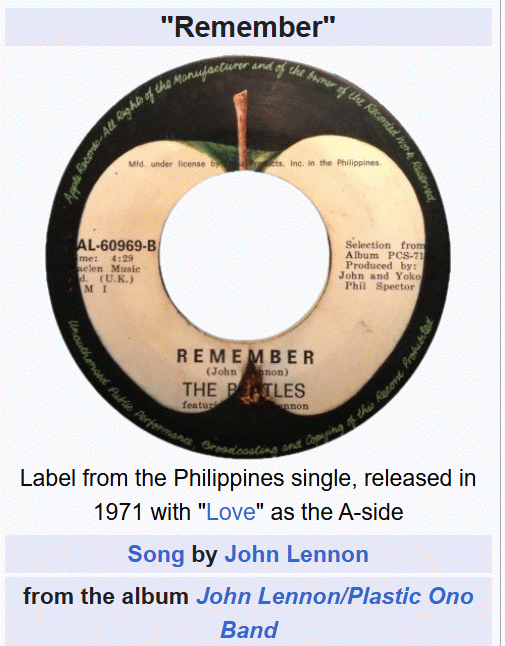
5. Remember by John Lennon
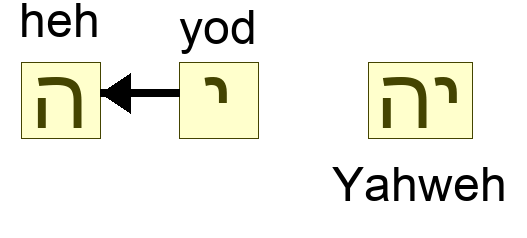
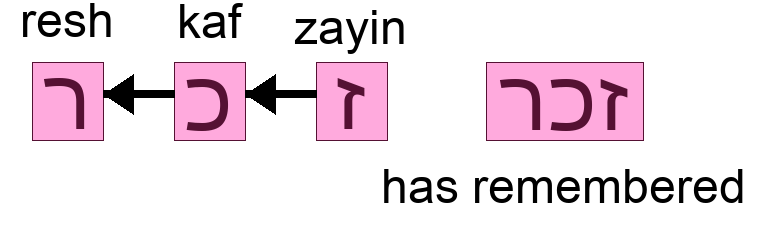
6. God remembers Zechariah
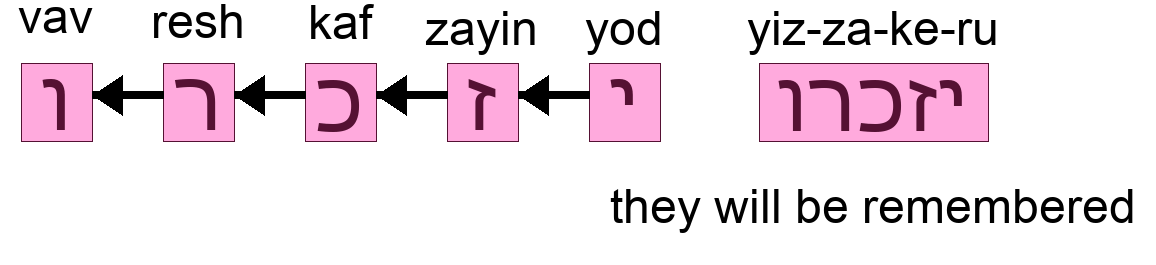
7. Zechariah 10:9
Zechariah 10:9 And I will sow them among the people: and they shall remember me in far countries; and they shall live with their children, and turn again. [kjv]
ואזרעם בעמים ובמרחקים יזכרוני וחיו את בניהם ושבו׃ [he]
και σπερω αυτους εν λαοις και οι μακραν μνησθησονται μου εκθρεψουσιν τα τεκνα αυτων και επιστρεψουσιν [lxx]
8. Zechariah 10:9
KJV: And I will sow them among the people: and they shall remember me in far countries; and they shall live with their children, and turn again.
Hebrew: ואזרעם בעמים ובמרחקים יזכרוני וחיו את בניהם ושבו׃
Greek: και σπερω αυτους εν λαοις και οι μακραν μνησθησονται μου εκθρεψουσιν τα τεκνα αυτων και επιστρεψουσιν
9. Zechariah 13:2 They will be remembered
Zechariah 13:2 And it shall come to pass in that day, saith the LORD of hosts, that I will cut off the names of the idols out of the land, and they shall no more be remembered: and also I will cause the prophets and the unclean spirit to pass out of the land. [kjv]
… יזכרו … [he]
και εσται εν τη ημερα εκεινη λεγει κυριος εξολεθρευσω τα ονοματα των ειδωλων απο της γης και ουκετι εσται αυτων μνεια και τους ψευδοπροφητας και το πνευμα το ακαθαρτον εξαρω απο της γης [lxx]
… non memorabuntur … [v]
10. Zechariah 13:2
KJV: And it shall come to pass in that day, saith the LORD of hosts, that I will cut off the names of the idols out of the land, and they shall no more be remembered: and also I will cause the prophets and the unclean spirit to pass out of the land.
Hebrew: והיה ביום ההוא נאם יהוה צבאות אכרית את שמות העצבים מן הארץ ולא יזכרו עוד וגם את הנביאים ואת רוח הטמאה אעביר מן הארץ׃
Greek: και εσται εν τη ημερα εκεινη λεγει κυριος εξολεθρευσω τα ονοματα των ειδωλων απο της γης και ουκετι εσται αυτων μνεια και τους ψευδοπροφητας και το πνευμα το ακαθαρτον εξαρω απο της γης
Latin: et erit in die illa dicit Dominus exercituum disperdam nomina idolorum de terra et non memorabuntur ultra et prophetas et spiritum inmundum auferam de terra
11. Photographs and memories
The
ancient Greek word
"φωνή" ≈ "voice", as in "
phonograph", and appears to come from
"φως" ≈ "light" and
"νους" ≈ "mind". That is, the
"sound" of a
"voice" is
"light" into the
"mind".
When was songwriter and music performer Jim Croce's Greatest Hits album Photographs and memories released?
September 26, 1974.
12. Aristotle: On Memory and Recollection
English: It is impossible to remember the future. (Loeb#288, p. 289)
Greek: οὔτε γὰρ τὸ μέλλον ἐνδέχεται μνημονεύειν, … Aristotle: On Memory and Recollection [449b]
Yogi Berra: It's tough to make predictions, especially about the future.
English: ... but sensation refers to what is present, expectation to what is future, and memory to what is past. All memory, then, implies a lapse of time ... (Loeb#288, p. 291)
Greek: … ἀλλὰ τοῦ μὲν παρόντος αἴσθησις, τοῦ δὲ μέλλοντος ἐλπίς, τοῦ δὲ γενομένου μνήμη. διὸ μετὰ χρόνου πᾶσα μνήμη… Aristotle: On Memory and Recollection [449b]
Yogi Berra: The future ain’t what it used to be.
The
ancient Greek word
"ἐλπίς" ≈ "expectation" and, literally, a "
well founded belief/persuasion". Through an older digamma, the word literally means a "
well-founded" "
persuasion" or "
belief"
13. The dream of delayed procrastination
Never put off till tomorrow, what you can do the day after tomorrow.
Mark Twain (Author and Humorist, alias Samuel Clemens)
Modern saying:
I used to crastinate. I got so good at it I decided to go pro. [eager vs. lazy evaluation]
Can one reason
backwards in time?
Today, I'm doing nothing because I started doing it yesterday and I wasn't finished.
Don't give up on dreams. Go back to bed.
Why was the funeral for the man who invented Tupperware delayed?
It took a while to find the right lid for his coffin. While you are coughing (coffin) about this joke, you are probably thinking I should put a lid on it. [small basket as a coffin]
14. Aristotle: On Memory and Recollection
English: ... It is impossible even to think without a mental picture. The same affection is involved in thinking as in drawing a diagram. (Loeb#288, p. 291)
Greek: … καὶ νοεῖν οὐκ ἔστιν ἄνευ φαντάσματος συμβαίνει γὰρ τὸ αὐτὸ πάθος ἐν τῷ νοεῖν ὅπερ καὶ ἐν τῷ διαγράφειν. Aristotle: On Memory and Recollection [449b]
Douglas MacArthur: I shall/will return! (I intend to return).
I will remember! (I intend to remember).
Samuel Clemens: I will do it tomorrow. I will remember tomorrow.
Veterans Day:
Tomorrow, we will remember these veterans.
Today, we remember these veterans.
Where does Jesus use the Greek word for
"remember" in Matthew?
15. Matthew 5:23 And there remember
Matthew 5:23 Therefore if thou bring thy gift to the altar, and there rememberest that thy brother hath ought against thee; [kjv]
εαν ουν προσφερης το δωρον σου επι το θυσιαστηριον κακει μνησθης οτι ο αδελφος σου εχει τι κατα σου [gnt]
Why does Jesus say
"and there" when just an "
and" would suffice?
... gift on the altar and there remember ...
... gift on the altar and remember ...
From context it is clear that you are "
there" and
not somewhere else.
Meaningless sign:
You are here. You are not there.
The
Madela Effect happens when many people falsely remember the same thing. It is named after Nelson Mandela who many people remember dying in prison in the 1980's.
16. Matthew 5:23 And there remember
Matthew 5:23 Therefore if thou bring thy gift to the altar, and there rememberest that thy brother hath ought against thee; [kjv]
εαν ουν προσφερης το δωρον σου επι το θυσιαστηριον κακει μνησθης οτι ο αδελφος σου εχει τι κατα σου [gnt]
The ancient Greek word
"κατά σου" ≈ "against you" as in being
"down on you". Using the play on words, the verse is as follows.
5:23:
If therefore you offer [resemble] your gift on the altar, [bad (righteousness)], remember [as a groom wooing a bride] that the brother of yours (Jesus) has some things against (down on) you (detailed in Revelation).
The Greek phrase
"against you" is only used
here and
three times by Jesus in Revelation. This provides a hint as to the nature and substance of these things. The next verses will indicate a better way that is in line with what
"the" brother (Jesus) desires.
17. Matthew 16:9 Feeding of the five thousand
Matthew 16:9 Do ye not yet understand, neither remember the five loaves of the five thousand, and how many baskets ye took up? [kjv]
ουπω νοειτε ουδε μνημονευετε τους πεντε αρτους των πεντακισχιλιων και ποσους κοφινους ελαβετε [gnt]
… intellegitis … recordamini quinque panum quinque milium … cofinos … [v]
For the
5,000, which had just happened in the previous chapter, it was a
"κόφινος" ≈ "basket". This word was used in Latin as
"cophinus" ≈ "hamper, basket" which is the source of the English word
"coffin".
Might the "
blind" "
feeding" of "
bread" to people be a type of
"coffin"? Jesus talks of this in John 6.
What does Jesus say here that might be in indication of
"oppressive" "reasoning" on the part of the disciples (previous verses)?
18. Matthew 16:10 Feeding of the four thousand
Matthew 16:10 Neither the seven loaves of the four thousand, and how many baskets ye took up? [kjv]
ουδε τους επτα αρτους των τετρακισχιλιων και ποσας σπυριδας σφυριδας ελαβετε [gnt]
Jesus reminds the disciples of what had happened before. For the
4,000, it was a
"basket" of the size that was used to let Paul down from a wall in Acts 9:24-25. The ancient Greek word
"σπυρίς" ≈ "large basket" often used for provisions or to transport money.
How many
"baskets" of money might have been taken up?
The word used by Jesus can be a play on words with a Greek word that means the onomatopoeic shrill sound of a "
hammer" hitting metal.
What does Jesus say here that might be in indication of
"oppressive" "reasoning" on the part of the disciples (previous verses)?
19. Matthew 23:29 Against the law
Matthew 23:29 Woe unto you, scribes and Pharisees, hypocrites ! because ye build the tombs of the prophets, and garnish the sepulchres of the righteous, [kjv]
ουαι υμιν γραμματεις και φαρισαιοι υποκριται οτι οικοδομειτε τους ταφους των προφητων και κοσμειτε τα μνημεια των δικαιων [gnt]
The
ancient Greek word
"μνημεῖον" ≈ "memorial, monument" and comes from
"μνήμη" ≈ "memory" as in something used to
"remember". The Greek word is the source of the English word
"mnemonic".
The ancient Greek word
"τάφος" ≈ "burial, funeral, tomb, grave" and comes from
"θάπτω" ≈ "bury". The same Greek word could mean "
astonishment" or "
amazement" and comes from
"θάμβος" ≈ "amazement" and
"τέθηπα" ≈ "to be amazed".
The Greek word for
"tombs" can be a play on words with "
blind". The
ancient Greek word
"κοσμέω" ≈ "order, arrange, adorn" and is the source of the English word
"cosmetics".
20. Matthew 26:13
Matthew 26:13 Verily I say unto you, Wheresoever this gospel shall be preached in the whole world, there shall also this, that this woman hath done, be told for a memorial of her. [kjv]
αμην λεγω υμιν οπου εαν κηρυχθη το ευαγγελιον τουτο εν ολω τω κοσμω λαληθησεται και ο εποιησεν αυτη εις μνημοσυνον αυτης [gnt]
21. Some Roman emperors
| *Caesar |
46 ‑ 44 BC |
First Caesar |
| *Augustus |
44 ‑ 14 AD |
Jesus born |
| *Tiberius |
14 ‑ 37 |
Jesus crucified |
| Caligula |
37 ‑ 41 |
| *Claudius |
41 ‑ 54 |
Paul requests trial |
| Nero |
54 ‑ 68 |
Paul executed |
| (several) |
68‑69 |
Jewish War started |
| Vespasian |
69 ‑ 79 |
Jewish War ended |
| Titus |
79 ‑ 81 |
Son/general who took Jerusalem |
| Domitian |
81 ‑ 96 |
Persecutions |
*Mentioned in the GNT.
|
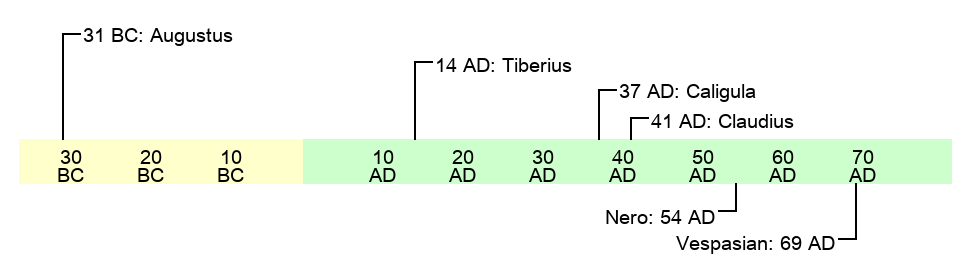
Note: Augustus did not have full power until after the Battle of Philippi in 42 BC (conspirators Cassius and Brutus defeated) and then after 31 BC (Mark Antony and Cleopatra defeated).
22. Roman Emperors
23. Caesar cipher
A Caesar cipher was done by wrapping a long strip of paper around a stick or pole, and then writing the message across the wrapped paper.
A
substitute is something used in place of something else.
A substitute teacher teaches in place of the regular teacher.
In a sports game, one player may substitute for another player, subject to the rules of the game.
24. Transliteration as a code
It is said that Julius Caesar used a (simple and not that secure) message encryption system (against the Gauls in what is today France) whereby Latin was transliterated into Greek so that someone who could read Greek could read the transliterated Greek which would then be recognized as Latin.
25. Caesar
About a 100 years earlier, in 75 BC, a young 25 year old Julius Caesar (100-44 BC) was captured by Cilician pirates while traveling to study oratory at Rhodes.
Plutarch relates the story. Caesar captivated the pirates with stories, etc., and convinced the pirates that the ransom they were asking was too little for his value. He would, at times, banter and joke that he would have them all crucified. When the ransom was paid, Caesar raised a small naval force, returned to the site, captured the same pirates, brought them back, and had them crucified. Caesar was a born leader - for better or for worse.
26. Missing dog
Missing dog. If anyone sees her [Caesar], let us [lettuce] know.
Thanks a lot [think salad]. Before you toss it out, I know my salad jokes need addressing [a dressing]. With a little care, it [carrot] can be done. I love [olive] doing it. The salary [celery] is great. Until then, I'll play it [plate] safe and leave [leaf] it alone.
How does this dog salad joke relate to Bible verse analysis?
1. Number of the audience. 2. Gender of the dog. 3. Number of the owners.
27. Missing dog
Missing dog. If anyone sees her, let us know.
Sermon analysis analogy: (perhaps from a PhD dissertation)
The group being asked is plural to show how many need to hear the message of the lost dog.
The dog is female to show the importance of females (diversity, inclusion, etc.).
The group asking is plural to show the importance of the group rather than the individual. Better (bitter) together!
What is the reality of the statement?
If the number of the group asking and being asked is not plural, and if the dog is not female, the play on words joke does not work! That is, the joke is Biffed. Not funny: If you see him let me know.
28. Ides of March
Matthew 22:17 Tell us therefore, What thinkest thou? Is it lawful to give tribute unto Caesar, or not? [kjv]
ειπε ειπον ουν ημιν τι σοι δοκει εξεστιν δουναι κηνσον καισαρι η ου [gnt]
The "
Ides of March" is often associated with the assassination of Julius Caesar on March 15, 44 BC.
The Latin word
"Idus Martiae" ≈ "Ides of March" was on March 15, eight days after the "
nones", where March is named for the god of War. The Latin word
"idus" ≈ "divide" from an Etruscan verb.
29. Month of July
Genesis 1:23 And the evening and the morning were the fifth day. [kjv]
και εγενετο εσπερα και εγενετο πρωι ημερα πεμπτη [lxx]
… quintus [v]
… fyuethe … [wy]
To honor
Julius Caesar (100-44 BC), the month of "
Quintilis" (Latin for month 5) was named July in honor of him.
"
Dog days" begin in early July.
[quintuplets][dog with a fever]
A
legend created in the 13th century A.D. is that one day was taken to add to July to honor Julius Caesar, and one day was then taken to add to August to honor Augustus Caesar.
30. Caesar
The Roman (democratic) Republic (with Senate) essentially ended in 59 BC with the Triumvirate of
Caesar,
Pompeius and
Crassus. The Greek word "
democracy" means "
people power".
The Roman Senate never ended. They had no power over anything important.
The USSR (Lenin, Stalin, etc.) had the Politburo. They had no power over anything important. Their state newspaper was called "Truth" or "Pravda".
Hitler kept the Reichstag. They had no power over anything important.
In 44 B.C. Caesar was assassinated by Brutus and Cassius. Why? This act was made more famous by a play by Shakespeare. Thereafter, Rome was ruled, not by a king, but by a dictators called Caesar.
Antony and Octavian defeated these conspirators at the
Battle of Philippi in 42 B.C. This is about 90 years before Paul visits the city and about 100 years before the letter to the Philippians by Paul.
31. Roman colony
After the
Battle of Philippi in 42 B.C., many Roman veterans were settled here and many locals were awarded the coveted Roman citizenship. Paul will remind the Philippians of this twice in his letter. The
KJV (King James Version) uses "
conversation" as "
citizenship".
Philippians 3:20 For our conversation is in heaven; from whence also we look for the Saviour, the Lord Jesus Christ: [kjv]
ημων γαρ το πολιτευμα εν ουρανοις υπαρχει εξ ου και σωτηρα απεκδεχομεθα κυριον ιησουν χριστον [gnt]
From these veterans, the importance of law and order is seen in Paul's visit to Philippi in Acts 16 where the Philippians jailer is part of the story.
Citizenship on earth.
Citizenship in heaven.
32. Caesar Augustus
Emperor
Gaius Julius Caesar Octavius (63 BC - 14 AD) took on the name
"Augustus" as a more formal title and became know by that name.
The
Latin word
"augustus" ≈ "majestic, venerable". In English, one can still say that a person is
"august" is in
"venerable" and/or
"majestic".
The English word
"august" comes, through French, from the Latin word
"augustus" ≈ "majestic, venerable, august". This was a name taken by Roman Emperor Augustus, in part to give him a name meaning majestic, venerable, etc.
The early church father
Augustine of Hippo (city in Roman North Africa) was named after the Roman name of Augustus.
33. Sevastopol
That Greek name for
"august" or
"respected" became the title of Russian Czarina (Augusta) Catherine II who founded the city Sevastopol in 1783.
"σεβαστός" ≈ "venerable, august".
"πόλις" ≈ "city".
Combined, one gets "
Sevastopol".
Charge of the Light Brigade during the Crimean War: (1853-1856) and the Siege of Sevastopol (1854-1855).
Florence Nightingale (care of wounded soldiers at Constantinople, improved nursing and medical treatment)
Sevastopol: Late 18th century. From Ukrainian Севасто́поль (Sevastópolʹ) and Russian Севасто́поль (Sevastópolʹ), from Ancient Greek Σεβαστόπολις (Sebastópolis) from σεβαστός (sebastós, “august”) + πόλις (pólis, “city”), probably after Empress (=Augusta) Catherine II of Russia. Wiktionary: 2022-12-15
34. Luke 2:1 The decree
Luke 2:1 And it came to pass in those days, that there went out a decree from Caesar Augustus, that all the world should be taxed. [kjv]
εγενετο δε εν ταις ημεραις εκειναις εξηλθεν δογμα παρα καισαρος αυγουστου απογραφεσθαι πασαν την οικουμενην [gnt]
… edictum … Caesare Augusto … describeretur universus orbis [v]
35. Acts 25:10-11 Appeal to Caesar
Acts 25:10 Then said Paul, I stand at Caesar's judgment seat, where I ought to be judged: to the Jews have I done no wrong, as thou very well knowest. [kjv]
ειπεν δε ο παυλος εστως επι του βηματος καισαρος επι τουβηματος καισαρος εστως ειμι ου με δει κρινεσθαι ιουδαιους ουδεν ηδικησα ηδικηκα ως και συ καλλιον επιγινωσκεις [gnt]
… tribunal Caesaris … [v]
25:11 For if I be an offender, or have committed any thing worthy of death, I refuse not to die: but if there be none of these things whereof these accuse me, no man may deliver me unto them. I appeal unto Caesar. [kjv]
ει μεν γαρ ουν αδικω και αξιον θανατου πεπραχα τι ου παραιτουμαι το αποθανειν ει δε ουδεν εστιν ων ουτοι κατηγορουσιν μου ουδεις με δυναται αυτοις χαρισασθαι καισαρα επικαλουμαι [gnt]
… Caesarem appello [v]
An
appellate court is one that hears
appeals. Like bananas, they can be quite
appealing and, it times,
slippery.
36. Acts 25:10
KJV: Then said Paul, I stand at Caesar's judgment seat, where I ought to be judged: to the Jews have I done no wrong, as thou very well knowest.
Greek: ειπεν δε ο παυλος εστως επι του βηματος καισαρος επι του βηματος καισαρος εστως ειμι ου με δει κρινεσθαι ιουδαιους ουδεν ηδικησα ηδικηκα ως και συ καλλιον επιγινωσκεις
Latin: dixit autem Paulus ad tribunal Caesaris sto ubi me oportet iudicari Iudaeis non nocui sicut tu melius nosti
37. Acts 25:11
KJV: For if I be an offender, or have committed any thing worthy of death, I refuse not to die: but if there be none of these things whereof these accuse me, no man may deliver me unto them. I appeal unto Caesar.
Greek: ει μεν γαρ ουν αδικω και αξιον θανατου πεπραχα τι ου παραιτουμαι το αποθανειν ει δε ουδεν εστιν ων ουτοι κατηγορουσιν μου ουδεις με δυναται αυτοις χαρισασθαι καισαρα επικαλουμαι
Latin: si enim nocui aut dignum morte aliquid feci non recuso mori si vero nihil est eorum quae hii accusant me nemo potest me illis donare Caesarem appello
38. Acts 25:12,21 Appeal to Caesar
Acts 25:12 Then Festus, when he had conferred with the council, answered, Hast thou appealed unto Caesar? unto Caesar shalt thou go. [kjv]
τοτε ο φηστψος συλλαλησας μετα του συμβουλιου απεκριθη καισαρα επικεκλησαι επι καισαρα πορευση [gnt]
… consilio … Caesarem appellasti … Caesarem … [v]
25:21 But when Paul had appealed to be reserved unto the hearing of Augustus, I commanded him to be kept till I might send him to Caesar. [kjv]
του δε παυλου επικαλεσαμενου τηρηθηναι αυτον εις την του σεβαστου διαγνωσιν εκελευσα τηρεισθαι αυτον εως ου πεμψω αναπεμψω αυτον προς καισαρα [gnt]
… Augusti … Caesarem [v]
Note that the Vulgate
"Augusti" and King James "
Augustus" refer to Emperor at the birth of Jesus. The Greek, however, does not have this word - but it might be inferred from the word «
σεβαστου» for
"respected". The Luther German has
"Kaisers" for
"Caesar" which is the origin of the German word
"Kaiser". All versions have
"Caesar" at the end of this verse.
The ancient Greek word "Καῖσαρ" ≈ "Caesar" from the Latin word "Caesar" ≈ "Caesar".
Here «
διαγωςσιν» is "
hearing".
39. Acts 25:12
KJV: Then Festus, when he had conferred with the council, answered, Hast thou appealed unto Caesar? unto Caesar shalt thou go.
Greek: τοτε ο φηστος συλλαλησας μετα του συμβουλιου απεκριθη καισαρα επικεκλησαι επι καισαρα πορευση
Latin: tunc Festus cum consilio locutus respondit Caesarem appellasti ad Caesarem ibis
40. Modern Greek
41. Tiberius Caesar and sheep
Luke 3:1 Now in the fifteenth year of the reign of Tiberius Caesar, Pontius Pilate being governor of Judaea, … [kjv]
Emperor
Tiberius Caesar (on taxes):
It is the duty of a good shepherd to shear his sheep, not to skin them.
At the same time, Jesus was walking and teaching in Judea. Jesus had a different idea about what it meant to be a
"good" "shepherd".
John 10:11 I am the good shepherd: the good shepherd giveth his life for the sheep. [kjv]
εγω ειμι ο ποιμην ο καλος ο ποιμην ο καλος την ψυχην αυτου τιθησιν υπερ των προβατων [gnt]
9 AD: Arminius organizes Germans and slaughters Roman Legions under Varus at Teutoburg Forest
42. Matthew 22:20 What sicknesses
Matthew 22:20 And he saith unto them, Whose is this image and superscription? [kjv]
και λεγει αυτοις τινος η εικων αυτη και η επιγραφη [gnt]
… cuius est imago … et suprascriptio [v]
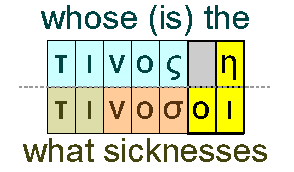
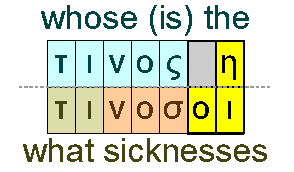
"τίνος" ≈ "what, whose" (genitive singular) or "τινός" ≈ "what, whose" (genitive singular) and "η" ≈ "the" as the (feminine) definite article.
"τι" ≈ "what" and "νόσοι" ≈ "sicknesses, diseases, illnesses" (nominative plural) from "νόσος" ≈ "sickness, disease, illness, plague, misery, suffering, distress"
| Greek |
Jesus M |
Jesus MLJ |
GNT |
LXX |
GNT+LXX |
| τινος |
1 |
6 |
30 |
53 |
90 |
| τινος η |
1 |
1 |
0 |
3 |
5 |
43. Matthew 22:20 Put it together
Matthew 22:20 And he saith unto them, Whose is this image and superscription? [kjv]
και λεγει αυτοις τινος η εικων αυτη και η επιγραφη [gnt]
… cuius est imago … et suprascriptio [v]
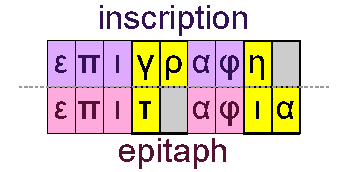
Greek: Whose the image and the inscription? Why is each "the" needed?
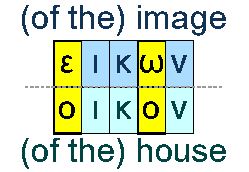
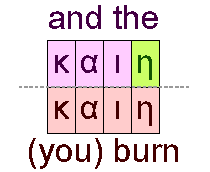
Play : What sicknesses (of the) house (you) burn epitaph?
44. Matthew 22:21 Serpent Caesar
Matthew 22:21 They say unto him, Caesar's. Then saith he unto them, Render therefore unto Caesar the things which are Caesar's; and unto God the things that are God's. [kjv]
λεγουσιν αυτω καισαρος τοτε λεγει αυτοις αποδοτε ουν τα καισαρος καισαρι και τα του θεου τω θεω [gnt]
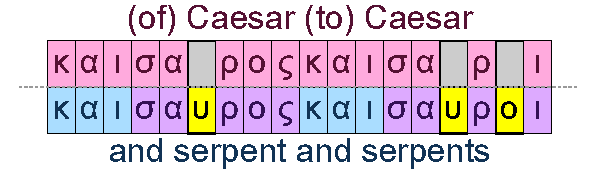
Greek:
... therefore that (of) Caesar [and lizard/serpent] (to) Caesar [and lizards/serpents].
Discuss: How much of a coincidence is it, historically, that the Latin name of
Caesar as the leader of the power and might of the world, transliterated into Greek, is a play on words with
"lizard/serpent"?
45. Matthew 11:23
Matthew 11:23 And thou, Capernaum, which art exalted unto heaven, shalt be brought down to hell: for if the mighty works, which have been done in thee, had been done in Sodom, it would have remained until this day. [kjv]
και συ καπερναουμ η καφαρναουμ μη εως του ουρανου υψωθεισα υψωθηση εως αδου καταβιβασθηση καταβηση οτι ει εν σοδομοις εγενοντο εγενηθησαν αι δυναμεις αι γενομεναι εν σοι εμειναν εμεινεν αν μεχρι της σημερον [gnt]
Why is the
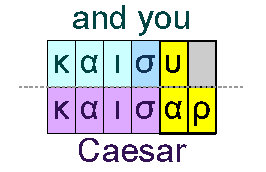
"and" "you" (singular) needed at the start of this verse?
"και" ≈ "and" and "συ" ≈ "you" (singular).
"Καῖσαρ" ≈ "Caesar" from the Latin word "Caesar" ≈ "Caesar".
Later, the hard "
k" or "
c" sound, as in the German word
"Kaiser" ≈ "Caesar", became a soft "
c". The transition sound is the Russian
"czar"
In this and the following play on words, think of a Boston accent where the "
r" sound is minimized.
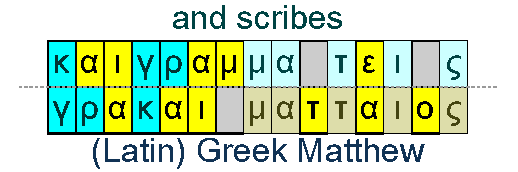
46. Matthew 23:34 Jest for fun punishment
Matthew 23:34 Wherefore, behold, I send unto you prophets, and wise men, and scribes: and some of them ye shall kill and crucify; and some of them shall ye scourge in your synagogues, and persecute them from city to city: [kjv]
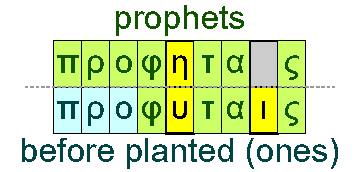
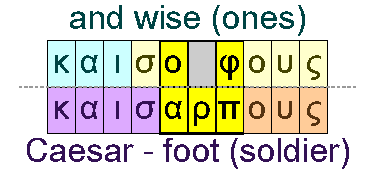
| words |
play on words |
complexity |
type |
| prophets |
newly planted ones (sent) before |
simple |
good |
| and clever/cunning (ones) |
Caesar foot (soldiers) |
extended |
bad |
| and scribes |
Latin/Greek/Jew Matthew |
contorted |
ugly |
Punny paraphrase:
... I send you simple puns, extended puns, contorted puns. Out of them, the simple ones will kill you, the extended ones will crucify you, and the contorted ones will scourge (sting) you in your pews, and will pursue you from city (many) to city (many) (you will not be able to un-hear them.)
There are, then,
three play on words in sequence (as a third level meaning).
[tongue in cheek vs. tongue in check]
47. Acts 25:21
KJV: But when Paul had appealed to be reserved unto the hearing of Augustus, I commanded him to be kept till I might send him to Caesar.
Greek: του δε παυλου επικαλεσαμενου τηρηθηναι αυτον εις την του σεβαστου διαγνωσιν εκελευσα τηρεισθαι αυτον εως ου πεμψω αναπεμψω αυτον προς καισαρα
Latin: Paulo autem appellante ut servaretur ad Augusti cognitionem iussi servari eum donec mittam eum ad Caesarem
Luther: Da aber Paulus sich berief, daß er auf des Kaisers Erkenntnis behalten würde, hieß ich ihn behalten, bis daß ich ihn zum Kaiser sende.
48. Acts 11:28 Claudius Caesar
Acts 11:28 And there stood up one of them named Agabus, and signified by the Spirit that there should be great dearth throughout all the world: which came to pass in the days of Claudius Caesar. [kjv]
αναστας δε εις εξ αυτων ονοματι αγαβος εσημανεν εσημαινεν δια του πνευματος λιμον μεγαν μεγαλην μελλειν εσεσθαι εφ ολην την οικουμενην οστις και ητις εγενετο επι κλαυδιου καισαρος [gnt]
The Roman emperor at the time of Paul, and mentioned twice in the
GNT was "
Tiberius Claudius Caesar Augustus Germanicus", after Caligula and before Nero.
49. Acts 11:28
KJV: And there stood up one of them named Agabus, and signified by the Spirit that there should be great dearth throughout all the world: which came to pass in the days of Claudius Caesar.
Greek: αναστας δε εις εξ αυτων ονοματι αγαβος εσημανεν εσημαινεν δια του πνευματος λιμον μεγαν μεγαλην μελλειν εσεσθαι εφ ολην την οικουμενην οστις και ητις εγενετο επι κλαυδιου καισαρος
50. Acts 17:7
Acts 17:7 Whom Jason hath received: and these all do contrary to the decrees of Caesar, saying that there is another king, one Jesus. [kjv]
ους υποδεδεκται ιασων και ουτοι παντες απεναντι των δογματων καισαρος πραττουσιν πρασσουσιν βασιλεα λεγοντες ετερον λεγοντες ειναι ιησουν [gnt]
51. Acts 17:7
KJV: Whom Jason hath received: and these all do contrary to the decrees of Caesar, saying that there is another king, one Jesus.
Greek: ους υποδεδεκται ιασων και ουτοι παντες απεναντι των δογματων καισαρος πραττουσιν πρασσουσιν βασιλεα λεγοντες ετερον λεγοντες ειναι ιησουν
52. Acts 18:2 Claudius Caesar and the Jews
Acts 18:2 And found a certain Jew named Aquila, born in Pontus, lately come from Italy, with his wife Priscilla; (because that Claudius had commanded all Jews to depart from Rome: ) and came unto them. [kjv]
και ευρων τινα ιουδαιον ονοματι ακυλαν ποντικον τω γενει προσφατως εληλυθοτα απο της ιταλιας και πρισκιλλαν γυναικα αυτου δια το διατεταχεναι κλαυδιον χωριζεσθαι παντας τους ιουδαιους εκ απο της ρωμης προσηλθεν αυτοις [gnt]
… Claudius … [v]
The Roman emperor at the time of Paul, and mentioned twice in the
GNT was "
Tiberius Claudius Caesar Augustus Germanicus", after Caligula and before Nero.
Legend has it that the name "
Claudius" comes from "
lame" or "
crippled" however it appears that the name was adapted from an earlier name from a Sabine (from a tribe related to the original founders of Rome) word that was cognate to the Latin word
"clausus" ≈ "shut, closed".
[Christopher Columbus sailing from Spain]
53. Acts 18:2
KJV: And found a certain Jew named Aquila, born in Pontus, lately come from Italy, with his wife Priscilla; (because that Claudius had commanded all Jews to depart from Rome: ) and came unto them.
Greek: και ευρων τινα ιουδαιον ονοματι ακυλαν ποντικον τω γενει προσφατως εληλυθοτα απο της ιταλιας και πρισκιλλαν γυναικα αυτου δια το διατεταχεναι κλαυδιον χωριζεσθαι παντας τους ιουδαιους εκ απο της ρωμης προσηλθεν αυτοις
Latin: et inveniens quendam Iudaeum nomine Aquilam Ponticum genere qui nuper venerat ab Italia et Priscillam uxorem eius eo quod praecepisset Claudius discedere omnes Iudaeos a Roma accessit ad eos
Luther: und fand einen Juden mit Namen Aquila, der Geburt aus Pontus, welcher war neulich aus Welschland kommen, samt seinem Weibe Priscilla, darum daß der Kaiser Claudius geboten hatte allen Juden, zu weichen aus Rom.
54. Acts 25:8
Acts 25:8 While he answered for himself, Neither against the law of the Jews, neither against the temple, nor yet against Caesar, have I offended any thing at all. [kjv]
55. Acts 25:8
KJV: While he answered for himself, Neither against the law of the Jews, neither against the temple, nor yet against Caesar, have I offended any thing at all.
Greek: του παυλου απολογουμενου αυτου οτι ουτε εις τον νομον των ιουδαιων ουτε εις το ιερον ουτε εις καισαρα τι ημαρτον
56. Philippians 4:22 Co-authorship
Philippians 4:22 All the saints salute you, chiefly they that are of Caesar's household. [kjv]
ασπαζονται υμας παντες οι αγιοι μαλιστα δε οι εκ της καισαρος οικιας [gnt]
If Epaphroditus worked with Paul on the letter, they might have had a unique "
synergy" of two individuals who liked to create puns, play on words, etc. This can be annoying to those who do not like it. It appears that Paul was under house arrest at this time since the household of Caesar was mentioned. I have heard pastors say that Paul was in a Roman prison at this time.
If you had been listening to Paul and Epaphroditus crafting such puns, etc., you might be glad to have that synergy gone. You would "
greet" those (with pity) to whom this special letter is being sent.
57. Philippians 2:27,30 Near death
Philippians 2:27 For indeed he was sick nigh unto death: but God had mercy on him; and not on him only, but on me also, lest I should have sorrow upon sorrow. [kjv]
και γαρ ησθενησεν παραπλησιον θανατω αλλ θανατου αλλα ο θεος αυτον ηλεησεν αυτον ουκ αυτον δε μονον αλλα και εμε ινα μη λυπην επι λυπη λυπην σχω [gnt]
2:30 Because for the work of Christ he was nigh unto death, not regarding his life, to supply your lack of service toward me. [kjv]
οτι δια το εργον του χριστου κυριου μεχρι θανατου ηγγισεν παραβουλευσαμενος παραβολευσαμενος τη ψυχη ινα αναπληρωση το υμων υστερημα της προς με λειτουργιας [gnt]
Why was Epaphroditus twice near death? Why was it mentioned twice? The Greek for "
sorrow" is that of being "
annoyed".
58. Philippians 2:30 Work of Christ
Philippians 2:30 Because for the work of Christ he was nigh unto death, not regarding his life, to supply your lack of service toward me. [kjv]
οτι δια το εργον του χριστου κυριου μεχρι θανατου ηγγισεν παραβουλευσαμενος παραβολευσαμενος τη ψυχη ινα αναπληρωση το υμων υστερημα της προς με λειτουργιας [gnt]
Here is a possible exchange.
Paul: Epaphroditus. Are you all right? Are you near death again?
Epaphroditus: This is not funny, but it is so funny, I am dying laughing. Yes, I am near death again for the work of Christ.
Paul: Write it down.
59. Weeping with tears
Philippians 3:18 For many walk, of whom I have told you often, and now tell you even weeping, that they are the enemies of the cross of Christ: [kjv]
πολλοι γαρ περιπατουσιν ους πολλακις ελεγον υμιν νυν δε και κλαιων λεγω τους εχθρους του σταυρου του χριστου [gnt]
In Philippians 3:18 Paul is "
weeping" having written about the "
enemies" of Christ - which appear to be some of the church at Philippi - via puns, play on words, double meanings, etc. Here is a possible exchange.
Epaphroditus: Paul, you are laughing so hard you are weeping.
Paul: It's not funny, but yes, I am laughing so hard I have tears in my eyes. I am weeping.
Epaphroditus: Let's write it down.
60. Review
To "
remember" the past is to "
remember" what is called "
history" or a "
story" (about the past). Here we will "
remember" some Roman Emperors with a connection to the Bible.
| *Caesar |
46 ‑ 44 BC |
First Caesar |
| *Augustus |
44 ‑ 14 AD |
Jesus born |
| *Tiberius |
14 ‑ 37 |
Jesus crucified |
| Caligula |
37 ‑ 41 |
| *Claudius |
41 ‑ 54 |
Paul requests trial |
| Nero |
54 ‑ 68 |
Paul executed |
| (several) |
68‑69 |
Jewish War started |
| Vespasian |
69 ‑ 79 |
Jewish War ended |
| Titus |
79 ‑ 81 |
Son/general who took Jerusalem |
| Domitian |
81 ‑ 96 |
Persecutions |
*Mentioned in the GNT.
|
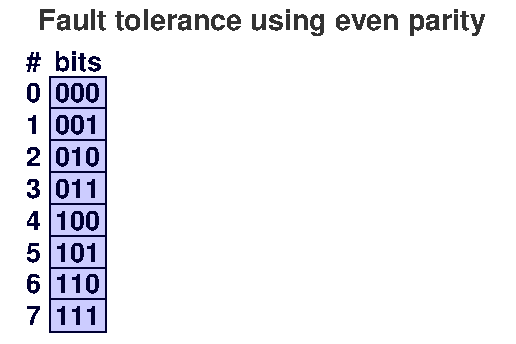
61. Fault tolerance detection using even parity
Error detection and correction requires controlled
redundancy.
Discuss:
How does Hebrew use redundancy to allow error detection and correction? [sound bites]
How does Jesus use redundancy to allow error detection and correction? [parables]
[
TR (Textus Receptus), model breaking]
62. Fault tolerance correction using even parity
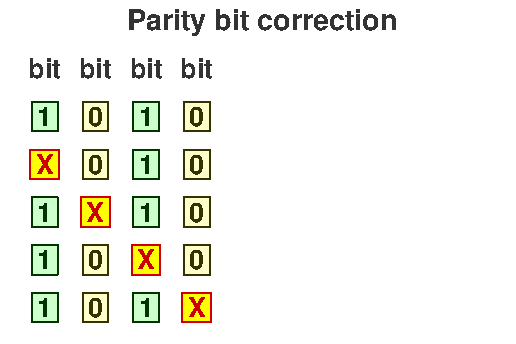
If the bit in error is known, a single-bit error can be corrected.
Fault tolerance detection and correction at the bit level can be extended to a collection of drives each with a huge number bits.
Even parity will detect a one bit error and allow correction if the bit in error can be identified (e.g., a
RAID (Redundant Array of Independent Disks)).
63. End of page