Send
Close Add comments:
(status displays here)
Got it! This site "www.creationpie.org" uses cookies. You consent to this by clicking on "Got it!" or by continuing to use this website. Note: This appears on each machine/browser from which this site is accessed.
John 6:53-61 Misinterpretation and the disappearing blood
1. John 6:53-61 Misinterpretation and the disappearing blood
Hebrews 9:22 And almost all things are by the law purged with blood; and without shedding of blood is no remission. [kjv]
και σχεδον εν αιματι παντα καθαριζεται κατα τον νομον και χωρις αιματεκχυσιας ου γινεται αφεσις [gnt]

It has been noticed that, in recent years, the
"blood" has been disappearing from Christian churches, sermons, hymnals, etc.
What might be the reason the
"blood" was there in the first place, and what might be some reasons why it is now disappearing?
2. Hebrews 9:22
KJV: And almost all things are by the law purged with blood; and without shedding of blood is no remission.
Greek: και σχεδον εν αιματι παντα καθαριζεται κατα τον νομον και χωρις αιματεκχυσιας ου γινεται αφεσις
3. Hymns
4. Hymns
5. Hymns
6. Matthew 5: A eulogy of some blessed words on being blissfully happy
Each of the Beatitudes in Matthew 5 start with the word
"blessed". What does it mean to say someone is
"blessed"?
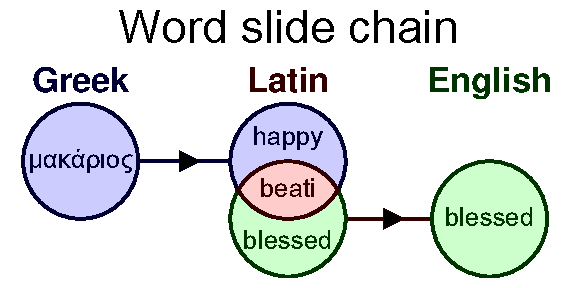
The Latin word
"beati" ≈ "happy, fortunate, blessed" and is the origin of the English word
"beatitude" and the name of the
"Beatitudes". Latin has
one word as "
fortunate" for which Greek has
two separate words:
"blessed" from the Greek "happy" or "content".
"blessed" from the Greek "good words" as in "eulogy".
Observation: It is easier for a priest, pastor, etc., to wave their hands and
"bless" you than to actually make you
"happy".
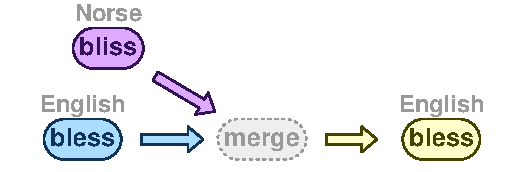
In English, both words are merged as one
"blessed" and, historically, conflated with the word
"bliss" which is associated with
"joy".
7. Matthew 26:28 Testament
Matthew 26:28 For this is my blood of the new testament, which is shed for many for the remission of sins. [kjv]
τουτο γαρ εστιν το αιμα μου το της καινης διαθηκης το περι πολλων εκχυνομενον εκχυννομενον εις αφεσιν αμαρτιων [gnt]
There is a "
New Testament" or "
New Covenant" in the
GNT (Greek New Testament) but there appears to be little mention of an "
Old Testament" or "
Old Covenant" in the
GNT (Luke, 2 Corinthians). Thus, it is hard to relate "
new" and "
old" to "
testament" or "
covenant".
The
TR (Textus Receptus) adds the word
"new".
For which is the blood
not shed for the remission of sins?
[covenant as play on though Peter as in through the church]
8. Matthew 26:28 Blood of the New Testament
Matthew 26:28 For this is my blood of the new testament, which is shed for many for the remission of sins. [kjv]
τουτο γαρ εστιν το αιμα μου το της καινης διαθηκης το περι πολλων εκχυνομενον εκχυννομενον εις αφεσιν αμαρτιων [gnt]
Who are the
"many"? Are there some included who are not among the
"many". Might these be in the "
wide area"? Who are the "
few"? How about the "
wolves"?
The Greek for
"remission" is the same word as for
"forgiveness" or
"letting go".
Note that one must "
redeem" the "
offer" of the "
Redeemer" before it is valid or takes effect. This point is often (deceptively) omitted by some pastors.
9. Matthew 26:27-28 Drinking the blood
Matthew 26:27 And he took the cup, and gave thanks, and gave it to them, saying, Drink ye all of it; [kjv]
και λαβων το ποτηριον και ευχαριστησας εδωκεν αυτοις λεγων πιετε εξ αυτου παντες [gnt]
26:28 For this is my blood of the new testament, which is shed for many for the remission of sins. [kjv]
τουτο γαρ εστιν το αιμα μου το της καινης διαθηκης το περι πολλων εκχυνομενον εκχυννομενον εις αφεσιν αμαρτιων [gnt]
The blood represents life. The
"Eucharist" in both ancient and modern Greek is the word for
"thank you" and means, literally, a
"good favor" or "
good grace".
10. Blessing with blood
11. Daniel: Susanna in Babylon
One of the first documented cases of cross examinations of separated witnesses in a legal setting is that of Daniel at the trial of Susanna - which is part of the Apocrypha as Daniel chapter 13. It is part of the
LXX (Septuagint) and called the ancient Greek word
"Σωσαννα" ≈ "Susanna" .
The book of "
Susanna" is sometimes called "
Susanna and the Elders".
In the story, Daniel is called in and says that he is "
innocent of this blood". Matthew uses this similar saying to describe what Pilate says of the blood of Jesus.
Matthew 27:24 When Pilate saw that he could prevail nothing, but that rather a tumult was made, he took water, and washed his hands before the multitude, saying, I am innocent of the blood of this just person: see ye to it. [kjv]
ιδων δε ο πιλατος οτι ουδεν ωφελει αλλα μαλλον θορυβος γινεται λαβων υδωρ απενιψατο τας χειρας απεναντι κατεναντι του οχλου λεγων αθωος ειμι απο του αιματος του δικαιου τουτου υμεις οψεσθε [gnt]
12. Exodus 12:22 Baptized and splashed with the blood
Exodus 12:22 And ye shall take a bunch of hyssop, and dip it in the blood that is in the bason, and strike the lintel and the two side posts with the blood that is in the bason; and none of you shall go out at the door of his house until the morning. [kjv]
λημψεσθε δε δεσμην υσσωπου και βαψαντες απο του αιματος του παρα την θυραν καθιξετε της φλιας και επ αμφοτερων των σταθμων απο του αιματος ο εστιν παρα την θυραν υμεις δε ουκ εξελευσεσθε εκαστος την θυραν του οικου αυτου εως πρωι [lxx]
… tinguite sanguine … [v]
The Latin word
"tingo" ≈ "wet, moisten, dip, dye" and is the source of the English word
"tincture",
"tinge" and
"intinction" as a means of communion by
"dipping" the bread in the wine.
13. Baptized and splashed with the blood
The Hebrew instructions for "
splashing the blood" for "
Passover" have the effect of creating an optical illusion of the "
cross". The Greek for
"dip" in the
LXX is the same word as for
"baptize".
The blood is to be
splashed, as in "
strike", on the "
lintel" and the two "
side posts". [Moses and the rock]
14. 1 John 5:6 Water and blood and truth
1 John 5:6 This is he that came by water and blood, even Jesus Christ; not by water only, but by water and blood. And it is the Spirit that beareth witness, because the Spirit is truth. [kjv]
ουτος εστιν ο ελθων δι υδατος και αιματος ιησους ο χριστος ουκ εν τω υδατι μονον αλλ εν τω υδατι και εν τω αιματι και το πνευμα εστιν το μαρτυρουν οτι το πνευμα εστιν η αληθεια [gnt]
Jesus came
not by just
water, but by
water and blood.
Is the "blood" sufficient?
Did Jesus have to die on the "cross" and be "resurrected"?
15. Paul
1 Corinthians 15:13 But if there be no resurrection of the dead, then is Christ not risen: [kjv]
ει δε αναστασις νεκρων ουκ εστιν ουδε χριστος εγηγερται [gnt]
15:14 And if Christ be not risen, then is our preaching vain, and your faith is also vain. [kjv]
ει δε χριστος ουκ εγηγερται κενον αρα και το κηρυγμα ημων κενη δε και η πιστις υμων ημων [gnt]
Is the "blood" sufficient?
Did Jesus have to die on the "cross" and be "resurrected"?
16. Red for blood
The color "
red" or "
scarlet" can represent blood. Jesus came as flesh and blood and shed his blood for us.
Hebrews 2:14 Forasmuch then as the children are partakers of flesh and blood, he also himself likewise took part of the same; that through death he might destroy him that had the power of death, that is, the devil; [kjv]
επει ουν τα παιδια κεκοινωνηκεν σαρκος και αιματος και σαρκος και αυτος παραπλησιως μετεσχεν των αυτων ινα δια του θανατου καταργηση τον το κρατος εχοντα του θανατου τουτ εστιν τον διαβολον [gnt]
17. John 6:53-54
John 6:53 Then Jesus said unto them, Verily, verily, I say unto you, Except ye eat the flesh of the Son of man, and drink his blood, ye have no life in you. [kjv]
6:54 Whoso eateth my flesh, and drinketh my blood, hath eternal life; and I will raise him up at the last day. [kjv]
18. John 6:53
KJV: Then Jesus said unto them, Verily, verily, I say unto you, Except ye eat the flesh of the Son of man, and drink his blood, ye have no life in you.
Greek: ειπεν ουν αυτοις ο ιησους αμην αμην λεγω υμιν εαν μη φαγητε την σαρκα του υιου του ανθρωπου και πιητε αυτου το αιμα ουκ εχετε ζωην εν εαυτοις
19. John 6:54
KJV: Whoso eateth my flesh, and drinketh my blood, hath eternal life; and I will raise him up at the last day.
Greek: ο τρωγων μου την σαρκα και πινων μου το αιμα εχει ζωην αιωνιον και εγω καγω αναστησω αυτον τη εσχατη ημερα
20. John 6:55-57
John 6:55 For my flesh is meat indeed, and my blood is drink indeed. [kjv]
6:56 He that eateth my flesh, and drinketh my blood, dwelleth in me, and I in him. [kjv]
6:57 As the living Father hath sent me, and I live by the Father: so he that eateth me, even he shall live by me. [kjv]
21. John 6:55
KJV: For my flesh is meat indeed, and my blood is drink indeed.
Greek: η γαρ σαρξ μου αληθως αληθης εστιν βρωσις και το αιμα μου αληθως αληθης εστιν ποσις
22. John 6:56
KJV: He that eateth my flesh, and drinketh my blood, dwelleth in me, and I in him.
Greek: ο τρωγων μου την σαρκα και πινων μου το αιμα εν εμοι μενει καγω εν αυτω
23. John 6:57
KJV: As the living Father hath sent me, and I live by the Father: so he that eateth me, even he shall live by me.
Greek: καθως απεστειλεν με ο ζων πατηρ καγω ζω δια τον πατερα και ο τρωγων με κακεινος ζησεται ζησει δι εμε
24. John 6:58-59
John 6:58 This is that bread which came down from heaven: not as your fathers did eat manna, and are dead: he that eateth of this bread shall live for ever. [kjv]
6:59 These things said he in the synagogue, as he taught in Capernaum. [kjv]
25. John 6:58
KJV: This is that bread which came down from heaven: not as your fathers did eat manna, and are dead: he that eateth of this bread shall live for ever.
Greek: ουτος εστιν ο αρτος ο εκ του εξ ουρανου καταβας ου καθως εφαγον οι πατερες υμων το μαννα και απεθανον ο τρωγων τουτον τον αρτον ζησεται ζησει εις τον αιωνα
26. John 6:59
KJV: These things said he in the synagogue, as he taught in Capernaum.
Greek: ταυτα ειπεν εν συναγωγη διδασκων εν καπερναουμ καφαρναουμ
27. John 6:60-61
John 6:60 Many therefore of his disciples, when they had heard this, said, This is an hard saying; who can hear it? [kjv]
6:61 When Jesus knew in himself that his disciples murmured at it, he said unto them, Doth this offend you? [kjv]
28. John 6:60
KJV: Many therefore of his disciples, when they had heard this, said, This is an hard saying; who can hear it?
Greek: πολλοι ουν ακουσαντες εκ των μαθητων αυτου ειπον ειπαν σκληρος εστιν ουτος ο λογος ουτος τις δυναται αυτου ακουειν
29. John 6:61
KJV: When Jesus knew in himself that his disciples murmured at it, he said unto them, Doth this offend you?
Greek: ειδως δε ο ιησους εν εαυτω οτι γογγυζουσιν περι τουτου οι μαθηται αυτου ειπεν αυτοις τουτο υμας σκανδαλιζει
30. End of page