Send
Close Add comments:
(status displays here)
Got it! This site "www.creationpie.org" uses cookies. You consent to this by clicking on "Got it!" or by continuing to use this website. Note: This appears on each machine/browser from which this site is accessed.
Matthew 26:30-35,69-75 Rooster birds crowing at denials
1. Matthew 26:30-35,69-75 Rooster birds crowing at denials
This content is being developed.
2. Matthew 26:30-35,69-75 Rooster birds crowing at denials
Matthew 26:34 Jesus said unto him, Verily I say unto thee, That this night, before the cock crow, thou shalt deny me thrice. [kjv]
εφη αυτω ο ιησους αμην λεγω σοι οτι εν ταυτη τη νυκτι πριν αλεκτορα φωνησαι τρις απαρνηση με [gnt]
In the
GNT (Greek New Testament), Jesus does not use the idea of
"birds" in a good way. In Peter's denial of Christ, the
rooster "bird" crows or
voices at
Peter's denial. Think
"cluck" "cluck".
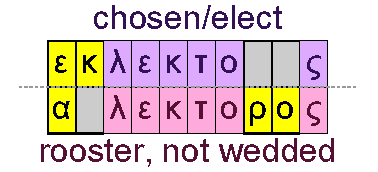
"ἐκλεκτός" ≈ "picked out, selected".
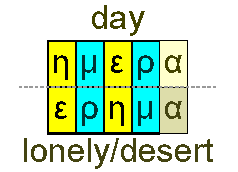
"ἀλέκτορος" ≈ "rooster, husband, not wedded" (genitive singular) of "ἀλέκτωρ" ≈ "rooster, husband, not wedded".
What meanings beyond the immediate literal meaning may be inferred in what Jesus says and the disciples do and how they react?
3. Matthew 6:26 Feeding the birds
Matthew 6:26 Behold the fowls of the air: for they sow not, neither do they reap, nor gather into barns; yet your heavenly Father feedeth them. Are ye not much better than they? [kjv]
εμβλεψατε εις τα πετεινα του ουρανου οτι ου σπειρουσιν ουδε θεριζουσιν ουδε συναγουσιν εις αποθηκας και ο πατηρ υμων ο ουρανιος τρεφει αυτα ουχ υμεις μαλλον διαφερετε αυτων [gnt]
"οὐράνιος" ≈ "heaven, sky".
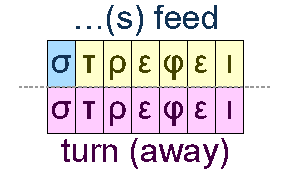
"τρεφει" ≈ "feeds"
"στρέφειι" ≈ "turn, direct, twist"
Why does Jesus use
"heavens" (
plural)? Why is the wording "
and the Father of yours of heavens feeds"? Answer: To make the play on words work.
[How many sheep are left?]
4. Matthew 6:26 Feeding the birds
Matthew 6:26 Behold the fowls of the air: for they sow not, neither do they reap, nor gather into barns; yet your heavenly Father feedeth them. Are ye not much better than they? [kjv]
εμβλεψατε εις τα πετεινα του ουρανου οτι ου σπειρουσιν ουδε θεριζουσιν ουδε συναγουσιν εις αποθηκας και ο πατηρ υμων ο ουρανιος τρεφει αυτα ουχ υμεις μαλλον διαφερετε αυτων [gnt]
| Language |
What is said. |
What is heard. |
| English |
twenty sick sheep |
twenty six sheep |
| Greek |
...ουράνιος τρέφει αυτα |
...ουράνιος στρέφει αυτα |
| English |
...(in) heaven feeds them |
... (in) heaven turns (away from) them |
The
"birds" appear to "
work" but do not do useful "
work". The "
laborers" are needed for the future "
harvest". We see other verses where the "
Father" feeds both the
"birds" and the others. What can
separate you from the
love of Christ?
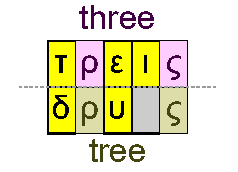
5. Play on words in Matthew 6:26
| Language |
What is said. |
What is heard. |
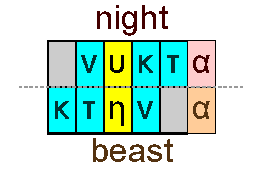
| English |
twenty sick sheep |
twenty six sheep |
| Greek |
...ουράνιος τρέφει αυτα |
...ουράνιος στρέφει αυτα |
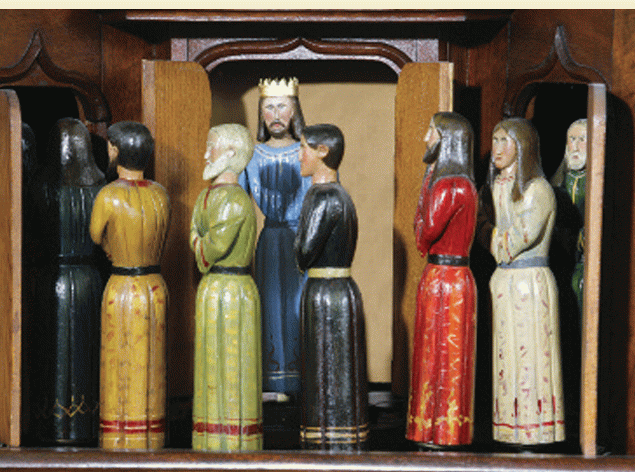
| English |
...(in) heaven feeds them |
... (in) heaven turns (away from) them |
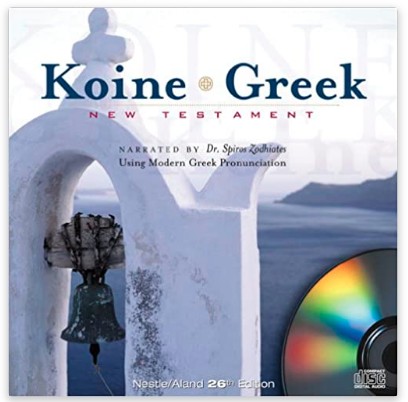
Spiros Zodhiates (Greek-American Bible scholar, author and ministry innovator) (1922-2009) published an audio version of the
GNT (Nestle/Aland 26 edition) using modern Greek pronunciation which is used in many colleges and universities.
The
same play on words can be heard in
ancient Greek and in
modern Greek. It is interesting that when Spiros Zodhiates reads this verse, he puts in a distinct and somewhat long (and unusual) pause between the two words that would otherwise be heard as a play on words in Greek. [English trains and strains]
6. Matthew 10:33 Deny as a bird
Matthew 10:33 But whosoever shall deny me before men, him will I also deny before my Father which is in heaven. [kjv]
οστις δε δ αν αρνησηται με εμπροσθεν των ανθρωπων αρνησομαι αυτον καγω αυτον εμπροσθεν του πατρος μου του εν τοις ουρανοις [gnt]
Use the noun for
"bird" as a verb. What's your "
ask"? [tennising]
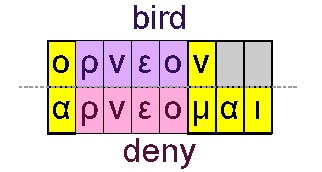
Greek: αρνησηται (say "ar-NEE-see-ta"), verb "deny".
Greek: ορνησηται (say "or-NEE-see-ta"), verb "bird".
Paraphrase (with play on words):
Whoever [bones, hostile] denies [birds] me before men, I will deny [bird] him before my Father in heaven.
"ἀρνέομαι" ≈ "deny, disown, refuse, decline".
"ὄρνεον" ≈ "bird" as in ornithology.
This play on word usage is
not the same as the modern "
flip" the
"bird" action, though the word "
flip" is similar in spirit to the Greek word for "
worthy" as in "
counter-balance" and the word translated as "
variance" (in two verses).
7. Matthew 10:29,31 All the sparrows
Matthew 10:29 Are not two sparrows sold for a farthing? and one of them shall not fall on the ground without your Father. [kjv]
ουχι δυο στρουθια ασσαριου πωλειται και εν εξ αυτων ου πεσειται επι την γην ανευ του πατρος υμων [gnt]
10:31 Fear ye not therefore, ye are of more value than many sparrows. [kjv]
μη ουν φοβηθητε φοβεισθε πολλων στρουθιων διαφερετε υμεις [gnt]
Paraphrase:
All the sparrows (of the evil one) who sell themselves (or others) out for earthly gain will fall on that earthly ground because they are without God the Father ... Fear not. You are different than sparrows.
It takes "
two" to work a "
deal" - for or against God. The Greek word for "
hairs" is that of general "
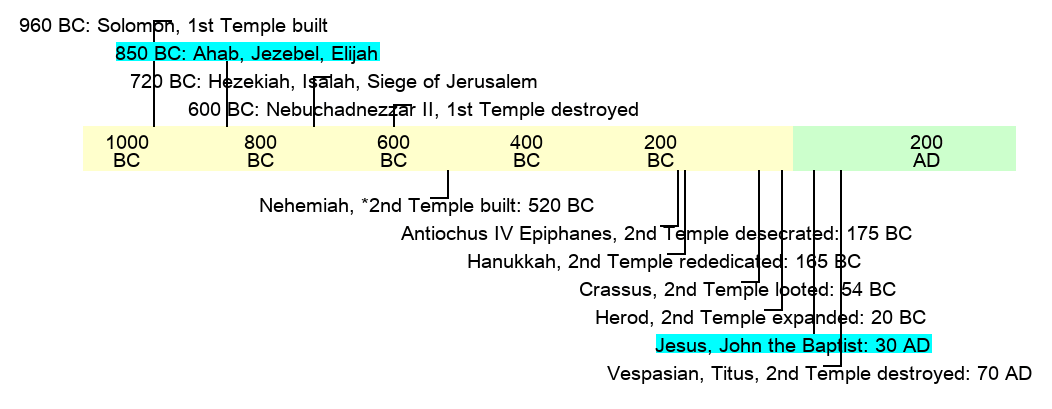
hairs" and
not the Greek word for "
well-behaved hairs" which is a play on words with (un-walled) "
town" or "
village". [sheep and (young) goats]
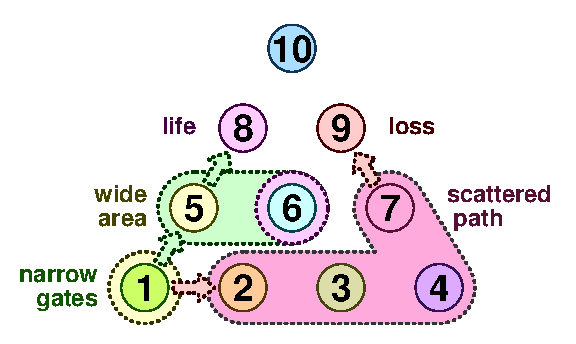
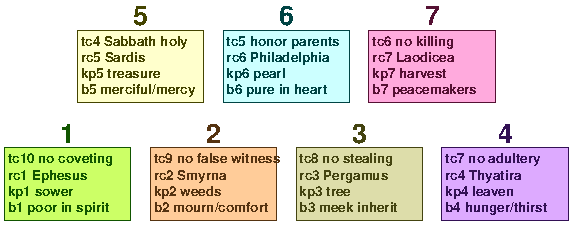
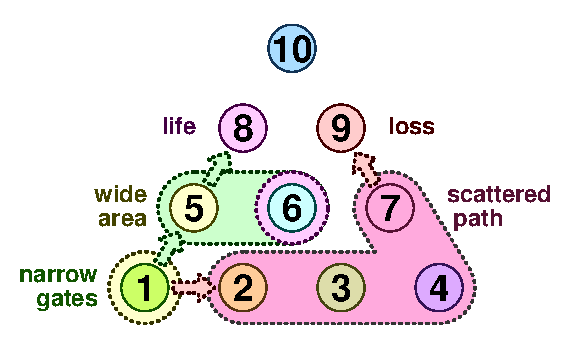
Which birds stick together the best?
Velcrows
8. Pretty birds
Some say:
The birds are so pretty (appearance).
The birds sound so nice (sales pitch).
The birds make me feel so good.
Have you ever watched the birds clean out your blueberry bush of every blueberry ready to be picked?
Reword those thoughts.
The false teachers are so pretty (appearance).
The false teachers sound so nice (sales pitch).
The false teachers make me feel so good (no worries).
Feed the birds and
you'll be birdseed.
9. Matthew 13:4,19 Birds and the evil one
Matthew 13:4 And when he sowed, some seeds fell by the way side, and the fowls came and devoured them up: [kjv]
και εν τω σπειρειν αυτον α μεν επεσεν παρα την οδον και ηλθεν ελθοντα τα πετεινα και κατεφαγεν αυτα [gnt]
13:19 When any one heareth the word of the kingdom, and understandeth it not, then cometh the wicked one, and catcheth away that which was sown in his heart. This is he which received seed by the way side. [kjv]
παντος ακουοντος τον λογον της βασιλειας και μη συνιεντος ερχεται ο πονηρος και αρπαζει το εσπαρμενον εν τη καρδια αυτου ουτος εστιν ο παρα την οδον σπαρεις [gnt]
Jesus relates "
devour" as in "
eating" to
"catcheth away" which is related to the word for
"rapture". The
KJV (King James Version) translates as "
evil" or "
wicked" the Greek word that means "
oppression" or "
oppressor". Saying:
You'll be birdseed.
10. Matthew 13:4,19 Devour and snatch away
Matthew 13:4 And when he sowed, some seeds fell by the way side, and the fowls came and devoured them up: [kjv]
13:19 When any one heareth the word of the kingdom, and understandeth it not, then cometh the wicked one, and catcheth away that which was sown in his heart. This is he which received seed by the way side. [kjv]
The Greek for
"snatch away" is the word used for
"rapture" and the source of the English word
"harpoon". It is also used as
"ravenous" in terms of "
wolves".
Saying:
You'll be birdseed. The "
seed" that was
"snatched away" in parable 1 appears to have been deposited (by the
"birds") in parable 2 as "
weeds" and then grows into a "
tree" in parable 3 so that those
"birds" have a place to make their "
nests".
11. Matthew 8:20 Birds of the air
Matthew 8:20 And Jesus saith unto him, The foxes have holes, and the birds of the air have nests; but the Son of man hath not where to lay his head. [kjv]
και λεγει αυτω ο ιησους αι αλωπεκες φωλεους εχουσιν και τα πετεινα του ουρανου κατασκηνωσεις ο δε υιος του ανθρωπου ουκ εχει που την κεφαλην κλινη [gnt]
… Foxis … dennes… briddis … heuene … nestis… reste … heed. [wy]
Is the
"kingdom of heaven" actually
"heaven" as in the
"kingdom of God"?
"βασίλεια των ουρανών" ≈ "kingdom of heaven" or "kingdom of the air".
"πετεινα του ουρανου" ≈ "birds of the air" or "birds of heaven".
Wycliffe uses the phrase "briddis of heuene" or "birds of heaven".
Some will attempt to "
fix" a perceived "
error" in the Bible text by asserting their opinion (or glory) that
"kingdom of God" and
"kingdom of heaven" are the same thing.
If birds represent "
evil" or "
oppression" (parable 1), are there any birds in heaven?
12. Matthew 8:20 Birds of heaven
Matthew 8:20 And Jesus saith unto him, The foxes have holes, and the birds of the air have nests; but the Son of man hath not where to lay his head. [kjv]
και λεγει αυτω ο ιησους αι αλωπεκες φωλεους εχουσιν και τα πετεινα του ουρανου κατασκηνωσεις ο δε υιος του ανθρωπου ουκ εχει που την κεφαλην κλινη [gnt]
… Foxas … holo… heofene fugeles nyst… heafod änhelde. [wes]
… Foxis … dennes… briddis … heuene … nestis… reste … heed. [wy]
The
ancient Greek word
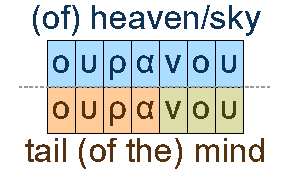
"οὐρανός" ≈ "heaven, air". Jesus uses the dative of
"heaven" or
"air" or
"sky" as a play on words with "
mind" of the "
tail".
Wycliffe translates the Greek as the Middle English phrase
"briddis" ≈ "birds" of
"heuene" ≈ "heaven" as does the Wessex Old English phrase
"fugeles" ≈ "birds" of
"heofene" ≈ "heaven". The Old English word
"briddis" for
"bird" may be the source of the English word
"bride".
13. Matthew 23:37 Facetious remarks
Matthew 23:37 O Jerusalem, Jerusalem, thou that killest the prophets, and stonest them which are sent unto thee, how often would I have gathered thy children together, even as a hen gathereth her chickens under her wings, and ye would not ! [kjv]
ιερουσαλημ ιερουσαλημ η αποκτεινουσα τους προφητας και λιθοβολουσα τους απεσταλμενους προς αυτην ποσακις ηθελησα επισυναγαγειν τα τεκνα σου ον τροπον επισυναγει ορνις επισυναγει τα νοσσια εαυτης αυτης υπο τας πτερυγας και ουκ ηθελησατε [gnt]
Paraphrase (last part of verse):
... how often I (like you snakes) would/could have gathered together (in my den of thieves) your children in the way a bird [evil cave] gathers her [sick/weak, diseased] chicks (little birds) under the wings (of the temple) [breaking the father] and you did not care nor want to [you Satan].
Discuss: How much theological importance should be put on what Jesus says when what was said appears to be facetious remarks, as a parody, on what has happened?
"νόσος" ≈ "sickness, disease, distress".
"νεοσσός" ≈ "young bird, chick"
[sheep and goats, identify the young/sick birds]
14. Matthew 26:30 Hymn sing
Matthew 26:30 And when they had sung an hymn, they went out into the mount of Olives. [kjv]
και υμνησαντες εξηλθον εις το ορος των ελαιων [gnt]
The English word
"hymn" comes, through Latin, from the
ancient Greek word
"ὕμνος" ≈ "song, hymn, ode". The
modern Greek word
"ύμνος" (EE-mnos) ≈ "hymn".
When you sing a
"hymn" about
"Jesus" you are singing a
"hymn" about "
Him", no hem and haw about it. Ahem, shall we say amen.
Mount of Olives (olives grown).
Garden of Gethsemane (olive press).
This is after the Last Supper as they go to the Mount of Olives. What might the disciples have been thinking was going to happen?
15. Matthew 26:30
KJV: And when they had sung an hymn, they went out into the mount of Olives.
Greek: και υμνησαντες εξηλθον εις το ορος των ελαιων
16. Matthew 26:31 Word usage
Matthew 26:31 Then saith Jesus unto them, All ye shall be offended because of me this night: for it is written, I will smite the shepherd, and the sheep of the flock shall be scattered abroad. [kjv]
τοτε λεγει αυτοις ο ιησους παντες υμεις σκανδαλισθησεσθε εν εμοι εν τη νυκτι ταυτη γεγραπται γαρ παταξω τον ποιμενα και διασκορπισθησεται διασκορπισθησονται τα προβατα της ποιμνης [gnt]
| Matthew 26:31 |
| Strong |
Used |
Unique |
Word |
Part of speech |
| G4624 |
29 |
2 |
σκανδαλισθησεσθε |
verb future indicative passive 2nd person plural |
| G3960 |
10 |
2 |
παταξω |
verb future active indicative 1st person singular |
| G4166 |
18 |
6 |
ποιμενα |
noun accusative singular masculine |
| G1287 |
9 |
2 |
διασκορπισθησονται |
verb future passive indicative 3rd person plural |
| G4167 |
5 |
2 |
ποιμνης |
noun genitive singular feminine |
17. A scatter-brained approach to the sting of a scorpion
Matthew 12:30 He that is not with me is against me; and he that gathereth not with me scattereth abroad. [kjv]
ο μη ων μετ εμου κατ εμου εστιν και ο μη συναγων μετ εμου σκορπιζει [gnt]
In Greek, the words for
"scorpion" and
"scatter" are related. The ancient Greek word
"σκορπίος" ≈ "scorpion" and is the source of the English word
"scorpion".
It is unclear as to which word came from which, but both are used in the
LXX (Septuagint) and
GNT. Certainly scorpions would cause a group to scatter or move away from them.
The word for "
gather" is that of a "
gathering" or
"synagogue" which is a Greek word and
not a Hebrew word. The ancient Greek word
"συναγωγή" ≈ "gathering".
18. Matthew 12:30 Scatter plots
Matthew 12:30 He that is not with me is against me; and he that gathereth not with me scattereth abroad. [kjv]
ο μη ων μετ εμου κατ εμου εστιν και ο μη συναγων μετ εμου σκορπιζει [gnt]

A
scatter plot is used to display data to help visualize the distribution of the data.
19. Matthew 26:31 Scorpions
Matthew 26:31 Then saith Jesus unto them, All ye shall be offended because of me this night: for it is written, I will smite the shepherd, and the sheep of the flock shall be scattered abroad. [kjv]
τοτε λεγει αυτοις ο ιησους παντες υμεις σκανδαλισθησεσθε εν εμοι εν τη νυκτι ταυτη γεγραπται γαρ παταξω τον ποιμενα και διασκορπισθησεται διασκορπισθησονται τα προβατα της ποιμνης [gnt]
The ancient Greek word
"σκορπίος" ≈ "scorpion" and is the source of the English word
"scorpion".
What does it mean to be
"offended"?
20. Everything and all things: But wait, there's more
The ancient Greek word has (at least) two words for the English word
"all" and one has two variations. The ancient Greek word
"ὅλος" ≈ "whole, all" as in the English word
"hologram".
The ancient Greek word (as a
noun)
"πάντα" ≈ "always, all, whole" and is related to the Greek god
"Pan" and used in words such as "
pandemic". As an adjective, the
singular does
not have
exceptions but the
plural may have exceptions.
The insight here is that the Greek word can mean
"everything" as in
"all things" but the primary meaning is
"always".
Context is required and may force one meaning over the other meaning. In some cases, both meanings may make sense to one extent or the other.
21. Philippians 4:13 All things
Philippians 4:13 I can do all things through Christ which strengtheneth me. [kjv]
παντα ισχυω εν τω ενδυναμουντι με χριστω [gnt]
Can one really do "
all things"? There are many changes from the Greek.
The word "Christ" is inferred from the pronoun "Him" as "τω" ≈ "(wrt) him/it".
The Greek "in" is changed to "through".
The Greek "am made strong", is changed to "can do".
The Greek "all" with implied "these things" (i.e., in the previous verse) is changed to "all (things)".
The Greek "potential to do" is changed to "strengtheneth".
Greek paraphrase:
In all these things (just mentioned), I am given potential (to accomplish) in Him.
It appears that Paul is saying that he is made "
stronger" or "
better" in "
everything" through Jesus Christ. This would include the adversity of neglect (from Phillipi) whereby he needed to be self-sufficient to continue the work of Christ.
22. Adjective all
| * |
Masc.
Sing. |
Masc.
Plural |
Fem.
Sing. |
Fem.
Plural |
Neuter
Sing. |
Neuter
Plural |
| Nom. |
πᾶς |
πᾰ́ντες |
πᾶσᾰ |
πᾶσαι |
πᾶν |
πᾰ́ντᾰ |
| Gen. |
πᾰντός |
πᾰ́ντων |
πᾱ́σης |
πᾱσῶν |
πᾰντός |
πᾰ́ντων |
| Dat. |
́πᾰντῐ́ |
πᾶσῐ(ν) |
πᾱ́σῃ |
πᾱ́σαις |
́πᾰντῐ́ |
πᾶσῐ(ν) |
| Acc. |
πᾰ́ντᾰ |
πᾰ́ντᾰς |
πᾶν |
πᾱ́σᾱς |
πᾶσᾰν |
πᾰ́ντᾰ |
The ancient Greek word (
adjective)
"πᾶς" ≈ "all, every" (nominative masculine
singular). The rules are as follows. It is not clear if these rules always apply.
In the singular, it is "each", "every", "all" of the domain that fits the context.
In the plural, this would be the domain as a "complete" unit. There could be exceptions.
This convention is the
default meaning of the word for "
all". The context will determine if there are exceptions, etc. For example, the
singular means
every one. For example, a verb in the
subjunctive tense could
modify that default meaning.
23. Matthew 26:31 All of you
Matthew 26:31 Then saith Jesus unto them, All ye shall be offended because of me this night: for it is written, I will smite the shepherd, and the sheep of the flock shall be scattered abroad. [kjv]
τοτε λεγει αυτοις ο ιησους παντες υμεις σκανδαλισθησεσθε εν εμοι εν τη νυκτι ταυτη γεγραπται γαρ παταξω τον ποιμενα και διασκορπισθησεται διασκορπισθησονται τα προβατα της ποιμνης [gnt]
In Greek, the word
"all" does not mean
"all" in the way some pastors (and others) define it in sermons, etc. The Greek word for
"all" means
"all" in
context. In this case, Jesus is speaking to
"all" of those with him. Jesus even adds
"(of) you" in the Greek. Let us assume these are the
11 disciples as Judas has left to do his dirty work.
24. Matthew 26:31 Because of me
Matthew 26:31 Then saith Jesus unto them, All ye shall be offended because of me this night: for it is written, I will smite the shepherd, and the sheep of the flock shall be scattered abroad. [kjv]
τοτε λεγει αυτοις ο ιησους παντες υμεις σκανδαλισθησεσθε εν εμοι εν τη νυκτι ταυτη γεγραπται γαρ παταξω τον ποιμενα και διασκορπισθησεται διασκορπισθησονται τα προβατα της ποιμνης [gnt]
The
KJV adds
"because" which is not in the Greek. This
"because" helps support the translation that was desired for this verse. The idea is that it is the fault/cause of Jesus and not of ourselves. That is, we were not deceived. Did Jesus then deceive us? Jesus uses the ancient Greek phrase (
three times in Matthew)
"ἐν" ≈ "in" and
"ἐμοὶ" ≈ "me".
KJV:
... offended because of me this night ...
Greek:
... entrapped/misinterpret in me in the night this ...
25. Matthew 10:32 Confession reasoning
Matthew 10:32 Whosoever therefore shall confess me before men, him will I confess also before my Father which is in heaven. [kjv]
πας ουν οστις ομολογησει εν εμοι εμπροσθεν των ανθρωπων ομολογησω καγω εν αυτω εμπροσθεν του πατρος μου του εν τοις ουρανοις [gnt]
The ancient Greek word
"ὁμολογέω" ≈ "make an agreement, agree" and means, literally,
"same reasoning" or
"same explanation" and can be
"same word" if "
word" is taken as "
reasoning". The Latin word
"confiteor" ≈ "confess".
Which matters more? What you
think. What you
say. What you
do. Discuss:
Is this a verbal "confession" "in" "Jesus"?
Can actions, or lack of actions, define a "confession" "in" "Jesus"?
How is an "agreement" different than an "oath"?
Jesus here uses the ancient Greek phrase (three times in Matthew)
"ἐν" ≈ "in" and
"ἐμοὶ" ≈ "me" (dative). The
KJV omits the
"in" two times but keeps the third
"in".
26. Matthew 10:32-33 Same reasoning
Matthew 10:32 Whosoever therefore shall confess me before men, him will I confess also before my Father which is in heaven. [kjv]
πας ουν οστις ομολογησει εν εμοι εμπροσθεν των ανθρωπων ομολογησω καγω εν αυτω εμπροσθεν του πατρος μου του εν τοις ουρανοις [gnt]
10:33 But whosoever shall deny me before men, him will I also deny before my Father which is in heaven. [kjv]
οστις δε δ αν αρνησηται με εμπροσθεν των ανθρωπων αρνησομαι αυτον καγω αυτον εμπροσθεν του πατρος μου του εν τοις ουρανοις [gnt]
Jesus will use the
"same reasoning" which is the
literal meaning of the Greek word for
"agreement" and (incorrectly) translated as
"confess". The Greek
"in", omitted in most translations, creates issues with translating the Greek word for
"same reasoning" or
"agreement" as
"confess".
Does the following (paraphrase) make sense?
If you confess in Jesus (as Lord), Jesus will confess in you (as Lord).
Do churches ever get together and
"agree" "in" Jesus ideas that actually "
deny"
Jesus? This is like "
all in the same boat" or "
all in the same vote".
27. Matthew 11:6: Idiomatic misinterpretations that offend
Matthew 11:6 And blessed is he, who soever shall not be offended in me. [kjv]
και μακαριος εστιν ος εαν αν μη σκανδαλισθη εν εμοι [gnt]
… beatus … non … scandalizatus … [v]
Jesus is speaking. The ancient Greek word
"σκάνδαλον" ≈ "trap, snare" as in
entice,
tempt, etc. Star Wars
Admiral Ackbar: "
It's a trap!".
The Greek word
"blessed" here means
"happy". The
"offended" means
"entrapped" as in being
"tricked" or
"deceived" or
"seduced". How could someone be "
deceived" by themselves or someone else about what Jesus really means? A simple
idiom as
"misinterpret" helps to understand this word in the
GNT.
Paraphrase:
Happy is the one who does not misinterpret (entrap themselves) in what I say.
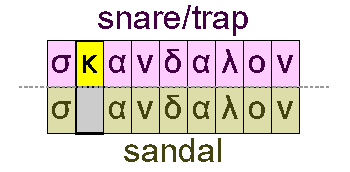
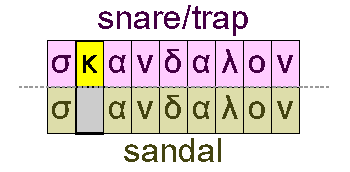
28. Sandals and scandal
In the Greek, the word for
"snare" or
"trap" is the same as the Greek word for
"sandal" except for a Greek "
κ" (kappa).
The ancient Greek word "σκάνδαλον" ≈ "snare, trap, temptation" and is the source of the English word "scandal" (with a different meaning).
The ancient Greek word "σάνδαλον" ≈ "sandal" and is the source of the English word "sandal".
How might a
"shoe" relate to
"entrapment"? How might a
"sandal", is in the book of Ruth, be related to an "
oath"?
29. Meaning change

The ancient Greek word
"σκάνδαλον" ≈ "trap, snare" as in entice, tempt, etc., but could have an idiomatic meaning.
The original sense of "scandal" was to snare, trap, tempt, entice, etc. Someone else's fault.
This went to a "stumbling block" as the snare or trap. My fault. I did not look.
Saying: Fool me once, shame on you. Fool me twice, shame on me.
This went to something that caused one to get off track, or sin (theological shift in meaning).
The "
passive" meaning went to an "
active" meaning through the Latin translation.
30. Word slide
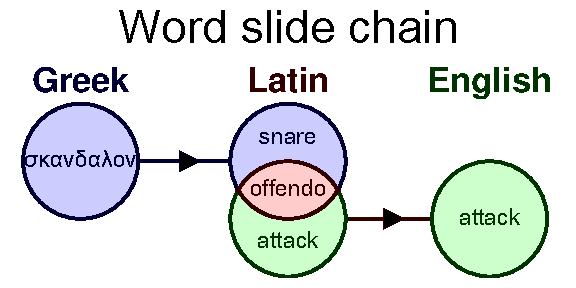
The Greek word for "
trap" or "
snare" was translated into Latin as "
offend" and whose primary meaning was "
attack" or "
strike". This influenced many Bible translations.
The
KJV often uses the English word
"offense" which comes, through French, from the Latin word
"offenso" ≈ "strike, hit" as in an "
attack" or, of speech, to falter or "
stumble" over words.
When you "
offend" me you are attacking me. This went from
physical attack to
verbal attack to, today, a perceived
mental attack.
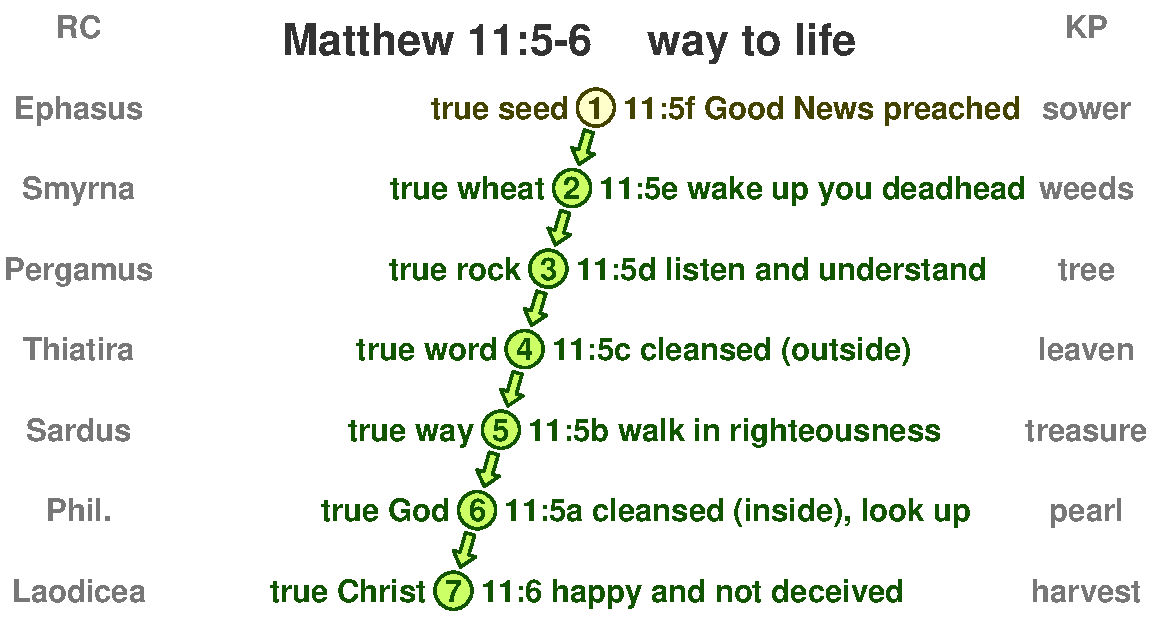
31. Matthew 11:5-6 Bottom-up forward-chaining
Message of Jesus to John the Baptist (in physical prison):
Matthew 11:5 The blind receive their sight, and the lame walk, the lepers are cleansed, and the deaf hear, the dead are raised up, and the poor have the gospel preached to them. [kjv]
| Six noun‑verb pairs decoded |
| 6. |
poor=fallen, beggars |
start |
gospel=good news preached |
|
| 5. |
dead=asleep |
then |
raised=wake up you deadhead |
| 4. |
deaf=not listening |
then |
hear=listen and understand |
repent |
| 3. |
lepers=sinners |
then |
cleansed=be born again, cleansed in the blood |
Ask |
| 2. |
lame=passive |
then |
walk=active start walking in righteousness |
Seek |
| 1. |
blind=not seeing |
then |
sight=look up/ahead and see God & others |
Knock |
The
top-down verses (in English) may be more understandable as a
bottom-up progression (as events unfold in time) using the Greek meanings of the words. Approaches to change: (
stop,
repent, be
cleansed and
walk).
11:6 And blessed is he, who soever shall not be offended in me. [kjv]
Paraphrase:
Happy is he who does not misinterpret what I say.
32. Matthew 11:5-6 Diagram
The ways that six items can be ordered is 6! = 6*5*4*3*2*1 =
720 ways. Of these six items in Matthew 11:6, only two sequences fit - forward or backwards. Is this a coincidence?
Matthew 11:5 The blind receive their sight, and the lame walk, the lepers are cleansed, and the deaf hear, the dead are raised up, and the poor have the gospel preached to them. [kjv]
11:6 And blessed is he, who soever shall not be offended in me. [kjv]
33. Probability

The ways that six items can be ordered is
6! =
6*5*4*3*2*1 =
720 ways. Of these six items in Matthew 11:6, only
two sequences fit - forward or backwards. That is, a probability of
1 in
360. There are
360 days in a prophetic year. Is any of this a coincidence?
34. Matthew 26:31 Offended
Matthew 26:31 Then saith Jesus unto them, All ye shall be offended because of me this night: for it is written, I will smite the shepherd, and the sheep of the flock shall be scattered abroad. [kjv]
τοτε λεγει αυτοις ο ιησους παντες υμεις σκανδαλισθησεσθε εν εμοι εν τη νυκτι ταυτη γεγραπται γαρ παταξω τον ποιμενα και διασκορπισθησεται διασκορπισθησονται τα προβατα της ποιμνης [gnt]
The ancient Greek word
"σκάνδαλον" ≈ "trap, snare" as in
entice,
tempt, etc.
In what way will
"all" of the
11 disciples be
"entrapped" this night
"in" "Jesus" (not in some other way)? Jesus appears to use this word of others about himself in the sense that others will
"misinterpret" on
"entrap" themselves in what he says. Thus, it is important to understand what Jesus really means.
35. In me
Phrase:
"agree" "in" "me".
Matthew 10:32 Whosoever therefore shall confess me before men, him will I confess also before my Father which is in heaven. [kjv]
πας ουν οστις ομολογησει εν εμοι εμπροσθεν των ανθρωπων ομολογησω καγω εν αυτω εμπροσθεν του πατρος μου του εν τοις ουρανοις [gnt]
Phrase (two verses):
"(self) entrapped" "in" "me".
11:6 And blessed is he, who soever shall not be offended in me. [kjv]
και μακαριος εστιν ος εαν αν μη σκανδαλισθη εν εμοι [gnt]
26:31 Then saith Jesus unto them, All ye shall be offended because of me this night: for it is written, I will smite the shepherd, and the sheep of the flock shall be scattered abroad. [kjv]
τοτε λεγει αυτοις ο ιησους παντες υμεις σκανδαλισθησεσθε εν εμοι εν τη νυκτι ταυτη γεγραπται γαρ παταξω τον ποιμενα και διασκορπισθησεται διασκορπισθησονται τα προβατα της ποιμνης [gnt]
36. Matthew 26:31 Scatter-brained disciples in sight
Matthew 26:31 Then saith Jesus unto them, All ye shall be offended because of me this night: for it is written, I will smite the shepherd, and the sheep of the flock shall be scattered abroad. [kjv]
τοτε λεγει αυτοις ο ιησους παντες υμεις σκανδαλισθησεσθε εν εμοι εν τη νυκτι ταυτη γεγραπται γαρ παταξω τον ποιμενα και διασκορπισθησεται διασκορπισθησονται τα προβατα της ποιμνης [gnt]
Discuss: Does the
"scattering" of the "
sheep" that night constitute an
"entrapment" or
"misinterpretation" of what Jesus says about this night? None of them were actually and literally
"entrapped" since they
all got away.
If not, then for Jesus not to be wrong, something not-so-obvious might be a key insight.
Since Jesus takes only three along to pray in the garden, it is hard to see how this could have
"entrapped" or
"ensnared" "all" of them
"in" Jesus.
The
modern Greek word
"ποτέ" (po-TEH) ≈ "ever, at any time, not ever, never" (sometimes with a negative word added). This word comes from the
ancient Greek word
"ποτέ" ≈ "when, at some time".
37. Matthew 26:31
KJV: Then saith Jesus unto them, All ye shall be offended because of me this night: for it is written, I will smite the shepherd, and the sheep of the flock shall be scattered abroad.
Greek: τοτε λεγει αυτοις ο ιησους παντες υμεις σκανδαλισθησεσθε εν εμοι εν τη νυκτι ταυτη γεγραπται γαρ παταξω τον ποιμενα και διασκορπισθησεται διασκορπισθησονται τα προβατα της ποιμνης
38. Matthew 26:32 Woken up
Matthew 26:32 But after I am risen again, I will go before you into Galilee. [kjv]
μετα δε το εγερθηναι με προαξω υμας εις την γαλιλαιαν [gnt]
The ancient Greek word
"ἐγείρω" ≈ "awaken, raise up, erect a building"`. Jesus often uses the word for "
sleep" as "
dead". He thus,
"awakens" the "
dead" such as Lazarus. The same word is used for a "
lame" person who is "
raised up" to walk.
The disciples could have taken this comment, at the time, to mean that in the morning, after he had slept, he would wake up, rise up, and go before them
into Galilee.
That the disciples
may misinterpret this comment does not appear to be a serious issue.
39. Matthew 25:7 Arise and wake up
Matthew 25:7 Then all those virgins arose, and trimmed their lamps. [kjv]
τοτε ηγερθησαν πασαι αι παρθενοι εκειναι και εκοσμησαν τας λαμπαδας αυτων εαυτων [gnt]
The ancient Greek word
"ἐγείρω" ≈ "awaken, raise up, erect a building"`. Jesus often uses the word for "
sleep" as "
dead". He thus,
"awakens" the "
dead" such as Lazarus. The same word is used for a "
lame" person who is
"raised up" to walk.
All "
ten"
"arose" or were
"woken up".
The "quick" or "living" might have been "sleeping".
The "dead" might have been "woken up" or "resurrected".
They were
sleeping two verses earlier.
40. Matthew 26:32
KJV: But after I am risen again, I will go before you into Galilee.
Greek: μετα δε το εγερθηναι με προαξω υμας εις την γαλιλαιαν
41. Matthew 26:33 Never
Matthew 26:33 Peter answered and said unto him, Though all men shall be offended because of thee, yet will I never be offended. [kjv]
αποκριθεις δε ο πετρος ειπεν αυτω ει και παντες σκανδαλισθησονται εν σοι εγω ουδεποτε σκανδαλισθησομαι [gnt]
The ancient Greek word
"οὐδέποτε" ≈ "never" from
"οὐδέ" ≈ "and not" and
"ποτε" ≈ "at some time".
42. Matthew 26:33 All men
Matthew 26:33 Peter answered and said unto him, Though all men shall be offended because of thee, yet will I never be offended. [kjv]
αποκριθεις δε ο πετρος ειπεν αυτω ει και παντες σκανδαλισθησονται εν σοι εγω ουδεποτε σκανδαλισθησομαι [gnt]
The
ancient Greek word
"σκάνδαλον" ≈ "trap, snare" as in
entice,
Peter now interjects about something before the previous verse. Peter claims that he will not be
"offended" as in
"trapped" or
"snared" or
"misinterpret".
The
KJV translates as "
through" the ancient Greek word
"ει" ≈ "if".
The
KJV adds
"men" and, in English, makes Peter appears to say something about
"all" in the entire world but that is an impression of the
KJV translation. Peter appears to be talking about the other
10 disciples present.
43. Matthew 26:33 All men
Matthew 26:33 Peter answered and said unto him, Though all men shall be offended because of thee, yet will I never be offended. [kjv]
αποκριθεις δε ο πετρος ειπεν αυτω ει και παντες σκανδαλισθησονται εν σοι εγω ουδεποτε σκανδαλισθησομαι [gnt]
Paraphrase:
Answers then (the) Peter (and) said to him. If all (the other ten) are entrapped/misinterpret in you (this night) I will never be entrapped/misinterpret.
Note that Peter puts no such restriction on himself. According to Jesus,
Peter represents the "
church" or "
gathering of believers" in some way.
44. Matthew 16:18 Calling a masterful gathering of outgoing church believers
Matthew 16:18 And I say also unto thee, That thou art Peter, and upon this rock I will build my church; and the gates of hell shall not prevail against it. [kjv]
καγω δε σοι λεγω οτι συ ει πετρος και επι ταυτη τη πετρα οικοδομησω μου την εκκλησιαν και πυλαι αδου ου κατισχυσουσιν αυτης [gnt]
12:8 For the Son of man is Lord even of the sabbath day. [kjv]
κυριος γαρ εστιν και του σαββατου ο υιος του ανθρωπου [gnt]
Most people agree that the
"church" should represent the
"ἐκκλησία" ≈ "assembly, called-out, church" as in the
"gathering of believers" that are
"called (out) together". The word
"church" comes from
"κύριος" ≈ "lord or master". Discuss:
Is the "church" a "building"? Can the "leaders" of the "church" be considered the "elect"?
Is your "church" a "gathering of believers" or an entity that wants to be "Lord" or "Master" of those in the "church"?
45. Matthew 26:33 All men
Matthew 26:33 Peter answered and said unto him, Though all men shall be offended because of thee, yet will I never be offended. [kjv]
αποκριθεις δε ο πετρος ειπεν αυτω ει και παντες σκανδαλισθησονται εν σοι εγω ουδεποτε σκανδαλισθησομαι [gnt]
To this point we have the following.
Jesus says "all" (the 11) will be entrapped/misinterpret in him this night.
The "Peter" says he will never be entrapped/misinterpret (no restriction).
Will Jesus be right? Will Peter be wrong? Stay tuned. Let Peter, as a code word, represent the "
church". Then the following is proposed.
The "church" says they will never be entrapped/misinterpret.
Has this happened historically? Has the "
church" ever said this? Do they appear to be right or wrong? Consider not only the Catholic Church (East and West) but the Protestant Reformers and their descendants and modern churches of all varieties as well.
46. Matthew 23:2 Sitting to teach
Matthew 23:2 Saying, The scribes and the Pharisees sit in Moses' seat: [kjv]
λεγων επι της μωσεως μωυσεως καθεδρας εκαθισαν οι γραμματεις και οι φαρισαιοι [gnt]
At the time,
teachers usually
sat to
teach. An "
endowed chair" in an academic school has that notion of "
sitting" as a "
teacher". A king or queen would rule from the "
throne" in a sitting position.
The Latin phrase
"ex cathedra" ≈ "from out of the chair" is used for the Pope to make "
infallible" pronouncements. How many
"sit" in the
"seat" of Moses?
"All" of them! The
"all" appears to have been moved to the start of the next verse.
47. Matthew 26:33
KJV: Peter answered and said unto him, Though all men shall be offended because of thee, yet will I never be offended.
Greek: αποκριθεις δε ο πετρος ειπεν αυτω ει και παντες σκανδαλισθησονται εν σοι εγω ουδεποτε σκανδαλισθησομαι
Latin: respondens autem Petrus ait illi et si omnes scandalizati fuerint in te ego numquam scandalizabor
48. Verily I say to you: connect the dots
Matthew 25:12 But he answered and said, Verily I say unto you, I know you not. [kjv]
ο δε αποκριθεις ειπεν αμην λεγω υμιν ουκ οιδα υμας [gnt]
Jesus uses the phrase
"verily" or
"amen",
"(I) say" "(to) you" (plural)
25 times and (singular)
2 times in Matthew. Since Matthew is writing down what Jesus says, the exact placement of this phrase appears to be important.
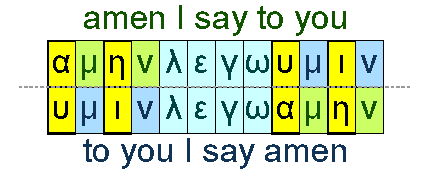
The "amen" in the Greek was changed, when spoken by Jesus at the beginning of a phrase, sometime in the Middle Ages, to "verily". The Latin Vulgate uses the "amen" instead of the Latin "verily".
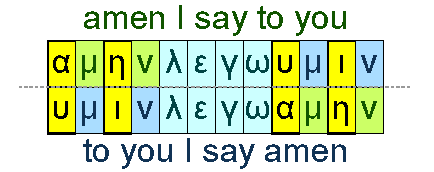
The phrase itself is a symmetrical play on words with the "amen" similar to the "(to) you".
This model appears to fit when the
"(to) you" is
singular and
not plural.
49. Verily I say unto you: connect the dots
Some (theologians, commentators, pastors, etc.) say that the phrase is used to introduce an important concept. Is what Jesus says ever
unimportant?
Instead, the phrase appears to be used to connect the previous thought (excluding scripture quotation) with the next thought as similar in some way.
In some cases, the two thoughts are stated in a
top-down backward-chaining manner so that it helps to consider the second thought before the first thought.
Student:
Are we doing anything important today in class?
50. Matthew 26:34 Connect the dots
Matthew 26:34 Jesus said unto him, Verily I say unto thee, That this night, before the cock crow, thou shalt deny me thrice. [kjv]
εφη αυτω ο ιησους αμην λεγω σοι οτι εν ταυτη τη νυκτι πριν αλεκτορα φωνησαι τρις απαρνηση με [gnt]
One should
connect the dots of what Jesus just said (a verse or so back) with what Jesus is about to say (in the next verse or so).
51. Matthew 26:31,33-34 Connect the dots
Matthew 26:31 Then saith Jesus unto them, All ye shall be offended because of me this night: for it is written, I will smite the shepherd, and the sheep of the flock shall be scattered abroad. [kjv]
26:33 Peter answered and said unto him, Though all men shall be offended because of thee, yet will I never be offended. [kjv]
26:34 Jesus said unto him, Verily I say unto thee, That this night, before the cock crow, thou shalt deny me thrice. [kjv]
The key to determining how the "
disciples" are
"entrapped" and/or
"misinterpret" what Jesus says appears to be connecting the before and after dots. This pattern appears to apply even when the
"verily" "I say" "to you" is a
singular "you" and
not a
plural "you".
52. Romans 1:13 Commas are important
Romans 1:13 Now I would not have you ignorant, brethren, that oftentimes I purposed to come unto you, (but was let hitherto,) that I might have some fruit among you also, even as among other Gentiles. [kjv]
ου θελω δε υμας αγνοειν αδελφοι οτι πολλακις προεθεμην ελθειν προς υμας και εκωλυθην αχρι του δευρο ινα καρπον τινα καρπον σχω και εν υμιν καθως και εν τοις λοιποις εθνεσιν [gnt]
The comma as "
," is important in English. Do you see (and hear) the difference?
I would not have you ignorant, brethren, that ...
I would not have you, ignorant brethren, that ...
Let's eat, grandma.
Let's eat grandma.
EUB (Evangelical United Brethren) or, for short,
UB (United Brethren).
53. Romans 1:13 Commas are important
Romans 1:13 Now I would not have you ignorant, brethren, that oftentimes I purposed to come unto you, (but was let hitherto,) that I might have some fruit among you also, even as among other Gentiles. [kjv]
ου θελω δε υμας αγνοειν αδελφοι οτι πολλακις προεθεμην ελθειν προς υμας και εκωλυθην αχρι του δευρο ινα καρπον τινα καρπον σχω και εν υμιν καθως και εν τοις λοιποις εθνεσιν [gnt]
Sign:
ALLIGATORS DO NOT SWIM HERE
Saying:
See you later, alligator. In a while, crocodile.
[deer crossing sign]
54. 1 Thessalonians 4:13
1 Thessalonians 4:13 But I would not have you to be ignorant, brethren, concerning them which are asleep, that ye sorrow not, even as others which have no hope. [kjv]
ου θελω θελομεν δε υμας αγνοειν αδελφοι περι των κεκοιμημενων κοιμωμενων ινα μη λυπησθε καθως και οι λοιποι οι μη εχοντες ελπιδα [gnt]
In English, the comma is important. Compare:
"you to be ignorant, brethren"
"you to be ignorant brethren"
The Greek for "concerning" is that of "around" as in "perimeter".
The Greek for "asleep" can mean "deceased".
The Greek for "sorrow" is that of "annoyed".
The Greek for "others" is that of those "remaining" or the "rest" of them.
The Greek for "hope" is that of, literally, a "good expectation" or "well-founded expectation".
55. Matthew 26:34 Ambiguous parse
Matthew 26:34 Jesus said unto him, Verily I say unto thee, That this night, before the cock crow, thou shalt deny me thrice. [kjv]
εφη αυτω ο ιησους αμην λεγω σοι οτι εν ταυτη τη νυκτι πριν αλεκτορα φωνησαι τρις απαρνηση με [gnt]
In English, commas are important. A specific parsing in English was decided long ago. In Greek, however, the parsing is ambiguous. How is the ambiguous Greek to be parsed?
☐ 1.
... before (a) rooster [elect] voices/crows three (times), (you) will deny [bird] me.
☐ 2.
... before (a) rooster [elect] voices/crows , three (times) (you) will deny [bird] me.
Peter (and many), from what literally happened, will parse using #2. This will be remembered in Mark, Luke and John. Later, Matthew will be changed to match those accounts. This does not preclude #1 from having an important meaning.
Modern Greek can use
"φορές" (fo-REHS) ≈ "times, occurrences" to help disambiguate as in
"τρις φορές" (trees fo-REHS) ≈ "three times" but the comma is still needed.
56. Matthew 26:34 Three and tree
Matthew 26:34 Jesus said unto him, Verily I say unto thee, That this night, before the cock crow, thou shalt deny me thrice. [kjv]
εφη αυτω ο ιησους αμην λεγω σοι οτι εν ταυτη τη νυκτι πριν αλεκτορα φωνησαι τρις απαρνηση με [gnt]
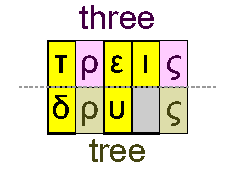
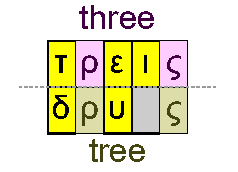
"τρεις" ≈ "three" and is related to the English word "three".
"δρῦς" ≈ "tree, timber, oak" and is related to the English word "druid".
Jesus does not use the word or idea of
"three" in a good sense. The idea of the "
trinity" was developed hundreds of years later.
Jesus does not use the idea of a
"tree", representing human infrastructure as in a house built on sand, in a good sense.
57. Matthew 28:19 Manuscript variations
Matthew 28:19 Go ye therefore, and teach all nations, baptizing them in the name of the Father, and of the Son, and of the Holy Ghost: [kjv]
πορευθεντες ουν μαθητευσατε παντα τα εθνη βαπτιζοντες αυτους εις το ονομα του πατρος και του υιου και του αγιου πνευματος [gnt]

Trinity:
Father,
Son and
Holy Spirit/Ghost.
Some manuscripts do not have the "
Holy Spirit" at the end of the verse. Does that part matter? Explain.
58. Matthew 26:34 Before
59. Psalms 91:5 Fear of fear
60. Matthew 26:31,34 Roosters in the night
Matthew 26:31 Then saith Jesus unto them, All ye shall be offended because of me this night: for it is written, I will smite the shepherd, and the sheep of the flock shall be scattered abroad. [kjv]
τοτε λεγει αυτοις ο ιησους παντες υμεις σκανδαλισθησεσθε εν εμοι εν τη νυκτι ταυτη γεγραπται γαρ παταξω τον ποιμενα και διασκορπισθησεται διασκορπισθησονται τα προβατα της ποιμνης [gnt]
26:34 Jesus said unto him, Verily I say unto thee, That this night, before the cock crow, thou shalt deny me thrice. [kjv]
εφη αυτω ο ιησους αμην λεγω σοι οτι εν ταυτη τη νυκτι πριν αλεκτορα φωνησαι τρις απαρνηση με [gnt]
The ancient Greek word
"νυκτός" ≈ "night" is the genitive singular of
"νύξ" ≈ "night" which is related to the English word
"night". The ancient Greek word
"ταύτῃ" ≈ "these" is the dative feminine singular of
"οὗτος" ≈ "this".
61. Strongs - rooster
62. Usage - rooster
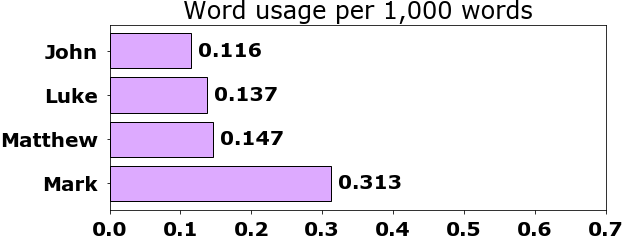
- *G220 *12 ἀλέκτωρ (al-ek'-tore) : from aleko (to ward off); a cock or male fowl:--cock.
- αλεκτωρ *7
- Matthew 26:74 ... the man. And immediately the cock crew.
- Mark 14:68 ... into the porch; and the cock crew.
- Mark 14:72 And the second time the cock crew. And Peter called to mind the word that Jesus said unto him, Before the cock crow twice, ...
- Luke 22:34 ... I tell thee, Peter, the cock shall not crow ...
- Luke 22:60 ... while he yet spake, the cock crew.
- John 13:38 ... verily, I say unto thee, The cock shall not crow, ...
- John 18:27 ... again: and immediately the cock crew.
- αλεκτορα *5
- Matthew 26:34 ... this night, before the cock crow, thou shalt deny me thrice.
- Matthew 26:75 ... which said unto him, Before the cock crow, thou shalt deny me ...
- Mark 14:30 ... this night, before the cock crow twice, thou shalt deny ...
- Mark 14:72 And the second time the cock crew. And Peter called to mind the word that Jesus said unto him, Before the cock crow twice, ...
- Luke 22:61 ... he had said unto him, Before the cock crow, thou shalt deny me thrice.
63. Matthew 26:34
KJV: Jesus said unto him, Verily I say unto thee, That this night, before the cock crow, thou shalt deny me thrice.
Greek: εφη αυτω ο ιησους αμην λεγω σοι οτι εν ταυτη τη νυκτι πριν αλεκτορα φωνησαι τρις απαρνηση με
64. Matthew 26:35
KJV: Peter said unto him, Though I should die with thee, yet will I not deny thee. Likewise also said all the disciples.
Greek: λεγει αυτω ο πετρος καν δεη με συν σοι αποθανειν ου μη σε απαρνησομαι ομοιως και παντες οι μαθηται ειπον ειπαν
65. Roosters and weather vanes
In the Middle Ages, the Catholic church wanted each
parish church (area around the church) to have a rooster to remind everyone of Peter's literal
denial that night.
This reminder often became a weather vane. The modern Greek word
"ανεμοδείκτης" (a-neh-mo-THEE-ktees) ≈ "weather vane" is, literally, a "
wind pointer" where the prefix is the modern Greek word
"άνεμος" (A-neh-mos) ≈ "wind".
The Greek word for "
deny" is a play on words with "
bird". To "
bird" Christ is to "
deny" Christ. He will then "
deny" or "
bird" you. Do "
birds" as
false leaders,
false teachers, etc., "
crow" when they deceptively get someone to "
deny" Christ? Do we see this in what happened, as an example, to Peter?
66. Notre Dame Cathedral rooster
 |
 |
 |
The rooster at Notre Dame Cathedral in France is well-known.
|
 |
|
 |
The Apostolic Clock at the Hershey Museum has a depiction of Peter's denial of Jesus. At the denial, the Jesus figure turns his back.
|
A "
rooster" makes a "
voice" just as a "
pipe" in on "
organ" is said to make a "
voice". The settings on an "
organ" are called "
voices".
67. Matthew 26:75 Crow of a rooster
Matthew 26:75 And Peter remembered the word of Jesus, which said unto him, Before the cock crow, thou shalt deny me thrice. And he went out, and wept bitterly. [kjv]
και εμνησθη ο πετρος του ρηματος του ιησου ειρηκοτος αυτω οτι πριν αλεκτορα φωνησαι τρις απαρνηση με και εξελθων εξω εκλαυσεν πικρως [gnt]
Did the
"rooster" "crow" in approval when Peter
"denied" Christ? Do "
birds" as
false leaders "crow" when followers, through
bird deceptions,
"deny" Christ? Do they do it three times or, like
"rooster" "
birds", continue to do it again and again. Jesus uses the Greek word for "
wind" as a play on words for "
against the law" which is often translated as "
iniquity".
68. Mark 14:29-31
Mark 14:29 But Peter said unto him, Although all shall be offended, yet will not I. [kjv]
ο δε πετρος εφη αυτω και ει και παντες σκανδαλισθησονται αλλ ουκ εγω [gnt]
14:30 And Jesus saith unto him, Verily I say unto thee, That this day, even in this night, before the cock crow twice, thou shalt deny me thrice. [kjv]
και λεγει αυτω ο ιησους αμην λεγω σοι οτι συ σημερον εν ταυτη τη νυκτι ταυτη πριν η δις αλεκτορα φωνησαι τρις με απαρνηση με [gnt]
14:31 But he spake the more vehemently, If I should die with thee, I will not deny thee in any wise. Likewise also said they all. [kjv]
ο δε εκ περισσου ελεγεν μαλλον εκπερισσως ελαλει εαν με δεη με συναποθανειν σοι ου μη σε απαρνησομαι ωσαυτως δε και παντες ελεγον [gnt]
Peter tells Mark what he remembered, perhaps fit to what happened and not what was actually said by Jesus.
69. Mark 14:29
KJV: But Peter said unto him, Although all shall be offended, yet will not I.
Greek: ο δε πετρος εφη αυτω και ει και παντες σκανδαλισθησονται αλλ ουκ εγω
70. Mark 14:30
KJV: And Jesus saith unto him, Verily I say unto thee, That this day, even in this night, before the cock crow twice, thou shalt deny me thrice.
Greek: και λεγει αυτω ο ιησους αμην λεγω σοι οτι συ σημερον εν ταυτη τη νυκτι ταυτη πριν η δις αλεκτορα φωνησαι τρις με απαρνηση με
71. Mark 14:31
KJV: But he spake the more vehemently, If I should die with thee, I will not deny thee in any wise. Likewise also said they all.
Greek: ο δε εκ περισσου ελεγεν μαλλον εκπερισσως ελαλει εαν με δεη με συναποθανειν σοι ου μη σε απαρνησομαι ωσαυτως δε και παντες ελεγον
72. Mark 14:66-68
Mark 14:66 And as Peter was beneath in the palace, there cometh one of the maids of the high priest: [kjv]
και οντος του πετρου κατω εν τη αυλη κατω ερχεται μια των παιδισκων του αρχιερεως [gnt]
14:67 And when she saw Peter warming himself, she looked upon him, and said, And thou also wast with Jesus of Nazareth. [kjv]
και ιδουσα τον πετρον θερμαινομενον εμβλεψασα αυτω λεγει και συ μετα του ναζαρηνου ιησου ησθα του ιησου [gnt]
14:68 But he denied, saying, I know not, neither understand I what thou sayest. And he went out into the porch; and the cock crew. [kjv]
ο δε ηρνησατο λεγων ουκ ουτε οιδα ουδε ουτε επισταμαι τι συ τι λεγεις και εξηλθεν εξω εις το προαυλιον και αλεκτωρ εφωνησεν [gnt]
73. Mark 14:66
KJV: And as Peter was beneath in the palace, there cometh one of the maids of the high priest:
Greek: και οντος του πετρου κατω εν τη αυλη κατω ερχεται μια των παιδισκων του αρχιερεως
74. Mark 14:67
KJV: And when she saw Peter warming himself, she looked upon him, and said, And thou also wast with Jesus of Nazareth.
Greek: και ιδουσα τον πετρον θερμαινομενον εμβλεψασα αυτω λεγει και συ μετα του ναζαρηνου ιησου ησθα του ιησου
75. Mark 14:68
KJV: But he denied, saying, I know not, neither understand I what thou sayest. And he went out into the porch; and the cock crew.
Greek: ο δε ηρνησατο λεγων ουκ ουτε οιδα ουδε ουτε επισταμαι τι συ τι λεγεις και εξηλθεν εξω εις το προαυλιον και αλεκτωρ εφωνησεν
76. Mark 14:69-70
Mark 14:69 And a maid saw him again, and began to say to them that stood by, This is one of them. [kjv]
και η παιδισκη ιδουσα αυτον παλιν ηρξατο παλιν λεγειν τοις παρεστηκοσιν παρεστωσιν οτι ουτος εξ αυτων εστιν [gnt]
14:70 And he denied it again. And a little after, they that stood by said again to Peter, Surely thou art one of them: for thou art a Galilaean, and thy speech agreeth thereto. [kjv]
ο δε παλιν ηρνειτο και μετα μικρον παλιν οι παρεστωτες ελεγον τω πετρω αληθως εξ αυτων ει και γαρ γαλιλαιος ει και η λαλια σου ομοιαζει [gnt]
77. Mark 14:69
KJV: And a maid saw him again, and began to say to them that stood by, This is one of them.
Greek: και η παιδισκη ιδουσα αυτον παλιν ηρξατο παλιν λεγειν τοις παρεστηκοσιν παρεστωσιν οτι ουτος εξ αυτων εστιν
78. Mark 14:70
KJV: And he denied it again. And a little after, they that stood by said again to Peter, Surely thou art one of them: for thou art a Galilaean, and thy speech agreeth thereto.
Greek: ο δε παλιν ηρνειτο και μετα μικρον παλιν οι παρεστωτες ελεγον τω πετρω αληθως εξ αυτων ει και γαρ γαλιλαιος ει και η λαλια σου ομοιαζει
79. Mark 14:71-72
Mark 14:71 But he began to curse and to swear, saying, I know not this man of whom ye speak. [kjv]
ο δε ηρξατο αναθεματιζειν και ομνυειν ομνυναι οτι ουκ οιδα τον ανθρωπον τουτον ον λεγετε [gnt]
14:72 And the second time the cock crew. And Peter called to mind the word that Jesus said unto him, Before the cock crow twice, thou shalt deny me thrice. And when he thought thereon, he wept. [kjv]
και ευθυς εκ δευτερου αλεκτωρ εφωνησεν και ανεμνησθη ο πετρος του ρηματος ου το ρημα ως ειπεν αυτω ο ιησους οτι πριν αλεκτορα φωνησαι δις απαρνηση με φωνησαι τρις με απαρνηση και επιβαλων εκλαιεν [gnt]
80. Mark 14:71
KJV: But he began to curse and to swear, saying, I know not this man of whom ye speak.
Greek: ο δε ηρξατο αναθεματιζειν και ομνυειν ομνυναι οτι ουκ οιδα τον ανθρωπον τουτον ον λεγετε
81. Mark 14:72
KJV: And the second time the cock crew. And Peter called to mind the word that Jesus said unto him, Before the cock crow twice, thou shalt deny me thrice. And when he thought thereon, he wept.
Greek: και ευθυς εκ δευτερου αλεκτωρ εφωνησεν και ανεμνησθη ο πετρος του ρηματος ου το ρημα ως ειπεν αυτω ο ιησους οτι πριν αλεκτορα φωνησαι δις απαρνηση με φωνησαι τρις με απαρνηση και επιβαλων εκλαιεν
82. Luke 22:34
Luke 22:34 And he said, I tell thee, Peter, the cock shall not crow this day, before that thou shalt thrice deny that thou knowest me. [kjv]
ο δε ειπεν λεγω σοι πετρε ου μη φωνησει σημερον αλεκτωρ πριν η εως τρις με απαρνηση μη ειδεναι με [gnt]
83. Luke 22:34
KJV: And he said, I tell thee, Peter, the cock shall not crow this day, before that thou shalt thrice deny that thou knowest me.
Greek: ο δε ειπεν λεγω σοι πετρε ου μη φωνησει σημερον αλεκτωρ πριν η εως τρις με απαρνηση μη ειδεναι με
84. Luke 22:60
Luke 22:60 And Peter said, Man, I know not what thou sayest. And immediately, while he yet spake, the cock crew. [kjv]
ειπεν δε ο πετρος ανθρωπε ουκ οιδα ο λεγεις και παραχρημα ετι λαλουντος αυτου εφωνησεν ο αλεκτωρ [gnt]
85. Luke 22:60
KJV: And Peter said, Man, I know not what thou sayest. And immediately, while he yet spake, the cock crew.
Greek: ειπεν δε ο πετρος ανθρωπε ουκ οιδα ο λεγεις και παραχρημα ετι λαλουντος αυτου εφωνησεν ο αλεκτωρ
86. Luke 22:61
Luke 22:61 And the Lord turned, and looked upon Peter. And Peter remembered the word of the Lord, how he had said unto him, Before the cock crow, thou shalt deny me thrice. [kjv]
και στραφεις ο κυριος ενεβλεψεν τω πετρω και υπεμνησθη ο πετρος του λογου ρηματος του κυριου ως ειπεν αυτω οτι πριν αλεκτορα φωνησαι σημερον απαρνηση με τρις [gnt]
87. Luke 22:61
KJV: And the Lord turned, and looked upon Peter. And Peter remembered the word of the Lord, how he had said unto him, Before the cock crow, thou shalt deny me thrice.
Greek: και στραφεις ο κυριος ενεβλεψεν τω πετρω και υπεμνησθη ο πετρος του λογου ρηματος του κυριου ως ειπεν αυτω οτι πριν αλεκτορα φωνησαι σημερον απαρνηση με τρις
88. Luke 22:62
Luke 22:62 And Peter went out, and wept bitterly. [kjv]
και και εξελθων εξω ο πετρος εκλαυσεν πικρως [gnt]
89. Luke 22:62
KJV: And Peter went out, and wept bitterly.
Greek: και και εξελθων εξω ο πετρος εκλαυσεν πικρως
90. John 13:36-37
John 13:36 Simon Peter said unto him, Lord, whither goest thou? Jesus answered him, Whither I go, thou canst not follow me now; but thou shalt follow me afterwards. [kjv]
13:37 Peter said unto him, Lord, why cannot I follow thee now? I will lay down my life for thy sake. [kjv]
91. John 13:36
KJV: Simon Peter said unto him, Lord, whither goest thou? Jesus answered him, Whither I go, thou canst not follow me now; but thou shalt follow me afterwards.
Greek: λεγει αυτω σιμων πετρος κυριε που υπαγεις απεκριθη αυτω ο ιησους οπου υπαγω ου δυνασαι μοι νυν ακολουθησαι υστερον δε ακολουθησεις μοι δε υστερον
92. John 13:37
KJV: Peter said unto him, Lord, why cannot I follow thee now? I will lay down my life for thy sake.
Greek: λεγει αυτω ο ο πετρος κυριε δια τι ου δυναμαι σοι ακολουθησαι ακολουθειν αρτι την ψυχην μου υπερ σου θησω
93. John 13:38 Rooster
John 13:38 Jesus answered him, Wilt thou lay down thy life for my sake? Verily, verily, I say unto thee, The cock shall not crow, till thou hast denied me thrice. [kjv]
απεκριθη αυτω ο αποκρινεται ιησους την ψυχην σου υπερ εμου θησεις αμην αμην λεγω σοι ου μη αλεκτωρ φωνησει φωνηση εως ου απαρνηση αρνηση με τρις [gnt]
94. John 13:38
KJV: Jesus answered him, Wilt thou lay down thy life for my sake? Verily, verily, I say unto thee, The cock shall not crow, till thou hast denied me thrice.
Greek: απεκριθη αυτω ο αποκρινεται ιησους την ψυχην σου υπερ εμου θησεις αμην αμην λεγω σοι ου μη αλεκτωρ φωνησει φωνηση εως ου απαρνηση αρνηση με τρις
95. John 18:26-27
John 18:26 One of the servants of the high priest, being his kinsman whose ear Peter cut off, saith, Did not I see thee in the garden with him? [kjv]
18:27 Peter then denied again: and immediately the cock crew. [kjv]
96. John 18:26
KJV: One of the servants of the high priest, being his kinsman whose ear Peter cut off, saith, Did not I see thee in the garden with him?
Greek: λεγει εις εκ των δουλων του αρχιερεως συγγενης ων ου απεκοψεν πετρος το ωτιον ουκ εγω σε ειδον εν τω κηπω μετ αυτου
97. John 18:27
KJV: Peter then denied again: and immediately the cock crew.
Greek: παλιν ουν ηρνησατο ο πετρος και ευθεως αλεκτωρ εφωνησεν
98. 1 Timothy 1:20
KJV: Of whom is Hymenaeus and Alexander; whom I have delivered unto Satan, that they may learn not to blaspheme.
Greek: ων εστιν υμεναιος και αλεξανδρος ους παρεδωκα τω σατανα ινα παιδευθωσιν μη βλασφημειν
99. 2 Timothy 4:14
KJV: Alexander the coppersmith did me much evil: the Lord reward him according to his works:
Greek: αλεξανδρος ο χαλκευς πολλα μοι κακα ενεδειξατο αποδωη αποδωσει αυτω ο κυριος κατα τα εργα αυτου
100. Proverbs 30:31
Proverbs 30:31 A greyhound; an he goat also; and a king, against whom there is no rising up. [kjv]
και αλεκτωρ εμπεριπατων θηλειαις ευψυχος και τραγος ηγουμενος αιπολιου και βασιλευς δημηγορων εν εθνει [lxx]
and a cock walking in boldly amongst the hens, and the goat leading the herd; and a king publicly speaking before a nation. [bs3]
101. Proverbs 30:31
KJV: A greyhound; an he goat also; and a king, against whom there is no rising up.
Hebrew: זרזיר מתנים או תיש ומלך אלקום עמו׃
Greek: και αλεκτωρ εμπεριπατων θηλειαις ευψυχος και τραγος ηγουμενος αιπολιου και βασιλευς δημηγορων εν εθνει
Brenton: and a cock walking in boldly amongst the hens, and the goat leading the herd; and a king publicly speaking before a nation.
102. Rooster crowing comparisons
Matthew 26:34 Jesus said unto him, Verily I say unto thee, That this night, before the cock crow, thou shalt deny me thrice. [kjv]
Mark 14:30 And Jesus saith unto him, Verily I say unto thee, That this day, even in this night, before the cock crow twice, thou shalt deny me thrice. [kjv]
Luke 22:34 And he said, I tell thee, Peter, the cock shall not crow this day, before that thou shalt thrice deny that thou knowest me. [kjv]
John 13:38 Jesus answered him, Wilt thou lay down thy life for my sake? Verily, verily, I say unto thee, The cock shall not crow, till thou hast denied me thrice. [kjv]
Discuss: Do these accounts of the same event need to be reconciled? Does it matter? How would you take it upon yourself to change them? What would be your decision criteria?
103. Matthew 26:31,35 Misinterpret and deny
Matthew 26:31 Then saith Jesus unto them, All ye shall be offended because of me this night: for it is written, I will smite the shepherd, and the sheep of the flock shall be scattered abroad. [kjv]
τοτε λεγει αυτοις ο ιησους παντες υμεις σκανδαλισθησεσθε εν εμοι εν τη νυκτι ταυτη γεγραπται γαρ παταξω τον ποιμενα και διασκορπισθησεται διασκορπισθησονται τα προβατα της ποιμνης [gnt]
26:35 Peter said unto him, Though I should die with thee, yet will I not deny thee. Likewise also said all the disciples. [kjv]
λεγει αυτω ο πετρος καν δεη με συν σοι αποθανειν ου μη σε απαρνησομαι ομοιως και παντες οι μαθηται ειπον ειπαν [gnt]
Discuss: What does
denying Christ have to do with being
entrapped in/
misinterpreting "in" Jesus?
"All" of the other disciples affirm what
Peter says.
104. Matthew 26:35 Misinterpret and deny
Matthew 26:35 Peter said unto him, Though I should die with thee, yet will I not deny thee. Likewise also said all the disciples. [kjv]
λεγει αυτω ο πετρος καν δεη με συν σοι αποθανειν ου μη σε απαρνησομαι ομοιως και παντες οι μαθηται ειπον ειπαν [gnt]
Peter
does deny Christ
three times and the
rooster crows. He then realizes what had happened and is devastated.
Did Peter know he was going to "deny" Christ three times?
Might Peter have
"misinterpreted" what Jesus had said to the extent that he had "
deceived" himself?
How many people say that they would never "deny" Christ? This is a specific example in this context.
How many people may have "misinterpreted" things that Christ has said? This is the general pattern for all contexts.
105. Matthew 26:34 Misinterpret
Matthew 26:34 Jesus said unto him, Verily I say unto thee, That this night, before the cock crow, thou shalt deny me thrice. [kjv]
εφη αυτω ο ιησους αμην λεγω σοι οτι εν ταυτη τη νυκτι πριν αλεκτορα φωνησαι τρις απαρνηση με [gnt]
Paraphrase:
... that in this (coming) night, before a rooster crows/voices three times you (Peter) will deny me (Jesus.)
Let
Peter represent the "
church" in the same manner that Jesus associates
John the Baptist with
Elijah.
106. Matthew 11:12-14 Elijah and John the Baptist
Matthew 11:12 And from the days of John the Baptist until now the kingdom of heaven suffereth violence, and the violent take it by force. [kjv]
απο δε των ημερων ιωαννου του βαπτιστου εως αρτι η βασιλεια των ουρανων βιαζεται και βιασται αρπαζουσιν αυτην [gnt]
11:13 For all the prophets and the law prophesied until John. [kjv]
παντες γαρ οι προφηται και ο νομος εως ιωαννου προεφητευσαν επροφητευσαν [gnt]
11:14 And if ye will receive it, this is Elias, which was for to come. [kjv]
και ει θελετε δεξασθαι αυτος εστιν ηλιας ο μελλων ερχεσθαι [gnt]
A
figurative way is to associate
John with
Elijah, as Jesus does, so that from that time until now, about 900 years, the religious establishment has been trying to disrupt the "
kingdom of heaven". By making the figurative assumption of meaning, one can attempt to determine the meaning of "
kingdom of heaven".
107. Timeline: Elijah and John the Baptist (rough dates)
The time of Elijah has several notable events.
Ahab and Jezebel as representing evil oppressors of the world.
Naboth's vineyard in a form of "inquisition" later used by the Catholic Church (and others).
Elijah's time may have a connection with the "taking by force" of the "kingdom of heaven".
Elijah taken up via flaming chariot and horses. This may have a connection with the "flaming sword".
108. Matthew 12:40 Paraphrase
109. Matthew 12:39-40 Paraphrase
Matthew 12:39 But he answered and said unto them, An evil and adulterous generation seeketh after a sign; and there shall no sign be given to it, but the sign of the prophet Jonas: [kjv]
12:40 For as Jonas was three days and three nights in the whale's belly; so shall the Son of man be three days and three nights in the heart of the earth. [kjv]
5. night 1. 6. night 2. 7. night 3.
1. Jesus. 2. day 1. 3, day 2. 4. day 3.
12:39
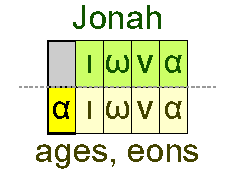
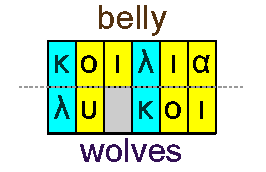
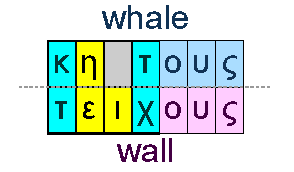
... no sign [Messiah] shall be given [pitted] if not [I am] the sign [Messiah] (of) Jonah [ages] (of the) prophet [planted ones before].
12:40
... for as Jonah [ages] was in the belly [wolves] of the whale [wall] three [tree] days [deserts] and three [tree] nights [beasts] ... heart [mind] of the earth [sand].
110. Matthew 26:34
Matthew 26:34 Jesus said unto him, Verily I say unto thee, That this night, before the cock crow, thou shalt deny me thrice. [kjv]
εφη αυτω ο ιησους αμην λεγω σοι οτι εν ταυτη τη νυκτι πριν αλεκτορα φωνησαι τρις απαρνηση με [gnt]
Is it possible that the disciples (and perhaps many others) have
"entrapped" or
"misinterpreted" "in" "Jesus" about what he says in this verse? If not, what exactly did the disciples (and perhaps many others)
"misinterpret"?
Paraphrase using code words (and play on words):
... that in this (coming) night, before an elect crows/voices [tree] the church will deny [bird] me (Jesus.)
Let us consider the Ten Word Pin model.
111. Ten Word Pin model
Jesus is speaking in
node 1. Let
night one be
node 2 where the church (the weeds) begins to misinterpret/change/deny some of what Jesus said (parts of the writings of Clement, Ignatius, etc.) which led to the
tree in
node 3 on the way to
adultery in
node 4.
Paraphrase using code words (and play on words):
... that in this (coming) night, before an elect crows/voices tree the church will deny [bird] me (Jesus.)
112. Matthew 26:31,35 Models
Matthew 26:31 Then saith Jesus unto them, All ye shall be offended because of me this night: for it is written, I will smite the shepherd, and the sheep of the flock shall be scattered abroad. [kjv]
τοτε λεγει αυτοις ο ιησους παντες υμεις σκανδαλισθησεσθε εν εμοι εν τη νυκτι ταυτη γεγραπται γαρ παταξω τον ποιμενα και διασκορπισθησεται διασκορπισθησονται τα προβατα της ποιμνης [gnt]
26:35 Peter said unto him, Though I should die with thee, yet will I not deny thee. Likewise also said all the disciples. [kjv]
λεγει αυτω ο πετρος καν δεη με συν σοι αποθανειν ου μη σε απαρνησομαι ομοιως και παντες οι μαθηται ειπον ειπαν [gnt]
Do people use their own opinion (glory) to find a model guilty?
If the model fits, you must acquit.
Discuss: What is your model to explain what the disciples and Peter (church) misinterpreted about what Jesus said in these verses?
113. End of page