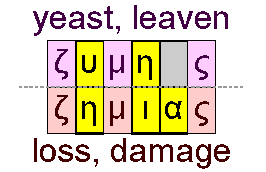
- *G2219 *13 ζύμη (dzoo'-may) : probably from G2204 ζέω; ferment (as if boiling up):--leaven.
- ζυμη *6
- Matthew 13:33 ... of heaven is like unto leaven, which a woman took, ...
- Luke 13:21 It is like leaven, which a woman took ...
- 1 Corinthians 5:6 ... not that a little leaven leaveneth the whole lump?
- 1 Corinthians 5:8 ... with old leaven, neither with the leaven of malice and ...
- Galatians 5:9 A little leaven leaveneth the whole lump.
- ζυμης *6
- Matthew 16:6 ... and beware of the leaven of the Pharisees and of the Sadducees.
- Matthew 16:11 ... bread, that ye should beware of the leaven of the Pharisees and of the Sadducees?
- Matthew 16:12 ... them not beware of the leaven of bread, but of ...
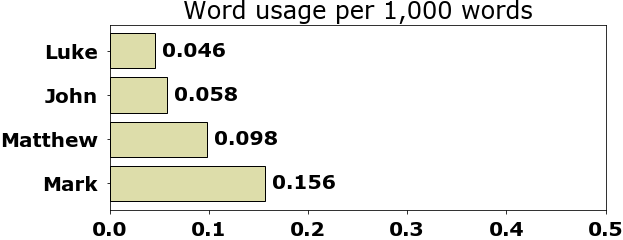
- Mark 8:15 ... beware of the leaven of the Pharisees, and of the leaven of Herod.
- Luke 12:1 ... Beware ye of the leaven of the Pharisees, which is hypocrisy.
- ζυμην
- 1 Corinthians 5:7 Purge out therefore the old leaven, that ye may be a new ...
- *G2204 *2 ζέω (dzeh'-o) : a primary verb; to be hot (boil, of liquids; or glow, of solids), i.e. (figuratively) be fervid (earnest):--be fervent.
- ζεων
- Acts 18:25 ... in the way of the Lord; and being fervent in the spirit, he spake and ...
- ζεοντες
- Romans 12:11 Not slothful in business; fervent in spirit; serving the Lord;
- *G2200 *3 ζεστός (dzes-tos') : from G2204 ζέω; boiled, i.e. (by implication) calid (figuratively, fervent):--hot.
- ζεστος *3
- Revelation 3:15 ... cold nor hot: I would thou wert cold or hot.
- Revelation 3:16 ... neither cold nor hot, I will spue thee ...
21. Usage - leaven
*G2219 *13 ζύμη (dzoo'-may) : probably from G2204 ζέω; ferment (as if boiling up):--leaven.
*G2204 *2 ζέω (dzeh'-o) : a primary verb; to be hot (boil, of liquids; or glow, of solids), i.e. (figuratively) be fervid (earnest):--be fervent.
*G2200 *3 ζεστός (dzes-tos') : from G2204 ζέω; boiled, i.e. (by implication) calid (figuratively, fervent):--hot.
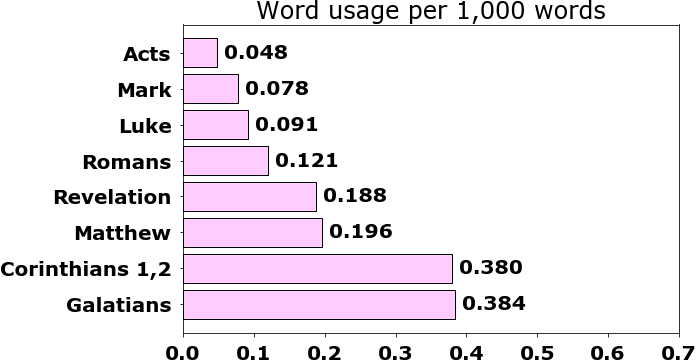 |
Words: ζεοντες ζεστος=3 ζεων ζυμη=6 ζυμην ζυμης=6
|
22. Exodus 12:15 Passover
Exodus 12:15 Seven days shall ye eat unleavened bread; even the first day ye shall put away leaven out of your houses: for whosoever eateth leavened bread from the first day until the seventh day, that soul shall be cut off from Israel. [kjv]
επτα ημερας αζυμα εδεσθε απο δε της ημερας της πρωτης αφανιειτε ζυμην εκ των οικιων υμων πας ος αν φαγη ζυμην εξολεθρευθησεται η ψυχη εκεινη εξ ισραηλ απο της ημερας της πρωτης εως της ημερας της εβδομης [lxx]
The concept of "
leavened" and "
unleavened" bread comes from the passover in Egypt.
During the passover and exodus from Egypt, unleavened bread was to be made as there was not time to make the leavened bread.
23. Exodus 12:15
KJV: Seven days shall ye eat unleavened bread; even the first day ye shall put away leaven out of your houses: for whosoever eateth leavened bread from the first day until the seventh day, that soul shall be cut off from Israel.
Hebrew: שבעת ימים מצות תאכלו אך ביום הראשון תשביתו שאר מבתיכם כי כל אכל חמץ ונכרתה הנפש ההוא מישראל מיום הראשן עד יום השבעי׃
Greek: επτα ημερας αζυμα εδεσθε απο δε της ημερας της πρωτης αφανιειτε ζυμην εκ των οικιων υμων πας ος αν φαγη ζυμην εξολεθρευθησεται η ψυχη εκεινη εξ ισραηλ απο της ημερας της πρωτης εως της ημερας της εβδομης
Latin: septem diebus azyma comedetis in die primo non erit fermentum in domibus vestris quicumque comederit fermentatum peribit anima illa de Israhel a primo die usque ad diem septimum
Wycliffe: In seuene daies ye schulen ete therf breed; in the firste dai no thing diyt with sour douy schal be in youre housis; who euer schal ete ony thing diyt with sour douy, fro the firste dai til the seuenthe dai, that soule schal perische fro Israel.
Luther: Sieben Tage sollt ihr ungesäuert Brot essen; nämlich am ersten Tage sollt ihr aufhören mit gesäuertem Brot in euren Häusern. Wer gesäuert Brot isset vom ersten Tage an, bis auf den siebenten, des Seele soll ausgerottet werden von Israel.
Spanish: Siete días comeréis panes sin levadura; y así el primer día haréis que no haya levadura en vuestras casas: porque cualquiera que comiere leudado desde el primer día hasta el séptimo, aquella alma será cortada de Israel.
24. Exodus 12:39
Exodus 12:39 And they baked unleavened cakes of the dough which they brought forth out of Egypt, for it was not leavened; because they were thrust out of Egypt, and could not tarry, neither had they prepared for themselves any victual. [kjv]
και επεψαν το σταις ο εξηνεγκαν εξ αιγυπτου εγκρυφιας αζυμους ου γαρ εζυμωθη εξεβαλον γαρ αυτους οι αιγυπτιοι και ουκ ηδυνηθησαν επιμειναι ουδε επισιτισμον εποιησαν εαυτοις εις την οδον [lxx]
25. Exodus 12:39
KJV: And they baked unleavened cakes of the dough which they brought forth out of Egypt, for it was not leavened; because they were thrust out of Egypt, and could not tarry, neither had they prepared for themselves any victual.
Hebrew: ויאפו את הבצק אשר הוציאו ממצרים עגת מצות כי לא חמץ כי גרשו ממצרים ולא יכלו להתמהמה וגם צדה לא עשו להם׃
Greek: και επεψαν το σταις ο εξηνεγκαν εξ αιγυπτου εγκρυφιας αζυμους ου γαρ εζυμωθη εξεβαλον γαρ αυτους οι αιγυπτιοι και ουκ ηδυνηθησαν επιμειναι ουδε επισιτισμον εποιησαν εαυτοις εις την οδον
Latin: coxeruntque farinam quam dudum conspersam de Aegypto tulerant et fecerunt subcinericios panes azymos neque enim poterant fermentari cogentibus exire Aegyptiis et nullam facere sinentibus moram nec pulmenti quicquam occurrerant praeparare
Wycliffe: And thei bakiden meele, which spreynd to gidere`a while ago thei token fro Egipt, and maden therf looues bakun vnder the aischis; for the looues miyten not be diyt with sour dow, for Egipcians compelliden to go out, and suffriden not to make ony tariyng, nether it was leiser to make ony seew.
Luther: Und sie buken aus dem rohen Teige, den sie aus Ägypten brachten, ungesäuerte Kuchen; denn es war nicht gesäuert, weil sie aus Ägypten gestoßen wurden, und konnten nicht verziehen und hatten ihnen sonst keine Zehrung zubereitet.
Spanish: Y cocieron tortas sin levadura de la masa que habían sacado de Egipto; porque no había leudado, por cuanto fueron echados de Egipto, y no habían podido detenerse, ni aun prepararse comida.
26. Luke 22:7 Hebrew matza bread
Luke 22:7 Then came the day of unleavened bread, when the passover must be killed. [kjv]
ηλθεν δε η ημερα των αζυμων εν η εδει θυεσθαι το πασχα [gnt]
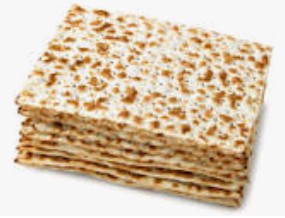
Matza is an unleavened flat-bread that is popular in Israel and part of the observance of Passover and appears in Exodus (some verses above). The Hebrew word
"םצה" (matza) ≈ "matza".
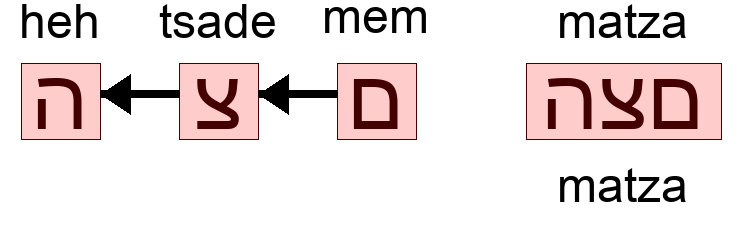
The "
day of unleavened bread" is the day when there was not time to "
leaven" the bread, time to allow it to rise.
27. Luke 22:7
KJV: Then came the day of unleavened bread, when the passover must be killed.
Greek: ηλθεν δε η ημερα των αζυμων εν η εδει θυεσθαι το πασχα
Wycliffe: But the daies of therf looues camen, in whiche it was neede, that the sacrifice of pask were slayn.
Tyndale: Then came ye daye of swete breed when of necessite the esterlambe must be offered.
Geneva: Then came the day of vnleauened bread, when the Passeouer must be sacrificed.
28. Strongs - leaven and bread
- *H7603 שְׂאוֹר (seh-ore') : from H7604; barm or yeast-cake (as swelling by fermentation):--leaven.
- *H4682 מַצָּה (mats-tsaw') : from H4711 in the sense of greedily devouring for sweetness; properly, sweetness; concretely, sweet (i.e. not soured or bittered with yeast); specifically, an unfermented cake or loaf, or (elliptically) the festival of Passover (because no leaven was then used):--unleaved (bread, cake), without leaven.
- *H3899 לֶחֶם (lekh'-em) : from H3898; food (for man or beast), especially bread, or grain (for making it):--((shew-))bread, X eat, food, fruit, loaf, meat, victuals. See also H1036.
Some claim that the "
mas" part of "
Christmas" is related to the "
matza" unleavened bread.
29. Matthew 16: Code words
Matthew 16:6 Then Jesus said unto them, Take heed and beware of the leaven of the Pharisees and of the Sadducees. [kjv]
ο δε ιησους ειπεν αυτοις ορατε και προσεχετε απο της ζυμης των φαρισαιων και σαδδουκαιων [gnt]
Jesus uses the word "
leaven" as a code word.That is, as a word that to get another meaning of the same passage one substitutes another meaning for the code word. This is well accepted here since the code word is explained, but there appear to be many other code words used by Jesus.
30. Parables and secret codes used and explained by Jesus

Jesus often uses
code words so that sayings have more than one meaning.
All the meanings can be true. The encoded (literal) form makes (some) sense (and some nonsense) while the decoded form makes sense. In general:
- Noun words can be code words. Pronouns can be ambiguous.
- Verb words are carefully chosen to work in both contexts.
- Play on words, Spoonerisms, etc., are sometimes used as the code word meaning. These may or may not be commutative.
In the security field, by definition, a
code word is a word that needs to be
substituted with another word (e.g., using a
code book) to determine the meaning. By definition, in the security field, a
secret code is a code whose meaning is to be
obscured to anyone without the code book.
So Jesus, by his own declaration, uses
secret codes. However, these codes appear to provide authentication and meaning information but no special salvation knowledge - which is in clear text.
31. Matthew 16:11-12
Matthew 16:11 How is it that ye do not understand that I spake it not to you concerning bread, that ye should beware of the leaven of the Pharisees and of the Sadducees? [kjv]
πως ου νοειτε οτι ου περι αρτου αρτων ειπον υμιν προσεχειν προσεχετε δε απο της ζυμης των φαρισαιων και σαδδουκαιων [gnt]
16:12 Then understood they how that he bade them not beware of the leaven of bread, but of the doctrine of the Pharisees and of the Sadducees. [kjv]
τοτε συνηκαν οτι ουκ ειπεν προσεχειν απο της ζυμης του αρτου αλλ των αρτων αλλα απο της διδαχης των φαρισαιων και σαδδουκαιων [gnt]
Jesus then has to explain that he was not talking about "
leaven" and "
bread" but in a code.
The disciples now think that they understand.
Matthew associates "
leaven" with "
doctrine" or "
teaching". Jesus never does this. What might Jesus have meant by "
leaven"?
32. Matthew 16:11
KJV: How is it that ye do not understand that I spake it not to you concerning bread, that ye should beware of the leaven of the Pharisees and of the Sadducees?
Greek: πως ου νοειτε οτι ου περι αρτου αρτων ειπον υμιν προσεχειν προσεχετε δε απο της ζυμης των φαρισαιων και σαδδουκαιων
33. Matthew 16:12
KJV: Then understood they how that he bade them not beware of the leaven of bread, but of the doctrine of the Pharisees and of the Sadducees.
Greek: τοτε συνηκαν οτι ουκ ειπεν προσεχειν απο της ζυμης του αρτου αλλ των αρτων αλλα απο της διδαχης των φαρισαιων και σαδδουκαιων
Latin: tunc intellexerunt quia non dixerit cavendum a fermento panum sed a doctrina Pharisaeorum et Sadducaeorum
Wycliffe: Thanne thei vndurstooden, that he seide not to be war of sourdowy of looues, but of the techyng of Farisees and Saducees.
34. Mark 8:15
Mark 8:15 And he charged them, saying, Take heed, beware of the leaven of the Pharisees, and of the leaven of Herod. [kjv]
και διεστελλετο αυτοις λεγων ορατε βλεπετε απο της ζυμης των φαρισαιων και της ζυμης ηρωδου [gnt]
… beistis … beistis … [got]
From Mark, it appears that both the religious establishment and the Herod, the ruler of Judea, can have "
leaven"
Apparently, Herod, and those working for him as a human organization, can have "
leaven". Was was the "
false" "
teaching" of Herod?
Leaven might be associated with influence - and not necessarily good influence.
35. Mark 8:15
KJV: And he charged them, saying, Take heed, beware of the leaven of the Pharisees, and of the leaven of Herod.
Greek: και διεστελλετο αυτοις λεγων ορατε βλεπετε απο της ζυμης των φαρισαιων και της ζυμης ηρωδου
Gothic: jah anabauth im qithands: saihvith ei atsaihvith izwis this beistis fareisaie jah beistis herodis.
36. Luke 12:1
Luke 12:1 In the mean time, when there were gathered together an innumerable multitude of people, insomuch that they trode one upon another, he began to say unto his disciples first of all, Beware ye of the leaven of the Pharisees, which is hypocrisy. [kjv]
εν οις επισυναχθεισων των μυριαδων του οχλου ωστε καταπατειν αλληλους ηρξατο λεγειν προς τους μαθητας αυτου πρωτον προσεχετε εαυτοις απο της ζυμης των φαρισαιων ητις εστιν υποκρισις των φαρισαιων [gnt]
Luke associates "
leaven" with "
hypocrisy". However, the Greek word at that time had a different meaning.
Greek hypocrisy meant acting as in thinking one thing but saying something different. How would this be "
false" "
teaching"?
37. Luke 12:1
KJV: In the mean time, when there were gathered together an innumerable multitude of people, insomuch that they trode one upon another, he began to say unto his disciples first of all, Beware ye of the leaven of the Pharisees, which is hypocrisy.
Greek: εν οις επισυναχθεισων των μυριαδων του οχλου ωστε καταπατειν αλληλους ηρξατο λεγειν προς τους μαθητας αυτου πρωτον προσεχετε εαυτοις απο της ζυμης των φαρισαιων ητις εστιν υποκρισις των φαρισαιων
38. An actor as a hypocrite is not real
Many times Jesus appears to rebuke the Pharisees as
"hypocrites", in the modern sense, because the apply rules to others but not to themselves, reflexively. On closer inspection, and using the definition of
"hypocrite" at the time, this is not quite what is happening.
The
ancient Greek word
"ὑποκριτής" ≈ "actor, pretender" and comes from
"ὑποκρίνομαι" ≈ "answer, interpret, play a part as an actor" and comes from two Greek words.
- "ῠ̔πο" ≈ "under" as in English words starting with "hypo".
- "κρῑ́νω" ≈ "separate". In context, this can be "judge".
The meaning went from "
separate" to "
answer" to "
answer" an actor on stage to "
play a part" as in "
acting" or "
pretending".
The modern definition of
"hypocrite" appears to come from a misinterpretation of what Jesus says in Matthew 7:3-5 (plank or splinter in the eye).
When Jesus says "
You hypocrites", instead of the modern sense, it might be better read as "
You actors" as in "
You pretenders" or "
Get real" or "
Get in touch with reality" or "
Get in touch with the truth". Substituting "
actors" or "
pretenders" might make for a better translation than
"hypocrites".
39. End of page