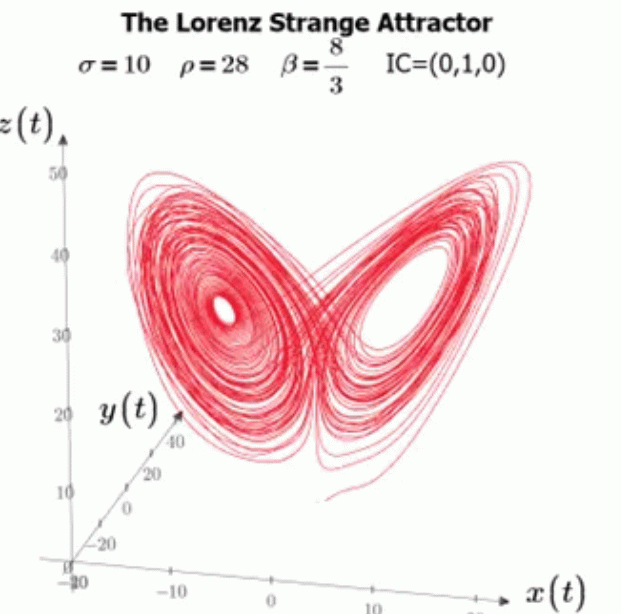
14. Strange attractor
15. John 6:44
KJV: No man can come to me, except the Father which hath sent me draw him: and I will raise him up at the last day.
Greek: ουδεις δυναται ελθειν προς με εαν μη ο πατηρ ο πεμψας με ελκυση αυτον και εγω καγω αναστησω αυτον εν τη εσχατη ημερα
16. John 12:32
KJV: And I, if I be lifted up from the earth, will draw all men unto me.
Greek: καγω εαν αν υψωθω εκ της γης παντας ελκυσω προς εμαυτον
17. Attracting fish
John 21:6 And he said unto them, Cast the net on the right side of the ship, and ye shall find. They cast therefore, and now they were not able to draw it for the multitude of fishes. [kjv]
ο δε ειπεν αυτοις βαλετε εις τα δεξια μερη του πλοιου το δικτυον και ευρησετε εβαλον ουν και ουκ ετι ουκετι αυτο ελκυσαι ισχυσαν ισχυον απο του πληθους των ιχθυων [gnt]
… dexteram … trahere … [v]
21:11 Simon Peter went up, and drew the net to land full of great fishes, an hundred and fifty and three: and for all there were so many, yet was not the net broken. [kjv]
ανεβη ουν σιμων πετρος και ειλκυσεν το δικτυον επι της γης εις την γην μεστον ιχθυων μεγαλων εκατον πεντηκοντατριων πεντηκοντα τριων και τοσουτων οντων ουκ εσχισθη το δικτυον [gnt]
In ancient times, the number
153 was known as the "
number of the fish".
18. John 21:6
KJV: And he said unto them, Cast the net on the right side of the ship, and ye shall find. They cast therefore, and now they were not able to draw it for the multitude of fishes.
Greek: ο δε ειπεν αυτοις βαλετε εις τα δεξια μερη του πλοιου το δικτυον και ευρησετε εβαλον ουν και ουκ ετι ουκετι αυτο ελκυσαι ισχυσαν ισχυον απο του πληθους των ιχθυων
Latin: dixit eis mittite in dexteram navigii rete et invenietis miserunt ergo et iam non valebant illud trahere a multitudine piscium
19. John 21:11
KJV: Simon Peter went up, and drew the net to land full of great fishes, an hundred and fifty and three: and for all there were so many, yet was not the net broken.
Greek: ανεβη ουν σιμων πετρος και ειλκυσεν το δικτυον επι της γης εις την γην μεστον ιχθυων μεγαλων εκατον πεντηκοντατριων πεντηκοντα τριων και τοσουτων οντων ουκ εσχισθη το δικτυον
20. Similar German rule
The German rule
"Eifeler Regel" ≈ "Eifel Rule" is a rule whereby, in speech, the consonant "
n" at the end of a word is sometimes omitted if the next word begins with a consonant.
21. Juncture loss
In linguistics, a "
juncture loss" is where some of a word or words is lost over time. Here are some examples (some from Wikipedia).
alligator from the Spanish word "el lagarto" ≈ "lizard", an alligator being a type of lizard.
ajar (from the Scottish "a char" meaning "turned a little way")
alone (from all one)
atone (from at one)
an apron (from napron)
an umpire (from numpire)
Sometimes less is more - as in few. Here we look at what is left when we have fewer.
Matthew 22:14 For many are called, but few are chosen. [kjv]
πολλοι γαρ εισιν κλητοι ολιγοι δε εκλεκτοι [gnt]
… pauci … [v]
A traditional United States Marine motto is, "
The few, the proud, the Marines".
22. Matthew 22:14
KJV: For many are called, but few are chosen.
Greek: πολλοι γαρ εισιν κλητοι ολιγοι δε εκλεκτοι
Latin: multi autem sunt vocati pauci vero electi
Wessex: Witodlice manega synde ge-laðede äc feawe ge-corene.
Wycliffe: For many ben clepid, but fewe ben chosun.
Tyndale: For many are called and feawe be chosen.
Luther: denn viele sind berufen, aber wenige sind auserwählet.
23. Few
24. Greek
The ancient Greek word
"ολίγος" (o-LEE-gos) ≈ "few" and is from the
PIE root for "
indigent" or "
needy" or "
ill".
There are many English words (though not seen often) that start with "
oligo" such as "
oligonucleotide".
The English word "
oligarchy" comes through French and Latin from Greek.
25. Oligarchy
The modern Greek word
"ολιγαρχία" (o-lee-gar-KHEE-a) ≈ "oligarchy" or rule by a few.
This word is not found in the Bible Greek but does appear in Herodotus, Plutarch, Josephus, etc.
Αρχαιότητες 11 12:1 καὶ οἱ μὲν ὑπὲρ τούτων ἐπιδαψιλευόμενοι ταῖσθυσίαις καὶ τῇ περὶ τὸν θεὸν φιλοτιμίᾳ κατῴκησαν ἐν τοῖς Ἱεροσολύμοις πολιτείᾳ χρώμενοι ἀριστοκρατικῇ μετὰ ὀλιγαρχίας· οἱ γὰρἀρχιερεῖς προεστήκεσαν τῶν πραγμάτων ἄχρι οὗ τοὺς Ἀσαμωναίουσυνέβη βασιλεύειν ἐκγόνους. [jsphs]
The ancient Greek word has the leading «
ο» (omicron) which has dropped off in the modern Greek word. In this case, less is still less (a play on words here).
In the case of "
less", the leading «
ο» (omicron) sounded like a definite article and dropped off over time.
26. Gender system in Greek
27. Case and gender
28. Grammatical gender
29. Omicron drop
The
ancient Greek word
"ὀδούς" ≈ "tooth, tusk" and is the source of the English word
"dental" and the last part of "
orthodontist".
It is not uncommon for ancient Greek words to lose the leading
omicron "
ο" in the corresponding modern Greek word.
The modern Greek word for tooth is
"δόντι" (THON-tee) ≈ "tooth".
30. Matthew 7:10
Matthew 7:10 Or if he ask a fish, will he give him a serpent? [kjv]
η και εαν ιχθυν αιτηση αιτησει μη οφιν επιδωσει αυτω [gnt]
… naeddren. [wes]
… edder… [wy]
… serpet… [ty]
The
modern Greek word
"φίδι" (FEE-thee) ≈ "snake" comes from the
ancient Greek word
"όφιν" (O-feen) ≈ "snake" where, over time, the leading «
ο» (omicron) disappeared (and the ending changed).
The Latin word
"serpentem" ≈ "snake" leads to the translation of "
serpent" for "
snake" in many translations.
The ancient Greek word
"ὀφείλω" ≈ "owe, be obligated" and is the word used in the Lord's Prayer. It can be a play on words with "
serpent".
31. Few
32. Fish in Greek
The ancient Greek word "οψάρι" (o-PSA-ree) ≈ "fish" (noun) was used for fish that was out of water and ready to eat or be prepared to eat, as in the following verse. This word (prefix) appears 5 times in the Greek NT (New Testament) all in the Gospel of John.
The modern Greek word "ψάρι" (PSA-ree) ≈ "fish" (noun) comes from the previous word with the omission of the leading omicron "ο".
Over time, the leading «
ο» (omicron), sounding like the Greek masculine definite article
"ο" (oh) ≈ "the", disappeared.
The ancient and still used modern Greek word "ιχθύς" (ee-KHTHEES) ≈ "fish" (noun), which is a fish still in the water.
The ancient and modern Greek word "αλιεύω" (a-lee-EV-o) ≈ "fish" (verb) refers to the fisherman more than to the fish.
33. Rebracketing
The general historical linguistics term for this phenomena is "rebracketing" or "resegmentation" or "metanalysis".
Example: A meat patty originating in Hamburg being considered a "burger" with "ham".
34. Other words
another (an other)
auger (nauger)
decoy (the coy, in Dutch)
humble pie (numble pie)
lone (all one)
nickname (an ekename to neke name)
omelet (nomelet)
From Wikipedia.
A 2 year old grandson (2020-12-20) liked watching the Disney animation "Monsters Inc". He said he wanted to watch "Monster Sync".
35. Juncture loss
ajar (from the Scottish "a char" meaning "turned a little way")
alligator from the Spanish word "el lagarto" ≈ "lizard", an alligator being a type of lizard.
alone (from all one)
atone (from at one)
From Wikipedia.
36. Shorted speech
In English, as in other languages, words are often shortened over time. Here are some examples.
"indeed" as "deed, that's right"
"je-et?" for "Did you eat?"
37. Alligators and crocodiles
Sign:
ALLIGATORS DO NOT SWIM HERE
Saying:
See you later, alligator. In a while, crocodile.
To many,
alligators and
crocodiles are similar
reptiles.
To start with, an alligator has a wide snout and is black while a crocodile has a pointy snout and has an olive-green color.
Alligators, is in the Florida Gators, are native to the United States (and parts of China) while crocodiles are found many places in the world.
38. Revelation 16:2 Oppressive annoyance
Revelation 16:2 And the first went, and poured out his vial upon the earth; and there fell a noisome and grievous sore upon the men which had the mark of the beast, and upon them which worshipped his image. [kjv]
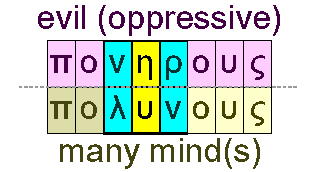
και απηλθεν ο πρωτος και εξεχεεν την φιαλην αυτου επι εις την γην και εγενετο ελκος κακον και πονηρον εις επι τους ανθρωπους τους εχοντας το χαραγμα του θηριου και τους προσκυνουντας τη εικονι αυτου προσκυνουντας [gnt]
"πονηρὰ" ≈ "oppressed by toils" and is often translated as "evil".
"πονηρόν" ≈ "oppressed by toils" (accusative singular) of "πονηρός" ≈ "oppressed by toils".
The English word
"noisome", is from the Middle English word
"noysom" ≈ "harmful, injurious, offensive" and was short for
"annoy" where the leading "
a" dropped off.
39. End of page