Send
Close Add comments:
(status displays here)
Got it! This site "www.creationpie.org" uses cookies. You consent to this by clicking on "Got it!" or by continuing to use this website. Note: This appears on each machine/browser from which this site is accessed.
Matthew: Jesus and flipping the bird perception 1
1. Matthew: Jesus and flipping the bird perception 1
This content is being developed.
2. Matthew: Jesus and flipping the bird perception 1
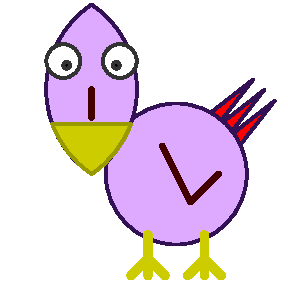
In the Greek New Testament in Matthew, Jesus does not use the many Greek words for a bird in a good sense. Instead, Jesus uses play on words on birds, and even bird sounds, such that a bird represents the religious false leader/teacher who, in the name of Jesus, deceives and uses (oppresses as in evil) others for personal gain. This flips the common and popular perception of birds in the sayings of Jesus.
This content is a summary start of those references with links to more details on each individual reference.
3. Bird links
4. Sports teams with bird names
Many sports teams have
bird names.
Not birds: Blackhawks, Red Wings, Flyers, Hornets
| Sports teams with bird names |
| NFL bird name teams |
| Arizona |
Cardinals |
| Atlanta |
Falcons |
| Baltimore |
Ravens |
| Philadelphia |
Eagles |
| Seattle |
Seahawks |
| NBA bird name teams |
| Atlanta |
Hawks |
| New Orleans |
Pelicans |
|
| Sports teams with bird names |
| MLB bird name teams |
| Baltimore |
Orioles |
| St. Louis |
Cardinals |
| Toronto |
Blue Jays |
| NHL bird name teams |
| Arizona |
Mighty Ducks |
| Atlanta |
Thrashers |
| Pittsburgh |
Penguins |
|
5. Birds of a feather
Some birds compete for the best "
cheap", "
cheap", "
cheap" and go "
cheaper", "
cheaper", "
cheaper".
The "
nest" thing is to cover some bird (brain) jokes as a special "
tweet".
When is the best time to buy a bird?
When it is going cheap. That was a fowl joke.
Why did the little bird get in trouble at school?
He was tweeting on a test.
Perhaps these jokes are "
for the birds". Instead of "
winging it", let us investigate before we go into a "
tail spin".
6. Song: Turn! turn! turn!
The "
Byrds" were an American rock music band from the 1960's. Some band members: David Crosby, Gene Clark, Michael Clarke, Chris Hillman, Jim McGuinn
First four albums:
Mr. Tambourine Man
Turn! Turn! Turn! (lyrics taken from Ecclesiastes 3)
Fifth Dimension
Younger Than Yesterday
Note: The "
Yardbirds" were a different rock group at that time period.
7. Matthew 5:29 Body parts and animals
Matthew 5:29 And if thy right eye offend thee, pluck it out, and cast it from thee: for it is profitable for thee that one of thy members should perish, and not that thy whole body should be cast into hell. [kjv]
ει δε ο οφθαλμος σου ο δεξιος σκανδαλιζει σε εξελε αυτον και βαλε απο σου συμφερει γαρ σοι ινα αποληται εν των μελων σου και μη ολον το σωμα σου βληθη εις γεενναν [gnt]
|
eye/leader
|
hand/muscle
|
foot/walk
|
hair (strand)
|
|
|
|
|
|
 |
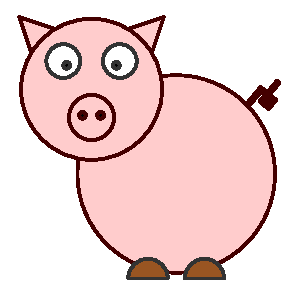 |
 |
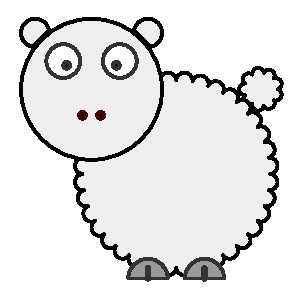 |
|
heaven/air
|
land/earth
|
sea/world
|
land/earth
|
Jesus is the
true head.
Models are more than just
opinion.
Essentially, all models are wrong, but some are useful. George Box, Statistician.
[better together, bitter together]
8. Stained glass birds
9. Hand-prints as birds
10. Matthew 13:4,19 Birds and the evil one
Matthew 13:4 And when he sowed, some seeds fell by the way side, and the fowls came and devoured them up: [kjv]
και εν τω σπειρειν αυτον α μεν επεσεν παρα την οδον και ηλθεν ελθοντα τα πετεινα και κατεφαγεν αυτα [gnt]
13:19 When any one heareth the word of the kingdom, and understandeth it not, then cometh the wicked one, and catcheth away that which was sown in his heart. This is he which received seed by the way side. [kjv]
παντος ακουοντος τον λογον της βασιλειας και μη συνιεντος ερχεται ο πονηρος και αρπαζει το εσπαρμενον εν τη καρδια αυτου ουτος εστιν ο παρα την οδον σπαρεις [gnt]
Jesus relates "
devour" as in "
eating" to
"catcheth away" which is related to the word for
"rapture". The
KJV (King James Version) translates as "
evil" or "
wicked" the Greek word that means "
oppression" or "
oppressor". Saying:
You'll be birdseed.
11. Matthew 13:4,19 Devour and snatch away
Matthew 13:4 And when he sowed, some seeds fell by the way side, and the fowls came and devoured them up: [kjv]
13:19 When any one heareth the word of the kingdom, and understandeth it not, then cometh the wicked one, and catcheth away that which was sown in his heart. This is he which received seed by the way side. [kjv]
The Greek for
"snatch away" is the word used for
"rapture" and the source of the English word
"harpoon". It is also used as
"ravenous" in terms of "
wolves".
Saying:
You'll be birdseed. The "
seed" that was
"snatched away" in parable 1 appears to have been deposited (by the
"birds") in parable 2 as "
weeds" and then grows into a "
tree" in parable 3 so that those
"birds" have a place to make their "
nests".
12. Matthew 8:20 Birds of the air
Matthew 8:20 And Jesus saith unto him, The foxes have holes, and the birds of the air have nests; but the Son of man hath not where to lay his head. [kjv]
και λεγει αυτω ο ιησους αι αλωπεκες φωλεους εχουσιν και τα πετεινα του ουρανου κατασκηνωσεις ο δε υιος του ανθρωπου ουκ εχει που την κεφαλην κλινη [gnt]
… Foxis … dennes… briddis … heuene … nestis… reste … heed. [wy]
Is the
"kingdom of heaven" actually
"heaven" as in the
"kingdom of God"?
"βασίλεια των ουρανών" ≈ "kingdom of heaven" or "kingdom of the air".
"πετεινα του ουρανου" ≈ "birds of the air" or "birds of heaven".
Wycliffe uses the phrase "briddis of heuene" or "birds of heaven".
Some will attempt to "
fix" a perceived "
error" in the Bible text by asserting their opinion (or glory) that
"kingdom of God" and
"kingdom of heaven" are the same thing.
If birds represent "
evil" or "
oppression" (parable 1), are there any birds in heaven?
13. Matthew 8:20 Birds of heaven
Matthew 8:20 And Jesus saith unto him, The foxes have holes, and the birds of the air have nests; but the Son of man hath not where to lay his head. [kjv]
και λεγει αυτω ο ιησους αι αλωπεκες φωλεους εχουσιν και τα πετεινα του ουρανου κατασκηνωσεις ο δε υιος του ανθρωπου ουκ εχει που την κεφαλην κλινη [gnt]
… Foxas … holo… heofene fugeles nyst… heafod änhelde. [wes]
… Foxis … dennes… briddis … heuene … nestis… reste … heed. [wy]
The
ancient Greek word
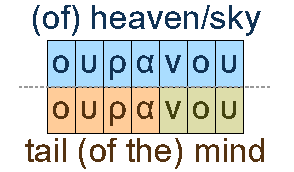
"οὐρανός" ≈ "heaven, air". Jesus uses the dative of
"heaven" or
"air" or
"sky" as a play on words with "
mind" of the "
tail".
Wycliffe translates the Greek as the Middle English phrase
"briddis" ≈ "birds" of
"heuene" ≈ "heaven" as does the Wessex Old English phrase
"fugeles" ≈ "birds" of
"heofene" ≈ "heaven". The Old English word
"briddis" for
"bird" may be the source of the English word
"bride".
14. Matthew 13:31-32 KP3 Parable of the mustard seed
Matthew 13:31 Another parable put he forth unto them, saying, The kingdom of heaven is like to a grain of mustard seed, which a man took, and sowed in his field: [kjv]
13:32 Which indeed is the least of all seeds: but when it is grown, it is the greatest among herbs, and becometh a tree, so that the birds of the air come and lodge in the branches thereof. [kjv]
The
"mustard seed" :
is not the "smallest" of all "seeds".
is not the "greatest" of all "herbs".
grows into a bush, not a tree.
The
"birds" do
not (usually) nest in small bushes. Are the
"birds" good? What is a
"mustard seed"? What does a
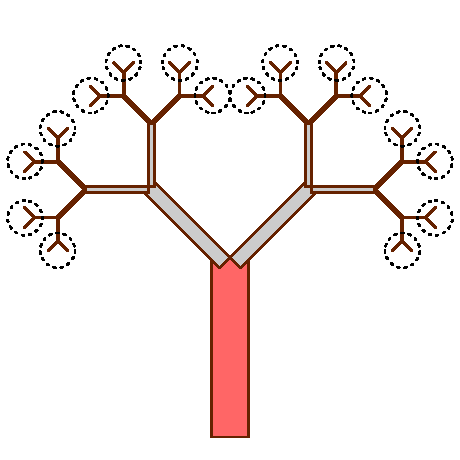
"tree" represent?
The
KJV translates as
"least" the Greek word that means
"smallest". There is another Greek word for
"least".
15. Matthew 6:25-27 The missing part worked out for the birds
Matthew 6:26 Behold the fowls of the air: for they sow not, neither do they reap, nor gather into barns; yet your heavenly Father feedeth them. Are ye not much better than they? [kjv]
εμβλεψατε εις τα πετεινα του ουρανου οτι ου σπειρουσιν ουδε θεριζουσιν ουδε συναγουσιν εις αποθηκας και ο πατηρ υμων ο ουρανιος τρεφει αυτα ουχ υμεις μαλλον διαφερετε αυτων [gnt]
Jesus directly mentions
birds four times in Matthew. According to Jesus:
The birds do not sow.
The birds do not reap.
The birds do not gather into barns.
Who are the
"birds"? What do they do?
16. Matthew 6:26 Birds of heaven
Matthew 6:26 Behold the fowls of the air: for they sow not, neither do they reap, nor gather into barns; yet your heavenly Father feedeth them. Are ye not much better than they? [kjv]
εμβλεψατε εις τα πετεινα του ουρανου οτι ου σπειρουσιν ουδε θεριζουσιν ουδε συναγουσιν εις αποθηκας και ο πατηρ υμων ο ουρανιος τρεφει αυτα ουχ υμεις μαλλον διαφερετε αυτων [gnt]
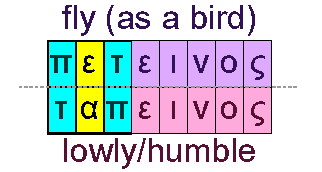
The etymology of the Greek word for
"lowly" or
"humble" is not known. As a
Spoonerism (exchanged consonants), the word for
"lowly" or
"humble" is a play on words with
"birds"
"πετεινός" ≈ "fully fledged, able to fly" as in a "bird".
"ταπεινός" ≈ "low-lying, humbled, downcast" (etymology unknown)
17. Matthew 6:26 Birds of heaven
Matthew 6:26 Behold the fowls of the air: for they sow not, neither do they reap, nor gather into barns; yet your heavenly Father feedeth them. Are ye not much better than they? [kjv]
εμβλεψατε εις τα πετεινα του ουρανου οτι ου σπειρουσιν ουδε θεριζουσιν ουδε συναγουσιν εις αποθηκας και ο πατηρ υμων ο ουρανιος τρεφει αυτα ουχ υμεις μαλλον διαφερετε αυτων [gnt]
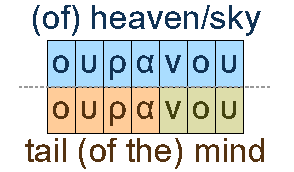
"ουρανου" ≈ "heaven, sky" (genitive).
"ουρά" ≈ "tail" and "νου" ≈ "of the mind" (genitive).
|
Birds of the air.
|
|
Birds of the heaven.
|
|
Birds of the sky.
|
|
Birds of the tail of the mind.
|
Your mind should be in your head, not in your tail (gutter).
Why did some people eat the heads and tails of animals?
They were making ends meat.
18. Luke 12:24 Ravens
The
ancient Greek word
"κόραξ" ≈ "raven, crow" and is onomatopoeic, as is the English word
"crow". Luke uses
"ravens" (used once
GNT (Greek New Testament)).
Luke 12:24 Consider the ravens: for they neither sow nor reap; which neither have storehouse nor barn; and God feedeth them: how much more are ye better than the fowls? [kjv]
κατανοησατε τους κορακας οτι ου σπειρουσιν ουδε θεριζουσιν οις ουκ εστιν ταμειον ουδε αποθηκη και ο θεος τρεφει αυτους ποσω μαλλον υμεις διαφερετε των πετεινων [gnt]
In ancient Greece, to tell someone to "
go to hell" was to say, literally, "
to the ravens". This might refer to bodies left in the open to be eaten by the "
birds".
Quoth the Raven : "Nevermore." From the poem "
The Raven", 1845, by Edgar Allen Poe (1809-1849) who attended West Point (but did not graduate).
The
modern Greek word
"κόρακας" (KO-ra-kas) ≈ "raven". The Latin word
"corvus" ≈ "raven".
19. Matthew 6:26 Kingdom of the birds
Matthew 6:26 Behold the fowls of the air: for they sow not, neither do they reap, nor gather into barns; yet your heavenly Father feedeth them. Are ye not much better than they? [kjv]
εμβλεψατε εις τα πετεινα του ουρανου οτι ου σπειρουσιν ουδε θεριζουσιν ουδε συναγουσιν εις αποθηκας και ο πατηρ υμων ο ουρανιος τρεφει αυτα ουχ υμεις μαλλον διαφερετε αυτων [gnt]
The step
omitted by Jesus is the
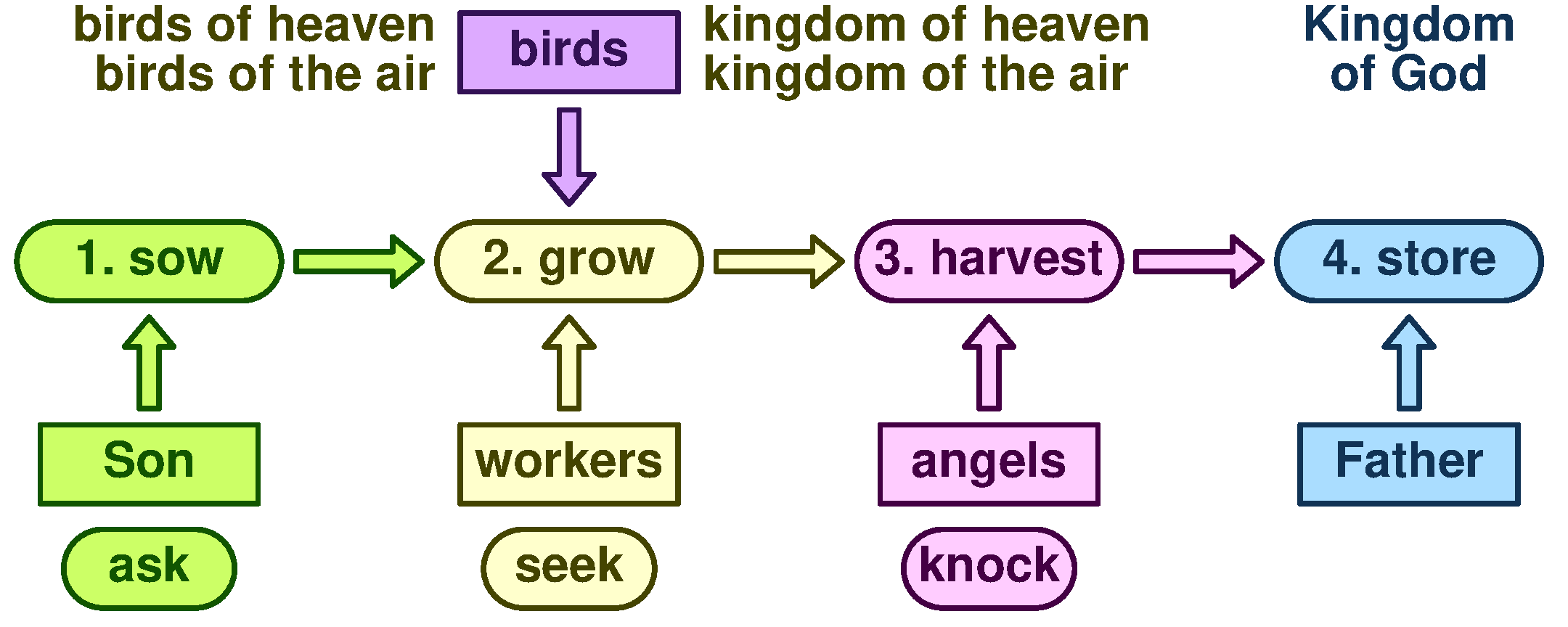
"grow" part. The
"birds" work the growing harvest by "
pecking" and taking part of the harvest (first parable), and, in turn, sowing
"weeds" (second parable).
You are "
rather different" (at least you should be). The
KJV, influenced by the Latin, says "
much better".
The
"birds" are used by Jesus as a symbol of "
false teachers" who "
prey", rather than "
pray", on others. The "
wolf" or "
wolf-dog", as contrasted to a "
sheep-dog", and the "
snake" or "
viper" appear to be used in the same manner.
20. Omitted step
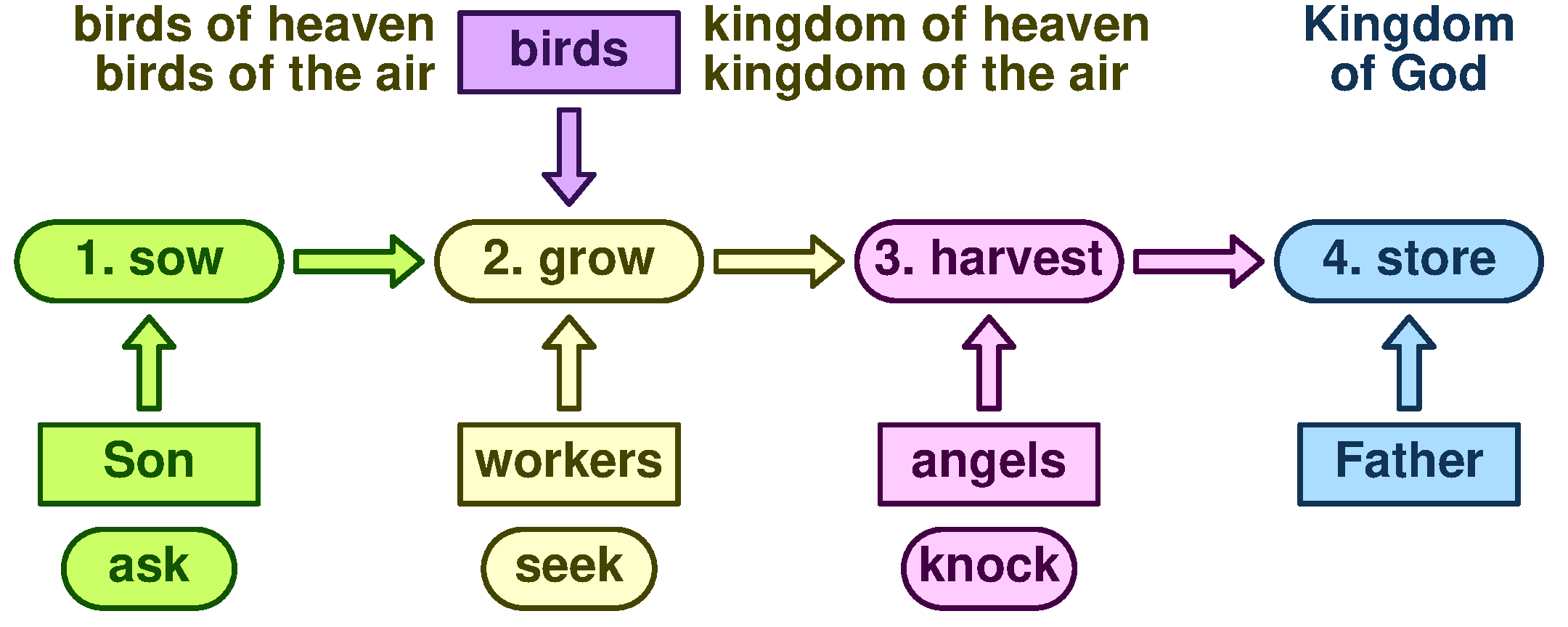
The
"ask",
"seek" and
"knock" sequence can be seen in the
"sow",
"grow" and
"harvest" sequence.
The
"Holy Spirit" is part of the
"worker" process as in the "
kingdom" of
"heaven" or the "
kingdom" of the "
air" where one must deal with the
"birds" of the "
air".
21. Matthew 6:26 Feeding the birds
Matthew 6:26 Behold the fowls of the air: for they sow not, neither do they reap, nor gather into barns; yet your heavenly Father feedeth them. Are ye not much better than they? [kjv]
εμβλεψατε εις τα πετεινα του ουρανου οτι ου σπειρουσιν ουδε θεριζουσιν ουδε συναγουσιν εις αποθηκας και ο πατηρ υμων ο ουρανιος τρεφει αυτα ουχ υμεις μαλλον διαφερετε αυτων [gnt]
"οὐράνιος" ≈ "heaven, sky".
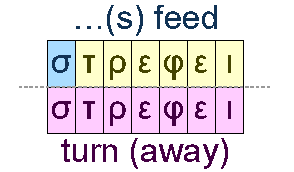
"τρεφει" ≈ "feeds"
"στρέφειι" ≈ "turn, direct, twist"
Why does Jesus use
"heavens" (
plural)? Why is the wording "
and the Father of yours of heavens feeds"? Answer: To make the play on words work.
[How many sheep are left?]
22. Matthew 6:26 Feeding the birds
Matthew 6:26 Behold the fowls of the air: for they sow not, neither do they reap, nor gather into barns; yet your heavenly Father feedeth them. Are ye not much better than they? [kjv]
εμβλεψατε εις τα πετεινα του ουρανου οτι ου σπειρουσιν ουδε θεριζουσιν ουδε συναγουσιν εις αποθηκας και ο πατηρ υμων ο ουρανιος τρεφει αυτα ουχ υμεις μαλλον διαφερετε αυτων [gnt]
| Language |
What is said. |
What is heard. |
| English |
twenty sick sheep |
twenty six sheep |
| Greek |
...ουράνιος τρέφει αυτα |
...ουράνιος στρέφει αυτα |
| English |
...(in) heaven feeds them |
... (in) heaven turns (away from) them |
The
"birds" appear to "
work" but do not do useful "
work". The "
laborers" are needed for the future "
harvest". We see other verses where the "
Father" feeds both the
"birds" and the others. What can
separate you from the
love of Christ?
23. Play on words in Matthew 6:26
| Language |
What is said. |
What is heard. |
| English |
twenty sick sheep |
twenty six sheep |
| Greek |
...ουράνιος τρέφει αυτα |
...ουράνιος στρέφει αυτα |
| English |
...(in) heaven feeds them |
... (in) heaven turns (away from) them |
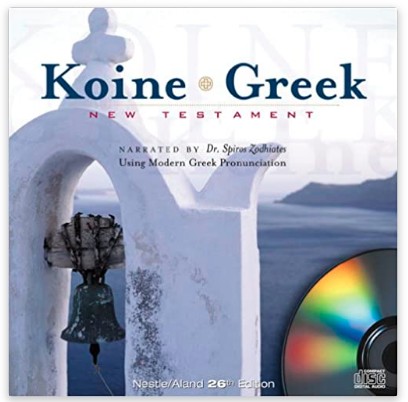
Spiros Zodhiates (Greek-American Bible scholar, author and ministry innovator) (1922-2009) published an audio version of the
GNT (Nestle/Aland 26 edition) using modern Greek pronunciation which is used in many colleges and universities.
The
same play on words can be heard in
ancient Greek and in
modern Greek. It is interesting that when Spiros Zodhiates reads this verse, he puts in a distinct and somewhat long (and unusual) pause between the two words that would otherwise be heard as a play on words in Greek. [English trains and strains]
24. The reign/rain of Jesus
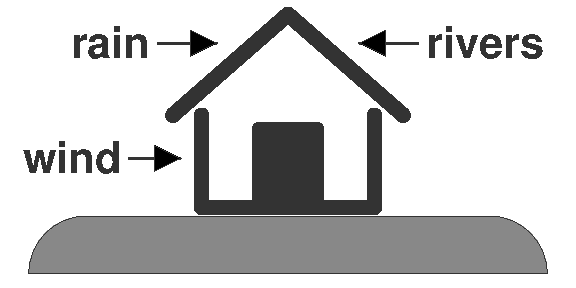
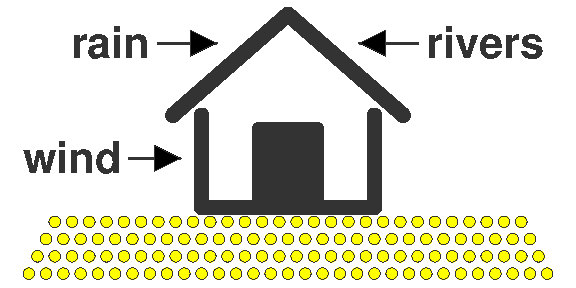
Matthew 5:45 That ye may be the children of your Father which is in heaven: for he maketh his sun to rise on the evil and on the good, and sendeth rain on the just and on the unjust. [kjv]
7:25 And the rain descended, and the floods came, and the winds blew, and beat upon that house; and it fell not: for it was founded upon a rock. [kjv]
7:27 And the rain descended, and the floods came, and the winds blew, and beat upon that house; and it fell: and great was the fall of it. [kjv]
Jesus says that the Father sends rain on both the
just and the
unjust. Some of that "
rain" is sent on houses built on "
sand" and on "
rock", with different results.
Note:
"βροχή" ≈ "rain" GNT.
"κλοπή" ≈ "theft".
"βρέχω" ≈ "wet, drench, rain".
"βρόχος" ≈ "noose, snare (for birds)"
25. Matthew 10:16 Animal crackers
In Matthew 10:16, Jesus uses
four creatures in one verse:
sheep,
wolves,
serpents and
doves or (
pigeons) as
"birds". The English adjectives do not fit the Greek words.
Matthew 10:16 Behold, I send you forth as sheep in the midst of wolves: be ye therefore wise as serpents, and harmless as doves. [kjv]
ιδου εγω αποστελλω υμας ως προβατα εν μεσω λυκων γινεσθε ουν φρονιμοι ως οι οφεις και ακεραιοι ως αι περιστεραι [gnt]
"
Wolves" operate in groups and look for any weakness in their prey. Wolves and dogs can interbreed. A "
wolf-dog" is in contrast to a "
sheep-dog".
The
"serpents" are
not "wise" in the English sense. They are
opportunistic and
prudent. So, no "
wise crackers" here!
The
"doves" or
"pigeons" (same bird) or
"birds" are
not "
harmless" in the English sense. They are without frills (insect antennas), with smooth feathers, preened of pests. not fact-checked, etc. Is this how
"birds" of "
prey" or
"pray" want to appear?
26. Matthew 10:33 Deny as a bird
Matthew 10:33 But whosoever shall deny me before men, him will I also deny before my Father which is in heaven. [kjv]
οστις δε δ αν αρνησηται με εμπροσθεν των ανθρωπων αρνησομαι αυτον καγω αυτον εμπροσθεν του πατρος μου του εν τοις ουρανοις [gnt]
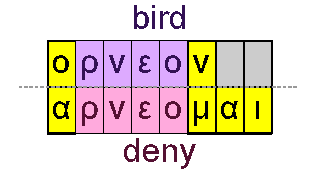
Use the noun for
"bird" as a verb. What's your "
ask"? [tennising]
Greek: αρνησηται (say "ar-NEE-see-ta"), verb "deny".
Greek: ορνησηται (say "or-NEE-see-ta"), verb "bird".
Paraphrase (with play on words):
Whoever [bones, hostile] denies [birds] me before men, I will deny [bird] him before my Father in heaven.
"ἀρνέομαι" ≈ "deny, disown, refuse, decline".
"ὄρνεον" ≈ "bird" as in ornithology.
This play on word usage is
not the same as the modern "
flip" the
"bird" action, though the word "
flip" is similar in spirit to the Greek word for "
worthy" as in "
counter-balance" and the word translated as "
variance" (in two verses).
27. Matthew 10:29,31 All the sparrows
Matthew 10:29 Are not two sparrows sold for a farthing? and one of them shall not fall on the ground without your Father. [kjv]
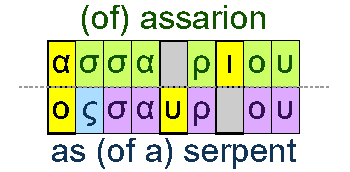
ουχι δυο στρουθια ασσαριου πωλειται και εν εξ αυτων ου πεσειται επι την γην ανευ του πατρος υμων [gnt]
10:31 Fear ye not therefore, ye are of more value than many sparrows. [kjv]
μη ουν φοβηθητε φοβεισθε πολλων στρουθιων διαφερετε υμεις [gnt]
Paraphrase:
All the sparrows (of the evil one) who sell themselves (or others) out for earthly gain will fall on that earthly ground because they are without God the Father ... Fear not. You are different than sparrows.
It takes "
two" to work a "
deal" - for or against God. The Greek word for "
hairs" is that of general "
hairs" and
not the Greek word for "
well-behaved hairs" which is a play on words with (un-walled) "
town" or "
village". [sheep and (young) goats]
Which birds stick together the best?
Velcrows
28. Pretty birds
Some say:
The birds are so pretty (appearance).
The birds sound so nice (sales pitch).
The birds make me feel so good.
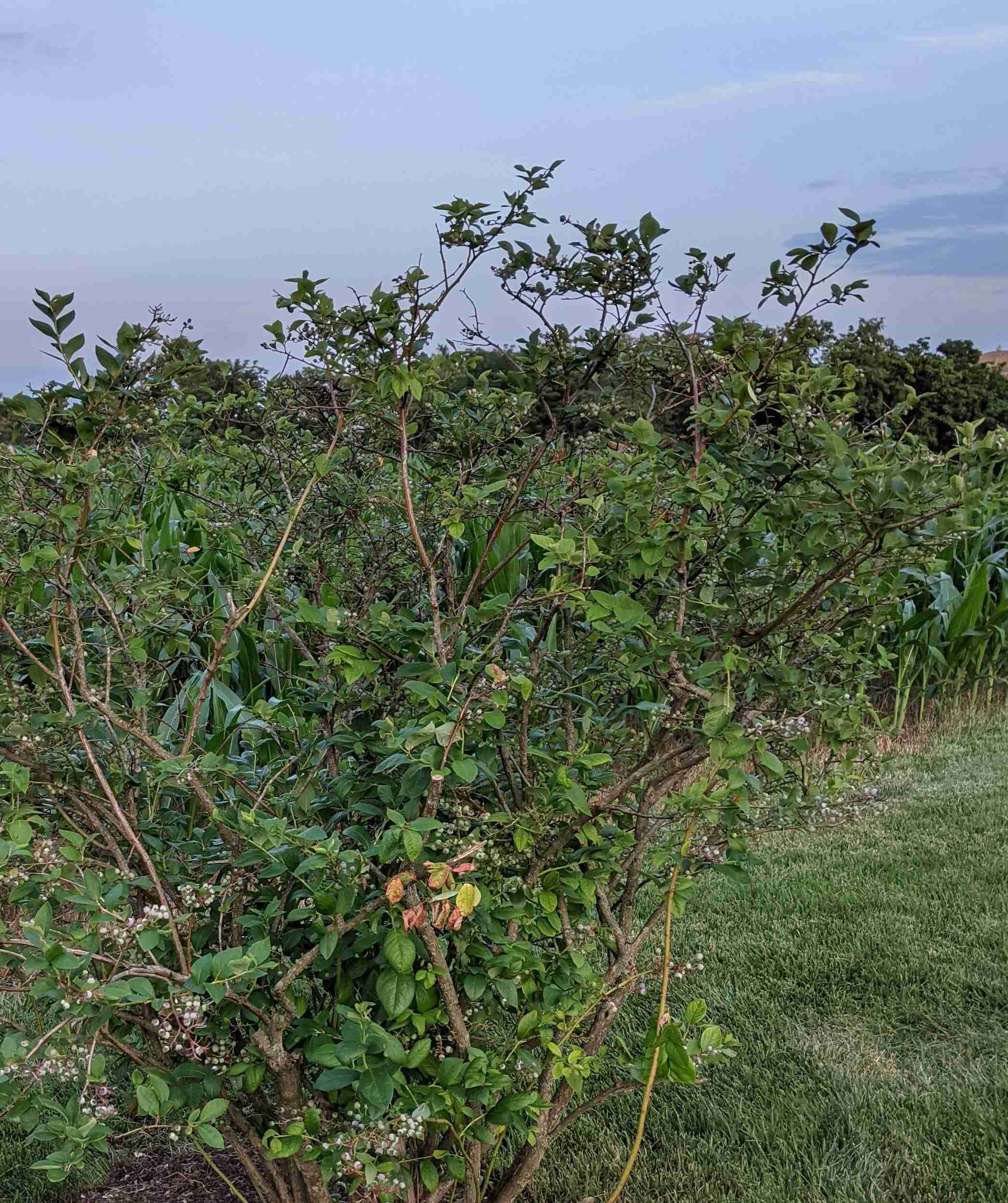
Have you ever watched the birds clean out your blueberry bush of every blueberry ready to be picked?
Reword those thoughts.
The false teachers are so pretty (appearance).
The false teachers sound so nice (sales pitch).
The false teachers make me feel so good (no worries).
Feed the birds and
you'll be birdseed.
29. Sparrows and asparagus
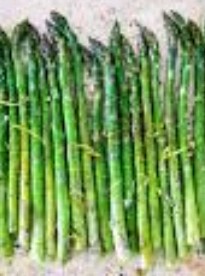
Do
sparrows eat
asparagus?
The English word
"asparagus" comes, through French and Latin, from the ancient Greek word
"ἀσφάραγος" ≈ "asparagus" which appears to have a pre-Greek origin.
Because of the sound of the word "
asparagus", some in England would call it "
sparrow grass". This is just a folk etymology for similar sounding words.
An asparagus plant can be extensive. Birds eating the seeds as the plant goes to seed might give the impression that it is, indeed, "
grass for sparrows" or "
sparrow grass".
30. Birds
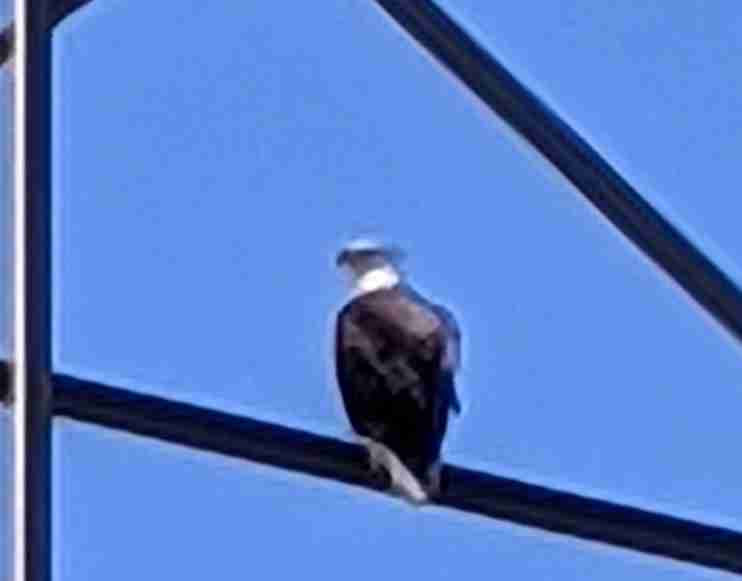
Bird along Harvest Road.
(September 1, 2022).
|
Birds can hide as to be almost unseen.
|
When is it hard to see a bird (or a false teacher)?
When it is in the skies.
31. Wasps
Is this wasp spray good for wasps?
No. It kills them.
God is good. Is God good for you?
(discuss)
Might this change the meaning of "
God will take care of you"? Is that "
reward" good or bad? What is a "
just reward"? What is "
recompense"? Do you get "
stressed" thinking about just "
desserts"?
What do monks say at the start of fumigation day?
Let us spray.
Why are nuns not allowed to wear perfume?
The convent will not tolerate such nun scents.
32. Song: His eye is on the sparrow
The song "
His eye is on the sparrow" was written in 1905 by Civilla D. Martin (1866-1948). Charles H. Gabriel wrote the music. Because of her health, she remained home most of the time.
Born in Canada, she spent most of her life in Atlanta, GA, as a member of the First Christian Church.

In 1904 she wrote "
God will take care of you". Her husband, W. S. Martin (1862-1925) wrote the music.
33. Matthew 10:29 Lizard coin
34. One cookie rule
Growing up, the siblings would often leave the last cookie, piece of cake, etc., not eaten (which annoyed mom).
So, if we were asked "
Did you eat all of the cookies?" we could say, "
No, I did not have one of them". If pressed, we could point to the "
one" cookie that we did
not eat. If we had eaten that
one, then they would be
all (i.e., gone).
Sometimes it is the "
one cookie" that is
not eaten that is important.
There are two general forms of the "
one cookie rule" where the
exceptions are important.
"not one cookie ..." (negative statement)
"one cookie ..." (positive statement)
In general, this is called an "
equivocation" in that it could deceive the listener. Equivocations can be used to hide double meanings as in a code or secret code.
Equivocations can be used as jokes which some people like and some do not.
35. Barnabas: Behavior of birds
English: Neither shall you eat the eagle or the hawk or the kite or the crow. You must not, he means, associate or even resemble such people, who do not know how to provide food for themselves by labor and sweat but lawlessly plunder other people's property; indeed, though they walk about with the appearance of innocence, they are carefully watching and looking around for someone to rob in their greed, just as these birds alone do not provide food for themselves but sit idle and look for ways to eat the flesh of others - they are nothing more than pests in their wickedness. (10.4, Holmes, p. 411)
Barnabas makes the case that the Jews changed the "
moral" laws given by God to
Moses into "
dietary" laws to circumvent what God wanted. The word "
associate" is the Greek word for "
glued to" or "
joined together", the same word Jesus uses for husband and wife becoming "
one flesh".
Greek: [10.4] Οὐδὲ φάγῃ τὸν ἀετὸν οὐδὲ τὸν ὀξύπτερον οὐδὲ τὸν ἰκτῖνα οὐδὲ τὸν κόρακα οὐ μή, φησίν, κολληθήσῃ οὐδὲ ὁμοιωθήσῃ ἀνθρώποις τοιούτοις, οἵτινες οὐκ οἴδασιν διὰ κόπου καὶ ἰδρῶτος προίζειν ἑαυτοῖς τὴν τροφήν, ἀλλὰ ἁρπάζουσιν ὡς καὶ τὰ ἀλλότρια ἐν ἀνομίᾳ αὐτῶν καὶ ἐπιτηροῦσιν ὡς ἐν ἀκεραιοσύνῃ περιπατοῦντες καὶ περιβλέπονται, τίνα ἐκδύσωσιν διὰ τὴν πλεονεξίαν, ὡς καὶ τὰ ὄρνεα ταῦτα μόνα ἑαυτοῖς οὐ προίζει τὴν τροφήν, ἀλλὰ ἀργὰ καθήμενα ἐκζητεῖ, πῶς ἀλλοτρίας σάρκας καταφάγῃ, ὄντα λοιμὰ τῇ πονηρίᾳ αὐτῶν.
The ancient Greek word
"κόλλα" ≈ "glue, flower paste". The translation is that one should not
"associate" with such people. The Greek is that of
"glue yourself" to such people.
36. Matthew 23:37 Facetious remarks
Matthew 23:37 O Jerusalem, Jerusalem, thou that killest the prophets, and stonest them which are sent unto thee, how often would I have gathered thy children together, even as a hen gathereth her chickens under her wings, and ye would not ! [kjv]
ιερουσαλημ ιερουσαλημ η αποκτεινουσα τους προφητας και λιθοβολουσα τους απεσταλμενους προς αυτην ποσακις ηθελησα επισυναγαγειν τα τεκνα σου ον τροπον επισυναγει ορνις επισυναγει τα νοσσια εαυτης αυτης υπο τας πτερυγας και ουκ ηθελησατε [gnt]
Paraphrase (last part of verse):
... how often I (like you snakes) would/could have gathered together (in my den of thieves) your children in the way a bird [evil cave] gathers her [sick/weak, diseased] chicks (little birds) under the wings (of the temple) [breaking the father] and you did not care nor want to [you Satan].
Discuss: How much theological importance should be put on what Jesus says when what was said appears to be facetious remarks, as a parody, on what has happened?
"νόσος" ≈ "sickness, disease, distress".
"νεοσσός" ≈ "young bird, chick"
[sheep and goats, identify the young/sick birds]
37. Roosters and weather vanes
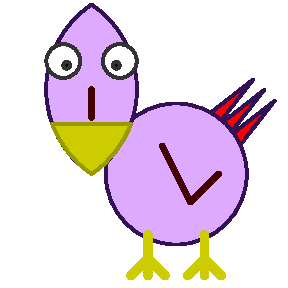
In the Middle Ages, the Catholic church wanted each
parish church (area around the church) to have a rooster to remind everyone of Peter's literal
denial that night.
This reminder often became a weather vane. The modern Greek word
"ανεμοδείκτης" (a-neh-mo-THEE-ktees) ≈ "weather vane" is, literally, a "
wind pointer" where the prefix is the modern Greek word
"άνεμος" (A-neh-mos) ≈ "wind".
The Greek word for "
deny" is a play on words with "
bird". To "
bird" Christ is to "
deny" Christ. He will then "
deny" or "
bird" you. Do "
birds" as
false leaders,
false teachers, etc., "
crow" when they deceptively get someone to "
deny" Christ? Do we see this in what happened, as an example, to Peter?
38. Notre Dame Cathedral rooster
 |
 |
 |
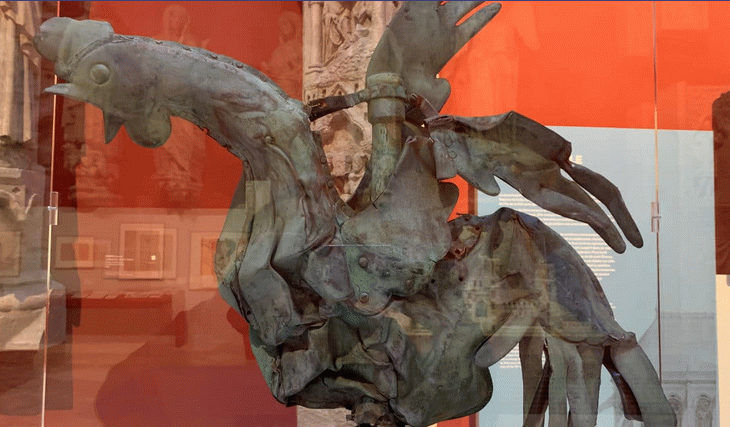
The rooster at Notre Dame Cathedral in France is well-known.
|
 |
|
 |
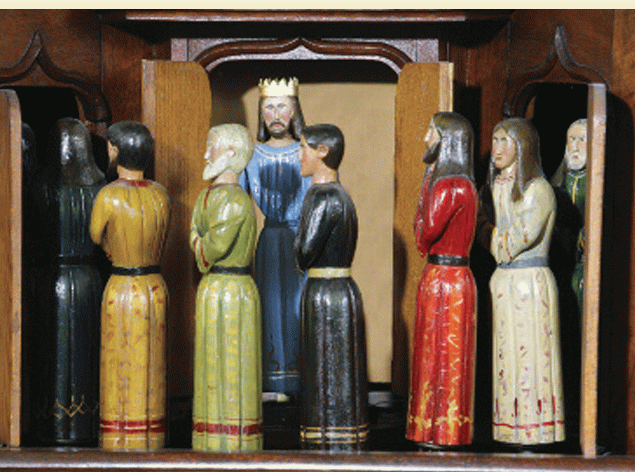
The Apostolic Clock at the Hershey Museum has a depiction of Peter's denial of Jesus. At the denial, the Jesus figure turns his back.
|
A "
rooster" makes a "
voice" just as a "
pipe" in on "
organ" is said to make a "
voice". The settings on an "
organ" are called "
voices".
39. Matthew 26:30-35,69-75 Rooster birds crowing at denials
Matthew 26:34 Jesus said unto him, Verily I say unto thee, That this night, before the cock crow, thou shalt deny me thrice. [kjv]
εφη αυτω ο ιησους αμην λεγω σοι οτι εν ταυτη τη νυκτι πριν αλεκτορα φωνησαι τρις απαρνηση με [gnt]
In the
GNT, Jesus does not use the idea of
"birds" in a good way. In Peter's denial of Christ, the
rooster "bird" crows or
voices at
Peter's denial. Think
"cluck" "cluck".
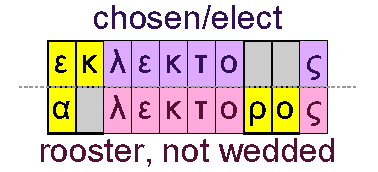
"ἐκλεκτός" ≈ "picked out, selected".
"ἀλέκτορος" ≈ "rooster, husband, not wedded" (genitive singular) of "ἀλέκτωρ" ≈ "rooster, husband, not wedded".
What meanings beyond the immediate literal meaning may be inferred in what Jesus says and the disciples do and how they react?
40. Matthew 26:34 Ambiguous parse
Matthew 26:34 Jesus said unto him, Verily I say unto thee, That this night, before the cock crow, thou shalt deny me thrice. [kjv]
εφη αυτω ο ιησους αμην λεγω σοι οτι εν ταυτη τη νυκτι πριν αλεκτορα φωνησαι τρις απαρνηση με [gnt]
In English, commas are important. A specific parsing in English was decided long ago. In Greek, however, the parsing is ambiguous. How is the ambiguous Greek to be parsed?
☐ 1.
... before (a) rooster [elect] voices/crows three (times), (you) will deny [bird] me.
☐ 2.
... before (a) rooster [elect] voices/crows , three (times) (you) will deny [bird] me.
Peter (and many), from what literally happened, will parse using #2. This will be remembered in Mark, Luke and John. Later, Matthew will be changed to match those accounts. This does not preclude #1 from having an important meaning.
Modern Greek can use
"φορές" (fo-REHS) ≈ "times, occurrences" to help disambiguate as in
"τρις φορές" (trees fo-REHS) ≈ "three times" but the comma is still needed.
41. Matthew 26:34 Three and tree
Matthew 26:34 Jesus said unto him, Verily I say unto thee, That this night, before the cock crow, thou shalt deny me thrice. [kjv]
εφη αυτω ο ιησους αμην λεγω σοι οτι εν ταυτη τη νυκτι πριν αλεκτορα φωνησαι τρις απαρνηση με [gnt]
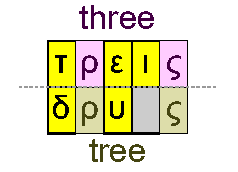
"τρεις" ≈ "three" and is related to the English word "three".
"δρῦς" ≈ "tree, timber, oak" and is related to the English word "druid".
Jesus does not use the word or idea of
"three" in a good sense. The idea of the "
trinity" was developed hundreds of years later.
Jesus does not use the idea of a
"tree", representing human infrastructure as in a house built on sand, in a good sense.
42. Revelation 18:1-24 Cagey birds and the end of Babylon
Revelation 18:2 And he cried mightily with a strong voice, saying, Babylon the great is fallen, is fallen, and is become the habitation of devils, and the hold of every foul spirit, and a cage of every unclean and hateful bird. [kjv]
και εκραξεν εν ισχυι ισχυρα φωνη μεγαλη λεγων επεσεν επεσεν βαβυλων η μεγαλη και εγενετο κατοικητηριον δαιμονων δαιμονιων και φυλακη παντος πνευματος ακαθαρτου και φυλακη παντος ορνεου ακαθαρτου και μεμισημενου [gnt]
In Revelation 18, "
Babylon" the
"great" is described as a
"hold" or "
"cage" or
"watch" or
"prison" of every
"unclean" "
spirit" and of every
"unclean" and "
hateful" type of
"bird".
In Matthew 7, the house built on sand will be "
cut off" will have a
"great" "fall" (same exact Greek words).
☐ Are the
fowl (
unclean) spirits and
birds in
"cages" being
"watched"?
☐ Are those in the
"watch" or
"prison" being
"watched" by the
fowl (
unclean) spirits and
birds?
43. Revelation 18:2 Cagey birds
Revelation 18:2 And he cried mightily with a strong voice, saying, Babylon the great is fallen, is fallen, and is become the habitation of devils, and the hold of every foul spirit, and a cage of every unclean and hateful bird. [kjv]
και εκραξεν εν ισχυι ισχυρα φωνη μεγαλη λεγων επεσεν επεσεν βαβυλων η μεγαλη και εγενετο κατοικητηριον δαιμονων δαιμονιων και φυλακη παντος πνευματος ακαθαρτου και φυλακη παντος ορνεου ακαθαρτου και μεμισημενου [gnt]
In Revelation, Babylon is described as a
"watch" of every "
unclean" and "
hateful" type of
"bird". Are they
"watching" those in the
"watch"?
Some Greek manuscripts add a "
beast" as a
land animal.
In Matthew 7, the house built on sand will be "
cut off" and
"fall".
44. Revelation 18:2 Bird watching
Revelation 18:2 And he cried mightily with a strong voice, saying, Babylon the great is fallen, is fallen, and is become the habitation of devils, and the hold of every foul spirit, and a cage of every unclean and hateful bird. [kjv]
και εκραξεν εν ισχυι ισχυρα φωνη μεγαλη λεγων επεσεν επεσεν βαβυλων η μεγαλη και εγενετο κατοικητηριον δαιμονων δαιμονιων και φυλακη παντος πνευματος ακαθαρτου και φυλακη παντος ορνεου ακαθαρτου και μεμισημενου [gnt]
The ancient Greek word
"φυλάσσω" ≈ "watch" is related to
"φυλακή" ≈ "watch, prison". The
KJV translates the same word as
"hold" and then
"cage" and takes a viewpoint on who is
"watching" and who is being
"watched".
Discuss: How might the world be a "
cage" or "
watch" for a believer?
The Greek word for "cage" is that of a "prison" as in something that is "watched".
The Greek word for "bird" is not the word used in Matthew but is that of "fowl", as used by John, or "hen", as used in Matthew and Luke.
45. Cagey
The English word
"cagey", from the animal world, refers to someone who is wary, careful, shrewd, etc. As such, they may not want to communicate, be elusive, etc.
In a religious setting, a
"bird" or "
pig" as a
false "
teacher" or false "
leader" may be wary of those being
"watched" and may not wont to communicate, be elusive, etc. In particular, they may not want to be accountable to the faithful when they substitute their own "
opinion" or "
glory" (same Greek word) for the "
opinion" or "
glory" of God.
46. Alfred Hitchcock: The birds
The Alfred Hitchcock 1963 movie "
The birds" has a lot of birds. The movie is loosely based on the 1952 short story of the same name by Daphne du Maurier.
When is it hard to see a bird (or a false teacher)?
When it is in the skies.
[optometrist and seeing spots]
47. Matthew 21:39
Matthew 21:39 And they caught him, and cast him out of the vineyard, and slew him. [kjv]
και λαβοντες αυτον εξεβαλον εξω του αμπελωνος και απεκτειναν [gnt]
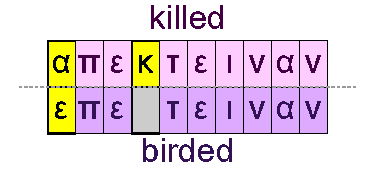
"ἀπέκτειναν" ≈ "killed" (as used).
"επετειναν" ≈ "birded" (made-up word)
"και" ≈ "and" and "καιω" ≈ "burn"
The Greek word translated as
"caught" is that of
"take" or
"seize".
Has it happened historically that, at some time, the "
son" has been
"birded" or "
denied" and "
cast outside" the
"vineyard" which might be associated with the "
church" as a "
gathering of believers"?
The ancient Greek word
"πετεινός" ≈ "bird" and
"πετεινά" ≈ "birds".
48. Matthew 21:41 Miserably wicked
Matthew 21:41 They say unto him, He will miserably destroy those wicked men, and will let out his vineyard unto other husbandmen, which shall render him the fruits in their seasons. [kjv]
λεγουσιν αυτω κακους κακως απολεσει αυτους και τον αμπελωνα εκδοσεται εκδωσεται αλλοις γεωργοις οιτινες αποδωσουσιν αυτω τους καρπους εν τοις καιροις αυτων [gnt]
What exactly are
"miserably" "wicked" "men"?
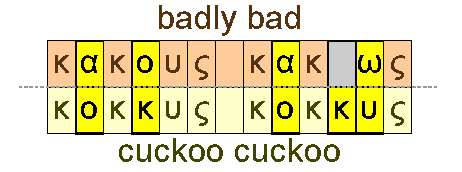
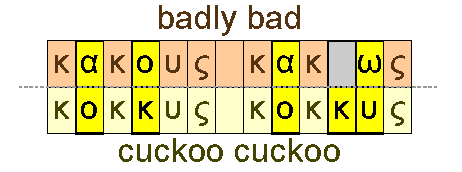
"κακοὺς" ≈ "bad" (adjective, as used).
"κακῶς" ≈ "bad" (adverb, as used).
Suppose the
"vineyard" contains both "
good" and
"bad" "husbandmen". How might one entice the
"bad" "husbandmen" to self-identify so they can receive their
just desserts?
49. Matthew 21:41 Bird calls
Matthew 21:41 They say unto him, He will miserably destroy those wicked men, and will let out his vineyard unto other husbandmen, which shall render him the fruits in their seasons. [kjv]
λεγουσιν αυτω κακους κακως απολεσει αυτους και τον αμπελωνα εκδοσεται εκδωσεται αλλοις γεωργοις οιτινες αποδωσουσιν αυτω τους καρπους εν τοις καιροις αυτων [gnt]
"κακοὺς" ≈ "bad" (adjective, as used).
"κακῶς" ≈ "bad" (adverb, as used).
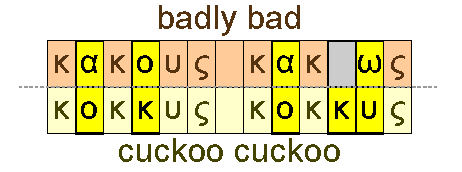
"κόκκῦ" ≈ "cuckoo" as a call of a bird.
As in English (and any other language), anything close to the imitative sound would be taken as a
cuckoo.
[bad birds, Angry Birds]
50. Matthew 21:41 Bird calls
Matthew 21:41 They say unto him, He will miserably destroy those wicked men, and will let out his vineyard unto other husbandmen, which shall render him the fruits in their seasons. [kjv]
λεγουσιν αυτω κακους κακως απολεσει αυτους και τον αμπελωνα εκδοσεται εκδωσεται αλλοις γεωργοις οιτινες αποδωσουσιν αυτω τους καρπους εν τοις καιροις αυτων [gnt]
 |
 |
Audubon Bird
Call - Red
|
Hunters use "
bird" "
calls" to attract "
birds". The exact call used depends on the type of "
bird" one is trying to attract/trap.
Example from military, business, games, etc.
Call one's bluff.
For to show one's cards.
... and so on ...
51. Matthew 21:41
Matthew 21:41 They say unto him, He will miserably destroy those wicked men, and will let out his vineyard unto other husbandmen, which shall render him the fruits in their seasons. [kjv]
λεγουσιν αυτω κακους κακως απολεσει αυτους και τον αμπελωνα εκδοσεται εκδωσεται αλλοις γεωργοις οιτινες αποδωσουσιν αυτω τους καρπους εν τοις καιροις αυτων [gnt]
Question: How might the real
"householder" use bird calls to attract birds and get them to self-identify themselves as not doing what they were supposed to do so that they can be "
destroyed"?
Answer: Check the next parable at the start of the next chapter.
Why only
2 bird calls? What happens before
3 bird calls?
52. End of page