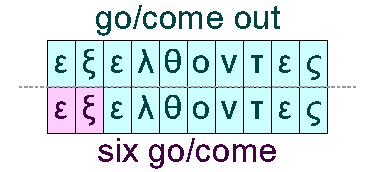
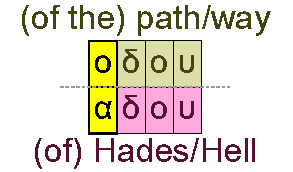
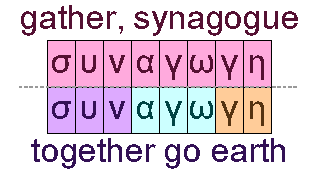
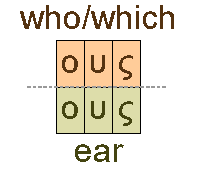
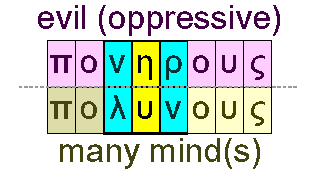
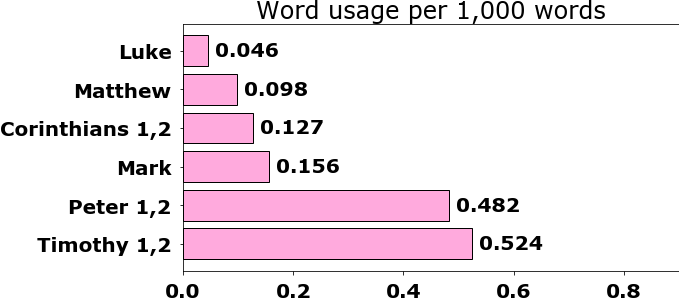
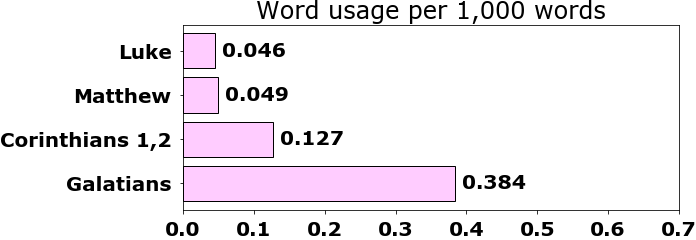
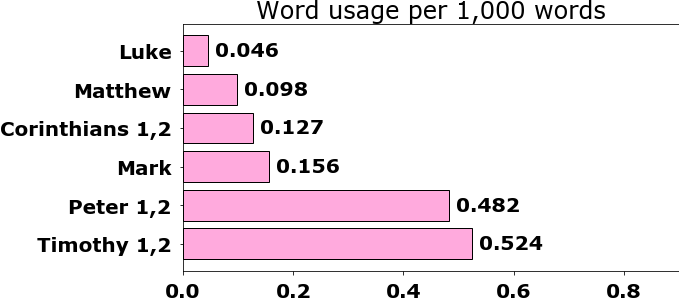
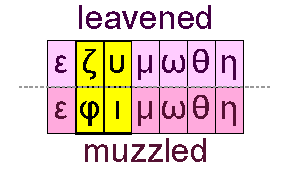
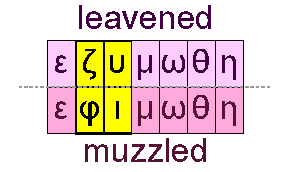
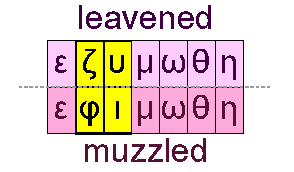
- *G1210 *43 δέω (deh'-o) : a primary verb; to bind (in various applications, literally or figuratively):--bind, be in bonds, knit, tie, wind. See also G1163, G1189.
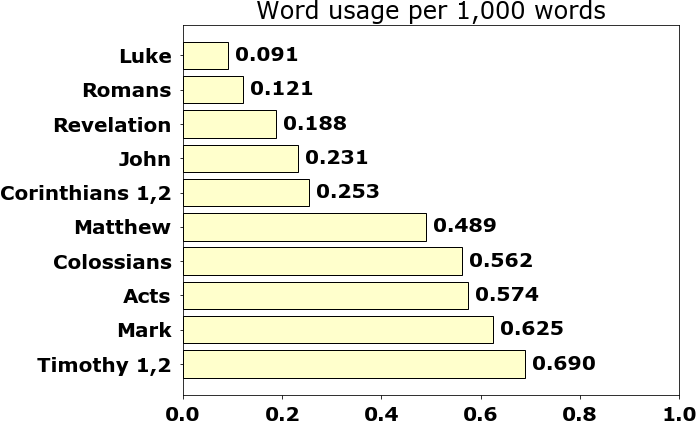
- δησαντες *3 of 43
- Matthew 22:13 Then said the king to the servants, Bind him hand and ...
- Matthew 27:2 And when they had bound him, they led him away, and ...
- Mark 15:1 ... and the whole council, and bound Jesus, and carried him away, ...
30. Deacon as an administration gopher
Matthew 23:11 But he that is greatest among you shall be your servant. [kjv]
ο δε μειζων υμων εσται υμων διακονος [gnt]
Does the
converse hold: If you become a
"servant" or
"deacon", will you become
"great" or
"greatest"?
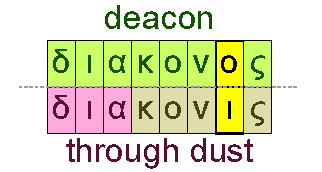
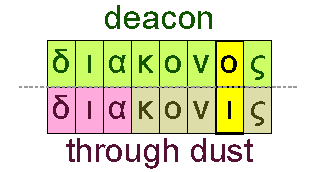
"διάκονος" ≈ "servant".
"δία" ≈ "through" as in the first part of "diameter".
"κόνις" ≈ "dust, ashes" and related to "cinder".
The Greek words for
"through" and
"dust" appear to be related to the Greek word for
"deacon".
[joke license]
31. Matthew 22:13 Deacons and servants
Matthew 22:13 Then said the king to the servants, Bind him hand and foot, and take him away, and cast him into outer darkness; there shall be weeping and gnashing of teeth. [kjv]
τοτε ειπεν ο βασιλευς ειπεν τοις διακονοις δησαντες αυτου ποδας και χειρας αρατε αυτον και εκβαλετε αυτον εις το σκοτος το εξωτερον εκει εσται ο κλαυθμος και ο βρυγμος των οδοντων [gnt]
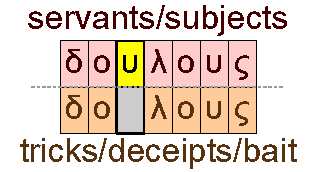
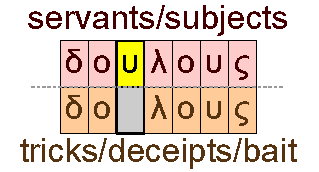
"διακόνοις" ≈ "deacons" (1 time).
"δούλους" ≈ "servants" (5 times).
The only ones known to have not done what they were supposed to do in this parable are the
"servants". Might the
"servants" have been (unknowing)
"bait" in a self-referential reflexive manner? Should they have known better?
Have the
"deacons" been
"through" the
"dust" or
"sand" or
"earth" as in the "
house" built on
"sand" or
"earth"?
32. Matthew 22:13 Deacons and servants
Matthew 22:13 Then said the king to the servants, Bind him hand and foot, and take him away, and cast him into outer darkness; there shall be weeping and gnashing of teeth. [kjv]
τοτε ειπεν ο βασιλευς ειπεν τοις διακονοις δησαντες αυτου ποδας και χειρας αρατε αυτον και εκβαλετε αυτον εις το σκοτος το εξωτερον εκει εσται ο κλαυθμος και ο βρυγμος των οδοντων [gnt]
The Greek word translated as
"servants" is that of
"deacons". In this parable;
"δούλους" ≈ "servants" (5 times).
"διακόνοις" ≈ "deacons" (1 time).
Might one of the
"servants" be the one the
"deacons" throw out? Otherwise, who are the
"deacons"? In English, a play on words would be of
"servants" with
"serpents".
Have the
"deacons" been
"through" the
"dust" or
"sand" or
"earth" as in the "
house" built on
"sand" or
"earth"?
33. Matthew 22:3-4,6,8,10,13
Matthew 22:3 And sent forth his servants to call them that were bidden to the wedding: and they would not come. [kjv]
22:4 Again, he sent forth other servants, saying, Tell them which are bidden, Behold, I have prepared my dinner: my oxen and my fatlings are killed, and all things are ready: come unto the marriage. [kjv]
22:6 And the remnant took his servants, and entreated them spitefully, and slew them. [kjv]
22:8 Then saith he to his servants, The wedding is ready, but they which were bidden were not worthy. [kjv]
22:10 So those servants went out into the highways, and gathered together all as many as they found, both bad and good: and the wedding was furnished with guests. [kjv]
22:13 Then said the king to the servants, Bind him hand and foot, and take him away, and cast him into outer darkness; there shall be weeping and gnashing of teeth. [kjv]
34. Matthew 22:13 Bind Satan
Matthew 22:13 Then said the king to the servants, Bind him hand and foot, and take him away, and cast him into outer darkness; there shall be weeping and gnashing of teeth. [kjv]
τοτε ειπεν ο βασιλευς ειπεν τοις διακονοις δησαντες αυτου ποδας και χειρας αρατε αυτον και εκβαλετε αυτον εις το σκοτος το εξωτερον εκει εσται ο κλαυθμος και ο βρυγμος των οδοντων [gnt]
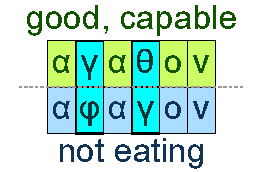
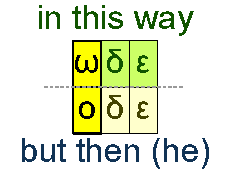
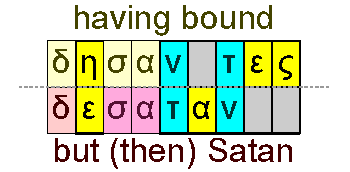
"δήσαντες" ≈ "having bound"
"δε" ≈ "but (then)"
"Σᾰτᾰ́ν" ≈ "Satan"
The ancient Greek word
"δήσαντες" ≈ "having bound" (as used) is from
"δέω" ≈ "bind".
[Santa Claus and Satan Claus]
35. Matthew 22:13
Matthew 22:13 Then said the king to the servants, Bind him hand and foot, and take him away, and cast him into outer darkness; there shall be weeping and gnashing of teeth. [kjv]
τοτε ειπεν ο βασιλευς ειπεν τοις διακονοις δησαντες αυτου ποδας και χειρας αρατε αυτον και εκβαλετε αυτον εις το σκοτος το εξωτερον εκει εσται ο κλαυθμος και ο βρυγμος των οδοντων [gnt]
The Greek phrase for "
outer" "
darkness" is used by Jesus three times in Matthew. The choice of the words "
hand" and "
foot" is interesting. Jesus uses code word nouns to represent other words and meanings.
The "hands" represent "pigs" or those who work for the "birds" and get in the way of sinners wanting to repent.
The "foot" represent "fish" or those who swim in sin from the sea of humanity. One is the be "fishers" of men as "fish" and not "fishers" of "pigs" or "birds".
There is no allusion here to the "
birds" or
false leaders. Perhaps those are the "
servants",
not "
deacons", who did not do what whey were supposed to do.
36. Matthew 25: Play on words
Matthew 25:30 And cast ye the unprofitable servant into outer darkness: there shall be weeping and gnashing of teeth. [kjv]
και τον αχρειον δουλον εκβαλλετε εκβαλετε εις το σκοτος το εξωτερον εκει εσται ο κλαυθμος και ο βρυγμος των οδοντων [gnt]
Play on words:
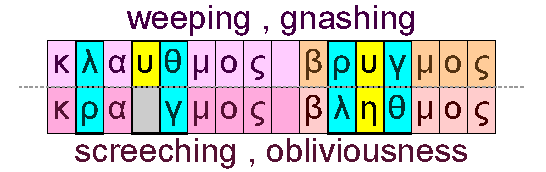
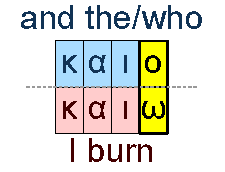
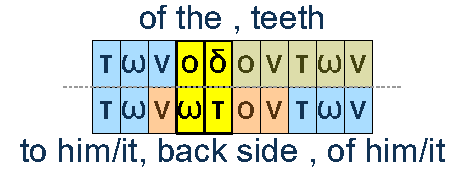
... there will be the weeping [screeching] and the [I burn] gnashing [casting into oblivion] (with respect to) him/it (dative) of the teeth [back side or past (accusative)] of him/it (genitive).
Who/what is the (first) him/it (dative)? Who/what is the (second) him/it (genitive)?
Does this play on word paraphrase make any sense with the places where this unique phrase was used by Jesus? [dentures]
37. Matthew 8:10-12 Children of the kingdom
Jesus is talking to a Roman Centenarian (commander of 80 to 100 Roman soldiers).
Matthew 8:10 When Jesus heard it, he marvelled, and said to them that followed, Verily I say unto you, I have not found so great faith, no, not in Israel. [kjv]
8:11 And I say unto you, That many shall come from the east and west, and shall sit down with Abraham, and Isaac, and Jacob, in the kingdom of heaven. [kjv]
λεγω δε υμιν οτι πολλοι απο ανατολων και δυσμων ηξουσιν και ανακλιθησονται μετα αβρααμ και ισαακ και ιακωβ εν τη βασιλεια των ουρανων [gnt]
8:12 But the children of the kingdom shall be cast out into outer darkness: there shall be weeping and gnashing of teeth. [kjv]
οι δε υιοι της βασιλειας εκβληθησονται εις το σκοτος το εξωτερον εκει εσται ο κλαυθμος και ο βρυγμος των οδοντων [gnt]
Who are the "children" of the "kingdom"?
Which "kingdom" is this?
38. Matthew 8:10
KJV: When Jesus heard it, he marvelled, and said to them that followed, Verily I say unto you, I have not found so great faith, no, not in Israel.
Greek: ακουσας δε ο ιησους εθαυμασεν και ειπεν τοις ακολουθουσιν αμην λεγω υμιν ουδε παρ ουδενι τοσαυτην πιστιν εν τω ισραηλ τοσαυτην πιστιν ευρον
39. Matthew 8:11
KJV: And I say unto you, That many shall come from the east and west, and shall sit down with Abraham, and Isaac, and Jacob, in the kingdom of heaven.
Greek: λεγω δε υμιν οτι πολλοι απο ανατολων και δυσμων ηξουσιν και ανακλιθησονται μετα αβρααμ και ισαακ και ιακωβ εν τη βασιλεια των ουρανων
40. Matthew 8:12
KJV: But the children of the kingdom shall be cast out into outer darkness: there shall be weeping and gnashing of teeth.
Greek: οι δε υιοι της βασιλειας εκβληθησονται εις το σκοτος το εξωτερον εκει εσται ο κλαυθμος και ο βρυγμος των οδοντων
41. Matthew 25:30 Parable of the talents
Matthew 25:30 And cast ye the unprofitable servant into outer darkness: there shall be weeping and gnashing of teeth. [kjv]
και τον αχρειον δουλον εκβαλλετε εκβαλετε εις το σκοτος το εξωτερον εκει εσται ο κλαυθμος και ο βρυγμος των οδοντων [gnt]
The Greek word translated as "
unprofitable" is that of "
not useful".
What is "outer" "darkness"?
What is "inner" "light"?
What might be "inner" "darkness"?
What might be "outer" "light"?
[black holes, dark matter, dark energy]
42. Matthew 22:13
KJV: Then said the king to the servants, Bind him hand and foot, and take him away, and cast him into outer darkness; there shall be weeping and gnashing of teeth.
Greek: τοτε ειπεν ο βασιλευς ειπεν τοις διακονοις δησαντες αυτου ποδας και χειρας αρατε αυτον και εκβαλετε αυτον εις το σκοτος το εξωτερον εκει εσται ο κλαυθμος και ο βρυγμος των οδοντων
43. Matthew 22:14 Word usage
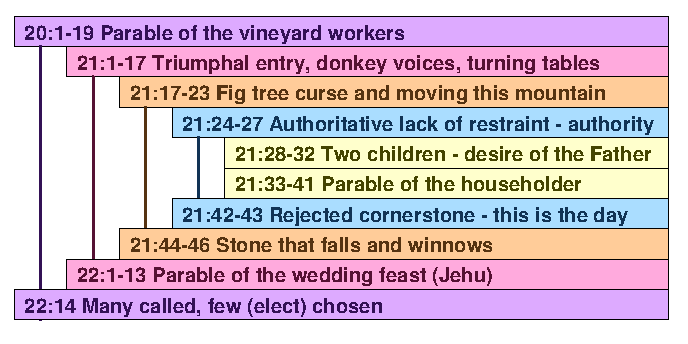
Matthew 22:14 For many are called, but few are chosen. [kjv]
πολλοι γαρ εισιν κλητοι ολιγοι δε εκλεκτοι [gnt]
| Matthew 22:14 |
| Strong |
Used |
Unique |
Word |
Part of speech |
| G2822 |
10 |
3 |
κλητοι |
adjective nominative plural masculine |
| G3641 |
41 |
7 |
ολιγοι |
adjective nominative plural masculine |
| G1588 |
22 |
3 |
εκλεκτοι |
adjective nominative plural masculine |
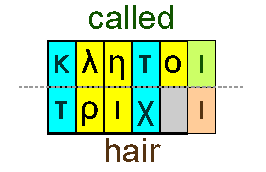
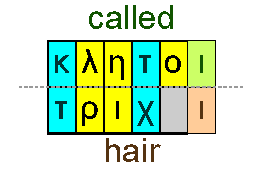
"κλητοὶ" ≈ "called".
"τριχί" ≈ "hair" (dative).
44. Matthew 22:12-14
This is the end for those without proper
garments in the Parable of the Wedding Feast.
Matthew 22:12 And he saith unto him, Friend, how camest thou in hither not having a wedding garment? And he was speechless. [kjv]
22:13 Then said the king to the servants, Bind him hand and foot, and take him away, and cast him into outer darkness; there shall be weeping and gnashing of teeth. [kjv]
22:14 For many are called, but few are chosen. [kjv]
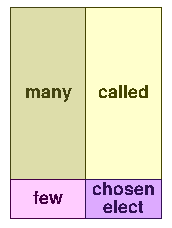
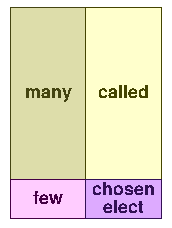
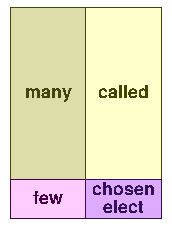
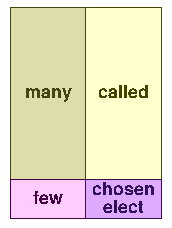
Who are the "many"?
Who are the "called"?
Who are the "few"?
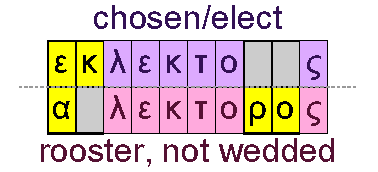
Who are the "chose" or "elect"?
The joke for some denominational churches is "
many are cold, a few are frozen".
45. Matthew 22:14 Callings
Matthew 22:14 For many are called, but few are chosen. [kjv]
πολλοι γαρ εισιν κλητοι ολιγοι δε εκλεκτοι [gnt]
While in church, you may hear God calling in many ways. However, God will not call you on your
cell phone. So you can turn that off while in church.
46. Matthew 22:14 Clamor calling
Matthew 22:14 For many are called, but few are chosen. [kjv]
πολλοι γαρ εισιν κλητοι ολιγοι δε εκλεκτοι [gnt]
The English word
"clamor" comes, through French, from the Latin word
"clamor" ≈ "shout, cry" which comes from the Latin word
"clamo" ≈ "cry out, complain" which is related to the ancient Greek word
"καλέω" ≈ "call". The "
cl" in Latin changed into the "
ll" in Spanish as in
"llamar" ≈ "summon, call".
English: What is it called?
Spanish: ¿Cómo se llama?
Why do so many people who speak Spanish want others to join them and look at alpacas?
They are always saying, ¿Cómo se llama? (Come (and) see the llama!)
47. Matthew 22:14 The chosen elect
48. Matthew 22:14 The cold and frozen elect
Matthew 22:14 For many are called, but few are chosen. [kjv]
πολλοι γαρ εισιν κλητοι ολιγοι δε εκλεκτοι [gnt]
The Greek word translated as "called" is part of the Greek word for "church" as in those believers "called out".
The Greek word translated as "chosen" is that of "elected".
There is an old line, in or about
denominational churches (that have a
name), that goes as follows.
Instead of "many are called, but few are chosen",
the line is "many are cold, a few are frozen".
The line brings to mind the reference to
cold and
hot in the letter of Jesus to the Church of
Laodicea in Revelation.
49. Matthew 22:14 Many called and few chosen
Matthew 22:14 For many are called, but few are chosen. [kjv]
πολλοι γαρ εισιν κλητοι ολιγοι δε εκλεκτοι [gnt]
Consider most sermons.
Who are the "many"?
Who are the "called"?
Who are the "few"?
Who are the "chose" or "elect"?
This verse is the only verse where Jesus makes this distinction of
"many",
"called",
"few" and
"chosen".
Should the Biblical context, as recorded by Matthew, be used in determining the meaning of these words?
50. Matthew 22:14 Many called and few chosen
Matthew 22:14 For many are called, but few are chosen. [kjv]
πολλοι γαρ εισιν κλητοι ολιγοι δε εκλεκτοι [gnt]
Google
AI (Artificial Intelligence) answer on 2025-06-29:
Many are invited or called via the general call of the gospel, which is presented through the Bible, churches, missionaries, and any type of evangelism. Few are chosen means that, of those invited, only the elect (true followers of Jesus) will remain at the wedding feast in the kingdom of God.
Another question:
What is the difference between being called and being chosen?
Another answer:
However, being called is not enough to be a saint. We must respond to that calling (invitation). Positive action is required! To be chosen, a person must accept his or her calling, be grateful for it and move forward in serving God and His Son.
Color coding added.
51. Matthew 22:10-13 Parable of the wedding feast
Matthew 22:10 So those servants went out into the highways, and gathered together all as many as they found, both bad and good: and the wedding was furnished with guests. [kjv]
22:11 And when the king came in to see the guests, he saw there a man which had not on a wedding garment: [kjv]
22:12 And he saith unto him, Friend, how camest thou in hither not having a wedding garment? And he was speechless. [kjv]
22:13 Then said the king to the servants, Bind him hand and foot, and take him away, and cast him into outer darkness; there shall be weeping and gnashing of teeth. [kjv]
Who are the "many"? How were they "called"?
Who are the "few"? How many "few" are in these verses?
What happened to the "few" who were "chosen" or "elected"?
Why bind him "hand" and "foot"?
Who were those already "destroyed"?
[cherry picked verses]
52. Matthew 22:10-11 Many called and few chosen
Matthew 22:10 So those servants went out into the highways, and gathered together all as many as they found, both bad and good: and the wedding was furnished with guests. [kjv]
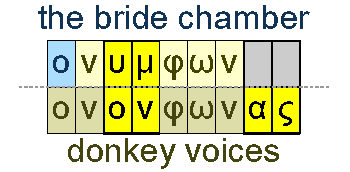
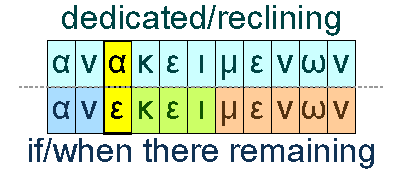
και εξελθοντες οι δουλοι εκεινοι εις τας οδους συνηγαγον παντας οσους ους ευρον πονηρους τε και αγαθους και επλησθη ο γαμος νυμφων ανακειμενων [gnt]
22:11 And when the king came in to see the guests, he saw there a man which had not on a wedding garment: [kjv]
εισελθων δε ο βασιλευς θεασασθαι τους ανακειμενους ειδεν εκει ανθρωπον ουκ ενδεδυμενον ενδυμα γαμου [gnt]
[compiler theory and practice]
53. Matthew 22:12-14 Many called and few chosen
Matthew 22:12 And he saith unto him, Friend, how camest thou in hither not having a wedding garment? And he was speechless. [kjv]
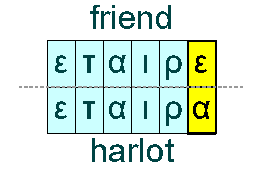
και λεγει αυτω εταιρε πως εισηλθες ωδε μη εχων ενδυμα γαμου ο δε εφιμωθη [gnt]
22:13 Then said the king to the servants, Bind him hand and foot, and take him away, and cast him into outer darkness; there shall be weeping and gnashing of teeth. [kjv]
τοτε ειπεν ο βασιλευς ειπεν τοις διακονοις δησαντες αυτου ποδας και χειρας αρατε αυτον και εκβαλετε αυτον εις το σκοτος το εξωτερον εκει εσται ο κλαυθμος και ο βρυγμος των οδοντων [gnt]
22:14 For many are called, but few are chosen. [kjv]
πολλοι γαρ εισιν κλητοι ολιγοι δε εκλεκτοι [gnt]
54. Matthew 22:13-14 Many called and few chosen
Matthew 22:13 Then said the king to the servants, Bind him hand and foot, and take him away, and cast him into outer darkness; there shall be weeping and gnashing of teeth. [kjv]
22:14 For many are called, but few are chosen. [kjv]
πολλοι γαρ εισιν κλητοι ολιγοι δε εκλεκτοι [gnt]
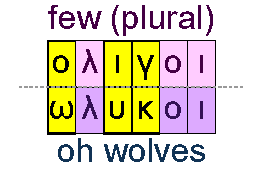
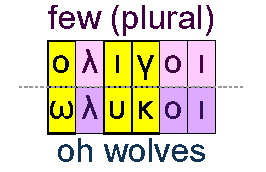
"ὀλίγοι" ≈ "little in size, value, duration, etc." (plural).
"ὦ" ≈ "oh (joy or pain)".
"λυκοί" ≈ "wolves" (could be a type of "bird").
What does Jesus mean when he says that
"few" are
"chosen" or
"elected"? This verse is the
only verse where Jesus makes this distinction of
"many",
"called",
"few" and
"chosen".
Should the Biblical context, as recorded by Matthew, be used in determining the meaning of these words? Here are examples of multiple lists?
Santa: "naughty" and "nice".
Dean: "Dean's List" and "Dean's Other List".
What list or lists (sometimes called a book) does God have?
55. Chosen roosters
56. Matthew 22:14 Many called few chosen
Matthew 22:14 For many are called, but few are chosen. [kjv]
πολλοι γαρ εισιν κλητοι ολιγοι δε εκλεκτοι [gnt]
Of the
"many" called in the Parable of the Wedding Feast, only
one is
"chosen" to go into "
outer" "
darkness".
Paraphrase:
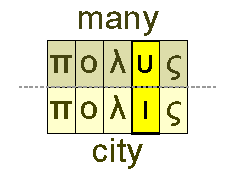
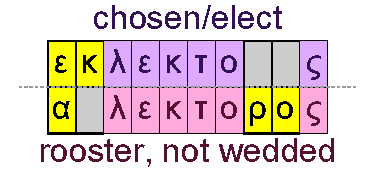
Many [city] are called [hairs] but few [O wolves] are chosen [roosters].
How
"many" is
"many"? How
"few" is
"few"?
57. More
The Greek word for
"chosen" has the "
kle" and "
kto" onomatopoeic sounds of a
"bird" or
"rooster" as, in English, "
cluck" "
cluck".
You
cannot make (yourself or others) one
"hair" white/
light or
black/
dark. Jesus is the "
head" and, in Revelation, appears to only keep
white/
light hairs. Haircut saying:
A little off the top please.
58. Matthew 22:14
KJV: For many are called, but few are chosen.
Greek: πολλοι γαρ εισιν κλητοι ολιγοι δε εκλεκτοι
Latin: multi autem sunt vocati pauci vero electi
Wessex: Witodlice manega synde ge-laðede äc feawe ge-corene.
Wycliffe: For many ben clepid, but fewe ben chosun.
Tyndale: For many are called and feawe be chosen.
Luther: denn viele sind berufen, aber wenige sind auserwählet.
Slavonic: мнози бо суть звани, мало же избранных.
Russian: ибо много званых, а мало избранных.
Spanish: Porque muchos son llamados, pero pocos son escogidos.
Portuguese: Porque muitos são os chamados, mas poucos os escolhidos. »
59. Luke 14:7-24 Parables of the feast and great supper
In Luke 14, Luke presents two parables by Jesus.
The parable of the feast is a setup for
the parable of the great supper.
The parables of the feast and great supper fit in with the idea of "
taking it to the streets". However, the viewpoint is important in understanding the parables.
The sending out to the "
streets" and "
hedges" in the parable of the Great Supper has both an interesting interpretation and an interesting misinterpretation.
60. End of page