Send Close Add comments: (status displays here)
Got it!  This site "www.creationpie.org" uses cookies. You consent to this by clicking on "Got it!" or by continuing to use this website.  Note: This appears on each machine/browser from which this site is accessed.
The lord bred to loaf
by RS  admin@creationpie.org : 1024 x 640


1. The lord bred to loaf
Matthew 6:11 Give us this day our daily bread. [kjv]
τον αρτον ημων τον επιουσιον δος ημιν σημερον [gnt]
panem nostrum supersubstantialem da nobis hodie [v]
… pan … cada … dánoslo hoy. [es]

From the Old English, the word "Lord" comes from the "loaf protector" as in "one who guards the loaves" from "hlaf" (bread) and "weard" (keeper or warder or guardian).
The word "Lady" comes from the "loaf kneader".

The Latin word "panis" ≈ "bread" and is the source of the name of "Panera Bread", literally "Bread Bread".

2. Matthew 6:11 Panera Bread
Matthew 6:11 Give us this day our daily bread. [kjv]
τον αρτον ημων τον επιουσιον δος ημιν σημερον [gnt]
panem nostrum supersubstantialem da nobis hodie [v]
… pan … cada … dánoslo hoy. [es]

Panera Bread
The Latin word "pane" ≈ "bread" and is the source of the name of "Panera Bread", literally "Bread Bread". The Spanish word "pan" ≈ "bread, loaf".
The English word "lord" is from "loaf guarder" or "loaf ward" (try letting the "f" disappear) where "loaf" was the word for "bread", like Latin "f" in "fabulor" ≈ "speak, talk" which became English fable to Spanish "h" in "hablar" ≈ "speak".
 
Have you ever been to Punera Bread?


Information sign More: Mythical stories about history

3. Bread
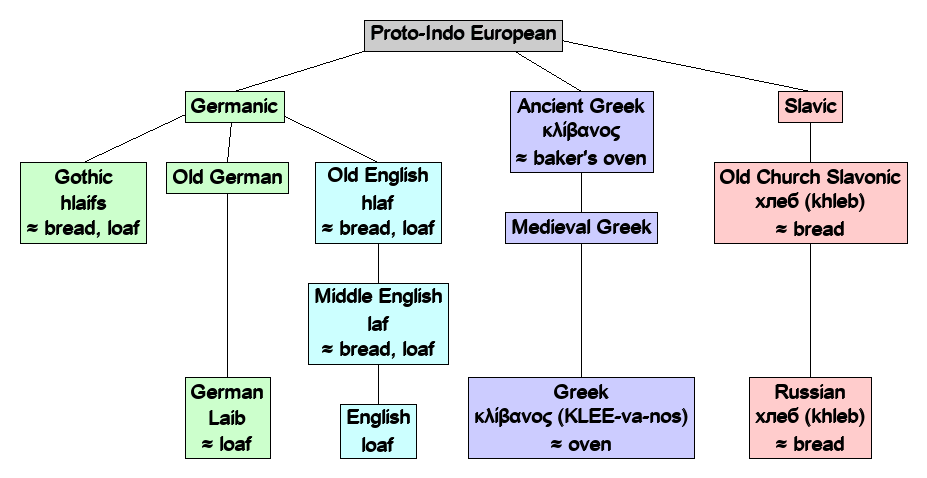
The English word "loaf" is the basis of the word "bread" in many PIE (Proto Indo-European) languages.

4. Diagram
Linguistic diagram of bread

5. Matthew 6:11
   Matthew 6:11 
 All 
KJV: Give us this day our daily bread.
Greek: τον αρτον ημων τον επιουσιον δος ημιν σημερον
Latin: panem nostrum supersubstantialem da nobis hodie
Wessex: ure dayghwamlice hlaf syle us to dayg.
Wycliffe: yyue to vs this dai oure`breed ouer othir substaunce;
Tyndale: Geve vs this daye oure dayly breede.
Gothic: hlaif unsarana thana sinteinan gif uns himma daga.
Luther: Unser täglich Brot gib uns heute.
Slavonic: хлеб наш насущный даждь нам днесь:
Russian: хлеб наш насущный дай нам на сей день;
Spanish: El pan nuestro de cada día, dánoslo hoy.

6. Strongs - bread

7. Strongs - bread
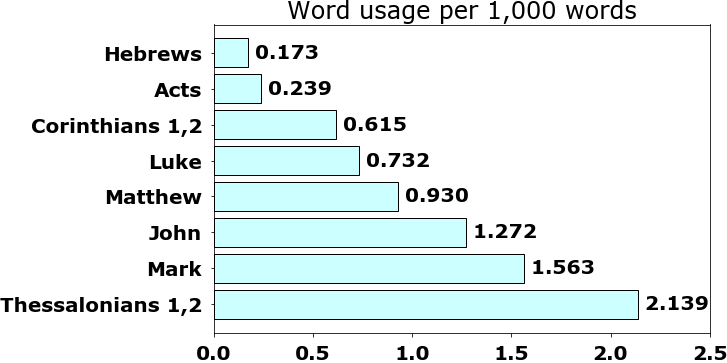
Word usage per chapter Words: αρτοι=4 αρτοις αρτον=39 αρτος=10 αρτου=5 αρτους=30 αρτω=2 αρτων=6


8. Strongs - bread
*G740 *97 ἄρτος (ar'-tos) : from G142; bread (as raised) or a loaf:--(shew-)bread, loaf.

9. Table
Matthew 6:11
# Greek Strongs KJV
1. *1,561 τον G3588 *19,706
2. *39 αρτον G740 *97  
3. *399 ημων G2249 *858  
4. *1,561 τον G3588 *19,706  
5.     G1325   Give
6. *2 επιουσιον G1967 *2  
7. *16 δος G1325 *414  
8.     G2254   us
9. *169 ημιν G2249 *858  
10. *41 σημερον· G4594 *41 this day
11.     G2257   our
12.     G1967   daily
13.     G3588, G740   bread.

10. Matthew 6:30 Oven
Matthew 6:30 Wherefore, if God so clothe the grass of the field, which to day is, and to morrow is cast into the oven, shall he not much more clothe you, O ye of little faith? [kjv]
ει δε τον χορτον του αγρου σημερον οντα και αυριον εις κλιβανον βαλλομενον ο θεος ουτως αμφιεννυσιν ου πολλω μαλλον υμας ολιγοπιστοι [gnt]
… clibanum … [v]

Some have connected the word for "loaf" to the Greek word for oven.

11. Matthew 6:30
   Matthew 6:30 
 All 
KJV: Wherefore, if God so clothe the grass of the field, which to day is, and to morrow is cast into the oven, shall he not much more clothe you, O ye of little faith?
Greek: ει δε τον χορτον του αγρου σημερον οντα και αυριον εις κλιβανον βαλλομενον ο θεος ουτως αμφιεννυσιν ου πολλω μαλλον υμας ολιγοπιστοι
Latin: si autem faenum agri quod hodie est et cras in clibanum mittitur Deus sic vestit quanto magis vos minimae fidei

12. Proverbs 20:17 Bread of deceit
Proverbs 20:17 Bread of deceit is sweet to a man; but afterwards his mouth shall be filled with gravel. [kjv]
… panis … [v]
… Brot … [lu]
… хлеб … [ocs]

Does the "bread" of "deceit" have any connection to leaven?

Note that in Proverbs 20, verses 14 to 19 are not found in the LXX (Septuagint).

13. Proverbs 20:17
 All 
KJV: Bread of deceit is sweet to a man; but afterwards his mouth shall be filled with gravel.
Hebrew: ערב לאיש לחם שקר ואחר ימלא פיהו חצץ׃
Latin: suavis est homini panis mendacii et postea implebitur os eius calculo
Luther: Das gestohlene Brot schmeckt jedermann wohl; aber hernach wird ihm der Mund voll Kieseling werden.
Slavonic: Сладок есть человеку хлеб лжи, но потом исполнятся уста его камения.
Russian: Сладок для человека хлеб, приобретенный неправдою; но после рот его наполнится дресвою.
Spanish: Sabroso es al hombre el pan de mentira; mas después su boca será llena de cascajo.

14. Matthew 27:66 Custodians
Matthew 27:66 So they went, and made the sepulchre sure, sealing the stone, and setting a watch. [kjv]
οι δε πορευθεντες ησφαλισαντο τον ταφον σφραγισαντες τον λιθον μετα της κουστωδιας [gnt]
… lapidem … custodibus [v]
… stann … wearden. [wes]
… камень … кустодиею. [ocs]

The "watch" in Greek is «κουστωδίας» which was a word borrowed from Latin "custodibus" and from which we get the word "custodian".

After the resurrection, some of the custodians went to tell the chief priests what had happened.

The Old English word "wearden" ≈ "watch, guard" and is the second part of the English word "lord" as, originally, "load guarder" or "bread guarder".

Information sign More: Matthew 27:57-66 Pilate, body, tomb, custodians

15. Matthew 27:66

 All 
KJV: So they went, and made the sepulchre sure, sealing the stone, and setting a watch.
Greek: οι δε πορευθεντες ησφαλισαντο τον ταφον σφραγισαντες τον λιθον μετα της κουστωδιας
Latin: illi autem abeuntes munierunt sepulchrum signantes lapidem cum custodibus
Wessex: Soðlice hyo ferdon. & ymb-tremedon þa byrigenne. & inseggledon þanne stann mid þam wearden.
Slavonic: Они же шедше утвердиша гроб, знаменавше камень с кустодиею.

16. Bethlehem: house of bread
Ruth 1:22 So Naomi returned, and Ruth the Moabitess, her daughter in law, with her, which returned out of the country of Moab: and they came to Beth–lehem in the beginning of barley harvest. [kjv]
… ורות … ביתלחם … [he]
και επεστρεψεν νωεμιν και ρουθ η μωαβιτις η νυμφη αυτης επιστρεφουσα εξ αγρου μωαβ αυται δε παρεγενηθησαν εις βαιθλεεμ εν αρχη θερισμου κριθων [lxx]

The name "Bethlehem" means "House of Bread", was one of the near towns whose main industry was producing sacrificial lambs for the passover.
The fields of "Bethlehem" are where Boaz met Ruth, grandmother of King David.

Who is the "passover lamb" born in the "House of Bread" who "broke the rules" for you and me?

Information sign More: Bethlehem: house of bread

17. Revelation 10:9-10 Sweet as honey
Revelation 10:9 And I went unto the angel, and said unto him, Give me the little book. And he said unto me, Take it, and eat it up; and it shall make thy belly bitter, but it shall be in thy mouth sweet as honey. [kjv]
και  απηλθον   απηλθα προς τον αγγελον λεγων αυτω  δος   δουναι μοι το βιβλαριδιον και λεγει μοι λαβε και καταφαγε αυτο και πικρανει σου την κοιλιαν αλλ εν τω στοματι σου εσται γλυκυ ως μελι [gnt]

10:10 And I took the little book out of the angel's hand, and ate it up; and it was in my mouth sweet as honey: and as soon as I had eaten it, my belly was bitter. [kjv]
και ελαβον το βιβλαριδιον εκ της χειρος του αγγελου και κατεφαγον αυτο και ην εν τω στοματι μου ως μελι γλυκυ και οτε εφαγον αυτο επικρανθη η κοιλια μου [gnt]

The ancient Greek word "μέλι" ≈ "honey" and, in general, anything sweet.

The ancient Greek word "γλυκύς" ≈ "sweet" and is from the PIE root "*GLEWKUS" ≈ "sweet". It is related to the Latin word "dulcis" ≈ "sweet". The modern Greek word "γλυκός" (ghlee-KOS) ≈ "sweet". Related English words are "glucose" and "hypoglycemic".

Information sign More: The taste of false teaching
Information sign More: Revelation 10:1-11

18. End of page

by RS  admin@creationpie.org : 1024 x 640