Got it! This site "www.creationpie.org" uses cookies. You consent to this by clicking on "Got it!" or by continuing to use this website. Note: This appears on each machine/browser from which this site is accessed.
Matthew 19:22-24 Rich annoyance of camel eye needles
Matthew 19:18He saith unto him, Which? Jesus said, Thou shalt do no murder, Thou shalt not commit adultery, Thou shalt not steal, Thou shalt not bear false witness, [kjv]
19:19Honour thy father and thy mother: and, Thou shalt love thy neighbour as thyself. [kjv]
Matthew 19:21Jesus said unto him, If thou wilt be perfect, go and sellthat thou hast, and give to the poor, and thou shalt have treasure in heaven: and come and follow me. [kjv]
εφη αυτω ο ιησους ειθελειςτελειος ειναι υπαγεπωλησον σου τα υπαρχοντα και δοςτοιςπτωχοις και εξεις θησαυρον εν ουρανω ουρανοις και δευροακολουθει μοι [gnt]
The wording is ambiguous as "you" is before"essential attributes" and not after. Any non-verbal hand motions, etc., are not recorded. One way to understand this verse is the following.
Paraphrase: Jesus said to him, if you desire/consent to be purposeful, go and sell out (of) you the (point to the young man) essential attributes and (Jesus points back to himself, as in the essential attributes of Jesus) give to the (Jesus points outward to others) beggars/poor (wanting the Good News) and you will have treasure (not eating the fruit, living bread appears in (the good) kingdom of) heaven and come and follow me.
Matthew 19:21Jesus said unto him, If thou wilt be perfect, go and sellthat thou hast, and give to the poor, and thou shalt have treasure in heaven: and come and follow me. [kjv]
εφη αυτω ο ιησους ειθελειςτελειος ειναι υπαγεπωλησον σου τα υπαρχοντα και δοςτοιςπτωχοις και εξεις θησαυρον εν ουρανω ουρανοις και δευροακολουθει μοι [gnt]
19:22But when the young manheardthatsaying, he went awaysorrowful: for he had greatpossessions. [kjv]
19:23Then said Jesus unto his disciples, VerilyI sayunto you, That a rich man shall hardlyenter into the kingdom of heaven. [kjv]
19:24AndagainI sayunto you, It is easier for a camelto gothroughtheeye of a needle, than for a rich manto enterinto the kingdom of God. [kjv]
The idea of "rich" and "ruler" comes from Luke and appears to have been back-patched into Matthew.
6. Matthew 19:22 Young man
Matthew 19:22But when the young manheardthatsaying, he went awaysorrowful: for he had greatpossessions. [kjv]
ακουσας δε ο νεανισκοςτονλογοντουτοναπηλθενλυπουμενος ην γαρ εχων κτηματαπολλα [gnt]
The ancient Greek word "ἀκούω" ≈ "hear" and is the source of the English word "acoustic". The Greek word for "hear" assumes understanding. In English today, some people have great hearing but do not listen well. Saying: You can't tell'm anything!
*G3076 *26 λυπέω (loo-peh'-o) : from G3077; to distress; reflexively or passively, to be sad:--cause grief, grieve, be in heaviness, (be) sorrow(-ful), be (make) sorry.
Can one have "many""acquisitions" without being "rich"?
Can one have "many""possessions" without being "rich"?
Do you know anyone who is obsessed with acquiring things as a pack-rat? Are they "rich"? How does the obsession change their lives? Would they be annoyed/distressed if they had to give up their pack-rat behavior?
12. Matthew 10:8-9 Pursuing discussion
Matthew 10:8Heal the sick, cleanse the lepers, raise the dead, cast out devils: freely ye have received, freelygive. [kjv]
This word is used in seven verses in the GNT. The meaning of the verse can change depending on whether the verse refers to already possessing something or whether that something is to be acquired and then possessed. The idea of "possess" comes from the Latin word "possidere" ≈ "possess".
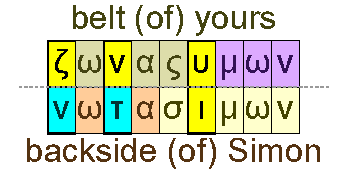
The Greek for "purses" is that of "belt" and is the source of the English word "zone". The Greek has "into" (going into) rather than "in" (already in).
"Gold": play on words with Christ by removing the cross.
Discuss: Why might the church not want you to have money to take along to spread the "Good News"? Provide any known historical examples of either case.
This content is concerned with "acquire" and not the precious metals of "gold", "silver" and "brass" nor the way for the "lost sheep" to get out of the pit and become not lost.
Jesus associates Simon Peter with the church. Jesus says: ... do not acquire ... into (the) belt (of) yours. Did the church historically say to not take "money" with you in order to "acquire" or "possess" "money" into their "backside" (Spoonerism of "belt")?
The Greek "Z" sound is, in English, more of a "TZ" sound.
Matthew 19:22But when the young manheardthatsaying, he went awaysorrowful: for he had greatpossessions. [kjv]
ακουσας δε ο νεανισκοςτονλογοντουτοναπηλθενλυπουμενος ην γαρ εχων κτηματαπολλα [gnt]
This is connecting commentary by Matthew. It is Matthew's opinion that the reason he was annoyed was that the young man had manypossessions. The disciples do not have a good track record of making good inferences. It is human nature to attribute what happens to what they know, hear or see.
Greek: But when the young manheard (with understanding) the reasoning he went away annoyed/distressed because (Matthew reasons) he had manyacquisitions.
Might those "acquisitions" be all good or all not good?
Consider the above verses and discuss the following.
How hard is it for the "rich" to enter the kingdom?
How hard is it for the "poor" to enter the kingdom?
How hard is it for those who are neither "rich" nor "poor" to enter the kingdom?
What is the difference between the following?
Something that is easy or hard (difficult).
Something that is possible or impossible.
Is there a middle ground for each?
Why might the "young man" be "annoyed", "grumpy" or "bad-tempered" at hearing the remarks of Jesus? Why might the disciples be upset at what Jesus said.
Matthew 19:23Then said Jesus unto his disciples, VerilyI sayunto you, That a rich man shall hardlyenter into the kingdom of heaven. [kjv]
ο δε ιησους ειπεν τοις μαθηταις αυτου αμηνλεγωυμιν οτι δυσκολως πλουσιοςδυσκολωςεισελευσεται εις την βασιλειαν των ουρανων [gnt]
Paraphrase: (if otherwise qualified) A man with many possessions enters the kingdom of heaven in a bad-tempered or grumpy manner (since all those possessions are left behind and now worthless). Whether one gets into the kingdom of heaven is dependent on other factors (e.g., how the possessions were obtained, how they were used, etc.).
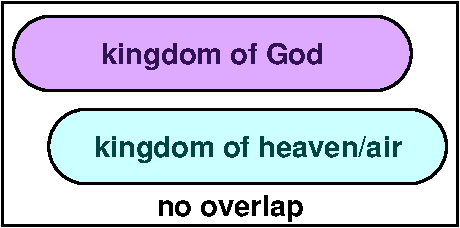
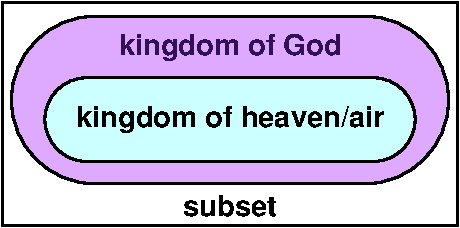
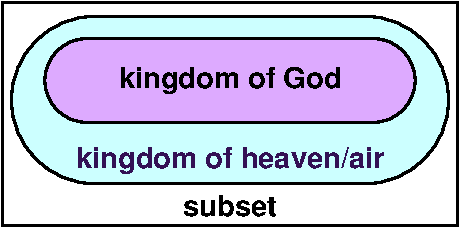
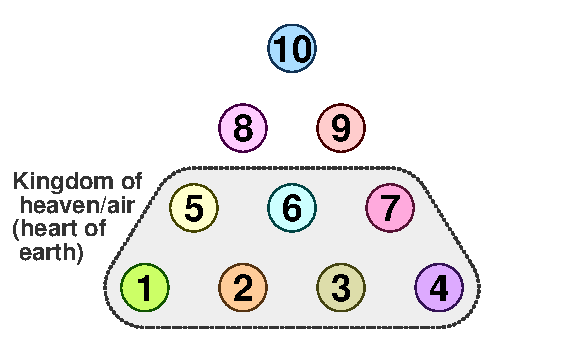
There are many viewpoints on the "kingdom" of "God" and the "kingdom" of "heaven/air". The "birds" of the "air" are the "birds" of "heaven". Which "heaven"?
Sometimes Jesus just says "kingdom". The TR (Textus Receptus) adds "of God" in one of these verses.
It appears that Jesus uses the noun phrase "kingdom" of "heaven/air" as a code word. Matthew just wrote down what was said. The others merged these together in their minds before writing what they remembered. Compare kingdom, vineyard, garden.
[John: verily verily (twice) vs. Others: verily (once), local vs. global analysis]
The "kingdom" of "heaven" appears to be a perception of the mind and not a literal physical reality.
There are two perceptions.
Goodkingdom of heaven/air which leads to the kingdom of God and life.
Notgoodkingdom of heaven/air ruled by the birds of heaven/air leading to loss.
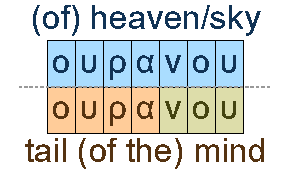
Jesus uses one inflection (genitive) of the word for the notgood "heaven" that is a play on words with "tail" of the "mind". Your "mind" is supposed to be in your "head" (Christ) and not your "tail".
Matthew 19:23Then said Jesus unto his disciples, VerilyI sayunto you, That a rich man shall hardlyenter into the kingdom of heaven. [kjv]
ο δε ιησους ειπεν τοις μαθηταις αυτου αμηνλεγωυμιν οτι δυσκολως πλουσιοςδυσκολωςεισελευσεται εις την βασιλειαν των ουρανων [gnt]
What exactly is the "kingdom" of "heaven"?
The ancient Greek word "βασίλεια" ≈ "kingdom" as in "realm" and is the source of the English word "basilica" which is a hall of the king of the "kingdom".
In the following verse, the KJV adds the word "whether" twice while the Greek and Latin have it only once.
John 7:17If any man will do his will, he shall know of the doctrine, whether it be of God, orwhether I speak of myself. [kjv]
εαν τις θελη το θελημα αυτου ποιειν γνωσεται περι της διδαχης ποτερον εκ του θεου εστιν η εγω απ εμαυτου λαλω [gnt]
… utrum … an … [v]
A useful separator word for alternatives is the English word "or".
The ancient Greek word "ή" ≈ "or" which is different than "η" ≈ "the" as the (feminine) definite article. For Greek text without accents, one must use context to determine the meaning.
The word, from the constituent parts, appears to be used in the sense of asking "Which of the two is a good toil?". Since one is usually a better toil, one can often read it as "Which of the two is the better toil?".
All such uses of the word are by Jesus (and only Jesus) and may have a double-meaning.
Paraphrase: Which is the better toil, to say your sins are forgiven or to say arise and walk?
Only one way has a decision procedure to confirm that it has been done. How should "better" be defined? Which of the following do most churches do?
What do most churches do?
☐ Get up, wave their hands, say your sins are forgiven, and sit down.
☐ Help people get up and help them in to walk in righteousness.
Which is easier? Which is the better toil? Which is more often than not actually done?
The following are statements (Latin), not questions (Greek), and assume one of the two options provided, using "than" instead of "or". The Greek has the "or".
Matthew 19:24AndagainI sayunto you, It is easier for a camelto gothroughtheeye of a needle, than for a rich manto enterinto the kingdom of God. [kjv]
παλινδελεγωυμινευκοπωτερον εστιν καμηλονδιατρυπηματος τρηματοςραφιδοςδιελθειν εισελθειν ηπλουσιονεις την βασιλειαν του θεουεισελθειν [gnt]
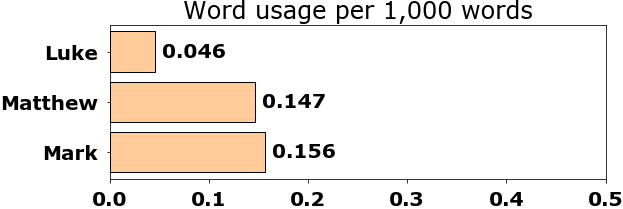
Mark 10:25It is easier for a camel to go through the eye of a needle, than for a richman to enter into the kingdom of God. [kjv]
ευκοπωτερον εστιν καμηλον δια της τρυμαλιαςτης ραφιδοςεισελθειν διελθεινηπλουσιον εις την βασιλειαν του θεουεισελθειν [gnt]
Luke 18:25For it is easier for a camel to go through a needle'seye, than for a richman to enter into the kingdom of God. [kjv]
ευκοπωτερον γαρ εστιν καμηλον δια τρυμαλιας ραφιδος τρηματοςβελονης εισελθειν ηπλουσιον εις την βασιλειαν του θεουεισελθειν [gnt]
Luke 16:17And it is easier for heaven and earth to pass, than one tittle of the law to fail. [kjv]
ευκοπωτερον δε εστιν τον ουρανον και την γην παρελθειν η του νομου μιαν κεραιαν πεσειν [gnt]
Possible paraphrase: Which is a better toil, to get heaven and earth to pass away or to get one tittle of the law removed?
For humans, good luck getting heaven and earth to pass away.
A "tittle" in Greek is a "horn" or "antenna" (e.g., of an insect). The "horns" are often taken to be parts of letters of the law. Man-made horns can be added to the law of God. How hard can it be to get those man-made horns removed? Might that be a better use of one's time and toil?
Paraphrase: Which is the better toil, to say your sins are forgiven or to say arise and walk?
Only one way has a decision procedure to confirm that it has been done. How should "better" be defined? Which of the following do most churches do?
What do most churches do?
☐ Get up, wave their hands, say your sins are forgiven, and sit down.
☐ Help people get up and help them in to walk in righteousness.
Which is easier? Which is the better toil? Which is more often than not actually done?
Luke 18:25For it is easier for a camel to go through a needle'seye, than for a richman to enter into the kingdom of God. [kjv]
ευκοπωτερον γαρ εστιν καμηλον δια τρυμαλιας ραφιδος τρηματοςβελονης εισελθειν ηπλουσιον εις την βασιλειαν του θεουεισελθειν [gnt]
Matthew 19:24AndagainI sayunto you, It is easier for a camelto gothroughtheeye of a needle, than for a rich manto enterinto the kingdom of God. [kjv]
παλινδελεγωυμινευκοπωτερον εστιν καμηλονδιατρυπηματος τρηματοςραφιδοςδιελθειν εισελθειν ηπλουσιονεις την βασιλειαν του θεουεισελθειν [gnt]
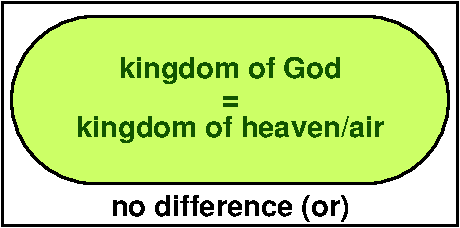
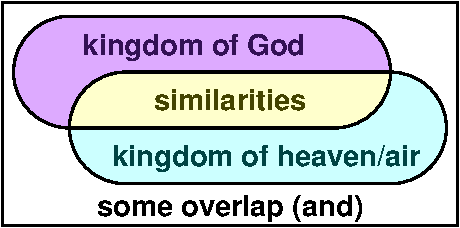
The Latin changes the Greek question "which is a better toil" to a statement! Matthew uses "kingdom" of "God" rather than "kingdom" of "heaven/air". Is there a difference? If so, is it important?
Paraphrase: Which is a better toil or work, to get a camel through the eye of a needle or a rich man into the kingdom of God?
Discuss: Compare and contrast the KJV statements about a rich man in Luke 18:25 with Jesus and Zacchaeus, a rich man, in Luke 19 (start of the next chapter). Does Zacchaeus keep all or some or none of his wealth?
☐ 1. If one "gives" to the destitute "poor", might one get "treasure" in "air" as in the "world" as run by the "birds"?
☐ 2. If one "gives" to the "poor" in spirit, might one get "treasure" in "heaven" as in leading to the "kingdom" of "God"?
Which "treasure" can be "tunneled" into to deceive one into accumulating this "treasure"?
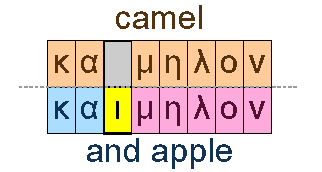
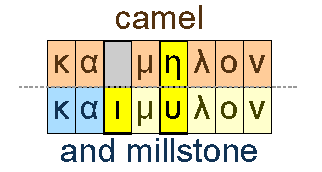
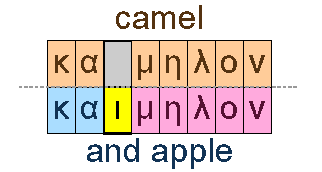
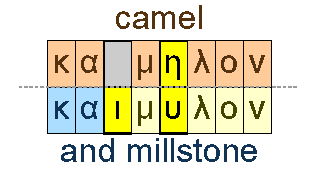
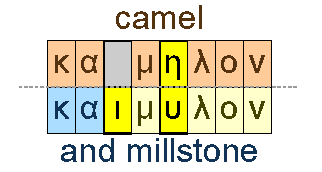
The Romans liked "apples" (from 300 BC) and were known for their tasty and colorful "red" apples. Had collaboration with Rome, as in the apple of discord, by the religious establishment, became a millstone around the neck of the Jewish people?
Had collaboration with Rome, as in the "apple" of discord, by the religious establishment, became a "millstone" around the neck of the Jewish people?
43. Matthew 19:24 Camel through the eye of a needle
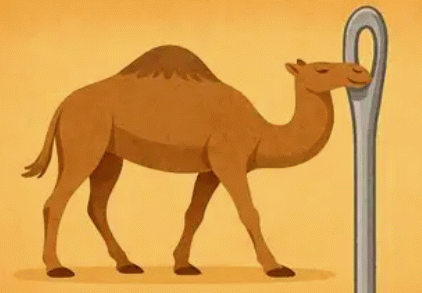
Matthew 19:24AndagainI sayunto you, It is easier for a camelto gothroughtheeye of a needle, than for a rich manto enterinto the kingdom of God. [kjv]
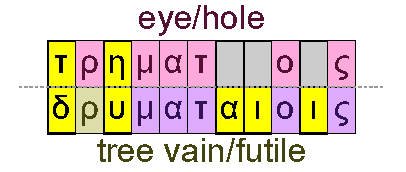
παλινδελεγωυμινευκοπωτερον εστιν καμηλονδιατρυπηματος τρηματοςραφιδοςδιελθειν εισελθειν ηπλουσιονεις την βασιλειαν του θεουεισελθειν [gnt]
When Jesus is making a play on words, it is amusing when serious people, apparently without a sense of humor, use their opinions to create theological baggage to explain the literal saying.
Changing grammar/syntax can be called jokelicense in analogy to poetic license.
My wife wanted to see a valid jokelicense and, if provided, wanted to take it away. I gulped as if choking. I really needed some joke liesense but my honest excuse was riddled with inconsistencies.
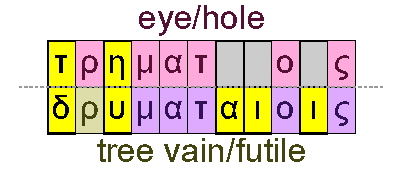
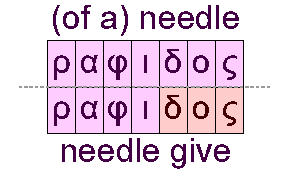
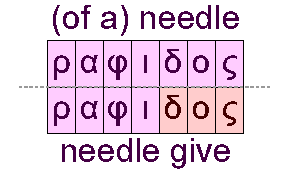
What might the "hole" or "eye" (of the needle) have to do with something happening "through" a "vain" or "futile""tree"? The TR changes the word for "hole" or "eye" (of the needle) that breaks the play on words.
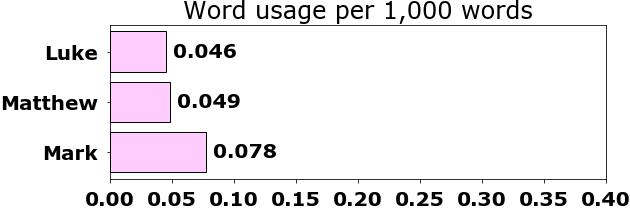
*G4476 *3 ῥαφίς (hraf-ece') : from a primary rhapto (to sew; perhaps rather akin to the base of G4474 through the idea of puncturing); a needle:-- needle.
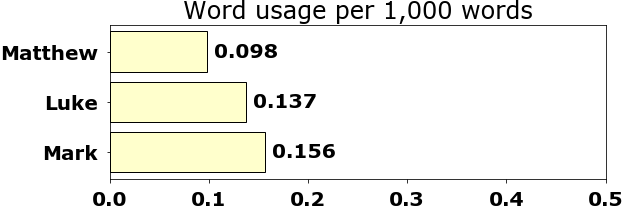
Usage
All
ραφιδος *2 of 3
Matthew 19:24 ... to go through the eye of a needle, than for a rich man ...
Mark 10:25 ... to go through the eye of a needle, than for a rich man to enter ...
The "needle" may relate to a short "short/pole/spear", and not the "long pole/spear" (related to the word for "tree") and which appears in many possible play on words.
KJV: AndagainI sayunto you, It is easier for a camelto gothroughtheeye of a needle, than for a rich manto enterinto the kingdom of God.
Greek: παλινδελεγωυμινευκοπωτερον εστιν καμηλονδιατρυπηματοςτρηματοςραφιδοςδιελθειν εισελθεινηπλουσιονεις την βασιλειαν του θεουεισελθειν
Latin: et iterum dico vobis facilius est camelum per foramen acus transire quam divitem intrare in regnum caelorum
Wessex: & aeft ich eow segge þaet aeþelicor beoð þam olfende to ganne þurh naedleeage. þanne se welega on heofene riche gä.
Wycliffe: And eftsoone Y seie to you, it is liyter a camel to passe thorou a needlisiye, thanne a riche man to entre in to the kyngdom of heuens.
Tyndale: And moreover I saye vnto you: it is easier for a camell to go through the eye of a nedle then for a ryche man to enter into the kyngdome of God.
Luther: Und weiter sage ich euch: Es ist leichter, daß ein Kamel durch ein Nadelöhr gehe, denn daß ein Reicher ins Reich Gottes komme.
KJV: For it is easier for a camel to go through a needle'seye, than for a richman to enter into the kingdom of God.
Greek: ευκοπωτερον γαρ εστιν καμηλον δια τρυμαλιας ραφιδοςτρηματοςβελονης εισελθειν ηπλουσιον εις την βασιλειαν του θεουεισελθειν
Latin: facilius est enim camelum per foramen acus transire quam divitem intrare in regnum Dei
50. Verily I say unto you: connect the dots
1 2 + - ▶
Some (theologians, commentators, pastors, etc.) say that the phrase is used to introduce an important concept. Is what Jesus says ever unimportant?
Instead, the phrase appears to be used to connect the previous thought (excluding scripture quotation) with the next thought as similar in some way.
In some cases, the two thoughts are stated in a top-downbackward-chaining manner so that it helps to consider the second thought before the first thought.
Student: Are we doing anything important today in class?
51. Matthew 19:21,23-24 Kingdoms and heaven and God
In three verses, the ideas of "kingdom" and "heaven" or "sky" and "God" are used. How are these connected?
Matthew 19:21Jesus said unto him, If thou wilt be perfect, go and sellthat thou hast, and give to the poor, and thou shalt have treasure in heaven: and come and follow me. [kjv]
19:23Then said Jesus unto his disciples, VerilyI sayunto you, That a rich man shall hardlyenter into the kingdom of heaven. [kjv]
19:24AndagainI sayunto you, It is easier for a camelto gothroughtheeye of a needle, than for a rich manto enterinto the kingdom of God. [kjv]
Jesus uses the words "Verily/amen I say unto you" as a hint to connect what he said previously with what he is going to say next. Here it is done "again". So there are three ideas to be connected. They must all fit together.
52. Kingdoms and heaven and God
Paraphrases of three verses to connect via "verily I say unto you"
Matthew 19:21 ... go and sell out your essential attributes, give to the fallen/beggars (who need the Good news) and you will have treasure in the kingdom of the heaven (of God) and come and follow me.
Matthew 19:21 ... go and sell out your essential attributes, give to the destitute poor and you will have treasure in the kingdom of the air (world) and come and follow me.
Matthew 19:23 Someone tied/glued to many (worldly) things will be annoyed/grumpy to enter the kingdom of heaven/air (either one).
Matthew 19:24 Which is a better toil or work, to get a camel through the eye of a needle or a rich man into the kingdom of God?
The idea of tied or "glued" was an important idea at the beginning of this chapter and in the previous chapter. Differentwords are used but they have the samesemanticidea. [bind/loose on/in earth/heaven, man and wife leave and are joined]
I never met a rich man who was happy, but I have only very occasionally met a poor man who did not want to become a rich man.Malcolm Muggeridge (British broadcaster)
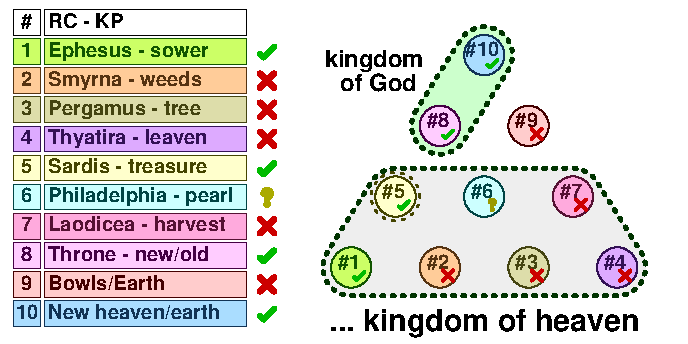
Here is one model of the "kingdoms". A "kingdom" can be considered a "rule", a "realm", an "opinion", a "glory". Who is in charge of each "kingdom"?
Which might be called the third "heaven"?
There are two "kingdoms" of "heaven/air". Both are perceptions. As perceptions, they can both, at various level, be "within" you at the same time.
☐ 1. "kingdom" of the "air" of the "world"
☐ 2. "kingdom" of the "heaven" of "God"
3. Only one of these two "kingdom" perceptions lead to the reality of the "kingdom" of "God".
How easy is it to confuse or merge the perception of the "kingdom" of "heaven" of "God" with the reality of the "kingdom" of "God"? That appears to be what Mark (through Peter) and Luke (through people's memories) did.
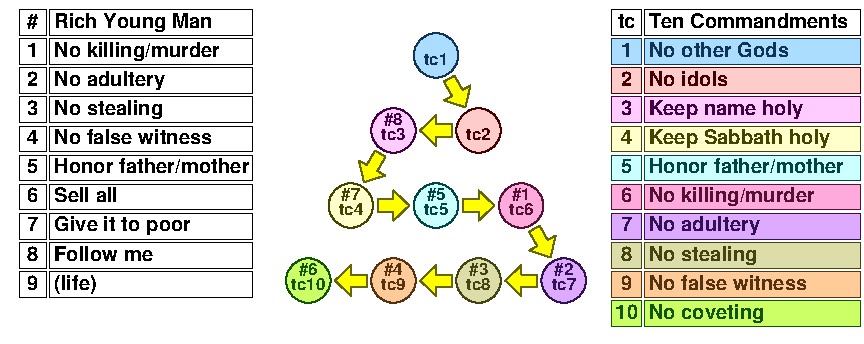
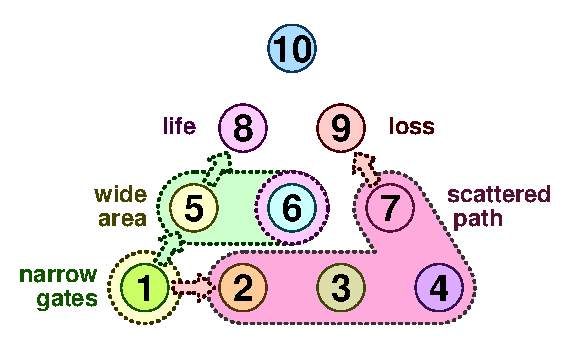
56. Paths
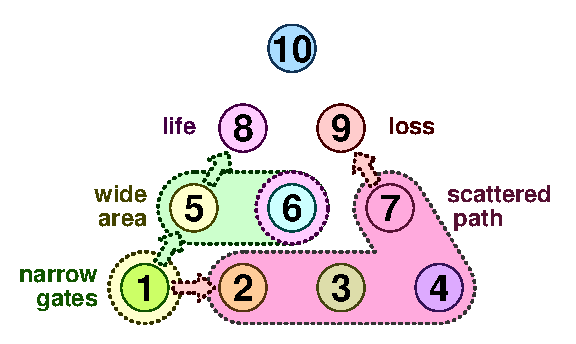
Node 1: Poor in spirit, begging for the Good News. Which path do you covet?
Node 2: False witness node, weeds wanting to be great (at the expense of others).
Node 5: Living bread, treasure in heaven.
Narrow path to destruction, leads away from into the life.
Wide area of life, leads away from into the destruction.
57. Matthew 19:25-27
Matthew 19:25When his disciples heard it, they were exceedinglyamazed, saying, Who then can be saved? [kjv]
When the disciples do not really understand and ask a question or make a statement, Jesus often given an enigmatic answer ("beyond" and "potentially possible").
19:26But Jesus beheld them, and said unto them, With men this is impossible; but withGodallthingsarepossible. [kjv]
19:27Then answered Peter and said unto him, Behold, we have forsakenall, andfollowed thee; what shall we havetherefore? [kjv]
Why would Peter ask this question if the rich young man was to give away all possessions? Do the possessions need to "leave" or "let go" of the rich young man?
The logic form is "A and B and C". This is "A" (thrones).
Matthew 19:28And Jesus said unto them, VerilyI sayunto you, That ye which have followed me, in the regenerationwhen the Son of man shall sitin the throne of his glory, ye also shall situpontwelvethrones, judging the twelvetribes of Israel. [kjv]
This is "and B and C" (take/seize hundredfold and everlasting life).
19:29Andeveryone that hath forsaken houses, or brethren, or sisters, or father, ormother, orwife, or children, or lands, for my name's sake, shall receive an hundredfold, and shall inheriteverlastinglife. [kjv]
Those who have followed get "A and B and C". The most important is "C". Being first or last should not be a priority. The parable of the vineyard workers follows, at the start of the next chapter, followed by a restatement of the first and the last.
What is the criteria to which first and last refer?
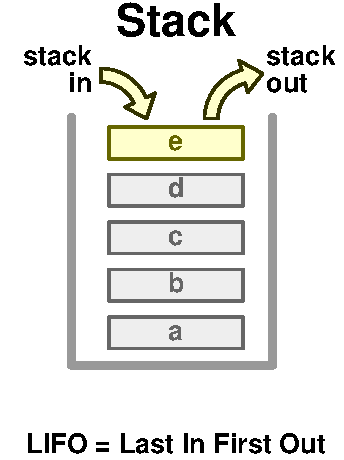
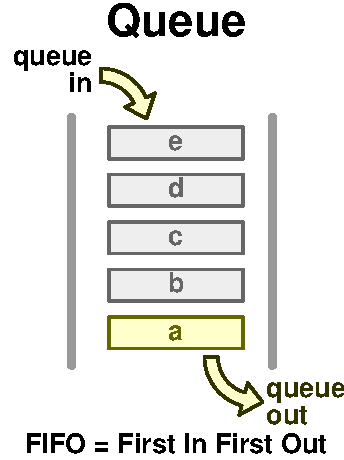
Stack paraphrase: But many that are first in (dead) shall be the last out (resurrected) and the last in (living) shall be the first out (resurrected).
Who are the "many" in the "middle"?
That is, from a time sequence perspective, the last in shall be first out and the first in shall be last out. This is the definition of a stack structure.