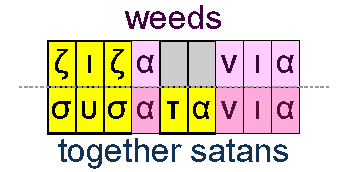
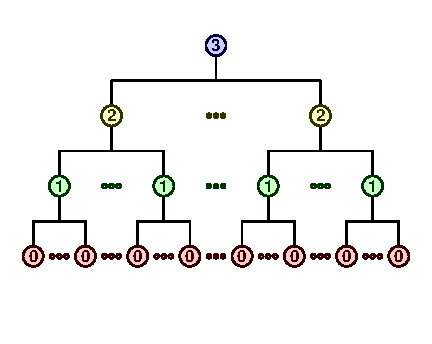
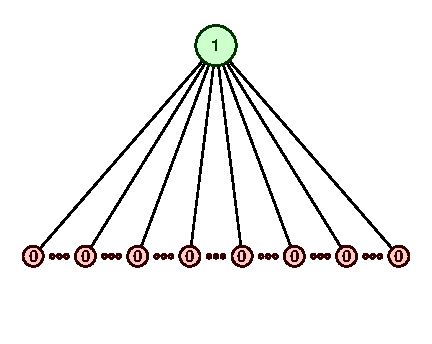
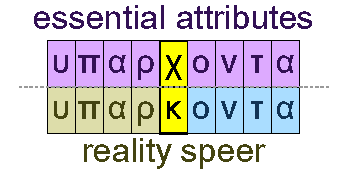
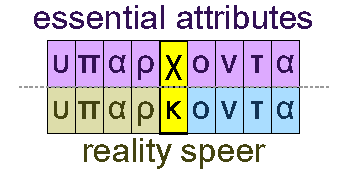
- *G5533 *2 χρεωφειλέτης (khreh-o-fi-let'-ace) : from a derivative of G5531 and G3781; a loan-ower, i.e. indebted person:--debtor.
82. Luke 16:5 Debtors
Luke 16:5 So he called every one of his lord's debtors unto him, and said unto the first, How much owest thou unto my lord? [kjv]
και προσκαλεσαμενος ενα εκαστον των χρεωφειλετων χρεοφειλετων του κυριου εαυτου ελεγεν τω πρωτω ποσον οφειλεις τω κυριω μου [gnt]
Who are the Lord's "debtors"?
Who is the (this) Lord?
To whom do the "debtors" "owe" the "debt"?
The "dept" "owed" to the Lord as bird.
The "dept" "owed" to the Lord as king.
The
ancient Greek word
"πρῶτον" ≈ "first" and is the source of English words such as "
prototype".
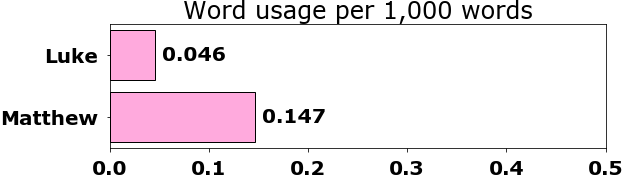
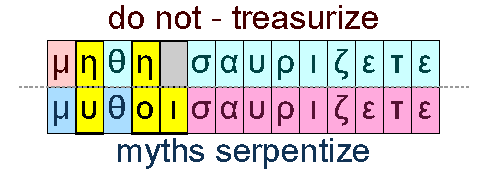
83. Matthew 18:24 Debtors and snakes
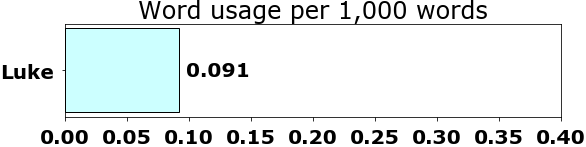
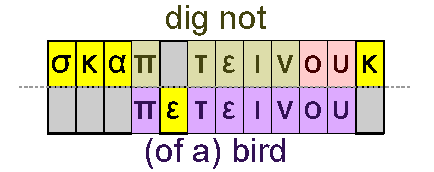
84. Luke 16:5 Every one
85. Luke 16:5
KJV: So he called every one of his lord's debtors unto him, and said unto the first, How much owest thou unto my lord?
Greek: και προσκαλεσαμενος ενα εκαστον των χρεωφειλετων χρεοφειλετων του κυριου εαυτου ελεγεν τω πρωτω ποσον οφειλεις τω κυριω μου
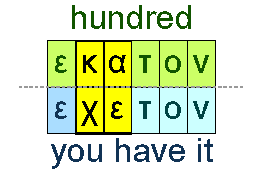
86. A hundred play on words
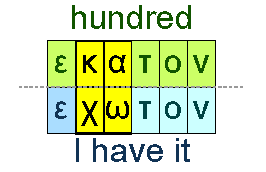
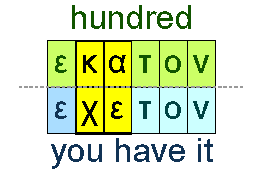
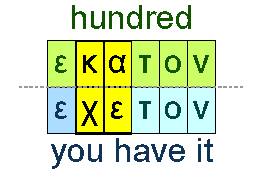
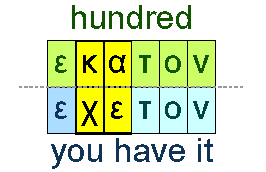
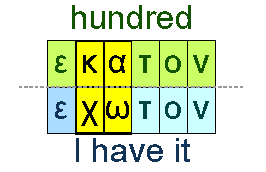
"ἑκατόν" ≈ "hundred".
"ἔχω" ≈ "(I) have/keep".
"ἔχε" ≈ "(you) have/keep" (imperative).
"τον" ≈ "the/it" (accusative masculine).
If everyone in a group or set of members says
"(I) have" "it" and
"(you) have" "it" then (if true) the relation on
"it" is
reflexive,
symmetric and
transitive (by induction) and thus forms an
equivalence relation and induces
equivalence sets (from the entire group). Deception:
better together as in
bitter together.
Note that the reasoning only requires the
"(you) have" "it" (imperative) within the group. Sayings:
The in thing,
out of it. Jazz saying:
Be around or be square.
How well does this play on words fit for the times when Jesus uses the word for
"hundred"? That is, does the
"hundred" refer to a group that has some
relation, called
"it", that holds for the entire group (member by member)? Note: The resulting group (equivalence class) could be either "
good" or
not "
good" (in some sense).
87. Luke 16:6
Luke 16:6 And he said, An hundred measures of oil. And he said unto him, Take thy bill, and sit down quickly, and write fifty. [kjv]
ο δε ειπεν εκατον βατους ελαιου και ο δε ειπεν αυτω δεξαι σου το γραμμα τα γραμματα και καθισας ταχεως γραψον πεντηκοντα [gnt]
Why "sit"? Why "quickly"?
What is being "written"?
Why "πεντήκοντα." ≈ "fifty"?
The next verse has a "
different" one and has neither
"sit" nor
"quickly".
The
TR changes this verse (and the next) from
"letters" plural to
"letter" singular. This is translated as
"bill" rather than
"bills".
88. Luke 16:6
Luke 16:6 And he said, An hundred measures of oil. And he said unto him, Take thy bill, and sit down quickly, and write fifty. [kjv]
ο δε ειπεν εκατον βατους ελαιου και ο δε ειπεν αυτω δεξαι σου το γραμμα τα γραμματα και καθισας ταχεως γραψον πεντηκοντα [gnt]
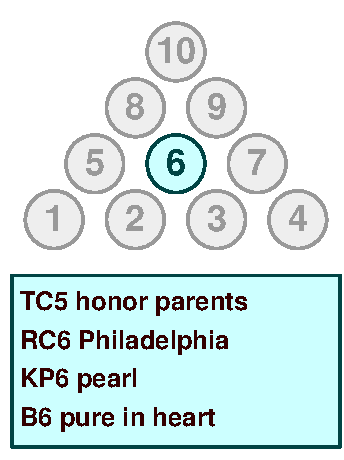
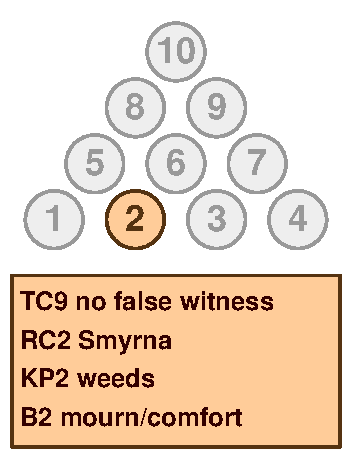
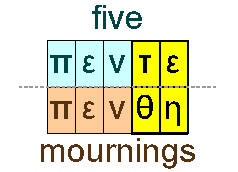
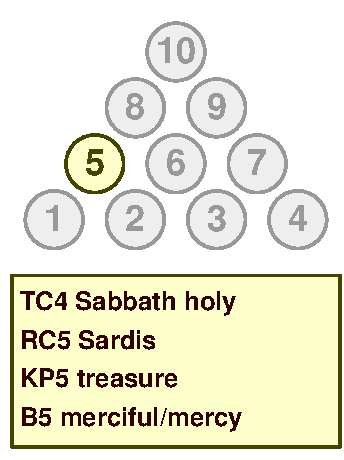
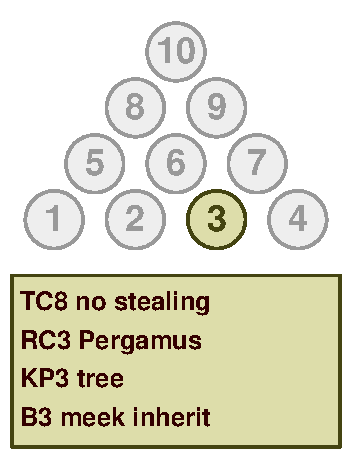
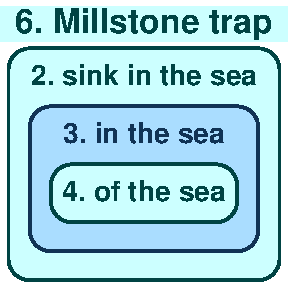
In the "
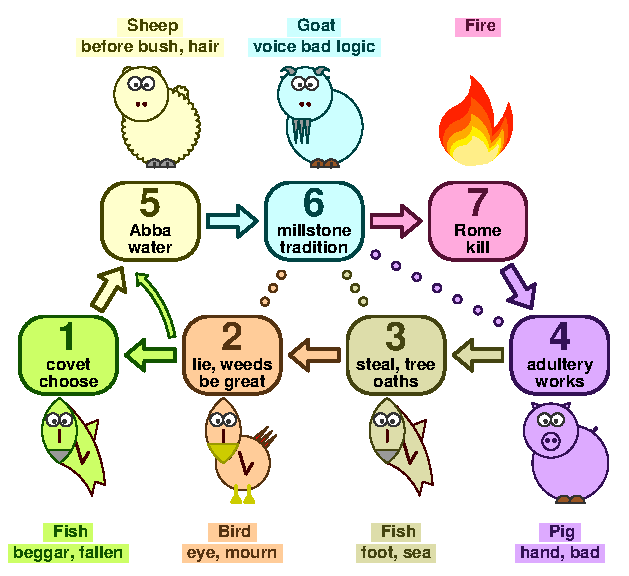
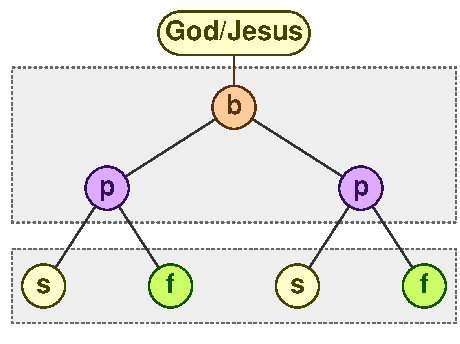
ten pin" model, the
"five" "
spears" or "
mourning" "
spears" could undo the "
millstone" deception/entrapment and return the "
debtor" to
node 5 (living water, bread, mercy, etc.) as a "
sheep".
89. City on a mountain under the sea cannot be hid
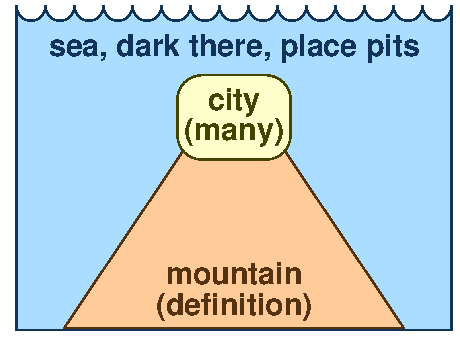
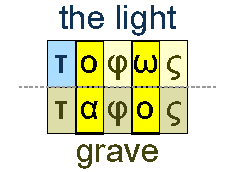
Matthew 5:14 Ye are the light of the world. A city that is set on an hill cannot be hid. [kjv]
υμεις εστε το φως του κοσμου ου δυναται πολις κρυβηναι επανω ορους κειμενη [gnt]
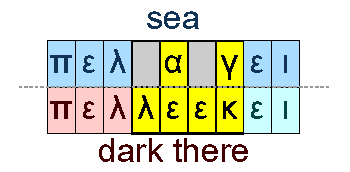
18:6 … drowned in the depth of the sea. [kjv]
… καταποντισθη εν τω πελαγει της θαλασσης [gnt]
 |
 |
|
[Tower of Babel,
Joseph in Egypt,
Daniel in Babylon,
Jonah
Constantine]
|
90. Luke 16:6
KJV: And he said, An hundred measures of oil. And he said unto him, Take thy bill, and sit down quickly, and write fifty.
Greek: ο δε ειπεν εκατον βατους ελαιου και ο δε ειπεν αυτω δεξαι σου το γραμμα τα γραμματα και καθισας ταχεως γραψον πεντηκοντα
Latin: at ille dixit centum cados olei dixitque illi accipe cautionem tuam et sede cito scribe quinquaginta
91. Latin word variations
Matthew 18:5 And whoso shall receive one such little child in my name receiveth me. [kjv]
… susceperit unum parvulum … nomine … suscipit [v]
Luke 16:4 I am resolved what to do, that, when I am put out of the stewardship, they may receive me into their houses. [kjv]
… faciam … amotus … recipiant … domos suas [v]
16:6 And he said, An hundred measures of oil. And he said unto him, Take thy bill, and sit down quickly, and write fifty. [kjv]
… centum cados olei dixitque … accipe cautionem tuam … cito scribe quinquaginta [v]
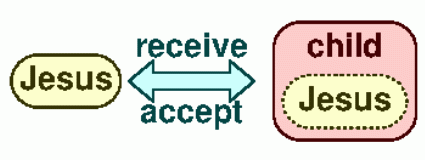
Note how the same
ancient Greek word
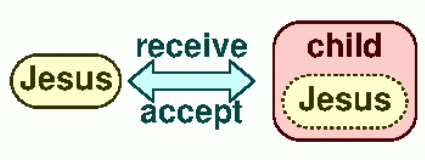
"δέχομαι" ≈ "receive, accept, take, believe" (different ending inflections) is translated as
three different Latin words.
"suscipio" ≈ "take up, acknowledge, undertake, catch, receive".
"recipeo" ≈ "take back, recapture, receive,, accept, take upon oneself"
"accipio" ≈ "receive, accept, take".
92. Luke 16:6 Bill writing
Luke 16:6 And he said, An hundred measures of oil. And he said unto him, Take thy bill, and sit down quickly, and write fifty. [kjv]
ο δε ειπεν εκατον βατους ελαιου και ο δε ειπεν αυτω δεξαι σου το γραμμα τα γραμματα και καθισας ταχεως γραψον πεντηκοντα [gnt]
What is it that is being written?
"γράμματα" ≈ "writings" (plural) from "γράμμα" ≈ "writing, picture, letter, alphabet" and "γραμμη" ≈ "stroke of a pen, line" and "γράφω" ≈ "scratch, draw, write".
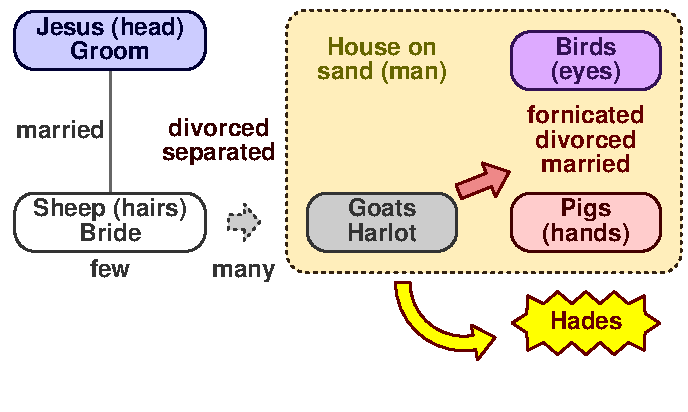
Might it be compared to a "
bill" of "
divorce" from the "
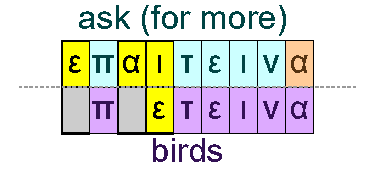
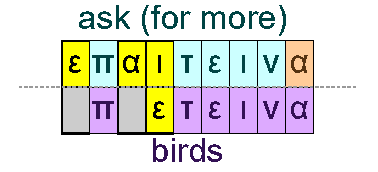
birds" and the "
bird" "
house"?
93. Matthew 5:31-32 Cutout the adultery and divorce
Matthew 5:31 It hath been said, Whosoever shall put away his wife, let him give her a writing of divorcement: [kjv]
5:32 But I say unto you, That whosoever shall put away his wife, saving for the cause of fornication, causeth her to commit adultery: and whosoever shall marry her that is divorced committeth adultery. [kjv]
The
KJV translates as
"cause" and
"causeth" the Greek words that do
not mean "
cause".
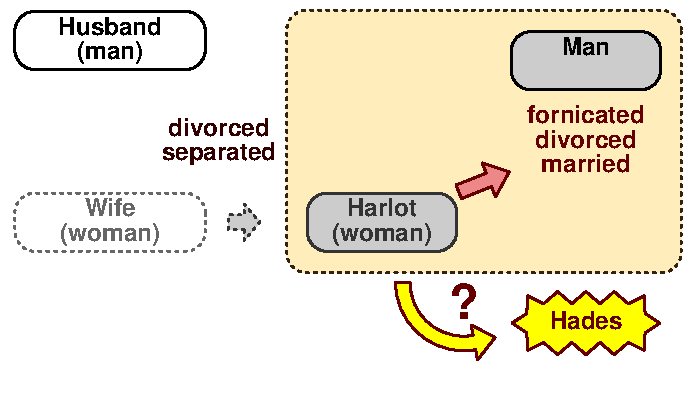
One reaction is to
allow or
accept such advances. This is
fornication. The
husband can then
divorce or
separate from or
put away the
woman. The
man who then
marries the
woman commits
active adultery as does the
woman.
94. Luke 16:6
Luke 16:6 And he said, An hundred measures of oil. And he said unto him, Take thy bill, and sit down quickly, and write fifty. [kjv]
ο δε ειπεν εκατον βατους ελαιου και ο δε ειπεν αυτω δεξαι σου το γραμμα τα γραμματα και καθισας ταχεως γραψον πεντηκοντα [gnt]
"καθίστημι" ≈ "set down, set in order"
"ταχύς" ≈ "quick, rapid, soon" where the "soon" requires a context.
Does Jesus say that he will come
"quickly" or
"soon" (or both)?
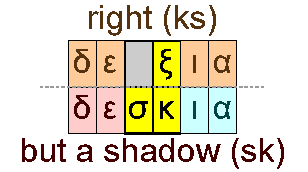
"δεξιά" ≈ "right (hand side)" and "δε" ≈ "but (then)" and "σκιά" ≈ "shadow".
"δέξαι" ≈ "receive, accept, take, believe" (as used).
95. Matthew 22:21 Serpent Caesar
Matthew 22:21 They say unto him, Caesar's. Then saith he unto them, Render therefore unto Caesar the things which are Caesar's; and unto God the things that are God's. [kjv]
λεγουσιν αυτω καισαρος τοτε λεγει αυτοις αποδοτε ουν τα καισαρος καισαρι και τα του θεου τω θεω [gnt]
The
ancient Greek word
"τὰ" ≈ "the" (accusative plural) is translated as
"the things that are".
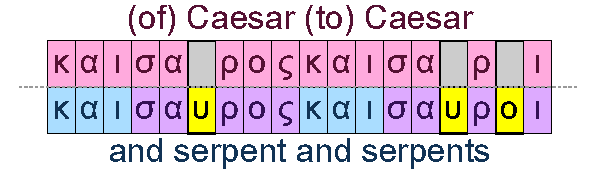
Greek:
... therefore that (of) Caesar [and lizard/serpent] (to) Caesar [and lizards/serpents].
Discuss: How much of a coincidence is it, historically, that the Latin name of
Caesar as the leader of the power and might of the world, transliterated into Greek, is a play on words with
"lizard/serpent"?
96. Luke 16:6
Luke 16:6 And he said, An hundred measures of oil. And he said unto him, Take thy bill, and sit down quickly, and write fifty. [kjv]
ο δε ειπεν εκατον βατους ελαιου και ο δε ειπεν αυτω δεξαι σου το γραμμα τα γραμματα και καθισας ταχεως γραψον πεντηκοντα [gnt]
Why is it
"sit down"? Why is it
"quickly"? Why are the words in this order?
Greek:
"τὰ" ≈ "the" (accusative neuter plural) and
"γράμματα" ≈ "writings" and
"καὶ" ≈ "and" and
"καθίσας" ≈ "sit" (as used) and
"ταχέως" ≈ "quickly" (as used).
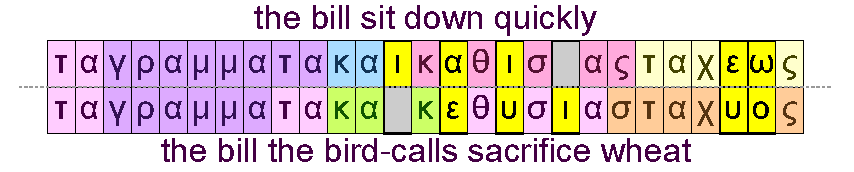
Play:
"τὰ" ≈ "the" and
"γράμμα" ≈ "writing, picture, letter, alphabet" and
"τὰ" ≈ "the" and
"κακή" ≈ "baseness, wickedness, faint-heartiness" (bird call) and
"κᾰκέ" ≈ "baseness, wickedness, faint-heartiness" (vocative)
"θυσία" ≈ "offering, sacrifice, victim" and
"στᾰ́χῠος" ≈ "(of) wheat" (genitive singular).
Who is the
"victim" in the extortion? Who is the
"sacrifice"?
"στᾰ́χῠᾰς" ≈ "wheat" (accusative plural) from "στάχυς" ≈ "ear of grain".
"ὡς" ≈ "like, as, according to".
97. John 7:15
98. John 7:15
KJV: And the Jews marvelled, saying, How knoweth this man letters, having never learned?
Greek: και εθαυμαζον ουν οι ιουδαιοι λεγοντες πως ουτος γραμματα οιδεν μη μεμαθηκως
Wycliffe: And the Jewis wondriden, and seiden, Hou can this man lettris, sithen he hath not lerned?
99. Other similar differences
Greek has
two words for
"others" as in others that are
"similar" and others that are
"different" whereas English has the
one word
"other"
| English |
Greek |
Greek |
| other |
other (similar) |
ἄλλος |
| other |
other (different) |
ἕτερος |
|
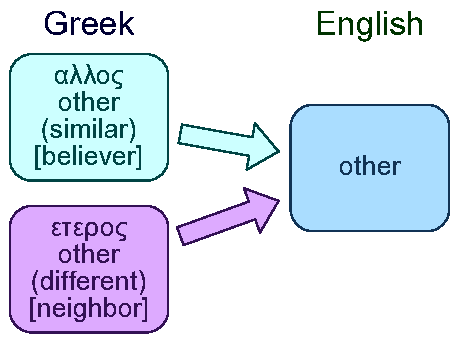 |
The ancient Greek word
"ἄλλος" ≈ "other - similar" and is related to the English word
"else".
The ancient Greek word
"ἕτερος" ≈ "other - different" and is related to the English word
"asunder" as in "
one or the other of two" and is the prefix of English words such as "
heterosexual", "
heterodoxy", etc.
100. Luke 16:7 Another different
Luke 16:7 Then said he to another, And how much owest thou? And he said, An hundred measures of wheat. And he said unto him, Take thy bill, and write fourscore. [kjv]
επειτα ετερω ειπεν συ δε ποσον οφειλεις ο δε ειπεν εκατον κορους σιτου και λεγει αυτω δεξαι σου το γραμμα τα γραμματα και γραψον ογδοηκοντα [gnt]
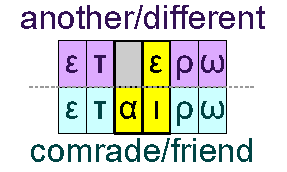
"ἑτέρῳ" ≈ "another (different)" (dative, as used).
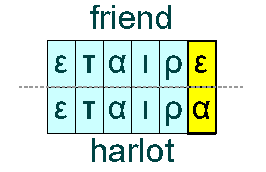
"ἑταίρῳ" ≈ "comrade, friend" (dative) from "ἑταῖρε" ≈ "comrade, friend"
"ἑταίρα" ≈ "courtesan, escort, prostitute"
This as
"another" "different" one. Might this be a play on words with the way the "
bird" had "
befriended" them, perhaps in a condescending manner?
101. Luke 16:7 Debts owed and imagined
Luke 16:7 Then said he to another, And how much owest thou? And he said, An hundred measures of wheat. And he said unto him, Take thy bill, and write fourscore. [kjv]
επειτα ετερω ειπεν συ δε ποσον οφειλεις ο δε ειπεν εκατον κορους σιτου και λεγει αυτω δεξαι σου το γραμμα τα γραμματα και γραψον ογδοηκοντα [gnt]
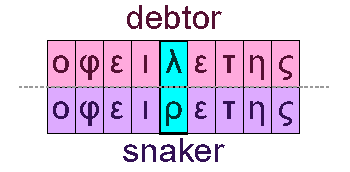
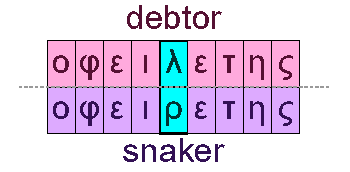
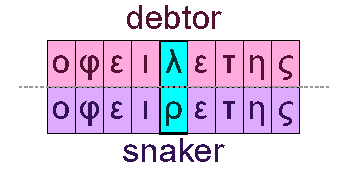
"ὀφειλέτης" ≈ "debtor" and "ὀφειρέτης" ≈ "snaker" (made-up play on words).
"ὑπηρέτης" ≈ "rower" and "ὁπλίτης" ≈ "armed foot soldier".
"ὄφεις" ≈ "serpents, snakes" (as a play on words).
The "
L" and "
R" sounds were similar in Greek.
In the "
millstone" "
entrapment" or "
extortion", how much had they been
"snaked" as
"owing"?
102. Matthew 5:25 Animal model
Matthew 5:25 Agree with thine adversary quickly, whiles thou art in the way with him; lest at any time the adversary deliver thee to the judge, and the judge deliver thee to the officer, and thou be cast into prison. [kjv]
ισθι ευνοων τω αντιδικω σου ταχυ εως οτου ει μετ αυτου εν τη οδω μετ αυτου μηποτε μηποτε σε παραδω ο αντιδικος τω κριτη και ο κριτης σε παραδω τω τω υπηρετη και εις φυλακην βληθηση [gnt]
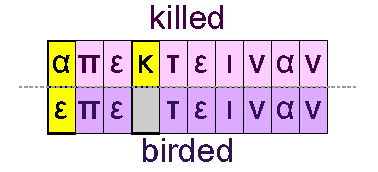
The "adversary" is the "serpent" or those that work for the "serpent".
The "judge" is a "bird" (false teacher/leader) or "eyes".
The "officer" is a "pig" or "hands" (getting in the way of sinners, doing the dirty work for the "birds").
The "watch" has many "fish" or "feet", some of which "watch" and report back to the "pigs" and/or "birds". How about, figuratively a "fish" "bowl"?
103. Luke 16:7 Hundred
Luke 16:7 Then said he to another, And how much owest thou? And he said, An hundred measures of wheat. And he said unto him, Take thy bill, and write fourscore. [kjv]
επειτα ετερω ειπεν συ δε ποσον οφειλεις ο δε ειπεν εκατον κορους σιτου και λεγει αυτω δεξαι σου το γραμμα τα γραμματα και γραψον ογδοηκοντα [gnt]
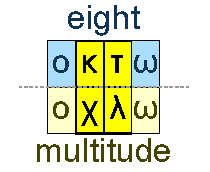
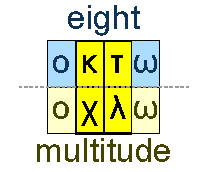
"ἑκατόν" ≈ "hundred".
"ὀκτώ" ≈ "eight" as in the first part of "octogon". The modern Greek words "οκτώ" (o-KTO) ≈ "eight" and "οχτώ" (o-KHTO) ≈ "eight" showing the (modern) sound similarity of "kappa" and "chi".
"ὄχλῳ" ≈ "multitude, crowd" (dative) from "ὄχλος" ≈ "multitude, crown".
Might this person be returned to the
"crowd" from which he was taken as a "
fish" as a grain of sown wheat? The progression could then be made to be a "
sheep".
104. Strongs - measure
105. Luke 12:24 Ravens
The
ancient Greek word
"κόραξ" ≈ "raven, crow" and is onomatopoeic, as is the English word
"crow". Luke uses
"ravens" (used once
GNT).
Luke 12:24 Consider the ravens: for they neither sow nor reap; which neither have storehouse nor barn; and God feedeth them: how much more are ye better than the fowls? [kjv]
κατανοησατε τους κορακας οτι ου σπειρουσιν ουδε θεριζουσιν οις ουκ εστιν ταμειον ουδε αποθηκη και ο θεος τρεφει αυτους ποσω μαλλον υμεις διαφερετε των πετεινων [gnt]
In ancient Greece, to tell someone to "
go to hell" was to say, literally, "
to the ravens". This might refer to bodies left in the open to be eaten by the "
birds".
Quoth the Raven : "Nevermore." From the poem "
The Raven", 1845, by Edgar Allen Poe (1809-1849) who attended West Point (but did not graduate).
The
modern Greek word
"κόρακας" (KO-ra-kas) ≈ "raven". The Latin word
"corvus" ≈ "raven".
106. Luke 16:7 Measure
Luke 16:7 Then said he to another, And how much owest thou? And he said, An hundred measures of wheat. And he said unto him, Take thy bill, and write fourscore. [kjv]
επειτα ετερω ειπεν συ δε ποσον οφειλεις ο δε ειπεν εκατον κορους σιτου και λεγει αυτω δεξαι σου το γραμμα τα γραμματα και γραψον ογδοηκοντα [gnt]
The
ancient Greek word
"κόραξ" ≈ "raven, crow" and is onomatopoeic, as is the English word
"crow". Luke uses
"ravens" (used once
GNT). In
ancient Greece, to tell someone to "
go to hell" was to say, literally, "
to the ravens".
The following
ancient Greek word has multiple meanings.
"κόρος" ≈ "boy, youth, soldier, puppet, doll".
"κόρος" ≈ "being satisfied, insolence, petulance".
"κόρος" ≈ "kor (dry measure)" from the Hebrew word "כר" ≈ "kor (dry measure)" which is from Akkadian.
107. Strongs - wheat
108. Usage - wheat
- *G4621 *14 σίτος (see'-tos) : sita see'-tah of uncertain derivation; grain, especially wheat:--corn, wheat.
σιτου *5 of 14
Matthew 13:25 ... sowed tares among the wheat, and went his way.
Luke 16:7 ... he said, An hundred measures of wheat. And he said unto him, ...
John 12:24 ... unto you, Except a corn of wheat fall into the ground ...
1 Corinthians 15:37 ... bare grain, it may chance of wheat, or of some other grain:
Revelation 6:6 ... beasts say, A measure of wheat for a penny, and three ...
109. Luke 16:7 Measures of wheat
Luke 16:7 Then said he to another, And how much owest thou? And he said, An hundred measures of wheat. And he said unto him, Take thy bill, and write fourscore. [kjv]
επειτα ετερω ειπεν συ δε ποσον οφειλεις ο δε ειπεν εκατον κορους σιτου και λεγει αυτω δεξαι σου το γραμμα τα γραμματα και γραψον ογδοηκοντα [gnt]
The
ancient Greek word
"σῑ́του" ≈ "(of) grain, wheat, barley" (
genitive) from
"σῖτος" ≈ "grain, wheat, barley".
110. Luke 16:7 Ten Pin
Luke 16:7 Then said he to another, And how much owest thou? And he said, An hundred measures of wheat. And he said unto him, Take thy bill, and write fourscore. [kjv]
επειτα ετερω ειπεν συ δε ποσον οφειλεις ο δε ειπεν εκατον κορους σιτου και λεγει αυτω δεξαι σου το γραμμα τα γραμματα και γραψον ογδοηκοντα [gnt]
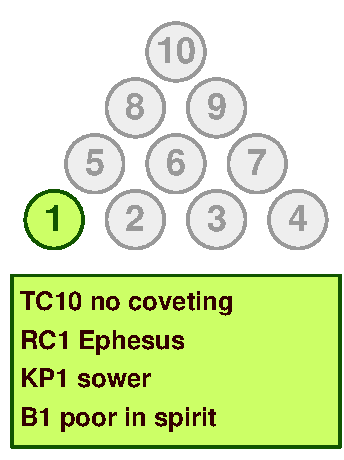
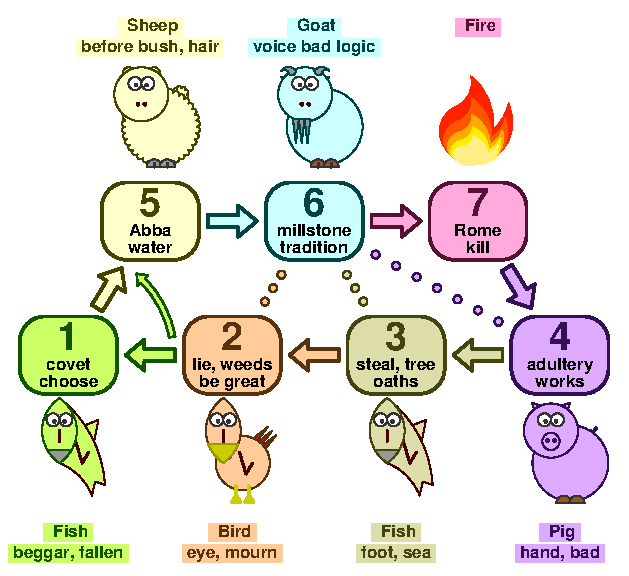
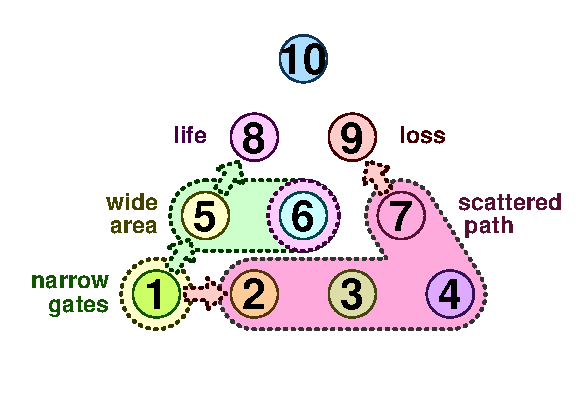
In the "
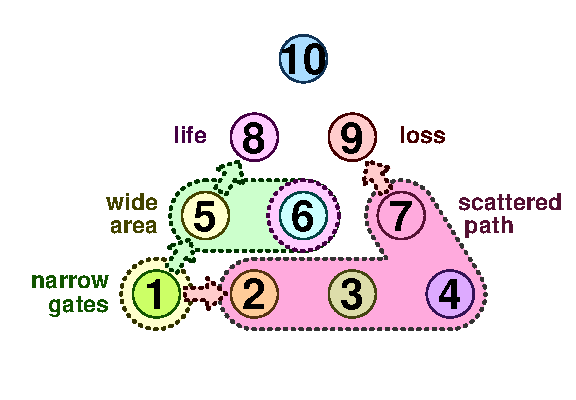
ten pin" model, the
"eight" or "
crowd" could undo the "
millstone" deception/entrapment and return the "
debtor" to
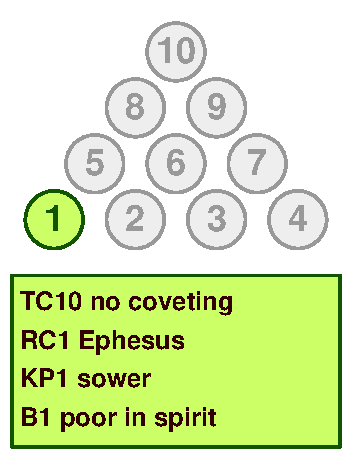
node 1 (covet) as a "
fish" to continue the journey.
To get to
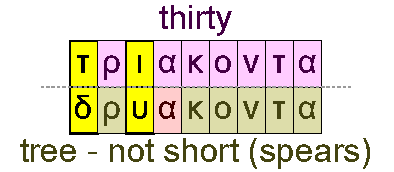
node 5 requires a change of
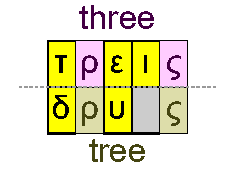
"thirty" which is that of the play on words
"tree - not a sword"
111. Luke 16:7
KJV: Then said he to another, And how much owest thou? And he said, An hundred measures of wheat. And he said unto him, Take thy bill, and write fourscore.
Greek: επειτα ετερω ειπεν συ δε ποσον οφειλεις ο δε ειπεν εκατον κορους σιτου και λεγει αυτω δεξαι σου το γραμμα τα γραμματα και γραψον ογδοηκοντα
112. Luke 16:5-7
Luke 16:5 So he called every one of his lord's debtors unto him, and said unto the first, How much owest thou unto my lord? [kjv]
και προσκαλεσαμενος ενα εκαστον των χρεωφειλετων χρεοφειλετων του κυριου εαυτου ελεγεν τω πρωτω ποσον οφειλεις τω κυριω μου [gnt]
16:6 And he said, An hundred measures of oil. And he said unto him, Take thy bill, and sit down quickly, and write fifty. [kjv]
ο δε ειπεν εκατον βατους ελαιου και ο δε ειπεν αυτω δεξαι σου το γραμμα τα γραμματα και καθισας ταχεως γραψον πεντηκοντα [gnt]
16:7 Then said he to another, And how much owest thou? And he said, An hundred measures of wheat. And he said unto him, Take thy bill, and write fourscore. [kjv]
επειτα ετερω ειπεν συ δε ποσον οφειλεις ο δε ειπεν εκατον κορους σιτου και λεγει αυτω δεξαι σου το γραμμα τα γραμματα και γραψον ογδοηκοντα [gnt]
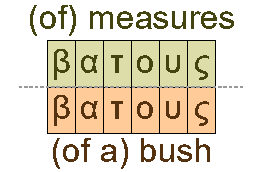
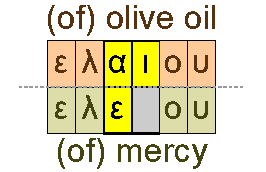
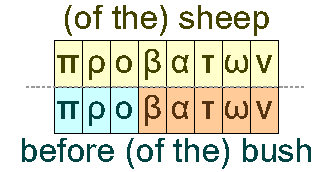
"πρόβατων" ≈ "(of the) sheep"
"προ" ≈ "before" (prefix)
"βατων" ≈ "(of the) bush".
The ancient Greek word
"βάτος" ≈ "measure (Hebrew)" (grammatically masculine).
The ancient Greek word
"βατός" ≈ "possible, accessible". Changing the accent syllable results in
"βάτος" ≈ "thorn bush" (grammatically feminine) or
"βάτος" ≈ "measure (Hebrew)" (grammatically masculine).
Would
"false" "prophets" (planted ones going before) use
"many" types of
"reasoning" involving the
burning "bush" to
"work" you?
113. Luke 16:8 Unjust servant
Luke 16:8 And the lord commended the unjust steward, because he had done wisely: for the children of this world are in their generation wiser than the children of light. [kjv]
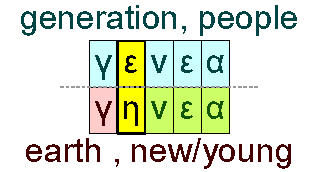
και επηνεσεν ο κυριος τον οικονομον της αδικιας οτι φρονιμως εποιησεν οτι οι υιοι του αιωνος τουτου φρονιμωτεροι υπερ τους υιους του φωτος εις την γενεαν την εαυτων εισιν [gnt]
The
KJV translates as
"wise" the Greek word that means "
prudent" as in finding an acceptable solution within constraints. Jesus does not use the word
"wise" in a good sense.
114. Luke 16:8 Parable of the steward and the lord
In the parable of the steward and the lord, some pastors have trouble providing a good explanation of what Jesus is saying since the example is of an "
unjust" steward.
Luke 16:8 And the lord commended the unjust steward, because he had done wisely: for the children of this world are in their generation wiser than the children of light. [kjv]
και επηνεσεν ο κυριος τον οικονομον της αδικιας οτι φρονιμως εποιησεν οτι οι υιοι του αιωνος τουτου φρονιμωτεροι υπερ τους υιους του φωτος εις την γενεαν την εαυτων εισιν [gnt]
Which "
lord" is this? The Greek word translated as
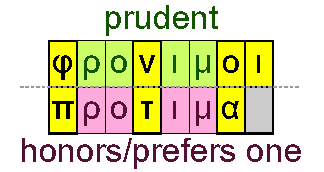
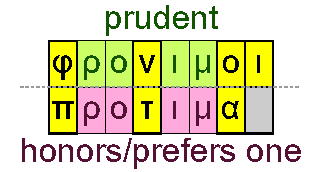
"wise" is that of
"prudent" and is a play on words with
"honors/prefers one" (of two or more). In being
"prudent", which "
lord" was
"preferred"? Which "
lord" is this?
Is it the "lord" as "king" (one at the top)?
Is it the "lord" as "rich" "man" (middle manager)?
Is it another "lord"?
115. Luke 16:8
Luke 16:8 And the lord commended the unjust steward, because he had done wisely: for the children of this world are in their generation wiser than the children of light. [kjv]
και επηνεσεν ο κυριος τον οικονομον της αδικιας οτι φρονιμως εποιησεν οτι οι υιοι του αιωνος τουτου φρονιμωτεροι υπερ τους υιους του φωτος εις την γενεαν την εαυτων εισιν [gnt]
… laudavit … vilicum iniquitatis … prudenter … filii … saeculi prudentiores filiis lucis … generatione … [v]
The Greek word translated as
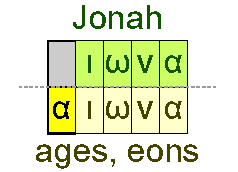
"world" is that of
"ages". Jesus uses this Greek word to refer to Jonah (play on words) and to himself just as he associates Elijah with John the Baptist. The children
"of light" is a play on words with
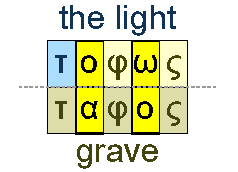
"of the grave".
Thus, a common explanation of this verse is backwards from what Jesus appears to have been saying.
116. Word comparison
Matthew 18:6 … drowned in the depth of the sea. [kjv]
… καταποντισθη εν τω πελαγει της θαλασσης [gnt]
5:25 … the adversary deliver thee to the judge, and the judge deliver thee to the officer, and thou be cast into prison. [kjv]
… ο αντιδικος … κριτη και ο κριτης σε παραδω τω τω υπηρετη και εις φυλακην βληθηση [gnt]
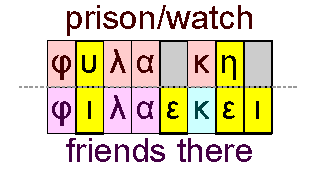
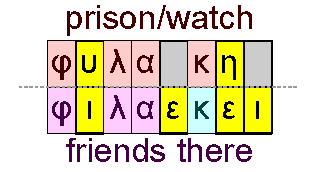
In each case, one ends up in the
"watch" or
"prison" or
"sanctuary". There are "
friends" "
there".
117. Luke 16:8
KJV: And the lord commended the unjust steward, because he had done wisely: for the children of this world are in their generation wiser than the children of light.
Greek: και επηνεσεν ο κυριος τον οικονομον της αδικιας οτι φρονιμως εποιησεν οτι οι υιοι του αιωνος τουτου φρονιμωτεροι υπερ τους υιους του φωτος εις την γενεαν την εαυτων εισιν
Latin: et laudavit dominus vilicum iniquitatis quia prudenter fecisset quia filii huius saeculi prudentiores filiis lucis in generatione sua sunt
118. Luke 16:9-14 Mammon in Luke
Luke 16:9 And I say unto you, Make to yourselves friends of the mammon of unrighteousness; that, when ye fail, they may receive you into everlasting habitations. [kjv]
16:11 If therefore ye have not been faithful in the unrighteous mammon, who will commit to your trust the true riches? [kjv]
16:13 No servant can serve two masters: for either he will hate the one, and love the other; or else he will hold to the one, and despise the other. Ye cannot serve God and mammon. [kjv]
The verses after parable of the unjust steward in Luke has Luke using the word for
"mammon" three times in
five verses.
119. End of page
























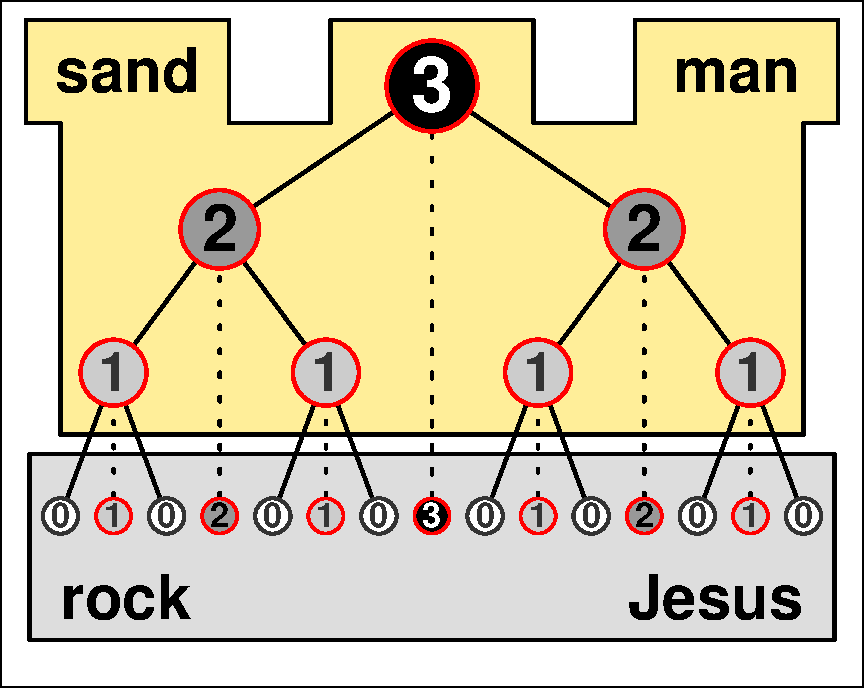 Build your house on the granite rock of Jesus and not on the human sand (or stones) of man, Matthew 7:24-27. Sand is a chip off the old block of granite and made in the image of granite.