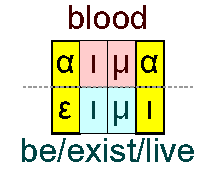
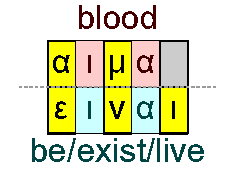
- *G5594 *1 ψύχω (psoo'-kho) : a primary verb; to breathe (voluntarily but gently, thus differing on the one hand from G4154, which denotes properly a forcible respiration; and on the other from the base of G109, which refers properly to an inanimate breeze), i.e. (by implication, of reduction of temperature by evaporation) to chill (figuratively):--wax cold.
- ψυγησεται
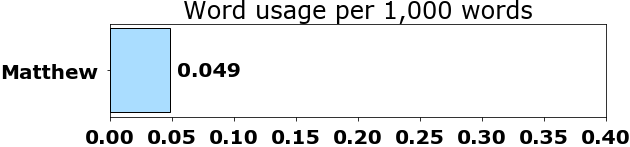
- Matthew 24:12 ... shall abound, the love of many shall wax cold.
5. Deuteronomy 12:23
KJV: Only be sure that thou eat not the blood: for the blood is the life; and thou mayest not eat the life with the flesh.
Hebrew: רק חזק לבלתי אכל הדם כי הדם הוא הנפש ולא תאכל הנפש עם הבשר׃
Greek: προσεχε ισχυρως του μη φαγειν αιμα οτι το αιμα αυτου ψυχη ου βρωθησεται η ψυχη μετα των κρεων
Latin: hoc solum cave ne sanguinem comedas sanguis enim eorum pro anima est et idcirco non debes animam comedere cum carnibus
6. Matthew 10:42 Cold cup to drink
Matthew 10:42 And whosoever shall give to drink unto one of these little ones a cup of cold water only in the name of a disciple, verily I say unto you, he shall in no wise lose his reward. [kjv]
και ος εαν αν ποτιση ενα των μικρων τουτων ποτηριον ψυχρου μονον εις ονομα μαθητου αμην λεγω υμιν ου μη απολεση τον μισθον αυτου [gnt]
The ancient Greek word
"ψυχρός" ≈ "cold, frigid, cold-hearted". A figurative meaning is that of
"ineffectual". Could this be a play on words with "
life"?
"ψῦχος" ≈ "cold" and is related via PIE (Proto Indo-European) to the English word "frigid".
"ψυχρός" ≈ "cold, frigid, cold-hearted".
"ψυχρου" ≈ "cold" as used in the verse.
A modern day English idiom is that of giving someone a "
douse of cold water" as in a "
taste of reality". The Greek word for "
truth" is that of "
reality" as in
not "
oblivion". This is not the same as trying to walk through "
sinking" "
sands".
7. Matthew 10:42 Cold cup to drink
Matthew 10:42 And whosoever shall give to drink unto one of these little ones a cup of cold water only in the name of a disciple, verily I say unto you, he shall in no wise lose his reward. [kjv]
και ος εαν αν ποτιση ενα των μικρων τουτων ποτηριον ψυχρου μονον εις ονομα μαθητου αμην λεγω υμιν ου μη απολεση τον μισθον αυτου [gnt]
The Greek word for
"cold" can be a play on words with the Greek word for "
life".
"ψῦχος" ≈ "cold" and is related via PIE to the English word "frigid".
"ψυχή" ≈ "spirit, life" as in the animating principle of human life as a play on words and the first part of the English word "psychology".
If the
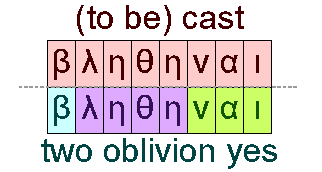
"water" is
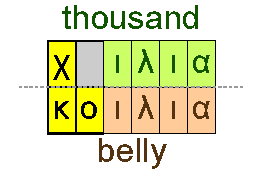
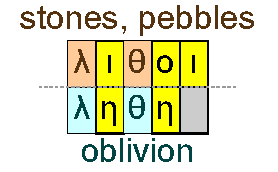
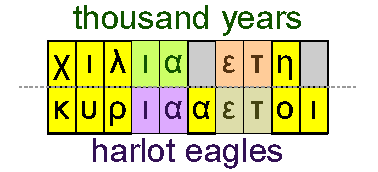
"cold" enough, as in "
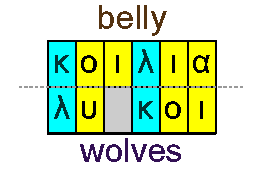
freezing"
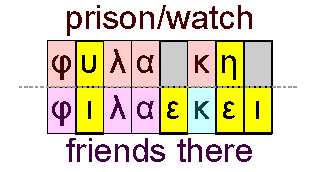
"cold", than one
can walk on
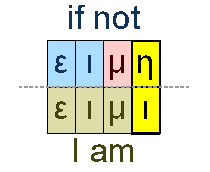
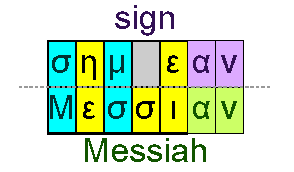
"water". Oh, I see (
icy). Jesus says that the "
truth" will make you "
free". Will the "
truth" will make you "
freeze"?
8. Satan as the accuser
1 Chronicles 21:1 And Satan stood up against Israel, and provoked David to number Israel. [kjv]
… שטן … [he]
και εστη διαβολος εν τω ισραηλ και επεσεισεν τον δαυιδ του αριθμησαι τον ισραηλ [lxx]
The Hebrew word was often
transliterated in the
ancient Greek as
"σαταν" ≈ "Satan".
The
ancient Greek word
"διαβολος" ≈ "accuser", literally
"though-throw" as in one who
"throws over" accusations, and the source of
"devil", was ofter used to
translate the Hebrew word
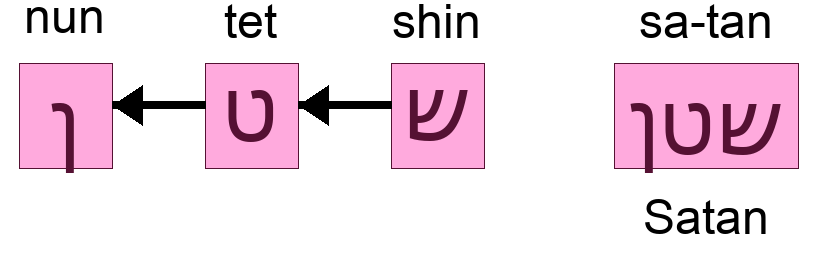
"שטן" (sa-tan) ≈ "Satan". Thus, it is interesting when some try to make fine distinctions between
"Satan" and the
"Devil".
9. Synagogue of Satan
The phrase
"synagogue" of
"Satan" appears in Revelation
2 times. The word
"Satan" appears in Revelation
7 times explicitly and more times as play on words.
Some deny that
"Satan" exists. Some claim it is an idea and not an entity.
The Greek word used to translate the
Hebrew "Satan" as
"accuser" is that of the
Greek "devil" as
"slanderer". Even though one word is from Hebrew and another from Greek to represent the Hebrew word, there are some who make, sometimes deep, theological distinctions between the meanings of the two words.
What exactly is the
"synagogue" of
"Satan"?
10. Revelation 20:2,7 Satan dragon
Revelation 20:2 And he laid hold on the dragon, that old serpent, which is the Devil, and Satan, and bound him a thousand years, [kjv]
και εκρατησεν τον δρακοντα τον οφιν τον αρχαιον ο οφιςο αρχαιος ος εστιν διαβολος και ο σατανας και εδησεν αυτον χιλια ετη [gnt]
20:7 And when the thousand years are expired, Satan shall be loosed out of his prison, [kjv]
και οταν τελεσθη τα χιλια ετη λυθησεται ο σατανας εκ της φυλακης αυτου [gnt]
This verse equates
"Satan" with the
"Devil" and the
"dragon".
The
ancient Greek word
"διαβολος" ≈ "accuser", literally
"though-throw" as in one who
"throws over" accusations, and the source of
"devil", was ofter used to
translate the Hebrew word
"שטן" (sa-tan) ≈ "Satan". Thus, it is interesting when some try to make fine distinctions between
"Satan" and the
"Devil".
What are the
"thousand" "years"? If one were in
"prison" a
"thousand" "years" one might be
dragging a little. [belly up, Santa Claus]
11. 1 Kings 11:14 Satan as adversary
1 Kings 11:14 And the LORD stirred up an adversary unto Solomon, Hadad the Edomite: he was of the king's seed in Edom. [kjv]
… שטן … [he]
και ηγειρεν κυριος σαταν τω σαλωμων τον αδερ τον ιδουμαιον και τον εσρωμ υιον ελιαδαε τον εν ραεμμαθ αδραζαρ βασιλεα σουβα κυριον αυτου και συνηθροισθησαν επ αυτον ανδρες και ην αρχων συστρεμματος και προκατελαβετο την δαμασεκ και ησαν σαταν τω ισραηλ πασας τας ημερας σαλωμων και αδερ ο ιδουμαιος εκ του σπερματος της βασιλειας εν ιδουμαια [lxx]
… adversarium … [v]
The Hebrew word
"שטן" (sa-tan) ≈ "adversary". This is the
one place in the
LXX (Septuagint) where the Hebrew word for
"Satan" is not translated as the Greek word for
"Devil". The
KJV (King James Version) follows the Latin.
12. 1 Kings 11:14 Satan as adversary
1 Kings 11:14 And the LORD stirred up an adversary unto Solomon, Hadad the Edomite: he was of the king's seed in Edom. [kjv]
… שטן … [he]
και ηγειρεν κυριος σαταν τω σαλωμων τον αδερ τον ιδουμαιον και τον εσρωμ υιον ελιαδαε τον εν ραεμμαθ αδραζαρ βασιλεα σουβα κυριον αυτου και συνηθροισθησαν επ αυτον ανδρες και ην αρχων συστρεμματος και προκατελαβετο την δαμασεκ και ησαν σαταν τω ισραηλ πασας τας ημερας σαλωμων και αδερ ο ιδουμαιος εκ του σπερματος της βασιλειας εν ιδουμαια [lxx]
And the Lord raised up an enemy to Solomon, Ader the Idumaean, and Esrom son of Eliadae who lived in Raama, and Adadezer king of Suba his master; (and men gathered to him, and he was head of the conspiracy, and he seized on Damasec,) and they were adversaries to Israel all the days of Solomon: and Ader the Idumaean was of the seed royal in Idumaea. [bs3]
Note how the
LXX sometimes has a lot more words than the Hebrew. An
"adversary" is an
"enemy".
(Brenton Septuagint)
13. 1 Kings 11:14
KJV: And the LORD stirred up an adversary unto Solomon, Hadad the Edomite: he was of the king's seed in Edom.
Hebrew: ויקם יהוה שטן לשלמה את הדד האדמי מזרע המלך הוא באדום׃
Greek: και ηγειρεν κυριος σαταν τω σαλωμων τον αδερ τον ιδουμαιον και τον εσρωμ υιον ελιαδαε τον εν ραεμμαθ αδραζαρ βασιλεα σουβα κυριον αυτου και συνηθροισθησαν επ αυτον ανδρες και ην αρχων συστρεμματος και προκατελαβετο την δαμασεκ και ησαν σαταν τω ισραηλ πασας τας ημερας σαλωμων και αδερ ο ιδουμαιος εκ του σπερματος της βασιλειας εν ιδουμαια
Brenton: And the Lord raised up an enemy to Solomon, Ader the Idumaean, and Esrom son of Eliadae who lived in Raama, and Adadezer king of Suba his master; (and men gathered to him, and he was head of the conspiracy, and he seized on Damasec,) and they were adversaries to Israel all the days of Solomon: and Ader the Idumaean was of the seed royal in Idumaea.
Latin: suscitavit autem Dominus adversarium Salomoni Adad Idumeum de semine regio qui erat in Edom
14. Matthew 7:15 Daniel Defoe
Matthew 7:15 Beware of false prophets, which come to you in sheep's clothing, but inwardly they are ravening wolves. [kjv]
προσεχετε δε απο των ψευδοπροφητων οιτινες ερχονται προς υμας εν ενδυμασιν προβατων εσωθεν δε εισιν λυκοι αρπαγες [gnt]
Consider the John Wesley house analogy. Before going up the
steps and through the
door into the
house one should be sure that this is the house into which one wants to go.
English novelist, journalist, merchant (and pamphleteer and spy)
Daniel Defoe (1660-1731), known for
Robinson Crusoe in 1719, starts his poem
The true-born Englishman as follows.
Whenever God erects a house of prayer, the devil always builds a chapel there.
And 'twill be found, upon examination, the latter has the largest congregation.
How does this compare with a "
vineyard"? How about a "
synagogue" of "
Satan"?
15. Revelation 2:9
Revelation 2:9 I know thy works, and tribulation, and poverty, (but thou art rich ) and I know the blasphemy of them which say they are Jews, and are not, but are the synagogue of Satan. [kjv]
οιδα σου τα εργα και την θλιψιν και την πτωχειαν αλλα πλουσιος δε ει και την βλασφημιαν εκ των λεγοντων ιουδαιους ειναι εαυτους και ουκ εισιν αλλα συναγωγη του σατανα [gnt]
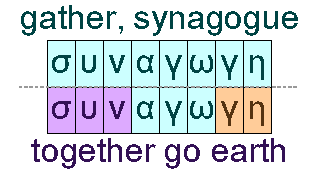
The Greek word for
"synagogue", which is the source of the English word
"synogogue", can be a play on words meaning, literally,
"going" "together" on the
"earth". The
"synagogue" "of (the)" "Satan" may not be restricted to the Jewish
"synagogue".
16. Revelation 2:13 Satan's seat
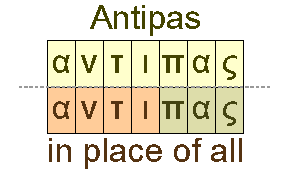
Revelation 2:13 I know thy works, and where thou dwellest, even where Satan's seat is: and thou holdest fast my name, and hast not denied my faith, even in those days wherein Antipas was my faithful martyr, who was slain among you, where Satan dwelleth. [kjv]
οιδα τα εργα σου και που κατοικεις οπου ο θρονος του σατανα και κρατεις το ονομα μου και ουκ ηρνησω την πιστιν μου και εν ταις ημεραις εν αις αντιπας ο μαρτυς μου ο πιστος μου ος απεκτανθη παρ υμιν οπου κατοικει ο σατανας κατοικει [gnt]
17. Revelation 2:24 Satan depth
Revelation 2:24 But unto you I say, and unto the rest in Thyatira, as many as have not this doctrine, and which have not known the depths of Satan, as they speak; I will put upon you none other burden. [kjv]
υμιν δε λεγω και τοις λοιποις τοις εν θυατειροις οσοι ουκ εχουσιν την διδαχην ταυτην και οιτινες ουκ εγνωσαν τα βαθη βαθεα του σατανα ως λεγουσιν ου βαλω βαλλω εφ υμας αλλο βαρος [gnt]
Greek: ... "depth" "of (the)" "Satan" ...
"doctrine" as "teachings" and "leaven" as "greatness".
Idea of "depth" and "burden" in both the parable of the vineyard workers and in vial 4 in Revelation 16.
18. Revelation 3:9 Synagogue
Revelation 3:9 Behold, I will make them of the synagogue of Satan, which say they are Jews, and are not, but do lie; behold, I will make them to come and worship before thy feet, and to know that I have loved thee. [kjv]
ιδου διδωμι διδω εκ της συναγωγης του σατανα των λεγοντων εαυτους ιουδαιους ειναι και ουκ εισιν αλλα ψευδονται ιδου ποιησω αυτους ινα ηξωσιν ηξουσιν και προσκυνησωσιν προσκυνησουσιν ενωπιον των ποδων σου και γνωσιν οτι εγω ηγαπησα σε [gnt]
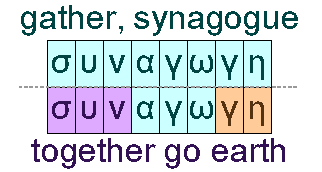
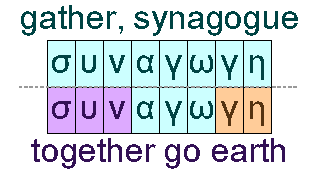
"συναγωγή" ≈ "gathering"
"συν" ≈ "together".
"ἄγω" ≈ "go" and "γη" ≈ "earth".
The
ancient Greek word
"συναγωγή" ≈ "gathering" and is the source of the English word
"synagogue" which is a Greek word and
not a Hebrew word. This word can be a play on words with the three constituent words
"together",
"lead, bring, go" and
"earth".
19. Revelation 3:9 Synagogue
Revelation 3:9 Behold, I will make them of the synagogue of Satan, which say they are Jews, and are not, but do lie; behold, I will make them to come and worship before thy feet, and to know that I have loved thee. [kjv]
ιδου διδωμι διδω εκ της συναγωγης του σατανα των λεγοντων εαυτους ιουδαιους ειναι και ουκ εισιν αλλα ψευδονται ιδου ποιησω αυτους ινα ηξωσιν ηξουσιν και προσκυνησωσιν προσκυνησουσιν ενωπιον των ποδων σου και γνωσιν οτι εγω ηγαπησα σε [gnt]
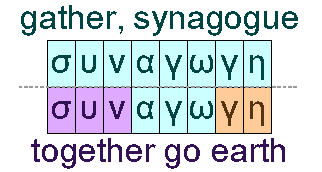
"συναγωγή" ≈ "gathering"
"συν" ≈ "together".
"ἄγω" ≈ "go" and "γη" ≈ "earth".
Discuss:
Who might "lead, bring, go" "together" on the "earth"?
What might be meant by "to" "know"? The "to" was added.
Might the wording indicate that, at one time, they were "loved" but they have now separated themselves from the "love" of Christ?
[Ten Pin model]
20. Revelation 3:9
Revelation 3:9 Behold, I will make them of the synagogue of Satan, which say they are Jews, and are not, but do lie; behold, I will make them to come and worship before thy feet, and to know that I have loved thee. [kjv]
ιδου διδωμι διδω εκ της συναγωγης του σατανα των λεγοντων εαυτους ιουδαιους ειναι και ουκ εισιν αλλα ψευδονται ιδου ποιησω αυτους ινα ηξωσιν ηξουσιν και προσκυνησωσιν προσκυνησουσιν ενωπιον των ποδων σου και γνωσιν οτι εγω ηγαπησα σε [gnt]
Greek:
... out of the "synagogue" "of (the)" "Satan" ...
21. Revelation church letters that mention Satan
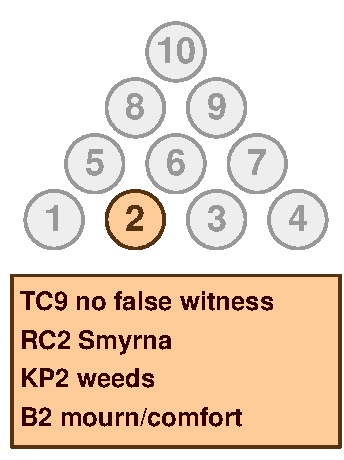 |
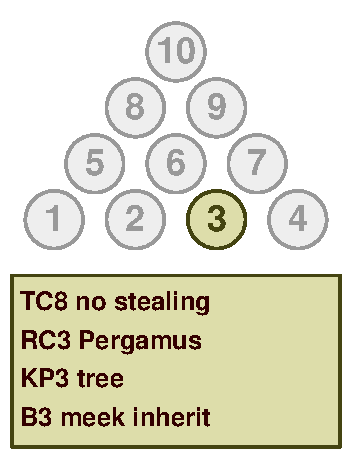 |
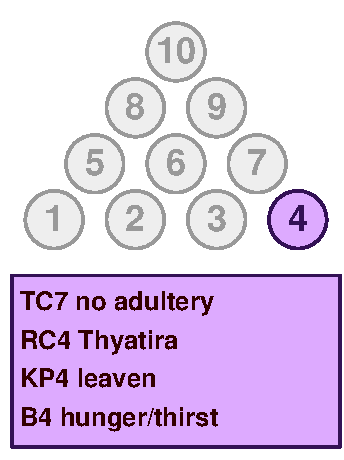 |
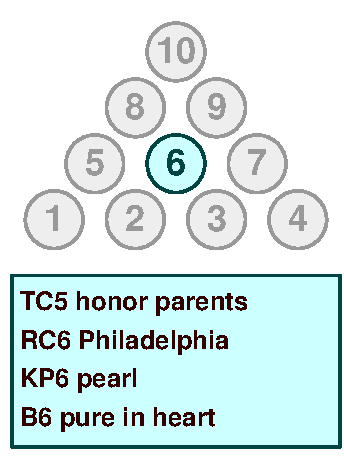 |
|
Synagogue
|
Seat (throne)
|
Depth (heat)
|
Synagogue
|
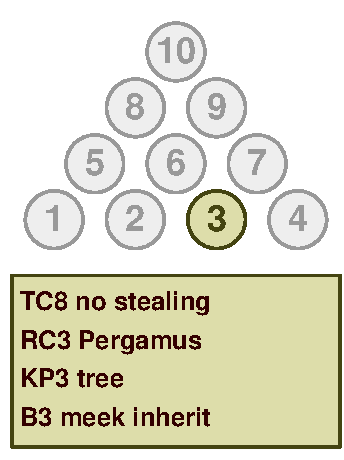
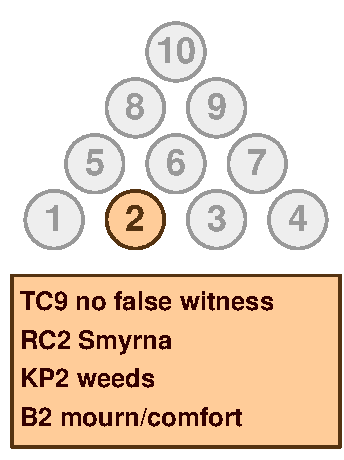
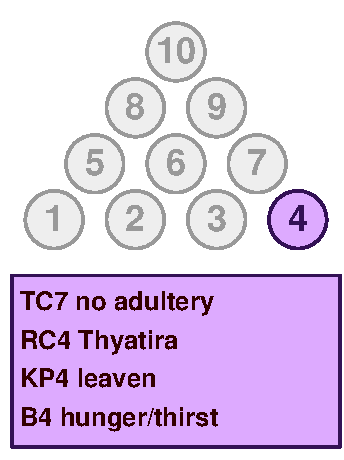
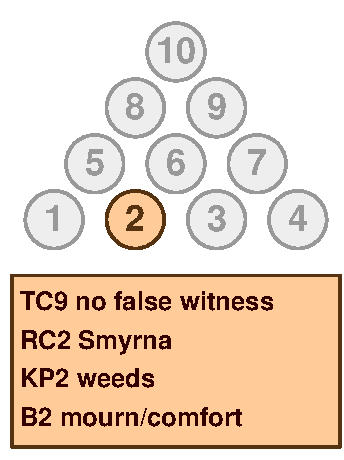
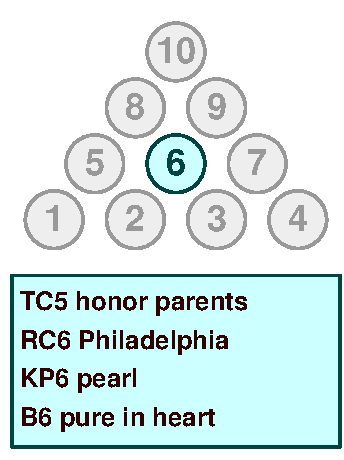
Notice which nodes in the Ten Pin model have Revelation Churches that mention
Satan. What about those church letters that do
not mention
Satan?
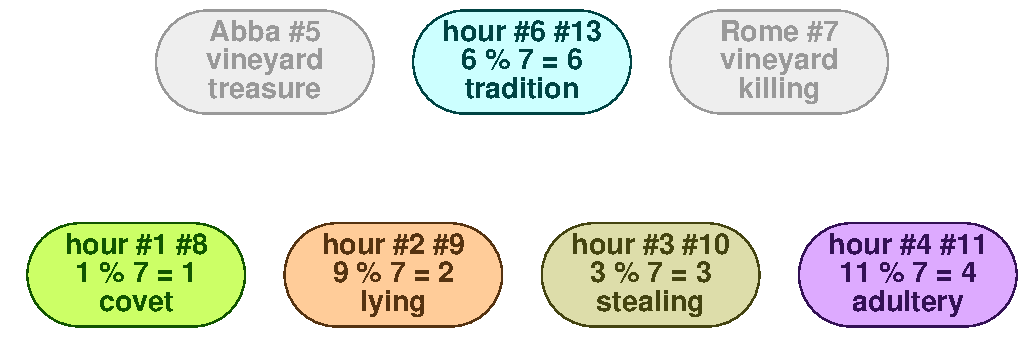
Compare these to the hours in the parable of the vineyard workers.
22. Revelation church letters that mention Satan
 |
 |
|
Synagogue
|
Synagogue
|
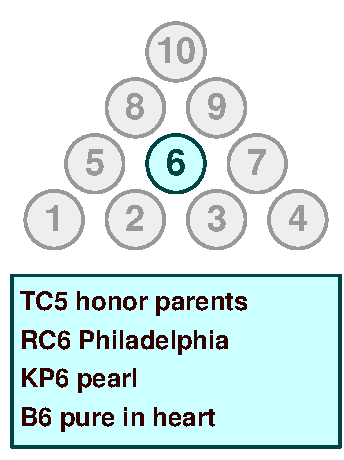
Notice which nodes in the Ten Pin model have Revelation Churches that mention the
"Synagogue" "of (the)" "Satan".
These are the exit nodes (i.e., wrong way or path) from
node 1 (covet, choose) and
node 5 (living bread).
Might the phrase
"Synagogue" "of (the)" "Satan" have a special (play on word) meaning?
The Greek has the definite article
"the" for
"Satan". Latin does not have a definite article. The
KJV , and many other English translations, omit the
"the".
23. Revelation church letters that mention Satan
Revelation 2:9 I know thy works, and tribulation, and poverty, (but thou art rich ) and I know the blasphemy of them which say they are Jews, and are not, but are the synagogue of Satan. [kjv]
οιδα σου τα εργα και την θλιψιν και την πτωχειαν αλλα πλουσιος δε ει και την βλασφημιαν εκ των λεγοντων ιουδαιους ειναι εαυτους και ουκ εισιν αλλα συναγωγη του σατανα [gnt]
3:9 Behold, I will make them of the synagogue of Satan, which say they are Jews, and are not, but do lie; behold, I will make them to come and worship before thy feet, and to know that I have loved thee. [kjv]
ιδου διδωμι διδω εκ της συναγωγης του σατανα των λεγοντων εαυτους ιουδαιους ειναι και ουκ εισιν αλλα ψευδονται ιδου ποιησω αυτους ινα ηξωσιν ηξουσιν και προσκυνησωσιν προσκυνησουσιν ενωπιον των ποδων σου και γνωσιν οτι εγω ηγαπησα σε [gnt]
Might the phrase
"Synagogue" "of (the)" "Satan" have a special (play on word) meaning?
24. Rye-grass
Genesis 3:18 Thorns also and thistles shall it bring forth to thee; and thou shalt eat the herb of the field; [kjv]
… ודרדר … [he]
Matthew 13:29 But he said, Nay; lest while ye gather up the tares, ye root up also the wheat with them. [kjv]
ο δε εφη φησιν ου μηποτε συλλεγοντες τα ζιζανια εκριζωσητε αμα αυτοις τον σιτον [gnt]
… zizania … triticum [v]
The Latin word
"zizanium" ≈ "darnel, tare, cockle" comes from the ancient Greek word
"ζιζάνιον" ≈ "darnel, rye-grass" whit is a
GNT word only used by Jesus in the parable of the
"weeds". It may come from or be related to the
Semitic (Aramaic, Hebrew, etc.). It is interesting that the word for
"thistle" in the
OT (Old Testament) and in the
GNT have unknown origins but appear to have sounded similar when spoken. Is there a connection?
*G2215 *8 ζιζάνιον (dziz-an'-ee-on) : of uncertain origin; darnel or false grain:--tares.
*H1863 דַּרדַּר (dar-dar') : of uncertain derivation; a thorn:--thistle.
25. Strongs - weeds
*G2215 *8 ζιζάνιον (dziz-an'-ee-on) : of uncertain origin; darnel or false grain:--tares.
Matthew 13:30 Let both grow together until the harvest: and in the time of harvest I will say to the reapers, Gather ye together first the tares, and bind them in bundles to burn them: but gather the wheat into my barn. [kjv]
According to the
CGL (Cambridge Greek Lexicon), this word is unique to the
GNT. It is used only by Jesus,
8 times, all in the parable of the
"wheat" and the
"tares" or
"weeds".
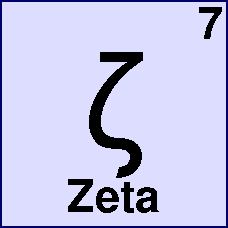
Why might Jesus have used the Greek later
"zeta" as
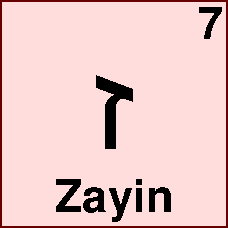
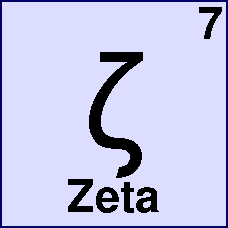
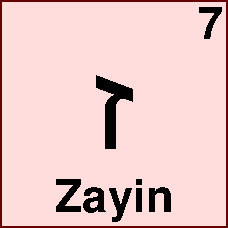
"ζ", Greek number
7, twice in this apparently made-up word?
What is the destination of the
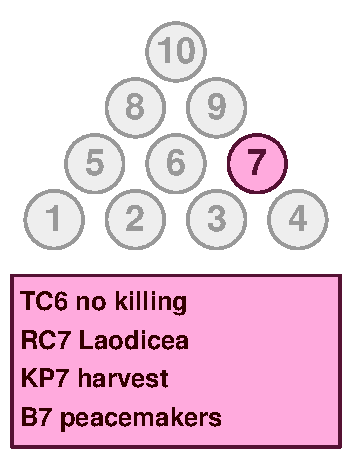
"weeds"? In the Ten Pin model,
node 7, the
killing node, is the destination of the
"weeds".
26. Usage - weeds
- *G2215 *8 ζιζάνιον (dziz-an'-ee-on) : of uncertain origin; darnel or false grain:--tares.
ζιζανια *7
Matthew 13:25 ... came and sowed tares among the wheat, and went his way.
Matthew 13:26 ... fruit, then appeared the tares also.
Matthew 13:27 ... from whence then hath it tares?
Matthew 13:29 ... Nay; lest while ye gather up the tares, ye root up also the wheat with them.
Matthew 13:30 ... to the reapers, Gather ye together first the tares, and bind them ...
Matthew 13:38 ... the children of the kingdom; but the tares are the children of the wicked one;
Matthew 13:40 As therefore the tares are gathered and burned ...
ζιζανιων
27. Matthew 23:35
28. Abel to Zacharias between the temple and the altar
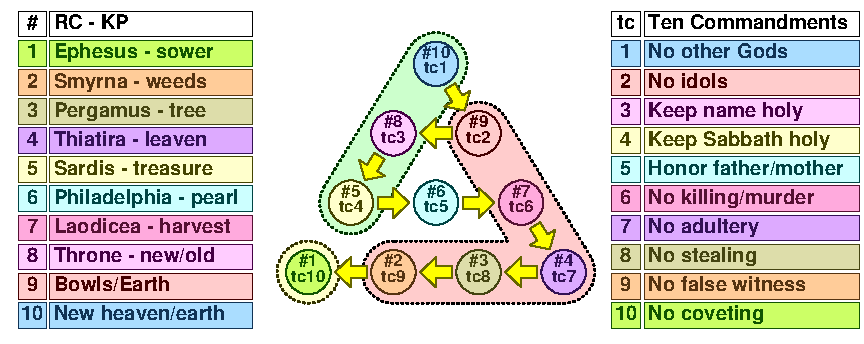
Interesting: Abel starts at node #1 (TC 1: no coveting). until Zechariah at node #7 (TC 6: no killing) between node #4, the temple (TC 4: no adultery), and #9, the altar (TC 2: no idols). [arms/hands as pigs, play on words with Barachias]
|
| Greek numbering |
| 1 |
Α |
α |
A |
Abel (no covet) |
| 2 |
Β |
β |
B |
|
| 3 |
Γ |
γ |
C |
|
| 4 |
Δ |
δ |
D |
(temple)(no adultery) |
| 5 |
Ε |
ε |
E |
|
| 6 |
* |
* |
F |
(digamma) |
| 7 |
Ζ |
ζ |
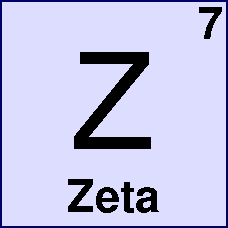
Z |
Zachariah (no killing) |
| 8 |
Η |
η |
|
|
| 9 |
Θ |
θ |
|
(altar)(no idols) |
| 10 |
Ι |
ι |
|
|
|
29. 2 Chronicles 24:20 Zachariah
2 Chronicles 24:20 And the Spirit of God came upon Zechariah the son of Jehoiada the priest, which stood above the people, and said unto them, Thus saith God, Why transgress ye the commandments of the LORD, that ye cannot prosper? because ye have forsaken the LORD, he hath also forsaken you. [kjv]
και πνευμα θεου ενεδυσεν τον αζαριαν τον του ιωδαε τον ιερεα και ανεστη επανω του λαου και ειπεν ταδε λεγει κυριος τι παραπορευεσθε τας εντολας κυριου και ουκ ευοδωθησεσθε οτι εγκατελιπετε τον κυριον και εγκαταλειψει υμας [lxx]
Some associate
"Zacharias" in Matthew 23:36 with the
"Zechariah" in 2 Chronicles 24:20-21. Jesus and Matthew quote from the
LXX and, in the
LXX,
"Zachariah" in Greek starts with an "
A" and not a "
Z". This
breaks the TenWordPin model correspondence. Does it break other opinions on the source of the
"Zachariah" to which Jesus is referring?
30. 2 Chronicles 24:21
2 Chronicles 24:21 And they conspired against him, and stoned him with stones at the commandment of the king in the court of the house of the LORD. [kjv]
και επεθεντο αυτω και ελιθοβολησαν αυτον δι εντολης ιωας του βασιλεως εν αυλη οικου κυριου [lxx]
31. Matthew 13:38 Field is the world
Matthew 13:38 The field is the world; the good seed are the children of the kingdom; but the tares are the children of the wicked one; [kjv]
ο δε αγρος εστιν ο κοσμος το δε καλον σπερμα ουτοι εισιν οι υιοι της βασιλειας τα δε ζιζανια εισιν οι υιοι του πονηρου [gnt]
In explaining the code words for kingdom parable 2 (
wheat and
tares), Jesus says that the
"field" is the
"world".
The "field" is the "world" (people in the world). There is a different Greek word for end of the "ages" or end of the "world".
The "good seed" is the "wheat" are the "children of the kingdom".
The "tares" are planted by the "evil one" (among the "good seed") and are the "children of the oppressive one" (evil as "oppression").
32. Synagogue of Satan
33. Movable nu
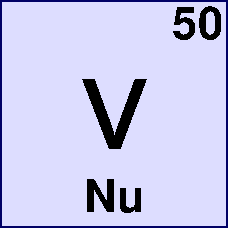
The Greek language has what is called a
"movable nu" from the letter "
nu" in the Greek alphabet.
The
ancient Greek phrase
"νῦ ἐφελκυστικόν" ≈ "nu dragged onto, nu attracted to" and comes from two Greek words.
The ancient Greek word "επι" ≈ "on".
The ancient Greek word "ἕλκω" ≈ "drag, attract"
In Greek, the
"movable nu" is used to avoid two vowels in a row, a "
hiatus". That is, a vowel at the end of one word and a vowel at the beginning of the next word. Since this is a speech-related phenomena, sometimes the
"movable nu" is optional.
34. Together satans
Plural from singular:
"ζιζάνια" ≈ "darnel, rye-grass" (plural) from "ζιζάνιον" ≈ "darnel, rye-grass"
"τέκνια" ≈ "children" from "τέκνον" ≈ "child"
"δαιμόνια" ≈ "divine powers, inferior divine beings, demons, evil spirits" from "δαιμόνιον" ≈ "divine power, inferior divine being, demon, evil spirit".
(flocks from flock)
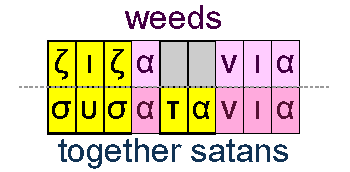
"σατᾶνια" ≈ "satans" (made up word) from "Σατᾶν" ≈ "Satan".
Movable nu: Notice how the nu "
ν" disappeared.
"συνίστημι" ≈ "combine, unite, pull together" from "συν" ≈ "together" and "ίστημι" ≈ "stand".
"σύστημα" ≈ "whole made of parts" and source, through Latin and French, of the English word "system".
How does the idea of
"together" "satans" compare with
"children" of the
"oppressive one" with those of the
"synagogue" "of" "Satan"?
35. Synagogue of Satan
If so, then the following are equivalent.
1, "tares" or "weeds".
2. "children/sons" "of the" "oppressive one".
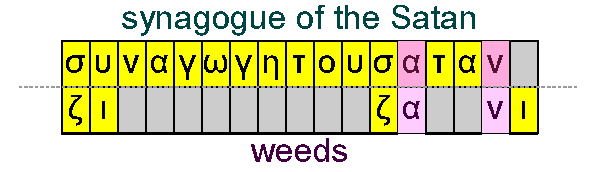
3, "synagogue" "of the" "Satan".
Does this fit with the corresponding verses? That is, substituting equals for equals. Jesus equates 1 and 2, so the question is as follows. How well does 3 fit with 1 and 2 and 1 and 2 with 3?
2. "children/sons" "of the" "oppressive one".
3. "synagogue" "of the" "Satan".
4. "together" "satans" (play on words) and "weeds".
These
"children/sons" appear to have been planted by the
"birds" from the previous parable of the sower, having gone though the
"birds" and having been deposited as "
seeds".
36. Revelation 12:9
Revelation 12:9 And the great dragon was cast out, that old serpent, called the Devil, and Satan, which deceiveth the whole world: he was cast out into the earth, and his angels were cast out with him. [kjv]
και εβληθη ο δρακων ο μεγας ο οφις ο αρχαιος ο καλουμενος διαβολος και ο σατανας ο πλανων την οικουμενην ολην εβληθη εις την γην και οι αγγελοι αυτου μετ αυτου εβληθησαν [gnt]
The word for
"cast out" is the same word used to describe the situation where an "
eye" that deceives or entraps, if not "
plucked" out, would result in the entire body being
"cast out" into "
hell".
Does
"Satan" or the
"Devil" or the
"dragon" have
"angels" or
"messengers"?
The ancient Greek word
"ἀρχή" ≈ "beginning, origin, sovereignty, authority" and could be the end of a rope, stick, etc., or the corner of a sheet.
37. Revelation 20:7
Revelation 20:7 And when the thousand years are expired, Satan shall be loosed out of his prison, [kjv]
και οταν τελεσθη τα χιλια ετη λυθησεται ο σατανας εκ της φυλακης αυτου [gnt]
What are the
"thousand" "years"? Might these be code words?
What is the
"prison"? Where is the
"oblivion" or
"forgetfulness"?
Are the
"years" "expired" or
"completed" (with a
purpose)?
38. Revelation 20:2,7 Thousand years
Revelation 20:2 And he laid hold on the dragon, that old serpent, which is the Devil, and Satan, and bound him a thousand years, [kjv]
και εκρατησεν τον δρακοντα τον οφιν τον αρχαιον ο οφιςο αρχαιος ος εστιν διαβολος και ο σατανας και εδησεν αυτον χιλια ετη [gnt]
20:7 And when the thousand years are expired, Satan shall be loosed out of his prison, [kjv]
και οταν τελεσθη τα χιλια ετη λυθησεται ο σατανας εκ της φυλακης αυτου [gnt]
What is the effect (books, theology, etc.) if the
"thousand" "years" is a
literal distractor? Jesus uses the Greek word often translated as "
prison" as the "
sanctuary" of the religious establishment where a "
yoke" of "
compulsion" is used to keep believers in line. There is another Greek word for what many people think of as a "
prison".
Where does Jesus talk about the
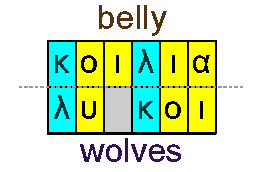
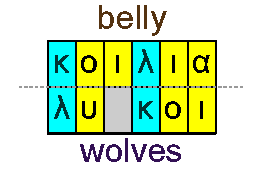
"belly"?
39. Prison lakes for water-fowl
If the context permits, a
"prison" could be a
"φυλακή" ≈ "watch, prison" where
"prison" was one way to be
"watched". Are worshipers ever
"watched" in the "
sanctuary"? Do some churches promote worshiping in the "
sanctuary". There are "
friends" "
there". This is an aspect of Epicurean philosophy.
Might this actually be a "
pit" or "
abyss"? The
ancient Greek word
"λᾰ́κκοι" ≈ "ponds, cisterns". The "
pond" was where "
water-fowl" are kept. The word is the plural of from
"λάκκος" ≈ "pond, cistern, pit" and is related to the English words
"lake" and
"loch" as in the
Loch Ness Monster. A synonym of the "
cistern" or "
tank" meaning is that of
"φρέαρ" ≈ "artificial well, cistern".
40. Matthew 12:38-39 Signs
Matthew 12:38 Then certain of the scribes and of the Pharisees answered, saying, Master, we would see a sign from thee. [kjv]
τοτε απεκριθησαν αυτω τινες των γραμματεων και φαρισαιων λεγοντες διδασκαλε θελομεν απο σου σημειον ιδειν [gnt]
12:39 But he answered and said unto them, An evil and adulterous generation seeketh after a sign; and there shall no sign be given to it, but the sign of the prophet Jonas: [kjv]
ο δε αποκριθεις ειπεν αυτοις γενεα πονηρα και μοιχαλις σημειον επιζητει και σημειον ου δοθησεται αυτη ει μη το σημειον ιωνα του προφητου [gnt]
Jesus uses the Greek word for
"sign" three times after the religious establishment asks him about it.
The
KJV sometimes translates
"sign" as
"miracle" which gets people arguing over the definition of a
"miracle" and then whether
"miracles" can happen.
[Immanuel Kant]
41. Matthew 12:39 Sign of the Messiah
Matthew 12:39 But he answered and said unto them, An evil and adulterous generation seeketh after a sign; and there shall no sign be given to it, but the sign of the prophet Jonas: [kjv]
ο δε αποκριθεις ειπεν αυτοις γενεα πονηρα και μοιχαλις σημειον επιζητει και σημειον ου δοθησεται αυτη ει μη το σημειον ιωνα του προφητου [gnt]
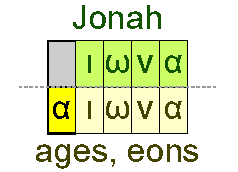
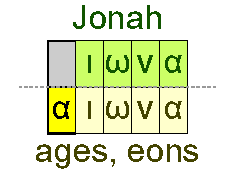
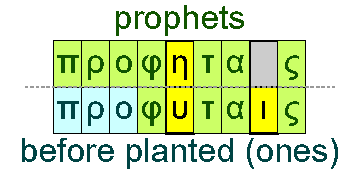
Greek: ... if not the sign of Jonah of the prophet ...
Play on words: ... I am the Messiah of the ages of the (new) ones planted before ...
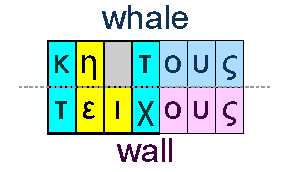
42. Matthew 12:40 Whale belly Spoonerism
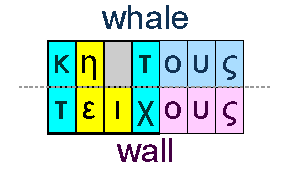
43. Matthew 12:40 Paraphrase
44. End of page