Send
Close Add comments:
(status displays here)
Got it! This site "www.creationpie.org" uses cookies. You consent to this by clicking on "Got it!" or by continuing to use this website. Note: This appears on each machine/browser from which this site is accessed.
Matthew 21:34-41 Parable of the householder 2
1. Matthew 21:34-41 Parable of the householder 2
This content is being developed.
2. Matthew 21
3. Matthew 21:24-27 Authoritative lack of restraint
After the fig tree lesson on the way from Bethany to Jerusalem, Jesus and his disciples are now in the temple complex.
Matthew 21:23 And when he was come into the temple, the chief priests and the elders of the people came unto him as he was teaching, and said, By what authority doest thou these things? and who gave thee this authority? [kjv]
21:24 And Jesus answered and said unto them, I also will ask you one thing, which if ye tell me, I in like wise will tell you by what authority I do these things. [kjv]
21:25 The baptism of John, whence was it? from heaven, or of men? And they reasoned with themselves, saying, If we shall say, From heaven; he will say unto us, Why did ye not then believe him? [kjv]
21:26 But if we shall say, Of men; we fear the people; for all hold John as a prophet. [kjv]
21:27 And they answered Jesus, and said, We cannot tell. And he said unto them, Neither tell I you by what authority I do these things. [kjv]
4. Matthew 21:27 No telling
Matthew 21:27 And they answered Jesus, and said, We cannot tell. And he said unto them, Neither tell I you by what authority I do these things. [kjv]
και αποκριθεντες τω ιησου ειπον ειπαν ουκ οιδαμεν εφη αυτοις και αυτος ουδε εγω λεγω υμιν εν ποια εξουσια ταυτα ποιω [gnt]
Jesus says he will not tell them. Most sermons end at that point. Does Jesus, in fact, tell them? To find out, one must read on and connect the dots. What if, instead of
telling them, Jesus
tells everyone who will listen and understand what he is saying? There is not
one shred of evidence that Jesus answers this question in the following verses.
"ἐγὼ" ≈ "I (am)" (for emphasis) and "λέγω" ≈ "(I) say"
"ποιῶ" ≈ "I do" (emphasis not used/needed)
Spanish: "hablo" ≈ "(I) speak" as a PIE (Proto Indo-European) example.
Spanish: "yo" ≈ "I" and "hablo" ≈ "(I) speak" (for emphasis).
5. Matthew 21:28-30 Desire of the Father 1
Matthew 21:28 But what think ye? A certain man had two sons; and he came to the first, and said, Son, go work to day in my vineyard. [kjv]
21:29 He answered and said, I will not: but afterward he repented, and went. [kjv]
21:30 And he came to the second, and said likewise. And he answered and said, I go, sir: and went not. [kjv]
21:31 Whether of them twain did the will of his father? They say unto him, The first. Jesus saith unto them, Verily I say unto you, That the publicans and the harlots go into the kingdom of God before you. [kjv]
Is it more important what you
think, what you
say, or what you
do? Is it enough to say "
I will"! Might these verses (and those that follow) help answer some previous questions?
Was the baptism of John from "heaven" or from "man"?
By what "authority" does Jesus do the things that he does?
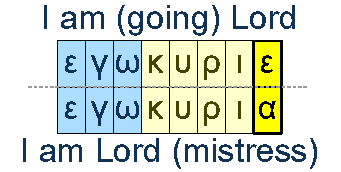
6. Matthew 21:30 Put it together
Matthew 21:30 And he came to the second, and said likewise. And he answered and said, I go, sir: and went not. [kjv]
21:29 ο δε αποκριθεις ειπεν ου θελω υστερον δε μεταμεληθεις εγω κυριε και ουκ απηλθεν [gnt]
Might the one
child be assuming the role of
lord or
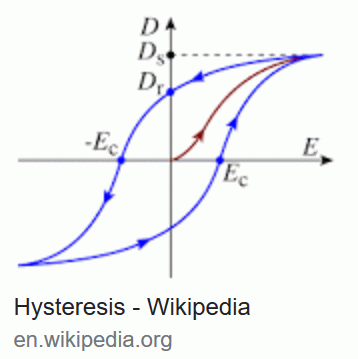
master? Is it a novel idea that a
child who appears to be a male will want to be a female (leader, mistress, etc.). Might the
"peddling" imply a "
merchant"?
Might such a
child, instead of
working in the
vineyard, might
work the
vineyard as someone might
work the
crowd? That is, to their own benefit. Might this be
snake-oil?
7. Matthew 21:31 Review
Matthew 21:31 Whether of them twain did the will of his father? They say unto him, The first. Jesus saith unto them, Verily I say unto you, That the publicans and the harlots go into the kingdom of God before you. [kjv]
τις εκ των δυο εποιησεν το θελημα του πατρος λεγουσιν αυτω ο πρωτος υστερος λεγει αυτοις ο ιησους αμην λεγω υμιν οτι οι τελωναι και αι πορναι προαγουσιν υμας εις την βασιλειαν του θεου [gnt]
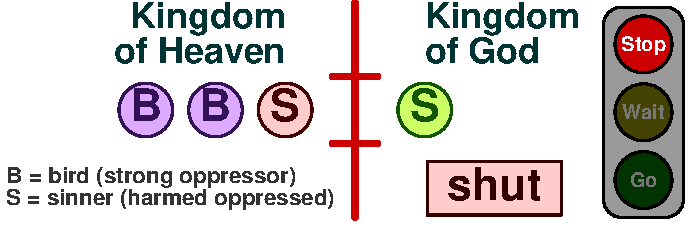
Logically, and relating the before and after of the "
Verily I say unto you", Jesus says that none of the
"birds" will enter the "
kingdom" of "
God" but some "
harlots" and/or "
tax collectors" may do so.
The "birds" correspond to the "child" who says "I am Lord (harlot)".
The others correspond to the "child" who "lagged behind" but then went and did the right thing.
8. Matthew 21:33 Play on words
Matthew 21:33 Hear another parable: There was a certain householder, which planted a vineyard, and hedged it round about, and digged a winepress in it, and built a tower, and let it out to husbandmen, and went into a far country: [kjv]
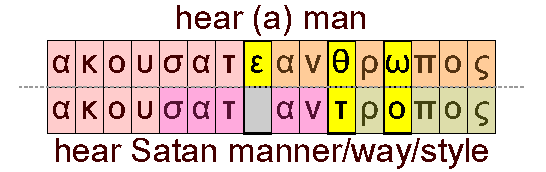
αλλην παραβολην ακουσατε ανθρωπος τις ην οικοδεσποτης οστις εφυτευσεν αμπελωνα και φραγμον αυτω περιεθηκεν και ωρυξεν εν αυτω ληνον και ωκοδομησεν πυργον και εξεδοτο εξεδετο αυτον γεωργοις και απεδημησεν [gnt]
 |
 |
 |
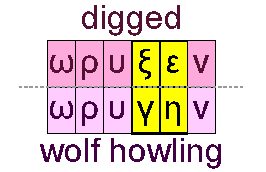 |
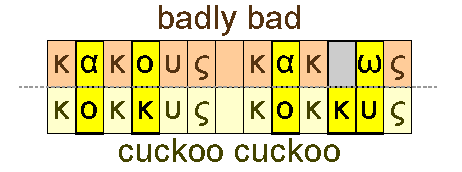
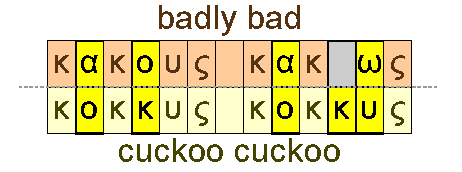
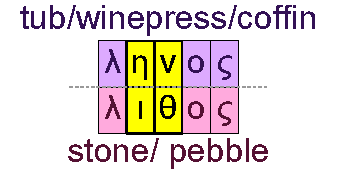 |
 |
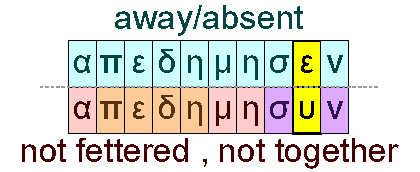 |
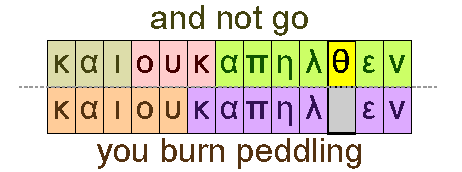
and (once) ...
and [burn]
(four times)
|
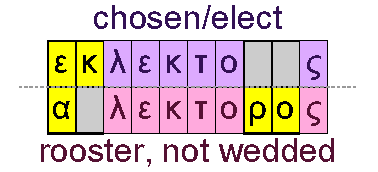
The "
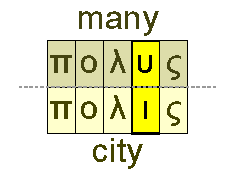
man" "
was" a
"householder". According to some Greek experts, according to their testimony, it all depends on what the meaning of "
was" "
was". The play on words help provide error detection and correction (for meaning). Perhaps a better testimony
hearing is needed. When incorrect as a
group, one can take a
beating and keep on
cliquing (think
KJV (King James Version) only and others).
9. Matthew 21:33 Paraphrase
Matthew 21:33 Hear another parable: There was a certain householder, which planted a vineyard, and hedged it round about, and digged a winepress in it, and built a tower, and let it out to husbandmen, and went into a far country: [kjv]
αλλην παραβολην ακουσατε ανθρωπος τις ην οικοδεσποτης οστις εφυτευσεν αμπελωνα και φραγμον αυτω περιεθηκεν και ωρυξεν εν αυτω ληνον και ωκοδομησεν πυργον και εξεδοτο εξεδετο αυτον γεωργοις και απεδημησεν [gnt]
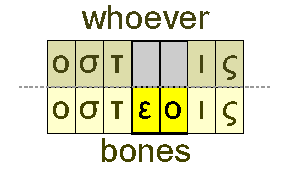
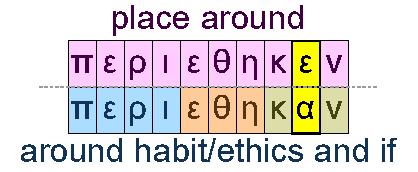
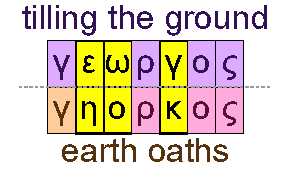
Another similar parable hear a man [hear Satan manner] was householder which [hostile/bones] planted a vineyard and walled it around [around ethics] and [burn] dug [wolf howling] in it winepress (coffin) [stone] and [burn] build/edified a tower [fire/pyre] and [burn] gave it out to husbandman [earth oaths] and [burn] was away/absent [not fettered not together].
Discuss: Are the things the
householder does more consistent with things that
Satan might do or more consistent with what
Jesus would do?
10. Matthew 21:34-41 Parable of the householder 2
Matthew 21:34 And when the time of the fruit drew near, he sent his servants to the husbandmen, that they might receive the fruits of it. [kjv]
21:35 And the husbandmen took his servants, and beat one, and killed another, and stoned another. [kjv]
21:36 Again, he sent other servants more than the first: and they did unto them likewise. [kjv]
21:37 But last of all he sent unto them his son, saying, They will reverence my son. [kjv]
Who is "
he" and "
his"? To which
"householder" does "
he" or "
his" refer? As in a joke, one may not find out the actual answer until a few verses later.
21:40 When the lord therefore of the vineyard cometh, what will he do unto those husbandmen? [kjv]
11. Matthew 21:34 Servants as bait
12. Matthew 21:34 Husbandman
Matthew 21:34 And when the time of the fruit drew near, he sent his servants to the husbandmen, that they might receive the fruits of it. [kjv]
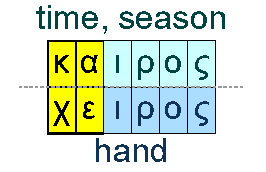
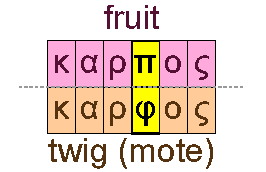
οτε δε ηγγισεν ο καιρος των καρπων απεστειλεν τους δουλους αυτου προς τους γεωργους λαβειν τους καρπους αυτου [gnt]
The "
he" is
inferred. The
"his" is ambiguous and can be
"of him" or
"of it", grammatically masculine or neuter.
The ancient Greek word
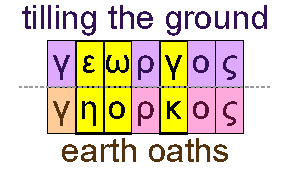
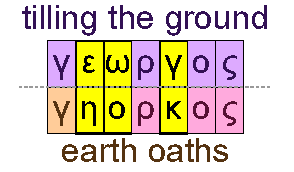
"γεωργός" ≈ "tilling the ground, fertilizing, farmer" and comes from two Greek words.
"γεω" ≈ "earth" (prefix) as in the first part of the English word "geometry" (measuring the earth).
"ἔργον" ≈ "work" as in the English word "erg" (measure of work).
Would the
"husbandman" make
"oaths" on
"earth"?
13. Matthew 21:34 Oaths on earth
Matthew 21:34 And when the time of the fruit drew near, he sent his servants to the husbandmen, that they might receive the fruits of it. [kjv]
οτε δε ηγγισεν ο καιρος των καρπων απεστειλεν τους δουλους αυτου προς τους γεωργους λαβειν τους καρπους αυτου [gnt]
"γεωργός" ≈ "tilling the ground, fertilizing, farmer"
"γη" ≈ "earth" and "ὅρκος" ≈ "oath".
Would the
"husbandman" make
"oaths" on
"earth"? What does Jesus say about making or taking
"oaths"?
Think of the story of
Cain and
Abel.
14. Matthew 21:34 Sent apostles
Matthew 21:34 And when the time of the fruit drew near, he sent his servants to the husbandmen, that they might receive the fruits of it. [kjv]
οτε δε ηγγισεν ο καιρος των καρπων απεστειλεν τους δουλους αυτου προς τους γεωργους λαβειν τους καρπους αυτου [gnt]
The ancient Greek word
"ἀπόστολος" ≈ "one who is sent" and did not have the modern meaning of
"Apostle". Another meaning was developing of an
"apostle" being one who had first hand experience with Jesus Christ.
15. Matthew 21:34 Sent servants
Matthew 21:34 And when the time of the fruit drew near, he sent his servants to the husbandmen, that they might receive the fruits of it. [kjv]
οτε δε ηγγισεν ο καιρος των καρπων απεστειλεν τους δουλους αυτου προς τους γεωργους λαβειν τους καρπους αυτου [gnt]
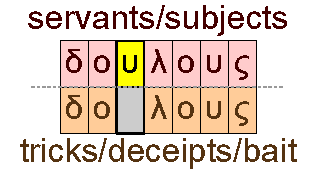
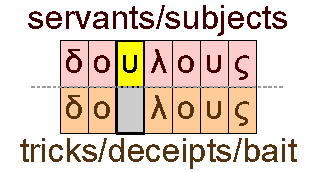
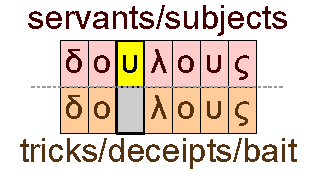
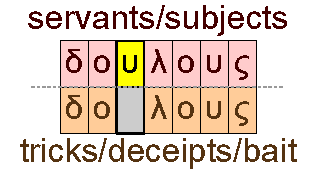
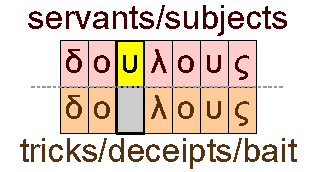
"δουλους" ≈ "servile, subject" (accusative plural) of "δοῦλος" ≈ "servile, subject".
"δόλους" ≈ "trick, deceit, bait (for fish)" (accusative plural) of "δόλος" ≈ "trick, deceit, bait (for fish)".
Might these
"servants", good or not good, have a
secondary purpose of being
"bait"? Who might be represented by the
"servants"?
|
☐ angels
|
☐ people in general
|
☐ believers in particular
|
☐ someone else
|
16. Matthew 21:34 Seize the take
17. Matthew 21:34-35 Seize the take
Matthew 21:34 And when the time of the fruit drew near, he sent his servants to the husbandmen, that they might receive the fruits of it. [kjv]
οτε δε ηγγισεν ο καιρος των καρπων απεστειλεν τους δουλους αυτου προς τους γεωργους λαβειν τους καρπους αυτου [gnt]
21:35 And the husbandmen took his servants, and beat one, and killed another, and stoned another. [kjv]
και λαβοντες οι γεωργοι τους δουλους αυτου ον μεν εδειραν ον δε απεκτειναν ον δε ελιθοβολησαν [gnt]
The ancient Greek word
"λαβοῦσα" ≈ "take" of
"λαβών" ≈ "take" of
"λαμβάνω" ≈ "take hold of, grasp, seize". In verse 35, the Greek word that was translated as
"receive" in verse 34 is translated using the usual meaning of
"take". What happens if the translated words are switched?
35: ... they might take/seize the fruits of it.
36: ... the husbandmen received his servants ...
18. Matthew 21:34 Time grew near
Matthew 21:34 And when the time of the fruit drew near, he sent his servants to the husbandmen, that they might receive the fruits of it. [kjv]
οτε δε ηγγισεν ο καιρος των καρπων απεστειλεν τους δουλους αυτου προς τους γεωργους λαβειν τους καρπους αυτου [gnt]
What are the
"fruits"?
☐ Good works.
☐ People doing the good works.
☐ Something else.
19. Matthew 21:34
KJV: And when the time of the fruit drew near, he sent his servants to the husbandmen, that they might receive the fruits of it.
Greek: οτε δε ηγγισεν ο καιρος των καρπων απεστειλεν τους δουλους αυτου προς τους γεωργους λαβειν τους καρπους αυτου
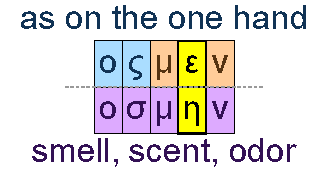
20. On the one hand
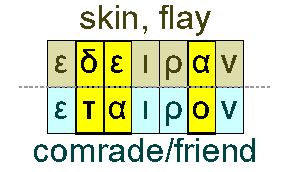
21. Strongs - beat
*G1194 *15 δέρω (der'-o) : a primary verb; properly, to flay, i.e. (by implication) to scourge, or (by analogy) to thrash:--beat, smite.
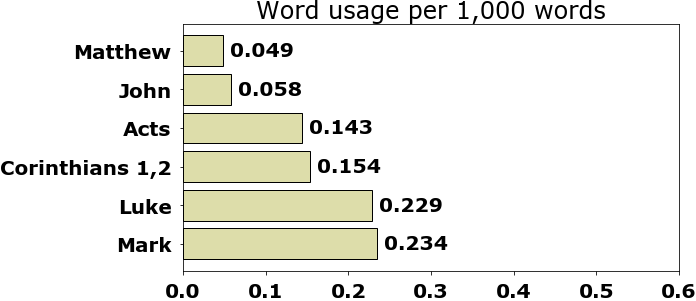 |
Words: δαρησεσθε δαρησεται=2 δειραντες=4 δερει δερεις δεροντες=2 δερων=2 εδειραν=2
|
The ancient Greek word
"δέρω" ≈ "skin, flay" and is cognate with the English word
"tear" and the German word
"zerren" ≈ "tug, rip, tear".
22. Usage - beat
- *G1194 *15 δέρω (der'-o) : a primary verb; properly, to flay, i.e. (by implication) to scourge, or (by analogy) to thrash:--beat, smite.
- εδειραν *2 of 15
- Matthew 21:35 ... took his servants, and beat one, and killed ...
- Mark 12:3 And they caught him, and beat him, and sent him away empty.
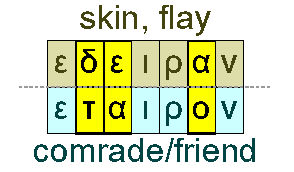
23. Strongs - friend
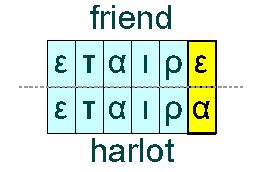
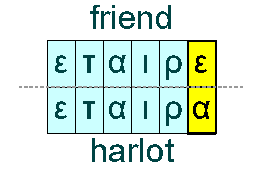
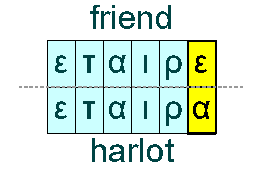
- *G2083 *3 ἑταίρος (het-ah'-ee-ros) : from etes (a clansman); a comrade:--fellow, friend.
- εταιρε *3
- Matthew 20:13 ... one of them, and said, Friend, I do thee no ...
- Matthew 22:12 And he saith unto him, Friend, how camest thou in hither ...
- Matthew 26:50 And Jesus said unto him, Friend, wherefore art thou come? Then ...
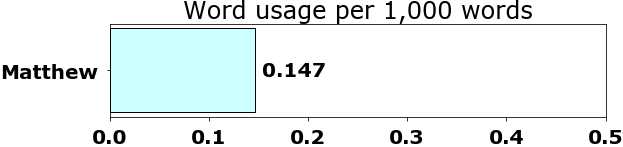 |
Words: εταιρε=3
|
The ancient Greek word
"ἑταιρεία" ≈ "association, company, band". The modern Greek word
"εταιρεία" (eh-teh-REE-a) ≈ "association, society, company".
24. Proverbs 19:13 Wife
Proverbs 19:13 A foolish son is the calamity of his father: and the contentions of a wife are a continual dropping. [kjv]
αισχυνη πατρι υιος αφρων και ουχ αγναι ευχαι απο μισθωματος εταιρας [lxx]
A foolish son is a disgrace to his father: vows paid out of the hire of a harlot are not pure. [bs3]
The
HOT (Hebrew Old Testament) varies from the
LXX (Septuagint) in certain interesting ways. Which might be more accurate? Why might one or the other have changed the text?
The ancient Greek word
"ἑταίρα" ≈ "courtesan, escort, prostitute".
25. Matthew 20:13 Now friend
Matthew 20:13 But he answered one of them, and said, Friend, I do thee no wrong: didst not thou agree with me for a penny? [kjv]
ο δε αποκριθεις ειπεν ενι αυτων ειπεν εταιρε ουκ αδικω σε ουχι δηναριου συνεφωνησας μοι [gnt]
"ἑταῖρε" ≈ "comrade, friend"
"ἑταίρα" ≈ "courtesan, escort, prostitute"
Jesus does not use the word
"friend" in a good sense. The ancient Greek word
"ἑταιρεία" ≈ "association, company, band". The modern Greek word
"εταιρεία" (eh-teh-REE-a) ≈ "association, society, company".
This is
not the ancient Greek word
"φίλος" ≈ "that which is loved or important, friend" as in "
Philadelphia" as "
love of brothers" or "
brotherly love".
[business deals]
26. Matthew 22:12 Now friend
27. Matthew 26:49-50 Judas
Matthew 26:49 And forthwith he came to Jesus, and said, Hail, master; and kissed him. [kjv]
και ευθεως προσελθων τω ιησου ειπεν χαιρε ραββι και κατεφιλησεν αυτον [gnt]
26:50 And Jesus said unto him, Friend, wherefore art thou come? Then came they, and laid hands on Jesus, and took him. [kjv]
ο δε ιησους ειπεν αυτω εταιρε εφ ω ο παρει τοτε προσελθοντες επεβαλον τας χειρας επι τον ιησουν και εκρατησαν αυτον [gnt]
"ἑταῖρε" ≈ "comrade, friend"
"ἑταίρα" ≈ "courtesan, escort, prostitute"
28. Matthew 26:49
KJV: And forthwith he came to Jesus, and said, Hail, master; and kissed him.
Greek: και ευθεως προσελθων τω ιησου ειπεν χαιρε ραββι και κατεφιλησεν αυτον
29. Matthew 26:50
KJV: And Jesus said unto him, Friend, wherefore art thou come? Then came they, and laid hands on Jesus, and took him.
Greek: ο δε ιησους ειπεν αυτω εταιρε εφ ω ο παρει τοτε προσελθοντες επεβαλον τας χειρας επι τον ιησουν και εκρατησαν αυτον
30. Now friend connections
Parable of the vineyard workers:
Matthew 20:13 But he answered one of them, and said, Friend, I do thee no wrong: didst not thou agree with me for a penny? [kjv]
ο δε αποκριθεις ειπεν ενι αυτων ειπεν εταιρε ουκ αδικω σε ουχι δηναριου συνεφωνησας μοι [gnt]
Parable of the householder:
21:35 And the husbandmen took his servants, and beat one, and killed another, and stoned another. [kjv]
και λαβοντες οι γεωργοι τους δουλους αυτου ον μεν εδειραν ον δε απεκτειναν ον δε ελιθοβολησαν [gnt]
Parable of the wedding feast:
22:12 And he saith unto him, Friend, how camest thou in hither not having a wedding garment? And he was speechless. [kjv]
και λεγει αυτω εταιρε πως εισηλθες ωδε μη εχων ενδυμα γαμου ο δε εφιμωθη [gnt]
31. Matthew 21:35 Friends
Matthew 21:35 And the husbandmen took his servants, and beat one, and killed another, and stoned another. [kjv]
και λαβοντες οι γεωργοι τους δουλους αυτου ον μεν εδειραν ον δε απεκτειναν ον δε ελιθοβολησαν [gnt]
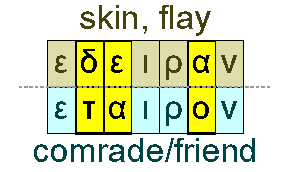
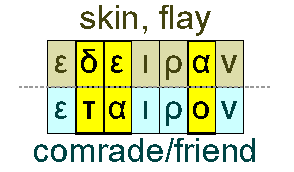
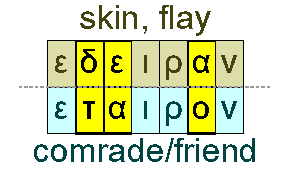
"ἔδειραν" ≈ "skin, flay" (third person accusative).
"ἑταῖρον" ≈ "comrade, friend" (third person accusative).
The ancient Greek word
"ἑταῖρος" ≈ "comrade, friend" and used by Jesus in a
condescending manner. Think of someone saying the phrase
"now friend" in a
condescending manner.
32. A friend of another kind
Proverbs 27:17 Iron sharpeneth iron; so a man sharpeneth the countenance of his friend. [kjv]
σιδηρος σιδηρον οξυνει ανηρ δε παροξυνει προσωπον εταιρου [lxx]
The ancient Greek word
"ἑταιρεία" ≈ "association, company, band". The modern Greek word
"εταιρεία" (eh-teh-REE-a) ≈ "association, society, company".
This is
not the ancient Greek word
"φίλος" ≈ "that which is loved or important, friend" as in "
Philadelphia" as "
love of brothers" or "
brotherly love".
The
LXX has various meanings of this word. When Jesus uses this word in Matthew, three times, as a
code word, it is
not in a good sense. Let us look at the usage in the
LXX, then the literal usage of this word, and then the other usage in parables.
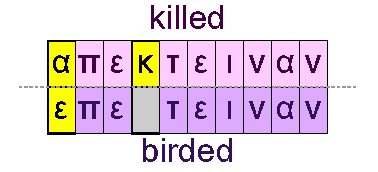
33. Matthew 21:35 Birded
Matthew 21:35 And the husbandmen took his servants, and beat one, and killed another, and stoned another. [kjv]
και λαβοντες οι γεωργοι τους δουλους αυτου ον μεν εδειραν ον δε απεκτειναν ον δε ελιθοβολησαν [gnt]
[burn]
34. Strongs - stoned
*G3036 *8 λιθοβολέω (lith-ob-ol-eh'-o) : from a compound of G3037 and G906; to throw stones, i.e. lapidate:--stone, cast stones.
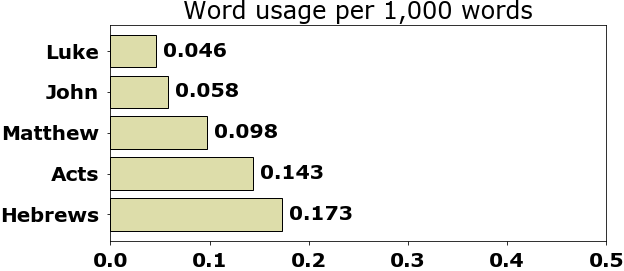 |
Words: ελιθοβολησαν=1 ελιθοβολουν=2 λιθοβολεισθαι λιθοβοληθησεται λιθοβολησαι λιθοβολουσα=2
|
35. Usage - stoned
- *G3036 *8 λιθοβολέω (lith-ob-ol-eh'-o) : from a compound of G3037 and G906; to throw stones, i.e. lapidate:--stone, cast stones.
- λιθοβολουσα *2
- Matthew 23:37 ... thou that killest the prophets, and stonest them which are sent unto thee, ...
- Luke 13:34 ... killest the prophets, and stonest them that are sent unto ...
- ελιθοβολουν *2
- Acts 7:58 ... him out of the city, and stoned him: and the witnesses laid down ...
- Acts 7:59 And they stoned Stephen, calling upon God, and saying, ...
- ελιθοβολησαν
- Matthew 21:35 ... killed another, and stoned another.
- λιθοβολεισθαι
- John 8:53 Art thou greater than our father Abraham, ...
- λιθοβολησαι
- Acts 14:5 ... to use them despitefully, and to stone them,
- λιθοβοληθησεται
- Hebrews 12:20 ... a beast touch the mountain, it shall be stoned, or thrust through with a dart:
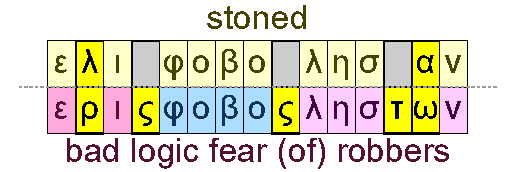
36. Matthew 21:35 Bad logic
Matthew 21:35 And the husbandmen took his servants, and beat one, and killed another, and stoned another. [kjv]
και λαβοντες οι γεωργοι τους δουλους αυτου ον μεν εδειραν ον δε απεκτειναν ον δε ελιθοβολησαν [gnt]
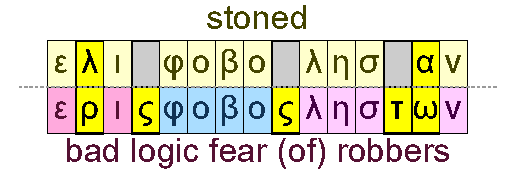
"ἐλιθοβόλησαν" ≈ "stoned" (as used).
"ἔρις" ≈ "contend invalid logic, strife"
"φόβος" ≈ "fear, terror, awe"
"ληστών" ≈ "robber, bandit" (genitive plural) from "ληστής" ≈ "robber, bandit" from "ληΐς" ≈ "booty, spoil"
Might the
"husbandman" used
"bad logic" and
"fear" of
"robbers"? Is this a fear of "
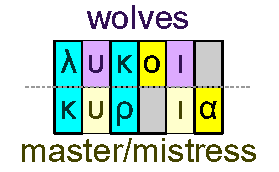
wolves" coming in and "
ravaging" the "
sheep"? Who is the "
wolf-dog"? Who is the "
sheep-dog"?
The ancient Greek word
"φόβος" ≈ "fear, terror, awe" and is the source of the English word
"phobia". The modern Greek word
"φόβος" (FO-vos) ≈ "fear, awe".
The "
L" and "
R" sounds are related. The play on words can be understood without pronouncing all the letters.
37. Matthew 21:35 Put it together
Matthew 21:35 And the husbandmen took his servants, and beat one, and killed another, and stoned another. [kjv]
και λαβοντες οι γεωργοι τους δουλους αυτου ον μεν εδειραν ον δε απεκτειναν ον δε ελιθοβολησαν [gnt]
What was done with the
"servants" or
"bait"?
 |
| beat |
now friend [harlot] |
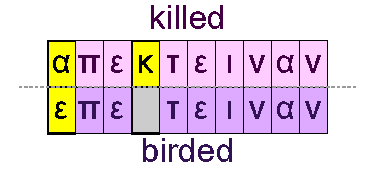
| killed |
birded |
| stoned |
bad logic fear (of) robbers |
|
38. Matthew 21:35
KJV: And the husbandmen took his servants, and beat one, and killed another, and stoned another.
Greek: και λαβοντες οι γεωργοι τους δουλους αυτου ον μεν εδειραν ον δε απεκτειναν ον δε ελιθοβολησαν
39. Matthew 21:36 More than
Matthew 21:36 Again, he sent other servants more than the first: and they did unto them likewise. [kjv]
παλιν απεστειλεν αλλους δουλους πλειονας των πρωτων και εποιησαν αυτοις ωσαυτως [gnt]
The ancient Greek word
"πλεῖστος" ≈ "most, very much, for the most part" and comes from
"πολύς" ≈ "many, much" and is the suffix of English words starting with
"poly" as in "
polynomial".
Does the
"very much" or
"for the most part" refer to the
number of the
"servants" or something else?
40. Matthew 21:36 Again
Matthew 21:36 Again, he sent other servants more than the first: and they did unto them likewise. [kjv]
παλιν απεστειλεν αλλους δουλους πλειονας των πρωτων και εποιησαν αυτοις ωσαυτως [gnt]
"Again", he "
sent"
"other" "similar" "servants".
This verse appears to be, in part, a setup for the next discourse (in the following chapter). This one, in context, is a second occurrence of the same actions. The next one, without the context, appears to be a repeat of what was said in more detail.
In what sense are these
"servants" "more than" the previous ones?
41. Matthew 21:36
KJV: Again, he sent other servants more than the first: and they did unto them likewise.
Greek: παλιν απεστειλεν αλλους δουλους πλειονας των πρωτων και εποιησαν αυτοις ωσαυτως
42. Romans 3:23 All have sinned
Romans 3:23 For all have sinned, and come short of the glory of God; [kjv]
παντες γαρ ημαρτον και υστερουνται της δοξης του θεου [gnt]
If sinners were not allowed in church, there would be no one allowed in church.
The Greek here for
"all" is
plural which means there may be
exceptions. Who might be an exception?
The ancient Greek word
"ἁμαρτία" ≈ "error, mistake, fault, sin" as in, literally,
"not a witness". The Greek for
"glory" is that of
"opinion". Anything that is
"not a witness" for God
"falls short" or
"lags behind" of God's
"opinion" or
"expectation".
In logical reasoning, one should not universally quantify something without specifying the domain to which it applies and how it applies. The "
for all" would appear to refer to "
men" who are not "
God" (as in "
Jesus").
Paraphrase:
For all have not been a (good) witness (of God) and not approached the opinion of God
43. Romans 3:23 Glory of God
Romans 3:23 For all have sinned, and come short of the glory of God; [kjv]
παντες γαρ ημαρτον και υστερουνται της δοξης του θεου [gnt]
Do we need to come up to the
"glory" of God? Perhaps a pastor could help us with that seemingly unattainable quest.
"υστερούντα" ≈ "lag behind, be late".
"δόξα" ≈ "opinion, expectation".
Paraphrase: All (with possible exceptions) have not been a (good) witness (for God) and have lagged behind the opinion/expectation of God.
It appears we do not have to reach the level of God. God has an
expectation/opinion of where we should be and we are
lagging behind that
expectation/opinion. This appears to be in line with Eastern Orthodox thought.
44. Matthew 21:37 Lag behind
Matthew 21:37 But last of all he sent unto them his son, saying, They will reverence my son. [kjv]
υστερον δε απεστειλεν προς αυτους τον υιον αυτου λεγων εντραπησονται τον υιον μου [gnt]
The Greek word translated as
"lest" is the ancient Greek word
"ὑστερέω" ≈ "behind, late, lag behind" and is the source of the English word
"hysteresis", a word coined by Sir James Alfred Ewing to describe magnetic memory. This memory causes the magnetic field to
"lag behind".
The ancient Greek word
"ἔσχατος" ≈ "farthest, most remote, last, final, extreme" and is the source of the English word
"eschatology" as a "
study of the end times". This is
not the word used here.
45. Matthew 19:30 First and last
46. Matthew 19:30 Stacks and queues
Matthew 19:30 But many that are first shall be last; and the last shall be first. [kjv]
πολλοι δε εσονται πρωτοι εσχατοι και εσχατοι πρωτοι [gnt]
What is the criteria to which
first and
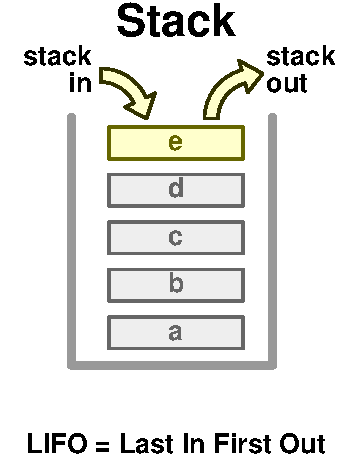
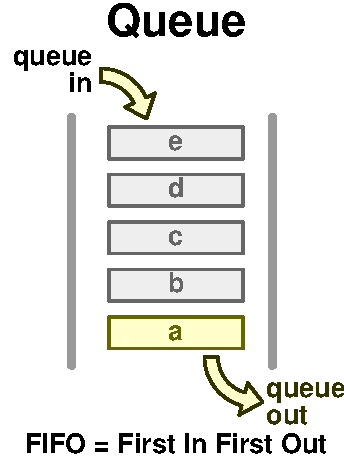
last refer?
Stack paraphrase:
But many that are first in (dead) shall be the last out (resurrected) and the last in (living) shall be the first out (resurrected).
Who are the
"many" in the
"middle"?
That is, from a time sequence perspective, the last in shall be first out and the first in shall be last out. This is the definition of a
stack structure.
47. Strongs - respect
*G1788 *9 ἐντρέπω (en-trep'-o) : from G1722 and the base of G5157; to invert, i.e. (figuratively and reflexively) in a good sense, to respect; or in a bad one, to confound:--regard, (give) reference, shame.
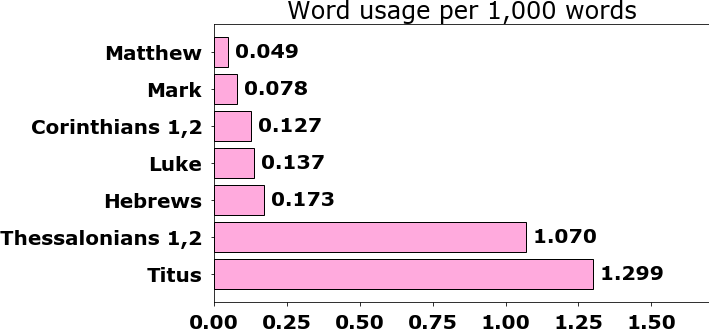 |
Words: ενετρεπομεθα εντραπη=2 εντραπησονται=3 εντρεπομαι εντρεπομενος εντρεπων
|
48. Usage - respect
- *G1788 *9 ἐντρέπω (en-trep'-o) : from G1722 and the base of G5157; to invert, i.e. (figuratively and reflexively) in a good sense, to respect; or in a bad one, to confound:--regard, (give) reference, shame.
- εντραπησονται *3 of 9
- Matthew 21:37 ... his son, saying, They will reverence my son.
- Mark 12:6 ... unto them, saying, They will reverence my son.
- Luke 20:13 ... beloved son: it may be they will reverence him when they see him.
49. Matthew 25:27 Compounding the interest
50. Strongs - table
*G5132 *15 τράπεζα (trap'-ed-zah) : probably contracted from G5064 and G3979; a table or stool (as being four-legged), usually for food (figuratively, a meal); also a counter for money (figuratively, a broker's office for loans at interest):--bank, meat, table.
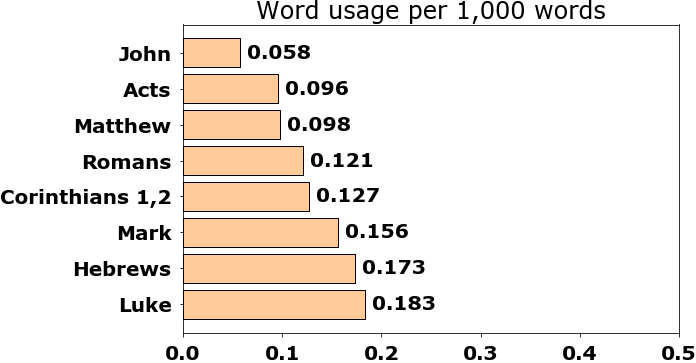 |
Words: τραπεζα=2 τραπεζαις τραπεζαν=2 τραπεζας=3 τραπεζης=7
|
The ancient Greek word
"τράπεζα" ≈ "table, (banking) money changer's table, bank" and comes from two Greek words.
"τρεις" ≈ "three" and "πους" ≈ "feet".
Early tables appear to have had "
three" "
feet".
51. Usage - table
- *G5132 *15 τράπεζα (trap'-ed-zah) : probably contracted from G5064 and G3979; a table or stool (as being four-legged), usually for food (figuratively, a meal); also a counter for money (figuratively, a broker's office for loans at interest):--bank, meat, table.
- τραπεζης *7
- Matthew 15:27 ... from their masters' table.
- Mark 7:28 ... yet the dogs under the table eat of the children's crumbs.
- Luke 16:21 ... fell from the rich man's table: moreover the dogs came ...
- Luke 22:21 ... is with me on the table.
- Luke 22:30 ... drink at my table in my kingdom, ...
- 1 Corinthians 10:21 ... be partakers of the Lord's table, and of the table of devils.
- τραπεζας *3
- Matthew 21:12 ... the temple, and overthrew the tables of the moneychangers, and the seats ...
- Mark 11:15 ... the temple, and overthrew the tables of the moneychangers, and the seats ...
- John 2:15 ... money, and overthrew the tables;
- τραπεζαν *2
- Luke 19:23 ... my money into the bank, that at my coming ...
- Acts 16:34 ... his house, he set meat before them, and rejoiced, ...
- τραπεζα *2
- Romans 11:9 ... saith, Let their table be made a snare, and ...
- Hebrews 9:2 ... was the candlestick, and the table, and the shewbread; which ...
- τραπεζαις
- Acts 6:2 ... the word of God, and serve tables.
52. Strongs - bank
53. Usage - bank
- *G5133 *1 τραπεζίτης (trap-ed-zee'-tace) : from G5132; a money-broker or banker:--exchanger.
- τραπεζιταις *1 of 1
- Matthew 25:27 ... to have put my money to the exchangers, and then at my coming I ...
54. Matthew 21:37 You can bank on it
Matthew 21:37 But last of all he sent unto them his son, saying, They will reverence my son. [kjv]
υστερον δε απεστειλεν προς αυτους τον υιον αυτου λεγων εντραπησονται τον υιον μου [gnt]
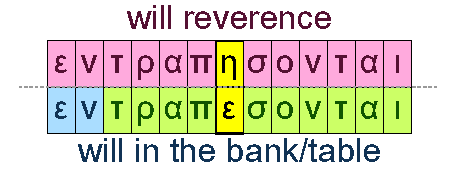
"ἐντραπήσονται" ≈ "they will respect" (as used).
"ἐν" ≈ "in" and "τραπέσονται" ≈ "table/bank" (made-up word).
Will they "reverence" the "son"?
Will they put the "son", so to speak, "in" the "bank"?
Has this happened historically? How about earlier in the chapter with the upsetting of the money changer tables? [gold and silver have I none]
The ancient Greek word
"τράπεζα" ≈ "table, (banking) money changer's table, bank" but, as in any language, a noun can be made into a verb using existing patterns. [running, swimming, tennising, nouning, verbing, etc.]
The suffix
"σονται" ≈ "shall be" appears
1239 times in the
GNT (Greek New Testament) and
LXX.
55. Luke 18:2,4
Luke 18:2 Saying, There was in a city a judge, which feared not God, neither regarded man: [kjv]
λεγων κριτης τις ην εν τινι πολει τον θεον μη φοβουμενος και ανθρωπον μη εντρεπομενος [gnt]
18:4 And he would not for a while: but afterward he said within himself, Though I fear not God, nor regard man; [kjv]
και ουκ ηθελησεν ηθελεν επι χρονον μετα δε ταυτα δε ειπεν εν εαυτω ει και τον θεον ου φοβουμαι και ουδε ανθρωπον ουκ εντρεπομαι [gnt]
The ancient Greek word
"ἐντρέπω" ≈ "turn, have regard for, pay heed to, show respect".
In this parable from Luke, the "
judge" appears to represent
Christ as
God who does
not "respect" man's rules or opinions when they are in conflict with God's rules or opinions. Does God fear God?
56. 1 Corinthians 4:14
1 Corinthians 4:14 I write not these things to shame you, but as my beloved sons I warn you. [kjv]
ουκ εντρεπων υμας γραφω ταυτα αλλ ως τεκνα μου αγαπητα νουθετω νουθετων [gnt]
non ut confundam vos haec scribo sed ut filios meos carissimos moneo [v]
The
ancient Greek word
"ἐντρέπω" ≈ "turn, have regard for, pay heed to, show respect". The translators, and Strongs, appear to be confusing the above word with the ancient Greek word
"εντροπή" ≈ "turning away, shy, disgrace" where the progression was from, originally, turning away, shy, shame, and, by New Testament times, mostly shame or disgrace. Paul appears to be making a play on words with the word that the translators used for this passage.
"turn you off"
"pay heed to"
57. 1 Corinthians 4:15-16
1 Corinthians 4:15 For though ye have ten thousand instructers in Christ, yet have ye not many fathers: for in Christ Jesus I have begotten you through the gospel. [kjv]
εαν γαρ μυριους παιδαγωγους εχητε εν χριστω αλλ ου πολλους πατερας εν γαρ χριστω ιησου δια του ευαγγελιου εγω υμας εγεννησα [gnt]
… decem milia … [v]
4:16 Wherefore I beseech you, be ye followers of me. [kjv]
παρακαλω ουν υμας μιμηται μου γινεσθε [gnt]
Which fits better,
"ten thousand" or
"countless"?
Since when are we to be
"followers" of Paul? The Greek is that we are to
"mimic" Paul who is a
"follower" of Jesus Christ. The
ancient Greek word
"μῖμος" ≈ "imitator, actor" and is the source of
"mime",
"imitate", etc.
58. Ignatius: Letter to the Trallians
Matthew 21:37 But last of all he sent unto them his son, saying, They will reverence my son. [kjv]
υστερον δε απεστειλεν προς αυτους τον υιον αυτου λεγων εντραπησονται τον υιον μου [gnt]
The
ancient Greek word
"ἐντρέπω" ≈ "turn, have regard for, pay heed to, show respect". Since everyone should
respect everyone else, to some extent, one should
respect the "
deacons", etc. Does
"respect" for the "
deacons" take precedence over respecting the "
commandments" of God?
What if this is an established "tradition"?
How should one "respect" the "Son"?
Should one "tradition" the "Son"?
59. Ignatius: Letter to the Trallians
English: Likewise, let all people respect the deacons as Jesus Christ, just as also the bishop who is a model of the Father, and the presbytes as the council of God, and as the bond of the apostles. Without these it is not called a Church. [3.1]
Greek: Ὁμοίως πάντες ἐντρεπέσθωσαν τοὺς διακόνους ὡς Ἰησοῦν Χριστόν, ὡς καὶ τὸν ἐπίσκοπον ὄντα τύπον τοῦ πατρός, τοὺς δὲ πρεσβυτέρους ὡς συνέδριον θεοῦ καὶ ὡς σύνδεσμον ἀποστόλων. χωρὶς τούτων ἐκκλησία οὐ καλεῖται. [3.1]
The "human hierarchy" is a deep worldly house built on or of "sand".
The "Jesus hierarchy" is a shallow house built on or of "rock"
Discuss: To which structure does Ignatius appear to have more "
respect"?
60. Matthew 21:37
KJV: But last of all he sent unto them his son, saying, They will reverence my son.
Greek: υστερον δε απεστειλεν προς αυτους τον υιον αυτου λεγων εντραπησονται τον υιον μου
61. Strongs - gain possession
*G2192 *701 ἔχω (ekh'-o) : scheo skheh'-o; (used in certain tenses only) a primary verb; to hold (used in very various applications, literally or figuratively, direct or remote; such as possession; ability, contiuity, relation, or condition):--be (able, X hold, possessed with), accompany, + begin to amend, can(+ -not), X conceive, count, diseased, do + eat, + enjoy, + fear, following, have, hold, keep, + lack, + go to law, lie, + must needs, + of necessity, + need, next, + recover, + reign, + rest, + return, X sick, take for, + tremble, + uncircumcised, use.
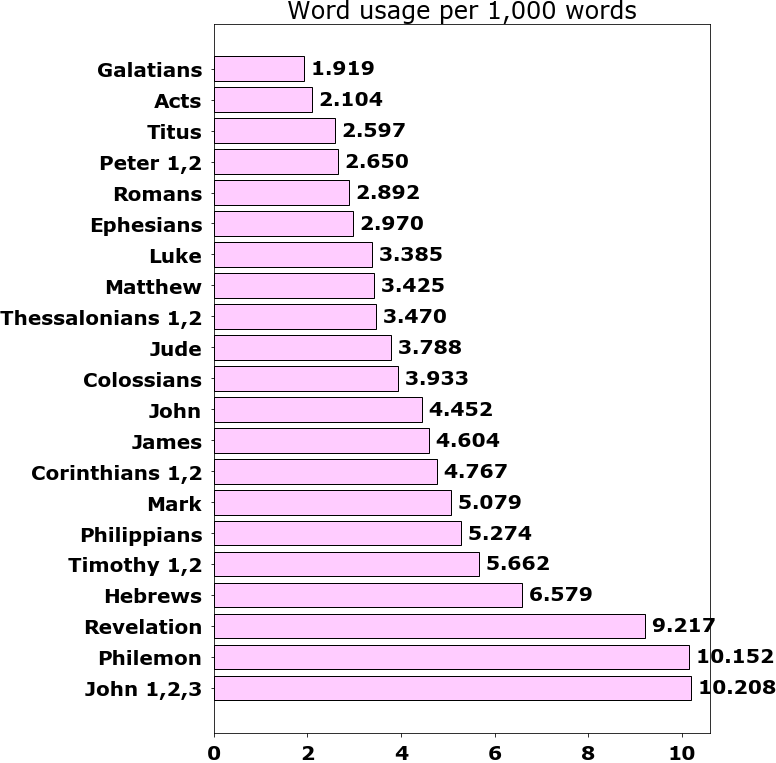 |
Words: ειχαν=2 ειχε ειχεν=24 ειχετε=3 ειχομεν ειχον=18 ειχοσαν=2 εξει=6 εξεις=4 εξετε εξουσιν=2 εσχεν=5 εσχες εσχηκα εσχηκαμεν=2 εσχηκεν εσχηκοτα εσχομεν εσχον=5 εχε=4 εχει=102 εχειν=30 εχεις=27 εχετε=50 εχετω=3 εχη=11 εχητε=11 εχοι=2 εχοιεν εχομεν=41 εχομενα εχομενας εχομενη=3 εχον=4 εχοντα=29 εχοντας=16 εχοντες=46 εχοντι=10 εχοντος=5 εχοντων=9 εχουσα=15 εχουσαι=3 εχουσαις=3 εχουσαν=6 εχουση εχουσης=2 εχουσι=2 εχουσιν=32 εχω=46 εχωμεν=6 εχων=85 εχωσι εχωσιν=5 σχητε σχω=5 σχωμεν=2
|
62. Usage - gain possession
63. Matthew 21:38 Put a hold on the inheritance
Matthew 21:38 But when the husbandmen saw the son, they said among themselves, This is the heir; come, let us kill him, and let us seize on his inheritance. [kjv]
οι δε γεωργοι ιδοντες τον υιον ειπον εν εαυτοις ουτος εστιν ο κληρονομος δευτε αποκτεινωμεν αυτον και κατασχωμεν σχωμεν την κληρονομιαν αυτου [gnt]
The Greek word translated as
"seize" is that of
"have".
Did they in any sense put a
"hold" on the "
inheritance"?
"called" [cold]
"pasture", "custom", "law"
Can they, in any sense, "
bird" or "
deny" the "
son"?
64. Strongs - disgrace
*G152 *6 αἰσχύνη (ahee-skhoo'-nay) : from G153; shame or disgrace (abstractly or concretely):--dishonesty, shame.
*G808 *2 ἀσχημοσύνη (as-kay-mos-oo'-nay) : from G809 ἀσχήμων; an indecency; by implication, the pudenda:--shame, that which is unseemly.
*G809 *1 ἀσχήμων (as-kay'-mone) : from G1 (as a negative particle) and a presumed derivative of G2192 (in the sense of its congener 4976); properly, shapeless, i.e. (figuratively) inelegant:--uncomely.
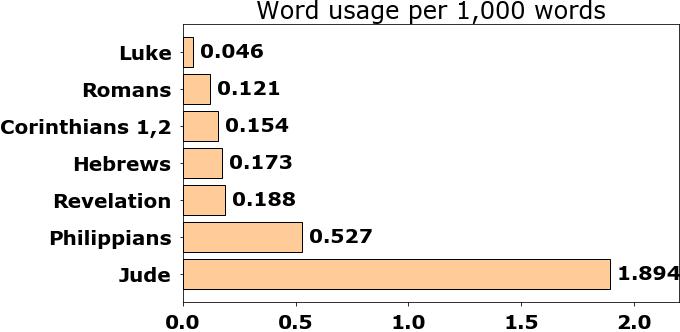 |
Words: αισχυνας αισχυνη=2 αισχυνης=3 ασχημονα ασχημοσυνην=2
|
The ancient Greek word
"αἰσχύνη" ≈ "shame, disgrace" would appear to be related to or influenced by the ancient Greek word
"ἄσχημος" ≈ "ugly, bad, nasty" and comes from the negation prefix
"α" ≈ "(negation)" and the ancient Greek word
"σχήμα" ≈ "figure, shape" and in the English
"schema" and
"schematic" and
"scheme". Someone who appears ugly can be, literally, "
without form" as in "
without a nice form".
65. Usage - disgrace
- *G152 *6 αἰσχύνη (ahee-skhoo'-nay) : from G153; shame or disgrace (abstractly or concretely):--dishonesty, shame.
- αισχυνης *3
- Luke 14:9 ... thou begin with shame to take the lowest room.
- 2 Corinthians 4:2 But have renounced the hidden things of dishonesty, not walking in ...
- Hebrews 12:2 ... endured the cross, despising the shame, and is set down at ...
- αισχυνη *2
- Philippians 3:19 ... whose glory is in their shame, who mind earthly things.)
- Revelation 3:18 ... that thou mayest be clothed, and that the shame of thy nakedness ...
- αισχυνας
- Jude 1:13 ... of the sea, foaming out their own shame; wandering stars, to whom ...
- *G808 *2 ἀσχημοσύνη (as-kay-mos-oo'-nay) : from G809 ἀσχήμων; an indecency; by implication, the pudenda:--shame, that which is unseemly.
- ασχημοσυνην *2
- Romans 1:27 And likewise also the men, leaving the natural ...
- Revelation 16:15 ... and they see his shame.
- *G809 *1 ἀσχήμων (as-kay'-mone) : from G1 (as a negative particle) and a presumed derivative of G2192 (in the sense of its congener 4976); properly, shapeless, i.e. (figuratively) inelegant:--uncomely.
- ασχημονα
- 1 Corinthians 12:23 ... honour; and our uncomely parts have more abundant comeliness.
66. Romans 1:27 Unnatural
Romans 1:27 And likewise also the men, leaving the natural use of the woman, burned in their lust one toward another; men with men working that which is unseemly, and receiving in themselves that recompence of their error which was meet. [kjv]
ομοιως τε και οι αρρενες αρσενες αφεντες την φυσικην χρησιν της θηλειας εξεκαυθησαν εν τη ορεξει αυτων εις αλληλους αρσενες εν αρσεσιν την ασχημοσυνην κατεργαζομενοι και την αντιμισθιαν ην εδει της πλανης αυτων εν εαυτοις αυτοις απολαμβανοντες [gnt]
67. Matthew 21:38
KJV: But when the husbandmen saw the son, they said among themselves, This is the heir; come, let us kill him, and let us seize on his inheritance.
Greek: οι δε γεωργοι ιδοντες τον υιον ειπον εν εαυτοις ουτος εστιν ο κληρονομος δευτε αποκτεινωμεν αυτον και κατασχωμεν σχωμεν την κληρονομιαν αυτου
68. Matthew 21:39
Matthew 21:39 And they caught him, and cast him out of the vineyard, and slew him. [kjv]
και λαβοντες αυτον εξεβαλον εξω του αμπελωνος και απεκτειναν [gnt]
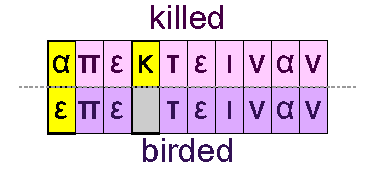
"ἀπέκτειναν" ≈ "killed" (as used).
"επετειναν" ≈ "birded" (made-up word)
"και" ≈ "and" and "καιω" ≈ "burn"
The Greek word translated as
"caught" is that of
"take" or
"seize".
Has it happened historically that, at some time, the "
son" has been
"birded" or "
denied" and "
cast outside" the
"vineyard" which might be associated with the "
church" as a "
gathering of believers"?
The ancient Greek word
"πετεινός" ≈ "bird" and
"πετεινά" ≈ "birds".
69. Revelation 3:20 Jesus at the door
Revelation 3:20 Behold, I stand at the door, and knock: if any man hear my voice, and open the door, I will come in to him, and will sup with him, and he with me. [kjv]
ιδου εστηκα επι την θυραν και κρουω εαν τις ακουση της φωνης μου και ανοιξη την θυραν εισελευσομαι προς αυτον και δειπνησω μετ αυτου και αυτος μετ εμου [gnt]
Some churches only allow the part of Jesus they like into their church. The church at
Laodicia appears to not want Jesus in their church. Jesus is at the church door knocking. [prize for knock-knock jokes]
Have some churches today "separated" or "uprooted" themselves from (the love of) Jesus?
Are some churches today "strangers" to Jesus?
Are some churches today "blind" to the true and complete Jesus?
Might those in this church be too busy "
ministering" to
others (goats) and not "
examining" or "
thinking" about the entirety of Jesus (sheep)?
The "
hear" in Greek has a connotation of hearing with understanding. The Greek for "
voice" is, literally, "
light" into the "
mind" and can be a play on words with "
murders".
[Wesley's Preveniant Grace, Matthew at the foot of the door]
70. Matthew 21:39
KJV: And they caught him, and cast him out of the vineyard, and slew him.
Greek: και λαβοντες αυτον εξεβαλον εξω του αμπελωνος και απεκτειναν
71. Matthew 21:40 Fruits
Matthew 21:40 When the lord therefore of the vineyard cometh, what will he do unto those husbandmen? [kjv]
οταν ουν ελθη ο κυριος του αμπελωνος τι ποιησει τοις γεωργοις εκεινοις [gnt]
Who are "
those" in charge of the
"vineyard"? Who is the "
Lord" of the
"vineyard"? Who is the "
head" of the "
church" as a "
gathering of believers"? The word
"church" comes from
"κύριος" ≈ "lord or master".
The Greek word translated as
"do" is that of
"ποιέω" ≈ "make, cause". What will the
"Lord" "make" of this? What do you
"make" of this?
The ancient Greek word
"ὅταν" ≈ "if, when" (used with subjunctive) as a combination of
"ὅτε" ≈ "when, whereas, sometimes" and
"ἄν" ≈ "possibility, if". The word
assumes that the events in the conditional are
likely to happen.
72. Matthew 21:40
KJV: When the lord therefore of the vineyard cometh, what will he do unto those husbandmen?
Greek: οταν ουν ελθη ο κυριος του αμπελωνος τι ποιησει τοις γεωργοις εκεινοις
73. Strongs - bad
*G2556 *50 κακός (kak-os') : apparently a primary word; worthless (intrinsically, such; whereas G4190 properly refers to effects), i.e. (subjectively) depraved, or (objectively) injurious:--bad, evil, harm, ill, noisome, wicked.
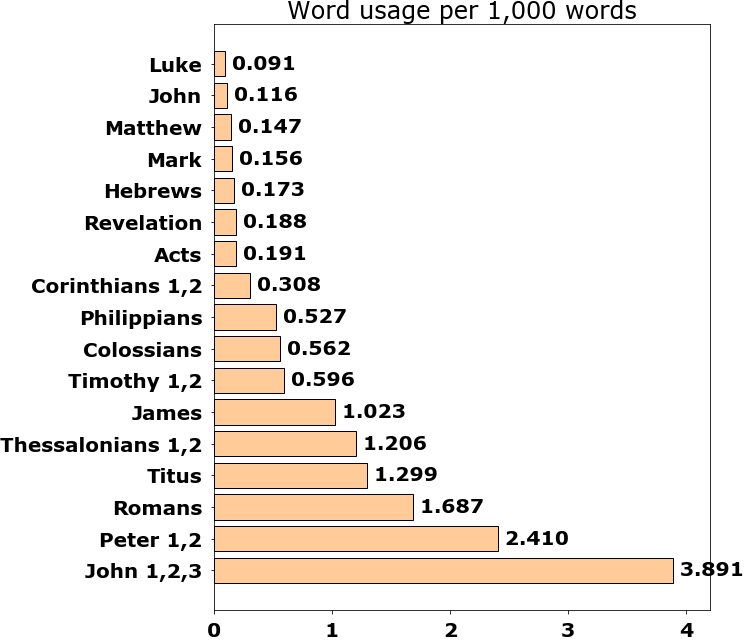 |
Words: κακα=6 κακαι κακην κακοι κακον=24 κακος κακου=8 κακους=3 κακω κακων=4
|
The
ancient Greek word
"κακός" ≈ "bad, worthless, ugly, vile".
The English word
"cacophony" comes, through French, from the
ancient Greek word
"κακοφωνία" ≈ "ill-sounding".
74. Usage - bad
- *G2556 *50 κακός (kak-os') : apparently a primary word; worthless (intrinsically, such; whereas G4190 properly refers to effects), i.e. (subjectively) depraved, or (objectively) injurious:--bad, evil, harm, ill, noisome, wicked.
- κακους *3 of 50
- Matthew 21:41 ... miserably destroy those wicked men, and will let out his vineyard ...
- Philippians 3:2 Beware of dogs, beware of evil workers, beware of the concision.
- Revelation 2:2 ... thou canst not bear them which are evil: and thou hast tried them which say ...
The
ancient Greek word
"κακός" ≈ "bad, worthless, ugly, vile".
75. Strongs - bad
*G2560 *16 κακῶς (kak-oce') : from G2556; badly (physically or morally):--amiss, diseased, evil, grievously, miserably, sick, sore.
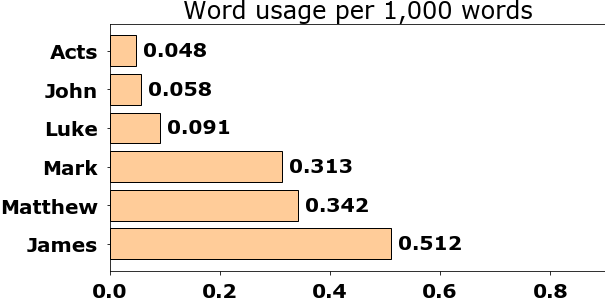 |
Words: κακως=16
|
The
ancient Greek word
"κακῶς" ≈ "bad, worthless, ugly, vile".
76. Matthew 21:41 Miserably wicked
Matthew 21:41 They say unto him, He will miserably destroy those wicked men, and will let out his vineyard unto other husbandmen, which shall render him the fruits in their seasons. [kjv]
λεγουσιν αυτω κακους κακως απολεσει αυτους και τον αμπελωνα εκδοσεται εκδωσεται αλλοις γεωργοις οιτινες αποδωσουσιν αυτω τους καρπους εν τοις καιροις αυτων [gnt]
What exactly are
"miserably" "wicked" "men"?
"κακοὺς" ≈ "bad" (adjective, as used).
"κακῶς" ≈ "bad" (adverb, as used).
Suppose the
"vineyard" contains both "
good" and
"bad" "husbandmen". How might one entice the
"bad" "husbandmen" to self-identify so they can receive their
just desserts?
77. Matthew 21:41 Bird calls
Matthew 21:41 They say unto him, He will miserably destroy those wicked men, and will let out his vineyard unto other husbandmen, which shall render him the fruits in their seasons. [kjv]
λεγουσιν αυτω κακους κακως απολεσει αυτους και τον αμπελωνα εκδοσεται εκδωσεται αλλοις γεωργοις οιτινες αποδωσουσιν αυτω τους καρπους εν τοις καιροις αυτων [gnt]
"κακοὺς" ≈ "bad" (adjective, as used).
"κακῶς" ≈ "bad" (adverb, as used).
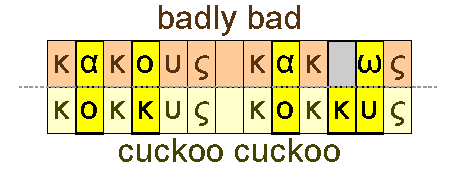
"κόκκῦ" ≈ "cuckoo" as a call of a bird.
As in English (and any other language), anything close to the imitative sound would be taken as a
cuckoo.
[bad birds, Angry Birds]
78. Matthew 21:41 Bird calls
Matthew 21:41 They say unto him, He will miserably destroy those wicked men, and will let out his vineyard unto other husbandmen, which shall render him the fruits in their seasons. [kjv]
λεγουσιν αυτω κακους κακως απολεσει αυτους και τον αμπελωνα εκδοσεται εκδωσεται αλλοις γεωργοις οιτινες αποδωσουσιν αυτω τους καρπους εν τοις καιροις αυτων [gnt]
 |
 |
Audubon Bird
Call - Red
|
Hunters use "
bird" "
calls" to attract "
birds". The exact call used depends on the type of "
bird" one is trying to attract/trap.
Example from military, business, games, etc.
Call one's bluff.
For to show one's cards.
... and so on ...
79. Proverbs 1:17 Birds and nets
Proverbs 1:17 Surely in vain the net is spread in the sight of any bird. [kjv]
ου γαρ αδικως εκτεινεται δικτυα πτερωτοις [lxx]
for nets are not without cause spread for birds. [bs3]
The
Epistle of Barnabas interprets
birds and
nets from Proverbs 1:17 in the
LXX. Both use the Greek word for
"bird" that emphasizes the "
wing".
A bird net works much better if there is some food on which the birds desire to eat. It might be "
deceptive" food.
English: Now the scripture says: "Not unjustly are nets spread out for the birds". This means that people deserve to perish if, having knowledge of the way of righteousness, they ensnare themselves in the way of darkness. (1.4, Holmes, p. 393)
Greek: [1.4] λέγει δὲ ἡ γραφή Οὐκ ἀδίκως ἐκτείνεται δίκτυα πτερωτοῖς. τοῦτο λέγει, ὅτι δικαιως ἀπολεῖται ἄνθρωπος, ὃς ἔχων ὁδοῦ δικαιοσύνης γνῶσιν ἑαυτὸν εἰς ὁδὸν σκότους ἀποσυνέχει.
80. Matthew 21:41
Matthew 21:41 They say unto him, He will miserably destroy those wicked men, and will let out his vineyard unto other husbandmen, which shall render him the fruits in their seasons. [kjv]
λεγουσιν αυτω κακους κακως απολεσει αυτους και τον αμπελωνα εκδοσεται εκδωσεται αλλοις γεωργοις οιτινες αποδωσουσιν αυτω τους καρπους εν τοις καιροις αυτων [gnt]
Question: How might the real
"householder" use bird calls to attract birds and get them to self-identify themselves as not doing what they were supposed to do so that they can be "
destroyed"?
Answer: Check the next parable at the start of the next chapter.
Why only
2 bird calls? What happens before
3 bird calls?
81. Matthew 6:34 Last verse of chapter 6
Matthew 6:34 Take therefore no thought for the morrow: for the morrow shall take thought for the things of itself. Sufficient unto the day is the evil thereof. [kjv]
μη ουν μεριμνησητε εις την αυριον η γαρ αυριον μεριμνησει τα εαυτης αυτης αρκετον τη ημερα η κακια αυτης [gnt]
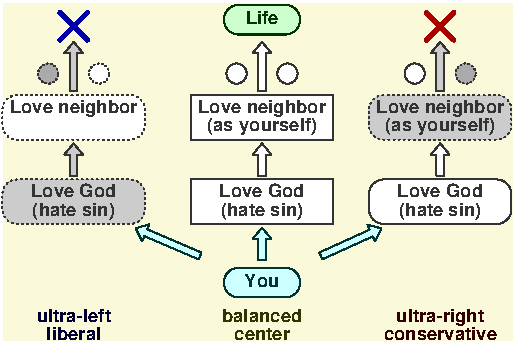
This last verse in Matthew 6 connects and sets up Matthew 7 with "
judge not", "
beams and motes", "
wide and narrow gates", "
houses on sand and rock", etc.
Matthew 6: Love God (seek His righteousness)
Matthew 7: Love neighbor as yourself.
... to be continued ... Hint: The Greek word for the
KJV "
evil" is not evil but "
bad". Jesus always uses this word in another sense.
82. Matthew 7:1-2 Paraphrase
Matthew 7:1 Judge not, that ye be not judged. [kjv]
7:2 For with what judgment ye judge, ye shall be judged: and with what measure ye mete, it shall be measured to you again. [kjv]
Here is a paraphrase of what Jesus is saying to the disciples during the Sermon on the Mount.
7:1: Do not separate (from me) so that you are not separated (from me).
7:2: For in the separation (from me) that you separate (from me), you will be separated (from me).
7:2 and in the measure (of separation from others and me) that you measure (to be great compared to others), you will be measured (and separated from me).
Question:
What can separate you from the love of Christ?
83. Chosen roosters
84. Matthew 22:14 Many called few chosen
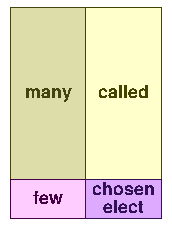
Matthew 22:14 For many are called, but few are chosen. [kjv]
πολλοι γαρ εισιν κλητοι ολιγοι δε εκλεκτοι [gnt]
Of the
"many" called in the Parable of the Wedding Feast, only
one is
"chosen" to go into "
outer" "
darkness".
Paraphrase:
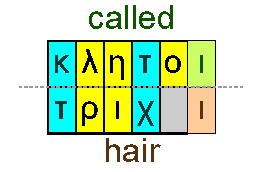
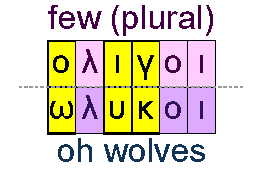
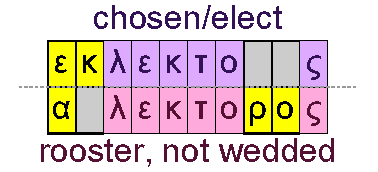
Many [city] are called [hairs] but few [O wolves] are chosen [roosters].
How
"many" is
"many"? How
"few" is
"few"?
85. Matthew 9:13 Learn the meaning
Matthew 9:13 But go ye and learn what that meaneth, I will have mercy, and not sacrifice: for I am not come to call the righteous, but sinners to repentance. [kjv]
πορευθεντες δε μαθετε τι εστιν ελεον ελεος θελω και ου θυσιαν ου γαρ ηλθον καλεσαι δικαιους αλλ αλλα αμαρτωλους εις μετανοιαν [gnt]
… discite … misericordiam volo … sacrificium … vocare iustos … peccatores [v]
The "strong" (oppressors, translated "whole") are to "harmed" (oppressed, translated "sick") as
the "righteous" (of man's added rules) are to "sinners" (not good witnesses of man's added rules) where
the "doctor" or "healer" (Jesus) desires "mercy" (from the oppressors or "righteous") instead of "sacrifices" (required of the oppressed or "sinners").
Discuss: How do the analogies based on the meanings of the Greek words (and using context and How Jesus uses the words) change the meaning of what is said (from the English)?
86. Matthew 9:12-13 Verses
Matthew 9:12 But when Jesus heard that, he said unto them, They that be whole need not a physician, but they that are sick. [kjv]
ο δε ιησους ακουσας ειπεν αυτοις ου χρειαν εχουσιν οι ισχυοντες ιατρου αλλ αλλα οι κακως εχοντες [gnt]
at Iesus audiens ait non est opus valentibus medico sed male habentibus [v]
9:13 But go ye and learn what that meaneth, I will have mercy, and not sacrifice: for I am not come to call the righteous, but sinners to repentance. [kjv]
πορευθεντες δε μαθετε τι εστιν ελεον ελεος θελω και ου θυσιαν ου γαρ ηλθον καλεσαι δικαιους αλλ αλλα αμαρτωλους εις μετανοιαν [gnt]
… discite … misericordiam volo … sacrificium … vocare iustos … peccatores [v]
87. Matthew 9:12-13 Paraphrase
Matthew 9:12 But when Jesus heard that, he said unto them, They that be whole need not a physician, but they that are sick. [kjv]
9:13 But go ye and learn what that meaneth, I will have mercy, and not sacrifice: for I am not come to call the righteous, but sinners to repentance. [kjv]
The strong (who oppress the harmed) are righteous (in their own eyes) and do not want the healer (Jesus).
The harmed (who are oppressed by the strong) want a healer (Jesus).
Mercy is needed from the strong (who oppress) and not sacrifice from the harmed (as man's additions to God's laws).
I have not come to call the righteous (in their own eyes) as they do not want the healer (Jesus). (They will not listen nor repent)
I have come to call the sinners as they want the healer (Jesus). (They, at least, will listen and may or may not repent.)
88. Philippians 3:2 Roman k sound
Philippians 3:2 Beware of dogs, beware of evil workers, beware of the concision. [kjv]
βλεπετε τους κυνας βλεπετε τους κακους εργατας βλεπετε την κατατομην [gnt]
videte canes videte malos operarios videte concisionem [v]

The three word groups all start with the Greek "
K" or "
Kappa" letter. The "
beware" means "
see" or "
observe".
"κυνας" ≈ "dogs" (apparent reference to the Cynics).
"κακους εργατας" ≈ "bad workers" (faith by required works).
"κατατομην" ≈ "concision" (Jews with extra required rules).
In Roman times, the letter "
k" was considered sinister and, in most cases, the Roman "
c", with the same "
k" sound, was used. Thus, "
Caesar" was pronounced as "
Kaiser". Carthage: Latin "
Karthago" as "
new Tyre", "
Punic" as "
Phoenician".
Later, the hard Latin "
c" as "
k" changed to the softer "
c" as "
s" or "
ch" as in "
church". The German word
"die Kirche" ≈ "church".
89. A hot time to harvest - now and later
90. Matthew 26:34 Ambiguous parse
Matthew 26:34 Jesus said unto him, Verily I say unto thee, That this night, before the cock crow, thou shalt deny me thrice. [kjv]
εφη αυτω ο ιησους αμην λεγω σοι οτι εν ταυτη τη νυκτι πριν αλεκτορα φωνησαι τρις απαρνηση με [gnt]
In English, commas are important. A specific parsing in English was decided long ago. In Greek, however, the parsing is ambiguous. How is the ambiguous Greek to be parsed?
☐ 1.
... before (a) rooster [elect] voices/crows three (times), (you) will deny [bird] me.
☐ 2.
... before (a) rooster [elect] voices/crows , three (times) (you) will deny [bird] me.
Peter (and many), from what literally happened, will parse using #2. This will be remembered in Mark, Luke and John. Later, Matthew will be changed to match those accounts. This does not preclude #1 from having an important meaning.
Modern Greek can use
"φορές" (fo-REHS) ≈ "times, occurrences" to help disambiguate as in
"τρις φορές" (trees fo-REHS) ≈ "three times" but the comma is still needed.
91. Matthew 21:41
KJV: They say unto him, He will miserably destroy those wicked men, and will let out his vineyard unto other husbandmen, which shall render him the fruits in their seasons.
Greek: λεγουσιν αυτω κακους κακως απολεσει αυτους και τον αμπελωνα εκδοσεται εκδωσεται αλλοις γεωργοις οιτινες αποδωσουσιν αυτω τους καρπους εν τοις καιροις αυτων
92. End of page