- *G2083 *3 ἑταίρος (het-ah'-ee-ros) : from etes (a clansman); a comrade:--fellow, friend.
- εταιρε *3
- Matthew 20:13 ... one of them, and said, Friend, I do thee no ...
- Matthew 22:12 And he saith unto him, Friend, how camest thou in hither ...
- Matthew 26:50 And Jesus said unto him, Friend, wherefore art thou come? Then ...
 |
Words: εταιρε=3
|
The ancient Greek word
"ἑταιρεία" ≈ "association, company, band". The modern Greek word
"εταιρεία" (eh-teh-REE-a) ≈ "association, society, company".
7. LXX
The only use of this word in the
GNT (Greek New Testament) is by Jesus, three times, in Matthew.
The
LXX uses this word for "
friend" but in various senses and with alternate meanings.
Might Jesus have had any of these alternate meanings in mind when he selected this word to use, as recorded in Matthew?
8. Proverbs 22:24
Proverbs 22:24 Make no friendship with an angry man; and with a furious man thou shalt not go: [kjv]
μη ισθι εταιρος ανδρι θυμωδει φιλω δε οργιλω μη συναυλιζου [lxx]
Be not companion to a furious man; neither lodge with a passionate man: [bs3]
9. Proverbs 22:24
KJV: Make no friendship with an angry man; and with a furious man thou shalt not go:
Hebrew: אל תתרע את בעל אף ואת איש חמות לא תבוא׃
Greek: μη ισθι εταιρος ανδρι θυμωδει φιλω δε οργιλω μη συναυλιζου
Brenton: Be not companion to a furious man; neither lodge with a passionate man:
10. Proverbs 19:13 Wife
Proverbs 19:13 A foolish son is the calamity of his father: and the contentions of a wife are a continual dropping. [kjv]
αισχυνη πατρι υιος αφρων και ουχ αγναι ευχαι απο μισθωματος εταιρας [lxx]
A foolish son is a disgrace to his father: vows paid out of the hire of a harlot are not pure. [bs3]
The
HOT (Hebrew Old Testament) varies from the
LXX in certain interesting ways. Which might be more accurate? Why might one or the other have changed the text?
The ancient Greek word
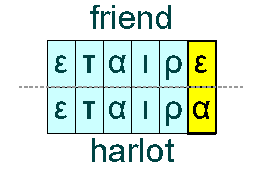
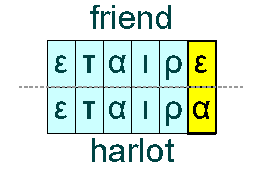
"ἑταίρα" ≈ "courtesan, escort, prostitute".
11. Proverbs 19:13
KJV: A foolish son is the calamity of his father: and the contentions of a wife are a continual dropping.
Hebrew: הות לאביו בן כסיל ודלף טרד מדיני אשה׃
Greek: αισχυνη πατρι υιος αφρων και ουχ αγναι ευχαι απο μισθωματος εταιρας
Brenton: A foolish son is a disgrace to his father: vows paid out of the hire of a harlot are not pure.
12. Matthew 26:47-49
Matthew 26:47 And while he yet spake, lo, Judas, one of the twelve, came, and with him a great multitude with swords and staves, from the chief priests and elders of the people. [kjv]
26:48 Now he that betrayed him gave them a sign, saying, Whomsoever I shall kiss, that same is he: hold him fast. [kjv]
ο δε παραδιδους αυτον εδωκεν αυτοις σημειον λεγων ον αν φιλησω αυτος εστιν κρατησατε αυτον [gnt]
26:49 And forthwith he came to Jesus, and said, Hail, master; and kissed him. [kjv]
και ευθεως προσελθων τω ιησου ειπεν χαιρε ραββι και κατεφιλησεν αυτον [gnt]
The Greek word for "
kiss" is the word for "
friend" and the word for "
kissed" has the word "
friend" in it. What
type of "
friend" is this?
13. Matthew 26:47
KJV: And while he yet spake, lo, Judas, one of the twelve, came, and with him a great multitude with swords and staves, from the chief priests and elders of the people.
Greek: και ετι αυτου λαλουντος ιδου ιουδας εις των δωδεκα ηλθεν και μετ αυτου οχλος πολυς μετα μαχαιρων και ξυλων απο των αρχιερεων και πρεσβυτερων του λαου
14. Matthew 26:48
KJV: Now he that betrayed him gave them a sign, saying, Whomsoever I shall kiss, that same is he: hold him fast.
Greek: ο δε παραδιδους αυτον εδωκεν αυτοις σημειον λεγων ον αν φιλησω αυτος εστιν κρατησατε αυτον
15. Matthew 26:49
KJV: And forthwith he came to Jesus, and said, Hail, master; and kissed him.
Greek: και ευθεως προσελθων τω ιησου ειπεν χαιρε ραββι και κατεφιλησεν αυτον
16. Matthew 26:50
Matthew 26:50 And Jesus said unto him, Friend, wherefore art thou come? Then came they, and laid hands on Jesus, and took him. [kjv]
ο δε ιησους ειπεν αυτω εταιρε εφ ω ο παρει τοτε προσελθοντες επεβαλον τας χειρας επι τον ιησουν και εκρατησαν αυτον [gnt]
Jesus had used this same word for "
friend", here the traitor Judas, two times before in parables. With "
friends" like this, who needs "
enemies"?
Does the
type of Judas, as a traitor, duplicitous in nature, one way on the outside, another on the inside, fit the usage of the word as used by Jesus in those other parables?
17. Matthew 26:50
KJV: And Jesus said unto him, Friend, wherefore art thou come? Then came they, and laid hands on Jesus, and took him.
Greek: ο δε ιησους ειπεν αυτω εταιρε εφ ω ο παρει τοτε προσελθοντες επεβαλον τας χειρας επι τον ιησουν και εκρατησαν αυτον
18. Matthew 22:12 Now friend
19. Matthew 20:13 Now friend
Matthew 20:13 But he answered one of them, and said, Friend, I do thee no wrong: didst not thou agree with me for a penny? [kjv]
ο δε αποκριθεις ειπεν ενι αυτων ειπεν εταιρε ουκ αδικω σε ουχι δηναριου συνεφωνησας μοι [gnt]
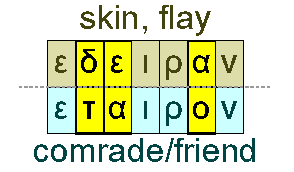
"ἑταῖρε" ≈ "comrade, friend"
"ἑταίρα" ≈ "courtesan, escort, prostitute"
Jesus does not use the word
"friend" in a good sense. The ancient Greek word
"ἑταιρεία" ≈ "association, company, band". The modern Greek word
"εταιρεία" (eh-teh-REE-a) ≈ "association, society, company".
This is
not the ancient Greek word
"φίλος" ≈ "that which is loved or important, friend" as in "
Philadelphia" as "
love of brothers" or "
brotherly love".
[business deals]
20. Matthew 11:16 Friends
21. End of page