Send
Close Add comments:
(status displays here)
Got it! This site "www.creationpie.org" uses cookies. You consent to this by clicking on "Got it!" or by continuing to use this website. Note: This appears on each machine/browser from which this site is accessed.
The right time for a dative season
1. The right time for a dative season
This content is being developed.
2. Ecclesiastes 3:4 Time to weep and laugh
Ecclesiastes 3:4 A time to weep, and a time to laugh; a time to mourn, and a time to dance; [kjv]
καιρος του κλαυσαι και καιρος του γελασαι καιρος του κοψασθαι και καιρος του ορχησασθαι [lxx]
The ancient Greek word
"γέλως" ≈ "laugh". The modern Greek word
"γέλως" (Y-los) ≈ "laughing".
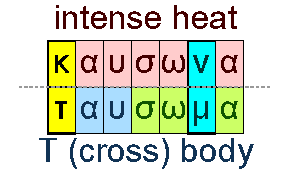
The Greek word used here for "
dance" is the source of the English word
"orchestra".
There is a time to weep.
There is a time to laugh.
3. Strongs - measure, season, time
*G2540 *85 καιρός (kahee-ros') : of uncertain affinity; an occasion, i.e. set or proper time:--X always, opportunity, (convenient, due) season, (due, short, while) time, a while. Compare G5550.
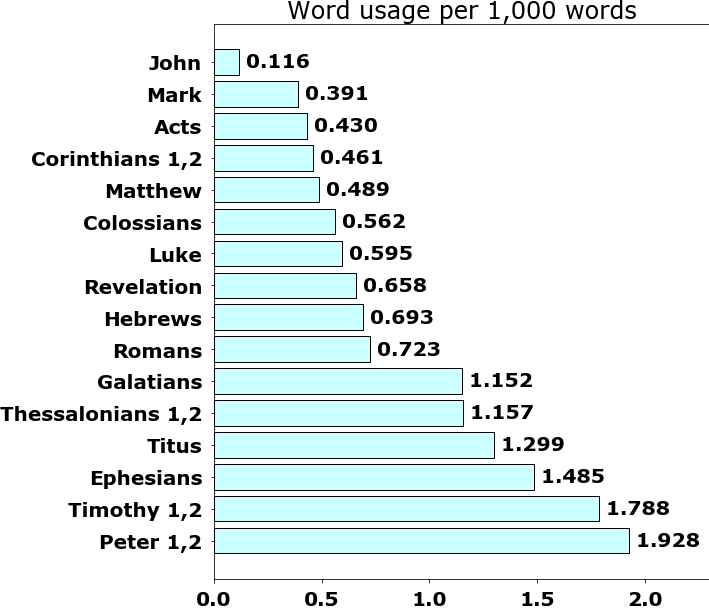 |
Words: καιροι=3 καιροις=5 καιρον=21 καιρος=17 καιρου=7 καιρους=5 καιρω=24 καιρων=3
|
4. Revelation 1:3 Greek for time as in season
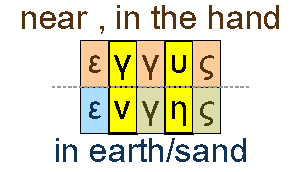
Revelation 1:3 Blessed is he that readeth, and they that hear the words of this prophecy, and keep those things which are written therein: for the time is at hand. [kjv]
μακαριος ο αναγινωσκων και οι ακουοντες τους λογους της προφητειας και τηρουντες τα εν αυτη γεγραμμενα ο γαρ καιρος εγγυς [gnt]
The
ancient Greek word
"καιρός" ≈ "measure, period of time, season" and had a connotation of being the right moment, the critical moment, the opportune moment, etc. What constitutes the
"time" or
"season" and
"near" is
not specified.
The
same modern Greek word
"καιρός" (keh-ROS) ≈ "weather, time, events" as in
"from time to time".
The
ancient Greek word
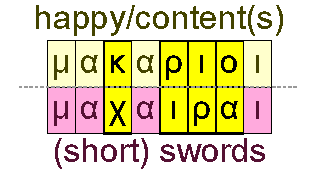
"μακάριος" ≈ "happy, content" but is often translated as
"blessed".
5. Matthew 26:18 Pass-code play on words
Matthew 26:18 And he said, Go into the city to such a man, and say unto him, The Master saith, My time is at hand; I will keep the passover at thy house with my disciples. [kjv]
ο δε ειπεν υπαγετε εις την πολιν προς τον δεινα και ειπατε αυτω ο διδασκαλος λεγει ο καιρος μου εγγυς εστιν προς σε ποιω το πασχα μετα των μαθητων μου [gnt]
Jesus: ... my time is near ...
Play: ... my hand is in the hand ...
Jesus provides a
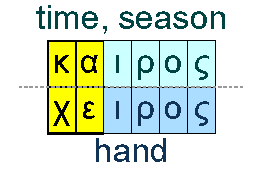
pass-code based on the
hard "κ" ("
k") sound and the
guttural "χ" sound. [hand, (young) pig, bad, mistress/harlot]
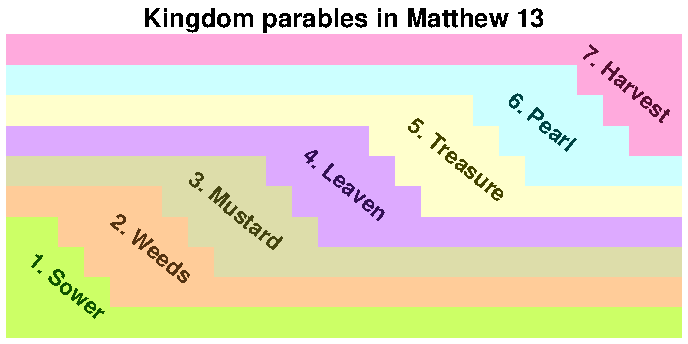
6. The right time for a dative season
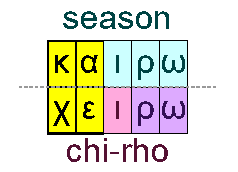
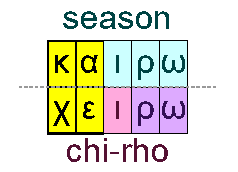
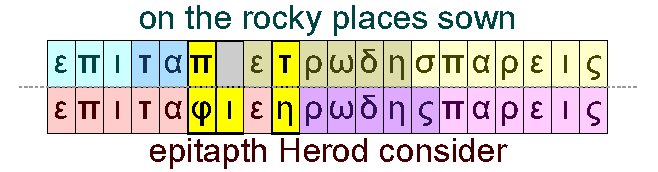
"καιρός" ≈ "measure, season, time".
"καιροῖς" ≈ "measure, season, time" (dative masculine plural)
"καιρῷ" ≈ "measure, season, time" (dative masculine singular)
"καιρῶν" ≈ "measure, season, time" (genitive masculine plural)
Jesus uses the exact, but not uncommon, Greek word
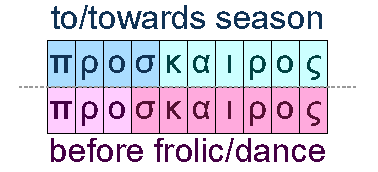
"καιρῷ" ≈ "measure, season, time" (
dative masculine singular)
2 times in Matthew. Both are interesting. Matthew uses the word
3 times in connecting commentary.
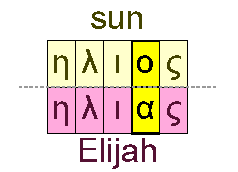
7. Matthew 11:25 Paraphrase
Matthew 11:25 At that time Jesus answered and said, I thank thee, O Father, Lord of heaven and earth, because thou hast hid these things from the wise and prudent, and hast revealed them unto babes. [kjv]
εν εκεινω τω καιρω αποκριθεις ο ιησους ειπεν εξομολογουμαι σοι πατερ κυριε του ουρανου και της γης οτι απεκρυψας εκρυψας ταυτα απο σοφων και συνετων και απεκαλυψας αυτα νηπιοις [gnt]
Could this part of what Jesus says be a
question?
Paraphrase (statement):
... I agree Father ... that you have hid these things ... . Yes ...
Paraphrase (question):
... I agree Father ... Have you hid these things ... ? Yes ...
The next verse starts with the word "
yes". Why would Jesus say "
yes" if the part before were not a question? Might Jesus be answering his own question?
The
"καιρῷ" ≈ "measure, season, time" (dative masculine singular) is connecting commentary by Matthew.
8. Matthew 12:1 Corn at that time
9. Matthew 14:1 Fame at that time
Matthew 14:1 At that time Herod the tetrarch heard of the fame of Jesus, [kjv]
εν εκεινω τω καιρω ηκουσεν ηρωδης ο τετραρχης τετρααρχης την ακοην ιησου [gnt]
The ancient Greek word
"φήμη" (FEE-mee) ≈ "rumor, reputation" (as in news) and is the source of the English word "
fame" which the meaning of the modern Greek word.
The
"καιρῷ" ≈ "measure, season, time" (
dative masculine singular) is connecting commentary by Matthew.
10. Matthew 13:38 Field is the world
Matthew 13:38 The field is the world; the good seed are the children of the kingdom; but the tares are the children of the wicked one; [kjv]
ο δε αγρος εστιν ο κοσμος το δε καλον σπερμα ουτοι εισιν οι υιοι της βασιλειας τα δε ζιζανια εισιν οι υιοι του πονηρου [gnt]
In explaining the code words for kingdom parable 2 (wheat and tares), Jesus says that the
"field" is the
"world".
The "field" is the "world" (people in the world). There is a different Greek word for end of the "ages" or end of the "world".
The "good seed" is the "wheat" are the "children of the kingdom".
The "tares" are planted by the "evil one" (among the "good seed") and are the "children of the oppressive one" (evil as "oppression").
11. Matthew 13:40 Cooperative effort
Matthew 13:40 As therefore the tares are gathered and burned in the fire; so shall it be in the end of this world. [kjv]
ωσπερ ουν συλλεγεται τα ζιζανια και πυρι κατακαιεται ουτως εσται εν τη συντελεια του αιωνος τουτου [gnt]
Who exactly are the
"tares"?
Are they "evil" people? (define "evil")
Are they those not in the Kingdom? The "tares" were planted inside the Kingdom (part of the field where the planting of good seed was done).
What exactly makes a "tare" a "tare"?
The Greek word often translated as "
evil" (from the Latin) means that of oppression or oppressing. One can be "
oppressed" by others or by oneself.
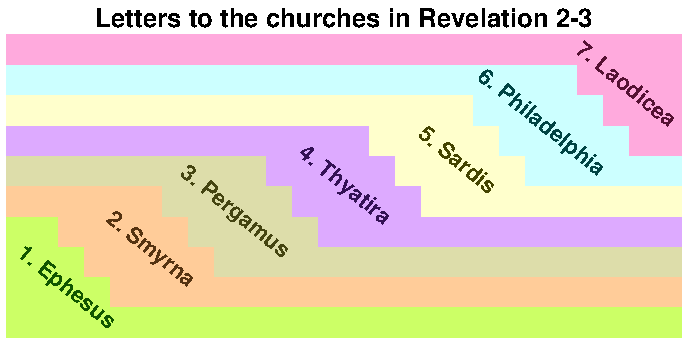
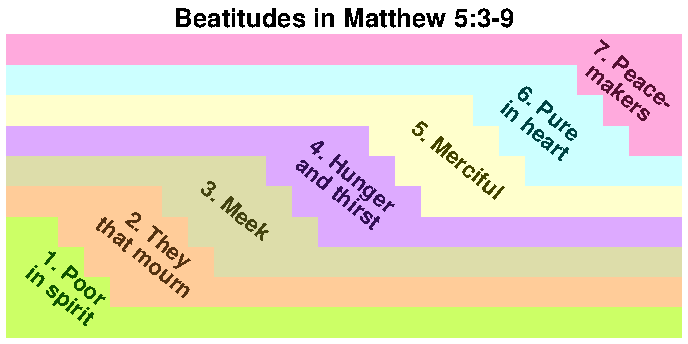
12. Historical interpretation of church history
 |
 |
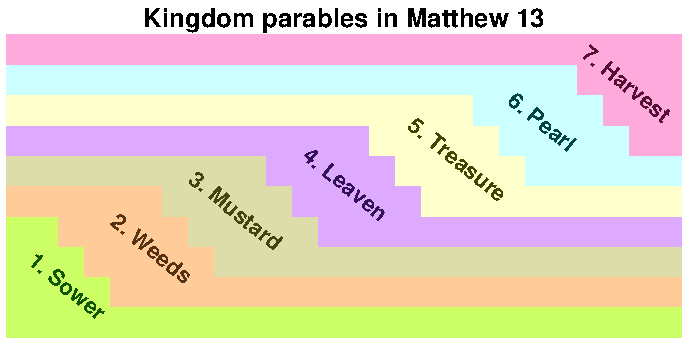 |
The probability that all three would be ordered together is 1 in 5040*5040*5040 or 1 in 128,024,064,000 ≈ 128 billion.
|
Some people prefer to just use church history to help remember the order of the churches, parables and beatitudes.
The horizontal scale is time. The vertical scale is the proportion that history evidences the traits of those verses. The historical interpretation is like a linear combination in mathematics in that what the verses say is more valid in some time periods than other time periods.
The probability that any
7 objects would be ordered at random in a given order is
7! =
7*6*5*4*3*2*1 or
1 in
5040. Note that there were many more possible churches or parables or beatitudes than used by Jesus.
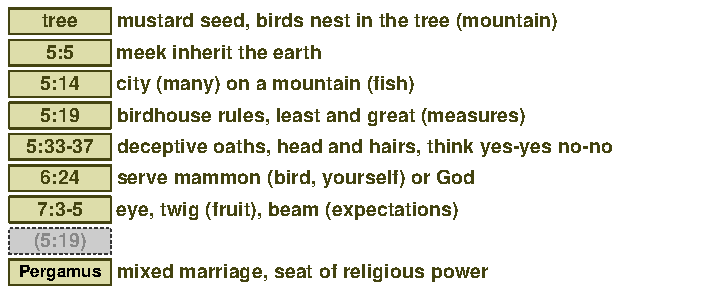
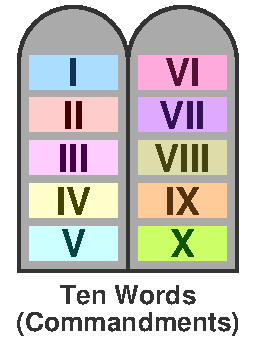
13. Ten Commandments 8
Has the
twig for
fruit in your eye been
stolen? Have you handed it over? What about your
beam or
expectations?
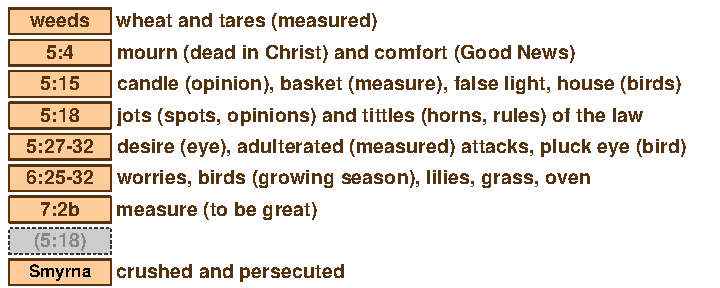
14. Ten Commandments 9
Have you been deceived by
false witness about
measures to be great? Does the person doing it consider you their
neighbor?
15. Weeds right before the tree
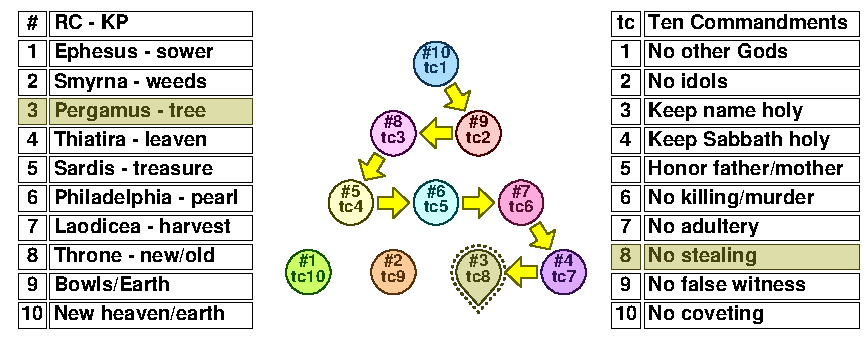
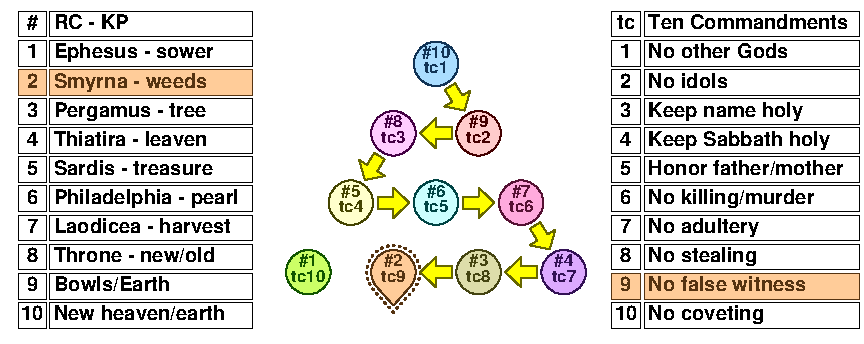
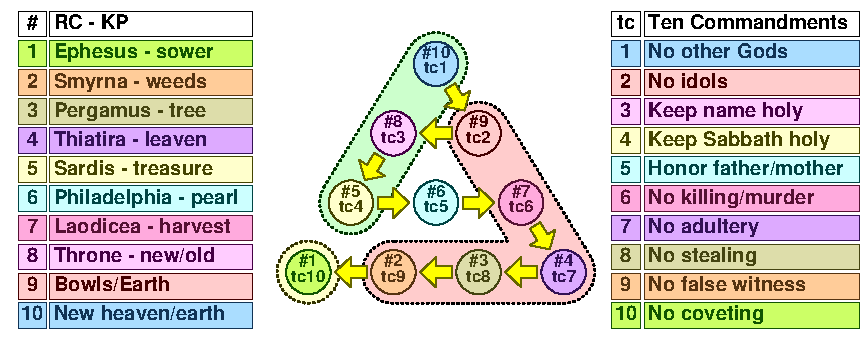
Node 2 (weeds, no false witness) corresponds to the time, after Jesus, of the early Church Fathers until Rome tolerates Christianity and then makes it the official religion of the empire. At that time, the tree grows quickly, corresponding to node 3 (tree, no stealing). This is on the way to node 4 (no adultery, leaven).
16. Matthew 13:30 Weeds and the harvest
Matthew 13:30 Let both grow together until the harvest: and in the time of harvest I will say to the reapers, Gather ye together first the tares, and bind them in bundles to burn them: but gather the wheat into my barn. [kjv]
αφετε συναυξανεσθαι αμφοτερα μεχρι εως του θερισμου και εν τω καιρω του θερισμου ερω τοις θερισταις συλλεξατε πρωτον τα ζιζανια και δησατε αυτα εις εις δεσμας προς το κατακαυσαι αυτα τον δε σιτον συναγαγετε συναγετε εις την αποθηκην μου [gnt]
In what way might the
"weeds" and the
"time" of the "
harvest" correspond to the
"time" when Constantine recognizes and tolerates the Christian Church. This is before Christianity becomes the official religion of the empire - when the mustard seeds become a tree and the birds come to make a home in that tree.
17. Matthew 13:30 First heat
Matthew 13:30 Let both grow together until the harvest: and in the time of harvest I will say to the reapers, Gather ye together first the tares, and bind them in bundles to burn them: but gather the wheat into my barn. [kjv]
αφετε συναυξανεσθαι αμφοτερα μεχρι εως του θερισμου και εν τω καιρω του θερισμου ερω τοις θερισταις συλλεξατε πρωτον τα ζιζανια και δησατε αυτα εις εις δεσμας προς το κατακαυσαι αυτα τον δε σιτον συναγαγετε συναγετε εις την αποθηκην μου [gnt]
Jesus uses the Greek word for
"heat" 2 times in Matthew. Matthew quotes John the Baptist as using it
1 time (omitted).
Might the
"first" and
"heat" be associated with those who complain in the Parable of the Vineyard Workers in Matthew 20?
18. Matthew 20:12 Heat burden
19. Matthew 20:10,12 First heat
Matthew 20:10 But when the first came, they supposed that they should have received more; and they likewise received every man a penny. [kjv]
και ελθοντες δε οι πρωτοι ενομισαν οτι πλειονα ληψονται πλειον λημψονται και ελαβον και αυτοι το ανα δηναριον και αυτοι [gnt]
20:12 Saying, These last have wrought but one hour, and thou hast made them equal unto us, which have borne the burden and heat of the day. [kjv]
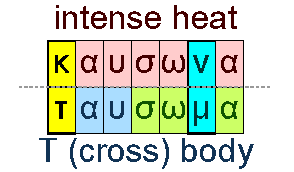
λεγοντες οτι ουτοι οι εσχατοι μιαν ωραν εποιησαν και ισους ημιν αυτους ημιν εποιησας τοις βαστασασιν το βαρος της ημερας και τον καυσωνα [gnt]
The
"first" associate themselves with
"heat". Might these be the
"first" to be
"burned"? Might they get what they have claimed they have endured?
20. Matthew 24:43 Robbers
Matthew 24:43 But know this, that if the goodman of the house had known in what watch the thief would come, he would have watched, and would not have suffered his house to be broken up. [kjv]
εκεινο δε γινωσκετε οτι ει ηδει ο οικοδεσποτης ποια φυλακη ο κλεπτης ερχεται εγρηγορησεν αν και ουκ αν ειασεν διορυγηναι διορυχθηναι την οικιαν αυτου [gnt]
The Greek for "
thief" is one who uses
deception and
not force as a "
robber". The Greek word "
watch" can also mean a "
prison" as in a "
sanctuary".
The Greek word for
"broken" is used to refer to the "
pigs"
"rending" or the "
bottles"
"breaking" or "
wine-skins" bursting or a
"tunnel" into "
treasure".
Is this "
house" built on the "
rock" or on "
sand"?
21. Matthew 24:45 Stolen food
Matthew 24:45 Who then is a faithful and wise servant, whom his lord hath made ruler over his household, to give them meat in due season? [kjv]
τις αρα εστιν ο πιστος δουλος και φρονιμος ον κατεστησεν ο κυριος αυτου επι της θεραπειας οικετειας αυτου του διδοναι δουναι αυτοις την τροφην εν καιρω [gnt]
The Greek word translated as "wise" is that of "prudent".
The Greek word translated as "made" is that of "standing down".
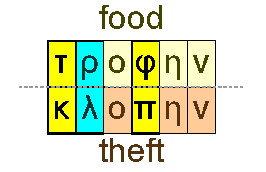
The Greek word for "food" used here can be a play on words with the Greek word for "trophy" and for "theft".
Might this
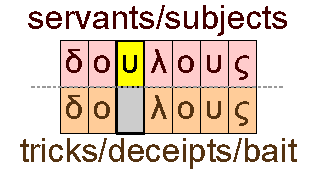
"servant" made "
ruler" over the "
household" be associated with the church who began to "
steal" the "
food", as in "
eat" the "
fruit", at the time of Constantine when the "
weeds" grew into a "
tree" and the "
birds" came to make a home in the "
tree"?
22. Matthew 10:16 An unworldly thorny issue that is for the pigeon birds
Matthew 10:16 Behold, I send you forth as sheep in the midst of wolves: be ye therefore wise as serpents, and harmless as doves. [kjv]
ιδου εγω αποστελλω υμας ως προβατα εν μεσω λυκων γινεσθε ουν φρονιμοι ως οι οφεις και ακεραιοι ως αι περιστεραι [gnt]
… oves … luporum … prudentes … serpentes … simplices … columbae [v]
"φρόνιμα" ≈ "prudent" is translated as "wise".
"ακέραιοι" ≈ "without antennas, without horns" is translated as "harmless".
"περίστεροι" ≈ "pigeon, dove". The English has two words for the same bird.
The Latin word
"simplices" ≈ "simple, pure" is the plural of the Latin word
"simplex" ≈ "single, simple, pure" which appears to have influenced the Wycliffe the Middle English word
"symple" ≈ "simple".
What does it mean to be "
harmless" or "
simple" (as translated in some other verses)? The Greek word literally means "
horn-less" where the "
horn" is elsewhere translated as "
tittle" and which can be related to the Hebrew/Aramaic "
qots" as "
thorn". Jesus describes the "
thorns" of this world as cares and concerns and riches. Might the "
harmless as doves" mean "
not worldly as doves" where "
dove" and "
pigeon" are the same bird?
23. Matthew 24:45
Matthew 24:45 Who then is a faithful and wise servant, whom his lord hath made ruler over his household, to give them meat in due season? [kjv]
τις αρα εστιν ο πιστος δουλος και φρονιμος ον κατεστησεν ο κυριος αυτου επι της θεραπειας οικετειας αυτου του διδοναι δουναι αυτοις την τροφην εν καιρω [gnt]
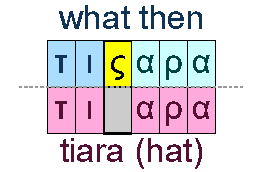
The English word
"tiara" is from the Latin word
"tiara" ≈ "ornamental headdress" which is from the
ancient Greek word
"τιάρα" ≈ "Persian headdress" (used on solemn occasions).
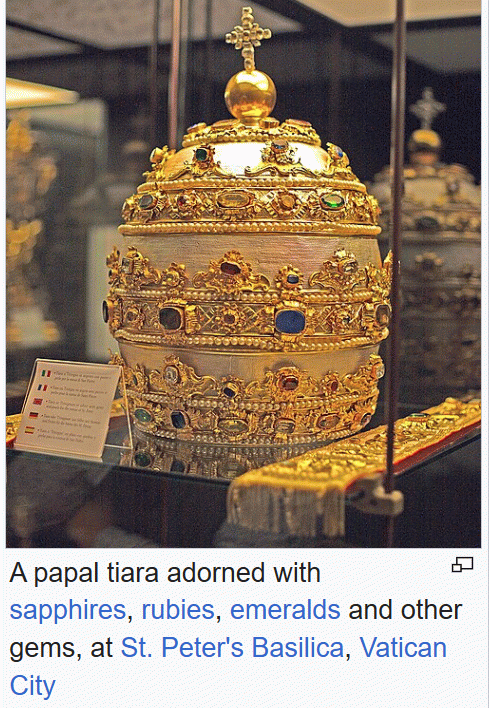
The papal
"tiara" was worn by popes of the Catholic Church from the 8th through 20th centuries (last used in 1963). The common
"tiara" was the "
triple"
"tiara".
24. Ezekiel 23:15 Dyed fabric
Ezekiel 23:15 Girded with girdles upon their loins, exceeding in dyed attire upon their heads, all of them princes to look to, after the manner of the Babylonians of Chaldea, the land of their nativity: [kjv]
εζωσμενους ποικιλματα επι τας οσφυας αυτων και τιαραι βαπται επι των κεφαλων αυτων οψις τρισση παντων ομοιωμα υιων χαλδαιων γης πατριδος αυτων [lxx]
et accinctos balteis renes et tiaras tinctas in capitibus eorum formam ducum omnium similitudinem filiorum Babylonis terraeque Chaldeorum in qua orti sunt [v]
… cappis peyntid … [wy]
… bunte Kogel … [lu]
The original meaning of
"baptize" had to do with
"dying" fabric. Wycliffe uses the word that became "
painted". To
dye something, one needs to not only immerse it, but dunk it and stir it around. Here we see the The Latin word
"tinctas" ≈ "dyed". The German word
"bunt" ≈ "colorful, variegated" and comes from the Latin word
"punctus" ≈ "pointed" and which is the source of the English word
"point".
25. Ezekiel 23:15 Hat attire
Ezekiel 23:15 Girded with girdles upon their loins, exceeding in dyed attire upon their heads, all of them princes to look to, after the manner of the Babylonians of Chaldea, the land of their nativity: [kjv]
εζωσμενους ποικιλματα επι τας οσφυας αυτων και τιαραι βαπται επι των κεφαλων αυτων οψις τρισση παντων ομοιωμα υιων χαλδαιων γης πατριδος αυτων [lxx]
et accinctos balteis renes et tiaras tinctas in capitibus eorum formam ducum omnium similitudinem filiorum Babylonis terraeque Chaldeorum in qua orti sunt [v]
The English word
"tiara" is from the Latin word
"tiara" ≈ "ornamental headdress" which is from the
ancient Greek word
"τιάρα" ≈ "Persian headdress" (used on solemn occasions).
26. Daniel 3:21 Hat attire
Daniel 3:21 Then these men were bound in their coats, their hosen, and their hats, and their other garments, and were cast into the midst of the burning fiery furnace. [kjv]
τοτε οι ανδρες εκεινοι επεδηθησαν συν τοις σαραβαροις αυτων και τιαραις και περικνημισι και ενδυμασιν αυτων και εβληθησαν εις μεσον της καμινου του πυρος της καιομενης [lxx]
The English word
"tiara" is from the Latin word
"tiara" ≈ "ornamental headdress" which is from the
ancient Greek word
"τιάρα" ≈ "Persian headdress" (used on solemn occasions).
27. Daniel 3:21
KJV: Then these men were bound in their coats, their hosen, and their hats, and their other garments, and were cast into the midst of the burning fiery furnace.
Hebrew: באדין גבריא אלך כפתו בסרבליהון פטישיהון וכרבלתהון ולבשיהון ורמיו לגוא אתון נורא יקדתא׃
Greek: τοτε οι ανδρες εκεινοι επεδηθησαν συν τοις σαραβαροις αυτων και τιαραις και περικνημισι και ενδυμασιν αυτων και εβληθησαν εις μεσον της καμινου του πυρος της καιομενης
28. Matthew 18:1 A great question
Matthew 18:1 At the same time came the disciples unto Jesus, saying, Who is the greatest in the kingdom of heaven? [kjv]
εν εκεινη τη ωρα προσηλθον οι μαθηται τω ιησου λεγοντες τις αρα μειζων εστιν εν τη βασιλεια των ουρανων [gnt]
This is connecting commentary by Matthew about what was said by the disciples.
29. Matthew 18:1
KJV: At the same time came the disciples unto Jesus, saying, Who is the greatest in the kingdom of heaven?
Greek: εν εκεινη τη ωρα προσηλθον οι μαθηται τω ιησου λεγοντες τις αρα μειζων εστιν εν τη βασιλεια των ουρανων
30. Matthew 19:25
Matthew 19:25 When his disciples heard it, they were exceedingly amazed, saying, Who then can be saved? [kjv]
ακουσαντες δε οι μαθηται αυτου εξεπλησσοντο σφοδρα λεγοντες τις αρα δυναται σωθηναι [gnt]
This is connecting commentary by Matthew about what was said by the disciples.
31. Matthew 19:25
KJV: When his disciples heard it, they were exceedingly amazed, saying, Who then can be saved?
Greek: ακουσαντες δε οι μαθηται αυτου εξεπλησσοντο σφοδρα λεγοντες τις αρα δυναται σωθηναι
32. Matthew 19:27
Matthew 19:27 Then answered Peter and said unto him, Behold, we have forsaken all, and followed thee; what shall we have therefore? [kjv]
τοτε αποκριθεις ο πετρος ειπεν αυτω ιδου ημεις αφηκαμεν παντα και ηκολουθησαμεν σοι τι αρα εσται ημιν [gnt]
33. Matthew 19:27
KJV: Then answered Peter and said unto him, Behold, we have forsaken all, and followed thee; what shall we have therefore?
Greek: τοτε αποκριθεις ο πετρος ειπεν αυτω ιδου ημεις αφηκαμεν παντα και ηκολουθησαμεν σοι τι αρα εσται ημιν
34. Matthew 24:45-47 Food theft context
Matthew 24:45 Who then is a faithful and wise servant, whom his lord hath made ruler over his household, to give them meat in due season? [kjv]
τις αρα εστιν ο πιστος δουλος και φρονιμος ον κατεστησεν ο κυριος αυτου επι της θεραπειας οικετειας αυτου του διδοναι δουναι αυτοις την τροφην εν καιρω [gnt]
24:46 Blessed is that servant, whom his lord when he cometh shall find so doing. [kjv]
μακαριος ο δουλος εκεινος ον ελθων ο κυριος αυτου ευρησει ποιουντα ουτως ποιουντα [gnt]
Now connect the dots.
24:47 Verily I say unto you, That he shall make him ruler over all his goods. [kjv]
αμην λεγω υμιν οτι επι πασιν τοις υπαρχουσιν αυτου καταστησει αυτον [gnt]
35. Matthew 24:46 Happy go lucky
Matthew 24:46 Blessed is that servant, whom his lord when he cometh shall find so doing. [kjv]
μακαριος ο δουλος εκεινος ον ελθων ο κυριος αυτου ευρησει ποιουντα ουτως ποιουντα [gnt]
The Greek for
"blessed" is that of
"happy". In which cases will the servant be
"happy" (with what they are doing)?
☐ The
"servant" is doing things that are good.
☐ The
"servant" is doing things that are not good.
You are happy doing work for the boss thinking it is good and you will be rewarded (get your just desserts).
36. Matthew 24:47 Ambiguous pronouns
Matthew 24:47 Verily I say unto you, That he shall make him ruler over all his goods. [kjv]
αμην λεγω υμιν οτι επι πασιν τοις υπαρχουσιν αυτου καταστησει αυτον [gnt]
The "
verily I say unto you" indicates that the saying following should be carefully compared with the saying before.
Greek word order:
.... that on all the essential attributes of him/it (he/it) will stand him/it.
Do you see the ambiguity in the pronouns? The "
ruler" is inferred from context and the other words used in the verse. The "
goods" is inferred and added. In both cases, the translator decides on the meaning and then adds words to support that decided meaning.
37. Chi Rho
|
χ + ρ = ☧ = Χ + Ρ
|
 |
The "
chi rho" symbol became established under
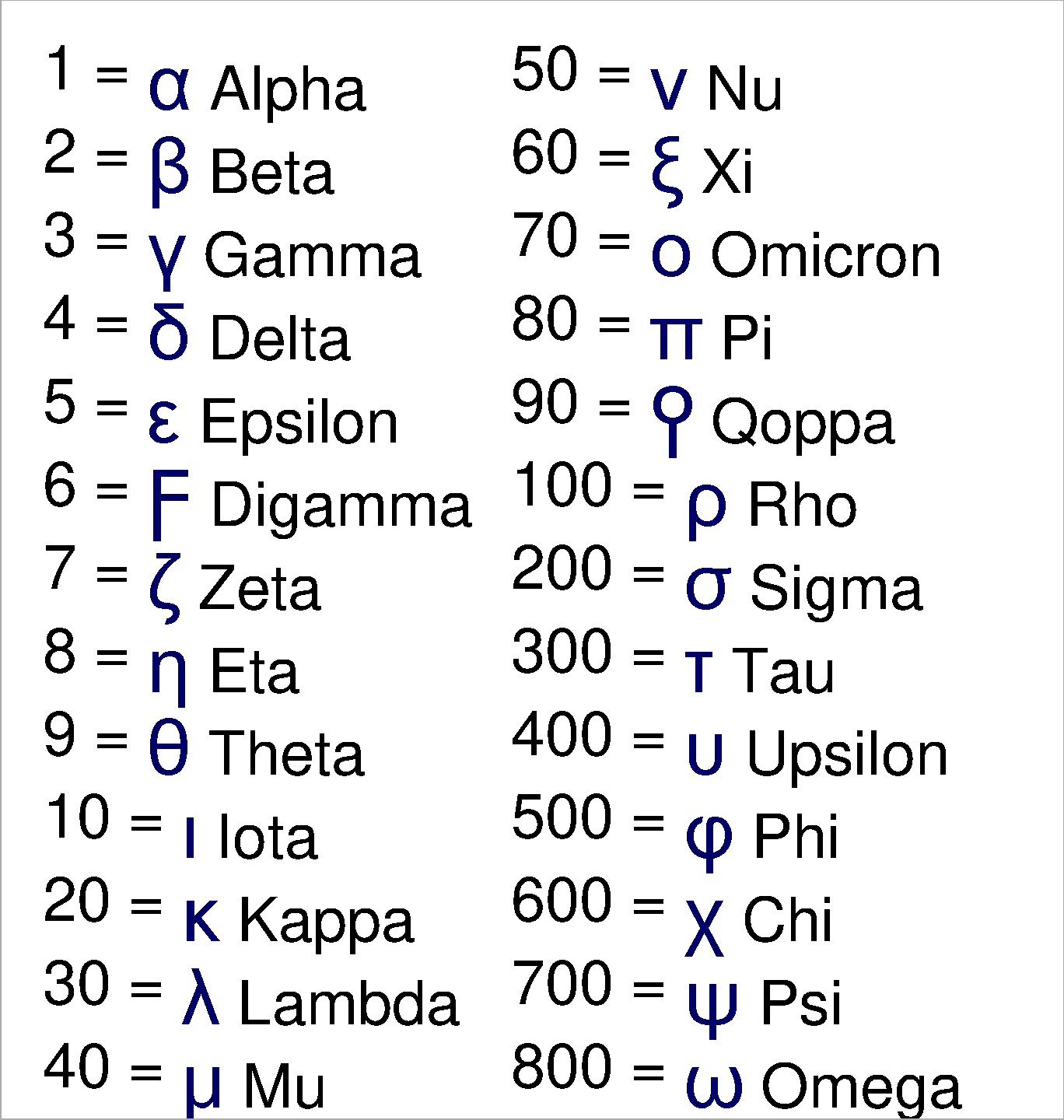
Constantine as a combination of two Greek letters, "
chi" and "
rho", the first two letters of
"Χριστός" ≈ "Christ".
Might there by any interesting
gematria meanings from the two letters?
"χ" or "Χ" = 600 (part of 666).
"ρ" or "Ρ" = 100.
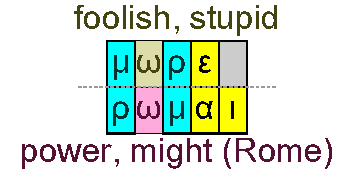
Note that "
rho" is also the first letter of "
Rome" and the
power/might of "
Rome".
 |
Details are left as a future topic.
|
The Unicode for "
Chi Rho" in the miscellaneous symbols block is "
U+2627" or
☧.
38. Chi Rho
39. Chrismon of Saint Ambrose
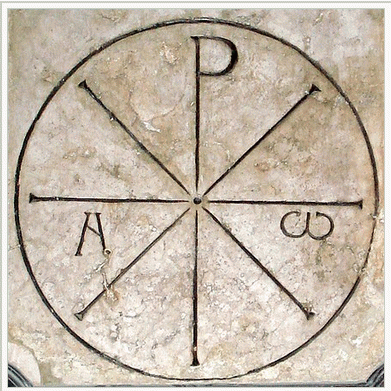
The so-called "Chrismon of Saint Ambrose" (Chrismon Sancti Ambrosii), on display on the eastern wall of Milan Cathedral, a Chi-Rho combined with Alpha and Omega in a circle. According to Landulf of Milan (12th century), it was used by Saint Ambrose to introduce the catechumens to the mysteries of the Christian faith (whence it was called "oracle" or chresmos of St. Ambrose, written by Landulf as crismon, whence the later Neo-Latin term for the Chi-Rho symbol). Wikipedia. (as of 2025-03-30)
[Augustine, when in Rome]
"ἄρχω" ≈ "I begin, I rule, I lead".
"κύριος" ≈ "lord or master" is the source of the word "church".
"ἐκκλησία" ≈ "assembly, called-out, church" (word used by Jesus for His church).
40. Matthew 16:18 Calling a masterful gathering of outgoing church believers
Matthew 16:18 And I say also unto thee, That thou art Peter, and upon this rock I will build my church; and the gates of hell shall not prevail against it. [kjv]
καγω δε σοι λεγω οτι συ ει πετρος και επι ταυτη τη πετρα οικοδομησω μου την εκκλησιαν και πυλαι αδου ου κατισχυσουσιν αυτης [gnt]
12:8 For the Son of man is Lord even of the sabbath day. [kjv]
κυριος γαρ εστιν και του σαββατου ο υιος του ανθρωπου [gnt]
Most people agree that the
"church" should represent the
"ἐκκλησία" ≈ "assembly, called-out, church" as in the
"gathering of believers" that are
"called (out) together". The word
"church" comes from
"κύριος" ≈ "lord or master". Discuss:
Is the "church" a "building"? Can the "leaders" of the "church" be considered the "elect"?
Is your "church" a "gathering of believers" or an entity that wants to be "Lord" or "Master" of those in the "church"?
41. Season and Chi Rho
42. Matthew 13:30 Weeds and the harvest
Matthew 13:30 Let both grow together until the harvest: and in the time of harvest I will say to the reapers, Gather ye together first the tares, and bind them in bundles to burn them: but gather the wheat into my barn. [kjv]
αφετε συναυξανεσθαι αμφοτερα μεχρι εως του θερισμου και εν τω καιρω του θερισμου ερω τοις θερισταις συλλεξατε πρωτον τα ζιζανια και δησατε αυτα εις εις δεσμας προς το κατακαυσαι αυτα τον δε σιτον συναγαγετε συναγετε εις την αποθηκην μου [gnt]
What is the
"harvest"?
Quantum mechanics duality: Is it a point or a wave?
In what way might the
"weeds" and the
"time" of the
"harvest" correspond to the time when Constantine recognizes and tolerates the Christian Church.
This is before Christianity becomes the official religion of the empire - when the mustard seeds become a tree and the birds come to make a home in that tree.
43. Strongs - burn
*G2618 *13 κατακαίω (kat-ak-ah'-ee-o) : from G2596 and G2545; to burn down (to the ground), i.e. consume wholly:--burn (up, utterly).
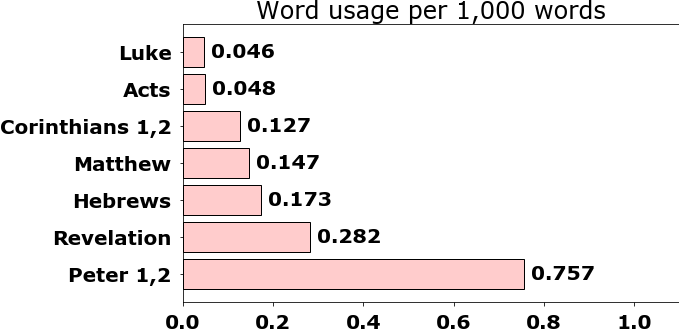 |
Words: κατακαησεται=2 κατακαιεται=2 κατακαυθησεται κατακαυσαι κατακαυσει=2 κατακαυσουσιν κατεκαη=3 κατεκαιον
|
44. Usage - burn
- *G2618 *13 κατακαίω (kat-ak-ah'-ee-o) : from G2596 and G2545; to burn down (to the ground), i.e. consume wholly:--burn (up, utterly).
κατεκαη *3
Revelation 8:7 ... the third part of trees was burnt up, and all green grass was burnt up.
κατακαυσει *2
Matthew 3:12 ... into the garner; but he will burn up the chaff with unquenchable fire.
Luke 3:17 ... garner; but the chaff he will burn with fire unquenchable.
κατακαιεται *2
Matthew 13:40 ... the tares are gathered and burned in the fire; so shall it be ...
Hebrews 13:11 ... the high priest for sin, are burned without the camp.
κατακαησεται *2
1 Corinthians 3:15 If any man's work shall be burned, he shall suffer loss: but he himself ...
2 Peter 3:10 ... the works that are therein shall be burned up.
κατακαυσαι
κατεκαιον
Acts 19:19 ... brought their books together, and burned them before all men: and ...
κατακαυσουσιν
Revelation 17:16 ... her flesh, and burn her with fire.
κατακαυθησεται
45. Matthew 20:12 Heat burden
46. Matthew 24:45 Stolen food
Matthew 24:45 Who then is a faithful and wise servant, whom his lord hath made ruler over his household, to give them meat in due season? [kjv]
τις αρα εστιν ο πιστος δουλος και φρονιμος ον κατεστησεν ο κυριος αυτου επι της θεραπειας οικετειας αυτου του διδοναι δουναι αυτοις την τροφην εν καιρω [gnt]
"τροφήν" ≈ "food" (accusative) and "τροφή" ≈ "food"(nominative)
"κλοπήν" ≈ "theft" (accusative) and "κλοπή" ≈ "theft" (nominative).
The sounds "
L" and "
R" are similar in English, more so in Greek. Try it!
Might this
"servant" made "
ruler" over the "
household" be associated with the church who began to "
steal" the "
food", as in "
eat" the "
fruit", at the time of Constantine when the "
weeds" grew into a "
tree" and the "
birds" came to make a home in the "
tree"?
[worker worth his food]
47. Matthew 16:3 Morning
Matthew 16:3 And in the morning, It will be foul weather to day: for the sky is red and lowring. O ye hypocrites, ye can discern the face of the sky; but can ye not discern the signs of the times? [kjv]
και πρωι σημερον χειμων πυρραζει γαρ στυγναζων ο ουρανος υποκριται το μεν προσωπον του ουρανου γινωσκετε διακρινειν τα δε σημεια των καιρων ου δυνασθε δυνασθε [gnt]
The ancient Greek word
"πρωΐ" ≈ "early in the day, morning".
*G4404 *12 πρωΐ (pro-ee') : adverb from G4253; at dawn; by implication, the day-break watch:--early (in the morning), (in the) morning.
Might this group be compared to those "
workers" "
hired" in the
"early morning" in the Parable of the Vineyard Workers?
How does the
"on the one hand" and
"on the other hand" fit here?
b
48. Matthew 21: Similar tenants
Matthew 21:41 They say unto him, He will miserably destroy those wicked men, and will let out his vineyard unto other husbandmen, which shall render him the fruits in their seasons. [kjv]
λεγουσιν αυτω κακους κακως απολεσει αυτους και τον αμπελωνα εκδοσεται εκδωσεται αλλοις γεωργοις οιτινες αποδωσουσιν αυτω τους καρπους εν τοις καιροις αυτων [gnt]
Jesus says that the
"other" "husbandmen" or
"tenants" were
"other" "
similar"
"husbandmen" and not
"other" "
different"
"husbandmen". How does this make a difference?
Company statement:
We recognize that we have bad managers. We will replace them with other similar managers. [Dilbert and outsourcing management]
TQM (Total Quality Management) vs.
CQI (Continuous Quality Improvement).
49. Matthew 21:41 Seasons
Matthew 21:41 They say unto him, He will miserably destroy those wicked men, and will let out his vineyard unto other husbandmen, which shall render him the fruits in their seasons. [kjv]
λεγουσιν αυτω κακους κακως απολεσει αυτους και τον αμπελωνα εκδοσεται εκδωσεται αλλοις γεωργοις οιτινες αποδωσουσιν αυτω τους καρπους εν τοις καιροις αυτων [gnt]
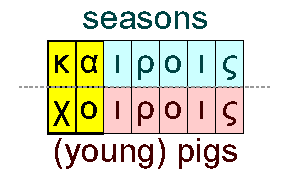
"καιροῖς" ≈ "measure, season, time" (as used, dative masculine plural) from "καιρός" ≈ "measure, season, time".
"χοίροις" ≈ "(young) pigs, swine" (dative masculine plural) from "χοῖρος" ≈ "(young) pig, swine"
Because of the use of
plural "seasons" a play on words with
"hands" does not fit well. However, a play on words with
"(young) pigs" does fit well. Does it have any meaning here? Why might there be more than one
"season"?
50. Matthew 21:41
Matthew 21:41 They say unto him, He will miserably destroy those wicked men, and will let out his vineyard unto other husbandmen, which shall render him the fruits in their seasons. [kjv]
λεγουσιν αυτω κακους κακως απολεσει αυτους και τον αμπελωνα εκδοσεται εκδωσεται αλλοις γεωργοις οιτινες αποδωσουσιν αυτω τους καρπους εν τοις καιροις αυτων [gnt]
Company statement:
We recognize that we have bad managers. We will replace them with other similar managers. [Dilbert and outsourcing management]
At what time, historically, did the
new bad managers take over their power?
51. Kingdom parables
The Kingdom Parables in Matthew 13 have a historical interpretation that goes along with the Churches in Revelation, the Beatitudes, the entire Sermon on the Mount, etc. Jesus appears to sneak in little future prophecies as meaning beyond the first few meanings.
52. Matthew 13:20
Matthew 13:20 But he that received the seed into stony places, the same is he that heareth the word, and anon with joy receiveth it; [kjv]
ο δε επι τα πετρωδη σπαρεις ουτος εστιν ο τον λογον ακουων και ευθυς μετα χαρας λαμβανων αυτον [gnt]
*G4075 *4 πετρώδης (pet-ro'-dace) : from G4073 and G1491; rock-like, i.e. rocky:--stony.
*G2264 *43 Ἡρώδης (hay-ro'-dace) : compound of heros (a "hero") and G1491; heroic; Herod, the name of four Jewish kings:--Herod.
Given that the
"birds" appear to have a play on words with the "
Romans", the use of "
stony places" could be a play on words
"Herod".
53. Matthew 13:20 Play on words
Matthew 13:20 But he that received the seed into stony places, the same is he that heareth the word, and anon with joy receiveth it; [kjv]
ο δε επι τα πετρωδη σπαρεις ουτος εστιν ο τον λογον ακουων και ευθυς μετα χαρας λαμβανων αυτον [gnt]
The play on words on "
rocky places" and
"Herod" would be better, in Greek, with the "
s" at the end.
Greek:
the one then on the rocky places seeded, he is ...
Similar to a "
poetic license" or a "
joke license", Jesus here uses the word "
rock" to get a play on words. This is not the "
rock" on which the church is built. Greek allows a flexible word order - needed to make play on words work.
54. Matthew 13:20 Inflected languages and word order
Matthew 13:20 But he that received the seed into stony places, the same is he that heareth the word, and anon with joy receiveth it; [kjv]
ο δε επι τα πετρωδη σπαρεις ουτος εστιν ο τον λογον ακουων και ευθυς μετα χαρας λαμβανων αυτον [gnt]
The Greek word translated as
"received" is that of
"take". The only thing Jesus says to
"take" is your "
cross" and "
follow" Him.
As an inflected language, word order in Greek is very flexible.
English: "he that" "received the seed" (one word) "into stony places" (three words)
Greek: "he that" "into stony places" (three words) "received the seed" (one word)
That change in word order provides the ending "
s" and, removing the "
s" from that next word, provides another play on words. There were no spaces in the Greek and people talk fast such that those spaces are not pronounced (both meanings intended).
55. Matthew 13:9,20 Give up
Matthew 13:9 Who hath ears to hear, let him hear. [kjv]
ο εχων ωτα ακουειν ακουετω [gnt]
13:20 But he that received the seed into stony places, the same is he that heareth the word, and anon with joy receiveth it; [kjv]
ο δε επι τα πετρωδη σπαρεις ουτος εστιν ο τον λογον ακουων και ευθυς μετα χαρας λαμβανων αυτον [gnt]
As written:
... received the seed into stony places ...
"πετρώδη" ≈ "stony places" as "pe-tro-thee".
"σπαρείς" ≈ "having been sown" as "spa-rees"
Play on words:
... take Herod (for example) ...
"Ἡρώδης" ≈ "Herod" as "hee-ro-thees".
"παρείς" ≈ "take, get, move" as "pa-rees".
Herod did "
take the word" by putting John the Baptist into prison and, with "
joy", liked to listen to him. Herod (as a sly fox) only kept his token power as Rome (as a bird) saw fit.
Note: Jesus is not making hidden political or social change statements. He is embedding authentication codes in his messages so that, when those prophecies happen and the codes are discovered, one has (statistical) proof that the word is the true word from the creator.
56. Matthew 13:21 Entrapped roots
Matthew 13:21 Yet hath he not root in himself, but dureth for a while: for when tribulation or persecution ariseth because of the word, by and by he is offended. [kjv]
ουκ εχει δε ριζαν εν εαυτω αλλα προσκαιρος εστιν γενομενης δε θλιψεως η διωγμου δια τον λογον ευθυς σκανδαλιζεται [gnt]
Herod received his power from Rome through conniving, etc. He was not a "
root" in and of himself, but had to settle, as a fox, with a hole near the tree.
Herod will "
endure for a while". Whose "
word"? Herod received the "
word" or "
reasoning" from John the Baptist. The "
ariseth" could be the "
tribulation" or "
persecution" caused by "
reasoning" of Herod himself.
When difficulties come from Rome (or his wife), he will "
misinterpret" or "
deceive" or "
entrap" himself - by his own "
word" or "
reasoning". This part happens after Jesus says this.
The story of Herod and John the Baptist is at the start of the next chapter.
Note: Any second or third meaning may not be important. It may be interesting.
57. Strongs - temporary
*G4340 *4 πρόσκαιρος (pros'-kahee-ros) : from G4314 and G2540; for the occasion only, i.e. temporary:--dur-(eth) for awhile, endure for a time, for a season, temporal.
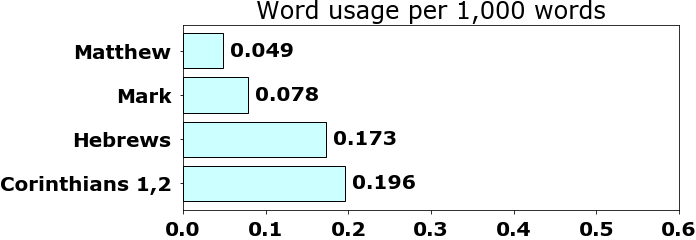 |
Words: προσκαιρα προσκαιροι προσκαιρον προσκαιρος=1
|
The
ancient Greek word
"πρόσκαιρός" ≈ "temporary" and means, literally,
"to" or
"towards" the
"season".
"προς" ≈ "to, towards" and "καιρός" ≈ "measure, season, time".
This is a word used only be Jesus and those who appear to have gotten the word from what Jesus said. Plutarch uses the
ancient Greek word
"πρόσκαιρός" ≈ "well-timed" (soldiers) some 50 years later as does Josephus (three times), in the military sense, after that. The meaning of "
temporary" is only found in the
GNT (Greek New Testament) and appears to have influenced the
modern Greek word
"προσκαιρός" (pro-skeh-ROS) ≈ "temporary".
The
ancient Greek words
"προ" ≈ "before (place or time)" and
"σκαίρω" ≈ "frisk, frolic, skip, dance".
58. Usage - temporary
59. Matthew 13:21 Well timed wording
Matthew 13:21 Yet hath he not root in himself, but dureth for a while: for when tribulation or persecution ariseth because of the word, by and by he is offended. [kjv]
ουκ εχει δε ριζαν εν εαυτω αλλα προσκαιρος εστιν γενομενης δε θλιψεως η διωγμου δια τον λογον ευθυς σκανδαλιζεται [gnt]
The
ancient Greek word
"πρόσκαιρός" ≈ "well-timed" (soldiers) and means, literally,
"to" or
"towards" the
"season". This word is used only by Jesus and those who got the word from what Jesus said. Plutarch uses the word some 50 years later (military sense) as does Josephus (three times, military sense), after that. The meaning of
"temporary" is only found in the
GNT and appears to have influenced the
modern Greek word
"προσκαιρός" (pro-skeh-ROS) ≈ "temporary".
60. Matthew 13:21 Before the dance
61. Matthew 11:12-14
Matthew 11:12 And from the days of John the Baptist until now the kingdom of heaven suffereth violence, and the violent take it by force. [kjv]
απο δε των ημερων ιωαννου του βαπτιστου εως αρτι η βασιλεια των ουρανων βιαζεται και βιασται αρπαζουσιν αυτην [gnt]
11:13 For all the prophets and the law prophesied until John. [kjv]
παντες γαρ οι προφηται και ο νομος εως ιωαννου προεφητευσαν επροφητευσαν [gnt]
11:14 And if ye will receive it, this is Elias, which was for to come. [kjv]
και ει θελετε δεξασθαι αυτος εστιν ηλιας ο μελλων ερχεσθαι [gnt]
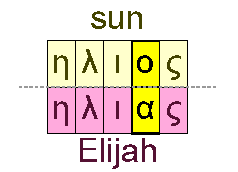
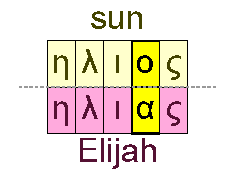
"ἥλιος" ≈ "sun, east, day, sunshine"
"Ἠλίας" ≈ "Elijah".
Since Jesus associates
John the Baptist with
Elijah, it is interesting to see how Jesus uses the word for "
sun".
Elijah was taken away in a chariot of fire.
62. Matthew 13:6
Matthew 13:6 And when the sun was up, they were scorched; and because they had no root, they withered away. [kjv]
ηλιου δε ανατειλαντος εκαυματισθη και δια το μη εχειν ριζαν εξηρανθη [gnt]
"ἥλιος" ≈ "sun, east, day, sunshine"
"Ἠλίας" ≈ "Elijah".
Since Jesus associates
John the Baptist with
Elijah, it is interesting to see how Jesus uses the word for "
sun".
Elijah was taken away in a chariot of fire.
Did
John the Baptist have anything to do with Herod being "
scorched" in any way (when he was up preaching to Herod)?
63. Matthew 5:45 Under the weather
Matthew 5:45 That ye may be the children of your Father which is in heaven: for he maketh his sun to rise on the evil and on the good, and sendeth rain on the just and on the unjust. [kjv]
οπως γενησθε υιοι του πατρος υμων του εν ουρανοις οτι τον ηλιον αυτου ανατελλει επι πονηρους και αγαθους και βρεχει επι δικαιους και αδικους [gnt]
The Greek word translated as "
be" is that of "
coming into being".
The "sun" rises on the "evil" or "oppressive" and the "good". Are these opposites?
It "rains" on the "just" and the "unjust". These are, by definition, opposites.
At the end of the Sermon on the Mount, the "
rain" will fall on
both the "
house" built on the "
rock" and the "
house" built on "
sand". Only
one will
fall.
Jesus will speak many verses having to do with "
evil" and "
good". Are these
opposites?
64. Matthew 5:45
Matthew 5:45 That ye may be the children of your Father which is in heaven: for he maketh his sun to rise on the evil and on the good, and sendeth rain on the just and on the unjust. [kjv]
οπως γενησθε υιοι του πατρος υμων του εν ουρανοις οτι τον ηλιον αυτου ανατελλει επι πονηρους και αγαθους και βρεχει επι δικαιους και αδικους [gnt]
"ἥλιος" ≈ "sun, east, day, sunshine"
"Ἠλίας" ≈ "Elijah".
Since Jesus associates
John the Baptist with
Elijah, it is interesting to see how Jesus uses the word for "
sun".
Elijah was taken away in a chariot of fire.
... sends the sun [call to repentance, think after, through the John connection] on the oppressive and the good ...
... and rain [theft] on the righteous and unrighteous.
65. Matthew 13:43
Matthew 13:43 Then shall the righteous shine forth as the sun in the kingdom of their Father. Who hath ears to hear, let him hear. [kjv]
τοτε οι δικαιοι εκλαμψουσιν ως ο ηλιος εν τη βασιλεια του πατρος αυτων ο εχων ωτα ακουειν ακουετω [gnt]
... more to be added ...
66. Matthew 13:43
KJV: Then shall the righteous shine forth as the sun in the kingdom of their Father. Who hath ears to hear, let him hear.
Greek: τοτε οι δικαιοι εκλαμψουσιν ως ο ηλιος εν τη βασιλεια του πατρος αυτων ο εχων ωτα ακουειν ακουετω
67. Matthew 24:29
Matthew 24:29 Immediately after the tribulation of those days shall the sun be darkened, and the moon shall not give her light, and the stars shall fall from heaven, and the powers of the heavens shall be shaken: [kjv]
ευθεως δε μετα την θλιψιν των ημερων εκεινων ο ηλιος σκοτισθησεται και η σεληνη ου δωσει το φεγγος αυτης και οι αστερες πεσουνται απο του ουρανου και αι δυναμεις των ουρανων σαλευθησονται [gnt]
... more to be added ...
68. Matthew 24:29
KJV: Immediately after the tribulation of those days shall the sun be darkened, and the moon shall not give her light, and the stars shall fall from heaven, and the powers of the heavens shall be shaken:
Greek: ευθεως δε μετα την θλιψιν των ημερων εκεινων ο ηλιος σκοτισθησεται και η σεληνη ου δωσει το φεγγος αυτης και οι αστερες πεσουνται απο του ουρανου και αι δυναμεις των ουρανων σαλευθησονται
69. Three grouped parables
|
Kingdom parables:
1. Sower
2. Wheat and tares
3. Mustard seed
4. Woman and leaven
5. Treasure in a field
6. Pearl of great price
7. Nets into the sea
8. Scribe and householder
|
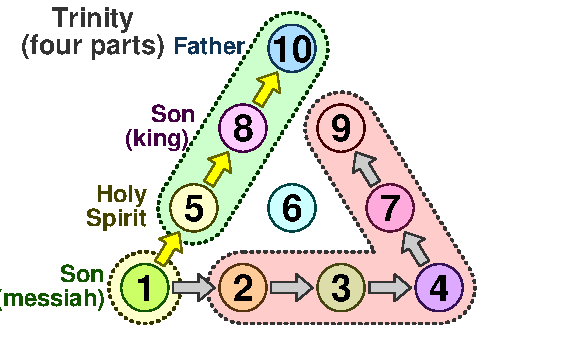 |
The "
enemy" as the
birds snatched up the seed in parable 1 and appears to have deposited the changed
seed as
weeds in parable 2.
The
birds nest in the mustard
tree in parable 3. The
false doctrine gets mixed in parable 4. Is the woman a seed, a bird, a weed or something else?
Might there be a reason why parables 2 (wheat and tares), 3 (mustard seed) and 4 (woman and leaven) have been grouped together?
Wheat and tares starts at verse 24.
Woman and leaven stops at verse 33.
70. Acts 4:18 Catholic Church
71. Matthew 13:25,33 Interesting connection
Matthew 13:25 But while men slept, his enemy came and sowed tares among the wheat, and went his way. [kjv]
εν δε τω καθευδειν τους ανθρωπους ηλθεν αυτου ο εχθρος και εσπειρεν επεσπειρεν ζιζανια ανα μεσον του σιτου και απηλθεν [gnt]
13:33 Another parable spake he unto them; The kingdom of heaven is like unto leaven, which a woman took, and hid in three measures of meal, till the whole was leavened. [kjv]
αλλην παραβολην ελαλησεν αυτοις ομοια εστιν η βασιλεια των ουρανων ζυμη ην λαβουσα γυνη ενεκρυψεν εις αλευρου σατα τρια εως ου εζυμωθη ολον [gnt]
"καθολικός," ≈ "universal" is from
"καθόλου" ≈ "at all" is from:
"καθ" ≈ "according to" and
"ὅλος" ≈ "whole, all".
Verse 25 start: "καθεύδω" ≈ "lie down to sleep, be still, be idle"
Verse 33 end: "ολον" ≈ "whole" as in "the whole lump" (verse 33)
Verse 25 has the beginning of "
catholic" near the beginning and verse 33 has the ending of "
catholic" at the end. Is this just
random chance or might this have been on purpose?
72. Martin Luther
Some parables with historical interpretations have interesting meanings. The parable of the
hidden treasure found and
re-hid in the
field takes place during and after the
Reformation where John 3:16-17, etc., became important.
Martin Luther had been
hidden as a trained professor in the Bible in an Abby of the Catholic Church for many years in what is now Germany. When
found by the world, his comments sparked the Reformation. Frederick III, Elector of Saxony, wanted to protect Martin Luther by
hiding him. He had his people
hide him in one of his castles without telling him where. When asked, he could
truthfully say he did not know where Luther was.
This is an interesting but minor connection. Martin Luther did re-appear and had an impact on events going forward (Luther Bible, Lutheran Church, etc.).
73. Matthew 13:44 Sequence of events
Matthew 13:44 Again, the kingdom of heaven is like unto treasure hid in a field; the which when a man hath found, he hideth, and for joy thereof goeth and selleth all that he hath, and buyeth that field. [kjv]
παλιν ομοια εστιν η βασιλεια των ουρανων θησαυρω κεκρυμμενω εν τω αγρω ον ευρων ανθρωπος εκρυψεν και απο της χαρας αυτου υπαγει και παντα πωλει οσα εχει πωλει και αγοραζει τον αγρον εκεινον [gnt]
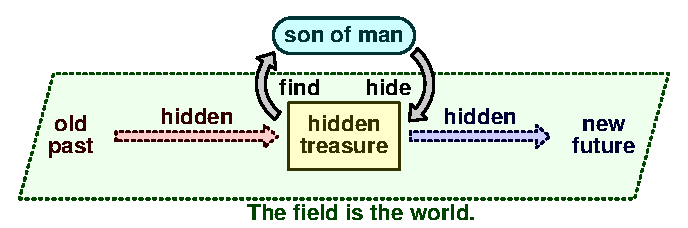
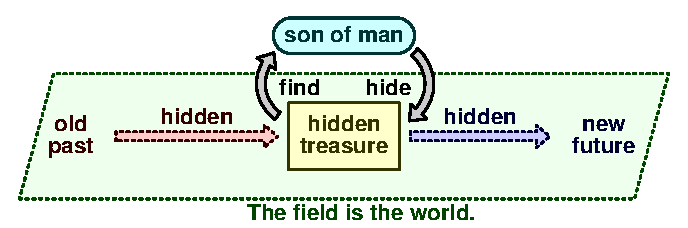
Here is the somewhat
puzzling sequence of events in the middle.
The "man" "finds" the "treasure" that is "hid".
The "man" "re-hides" the "treasure".
There may be more than one explanation (interpretation) for the sequence in the middle.
74. End of page