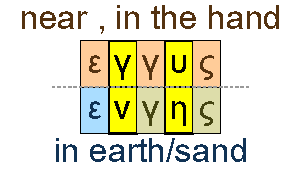
- *G345 *14 ἀνακεῖμαι (an-ak-i'-mahee) : from G303 and G2749; to recline (as a corpse or at a meal):--guest, lean, lie, sit (down, at meat), at the table.
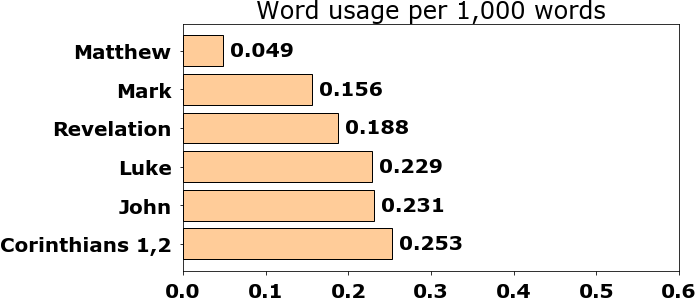
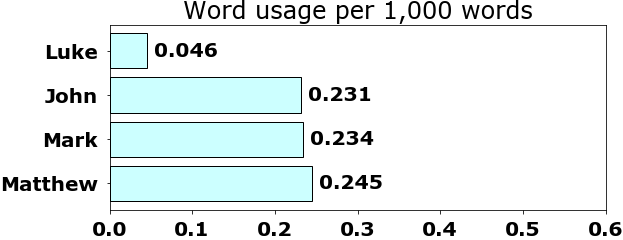
- ανακειμενων *4 of 14
- Matthew 22:10 ... and the wedding was furnished with guests.
- Mark 14:18 And as they sat and did eat, Jesus ...
- John 12:2 There they made him a supper; and Martha ...
- John 13:28 Now no man at the table knew for what intent he spake ...
- ανακειμενους *2 of 14
- Matthew 22:11 ... the king came in to see the guests, he saw there a man ...
- Mark 6:26 And the king was exceeding sorry; yet for his oath's sake, ...
36. Cambridge Greek Lexicon
The
CGL (Cambridge Greek Lexicon) (p. 96) provides the following definitions for the ancient Greek word
"ἀνάκειμαι" ≈ "be dedicated" as in having been set up as a votive offering (in a temple or sacred place).
1. be dedicated (as a votive offering in a temple or sacred place).
2. be set up (of statues, of persons for status).
3. be stored or treasured up (of an athlete's achievements).
4. be stored up or saved (of a topic).
5. be ascribed or attributed (of achievements).
6. be laid (of responsibilities).
7. depend (of fortune in battle).
8. lie down (as opposed to standing), recline (at a meal) GNT.
9. be weighted down by (of a person).
Several times the
GNT translates this word as
"guests".
37. Matthew 26:20 Disciples sit-in
Matthew 26:20 Now when the even was come, he sat down with the twelve. [kjv]
οψιας δε γενομενης ανεκειτο μετα των δωδεκα μαθητων [gnt]
The Greek word translated as
"now" is that of
"but". The ancient Greek word
"ἀνάκειμαι" ≈ "be dedicated" as in having been set up as a votive offering (in a temple or sacred place).
What was the purpose for which Jesus was
"dedicated" at this gathering? Hint: Go back two verses. Business analogy:
For an important meeting, we sat down (and ate the snacks).
For an important meeting, we were dedicated (to the issues).
The
TR omits the word for
"disciples".
38. Matthew 26:20
KJV: Now when the even was come, he sat down with the twelve.
Greek: οψιας δε γενομενης ανεκειτο μετα των δωδεκα μαθητων
Latin: vespere autem facto discumbebat cum duodecim discipulis
Wessex: on þam efne sat se haelend mid his twelf leorning-cnihten aet ge-reorde.
Luther: Und am Abend setzte er sich zu Tische mit den Zwölfen.
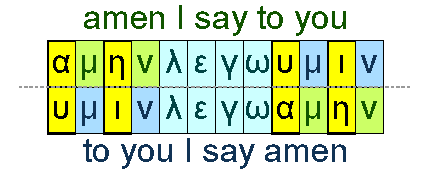
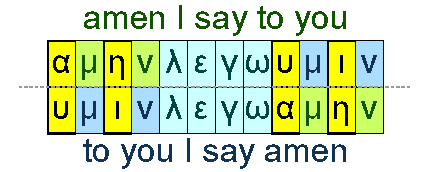
39. Verily I say to you: connect the dots
Matthew 25:12 But he answered and said, Verily I say unto you, I know you not. [kjv]
ο δε αποκριθεις ειπεν αμην λεγω υμιν ουκ οιδα υμας [gnt]
Jesus uses the phrase
"verily" or
"amen",
"(I) say" "(to) you" (plural)
25 times and (singular)
2 times in Matthew. Since Matthew is writing down what Jesus says, the exact placement of this phrase appears to be important.
The "amen" in the Greek was changed, when spoken by Jesus at the beginning of a phrase, sometime in the Middle Ages, to "verily". The Latin Vulgate uses the "amen" instead of the Latin "verily".
The phrase itself is a symmetrical play on words with the "amen" similar to the "(to) you".
This model appears to fit when the
"(to) you" is
singular and
not plural.
40. Matthew 26:21 Connect the dots
Matthew 26:21 And as they did eat, he said, Verily I say unto you, that one of you shall betray me. [kjv]
και εσθιοντων αυτων ειπεν αμην λεγω υμιν οτι εις εξ υμων παραδωσει με [gnt]
Matthew provides no preceding saying from Jesus. Perhaps the connection goes back further.
41. Matthew 15:2 Traditions
Matthew 15:2 Why do thy disciples transgress the tradition of the elders? for they wash not their hands when they eat bread. [kjv]
δια τι οι μαθηται σου παραβαινουσιν την παραδοσιν των πρεσβυτερων ου γαρ νιπτονται τας χειρας αυτων οταν αρτον εσθιωσιν [gnt]
The ancient Greek word
"παράδοσις" ≈ "transmission, transfer" and comes from two Greek words.
"παρα" ≈ "beyond".
"δόσις" ≈ "giving, gift, dose of medicine" and is the source of the English word "dose".
In context, it can mean
"tradition" as something
"transmitted" or
"handed over" from generation to generation as in "
beyond" the current generation. The
"traditions" of men that form man's additions to God's law is what Jesus refers to as "
jots" as "
opinions" or "
spots" and "
tittles" as "
horns" or "
rules". These are usually enforced,
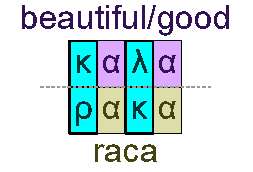
deceptively, using "
oaths".
42. Tradition betrayed
Matthew 15:2 Why do thy disciples transgress the tradition of the elders? for they wash not their hands when they eat bread. [kjv]
δια τι οι μαθηται σου παραβαινουσιν την παραδοσιν των πρεσβυτερων ου γαρ νιπτονται τας χειρας αυτων οταν αρτον εσθιωσιν [gnt]
10:4 Simon the Canaanite, and Judas Iscariot, who also betrayed him. [kjv]
σιμων ο κανανιτης καναναιος και ιουδας ο ισκαριωτης ο και παραδους αυτον [gnt]
The Greek word for
"tradition" or
"hand over" is related to the Greek word for
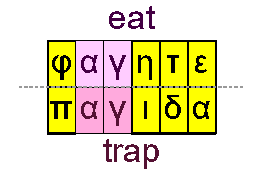
"betray" or
"hand over". The ancient Greek word
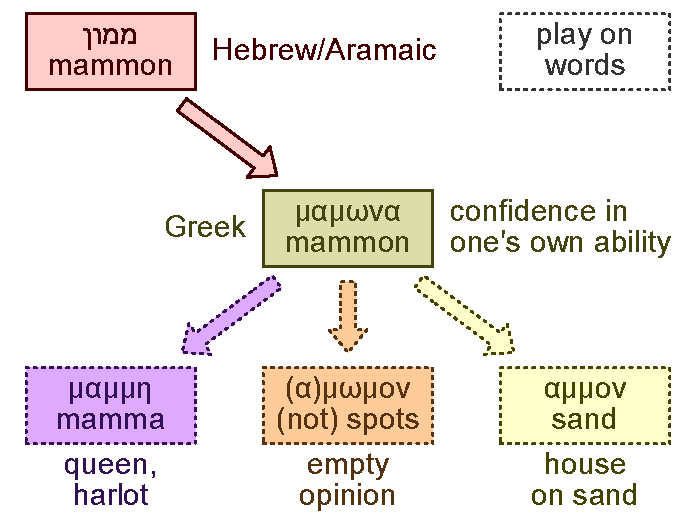
"παράδοσις" ≈ "transmission, transfer" and comes from two Greek words.
"παρά" ≈ "beyond" and "δόσις" ≈ "giving, gift, dose of medicine" and is the source of the English word "dose".
In context, it can mean
"tradition" as something
"transmitted" or
"handed over" from generation to generation as in
"beyond" the current generation. The word is related to the Greek word for
"betray".
43. Matthew 5:25 Deliver parody
Matthew 5:25 Agree with thine adversary quickly, whiles thou art in the way with him; lest at any time the adversary deliver thee to the judge, and the judge deliver thee to the officer, and thou be cast into prison. [kjv]
ισθι ευνοων τω αντιδικω σου ταχυ εως οτου ει μετ αυτου εν τη οδω μετ αυτου μηποτε μηποτε σε παραδω ο αντιδικος τω κριτη και ο κριτης σε παραδω τω τω υπηρετη και εις φυλακην βληθηση [gnt]
The Greek word translated
"deliver" is that of
"turn over" or
"betray". Luke uses the Greek word for "
drag away". Is it is a "
parody" that this
"turnover" or
"betrayal" would happen?
"παραδω" ≈ "hand over, betray, deliver". This is the only time this exact word is used by Jesus in Matthew.
"παρῳδία" ≈ "parody" from the Greek words for "beyond" and "song".
Discuss: How does the meaning of the verse change if
"deliver" is changed to
"betray"?
Discuss: Are there any historical examples of a religious institution
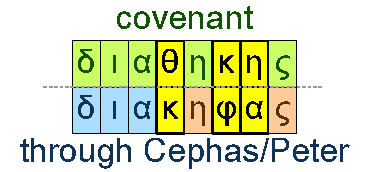
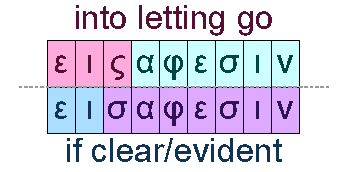
"betraying" true believers for their own purposes? What a
"parody"!
44. Matthew 26:21 Betray a tradition
Matthew 26:21 And as they did eat, he said, Verily I say unto you, that one of you shall betray me. [kjv]
και εσθιοντων αυτων ειπεν αμην λεγω υμιν οτι εις εξ υμων παραδωσει με [gnt]
... that one out [into six] of you shall betray me.
... that one out [into six] of you shall tradition me.
Discuss: Who might be the "
one" for each of the following meanings?
Immediate literal meaning: Who "betrayed" Jesus?
Future literal meaning: Who "traditoned" Jesus?
Consider Jesus associating
Peter, the Rock, with the
Church. Jesus also associated
John the Baptist with
Elijah and himself with
Jonah.
What is the power of
tradition in some churches (as compared to Bible verses)?
45. Matthew 26:21 Betray a tradition
Matthew 26:21 And as they did eat, he said, Verily I say unto you, that one of you shall betray me. [kjv]
και εσθιοντων αυτων ειπεν αμην λεγω υμιν οτι εις εξ υμων παραδωσει με [gnt]
... that one out of you shall betray me.
... that one out of you shall tradition me.
... that one [into] out [six] of you shall tradition me.
Might there be more than "
one" that "
traditioned" Jesus?
Might it be "
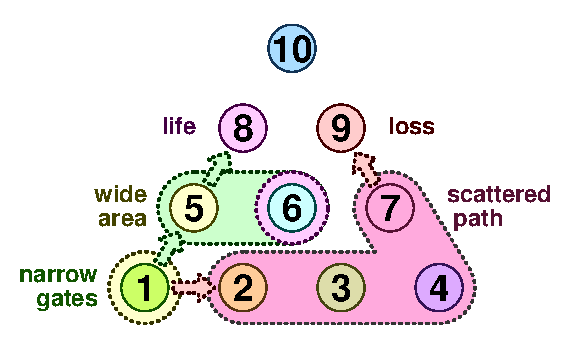
six"? In the first seven pins of the Ten Pin model, there are "
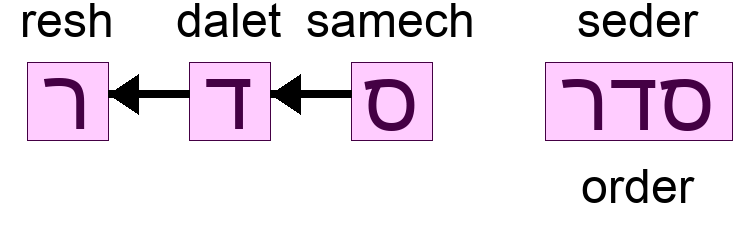
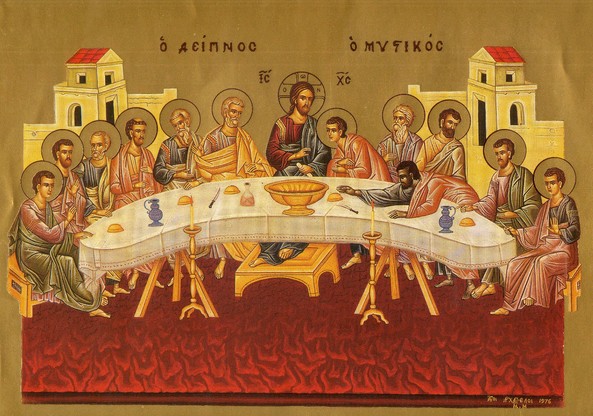
six" beyond Jesus. Those might be the
day 1,
day 2,
day 3,
night 1,
night 2,
night 3 in the
three days and
three nights.
46. Matthew 26:21
KJV: And as they did eat, he said, Verily I say unto you, that one of you shall betray me.
Greek: και εσθιοντων αυτων ειπεν αμην λεγω υμιν οτι εις εξ υμων παραδωσει με
47. Aristotle: Learning expectations
English: ... And some want to have everything done accurately, while others are annoyed by accuracy, either because they cannot follow the connexion of thought or because they regard it as pettifoggery ...
Aristotle: Metaphyics 2 3:8 … καὶ οἱ μὲν πάντα ἀκριβῶς, τοὺς δὲ λυπεῖ τὸ ἀκριβὲς ἢ διὰ τὸ μὴ δύνασθαι συνείρειν ἢ διὰ τὴν μικρολογίαν [metaphysics]
Some have trouble following precise and accurate logical details or regard it as
"hairsplitting". They are
"λύπη" ≈ "annoyance, distress". Might they be
"sad" or
"sorrowful"?
GNT:
"invalid logic" ⇒ "strife".
"personal opinion" ⇒ "vain glory".
If you ask an engineer for an explanation, be ready to listen for a while. Just nod your head and pretend you understand what he is saying. You'll wish you had never asked.
48. Rich young ruler
Matthew 19:22 But when the young man heard that saying, he went away sorrowful: for he had great possessions. [kjv]
ακουσας δε ο νεανισκος τον λογον τουτον απηλθεν λυπουμενος ην γαρ εχων κτηματα πολλα [gnt]
Mark 10:22 And he was sad at that saying, and went away grieved: for he had great possessions. [kjv]
ο δε στυγνασας επι τω λογω απηλθεν λυπουμενος ην γαρ εχων κτηματα πολλα [gnt]
Which word fits best?
"annoyed", "annoyance", etc. (primary meaning)
"distressed", "distress", "troubled", etc.(secondary meaning)
"sorrowful", "sorry", "grieved", etc.
The
ancient Greek word
"λύπη" ≈ "annoyance, distress". The
modern Greek word
"λύπη" (LEE-pee) ≈ "sorrow, sadness, suffering". It appears that the modern meaning comes from the meaning assumed in the
GNT from Latin, etc.
49. Matthew 26:22 Annoyance
Matthew 26:22 And they were exceeding sorrowful, and began every one of them to say unto him, Lord, is it I? [kjv]
και λυπουμενοι σφοδρα ηρξαντο λεγειν αυτω εις εκαστος αυτων μητι εγω ειμι κυριε [gnt]
The
ancient Greek word
"λύπη" ≈ "annoyance, distress". The
modern Greek word
"λύπη" (LEE-pee) ≈ "sorrow, sadness, suffering". It appears that the modern meaning comes from the meaning assumed in the
GNT from Latin, etc.
If all twelve said it, then why just pick out, after the fact, Judas Iscariot saying it? Have you ever heard a Monday Morning Quarterback talk about the game the day before?
[world geo-political-military situations - Saturday evening quarterbacks]
50. Word: So that nothing
51. Matthew 26:22 You don't say
52. Matthew 22:9 Exist of path six
Matthew 22:9 Go ye therefore into the highways, and as many as ye shall find, bid to the marriage. [kjv]
πορευεσθε ουν επι τας διεξοδους των οδων και οσους αν εαν ευρητε καλεσατε εις τους γαμους [gnt]
Some play on words are the following.
"ἐξ" ≈ "out of" as in the English word/prefix "ex".
"ἕξ" ≈ "six" as in the English word/prefix "hex".
"εις" ≈ "one" and "εις" ≈ "into" and, in context, "against".
Greek word order:
go then on the through exit (six) paths of the paths and ...
What exactly is
path "six"? What are the other
"paths"?
Might the
"into" be
"one" as in the
One Cookie Rule?
53. Matthew 26:21-22 Ambiguity
Matthew 26:21 And as they did eat, he said, Verily I say unto you, that one of you shall betray me. [kjv]
και εσθιοντων αυτων ειπεν αμην λεγω υμιν οτι εις εξ υμων παραδωσει με [gnt]
26:22 And they were exceeding sorrowful, and began every one of them to say unto him, Lord, is it I? [kjv]
και λυπουμενοι σφοδρα ηρξαντο λεγειν αυτω εις εκαστος αυτων μητι εγω ειμι κυριε [gnt]
The Greek word translated as
"him" is could be (with respect to)
"him" (Jesus) or
"it" (what was said, etc.).
"εις" ≈ "one" and "εις" ≈ "into" and, in context, "against".
"ἐκ" ≈ "out, out of" and "ἐξ" ≈ "out of" as in the English word/prefix "ex".
"ἕξ" ≈ "six" as in the English word/prefix "hex".
54. Matthew 26:22
KJV: And they were exceeding sorrowful, and began every one of them to say unto him, Lord, is it I?
Greek: και λυπουμενοι σφοδρα ηρξαντο λεγειν αυτω εις εκαστος αυτων μητι εγω ειμι κυριε
55. Matthew 24:2 Answer occurrences
Matthew 24:2 And Jesus said unto them, See ye not all these things? verily I say unto you, There shall not be left here one stone upon another, that shall not be thrown down. [kjv]
ο δε ιησους αποκριθεις ειπεν αυτοις ου βλεπετε παντα ταυτα παντα αμην λεγω υμιν ου μη αφεθη ωδε λιθος επι λιθον ος ου μη καταλυθησεται [gnt]
The ancient Greek word
"ἀποκρίνομαι" ≈ "answer" and comes from the ancient Greek word
"ἀποκρίνω" ≈ "separate, distinguish". Consider this word beginning of
«αποκρ» in the
GNT.
148 times translated as "answer" (in some way)
3 times not translated as "answer" (in some way).
Matthew 24:2 (changes verse meaning)
Mark 9:5 (interesting)
2 Corinthians 1:8 (interesting)
56. Matthew 26:22-23 Question and answer
Matthew 26:22 And they were exceeding sorrowful, and began every one of them to say unto him, Lord, is it I? [kjv]
και λυπουμενοι σφοδρα ηρξαντο λεγειν αυτω εις εκαστος αυτων μητι εγω ειμι κυριε [gnt]
26:23 And he answered and said, He that dippeth his hand with me in the dish, the same shall betray me. [kjv]
ο δε αποκριθεις ειπεν ο εμβαψας μετ εμου την χειρα εν τω τρυβλιω την χειρα ουτος με παραδωσει [gnt]
The
ancient Greek word
"ἀποκρίνομαι" ≈ "answer" and comes from the ancient Greek word
"ἀποκρίνω" ≈ "separate, distinguish".
Thus, what is said at the end of verse 22 appears to be a
question.
57. Strongs - dip, baptize
- *G1686 *2 ἐμβάπτω (em-bap'-to) : from G1722 and G911; to whelm on, i.e. wet (a part of the person, etc.) by contact with a fluid:--dip.
- εμβαψας
- Matthew 26:23 And he answered and said, He that dippeth his hand with me ...
- εμβαπτομενος
- Mark 14:20 ... of the twelve, that dippeth with me in the dish.
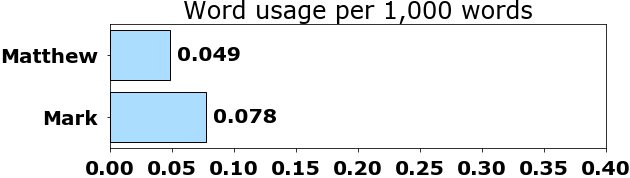 |
Words: εμβαπτομενος εμβαψας
|
58. Matthew 28:16-20 Immersion into baptism
Matthew 28:19 Go ye therefore, and teach all nations, baptizing them in the name of the Father, and of the Son, and of the Holy Ghost: [kjv]
πορευθεντες ουν μαθητευσατε παντα τα εθνη βαπτιζοντες αυτους εις το ονομα του πατρος και του υιου και του αγιου πνευματος [gnt]
28:20 Teaching them to observe all things whatsoever I have commanded you: and, lo, I am with you alway, even unto the end of the world. Amen. [kjv]
διδασκοντες αυτους τηρειν παντα οσα ενετειλαμην υμιν και ιδου εγω μεθ υμων ειμι πασας τας ημερας εως της συντελειας του αιωνος αμην [gnt]
One is to "teach" "all" "the" "peoples" as one "goes" through life.
The Greek word translated as "baptize" is that of "dunking", "immersing" as in dying cloth or, figuratively, in over one's head.
This "baptism" is to be done "into" (Greek) the "name" and not "in" (Latin, English) the "name".
[Reformation, Anabaptists, Amish, Mennonites, Dunkers (Antietam)]
 |
Details are left as a future topic.
|
59. Matthew 26:23 Take the plunge
Matthew 26:23 And he answered and said, He that dippeth his hand with me in the dish, the same shall betray me. [kjv]
ο δε αποκριθεις ειπεν ο εμβαψας μετ εμου την χειρα εν τω τρυβλιω την χειρα ουτος με παραδωσει [gnt]
at ipse respondens ait qui intinguit mecum manum in parapside hic me tradet [v]
The ancient Greek word
"βαπτίζω" ≈ "dip, plunge, immerse" and in the historical Christian sense,
"baptize".
Greek word order:
he then answered saying (the one) which dips with/after me (a) hand in the dish that one me betrays [traditions].
Are you actually
"baptizing" or
"dipping" a "hand"? How many of you stick your
"hand" in the dip
bowl and
"baptize" your
"hand"?
[word for dyeing of cloth]
60. Exodus 12:22 Baptized and splashed with the blood
Exodus 12:22 And ye shall take a bunch of hyssop, and dip it in the blood that is in the bason, and strike the lintel and the two side posts with the blood that is in the bason; and none of you shall go out at the door of his house until the morning. [kjv]
λημψεσθε δε δεσμην υσσωπου και βαψαντες απο του αιματος του παρα την θυραν καθιξετε της φλιας και επ αμφοτερων των σταθμων απο του αιματος ο εστιν παρα την θυραν υμεις δε ουκ εξελευσεσθε εκαστος την θυραν του οικου αυτου εως πρωι [lxx]
… tinguite sanguine … [v]
The Latin word
"tingo" ≈ "wet, moisten, dip, dye" and is the source of the English word
"tincture",
"tinge" and
"intinction" as a means of communion by
"dipping" the bread in the wine.
61. Baptized and splashed with the blood
The Hebrew instructions for "
splashing the blood" for "
Passover" have the effect of creating an optical illusion of the "
cross". The Greek for
"dip" in the
LXX is the same word as for
"baptize".
The blood is to be
splashed, as in "
strike", on the "
lintel" and the two "
side posts". [Moses and the rock]
62. Job 9:31 Take the plunge
Job 9:31 Yet shalt thou plunge me in the ditch, and mine own clothes shall abhor me. [kjv]
ικανως εν ρυπω με εβαψας εβδελυξατο δε με η στολη [lxx]
you had thoroughly plunged me in filth, and my garment had abhorred me. [bs3]
tamen sordibus intingues me et abominabuntur me vestimenta mea [v]
… dippe … filthis… clothis… abhomynable. [wy]
… tunken … Kot… Kleider scheußlich … [lu]
By way of a common ancestor (old German), the German word
"tunken" and the English word
"dunk" are related.
Note that the Greek word in the
LXX «
εβαψας» has the root of «
βαψ». The Greek letter «
Ψ» or "
psi" has the sound of the consonants "
p" and "
s". So the root of «
βαψ» is «
βαπ» which is the root of words such as
"baptize".
The Latin word
"tinctas" ≈ "dyed". This is the source of the communion method called
"intinction".
63. Ezekiel 23:15 Dyed fabric
Ezekiel 23:15 Girded with girdles upon their loins, exceeding in dyed attire upon their heads, all of them princes to look to, after the manner of the Babylonians of Chaldea, the land of their nativity: [kjv]
εζωσμενους ποικιλματα επι τας οσφυας αυτων και τιαραι βαπται επι των κεφαλων αυτων οψις τρισση παντων ομοιωμα υιων χαλδαιων γης πατριδος αυτων [lxx]
et accinctos balteis renes et tiaras tinctas in capitibus eorum formam ducum omnium similitudinem filiorum Babylonis terraeque Chaldeorum in qua orti sunt [v]
… cappis peyntid … [wy]
… bunte Kogel … [lu]
The original meaning of
"baptize" had to do with
"dying" fabric. Wycliffe uses the word that became "
painted". To
dye something, one needs to not only immerse it, but dunk it and stir it around. Here we see the The Latin word
"tinctas" ≈ "dyed". The German word
"bunt" ≈ "colorful, variegated" and comes from the Latin word
"punctus" ≈ "pointed" and which is the source of the English word
"point".
64. Matthew 28:19 Manuscript variations
Matthew 28:19 Go ye therefore, and teach all nations, baptizing them in the name of the Father, and of the Son, and of the Holy Ghost: [kjv]
πορευθεντες ουν μαθητευσατε παντα τα εθνη βαπτιζοντες αυτους εις το ονομα του πατρος και του υιου και του αγιου πνευματος [gnt]

Trinity:
Father,
Son and
Holy Spirit/Ghost.
Some manuscripts do not have the "
Holy Spirit" at the end of the verse. Does that part matter? Explain.
65. Matthew 26:23 Dish it out
Matthew 26:23 And he answered and said, He that dippeth his hand with me in the dish, the same shall betray me. [kjv]
ο δε αποκριθεις ειπεν ο εμβαψας μετ εμου την χειρα εν τω τρυβλιω την χειρα ουτος με παραδωσει [gnt]
The ancient Greek word
"τρύβλιον" ≈ "cup, bowl" and, as a
measure, used in medical prescriptions.
For some reason, this Greek word was used in the French word
"trublion" ≈ "troublemaker".
A related word may be the ancient Greek word
"τρίβανον" ≈ "oil-flask, measure of capacity" and comes from
"τρίβω" ≈ "rub, grind, rub away, wear out".
[dose in betray]
66. Cow paths
Psalms 119:105 NUN. Thy word is a lamp unto my feet, and a light unto my path. [kjv]
ιδ νουν λυχνος τοις ποσιν μου ο λογος σου και φως ταις τριβοις μου [lxx]
The
ancient Greek word
"τριβούς" ≈ "path" which means, literally,
"three" "cows". It would appear that if three cows could walk through, it was a "
path".
The modern Greek word "τρία" (TREE-a) ≈ "three" and comes from the ancient Greek word "τρία" ≈ "three".
The ancient Greek word "βοῦς" ≈ "cow".
67. Tribble with tribbles
Genesis 3:18 Thorns also and thistles shall it bring forth to thee; and thou shalt eat the herb of the field; [kjv]
וקוץודרדר … [he]
ακανθας και τριβολους ανατελει σοι και φαγη τον χορτον του αγρου [lxx]
The ancient Greek word
"τρίβολος" ≈ "prickly plant" as in a plant with
"thistles" on it. The word appears to literally mean "
three arrows" where ancient Greek often uses the prefix of "
three" to mean "
a lot of". The Latin word
"tribulos" ≈ "thistle".
I have wondered since the 1980's (when I started to learn Greek) if the Star Trek episode involving "
Trouble with tribbles" based the word "
tribble" on the Greek
"τρίβολος" ≈ "prickly plant" for
"thistle" since a tribble in that episode looks somewhat like a
"thistle".
As for a better explanation,
"thistle" have to do!
68. Matthew 26:23 With me as a handy mistress
69. Strongs - drunk
70. Usage - drunk
- *G3184 *6 μεθύω (meth-oo'-o) : from another form of G3178; to drink to intoxication, i.e. get drunk:--drink well, make (be) drunk(-en).
- μεθυουσιν *2
- Acts 2:15 For these are not drunken, as ye ...
- 1 Thessalonians 5:7 ... in the night; and they that be drunken are drunken in the night.
- μεθυοντων
- Matthew 24:49 ... and drink with the drunken;
- μεθυσθωσιν
- John 2:10 ... wine; and when men have well drunk, then that which is worse: but thou ...
- μεθυει
- 1 Corinthians 11:21 ... is hungry, and another is drunken.
- μεθυουσαν
- Revelation 17:6 And I saw the woman drunken with the blood of the saints, ...
71. Revelation 17:2 Fornication
Revelation 17:2 With whom the kings of the earth have committed fornication, and the inhabitants of the earth have been made drunk with the wine of her fornication. [kjv]
μεθ ης επορνευσαν οι βασιλεις της γης και εμεθυσθησαν οι κατοικουντες την γην εκ του οινου της πορνειας αυτης οι κατοικουντες την γην [gnt]
72. Revelation 18:3 Fornication and merchants
Revelation 18:3 For all nations have drunk of the wine of the wrath of her fornication, and the kings of the earth have committed fornication with her, and the merchants of the earth are waxed rich through the abundance of her delicacies. [kjv]
οτι εκ του οινου του θυμου της πορνειας αυτης πεπωκεν πεπτωκαν παντα τα εθνη και οι βασιλεις της γης μετ αυτης επορνευσαν και οι εμποροι της γης εκ της δυναμεως του στρηνους αυτης επλουτησαν [gnt]
The Greek for
"nations" is that of
"peoples". The Greek for
"all" is
plural so there may be exceptions. Might the
"all" be the
wide area while the exceptions be those in the
narrow gate?
The ancient Greek word
"πορνεία" ≈ "fornication, prostitution". Adding
"γράφω" ≈ "write, depict" is the source of the English word
"pornography", which some shorten to "
porn".
Those
"merchants" appear to be connected with the kingdom parable of the
"pearl" of great price. Those
"merchants", as a business opportunity, have "
sold"
everything to obtain
one "pearl".
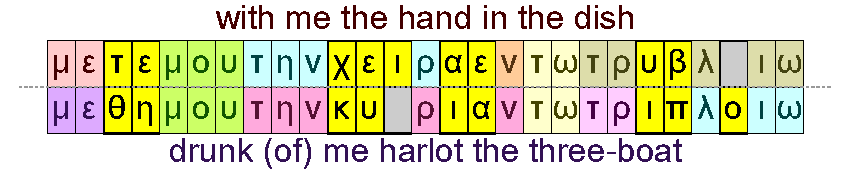
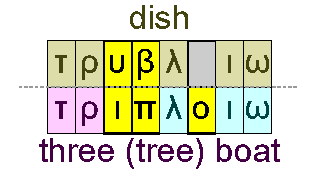
73. Matthew 26:23 In the three boat
74. Matthew 26:23 In the three boat
Matthew 26:23 And he answered and said, He that dippeth his hand with me in the dish, the same shall betray me. [kjv]
ο δε αποκριθεις ειπεν ο εμβαψας μετ εμου την χειρα εν τω τρυβλιω την χειρα ουτος με παραδωσει [gnt]
What might the "
three" "
boat" play on words represent? English:
"friendship". German:
"Freundschaft" ≈ "friendship".
Play: "in" "the" "boat" or "ship" (Which boat?). [three-peat]
Play: "three" "boat" or "ship" (Trinity?) [ship/shape]
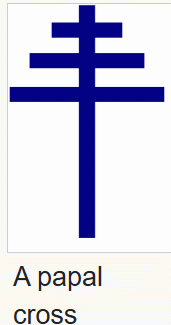
75. Papal cross
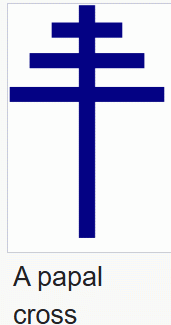 |
Papal cross
|
The Papal Cross is the official emblem of the Pope in the Roman Catholic Church, used to signify his supreme authority and office. It is depicted as a staff topped with three horizontal bars, each shorter than the one before it, creating a diminishing pattern
Source: Bing Copilot AI (as of 2026-04-07)
The three bars carry multiple symbolic meanings:
The Holy Trinity — Father, Son, and Holy Spirit Symbol Sage+1.
The Pope’s threefold role — leader, teacher, and worship leader Symbol Sage.
The three realms of papal authority — spiritual, temporal, and material Symbol Sage.
The three theological virtues — Faith, Hope, and Love Symbol Sage.
Source: Bing Copilot AI (as of 2026-04-07)
76. The number three
The ancient Greek word
"τρία" ≈ "three".
When Jesus uses the word for
"three", or any word with the number
"three" in it, or any play on words that has the number
"three" in it, it does
not appear to be in a
good sense. It is often related to "
Satan" and often related to the "
kingdom" of "
heaven" as in the "
air".
... more to be added ...
77. Matthew 12:41-42 Plenty more
Matthew 12:41 The men of Nineveh shall rise in judgment with this generation, and shall condemn it: because they repented at the preaching of Jonas; and, behold, a greater than Jonas is here. [kjv]
… και ιδου πλειον ιωνα ωδε [gnt]
12:42 … and, behold, a greater than Solomon is here. [kjv]
… και ιδου πλειον σολομωντος σολομωνος ωδε [gnt]
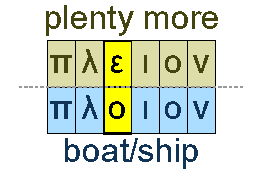
Jesus uses the idea of
"greater" as in
"plenty more" in the judgment involving
Nineveh and then
Solomon.
The ancient Greek word
"πλείων" ≈ "more" as an inflection of
"πολύς" ≈ "many, a lot".
A play on words would be
"πλοῖον" ≈ "boat, ship" which comes from
"πλέω" ≈ "sail". Saying:
Your ship has arrived!. How many verses do we need to go to get Jesus in a
"boat" that has
arrived - with
"plenty more" than Jonah or Solomon?
78. Strongs - boat
*G4143 *66 πλοῖον (ploy'-on) : from G4126; a sailer, i.e. vessel:--ship(-ing).
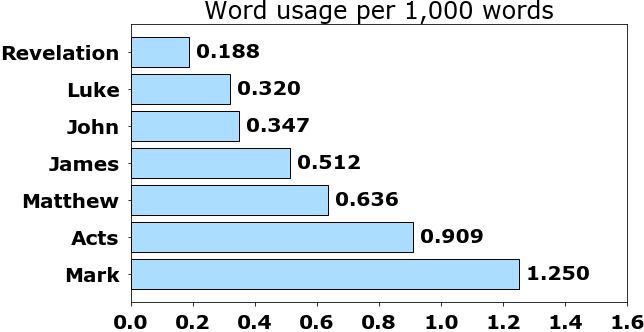 |
Words: πλοια=5 πλοιον=33 πλοιου=11 πλοιω=15 πλοιων=2
|
The ancient Greek word
"πλοῖον" ≈ "boat, ship" which comes from
"πλέω" ≈ "sail".
The ancient Greek word
"τα πλοῖα" ≈ "the boats" (as used). Is it "
better together" or "
bitter together"?
79. Usage - boat
- *G4143 *66 πλοῖον (ploy'-on) : from G4126; a sailer, i.e. vessel:--ship(-ing).
- πλοια *5 of 66
- Mark 4:36 ... even as he was in the ship. And there were also ...
- Luke 5:7 ... were in the other ship, that they should come and help them. And they came, and filled both the ships, so that they began to sink.
- Luke 5:11 And when they had brought their ships to land, they forsook ...
- James 3:4 Behold also the ships, which though they be so great, and ...
- Revelation 18:19 ... were made rich all that had ships in the sea by reason of ...
80. Matthew 4:21
Matthew 4:21 And going on from thence, he saw other two brethren, James the son of Zebedee, and John his brother, in a ship with Zebedee their father, mending their nets; and he called them. [kjv]
και προβας εκειθεν ειδεν αλλους δυο αδελφους ιακωβον τον του ζεβεδαιου και ιωαννην τον αδελφον αυτου εν τω πλοιω μετα ζεβεδαιου του πατρος αυτων καταρτιζοντας τα δικτυα αυτων και εκαλεσεν αυτους [gnt]
81. Jonah 1:5 Jonah and those in the ship
Jonah 1:5 Then the mariners were afraid, and cried every man unto his god, and cast forth the wares that were in the ship into the sea, to lighten it of them. But Jonah was gone down into the sides of the ship; and he lay, and was fast asleep. [kjv]
… ירד … [he]
και εφοβηθησαν οι ναυτικοι και ανεβοων εκαστος προς τον θεον αυτων και εκβολην εποιησαντο των σκευων των εν τω πλοιω εις την θαλασσαν του κουφισθηναι απ αυτων ιωνας δε κατεβη εις την κοιλην του πλοιου και εκαθευδεν και ερρεγχεν [lxx]
82. Matthew 26:23
KJV: And he answered and said, He that dippeth his hand with me in the dish, the same shall betray me.
Greek: ο δε αποκριθεις ειπεν ο εμβαψας μετ εμου την χειρα εν τω τρυβλιω την χειρα ουτος με παραδωσει
Latin: at ipse respondens ait qui intinguit mecum manum in parapside hic me tradet
83. Matthew 26:24 Raca good
Matthew 26:24 The Son of man goeth as it is written of him: but woe unto that man by whom the Son of man is betrayed ! it had been good for that man if he had not been born. [kjv]
ο μεν υιος του ανθρωπου υπαγει καθως γεγραπται περι αυτου ουαι δε τω ανθρωπω εκεινω δι ου ο υιος του ανθρωπου παραδιδοται καλον ην αυτω ει ουκ εγεννηθη ο ανθρωπος εκεινος [gnt]
What is
"good" to do? How might this be
"raca"?
Does the "
on the one hand" and "
on the other hand" make a difference in how one might understand the meaning of this verse?
84. Matthew 26:24 Woe
Matthew 26:24 The Son of man goeth as it is written of him: but woe unto that man by whom the Son of man is betrayed ! it had been good for that man if he had not been born. [kjv]
ο μεν υιος του ανθρωπου υπαγει καθως γεγραπται περι αυτου ουαι δε τω ανθρωπω εκεινω δι ου ο υιος του ανθρωπου παραδιδοται καλον ην αυτω ει ουκ εγεννηθη ο ανθρωπος εκεινος [gnt]
... woe then to the that man through whom the son of man is traditioned ...
The
ancient Greek word
"οὐαί" ≈ "woe, alas" is
onomatopoeic in that, if one thinks of eagles (or vultures) lurking overhead ready to feast making a screeching sound as they swoop one gets an idea of the meaning. They are "
birds" of
prey (or
pray).
Play: "
that" and "
there" "
mind".
85. Matthew 26:24
KJV: The Son of man goeth as it is written of him: but woe unto that man by whom the Son of man is betrayed ! it had been good for that man if he had not been born.
Greek: ο μεν υιος του ανθρωπου υπαγει καθως γεγραπται περι αυτου ουαι δε τω ανθρωπω εκεινω δι ου ο υιος του ανθρωπου παραδιδοται καλον ην αυτω ει ουκ εγεννηθη ο ανθρωπος εκεινος
86. Matthew 26:25 Statement or question
Matthew 26:25 Then Judas, which betrayed him, answered and said, Master, is it I? He said unto him, Thou hast said. [kjv]
αποκριθεις δε ιουδας ο παραδιδους αυτον ειπεν μητι εγω ειμι ραββι λεγει αυτω συ ειπας [gnt]
Is what Jesus says a question or a statement or something else?
Statement: You have said.
Question: You have said? What did you say?
[Monday morning quarterback]
The
ancient Greek word
"ειπεν" ≈ "said" is sometimes translated as
"command" to support the agenda of the translator.
Italian phrase :
"Traduttore, traditore" ≈ "The translator is the traitor".
87. Matthew 26:25
KJV: Then Judas, which betrayed him, answered and said, Master, is it I? He said unto him, Thou hast said.
Greek: αποκριθεις δε ιουδας ο παραδιδους αυτον ειπεν μητι εγω ειμι ραββι λεγει αυτω συ ειπας
Latin: respondens autem Iudas qui tradidit eum dixit numquid ego sum rabbi ait illi tu dixisti
Spanish: Entonces Judas, el que le entregaba, respondió y dijo: ¿Soy yo, Maestro? Él le dice: Tú lo has dicho.
88. Matthew 26:24-25
Matthew 26:24 The Son of man goeth as it is written of him: but woe unto that man by whom the Son of man is betrayed ! it had been good for that man if he had not been born. [kjv]
ο μεν υιος του ανθρωπου υπαγει καθως γεγραπται περι αυτου ουαι δε τω ανθρωπω εκεινω δι ου ο υιος του ανθρωπου παραδιδοται καλον ην αυτω ει ουκ εγεννηθη ο ανθρωπος εκεινος [gnt]
26:25 Then Judas, which betrayed him, answered and said, Master, is it I? He said unto him, Thou hast said. [kjv]
αποκριθεις δε ιουδας ο παραδιδους αυτον ειπεν μητι εγω ειμι ραββι λεγει αυτω συ ειπας [gnt]
Think in a counter-factual way. Considering Matthew 11:11, discuss the following.
Would Judas have been "greater" in the "kingdom" of "heaven" if he had been conceived but not then "born" of "women"?
89. Matthew 26:26 Bless
Matthew 26:26 And as they were eating, Jesus took bread, and blessed it, and brake it, and gave it to the disciples, and said, Take, eat; this is my body. [kjv]
εσθιοντων δε αυτων λαβων ο ιησους τον αρτον και ευλογησας εκλασεν και εδιδου δους τοις μαθηταις και ειπεν λαβετε φαγετε τουτο εστιν το σωμα μου [gnt]
The
ancient Greek word
"εὐλογία" ≈ "good speaking, flattery, eulogy, blessing" is the source of the English word
"eulogy" as a
"good word" and is from the following.
"εὐ" ≈ "good" as a word or a prefix and "λόγος" ≈ "rational explanation, reasoning". In context, it can mean "word".
A
different word
"μακάριος" ≈ "happy, content" is often translated as
"blessed".
Break the
"bread". Break the "
rules". Which "
rules"? If the
"bread" is the
"body" and the
"bread" is
"broken" why is "
unity" in the
"body" so important?
90. Matthew 26:26 Happy and content
Matthew 26:26 And as they were eating, Jesus took bread, and blessed it, and brake it, and gave it to the disciples, and said, Take, eat; this is my body. [kjv]
εσθιοντων δε αυτων λαβων ο ιησους τον αρτον και ευλογησας εκλασεν και εδιδου δους τοις μαθηταις και ειπεν λαβετε φαγετε τουτο εστιν το σωμα μου [gnt]
The
ancient Greek word
"μακάριος" ≈ "happy, content" but is often (incorrectly) translated as
"blessed". Some books attributed to Paul, Peter, etc., will use this word for "
blessed", the meaning acquired many years later.
91. Matthew 26:26 Take and eat
Matthew 26:26 And as they were eating, Jesus took bread, and blessed it, and brake it, and gave it to the disciples, and said, Take, eat; this is my body. [kjv]
εσθιοντων δε αυτων λαβων ο ιησους τον αρτον και ευλογησας εκλασεν και εδιδου δους τοις μαθηταις και ειπεν λαβετε φαγετε τουτο εστιν το σωμα μου [gnt]
At the last supper, Jesus says "
take" and
"eat". True
teaching digests well.
Would a church ever insist that one cannot "
take" and
"eat"? Might they say, instead, that one must wait for the church to "
give" to
"eat" and only if that one has met the requirements of that church? [gatekeeper, keys of heaven]
The ancient Greek word
"ἔφαγον" ≈ "eat, devour, squander". A similar word is
"ἐσθίω" ≈ "eat, devour, consume, fret, vex".
92. The taste of false teaching
Revelation 10:10 And I took the little book out of the angel's hand, and ate it up; and it was in my mouth sweet as honey: and as soon as I had eaten it, my belly was bitter. [kjv]

What is the "
taste" of "
false teaching", as from a "
false Christ"? Jesus, the "
true Christ", says "
take and eat". For anyone to taste and eat false teaching, that false teaching must, at least, taste good, even if one does not feel well after eating it. The angel tells John, "
take and eat" with an interesting result.
Might this
bread have had some "
false teaching" mixed in? Sounds good but does not digest well. How do you know if it is "
false teaching"?
Saying:
Anything is possible if you do not know what you are talking about.
One cannot get upset about "
false teaching" unless one knows that it is "
false teaching".
93. Matthew 6:25 Eating trap
Matthew 6:25 Therefore I say unto you, Take no thought for your life, what ye shall eat, or what ye shall drink; nor yet for your body, what ye shall put on. Is not the life more than meat, and the body than raiment? [kjv]
δια τουτο λεγω υμιν μη μεριμνατε τη ψυχη υμων τι φαγητε και η τι πιητε μηδε τω σωματι υμων τι ενδυσησθε ουχι η ψυχη πλειον εστιν της τροφης και το σωμα του ενδυματος [gnt]
"φάγητε" ≈ "eat" (as used).
"παγίδα" ≈ "trap".
Sounds "f" and "p", "t" and "d".
Previous verses in this sequence on "
not eating" as in "
fasting" appear to relate to this part of this verse. In any case:
Do not eat the fruit. Do not feed the birds. Does the "
Father"
"feed" the
"birds"?
94. Matthew 6:22 Body
Matthew 6:22 The light of the body is the eye: if therefore thine eye be single, thy whole body shall be full of light. [kjv]
ο λυχνος του σωματος εστιν ο οφθαλμος εαν ουν η ο οφθαλμος σου απλους η ολον το σωμα σου φωτεινον εσται [gnt]
The
ancient Greek word
"σῶμα" ≈ "body" and is the source of the English word
"somatic" as in relating to the
"body" from the ancient Greek word
"σωματικός" ≈ "bodily". The
modern Greek word
"σώμα" (SO-ma) ≈ "body".
In the
GNT, the
"body" is taken to be the
"body" of Christ.
Possible Spoonerism: The ancient Greek word
"Μωσῆς" ≈ "Moses" as a Koine Greek form of
"Μωυσῆς`" ≈ "Moses". The name is from the Hebrew word
"משה" (mashuy) ≈ "Moses" and meaning, literally,
"drawn out (of water)".
95. Matthew 26:26 Body
Matthew 26:26 And as they were eating, Jesus took bread, and blessed it, and brake it, and gave it to the disciples, and said, Take, eat; this is my body. [kjv]
εσθιοντων δε αυτων λαβων ο ιησους τον αρτον και ευλογησας εκλασεν και εδιδου δους τοις μαθηταις και ειπεν λαβετε φαγετε τουτο εστιν το σωμα μου [gnt]
The
ancient Greek word
"σῶμα" ≈ "body" and is the source of the English word
"somatic" as in relating to the
"body" from the ancient Greek word
"σωματικός" ≈ "bodily". The
modern Greek word
"σώμα" (SO-ma) ≈ "body".
The ancient Greek word
"τόσος" ≈ "so much, so very, so great" and can be a synonym of
"ὅσοι" ≈ "as much as, how much" as in inflection of
"ὅσος" ≈ "as much as, how much".
"το σωμα μου" ≈ "the body of me".
"τοσο μαμου" ≈ "so much of mammon/mommy".
96. Mammon play on words
97. Equivocation deception between names and meanings
Philippians 2:6 Who, being in the form of God, thought it not robbery to be equal with God: [kjv]
ος εν μορφη θεου υπαρχων ουχ αρπαγμον ηγησατο το ειναι ισα θεω [gnt]
… cum … forma … rapinam … aequalem … [v]
2:9 Wherefore God also hath highly exalted him, and given him a name which is above every name: [kjv]
διο και ο θεος αυτον υπερυψωσεν και εχαρισατο αυτω το ονομα το υπερ παν ονομα [gnt]
An
"equivocation" is done when two
"names" are made to be
"equal" whereas the corresponding "
things" or "
meanings" are
not "equal". The English word
"equivocate" is from the late Latin word
"aequivoco" ≈ "call or name in the same way".
In Greek, if the context does not make it clear that two things are
"equal" using "
is", then the explicit Greek word
"ισα" ≈ "equal" is needed, as in the above verse.
98. Matthew 26:26 This is my body
Matthew 26:26 And as they were eating, Jesus took bread, and blessed it, and brake it, and gave it to the disciples, and said, Take, eat; this is my body. [kjv]
εσθιοντων δε αυτων λαβων ο ιησους τον αρτον και ευλογησας εκλασεν και εδιδου δους τοις μαθηταις και ειπεν λαβετε φαγετε τουτο εστιν το σωμα μου [gnt]
It depends on what the definition of "is" is.
Bill Clinton's grand jury impeachment testimony, 1998.
In Greek, if the context does not make it clear that two things are
"equal" using
"is", then the explicit ancient Greek word
"ισα" ≈ "equal" is needed, as in an
isometric triangle. This word is
not in the above verse.
Does the
context of these statements at the Last Supper using
"is" constitute
equality, as in (the tradition of)
transubstantiation? Is an explicit
"equals" in Greek needed? Luke does not have an
"is" for the "
blood" but is more indirect.
99. Meaning
Natural language is inherently ambiguous.
It depends on what the definition of "is" is. Bill Clinton's grand jury impeachment testimony, 1998.
When a human cannot understand the sentence, how can a computer be expected to understand the sentence?
100. Blood shed for you
Matthew 26:28 For this is my blood of the new testament, which is shed for many for the remission of sins. [kjv]
τουτο γαρ εστιν το αιμα μου το της καινης διαθηκης το περι πολλων εκχυνομενον εκχυννομενον εις αφεσιν αμαρτιων [gnt]
Mark 14:24 And he said unto them, This is my blood of the new testament, which is shed for many. [kjv]
και ειπεν αυτοις τουτο εστιν το αιμα μου το της καινης διαθηκης το περι εκχυννομενον υπερ πολλων εκχυνομενον [gnt]
Luke 22:20 Likewise also the cup after supper, saying, This cup is the new testament in my blood, which is shed for you. [kjv]
ωσαυτως και το ποτηριον ωσαυτως μετα το δειπνησαι λεγων τουτο το ποτηριον η καινη διαθηκη εν τω αιματι μου το υπερ υμων εκχυνομενον εκχυννομενον [gnt]
In Greek, if the context does not make it clear that two things are
"equal" using
"is", then the explicit ancient Greek word
"ισα" ≈ "equal" is needed. This word is
not in the above verse. The word
"is" is not in Luke.
Does the
context of these statements at the Last Supper using
"is" constitute
equality, as in
transubstantiation? Is an explicit
"equals" in Greek needed? Luke does not have an
"is" for the "
blood" but is more indirect.
[Calvinist interpretation]
101. Matthew 26:26
KJV: And as they were eating, Jesus took bread, and blessed it, and brake it, and gave it to the disciples, and said, Take, eat; this is my body.
Greek: εσθιοντων δε αυτων λαβων ο ιησους τον αρτον και ευλογησας εκλασεν και εδιδου δους τοις μαθηταις και ειπεν λαβετε φαγετε τουτο εστιν το σωμα μου
Latin: cenantibus autem eis accepit Iesus panem et benedixit ac fregit deditque discipulis suis et ait accipite et comedite hoc est corpus meum
Spanish: Y comiendo ellos, Jesús tomó el pan, y lo bendijo, y lo partió y dio a sus discípulos, y dijo: Tomad, comed; esto es mi cuerpo.
Portuguese: Enquanto comiam, Jesus tomou o pão e, depois de pronunciar a bênção, partiu-o e deu-o aos seus discípulos, dizendo: «Tomai, comei: isto é o meu corpo. »
102. Diminutives
A
diminutive is a word that as based on another word and refers to a
smaller instance of whatever that word means. Most languages have some way to create diminutive words from a word.
One way to create a diminutive word in
Greek is to
appropriately add the "
-ιον" suffix to a word.
103. Matthew 26:27 Cup
Matthew 26:27 And he took the cup, and gave thanks, and gave it to them, saying, Drink ye all of it; [kjv]
και λαβων το ποτηριον και ευχαριστησας εδωκεν αυτοις λεγων πιετε εξ αυτου παντες [gnt]
The Greek word translated as
"took" is often translated as
"received".
"ἐξ" ≈ "out of" as in the English word/prefix "ex".
"ἕξ" ≈ "six" as in the English word/prefix "hex".
The ancient Greek word
"ποτήριον" ≈ "cup" as a
diminutive of the ancient Greek word
"ποτήρ" ≈ "cup" and from the ancient Greek word
"πίνω" ≈ "drink". It is the source of the English word
"pottery". [Aristotle]
How does Moses make his coffee?
Not to stir up trouble, but instead of being [bean] good, he brews it. I had a couple (cup of) hot coffee cup jokes but I was told to put a lid on them.
104. Aristotle: Sophistic Refutations
English: Again, Is what the learner learns that which he learns? A man learns a slow march quick; it is not then what he learns that is meant but how he learns it. Again, Does a man trample on that through which he walks? But he walks through the whole day. Was not what was meant not what he walks through but when he walks? Just as when we talk of a man drinking a cup, we refer not to what he drinks but to that out of which he drinks. (Loeb#100, p. 115-117)
Greek: Καὶ "Ἆρ´ ὃ μανθάνει ὁ μανθάνων, τοῦτ´ ἔστιν ὃ μανθάνει; μανθάνει δέ τις τὸ βραδὺ ταχύ. " Οὐ τοίνυν ὃ μανθάνει ἀλλ´ ὡς μανθάνει εἴρηκεν. Καὶ "Ἆρ´ ὃ βαδίζει τις πατεῖ; βαδίζει δὲ τὴν ἡμέραν ὅλην. " Ἢ οὐχ ὃ βαδίζει ἀλλ´ ὅτε βαδίζει εἴρηκεν, οὐδὲ τὸ τὴν κύλικα πίνειν ὃ πίνει ἀλλ´ ἐξ οὗ. Aristotle: Sophistic Refutations [189a]
I had a funny hot coffee cup joke but I was told to put a lid on it.
105. Matthew 26:27 Thanks for taking the cup
Matthew 26:27 And he took the cup, and gave thanks, and gave it to them, saying, Drink ye all of it; [kjv]
και λαβων το ποτηριον και ευχαριστησας εδωκεν αυτοις λεγων πιετε εξ αυτου παντες [gnt]
et accipiens calicem gratias egit et dedit illis dicens bibite ex hoc omnes [v]
The Greek word translated as
"took" is often translated as
"received".
106. Matthew 26:27 Drink and do
Matthew 26:27 And he took the cup, and gave thanks, and gave it to them, saying, Drink ye all of it; [kjv]
και λαβων το ποτηριον και ευχαριστησας εδωκεν αυτοις λεγων πιετε εξ αυτου παντες [gnt]
et accipiens calicem gratias egit et dedit illis dicens bibite ex hoc omnes [v]
"πίνω" ≈ "drink" and, in context, "carouse".
"ποιέω" ≈ "make, cause" and, in the middle voice, to "pretend".
"πίετε" ≈ "drink" (as used).
"ποιείτω" ≈ "drink" (third person active imperative, contracted)
107. Strongs - cup
*G4221 *31 ποτήριον (pot-ay'-ree-on) : neuter of a derivative of the alternate of G4095; a drinking-vessel; by extension, the contents thereof, i.e. a cupful (draught); figuratively, a lot or fate:--cup.
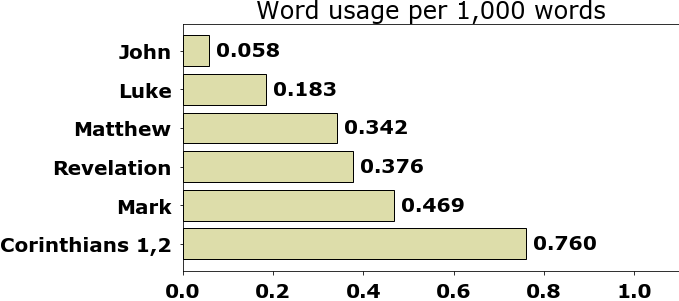 |
Words: ποτηριον=24 ποτηριου=4 ποτηριω=2 ποτηριων
|
The ancient Greek word
"ποτήριον" ≈ "cup" as a diminutive of the ancient Greek word
"ποτήρ" ≈ "cup" and from the ancient Greek word
"πίνω" ≈ "drink". It is the source of the English word
"pottery".
108. Matthew 26:27 Eucharist
Matthew 26:27 And he took the cup, and gave thanks, and gave it to them, saying, Drink ye all of it; [kjv]
και λαβων το ποτηριον και ευχαριστησας εδωκεν αυτοις λεγων πιετε εξ αυτου παντες [gnt]
The
ancient Greek word
"εὐχαριστῶ" ≈ "thank you" and is a shortened form of the ancient Greek word
"εὐχαριστέ" ≈ "thank you" and consists of prefix
"εὐ" ≈ "good" and
"χάρῐς" ≈ "favor" often translated as "
grace" or "
joy". Surprised?
Through Latin (with sound changes) the Greek word becomes
"Eucharist" or
"thank you" or
"good favor". What is the
"good favor" done for you? By whom was it done?
109. Matthew 26:27
KJV: And he took the cup, and gave thanks, and gave it to them, saying, Drink ye all of it;
Hebrew: ויקח את הכוס ויברך ויתן להם לאמר שתו ממנה כלכם׃
Greek: και λαβων το ποτηριον και ευχαριστησας εδωκεν αυτοις λεγων πιετε εξ αυτου παντες
Latin: et accipiens calicem gratias egit et dedit illis dicens bibite ex hoc omnes
Wessex: Aend he genam þanne calic þanciende & sealde heom þus cweðende. Drinkað ealle of þisen.
Wycliffe: And he took the cuppe, and dide thankyngis, and yaf to hem,
Luther: Und er nahm den Kelch und dankete, gab ihnen den und sprach: Trinket alle daraus!
Spanish: Y tomando la copa, habiendo dado gracias, les dio, diciendo: Bebed de ella todos;
110. Matthew 26:28 Testament
Matthew 26:28 For this is my blood of the new testament, which is shed for many for the remission of sins. [kjv]
τουτο γαρ εστιν το αιμα μου το της καινης διαθηκης το περι πολλων εκχυνομενον εκχυννομενον εις αφεσιν αμαρτιων [gnt]
There is a "
New Testament" or "
New Covenant" in the
GNT but there appears to be little mention of an "
Old Testament" or "
Old Covenant" in the
GNT (Luke, 2 Corinthians). Thus, it is hard to relate "
new" and "
old" to "
testament" or "
covenant".
The
TR adds the word
"new".
For which is the blood
not shed for the remission of sins?
[covenant as play on though Peter as in through the church]
111. Matthew 16:16-17 Flesh and blood
Matthew 16:16 And Simon Peter answered and said, Thou art the Christ, the Son of the living God. [kjv]
αποκριθεις δε σιμων πετρος ειπεν συ ει ο χριστος ο υιος του θεου του ζωντος [gnt]
16:17 And Jesus answered and said unto him, Blessed art thou, Simon Bar–jona: for flesh and blood hath not revealed it unto thee, but my Father which is in heaven. [kjv]
και αποκριθεις δε ο ιησους ειπεν αυτω μακαριος ει σιμων βαρ ιωνα βαριωνα οτι σαρξ και αιμα ουκ απεκαλυψεν σοι αλλ ο πατηρ μου ο εν τοις ουρανοις [gnt]
Note that Jesus uses the name
"Peter" in 16:16 but not in 16:17. Is this important?
112. Matthew 26:28 Blood of the New Testament
Matthew 26:28 For this is my blood of the new testament, which is shed for many for the remission of sins. [kjv]
τουτο γαρ εστιν το αιμα μου το της καινης διαθηκης το περι πολλων εκχυνομενον εκχυννομενον εις αφεσιν αμαρτιων [gnt]
Who are the
"many"? Are there some included who are not among the
"many". Might these be in the "
wide area"? Who are the "
few"? How about the "
wolves"?
The Greek for
"remission" is the same word as for
"forgiveness" or
"letting go".
Note that one must "
redeem" the "
offer" of the "
Redeemer" before it is valid or takes effect. This point is often (deceptively) omitted by some pastors.
113. Petrified stones and rocks
John 1:42 And he brought him to Jesus. And when Jesus beheld him, he said, Thou art Simon the son of Jona: thou shalt be called Cephas, which is by interpretation, A stone. [kjv]
και ηγαγεν αυτον προς τον ιησουν εμβλεψας δε αυτω ο ιησους ειπεν συ ει σιμων ο υιος ιωνα ιωαννου συ κληθηση κηφας ο ερμηνευεται πετρος [gnt]
The Latin
"cephas" ≈ "rock, stone", originally starting with a "
k" sound, comes from the
ancient Greek
"κηφᾶς" ≈ "rock, stone" which comes from the Hebrew/Aramaic word
"כיפא" (keph) ≈ "rock".
John, who appears to think as a modern computer scientist in many ways, picks up on the relevance and importance of explicitly recording the double meaning. The word "
hermeneutics" comes from the ancient Greek word
"ἑρμηνεύς" ≈ "interpreter" as to the meaning of something.
The
modern Greek word
"κήφας" (KEE-fas) ≈ "rock, stone".
114. Matthew 26:28 Testament to Peter
Matthew 26:28 For this is my blood of the new testament, which is shed for many for the remission of sins. [kjv]
τουτο γαρ εστιν το αιμα μου το της καινης διαθηκης το περι πολλων εκχυνομενον εκχυννομενον εις αφεσιν αμαρτιων [gnt]
The ancient Greek word
"κηφᾶς" ≈ "rock, stone" (name for Peter as "
rock").
115. Strongs - covenant
116. Strongs - sheath
- *G2336 *1 θήκη (thay'-kay) : from G5087; a receptacle, i.e. scabbard:--sheath.
117. John 18:11
John 18:11 Then said Jesus unto Peter, Put up thy sword into the sheath: the cup which my Father hath given me, shall I not drink it? [kjv]
ειπεν ουν ο ιησους τω πετρω βαλε την μαχαιραν σου εις την θηκην το ποτηριον ο δεδωκεν μοι ο πατηρ ου μη πιω αυτο [gnt]
"θήκη" ≈ "box, chest, grave, tomb, sheath (for sword)".
118. John 18:11
KJV: Then said Jesus unto Peter, Put up thy sword into the sheath: the cup which my Father hath given me, shall I not drink it?
Greek: ειπεν ουν ο ιησους τω πετρω βαλε την μαχαιραν σου εις την θηκην το ποτηριον ο δεδωκεν μοι ο πατηρ ου μη πιω αυτο
119. Compare
120. Matthew 26:28 Testament to Peter
Matthew 26:28 For this is my blood of the new testament, which is shed for many for the remission of sins. [kjv]
τουτο γαρ εστιν το αιμα μου το της καινης διαθηκης το περι πολλων εκχυνομενον εκχυννομενον εις αφεσιν αμαρτιων [gnt]
"διαθήκης" ≈ "testament, will, covenant" (as used).
"δια" ≈ "through" and "κηφᾶς" ≈ "rock, stone" (name for Peter as "rock").
"εἰς" ≈ "into" and "ἄφεσιν" ≈ "letting go, forgiveness".
"εί" ≈ "if, whether" and "σαφέσιν" ≈ "clear, evident".
How is
deception as a "
sin", or "
not a witness", addressed by what Jesus says here? Is
deception a "
clear" and "
evident" "
sin"?
The ancient Greek word
"σαφής" ≈ "clear, evident" as in seen with the eyes or understood with the mind.
121. Testament
Matthew 26:28 For this is my blood of the new testament, which is shed for many for the remission of sins. [kjv]
τουτο γαρ εστιν το αιμα μου το της καινης διαθηκης το περι πολλων εκχυνομενον εκχυννομενον εις αφεσιν αμαρτιων [gnt]
Mark 14:24 And he said unto them, This is my blood of the new testament, which is shed for many. [kjv]
και ειπεν αυτοις τουτο εστιν το αιμα μου το της καινης διαθηκης το περι εκχυννομενον υπερ πολλων εκχυνομενον [gnt]
Luke 22:20 Likewise also the cup after supper, saying, This cup is the new testament in my blood, which is shed for you. [kjv]
ωσαυτως και το ποτηριον ωσαυτως μετα το δειπνησαι λεγων τουτο το ποτηριον η καινη διαθηκη εν τω αιματι μου το υπερ υμων εκχυνομενον εκχυννομενον [gnt]
Where is the "
new" in "
new" "
testament"?
122. Matthew 26:28 New Testament
Matthew 26:28 For this is my blood of the new testament, which is shed for many for the remission of sins. [kjv]
τουτο γαρ εστιν το αιμα μου το της καινης διαθηκης το περι πολλων εκχυνομενον εκχυννομενον εις αφεσιν αμαρτιων [gnt]

Some "
birds" will emphasize the
"new" "
testament" as if it supersedes all previous testaments as in "
covenants", "
agreements", etc. They may then add their own ideas of what constitutes "
new".
This is often followed by "
love one another" unconditionally. However, Jesus is speaking to "
believers". For non-believers or "
neighbors", one is to "
love your neighbor as yourself" which provides a negative feedback constraint so that the outside culture is not brought into the family of believers unconditionally.
123. Jesus says why he was born
John 18:37 Pilate therefore said unto him, Art thou a king then? Jesus answered, Thou sayest that I am a king. To this end was I born, and for this cause came I into the world, that I should bear witness unto the truth. Every one that is of the truth heareth my voice. [kjv]
ειπεν ουν αυτω ο πιλατος ουκουν βασιλευς ει συ απεκριθη ο ιησους συ λεγεις οτι βασιλευς ειμι εγω εγω εις τουτο γεγεννημαι και εις τουτο εληλυθα εις τον κοσμον ινα μαρτυρησω τη αληθεια πας ο ων εκ της αληθειας ακουει μου της φωνης [gnt]
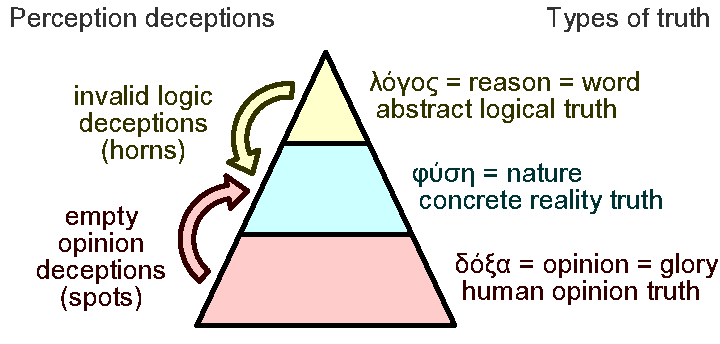
Only John tells us
why Jesus was born. Jesus witnesses to Pilate.
Jesus tells Pilate
why he was born in
John 18:37. When Jesus talks of
"truth", as in the Greek and Hebrew words for truth, he is talking about the truth of
reality and
not of a
logical true-false truth system.
Throughout time, there are those who hear the message and have understanding. Jesus tells this to Pilate. The Greek for "
born" means to "
come into being" (in some form).
[philosophy courses, Aristotle final cause]
124. Blood shed for you
Matthew 26:28 For this is my blood of the new testament, which is shed for many for the remission of sins. [kjv]
τουτο γαρ εστιν το αιμα μου το της καινης διαθηκης το περι πολλων εκχυνομενον εκχυννομενον εις αφεσιν αμαρτιων [gnt]
Mark 14:24 And he said unto them, This is my blood of the new testament, which is shed for many. [kjv]
και ειπεν αυτοις τουτο εστιν το αιμα μου το της καινης διαθηκης το περι εκχυννομενον υπερ πολλων εκχυνομενον [gnt]
Luke 22:20 Likewise also the cup after supper, saying, This cup is the new testament in my blood, which is shed for you. [kjv]
ωσαυτως και το ποτηριον ωσαυτως μετα το δειπνησαι λεγων τουτο το ποτηριον η καινη διαθηκη εν τω αιματι μου το υπερ υμων εκχυνομενον εκχυννομενον [gnt]
In Greek, if the context does not make it clear that two things are
"equal" using
"is", then the explicit ancient Greek word
"ισα" ≈ "equal" is needed. This word is
not in the above verse. The word
"is" is not in Luke.
Does the
context of these statements at the Last Supper using
"is" constitute
equality, as in
transubstantiation? Is an explicit
"equals" in Greek needed? Luke does not have an
"is" for the "
blood" but is more indirect.
[Calvinist interpretation]
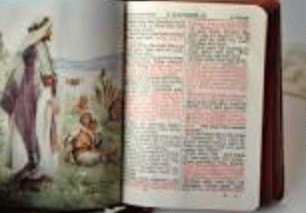
125. Luke 22:20 Red letter Bible
Luke 22:20 Likewise also the cup after supper, saying, This cup is the new testament in my blood, which is shed for you. [kjv]
ωσαυτως και το ποτηριον ωσαυτως μετα το δειπνησαι λεγων τουτο το ποτηριον η καινη διαθηκη εν τω αιματι μου το υπερ υμων εκχυνομενον εκχυννομενον [gnt]
The first red letter New Testament was published in
1898. A red letter Bible followed a few years later - based on selected theological ideas (i.e., appearances of Jesus in the Old Testament). The inspiration for the
red letter Bible comes from the corresponding verse in
Luke 22:20.
You should "
read" the "
red" so that it is, well,
bloody (
blessed) "
red". [Drew Bledsoe, Tom Brady, week 2 of 2001 NFL season, bliss conflation]
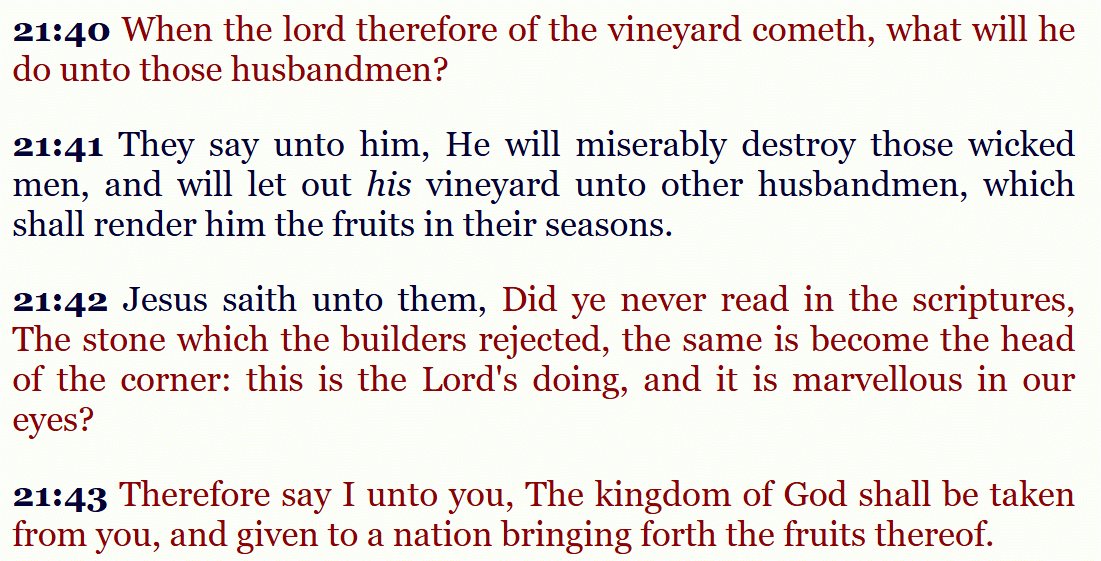
126. Red Letter Bible
21:40 When the lord therefore of the vineyard cometh, what will he do unto those husbandmen?
21:41 They say unto him, He will miserably destroy those wicked men, and will let out his vineyard unto other husbandmen, which shall render him the fruits in their seasons.
21:42 Jesus saith unto them, Did ye never read in the scriptures, The stone which the builders rejected, the same is become the head of the corner: this is the Lord's doing, and it is marvelous in our eyes.
21:43 Therefore say I unto you, The kingdom of God shall be taken from you, and given to a nation bringing forth the fruits thereof.
127. Matthew 26:28 Blood shed for many
Matthew 26:28 For this is my blood of the new testament, which is shed for many for the remission of sins. [kjv]
τουτο γαρ εστιν το αιμα μου το της καινης διαθηκης το περι πολλων εκχυνομενον εκχυννομενον εις αφεσιν αμαρτιων [gnt]
The Greek word translated as
"remission" is that of
"let go" and is often translated as
"forgive". The Greek word translated as
"for" is that of the ancient Greek word
"περί" ≈ "around" as in the first part of the English word
"perimiter".
The
"blood" is "
shed" or "
let out"
"for" or
"around" "many".
Who are the "many"? The word could have been omitted and then inferred as everyone.
Who are not the "many"? That is, the "few" to whom this does not apply.
Greek word order:
... the around many shed into/against letting go of sins.
128. Matthew 26:28 Let go of snakes
Matthew 26:28 For this is my blood of the new testament, which is shed for many for the remission of sins. [kjv]
τουτο γαρ εστιν το αιμα μου το της καινης διαθηκης το περι πολλων εκχυνομενον εκχυννομενον εις αφεσιν αμαρτιων [gnt]
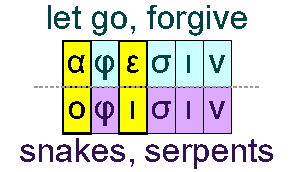
A play on words can be made with
"let go" or
"remission" or
"forgiveness" and
"snakes" or
"serpents" in Revelation.
"αφεσιν" ≈ "remission, forgiveness".
"οφισιν" ≈ "snakes, serpents" and used in this exact form one time, in Revelation.
Can a false or misguided belief relate to confusing
"snake" induced behavior with true
"forgiveness"? That is, the bite and sting of the
"snake" paralyzes the victim to not be able to "
walk" in "
righteousness" but, instead, to be
"snake" food to fill the "
belly" of the
"snake" (on "
earth").
129. Matthew 26:28
KJV: For this is my blood of the new testament, which is shed for many for the remission of sins.
Greek: τουτο γαρ εστιν το αιμα μου το της καινης διαθηκης το περι πολλων εκχυνομενον εκχυννομενον εις αφεσιν αμαρτιων
130. Strongs - fruit, offspring
*G1081 *9 γέννημα (ghen'-nay-mah) : from G1080; offspring; by analogy, produce (literally or figuratively):--fruit, generation.
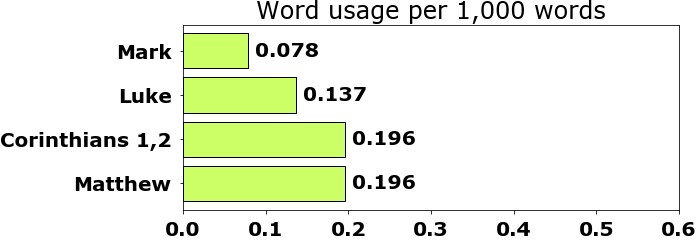 |
Words: γενηματα=2 γενηματος=3 γεννηματα=4
|
131. Usage - fruit, offspring
- *G1081 *9 γέννημα (ghen'-nay-mah) : from G1080; offspring; by analogy, produce (literally or figuratively):--fruit, generation.
- γεννηματα *4
- Matthew 3:7 ... baptism, he said unto them, O generation of vipers, who hath warned ...
- Matthew 12:34 O generation of vipers, how can ye, being evil, ...
- Matthew 23:33 Ye serpents, ye generation of vipers, how can ye escape the damnation of hell?
- Luke 3:7 ... to be baptized of him, O generation of vipers, who hath warned ...
- γενηματος *3
- Matthew 26:29 ... henceforth of this fruit of the vine, until that ...
- Mark 14:25 ... I will drink no more of the fruit of the vine, until that ...
- Luke 22:18 ... not drink of the fruit of the vine, until the kingdom ...
- γενηματα *2
- Luke 12:18 ... will I bestow all my fruits and my goods.
- 2 Corinthians 9:10 ... seed sown, and increase the fruits of your righteousness;)
132. Matthew 26:27-28 Drinking the blood
Matthew 26:27 And he took the cup, and gave thanks, and gave it to them, saying, Drink ye all of it; [kjv]
και λαβων το ποτηριον και ευχαριστησας εδωκεν αυτοις λεγων πιετε εξ αυτου παντες [gnt]
26:28 For this is my blood of the new testament, which is shed for many for the remission of sins. [kjv]
τουτο γαρ εστιν το αιμα μου το της καινης διαθηκης το περι πολλων εκχυνομενον εκχυννομενον εις αφεσιν αμαρτιων [gnt]
The blood represents life. The
"Eucharist" in both ancient and modern Greek is the word for
"thank you" and means, literally, a
"good favor" or "
good grace".
133. Matthew 26:28 Blood
Matthew 26:28 For this is my blood of the new testament, which is shed for many for the remission of sins. [kjv]
τουτο γαρ εστιν το αιμα μου το της καινης διαθηκης το περι πολλων εκχυνομενον εκχυννομενον εις αφεσιν αμαρτιων [gnt]
What might the
"blood" represent?
134. Matthew 23:29-30 Like father like son
Matthew 23:29 Woe unto you, scribes and Pharisees, hypocrites ! because ye build the tombs of the prophets, and garnish the sepulchres of the righteous, [kjv]
ουαι υμιν γραμματεις και φαρισαιοι υποκριται οτι οικοδομειτε τους ταφους των προφητων και κοσμειτε τα μνημεια των δικαιων [gnt]
23:30 And say, If we had been in the days of our fathers, we would not have been partakers with them in the blood of the prophets. [kjv]
και λεγετε ει ημεν ημεθα εν ταις ημεραις των πατερων ημων ουκ αν ημεν κοινωνοι ημεθα αυτων κοινωνοι εν τω αιματι των προφητων [gnt]
"αἷμα" ≈ "blood" and is the source of the English word "anemic".
The Greek word translated as "
partakers" is that of "
common" and is the same base word as that used for "
Koine" Greek.
135. Matthew 23:35
Matthew 23:35 That upon you may come all the righteous blood shed upon the earth, from the blood of righteous Abel unto the blood of Zacharias son of Barachias, whom ye slew between the temple and the altar. [kjv]
οπως ελθη εφ υμας παν αιμα δικαιον εκχυνομενον εκχυννομενον επι της γης απο του αιματος αβελ του δικαιου εως του αιματος ζαχαριου υιου βαραχιου ον εφονευσατε μεταξυ του ναου και του θυσιαστηριου [gnt]
The ancient Greek word
"αἷμα" ≈ "blood" and is the source of the English word
"anemic". as in, literally, "
not" and
"blood".
The ancient Greek word
"μεταξύ" ≈ "between, meanwhile" from
"μετά" ≈ "after" and
"ξύν" ≈ "beside, with" from
"συν" ≈ "beside, with".
136. Abel to Zacharias between the temple and the altar
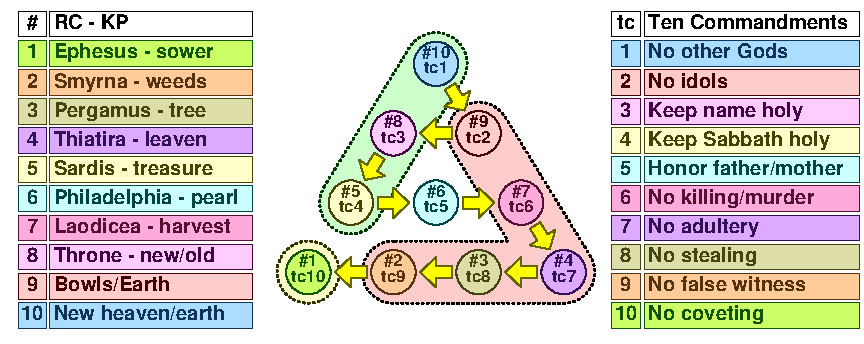
Interesting: Abel starts at #1 (TC 1: no coveting). until Zechariah at #7 (TC 6: no killing) between #4, the temple (TC 4: no adultery), and #9, the altar (TC 2: no idols). [arms/hands as pigs, play on words with Barachias]
|
| Greek numbering |
| 1 |
Α |
α |
A |
Abel (no covet) |
| 2 |
Β |
β |
B |
|
| 3 |
Γ |
γ |
C |
|
| 4 |
Δ |
δ |
D |
(temple)(no adultery) |
| 5 |
Ε |
ε |
E |
|
| 6 |
* |
* |
F |
(digamma) |
| 7 |
Ζ |
ζ |
Z |
Zachariah (no killing) |
| 8 |
Η |
η |
|
|
| 9 |
Θ |
θ |
|
(altar)(no idols) |
| 10 |
Ι |
ι |
|
|
|
137. 2 Chronicles 24:20 Zachariah
2 Chronicles 24:20 And the Spirit of God came upon Zechariah the son of Jehoiada the priest, which stood above the people, and said unto them, Thus saith God, Why transgress ye the commandments of the LORD, that ye cannot prosper? because ye have forsaken the LORD, he hath also forsaken you. [kjv]
και πνευμα θεου ενεδυσεν τον αζαριαν τον του ιωδαε τον ιερεα και ανεστη επανω του λαου και ειπεν ταδε λεγει κυριος τι παραπορευεσθε τας εντολας κυριου και ουκ ευοδωθησεσθε οτι εγκατελιπετε τον κυριον και εγκαταλειψει υμας [lxx]
Some associate
"Zacharias" in Matthew 23:36 with the
"Zechariah" in 2 Chronicles 24:20-21. Jesus and Matthew quote from the
LXX and, in the
LXX,
"Zachariah" in Greek starts with an "
A" and not a "
Z". This
breaks the TenWordPin model correspondence. Does it break other opinions on the source of the
"Zachariah" to which Jesus is referring?
138. 2 Chronicles 24:21
2 Chronicles 24:21 And they conspired against him, and stoned him with stones at the commandment of the king in the court of the house of the LORD. [kjv]
και επεθεντο αυτω και ελιθοβολησαν αυτον δι εντολης ιωας του βασιλεως εν αυλη οικου κυριου [lxx]
139. Strongs - blood
*G129 *97 αἷμα (hah'-ee-mah) : of uncertain derivation; blood, literally (of men or animals), figuratively (the juice of grapes) or specially (the atoning blood of Christ); by implication, bloodshed, also kindred:--blood.
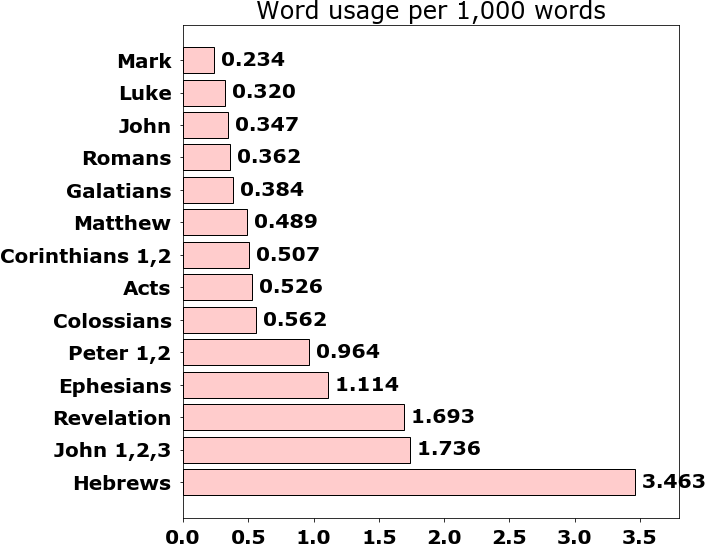 |
Words: αιμα=42 αιματα αιματι=20 αιματος=33 αιματων
|
The ancient Greek word
"αἷμα" ≈ "blood" and is the source of the English word
"anemic". as in, literally, "
not" and
"blood".
140. Matthew 26:29 Fruit of the vine
Matthew 26:29 But I say unto you, I will not drink henceforth of this fruit of the vine, until that day when I drink it new with you in my Father's kingdom. [kjv]
λεγω δε υμιν οτι ου μη πιω απ αρτι εκ τουτου του γεννηματος γενηματος της αμπελου εως της ημερας εκεινης οταν αυτο πινω μεθ υμων καινον εν τη βασιλεια του πατρος μου [gnt]
At the last supper, Jesus talks of drinking the fruit of the vine. At that time, in the Spring of the year during Passover, any wine, leftover from the Fall before, would have been somewhat fermented.
Perhaps this statement at the Last Supper is why Jesus refused the offer of wine (and myrrh to lessen the pain) at the crucifixion.
[chemists and alcohol]
141. Matthew 26:29 Fruit of the vine
Matthew 26:29 But I say unto you, I will not drink henceforth of this fruit of the vine, until that day when I drink it new with you in my Father's kingdom. [kjv]
λεγω δε υμιν οτι ου μη πιω απ αρτι εκ τουτου του γεννηματος γενηματος της αμπελου εως της ημερας εκεινης οταν αυτο πινω μεθ υμων καινον εν τη βασιλεια του πατρος μου [gnt]
The word that the
KJV translates as
"fruit" is not the usual word for
"fruit" but
"offspring". What might the
"vineyard" represent? The same Greek words can have (at least) two meanings.
"fruit" of the "vine".
"generation" of the "vineyard".
*G1081 *9 γέννημα (ghen'-nay-mah) : from G1080; offspring; by analogy, produce (literally or figuratively):--fruit, generation.
142. Matthew 26:29 Fruit of the vine
Matthew 26:29 But I say unto you, I will not drink henceforth of this fruit of the vine, until that day when I drink it new with you in my Father's kingdom. [kjv]
λεγω δε υμιν οτι ου μη πιω απ αρτι εκ τουτου του γεννηματος γενηματος της αμπελου εως της ημερας εκεινης οταν αυτο πινω μεθ υμων καινον εν τη βασιλεια του πατρος μου [gnt]
"fruit" of the "vine".
"generation" of the "vineyard".
[fermented grape juice, dry wine, chemists and alcohol]
What happens if grape vines get too much sun and not enough water?
It will be hard raising/raisin grapes. I heard it through the grapevine. Is that being un-raisonable? Juicy it was a grape whine. [word golf jokes]
143. Matthew 12:34 Generations
Matthew 12:34 O generation of vipers, how can ye, being evil, speak good things? for out of the abundance of the heart the mouth speaketh. [kjv]
γεννηματα εχιδνων πως δυνασθε αγαθα λαλειν πονηροι οντες εκ γαρ του περισσευματος της καρδιας το στομα λαλει [gnt]
The ancient Greek word
"γεννήματα" ≈ "fruit, offspring" (plural but translated as singular in the
KJV). Jesus used the usual word for
"fruit" in the previous verse.
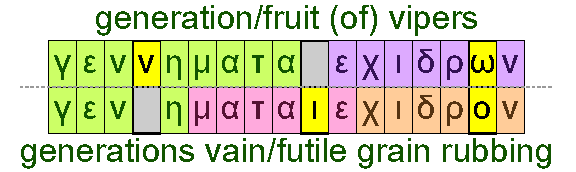
Generation of vipers ...
Fruit of vipers ...
Might the
"fruit" of the "
vipers" be not good or even dangerous?
144. Matthew 12:34 Generations
Matthew 12:34 O generation of vipers, how can ye, being evil, speak good things? for out of the abundance of the heart the mouth speaketh. [kjv]
γεννηματα εχιδνων πως δυνασθε αγαθα λαλειν πονηροι οντες εκ γαρ του περισσευματος της καρδιας το στομα λαλει [gnt]
"γεννήματα" ≈ "fruit, offspring" and "ἔχιδων" ≈ "(of) snakes, treacherous persons". [wind shield vipers]
"γένη" ≈ "generations" and "μάταιε" ≈ "vain, futile, empty, worthless" (vocative) and "χῖδρον" ≈ "unripe wheaten groats, rubbed from the ear of the hands",
The
grain rubbing might relate to the beginning of the chapter and the disciples picking and eating grain in the field.
The
ancient Greek word
"μάταιος" ≈ "vain, futile, empty, worthless".
The
ancient Greek word
"γενεά" ≈ "birth, race, generation, offspring".
145. Matthew 9:17 Double meaning
Matthew 9:17 Neither do men put new wine into old bottles: else the bottles break, and the wine runneth out, and the bottles perish: but they put new wine into new bottles, and both are preserved. [kjv]
ουδε βαλλουσιν οινον νεον εις ασκους παλαιους ει δε μηγε ρηγνυνται οι ασκοι και ο οινος εκχειται και οι ασκοι απολουνται απολλυνται αλλα βαλλουσιν οινον νεον εις ασκους καινους και αμφοτερα αμφοτεροι συντηρουνται [gnt]
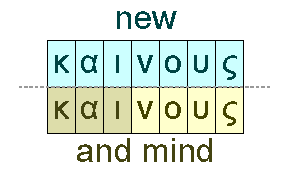
"καινοῦς" ≈ "new" (accusative) from "καινός" ≈ "new".
"και" ≈ "and" and "νοῦς" ≈ "mind, brain" (nominative).
As translated:
... but they put new wine into new bottles and both are preserved.
Greek word order:
... but they put wine new into bottles new and both are preserved.
Play on words:
... but they put new wine into bottles and mind and both are preserved.
That is, the new "
doctrine" of the "
wine" (as in "
drink my blood") is put into the containers (body) and the "
mind" and, thus, both body and mind are preserved (resurrected). If one puts new "
doctrine" of the "
wine" into the old containers (body) those containers are not preserved (resurrected)
146. Matthew 26:29 Fruit of the vine
Matthew 26:29 But I say unto you, I will not drink henceforth of this fruit of the vine, until that day when I drink it new with you in my Father's kingdom. [kjv]
λεγω δε υμιν οτι ου μη πιω απ αρτι εκ τουτου του γεννηματος γενηματος της αμπελου εως της ημερας εκεινης οταν αυτο πινω μεθ υμων καινον εν τη βασιλεια του πατρος μου [gnt]
The
"fruit" in
"fruit" of the
"vine" uses a different Greek word for
"fruit" that means
"birth" or
"coming into being". The
"fruit" of the
"vine" is associated with "
life" and the "
Father" and the "
Kingdom" of "
God".
147. Matthew 26:29
KJV: But I say unto you, I will not drink henceforth of this fruit of the vine, until that day when I drink it new with you in my Father's kingdom.
Greek: λεγω δε υμιν οτι ου μη πιω απ αρτι εκ τουτου του γεννηματος γενηματος της αμπελου εως της ημερας εκεινης οταν αυτο πινω μεθ υμων καινον εν τη βασιλεια του πατρος μου
Wessex: Witodlice ic segge eow þt ic ne drinke heonen-forð of þisen eorðalice wine aer þam daige þe ic drinke þt neowe mid eow on mines faeder rice.
148. Matthew 26:30 Hymn sing
Matthew 26:30 And when they had sung an hymn, they went out into the mount of Olives. [kjv]
και υμνησαντες εξηλθον εις το ορος των ελαιων [gnt]
The English word
"hymn" comes, through Latin, from the
ancient Greek word
"ὕμνος" ≈ "song, hymn, ode". The
modern Greek word
"ύμνος" (EE-mnos) ≈ "hymn".
When you sing a
"hymn" about
"Jesus" you are singing a
"hymn" about "
Him", no hem and haw about it. Ahem, shall we say amen.
Mount of Olives (olives grown).
Garden of Gethsemane (olive press).
This is after the Last Supper as they go to the Mount of Olives. What might the disciples have been thinking was going to happen?
149. Matthew 26:30-35,69-75 Rooster birds crowing at denials
Matthew 26:34 Jesus said unto him, Verily I say unto thee, That this night, before the cock crow, thou shalt deny me thrice. [kjv]
εφη αυτω ο ιησους αμην λεγω σοι οτι εν ταυτη τη νυκτι πριν αλεκτορα φωνησαι τρις απαρνηση με [gnt]
In the
GNT, Jesus does not use the idea of
"birds" in a good way. In Peter's denial of Christ, the
rooster "bird" crows or
voices at
Peter's denial. Think
"cluck" "cluck".
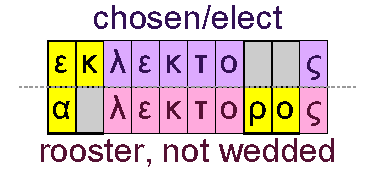
"ἐκλεκτός" ≈ "picked out, selected".
"ἀλέκτορος" ≈ "rooster, husband, not wedded" (genitive singular) of "ἀλέκτωρ" ≈ "rooster, husband, not wedded".
What meanings beyond the immediate literal meaning may be inferred in what Jesus says and the disciples do and how they react?
150. End of page







 The Jewish Seder is a precisely ordered meal, used in combination with the Haggadah prayer book, is to remind them of the Passover and exit from Egypt at the time of Moses.






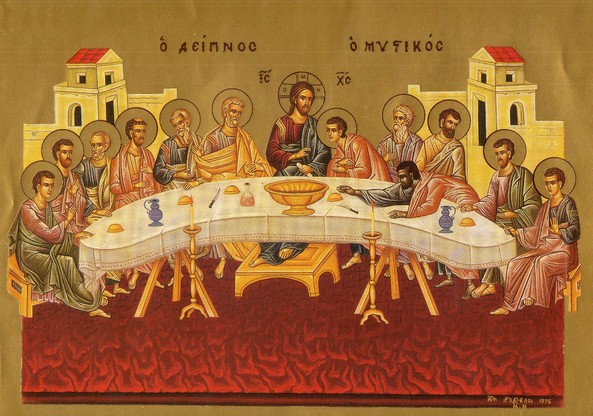 The Last Supper is taken in the prepared "guestchamber" - an "upper room". The same Greek word is translated as "Inn" in the Christmas story. The TR (Textus Receptus) omits the word "my" in "my" "guestchamber".