Send
Close Add comments:
(status displays here)
Got it! This site "www.creationpie.org" uses cookies. You consent to this by clicking on "Got it!" or by continuing to use this website. Note: This appears on each machine/browser from which this site is accessed.
Matthew 21:42-43 Rock hard evidence of the rejected cornerstone
1. Matthew 21:42-43 Rock hard evidence of the rejected cornerstone
2. Matthew 21
3. Matthew 21:40 Fruits
Matthew 21:40 When the lord therefore of the vineyard cometh, what will he do unto those husbandmen? [kjv]
οταν ουν ελθη ο κυριος του αμπελωνος τι ποιησει τοις γεωργοις εκεινοις [gnt]
Who are "
those" in charge of the
"vineyard"? Who is the "
Lord" of the
"vineyard"? Who is the "
head" of the "
church" as a "
gathering of believers"? The word
"church" comes from
"κύριος" ≈ "lord or master".
The Greek word translated as
"do" is that of
"ποιέω" ≈ "make, cause". What will the
"Lord" "make" of this? What do you
"make" of this?
The ancient Greek word
"ὅταν" ≈ "if, when" (used with subjunctive) as a combination of
"ὅτε" ≈ "when, whereas, sometimes" and
"ἄν" ≈ "possibility, if". The word
assumes that the events in the conditional are
likely to happen.
4. Matthew 21:41 Miserably wicked
Matthew 21:41 They say unto him, He will miserably destroy those wicked men, and will let out his vineyard unto other husbandmen, which shall render him the fruits in their seasons. [kjv]
λεγουσιν αυτω κακους κακως απολεσει αυτους και τον αμπελωνα εκδοσεται εκδωσεται αλλοις γεωργοις οιτινες αποδωσουσιν αυτω τους καρπους εν τοις καιροις αυτων [gnt]
What exactly are
"miserably" "wicked" "men"?
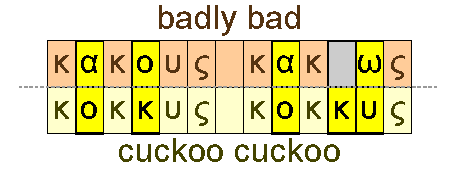
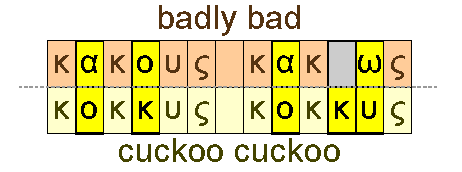
"κακοὺς" ≈ "bad" (adjective, as used).
"κακῶς" ≈ "bad" (adverb, as used).
Suppose the
"vineyard" contains both "
good" and
"bad" "husbandmen". How might one entice the
"bad" "husbandmen" to self-identify so they can receive their
just desserts?
5. Matthew 21:41 Bird calls
Matthew 21:41 They say unto him, He will miserably destroy those wicked men, and will let out his vineyard unto other husbandmen, which shall render him the fruits in their seasons. [kjv]
λεγουσιν αυτω κακους κακως απολεσει αυτους και τον αμπελωνα εκδοσεται εκδωσεται αλλοις γεωργοις οιτινες αποδωσουσιν αυτω τους καρπους εν τοις καιροις αυτων [gnt]
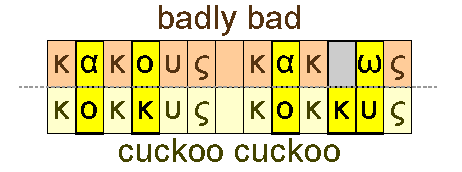
"κακοὺς" ≈ "bad" (adjective, as used).
"κακῶς" ≈ "bad" (adverb, as used).
"κόκκῦ" ≈ "cuckoo" as a call of a bird.
As in English (and any other language), anything close to the imitative sound would be taken as a
cuckoo.
[bad birds, Angry Birds]
6. Matthew 21:41 Bird calls
Matthew 21:41 They say unto him, He will miserably destroy those wicked men, and will let out his vineyard unto other husbandmen, which shall render him the fruits in their seasons. [kjv]
λεγουσιν αυτω κακους κακως απολεσει αυτους και τον αμπελωνα εκδοσεται εκδωσεται αλλοις γεωργοις οιτινες αποδωσουσιν αυτω τους καρπους εν τοις καιροις αυτων [gnt]
 |
 |
Audubon Bird
Call - Red
|
Hunters use "
bird" "
calls" to attract "
birds". The exact call used depends on the type of "
bird" one is trying to attract/trap.
Example from military, business, games, etc.
Call one's bluff.
For to show one's cards.
... and so on ...
7. Matthew 21:41
Matthew 21:41 They say unto him, He will miserably destroy those wicked men, and will let out his vineyard unto other husbandmen, which shall render him the fruits in their seasons. [kjv]
λεγουσιν αυτω κακους κακως απολεσει αυτους και τον αμπελωνα εκδοσεται εκδωσεται αλλοις γεωργοις οιτινες αποδωσουσιν αυτω τους καρπους εν τοις καιροις αυτων [gnt]
Question: How might the real
"householder" use bird calls to attract birds and get them to self-identify themselves as not doing what they were supposed to do so that they can be "
destroyed"?
Answer: Check the next parable at the start of the next chapter.
Why only
2 bird calls? What happens before
3 bird calls?
8. Matthew 21:41 Fruits
Matthew 21:41 They say unto him, He will miserably destroy those wicked men, and will let out his vineyard unto other husbandmen, which shall render him the fruits in their seasons. [kjv]
λεγουσιν αυτω κακους κακως απολεσει αυτους και τον αμπελωνα εκδοσεται εκδωσεται αλλοις γεωργοις οιτινες αποδωσουσιν αυτω τους καρπους εν τοις καιροις αυτων [gnt]
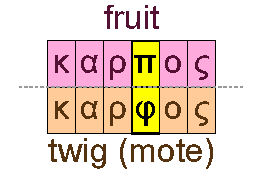
The ancient Greek word "καρπός" ≈ "fruit".
The modern Greek word "καρπός" (kar-POS) ≈ "fruit".
Who are the "
other" "
similar"
"husbandmen"?
9. Parable groups
There are many interpretations of this parable, but there are
two groups in the traditional view.
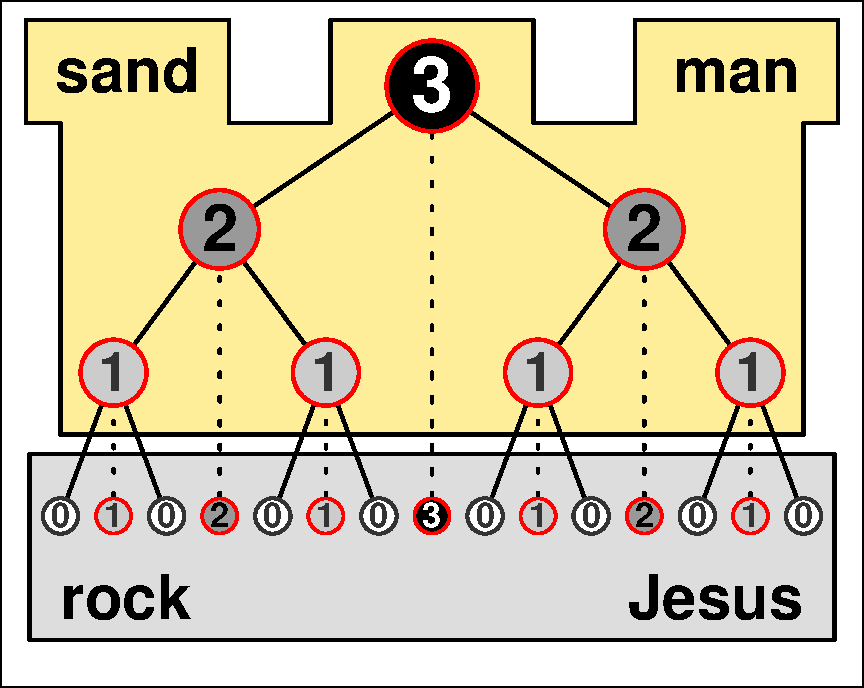
The tenants or husbandmen are those in charge of the vineyard as in "the house built on sand".
The vineyard appears to represent the common person as in "the house built on the rock".
10. Application - then and now
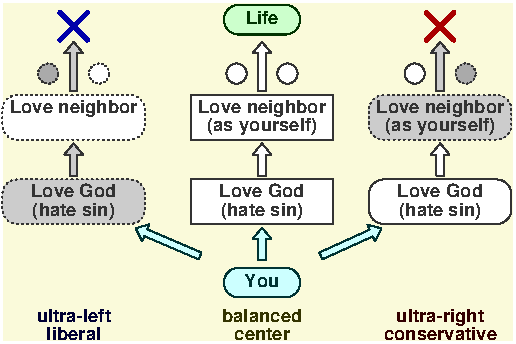
In the traditional view, the "
tenants" were not doing what they were supposed to be doing. One can see this in some modern churches. As such, this parable had (and has) an immediate application to the religious leaders and infrastructure of the time - both first and second coming of Jesus.
Jesus often speaks in terms that have wider meaning and application.
If this situation were to happen again, would the religious leaders and infrastructure face similar consequences, such as at the second coming of Jesus?
11. Matthew 21: Parable of the bad tenants
Matthew 21:41 They say unto him, He will miserably destroy those wicked men, and will let out his vineyard unto other husbandmen, which shall render him the fruits in their seasons. [kjv]
λεγουσιν αυτω κακους κακως απολεσει αυτους και τον αμπελωνα εκδοσεται εκδωσεται αλλοις γεωργοις οιτινες αποδωσουσιν αυτω τους καρπους εν τοις καιροις αυτων [gnt]
The parable of the wicked husbandmen, often called the parable of the bad tenants, Matthew 21:33-41 and basically repeated in Mark and Luke (both omitted), Jesus relates how the bad tenants did not fulfill their duties and, on return of the owner, were destroyed. This parable also appears in the Gospel of Thomas.
12. Matthew 21: Parable of the bad tenants
Matthew 21:41 They say unto him, He will miserably destroy those wicked men, and will let out his vineyard unto other husbandmen, which shall render him the fruits in their seasons. [kjv]
λεγουσιν αυτω κακους κακως απολεσει αυτους και τον αμπελωνα εκδοσεται εκδωσεται αλλοις γεωργοις οιτινες αποδωσουσιν αυτω τους καρπους εν τοις καιροις αυτων [gnt]
The parable of the wicked husbandmen is often called the parable of the bad tenants. A close analysis reveals that the identity of the "
householder" is important. Consider the ants.
Five ants went to together with five other ants and rented an apartment.
They were ten ants all together. A little antsy, but otherwise fine.
13. Proverbs 6:6-7 Ants and sluggards
Proverbs 6:6 Go to the ant, thou sluggard; consider her ways, and be wise: [kjv]
ιθι προς τον μυρμηκα ω οκνηρε και ζηλωσον ιδων τας οδους αυτου και γενου εκεινου σοφωτερος [lxx]
… formicam … piger … sapientiam [v]
6:7 Which having no guide, overseer, or ruler, [kjv]
εκεινω γαρ γεωργιου μη υπαρχοντος μηδε τον αναγκαζοντα εχων μηδε υπο δεσποτην ων [lxx]
… ducem … praeceptorem … principem [v]
14. Proverbs 6:8 Bees
Proverbs 6:8 Provideth her meat in the summer, and gathereth her food in the harvest. [kjv]
ετοιμαζεται θερους την τροφην πολλην τε εν τω αμητω ποιειται την παραθεσιν η πορευθητι προς την μελισσαν και μαθε ως εργατις εστιν την τε εργασιαν ως σεμνην ποιειται ης τους πονους βασιλεις και ιδιωται προς υγιειαν προσφερονται ποθεινη δε εστιν πασιν και επιδοξος καιπερ ουσα τη ρωμη ασθενης την σοφιαν τιμησασα προηχθη [lxx]
he prepares food for himself in the summer, and lays by abundant store in harvest. Or go to the bee, and learn how diligent she is, and how earnestly she is engaged in her work; whose labours kings and private men use for health, and she is desired and respected by all: though weak in body, she is advanced by honouring wisdom. [bs3]
The
LXX (Septuagint) includes a detailed discussion of the "
bee" that is not in the
KJV (King James Version) (based on the Hebrew).
15. Other similar differences
Greek has
two words for
"others" as in others that are
"similar" and others that are
"different" whereas English has the
one word
"other"
| English |
Greek |
Greek |
| other |
other (similar) |
ἄλλος |
| other |
other (different) |
ἕτερος |
|
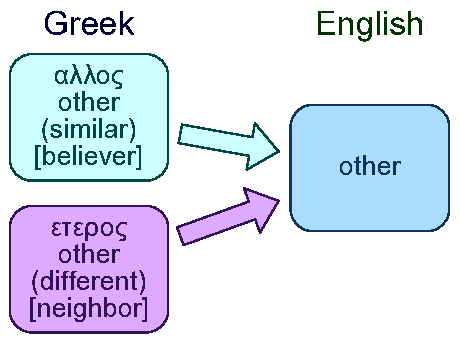 |
The ancient Greek word
"ἄλλος" ≈ "other - similar" and is related to the English word
"else".
The ancient Greek word
"ἕτερος" ≈ "other - different" and is related to the English word
"asunder" as in "
one or the other of two" and is the prefix of English words such as "
heterosexual", "
heterodoxy", etc.
16. Matthew 21: Similar tenants
Matthew 21:41 They say unto him, He will miserably destroy those wicked men, and will let out his vineyard unto other husbandmen, which shall render him the fruits in their seasons. [kjv]
λεγουσιν αυτω κακους κακως απολεσει αυτους και τον αμπελωνα εκδοσεται εκδωσεται αλλοις γεωργοις οιτινες αποδωσουσιν αυτω τους καρπους εν τοις καιροις αυτων [gnt]
Jesus says that the
"other" "husbandmen" or
"tenants" were
"other" "
similar"
"husbandmen" and not
"other" "
different"
"husbandmen". How does this make a difference?
Company statement:
We recognize that we have bad managers. We will replace them with other similar managers. [Dilbert and outsourcing management]
TQM (Total Quality Management) vs.
CQI (Continuous Quality Improvement).
17. Matthew 21:41 Seasons
Matthew 21:41 They say unto him, He will miserably destroy those wicked men, and will let out his vineyard unto other husbandmen, which shall render him the fruits in their seasons. [kjv]
λεγουσιν αυτω κακους κακως απολεσει αυτους και τον αμπελωνα εκδοσεται εκδωσεται αλλοις γεωργοις οιτινες αποδωσουσιν αυτω τους καρπους εν τοις καιροις αυτων [gnt]
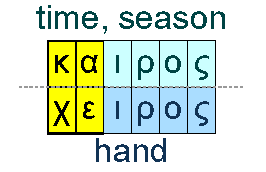
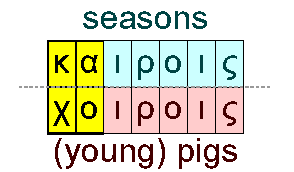
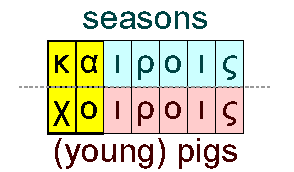
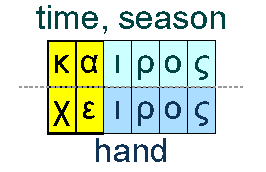
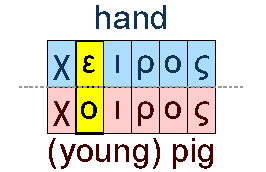
"καιροῖς" ≈ "measure, season, time" (as used, dative masculine plural) from "καιρός" ≈ "measure, season, time".
"χοίροις" ≈ "(young) pigs, swine" (dative masculine plural) from "χοῖρος" ≈ "(young) pig, swine"
Because of the use of
plural "seasons" a play on words with
"hands" does not fit well. However, a play on words with
"(young) pigs" does fit well. Does it have any meaning here? Why might there be more than one
"season"?
18. Matthew 21:41
Matthew 21:41 They say unto him, He will miserably destroy those wicked men, and will let out his vineyard unto other husbandmen, which shall render him the fruits in their seasons. [kjv]
λεγουσιν αυτω κακους κακως απολεσει αυτους και τον αμπελωνα εκδοσεται εκδωσεται αλλοις γεωργοις οιτινες αποδωσουσιν αυτω τους καρπους εν τοις καιροις αυτων [gnt]
Company statement:
We recognize that we have bad managers. We will replace them with other similar managers. [Dilbert and outsourcing management]
At what time, historically, did the
new bad managers take over their power?
19. Play comparisons
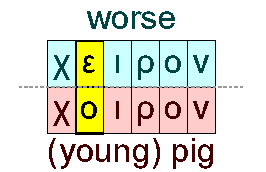
Jesus at various times makes a play on words with the following: "
season", "
hand", "
(young) pig", "
worse". Using just a "
pig" would not allow the play on words.
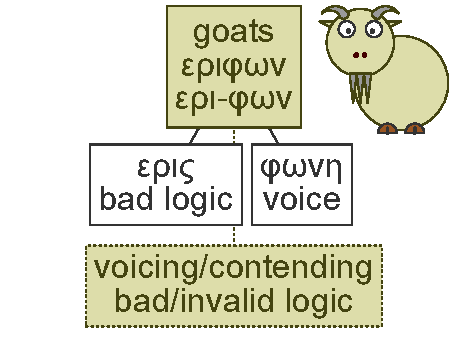
For the same reason, a "
(young) goat" (plural) is used in the parable of the
sheep and
goats. Using just "
goats" would not allow the play on words.
20. Matthew 21:41 Verses
Matthew 21:41 They say unto him, He will miserably destroy those wicked men, and will let out his vineyard unto other husbandmen, which shall render him the fruits in their seasons. [kjv]
λεγουσιν αυτω κακους κακως απολεσει αυτους και τον αμπελωνα εκδοσεται εκδωσεται αλλοις γεωργοις οιτινες αποδωσουσιν αυτω τους καρπους εν τοις καιροις αυτων [gnt]
Who is "
they" who are said to be speaking? Who is the audience to whom Jesus is speaking?
Who is "
he" who will "
destroy"?
Without knowing any nonverbal cues, one must consider various alternatives.
21. Matthew 21:41 Pronouns
Matthew 21:41 They say unto him, He will miserably destroy those wicked men, and will let out his vineyard unto other husbandmen, which shall render him the fruits in their seasons. [kjv]
λεγουσιν αυτω κακους κακως απολεσει αυτους και τον αμπελωνα εκδοσεται εκδωσεται αλλοις γεωργοις οιτινες αποδωσουσιν αυτω τους καρπους εν τοις καιροις αυτων [gnt]
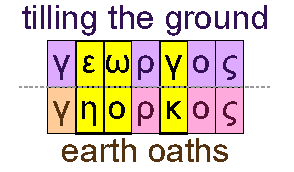
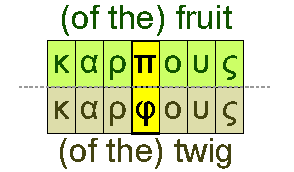
"κᾰρποῦς" ≈ "(of the) fruit, children".
"κάρφους" ≈ "(of the) arid stalk, dry twig".
Let us now consider the end of verse 41.
Who is "
his" who
has the
"vineyard"? Is it the real
"householder" as the Lord or the impersonator
"householder"? Who is "
him"? To whom will the
"fruit" be "
rendered"?
22. Matthew 21:41-43
Matthew 21:41 They say unto him, He will miserably destroy those wicked men, and will let out his vineyard unto other husbandmen, which shall render him the fruits in their seasons. [kjv]
Jesus appears to end the parable in verse 41 but
continues.
21:42 Jesus saith unto them, Did ye never read in the scriptures, The stone which the builders rejected, the same is become the head of the corner: this is the Lord's doing, and it is marvellous in our eyes? [kjv]
21:43 Therefore say I unto you, The kingdom of God shall be taken from you, and given to a nation bringing forth the fruits thereof. [kjv]
What is the scope of
our on
our "
eyes"? Did
they ever have the Kingdom of God? What might be the difference between
having and
entering? How does verse 43 follow (through these things) from verse 42?
23. Matthew 21:42-43 Rock hard evidence of the rejected cornerstone
Matthew 21:42 Jesus saith unto them, Did ye never read in the scriptures, The stone which the builders rejected, the same is become the head of the corner: this is the Lord's doing, and it is marvellous in our eyes? [kjv]
λεγει αυτοις ο ιησους ουδεποτε ανεγνωτε εν ταις γραφαις λιθον ον απεδοκιμασαν οι οικοδομουντες ουτος εγενηθη εις κεφαλην γωνιας παρα κυριου εγενετο αυτη και εστιν θαυμαστη εν οφθαλμοις ημων [gnt]

Consider the "
Have you never read?" question. Many will
not admit that they do
not know something but will
pretend to know it . This fits the ancient Greek definition of "
hypocrite". The
"stone", as in the "
stone the builders rejected", is usually taken to be Jesus. The verses in Mark 12:10 and Luke 20:17 repeat the same idea.
The ancient Greek word
"γωνία" ≈ "corner, angle". and is the source of the English suffix
"gon" as in "
polygon". A "
triangle" has "
three"
"corners".
24. Hard Rock Cafe

When talking about rock hard evidence, we are not talking about the Hard Rock Cafe - started in 1971 in London and moving to a rock music theme in 1979 (with walls, etc., covered with memorabilia). It was acquired by a Florida-based company in 2007.
Eating at the Hard Rock Cafe is somewhat like eating in a museum. One can walk around and look at all the historical memorabilia - which can be quite interesting.
Which sounds better? ☐ Hard Rock Cafe. ☐ Soft Rock Cafe.
What if, instead of "
out-loving the world" I just "
under-hate the world"?
The Greek for "
love", as in "
agape", means "
totally devoted to". Does this mean that to "
out-love the world" I need to be "
more than totally devoted to the world"?
Discuss: Should a statement of purpose unambiguous?
25. The state of holding together keystone corrections

The idea of a keystone comes from the stone used to hold on arch together and keep it from collapsing.
The state of Pennsylvania is called the "
Keystone" state because it was an important part of the colonies that connected the northeast to the southeast. The keystone in a part of many signs and symbols used in Pennsylvania.
Most presentation projectors have a "
keystone correction" feature to adjust for distortion.
26. Perfect square
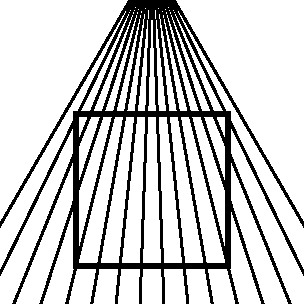
Most presentation projectors have a
keystone correction feature to adjust for distortion.
Do you see the square?
If you are normal, the square should not look like a square.
27. Perfect square

One can use an outline of a square to check the keystone correction of a presentation projector. (It helps to have a ruler for precision).
28. Keystone cops
The idea of the name for the comedy called the "
Keystone Cops" (1913) came from the parent company, founded in 1912.
Otherwise, the name is unrelated to the concept of a keystone.
29. Capstone
By contrast, a
capstone is a stone facing the top of a structure and used to protect the structure from elements of the weather.
Many academic programs have the idea of a "
capstone course".
30. House of cards
A house of cards is a structure built such that if one of the foundational cards or elements is removed, the entire structure will collapse.
Here we are interested in the concept of a corner stone.
31. Corner stones
 |
 |
|
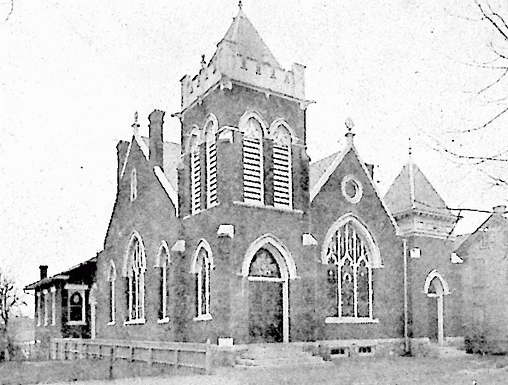
1904
|
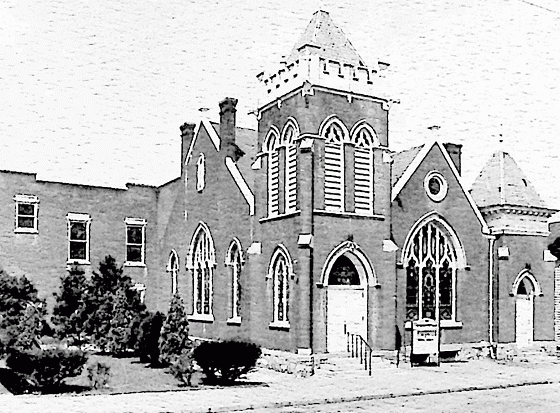
1924
|
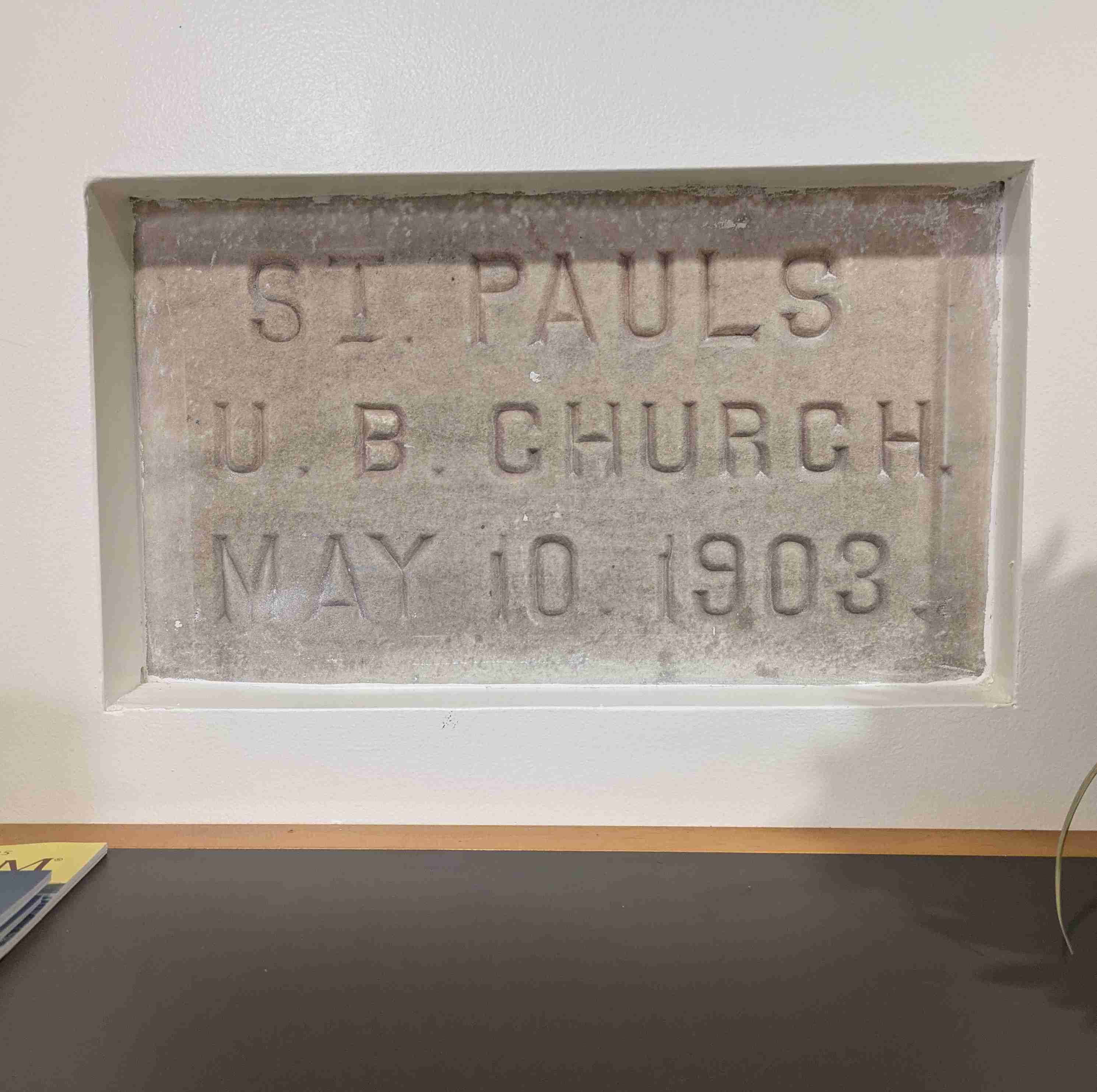
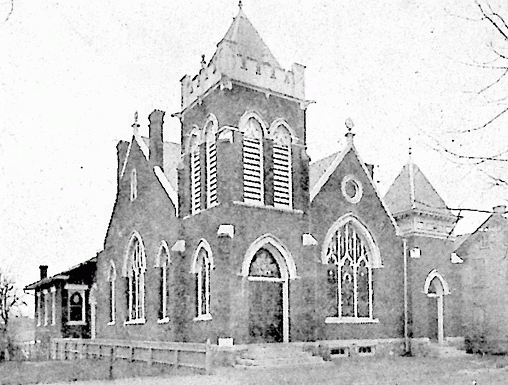
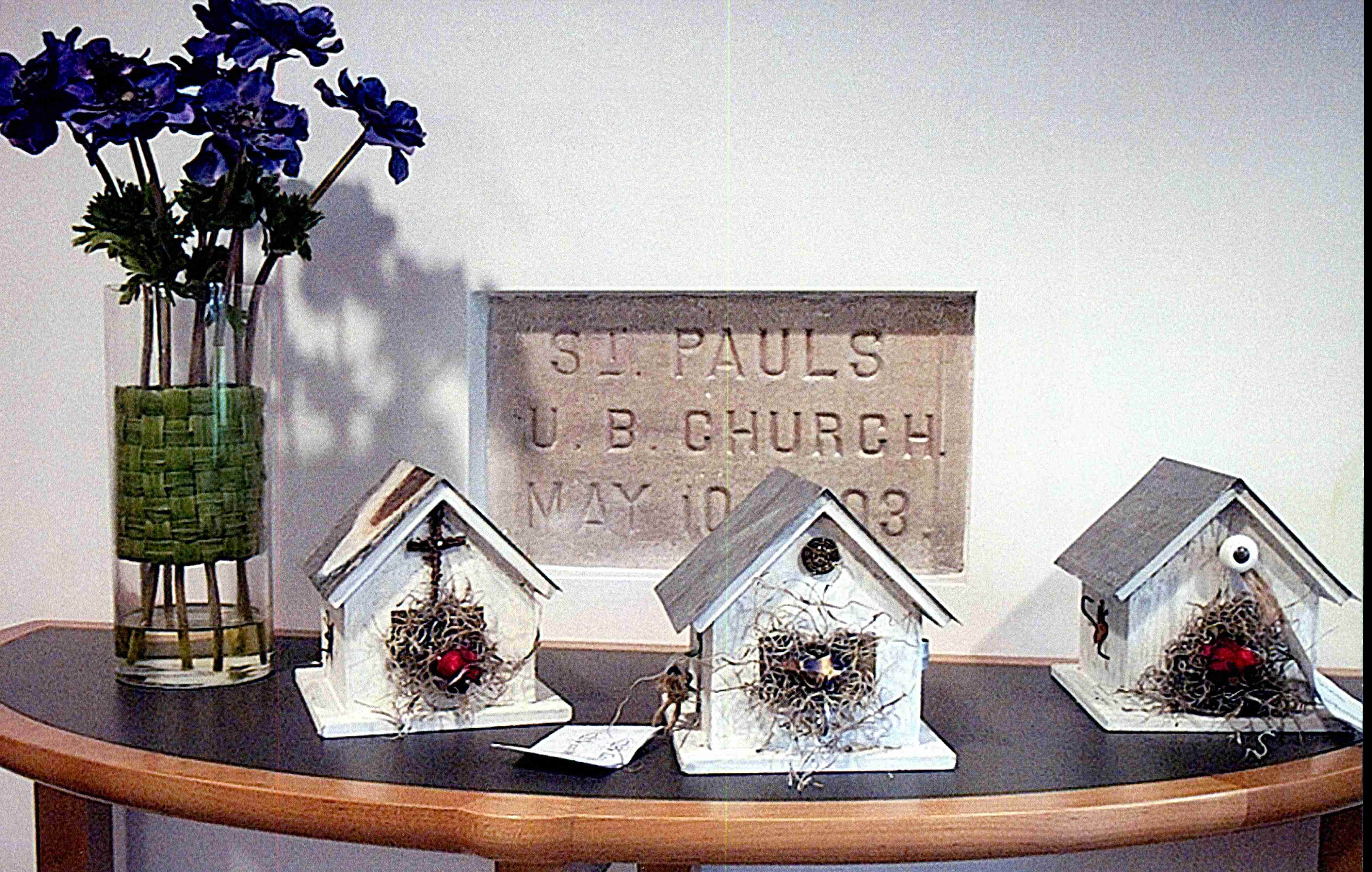
Corner stones can be structurally important, but an important part of corner stones is that they signify the start of an important building project that itself has importance. A corner stone without the rest of the structure is not very important.
The verse in Matthew (and Mark and Luke) are referred to by Peter and Paul in various places.
32. Cornerstone
(May 10, 1903) Although the weather was very unpleasant, with rain all day, yet the spirit of the people was not dampened and the day still shines brightly in the minds of those present.
33. Cornerstone dedication in 1957
 |
 |
|
2025-09-26
|
1957
|
The
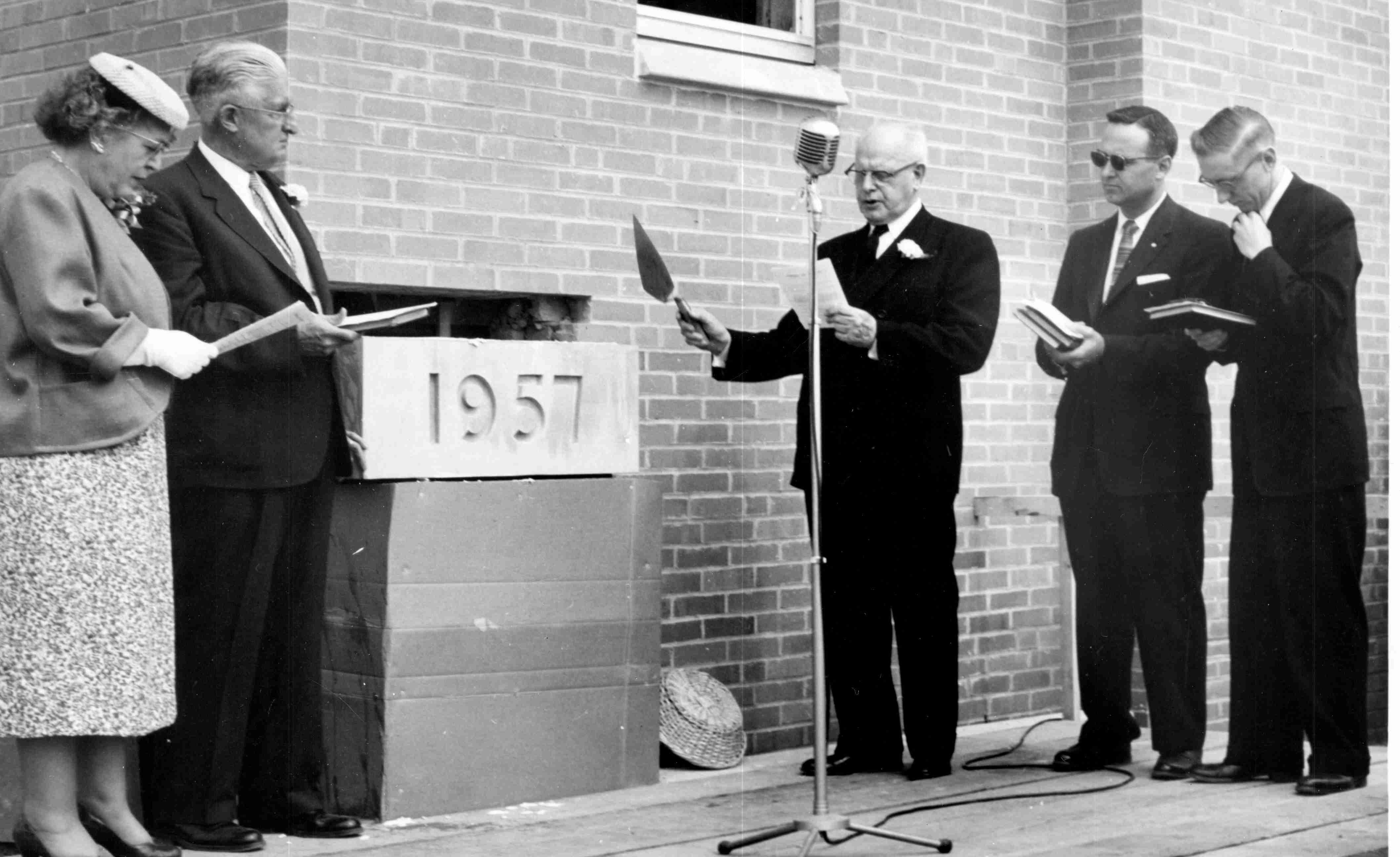
cornerstone dedication was in 1957. This is the official photo of the event. Do you recognize anyone?
34. Matthew 21:42
KJV: Jesus saith unto them, Did ye never read in the scriptures, The stone which the builders rejected, the same is become the head of the corner: this is the Lord's doing, and it is marvellous in our eyes?
Greek: λεγει αυτοις ο ιησους ουδεποτε ανεγνωτε εν ταις γραφαις λιθον ον απεδοκιμασαν οι οικοδομουντες ουτος εγενηθη εις κεφαλην γωνιας παρα κυριου εγενετο αυτη και εστιν θαυμαστη εν οφθαλμοις ημων
Latin: dicit illis Iesus numquam legistis in scripturis lapidem quem reprobaverunt aedificantes hic factus est in caput anguli a Domino factum est istud et est mirabile in oculis nostris
Wessex: Ða cwaeð se haelend ne redde ge naefre on ge-writen. Se stan þe þa tymbrienden awurpen. ys geworðen on þare hyrnan heafde. Ðys is fram drihtene ge-worðen & hit is wunderlich on eowre Note: over an erasure. eagen.
Wycliffe: Jhesus seith to hem, Redden ye neuer in scripturis, The stoon which bilderis repreueden, this is maad in to the heed of the corner? Of the Lord this thing is don, and it is merueilous bifor oure iyen.
Tyndale: Iesus sayde vnto the: dyd ye never redde in the scriptures? The stone which ye bylders refused ye same is set in ye principall parte of ye corner: this was the lordes doinge and yt is mervelous in oure eyes.
Luther: Jesus sprach zu ihnen: Habt ihr nie gelesen in der Schrift: Der Stein, den die Bauleute verworfen haben, der ist zum Eckstein worden; von dem Herrn ist das geschehen, und es ist wunderbarlich vor unsern Augen?
35. Cornerstone
Mark 12:10 And have ye not read this scripture; The stone which the builders rejected is become the head of the corner: [kjv]
ουδε την γραφην ταυτην ανεγνωτε λιθον ον απεδοκιμασαν οι οικοδομουντες ουτος εγενηθη εις κεφαλην γωνιας [gnt]
Luke 20:17 And he beheld them, and said, What is this then that is written, The stone which the builders rejected, the same is become the head of the corner? [kjv]
ο δε εμβλεψας αυτοις ειπεν τι ουν εστιν το γεγραμμενον τουτο λιθον ον απεδοκιμασαν οι οικοδομουντες ουτος εγενηθη εις κεφαλην γωνιας [gnt]

The verses in Mark 12:10 and Luke 20:17 repeat the same idea.
36. Strongs - rejected
*G593 *9 ἀποδοκιμάζω (ap-od-ok-ee-mad'-zo) : from G575 and G1381; to disapprove, i.e. (by implication) to repudiate:--disallow, reject.
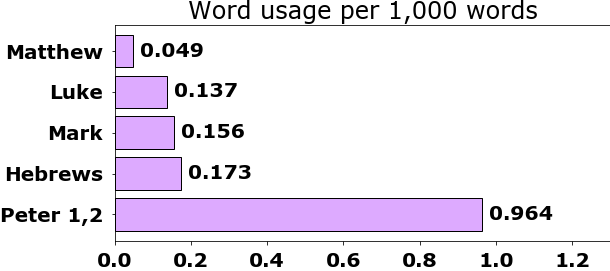 |
Words: απεδοκιμασαν=4 απεδοκιμασθη αποδεδοκιμασμενον αποδοκιμασθηναι=3
|
The
ancient Greek word
"αποδοκιμάζω" ≈ "disapprove, reject" and comes from
"από" ≈ "away from" (with a separating distance) and
"δοκιμάζω" ≈ "try out, test, taste, attempt". The
modern Greek word
"δοκιμάζω" (tho-kee-MA-zo) ≈ "try out, test, taste, attempt" has the same meaning. The
modern Greek word
"αποδοκιμάζω" (a-po-tho-kee-MA-zo) ≈ "disapprove, condemn".
37. Usage - rejected
- *G593 *9 ἀποδοκιμάζω (ap-od-ok-ee-mad'-zo) : from G575 and G1381; to disapprove, i.e. (by implication) to repudiate:--disallow, reject.
- απεδοκιμασαν *4 of 9
- Matthew 21:42 ... The stone which the builders rejected, the same is become the head ...
- Mark 12:10 ... The stone which the builders rejected is become the head of the corner:
- Luke 20:17 ... The stone which the builders rejected, the same is become the ...
- 1 Peter 2:7 ... the stone which the builders disallowed, the same is made the head of the corner,
38. Strongs - build, edify
*G3618 *41 οἰκοδομέω (oy-kod-om-eh'-o) : from the same as G3619; to be a house-builder, i.e. construct or (figuratively) confirm:--(be in) build(-er, -ing, up), edify, embolden.
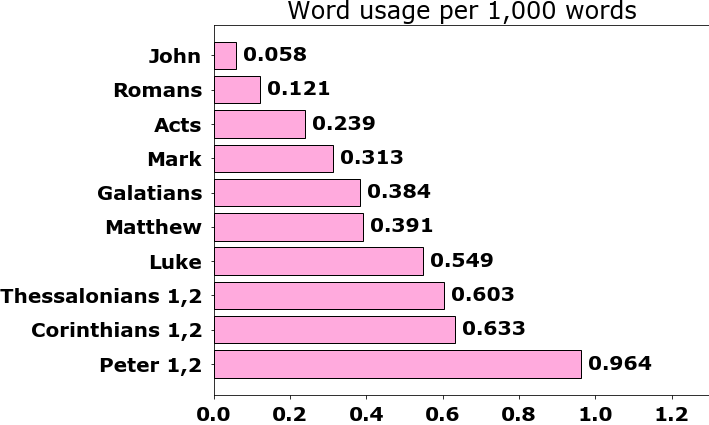 |
Words: οικοδομει=4 οικοδομειν οικοδομεισθε οικοδομειται οικοδομειτε=4 οικοδομηθη οικοδομηθησεται οικοδομησαι=3 οικοδομησαντι οικοδομησεν οικοδομησετε οικοδομησθαι οικοδομησω=3 οικοδομουμενη οικοδομουντες=4 οικοδομουντι οικοδομω=2 οικοδομων=3 ωκοδομησεν=5 ωκοδομητο ωκοδομουν
|
The Greek word is, literally, "
house" "
house-builder". Might someone "
build" or "
edify" a "
house" in the same way they might "
plant" a "
vineyard"?
39. Usage - build, edify
- *G3618 *41 οἰκοδομέω (oy-kod-om-eh'-o) : from the same as G3619; to be a house-builder, i.e. construct or (figuratively) confirm:--(be in) build(-er, -ing, up), edify, embolden.
- οικοδομουντες *4 of 41
- Matthew 21:42 ... the scriptures, The stone which the builders rejected, the same is become ...
- Mark 12:10 ... scripture; The stone which the builders rejected is become ...
- Luke 20:17 ... is written, The stone which the builders rejected, the same is become ...
- 1 Peter 2:7 ... unto them which be disobedient, the stone which the builders disallowed, the same is made ...
40. Strongs - corner
*G1137 *9 γωνία (go-nee'-ah) : probably akin to G1119; an angle:--corner, quarter.
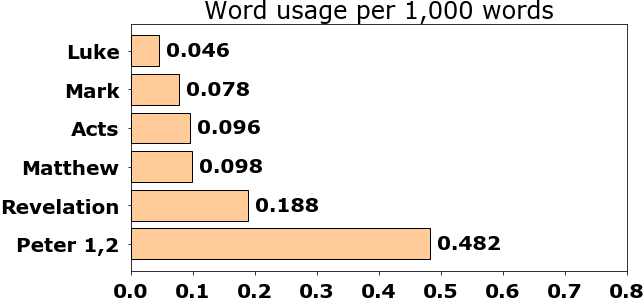 |
Words: γωνια γωνιαις=2 γωνιας=6
|
The
ancient Greek word
"γωνία" ≈ "corner, angle". and is the source of the English suffix
"gon" as in "
polygon". A "
triangle" has "
three"
"corners".
There are three points to keep in mind what drawing a triangle.
[two-sided polygons]
41. Usage - corner
- *G1137 *9 γωνία (go-nee'-ah) : probably akin to G1119; an angle:--corner, quarter.
- γωνιας *6
- Matthew 21:42 ... the same is become the head of the corner: this is the Lord's ...
- Mark 12:10 ... is become the head of the corner:
- Luke 20:17 ... is become the head of the corner?
- Acts 4:11 ... which is become the head of the corner.
- 1 Peter 2:7 ... the same is made the head of the corner,
- Revelation 7:1 ... standing on the four corners of the earth, holding the four ...
- γωνιαις *2
- Matthew 6:5 ... the synagogues and in the corners of the streets, that they ...
- Revelation 20:8 ... which are in the four quarters of the earth, Gog and ...
- γωνια
- Acts 26:26 ... not done in a corner.
42. Deacon as an administration gopher
Matthew 23:11 But he that is greatest among you shall be your servant. [kjv]
ο δε μειζων υμων εσται υμων διακονος [gnt]
Does the
converse hold: If you become a
"servant" or
"deacon", will you become
"great" or
"greatest"?
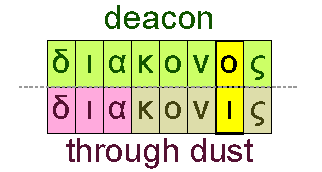
"διάκονος" ≈ "servant".
"δία" ≈ "through" as in the first part of "diameter".
"κόνις" ≈ "dust, ashes" and related to "cinder".
The Greek words for
"through" and
"dust" appear to be related to the Greek word for
"deacon".
[joke license]
43. Hierarchies and goals
|
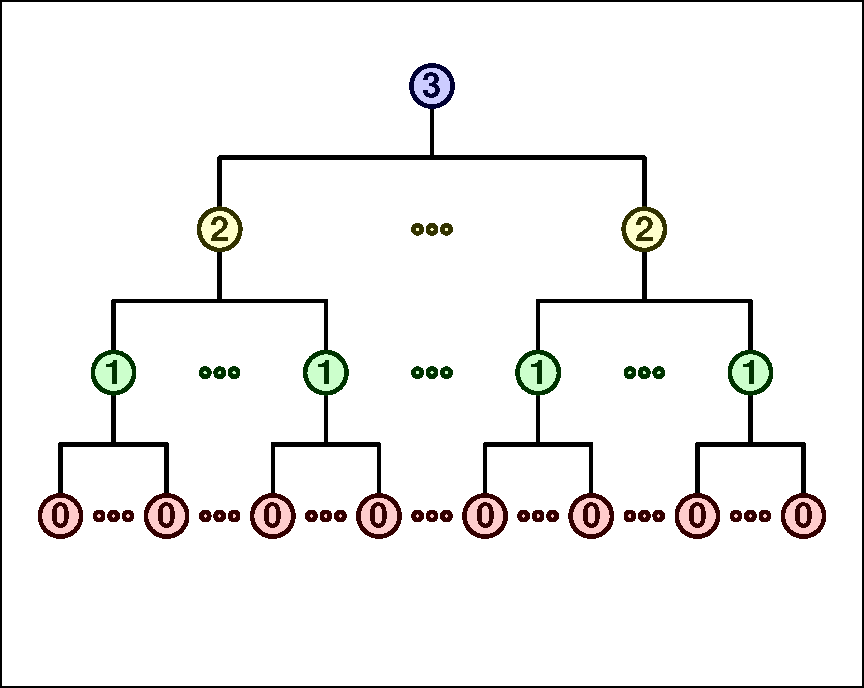
Hierarchy of man (tree)
|
Hierarchy of Jesus (flat)
|
 |
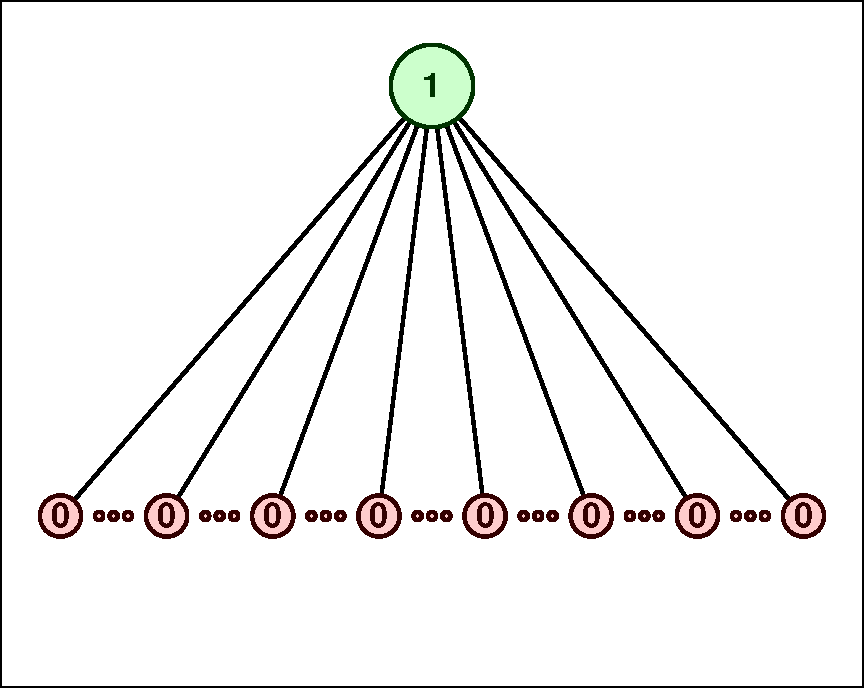 |
The idea of "
unity" in "
Christ" is
ambiguous and can be
deceptive. Can "
unity" be "
made" by
man?
Can we
agree to
disagree?
If a tree-structured hierarchy is desired, with power (and greatness) at each part of the tree, division of parts is not desired (by those at the top).
If a flat hierarchy is desired, division of parts is not a problem.
44. Matthew 21:42 Dusty corner
Matthew 21:42 Jesus saith unto them, Did ye never read in the scriptures, The stone which the builders rejected, the same is become the head of the corner: this is the Lord's doing, and it is marvellous in our eyes? [kjv]
λεγει αυτοις ο ιησους ουδεποτε ανεγνωτε εν ταις γραφαις λιθον ον απεδοκιμασαν οι οικοδομουντες ουτος εγενηθη εις κεφαλην γωνιας παρα κυριου εγενετο αυτη και εστιν θαυμαστη εν οφθαλμοις ημων [gnt]
The
ancient Greek word
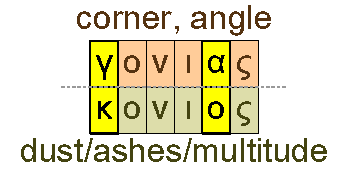
"γωνία" ≈ "corner, angle". The genitive feminine singular (as used ) is
"γωνίας" ≈ "corner, angle".
The
ancient Greek word
"κόνις" ≈ "dust, ashes" and, figuratively, a
"multitude". The genitive feminine singular is
"κόνῐος" ≈ "dust, ashes" and might be associated with people (Abraham, etc.).
Who is the "
head"?
45. Ephesians 5:23
Ephesians 5:23 For the husband is the head of the wife, even as Christ is the head of the church: and he is the saviour of the body. [kjv]
οτι ο ανηρ εστιν κεφαλη της γυναικος ως και ο χριστος κεφαλη της εκκλησιας και αυτος εστιν σωτηρ του σωματος [gnt]
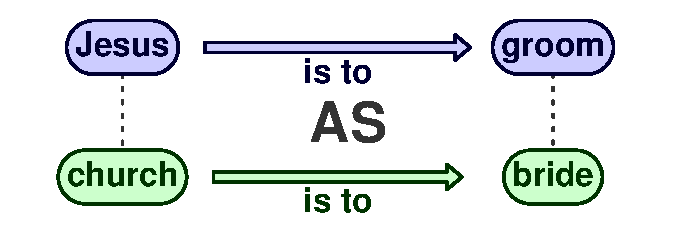
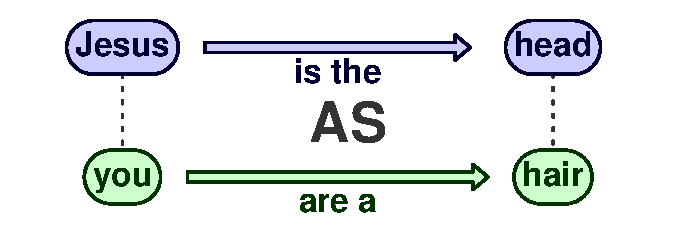
Christ is the
"head" of the "
church" as a "
gathering of believers" each of which is a "
hair". That "
hair" can be "
white" or "
light" or it can be "
black" or "
dark".
Is Christ
your "head"?
46. Review of head and hairs
Matthew 5:36 Neither shalt thou swear by thy head, because thou canst not make one hair white or black. [kjv]
5:37 But let your communication be, Yea, yea; Nay, nay: for whatsoever is more than these cometh of evil. [kjv]
10:30 But the very hairs of your head are all numbered. [kjv]
Insight: Jesus is your
"head". Believers are the
"hairs". The Greek translated as
"white" and
"black" mean
"distinct" or
"indistinct". Latin
"sermo" ≈ "conversation, speech".
Matthew 5:36:
Do not swear by your head as Jesus because you cannot make/judge/separate one believer/person as 'white' or 'black'. (or "
narrow gate" or "
wide area" or "
heaven" or "
hell", etc.).
Matthew 5:37:
But let your rational explanation (to the points provided and implied) be yes, yes no, no. Whatever is more is out of the evil/oppression.
Matthew 10:30:
But the very hairs or believers/persons of your head as Jesus are all numbered.
47. Genesis 11:4 Tower of Babel
Genesis 11:4 And they said, Go to, let us build us a city and a tower, whose top may reach unto heaven; and let us make us a name, lest we be scattered abroad upon the face of the whole earth. [kjv]
και ειπαν δευτε οικοδομησωμεν εαυτοις πολιν και πυργον ου η κεφαλη εσται εως του ουρανου και ποιησωμεν εαυτοις ονομα προ του διασπαρηναι επι προσωπου πασης της γης [lxx]
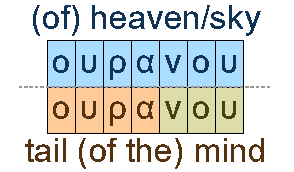
"ουρανου" ≈ "heaven, sky" (genitive).
"ουρά" ≈ "tail" and "νου" ≈ "of the mind" (genitive).
"κεφαλή" ≈ "head, topmost part" and in writing, "chapter". In the GNT (Greek New Testament), Jesus refers to himself as the "head". A dragon with seven "heads" might be a dragon with seven "chapters".
The Greek word translated as "
build" can be that of "
edify".
48. Mark 12:10
KJV: And have ye not read this scripture; The stone which the builders rejected is become the head of the corner:
Greek: ουδε την γραφην ταυτην ανεγνωτε λιθον ον απεδοκιμασαν οι οικοδομουντες ουτος εγενηθη εις κεφαλην γωνιας
49. Luke 20:17
KJV: And he beheld them, and said, What is this then that is written, The stone which the builders rejected, the same is become the head of the corner?
Greek: ο δε εμβλεψας αυτοις ειπεν τι ουν εστιν το γεγραμμενον τουτο λιθον ον απεδοκιμασαν οι οικοδομουντες ουτος εγενηθη εις κεφαλην γωνιας
50. Head of the corner
Matthew 21:42 Jesus saith unto them, Did ye never read in the scriptures, The stone which the builders rejected, the same is become the head of the corner: this is the Lord's doing, and it is marvellous in our eyes? [kjv]
λεγει αυτοις ο ιησους ουδεποτε ανεγνωτε εν ταις γραφαις λιθον ον απεδοκιμασαν οι οικοδομουντες ουτος εγενηθη εις κεφαλην γωνιας παρα κυριου εγενετο αυτη και εστιν θαυμαστη εν οφθαλμοις ημων [gnt]
The ancient Greek word
"κεφαλή" ≈ "head, topmost part" or
"κεφαλά" ≈ "head, topmost part" and could be the introduction or summary/conclusion of a speech. The
modern Greek word
"κεφαλή" (keh-fa-LEE) ≈ "head, heading".
Who or what is the "head"? Who or what is the "corner"?
51. Acts 4:11 Head of the corner
Acts 4:11 This is the stone which was set at nought of you builders, which is become the head of the corner. [kjv]
ουτος εστιν ο λιθος ο εξουθενηθεις υφ υμων των οικοδομουντων οικοδομων ο γενομενος εις κεφαλην γωνιας [gnt]
Peter, filled with the Holy Spirit, refers to this idea in Acts 4:11.
52. Acts 4:11
KJV: This is the stone which was set at nought of you builders, which is become the head of the corner.
Greek: ουτος εστιν ο λιθος ο εξουθενηθεις υφ υμων των οικοδομουντων οικοδομων ο γενομενος εις κεφαλην γωνιας
53. Cornerstone and acropolis
Ephesians 2:20 And are built upon the foundation of the apostles and prophets, Jesus Christ himself being the chief corner stone; [kjv]
εποικοδομηθεντες επι τω θεμελιω των αποστολων και προφητων οντος ακρογωνιαιου αυτου ιησου χριστου ιησου [gnt]
Paul makes the connection with Jesus explicit in Ephesians 2:10, though Paul uses a more explicit and literal word for "
corner stone" that would be recognized by his Greek audience - using the prefix of "
acro" as in "
acropolis".
54. Ephesians 2:20
KJV: And are built upon the foundation of the apostles and prophets, Jesus Christ himself being the chief corner stone;
Greek: εποικοδομηθεντες επι τω θεμελιω των αποστολων και προφητων οντος ακρογωνιαιου αυτου ιησου χριστου ιησου
Latin: superaedificati super fundamentum apostolorum et prophetarum ipso summo angulari lapide Christo Iesu
Wycliffe: aboue bildid on the foundement of apostlis and of profetis, vpon that hiyeste corner stoon, Crist Jhesu;
Luther: erbauet auf den Grund der Apostel und Propheten, da Jesus Christus der Eckstein ist
Spanish: edificados sobre el fundamento de los apóstoles y profetas, siendo la principal piedra delángulo Jesucristo mismo,
55. Strongs - point
- *G204 *2 ἀκρογωνιαῖος (ak-rog-o-nee-ah'-yos) : from G206 and G1137; belonging to the extreme corner:--chief corner.
- ακρογωνιαιου
- Ephesians 2:20 ... Christ himself being the chief corner stone;
- ακρογωνιαιον
- 1 Peter 2:6 ... I lay in Sion a chief corner stone, elect, precious: ...
56. Usage - point
*G204 *2 ἀκρογωνιαῖος (ak-rog-o-nee-ah'-yos) : from G206 and G1137; belonging to the extreme corner:--chief corner.
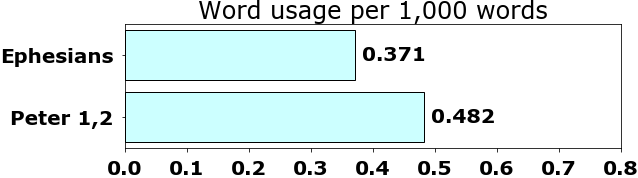 |
Words: ακρογωνιαιον ακρογωνιαιου
|
57. 1 Peter 2:6-7 Variations
1 Peter 2:6 Wherefore also it is contained in the scripture, Behold, I lay in Sion a chief corner stone, elect, precious: and he that believeth on him shall not be confounded. [kjv]
διο και διοτι περιεχει εν τη γραφη ιδου τιθημι εν σιων λιθον ακρογωνιαιον εκλεκτον ακρογωνιαιον εντιμον και ο πιστευων επ αυτω ου μη καταισχυνθη [gnt]
2:7 Unto you therefore which believe he is precious: but unto them which be disobedient, the stone which the builders disallowed, the same is made the head of the corner, [kjv]
υμιν ουν η τιμη τοις πιστευουσιν απειθουσιν απιστουσιν δε λιθον λιθος ον απεδοκιμασαν οι οικοδομουντες ουτος εγενηθη εις κεφαλην γωνιας [gnt]
Peter repeats the same idea in 1 Peter 2:6-7, using the word that Paul used in Ephesians in verse 6 but the word used in the Gospels in verse 7. Peter then builds on this idea in verse 8 and refers both to the stone and to the rock in the same verse.
Why would Peter change the words used for
"corner" "stone"? Did Peter actually write 1 Peter? Does Peter not know in 1 Peter that the
"elect" is said by Jesus in a not-good sense?
58. 1 Peter 2:6
KJV: Wherefore also it is contained in the scripture, Behold, I lay in Sion a chief corner stone, elect, precious: and he that believeth on him shall not be confounded.
Greek: διο και διοτι περιεχει εν τη γραφη ιδου τιθημι εν σιων λιθον ακρογωνιαιον εκλεκτον ακρογωνιαιον εντιμον και ο πιστευων επ αυτω ου μη καταισχυνθη
59. 1 Peter 2:7
KJV: Unto you therefore which believe he is precious: but unto them which be disobedient, the stone which the builders disallowed, the same is made the head of the corner,
Greek: υμιν ουν η τιμη τοις πιστευουσιν απειθουσιν απιστουσιν δε λιθον λιθος ον απεδοκιμασαν οι οικοδομουντες ουτος εγενηθη εις κεφαλην γωνιας
60. Peter continues
1 Peter 2:8 And a stone of stumbling, and a rock of offence, even to them which stumble at the word, being disobedient: whereunto also they were appointed. [kjv]
και λιθος προσκομματος και πετρα σκανδαλου οι προσκοπτουσιν τω λογω απειθουντες εις ο και ετεθησαν [gnt]
61. 1 Peter 2:8
KJV: And a stone of stumbling, and a rock of offence, even to them which stumble at the word, being disobedient: whereunto also they were appointed.
Greek: και λιθος προσκομματος και πετρα σκανδαλου οι προσκοπτουσιν τω λογω απειθουντες εις ο και ετεθησαν
62. Job 38:6 Corner stone
Job 38:6 Whereupon are the foundations thereof fastened? or who laid the corner stone thereof; [kjv]
επι τινος οι κρικοι αυτης πεπηγασιν τις δε εστιν ο βαλων λιθον γωνιαιον επ αυτης [lxx]
Job mentions the idea of a corner stone in reference to the creation.
On what does earth sit? Turtles?
63. Job 38:6
KJV: Whereupon are the foundations thereof fastened? or who laid the corner stone thereof;
Hebrew: על מה אדניה הטבעו או מי ירה אבן פנתה׃
Greek: επι τινος οι κρικοι αυτης πεπηγασιν τις δε εστιν ο βαλων λιθον γωνιαιον επ αυτης
64. Psalms 118:22 Stones
Psalms 118:22 The stone which the builders refused is become the head stone of the corner. [kjv]
λιθον ον απεδοκιμασαν οι οικοδομουντες ουτος εγενηθη εις κεφαλην γωνιας [lxx]
Psalms has a reference to the corner stone.
65. Psalms 118:22
KJV: The stone which the builders refused is become the head stone of the corner.
Hebrew: אבן מאסו הבונים היתה לראש פנה׃
Greek: λιθον ον απεδοκιμασαν οι οικοδομουντες ουτος εγενηθη εις κεφαλην γωνιας
66. Isaiah 28:16
Isaiah 28:16 Therefore thus saith the Lord GOD, Behold, I lay in Zion for a foundation a stone, a tried stone, a precious corner stone, a sure foundation: he that believeth shall not make haste. [kjv]
δια τουτο ουτως λεγει κυριος ιδου εγω εμβαλω εις τα θεμελια σιων λιθον πολυτελη εκλεκτον ακρογωνιαιον εντιμον εις τα θεμελια αυτης και ο πιστευων επ αυτω ου μη καταισχυνθη [lxx]
Isaiah is the primary source of the
GNT references of various stones.
67. Isaiah 28:16
KJV: Therefore thus saith the Lord GOD, Behold, I lay in Zion for a foundation a stone, a tried stone, a precious corner stone, a sure foundation: he that believeth shall not make haste.
Hebrew: לכן כה אמר אדני יהוה הנני יסד בציון אבן אבן בחן פנת יקרת מוסד מוסד המאמין לא יחיש׃
Greek: δια τουτο ουτως λεγει κυριος ιδου εγω εμβαλω εις τα θεμελια σιων λιθον πολυτελη εκλεκτον ακρογωνιαιον εντιμον εις τα θεμελια αυτης και ο πιστευων επ αυτω ου μη καταισχυνθη
68. Muslim context
69. Usage - stone
*G3037 *60 λίθος (lee'-thos) : apparently a primary word; a stone (literally or figuratively):--(mill-, stumbling-)stone.
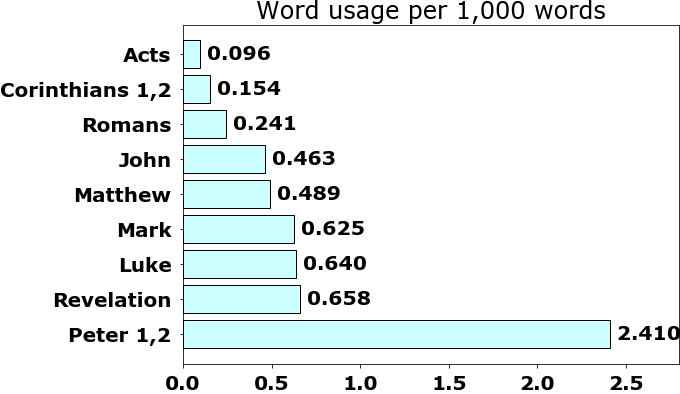 |
Words: λιθοι=4 λιθοις=3 λιθον=28 λιθος=8 λιθου=2 λιθους=3 λιθω=10 λιθων=2
|
The
KJV does not consistently translate «
πέτρα» as
"stone" and «
λίθος» as "
rock".
70. Jeremiah 51:26 Corner stones
Jeremiah 51:26 And they shall not take of thee a stone for a corner, nor a stone for foundations; but thou shalt be desolate for ever, saith the LORD. [kjv]
και ου μη λαβωσιν απο σου λιθον εις γωνιαν και λιθον εις θεμελιον οτι εις αφανισμον εις τον αιωνα εση λεγει κυριος [lxx]
Jeremiah refers to a stone for a corner. The connection is not immediately obvious.
71. Jeremiah 51:26
KJV: And they shall not take of thee a stone for a corner, nor a stone for foundations; but thou shalt be desolate for ever, saith the LORD.
Hebrew: ולא יקחו ממך אבן לפנה ואבן למוסדות כי שממות עולם תהיה נאם יהוה׃
Greek: και ου μη λαβωσιν απο σου λιθον εις γωνιαν και λιθον εις θεμελιον οτι εις αφανισμον εις τον αιωνα εση λεγει κυριος
72. Matthew 21:42 Dusty corner
Matthew 21:42 Jesus saith unto them, Did ye never read in the scriptures, The stone which the builders rejected, the same is become the head of the corner: this is the Lord's doing, and it is marvellous in our eyes? [kjv]
λεγει αυτοις ο ιησους ουδεποτε ανεγνωτε εν ταις γραφαις λιθον ον απεδοκιμασαν οι οικοδομουντες ουτος εγενηθη εις κεφαλην γωνιας παρα κυριου εγενετο αυτη και εστιν θαυμαστη εν οφθαλμοις ημων [gnt]
- "γωνίας" ≈ "corner, angle".
- "κόνῐος" ≈ "dust, ashes".
Is Jesus is the
"head" of the "
multitude"? Unlike surrounding verses spoken by Jesus (here and elsewhere) there are not many obvious play on words. Perhaps that is because Jesus is quoting scripture, from the Greek
LXX.
73. Sequence of events
This entire sequence of events in Matthew 21 is, over two or three days, started with the Triumphal Entry on what is now called Palm Sunday. Why was the religious establishment (at that time) upset?
74. Matthew 21:9 Multitudes of a crowd
Matthew 21:9 And the multitudes that went before, and that followed, cried, saying, Hosanna to the Son of David: Blessed is he that cometh in the name of the Lord; Hosanna in the highest. [kjv]
οι δε οχλοι οι προαγοντες αυτον και οι ακολουθουντες εκραζον λεγοντες ωσαννα τω υιω δαβιδ δαυιδ ευλογημενος ο ερχομενος εν ονοματι κυριου ωσαννα εν τοις υψιστοις [gnt]
The Greek word translated as
"multitudes" is that of
"crowds". The Greek does not appear to say anything here about the
size of the crowd.
The ancient Greek word
"ὄχλος" ≈ "multitude, crowd" and. thorough the Greek
digamma, with "
v" or "
f" sound, may be related to the German word
"Volk" ≈ "people" as in "
Volkswagen" and to the English word
"folk".
75. Matthew 21:15-17
Matthew 21:15 And when the chief priests and scribes saw the wonderful things that he did, and the children crying in the temple, and saying, Hosanna to the Son of David; they were sore displeased, [kjv]
ιδοντες δε οι αρχιερεις και οι γραμματεις τα θαυμασια α εποιησεν και τους παιδας τους κραζοντας εν τω ιερω και λεγοντας ωσαννα τω υιω δαβιδ δαυιδ ηγανακτησαν [gnt]
21:16 And said unto him, Hearest thou what these say? And Jesus saith unto them, Yea; have ye never read, Out of the mouth of babes and sucklings thou hast perfected praise? [kjv]
και ειπον ειπαν αυτω ακουεις τι ουτοι λεγουσιν ο δε ιησους λεγει αυτοις ναι ουδεποτε ανεγνωτε οτι εκ στοματος νηπιων και θηλαζοντων κατηρτισω αινον [gnt]
21:17 And he left them, and went out of the city into Bethany; and he lodged there. [kjv]
και καταλιπων αυτους εξηλθεν εξω της πολεως εις βηθανιαν και ηυλισθη εκει [gnt]
76. Song: This is the day
Psalms 118:24 This is the day which the LORD hath made; we will rejoice and be glad in it. [kjv]
The word "
rejoice" appears often in the song "
This is the day" from 1967 by
Les Garrett. The phrase "
This is the day" refers to
the "
day" and not
a "
day".
That "
day" was originally the Passover before the Exodus but was to be a sign both the
Messiah and the
King (same person). Jesus entered on that day, "
Palm Sunday", with that song which angered the religious establishment. The tune works well as "
antiphonal" where the song can move between
two parts of the
congregation.
This is the day, this is the day that the Lord has made, that the Lord has made;
we will rejoice, we will rejoice and be glad in it, and be glad in it.
This is the day that the Lord has made; we will rejoice and be glad in it.
This is the day, this is the day that the Lord has made.
77. Chicago Transit Authority
The Chicago song "
Does Anybody Really Know What Time It Is?" was written and sung by Robert Lamm. [signature trumpets]
- As I was walking down the street one day,
- a man came up to me and asked me
- what the time was that was on my watch ...
The group's original name was "
Chicago Transit Authority" but that organization did not like them using their name. [trademark law]
Chicago song: Does anyone really know what time it is? Next line?
Does anyone really care?
78. Philippians 1:19 Turn to my salvation
Philippians 1:19 For I know that this shall turn to my salvation through your prayer, and the supply of the Spirit of Jesus Christ, [kjv]
οιδα γαρ οτι τουτο μοι αποβησεται εις σωτηριαν δια της υμων δεησεως και επιχορηγιας του πνευματος ιησου χριστου [gnt]
How many attractive refrigerator magnet sermons could be given on what is said here?
The exact same four Greek words for "
shall turn to my salvation" in Philippians are "
shall turn to me for salvation" in Job in the
LXX. The follow-on words in Job are more interesting.
79. Job 13:16 Turn to my salvation
Job 13:16 He also shall be my salvation: for an hypocrite shall not come before him. [kjv]
και τουτο μοι αποβησεται εις σωτηριαν ου γαρ εναντιον αυτου δολος εισελευσεται [lxx]
And this shall turn to me for salvation; for fraud shall have no entrance before him. [bs3]
Paul is going through trials and Job went through trials - both for eventual good. Paul appears to be calling the church leadership at Philippi "
frauds".
80. Psalms 118:22-24 Implications
Jesus spoke these two verses from Psalms in the
LXX in Matthew 21:42..
Psalms 118:22 The stone which the builders refused is become the head stone of the corner. [kjv]
118:23 This is the LORD'S doing; it is marvellous in our eyes. [kjv]
What was unsaid appears to be the point of the previous two verses. One must fill in the missing parts and connect the dots.
118:24 This is the day which the LORD hath made; we will rejoice and be glad in it. [kjv]
Knowing this, the next verse that starts "
therefore" which in the Greek is "
from these (things)" allows one to infer the basis for the what is said after the "
therefore". Might this also answer the question about by what "
authority" or "
lack of restraint" Jesus does these things?
81. Matthew 21:27 No telling
Matthew 21:27 And they answered Jesus, and said, We cannot tell. And he said unto them, Neither tell I you by what authority I do these things. [kjv]
και αποκριθεντες τω ιησου ειπον ειπαν ουκ οιδαμεν εφη αυτοις και αυτος ουδε εγω λεγω υμιν εν ποια εξουσια ταυτα ποιω [gnt]
Jesus says he will not tell them. Most sermons end at that point. Does Jesus, in fact, tell them? To find out, one must read on and connect the dots. What if, instead of
telling them, Jesus
tells everyone who will listen and understand what he is saying? There is not
one shred of evidence that Jesus answers this question in the following verses.
- "ἐγὼ" ≈ "I (am)" (for emphasis) and "λέγω" ≈ "(I) say"
- "ποιῶ" ≈ "I do" (emphasis not used/needed)
- Spanish: "hablo" ≈ "(I) speak" as a PIE (Proto Indo-European) example.
- Spanish: "yo" ≈ "I" and "hablo" ≈ "(I) speak" (for emphasis).
82. Matthew 21:43 Kingdom taken
Matthew 21:43 Therefore say I unto you, The kingdom of God shall be taken from you, and given to a nation bringing forth the fruits thereof. [kjv]
δια τουτο λεγω υμιν οτι αρθησεται αφ υμων η βασιλεια του θεου και δοθησεται εθνει ποιουντι τους καρπους αυτης [gnt]
Matthew uses
"kingdom" of
"God" rather than
"kingdom" of
"heaven/air". Is there a difference? If so, is it important?
This verse refers to the kingdom being taken and given to another. The word for
"nation" here means a
"people". Who is
"you"? Discuss:
The
ancient Greek word
"ἐθνικός" ≈ "national" and comes from the ancient Greek word
"ἔθνος" ≈ "tribe, family, nation" but can mean any group such as a group of animals (flock, herd, etc.).
83. Matthew 5:47 Ethnic heathens
Matthew 5:47 And if ye salute your brethren only, what do ye more than others? do not even the publicans so? [kjv]
και εαν ασπασησθε τους αδελφους υμων μονον τι περισσον ποιειτε ουχι και οι τελωναι ουτως εθνικοι τοαυτο ποιουσιν [gnt]
The
KJV often uses the word
"heathen",
"pagans" or
"gentiles". Here, the
TR (Textus Receptus) changes this word to
"tax collectors" which breaks the model. The Greek word is that of
"ethnicity" having to do with people in general. The
ancient Greek word
"ἐθνικός" ≈ "national" and comes from the ancient Greek word
"ἔθνος" ≈ "tribe, family, nation" but can mean any group such as a group of animals (flock, herd, etc.).
In Jewish and Christian terminology, this word often means gentiles. Does it always mean gentiles? Jesus tends to use the word to refer to the "
fish" in the "
sea" of humanity and calls on disciples to be "
fishers" of "
men" (i.e., "
fish").
84. Strongs - taken away
*G142 *101 αἴρω (ah'-ee-ro) : a primary root; to lift up; by implication, to take up or away; figuratively, to raise (the voice), keep in suspense (the mind), specially, to sail away (i.e. weigh anchor); by Hebraism (compare H5375) to expiate sin:--away with, bear (up), carry, lift up, loose, make to doubt, put away, remove, take (away, up).
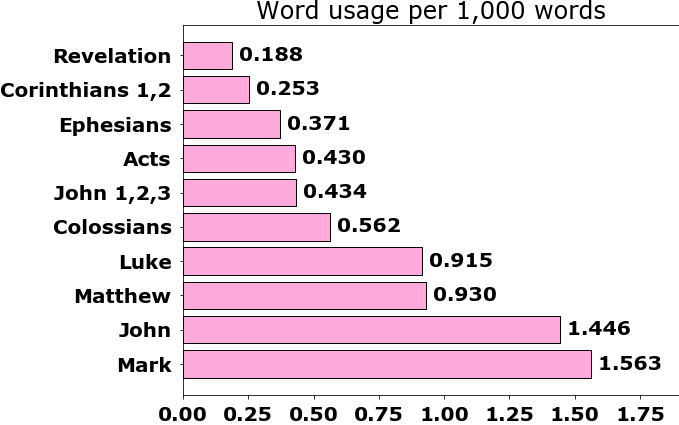 |
Words: αιρε=3 αιρει=8 αιρεις=2 αιρεται αιρετε αιρομενον αιροντος=2 αιρων=2 αιρωσιν αραι=6 αραντες=2 αρας=5 αρατε=5 αρατω=4 αρη=5 αρης αρθη αρθησεται=6 αρθητι=2 αρθητω αρθωσιν αρον=10 αρουσιν=4 αρω ηραν=13 ηρατε=3 ηρεν=5 ηρθη=3 ηρκεν ηρμενον
|
The
ancient Greek word
"αἴρω" ≈ "lift, remove" from
"ἀείρω" ≈ "lift, remove".
85. Usage - taken away
- *G142 *101 αἴρω (ah'-ee-ro) : a primary root; to lift up; by implication, to take up or away; figuratively, to raise (the voice), keep in suspense (the mind), specially, to sail away (i.e. weigh anchor); by Hebraism (compare H5375) to expiate sin:--away with, bear (up), carry, lift up, loose, make to doubt, put away, remove, take (away, up).
- αρθησεται *6 of 101
- Matthew 13:12 ... not, from him shall be taken away even that he hath.
- Matthew 21:43 ... unto you, The kingdom of God shall be taken from you, and ...
- Matthew 25:29 ... him that hath not shall be taken away even that which he hath.
- Mark 4:25 ... not, from him shall be taken even that which he hath.
- Luke 8:18 ... not, from him shall be taken even that which he seemeth to have.
- Luke 19:26 ... even that he hath shall be taken away from him.
86. Strongs - given
*G1325 *414 δίδωμι (did'-o-mee) : a prolonged form of a primary verb (which is used as an alternative in most of the tenses); to give (used in a very wide application, properly, or by implication, literally or figuratively; greatly modified by the connection):--adventure, bestow, bring forth, commit, deliver (up), give, grant, hinder, make, minister, number, offer, have power, put, receive, set, shew, smite (+ with the hand), strike (+ with the palm of the hand), suffer, take, utter, yield.
 |
Words: δεδομενην δεδομενον=4 δεδοται=6 δεδωκα=6 δεδωκας=10 δεδωκει=2 δεδωκεισαν δεδωκεν=13 διδοασιν διδομενον διδοναι=6 διδοντα=2 διδοντες=2 διδοντι=2 διδοντος=3 διδοται=3 διδοτε=2 διδου=2 διδους=5 διδω διδωμι=9 διδωσιν=12 δοθεισα δοθεισαν=7 δοθειση δοθεισης=3 δοθεντος δοθη=3 δοθηναι=5 δοθησεται=16 δοι δοντα=2 δοντος=2 δος=16 δοτε=14 δοτω δουναι=33 δους=11 δω=6 δωη=6 δωμεν=6 δως δωσει=18 δωσεις=2 δωση δωσιν δωσομεν δωσουσιν=4 δωσω=23 δωτε=3 εδιδοσαν εδιδου=9 εδιδουν εδοθη=31 εδοθησαν=2 εδωκα εδωκαμεν εδωκαν=8 εδωκας=9 εδωκατε=3 εδωκεν=65
|
87. Usage - given
- *G1325 *414 δίδωμι (did'-o-mee) : a prolonged form of a primary verb (which is used as an alternative in most of the tenses); to give (used in a very wide application, properly, or by implication, literally or figuratively; greatly modified by the connection):--adventure, bestow, bring forth, commit, deliver (up), give, grant, hinder, make, minister, number, offer, have power, put, receive, set, shew, smite (+ with the hand), strike (+ with the palm of the hand), suffer, take, utter, yield.
- δοθησεται *16 of 414
- Matthew 7:7 Ask, and it shall be given you; seek, and ...
- Matthew 10:19 ... what ye shall speak: for it shall be given you in that same ...
- Matthew 12:39 ... a sign; and there shall no sign be given to it, but ...
- Matthew 13:12 For whosoever hath, to him shall be given, and he shall have more abundance: but ...
- Matthew 16:4 ... a sign; and there shall no sign be given unto it, but ...
- Matthew 21:43 ... from you, and given to a nation bringing forth the fruits thereof.
- Matthew 25:29 For unto every one that hath shall be given, and he shall have abundance: but ...
- Mark 4:25 For he that hath, to him shall be given: and he that hath ...
- Mark 8:12 ... I say unto you, There shall no sign be given unto this generation.
- Luke 6:38 Give, and it shall be given unto you; good measure, ...
- Luke 8:18 ... whosoever hath, to him shall be given; and whosoever hath ...
- Luke 11:9 ... unto you, Ask, and it shall be given you; seek, and ...
- Luke 11:29 ... a sign; and there shall no sign be given it, but ...
- Luke 19:26 ... unto every one which hath shall be given; and from him ...
- Acts 24:26 He hoped also that money should have been given him of Paul, ...
- James 1:5 ... of God, that giveth to all men liberally, and upbraideth not; and it shall be given him.
88. Matthew 21:43 Questions
Matthew 21:43 Therefore say I unto you, The kingdom of God shall be taken from you, and given to a nation bringing forth the fruits thereof. [kjv]
δια τουτο λεγω υμιν οτι αρθησεται αφ υμων η βασιλεια του θεου και δοθησεται εθνει ποιουντι τους καρπους αυτης [gnt]
Greek:
Through these things I say to you that (shall be) lifted away from you the kingdom of God and (shall be) given (to) peoples making of the fruit [twigs] of it.
- Can one destroy the "tenants" but not the "vineyard"? What about the "fruit"?
- Would any new similar "tenants" make "fruit" much different than the old "tenants"?
- Is the "kingdom" of "God" taken from them or is the position as gatekeepers to the "kingdom" of "God" taken from them, or something else?
- The "keys" to the "kingdom" of "heaven" can be shut. That's the purpose (and linguistic) origin of the word "key".
89. Matthew 21:43
KJV: Therefore say I unto you, The kingdom of God shall be taken from you, and given to a nation bringing forth the fruits thereof.
Greek: δια τουτο λεγω υμιν οτι αρθησεται αφ υμων η βασιλεια του θεου και δοθησεται εθνει ποιουντι τους καρπους αυτης
90. Matthew 21:44-46 Winnowing the wheat and chaff to stone-ground powder
Matthew 21:44 And whosoever shall fall on this stone shall be broken: but on whomsoever it shall fall, it will grind him to powder. [kjv]
21:45 And when the chief priests and Pharisees had heard his parables, they perceived that he spake of them. [kjv]

In Matthew 21:44, Jesus makes a statement about a stone
grinding some to
powder. What is this
"stone" that appears in two roles? There appear to be some translation issues involving
"broken",
"grind" and
"powder".
The process of
"winnowing" is that of separating the grain from the chaff. In ancient times, this was done using a stone threshing floor. The grain was thrown onto the stone floor to break it up into pieces. Additional breaking was done as needed.
There appear to be code words being used by Jesus since it was not clear to Matthew as to what they meant nor to the religious establishment listening.
91. Schedule
These events in Matthew 21 take place during the crucifixion week.
With Easter approaching, some of the next lessons are, attentively, as follows.
- Matthew 21: Triumphal entry
- Matthew 26: Last Supper
- Matthew 26: Peter's Denials
This sequence on Matthew 21 and 22 will resume after Easter.
92. End of page