Got it! This site "www.creationpie.org" uses cookies. You consent to this by clicking on "Got it!" or by continuing to use this website. Note: This appears on each machine/browser from which this site is accessed.
KJV: Behold, how good and how pleasant it is for brethren to dwell together in unity !
Hebrew: שיר המעלות לדוד הנה מה טוב ומה נעים שבת אחים גם יחד׃
Greek: ωδη των αναβαθμων τω δαυιδ ιδου δη τι καλον η τι τερπνον αλλ η το κατοικειν αδελφους επι το αυτο
4. In God we trust
The motto "In God we Trust" first appeared an a two-cent piece in 1864. This motto was adopted in 1956 during the Cold War under the Eisenhoweradministration.
The unofficial motto, created and adopted in 1782, was the Latin phrase "E pluribus unum" ≈ "Out of many, one". The thirteen letters in the phrase was considered significant.
Before the Civil War: The (United) Statesare a country.
After the Civil War: The United Statesis a country.
Psalms 103:12Asfaras the east is from the west, so far hath he removed our transgressions from us. [kjv]
καθοσοναπεχουσινανατολαι απο δυσμωνεμακρυνεν αφ ημων τας ανομιας ημων [lxx]
The words to "In Christ there is no east or west" were written by English poet/author William Arthur Dunkerley (1852-1941) in 1908 for an exhibition in London for the theme "the orient in London".
The Latin word "orientem" ≈ "east" and is the source of the English word "orient". At one time, the top of maps were the direction east.
It was published in 1913, a year before the start of World War I, based on Galatians 3:28. During World War I, his hymn book "Hymns for men at the front" sold 8,000,000 (eight million) copies.
In the mid-nineteenth century, Bishop John William Colenso of Natal raised a ruckus in the Catholic Church when he challenged the historicity and authority of many of the Old Testament books. Bishop Gray of Capetown wrote a stirring response of defense, which, in 1866, inspired Samuel Stone, to write this beloved hymn. (Hymnary.org)
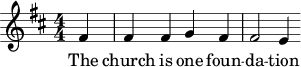
This is hymn #547 in the hymnal.
The summary verse for the preceding verses is the following verse.
John 10:30I and my Father are one. [kjv]
εγω και ο πατηρ εν εσμεν [gnt]
This verse and others have been used to promote the idea that we should all be "one" in Christ and "one" in God and that we are "better together" since we should all be "one". Some might say "bitter together" is a "bitter" analogy.
I would tell you some "butter" jokes but you might say they are "marginal". Are we "better together" or "bitter together"?
It appears that every one should be "one" with Christ individually and not collectively as a group.
Luke 2:1And it came to pass in those days, that there went out a decree from Caesar Augustus, that all the world should be taxed. [kjv]
εγενετο δε εν ταις ημεραις εκειναις εξηλθεν δογμα παρα καισαρος αυγουστου απογραφεσθαι πασαν την οικουμενην [gnt]
These words are the origin of the English word "ecumenical" meaning "all-embracing" or "all-inclusive".
The ecumenical movement in churches is the concept and principle in which Christians belonging to different Christian denominations work together to develop closer relationships among their churches and promote Christian unity. (Wikipedia)
Thought question: Could this attempt to unify churches into, ultimately, a world-wide church, be related to the apostate church as mentioned in the New Testament in general and in Revelation in particular? That is a topic for future discussion.
Let us return and look at the original Greek word from which "ecumenical" arises.
Heraclitus of Ephesus (Ancient Greek philosopher) taught an "everlasting word" or "logos" according to which all things are one according to his ideas of unity (of opposites, etc.).
Some churches, such as the UnityChurch or unitarian churches, take the best parts of all religions.
https://www.unityofpalmyra.org/about-us.html (as of 2024-02-06)
We teach a message of inclusion and positive spirituality, and participate in the Unity movement’s vision of creating a world that works for all. As stated in our Diversity Statement, “We recognize and honor the Divine within as the one common denominator that we share on our human journey.”
Charles Fillmore, co-founder of the Unity movement, once defined Unity as: “Unity is a link in the great educational movement inaugurated by Jesus Christ; our objective is to discern the truth in Christianity and prove it.
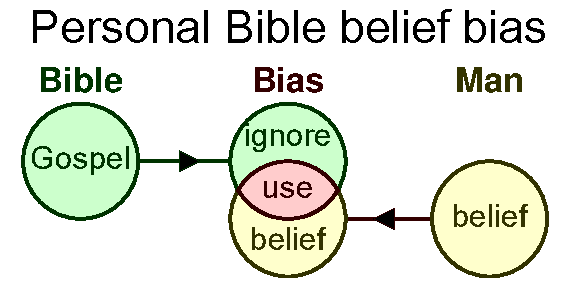
If you believe what you like in the gospels, and reject what you don't like, it is not the gospel you believe, but yourself.Saint Augustine (Early Christian father)
Do people today pick and choose which parts of the Bible they will believe?
Do pastors today pick and choose which parts of the Bible they will believe? Do they then pass on those parts to their flock and not tell them about other parts?
The church at Laodicea did not let Jesus into their church. He is standing knocking at the door waiting for them to let him in.
Note that you can ignore parts of the Gospel that you do not know about or do not understand (ignorance of the law) or you can ignore parts of the Gospel in order to deceive others (and yourself).
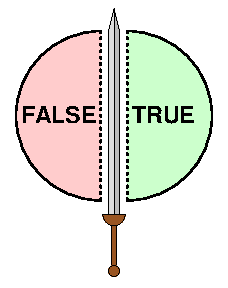
Luke 12:51Suppose ye that I am come to give peace on earth? I tell you, Nay; but rather division: [kjv]
δοκειτε οτι ειρηνην παρεγενομην δουναι εν τη γη ουχι λεγω υμιν αλλ η διαμερισμον [gnt]
Some pastors want to "replace division with unity". Jesus does not appear to say this. One can make the case that the "sword" is the "sword" of the "truth" or "reality". That fits in with the "reality" of the "flaming" "sword".
Notice how Luke, writing in part to the Romans, changes "sword" to "division" (the figurative meaning). The Romans were quite adept at "swords" and might get the wrong idea.
This is similar to the translation of the Bible for the Goths by Wulfila. He did not translate parts of the OT (Old Testament) because he said the Goths were warlike enough without additional encouragement. Note: Most of that OT translation has not survived.
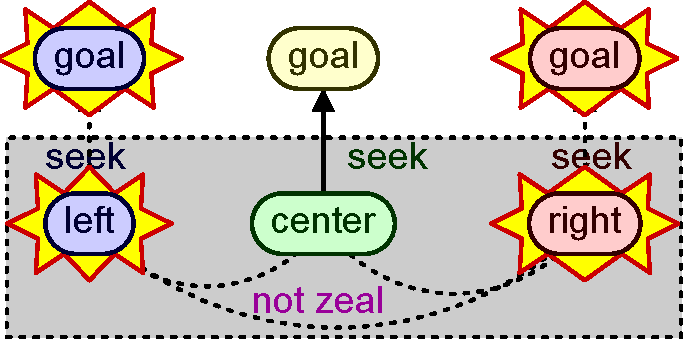
☐ One to one: The one "church" as a "unity" is the one "bride" of Jesus the "groom". All or nothing. What about individuals in the church who are not doing what they are supposed to be doing? Here, the singular"wedding" is appropriate. [better/bitter together]
☐ Many to one: Every "member" of the church is a "bride" of Jesus the "groom". Each individual is a separate case to be considered. Here the plural"weddings" is appropriate.
Jesus uses "church" as a "gathering of believers" in the singular. Man has created "churches" in the plural.
Matthew 22:37Jesus said unto him, Thou shalt love the Lord thy God with all thy heart, and with all thy soul, and with all thy mind. [kjv]
ο δε ιησους ειπεν εφη αυτω αγαπησεις κυριον τον θεον σου εν ολη τη καρδια σου και εν ολη τη ψυχη σου και εν ολη τη διανοια σου [gnt]
Someone has integrity if they have unity of thought, speech, action, and feeling.
That is, there is no contradiction between what they are thinking, what they are saying, what they are doing, and how they are feeling.
This is stated in the OT and by Jesus in the NT (New Testament).
Having integrity in this sense appears to not be sufficient.
One way to introduce a deception is to make a three-step analogy where the first one is scriptural but the last two are not. This can be useful in deception as a subtle psychological mind-control.
Most people will not notice, especially if it is part of a prayer. Here is an example.
Let us replace hate with love, [Jesus does say this.]
replace division with unity, [This is not what Jesus says.]
replace conflict with peace. ... [This is not what Jesus says and is an equivocation on the word conflict.]
Adept false teachers will maintain plausible deniability by carefully wording their statements so that, if challenged, they can feign ignorance and point to the limited sense in which what they said might be true. This reminds one of the verse that "God is not mocked" and of what Jesus says about "idle words" and the "unpardonable sin".
The idea of "unity" in "Christ" is ambiguous and can be deceptive. Can "unity" be "made" by man?
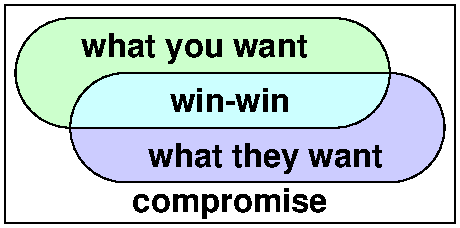
Can we agree to disagree?
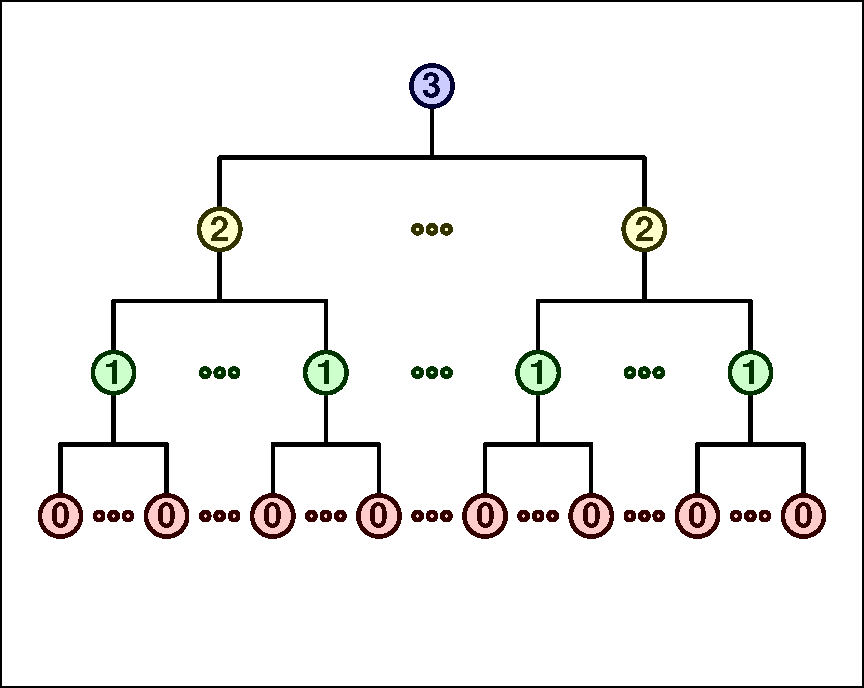
If a tree-structured hierarchy is desired, with power (and greatness) at each part of the tree, division of parts is not desired (by those at the top).
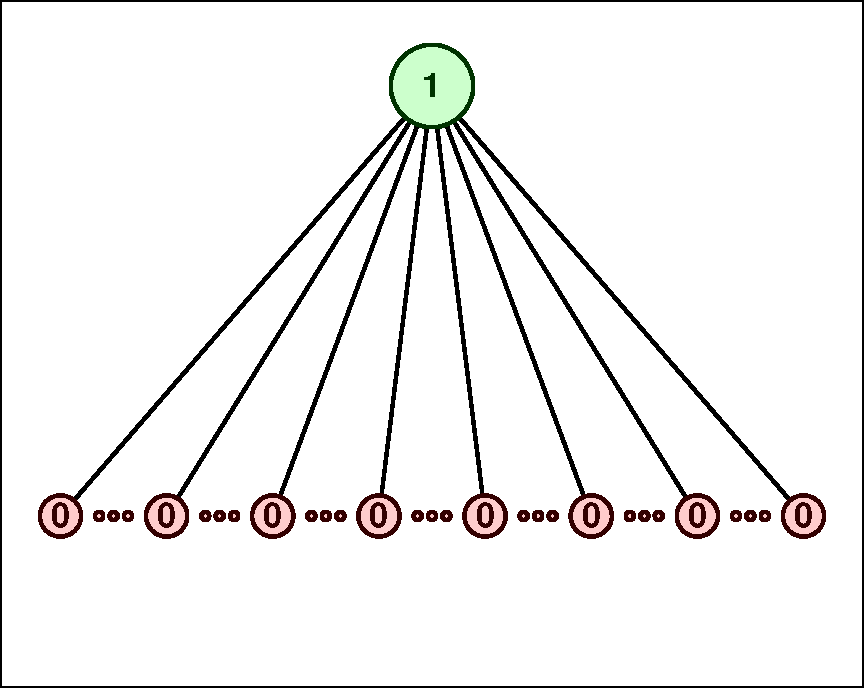
If a flat hierarchy is desired, division of parts is not a problem.
After warning about the poison of false teachers, Ignatius tells the Trallians in the very next line that being puffed up with pride makes one susceptible to such false teachers (part 7.1).
English: Therefore be on your guard against such people. And you will be provided that you are not puffed up with pride and that you cling inseparably to Jesus Christ and to the bishop and to the commandments of the apostles.
Did Jesus intend believers to "follow" the "apostles"? How about the "elders"?
The "bishop" was the local leader of the church. Later, bishops had more than one church to "oversee" as a "sheep dog". The danger is that the "sheep dog" might become a "wolf dog".
A "wolf dog" can be equated with a "bird" in which case a true prophet might be considered a "bird dog" (not appreciated by the "birds").
In the analogy of the tower of Babel as a house built using sand-based materials, the following might be noted in analogy to the parable of the houses built on the rock and on sand from Matthew 7.
The sand-based bricks in the desert would not last long in any rain or water, such as from a river.
In Acts 2, at Pentecost, the Holy Spirit, in the form of wind or a breath, brings back the unity of languages lost at the tower of Babel. For more information, see the following:A big breath from a wind bag.
If the "wind" or "breath" from Acts 2 is similar, in reverse, at the tower of Babel, then that tower did not handle the "wind" very well. Think of Ross Perot in the 1992 Presidential election talking about the big "sucking" sound (i.e., reverse breath) of jobs leaving the United States and going to Mexico if the NAFTA agreement went through.
English: The one who is within the sanctuary is clean, but the one who is outside the sanctuary is not clean. That is, whoever does anything without the bishop and council of presbyters and deacons does not have a clean conscience. Holmes, M. (2007). The Apostolic Fathers. 3rd Ed. Grand Rapids, MI: Baker Academic, p. 219.
John 17:21That they all may be one; as thou, Father, art in me, and I in thee, that they also may be one in us: that the world may believe that thou hast sent me. [kjv]
ινα παντεςενωσιν καθως συ πατερ πατηρ εν εμοι καγω εν σοι ινα και αυτοιενημιν εν ωσιν ινα ο κοσμος πιστευση πιστευη οτι συ με απεστειλας [gnt]
17:22And the glory which thou gavest me I have given them; that they may be one, even as we are one: [kjv]
και εγω καγω την δοξαν ην δεδωκας μοι δεδωκα αυτοις ινα ωσιν εν καθως ημεις ενεσμεν [gnt]
KJV: OneGod and Father of all, who is above all, and through all, and in you all.
Greek: ειςθεος και πατηρ παντων ο επι παντων και δια παντων και εν πασιν υμιν
35. Ephesians 4:13 Ephesus and unity
Ephesians 4:13Till we all come in the unity of the faith, and of the knowledge of the Son of God, unto a perfect man, unto the measure of the stature of the fulness of Christ: [kjv]
μεχρι καταντησωμεν οι παντες εις τηνενοτητατηςπιστεωςκαι τηςεπιγνωσεωςτου υιου του θεου εις ανδρατελειονεις μετρονηλικιαςτουπληρωματοςτου χριστου [gnt]
In Ephesus, Paul says that the "stature" of the "fullness" of Jesus is "measured".
Does Paul mean "height", "age", "maturity" or something else?
1 Corinthians 1:10Now I beseech you, brethren, by the name of our Lord Jesus Christ, that ye all speak the same thing, and that there be no divisions among you; but that ye be perfectly joined together in the same mind and in the same judgment. [kjv]
παρακαλω δε υμας αδελφοι δια του ονοματος του κυριου ημων ιησου χριστου ινα το αυτο λεγητε παντες και μη η εν υμιν σχισματα ητε δε κατηρτισμενοι εν τω αυτω νοι και εν τη αυτη γνωμη [gnt]
1:11For it hath been declared unto me of you, my brethren, by them which are of the house of Chloe, that there are contentions among you. [kjv]
KJV: Now I beseech you, brethren, by the name of our Lord Jesus Christ, that ye all speak the same thing, and that there be no divisions among you; but that ye be perfectly joined together in the same mind and in the same judgment.
Greek: παρακαλω δε υμας αδελφοι δια του ονοματος του κυριου ημων ιησου χριστου ινα το αυτο λεγητε παντες και μη η εν υμιν σχισματα ητε δε κατηρτισμενοι εν τω αυτω νοι και εν τη αυτη γνωμη
KJV: So we, being many, areonebody in Christ, and every onemembersone of another.
Greek: ουτως οι πολλοιενσωμαεσμεν εν χριστωοτο δε καθ ειςαλληλωνμελη
42. Philippians 2:2
Philippians 2:2Fulfil ye my joy, that ye be like minded, having the same love, being of one accord, of one mind. [kjv]
The English "joy" is "favor" in the Greek.
Paul appears to be saying "I did a favor to you by writing this. Now do me a favor." (and do what you are supposed to be doing).
The repeated use of "one" throughout the letter indicates that the church (and leaders) are going in different (and incorrect) directions.
43. Matthew 14:21-36 The all in one boat fallacy and deception
The "all in one boat" deception involves focusing on "fear" and the "boat" rather than on the "wind" and then ignoring another passage in Matthew involving a boat and wind that would invalidate the intended deception.
The fallacies used are, among others, faulty generalization, selective evidence and red herring (as a distractor). In short.
Get the other person to believe that you think they are very smart. False humility can be used.
Provide the person with selective evidence holding other evidence back.
The person arrives at the conclusion you want them to arrive at.
Tell the person how smart and clever and insightful they are.
Use distractors as necessary to focus attention on certain words and away from more relevant words.
1 Kings 18:22Then said Elijah unto the people, I, even I only, remain a prophet of the LORD; but Baal's prophets are four hundred and fifty men. [kjv]
...
18:40And Elijah said unto them, Take the prophets of Baal; let not one of them escape. And they took them: and Elijah brought them down to the brook Kishon, and slew them there. [kjv]
Here is the "vote" at Mount Carmel in the Bible. The story is in 1 Kings 18:20-40.
In any distributed system, the number of connections grows as the square of the number of nodes (e.g., people).
As the system (of members and groups) grows, there will invariably be conflict (between people) or errors (between system components). Fundamental rules:
Love God (individual)
Love neighbor as yourself (members and groups)
Proclaim truth actively but react passively
There needs to be some conflict resolution protocol between/among processes.
46. Matthew 18:15-17 Conflicting and faulty resolutions
Matthew 18:15Moreover if thy brother shall trespassagainst thee, go and tell him his faultbetween thee and him alone: if he shall hear thee, thou hast gained thy brother. [kjv]
18:16But if he will not hear thee, then takewith thee one or twomore, that in the mouth of two or threewitnesseseveryword may be established. [kjv]
18:17And if he shall neglect to hear them, tell it unto the church: but if he neglect to hear the church, let him be unto thee as an heathen man and a publican. [kjv]
Whenever there is a group of humans in close proximity, there will be conflict. In any distributed system, whether human or machine, there should be a conflict resolution protocol.
Jesus presents a fault tolerant conflict resolution protocol for groups of believers. The world has taken the opposite approach to conflict resolution within organizations.
The "against thee" and "his fault" were added in the TR (Textus Receptus). Omitting these words puts what Jesus says in line with the Lord's Prayer and the following verses on church conflict. Including them creates some logical continuity issues.