Send
Close Add comments:
(status displays here)
Got it! This site "www.creationpie.org" uses cookies. You consent to this by clicking on "Got it!" or by continuing to use this website. Note: This appears on each machine/browser from which this site is accessed.
Matthew 21:24-27 Authoritative lack of restraint
1. Matthew 21:24-27 Authoritative lack of restraint
This content is being developed.
2. Matthew 21
3. Cursed fig tree discourse paraphrase
21:18:
and in the morning, as Jesus returned to the city, the disciples decided (later) that he must have been hungry.
21:19:
And when Jesus saw one fig tree in the way, he said to the fig tree, "let no fruit grow on thee from now on". Immediately, the fig tree dried up.
21:20:
When the disciples saw it, they wondered, saying, "How quickly is the fig tree dried up".
21:21:
Jesus says, "Verily I say unto you" (connect this with the previous saying), If you believe and do not discern, you will not only do what has been done to this fig tree, but (in addition) if you say to this mountain/definition, be lifted up and cast [oblivion, forgetfulness] into the sea (of humanity,) it will come into being.
21:22:
and all (these not good things just mentioned), if you request (them) as a wish, persuaded, you shall take/seize.
[kp2: birds: weeds and wheat, lust, opinions]
[kp3: fish: mustard seed, tree, birds, oaths]
[kp4: pigs: woman, leaven]
4. Matthew 21:22 Receive the take
Matthew 21:22 And all things, whatsoever ye shall ask in prayer, believing, ye shall receive. [kjv]
και παντα οσα αν αιτησητε εν τη προσευχη πιστευοντες ληψεσθε λημψεσθε [gnt]
The Greek word translated as
"believing" is that of a
"persuasion". The verse does not say anything about
what one is
"believing" or how
strong that
"belief" is.
The Greek word translated
"shall receive" is that of
"shall take". It appears that, from the perspective of what Jesus says, the only things one are to
"take" are one's "
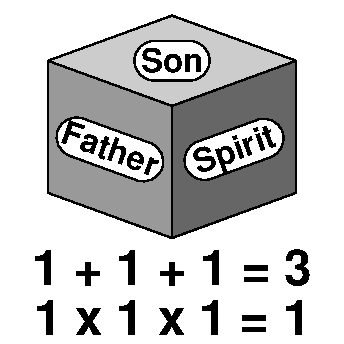
cross" and "
oneself". The two appear to be related.
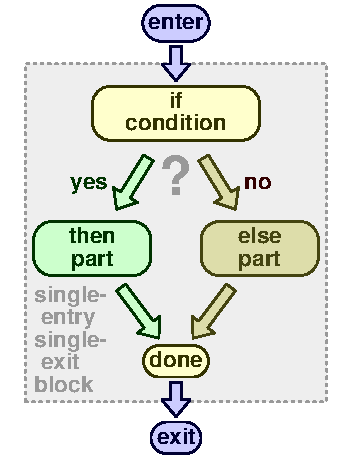
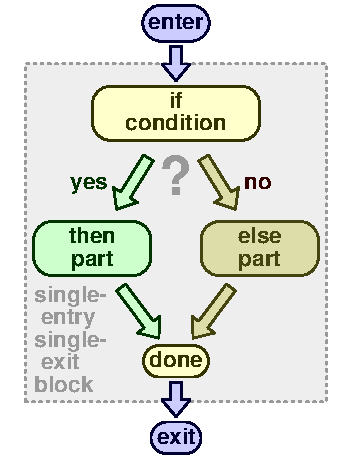
Paraphrase:
and all (these not good things just mentioned), if you request (them) as a wish, persuaded, you shall take/seize.
Saying:
Be careful what you ask for. You might get it. What is your
take on this? Have you
seized the idea? The Latin phrase
"carpe diem" ≈ "seize the day" which to some is "
enjoy the present".
5. Matthew 21:24-27 Authoritative lack of restraint
After the fig tree lesson on the way from Bethany to Jerusalem, Jesus and his disciples are now in the temple complex.
Matthew 21:23 And when he was come into the temple, the chief priests and the elders of the people came unto him as he was teaching, and said, By what authority doest thou these things? and who gave thee this authority? [kjv]
21:24 And Jesus answered and said unto them, I also will ask you one thing, which if ye tell me, I in like wise will tell you by what authority I do these things. [kjv]
21:25 The baptism of John, whence was it? from heaven, or of men? And they reasoned with themselves, saying, If we shall say, From heaven; he will say unto us, Why did ye not then believe him? [kjv]
21:26 But if we shall say, Of men; we fear the people; for all hold John as a prophet. [kjv]
21:27 And they answered Jesus, and said, We cannot tell. And he said unto them, Neither tell I you by what authority I do these things. [kjv]
6. Matthew 21:23 Word usage
Matthew 21:23 And when he was come into the temple, the chief priests and the elders of the people came unto him as he was teaching, and said, By what authority doest thou these things? and who gave thee this authority? [kjv]
και ελθοντι αυτω ελθοντος αυτου εις το ιερον προσηλθον προσηλθαν αυτω διδασκοντι οι αρχιερεις και οι πρεσβυτεροι του λαου λεγοντες εν ποια εξουσια ταυτα ποιεις και τις σοι εδωκεν την εξουσιαν ταυτην [gnt]
| Matthew 21:23 |
| Strong |
Used |
Unique |
Word |
Part of speech |
| G1321 |
96 |
1 |
διδασκοντι |
verb present active participle dative singular masculine |
7. Matthew 21:24 Word usage
Matthew 21:24 And Jesus answered and said unto them, I also will ask you one thing, which if ye tell me, I in like wise will tell you by what authority I do these things. [kjv]
αποκριθεις δε ο ιησους ειπεν αυτοις ερωτησω υμας καγω λογον ενα ον εαν ειπητε μοι καγω υμιν ερω εν ποια εξουσια ταυτα ποιω [gnt]
| Matthew 21:24 |
| Strong |
Used |
Unique |
Word |
Part of speech |
| G2065 |
65 |
5 |
ερωτησω |
verb future active indicative 1st person singular |
| G2046 |
96 |
8 |
ερω |
verb future active indicative 1st person singular |
8. Matthew 21:25 Word usage
Matthew 21:25 The baptism of John, whence was it? from heaven, or of men? And they reasoned with themselves, saying, If we shall say, From heaven; he will say unto us, Why did ye not then believe him? [kjv]
το βαπτισμα το ιωαννου ποθεν ην εξ ουρανου η εξ ανθρωπων οι δε διελογιζοντο παρ εν εαυτοις λεγοντες εαν ειπωμεν εξ ουρανου ερει ημιν δια τι ουν ουκ επιστευσατε αυτω [gnt]
| Matthew 21:25 |
| Strong |
Used |
Unique |
Word |
Part of speech |
| G1260 |
16 |
5 |
διελογιζοντο |
verb imperfect middle/passive deponent indicative 3rd person plural |
9. Matthew 21:26 Word usage
Matthew 21:26 But if we shall say, Of men; we fear the people; for all hold John as a prophet. [kjv]
εαν δε ειπωμεν εξ ανθρωπων φοβουμεθα τον οχλον παντες γαρ ως προφητην εχουσιν τον ιωαννην ως προφητην [gnt]
| Matthew 21:26 |
| Strong |
Used |
Unique |
Word |
Part of speech |
| G3004 |
2236 |
10 |
ειπωμεν |
verb 2nd person aorist active subjunctive 1st person plural |
| G3004 |
2236 |
10 |
ειπωμεν |
verb 2nd person aorist active subjunctive 1st person plural |
| G5399 |
95 |
1 |
φοβουμεθα |
? V-PNI-1P |
10. Matthew 21:27 Word usage
Matthew 21:27 And they answered Jesus, and said, We cannot tell. And he said unto them, Neither tell I you by what authority I do these things. [kjv]
και αποκριθεντες τω ιησου ειπον ειπαν ουκ οιδαμεν εφη αυτοις και αυτος ουδε εγω λεγω υμιν εν ποια εξουσια ταυτα ποιω [gnt]
| Matthew 21:27 |
| Strong |
Used |
Unique |
Word |
Part of speech |
| G611 |
228 |
7 |
αποκριθεντες |
? V-AOP-NPM |
11. Matthew 21:23 Word usage
Matthew 21:23 And when he was come into the temple, the chief priests and the elders of the people came unto him as he was teaching, and said, By what authority doest thou these things? and who gave thee this authority? [kjv]
και ελθοντι αυτω ελθοντος αυτου εις το ιερον προσηλθον προσηλθαν αυτω διδασκοντι οι αρχιερεις και οι πρεσβυτεροι του λαου λεγοντες εν ποια εξουσια ταυτα ποιεις και τις σοι εδωκεν την εξουσιαν ταυτην [gnt]
| Matthew 21:23 |
| Strong |
Used |
Unique |
Word |
Part of speech |
| G2411 |
72 |
20 |
ιερον |
noun accusative singular neuter |
| G1321 |
96 |
1 |
διδασκοντι |
verb present active participle dative singular masculine |
| G749 |
121 |
49 |
αρχιερεις |
noun nominative plural masculine |
| G4245 |
67 |
21 |
πρεσβυτεροι |
adjective nominative plural masculine comparative |
| G2992 |
144 |
38 |
λαου |
noun genitive singular masculine |
| G1849 |
102 |
29 |
εξουσια |
noun dative singular feminine |
| G1325 |
414 |
65 |
εδωκεν |
verb aorist active indicative 3rd person singular |
| G1849 |
102 |
56 |
εξουσιαν |
noun accusative singular feminine |
12. Matthew 15:9 Vain traditions
Matthew 15:9 But in vain they do worship me, teaching for doctrines the commandments of men. [kjv]
ματην δε σεβονται με διδασκοντες διδασκαλιας ενταλματα ανθρωπων [gnt]
Jesus says that they
"teach" the
"doctrines" or
"teachings" of "
men" which is of "
no effect" or "
vain" in worshiping God.
The ancient Greek word
"διδάσκαλος" ≈ "teacher, master" and comes from the ancient Greek word
"διδάσκω" ≈ "teach, instruct, train" and the source of the English word
"didactic". The English of the
KJV (King James Version) often uses a different English word when the Greek uses the same word.
English: ... they teach the doctrine ...
Greek: ... they teach the teaching ...
13. German teaching and learning
Matthew 15:9 But in vain they do worship me, teaching for doctrines the commandments of men. [kjv]
ματην δε σεβονται με διδασκοντες διδασκαλιας ενταλματα ανθρωπων [gnt]
… lehren … Lehren… [lu]
English: ... they teach the doctrine ...
Greek: ... they teach the teaching ...
German: ... they teach the teaching ...
Would a
sermon ever make an important difference between
doctrines and
teachings?
This is the case of the German words
"lernen" ≈ "learn" and
"lehren" ≈ "teach". The Old English word
"lehrete" ≈ "teach". Germanic influence on English and Pennsylvania Dutch (German):
The teacher did not learn me to learn.
14. Matthew 21:23 Teaching and authority
Matthew 21:23 And when he was come into the temple, the chief priests and the elders of the people came unto him as he was teaching, and said, By what authority doest thou these things? and who gave thee this authority? [kjv]
και ελθοντι αυτω ελθοντος αυτου εις το ιερον προσηλθον προσηλθαν αυτω διδασκοντι οι αρχιερεις και οι πρεσβυτεροι του λαου λεγοντες εν ποια εξουσια ταυτα ποιεις και τις σοι εδωκεν την εξουσιαν ταυτην [gnt]
The ancient Greek word
"διδάσκαλος" ≈ "teacher, master" and comes from the ancient Greek word
"διδάσκω" ≈ "teach, instruct, train" and the source of the English word
"didactic".
What was Jesus teaching?
Can we infer what Jesus was teaching by the question he was asked?
Will Jesus return to what he was teaching?
What do the religious leaders mean by "authority"?
15. Matthew 21:23 Cambridge Greek Lexicon
Matthew 21:23 And when he was come into the temple, the chief priests and the elders of the people came unto him as he was teaching, and said, By what authority doest thou these things? and who gave thee this authority? [kjv]
και ελθοντι αυτω ελθοντος αυτου εις το ιερον προσηλθον προσηλθαν αυτω διδασκοντι οι αρχιερεις και οι πρεσβυτεροι του λαου λεγοντες εν ποια εξουσια ταυτα ποιεις και τις σοι εδωκεν την εξουσιαν ταυτην [gnt]

From the Cambridge Greek Lexicon (volume 1, p. 523), the ancient Greek word
"ἐξουσία" ≈ "possibility, opportunity, lack of restraint (lifestyle)". The
GNT (Greek New Testament) prefers to often use a certain meaning.
| 1. possibility, opportunity, license |
4. position of power, office |
| 2. lack of restraint, liberty (regard to lifestyle) |
5. capability, resources (state), availability (supplies) |
| 3. power, authority (of a ruler, official, etc.) |
6. show of wealth and power |
Did the religious establishment consider Jesus a
ruler,
official, etc.? How does the English meaning of the verse
change if a usual definitions of that Greek word is used?
16. Strongs - lack of restraint
*G1849 *102 ἐξουσία (ex-oo-see'-ah) : from G1832 (in the sense of ability); privilege, i.e. (subjectively) force, capacity, competency, freedom, or (objectively) mastery (concretely, magistrate, superhuman, potentate, token of control), delegated influence:--authority, jurisdiction, liberty, power, right, strength.
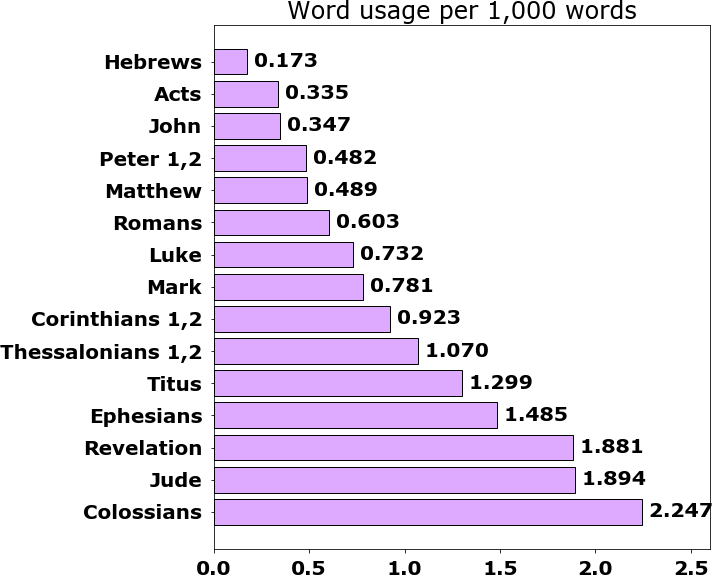 |
Words: εξουσια=29 εξουσιαι εξουσιαις=3 εξουσιαν=56 εξουσιας=12 εξουσιων
|
The
ancient Greek word
"ἐξουσία" ≈ "possibility, opportunity, lack of restraint (lifestyle)". In
context, it can mean
"power",
"means",
"authority", etc. It literally means "
out" of the "
substance". If you are "
out" of your "
substance" then you have a sort of
"lack of restraint".
"ἐξ" ≈ "out of" and "ουσία" ≈ "substance".
"ἐξουσία" ≈ "possibility, opportunity, lack of restraint (lifestyle)".
Notice how Strongs, as is common, starts with an authentic definition of a Greek word and than dances around to get the definition that was already decided for the verse. Modern Bible Greek experts appear to do the same thing. Think of the story of the emperor with no clothes by Hans Christan Anderson.
17. Powerful joke of authority
Suppose that I tell good (or bad) jokes (depending on viewpoint), and continue to tell them, even when they
might not be desired (by some). Which definition of
"ἐξουσία" ≈ "possibility, opportunity, lack of restraint (lifestyle)" best fits?
☐ I have
"power".
☐ I have
"authority".
☐ I have
"lack of restraint".
To determine the exact meaning, the context is important.
Some people dislike my jokes so much they are ready to strangle me.
I guess, then, the choke would be on me. My jokes need to hang together or else they will all hang separately. If they do not, then no noose is good noose. If they smell bad, then they would all skeptically hang around septicly, without exception.
18. Absolute power
John Emerich Edward Dalberg-Acton (1834-1902) said that "
Power tends to corrupt, and absolute power corrupts absolutely. Great men are almost always bad men..." in a letter to an Anglican bishop (Wikipedia).
The question is this. Did the power corrupt or did the opportunity to use power show what already existed in the person?
[Augustine and innocence of babies, parents and children]
All balls are red or blue. In a very dark room, what color is a bright red ball? What happens when the light is turned on? [information]
To be "great" one needs an observable "measure" by which one can be "greater" than others.
What does Jesus say about being "great"? Who is the "greatest"?
How does wanting to be "great" relate to "evil" as "oppressing" others and/or oneself?
19. Matthew 21:23 Authority
Matthew 21:23 And when he was come into the temple, the chief priests and the elders of the people came unto him as he was teaching, and said, By what authority doest thou these things? and who gave thee this authority? [kjv]
και ελθοντι αυτω ελθοντος αυτου εις το ιερον προσηλθον προσηλθαν αυτω διδασκοντι οι αρχιερεις και οι πρεσβυτεροι του λαου λεγοντες εν ποια εξουσια ταυτα ποιεις και τις σοι εδωκεν την εξουσιαν ταυτην [gnt]
The Greek word translated as
"authority" is that of
"lack of restraint" and is often (but sometimes questionably) translated as
"power".
The
ancient Greek word
"ἐξουσία" ≈ "possibility, opportunity, lack of restraint (lifestyle)". In
context, it can mean
"power",
"means",
"authority", etc.
The
ancient Greek word
"δίδωμι" ≈ "give, offer, grant, allow".
20. Strongs - give
*G1325 *414 δίδωμι (did'-o-mee) : a prolonged form of a primary verb (which is used as an alternative in most of the tenses); to give (used in a very wide application, properly, or by implication, literally or figuratively; greatly modified by the connection):--adventure, bestow, bring forth, commit, deliver (up), give, grant, hinder, make, minister, number, offer, have power, put, receive, set, shew, smite (+ with the hand), strike (+ with the palm of the hand), suffer, take, utter, yield.
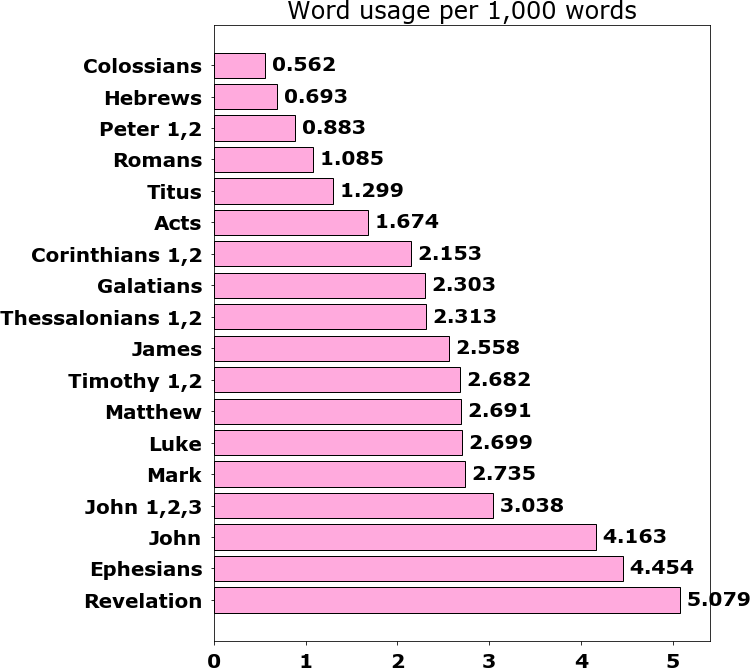 |
Words: δεδομενην δεδομενον=4 δεδοται=6 δεδωκα=6 δεδωκας=10 δεδωκει=2 δεδωκεισαν δεδωκεν=13 διδοασιν διδομενον διδοναι=6 διδοντα=2 διδοντες=2 διδοντι=2 διδοντος=3 διδοται=3 διδοτε=2 διδου=2 διδους=5 διδω διδωμι=9 διδωσιν=12 δοθεισα δοθεισαν=7 δοθειση δοθεισης=3 δοθεντος δοθη=3 δοθηναι=5 δοθησεται=16 δοι δοντα=2 δοντος=2 δος=16 δοτε=14 δοτω δουναι=33 δους=11 δω=6 δωη=6 δωμεν=6 δως δωσει=18 δωσεις=2 δωση δωσιν δωσομεν δωσουσιν=4 δωσω=23 δωτε=3 εδιδοσαν εδιδου=9 εδιδουν εδοθη=31 εδοθησαν=2 εδωκα εδωκαμεν εδωκαν=8 εδωκας=9 εδωκατε=3 εδωκεν=65
|
21. Matthew 21:23
KJV: And when he was come into the temple, the chief priests and the elders of the people came unto him as he was teaching, and said, By what authority doest thou these things? and who gave thee this authority?
Greek: και ελθοντι αυτω ελθοντος αυτου εις το ιερον προσηλθον προσηλθαν αυτω διδασκοντι οι αρχιερεις και οι πρεσβυτεροι του λαου λεγοντες εν ποια εξουσια ταυτα ποιεις και τις σοι εδωκεν την εξουσιαν ταυτην
22. Matthew 21:24
Matthew 21:24 And Jesus answered and said unto them, I also will ask you one thing, which if ye tell me, I in like wise will tell you by what authority I do these things. [kjv]
αποκριθεις δε ο ιησους ειπεν αυτοις ερωτησω υμας καγω λογον ενα ον εαν ειπητε μοι καγω υμιν ερω εν ποια εξουσια ταυτα ποιω [gnt]
The ancient Greek word
"λόγος" ≈ "rational explanation, reasoning". In
context, it
can mean
"word". To whom is Jesus
"answering"? Check the previous verse.
Greek:
Answered then the Jesus and said to them. (I) ask you and I (am) reasoning one that if say/tell (to) me you, and I (am) answer in what lack-of-restraint these (things) (I) do. [bird house rules]
The
ancient Greek word
"κἀγώ" ≈ "and I (am)" is a contraction of
"και" ≈ "and" and
"εγώ" ≈ "I (am)". The
modern Greek word
"καγώ" (ka-GO) ≈ "and I (am)" and, as an
idiom, "
me too".
23. Matthew 5:19 Birdhouse rules
Matthew 5:19 Whosoever therefore shall break one of these least commandments, and shall teach men so, he shall be called the least in the kingdom of heaven: but whosoever shall do and teach them, the same shall be called great in the kingdom of heaven. [kjv]
ος εαν ουν λυση μιαν των εντολων τουτων των ελαχιστων και διδαξη ουτως τους ανθρωπους ελαχιστος κληθησεται εν τη βασιλεια των ουρανων ος δ αν ποιηση και διδαξη ουτος μεγας κληθησεται εν τη βασιλεια των ουρανων [gnt]
Paraphrase:
Whoever breaks the least of the rules established by the bird for the birdhouse, and teaches others in that birdhouse to do so, will be called least in that birdhouse. But whoever does and teaches those rules shall be called great in the birdhouse.
To "
preach" or "
teach" in the
birdhouse, one must espouse the views or "
righteousness",
not of God or Jesus, but of the lead
bird. Saying:
You'll be birdseed.
[city/many on a hill cannot be hid]
24. Matthew 5:19 Birdhouse rules
Matthew 5:19 Whosoever therefore shall break one of these least commandments, and shall teach men so, he shall be called the least in the kingdom of heaven: but whosoever shall do and teach them, the same shall be called great in the kingdom of heaven. [kjv]
ος εαν ουν λυση μιαν των εντολων τουτων των ελαχιστων και διδαξη ουτως τους ανθρωπους ελαχιστος κληθησεται εν τη βασιλεια των ουρανων ος δ αν ποιηση και διδαξη ουτος μεγας κληθησεται εν τη βασιλεια των ουρανων [gnt]
As in the "
peacemaker" verse, 10 verses earlier, Jesus does
not say who it is who is doing the
"calling". The paraphrase fits any
human organization. This meaning does not necessarily make the traditional interpretation invalid.
[good and bad salt, good and bad light, good and bad houses]
25. Strongs - say
*G2046 *96 ἐρέω (er-eh'-o) : probably a fuller form of G4483; an alternate for G2036 in certain tenses; to utter, i.e. speak or say:--call, say, speak (of), tell.
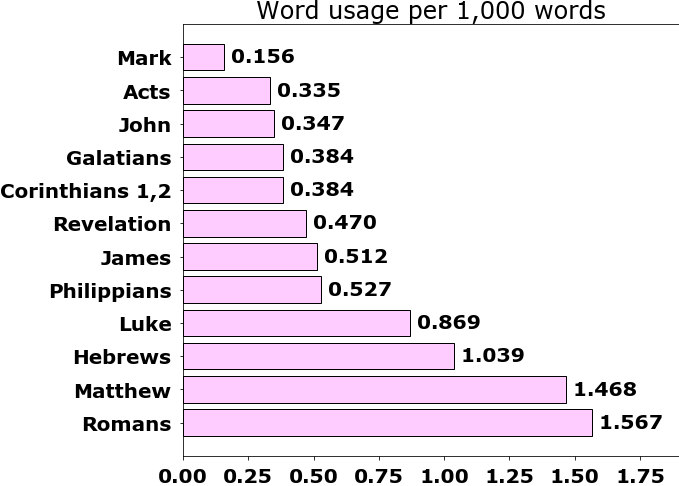 |
Words: ειρηκα=4 ειρηκαν ειρηκας ειρηκασιν ειρηκατε ειρηκει=3 ειρηκεν=8 ειρηκεναι ειρηκοτος ειρημενον=4 ειρηται ερει=17 ερεις=4 ερειτε=5 ερουμεν=7 ερουσιν=5 ερρεθη=10 ερρεθησαν ερω=8 ρηθεις ρηθεν=12
|
The ancient Greek word
"ἐρέω" ≈ "ask, tell" has two forms.
As a form of "ἐρομαι" ≈ "ask, tell".
As a form of "ἐρεω" ≈ "say" of "εἰρω" ≈ "tie, join, say, tell" and "λέγω" ≈ "say, tell".
26. Usage - say
- *G2046 *96 ἐρέω (er-eh'-o) : probably a fuller form of G4483; an alternate for G2036 in certain tenses; to utter, i.e. speak or say:--call, say, speak (of), tell.
- ερει *17
- Matthew 21:26 But if we shall say, Of men; we fear ...
- Matthew 25:34 Then shall the King say unto them on ...
- Matthew 25:40 And the King shall answer and say unto them, Verily I say ...
- Matthew 25:41 Then shall he say also unto them on the left hand, ...
- Mark 11:31 ... we shall say, From heaven; he will say, Why then did ye ...
- Luke 12:10 And whosoever shall speak a word against the Son ...
- Luke 13:25 ... unto us; and he shall answer and say unto you, I know you ...
- Luke 13:27 But he shall say, I tell you, I know you ...
- Luke 14:9 ... and him come and say to thee, Give this man ...
- Luke 14:10 But when thou art bidden, go and sit down in ...
- Luke 17:7 ... or feeding cattle, will say unto him by and by, when he is come from ...
- Luke 17:8 And will not rather say unto him, Make ready ...
- Luke 20:5 ... we shall say, From heaven; he will say, Why then believed ye ...
- Romans 9:20 ... that repliest against God? Shall the thing formed say to him that formed it, Why ...
- 1 Corinthians 14:16 ... occupieth the room of the unlearned say Amen at thy ...
- 1 Corinthians 15:35 But some man will say, How are the dead ...
- James 2:18 Yea, a man may say, Thou hast faith, ...
- ρηθεν *12
- Matthew 1:22 Now all this was done, that it might be fulfilled ...
- Matthew 2:15 And was there until the death of Herod: ...
- Matthew 2:17 Then was fulfilled that which was spoken by Jeremy the prophet, saying,
- Matthew 2:23 And he came and dwelt in a city called ...
- Matthew 4:14 That it might be fulfilled which was spoken by Esaias ...
- Matthew 8:17 That it might be fulfilled which was spoken by Esaias the prophet, ...
- Matthew 12:17 That it might be fulfilled which was spoken by Esaias the prophet, saying,
- Matthew 13:35 That it might be fulfilled which was spoken by the prophet, saying, ...
- Matthew 21:4 All this was done, that it might be fulfilled which was spoken ...
- Matthew 22:31 But as touching the resurrection of the dead, have ye not ...
- Matthew 24:15 When ye therefore shall see the abomination of desolation, ...
- Matthew 27:9 Then was fulfilled that which was spoken by Jeremy the prophet, ...
- ερρεθη *10
- Matthew 5:21 Ye have heard that it was said by them of old time, Thou shalt not ...
- Matthew 5:27 Ye have heard that it was said by them of old time, Thou shalt not commit adultery:
- Matthew 5:31 It hath been said, Whosoever shall put away his wife, let him give ...
- Matthew 5:33 Again, ye have heard that it hath been said by them of old time, Thou shalt ...
- Matthew 5:38 Ye have heard that it hath been said, An eye for an eye, ...
- Matthew 5:43 Ye have heard that it hath been said, Thou shalt love thy neighbour, ...
- Romans 9:12 It was said unto her, The elder shall serve the younger.
- Romans 9:26 And it shall come to pass, that in the place where it was said ...
- Revelation 6:11 And white robes were given unto every one of them; and ...
- Revelation 9:4 And it was commanded them that they should not ...
- ερω *8
- Matthew 13:30 ... in the time of harvest I will say to the reapers, Gather ye together first ...
- Matthew 21:24 ... ye tell me, I in like wise will tell you by what ...
- Mark 11:29 ... answer me, and I will tell you by what ...
- Luke 12:19 And I will say to my soul, Soul, ...
- Luke 15:18 ... my father, and will say unto him, Father, I have sinned ...
- 2 Corinthians 12:6 ... be a fool; for I will say the truth: but now I forbear, ...
- Philippians 4:4 ... the Lord alway: and again I say, Rejoice.
- Revelation 17:7 ... Wherefore didst thou marvel? I will tell thee the mystery of the woman, ...
- ειρηκεν *8
- John 12:50 ... therefore, even as the Father said unto me, so I speak.
- Acts 13:34 ... return to corruption, he said on this wise, I will give you ...
- 2 Corinthians 12:9 And he said unto me, My grace is sufficient ...
- Hebrews 1:13 But to which of the angels said he at any time, Sit on ...
- Hebrews 4:3 ... into rest, as he said, As I have sworn in ...
- Hebrews 4:4 For he spake in a certain place of the seventh day on this wise, ...
- Hebrews 10:9 Then said he, Lo, I come to do thy ...
- Hebrews 13:5 ... with such things as ye have: for he hath said, I will never leave ...
- ερουμεν *7
- Romans 3:5 ... the righteousness of God, what shall we say? Is God unrighteous who taketh ...
- Romans 4:1 What shall we say then that Abraham our father, ...
- Romans 6:1 What shall we say then? Shall we continue in sin, that ...
- Romans 7:7 What shall we say then? Is the law sin? God forbid. ...
- Romans 8:31 What shall we then say to these things? ...
- Romans 9:14 What shall we say then? Is there unrighteousness with God? God forbid.
- Romans 9:30 What shall we say then? That the Gentiles, which followed ...
- ερουσιν *5
- Matthew 7:22 Many will say to me in that day, ...
- Luke 17:21 Neither shall they say, Lo here! or, lo ...
- Luke 17:23 And they shall say to you, See here; or, ...
- Luke 23:29 ... are coming, in the which they shall say, Blessed are the barren, and ...
- 1 Corinthians 14:23 ... or unbelievers, will they not say that ye are mad?
- ερειτε *5
- Matthew 17:20 ... as a grain of mustard seed, ye shall say unto this mountain, ...
- Matthew 21:3 ... man say ought unto you, ye shall say, The Lord hath need ...
- Luke 4:23 ... unto them, Ye will surely say unto me this ...
- Luke 19:31 ... Why do ye loose him? thus shall ye say unto him, Because the Lord ...
- Luke 22:11 And ye shall say unto the goodman of the house, The Master saith ...
- ερεις *4
- Matthew 7:4 Or how wilt thou say to thy brother, ...
- Acts 23:5 ... for it is written, Thou shalt not speak evil of the ruler ...
- Romans 9:19 Thou wilt say then unto me, Why doth he yet ...
- Romans 11:19 Thou wilt say then, The branches were broken off, that I might be graffed in.
- ειρημενον *4
- Luke 2:24 And to offer a sacrifice according to that which is said in the law of the Lord, ...
- Acts 2:16 But this is that which was spoken by the prophet Joel;
- Acts 13:40 ... that come upon you, which is spoken of in the prophets;
- Romans 4:18 ... of many nations; according to that which was spoken, So shall thy ...
- ειρηκα *4
- John 6:65 And he said, Therefore said I unto you, that no man ...
- John 14:29 And now I have told you before it come to pass, ...
- John 15:15 ... lord doeth: but I have called you friends; for ...
- Revelation 7:14 And I said unto him, Sir, thou knowest. ...
- ειρηκει *3
- Luke 22:13 And they went, and found as he had said unto them: and they made ready the passover.
- John 11:13 Howbeit Jesus spake of his death: ...
- Acts 20:38 ... for the words which he spake, that they should see ...
- ρηθεις
- Matthew 3:3 For this is he that was spoken of ...
- ειρηκοτος
- Matthew 26:75 ... remembered the word of Jesus, which said unto him, Before the cock ...
- ειρηται
- Luke 4:12 ... answering said unto him, It is said, Thou shalt not tempt ...
- ειρηκας
- John 4:18 ... thy husband: in that saidst thou truly.
- ειρηκατε
- Acts 8:24 ... that none of these things which ye have spoken come upon me.
- ειρηκασιν
- Acts 17:28 ... of your own poets have said, For we are also his offspring.
- ερρεθησαν
- Galatians 3:16 Now to Abraham and his seed were ...
- ειρηκεναι
- Hebrews 10:15 Whereof the Holy Ghost also is a witness to us: ...
- ειρηκαν
- Revelation 19:3 And again they said, Alleluia. And her ...
27. Matthew 21:24 One
Matthew 21:24 And Jesus answered and said unto them, I also will ask you one thing, which if ye tell me, I in like wise will tell you by what authority I do these things. [kjv]
αποκριθεις δε ο ιησους ειπεν αυτοις ερωτησω υμας καγω λογον ενα ον εαν ειπητε μοι καγω υμιν ερω εν ποια εξουσια ταυτα ποιω [gnt]
What is the
"one" "thing"? The Greek word translated as
"thing" is that of
"reasoning".
The ancient Greek word
"λόγος" ≈ "rational explanation, reasoning" and can, in
context, mean
"word". Why will the religious leaders
"reason" among themselves in the next verse?
28. Matthew 21:24 Ask and tell
Matthew 21:24 And Jesus answered and said unto them, I also will ask you one thing, which if ye tell me, I in like wise will tell you by what authority I do these things. [kjv]
αποκριθεις δε ο ιησους ειπεν αυτοις ερωτησω υμας καγω λογον ενα ον εαν ειπητε μοι καγω υμιν ερω εν ποια εξουσια ταυτα ποιω [gnt]
The ancient Greek word
"ἐρωτάω" ≈ "ask, question".
"ἐρῶ" ≈ "ask, tell" (as used) and "ἐν" ≈ "in".
"ἐρωήν" ≈ "rush, impulse" (accusative singular) of "ἐρωή" ≈ "rush, impulse".
In this short exchange, many questions are ask and then
"answered". Keep this in mind in a few verses when "
answers" are provided bit the question is not immediately obvious (due to translation issues).
29. Matthew 21:24 I am
Matthew 21:24 And Jesus answered and said unto them, I also will ask you one thing, which if ye tell me, I in like wise will tell you by what authority I do these things. [kjv]
αποκριθεις δε ο ιησους ειπεν αυτοις ερωτησω υμας καγω λογον ενα ον εαν ειπητε μοι καγω υμιν ερω εν ποια εξουσια ταυτα ποιω [gnt]
Note the usual occurrence of
"I (am)" with a verb of the same inflection (first person singular). This clarifies what is meant by
"I (am)".
"κἀγώ" ≈ "and I (am)" and "ἐρωτήσω" ≈ "(I) will ask".
"κἀγώ" ≈ "and I (am)" and "ἐρῶ" ≈ "(I) will say".
If the second verb is not present to disambiguate, context must by used and what is said may be otherwise ambiguous. An important example will be in four verses.
30. Matthew 21:24
KJV: And Jesus answered and said unto them, I also will ask you one thing, which if ye tell me, I in like wise will tell you by what authority I do these things.
Greek: αποκριθεις δε ο ιησους ειπεν αυτοις ερωτησω υμας καγω λογον ενα ον εαν ειπητε μοι καγω υμιν ερω εν ποια εξουσια ταυτα ποιω
31. Matthew 21:25
Matthew 21:25 The baptism of John, whence was it? from heaven, or of men? And they reasoned with themselves, saying, If we shall say, From heaven; he will say unto us, Why did ye not then believe him? [kjv]
το βαπτισμα το ιωαννου ποθεν ην εξ ουρανου η εξ ανθρωπων οι δε διελογιζοντο παρ εν εαυτοις λεγοντες εαν ειπωμεν εξ ουρανου ερει ημιν δια τι ουν ουκ επιστευσατε αυτω [gnt]
Jesus presents a
question. The religious leaders take this as an either-or (exclusive-or)
question. That is, pick one answer.
The
"baptism" of John was part
abstract and part
physical. Are there examples through history where the abstract and physical baptisms have been confused? Provide examples.
[definition of repent][tail of the mind][Great Commission: teach and baptize]
32. Matthew 28:16-20 Immersion into baptism
Matthew 28:19 Go ye therefore, and teach all nations, baptizing them in the name of the Father, and of the Son, and of the Holy Ghost: [kjv]
πορευθεντες ουν μαθητευσατε παντα τα εθνη βαπτιζοντες αυτους εις το ονομα του πατρος και του υιου και του αγιου πνευματος [gnt]
28:20 Teaching them to observe all things whatsoever I have commanded you: and, lo, I am with you alway, even unto the end of the world. Amen. [kjv]
διδασκοντες αυτους τηρειν παντα οσα ενετειλαμην υμιν και ιδου εγω μεθ υμων ειμι πασας τας ημερας εως της συντελειας του αιωνος αμην [gnt]
One is to "teach" "all" "the" "peoples" as one "goes" through life.
The Greek word translated as "baptize" is that of "dunking", "immersing" as in dying cloth or, figuratively, in over one's head.
This "baptism" is to be done "into" (Greek) the "name" and not "in" (Latin, English) the "name".
[Reformation, Anabaptists, Amish, Mennonites, Dunkers (Antietam)]
 |
Details are left as a future topic.
|
33. Learning
Personally I'm always ready to learn, although I do not always like being taught. Winston Churchill (British statesman)
34. Matthew 21:25
KJV: The baptism of John, whence was it? from heaven, or of men? And they reasoned with themselves, saying, If we shall say, From heaven; he will say unto us, Why did ye not then believe him?
Greek: το βαπτισμα το ιωαννου ποθεν ην εξ ουρανου η εξ ανθρωπων οι δε διελογιζοντο παρ εν εαυτοις λεγοντες εαν ειπωμεν εξ ουρανου ερει ημιν δια τι ουν ουκ επιστευσατε αυτω
35. Matthew 21:26
Matthew 21:26 But if we shall say, Of men; we fear the people; for all hold John as a prophet. [kjv]
εαν δε ειπωμεν εξ ανθρωπων φοβουμεθα τον οχλον παντες γαρ ως προφητην εχουσιν τον ιωαννην ως προφητην [gnt]
In reality, the
"baptism" of "
John" could be, to some extent, both (partly) from "
heaven" and (partly) from "
men".
A similar question today is the following.
Was Jesus man or God? (or a combination)
Was Jesus (fully) man or (fully) God? (two-valued logic)
Was Jesus (fully) man and (fully) God? (two-valued logic)
In most real life questions in reality, the best answer is often not at the extremes. Provide some examples. Provide an example where the best answer is at one of two extremes. Are there exceptions?
36. Rome and the Trinity
In the first few centuries after Christ, the heresy of
Arianism promoted their ideas through catchy tunes (of musician Arius) with clever words that expressed those ideas. Here is an example.
We praise him as without beginning,
because of him who has a beginning.
And adore him as everlasting,
because of him who in time has come to be.
Discuss: Do some churches use music today to promote views that may not be in line with the Bible or what Jesus says?
37. Rome and Ambrose
The first Christmas hymns date back to the late 300's in Rome. These developed over time to what we have today.
Ambrose countered
Arius with hymn words such as the following.
All laud to God the Father be;
All praise, eternal Son, to thee;
All glory, as is ever meet,
To God the holy Paraclete.
Augustine refers to the hymns of
Ambrose in his work
Confessions. When asked by Augustine about what to do in Rome whose church had some different rituals, Ambrose said that when he was in Rome, he did as was done in Rome.
38. Matthew 21:25-26 Conditional logic
Matthew 21:25 The baptism of John, whence was it? from heaven, or of men? And they reasoned with themselves, saying, If we shall say, From heaven; he will say unto us, Why did ye not then believe him? [kjv]
21:26 But if we shall say, Of men; we fear the people; for all hold John as a prophet. [kjv]
What is the difference each of the following?
conditional vs. non-conditional (When does a conditional reduce to a non-conditional?)
conditional expression vs. conditional statement
complete (eager) evaluation vs. short-circuit (lazy) evaluation
conjunction vs. disjunction
deterministic vs. non-deterministic conditionals
How do side-effects (e.g., destructive memory update) change how one thinks of conditionals (in each of the above cases)?
39. Matthew 21:26
KJV: But if we shall say, Of men; we fear the people; for all hold John as a prophet.
Greek: εαν δε ειπωμεν εξ ανθρωπων φοβουμεθα τον οχλον παντες γαρ ως προφητην εχουσιν τον ιωαννην ως προφητην
40. Matthew 13:28 Nightmare
41. Similar phrasing
This same phrase appears in three other places as
connecting commentary.
Matthew 21:27 And they answered Jesus, and said, We cannot tell. And he said unto them, Neither tell I you by what authority I do these things. [kjv]
και αποκριθεντες τω ιησου ειπον ειπαν ουκ οιδαμεν εφη αυτοις και αυτος ουδε εγω λεγω υμιν εν ποια εξουσια ταυτα ποιω [gnt]
Mark 9:12 And he answered and told them, Elias verily cometh first, and restoreth all things; and how it is written of the Son of man, that he must suffer many things, and be set at nought. [kjv]
ο δε αποκριθεις ειπεν εφη αυτοις ηλιας μεν ελθων πρωτον αποκαθιστα αποκατιστανει παντα και πως γεγραπται επι τον υιον του ανθρωπου ινα πολλα παθη και εξουδενωθη εξουδενηθη [gnt]
12:24 And Jesus answering said unto them, Do ye not therefore err, because ye know not the scriptures, neither the power of God? [kjv]
και αποκριθεις εφη αυτοις ο ιησους ειπεν αυτοις ου δια τουτο πλανασθε μη ειδοτες τας γραφας μηδε την δυναμιν του θεου [gnt]
42. Matthew 21:27 Tell them
Matthew 21:27 And they answered Jesus, and said, We cannot tell. And he said unto them, Neither tell I you by what authority I do these things. [kjv]
και αποκριθεντες τω ιησου ειπον ειπαν ουκ οιδαμεν εφη αυτοις και αυτος ουδε εγω λεγω υμιν εν ποια εξουσια ταυτα ποιω [gnt]
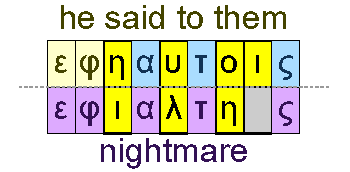
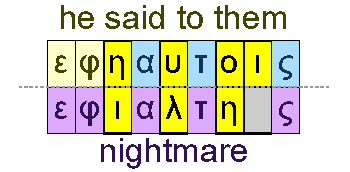
"ἔφη" ≈ "he said" (affirming or denying something).
"αὐτοῖς" ≈ "to them".
"ἐφιάλτης" ≈ "nightmare"
Matthew appears to innocently add a play on words used elsewhere by Jesus. Does it fit in this context? [
nightmare]
One way to think about this is that Matthew often uses the words or similar that Jesus uses elsewhere. That is how children learn many words, from their parents. Children swear by that technique. [Toy Story: You want a piece of me.]
 |
Details are left as a future topic.
|
43. Matthew 21:27 No telling
Matthew 21:27 And they answered Jesus, and said, We cannot tell. And he said unto them, Neither tell I you by what authority I do these things. [kjv]
και αποκριθεντες τω ιησου ειπον ειπαν ουκ οιδαμεν εφη αυτοις και αυτος ουδε εγω λεγω υμιν εν ποια εξουσια ταυτα ποιω [gnt]
Jesus says he will not tell them. Most sermons end at that point. Does Jesus, in fact, tell them? To find out, one must read on and connect the dots. What if, instead of
telling them, Jesus
tells everyone who will listen and understand what he is saying? There is not
one shred of evidence that Jesus answers this question in the following verses.
"ἐγὼ" ≈ "I (am)" (for emphasis) and "λέγω" ≈ "(I) say"
"ποιῶ" ≈ "I do" (emphasis not used/needed)
Spanish: "hablo" ≈ "(I) speak" as a PIE (Proto Indo-European) example.
Spanish: "yo" ≈ "I" and "hablo" ≈ "(I) speak" (for emphasis).
44. Matthew 21:27 Conditional logic
45. Matthew 21:27 Conditional logic
Matthew 21:27 And they answered Jesus, and said, We cannot tell. And he said unto them, Neither tell I you by what authority I do these things. [kjv]
και αποκριθεντες τω ιησου ειπον ειπαν ουκ οιδαμεν εφη αυτοις και αυτος ουδε εγω λεγω υμιν εν ποια εξουσια ταυτα ποιω [gnt]
PSU programming class (from the 1980's):
Student: Will this (conditional programming) question be on the next test (on conditional programming)?
Teacher: I do not put questions on the test that we have not covered.
(student later admits they stopped listening at this point)
Teacher: But this is a good question. Let us cover it. (Question covered in full detail).
Later, one more question is needed for the test. Since that question was covered, that question was put on the test.
Student: (later and on end of semester customer satisfaction survey): The teacher lied to us. He said a question would not be on the test and it was on the test.
Questions: Is Jesus a good teacher? Are you a good learner?
Fundamental problem of imperative programming: The programming/machine state, in the presence of side-effects, can change in ways not always anticipated.
46. Matthew 21:27
KJV: And they answered Jesus, and said, We cannot tell. And he said unto them, Neither tell I you by what authority I do these things.
Greek: και αποκριθεντες τω ιησου ειπον ειπαν ουκ οιδαμεν εφη αυτοις και αυτος ουδε εγω λεγω υμιν εν ποια εξουσια ταυτα ποιω
47. Matthew 21:28-30 Desire of the Father 1
Matthew 21:28 But what think ye? A certain man had two sons; and he came to the first, and said, Son, go work to day in my vineyard. [kjv]
21:29 He answered and said, I will not: but afterward he repented, and went. [kjv]
21:30 And he came to the second, and said likewise. And he answered and said, I go, sir: and went not. [kjv]
21:31 Whether of them twain did the will of his father? They say unto him, The first. Jesus saith unto them, Verily I say unto you, That the publicans and the harlots go into the kingdom of God before you. [kjv]
Is it more important what you
think, what you
say, or what you
do? Is it enough to say "
I will"! Might these verses (and those that follow) help answer some previous questions?
Was the baptism of John from "heaven" or from "man"?
By what "authority" does Jesus do the things that he does?
48. Matthew 21:33 Parable of the householder 1
Matthew 21:33 Hear another parable: There was a certain householder, which planted a vineyard, and hedged it round about, and digged a winepress in it, and built a tower, and let it out to husbandmen, and went into a far country: [kjv]
21:40 When the lord therefore of the vineyard cometh, what will he do unto those husbandmen? [kjv]
21:41 They say unto him, He will miserably destroy those wicked men, and will let out his vineyard unto other husbandmen, which shall render him the fruits in their seasons. [kjv]
Who is the
"householder"? Are you sure? Do the actions of this
"householder" fit the actions of the real
"householder"?
49. End of page