Send
Close Add comments:
(status displays here)
Got it! This site "www.creationpie.org" uses cookies. You consent to this by clicking on "Got it!" or by continuing to use this website. Note: This appears on each machine/browser from which this site is accessed.
Matthew 9:14-17 Old and new garments and bottles
1. Matthew 9:14-17 Old and new garments and bottles
2. Verses with Greek
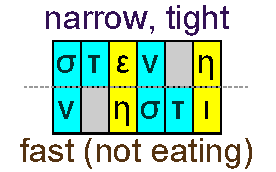
Matthew 9:14 Then came to him the disciples of John, saying, Why do we and the Pharisees fast oft, but thy disciples fast not? [kjv]
τοτε προσερχονται αυτω οι μαθηται ιωαννου λεγοντες δια τι ημεις και οι φαρισαιοι νηστευομεν πολλα οι δε μαθηται σου ου νηστευουσιν [gnt]
9:15 And Jesus said unto them, Can the children of the bridechamber mourn, as long as the bridegroom is with them? but the days will come, when the bridegroom shall be taken from them, and then shall they fast. [kjv]
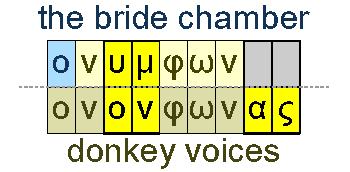
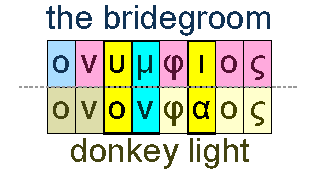
και ειπεν αυτοις ο ιησους μη δυνανται οι υιοι του νυμφωνος πενθειν εφ οσον μετ αυτων εστιν ο νυμφιος ελευσονται δε ημεραι οταν απαρθη απ αυτων ο νυμφιος και τοτε νηστευσουσιν [gnt]
9:16 No man putteth a piece of new cloth unto an old garment, for that which is put in to fill it up taketh from the garment, and the rent is made worse. [kjv]
ουδεις δε επιβαλλει επιβλημα ρακους αγναφου επι ιματιω παλαιω αιρει γαρ το πληρωμα αυτου απο του ιματιου και χειρον σχισμα γινεται [gnt]
9:17 Neither do men put new wine into old bottles: else the bottles break, and the wine runneth out, and the bottles perish: but they put new wine into new bottles, and both are preserved. [kjv]
ουδε βαλλουσιν οινον νεον εις ασκους παλαιους ει δε μηγε ρηγνυνται οι ασκοι και ο οινος εκχειται και οι ασκοι απολουνται απολλυνται αλλα βαλλουσιν οινον νεον εις ασκους καινους και αμφοτερα αμφοτεροι συντηρουνται [gnt]
3. Matthew 9:14
Matthew 9:14 Then came to him the disciples of John, saying, Why do we and the Pharisees fast oft, but thy disciples fast not? [kjv]
τοτε προσερχονται αυτω οι μαθηται ιωαννου λεγοντες δια τι ημεις και οι φαρισαιοι νηστευομεν πολλα οι δε μαθηται σου ου νηστευουσιν [gnt]
4. Matthew 9:14
KJV: Then came to him the disciples of John, saying, Why do we and the Pharisees fast oft, but thy disciples fast not?
Greek: τοτε προσερχονται αυτω οι μαθηται ιωαννου λεγοντες δια τι ημεις και οι φαρισαιοι νηστευομεν πολλα οι δε μαθηται σου ου νηστευουσιν
5. Matthew 9:15 Bridegroom and fasting
Matthew 9:15 And Jesus said unto them, Can the children of the bridechamber mourn, as long as the bridegroom is with them? but the days will come, when the bridegroom shall be taken from them, and then shall they fast. [kjv]
και ειπεν αυτοις ο ιησους μη δυνανται οι υιοι του νυμφωνος πενθειν εφ οσον μετ αυτων εστιν ο νυμφιος ελευσονται δε ημεραι οταν απαρθη απ αυτων ο νυμφιος και τοτε νηστευσουσιν [gnt]
6. Matthew 9:15
KJV: And Jesus said unto them, Can the children of the bridechamber mourn, as long as the bridegroom is with them? but the days will come, when the bridegroom shall be taken from them, and then shall they fast.
Greek: και ειπεν αυτοις ο ιησους μη δυνανται οι υιοι του νυμφωνος πενθειν εφ οσον μετ αυτων εστιν ο νυμφιος ελευσονται δε ημεραι οταν απαρθη απ αυτων ο νυμφιος και τοτε νηστευσουσιν
7. Matthew 9:14-17 Old and new garments and bottles
Matthew 9:16 No man putteth a piece of new cloth unto an old garment, for that which is put in to fill it up taketh from the garment, and the rent is made worse. [kjv]
ουδεις δε επιβαλλει επιβλημα ρακους αγναφου επι ιματιω παλαιω αιρει γαρ το πληρωμα αυτου απο του ιματιου και χειρον σχισμα γινεται [gnt]
9:17 Neither do men put new wine into old bottles: else the bottles break, and the wine runneth out, and the bottles perish: but they put new wine into new bottles, and both are preserved. [kjv]
ουδε βαλλουσιν οινον νεον εις ασκους παλαιους ει δε μηγε ρηγνυνται οι ασκοι και ο οινος εκχειται και οι ασκοι απολουνται απολλυνται αλλα βαλλουσιν οινον νεον εις ασκους καινους και αμφοτερα αμφοτεροι συντηρουνται [gnt]
One can easily provide the literal physical interpretation of these verses using the literal ideas of "
garments" and "
patches" and "
bottles" (or "
wineskins") and "
wine". What might each represent?
8. Matthew 9:16
KJV: No man putteth a piece of new cloth unto an old garment, for that which is put in to fill it up taketh from the garment, and the rent is made worse.
Greek: ουδεις δε επιβαλλει επιβλημα ρακους αγναφου επι ιματιω παλαιω αιρει γαρ το πληρωμα αυτου απο του ιματιου και χειρον σχισμα γινεται
Wessex: Ne deð witodlice nan man niwes claðes scyp on eald reaf. he to-braecð his stede on þa reafe. & se scyte (sic) beoð þa werse.
Wycliffe: And no man putteth a clout of buystous clothe in to an elde clothing; for it doith awey the fulnesse of the cloth, and a wers breking is maad.
Tyndale: Noo man peceth and olde garment with a pece of newe cloothe. For then taketh he awaye ye pece agayne from the garmet and the rent ys made greater.
9. Matthew 9:17
KJV: Neither do men put new wine into old bottles: else the bottles break, and the wine runneth out, and the bottles perish: but they put new wine into new bottles, and both are preserved.
Greek: ουδε βαλλουσιν οινον νεον εις ασκους παλαιους ει δε μηγε ρηγνυνται οι ασκοι και ο οινος εκχειται και οι ασκοι απολουνται απολλυνται αλλα βαλλουσιν οινον νεον εις ασκους καινους και αμφοτερα αμφοτεροι συντηρουνται
10. Mark 2:21-22
Mark 2:21 No man also seweth a piece of new cloth on an old garment: else the new piece that filled it up taketh away from the old, and the rent is made worse. [kjv]
και ουδεις επιβλημα ρακους αγναφου επιρραπτει επιραπτει επι ιματιω παλαιω ιματιον παλαιον ει δε μη αιρει το πληρωμα απ αυτου το καινον του παλαιου και χειρον σχισμα γινεται [gnt]
2:22 And no man putteth new wine into old bottles: else the new wine doth burst the bottles, and the wine is spilled, and the bottles will be marred: but new wine must be put into new bottles. [kjv]
και ουδεις βαλλει οινον νεον εις ασκους παλαιους ει δε μη ρησσει ρηξει ο οινος ο νεος τους ασκους και ο οινος εκχειται απολλυται και οι ασκοι απολουνται αλλα αλλα οινον νεον εις ασκους καινους βλητεον [gnt]
Mark mirrors Matthew in many respects.
11. Mark 2:21
KJV: No man also seweth a piece of new cloth on an old garment: else the new piece that filled it up taketh away from the old, and the rent is made worse.
Greek: και ουδεις επιβλημα ρακους αγναφου επιρραπτει επιραπτει επι ιματιω παλαιω ιματιον παλαιον ει δε μη αιρει το πληρωμα απ αυτου το καινον του παλαιου και χειρον σχισμα γινεται
12. Mark 2:22
KJV: And no man putteth new wine into old bottles: else the new wine doth burst the bottles, and the wine is spilled, and the bottles will be marred: but new wine must be put into new bottles.
Greek: και ουδεις βαλλει οινον νεον εις ασκους παλαιους ει δε μη ρησσει ρηξει ο οινος ο νεος τους ασκους και ο οινος εκχειται απολλυται και οι ασκοι απολουνται αλλα αλλα οινον νεον εις ασκους καινουςβλητεον
13. Parables
These sayings are in Matthew, Mark and Luke. Luke calls these sayings "
parables".
14. John 16:29 Proverbs and parables
Are the disciples ever confused about what Jesus means when he says something?
John 16:29 His disciples said unto him, Lo, now speakest thou plainly, and speakest no proverb. [kjv]
λεγουσιν αυτω οι μαθηται αυτου ιδε νυν εν παρρησια λαλεις και παροιμιαν ουδεμιαν λεγεις [gnt]
… openlice… by-spell. [wes]
What is the difference between a
"parable" and a
"proverb"? It appears that the Hebrew/Aramaic has one word for this concept and that word can be translated into Greek as
"parable" or
"proverb".
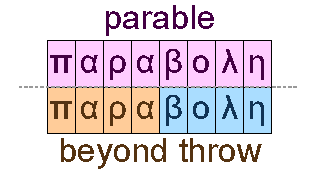
"παραβολή" ≈ "saying, proverb"
"παρά" ≈ "beyond" and "βολή" ≈ "throw".
"παροιμία" ≈ "saying, proverb"
The Wessex Gospels use
"by-spell" for
"proverb" and
"openlice" or
"openly" for
"plainly".
It is possible that whoever did the Greek translation picked the Greek word that they thought best matched the original language, but the differences and implications are yet interesting (and left for another time and place).
15. General context
Here is the general context of Matthew 9. Do you see any patterns?
Jesus forgives the sins of a crippled man, is said by the religious leadership to have blasphemed, then heals a man who walks away.
Jesus calls Matthew and then associated with other sinners and his disciples are questioned by the religious leadership.
Jesus says his followers cannot fast while the bridegroom is with them.
Jesus says the parables about the piece of cloth, garments, wineskins and wine, the focus of this content.
Jesus leaves to help the daughter of a ruler.
On the way, a woman touches him to get healed, he detects the power loss.
Jesus brings the daughter back to life from her sleep. The others laugh when Jesus says that she is sleeping.
16. Specific context
The context includes "
patches" and "
garments" and "
wine" and "
wineskins" or "
bottles".
Matthew 9:16: patches and garments
Matthew 9:17: wine and wineskins/bottles
The two verses
appear to be saying about the
same thing, but that may or may not be the case. For example, the Kingdom Parables in Matthew 13 on the "
treasure in the field" and the "
pearl of great price" superficially appear to be similar. On close inspection, however, they appear to be presenting different ideas.
For reasons to become clear, we will look at the second verse first, on bottles and wine, and then the first verse, on garments and patches.
17. Matthew 9:17 Bottles
Matthew 9:17 Neither do men put new wine into old bottles: else the bottles break, and the wine runneth out, and the bottles perish: but they put new wine into new bottles, and both are preserved. [kjv]
ουδε βαλλουσιν οινον νεον εις ασκους παλαιους ει δε μηγε ρηγνυνται οι ασκοι και ο οινος εκχειται και οι ασκοι απολουνται απολλυνται αλλα βαλλουσιν οινον νεον εις ασκους καινους και αμφοτερα αμφοτεροι συντηρουνται [gnt]

In general, Jesus uses "
wine" and "
blood" and "
life" in similar senses. The "
bottles" are "
wine skins" and would appear to contain the "
wine", "
blood", "
life", etc.
When Jesus uses "
codes", as in "
parables", the
nouns are code words that are replaced with other nouns while the
verbs are carefully worded to fit both the encoded and decoded nouns.
18. Matthew 26:29 Fruit of the vine
Matthew 26:29 But I say unto you, I will not drink henceforth of this fruit of the vine, until that day when I drink it new with you in my Father's kingdom. [kjv]
λεγω δε υμιν οτι ου μη πιω απ αρτι εκ τουτου του γεννηματος γενηματος της αμπελου εως της ημερας εκεινης οταν αυτο πινω μεθ υμων καινον εν τη βασιλεια του πατρος μου [gnt]
At the last supper, Jesus talks of drinking the fruit of the vine. At that time, in the Spring of the year during Passover, any wine, leftover from the Fall before, would have been somewhat fermented.
Perhaps this statement at the Last Supper is why Jesus refused the offer of wine (and myrrh to lessen the pain) at the crucifixion.
[chemists and alcohol]
19. Matthew 26:29 Fruit of the vine
Matthew 26:29 But I say unto you, I will not drink henceforth of this fruit of the vine, until that day when I drink it new with you in my Father's kingdom. [kjv]
λεγω δε υμιν οτι ου μη πιω απ αρτι εκ τουτου του γεννηματος γενηματος της αμπελου εως της ημερας εκεινης οταν αυτο πινω μεθ υμων καινον εν τη βασιλεια του πατρος μου [gnt]
At the last supper, Jesus talks of drinking the fruit of the vine. At that time, in the Spring of the year during Passover, any wine, leftover from the Fall before, would have been somewhat fermented.
Perhaps this statement at the Last Supper is why Jesus refused the offer of wine (and myrrh to lessen the pain) at the crucifixion.
[chemists and alcohol]
20. Matthew 26:29 Fruit of the vine
Matthew 26:29 But I say unto you, I will not drink henceforth of this fruit of the vine, until that day when I drink it new with you in my Father's kingdom. [kjv]
λεγω δε υμιν οτι ου μη πιω απ αρτι εκ τουτου του γεννηματος γενηματος της αμπελου εως της ημερας εκεινης οταν αυτο πινω μεθ υμων καινον εν τη βασιλεια του πατρος μου [gnt]
The
"fruit" in
"fruit" of the
"vine" uses a different Greek word for
"fruit" that means
"birth" or
"coming into being". The
"fruit" of the
"vine" is associated with "
life" and the "
Father" and the "
Kingdom" of "
God".
21. Strongs - wineskins
- *G779 *11 ἀσκός (as-kos') : from the same as G778; a leathern (or skin) bag used as a bottle:--bottle.
- ασκους *7
- Matthew 9:17 ... into old bottles: else the bottles break, and ...
- Mark 2:22 ... into old bottles: else the new wine doth burst the bottles, and the wine ...
- Luke 5:37 ... into old bottles; else the new wine will burst the bottles, and be spilled, ...
- Luke 5:38 ... must be put into new bottles; and both are preserved.
- ασκοι *4
- Matthew 9:17 ... into old bottles: else the bottles break, and ...
- Mark 2:22 ... into old bottles: else the new wine doth burst the bottles, and the wine ...
- Luke 5:37 ... into old bottles; else the new wine will burst the bottles, and be spilled, ...
22. Usage - wineskins
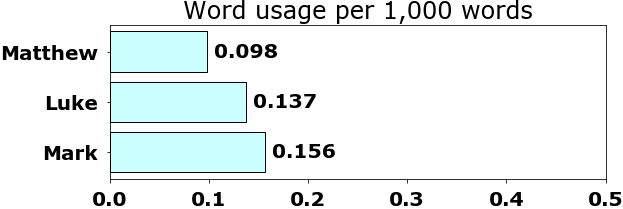 |
Words: ασκοι=4 ασκους=7
|
*G779 *11 ἀσκός (as-kos') : from the same as G778; a leathern (or skin) bag used as a bottle:--bottle.
The ancient Greek word
"ἀσκός" ≈ "skin, bag from hide, wineskin". The etymology is not known.
23. Job
Job 13:28 And he, as a rotten thing, consumeth, as a garment that is moth eaten. [kjv]
ο παλαιουται ισα ασκω η ωσπερ ιματιον σητοβρωτον [lxx]
I am as that which waxes old like a bottle, or like a moth-eaten garment. [bs3]
32:19 Behold, my belly is as wine which hath no vent; it is ready to burst like new bottles. [kjv]
η δε γαστηρ μου ωσπερ ασκος γλευκους ζεων δεδεμενος η ωσπερ φυσητηρ χαλκεως ερρηγως [lxx]
And my belly is as a skin of sweet wine, bound up and ready to burst; or as a brazier's labouring bellows. [bs3]
Here, Job uses words such as
"bottle",
"garment" and
"burst" that are used in Matthew 9:17-18. Job 18 has some verses that use many of the same words.
24. Job 13:28
KJV: And he, as a rotten thing, consumeth, as a garment that is moth eaten.
Hebrew: והוא כרקב יבלה כבגד אכלו עש׃
Greek: ο παλαιουται ισα ασκω η ωσπερ ιματιον σητοβρωτον
Brenton: I am as that which waxes old like a bottle, or like a moth-eaten garment.
25. Job 32:19
KJV: Behold, my belly is as wine which hath no vent; it is ready to burst like new bottles.
Hebrew: הנה בטני כיין לא יפתח כאבות חדשים יבקע׃
Greek: η δε γαστηρ μου ωσπερ ασκος γλευκους ζεων δεδεμενος η ωσπερ φυσητηρ χαλκεως ερρηγως
Brenton: And my belly is as a skin of sweet wine, bound up and ready to burst; or as a brazier's labouring bellows.
26. Ascetic exercise
Matthew 9:17 Neither do men put new wine into old bottles: else the bottles break, and the wine runneth out, and the bottles perish: but they put new wine into new bottles, and both are preserved. [kjv]
ουδε βαλλουσιν οινον νεον εις ασκους παλαιους ει δε μηγε ρηγνυνται οι ασκοι και ο οινος εκχειται και οι ασκοι απολουνται απολλυνται αλλα βαλλουσιν οινον νεον εις ασκους καινους και αμφοτερα αμφοτεροι συντηρουνται [gnt]
Acts 24:16 And herein do I exercise myself, to have always a conscience void of offence toward God, and toward men. [kjv]
εν τουτω δε και αυτος ασκω απροσκοπον συνειδησιν εχειν προς τον θεον και τους ανθρωπους διαπαντος δια παντος [gnt]
The ancient Greek word
"ἀσκός" ≈ "skin, bag from hide, wineskin" appears to be related, at least in sound, to the ancient Greek word
"ἀσκέω" ≈ "to work, exercise" which is the source of the English word
"ascetic". Might there be a connection?
27. Strongs - strive
- *G778 *1 ἀσκέω (as-keh'-o) : probably from the same as G4632; to elaborate, i.e. (figuratively) train (by implication, strive):--exercise.
- ασκω
- Acts 24:16 And herein do I exercise myself, to have always ...
28. Usage - strive
*G778 *1 ἀσκέω (as-keh'-o) : probably from the same as G4632; to elaborate, i.e. (figuratively) train (by implication, strive):--exercise.
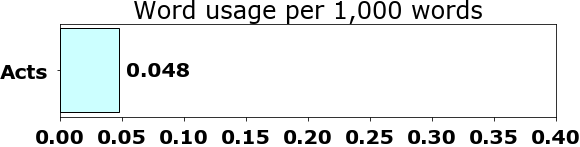 |
Words: ασκω
|
Strong relates the word for "
strive" as in "
exercise", to the ancient Greek word
"σκεῦος" ≈ "vessel, implement" which, in a figurative sense, can be a person such as a "
chosen vessel" or the "
goods" of the "
strong man".
*G4632 *23 σκεῦος (skyoo'-os) : of uncertain affinity; a vessel, implement, equipment or apparatus (literally or figuratively (specially, a wife as contributing to the usefulness of the husband)):--goods, sail, stuff, vessel.
The modern Greek word
"σκεύος" (SKEV-os) ≈ "device" such as a cell phone.
As a play on words, the Greek for "
bottle" or "
wineskin" relates, in a negative or opposite sense, to "
vessel" and, in that sense, a "
person" as a "
vessel".
29. Psalms 23:5 Exercise
Psalms 23:5 Thou preparest a table before me in the presence of mine enemies: thou anointest my head with oil; my cup runneth over. [kjv]
ητοιμασας ενωπιον μου τραπεζαν εξ εναντιας των θλιβοντων με ελιπανας εν ελαιω την κεφαλην μου και το ποτηριον σου μεθυσκον ως κρατιστον [lxx]
When
"your" "cup" "runneth" over, you are
not really getting
exercise. Here are some ways to get exercise.
|
|
- Run your mouth.
- Jump to conclusions.
- Take leaps of faith.
- Push your luck.
- Carry things too far.
- Dodge responsibilities.
- Exercise restraint.
|
You get the idea. There are many sayings that use exercise terminology but are not actually about physical exercise.
30. Acts 24:16
KJV: And herein do I exercise myself, to have always a conscience void of offence toward God, and toward men.
Greek: εν τουτω δε και αυτος ασκω απροσκοπον συνειδησιν εχειν προς τον θεον και τους ανθρωπους διαπαντος δια παντος
31. Some new and fresh young words
The ancient Greek has several words for "
new".
- "νέος" ≈ "young, fresh, unexpected" and is the source of the English word "new".
- "καινός" ≈ "novel, recent" and is related, through Latin, to the English word "recent".
The English word "
news" is some report or information that is "
new" and not "
old". Anything that is "
new" will, over time, become "
old". So, by definition, "
news" does not happen very often. Otherwise, it would not be "
new"!
32. Matthew 9:17 Wine and bottles
Matthew 9:17 Neither do men put new wine into old bottles: else the bottles break, and the wine runneth out, and the bottles perish: but they put new wine into new bottles, and both are preserved. [kjv]
ουδε βαλλουσιν οινον νεον εις ασκους παλαιους ει δε μηγε ρηγνυνται οι ασκοι και ο οινος εκχειται και οι ασκοι απολουνται απολλυνται αλλα βαλλουσιν οινον νεον εις ασκους καινους και αμφοτερα αμφοτεροι συντηρουνται [gnt]
In the verse for "
new" "
wine" and "
old" "
bottles" in Matthew 9:17, the "
new" is used in two different forms in the Greek.
- "νέος" ≈ "young, fresh, unexpected" as in "new wine".
- "καινός" ≈ "novel, recent" as in "new bottles" and is related through Latin to the English word "recent".
Discuss: How might these different words for "
new" make a difference?
In the Greek, the "
new bottles" can be a pun or play on words. (see below)
33. Counts and measures
- A count is an exact (nonnegative integer) number such as 6 (integer).
- A measure is an approximation such as 6.0 (floating point approximation).
The ancient Greek word
"μέτρον" ≈ "measure, distance". The process of
measuring is used to determine which is
greater.
Example: 6 pack of Coke
- You can count the number of bottles of Coke (i.e., six).
- You measure how much is in each bottle (e.g., 12 ounces).
The idea of
"selected" is that of a
count and
not a
measure.
- count: discrete : quantum [soul]
- measure: continuous [height, weight, etc.]
34. Wine and bottles

The "
new wine" is the "
new" as in "
young". Wine is measured (as an approximation).
The "
new bottles" is the "
new" as in "
fresh". Bottles are counted (as a discrete entity).
By analogy:
- Wine, as blood, represents "life". This is measured (as an approximation).
- Bottles, as people, represent "souls". This is counted (as a discrete entity).
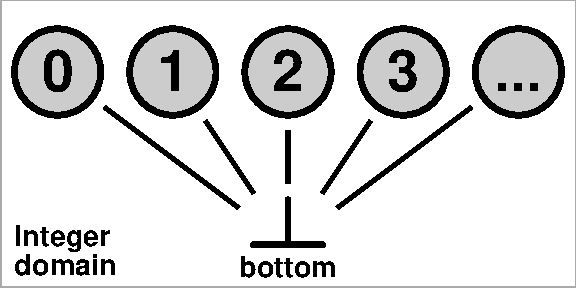
Thus, if all people (as souls) are at the same level, the "
least" is the "
greatest" and the "
greatest" is the "
least" since they are all at the same level.
35. Bursting with breaks
36. Diagram
37. Strongs - burst
- *G4485 *1 ῥήγμα (hrayg'-mah) : from G4486 ῥήγνυμι; something torn, i.e. a fragment (by implication and abstractly, a fall):--ruin.
- ρηγμα
- Luke 6:49 ... immediately it fell; and the ruin of that house was great.
- *G4486 *7 ῥήγνυμι (hrayg'-noo-mee or) : rhesso hrace'-so both prolonged forms of rheko (which appears only in certain forms, and is itself probably a strengthened form of agnumi (see in 2608)) to "break," "wreck" or "crack", i.e. (especially) to sunder (by separation of the parts; 2608 being its intensive (with the preposition in composition), and G2352 a shattering to minute fragments; but not a reduction to the constituent particles, like G3089) or disrupt, lacerate; by implication, to convulse (with spasms); figuratively, to give vent to joyful emotions:--break (forth), burst, rend, tear.
- ρηξει *2
- Mark 2:22 ... the new wine doth burst the bottles, and the wine ...
- Luke 5:37 ... else the new wine will burst the bottles, and be spilled, ...
- ρηξωσιν
- Matthew 7:6 ... feet, and turn again and rend you.
- ρηγνυνται
- Matthew 9:17 ... bottles: else the bottles break, and the wine runneth out, ...
- ρησσει
- Mark 9:18 And wheresoever he taketh him, he teareth him: and he foameth, ...
- ερρηξεν
- Luke 9:42 ... a coming, the devil threw him down, and tare ...
- ρηξον
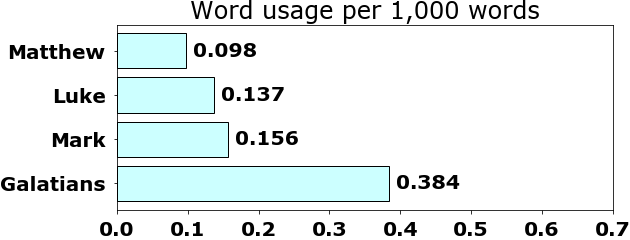
- Galatians 4:27 ... that bearest not; break forth and cry, thou that ...
38. Usage - burst
39. Matthew 9:17 Runneth out
Matthew 9:17 Neither do men put new wine into old bottles: else the bottles break, and the wine runneth out, and the bottles perish: but they put new wine into new bottles, and both are preserved. [kjv]
ουδε βαλλουσιν οινον νεον εις ασκους παλαιους ει δε μηγε ρηγνυνται οι ασκοι και ο οινος εκχειται και οι ασκοι απολουνται απολλυνται αλλα βαλλουσιν οινον νεον εις ασκους καινους και αμφοτερα αμφοτεροι συντηρουνται [gnt]
The wineskins
"burst" as a bottle would
"break". This word, a
verb, is used in other places by Jesus and appears to be one key to connect and understand what is being said.
This word has an interesting connection to the following.
- The "pearls" thrown to "swine" in Matthew.
- The house built on "sand" in Luke.
40. Strongs - run out
*G1632 *27 ἐκχέω (ek-kheh'-o) : ekchuno ek-khoo'-no from G1537 and cheo (to pour); to pour forth; figuratively, to bestow:--gush (pour) out, run greedily (out), shed (abroad, forth), spill.
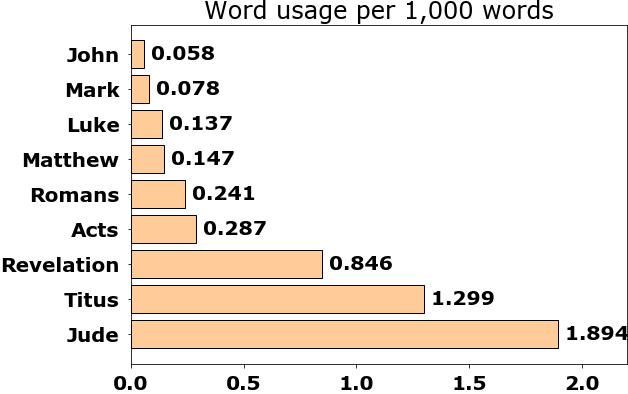 |
Words: εκκεχυται=2 εκχεαι εκχεετε εκχειται=1 εκχεω=2 εκχυθησεται εκχυννομενον=5 εξεχεαν εξεχεεν=10 εξεχυθη εξεχυθησαν εξεχυννετο
|
This is the Greek word used for
"poured out" in Revelation for the vials, for blood that is shed, etc. This Greek word is similar to the word used for "
confusion" in the "
confusion" of "
tongues" at the Tower of Babel.
- "ἐκχέω" ≈ "pour out, spill, utter (of words)".
- "συνεχεεν" ≈ "confound, confuse".
- "συνοχή" ≈ "distress".
41. Confusion at Babel
The ancient Greek word
"συνοχή" ≈ "distress" and has some similarities to
"συνεχεεν" ≈ "confound, confuse" as used in the
LXX (Septuagint) at the tower of Babel. It is not clear if there is a direct relationship.
Genesis 11:9 Therefore is the name of it called Babel; because the LORD did there confound the language … [kjv]
δια τουτο εκληθη το ονομα αυτης συγχυσις οτι εκει συνεχεεν κυριος τα χειλη πασης της γης και εκειθεν διεσπειρεν αυτους κυριος ο θεος επι προσωπον πασης της γης [lxx]
On this account its name was called Confusion, because there the Lord confounded the languages … [bs3]
42. A mania for confusing commotions
Γένεσις 11:9 δια τουτο εκληθη το ονομα αυτης συγχυσις οτι εκει συνεχεεν κυριος τα χειλη πασης της γης και εκειθεν διεσπειρεν αυτους κυριος ο θεος επι προσωπον πασης της γης [lxx]
On this account its name was called Confusion, because there the Lord confounded the languages of all the earth, and thence the Lord scattered them upon the face of all the earth. [bs3]
At the Tower of Babel, God confused the tongues of man. The name "
Babel" means "
confusion". This becomes clear in the
LXX where the word for "
Babel" is the ancient Greek word
"συηχυσις" ≈ "confusion".
The
ancient Greek word
"σύγχυσις" ≈ "mixing, confounding, disturbing, overthrow/revolt".
[Brenton Septuagint translation, Josephus and tower into the air]
43. Pigs breaking old bottles
Matthew 9:17 Neither do men put new wine into old bottles: else the bottles break, and the wine runneth out, and the bottles perish: but they put new wine into new bottles, and both are preserved. [kjv]
ουδε βαλλουσιν οινον νεον εις ασκους παλαιους ει δε μηγε ρηγνυνται οι ασκοι και ο οινος εκχειται και οι ασκοι απολουνται απολλυνται αλλα βαλλουσιν οινον νεον εις ασκους καινους και αμφοτερα αμφοτεροι συντηρουνται [gnt]
7:6 Give not that which is holy unto the dogs, neither cast ye your pearls before swine, lest they trample them under their feet, and turn again and rend you. [kjv]
μη δωτε το αγιον τοις κυσιν μηδε βαλητε τους μαργαριτας υμων εμπροσθεν των χοιρων μηποτε καταπατησωσιν καταπατησουσιν αυτους εν τοις ποσιν αυτων και στραφεντες ρηξωσιν υμας [gnt]
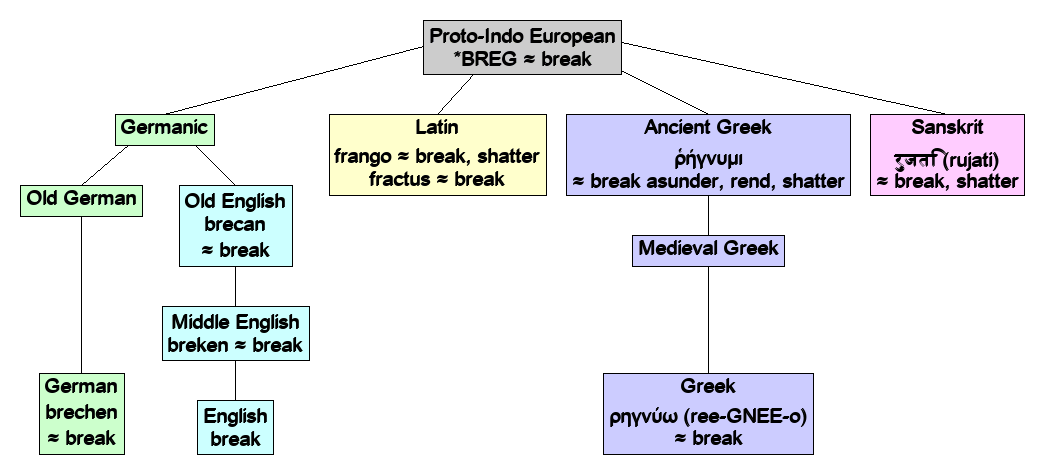
The
"burst" for the wineskins is has the same root as the
"rend" for the swine to whom pearls are thrown. This appears to relate the "
pigs" to the "
old bottles".
44. Salt and pearls and pigs
Matthew 5:13 Ye are the salt of the earth: but if the salt have lost his savour, wherewith shall it be salted? it is thenceforth good for nothing, but to be cast out, and to be trodden under foot of men. [kjv]
υμεις εστε το αλας της γης εαν δε το αλας μωρανθη εν τινι αλισθησεται εις ουδεν ισχυει ετι ει μη βληθηναι βληθεν εξω και καταπατεισθαι υπο των ανθρωπων [gnt]
7:6 Give not that which is holy unto the dogs, neither cast ye your pearls before swine, lest they trample them under their feet, and turn again and rend you. [kjv]
μη δωτε το αγιον τοις κυσιν μηδε βαλητε τους μαργαριτας υμων εμπροσθεν των χοιρων μηποτε καταπατησωσιν καταπατησουσιν αυτους εν τοις ποσιν αυτων και στραφεντες ρηξωσιν υμας [gnt]
The
"salt" and
"pearls" can be connected with
"pigs" and "
people" via the connecting word of
"trodden" or
"trample" which is the same word in Greek (different verb tense ending). The
"cast" and
"before" words connect with
"salt" of the "
earth".
45. Throwing pearls build
This chart build is to summarize on overview of parts of Matthew 7.
The end result of giving what is "
holy", control of the group, to a wolf-dog and having white and then gray "
pearls" cast to "
swine" to be trodden down to become black pearls is to divide the group into "
few" and "
some". Only the "
few" who have otherwise ignored the "
wolf" will find and knock on the gate to life and have it opened.
46. Matthew 7:6
KJV: Give not that which is holy unto the dogs, neither cast ye your pearls before swine, lest they trample them under their feet, and turn again and rend you.
Greek: μη δωτε το αγιον τοις κυσιν μηδε βαλητε τους μαργαριτας υμων εμπροσθεν των χοιρων μηποτε καταπατησωσιν καταπατησουσιν αυτους εν τοις ποσιν αυτων και στραφεντες ρηξωσιν υμας
47. House built on sand
Matthew 9:17 Neither do men put new wine into old bottles: else the bottles break, and the wine runneth out, and the bottles perish: but they put new wine into new bottles, and both are preserved. [kjv]
ουδε βαλλουσιν οινον νεον εις ασκους παλαιους ει δε μηγε ρηγνυνται οι ασκοι και ο οινος εκχειται και οι ασκοι απολουνται απολλυνται αλλα βαλλουσιν οινον νεον εις ασκους καινους και αμφοτερα αμφοτεροι συντηρουνται [gnt]
Luke 6:49 But he that heareth, and doeth not, is like a man that without a foundation built an house upon the earth; against which the stream did beat vehemently, and immediately it fell; and the ruin of that house was great. [kjv]
ο δε ακουσας και μη ποιησας ομοιος εστιν ανθρωπω οικοδομησαντι οικιαν επι την γην χωρις θεμελιου η προσερρηξεν προσερηξεν ο ποταμος και ευθεως επεσεν ευθυς συνεπεσεν και εγενετο το ρηγμα της οικιας εκεινης μεγα [gnt]
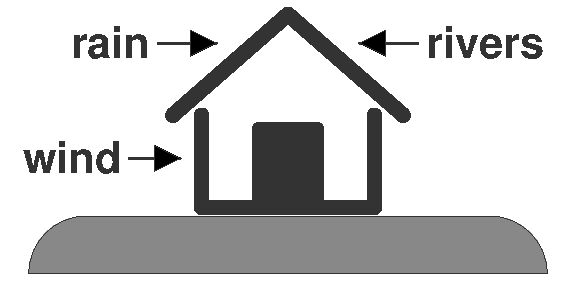
In Luke, the house is built on "
earth". The
"ruin" of that house is the same root word as that of
"burst" for the wineskins and that of
"rend" for the swine to whom pearls are thrown.
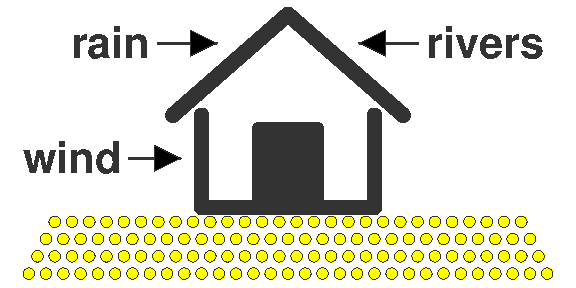
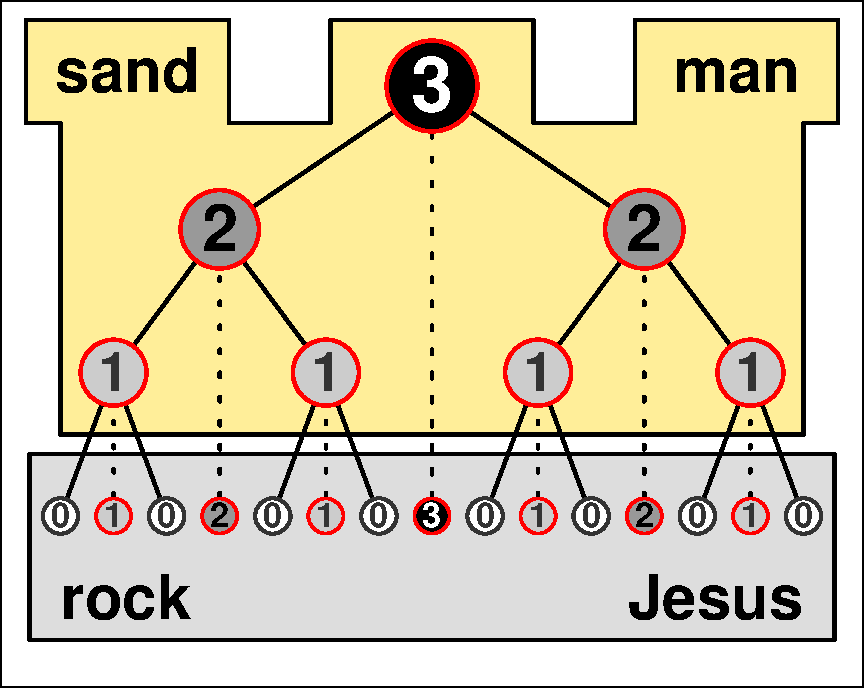
48. Matthew 7 Houses built on rock and sand
49. Rock and sand
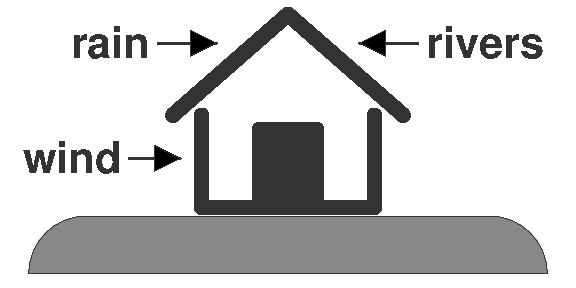
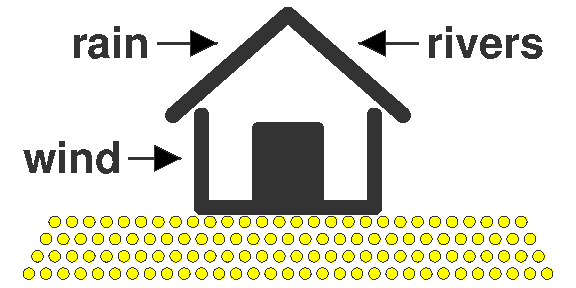
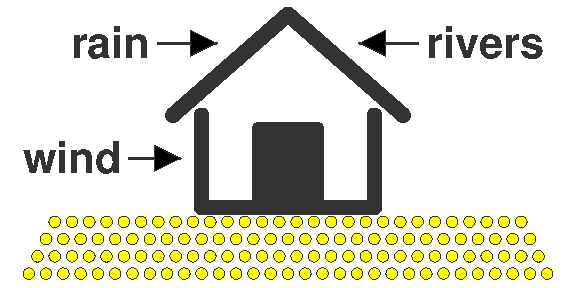
- The "human hierarchy" is a deep worldly house built on or of "sand".
- The "Jesus hierarchy" is a shallow house built on or of "rock"
Consider the parable of the sheep and the goats. Who is represented by the "
least of these"?
50. Luke 6:49
KJV: But he that heareth, and doeth not, is like a man that without a foundation built an house upon the earth; against which the stream did beat vehemently, and immediately it fell; and the ruin of that house was great.
Greek: ο δε ακουσας και μη ποιησας ομοιος εστιν ανθρωπω οικοδομησαντι οικιαν επι την γην χωρις θεμελιου η προσερρηξεν προσερηξεν ο ποταμος και ευθεως επεσεν ευθυς συνεπεσεν και εγενετο το ρηγμα της οικιας εκεινης μεγα
51. Diogenes Laertius: New clothes and a brain
52. Context
Consider the following interesting context of the historical play on words involving "
new clothes" and "
mind",
- Matthew 9:16 is a saying involving "new clothes".
- Matthew 9:17 is a saying involving "and new" for a "bottle".
- Luke 5:36 (below) uses the exact phrase.
Both the historical pun and Matthew 9:16 use the same word for "
clothes" or "
garments".
Otherwise, Matthew 9:16 and 9:17 are only connected, say, by an abstract idea of Hebrew repetition of the same idea.
53. Matthew 9:17 Double meaning
Matthew 9:17 Neither do men put new wine into old bottles: else the bottles break, and the wine runneth out, and the bottles perish: but they put new wine into new bottles, and both are preserved. [kjv]
ουδε βαλλουσιν οινον νεον εις ασκους παλαιους ει δε μηγε ρηγνυνται οι ασκοι και ο οινος εκχειται και οι ασκοι απολουνται απολλυνται αλλα βαλλουσιν οινον νεον εις ασκους καινους και αμφοτερα αμφοτεροι συντηρουνται [gnt]
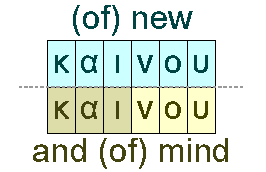
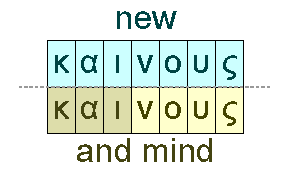
- "καινοῦς" ≈ "new" (accusative) from "καινός" ≈ "new".
- "και" ≈ "and" and "νοῦς" ≈ "mind, brain" (nominative).
As translated:
... but they put new wine into new bottles and both are preserved.
Greek word order:
... but they put wine new into bottles new and both are preserved.
Play on words:
... but they put new wine into bottles and mind and both are preserved.
That is, the new "
doctrine" of the "
wine" (as in "
drink my blood") is put into the containers (body) and the "
mind" and, thus, both body and mind are preserved (resurrected). If one puts new "
doctrine" of the "
wine" into the old containers (body) those containers are not preserved (resurrected)
54. Luke
Luke 5:37 And no man putteth new wine into old bottles; else the new wine will burst the bottles, and be spilled, and the bottles shall perish. [kjv]
και ουδεις βαλλει οινον νεον εις ασκους παλαιους ει δε μηγε ρηξει ο νεος οινος ο νεος τους ασκους και αυτος εκχυθησεται και οι ασκοι απολουνται [gnt]
5:38 But new wine must be put into new bottles; and both are preserved. [kjv]
αλλα οινον νεον εις ασκους καινους βλητεον και αμφοτεροι συντηρουνται [gnt]
5:39 No man also having drunk old wine straightway desireth new: for he saith, The old is better. [kjv]
και ουδεις και ουδεις πιων παλαιον ευθεως θελει νεον λεγει γαρ ο παλαιος χρηστοτερος εστιν χρηστος εστιν [gnt]
Luke changes some of the words but preserves the double-meaning. Here the old bottles "
perish". Luke does add another verse whose meaning requires some thought.
55. Luke 5:37
KJV: And no man putteth new wine into old bottles; else the new wine will burst the bottles, and be spilled, and the bottles shall perish.
Greek: και ουδεις βαλλει οινον νεον εις ασκους παλαιους ει δε μηγε ρηξει ο νεος οινος ο νεος τους ασκους και αυτος εκχυθησεται και οι ασκοι απολουνται
56. Luke 5:38
KJV: But new wine must be put into new bottles; and both are preserved.
Greek: αλλα οινον νεον εις ασκους καινους βλητεον και αμφοτεροι συντηρουνται
57. For better or worse
Luke 5:39 No man also having drunk old wine straightway desireth new: for he saith, The old is better. [kjv]
και ουδεις και ουδεις πιων παλαιον ευθεως θελει νεον λεγει γαρ ο παλαιος χρηστοτερος εστιν χρηστος εστιν [gnt]
The last part of Luke 5:39 brings to mind the wine at the marriage at Cana.
John 2:10 And saith unto him, Every man at the beginning doth set forth good wine; and when men have well drunk, then that which is worse: but thou hast kept the good wine until now. [kjv]
και λεγει αυτω πας ανθρωπος πρωτον τον καλον οινον τιθησιν και οταν μεθυσθωσιν τοτε τον ελασσω συ τετηρηκας τον καλον οινον εως αρτι [gnt]
The Greek for "
better" is that of being "
useful" and can be interpreted as a play on words on the name of "
Christ". Paul uses this play on words in Romans 6:18 (and other places) between false teachers saying "
useful" words rather than "
Christ" words.
Here in Luke, a play on words for "
the older is useful" would be "
the older is useful" (as for taste) but with the implication that "
the older is not Christ".
58. Luke 5:39
KJV: No man also having drunk old wine straightway desireth new: for he saith, The old is better.
Greek: και ουδεις και ουδεις πιων παλαιον ευθεως θελει νεον λεγει γαρ ο παλαιος χρηστοτερος εστιν χρηστος εστιν
59. John 2:10
KJV: And saith unto him, Every man at the beginning doth set forth good wine; and when men have well drunk, then that which is worse: but thou hast kept the good wine until now.
Greek: και λεγει αυτω πας ανθρωπος πρωτον τον καλον οινον τιθησιν και οταν μεθυσθωσιν τοτε τον ελασσω συ τετηρηκας τον καλον οινον εως αρτι
60. Garments and patches
Luke 5:36 And he spake also a parable unto them; No man putteth a piece of a new garment upon an old; if otherwise, then both the new maketh a rent, and the piece that was taken out of the new agreeth not with the old. [kjv]
… ιματιου καινου … [gnt]
Luke uses the actual words in the historical play on words as "
new garment".
Does the double-meaning work here?
Paraphrase:
... no man puts a piece from garment and mind upon an old garment. ...
61. Symphony
Luke 5:36 And he spake also a parable unto them; No man putteth a piece of a new garment upon an old; if otherwise, then both the new maketh a rent, and the piece that was taken out of the new agreeth not with the old. [kjv]
… συμφωνει … [gnt]
The "
agreement" is something that groups may by being in the "
same voice". It is unclear how this might apply to a piece of cloth and old and new garment since neither has a "
voice" that can be heard.
This lack of "
agreement" of the old and new garments can be contrasted with the "
schism" in the same verse.
62. Acts 15:15 Agreement of a symphony
Acts 15:15 And to this agree the words of the prophets; as it is written, [kjv]
και τουτω συμφωνουσιν οι λογοι των προφητων καθως γεγραπται [gnt]
… concordant … [v]
The Latin word
"concordo" ≈ "agree, harmonize" and is the source of the English word
"concordant".
The ancient Greek word
"συμφωνία" ≈ "agreement" and comes from the words for
"same voice". The English word
"symphony" comes from a group of people with the
"same voice". The letters "
M" and "
N" are related linguistically.
The ancient Greek word
"φωνή" ≈ "voice, sound" comes from the ancient Greek word
"φως" ≈ "light" and the ancient Greek word
"νους" ≈ "mind". That is, a
"sound" or
"voice" is
"light" into the
"mind".
63. Acts 15:15
KJV: And to this agree the words of the prophets; as it is written,
Greek: και τουτω συμφωνουσιν οι λογοι των προφητων καθως γεγραπται
Greek today: Και με τουτο συμφωνουσιν οι λογοι των προφητων, καθως ειναι γεγραμμενον
Latin: et huic concordant verba prophetarum sicut scriptum est
Slavonic: и сему согласуют словеса пророк, якоже пишет:
Russian: И с сим согласны слова пророков, как написано:
64. Strongs - agreement
- *G4856 *6 συμφωνέω (soom-fo-neh'-o) : from G4859; to be harmonious, i.e. (figuratively) to accord (be suitable, concur) or stipulate (by compact):--agree (together, with).
συμφωνησουσιν
συμφωνησας
συνεφωνησας
συμφωνησει
συνεφωνηθη
συμφωνουσιν
Acts 15:15 And to this agree the words of the prophets; as it is written,
65. Usage - agreement
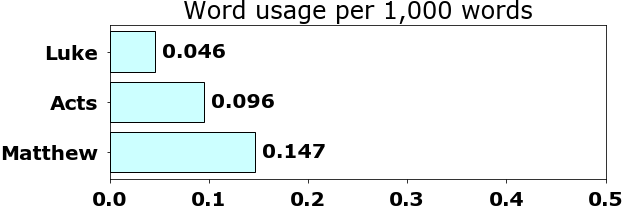 |
Words: συμφωνησας συμφωνησει συμφωνησουσιν συμφωνουσιν συνεφωνηθη συνεφωνησας
|
66. Matthew 9:16 Patches and garments
Matthew 9:16 No man putteth a piece of new cloth unto an old garment, for that which is put in to fill it up taketh from the garment, and the rent is made worse. [kjv]
ουδεις δε επιβαλλει επιβλημα ρακους αγναφου επι ιματιω παλαιω αιρει γαρ το πληρωμα αυτου απο του ιματιου και χειρον σχισμα γινεται [gnt]
Somehow, the new "
patch" will "
take" from the old garment and make it worse.
The
KJV (King James Version) translates as "
putteth" what is the ancient Greek word
"ἐπιβάλλω" ≈ "throw, cast, fling upon".
The
KJV translates as "
piece" what is in the ancient Greek word
"ἐπίβλημα" ≈ "covering" as in "
that which is thrown over".
- "ἐπι" ≈ "on" as in the prefix for the English word "epicenter".
- "βλῆμα" ≈ "throw of dice, thrown missile, coverlet".
- "βάλλω" ≈ "throw, cast" and is the source of the English word "ballistic".
Literally, one is "
throwing" (putting) on "
that which is thrown" (covering). This is a not uncommon saying in English to get dressed by "
throwing on something".
67. Strongs - patch
- *G1915 *0 ἐπίβλημα (ep-ib'-lay-mah) : from G1911; a patch:--piece.
- επιβλημα *4
- Matthew 9:16 No man putteth a piece of new cloth unto ...
- Mark 2:21 No man also seweth a piece of new cloth on ...
- Luke 5:36 ... No man putteth a piece of a new garment upon an old; if otherwise, then both the new maketh a rent, and the piece that was taken out of ...
68. Usage - patch
69. Matthew 9:16 Unshrunk
Matthew 9:16 No man putteth a piece of new cloth unto an old garment, for that which is put in to fill it up taketh from the garment, and the rent is made worse. [kjv]
ουδεις δε επιβαλλει επιβλημα ρακους αγναφου επι ιματιω παλαιω αιρει γαρ το πληρωμα αυτου απο του ιματιου και χειρον σχισμα γινεται [gnt]
The word
"new" is not in the Greek but used for
"unshrunk". The ancient Greek word
"ἄγναφος" ≈ "not carded cloth" is an alternative spelling of the ancient Greek word
"ἄγναπτος" ≈ "not carded cloth". That is, it is cloth that is not quite ready for use. There could be a play on words here.
- The ancient Greek word "ἁγνός" ≈ "pure, chaste" (hard breath).
- The ancient Greek word "φως" ≈ "light".
The emphasis between the rough and smooth breathing had disappeared by the time of the
GNT.
70. Throwing pure light
Matthew 9:16 No man putteth a piece of new cloth unto an old garment, for that which is put in to fill it up taketh from the garment, and the rent is made worse. [kjv]
ουδεις δε επιβαλλει επιβλημα ρακους αγναφου επι ιματιω παλαιω αιρει γαρ το πληρωμα αυτου απο του ιματιου και χειρον σχισμα γινεται [gnt]
The idea of being
"clothed in righteousness" and the
"garments" provided at the wedding feast provide one connection of the meaning of the
"garment" in Matthew 9:16. Those
"garments" can be "
righteous" or "
unrighteous" depending on the
point of view.
Paraphrase:
No one throws uncarded [ pure light ] on an old garment (righteousness) to complete it ... the rupture (schism) is made worse [pigs].
John 1:5 And the light shineth in darkness; and the darkness comprehended it not. [kjv]
και το φως εν τη σκοτια φαινει και η σκοτια αυτο ου κατελαβεν [gnt]
Note below: The
"worse" can be a play on words for
"pig" or
"swine". That "
old garment" might not
understand that "
pure light". The Greek for "
cloth" can be a play on words with "
raca" or "
fool" is in the religious establishment.
71. John 1:4-5 Light and darkness
John 1:4 In him was life; and the life was the light of men. [kjv]
εν αυτω ζωη ην και η ζωη ην το φως των ανθρωπων [gnt]
1:5 And the light shineth in darkness; and the darkness comprehended it not. [kjv]
και το φως εν τη σκοτια φαινει και η σκοτια αυτο ου κατελαβεν [gnt]
72. John 1:4
KJV: In him was life; and the life was the light of men.
Greek: εν αυτω ζωη ην και η ζωη ην το φως των ανθρωπων
73. John 1:5
KJV: And the light shineth in darkness; and the darkness comprehended it not.
Greek: και το φως εν τη σκοτια φαινει και η σκοτια αυτο ου κατελαβεν
74. Strongs - unshrunk
- *G46 *2 ἄγναφος (ag'-naf-os) : from G1 (as a negative particle) and the same as G1102; properly, unfulled, i.e. (by implication) new (cloth):--new.
- αγναφου *2
- Matthew 9:16 No man putteth a piece of new cloth unto an ...
- Mark 2:21 No man also seweth a piece of new cloth on an ...
75. Usage - unshrunk
*G46 *2 ἄγναφος (ag'-naf-os) : from G1 (as a negative particle) and the same as G1102; properly, unfulled, i.e. (by implication) new (cloth):--new.
 |
Words: αγναφου=2
|
This Greek word for "
uncarded cloth", which could be a play on words for "
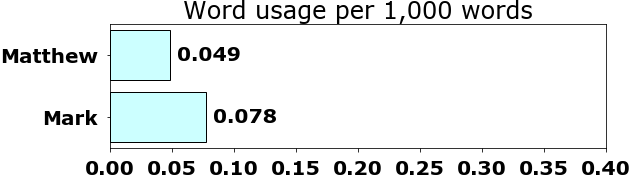
pure light" is only used in this parable in Matthew and Mark. Luke omits this particular word.
76. Strongs - cloth
*G4470 *2 ῥάκος (hrak'-os) : from G4486; a "rag," i.e. piece of cloth:--cloth.
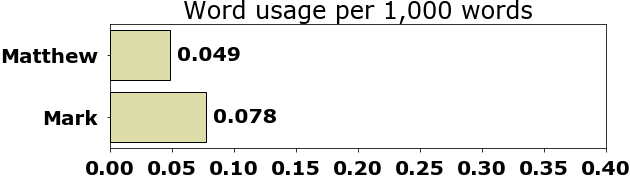 |
Words: ρακους=2
|
Proverbs 23:21 For the drunkard and the glutton shall come to poverty: and drowsiness shall clothe a man with rags. [kjv]
πας γαρ μεθυσος και πορνοκοπος πτωχευσει και ενδυσεται διερρηγμενα και ρακωδη πας υπνωδης [lxx]
The ancient Greek word
"ῥάκος" ≈ "rag, strip of cloth".
The
LXX includes a word for tattered that is part of a play on words with the "
teeth" part of "
weeping" and "
gnashing" of "
teeth".
 |
Details are left as a future topic.
|
77. Usage - cloth
- *G4470 *2 ῥάκος (hrak'-os) : from G4486; a "rag," i.e. piece of cloth:--cloth.
- ρακους *2
- Matthew 9:16 No man putteth a piece of new cloth unto an old ...
- Mark 2:21 ... seweth a piece of new cloth on an old ...
78. Proverbs 23:21
KJV: For the drunkard and the glutton shall come to poverty: and drowsiness shall clothe a man with rags.
Hebrew: כי סבא וזולל יורש וקרעים תלביש נומה׃
Greek: πας γαρ μεθυσος και πορνοκοπος πτωχευσει και ενδυσεται διερρηγμενα και ρακωδη πας υπνωδης
79. Raca
Matthew 5:22 But I say unto you, That whosoever is angry with his brother without a cause shall be in danger of the judgment: and whosoever shall say to his brother, Raca, shall be in danger of the council: but whosoever shall say, Thou fool, shall be in danger of hell fire. [kjv]
εγω δε λεγω υμιν οτι πας ο οργιζομενος τω αδελφω αυτου εικη ενοχος εσται τη κρισει ος δ αν ειπη τω αδελφω αυτου ρακα ενοχος εσται τω συνεδριω ος δ αν ειπη μωρε ενοχος εσται εις την γεενναν του πυρος [gnt]
*G4469 *1 ῥακά (rhak-ah') : of Chaldee origin (compare H7386); O empty one, i.e. thou worthless (as a term of utter vilification):--Raca.
There does not appear to be any connection of the "
cloth" to the (transliteration of the) Aramaic
"raca" in Matthew 5:22, other than the same letters to start the ancient Greek word
"ῥάκος" ≈ "rag, strip of cloth".
9:16 No man putteth a piece of new cloth unto an old garment, for that which is put in to fill it up taketh from the garment, and the rent is made worse. [kjv]
ουδεις δε επιβαλλει επιβλημα ρακους αγναφου επι ιματιω παλαιω αιρει γαρ το πληρωμα αυτου απο του ιματιου και χειρον σχισμα γινεται [gnt]
80. Matthew 5:22
KJV: But I say unto you, That whosoever is angry with his brother without a cause shall be in danger of the judgment: and whosoever shall say to his brother, Raca, shall be in danger of the council: but whosoever shall say, Thou fool, shall be in danger of hell fire.
Greek: εγω δε λεγω υμιν οτι πας ο οργιζομενος τω αδελφω αυτου εικη ενοχος εσται τη κρισει ος δ αν ειπη τω αδελφω αυτου ρακα ενοχος εσται τω συνεδριω ος δ αν ειπη μωρε ενοχος εσται εις την γεενναν του πυρος
81. Strongs - garment
- *G2440 *59 ἱμάτιον (him-at'-ee-on) : neuter of a presumed derivative of ennumi (to put on); a dress (inner or outer):--apparel, cloke, clothes, garment, raiment, robe, vesture.
- ιματια *29
- Matthew 17:2 ... the sun, and his raiment was white as the light.
- Matthew 21:7 ... on them their clothes, and they set him thereon.
- Matthew 21:8 ... multitude spread their garments in the way; others ...
- Matthew 26:65 Then the high priest rent his clothes, saying, He hath spoken blasphemy; what ...
- Matthew 27:31 ... and put his own raiment on him, and ...
- Matthew 27:35 ... and parted his garments, casting lots: that it might be fulfilled which was spoken by the prophet, They parted my garments among them, and ...
- Mark 9:3 And his raiment became shining, exceeding ...
- Mark 11:7 ... and cast their garments on him; and he sat ...
- Mark 11:8 And many spread their garments in the way: and ...
- Mark 15:20 ... and put his own clothes on him, and led ...
- Mark 15:24 ... him, they parted his garments, casting lots upon ...
- Luke 19:35 ... and they cast their garments upon the colt, and they set ...
- Luke 19:36 ... went, they spread their clothes in the way.
- Luke 23:34 ... And they parted his raiment, and cast lots.
- John 13:4 ... and laid aside his garments; and took a towel, ...
- John 13:12 ... and had taken his garments, and was set down again, he said ...
- John 19:23 ... Jesus, took his garments, and made four ...
- John 19:24 ... which saith, They parted my raiment among them, and for ...
- Acts 7:58 ... the witnesses laid down their clothes at a young man's feet, ...
- Acts 9:39 ... shewing the coats and garments which Dorcas made, ...
- Acts 14:14 ... heard of, they rent their clothes, and ran in among the people, crying out,
- Acts 16:22 ... the magistrates rent off their clothes, and commanded to beat them.
- Acts 18:6 ... and blasphemed, he shook his raiment, and said unto them, ...
- Acts 22:20 ... death, and kept the raiment of them that slew him.
- Acts 22:23 ... cried out, and cast off their clothes, and threw dust ...
- James 5:2 ... are corrupted, and your garments are motheaten.
- Revelation 3:4 ... not defiled their garments; and they shall walk with ...
- Revelation 3:18 ... thou mayest be rich; and white raiment, that thou mayest be clothed, and ...
- Revelation 16:15 ... and keepeth his garments, lest he walk naked, ...
- ιματιον *15
- Matthew 5:40 ... let him have thy cloke also.
- Matthew 24:18 ... back to take his clothes.
- Mark 2:21 ... cloth on an old garment: else the new piece ...
- Mark 10:50 And he, casting away his garment, rose, and came to Jesus.
- Mark 13:16 ... again for to take up his garment.
- Luke 5:36 ... a piece of a new garment upon an old; if otherwise, ...
- Luke 6:29 ... him that taketh away thy cloke forbid not to take thy coat also.
- Luke 8:27 ... and ware no clothes, neither abode in ...
- Luke 22:36 ... sword, let him sell his garment, and buy one.
- John 19:2 ... they put on him a purple robe,
- John 19:5 ... of thorns, and the purple robe. And Pilate saith unto them, ...
- Acts 12:8 ... unto him, Cast thy garment about thee, and follow me.
- Hebrews 1:11 ... they all shall wax old as doth a garment;
- Revelation 19:13 And he was clothed with a vesture dipped in blood: and ...
- Revelation 19:16 And he hath on his vesture and on his ...
- ιματιου *8
- Matthew 9:16 ... cloth unto an old garment, for that which is put in to fill ...
- Matthew 9:20 ... him, and touched the hem of his garment:
- Matthew 9:21 ... but touch his garment, I shall be whole.
- Matthew 14:36 ... touch the hem of his garment: and as many as touched were made perfectly whole.
- Mark 5:27 ... behind, and touched his garment.
- Mark 6:56 ... if it were but the border of his garment: and as many as touched ...
- Luke 5:36 ... a piece of a new garment upon an old; if otherwise, ...
- Luke 8:44 ... him, and touched the border of his garment: and immediately her ...
- ιματιων *3
- Mark 5:28 ... I may touch but his clothes, I shall be whole.
- Mark 5:30 ... Who touched my clothes?
- 1 Peter 3:3 ... of gold, or of putting on of apparel;
- ιματιοις *3
- Luke 7:25 ... clothed in soft raiment? Behold, they which are ...
- Revelation 3:5 ... shall be clothed in white raiment; and I will not ...
- Revelation 4:4 ... clothed in white raiment; and they had on ...
- ιματιω
- Matthew 9:16 ... cloth unto an old garment, for that which is put in to fill ...
82. Usage - garment
*G2440 *59 ἱμάτιον (him-at'-ee-on) : neuter of a presumed derivative of ennumi (to put on); a dress (inner or outer):--apparel, cloke, clothes, garment, raiment, robe, vesture.
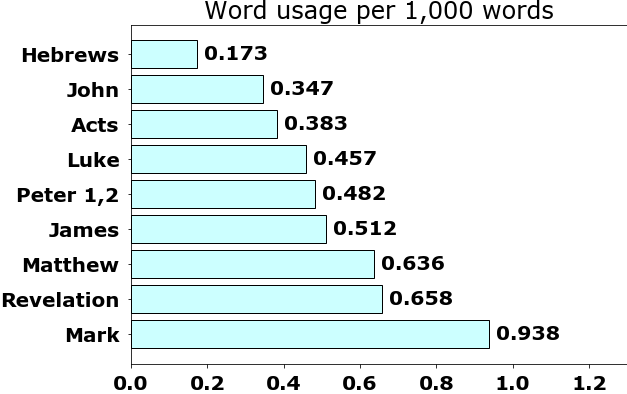 |
Words: ιματια=29 ιματιοις=3 ιματιον=15 ιματιου=8 ιματιω ιματιων=3
|
The idea of being "
clothed in righteousness" and the "
garments" provided at the wedding feast provide one connection of the meaning of the "
garment" in Matthew 9:16.
83. Patch
Matthew 9:16 No man putteth a piece of new cloth unto an old garment, for that which is put in to fill it up taketh from the garment, and the rent is made worse. [kjv]
ουδεις δε επιβαλλει επιβλημα ρακους αγναφου επι ιματιω παλαιω αιρει γαρ το πληρωμα αυτου απο του ιματιου και χειρον σχισμα γινεται [gnt]
The Greek word for "
patch" is that of being filled as in being filled by "
fullness" of the spirit. The ancient Greek word
"πληρόω" ≈ "complete, fill full" where the
"fulfill" comes from
"fill full".
5:17 Think not that I am come to destroy the law, or the prophets: I am not come to destroy, but to fulfil. [kjv]
μη νομισητε οτι ηλθον καταλυσαι τον νομον η τους προφητας ουκ ηλθον καταλυσαι αλλα πληρωσαι [gnt]
84. Matthew 5:17 Leave the light on but do not use the law as a residence inn
Matthew 5:17 Think not that I am come to destroy the law, or the prophets: I am not come to destroy, but to fulfil. [kjv]

Did Jesus come to "
change everything"? Some (including pastors) would have you
think that. Following the three verses on light (i.e., leave the light on), Jesus says the following.
- The Greek word for "think" used here is related to the Greek word for "law" and related to the word "numismatics".
- The Greek word for "fulfill" means to "fill full" or "complete" (what has been started).
- There is a better Greek word for "destroy" or "dissolve" that is not used here. The primary meaning here is that of "reside"
The primary meaning of the word used is to
"reside" and is the exact Greek word used in Luke 19 for Jesus
"residing" with the sinner (rich man) Zacchaeus.
85. Matthew 5:17
KJV: Think not that I am come to destroy the law, or the prophets: I am not come to destroy, but to fulfil.
Greek: μη νομισητε οτι ηλθον καταλυσαι τον νομον η τους προφητας ουκ ηλθον καταλυσαι αλλα πληρωσαι
86. Strongs - patch
- *G4137 *86 πληρόω (play-ro'-o) : from G4134; to make replete, i.e. (literally) to cram (a net), level up (a hollow), or (figuratively) to furnish (or imbue, diffuse, influence), satisfy, execute (an office), finish (a period or task), verify (or coincide with a prediction), etc.:--accomplish, X after, (be) complete, end, expire, fill (up), fulfil, (be, make) full (come), fully preach, perfect, supply.
- πληρωθη *20
- Matthew 1:22 ... this was done, that it might be fulfilled which was spoken of ...
- Matthew 2:15 ... the death of Herod: that it might be fulfilled which was spoken of the Lord ...
- Matthew 2:23 ... called Nazareth: that it might be fulfilled which was spoken by ...
- Matthew 4:14 That it might be fulfilled which was spoken by Esaias ...
- Matthew 8:17 That it might be fulfilled which was spoken by Esaias the prophet, ...
- Matthew 12:17 That it might be fulfilled which was spoken by Esaias the prophet, saying,
- Matthew 13:35 That it might be fulfilled which was spoken by the prophet, saying, ...
- Matthew 21:4 All this was done, that it might be fulfilled which was spoken by the prophet, saying,
- Luke 22:16 ... eat thereof, until it be fulfilled in the kingdom of God.
- John 12:38 That the saying of Esaias the prophet might be fulfilled, which he spake, Lord, ...
- John 13:18 ... but that the scripture may be fulfilled, He that eateth bread ...
- John 15:11 ... and that your joy might be full.
- John 15:25 But this cometh to pass, that the word might be fulfilled that is written in their ...
- John 17:12 ... of perdition; that the scripture might be fulfilled.
- John 18:9 That the saying might be fulfilled, which he spake, Of ...
- John 18:32 That the saying of Jesus might be fulfilled, which he spake, signifying ...
- John 19:24 ... it shall be: that the scripture might be fulfilled, which saith, They parted my ...
- John 19:36 ... were done, that the scripture should be fulfilled, A bone of him shall ...
- Romans 8:4 That the righteousness of the law might be fulfilled in us, who walk ...
- 2 Corinthians 10:6 ... when your obedience is fulfilled.
- επληρωθη *6
- Matthew 2:17 Then was fulfilled that which was spoken by Jeremy the prophet, saying,
- Matthew 13:48 Which, when it was full, they drew to shore, ...
- Matthew 27:9 Then was fulfilled that which was spoken by Jeremy the prophet, ...
- John 12:3 ... hair: and the house was filled with the odour of the ointment.
- Acts 19:21 After these things were ended, Paul purposed in ...
- James 2:23 And the scripture was fulfilled which saith, Abraham believed ...
- πεπληρωται *5
- Mark 1:15 And saying, The time is fulfilled, and the kingdom of God ...
- Luke 4:21 ... them, This day is this scripture fulfilled in your ears.
- John 3:29 ... my joy therefore is fulfilled.
- John 7:8 ... my time is not yet full come.
- Galatians 5:14 For all the law is fulfilled in one word, ...
- πληρωσαι *4
- Matthew 3:15 ... thus it becometh us to fulfil all righteousness. Then ...
- Matthew 5:17 ... come to destroy, but to fulfil.
- Romans 15:13 Now the God of hope fill you with all ...
- Colossians 1:25 ... to me for you, to fulfil the word of God;
- πληρωθωσιν *4
- Matthew 26:54 But how then shall the scriptures be fulfilled, that thus ...
- Matthew 26:56 ... that the scriptures of the prophets might be fulfilled. Then all the disciples ...
- Mark 14:49 ... not: but the scriptures must be fulfilled.
- Luke 21:24 ... until the times of the Gentiles be fulfilled.
- επληρωσεν *4
- Luke 7:1 Now when he had ended all his sayings ...
- Acts 2:2 ... mighty wind, and it filled all the house where ...
- Acts 3:18 ... Christ should suffer, he hath so fulfilled.
- Acts 5:3 ... Ananias, why hath Satan filled thine heart ...
- πεπληρωμενη *3
- John 16:24 ... your joy may be full.
- 1 John 1:4 ... your joy may be full.
- 2 John 1:12 ... our joy may be full.
- πεπληρωμενοι *3
- Romans 15:14 ... are full of goodness, filled with all knowledge, ...
- Philippians 1:11 Being filled with the fruits of righteousness, which are by Jesus ...
- Colossians 2:10 And ye are complete in him, which ...
- πληρωσατε *2
- Matthew 23:32 Fill ye up then the measure of ...
- Philippians 2:2 Fulfil ye my joy, that ye be like ...
- πληρωθηναι *2
- Luke 24:44 ... that all things must be fulfilled, which were written in ...
- Acts 1:16 ... this scripture must needs have been fulfilled, which the Holy ...
- πεπληρωκεν *2
- John 16:6 ... these things unto you, sorrow hath filled your heart.
- Romans 13:8 ... for he that loveth another hath fulfilled the law.
- επληρουντο *2
- Acts 9:23 And after that many days were fulfilled, the Jews took counsel to kill him:
- Acts 13:52 And the disciples were filled with joy, and with the Holy Ghost.
- επληρωσαν *2
- Acts 13:27 ... are read every sabbath day, they have fulfilled them in condemning him.
- Acts 14:26 ... for the work which they fulfilled.
- πεπληρωμαι *2
- 2 Corinthians 7:4 ... glorying of you: I am filled with comfort, I am exceeding joyful ...
- Philippians 4:18 ... all, and abound: I am full, having received of Epaphroditus ...
- πληρωθητε *2
- Ephesians 3:19 ... passeth knowledge, that ye might be filled with all the fulness of God.
- Colossians 1:9 ... and to desire that ye might be filled with the knowledge of his will ...
- πληρωση *2
- Ephesians 4:10 ... all heavens, that he might fill all things.)
- 2 Thessalonians 1:11 ... of this calling, and fulfil all the good pleasure of ...
- πληρωθησονται
- Luke 1:20 ... my words, which shall be fulfilled in their season.
- πληρουμενον
- Luke 2:40 ... and waxed strong in spirit, filled with wisdom: and the grace ...
- πληρωθησεται
- Luke 3:5 Every valley shall be filled, and every mountain ...
- πληρουν
- Luke 9:31 ... decease which he should accomplish at Jerusalem.
- πεπληρωμενην
- John 17:13 ... they might have my joy fulfilled in themselves.
- πληρωσεις
- Acts 2:28 ... the ways of life; thou shalt make me full of joy with ...
- πεπληρωκατε
- Acts 5:28 ... name? and, behold, ye have filled Jerusalem with your ...
- επληρουτο
- Acts 7:23 And when he was full forty years old, it came ...
- πληρωθεντων
- Acts 7:30 And when forty years were expired, there appeared to him ...
- πληρωσαντες
- Acts 12:25 ... returned from Jerusalem, when they had fulfilled their ministry, and took with them ...
- επληρου
- Acts 13:25 And as John fulfilled his course, he said, Whom ...
- πληρωθεισης
- Acts 24:27 But after two years Porcius Festus came ...
- πεπληρωμενους
- Romans 1:29 Being filled with all unrighteousness, fornication, wickedness, covetousness, ...
- πεπληρωκεναι
- Romans 15:19 ... round about unto Illyricum, I have fully preached the gospel of Christ.
- πληρουμενου
- Ephesians 1:23 ... body, the fulness of him that filleth all in all.
- πληρουσθε
- Ephesians 5:18 ... is excess; but be filled with the Spirit;
- πληρωσει
- Philippians 4:19 But my God shall supply all your need ...
- πληροις
- Colossians 4:17 ... in the Lord, that thou fulfil it.
- πληρωθω
- 2 Timothy 1:4 ... of thy tears, that I may be filled with joy;
- πεπληρωμενα
- Revelation 3:2 ... found thy works perfect before God.
- πληρωσωσιν
- Revelation 6:11 ... as they were, should be fulfilled.
- *G4138 *17 πλήρωμα (play'-ro-mah) : from G4137 πληρόω; repletion or completion, i.e. (subjectively) what fills (as contents, supplement, copiousness, multitude), or (objectively) what is filled (as container, performance, period):--which is put in to fill up, piece that filled up, fulfilling, full, fulness.
- πληρωμα *11
- Matthew 9:16 ... garment, for that which is put in to fill it up taketh from ...
- Mark 2:21 ... else the new piece that filled it up taketh away from the old, ...
- Romans 11:12 ... how much more their fulness?
- Romans 11:25 ... is happened to Israel, until the fulness of the Gentiles be come in.
- Romans 13:10 ... to his neighbour: therefore love is the fulfilling of the law.
- 1 Corinthians 10:26 For the earth is the Lord's, and the fulness thereof.
- Galatians 4:4 But when the fulness of the time was come, God ...
- Ephesians 1:23 Which is his body, the fulness of him that filleth all ...
- Ephesians 3:19 ... ye might be filled with all the fulness of God.
- Colossians 1:19 ... him should all fulness dwell;
- Colossians 2:9 ... him dwelleth all the fulness of the Godhead bodily.
- πληρωματος *3
- John 1:16 And of his fulness have all we ...
- Ephesians 1:10 That in the dispensation of the fulness of times he might gather together in one all things ...
- Ephesians 4:13 ... unto the measure of the stature of the fulness of Christ:
- πληρωματα *2
- Mark 6:43 And they took up twelve baskets full of the fragments, ...
- Mark 8:20 ... four thousand, how many baskets full of fragments took ye up? And ...
- πληρωματι
- Romans 15:29 ... you, I shall come in the fulness of the blessing of the gospel of Christ.
87. Usage - patch
*G4137 *86 πληρόω (play-ro'-o) : from G4134; to make replete, i.e. (literally) to cram (a net), level up (a hollow), or (figuratively) to furnish (or imbue, diffuse, influence), satisfy, execute (an office), finish (a period or task), verify (or coincide with a prediction), etc.:--accomplish, X after, (be) complete, end, expire, fill (up), fulfil, (be, make) full (come), fully preach, perfect, supply.
*G4138 *17 πλήρωμα (play'-ro-mah) : from G4137 πληρόω; repletion or completion, i.e. (subjectively) what fills (as contents, supplement, copiousness, multitude), or (objectively) what is filled (as container, performance, period):--which is put in to fill up, piece that filled up, fulfilling, full, fulness.
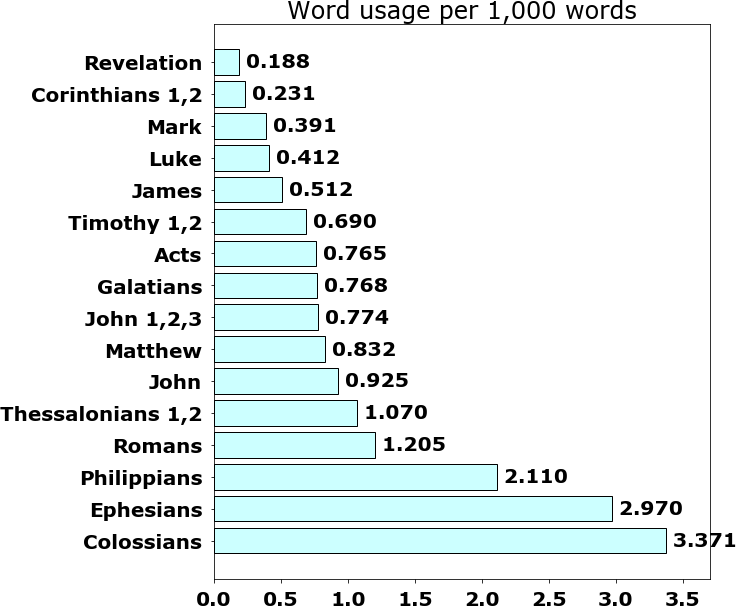 |
Words: επληρου επληρουντο=2 επληρουτο επληρωθη=6 επληρωσαν=2 επληρωσεν=4 πεπληρωκατε πεπληρωκεν=2 πεπληρωκεναι πεπληρωμαι=2 πεπληρωμενα πεπληρωμενη=3 πεπληρωμενην πεπληρωμενοι=3 πεπληρωμενους πεπληρωται=5 πληροις πληρουμενον πληρουμενου πληρουν πληρουσθε πληρωθεισης πληρωθεντων πληρωθη=20 πληρωθηναι=2 πληρωθησεται πληρωθησονται πληρωθητε=2 πληρωθω πληρωθωσιν=4 πληρωμα=11 πληρωματα=2 πληρωματι πληρωματος=3 πληρωσαι=4 πληρωσαντες πληρωσατε=2 πληρωσει πληρωσεις πληρωση=2 πληρωσωσιν
|
88. Matthew 9:16 Split
Matthew 9:16 No man putteth a piece of new cloth unto an old garment, for that which is put in to fill it up taketh from the garment, and the rent is made worse. [kjv]
ουδεις δε επιβαλλει επιβλημα ρακους αγναφου επι ιματιω παλαιω αιρει γαρ το πληρωμα αυτου απο του ιματιου και χειρον σχισμα γινεται [gnt]
The ancient Greek word
"σχίσμα" ≈ "division, rent, split" and is the source of the English word
"schism". An analogy might be made to the split hoof of, say, the pig.
The "
division" or "
schism" in the garment could refer to a "
division" or "
schism" in a group of people. In the ancient Greek, a "
heresy" was a "
group". Thus, a "
schism" might arise between two "
heresies" or "
groups".
89. Modern Greek
90. Strongs - schism
- *G4978 *8 σχίσμα (skhis'-mah) : from G4977; a split or gap ("schism"), literally or figuratively:--division, rent, schism.
- σχισμα *5
- Matthew 9:16 ... from the garment, and the rent is made worse.
- Mark 2:21 ... taketh away from the old, and the rent is made worse.
- John 7:43 So there was a division among the people because of him.
- John 9:16 ... miracles? And there was a division among them.
- John 10:19 There was a division therefore again among the Jews ...
- σχισματα *3
- 1 Corinthians 1:10 ... and that there be no divisions among you; but ...
- 1 Corinthians 11:18 ... the church, I hear that there be divisions among you; and ...
- 1 Corinthians 12:25 That there should be no schism in the body; but ...
91. Usage - schism
*G4978 *8 σχίσμα (skhis'-mah) : from G4977; a split or gap ("schism"), literally or figuratively:--division, rent, schism.
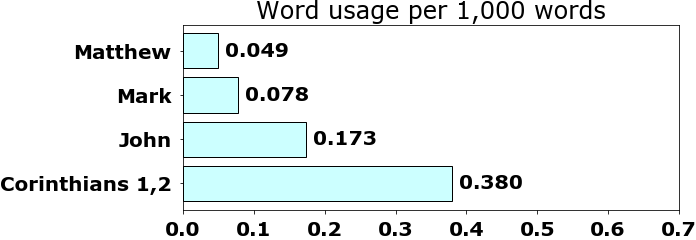 |
Words: σχισμα=5 σχισματα=3
|
The ancient Greek word
"σχίσμα" ≈ "division, rent, split" and is the source of the English word
"schism".
The modern Greek word
"σχίσμα" (SKHEE-sma) ≈ "schism, split, rift, division" and often means of a group. This meaning derives, in part, from the usage of the word in the
GNT and later used by the church.
A song about a "
schism" is "
The church is one foundation".
92. Matthew 9:16-17 Worse than swine
Matthew 9:16 No man putteth a piece of new cloth unto an old garment, for that which is put in to fill it up taketh from the garment, and the rent is made worse. [kjv]
ουδεις δε επιβαλλει επιβλημα ρακους αγναφου επι ιματιω παλαιω αιρει γαρ το πληρωμα αυτου απο του ιματιου και χειρον σχισμα γινεται [gnt]
9:17 Neither do men put new wine into old bottles: else the bottles break, and the wine runneth out, and the bottles perish: but they put new wine into new bottles, and both are preserved. [kjv]
ουδε βαλλουσιν οινον νεον εις ασκους παλαιους ει δε μηγε ρηγνυνται οι ασκοι και ο οινος εκχειται και οι ασκοι απολουνται απολλυνται αλλα βαλλουσιν οινον νεον εις ασκους καινους και αμφοτερα αμφοτεροι συντηρουνται [gnt]
- Where are the "pigs" in these verses?
93. Worse than swine
Matthew 9:16 No man putteth a piece of new cloth unto an old garment, for that which is put in to fill it up taketh from the garment, and the rent is made worse. [kjv]
ουδεις δε επιβαλλει επιβλημα ρακους αγναφου επι ιματιω παλαιω αιρει γαρ το πληρωμα αυτου απο του ιματιου και χειρον σχισμα γινεται [gnt]
7:6 Give not that which is holy unto the dogs, neither cast ye your pearls before swine, lest they trample them under their feet, and turn again and rend you. [kjv]
μη δωτε το αγιον τοις κυσιν μηδε βαλητε τους μαργαριτας υμων εμπροσθεν των χοιρων μηποτε καταπατησωσιν καταπατησουσιν αυτους εν τοις ποσιν αυτων και στραφεντες ρηξωσιν υμας [gnt]
The play on words of
"worse" and
"swine" has an interesting connection to
"rupture" in the verse of throwing "
pearls" to "
swine". Today the words are pronounced the same.
- "χείρον" ≈ "worse in quality, inferior" (accusative case).
- "χοῖρον" ≈ "young pig, swine" (accusative case).
The words
"rent" as in
"schism" and
"rend" have about the
same semantic meaning.
Might the play on words with "
young swine" have any connection with the "
young goats" in the parable of the "
sheep" and "
goats"?
94. Strongs - worse
- *G5501 *11 χείρων (khi'-rone) : irregular comparative of G2556; from an obsolete equivalent cheres (of uncertain derivation); more evil or aggravated (physically, mentally or morally):--sorer, worse.
- χειρον *5
- Matthew 9:16 ... and the rent is made worse.
- Mark 2:21 ... and the rent is made worse.
- Mark 5:26 ... but rather grew worse,
- John 5:14 ... sin no more, lest a worse thing come unto thee.
- 2 Timothy 3:13 ... and seducers shall wax worse and worse, deceiving, and being deceived.
- χειρονα *3
- Matthew 12:45 ... that man is worse than the first. Even so shall it be ...
- Luke 11:26 ... that man is worse than the first.
- 2 Peter 2:20 ... and overcome, the latter end is worse with them than the beginning.
- χειρων *2
- Matthew 27:64 ... the last error shall be worse than the first.
- 1 Timothy 5:8 ... the faith, and is worse than an infidel.
- χειρονος
- Hebrews 10:29 Of how much sorer punishment, suppose ye, shall he be thought worthy, who hath trodden under foot ...
95. Usage - worse
*G5501 *11 χείρων (khi'-rone) : irregular comparative of G2556; from an obsolete equivalent cheres (of uncertain derivation); more evil or aggravated (physically, mentally or morally):--sorer, worse.
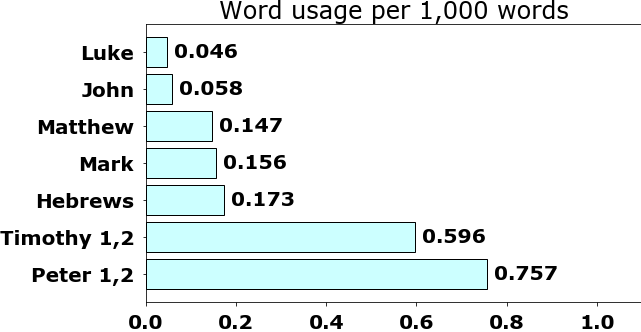 |
Words: χειρον=5 χειρονα=3 χειρονος χειρων=2
|
*G5519 *12 χοῖρος (khoy'-ros) : of uncertain derivation; a hog:--swine.
96. Luke 5:36
Luke 5:36 And he spake also a parable unto them; No man putteth a piece of a new garment upon an old; if otherwise, then both the new maketh a rent, and the piece that was taken out of the new agreeth not with the old. [kjv]
ελεγεν δε και παραβολην προς αυτους οτι ουδεις επιβλημα απο ιματιου καινου σχισας επιβαλλει επι ιματιον παλαιον ει δε μηγε και το καινον σχιζει σχισει και τω παλαιω ου συμφωνει συμφωνησει το επιβλημα το απο του καινου [gnt]
Matthew and Mark have a "
uncarded piece" being put on an old garment.
Luke has a "
piece" of a "
new garment" being put on an "
old garment"
97. Luke 5:36
KJV: And he spake also a parable unto them; No man putteth a piece of a new garment upon an old; if otherwise, then both the new maketh a rent, and the piece that was taken out of the new agreeth not with the old.
Greek: ελεγεν δε και παραβολην προς αυτους οτι ουδεις επιβλημα απο ιματιου καινου σχισας επιβαλλει επι ιματιον παλαιον ει δε μηγε και το καινον σχιζει σχισει και τω παλαιω ου συμφωνει συμφωνησει το επιβλημα το απο του καινου
98. Double-meaning
If the double-meaning was done on purpose, it adds one more piece of evidence to support the idea that Jesus spoke in both Aramaic and Greek - both were used by people in that area at that time.
Note that any double-meaning or hidden-meaning is supported when the most obvious way to word an idea is not used but, rather, a less obvious way is used to word an idea. The less obvious way may be needed to make the double-meaning work out linguistically.
99. Matthew 7 Houses built on rock and sand
100. End of page