Send Close Add comments: (status displays here)
Got it!  This site "www.creationpie.org" uses cookies. You consent to this by clicking on "Got it!" or by continuing to use this website.  Note: This appears on each machine/browser from which this site is accessed.
Matthew 12:30-37 Pardon the idle word counting - new
by RS  admin@creationpie.org : 1024 x 640


1. Matthew 12:30-37 Pardon the idle word counting - new
This content is being developed. It is actually being deconstructed with parts gradually being moved to a new improved page on idle words.
This content is being developed.

2. Matthew 12:30-37 Pardon the idle word counting - new
Verse routeMatthew 12:30 He that is not with me is against me; and he that gathereth not with me scattereth abroad. [kjv]
Verse route12:32 And who soever speaketh a word against the Son of man, it shall be forgiven him: but who soever speaketh against the Holy Ghost, it shall not be forgiven him, neither in this world, neither in the world to come. [kjv]

Verse route12:36 But I say unto you, That every idle word that men shall speak, they shall give account thereof in the day of judgment. [kjv]
Verse route12:37 For by thy words thou shalt be justified, and by thy words thou shalt be condemned. [kjv]

Bad wordsWhat is the "unpardonable" "sin"? What is an "idle word"? How might they be related? How are they related to "treasure" and "trees"? How might the Ten Word Pin model relate to these verses?

The ancient Greek phrase "ῥῆμα ἀργὸν""word not-working" is from "ῥῆμα""spoken word" and "ἀργός""not working, idle, lazy". Are all "idle words" spoken?
This is the new content. The old content is at Matthew 12:30-37 Pardon the idle word counting - old.

Information sign More: Matthew 13:44 KP5 Parable of the treasure in a field
Information sign More: Matthew 13:51-52 KP8 Parable of new and old codes

3. An opus on the workings of work
Verse routeMatthew 20:2 And when he had agreed with the labourers for a penny a day, he sent them into his vineyard. [kjv]
Verse routeσυμφωνησας δε μετα των εργατων εκ δηναριου την ημεραν απεστειλεν αυτους εις τον αμπελωνα αυτου [gnt]

The ancient Greek word "ἔργον" (er-gon) ≈ "work" is the source of the physics term "erg" for work and is related to many other PIE (Proto Indo-European) words for "work".
Verse route20:3 And he went out about the third hour, and saw others standing idle in the marketplace, [kjv]
Verse routeκαι εξελθων περι τριτην ωραν ειδεν αλλους εστωτας εν τη αγορα αργους [gnt]

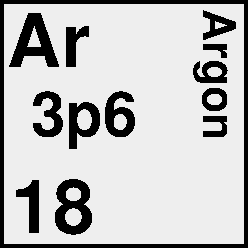
ArgonThe negation of the Greek word for "work" is the ancient Greek word "αεργος""not working, idle" which contracted to "αργος""not working, idle" and is the source of the name for the chemical element "Argon" as a "lazy gas".


Information sign More: Matthew 20:1-19 Parable of the vineyard workers
Information sign More: An opus on the workings of work

4. Curious as to a workaround to work
The ancient Greek word "περίεργος""curious (eager to learn), strange, peculiar, curious". The word is, literally, "working" "around" or "going around" "work" as if to avoid other work.

This word is translated as "busybodies" in 1 Timothy 5:13 as well as the word for "idle" or "not working" twice.
Verse route1 Timothy 5:13 And withal they learn to be idle, wandering about from house to house; and not only idle, but tattlers also and busybodies, speaking things which they ought not. [kjv]
Verse routeαμα δε και αργαι μανθανουσιν περιερχομεναι τας οικιας ου μονον δε αργαι αλλα και φλυαροι και περιεργοι λαλουσαι τα μη δεοντα [gnt]
Verse routesimul autem et otiosae discunt circumire domos non solum oteiosae sed et verbosae et curiosae loquentes quae non oportet [v]

The modern Greek word "περίεργα" (peh-REE-ehr-ga) ≈ "curious".

Information sign More: Curious as to a workaround to work

5. Ezra 4:24 Cease work
Verse routeEzra 4:24 Then ceased the work of the house of God which is at Jerusalem. So it ceased unto the second year of the reign of Darius king of Persia. [kjv]
Verse routeτοτε ηργησεν το εργον οικου του θεου του εν ιερουσαλημ και ην αργουν εως δευτερου ετους της βασιλειας δαρειου του βασιλεως περσων [lxx]
Verse routeintermissumopus … [v]

Stop sign Whoa sign
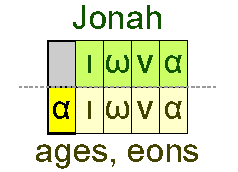
Amish stop sign as whoa. Not perfect. It's a little buggy.

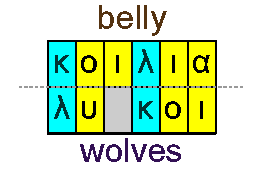
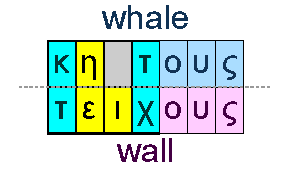
Note the past tense «ηργησεν» for "ceased" as in "not working"
The Latin word "intermissum""ceased" from which we get the English word "intermission". The Latin word "opus""work" as in an "opus" (as a work of music).

At West Point, the command "cease" "work" would be given for everyone taking a written exam, called a "writ", to immediately stop working.

[lethargic]


Information sign More: An opus on the workings of work

6. Ezra 4:24

   Ezra 4:24 
 All 
KJV: Then ceased the work of the house of God which is at Jerusalem. So it ceased unto the second year of the reign of Darius king of Persia.
Hebrew: באדין בטלת עבידת בית אלהא די בירושלם והות בטלא עד שנת תרתין למלכות דריוש מלך פרס׃
Greek: τοτε ηργησεν το εργον οικου του θεου του εν ιερουσαλημ και ην αργουν εως δευτερου ετους της βασιλειας δαρειου του βασιλεως περσων
Brenton: Then ceased the work of the house of God in Jerusalem, and it was at a stand until the second year of the reign of Darius king of the Persians.
Latin: tunc intermissum est opus domus Dei in Hierusalem et non fiebat usque ad annum secundum regni Darii regis Persarum
Wycliffe: Thanne the werk of Goddis hows in Jerusalem was left, and it was not maad til to the secounde yeer of Darius, king of Persis.
Luther: Da hörete auf das Werk am Hause Gottes zu Jerusalem und blieb nach bis ins andere Jahr Darii, des Königs in Persien.

7. Back to being idle at school
Verse routeProverbs 28:19 He that tilleth his land shall have plenty of bread: but he that followeth after vain persons shall have poverty enough. [kjv]
Verse routeο εργαζομενος την εαυτου γην πλησθησεται αρτων ο δε διωκων σχολην πλησθησεται πενιας [lxx]
Verse routeProverbs 28:19 He that tills his own land shall be satisfied with bread: but he that follows idleness shall have plenty of poverty. [bs3]

Ancient Greek had a word for being "idle" as in "leisure time" and that word is the source of the English word "school".
Today, the English word "school" means a place of instruction. It used to mean a "group" as in a "school" of fish.

Today, students who do not really understand work, such as on a farm, think of school as work and not idle time or leisure time.

The ancient Greek word "σχολή""leisure, free time, rest" and refers to idle or leisure time that was often spent in academic or philosophical discussions. In the LXX (Septuagint) taking time away from laying bricks in Egypt uses this word.

Information sign More: Back to being idle at school

8. Ten Word Pin model nodes
Let us apply the The Ten Word Pin model to the sequence on idle words in Matthew 12:30-37 and see how the model fits.

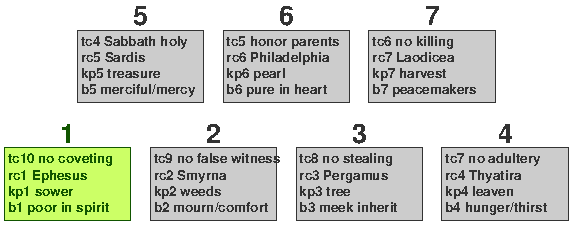
TenPin 7 TenPin 6


Information sign More: TenWordPin model nodes
Information sign More: Matthew 13:51-52 KP8 Parable of new and old codes
Information sign More: Exodus 20:3-17 TenWordPin model
Information sign More: Sermon on the Mount: TenWordPin verse model
Information sign More: TenWordPin history
Information sign More: TenWordPin model introduction
Information sign More: Matthew 12:30-37 Pardon the idle word counting - old

9. Matthew 12:30
Verse routeMatthew 12:30 He that is not with me is against me; and he that gathereth not with me scattereth abroad. [kjv]
Verse routeο μη ων μετ εμου κατ εμου εστιν και ο μη συναγων μετ εμου σκορπιζει [gnt]

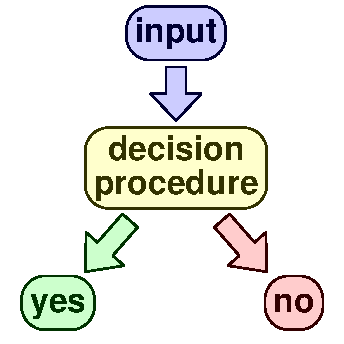
Decision procedure
If the "idle words" cannot be accounted for as to whether they are "for Christ" or "against Christ", the tie-breaker is that "he that is not with me is against me". The word for "scatter" in Greek is the verb form of the noun "scorpion". The Greek for "gathereth" is the word for "synagogue" or "bringing together"

Do "idle" words (non-working words or omitted words) have the result of "scattering" against what Jesus represents?

In a manner similar to Hebrew poetry that can rhyme by repeated meaning, "he that gathereth not with me scatterth abroad".

Information sign More: A scatter-brained approach to the sting of a scorpion

10. Matthew 12:30 Gather and scatter
Verse routeMatthew 12:30 He that is not with me is against me; and he that gathereth not with me scattereth abroad. [kjv]
Verse routeο μη ων μετ εμου κατ εμου εστιν και ο μη συναγων μετ εμου σκορπιζει [gnt]

[one talent response]

Information sign More: Matthew 18:2-11 Great children ensnared in the middle
Information sign More: Matthew 18:18-20 Middle agreement to have anything done
Information sign More: Matthew 25:14-30 Parable of the talents in Matthew

11. Matthew 12:30 Choose wisely
Verse routeMatthew 12:30 He that is not with me is against me; and he that gathereth not with me scattereth abroad. [kjv]
Verse routeο μη ων μετ εμου κατ εμου εστιν και ο μη συναγων μετ εμου σκορπιζει [gnt]

TenPin 0 TenPin 6

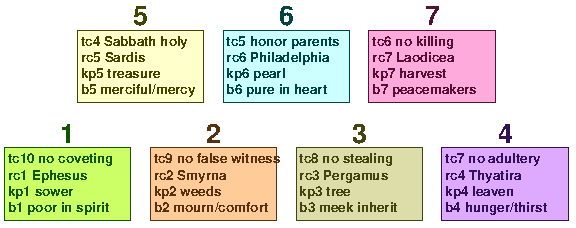
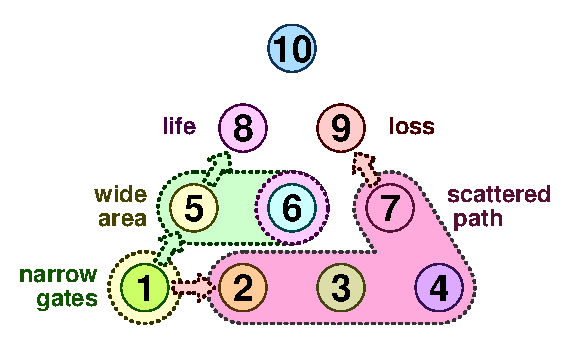
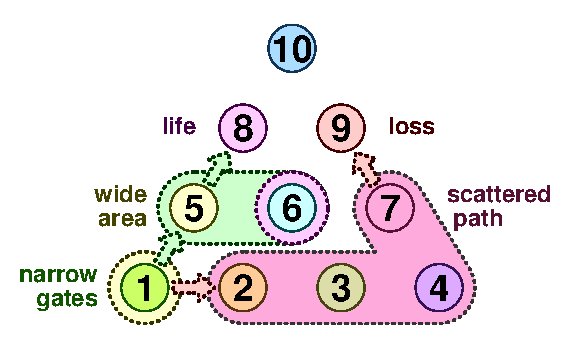
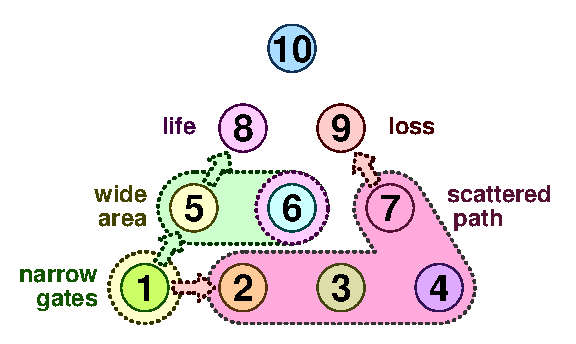
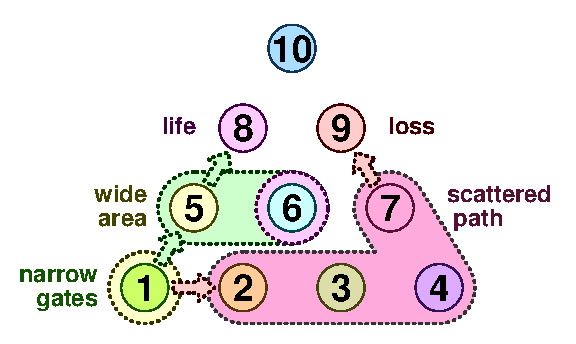
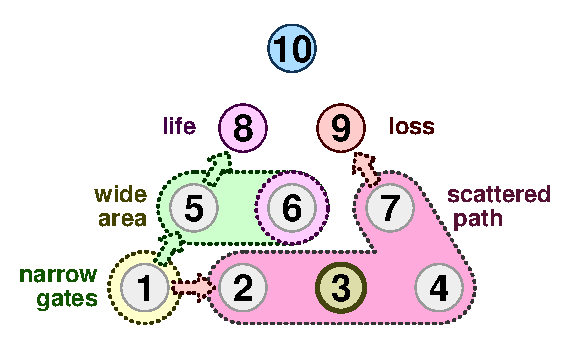
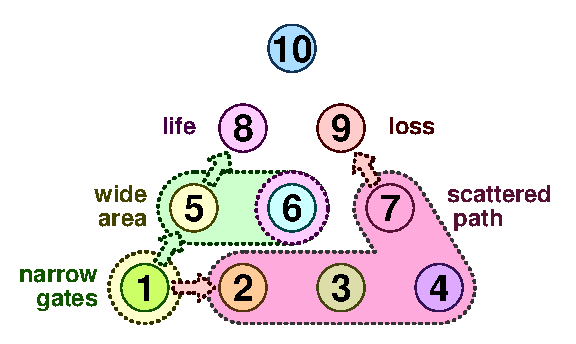
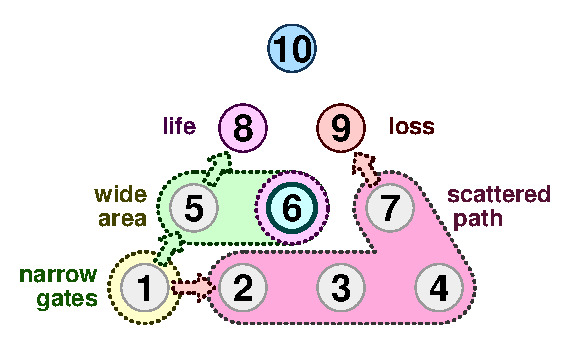
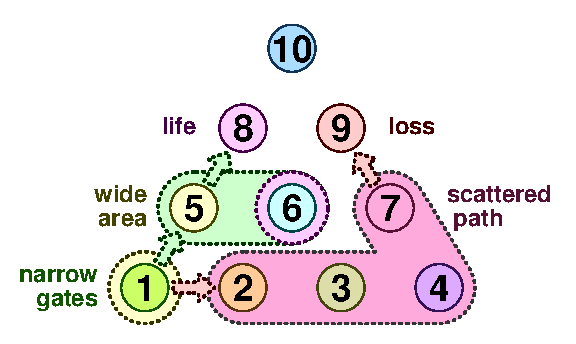
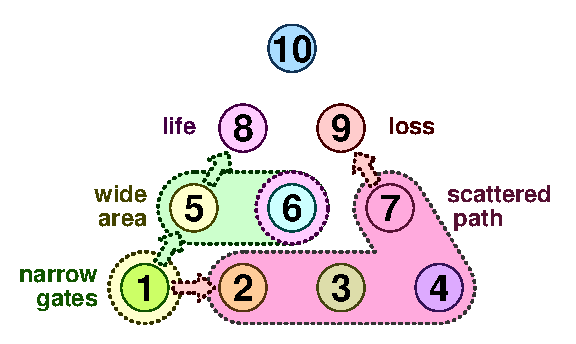
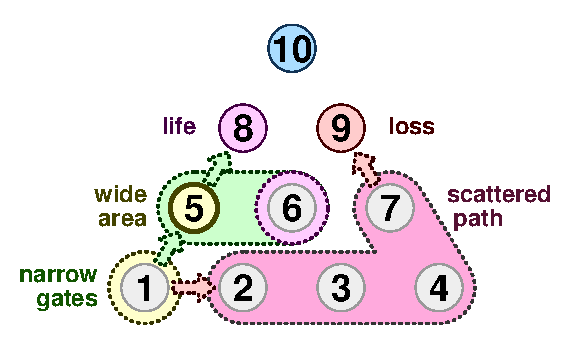
This is  node 1  of "coveting" and choosing the "way" to "life" (node 5) rather than the "scattered" "way" (nodes 2, 3, 4, 7). Which way will you "choose" or "desire" or "covet"?

Information sign More: TenWordPin model nodes
Information sign More: Matthew 13:3-23 KP1 Parable of the sower
Information sign More: Matthew 24:21-24 Short day cutoff

12. Matthew 12:30
Verse routeMatthew 12:30 He that is not with me is against me; and he that gathereth not with me scattereth abroad. [kjv]
Verse routeο μη ων μετ εμου κατ εμου εστιν και ο μη συναγων μετ εμου σκορπιζει [gnt]

TenPin 6
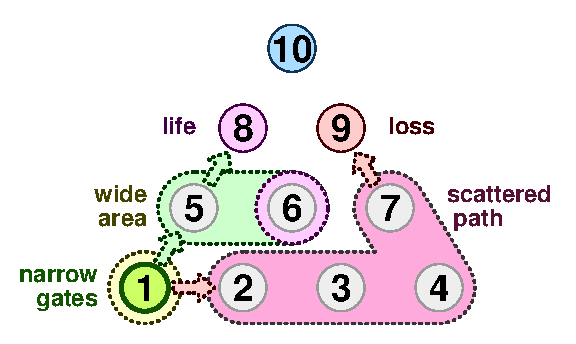
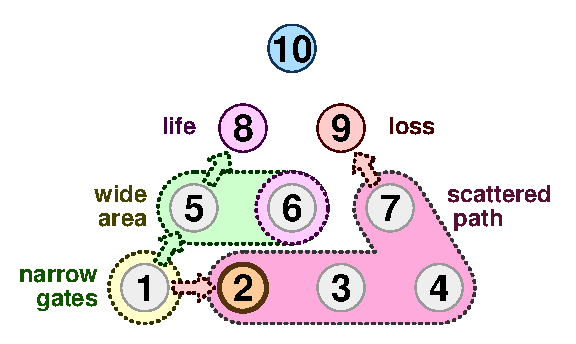
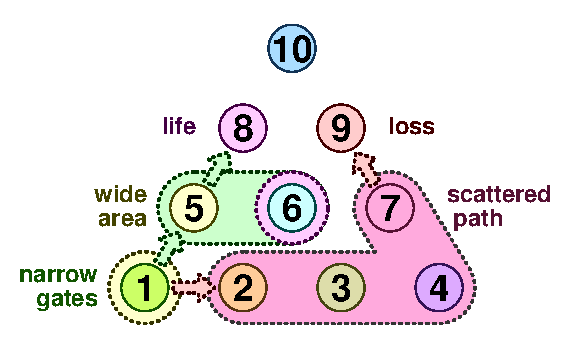
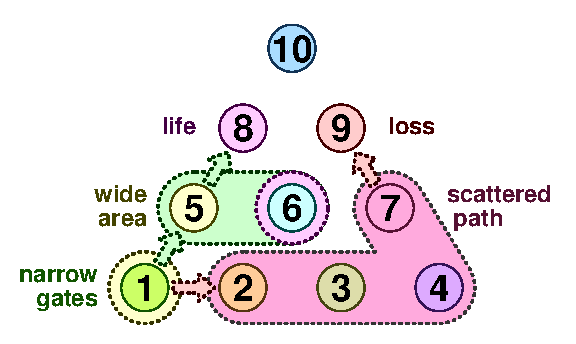
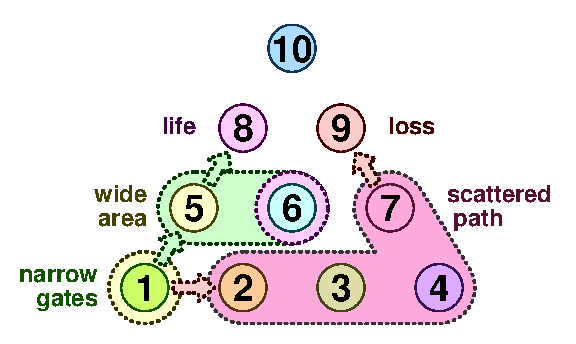
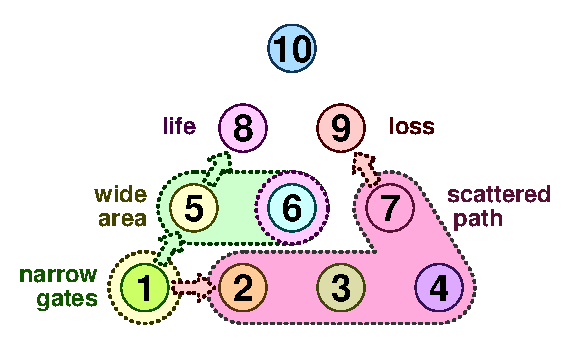
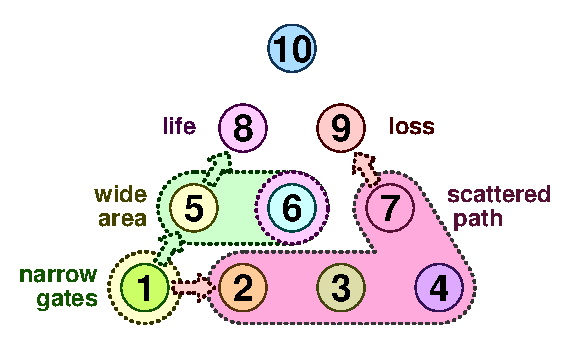
There are two paths from node 1 (covet).
The idea of the "scattered" "path" comes from a Matthew 7 on "gates" and is corroborated by the word used here for "scattered".

Is either of these a "sin"? If so, can it be "forgiven"?

Information sign More: Matthew 7:13-14 Strait talk about narrow and wide gates

13. Matthew 12:30
 All 
KJV: He that is not with me is against me; and he that gathereth not with me scattereth abroad.
Greek: ο μη ων μετ εμου κατ εμου εστιν και ο μη συναγων μετ εμου σκορπιζει
Latin: qui non est mecum contra me est et qui non congregat mecum spargit
Wessex: Se þe nys mid me he is on-geanes me. & se þe ne gadereð Note: MS. gadered. mid me he to-wyrð.
Wycliffe: He that is not with me, is ayens me; and he that gaderith not togidere with me, scaterith abrood.
Luther: Wer nicht mit mir ist, der ist wider mich, und wer nicht mit mir sammelt, der zerstreuet.
Slavonic: Иже несть со Мною, на Мя есть: и иже не собирает со Мною, расточает.
Russian: Кто не со Мною, тот против Меня; и кто не собирает со Мною, тот расточает.
Spanish: El que no es conmigo, contra mí es; y el que conmigo no recoge, desparrama.
Portuguese: Quem não está comigo, é contra mim; e quem não junta comigo, desperdiça.

14. Matthew 7:14 Scattered path
Verse routeMatthew 7:14 Because strait is the gate, and narrow is the way, which leadeth unto life, and few there be that find it. [kjv]
Verse routeοτι στενη η πυλη και τεθλιμμενη η οδος η απαγουσα εις την ζωην και ολιγοι εισιν οι ευρισκοντες αυτην [gnt]

The ancient Greek word "θλίβω""squeeze, compress, oppress, afflict".

The ancient Greek word "τετριμμένος""rubbed, worn out" from "τρίβω""rub, grind, waste, wear away" and is cognate with the Latin word "tero""rub, wear away, consume" (obliterate).

Might the "narrow" "way" be the "worn out" or "rubbed out" "way"?

[play on words]

Information sign More: Matthew 7:13-14 Strait talk about narrow and wide gates

15. Matthew 7:14 Scattered path
Verse routeMatthew 7:14 Because strait is the gate, and narrow is the way, which leadeth unto life, and few there be that find it. [kjv]
Verse routeοτι στενη η πυλη και τεθλιμμενη η οδος η απαγουσα εις την ζωην και ολιγοι εισιν οι ευρισκοντες αυτην [gnt]

The Greek word translated as "narrow" is that of "scattered" or "smashed". The ancient Greek word "στενή""narrow, tight". [play on words]

Information sign More: Matthew 7:13-14 Strait talk about narrow and wide gates

16. Jeremiah 2:13 Living water and broken pits
Verse routeJeremiah 2:13 For my people have committed two evils; they have forsaken me the fountain of living waters, and hewed them out cisterns, broken cisterns, that can hold no water. [kjv]
Verse routeοτι δυο πονηρα εποιησεν ο λαος μου εμε εγκατελιπον πηγην υδατος ζωης και ωρυξαν εαυτοις λακκους συντετριμμενους οι ου δυνησονται υδωρ συνεχειν [lxx]

There are two "evils". that have been "made" that involve two places. Barnabas makes a connection to this verse (11.2, omitted).

Information sign More: Matthew 7:13-14 Strait talk about narrow and wide gates
Information sign More: Matthew 10:8-10 The way out of the pit
Information sign More: Jeremiah 2:1-16

17. Philippians 4:13 All things
Verse routePhilippians 4:13 I can do all things through Christ which strengtheneth me. [kjv]
Verse routeπαντα ισχυω εν τω ενδυναμουντι με [gnt]

Can one really do "all things"? There are many changes from the Greek. Greek paraphrase: In all these things (just mentioned), I am given potential (to accomplish) in Him.

It appears that Paul is saying that he is made "stronger" or "better" in "everything" through Jesus Christ. This would include the adversity of neglect (from Phillipi) whereby he needed to be self-sufficient to continue the work of Christ.

Information sign More: Everything and all things: But wait, there's more
Information sign More: Philippians 4:12-23 Potentially doing all things

18. Adjective all
* Masc.
Sing.
Masc.
Plural
Fem.
Sing.
Fem.
Plural
Neuter
Sing.
Neuter
Plural
Nom. πᾶς πᾰ́ντες πᾶσᾰ πᾶσαι πᾶν πᾰ́ντᾰ
Gen. πᾰντός πᾰ́ντων πᾱ́σης πᾱσῶν πᾰντός πᾰ́ντων
Dat. ́πᾰντῐ́ πᾶσῐ(ν) πᾱ́σῃ πᾱ́σαις ́πᾰντῐ́ πᾶσῐ(ν)
Acc. πᾰ́ντᾰ πᾰ́ντᾰς πᾶν πᾱ́σᾱς πᾶσᾰν πᾰ́ντᾰ

The ancient Greek word (adjective) "πᾶς""all, every" (nominative masculine singular). The rules are as follows. It is not clear if these rules always apply. This convention is the default meaning of the word for "all". The context will determine if there are exceptions, etc. For example, the singular means every one. For example, a verb in the subjunctive tense could modify that default meaning.

Information sign More: Everything and all things: But wait, there's more

19. Matthew 12:31 All
Verse routeMatthew 12:31 Wherefore I say unto you, All manner of sin and blasphemy shall be forgiven unto men: but the blasphemy against the Holy Ghost shall not be forgiven unto men. [kjv]
Verse routeδια τουτο λεγω υμιν πασα αμαρτια και βλασφημια αφεθησεται τοις ανθρωποις η δε του πνευματος βλασφημια ουκ αφεθησεται [gnt]

What is the domain of application of "all" as used here?

How might the scope of "all" be limited here? How about checking the beginning of the verse?

Information sign More: Everything and all things: But wait, there's more
Information sign More: Philippians 4:12-23 Potentially doing all things

20. Matthew 12:31 Wherefore
Verse routeMatthew 12:31 Wherefore I say unto you, All manner of sin and blasphemy shall be forgiven unto men: but the blasphemy against the Holy Ghost shall not be forgiven unto men. [kjv]
Verse routeδια τουτο λεγω υμιν πασα αμαρτια και βλασφημια αφεθησεται τοις ανθρωποις η δε του πνευματος βλασφημια ουκ αφεθησεται [gnt]

The ancient Greek word "διὰ τοῦτο""through this". [parts of speech] Jesus starts with the Greek words for "through this". What did Jesus just say?

Interestingly, Aristotle reports that the "neuter" is often used, as a Solecism, where the "masculine" would otherwise be used. Could the "this" being revealed by a "person" by way of a solecism?

The KJV (King James Version) translates as "wherefore" a variety of different Greek words and phrases.

Future topic Details are left as a future topic.


21. Matthew 12:30-31 Context
Verse routeMatthew 12:30 He that is not with me is against me; and he that gathereth not with me scattereth abroad. [kjv]
Verse routeο μη ων μετ εμου κατ εμου εστιν και ο μη συναγων μετ εμου σκορπιζει [gnt]

Verse route12:31 Wherefore I say unto you, All manner of sin and blasphemy shall be forgiven unto men: but the blasphemy against the Holy Ghost shall not be forgiven unto men. [kjv]
Verse routeδια τουτο λεγω υμιν πασα αμαρτια και βλασφημια αφεθησεται τοις ανθρωποις η δε του πνευματος βλασφημια ουκ αφεθησεται [gnt]

Jesus starts with the Greek words for "through this" in verse 31 as "διὰ""through, by" and "τοῦτο""this" (nominative/accusative neuter singular). What did Jesus just say?

Where is the neuter singular word or idea in verse 30 to which "through this" might refer?

22. Matthew 12:30 Word usage
Verse routeMatthew 12:30 He that is not with me is against me; and he that gathereth not with me scattereth abroad. [kjv]
Verse routeο μη ων μετ εμου κατ εμου εστιν και ο μη συναγων μετ εμου σκορπιζει [gnt]

Matthew 12:30
Strong Used Unique Word Part of speech
G3361 1029 1021 μη participle negative
G2596 471 84 κατ preposition
G3361 1029 1021 μη participle negative
G4863 59 3 συναγων verb present active participle nominative singular masculine
G4650 5 3 σκορπιζει verb present active indicative 3rd person singular
Where is the neuter singular word or idea in verse 30 to which "through this" (nominative) in verse 31 might refer?

Interestingly, Aristotle reports that the "neuter" is often used, as a Solecism, where the "masculine" would otherwise be used. Could the "this" refer to "gathering"?

23. Matthew 12:31 Unpardonable sin
Verse routeMatthew 12:31 Wherefore I say unto you, All manner of sin and blasphemy shall be forgiven unto men: but the blasphemy against the Holy Ghost shall not be forgiven unto men. [kjv]
Verse routeδια τουτο λεγω υμιν πασα αμαρτια και βλασφημια αφεθησεται τοις ανθρωποις η δε του πνευματος βλασφημια ουκ αφεθησεται [gnt]

The TR (Textus Receptus) adds "holy" which is not in the Greek but is in the next verse. There are three categories in this verse that relate to "forgiveness". Is there a requirement for "all" "sin" and "blasphemy" to be "forgiven" or "let go"? How is it possible for one to be "accountable" for "idle words" that are not spoken?

[undecidability]

Information sign More: Speaking evil in a famous way

24. Matthew 12:31 Blasphemy
Verse routeMatthew 12:31 Wherefore I say unto you, All manner of sin and blasphemy shall be forgiven unto men: but the blasphemy against the Holy Ghost shall not be forgiven unto men. [kjv]
Verse routeδια τουτο λεγω υμιν πασα αμαρτια και βλασφημια αφεθησεται τοις ανθρωποις η δε του πνευματος βλασφημια ουκ αφεθησεται [gnt]

TenPin 6
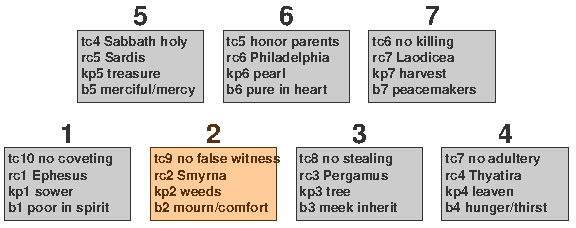
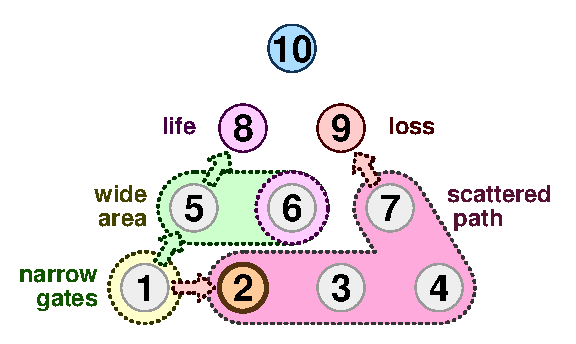
The "blasphemy" of the "spirit" could be clever deceptions in node 2 (weeds, false witness).
What exactly is "sin"? The ancient Greek word "ἁμαρτία""error, mistake, fault, sin" as in, literally, "not a witness".

25. Matthew 12:31 Blasphemy
Verse routeMatthew 12:31 Wherefore I say unto you, All manner of sin and blasphemy shall be forgiven unto men: but the blasphemy against the Holy Ghost shall not be forgiven unto men. [kjv]
Verse routeδια τουτο λεγω υμιν πασα αμαρτια και βλασφημια αφεθησεται τοις ανθρωποις η δε του πνευματος βλασφημια ουκ αφεθησεται [gnt]

The ancient Greek word "βλασφημία""word of evil omen, defamation, speech against God" and comes from the words for "bad" or "harmful" and "speak" or "fame" (as in traveling news). In deceptive uses, "blasphemy" may sound eloquent and indistinguishable by some from the truth.

Information sign More: Speaking evil in a famous way

26. Defining sin
Sins 1 Sins 2
This model fits what
Jesus/Greek says.
This model fits what
Latin/English assumes.
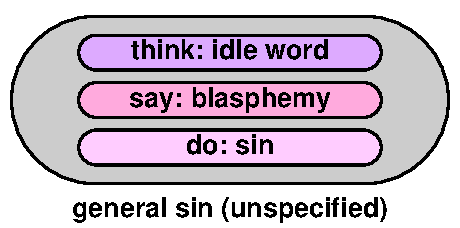
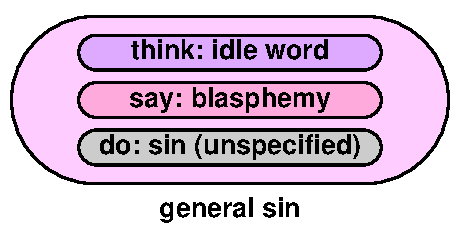
Jesus uses the Greek word for "sin" three times in Matthew. A "sin" can be a general all-encompassing word or a specific instance of a more general unspecified word (or something else).
What is the difference in the following?

27. Strongs - street
*G4505 *4 ῥύμη (hroo'-may) : prolongation from G4506 in its original sense; an alley or avenue (as crowded):--lane, street.
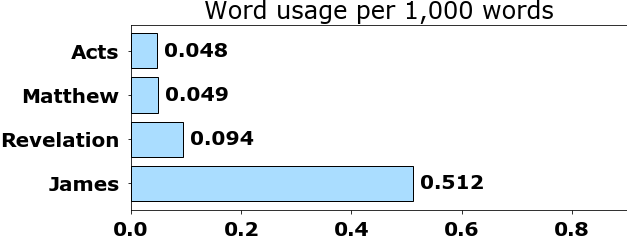
Word usage per chapter Words: ρυμαις ρυμας ρυμην=2

Street
The ancient Greek word "ῥύμη""force of a body in motion, charge of soldiers" and, only in the GNT (Greek New Testament) (four times) and once in the LXX translated as "street". The use in the GNT and LXX appears to be that of a thoroughfare with "hustle and bustle".
The word appears to have been at one time used as a "street" in a military camp. Some similar sounding Greek words are the following.

28. Strongs - silver
*G696 *4 ἄργυρος (ar'-goo-ros) : from argos (shining); silver (the metal, in the articles or coin):--silver.
Word usage per chapter Words: αργυρον αργυρος αργυρου αργυρω

The ancient Greek word "ἄργυρος""silver" and may be related to the Latin word "argentum""silver" which is the source of the name "Argentina". This Greek word for "silver" can be a play on words with "lazy way around".

29. Usage - silver
  • *G696 *4 ἄργυρος (ar'-goo-ros) : from argos (shining); silver (the metal, in the articles or coin):--silver.
  •  Usage 
     All 
    • αργυρον
      •   Matthew 10:9 Provide neither gold, nor silver, nor brass in ...
    • αργυρω
      •   Acts 17:29 ... like unto gold, or silver, or stone, graven ...
    • αργυρος
      •   James 5:3 Your gold and silver is cankered; and the rust ...
    • αργυρου
      •   Revelation 18:12 The merchandise of gold, and silver, and precious stones, ...


Information sign More: Matthew 10:8-10 The way out of the pit

30. Put it together
The ancient Greek phrase "ῥῆμα ἀργὸν""word not-working" (unique) from "ῥῆμα""spoken word" (used two times by Jesus in Matthew) and "ἀργός""not working, idle, lazy" (unique in the ending used) as a contraction of "ᾰ̓εργός""not working".

  • "ῥῆμα""spoken word" (perhaps diarrhea of the mouth).
  • "ἀργός""not working, idle, lazy" (same word) from "ᾰ̓εργός""not working".
  • "ῥύμη""force of a body in motion, charge of soldiers".
  • "ῥῦμα""that which is drawn" as in a bow and arrow.
  • "ῥεῦμα""stream, flow, current" as in diarrhea of the mouth.
  • "ἄργυρος""silver" and "ἀργός""white, light".
  • "α""negating prefix".
  • "γυρός""round".
  • "γῦρος""ring, circle".

  • 31. Matthew 12:31 Blasphemy
    Verse routeMatthew 12:31 Wherefore I say unto you, All manner of sin and blasphemy shall be forgiven unto men: but the blasphemy against the Holy Ghost shall not be forgiven unto men. [kjv]
    Verse routeδια τουτο λεγω υμιν πασα αμαρτια και βλασφημια αφεθησεται τοις ανθρωποις η δε του πνευματος βλασφημια ουκ αφεθησεται [gnt]

    TenPin 1 TenPin 6

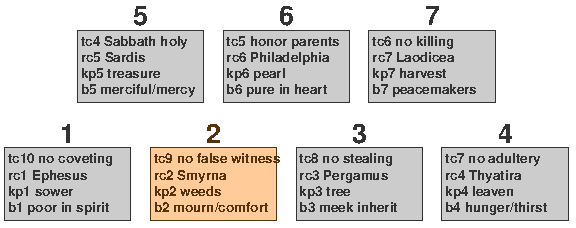
    This is  node 2  of "weeds" and "false witness" or (smooth talking) "blasphemy" to promise "greatness" to those following the "bird" who create many "rules" in their "law".

    Information sign More: TenWordPin model nodes
    Information sign More: Matthew 13:24-30,36-43 KP2 Parable of the wheat and tares
    Information sign More: Speaking evil in a famous way
    Information sign More: Matthew 9:1-7 Blasphemy of forgiving sins

    32. Matthew 12:31
     All 
    KJV: Wherefore I say unto you, All manner of sin and blasphemy shall be forgiven unto men: but the blasphemy against the Holy Ghost shall not be forgiven unto men.
    Greek: δια τουτο λεγω υμιν πασα αμαρτια και βλασφημια αφεθησεται τοις ανθρωποις η δε του πνευματος βλασφημια ουκ αφεθησεται τοις ανθρωποις
    Latin: ideo dico vobis omne peccatum et blasphemia remittetur hominibus Spiritus autem blasphemia non remittetur

    33. Matthew 12:32 If untranslated
    Verse routeMatthew 12:32 And who soever speaketh a word against the Son of man, it shall be forgiven him: but who soever speaketh against the Holy Ghost, it shall not be forgiven him, neither in this world, neither in the world to come. [kjv]
    Verse routeκαι ος εαν ειπη λογον κατα του υιου του ανθρωπου αφεθησεται αυτω ος δ αν ειπη κατα του πνευματος του αγιου ουκ αφεθησεται αυτω ουτε εν τουτω τω αιωνι ουτε εν τω μελλοντι [gnt]

    The ancient Greek word "ἐάν""if, when" from "εί""if, whether" and "αν""if, when". There are two untranslated "if" words in this verse? The Berean Literal Bible includes the both "if" words. Most other translations omit them. Are they important?

    The ancient Greek word "λόγος""rational explanation, reasoning". In context, it can mean "word".

    34. Matthew 6:20 Neither nor
    Verse routeMatthew 6:20 But lay up for yourselves treasures in heaven, where neither moth nor rust doth corrupt, and where thieves do not break through nor steal: [kjv]
    Verse routeθησαυριζετε δε υμιν θησαυρους εν ουρανω οπου ουτε σης ουτε βρωσις αφανιζει και οπου κλεπται ου διορυσσουσιν ουδε κλεπτουσιν [gnt]

    The following are equivalent and can be related using DeMorgan's Law (from the mid 1800's). The Greek words "και""and" and "η""or".

    Logic Mail delivery Greek
    neither A nor B neither rain nor snow ουτε A ουτε B ...
    not (A or B) not  ( rain or snow ) ου (A η B) ...
    (not A) and (not B) (not  rain) and (not snow) (ου A) και (ου B) ...

    A negation analysis can now be done.

    Information sign More: DeMorgan's Laws
    Information sign More: Matthew 6:19-21: A treasury of treasures of which to treasure

    35. DeMorgan build

     1   2   3   +   -   ▶ 

    DeMorgan's Law for propositional logic (i.e., truth table logic) are from the mid 1800's and named after Augustus De Morgan (1806-1871). He tutored (mostly via correspondence) Ada Lovelace, considered the first programmer, in the early 1840's.


    Information sign More: DeMorgan's Laws

    36. Matthew 12:32 Neither nor
    Verse routeMatthew 12:32 neither in this world, neither in the world to come. [kjv]
    Verse routeουτε εν τουτω τω αιωνι ουτε εν τω μελλοντι [gnt]

    What is meant when one says "neither" followed by "nor"? Is there any overlap between X and Y in English? That is, are the two alternatives mutually exclusive? In general not, but what about the translations of this verse?

    37. Some translations of Matthew 12:32
    Verse routeMatthew 12:32 neither in this world, neither in the world to come. [kjv]
    Verse routeουτε εν τουτω τω αιωνι ουτε εν τω μελλοντι [gnt]

    Here are some translations. For analysis purposes, let us assume that "age" and "world" are essentially the same. If one takes "neither" to be as "either" and "nor" as "or", the translations are essentially the same. The translations appear to assume that the choices are mutually exclusive. This need not be the case.

    38. Matthew 12:32 Neither nor
    Verse routeMatthew 12:32 neither in this world, neither in the world to come. [kjv]
    Verse routeουτε εν τουτω τω αιωνι ουτε εν τω μελλοντι [gnt]

    Greek: ... neither in this the age neither in the future.

    Most translations assume an "age" or "world" that follows the current "age" or "world" and not as a general indication of the "future" from this point forward. A connection between "world" as in "ages" and "Jonah" and Jesus is made (after this sequence) in verses 39-40.

    Jonah and age/forever


    39. Matthew 12:39 Paraphrase
    Verse routeMatthew 12:39 But he answered and said unto them, An evil and adulterous generation seeketh after a sign; and there shall no sign be given to it, but the sign of the prophet Jonas: [kjv]
    Verse routeο δε αποκριθεις ειπεν αυτοις γενεα πονηρα και μοιχαλις σημειον επιζητει και σημειον ου δοθησεται αυτη ει μη το σημειον ιωνα του προφητου [gnt]

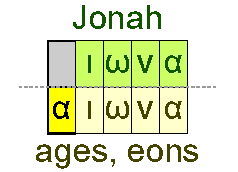
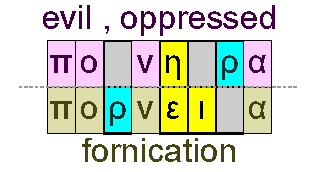
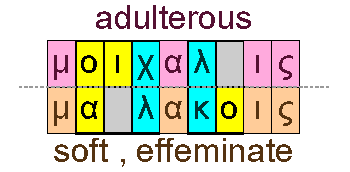
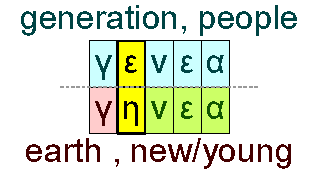
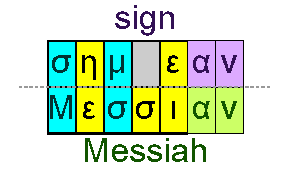
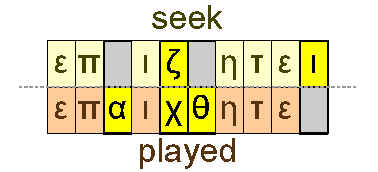
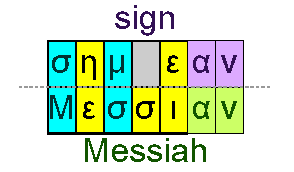
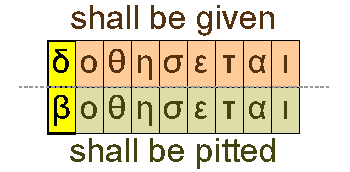
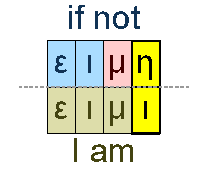
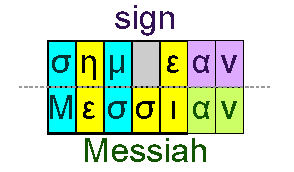
    Evil and fornication Adulterous and effeminancy Generation and earth new/young Sign and Messiah
    Seek and play Sign and Messiah Shall be given and shall be pitted If not and I am
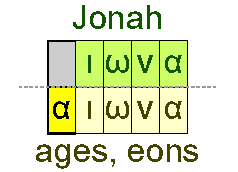
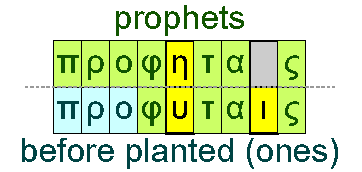
    Sign and Messiah Jonah and age/forever Prophets and planted before (ones)

    Greek word order: ... and sign no shall be given[shall be pitted] if not [I am] the sign [Messiah] Jonah [ages] (of the) prophet. [planted ones before]

    Information sign More: Matthew 12:38-40 Sign sign everywhere a sign

    40. Matthew 12:40 Paraphrase
    Verse routeMatthew 12:40 For as Jonas was three days and three nights in the whale's belly; so shall the Son of man be three days and three nights in the heart of the earth. [kjv]
    Verse routeωσπερ γαρ ην ιωνας εν τη κοιλια του κητους τρεις ημερας και τρεις νυκτας ουτως εσται ο υιος του ανθρωπου εν τη καρδια της γης τρεις ημερας και τρεις νυκτας [gnt]

    Jonah and age/forever Belly and wolves Whale and wall bottom-up:
    1=day 2=day 3=day
    4=night 5=night 6=night
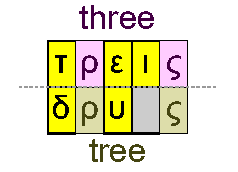
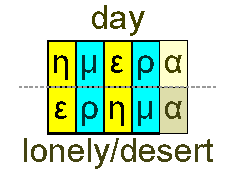
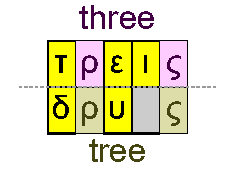
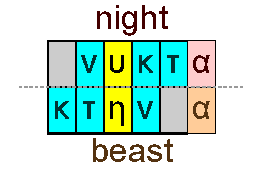
    Three and tree Day and wilderness Three and tree Night and beast top-down:
    6=day 5=day 4=day
    3=night 2=night 1=night

    Might the play on words just be a coincidence?

    Information sign More: Matthew 12:38-40 Sign sign everywhere a sign

    41. Matthew 12:39-40 Paraphrase
    Verse routeMatthew 12:39 But he answered and said unto them, An evil and adulterous generation seeketh after a sign; and there shall no sign be given to it, but the sign of the prophet Jonas: [kjv]
    Verse route12:40 For as Jonas was three days and three nights in the whale's belly; so shall the Son of man be three days and three nights in the heart of the earth. [kjv]

    TenPin 6
    5. night 1. 6. night 2. 7. night 3.
    1. Jesus. 2. day 1. 3, day 2. 4. day 3.

    12:39 ... no sign [Messiah] shall be given [pitted] if not [I am] the sign [Messiah] (of) Jonah [ages] (of the) prophet [planted ones before].
    12:40 ... for as Jonah [ages] was in the belly [wolves] of the whale [wall] three [tree] days [deserts] and three [tree] nights [beasts] ... heart [mind] of the earth [sand].

    Information sign More: Matthew 12:38-40 Sign sign everywhere a sign

    42. Matthew 12:32 Parallelism
    Verse routeMatthew 12:32 And who soever speaketh a word against the Son of man, it shall be forgiven him: but who soever speaketh against the Holy Ghost, it shall not be forgiven him, neither in this world, neither in the world to come. [kjv]
    Verse routeκαι ος εαν ειπη λογον κατα του υιου του ανθρωπου αφεθησεται αυτω ος δ αν ειπη κατα του πνευματος του αγιου ουκ αφεθησεται αυτω ουτε εν τουτω τω αιωνι ουτε εν τω μελλοντι [gnt]

    With the play on word inferences, a parallelism becomes more clear.

    Now: Whoever if speaks reasoning against the Son of Man (Jesus) it will be forgiven (now). Neither in this age [Jonah, Messiah, Jesus] (now)
    Future: Whoever if speaks against the Holy Spirit it will not be forgiven (future) Neither in the future (thereafter)

    43. Matthew 12:32 Blasphemy
    Verse routeMatthew 12:32 And who soever speaketh a word against the Son of man, it shall be forgiven him: but who soever speaketh against the Holy Ghost, it shall not be forgiven him, neither in this world, neither in the world to come. [kjv]
    Verse routeκαι ος εαν ειπη λογον κατα του υιου του ανθρωπου αφεθησεται αυτω ος δ αν ειπη κατα του πνευματος του αγιου ουκ αφεθησεται αυτω ουτε εν τουτω τω αιωνι ουτε εν τω μελλοντι [gnt]

    TenPin 1 TenPin 6

    This is  node 2  of "weeds" and "false witness" or (smooth talking) "blasphemy" to promise "greatness" to those following the "bird" who create many "rules" in their "law".

    Information sign More: TenWordPin model nodes
    Information sign More: Matthew 13:24-30,36-43 KP2 Parable of the wheat and tares

    44. Matthew 12:32 Blasphemy
    Verse routeMatthew 12:32 And who soever speaketh a word against the Son of man, it shall be forgiven him: but who soever speaketh against the Holy Ghost, it shall not be forgiven him, neither in this world, neither in the world to come. [kjv]
    Verse routeκαι ος εαν ειπη λογον κατα του υιου του ανθρωπου αφεθησεται αυτω ος δ αν ειπη κατα του πνευματος του αγιου ουκ αφεθησεται αυτω ουτε εν τουτω τω αιωνι ουτε εν τω μελλοντι [gnt]

    TenPin 6
    This is in node 2 (weeds, false witness).
    Discuss: How can one get one to "speak" about what is in their "mind" or "heart"?

    45. Matthew 12:32 Unpardonable sin
    Verse routeMatthew 12:32 And who soever speaketh a word against the Son of man, it shall be forgiven him: but who soever speaketh against the Holy Ghost, it shall not be forgiven him, neither in this world, neither in the world to come. [kjv]
    Verse routeκαι ος εαν ειπη λογον κατα του υιου του ανθρωπου αφεθησεται αυτω ος δ αν ειπη κατα του πνευματος του αγιου ουκ αφεθησεται αυτω ουτε εν τουτω τω αιωνι ουτε εν τω μελλοντι [gnt]

    A sin against the Holy Spirit shall not be forgiven.

    What is a "word" or sin "against" the "Holy" "Spirit"? Perhaps it is based on what has been discussed in the above verses. The word translated "against" can mean "into" as might be the case with "idle" "words" as a deception as a "false Christ".

    The English word "pardon" is interesting in that it comes through French from Latin but came into Latin from a Germanic language.

    46. Matthew 12:32
     All 
    KJV: And who soever speaketh a word against the Son of man, it shall be forgiven him: but who soever speaketh against the Holy Ghost, it shall not be forgiven him, neither in this world, neither in the world to come.
    Greek: και ος αν εαν ειπη λογον κατα του υιου του ανθρωπου αφεθησεται αυτω ος δ αν ειπη κατα του πνευματος του αγιου ουκ αφεθησεται αυτω ουτε εν τουτω τω αιωνι ουτε εν τω μελλοντι
    Latin: et quicumque dixerit verbum contra Filium hominis remittetur ei qui autem dixerit contra Spiritum Sanctum non remittetur ei neque in hoc saeculo neque in futuro
    Wessex: & swa hlyc swa cweð word on-gen mannes sunu him byð forgefen. Se þe soðlice cweð on-gen haligne gast. ne byð hit him for-gefen. ne on þissere werolde. ne on þare to-wearden.
    Wycliffe: And who euere seith a word ayens mannus sone, it shal be foryouun to him; but who that seieth a word ayens the Hooli Goost, it shal not be foryouun to hym, nether in this world, ne in`the tothir.
    Spanish: Y a cualquiera que dijere palabra contra el Hijo del Hombre, le será perdonado; pero a cualquiera que hablare contra el Espíritu Santo, no le será perdonado, ni en este mundo, ni en el venidero.
    Portuguese: E, se alguém disser alguma palavra contra o Filho do Homem, há-de ser-lhe perdoado; mas, se falar contra o Espírito Santo, não lhe será perdoado, nem neste mundo nem no futuro. »

    47. Matthew 12:33 Good and rotten trees
    Verse routeMatthew 12:33 Either make the tree good, and his fruit good; or else make the tree corrupt, and his fruit corrupt: for the tree is known by his fruit. [kjv]
    Verse routeη ποιησατε το δενδρον καλον και τον καρπον αυτου καλον η ποιησατε το δενδρον σαπρον και τον καρπον αυτου σαπρον εκ γαρ του καρπου το δενδρον γινωσκεται [gnt]

    Tree with twigs - fruit Tree with twigs - no fruit
    It's a tree, wouldn't you know! Let's make like a tree and get out of here.

    48. Matthew 12:33 Good and rotten trees
    Verse routeMatthew 12:33 Either make the tree good, and his fruit good; or else make the tree corrupt, and his fruit corrupt: for the tree is known by his fruit. [kjv]
    Verse routeη ποιησατε το δενδρον καλον και τον καρπον αυτου καλον η ποιησατε το δενδρον σαπρον και τον καρπον αυτου σαπρον εκ γαρ του καρπου το δενδρον γινωσκεται [gnt]

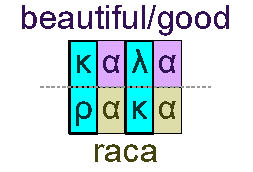
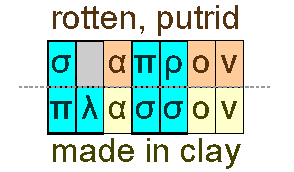
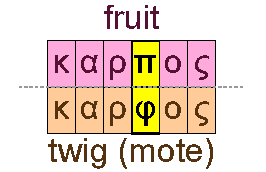
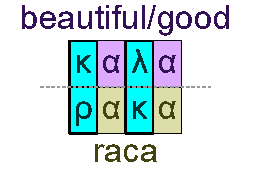
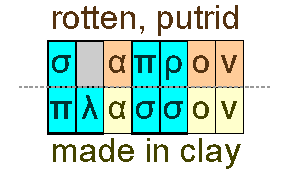
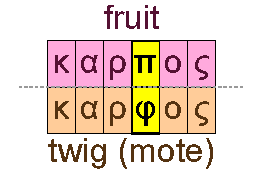
    Beautiful and raca Rotten and made in clay Fruit and twig

    What is the information content? Whose POV (Point of View) is being used?

    Information sign More: Matthew 7:17-20 Fruit trees programmed to produce fruit of their kind
    Information sign More: Punishment by Spoonerisms: switched consonants
    Information sign More: Matthew 5:22 The danger of brotherly anger
    Information sign More: Matthew 5:9 B7 Making and appeasing peaceful peacemakers

    49. Rock and sand
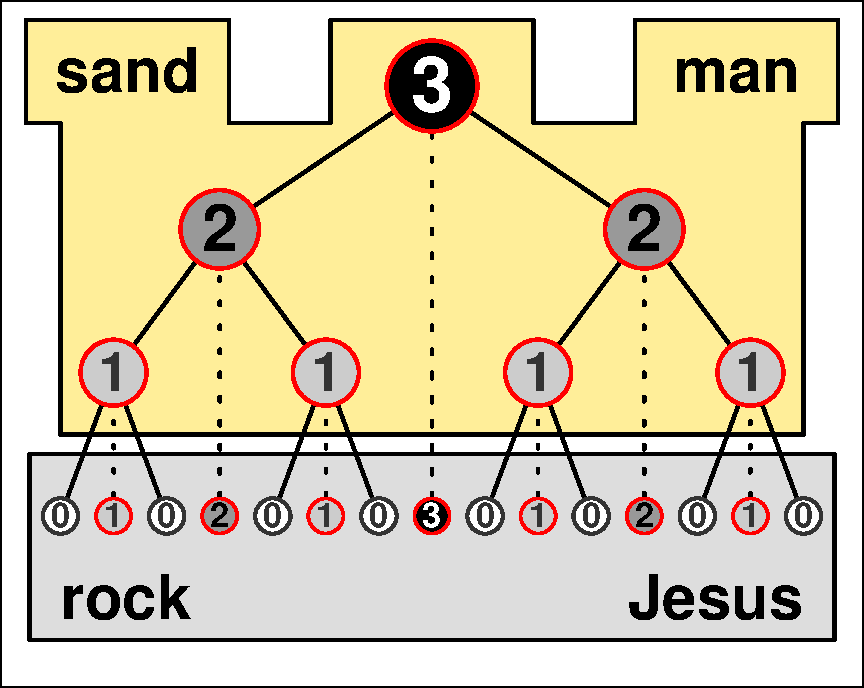
    Rock and sandBuild your house on the granite rock of Jesus and not on the human sand (or stones) of man, Matthew 7:24-27. Sand is a chip off the old block of granite and made in the image of granite.
    The higher one goes up the human sand hierarchy or sand tree, the more the temptation to ignore the foundation of the rock and to start to "influence" or "manipulate" others as "leaders" for one's own purposes.
    To the extent that the Church of believers built on the sand of man helps one do what Jesus wants them to do, it is good. To the extent it does not, it is not good.
    Some birds will make "stones" (sand on which to build their birdhouse) appear as "bread". That is, give "bad" "gifts" or "houses" to their "children".

    Information sign More: Some shallow and deep ideas about tree structures
    Information sign More: Matthew 16:18 Calling a masterful gathering of outgoing church believers
    Information sign More: 2 Peter 2:1-22 Déjà vu all over again

    50. Matthew 12:33 Good and rotten trees
    Verse routeMatthew 12:33 Either make the tree good, and his fruit good; or else make the tree corrupt, and his fruit corrupt: for the tree is known by his fruit. [kjv]
    Verse routeη ποιησατε το δενδρον καλον και τον καρπον αυτου καλον η ποιησατε το δενδρον σαπρον και τον καρπον αυτου σαπρον εκ γαρ του καρπου το δενδρον γινωσκεται [gnt]

    Tree with twigs - fruit Tree with twigs - no fruit
    Notice that the Latin uses the same word for the Greek "rotten" "fruit" in verse 33 and for "evil" man in verse 35. It is reasonable to assume that if Jesus intended these two be the same, Matthew would have used the same Greek word in each verse.
    A mountain represents an empire. A tree represents the human infrastructure of an empire. The root of the tree represents the human leader. In computer science, a single person would be a (degenerate) tree structure. That is, a tree with no branches and one leaf - the root of the (degenerate) tree.

    51. Matthew 12:33 Good and rotten fruit
    Verse routeMatthew 12:33 Either make the tree good, and his fruit good; or else make the tree corrupt, and his fruit corrupt: for the tree is known by his fruit. [kjv]
    Verse routeη ποιησατε το δενδρον καλον και τον καρπον αυτου καλον η ποιησατε το δενδρον σαπρον και τον καρπον αυτου σαπρον εκ γαρ του καρπου το δενδρον γινωσκεται [gnt]

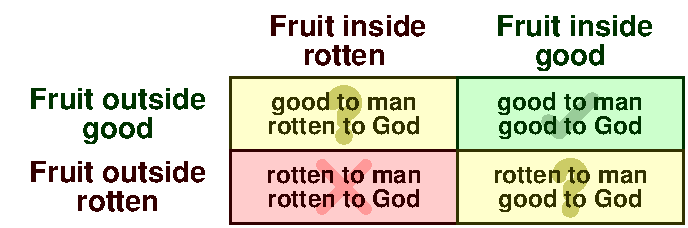
    Assume that the "tree" represents a human hierarchy as in a religious establishment such as the one Jesus is addressing. Here are the choices provided. This verse would not need to be said unless something else were happening.

    It appears that the "rotten" "tree" was trying to make the fruit appear as "good" fruit. Why would a "good" "tree" try to make the fruit appear as "rotten"? Might any "idle words" used to make the fruit appear "good" need an "accounting"?

    Jesus is the "vine" and we are the "branches" (of the vine, not the tree).

    Information sign More: Galatians 5:19-23 Abstracting the fruit of the spirit
    Information sign More: Fruit of the harvest

    52. Matthew 12:33 Good and rotten fruit
    Verse routeMatthew 12:33 Either make the tree good, and his fruit good; or else make the tree corrupt, and his fruit corrupt: for the tree is known by his fruit. [kjv]
    Verse routeη ποιησατε το δενδρον καλον και τον καρπον αυτου καλον η ποιησατε το δενδρον σαπρον και τον καρπον αυτου σαπρον εκ γαρ του καρπου το δενδρον γινωσκεται [gnt]

    The statement "The tree is known by its fruit." is an ambiguous statement based on the viewpoint of who "knows" or "infers" what.

    Fruit inside and outside
    From computability theory, it may not be possible to always determine in all cases if the inside is "good" or "rotten". An "accounting" may be necessary for "idle words" so that a decision procedure can be used to resolve ambiguities.

    The Greek word for "fruit" is masculine and takes the grammatical gender of "his".

    Information sign More: Ambiguous statements and perspective

    53. Matthew 12:33
    Verse routeMatthew 12:33 Either make the tree good, and his fruit good; or else make the tree corrupt, and his fruit corrupt: for the tree is known by his fruit. [kjv]
    Verse routeη ποιησατε το δενδρον καλον και τον καρπον αυτου καλον η ποιησατε το δενδρον σαπρον και τον καρπον αυτου σαπρον εκ γαρ του καρπου το δενδρον γινωσκεται [gnt]

    What does it mean to "make"?

    The Greek inflection ends with "sate". Does Jesus use this phrase elsewhere? How?

    54. Matthew 12:33 But for a questionable phrase
    Verse routeMatthew 12:33 Either make the tree good, and his fruit good; or else make the tree corrupt, and his fruit corrupt: for the tree is known by his fruit. [kjv]
    Verse routeη ποιησατε το δενδρον καλον και τον καρπον αυτου καλον η ποιησατε το δενδρον σαπρον και τον καρπον αυτου σαπρον εκ γαρ του καρπου το δενδρον γινωσκεται [gnt]

    In this series of verses, Jesus uses the ancient Greek phrase "ἐκ γάρ""for out of" is of two words. This exact phrase is used four times in Matthew, all by Jesus (12:33, 12:34, 12:37, 15:19), one time in Luke (6:45), mirroring a verse in Matthew and one time in 2 Corinthians (2:4).

    55. Matthew 12:33 Questionable statements
    Verse routeMatthew 12:33 Either make the tree good, and his fruit good; or else make the tree corrupt, and his fruit corrupt: for the tree is known by his fruit. [kjv]
    Verse routeη ποιησατε το δενδρον καλον και τον καρπον αυτου καλον η ποιησατε το δενδρον σαπρον και τον καρπον αυτου σαπρον εκ γαρ του καρπου το δενδρον γινωσκεται [gnt]

    Questions in Greek, as in many languages, are formed either from a question word or a sentence with the voice raised at the end of the sentence. In each of the three places in this verse sequence, logical and continuity issues are lessened when the statement, as translated, is changed to a question.

    56. Matthew 12:33 Converse fallacy
    Verse routeMatthew 12:33 Either make the tree good, and his fruit good; or else make the tree corrupt, and his fruit corrupt: for the tree is known by his fruit. [kjv]
    Verse routeη ποιησατε το δενδρον καλον και τον καρπον αυτου καλον η ποιησατε το δενδρον σαπρον και τον καρπον αυτου σαπρον εκ γαρ του καρπου το δενδρον γινωσκεται [gnt]

    Here is what appears to be the general pattern. A question allows a yes or no answer. A statement requires a yes answer.

    The converse fallacy is assuming that if A implies B then it is true that B implies A.

    57. Matthew 12:33 Questionable statement
    Verse routeMatthew 12:33 Either make the tree good, and his fruit good; or else make the tree corrupt, and his fruit corrupt: for the tree is known by his fruit. [kjv]
    Verse routeη ποιησατε το δενδρον καλον και τον καρπον αυτου καλον η ποιησατε το δενδρον σαπρον και τον καρπον αυτου σαπρον εκ γαρ του καρπου το δενδρον γινωσκεται [gnt]

    Can one always know the tree, good or rotten, by the fruit? A question allows a yes or no answer. A statement requires a yes answer.

    Discuss: Which translation, statement or question, might the church (historically) prefer?

    Let us look ahead to verses with this questionable construct.

    Information sign More: Converse fallacy: If A then B does not mean If B then A

    58. Matthew 12:34
    Verse routeMatthew 12:34 O generation of vipers, how can ye, being evil, speak good things? for out of the abundance of the heart the mouth speaketh. [kjv]
    Verse routeγεννηματα εχιδνων πως δυνασθε αγαθα λαλειν πονηροι οντες εκ γαρ του περισσευματος της καρδιας το στομα λαλει [gnt]

    Can one always know the heart, good or evil, by what one speaks? A question allows a yes or no answer. A statement requires a yes answer.

    Does not Jesus often call the religious establishment "hypocrites" as in pretending or acting? The Greek definition of "hypocrite" means that you "think" in your "heart" one thing and "say" another. How can then one know about the "heart" from what one "says"?

    Discuss: Which translation, statement or question, might the church (historically) prefer?

    Information sign More: An actor as a hypocrite is not real
    Information sign More: Converse fallacy: If A then B does not mean If B then A

    59. Matthew 12:37
    Verse routeMatthew 12:37 For by thy words thou shalt be justified, and by thy words thou shalt be condemned. [kjv]
    Verse routeεκ γαρ των λογων σου δικαιωθηση και εκ των λογων σου καταδικασθηση [gnt]

    A question allows a yes or no answer. A statement requires a yes answer. A question allows a yes or no answer. A statement requires a yes answer.

    Is one justified or condemned by one's reasoning (alone)? Does it matter what one actually says or does? How does one do or not do the will of the Father by one's reasoning?

    Discuss: Which translation, statement or question, might the church (historically) prefer?

    In the next verse, the religious elite will "answer" what Jesus said. Did Jesus ask a question? This verse can be taken as a question.

    Information sign More: Converse fallacy: If A then B does not mean If B then A

    60. Organizational charts
    Shallow 0 Org chart 0
    Jesus - rock man - sand
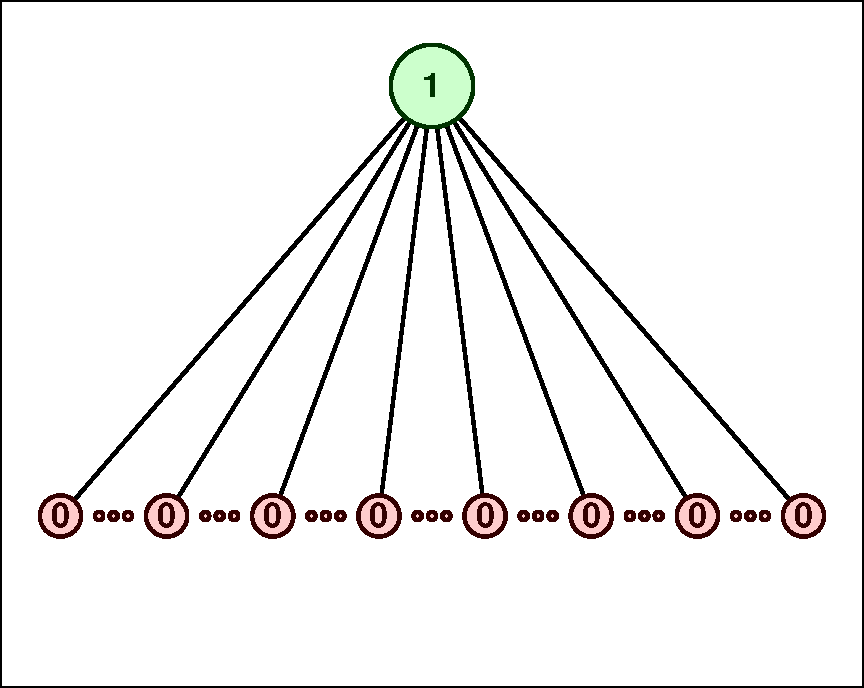
    The organizational chart of Jesus has one level, the leaves.

    How might a large human organization that has "evil" or "burdensome" parts change?
    Ross Perot in 1992 referring to organizations: Quality starts at the top. When I heard that in 1992, I added what I think Perot was implying: Lack of quality starts at the top..

    Information sign More: Matthew 20:20-34 Mother left the right idea

    61. Mikhail Gorbachev
    One amazing thing about Mikhail Gorbachev (Михаил Горбачёв), the final leader of the Soviet Union in the 1990's, was that he had to hold his tongue and play the party game from bottom to top and only when he got to the top did he open up and start to make changes.
    Another example would be a military organization - pick almost any one throughout history. The military (usually) only promotes from within. The only way to make needed changes is from the top. The only ones promoted to the top (except during war after some extended time of disasters) is to agree with the status quo.

    [First year West Point observation]

    62. Matthew 12:33 Trees and towers
    Verse routeMatthew 12:33 Either make the tree good, and his fruit good; or else make the tree corrupt, and his fruit corrupt: for the tree is known by his fruit. [kjv]
    Verse routeη ποιησατε το δενδρον καλον και τον καρπον αυτου καλον η ποιησατε το δενδρον σαπρον και τον καρπον αυτου σαπρον εκ γαρ του καρπου το δενδρον γινωσκεται [gnt]

    TenPin 2 TenPin 6

    This is  node 3  of "oaths" to the goals of the "birds" who "steal" from those taking the "oaths" in the "tree".

    Information sign More: TenWordPin model nodes
    Information sign More: Matthew 13:31-32 KP3 Parable of the mustard seed
    Information sign More: Matthew 5:33-37 Reasoning about oaths - yes no

    63. Matthew 12:33 Trees and towers
    Verse routeMatthew 12:33 Either make the tree good, and his fruit good; or else make the tree corrupt, and his fruit corrupt: for the tree is known by his fruit. [kjv]
    Verse routeη ποιησατε το δενδρον καλον και τον καρπον αυτου καλον η ποιησατε το δενδρον σαπρον και τον καρπον αυτου σαπρον εκ γαρ του καρπου το δενδρον γινωσκεται [gnt]

    TenPin 6 Tree with twigs - fruit Beautiful and raca Tree with twigs - no fruit Rotten and made in clay Fruit and twig

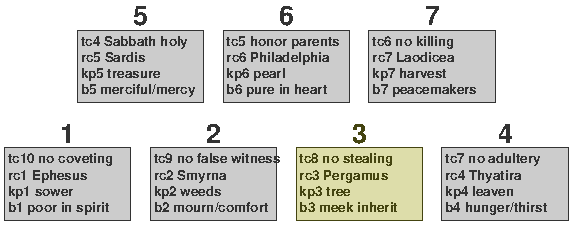
    This is node 3 (no stealing, tree, meek inherit).

    64. Matthew 12:33
     All 
    KJV: Either make the tree good, and his fruit good; or else make the tree corrupt, and his fruit corrupt: for the tree is known by his fruit.
    Greek: η ποιησατε το δενδρον καλον και τον καρπον αυτου καλον η ποιησατε το δενδρον σαπρον και τον καρπον αυτου σαπρον εκ γαρ του καρπου το δενδρον γινωσκεται
    Latin: aut facite arborem bonam et fructum eius bonum aut facite arborem malam et fructum eius malum siquidem ex fructu arbor agnoscitur
    Wessex: Oððe wircað god treow & his waestme godne oððe wyrcað yfel treow & his waestme yfelne. Witodlice be þam waestme byð þaet treow on-cnawen.
    Luther: Setzet entweder einen guten Baum, so wird die Frucht gut; oder setzet einen faulen Baum, so wird die Frucht faul; denn an der Frucht erkennet man den Baum.

    65. Matthew 12:34 Vipers
    Verse routeMatthew 12:34 O generation of vipers, how can ye, being evil, speak good things? for out of the abundance of the heart the mouth speaketh. [kjv]
    Verse routeγεννηματα εχιδνων πως δυνασθε αγαθα λαλειν πονηροι οντες εκ γαρ του περισσευματος της καρδιας το στομα λαλει [gnt]

    The ancient Greek word "ἔχιδνα""snake, treacherous person" and comes from "ἔχις""snake, adder, viper".
    A usual Greek word for a generic "snake" or "serpent" is not used here. The Greek word used refers to a dangerous snake that could be a poisonous snake or a constricting snake. The same word is used for the snake that latches onto Paul in Acts 28 on the shore after the ship wrecks.

    Which better describes the religious establishment of that day? Would it be a poisonous snake or a constricting snake (or both)? What about today?

    66. Matthew 12:34 Generation of vipers
    Verse routeMatthew 12:34 O generation of vipers, how can ye, being evil, speak good things? for out of the abundance of the heart the mouth speaketh. [kjv]
    Verse routeγεννηματα εχιδνων πως δυνασθε αγαθα λαλειν πονηροι οντες εκ γαρ του περισσευματος της καρδιας το στομα λαλει [gnt]

    If the religious establishment openly and clearly spoke "evil" things, this verse would not apply.
    If the religious establishment openly and clearly spoke "good" things, this verse would not apply.

    If the religious establishment spoke what appeared to be "good" things but were really "evil" things, as in deceptions, this verse begins to make more sense.

    67. Strongs - fruit, offspring
    *G1081 *9 γέννημα (ghen'-nay-mah) : from G1080; offspring; by analogy, produce (literally or figuratively):--fruit, generation.
    Word usage per chapter Words: γενηματα=2 γενηματος=3 γεννηματα=4

    68. Usage - fruit, offspring
    • *G1081 *9 γέννημα (ghen'-nay-mah) : from G1080; offspring; by analogy, produce (literally or figuratively):--fruit, generation.
    •  Usage 
       All 
      • γεννηματα *4
        •   Matthew 3:7 ... baptism, he said unto them, O generation of vipers, who hath warned ...
        •   Matthew 12:34 O generation of vipers, how can ye, being evil, ...
        •   Matthew 23:33 Ye serpents, ye generation of vipers, how can ye escape the damnation of hell?
        •   Luke 3:7 ... to be baptized of him, O generation of vipers, who hath warned ...
      • γενηματος *3
        •   Matthew 26:29 ... henceforth of this fruit of the vine, until that ...
        •   Mark 14:25 ... I will drink no more of the fruit of the vine, until that ...
        •   Luke 22:18 ... not drink of the fruit of the vine, until the kingdom ...
      • γενηματα *2
        •   Luke 12:18 ... will I bestow all my fruits and my goods.
        •   2 Corinthians 9:10 ... seed sown, and increase the fruits of your righteousness;)

    69. Matthew 26:29 Fruit of the vine
    Verse routeMatthew 26:29 But I say unto you, I will not drink henceforth of this fruit of the vine, until that day when I drink it new with you in my Father's kingdom. [kjv]
    Verse routeλεγω δε υμιν ου μη πιω απ αρτι εκ τουτου του γενηματος της αμπελου εως της ημερας εκεινης οταν αυτο πινω μεθ υμων καινον εν τη βασιλεια του πατρος μου [gnt]

    At the last supper, Jesus talks of drinking the fruit of the vine. At that time, in the Spring of the year during Passover, any wine, leftover from the Fall before, would have been somewhat fermented.

    Perhaps this statement at the Last Supper is why Jesus refused the offer of wine (and myrrh to lessen the pain) at the crucifixion.

    [chemists and alcohol]

    Information sign More: Matthew 26:17-29 Betrayal of the Last Supper tradition

    70. Matthew 12:34 Generations
    Verse routeMatthew 12:34 O generation of vipers, how can ye, being evil, speak good things? for out of the abundance of the heart the mouth speaketh. [kjv]
    Verse routeγεννηματα εχιδνων πως δυνασθε αγαθα λαλειν πονηροι οντες εκ γαρ του περισσευματος της καρδιας το στομα λαλει [gnt]

    The ancient Greek word "γεννήματα""fruit, offspring" (plural but translated as singular in the KJV). Jesus used the usual word for "fruit" in the previous verse. Might the "fruit" of the "vipers" be not good or even dangerous?

    71. Matthew 12:34 Generations
    Verse routeMatthew 12:34 O generation of vipers, how can ye, being evil, speak good things? for out of the abundance of the heart the mouth speaketh. [kjv]
    Verse routeγεννηματα εχιδνων πως δυνασθε αγαθα λαλειν πονηροι οντες εκ γαρ του περισσευματος της καρδιας το στομα λαλει [gnt]

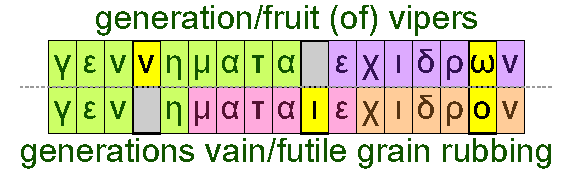
    Generation/fruit (of) vipers and generatinos vain/futile grain rubbers

    The grain rubbing might relate to the beginning of the chapter and the disciples picking and eating grain in the field.

    The ancient Greek word "μάταιος""vain, futile, empty, worthless".

    The ancient Greek word "γενεά""birth, race, generation, offspring".

    72. Leviticus 2:14,16
    Verse routeLeviticus 2:14 And if thou offer a meat offering of thy firstfruits unto the LORD, thou shalt offer for the meat offering of thy firstfruits green ears of corn dried by the fire, even corn beaten out of full ears. [kjv]
    Verse routeεαν δε προσφερης θυσιαν πρωτογενηματων τω κυριω νεα πεφρυγμενα χιδρα ερικτα τω κυριω και προσοισεις την θυσιαν των πρωτογενηματων [lxx]
    Verse route2:16 And the priest shall burn the memorial of it, part of the beaten corn thereof, and part of the oil thereof, with all the frankincense thereof: it is an offering made by fire unto the LORD. [kjv]


    73. Leviticus 2:14
     All 
    KJV: And if thou offer a meat offering of thy firstfruits unto the LORD, thou shalt offer for the meat offering of thy firstfruits green ears of corn dried by the fire, even corn beaten out of full ears.
    Hebrew: ואם תקריב מנחת בכורים ליהוה אביב קלוי באש גרש כרמל תקריב את מנחת בכוריך׃
    Greek: εαν δε προσφερης θυσιαν πρωτογενηματων τω κυριω νεα πεφρυγμενα χιδρα ερικτα τω κυριω και προσοισεις την θυσιαν των πρωτογενηματων

    74. Leviticus 2:16
     All 
    KJV: And the priest shall burn the memorial of it, part of the beaten corn thereof, and part of the oil thereof, with all the frankincense thereof: it is an offering made by fire unto the LORD.
    Hebrew: והקטיר הכהן את אזכרתה מגרשה ומשמנה על כל לבנתה אשה ליהוה׃
    Greek: και ανοισει ο ιερευς το μνημοσυνον αυτης απο των χιδρων συν τω ελαιω και παντα τον λιβανον αυτης καρπωμα εστιν κυριω

    75. Leviticus 23:14
    Verse routeLeviticus 23:14 And ye shall eat neither bread, nor parched corn, nor green ears, until the selfsame day that ye have brought an offering unto your God: it shall be a statute for ever throughout your generations in all your dwellings. [kjv]
    Verse routeκαι αρτον και πεφρυγμενα χιδρα νεα ου φαγεσθε εως εις αυτην την ημεραν ταυτην εως αν προσενεγκητε υμεις τα δωρα τω θεω υμων νομιμον αιωνιον εις τας γενεας υμων εν παση κατοικια υμων [lxx]


    76. Leviticus 23:14
     All 
    KJV: And ye shall eat neither bread, nor parched corn, nor green ears, until the selfsame day that ye have brought an offering unto your God: it shall be a statute for ever throughout your generations in all your dwellings.
    Hebrew: ולחם וקלי וכרמל לא תאכלו עד עצם היום הזה עד הביאכם את קרבן אלהיכם חקת עולם לדרתיכם בכל משבתיכם׃
    Greek: και αρτον και πεφρυγμενα χιδρα νεα ου φαγεσθε εως εις αυτην την ημεραν ταυτην εως αν προσενεγκητε υμεις τα δωρα τω θεω υμων νομιμον αιωνιον εις τας γενεας υμων εν παση κατοικια υμων

    77. Matthew 12:34 Windshield vipers for the birds
    Verse routeMatthew 12:34 O generation of vipers, how can ye, being evil, speak good things? for out of the abundance of the heart the mouth speaketh. [kjv]
    Verse routeγεννηματα εχιδνων πως δυνασθε αγαθα λαλειν πονηροι οντες εκ γαρ του περισσευματος της καρδιας το στομα λαλει [gnt]

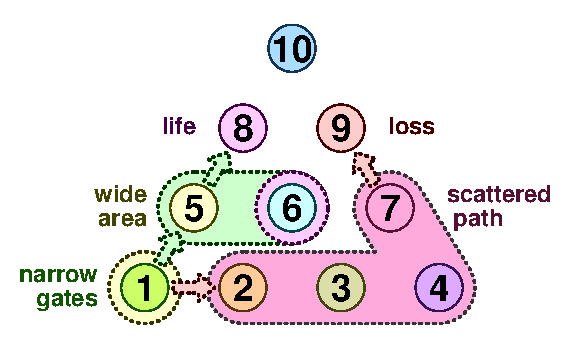
    TenPin 3 TenPin 6

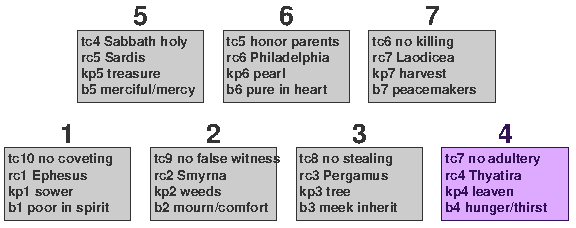
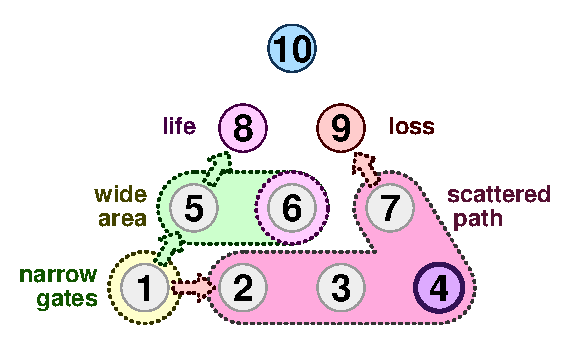
    This is  node 4  of "adultery" in the form of "missions" by the "pigs" or "hands" in support of the goals of the "bird" or "eye" or "leader" and based on false doctrine in the form of "leaven" mixed in with true doctrine. [windshield vipers]

    Information sign More: TenWordPin model nodes
    Information sign More: Matthew 13:33 KP4 Parable of the leaven

    78. Matthew 12:34 Windshield vipers for the birds
    Verse routeMatthew 12:34 O generation of vipers, how can ye, being evil, speak good things? for out of the abundance of the heart the mouth speaketh. [kjv]
    Verse routeγεννηματα εχιδνων πως δυνασθε αγαθα λαλειν πονηροι οντες εκ γαρ του περισσευματος της καρδιας το στομα λαλει [gnt]

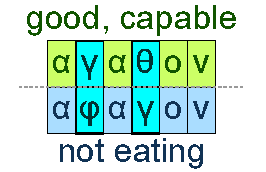
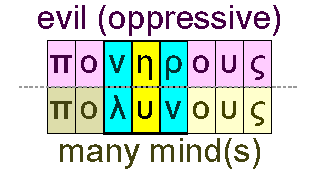
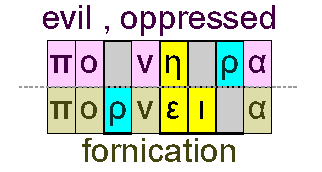
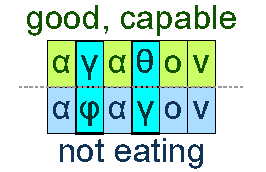
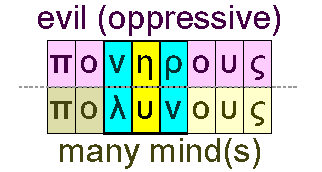
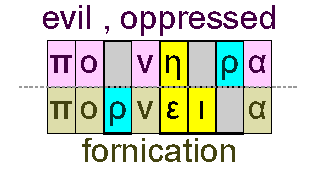
    TenPin 6 Good and not eating Evil and many minds Evil and fornication
    This is node 4 (no adultery, leaven).
    These are "hypocrites" in the Greek sense of acting or pretending.

    79. Matthew 12:34
     All 
    KJV: O generation of vipers, how can ye, being evil, speak good things? for out of the abundance of the heart the mouth speaketh.
    Greek: γεννηματα εχιδνων πως δυνασθε αγαθα λαλειν πονηροι οντες εκ γαρ του περισσευματος της καρδιας το στομα λαλει
    Latin: progenies viperarum quomodo potestis bona loqui cum sitis mali ex abundantia enim cordis os loquitur

    80. Matthew Treasure and heart
    Verse routeMatthew 12:35 A good man out of the good treasure of the heart bringeth forth good things: and an evil man out of the evil treasure bringeth forth evil things. [kjv]
    Verse routeο αγαθος ανθρωπος εκ του αγαθου θησαυρου εκβαλλει αγαθα και ο πονηρος ανθρωπος εκ του πονηρου θησαυρου εκβαλλει πονηρα [gnt]

    The words "of the heart" are not in some Greek manuscripts. It appears, that "treasure" can be "good" or "evil" as "oppression". Might treasure be in the eye of the beholder?

    Verse route6:21 For where your treasure is, there will your heart be also. [kjv]


    Information sign More: Matthew 4:1-11 Examining evil temptations
    Information sign More: Matthew 9:8-13 The healthy make a strong case for evil sick time
    Information sign More: Matthew 6:19-21: A treasury of treasures of which to treasure

    81. Matthew 12:35 Treasure island hopping
    Verse routeMatthew 12:35 A good man out of the good treasure of the heart bringeth forth good things: and an evil man out of the evil treasure bringeth forth evil things. [kjv]
    Verse routeο αγαθος ανθρωπος εκ του αγαθου θησαυρου εκβαλλει αγαθα και ο πονηρος ανθρωπος εκ του πονηρου θησαυρου εκβαλλει πονηρα [gnt]

    TenPin 4 TenPin 6

    This is  node 5  of "living" "bread" and the true "sheep" or "treasure" in the "field" or wide area", a play on words of "the boats".

    Information sign More: TenWordPin model nodes
    Information sign More: Matthew 13:44 KP5 Parable of the treasure in a field

    82. Matthew 12:35 Treasure island hopping
    Verse routeMatthew 12:35 A good man out of the good treasure of the heart bringeth forth good things: and an evil man out of the evil treasure bringeth forth evil things. [kjv]
    Verse routeο αγαθος ανθρωπος εκ του αγαθου θησαυρου εκβαλλει αγαθα και ο πονηρος ανθρωπος εκ του πονηρου θησαυρου εκβαλλει πονηρα [gnt]

    TenPin 6 Good and not eating Evil and many minds Evil and fornication

    This is node 5 (treasure, living bread, Sabbath holy).

    83. Matthew 12:35
     All 
    KJV: A good man out of the good treasure of the heart bringeth forth good things: and an evil man out of the evil treasure bringeth forth evil things.
    Greek: ο αγαθος ανθρωπος εκ του αγαθου θησαυρου της καρδιας εκβαλλει τα αγαθα και ο πονηρος ανθρωπος εκ του πονηρου θησαυρου εκβαλλει πονηρα
    Latin: bonus homo de bono thesauro profert bona et malus homo de malo thesauro profert mala
    Spanish: El hombre bueno, del buen tesoro del corazón saca buenas cosas; y el hombre malo, del mal tesoro saca malas cosas.
    Portuguese: O homem bom, do seu bom tesouro, tira coisas boas; e o homem mau, do seu mau tesouro, tira coisas más.

    84. Usage - pay
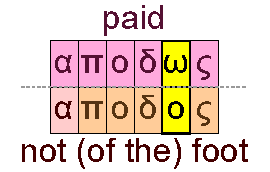
    *G591 *48 ἀποδίδωμι (ap-od-eed'-o-mee) : from G575 and G1325; to give away, i.e. up, over, back, etc. (in various applications):--deliver (again), give (again), (re-)pay(-ment be made), perform, recompense, render, requite, restore, reward, sell, yield.

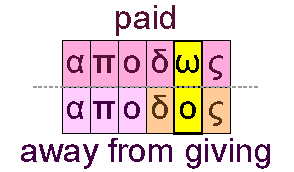
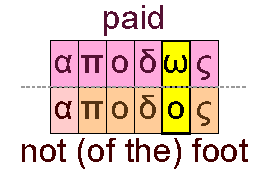
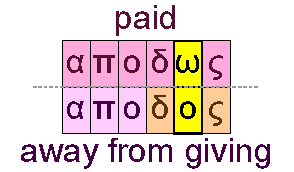
    The ancient Greek word "ἀποδίδωμι""give back, render what is due, return" and many other associated meanings. The Greek word translated as "pay" is that of, literally, "turning over" as in the saying "fork it over". This exact form of the word appears two times in the GNT. The Luke verse in what people remembered about what Jesus said as recorded by Matthew.

    Verse routeMatthew 5:26 Verily I say unto thee, Thou shalt by no means come out thence, till thou hast paid the uttermost farthing. [kjv]
    Verse routeαμην λεγω σοι ου μη εξελθης εκειθεν εως αν αποδως τον εσχατον κοδραντην [gnt]

    Verse routeLuke 12:59 I tell thee, thou shalt not depart thence, till thou hast paid the very last mite. [kjv]
    Verse routeλεγω σοι ου μη εξελθης εκειθεν εως και το εσχατον λεπτον αποδως [gnt]


    Information sign More: Matthew 5:25-26 Adversarial agreement

    85. Matthew 12:36 Give an accounting
    Verse routeMatthew 12:36 But I say unto you, That every idle word that men shall speak, they shall give account thereof in the day of judgment. [kjv]
    Verse routeλεγω δε υμιν οτι παν ρημα αργον ο λαλησουσιν οι ανθρωποι αποδωσουσιν περι αυτου λογον εν ημερα κρισεως [gnt]

    The ancient Greek word "ἀποδίδωμι""give back, render what is due, return" and many other associated meanings.

    The KJV translates this as "give". The KJV translates as "account" the Greek word that is "reasoning".

    86. Matthew 12:36 Misleading words of the wolf-dogs
    Verse routeMatthew 12:36 But I say unto you, That every idle word that men shall speak, they shall give account thereof in the day of judgment. [kjv]
    Verse routeλεγω δε υμιν οτι παν ρημα αργον ο λαλησουσιν οι ανθρωποι αποδωσουσιν περι αυτου λογον εν ημερα κρισεως [gnt]

    TenPin 5 TenPin 6

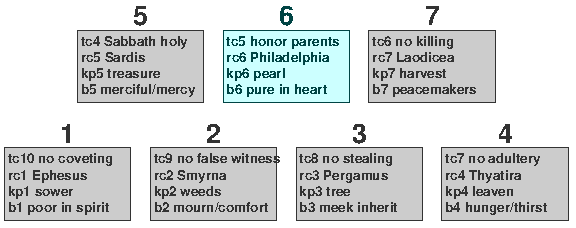
    This is  node 6  of young "goats" a play on words of "voicing" "invalid logic", in the "wide area", a play on words of "the boats".

    Information sign More: TenWordPin model nodes
    Information sign More: Matthew 13:45-46 KP6 Parable of the pearl of great price

    87. Matthew 12:36 Misleading words of the wolf-dogs
    Verse routeMatthew 12:36 But I say unto you, That every idle word that men shall speak, they shall give account thereof in the day of judgment. [kjv]
    Verse routeλεγω δε υμιν οτι παν ρημα αργον ο λαλησουσιν οι ανθρωποι αποδωσουσιν περι αυτου λογον εν ημερα κρισεως [gnt]
    Verse routedico autem vobis quoniam omne verbum otiosum quod locuti fuerint homines reddent rationem de eo in die iudicii [v]
    Verse routeaelc ydel wordsprecaðagyldeðdomes daige. [wes]
    Verse routeeuery idel wordresoundai of doom… [wy]
    Verse routeevery ydell wordespokenacountesdaye of iudgement. [ty]
    Verse routeIch sage euch aberRechenschaftJüngsten Gerichtjeglichen unnützen Wort… [lu]

    Heart
    Are there "idle" "words" that are not "spoken words"? Might they be in the "heart" or "mind"?

    88. Matthew 12:36 Misleading words of the wolf-dogs
    Verse routeMatthew 12:36 But I say unto you, That every idle word that men shall speak, they shall give account thereof in the day of judgment. [kjv]
    Verse routeλεγω δε υμιν οτι παν ρημα αργον ο λαλησουσιν οι ανθρωποι αποδωσουσιν περι αυτου λογον εν ημερα κρισεως [gnt]

    TenPin 6
    This is node 6 (honor parents, pearl, tradition) Why is the translation "account" (as in "reasoning") and not "word"?
    What is the "day" of "judgment" or "separation" or "division"? Does the "scattered" "path" need "separated"? How about the "wide" "area"? Does node 6 need "separated" from node 5? Examples: Ten virgins, Talents, Sheep and Goats.

    Information sign More: Matthew 25:1-13 Parable of the ten virgins
    Information sign More: Matthew 25:14-30 Parable of the talents in Matthew
    Information sign More: Matthew 25:31-46 Parable of the sheep and goats

    89. Matthew 12:36 Accountability
    Verse routeMatthew 12:36 But I say unto you, That every idle word that men shall speak, they shall give account thereof in the day of judgment. [kjv]
    Verse routeλεγω δε υμιν οτι παν ρημα αργον ο λαλησουσιν οι ανθρωποι αποδωσουσιν περι αυτου λογον εν ημερα κρισεως [gnt]

    In simple terms, the business field of "accounting" has to do with keeping track of all debits and credits and making sure that they match exactly.
    In this verse, one appears to need to keep track of "idle words" such that they match, say, "for Christ" or "against Christ" with some way to keep track of any "idle words" in the middle.

    These "idle words" have meaning and are not just "utterances" that may have limited meaning.

    90. Managerial accounting
    Aside: In "managerial accounting" one just needs to get close as it may take a lot more work to get everything exact than the difference in the debits and credits.

    This is, in part, the difference between logic (all or nothing, true or false) and reality (prudent trade-offs are needed).

    In a business programming course there were some business accounting majors in the class. I made the claim that "accounting is easy".

    One of them got upset and blurted out, "What do you mean easy! Have you ever taken an accounting course?".

    91. Accounting
    I then coolly replied, "accounting is easy". Just go "a-one", "a-two", "a-three". That is how you "a-count". They were not amused at the humor. Let us move on.

    Might it be that jokes fall under the rubric of "idle words" for which an "accounting" is needed? Let us account for the jokes, "a-one", "a-two", "a-three". Not funny! That joke was just used.

    92. Utterances as diphthongs
    Verse routeActs 2:4 And they were all filled with the Holy Ghost, and began to speak with other tongues, as the Spirit gave them utterance. [kjv]
    Verse routeκαι επλησθησαν παντες πνευματος αγιου και ηρξαντο λαλειν ετεραις γλωσσαις καθως το πνευμα εδιδου αποφθεγγεσθαι αυτοις [gnt]

    Verse routeRomans 10:18 But I say, Have they not heard? Yes verily, their sound went into all the earth, and their words unto the ends of the world. [kjv]
    Verse routeαλλα λεγω μη ουκ ηκουσαν μενουνγε εις πασαν την γην εξηλθεν ο φθογγος αυτων και εις τα περατα της οικουμενης τα ρηματα αυτων [gnt]

    The ancient Greek word "φθόγγος""sound, utterance" and is the source of the English word "diphthong" (two sounds together).

    Some milk cow jokes could be uttered here, but that might be utter (udder) disaster.


    Information sign More: Utterances as diphthongs

    93. Matthew 12:36 Idle trees
    Verse routeMatthew 12:36 But I say unto you, That every idle word that men shall speak, they shall give account thereof in the day of judgment. [kjv]
    Verse routeλεγω δε υμιν οτι παν ρημα αργον ο λαλησουσιν οι ανθρωποι αποδωσουσιν περι αυτου λογον εν ημερα κρισεως [gnt]

    Without defining "idle word", the following question is asked. Any such "idle word" spoken comes from the heart and is already present in the heart. Only words that impact others and the decisions they make from those words appear to be relevant.

    What about "idle words" that are not spoken?

    94. Matthew 12:36 Day of judgment
    Verse routeMatthew 12:36 But I say unto you, That every idle word that men shall speak, they shall give account thereof in the day of judgment. [kjv]
    Verse routeλεγω δε υμιν οτι παν ρημα αργον ο λαλησουσιν οι ανθρωποι αποδωσουσιν περι αυτου λογον εν ημερα κρισεως [gnt]
    Verse routeaelc ydel wordsprecaðagyldeðdomes daige. [wes]
    Verse routeeuery idel wordresoundai of doom… [wy]

    The "day of judgment" is in Middle English "day of doom" and in Old English "dooms day". This day may be part of the parable of the sheep and goats.

    The word "judgment" in Old English is "doom", so "judgment day" is "doomsday".

    The use of more prepositions in Middle English led to "day" of "doom" rather than the Old English "dooms" "day".

    95. Matthew 12:36
     All 
    KJV: But I say unto you, That every idle word that men shall speak, they shall give account thereof in the day of judgment.
    Greek: λεγω δε υμιν οτι παν ρημα αργον ο εαν λαλησωσιν λαλησουσιν οι ανθρωποι αποδωσουσιν περι αυτου λογον εν ημερα κρισεως
    Latin: dico autem vobis quoniam omne verbum otiosum quod locuti fuerint homines reddent rationem de eo in die iudicii
    Wessex: Soðlice ich segge eow. þt aelc ydel word þe man sprecað. hyo agyldeð Note: MS. agylded. scad be þam on domes daige.
    Wycliffe: And Y seie to you, that of euery idel word, that men speken, thei schulen yelde resoun therof in the dai of doom;
    Tyndale: But I say vnto you that of every ydell worde that men shall have spoken: they shall geve acountes at the daye of iudgement.
    Luther: Ich sage euch aber, daß die Menschen müssen Rechenschaft geben am Jüngsten Gericht von einem jeglichen unnützen Wort, das sie geredet haben.

    96. Tree in a forest
    If a tree falls in a forest, and there is no one there to hear it, does it make a sound?

    George Berkeley (Irish philosopher) asked this question as "Can something exist without being perceived by consciousness?" as in "Is sound only sound if a person hears it?".
    Discuss: If someone commits a "crime", but there is no law against it, is it a "crime"?

    Discuss: If a programmer makes a "mistake", creating a software fault, is it a failure in the software?

    [Saturday Night Live and Helen Keller]

    Information sign More: General sayings

    97. Anglican Church: Confession of sin
    Being silent is an option taken by many. The Anglican Church has a Confession of Sin that starts as follows. Are we responsible for what we did not do? How about what we could have done?

    As we must account for every idle word, so must we account for every idle silence. Benjamin Franklin (American scientist, inventor, philosopher, statesman)

    Information sign More: Benjamin Franklin

    98. Confession of sin
    The concluding part of the Confession of Sin finishes as follows.

    99. Lies and deception
    Might omitted words used to deceive be "idle words"? Lies and deception can be very subtle.
    Half a truth is often a great lie. Benjamin Franklin (American scientist, inventor, philosopher, statesman)

    Information sign More: Benjamin Franklin

    There are a terrible lot of lies going about the world, and the worst of it is that half of them are true. Winston Churchill (British statesman)

    So how does one determine what is true and what is not true?

    Information sign More: Winston Churchill
    Information sign More: Chosen falsehoods of inerrancy and infallibility

    100. What is not said

    Religious leaders will always avail themselves of public ignorance for their own purpose. Thomas Jefferson (American statesman, diplomat, scientist and 3rd President of the United States from 1801-1809) .

    Information sign More: Thomas Jefferson

    What is not said can be as important as what is said. Which of the following is worse? Do pastors ever do this in sermons?

    101. Revelation 10:10 Eating words
    Verse routeRevelation 10:10 And I took the little book out of the angel's hand, and ate it up; and it was in my mouth sweet as honey: and as soon as I had eaten it, my belly was bitter. [kjv]
    Verse routeκαι ελαβον το βιβλαριδιον εκ της χειρος του αγγελου και κατεφαγον αυτο και ην εν τω στοματι μου ως μελι γλυκυ και οτε εφαγον αυτο επικρανθη η κοιλια μου [gnt]

    Pac man eating wordsAn English idiom is that one may have to "eat one's words". That is, admit that they were wrong about something in the past. In Revelation 10:10 John has to "eat words" in the form of a "little book".

    Perhaps those words relate to false teaching. Would "idle words" need some seasoning? How about the season of the day of judgment.

    Might that be related to the way that my "salad jokes" need addressing? Let us (lettuce) leave that as a future topic.

    Information sign More: The taste of false teaching

    102. Revelation 10:10
     All 
    KJV: And I took the little book out of the angel's hand, and ate it up; and it was in my mouth sweet as honey: and as soon as I had eaten it, my belly was bitter.
    Greek: και ελαβον το βιβλαριδιον εκ της χειρος του αγγελου και κατεφαγον αυτο και ην εν τω στοματι μου ως μελι γλυκυ και οτε εφαγον αυτο επικρανθη η κοιλια μου

    103. Matthew 12:37 Day of separation giving
    Verse routeMatthew 12:37 For by thy words thou shalt be justified, and by thy words thou shalt be condemned. [kjv]
    Verse routeεκ γαρ των λογων σου δικαιωθηση και εκ των λογων σου καταδικασθηση [gnt]
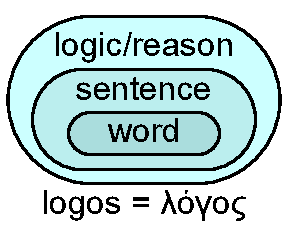
    LogosThe ancient Greek word "λόγος""rational explanation" but is often translated as "word" in the KJV. The Greek word used here is that of a "logical explanation" and not a "spoken word". Logical explanations come in various forms.
    There exists both Valid logic and Invalid logic which can be from ignorance, deliberate deception, etc. (strife). Aristotle discuses both valid and invalid logic at length.

    Information sign More: Aristotle

    104. Matthew 12:37 Day of separation giving
    Verse routeMatthew 12:37 For by thy words thou shalt be justified, and by thy words thou shalt be condemned. [kjv]
    Verse routeεκ γαρ των λογων σου δικαιωθηση και εκ των λογων σου καταδικασθηση [gnt]
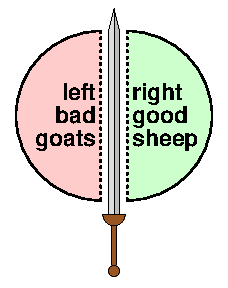
    Divide into two partsExplanations are important.

    105. Matthew 12:37 Day of separation giving
    Verse routeMatthew 12:37 For by thy words thou shalt be justified, and by thy words thou shalt be condemned. [kjv]
    Verse routeεκ γαρ των λογων σου δικαιωθηση και εκ των λογων σου καταδικασθηση [gnt]

    Those "spoken words" may "fly" but, according to Jesus, some of those words may need to be accounted for in the day of judgment.

    The KJV translates as "word" the ancient Greek word"ῥῆμα""spoken word" and which is the source of the English word "rhetoric". These are not utterances, swear words, empty words, weasel words, etc.


    The KJV translates as "account" the ancient Greek word "λόγος""rational explanation" used in words ending in"ology" such as "geology".

    Note that both Greek words for "word" are used in this verse. The first often (but not always) refers to spoken words. The second often (but not always) refers to written words and is here translated by the KJV as "account" as in having a "purpose" that needs to be determined.

    Information sign More: Something to say about words

    106. Matthew 12:37 Day of separation giving
    Verse routeMatthew 12:37 For by thy words thou shalt be justified, and by thy words thou shalt be condemned. [kjv]
    Verse routeεκ γαρ των λογων σου δικαιωθηση και εκ των λογων σου καταδικασθηση [gnt]

    TenPin 6 TenPin 6

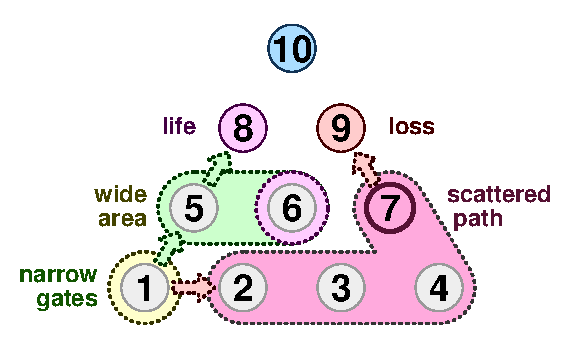
    This is  node 7  of "killing" (including oneself) at the end of the "scattered" "path" which is a dead-end.

    Information sign More: TenWordPin model nodes
    Information sign More: Matthew 13:47-50: KP7 Parable of the harvest at the end of the age

    107. Matthew 12:37 Day of separation giving
    Verse routeMatthew 12:37 For by thy words thou shalt be justified, and by thy words thou shalt be condemned. [kjv]
    Verse routeεκ γαρ των λογων σου δικαιωθηση και εκ των λογων σου καταδικασθηση [gnt]

    TenPin 6
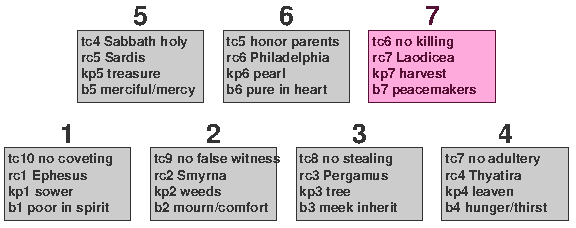
    This is node 7 (no killing, peacemakers, harvest at end of age).

    108. Matthew 7:1
       Matthew 7:1 
     All 
    KJV: Judge not, that ye be not judged.
    Greek: μη κρινετε ινα μη κριθητε

    109. Matthew 12:37
     All 
    KJV: For by thy words thou shalt be justified, and by thy words thou shalt be condemned.
    Greek: εκ γαρ των λογων σου δικαιωθηση και εκ των λογων σου καταδικασθηση
    Latin: ex verbis enim tuis iustificaberis et ex verbis tuis condemnaberis
    Wessex: Soðlice of þinen worden þu byst rihtwised. & of þinum worden þu byst ge-niþored.
    Wycliffe: for of thi wordis thou schalt be iustified, and of thi wordis thou shalt be dampned.
    Tyndale: For by thy wordes thou shalt be iustifyed: and by thy wordes thou shalt be condemned.
    Luther: Aus deinen Worten wirst du gerechtfertiget werden und aus deinen Worten wirst du verdammt werden.
    Slavonic: от словес бо своих оправдишися и от словес своих осудишися.
    Russian: ибо от слов своих оправдаешься, и от слов своих осудишься.
    Spanish: Porque por tus palabras serás justificado, y por tus palabras serás condenado.
    Portuguese: Porque pelas tuas palavras serás justificado e pelas tuas palavras serás condenado. »

    110. Scattered path
    TenPin 6
    From node 1 (covet) one can progress on the scattered path.
    Interestingly, these are all negative in the sense of the Ten Commandment correspondence. When one follows the "scattered path" on appears to encounter the negative of the negative, or positive aspect of those Commandments.
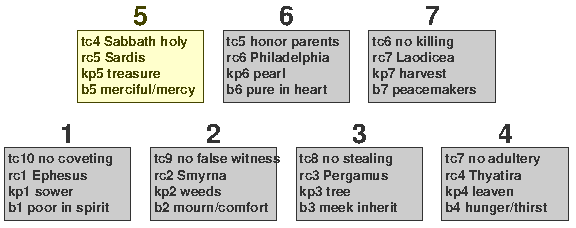
    111. Similarities
    TenPin 6

    The path to life is node 1 (covet) to node 5 (treasure) to node 8 (life). How can one get off track from node 1?

    112. Gathering
    TenPin 6
    From node 1 (covet) one can "gather" which leads to node 5 (good) but possibly then to node 6 (pearl, honor parents, tradition) (not good).
    What lures one from node 5 to node 6 (pearl, honor parents)? How about "idle words"?

    113. Ten Word Pin build

     1   2   3   4   5   6   7   8   +   -   ▶ 
    TenPin 6

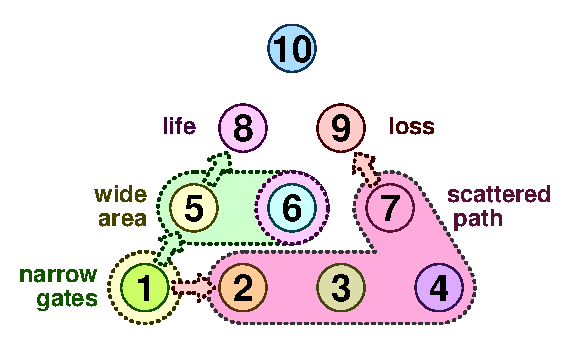
    There appears to be a correspondence between the Ten Word Pin model and these verses. Does it help you remember the order of the verses and what each verse says?

    114. Silence is golden

     1   2   3   +   -   ▶ 
    The idea of "silence is golden" may be appropriate at times but can be used to keep others quiet when they should be speaking up.

    Has this happened in the change of the meaning of "idle words" from the GNT to today?
    Has the church ever redefined "idle words" to keep people silent when they should be speaking up?

    Words not said can be as important as words said.

    115. End of page

    by RS  admin@creationpie.org : 1024 x 640