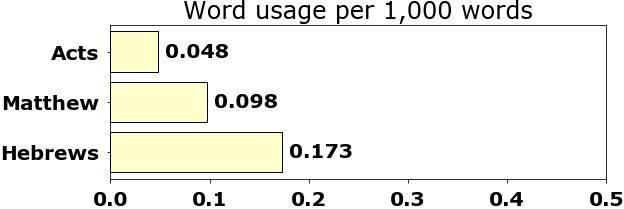
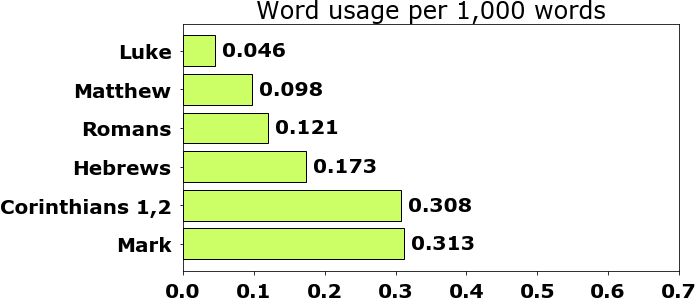
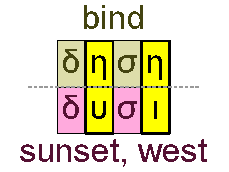
- *G2476 *152 ἵστημι (his'-tay-mee) : a prolonged form of a primary stao stah'-o (of the same meaning, and used for it in certain tenses); to stand (transitively or intransitively), used in various applications (literally or figuratively):--abide, appoint, bring, continue, covenant, establish, hold up, lay, present, set (up), stanch, stand (by, forth, still, up). Compare G5087.
- σταθησεται *5 of 152
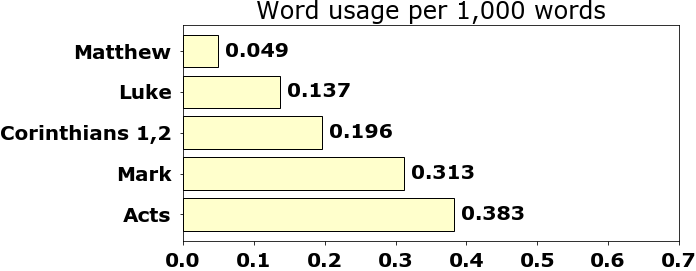
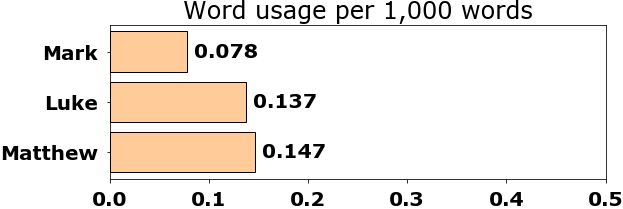
- Matthew 12:25 ... against itself shall not stand:
- Matthew 12:26 ... himself; how shall then his kingdom stand?
- Luke 11:18 ... himself, how shall his kingdom stand? because ye say that ...
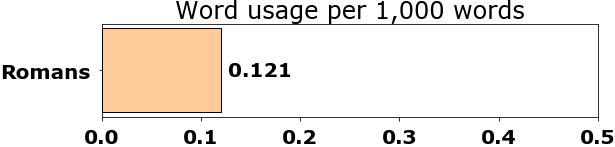
- Romans 14:4 ... falleth. Yea, he shall be holden up: for God is able to make him stand.
- 2 Corinthians 13:1 ... three witnesses shall every word be established.
32. Matthew 12:25
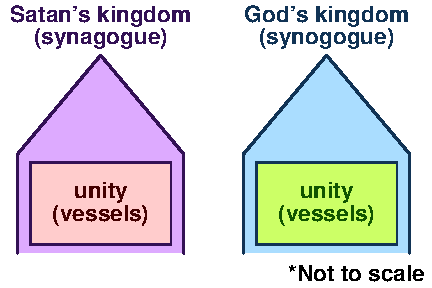
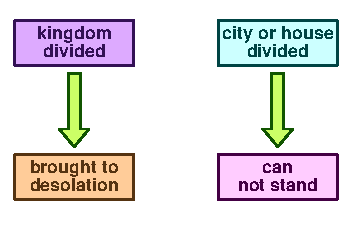
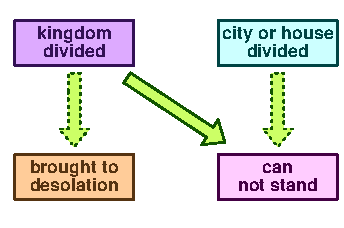
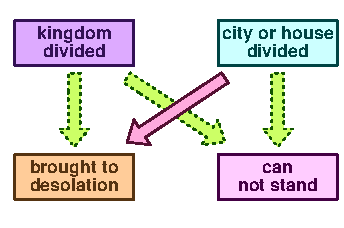
Matthew 12:25 And Jesus knew their thoughts, and said unto them, Every kingdom divided against itself is brought to desolation; and every city or house divided against itself shall not stand: [kjv]
ειδως δε ο ιησους τας ενθυμησεις αυτων ειπεν αυτοις πασα βασιλεια μερισθεισα καθ εαυτης ερημουται και πασα πολις η οικια μερισθεισα καθ εαυτης ου σταθησεται [gnt]
The ancient Greek word
"ἴστημι" ≈ "make to stand, stop, rouse, weight". From this comes
"σταθμός" ≈ "standing place". The modern Greek word
"σταθμός" (stath-MOS) ≈ "station" as in a train station.
33. A house divided
Abraham Lincoln's "
House divided" speech was given in 1858 after accepting the Illinois Republican Party nomination for senator of the United States. The speech started as follows.
A house divided against itself, cannot stand. I believe this government cannot endure permanently half slave and half free. I do not expect the Union to be dissolved - do not expect the house to fall - but I do expect it will cease to be divided. It will become all one thing or all the other. Abraham Lincoln (16th U.S. President)
The "
house divided against itself cannot stand" is from Mark 3:25 (and also Matthew 12:25) in the Bible.
Do the words of Abraham Lincoln appear to refer more to an
external threat
or more of an
internal threat?
34. House divided
A
"house" can be divided in at least two ways. Each could be an
attack or a
division (or something else). It's a tacky distinction.
☐
external attack/division
☐
internal attack/division
To which is Jesus referring?
In Greek, a "
heresy" was a smaller
group or division within a larger group that tried to do something different or against the ideas of the bigger group or division. The word added the meaning of the ideas of the group rather than just the group itself.
35. Straight flush and full house
Was the "
full" "
house"
full of it?
That sure is a
crappy joke!
Sayings:
A straight flush beats a full house.
Yes sir. Yes sir. Three bags full.
The "
leader" will always want you to say "
aye aye" and agree with them.
Yes sir, yes sir, three bags full. (from the children's poem
Baa baa black sheep, have you any wool.)
36. Matthew 12:25
KJV: And Jesus knew their thoughts, and said unto them, Every kingdom divided against itself is brought to desolation; and every city or house divided against itself shall not stand:
Greek: ειδως δε ο ιησους τας ενθυμησεις αυτων ειπεν αυτοις πασα βασιλεια μερισθεισα καθ εαυτης ερημουται και πασα πολις η οικια μερισθεισα καθ εαυτης ου σταθησεται
Latin: Iesus autem sciens cogitationes eorum dixit eis omne regnum divisum contra se desolatur et omnis civitas vel domus divisa contra se non stabit
37. Matthew 12:26
Matthew 12:26 And if Satan cast out Satan, he is divided against himself; how shall then his kingdom stand? [kjv]
και ει ο σατανας τον σαταναν εκβαλλει εφ εαυτον εμερισθη πως ουν σταθησεται η βασιλεια αυτου [gnt]
The idea of
"Satan" casting out
"Satan" is self-referential and does not have a valid meaning within time and space (as we know it). It is not clear how this would be done.
To cast out something within time and space (as we know it) one must go or be outside the system. The Creator outside of space and time (as we know it) can do this.
These computational aspects have application in the upcoming verses on "
idle" "
words" and the "
unpardonable" "
sin".
38. Recursion in computer science
Matthew 12:26 And if Satan cast out Satan, he is divided against himself; how shall then his kingdom stand? [kjv]
και ει ο σατανας τον σαταναν εκβαλλει εφ εαυτον εμερισθη πως ουν σταθησεται η βασιλεια αυτου [gnt]
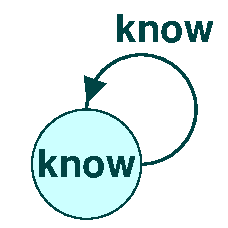
In computer science, a piece of code such as a procedure or function can call itself. This is called recursion. To eventually terminate and produce a result, recursion must call itself in a way that refers to a smaller instance of the problem being solved. If this is not done, then the computation is not well defined and, in that sense, does not terminate.
Technical note: Any recursive call requires a lazy function (e.g., if then else).
Thus, the idea of
"Satan" casting out
"Satan" is not a well defined operation. How, then, can such a computation stand?
39. Recursion
40. Recursion
A
recursive definition is a definition that refers to itself in some way
Dictionary definition:
re-cur-sive. adjective. referring to itself. see
recursive.
A recursive algorithm or definition is circular, but also, to be well defined, needs to refer to a smaller instance if itself. One example is a set of Russian Matryoshka (матрёшка) dolls.
Recursive definitions are powerful methods to allow a rule or rules to handle smaller instances of themselves.
41. Recursive divide and conquer
The use of recursion provides a powerful design and implementation strategy that is, in essence, a divide and conquer problem solving strategy.
Divide a big problem into smaller problems
Solve each smaller problem (recursively if needed)
Together the solutions to the smaller problems to solve the bigger problem.
42. Recursive and iterative programs
Recursive rules apply to parts of
iterative programs, though it is not as obvious. Consider the following equivalent (imperative) code examples (using global variables) defined in pseudo-code. The letter
b represents a boolean condition. The letter
S represents a command that has side-effects (i.e., changing
b). Assume
b already has an initial value.
|
iterative while loop
|
expanded while loop
|
recursive function
|
while b do
S
end while
|
if b then
S
while b do
S
end while
end if
|
function action:
if b then
S
call action(b)
endif
end function
call action
|
bottom-up
|
bottom-up
|
top-down
|
To terminate (and be well-defined), some progress must be made on each invocation of
S. This progress can be defined using a loop invariant (for partial correctness) and a bounding function (for total correctness).
43. Matthew 12:26 Satan casting out Satan
Matthew 12:26 And if Satan cast out Satan, he is divided against himself; how shall then his kingdom stand? [kjv]
και ει ο σατανας τον σαταναν εκβαλλει εφ εαυτον εμερισθη πως ουν σταθησεται η βασιλεια αυτου [gnt]
The words for
"Satan" and
"kingdom" will appear later in the discourse in an interesting way.
Here, Jesus uses the usual word for "
cast out" rather than the word that is a play on words with "
oblivion" since, with
"Satan" that idea would be implicit in what is said.
[thinking outside the box, limits of computation]
44. Matthew 12:26 Division
Matthew 12:26 And if Satan cast out Satan, he is divided against himself; how shall then his kingdom stand? [kjv]
και ει ο σατανας τον σαταναν εκβαλλει εφ εαυτον εμερισθη πως ουν σταθησεται η βασιλεια αυτου [gnt]
| kingdoms |
| perception |
reality |
| heaven (air) |
Satan |
| heaven (heaven) |
God |
Which
"kingdom" is this? All, some, one, none?
The context of the verses talking about the "
strong man" are Jesus talking to the religious leaders after being accused of casting out demons (Satan) by the power of Satan. This accusation by the religious elite is followed in the next chapter with the Kingdom Parables.
45. Matthew 12:26
KJV: And if Satan cast out Satan, he is divided against himself; how shall then his kingdom stand?
Greek: και ει ο σατανας τον σαταναν εκβαλλει εφ εαυτον εμερισθη πως ουν σταθησεται η βασιλεια αυτου
Latin: et si Satanas Satanan eicit adversus se divisus est quomodo ergo stabit regnum eius
46. Matthew 12:27 Beelzebub
Matthew 12:27 And if I by Beelzebub cast out devils, by whom do your children cast them out? therefore they shall be your judges. [kjv]
και ει εγω εν βεελζεβουλ βεεζεβουλ εκβαλλω τα δαιμονια οι υιοι υμων εν τινι εκβαλλουσιν δια τουτο αυτοι υμων κριται εσονται κριται υμων [gnt]
By whom do the "children" "cast out" the "demons"?
The Greek word translated as "judges" is that of "division" or "separation" and, in context, "judge".
The same meaning is in the previous verses as "divide" or "partition".
What Jesus said in past verses and what he did
not say becomes important here. One needs to recognize the pattern and fill in the details.
47. Matthew 12:25 Division stated
This idea is as stated.
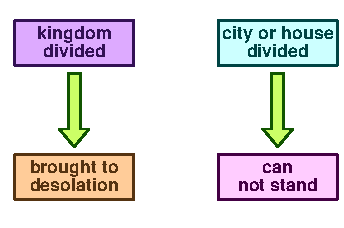
The "kingdom" "divided" is "brought to desolation".
The "city" or "house" "divided" cannot "stand".
Matthew 12:25 And Jesus knew their thoughts, and said unto them, Every kingdom divided against itself is brought to desolation; and every city or house divided against itself shall not stand: [kjv]
ειδως δε ο ιησους τας ενθυμησεις αυτων ειπεν αυτοις πασα βασιλεια μερισθεισα καθ εαυτης ερημουται και πασα πολις η οικια μερισθεισα καθ εαυτης ου σταθησεται [gnt]
48. Division continued
By implication, the
"kingdom" of
"Satan" cannot
"stand" when
"Satan" is
"divided" against himself.
What does the
"kingdom" of
"Satan" have to do with the "
city" of
Jerusalem or the "
house" of the "
temple"?
Matthew 12:26 And if Satan cast out Satan, he is divided against himself; how shall then his kingdom stand? [kjv]
και ει ο σατανας τον σαταναν εκβαλλει εφ εαυτον εμερισθη πως ουν σταθησεται η βασιλεια αυτου [gnt]
49. Matthew 12:27 Division implied
If the "
children" are associated with the "
parents" who now accuse Jesus of
"Beelzebub", then the "
children" will "
judge" or
"divide" the
"house" or
"city".
Thus, that
"city" or
"house" "divided" will be
"brought to desolation".
Matthew 12:27 And if I by Beelzebub cast out devils, by whom do your children cast them out? therefore they shall be your judges. [kjv]
και ει εγω εν βεελζεβουλ βεεζεβουλ εκβαλλω τα δαιμονια οι υιοι υμων εν τινι εκβαλλουσιν δια τουτο αυτοι υμων κριται εσονται κριται υμων [gnt]
50. Division build
This
"division" and
"desolation" will happen by the "
children" in the next generation in 70 AD when the
"city" of Jerusalem and the
"house" of the "
temple" will be
"divided" by the "
children" and
"brought to desolation". That
"kingdom" will not
"stand".
A future verse in this discourse will implicitly associate, using a play on words, the
"city" of
Jerusalem with
"Satan".
Jesus will connect the Olivet Discourse in the End Times in Matthew 24 with Matthew 12 via
"Satan", "
Jonah", etc. That connection appears to include a large number of play on words.
51. Roman general Titus
According to Josephus, in 70 A.D., near the end of the Jewish War (Rebellion), Roman General and future Emperor Titus did not want the temple destroyed. He ordered the 500 year old temple to be spared.
The temple caught on fire and melted the gold into the cracks the temple. To get the gold, the temple was taken apart piece by piece. Today, only the temple mount remains. This is just as Jesus had said.
52. Matthew 12:27
Matthew 12:27 And if I by Beelzebub cast out devils, by whom do your children cast them out? therefore they shall be your judges. [kjv]
και ει εγω εν βεελζεβουλ βεεζεβουλ εκβαλλω τα δαιμονια οι υιοι υμων εν τινι εκβαλλουσιν δια τουτο αυτοι υμων κριται εσονται κριται υμων [gnt]
The
ancient Greek word
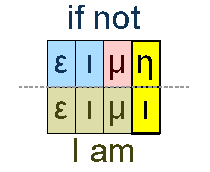
"ἔσονται" ≈ "will be" and is from
"εἰμί" ≈ "I am" as a form of
"existence" or
"being". The
exact word
"ἔσονται" ≈ "will be" is used in Matthew six times, all by Jesus.
53. Matthew 12:27
KJV: And if I by Beelzebub cast out devils, by whom do your children cast them out? therefore they shall be your judges.
Greek: και ει εγω εν βεελζεβουλ βεεζεβουλ εκβαλλω τα δαιμονια οι υιοι υμων εν τινι εκβαλλουσιν δια τουτο αυτοι υμων κριται εσονται κριται υμων
54. Kingdoms
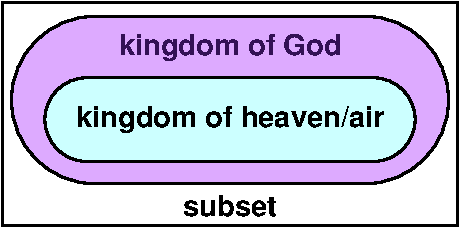
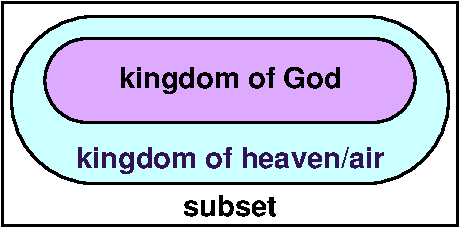 |
| Gospel |
Kingdom
of heaven |
Kingdom
of God |
| Matthew |
32 |
5* |
| Mark |
0 |
16 |
| Luke |
0 |
32 |
| John |
0 |
2 |
There are many viewpoints on the "kingdom" of "God" and the "kingdom" of "heaven/air". The "birds" of the "air" are the "birds" of "heaven". Which "heaven"?
Sometimes Jesus just says "kingdom". The TR adds "of God" in one of these verses.
It appears that Jesus uses the noun phrase "kingdom" of "heaven/air" as a code word. Matthew just wrote down what was said. The others merged these together in their minds before writing what they remembered. Compare kingdom, vineyard, garden.
[John: verily verily (twice) vs. Others: verily (once), local vs. global analysis]
|
55. Matthew 12:28 Kingdom of God
Matthew 12:28 But if I cast out devils by the Spirit of God, then the kingdom of God is come unto you. [kjv]
ει δε εγω εν πνευματι θεου εγω εκβαλλω τα δαιμονια αρα εφθασεν εφ υμας η βασιλεια του θεου [gnt]
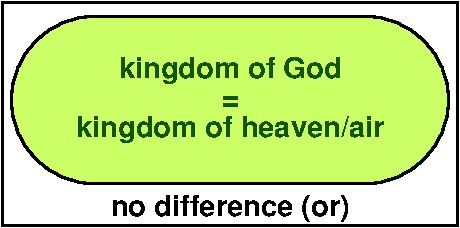
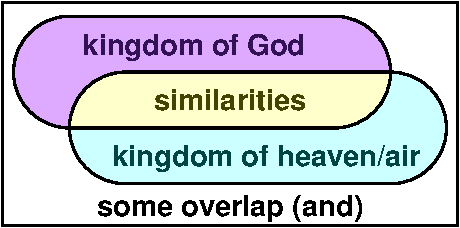
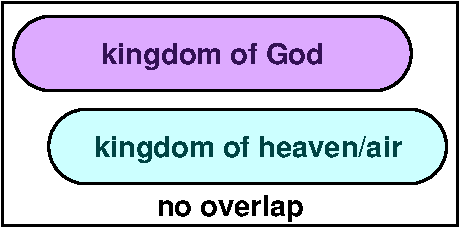
What is the similarity and difference in the following?
The "kingdom" of "God".
The "kingdom" of "heaven".
Matthew, writing down what Jesus says, maintains the distinction. Mark and Luke, writing from memory, merge both to the
"kingdom" of
"God".
Might the "spirit" of "God" be the "kingdom" of "heaven" (perception) that leads to the "kingdom" of "God"?
Might the "spirit" of "man" be the "kingdom" of the "air" (perception) that leads to the "kingdom" of "Satan"?
56. Matthew 12:28 Kingdoms
Matthew 12:28 But if I cast out devils by the Spirit of God, then the kingdom of God is come unto you. [kjv]
ει δε εγω εν πνευματι θεου εγω εκβαλλω τα δαιμονια αρα εφθασεν εφ υμας η βασιλεια του θεου [gnt]
Matthew uses
"kingdom" of
"God" rather than
"kingdom" of
"heaven/air". Is there a difference? If so, is it important?
perception: "kingdom" of "heaven" (heaven)
reality (eternal): "kingdom" of "God" (Matthew, others use only "heaven")
perception: "kingdom" of "heaven" (air)
reality (temporal): "kingdom" of "Satan" (earth)
57. Matthew 12:28
KJV: But if I cast out devils by the Spirit of God, then the kingdom of God is come unto you.
Greek: ει δε εγω εν πνευματι θεου εγω εκβαλλω τα δαιμονια αρα εφθασεν εφ υμας η βασιλεια του θεου
58. Matthew 12:29 Snatching the raptured goods from the strong man
Matthew 12:29 Or else how can one enter into a strong man's house, and spoil his goods, except he first bind the strong man? and then he will spoil his house. [kjv]
η πως δυναται τις εισελθειν εις την οικιαν του ισχυρου και τα σκευη αυτου διαρπα σαι αρπασαι εαν μη πρωτον δηση τον ισχυρον και τοτε την οικιαν αυτου διαρπασει [gnt]
The
GNT word for
"spoil" is the ancient Greek word
"ἁρπάζω" ≈ "snatch away, carry off" and may be related to the ancient Greek word
"ἅρπη" ≈ "bird of prey" as a hawk or falcon and which
may be related to the
PIE root for "
reap", "
harvest", "
sickle". This word for
"snatch" is sometimes translated
"rapture" or
"ravenous" as in "
wolves".
The ancient Greek word
"σκευή" ≈ "vessel" ,
"stuff" in parts of the
KJV (King James Version), as something that is made but can refer to
"people" as in a
"chosen vessel". Who is doing the "
choosing"?
[Last Supper, 1 & 2 Thessalonians]
59. Matthew 12:29 Late binding to the west
60. End of page




















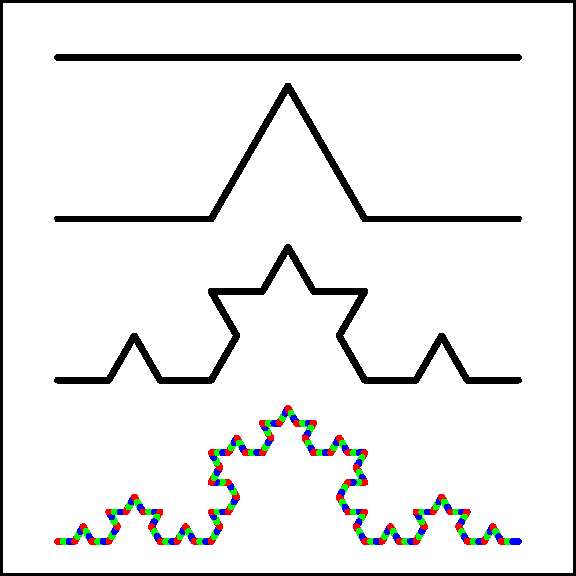 The English word "recursion" means, literally "running again" and comes from the Latin word "recurso" ≈ "running back again, return" from "re" ≈ "back again"and "curro" ≈ "run".