Send Close Add comments: (status displays here)
Got it!  This site "www.creationpie.org" uses cookies. You consent to this by clicking on "Got it!" or by continuing to use this website.  Note: This appears on each machine/browser from which this site is accessed.
Matthew 25:1-13 Parable of the ten virgins
by RS  admin@creationpie.org : 1024 x 640


1. Matthew 25:1-13 Parable of the ten virgins

2. Matthew 24 Olivet discourse
Matthew 24 is known as the Olivet Discourse where Jesus, at the request of the disciples, talks of the End Times or "All of it". The Olivet Discourse continues into chapter 25.

Information sign More: Matthew

3. Matthew 25: Division parables
This chapter continues the Olivet Discourse on the End Times from the previous chapter. The parables in this chapter could be called the division parables because each deals with various forms of division into groups. Note that there appears to be no division of the "birds". They are without the Father and will all fall.

Information sign More: Matthew

4. Matthew 25:1-7 Verses
Matthew 25:1 Then shall the kingdom of heaven be likened unto ten virgins, which took their lamps, and went forth to meet the bridegroom. [kjv]
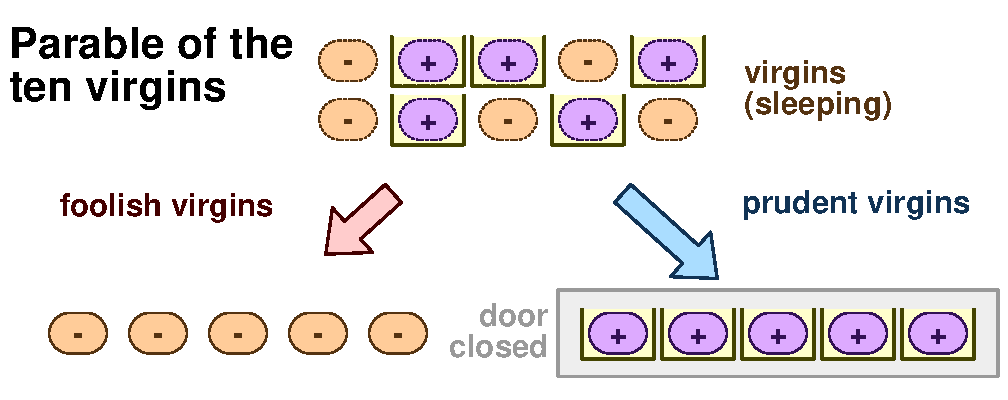
25:2 And five of them were wise, and five were foolish. [kjv]
25:3 They that were foolish took their lamps, and took no oil with them: [kjv]
25:4 But the wise took oil in their vessels with their lamps. [kjv]
25:5 While the bridegroom tarried, they all slumbered and slept. [kjv]
25:6 And at mid night there was a cry made, Behold, the bridegroom cometh; go ye out to meet him. [kjv]
25:7 Then all those virgins arose, and trimmed their lamps. [kjv]

The parable of the ten virgins starts Matthew 25 which is a continuation of the Olivet Discourse on the End Times that starts in Matthiew 24.

5. Matthew 25:8-13 Verses
Matthew 25:8 And the foolish said unto the wise, Give us of your oil; for our lamps are gone out. [kjv]
25:9 But the wise answered, saying, Not so; lest there be not enough for us and you: but go ye rather to them that sell, and buy for yourselves. [kjv]
25:10 And while they went to buy, the bridegroom came; and they that were ready went in with him to the marriage: and the door was shut. [kjv]
25:11 Afterward came also the other virgins, saying, Lord, Lord, open to us. [kjv]
25:12 But he answered and said, Verily I say unto you, I know you not. [kjv]
25:13 Watch therefore, for ye know neither the day nor the hour wherein the Son of man cometh. [kjv]

The parable of the talents follows and then the parable of the sheep and goats follow.

Information sign More: Matthew 25:14-30 Parable of the talents in Matthew
Information sign More: Matthew 25:31-46 Parable of the sheep and goats

6. Matthew 25:1-13 Parable of the ten virgins
The parable starts in verse 1 and end s in verse 13.
Matthew 25:1 Then shall the kingdom of heaven be likened unto ten virgins, which took their lamps, and went forth to meet the bridegroom. [kjv]
25:13 Watch therefore, for ye know neither the day nor the hour wherein the Son of man cometh. [kjv]

What is the literal (and opinion inference) view of the following?

7. Digital and non-digital concepts
Search ask seek knock
The "day" (digital, discrete) and the "hour" (non-digital, relative) has at least two forms.
The Olivet Discourse on the End Times (cooperative effort into the ages) comprises the previous chapter.

8. Matthew 25:1,3-4 Lamps and vessels and oil
Matthew 25:1 Then shall the kingdom of heaven be likened unto ten virgins, which took their lamps, and went forth to meet the bridegroom. [kjv]
25:3 They that were foolish took their lamps, and took no oil with them: [kjv]
25:4 But the wise took oil in their vessels with their lamps. [kjv]

The only thing Jesus says to "take" is your "cross" and "follow" Him. Is there a problem with "taking" a "lamp" or "oil"? What might these represent as code words?

Information sign More: Matthew 10:38-42 Commanded to follow in the cross walk

9. Matthew 25:8-9 Lamps going out
Matthew 25:8 And the foolish said unto the wise, Give us of your oil; for our lamps are gone out. [kjv]
25:9 But the wise answered, saying, Not so; lest there be not enough for us and you: but go ye rather to them that sell, and buy for yourselves. [kjv]

How can the "lamps" of the "foolish" "go out" when they have no "oil"? Were they ever lit? Are they telling the truth?

Were any "lamps" ever lit?

Is it proper behavior to not share with others? Is it possible for the "prudent" who have "oil" to give "oil" to the "foolish"?

10. Parable of the ten virgins issue
Matthew 25:13 Watch therefore, for ye know neither the day nor the hour wherein the Son of man cometh. [kjv]
γρηγορειτε ουν οτι ουκ οιδατε την ημεραν ουδε την ωραν  εν η ο υιος του ανθρωπου ερχεται   [gnt]

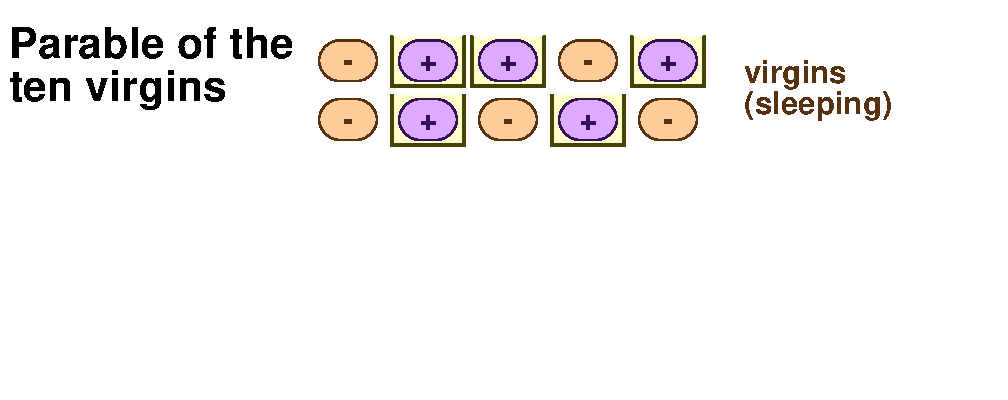
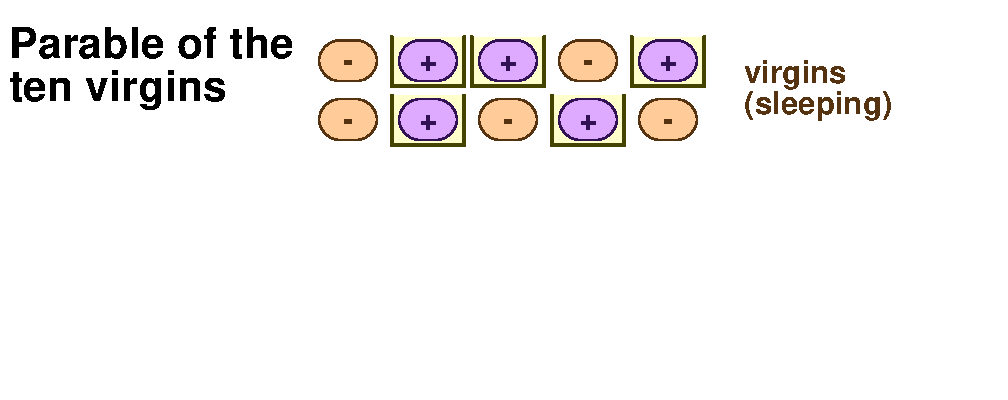
Notice that neither the "foolish" nor the "prudent" were actually "watching". They were "sleeping" - in apparently two (perhaps different) ways.
 
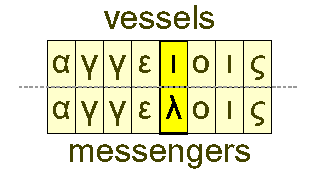
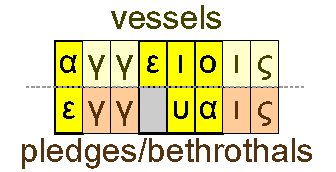
What did the Boy Scout say after fixing the car's horn?

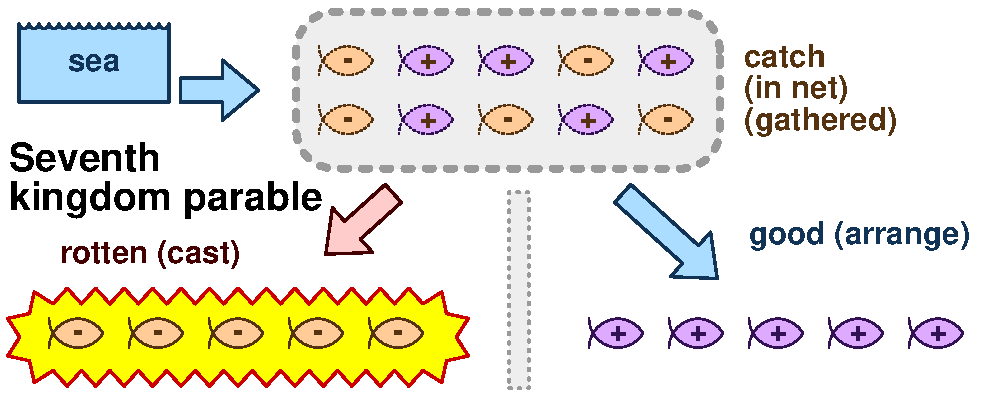
11. Matthew 25:1 Like the Moses
Matthew 25:1 Then shall the kingdom of heaven be likened unto ten virgins, which took their lamps, and went forth to meet the bridegroom. [kjv]
τοτε ομοιωθησεται η βασιλεια των ουρανων δεκα παρθενοις αιτινες λαβουσαι τας λαμπαδας  αυτων  εαυτων εξηλθον εις  απαντησιν  υπαντησιν του νυμφιου [gnt]

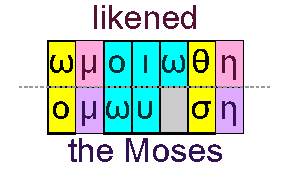
Likened and the Moses
A more common Greek word for "same" or "similar", in a direct sense, is "ὅμοιος""similar, like, resembling" and comes from the ancient Greek word "ὁμός""same, common".
Jesus "likens" the "kingdom" of "heaven". Thus, this is an analogy and not something to be taken literally. The Greek word can be a play on words with "Moses".

The ancient Greek word "ὁμοιόσω""I liken" which is a play on words with "ὁ Μωϋσῆ""the Moses".

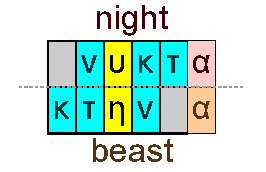
12. Matthew 25:1 Out of expectation
Matthew 25:1 Then shall the kingdom of heaven be likened unto ten virgins, which took their lamps, and went forth to meet the bridegroom. [kjv]
τοτε ομοιωθησεται η βασιλεια των ουρανων δεκα παρθενοις αιτινες λαβουσαι τας λαμπαδας  αυτων  εαυτων εξηλθον εις  απαντησιν  υπαντησιν του νυμφιου [gnt]

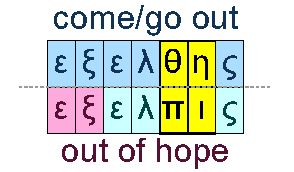
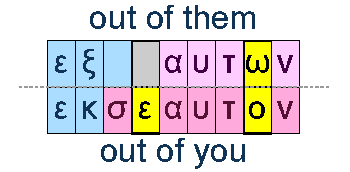
Come/go out and out of hope

Were they "out" of "expectation" or "hope"? Has, in some sense, the clock run out? Is it time to clean their clock? The phrase "Takes a lickin’ and keeps on tickin’" was a famous advertising slogan for Timex watches, often said by John Cameron Swayze (1960's). When incorrect as a group, the group can take a beating and keep on cliquing (think KJV (King James Version) only and others).

13. Matthew 25:1 Ten virgins
Matthew 25:1 Then shall the kingdom of heaven be likened unto ten virgins, which took their lamps, and went forth to meet the bridegroom. [kjv]
τοτε ομοιωθησεται η βασιλεια των ουρανων δεκα παρθενοις αιτινες λαβουσαι τας λαμπαδας  αυτων  εαυτων εξηλθον εις  απαντησιν  υπαντησιν του νυμφιου [gnt]

If Jesus and you each do a "high" "five", that would be a total of "ten".


Are the "ten" "words" or "commandments" enough? Had these "ten" "virgins" "accepted" or "received" the "Ten" "Words"?

Information sign More: Giving attention to accepting the Ten Commandments

14. Strongs - meet
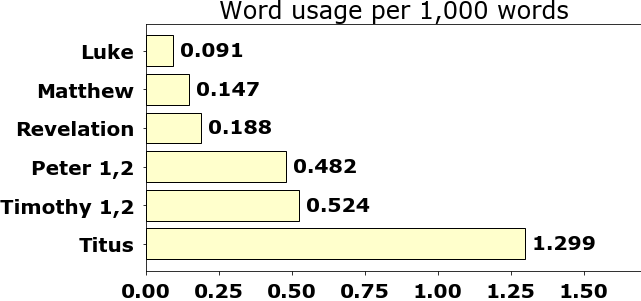
  • *G5222 *3 ὑπάντησις (hoop-an'-tay-sis) : from G5221; an encounter or concurrence (with G1519 for infinitive, in order to fall in with):--meeting.
  •  Usage 
     All 
      υπαντησιν *3
          Matthew 8:34 And, behold, the whole city came out to ...
          Matthew 25:1 Then shall the kingdom of heaven be likened unto ten ...
          John 12:13 ... and went forth to meet him, and cried, ...
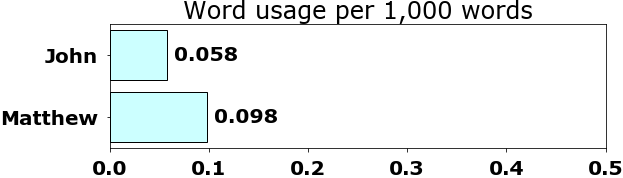
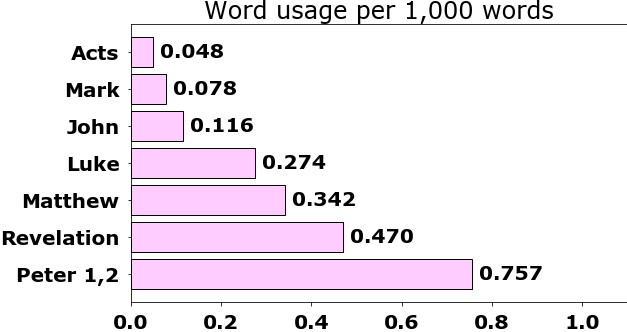
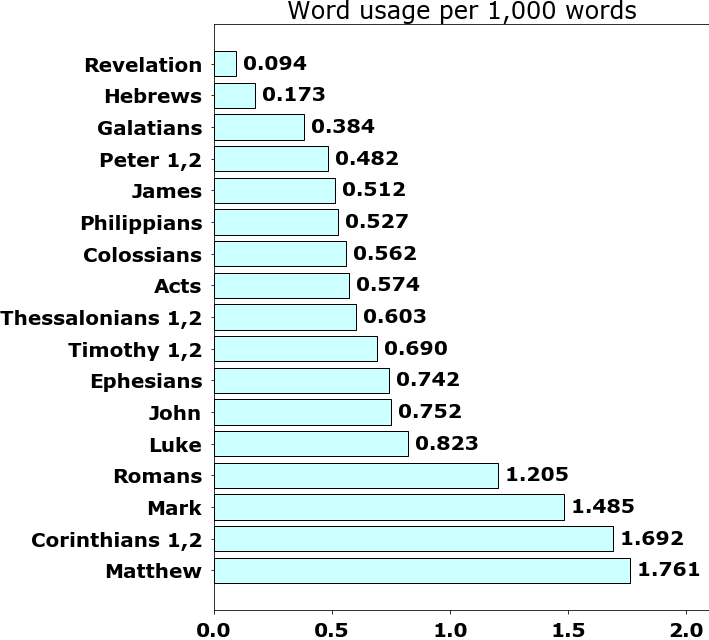
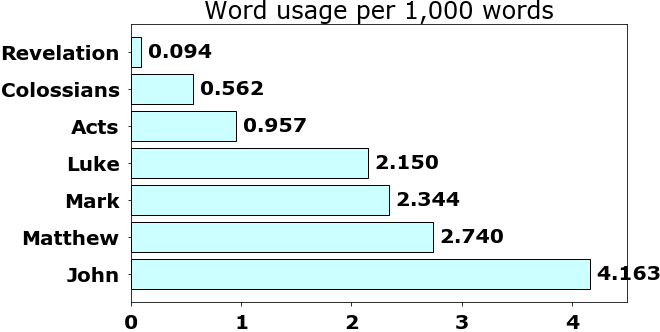
Word usage per chapter Words: υπαντησιν=3

The ancient Greek word "ἀπάντησις""escort, meeting, reply". The modern Greek word "απάντηση" (a-PA-dee-see) ≈ "answer, response".

Does it make a difference if people come out to "meet" someone as compared to coming out to "escort" someone?

15. Matthew 25:1 Meeting
Matthew 25:1 Then shall the kingdom of heaven be likened unto ten virgins, which took their lamps, and went forth to meet the bridegroom. [kjv]
τοτε ομοιωθησεται η βασιλεια των ουρανων δεκα παρθενοις αιτινες λαβουσαι τας λαμπαδας  αυτων  εαυτων εξηλθον εις  απαντησιν  υπαντησιν του νυμφιου [gnt]

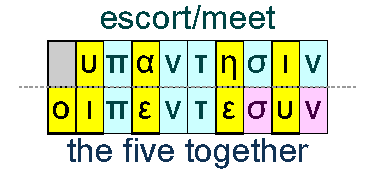
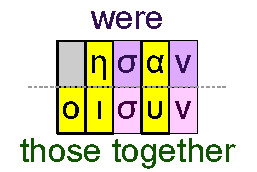
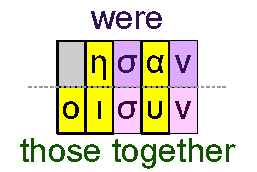
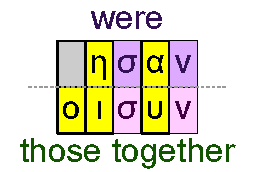
Escort/meet and the five together

Greek: ... to meet/escort [the five together] (of) the bridegroom.

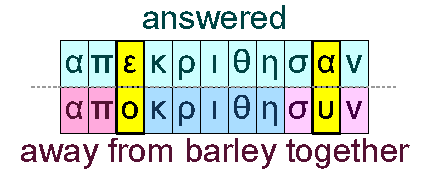
These words show the closeness of the Greek letters "α""alpha" and "υ""upsilon" in speech. Both appear in the GNT (Greek New Testament). In this case, the "υ""upsilon" makes a better play on words with "οι""the" (same sound today).

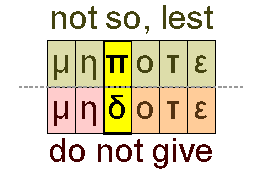
16. Strongs - maiden
*G3933 *15 παρθένος (par-then'-os) : of unknown origin; a maiden; by implication, an unmarried daughter:--virgin.
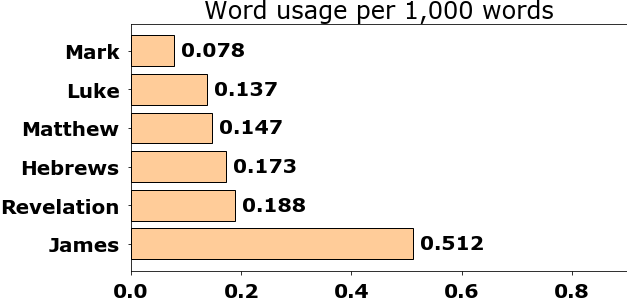
Word usage per chapter Words: παρθενοι=4 παρθενοις=1 παρθενον=5 παρθενος=3 παρθενου παρθενων

The ancient Greek word "παρθένος""young unmarried woman, maiden, virgin, pupil". As a constellation, Virgo.

17. Usage - maiden
  • *G3933 *15 παρθένος (par-then'-os) : of unknown origin; a maiden; by implication, an unmarried daughter:--virgin.
  •  Usage 
     All 
       παρθενοι *4  of 15
          Matthew 25:7 Then all those virgins arose, and trimmed ...
          Matthew 25:11 Afterward came also the other virgins, saying, Lord, ...
          Acts 21:9 ... had four daughters, virgins, which did prophesy.
          Revelation 14:4 ... women; for they are virgins. These are they which ...
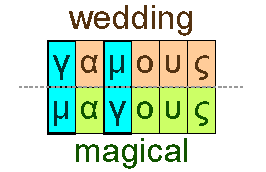
       παρθενοις *1  of 15
          Matthew 25:1 ... of heaven be likened unto ten virgins, which took ...

Discuss: What motivation might the writers of the GNT have had to translate the word as "virgin" rather than as "young unmarried woman" or "maiden"? Note that Jesus uses nouns (and some other words) as code words.

18. Matthew 25:1 Virgins
Matthew 25:1 Then shall the kingdom of heaven be likened unto ten virgins, which took their lamps, and went forth to meet the bridegroom. [kjv]
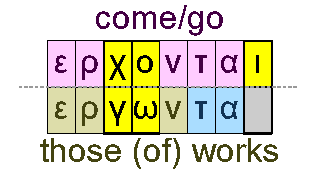
τοτε ομοιωθησεται η βασιλεια των ουρανων δεκα παρθενοις αιτινες λαβουσαι τας λαμπαδας  αυτων  εαυτων εξηλθον εις  απαντησιν  υπαντησιν του νυμφιου [gnt]

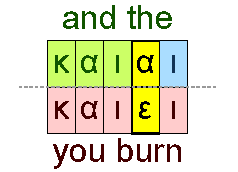
The ancient Greek word "παρθένος""young unmarried woman, maiden, virgin, pupil". As a constellation, Virgo.

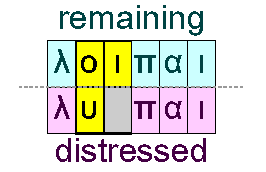
A literal connection is that a "young maiden". That they are female, fits in analogy to a "bride" and a "groom".
What might be the code word meaning of "young maiden" or "virgin"?

19. Matthew 25:1 Kingdom of heaven
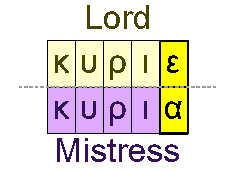
Matthew 25:1 Then shall the kingdom of heaven be likened unto ten virgins, which took their lamps, and went forth to meet the bridegroom. [kjv]
τοτε ομοιωθησεται η βασιλεια των ουρανων δεκα παρθενοις αιτινες λαβουσαι τας λαμπαδας  αυτων  εαυτων εξηλθον εις  απαντησιν  υπαντησιν του νυμφιου [gnt]

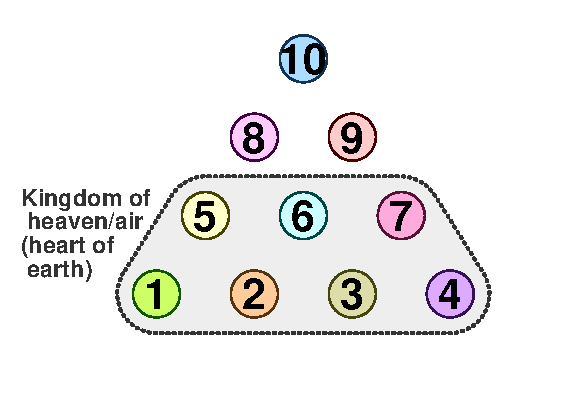
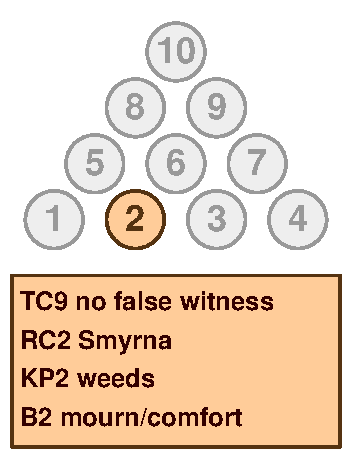
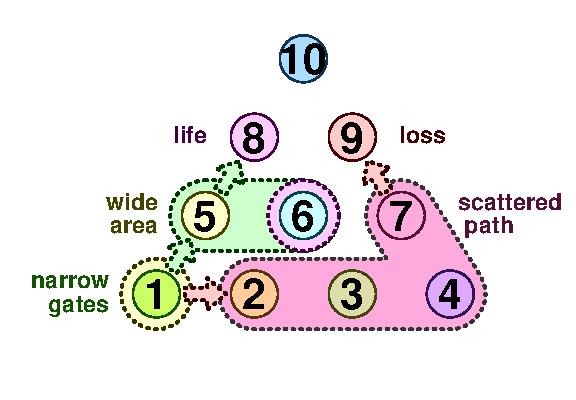
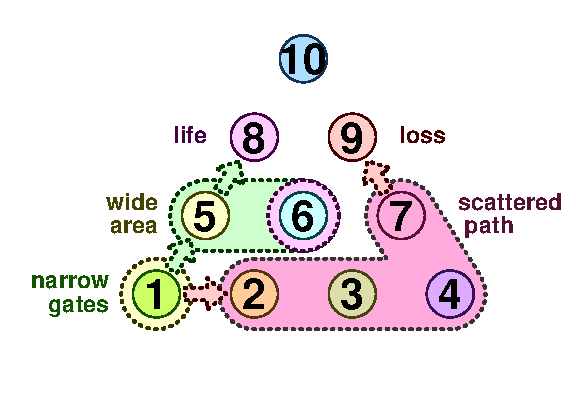
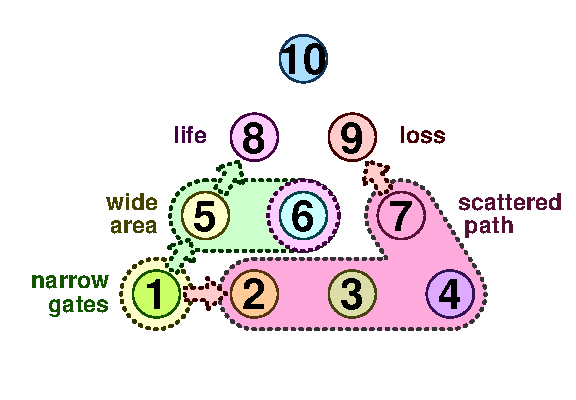
TenPin 6 TenPin 5
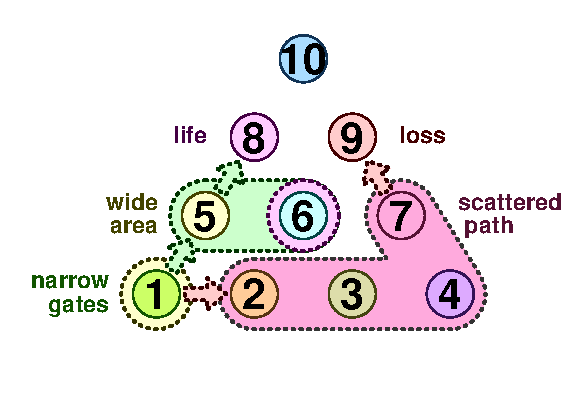
Note the "narrow" "gates" between node 1 and other nodes. Whichever side of the "gates" one is on there is a side "beyond" the "gate" through which one came. That is, node 1.
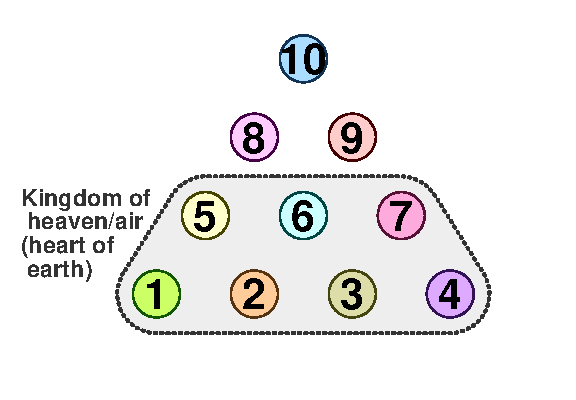
The Kingdom of Heaven is not the same as the Kingdom of God. Matthew, who wrote what Jesus said, distinguishes between them. The other Gospels, which use what was remembered, only use Kingdom of God, obscuring the distinction between them.

Information sign More: Matthew 11:12-14 Exploring the Kingdom of Heaven

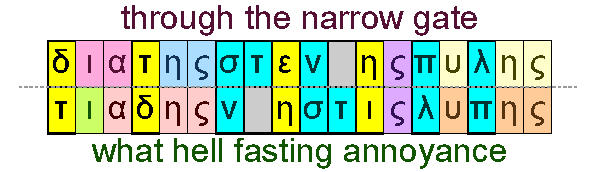
20. Matthew 7:13 Fasting annoyance
Matthew 7:13 Enter ye in at the strait gate: … [kjv]
 εισελθετε  εισελθατε δια της στενης πυλης … [gnt]

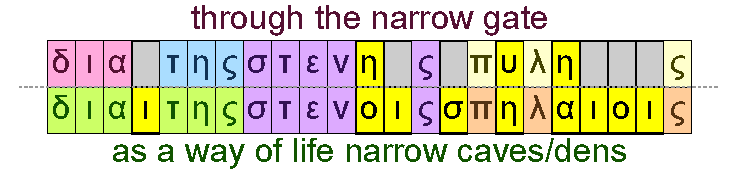
Through the narrow gate and diet of narrow caves Through the narrow gate and what hell fasting annoyance

The first word, "εισελθατε""enter (you)", 1 time in this form in the GNT, has an ending hint of Satan.

Information sign More: Punishment by Spoonerisms: switched consonants
Information sign More: Matthew 7:13-14 Strait talk about narrow and wide gates

21. Matthew 25:1 Beyond the narrow gates
Matthew 25:1 Then shall the kingdom of heaven be likened unto ten virgins, which took their lamps, and went forth to meet the bridegroom. [kjv]
τοτε ομοιωθησεται η βασιλεια των ουρανων δεκα παρθενοις αιτινες λαβουσαι τας λαμπαδας  αυτων  εαυτων εξηλθον εις  απαντησιν  υπαντησιν του νυμφιου [gnt]

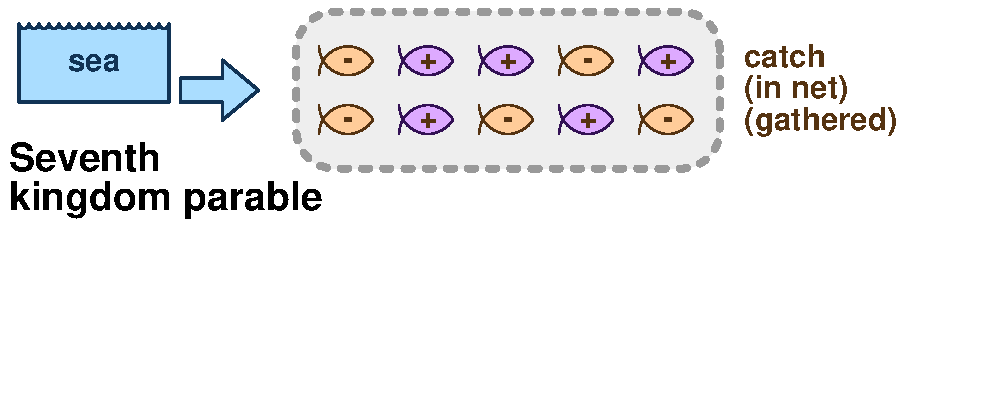
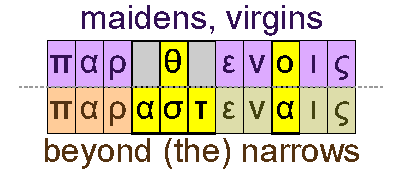
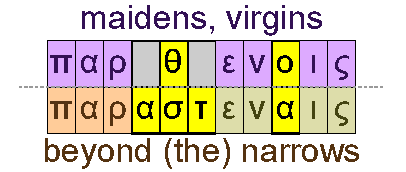
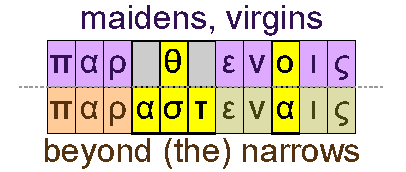
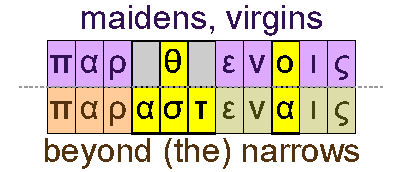
Maidens and beyond (the) rarrows

Might these "maidens" have been "beyond" the "narrows" as in "beyond" the "narrow" "gates"?

Information sign More: Matthew 7:13-14 Strait talk about narrow and wide gates

22. Matthew 25:1
   Matthew 25:1 
 All 
KJV: Then shall the kingdom of heaven be likened unto ten virgins, which took their lamps, and went forth to meet the bridegroom.
Greek: τοτε ομοιωθησεται η βασιλεια των ουρανων δεκα παρθενοις αιτινες λαβουσαι τας λαμπαδας αυτων εαυτων εξηλθον εις απαντησιν υπαντησιν του νυμφιου
Latin: tunc simile erit regnum caelorum decem virginibus quae accipientes lampadas suas exierunt obviam sponso et sponsae

23. Matthew 25:1 Who might make a request
Matthew 25:1 Then shall the kingdom of heaven be likened unto ten virgins, which took their lamps, and went forth to meet the bridegroom. [kjv]
τοτε ομοιωθησεται η βασιλεια των ουρανων δεκα παρθενοις αιτινες λαβουσαι τας λαμπαδας  αυτων  εαυτων εξηλθον εις  απαντησιν  υπαντησιν του νυμφιου [gnt]

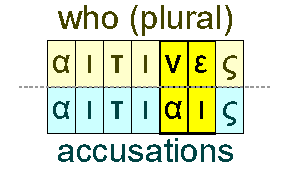
Who (plural) and accusations/causes

Is there any "accusation", "cause" or "occasion" In this parable?

As appropriate, the plural for "which" or "who" is used. The singular form is a play on words with Latin "hostile" and Greek "bones".

24. Usage - lamp
*G3088 *14 λύχνος (lookh'-nos) : from the base of G3022; a portable lamp or other illuminator (literally or figuratively):--candle, light.
*G2985 *9 λαμπάς (lam-pas') : from G2989; a "lamp" or flambeau:--lamp, light, torch.
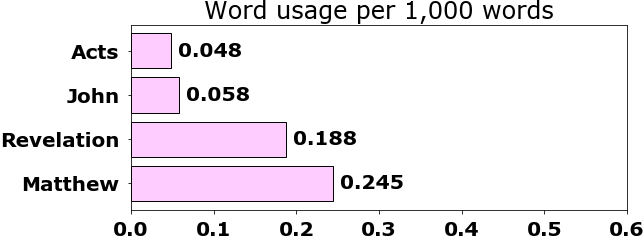
Word usage per chapter Words: λαμπαδας=3 λαμπαδες=3 λαμπαδων=2 λαμπας λυχνοι λυχνον=4 λυχνος=6 λυχνου=2 λυχνω

Note how Strongs starts with the definition of "lamp" and then arrives at a "light". The ancient Greek word "λυχνος""lamp" (not light) since "φως""light" and is the source of the "photo" part of the English word "photograph".

The ancient Egyptians used a form of the modern "candle". In Bible times, the word meant a "lamp" as in an "oil lamp". Some lamps were covered. Some were open.

25. John 18:3 Lanterns and torches and weapons
John 18:3 Judas then, having received a band of men and officers from the chief priests and Pharisees, cometh thither with lanterns and torches and weapons. [kjv]
ο ουν ιουδας λαβων την σπειραν και εκ των αρχιερεων και εκ των φαρισαιων υπηρετας ερχεται εκει μετα φανων και λαμπαδων και οπλων [gnt]

The ancient Greek word "λαμπάδας""torches" (accusative feminine plural) from "λαμπάς""torch".

26. John 18:3
   John 18:3 
 All 
KJV: Judas then, having received a band of men and officers from the chief priests and Pharisees, cometh thither with lanterns and torches and weapons.
Greek: ο ουν ιουδας λαβων την σπειραν και εκ των αρχιερεων και εκ των φαρισαιων υπηρετας ερχεται εκει μετα φανων και λαμπαδων και οπλων

27. Nahum 2:4 Torches
Nahum 2:4 The chariots shall rage in the streets, they shall justle one against another in the broad ways: they shall seem like torches, they shall run like the lightnings. [kjv]
εν ταις οδοις και συγχυθησονται τα αρματα και συμπλακησονται εν ταις πλατειαις η ορασις αυτων ως λαμπαδες πυρος και ως αστραπαι διατρεχουσαι [lxx]

The ancient Greek word "λαμπάδας""torches" (accusative feminine plural) from "λαμπάς""torch".

28. Nahum 2:4
   Nahum 2:4 
 All 
KJV: The chariots shall rage in the streets, they shall justle one against another in the broad ways: they shall seem like torches, they shall run like the lightnings.
Hebrew: בחוצות יתהוללו הרכב ישתקשקון ברחבות מראיהן כלפידם כברקים ירוצצו׃
Greek: εν ταις οδοις και συγχυθησονται τα αρματα και συμπλακησονται εν ταις πλατειαις η ορασις αυτων ως λαμπαδες πυρος και ως αστραπαι διατρεχουσαι

29. Zechariah 12:6 Torches of fire
Zechariah 12:6 In that day will I make the governors of Judah like an hearth of fire among the wood, and like a torch of fire in a sheaf; and they shall devour all the people round about, on the right hand and on the left: and Jerusalem shall be inhabited again in her own place, even in Jerusalem. [kjv]
εν τη ημερα εκεινη θησομαι τους χιλιαρχους ιουδα ως δαλον πυρος εν ξυλοις και ως λαμπαδα πυρος εν καλαμη και καταφαγονται εκ δεξιων και εξ ευωνυμων παντας τους λαους κυκλοθεν και κατοικησει ιερουσαλημ ετι καθ εαυτην [lxx]

The ancient Greek word "λαμπάδας""torches" (accusative feminine plural) from "λαμπάς""torch".

30. Zechariah 12:6
 All 
KJV: In that day will I make the governors of Judah like an hearth of fire among the wood, and like a torch of fire in a sheaf; and they shall devour all the people round about, on the right hand and on the left: and Jerusalem shall be inhabited again in her own place, even in Jerusalem.
Hebrew: ביום ההוא אשים את אלפי יהודה ככיור אש בעצים וכלפיד אש בעמיר ואכלו על ימין ועל שמאול את כל העמים סביב וישבה ירושלם עוד תחתיה בירושלם׃
Greek: εν τη ημερα εκεινη θησομαι τους χιλιαρχους ιουδα ως δαλον πυρος εν ξυλοις και ως λαμπαδα πυρος εν καλαμη και καταφαγονται εκ δεξιων και εξ ευωνυμων παντας τους λαους κυκλοθεν και κατοικησει ιερουσαλημ ετι καθ εαυτην

31. Strongs - torch
*G2985 *9 λαμπάς (lam-pas') : from G2989; a "lamp" or flambeau:--lamp, light, torch.
Word usage per chapter Words: λαμπαδας=3 λαμπαδες=3 λαμπαδων=2 λαμπας

Torch
The ancient Greek word "λαμπάδας""torches" (accusative feminine plural) from "λαμπάς""torch". The Latin word "lampas""lamp, lantern, torch, firebrand".

Meanings:
How does it change the meaning of verses in the GNT if the meaning of "torch" or "torches" is used instead of "lamp" as in an "oil lamp"?

32. Usage - torch
  • *G2985 *9 λαμπάς (lam-pas') : from G2989; a "lamp" or flambeau:--lamp, light, torch.
  •  Usage 
     All 
      λαμπαδας *3
          Matthew 25:1 ... which took their lamps, and went forth to meet the bridegroom.
          Matthew 25:3 They that were foolish took their lamps, and took no oil ...
          Matthew 25:7 ... and trimmed their lamps.
      λαμπαδες *3
          Matthew 25:8 ... oil; for our lamps are gone out.
          Acts 20:8 And there were many lights in the upper chamber, where ...
          Revelation 4:5 ... voices: and there were seven lamps of fire burning before ...
      λαμπαδων *2
          Matthew 25:4 ... vessels with their lamps.
          John 18:3 ... with lanterns and torches and weapons.
      λαμπας
          Revelation 8:10 ... heaven, burning as it were a lamp, and it fell upon ...

33. Matthew 25:1 Torches and lamps
Matthew 25:1 which took their lamps, … [kjv]
αιτινες λαβουσαι τας λαμπαδας  αυτων  εαυτων … [gnt]
lampadas … [v]

The ancient Greek word "λαμπάδας""torches" (accusative feminine plural) from "λαμπάς""torch". The Latin word "lampas""lamp, lantern, torch, firebrand".

Book: Cambridge Greek Lexicon Torch Wooden torch unlit vertical Wooden torch lit vertical
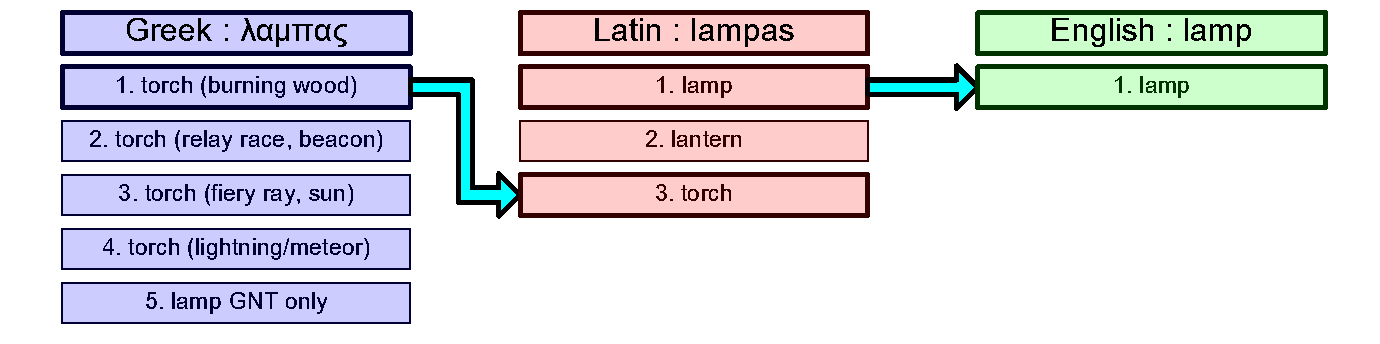
    1. Torch (of burning wood, procession).
    2. Torch (relay race as a beacon).
    3. Torch (fiery ray, sun).
    4. Torches (in the sky, lightning, meteor).
    5. Oil lamp. GNT.
    6. Torch lit (specific festival).
CGL Lit Unlit Lit Cambridge Greek Lexicon (p. 868)

The meaning of "oil lamp" appears to be a GNT specific meaning. How does it change the parable to have the "maidens" with "torches"?

Information sign More: CGL: Cambridge Greek Lexicon

34. Greek word torch
Torches and lamps

Note: This is a preliminary diagram. Arrows, sizing, etc., are still needed.

35. Matthew 5:16 Lamps as lights
Matthew 5:16 Let your light so shine before men, that they may see your good works, and glorify your Father which is in heaven. [kjv]
ουτως λαμψατω το φως υμων εμπροσθεν των ανθρωπων οπως ιδωσιν υμων τα καλα εργα και δοξασωσιν τον πατερα υμων τον εν τοις ουρανοις [gnt]

The Greek word translated as "shine" is that of "lamp". Who or what is the "light"?

Logo: Pixar Animation StudiosThe purpose of a "lamp" is to "shine". The Pixar Animation Studios lamp is well-known and a part of many Pixar Animations.

LampThe ancient Greek word "λάμπω""shine, be bright, give light" and is the source of the English word "lamp" through French and the Latin word "lampas""torch, lamp, light".

It is best to "lamp" others using true (sun/Son) "light" rather than moon "light".

Information sign More: Philippians 2:15 deceptive appearance of a shining light
Information sign More: Matthew 5:16 Let the light of Jesus shine

36. Matthew 25:1 Lamps to take
Matthew 25:1 Then shall the kingdom of heaven be likened unto ten virgins, which took their lamps, and went forth to meet the bridegroom. [kjv]
τοτε ομοιωθησεται η βασιλεια των ουρανων δεκα παρθενοις αιτινες λαβουσαι τας λαμπαδας  αυτων  εαυτων εξηλθον εις  απαντησιν  υπαντησιν του νυμφιου [gnt]

Torch
The ancient Greek word "λάμπω""shine, be bright, give light" and is the source of the English word "lamp" through French and the Latin word "lampas""torch, lamp".

In this parable, "torches" are "taken". The only thing Jesus says to "take" is your "cross" and "follow" Him.
Might the code word meaning of "torch" be related to the code word meaning of "cross"? Might the code word meaning be that of oneself? Might the "torch" be like a "sword"?

Information sign More: Matthew 10:38-42 Commanded to follow in the cross walk
Information sign More: Parables and secret codes used and explained by Jesus

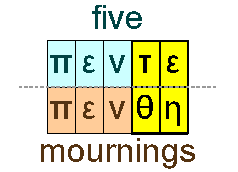
37. Matthew 25:1-2 Five and five
Matthew 25:1 Then shall the kingdom of heaven be likened unto ten virgins, which took their lamps, and went forth to meet the bridegroom. [kjv]
25:2 And five of them were wise, and five were foolish. [kjv]
πεντε δε  ησαν   εξ αυτων  φρονιμοι  ησαν μωραι και  αι   πεντε  μωραι  φρονιμοι [gnt]

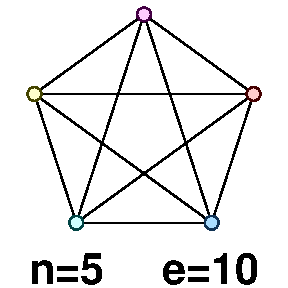
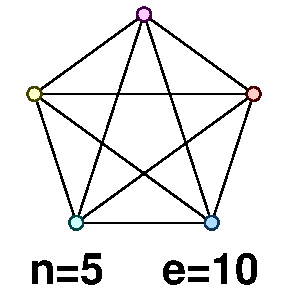
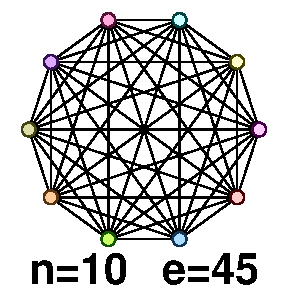
TPS 5 TPS 5 TPS 10
There are ten virgins.

How many connections within each group and between everyone?
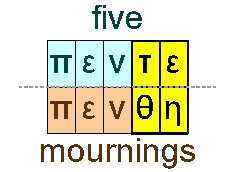
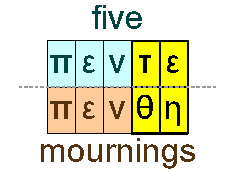
The Ancient Greek word "πέντε""five" and is the source of the first part of the English word "pentagon".

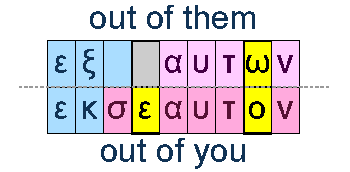
38. Matthew 25:2 Not a shadow of
Matthew 25:2 And five of them were wise, and five were foolish. [kjv]
πεντε δε  ησαν   εξ αυτων  φρονιμοι  ησαν μωραι και  αι   πεντε  μωραι  φρονιμοι [gnt]

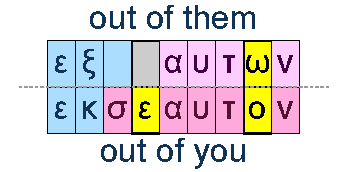
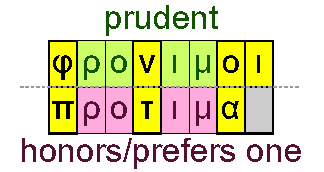
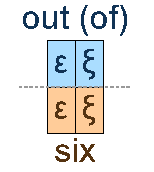
Out of and six Right and but a shadow

Greek word order: five but (not) out of them were foolish ...

The TR (Textus Receptus) changes the order of "wise" or "prudent" and "foolish". This appears to indicate that a more natural word order would not have the play on word added meaning.

39. Matthew 5:39 Right cheek
Matthew 5:39 But I say unto you, That ye resist not evil: but whosoever shall smite thee on thy right cheek, turn to him the other also. [kjv]
εγω δε λεγω υμιν μη αντιστηναι τω πονηρω αλλ οστις σε  ραπισει επι  ραπιζει εις την δεξιαν  σου   σιαγονα σου στρεψον αυτω και την αλλην [gnt]

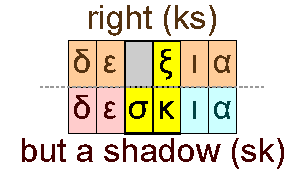
Most people are right-handed. If you hit with your right hand, it is easiest to hit the left cheek/jawbone. To hit the right cheek/jawbone may be more of a slap or backhand than a hit. There may be a play on words here between the sounds of "ks" and "sk".
English: right
Greek: δεξιά
Greek: δε σκιά
English: but not (even a) shadow

Jesus appears to have used a similar play on words back in verse 13 about the "salt" being "ineffective" or "not strong" or "not even a shadow".

Information sign More: Matthew 5:39 Turning the other cheek

40. Matthew 25:2 Ten virgins
Matthew 25:2 And five of them were wise, and five were foolish. [kjv]
πεντε δε  ησαν   εξ αυτων  φρονιμοι  ησαν μωραι και  αι   πεντε  μωραι  φρονιμοι [gnt]

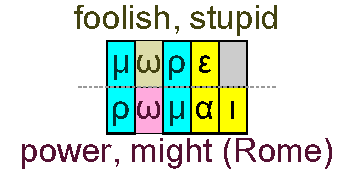
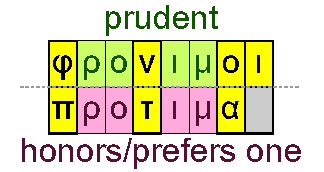
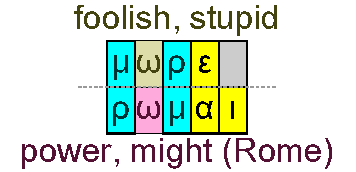
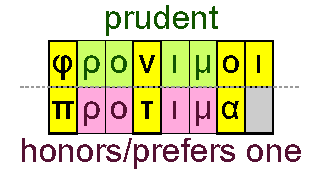
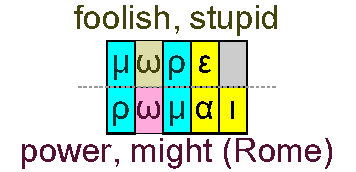
The TR changes the order of "foolish" and "prudent" which breaks a play on words. The ancient Greek word "φρόνιμος""sensible, mindful" and comes from the ancient Greek word "φρήν""midriff, stomach". A "sensible" approach requires some trade-offs.

Greek: five but out-of [but a shad-ow] them were foolish and five prudent.

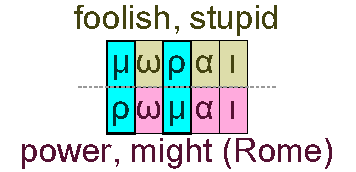
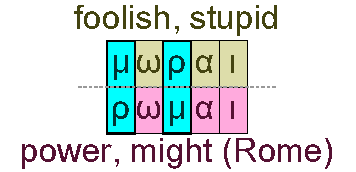
Foolish and Rome
The ancient Greek word "μωρός""foolish, stupid" as in the English word "moron". The modern Greek word "μωρό" (mo-RO) ≈ "baby, infant". The Latin word "fatuus""foolish, stupid".


Information sign More: The number five
Information sign More: A wise opportunity to be prudent

41. Ephesians 1:8 The stomach for a gut feeling
Ephesians 1:8 Wherein he hath abounded toward us in all wisdom and prudence; [kjv]
ης επερισσευσεν εις ημας εν παση σοφια και φρονησει [gnt]
sapientiaprudentia [v]

Here is a comparison. The ancient Greek word "φρόνιμος""sensible, mindful" and comes from the ancient Greek word "φρήν""midriff, stomach". A "sensible" approach requires that trade-offs be made. [spleen]

In relating to his Greek audience, Paul will use the Greek word for "wise" in the sense that they would know it. Jesus, however, does not use the Greek word for "wise" in a good sense. Instead, Jesus uses the word for "prudent" in a trade-off manner (not an extreme).

Information sign More: A prudent approach to a wise understanding
Information sign More: A wise fool should not be prudish about being prudent
Information sign More: A wise opportunity to be prudent

42. Matthew 25:1-2 Wise and foolish
Many English translations slide the meaning. Why? Here is one example.
Matthew 25:1 Then shall the kingdom of heaven be likened unto ten virgins, which took their lamps, and went forth to meet the bridegroom. [kjv]
25:2 And five of them were wise, and five were foolish. [kjv]
πεντε δε  ησαν   εξ αυτων  φρονιμοι  ησαν μωραι και  αι   πεντε  μωραι  φρονιμοι [gnt]

Logical head knowledge: "σοφός""clever, cunning" as in "wisdom". Intuitive gut feeling: "φρόνιμος""sensible, mindful" as in "gut feeling". The Greek for "foolish" is that of being "childish".

Information sign More: A wise opportunity to be prudent

43. Matthew 10:16 Animal crackers
In Matthew 10:16, Jesus uses four creatures in one verse: sheep, wolves, serpents and doves or (pigeons) as "birds". The English adjectives do not fit the Greek words.
Matthew 10:16 Behold, I send you forth as sheep in the midst of wolves: be ye therefore wise as serpents, and harmless as doves. [kjv]
ιδου εγω αποστελλω υμας ως προβατα εν μεσω λυκων γινεσθε ουν φρονιμοι ως οι οφεις και ακεραιοι ως αι περιστεραι [gnt]

"Wolves" operate in groups and look for any weakness in their prey. Wolves and dogs can interbreed. A "wolf-dog" is in contrast to a "sheep-dog".

The "serpents" are not "wise" in the English sense. They are opportunistic and prudent. So, no "wise crackers" here!

The "doves" or "pigeons" (same bird) or "birds" are not "harmless" in the English sense. They are without frills (insect antennas), with smooth feathers, preened of pests. not fact-checked, etc. Is this how "birds" of "prey" or "pray" want to appear?

Information sign More: Matthew 7:6 The hunt for holy hound splits
Information sign More: Flipping the pigeon bird as reality or perception
Information sign More: A wise opportunity to be prudent
Information sign More: Matthew 10:16 An unworldly thorny issue that is for the pigeon birds

44. Matthew 25:2
   Matthew 25:2 
 All 
KJV: And five of them were wise, and five were foolish.
Greek: πεντε δε ησαν εξ αυτων φρονιμοι ησαν μωραι και αι πεντε μωραι φρονιμοι

45. Matthew 25:3 Olive oil
Matthew 25:3 They that were foolish took their lamps, and took no oil with them: [kjv]
 αιτινες  αι γαρ μωραι λαβουσαι τας λαμπαδας  εαυτων  αυτων ουκ ελαβον μεθ εαυτων ελαιον [gnt]

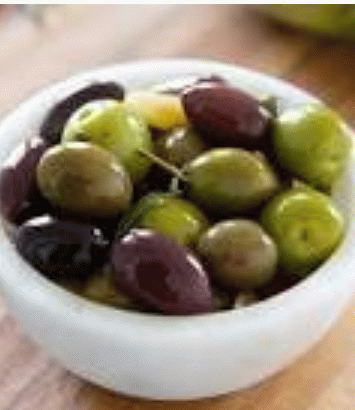
Olive oil Olives
The "oil" in ancient times was not the crude oil as petroleum of today, but olive oil.

[Popeye and Olive Oyl (Girl)]
[Rudolph and name-calling]
Note that in the verse above, the KJV translates the Greek "olive oil" as just "oil". In English, "oil" meant olive oil until about the 13th century., then it became any fatty substance (e.g., whale oil, etc.). The word petroleum did not become common until the 19th century. The Garden of Gethsemane is the Garden of the "olive oil" press.

Information sign More: Oil lamps and candles

46. Matthew 25:3 Early birds
Matthew 25:3 They that were foolish took their lamps, and took no oil with them: [kjv]
 αιτινες  αι γαρ μωραι λαβουσαι τας λαμπαδας  εαυτων  αυτων ουκ ελαβον μεθ εαυτων ελαιον [gnt]

Jesus, as the observer, said that they "took no oil with them". What does Jesus consider "oil"? Might "oil" be a code word?

Discuss: Consider a sports team that thinks it is prepared but, once the game starts, discovers that they were mistaken. Might there be weeping and gnashing of teeth?

Information sign More: The weeping and the gnashing of the teeth

47. Matthew 25:3
   Matthew 25:3 
 All 
KJV: They that were foolish took their lamps, and took no oil with them:
Greek: αιτινες αι γαρ μωραι λαβουσαι τας λαμπαδας εαυτων αυτων ουκ ελαβον μεθ εαυτων ελαιον

48. Strongs - oil
*G1637 *11 ἔλαιον (el'-ah-yon) : neuter of the same as G1636; olive oil:--oil.
Word usage per chapter Words: ελαιον=6 ελαιου=2 ελαιω=3

The English word "oil" comes through French from the Latin word "oleum""olive oil" which comes from the ancient Greek word "ἔλαιον""olive oil" and comes from "ἐλαία""olive". The modern Greek word "έλαιον" (EH-leh-on) ≈ "olive oil". A more common shortened form is the modern Greek word "λάδι" (LA-thee) ≈ "oil, olive oil".

49. Owls and howls
Luke 1:72 To perform the mercy promised to our fathers, and to remember his holy covenant; [kjv]
ποιησαι ελεος μετα των πατερων ημων και μνησθηναι διαθηκης αγιας αυτου [gnt]

Kennesaw State Owls

The ancient Greek word "ἔλεος""pity, mercy, compassion" and appears to be related to "ἐλελεῦ""woe, alas" (as a cry of pain) and would be often used twice in succession.

Note: An extended variation is reported as being used as a war cry, so not all uses appear to be "merciful".

Information sign More: Matthew 5:7 B5 Mercy me, full of mercy, mercy me
Information sign More: Owls and howls

50. Matthew 25:3 Symbolic meaning of oil
Matthew 25:3 They that were foolish took their lamps, and took no oil with them: [kjv]
 αιτινες  αι γαρ μωραι λαβουσαι τας λαμπαδας  εαυτων  αυτων ουκ ελαβον μεθ εαυτων ελαιον [gnt]

The following words may be related and can be play on words with each other. Discuss: The "Holy Spirit" does not speak of itself, so any symbolic reference is always somewhat obscure.

Information sign More: Matthew 5:7 B5 Mercy me, full of mercy, mercy me
Information sign More: Owls and howls
Information sign More: Matthew 5:42 Do not loan shirk

51. Matthew 25:3 With them
Matthew 25:3 They that were foolish took their lamps, and took no oil with them: [kjv]
 αιτινες  αι γαρ μωραι λαβουσαι τας λαμπαδας  εαυτων  αυτων ουκ ελαβον μεθ εαυτων ελαιον [gnt]

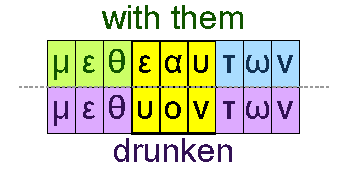
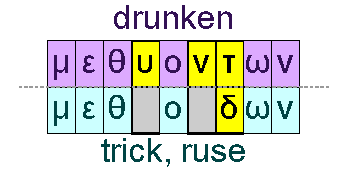
With them and drunken Drunken and trick/ruse

The play on words goes back to the end of the previous chapter (5 verses before).

52. Matthew 24:49 Drunken trick
Matthew 24:49 And shall begin to smite his fellowservants, and to eat and drink with the drunken; [kjv]
και αρξηται τυπτειν τους συνδουλους  εσθιειν  αυτου εσθιη δε και  πινειν  πινη μετα των μεθυοντων [gnt]

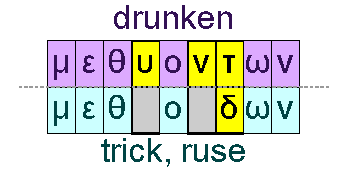
Drunken and trick/ruse

To chemists, alcohol is not a problem. It is a solution!

Information sign More: Matthew 24:43-51 Parable of the evil servant

53. Strongs - vessels
*G30 *2 ἀγγεῖον (ang-eye'-on) : from aggos (a pail, perhaps as bent; compare the base of G43); a receptacle:--vessel.
Word usage per chapter Words: αγγειοις αγγη

The ancient Greek word "ἀγγεῖον""vessel, jar, reservoir, coffin, sarcophagus"and comes from "ἄγγος""vessel, vat, bucket, pail". The modern Greek word "αγγειοπλαστική" (agh-ee-o-pla-stee-KEE) ≈ "pottery, ceramics, angioplasty".

The modern Greek word "αγγείο" (agh-EE-o) ≈ "vessel, pot, urn, vase" - especially in the ancient sense. The anatomical term in modern usage is that of a blood vessel.

54. Usage - vessels
  • *G30 *2 ἀγγεῖον (ang-eye'-on) : from aggos (a pail, perhaps as bent; compare the base of G43); a receptacle:--vessel.
  •  Usage 
     All 
    • αγγη
      •   Matthew 13:48 ... and gathered the good into vessels, but cast the bad away.
    • αγγειοις
      •   Matthew 25:4 ... oil in their vessels with their lamps.

55. Matthew 25:4 Angels with vessels in the hand
Matthew 25:4 But the wise took oil in their vessels with their lamps. [kjv]
αι δε φρονιμοι ελαβον ελαιον εν τοις αγγειοις  αυτων   μετα των λαμπαδων  αυτων  εαυτων [gnt]

Vessels and messengers Vessels and pledges/bethrothals


56. Matthew 25:4 Vessels
Matthew 25:4 But the wise took oil in their vessels with their lamps. [kjv]
αι δε φρονιμοι ελαβον ελαιον εν τοις αγγειοις  αυτων   μετα των λαμπαδων  αυτων  εαυτων [gnt]

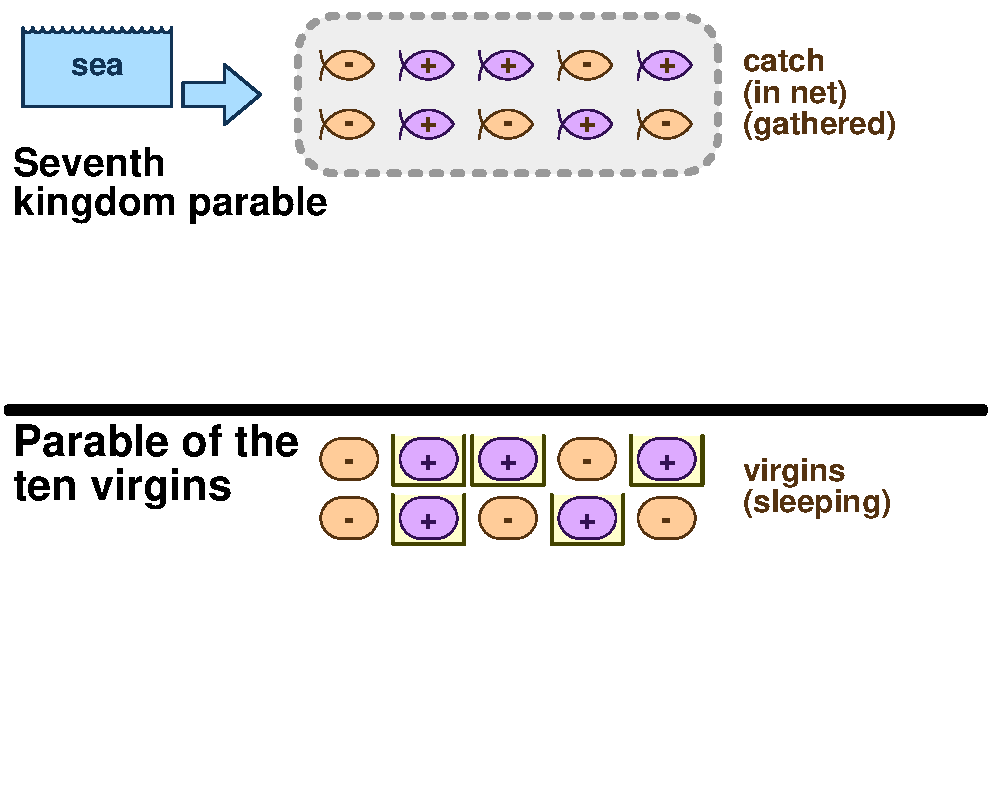
So instead of a candle, there is a "vessel" holding "oil" as part of a "lamp". The ancient Greek word "ἀγγεῖον""vessel, jar, reservoir, coffin, sarcophagus"and comes from "ἄγγος""vessel, vat, bucket, pail" which is the source of the English medical term "angioplasty". There is mention of the "prudent" or "wise" having "vessels". There is no mention of the "foolish" having "vessels". Might this be important? The only other place where this word for "vessels" appears is in the seventh kingdom parable of the harvest at the end of the age.

Information sign More: Matthew 13:24-30,36-43 KP2 Parable of the wheat and tares

57. Matthew 13:47-50: KP7 Parable of the harvest at the end of the age
Matthew 13:47 Again, the kingdom of heaven is like unto a net, that was cast into the sea, and gathered of every kind: [kjv]
13:48 Which, when it was full, they drew to shore, and sat down, and gathered the good into vessels, but cast the bad away. [kjv]

Vessels 2
The 7th and last of the Kingdom Parables in Matthew 13 is about the (implied) fish in the sea (of humanity).
The "bad" is that of "rotten" or "putrid" or "spoiled" (e.g., fruit). The "vessels" may be reflexive. Only the "good" are "arranged", not necessarily "put", into "vessels".

Information sign More: Matthew 13:47-50: KP7 Parable of the harvest at the end of the age

58. Matthew 25:4
   Matthew 25:4 
 All 
KJV: But the wise took oil in their vessels with their lamps.
Greek: αι δε φρονιμοι ελαβον ελαιον εν τοις αγγειοις αυτων μετα των λαμπαδων αυτων εαυτων

59. Matthew 25:3-4
Matthew 25:3 They that were foolish took their lamps, and took no oil with them: [kjv]
 αιτινες  αι γαρ μωραι λαβουσαι τας λαμπαδας  εαυτων  αυτων ουκ ελαβον μεθ εαυτων ελαιον [gnt]
25:4 But the wise took oil in their vessels with their lamps. [kjv]
αι δε φρονιμοι ελαβον ελαιον εν τοις αγγειοις  αυτων   μετα των λαμπαδων  αυτων  εαυτων [gnt]

The only thing Jesus says to "take" is your "cross" and "follow" Him. Might the code word meaning of "oil" be related to the code word meaning of "cross"?

60. Matthew 25:5 Tarry
Matthew 25:5 While the bridegroom tarried, they all slumbered and slept. [kjv]
χρονιζοντος δε του νυμφιου ενυσταξαν πασαι και εκαθευδον [gnt]

While "sleeping" the "evil" one, or "birds" dropped "weeds" among the "wheat".

The Greek for "sleeping" is used by Jesus to refer to being "dead" as in the "awakening" or "raising" of Lazarus on John 10. The ancient Greek word "χρόνος""time" and is the source of words such as "chronological", "anachronism", "crony", etc.

[Peter and delay, parable of the wedding feast, disciples sleeping in Gethsemane]

Information sign More: Matthew 22:1-5 Parable of the wedding feast 1
Information sign More: Matthew 13:24-30,36-43 KP2 Parable of the wheat and tares

61. Matthew 25:5
   Matthew 25:5 
 All 
KJV: While the bridegroom tarried, they all slumbered and slept.
Greek: χρονιζοντος δε του νυμφιου ενυσταξαν πασαι και εκαθευδον

62. Matthew 25:2-5
Matthew 25:2 And five of them were wise, and five were foolish. [kjv]
25:3 They that were foolish took their lamps, and took no oil with them: [kjv]
25:4 But the wise took oil in their vessels with their lamps. [kjv]
25:5 While the bridegroom tarried, they all slumbered and slept. [kjv]

Vessels 1

63. Matthew 25:6 Cry
Matthew 25:6 And at mid night there was a cry made, Behold, the bridegroom cometh; go ye out to meet him. [kjv]
μεσης δε νυκτος κραυγη γεγονεν ιδου ο νυμφιος  ερχεται   εξερχεσθε εις απαντησιν  αυτου   [gnt]

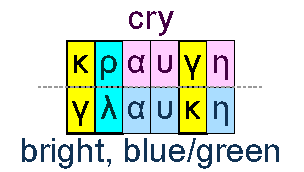
Night and beast Cry and bright blue/green

Might the "cry" be before a "bright" "light" appearing? Might it be mistaken for a "beast"?

64. Matthew 25:6 Messiah in the middle
Matthew 25:6 And at mid night there was a cry made, Behold, the bridegroom cometh; go ye out to meet him. [kjv]
μεσης δε νυκτος κραυγη γεγονεν ιδου ο νυμφιος  ερχεται   εξερχεσθε εις απαντησιν  αυτου   [gnt]

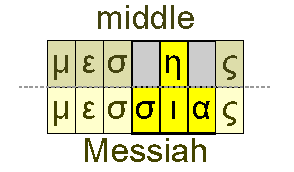
Middle and Messiah

In John 3, Nicodemus meets Jesus in the "middle" of the "night". The Greek word for "middle", as used, can be a play on words with the Greek word for "Messiah" which comes from the Hebrew.
65. Messiah and Saviour
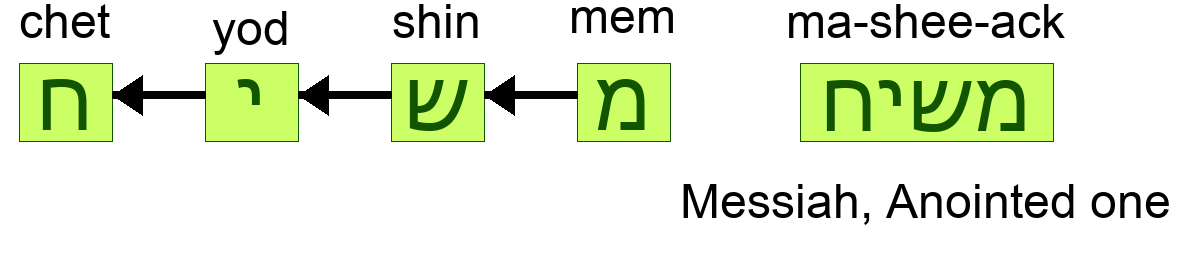
Jesus is our "Messiah" (Savior), in Hebrew, the "ma-shee-ack". The "Messiah" is associated with the "kinsman redeemer". Many details are in the book of Ruth. This Hebrew word was translated into Greek as the ancient Greek word "χριστός""anointed one, Christ".
The Hebrew word "משיח" (ma-shee-ack) ≈ "Messiah, Anointed one".

משיח - Messiah, Anointed one


Information sign More: Matthew 24:4-5 False Christs and all of it
Information sign More: Jesus as Messiah and King

66. King and ruler
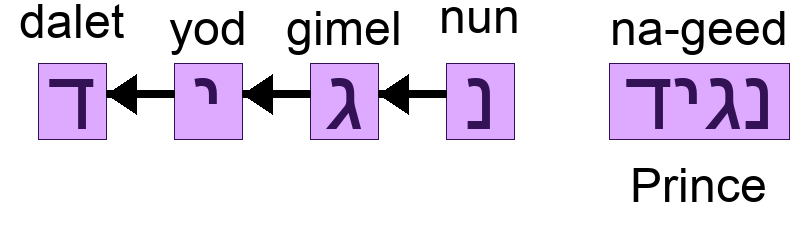
Jesus is also our "King" (Prince), in Hebrew, the "na-geed". The "King" is associated with the "avenger of blood". Many details are in the book of Revelation. The ancient Greek word "βασίλεια""kingdom" as in "realm". A "basilica" is a hall of the king of the kingdom.

The Hebrew word "נגיד" (na-geed) ≈ "Prince".
נגיד - Prince


Information sign More: Matthew 11:12-14 Exploring the Kingdom of Heaven
Information sign More: Matthew 24:4-5 False Christs and all of it
Information sign More: Jesus as Messiah and King

67. Matthew 25:6 The bridegroom
Matthew 25:6 And at mid night there was a cry made, Behold, the bridegroom cometh; go ye out to meet him. [kjv]
μεσης δε νυκτος κραυγη γεγονεν ιδου ο νυμφιος  ερχεται   εξερχεσθε εις απαντησιν  αυτου   [gnt]

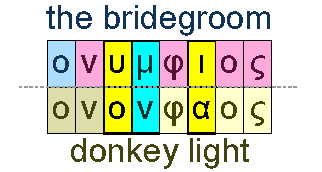
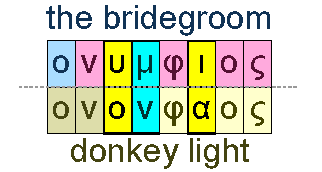
The bridegroom and donkey light

Who is "the" "bridegroom"? Might the middle of the night have some "donkey" "light"?

Play: Latin word "onus""burden, load" and is the source of the English word "onus". The ancient Greek word "ὄνομαι""impugn, quarrel with".

Information sign More: Matthew 21:1-11 Triumphal entry and donkey voices

68. Matthew 25:6
   Matthew 25:6 
 All 
KJV: And at mid night there was a cry made, Behold, the bridegroom cometh; go ye out to meet him.
Greek: μεσης δε νυκτος κραυγη γεγονεν ιδου ο νυμφιος ερχεται εξερχεσθε εις απαντησιν αυτου

69. Matthew 25:7 Arise and wake up
Matthew 25:7 Then all those virgins arose, and trimmed their lamps. [kjv]
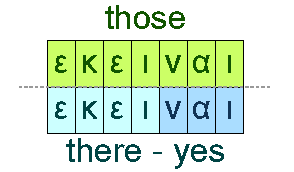
τοτε ηγερθησαν πασαι αι παρθενοι εκειναι και εκοσμησαν τας λαμπαδας  αυτων  εαυτων [gnt]

The ancient Greek word "ἐγείρω""awaken, raise up, erect a building"`. Jesus often uses the word for "sleep" as "dead". He thus, "awakens" the "dead" such as Lazarus. The same word is used for a "lame" person who is "raised up" to walk.

All "ten" "arose" or were "woken up". They were sleeping two verses earlier.

70. Strongs - arise
*G1453 *143 ἐγείρω (eg-i'-ro) : probably akin to the base of G58 (through the idea of collecting one's faculties); to waken (transitively or intransitively), i.e. rouse (literally, from sleep, from sitting or lying, from disease, from death; or figuratively, from obscurity, inactivity, ruins, nonexistence):--awake, lift (up), raise (again, up), rear up, (a-)rise (again, up), stand, take up.
Word usage per chapter Words: εγειραι=2 εγειραντα=2 εγειραντος=3 εγειρας=3 εγειρε=12 εγειρει=2 εγειρειν=2 εγειρεσθε=3 εγειρεται=7 εγειρετε εγειρηται εγειρομαι εγειρονται=9 εγειροντι εγειρου εγειρουσιν εγερει=3 εγερεις εγερθεις=13 εγερθεντι=2 εγερθη=2 εγερθηναι=5 εγερθησεται=7 εγερθησονται=4 εγερθητε εγερθητι εγερω εγηγερμενον=2 εγηγερται=9 ηγειραν ηγειρεν=21 ηγερθη=17 ηγερθησαν=2

71. Matthew 25:7 Maidens there
Matthew 25:7 Then all those virgins arose, and trimmed their lamps. [kjv]
τοτε ηγερθησαν πασαι αι παρθενοι εκειναι και εκοσμησαν τας λαμπαδας  αυτων  εαυτων [gnt]

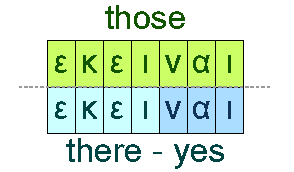
TenPin 6 Maidens and beyond (the) rarrows Those and there yes


72. Strongs - adorn
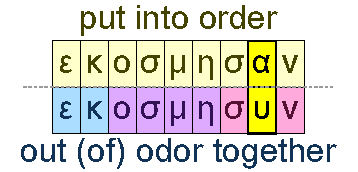
*G2885 *10 κοσμέω (kos-meh'-o) : from G2889; to put in proper order, i.e. decorate (literally or figuratively); specially, to snuff (a wick):--adorn, garnish, trim.
Word usage per chapter Words: εκοσμησαν εκοσμουν κεκοσμημενην κεκοσμημενοι κεκοσμημενον=2 κεκοσμηται κοσμειν κοσμειτε κοσμωσιν

Does it make sense for them to "trim" their "lamps"? The Greek word means to "put in order" or "adorn" as in "make pretty".

73. Usage - adorn
  • *G2885 *10 κοσμέω (kos-meh'-o) : from G2889; to put in proper order, i.e. decorate (literally or figuratively); specially, to snuff (a wick):--adorn, garnish, trim.
  •  Usage 
     All 
    • κεκοσμημενον *2
      •   Matthew 12:44 ... it empty, swept, and garnished.
      •   Luke 11:25 ... he findeth it swept and garnished.
    • κοσμειτε
      •   Matthew 23:29 ... the tombs of the prophets, and garnish the sepulchres of the righteous,
    • εκοσμησαν
      •   Matthew 25:7 ... virgins arose, and trimmed their lamps.
    • κεκοσμηται
      •   Luke 21:5 ... of the temple, how it was adorned with goodly stones and ...
    • κοσμειν
      •   1 Timothy 2:9 In like manner also, that women adorn themselves in ...
    • κοσμωσιν
      •   Titus 2:10 ... good fidelity; that they may adorn the doctrine of God our ...
    • εκοσμουν
      •   1 Peter 3:5 ... who trusted in God, adorned themselves, being in subjection unto their own husbands:
    • κεκοσμημενην
      •   Revelation 21:2 ... prepared as a bride adorned for her husband.
    • κεκοσμημενοι
      •   Revelation 21:19 And the foundations of the wall of the city were garnished with all manner of precious stones. ...

74. Matthew 25:7 Trim the lamps
Matthew 25:7 Then all those virgins arose, and trimmed their lamps. [kjv]
τοτε ηγερθησαν πασαι αι παρθενοι εκειναι και εκοσμησαν τας λαμπαδας  αυτων  εαυτων [gnt]

The Greek for "trimmed" is that of "arranged/adorned into a good appearance". All other uses in the GNT are that of "adorn", "garnish", etc.
[cosmetology vs. cosmology exams, funeral make-up for the corpse, get yourself in order]

Information sign More: The adornment of people in the cosmos

75. Matthew 25:7 Odors
Matthew 25:7 Then all those virgins arose, and trimmed their lamps. [kjv]
τοτε ηγερθησαν πασαι αι παρθενοι εκειναι και εκοσμησαν τας λαμπαδας  αυτων  εαυτων [gnt]

Maidens and beyond (the) rarrows Those and there yes Put into order and out (of) odor together

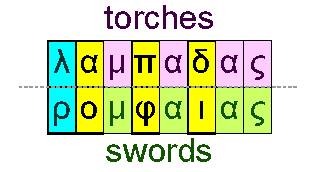
What might the "torches" represent?

76. Matthew 25:7 Flaming swords
Matthew 25:7 Then all those virgins arose, and trimmed their lamps. [kjv]
τοτε ηγερθησαν πασαι αι παρθενοι εκειναι και εκοσμησαν τας λαμπαδας  αυτων  εαυτων [gnt]

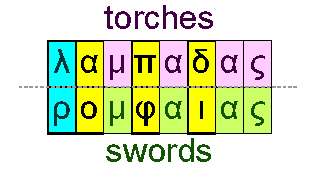
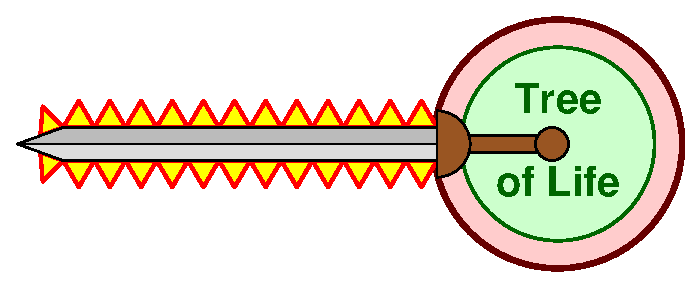
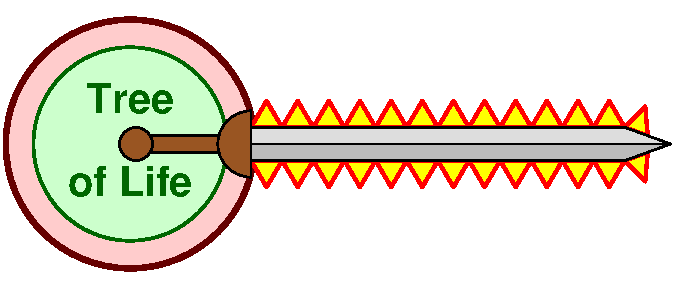
Wooden torch unlit vertical Wooden torch lit vertical Torches/lamps and swords Enclosed tree of life with flaming sword
Do you now see why they would not take "oil" "in" their "torches"?
To get to the Tree of Life (in the Garden of Eden) one needs both a "sword" and a "flame" as in the Holy Spirit, perhaps "oil". No "oil", no "flaming" "sword". In the parable, the "torches" are never actually stated as lit. The "bridegroom" appears to provide the needed light.

Information sign More: The security of flaming swords
Information sign More: Similarity of the R and L sounds

77. Matthew 25:7
   Matthew 25:7 
 All 
KJV: Then all those virgins arose, and trimmed their lamps.
Greek: τοτε ηγερθησαν πασαι αι παρθενοι εκειναι και εκοσμησαν τας λαμπαδας αυτων εαυτων

78. Matthew 25:8 Said dosage
Matthew 25:8 And the foolish said unto the wise, Give us of your oil; for our lamps are gone out. [kjv]
αι δε μωραι ταις φρονιμοις  ειπον  ειπαν δοτε ημιν εκ του ελαιου υμων οτι αι λαμπαδες ημων σβεννυνται [gnt]

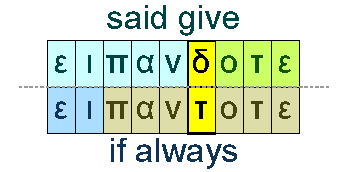
Foolish and power/Rome Doses give only as directed Said give and if always

The word for "give" is that of a command and not just a polite request. The Greek word for "give" is the ancient Greek word "δόσις""giving, gift, dose of medicine" and is the source of the English word "dose".

[share with others, give life for someone else, love neighbor as oneself]

Information sign More: Matthew 7:11 Good gifts and bad gifts

79. Matthew 25:8 And said give
Matthew 25:8 And the foolish said unto the wise, Give us of your oil; for our lamps are gone out. [kjv]
αι δε μωραι ταις φρονιμοις  ειπον  ειπαν δοτε ημιν εκ του ελαιου υμων οτι αι λαμπαδες ημων σβεννυνται [gnt]

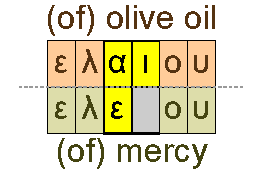
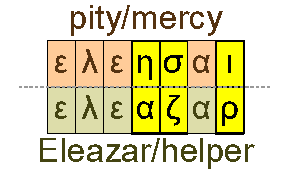
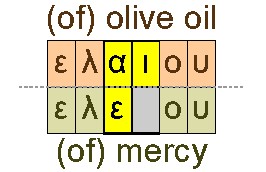
Foolish and power/Rome Doses give only as directed Olive oil and mercy Mercy and Eleazar


The "Holy Spirit" is associated with a "helper" as in an "advocate". [Noah and comforter]

80. Matthew 25:8 Sun seed oil
Matthew 25:8 And the foolish said unto the wise, Give us of your oil; for our lamps are gone out. [kjv]
αι δε μωραι ταις φρονιμοις  ειπον  ειπαν δοτε ημιν εκ του ελαιου υμων οτι αι λαμπαδες ημων σβεννυνται [gnt]

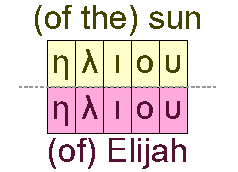
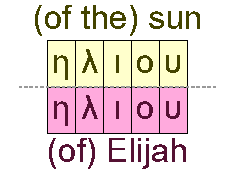
Olive oil and mercy Of the sun and of Elijah

Might "olive oil", "mercy", the "sun" and "Elijah" (used by Jesus in connection with John the Baptist) be related?

81. Luke 4:25,40 Sun and Elijah
Luke 4:25 But I tell you of a truth, many widows were in Israel in the days of Elias, when the heaven was shut up three years and six months, when great famine was throughout all the land; [kjv]
επ αληθειας δε λεγω υμιν πολλαι χηραι ησαν εν ταις ημεραις ηλιου εν τω ισραηλ οτε εκλεισθη ο ουρανος  επι   ετη τρια και μηνας εξ ως εγενετο λιμος μεγας επι πασαν την γην [gnt]
4:40 Now when the sun was setting, all they that had any sick with divers diseases brought them unto him; and he laid his hands on every one of them, and healed them. [kjv]
δυνοντος δε του ηλιου  παντες  απαντες οσοι ειχον ασθενουντας νοσοις ποικιλαις ηγαγον αυτους προς αυτον ο δε ενι εκαστω αυτων τας χειρας  επιθεις εθεραπευσεν  επιτιθεις εθεραπευεν αυτους [gnt]

Of the sun and of Elijah


82. Luke 4:25
   Luke 4:25 
 All 
KJV: But I tell you of a truth, many widows were in Israel in the days of Elias, when the heaven was shut up three years and six months, when great famine was throughout all the land;
Greek: επ αληθειας δε λεγω υμιν πολλαι χηραι ησαν εν ταις ημεραις ηλιου εν τω ισραηλ οτε εκλεισθη ο ουρανος επι ετη τρια και μηνας εξ ως εγενετο λιμος μεγας επι πασαν την γην

83. Luke 4:40
   Luke 4:40 
 All 
KJV: Now when the sun was setting, all they that had any sick with divers diseases brought them unto him; and he laid his hands on every one of them, and healed them.
Greek: δυνοντος δε του ηλιου παντες απαντες οσοι ειχον ασθενουντας νοσοις ποικιλαις ηγαγον αυτους προς αυτον ο δε ενι εκαστω αυτων τας χειρας επιθεις εθεραπευσεν επιτιθεις εθεραπευεν αυτους

84. Matthew 25:8 Gone out
Matthew 25:8 And the foolish said unto the wise, Give us of your oil; for our lamps are gone out. [kjv]
αι δε μωραι ταις φρονιμοις  ειπον  ειπαν δοτε ημιν εκ του ελαιου υμων οτι αι λαμπαδες ημων σβεννυνται [gnt]
fatuaesapientibus dixeruntoleolampadesextinguntur [v]

The Greek for "gone out" or "going out" is that of (being) "extinguished" and is onomatopoeic.

How can the "lamps" of the "foolish" "go out" when they have no "oil"? One explanation is that they tried to burn the wick. One should know that that does not work. Perhaps they had been "sold" a deceptive "bill of goods" and they have, so to speak, "snake oil" but not real "oil".

Is it possible for the "prudent" who have "oil" to give "oil" to the "foolish"?

[intinction, frozen chosen]

85. Proverbs 31:18
Proverbs 31:18 She perceiveth that her merchandise is good: her candle goeth not out by night. [kjv]
εγευσατο οτι καλον εστιν το εργαζεσθαι και ουκ αποσβεννυται ολην την νυκτα ο λυχνος αυτης [lxx]

The "virgins" did not "light" their "candle" until the right time.

With the two play on words of "light" in the parable verse, do they even need to "light" their "lamps"?

86. Proverbs 31:18
 All 
KJV: She perceiveth that her merchandise is good: her candle goeth not out by night.
Hebrew: טעמה כי טוב סחרה לא יכבה בליל נרה׃
Greek: εγευσατο οτι καλον εστιν το εργαζεσθαι και ουκ αποσβεννυται ολην την νυκτα ο λυχνος αυτης

87. Matthew 25:8
   Matthew 25:8 
 All 
KJV: And the foolish said unto the wise, Give us of your oil; for our lamps are gone out.
Greek: αι δε μωραι ταις φρονιμοις ειπον ειπαν δοτε ημιν εκ του ελαιου υμων οτι αι λαμπαδες ημων σβεννυνται
Latin: fatuae autem sapientibus dixerunt date nobis de oleo vestro quia lampades nostrae extinguntur

88. Strongs - answer
*G611 *226 ἀποκρίνομαι (ap-ok-ree'-nom-ahee) : from G575 and krino; to conclude for oneself, i.e. (by implication) to respond; by Hebraism (compare H6030) to begin to speak (where an address is expected):--answer.
Word usage per chapter Words: απεκριθη=79 απεκριθην=2 απεκριθης απεκριθησαν=16 απεκρινατο=7 αποκριθεις=96 αποκριθεισα αποκριθεν αποκριθεντες=7 αποκριθη αποκριθηναι αποκριθησεται αποκριθησονται=2 αποκριθητε=3 αποκριθωσιν αποκρινεσθαι αποκρινεται=4 αποκρινη=4

89. Usage - answer
  • *G611 *226 ἀποκρίνομαι (ap-ok-ree'-nom-ahee) : from G575 and krino; to conclude for oneself, i.e. (by implication) to respond; by Hebraism (compare H6030) to begin to speak (where an address is expected):--answer.
  •  Usage 
     All 
       απεκριθησαν *16  of 226
          Matthew 12:38 ... of the scribes and of the Pharisees answered, saying, Master, we would ...
          Matthew 25:9 But the wise answered, saying, Not so; lest there be ...
          Mark 8:4 And his disciples answered him, From whence can ...
          Luke 20:7 And they answered, that they could not tell whence it was.
          John 2:18 Then answered the Jews and said unto him, ...
          John 7:46 The officers answered, Never man spake like ...
          John 7:47 Then answered them the Pharisees, Are ye ...
          John 7:52 They answered and said unto him, Art thou ...
          John 9:20 His parents answered them and said, ...
          John 9:34 They answered and said unto him, Thou wast ...
          John 10:33 The Jews answered him, saying, For a ...
          John 18:5 They answered him, Jesus of Nazareth. Jesus saith ...
          John 18:30 They answered and said unto him, If he ...
          John 19:7 The Jews answered him, We have a law, ...
          John 19:15 ... your King? The chief priests answered, We have no king ...
          John 21:5 ... have ye any meat? They answered him, No.

90. Matthew 25:9 Answered
Matthew 25:9 But the wise answered, saying, Not so; lest there be not enough for us and you: but go ye rather to them that sell, and buy for yourselves. [kjv]
απεκριθησαν δε αι φρονιμοι λεγουσαι μηποτε  ουκ  ου μη αρκεση ημιν και υμιν πορευεσθε  δε   μαλλον προς τους πωλουντας και αγορασατε εαυταις [gnt]

Answered and apart from barley together

The ancient Greek word "ἀποκρίνομαι""answer" and comes from the ancient Greek word "ἀποκρίνω""separate, distinguish".

91. Matthew 25:9 Lest
Matthew 25:9 But the wise answered, saying, Not so; lest there be not enough for us and you: but go ye rather to them that sell, and buy for yourselves. [kjv]
απεκριθησαν δε αι φρονιμοι λεγουσαι μηποτε  ουκ  ου μη αρκεση ημιν και υμιν πορευεσθε  δε   μαλλον προς τους πωλουντας και αγορασατε εαυταις [gnt]

Not so and do not give

The KJV translates the sarcastic "not" as "not so; lest"

92. Greek negation
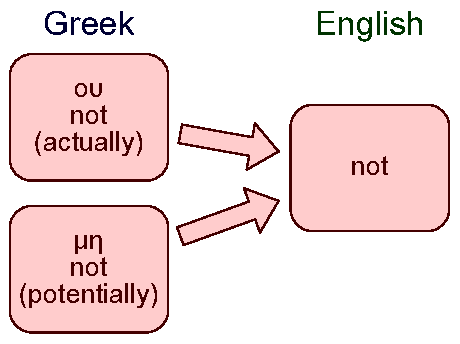
Greek has a number of words for negation.
not
These can be combined. The ancient Greek words "ου μη""not not" appear in 137 verses in the GNT. This is a negative that includes both the abstract/potential and the physical/actual.
Other uses of the double negative are usually in the logical sense where two negations do make a positive. Do you know that two positives can make a negative? Yeah, right!

Information sign More: Do not no way use double negatives

93. Matthew 25:9 Enough
Matthew 25:9 But the wise answered, saying, Not so; lest there be not enough for us and you: but go ye rather to them that sell, and buy for yourselves. [kjv]
απεκριθησαν δε αι φρονιμοι λεγουσαι μηποτε  ουκ  ου μη αρκεση ημιν και υμιν πορευεσθε  δε   μαλλον προς τους πωλουντας και αγορασατε εαυταις [gnt]

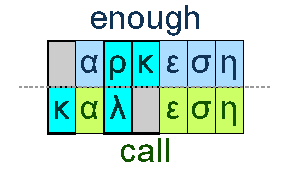
Enough and call

The ancient Greek word "καλέω""call".

94. Matthew 20:8 Call
Matthew 20:8 … the lord of the vineyard saith unto his steward, Call the labourers… [kjv]
… λεγει ο κυριος του αμπελωνος τω επιτροπω αυτου καλεσον τους εργατας … [gnt]


95. Matthew 25:9 Not enough
Matthew 25:9 But the wise answered, saying, Not so; lest there be not enough for us and you: but go ye rather to them that sell, and buy for yourselves. [kjv]
απεκριθησαν δε αι φρονιμοι λεγουσαι μηποτε  ουκ  ου μη αρκεση ημιν και υμιν πορευεσθε  δε   μαλλον προς τους πωλουντας και αγορασατε εαυταις [gnt]

The ancient Greek word "ἀρκέω""ward off, defend, suffice, have enough" and is part of the Greek word for "self-sufficiency" and is a play on words with the Latin word for "ark" as in Noah's "ark". Will the "door" of the "ark" "close" in this parable?

The double negative translated as "not" is that there is not enough potentially nor actually. The next parable, of the talents, will involve potentiality and actuality in more detail.

[Days of Noah in the previous chapter, same discourse]

Information sign More: Philippians 4:9-11 Being content with self-sufficiency
Information sign More: Do not no way use double negatives

96. The enclosing of an ark
The English word "ark" comes from the Latin word "arca""chest, box" and comes from the Latin word "arceo""defend, enclose" as in something that encloses something else.
The Latin word is cognate to the ancient Greek word "ἀρκέω""ward off, defend, suffice, have enough" and is part of the Greek word for "self-sufficiency". The PIE (Proto Indo-European) root "*HERK""protect" is to guard or hold.

The Latin word become associated with Noah's Ark and the Ark of the Covenant.

A related Latin word is the Latin word "arcanus""hidden, secret" and is the source of the English word "arcane" as something hidden in some obscure way.

[ark as a business venture]

Information sign More: The enclosing of an ark

97. Matthew 25:9 Snake oil
Matthew 25:9 But the wise answered, saying, Not so; lest there be not enough for us and you: but go ye rather to them that sell, and buy for yourselves. [kjv]
απεκριθησαν δε αι φρονιμοι λεγουσαι μηποτε  ουκ  ου μη αρκεση ημιν και υμιν πορευεσθε  δε   μαλλον προς τους πωλουντας και αγορασατε εαυταις [gnt]

The ancient Greek word "ἀρκέω""ward off, defend, suffice, have enough" and is part of the Greek word for "self-sufficiency" and is a play on words with the Latin word for "ark" as in Noah's "ark". Will the "door" of the "ark" "close" in this parable?

Can one "buy" at "night"? Is it too late? Suppose that "oil" represents "mercy". How hard is it to give "mercy" when no one is there to whom to give "mercy"? If the "oil" represents the "Holy Spirit", how hard is it the "buy" the "Holy Spirit"?

[Days of Noah in the previous chapter, same discourse]

Information sign More: Matthew 10:5-10 Possessing acquired purchases

98. Acts 8:18-20
Acts 8:18 And when Simon saw that through laying on of the apostles' hands the Holy Ghost was given, he offered them money, [kjv]
 θεασαμενος  ιδων δε ο σιμων οτι δια της επιθεσεως των χειρων των αποστολων διδοται το πνευμα  το αγιον   προσηνεγκεν αυτοις χρηματα [gnt]
8:19 Saying, Give me also this power, that on whomsoever I lay hands, he may receive the Holy Ghost. [kjv]
λεγων δοτε καμοι την εξουσιαν ταυτην ινα ω  αν  εαν επιθω τας χειρας λαμβανη πνευμα αγιον [gnt]
8:20 But Peter said unto him, Thy money perish with thee, because thou hast thought that the gift of God may be purchased with money. [kjv]
πετρος δε ειπεν προς αυτον το αργυριον σου συν σοι ειη εις απωλειαν οτι την δωρεαν του θεου ενομισας δια χρηματων κτασθαι [gnt]

What is the better meaning of verse 20?

99. Matthew 25:9 Buy and sell
Matthew 25:9 But the wise answered, saying, Not so; lest there be not enough for us and you: but go ye rather to them that sell, and buy for yourselves. [kjv]
απεκριθησαν δε αι φρονιμοι λεγουσαι μηποτε  ουκ  ου μη αρκεση ημιν και υμιν πορευεσθε  δε   μαλλον προς τους πωλουντας και αγορασατε εαυταις [gnt]

The Greek word translated as "sell" is that of "sell out". Might the "foolish" have tried to go back to where they "took" their deceptive "snake oil"? Those "birds" may not be available, "cut off" or in the "outer darkness" (evil servant), etc.
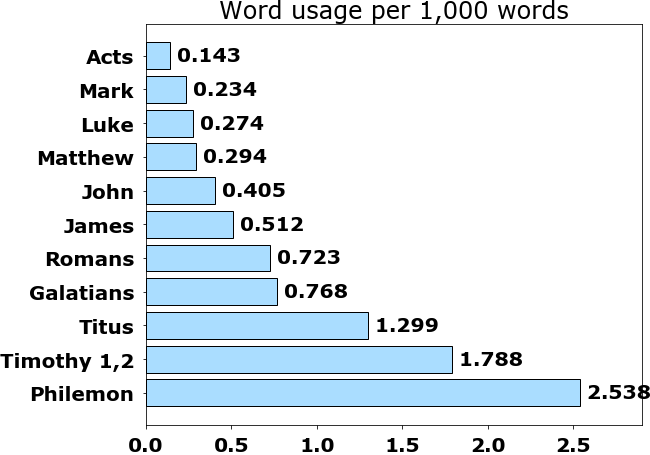
The ancient Greek word "πωλέω""sell" as in "levy taxes", "sell an office" or "betray". This word often has negative connotations as sometimes does the English phrase "sell out". A marketing phrase is from the Latin phrase "caveat emptor""let the buyer beware".
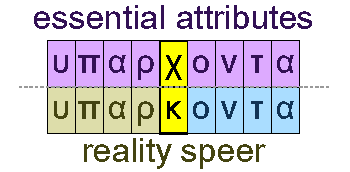
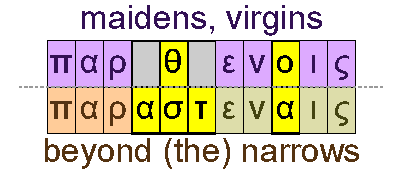
How does waiting instead of doing compare with the Parable of the Talents? This is the parable after this parable.

Information sign More: Matthew 13:44 KP5 Parable of the treasure in a field
Information sign More: Matthew 13:45-46 KP6 Parable of the pearl of great price
Information sign More: Matthew 24:36 Day and hour

100. Matthew 25:9
   Matthew 25:9 
 All 
KJV: But the wise answered, saying, Not so; lest there be not enough for us and you: but go ye rather to them that sell, and buy for yourselves.
Greek: απεκριθησαν δε αι φρονιμοι λεγουσαι μηποτε ουκ ου μη αρκεση ημιν και υμιν πορευεσθε δε μαλλον προς τους πωλουντας και αγορασατε εαυταις

101. Matthew 25:9 Self-selection
Matthew 25:9 But the wise answered, saying, Not so; lest there be not enough for us and you: but go ye rather to them that sell, and buy for yourselves. [kjv]
απεκριθησαν δε αι φρονιμοι λεγουσαι μηποτε  ουκ  ου μη αρκεση ημιν και υμιν πορευεσθε  δε   μαλλον προς τους πωλουντας και αγορασατε εαυταις [gnt]

Where might one "buy" and "sell"? The word for "vessels" (previous verse) is used in only one other place, in the seventh kingdom parable. The parable before that one is of the "merchant" and the "pearl" which are "bought" and "sold". Might this be related?

Might the "virgins" that were "foolish" have self-selected themselves? Then, there is no need for a "mark".

Did the "foolish" realize that they can only get the "oil" for their "vessel" from the Holy Spirit? That would relate to the "groom". Instead, they go to "buy" from where they think they can get "oil". Who created that mis-perception?

How were the false prophets self-selected by Elijah in 1 Kings 18:20-40?

[dictators relaxing rules]

Information sign More: Matthew 13:45-46 KP6 Parable of the pearl of great price
Information sign More: Matthew 13:47-50: KP7 Parable of the harvest at the end of the age

102. Matthew 25:9 Burn
Matthew 25:9 But the wise answered, saying, Not so; lest there be not enough for us and you: but go ye rather to them that sell, and buy for yourselves. [kjv]
απεκριθησαν δε αι φρονιμοι λεγουσαι μηποτε  ουκ  ου μη αρκεση ημιν και υμιν πορευεσθε  δε   μαλλον προς τους πωλουντας και αγορασατε εαυταις [gnt]

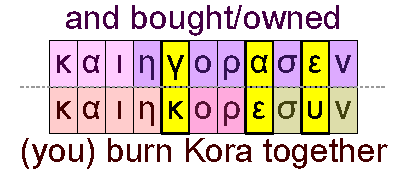
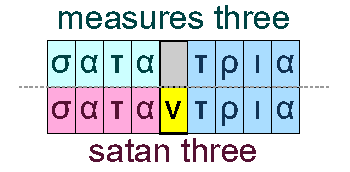
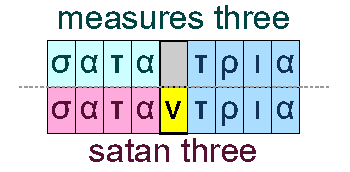
And bought/owned and (you) burn Kora together Measures three and satin three
Note: These images are for other closely related play on words until an image is created.
This has a hint of "Satan" as in "measures" "three".

103. Matthew 13:33 Satanic measures three
Matthew 13:33 Another parable spake he unto them; The kingdom of heaven is like unto leaven, which a woman took, and hid in three measures of meal, till the whole was leavened. [kjv]
αλλην παραβολην ελαλησεν αυτοις ομοια εστιν η βασιλεια των ουρανων ζυμη ην λαβουσα γυνη ενεκρυψεν εις αλευρου σατα τρια εως ου εζυμωθη ολον [gnt]

measures three and satin three

Can you think of ways that these allusions might be "encrypted" in the "wheat" or "meal"?

104. Matthew 25:10-11 Shut door panic
Matthew 25:10 And while they went to buy, the bridegroom came; and they that were ready went in with him to the marriage: and the door was shut. [kjv]
kaufenBräutigambereitgingenHochzeitTürverschlossen. [lu]
25:11 Afterward came also the other virgins, saying, Lord, Lord, open to us. [kjv]

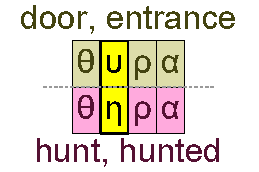
Door and hunt

The German word for "mid-life crisis" is "Torschlusspanik" which is literally "shut door panic", the fear of getting caught on the wrong side of a closing door (or gate). It can also mean "last-minute panic". The German word "schließen""shut".

Information sign More: Matthew 7:13-14 Strait talk about narrow and wide gates

105. Matthew 25:10 Shut door
Matthew 25:10 And while they went to buy, the bridegroom came; and they that were ready went in with him to the marriage: and the door was shut. [kjv]
απερχομενων δε αυτων αγορασαι ηλθεν ο νυμφιος και αι ετοιμοι εισηλθον μετ αυτου εις τους γαμους και εκλεισθη η θυρα [gnt]

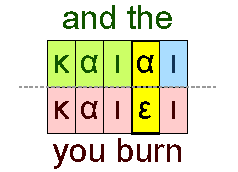
The bridegroom and donkey light And the and you burn
They actually go to "buy".
To not be thrown out of the "marriage" "feast", one needs the proper "garments" of "righteousness". These are provided by the "bridegroom".

How does the "shut" "door" compare to closing the door of the ark of Noah? This was in the previous chapter as part of the (same) Olivet Discourse.

[marriage feast in Matthew, Peter and shut door]

Information sign More: Matthew 22:1-5 Parable of the wedding feast 1
Information sign More: Matthew 13:45-46 KP6 Parable of the pearl of great price
Information sign More: Matthew 7:15 Sheep dogs and wolf dogs
Information sign More: Crying wolf for the search and seizure of the rapture
Information sign More: Eclipse Sunday and Moonday

106. Matthew 25:10
Matthew 25:10 And while they went to buy, the bridegroom came; and they that were ready went in with him to the marriage: and the door was shut. [kjv]
απερχομενων δε αυτων αγορασαι ηλθεν ο νυμφιος και αι ετοιμοι εισηλθον μετ αυτου εις τους γαμους και εκλεισθη η θυρα [gnt]

Vessels 4 Wedding and magical

107. Matthew 25:10
 All 
KJV: And while they went to buy, the bridegroom came; and they that were ready went in with him to the marriage: and the door was shut.
Greek: απερχομενων δε αυτων αγορασαι ηλθεν ο νυμφιος και αι ετοιμοι εισηλθον μετ αυτου εις τους γαμους και εκλεισθη η θυρα
Wessex: Witodlice þa hyo ferden & wolden byggen. þa com se bredgume. & þa þe gearewe waeron eode in mid þam bridgume to þam giftan. & syo duru waes be-loken.
Luther: Und da sie hingingen zu kaufen, kam der Bräutigam; und welche bereit waren, gingen mit ihm hinein zur Hochzeit. Und die Tür ward verschlossen.

108. Matthew 25:11 Lagging behind
Matthew 25:11 Afterward came also the other virgins, saying, Lord, Lord, open to us. [kjv]
υστερον δε ερχονται και αι λοιπαι παρθενοι λεγουσαι κυριε κυριε ανοιξον ημιν [gnt]

The ancient Greek word "ὑστερέω""behind, late, lag behind" and is the source of the English word "hysteresis", a word coined by Sir James Alfred Ewing to describe magnetic memory. This memory causes the magnetic field to "lag behind".

109. Matthew 25:11 Came enclosed works
Matthew 25:11 Afterward came also the other virgins, saying, Lord, Lord, open to us. [kjv]
υστερον δε ερχονται και αι λοιπαι παρθενοι λεγουσαι κυριε κυριε ανοιξον ημιν [gnt]

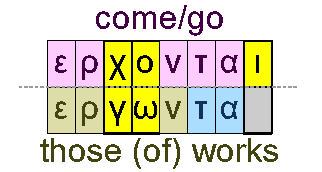
Come and those works

Were these "virgins" that "came" "those" "(of) works"?

110. Matthew 25:11 And the burning
Matthew 25:11 Afterward came also the other virgins, saying, Lord, Lord, open to us. [kjv]
υστερον δε ερχονται και αι λοιπαι παρθενοι λεγουσαι κυριε κυριε ανοιξον ημιν [gnt]

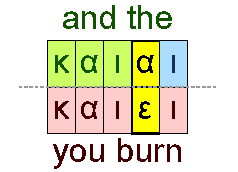
And the and you burn


111. Matthew 25:11 Other annoyed and distressed virgins
Matthew 25:11 Afterward came also the other virgins, saying, Lord, Lord, open to us. [kjv]
υστερον δε ερχονται και αι λοιπαι παρθενοι λεγουσαι κυριε κυριε ανοιξον ημιν [gnt]

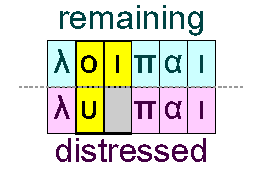
The Greek word translated as "other", which requires a context, and is that of "remaining". The ancient Greek word "λοιπός""remaining" as in "others" and is from the ancient Greek word "λείπω""leave behind". It is the source of the ancient Greek word "λοιπόν""what remains, others" and is often translated as "so" or "therefore". In speech, it can mean "to the remainder".

Information sign More: The sorrowful annoyance of hairsplitting
Information sign More: Matthew 19:16-20 Good commandments lacking

112. Matthew 25:11 Other
Matthew 25:11 Afterward came also the other virgins, saying, Lord, Lord, open to us. [kjv]
υστερον δε ερχονται και αι λοιπαι παρθενοι λεγουσαι κυριε κυριε ανοιξον ημιν [gnt]

Remaining and distressed

Why does Jesus say "other" instead of just the "five" "foolish" or just "foolish"?

Paraphrase: afterwards, came the left behind [annoyed and distressed] virgins ...

113. Rich young ruler
Matthew 19:22 But when the young man heard that saying, he went away sorrowful: for he had great possessions. [kjv]
ακουσας δε ο νεανισκος τον λογον τουτον απηλθεν λυπουμενος ην γαρ εχων κτηματα πολλα [gnt]

Mark 10:22 And he was sad at that saying, and went away grieved: for he had great possessions. [kjv]
ο δε στυγνασας επι τω λογω απηλθεν λυπουμενος ην γαρ εχων κτηματα πολλα [gnt]

Which word fits best? The ancient Greek word "λύπη""annoyance, distress". The modern Greek word "λύπη" (LEE-pee) ≈ "sorrow, sadness, suffering". It appears that the modern meaning comes from the meaning assumed in the GNT from Latin, etc.

Information sign More: A colonoscopy of an annoying and disturbing difficulty
Information sign More: The sorrowful annoyance of hairsplitting

114. Matthew 25:11 Lord, Lord
Matthew 25:11 Afterward came also the other virgins, saying, Lord, Lord, open to us. [kjv]
υστερον δε ερχονται και αι λοιπαι παρθενοι λεγουσαι κυριε κυριε ανοιξον ημιν [gnt]

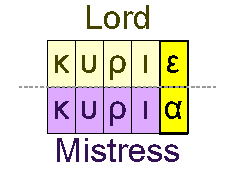
Lord and mistress

The "door" that was "open" is now "shut". Who has the "keys" to the "kingdom" of "heaven" and can "close" it? One cannot "open" it more than it actually "opens".

This is a situation where a JIT (Just In Time) strategy does not work. Rather, a JIC (Just In Case) strategy is appropriate.

[Days of Noah in the previous chapter, same discourse]

Information sign More: The key to the keys to an open and shut heavenly gate

115. Revelation 3:7 Open and shut case
Revelation 3:7 And to the angel of the church in Philadelphia write; These things saith he that is holy, he that is true, he that hath the key of David, he that openeth, and no man shutteth; and shutteth, and no man openeth; [kjv]
και τω αγγελω της εν φιλαδελφεια εκκλησιας γραψον ταδε λεγει ο αγιος ο αληθινος ο εχων την  κλειδα του δαβιδ  κλειν δαυιδ ο ανοιγων και ουδεις  κλειει  κλεισει και  κλειει  κλειων και ουδεις ανοιγει [gnt]

The ancient Greek word "ἀνοίγω""open" and comes from two Greek words. The modern Greek word "ανοίγω" (a-NEE-go) ≈ "open".

Is the English phrase "open up" redundant? Is it overly redundant?

Information sign More: Revelation 3:7-13 RC6 Philadelphia

116. Matthew 25:11 Open
Matthew 25:11 Afterward came also the other virgins, saying, Lord, Lord, open to us. [kjv]
υστερον δε ερχονται και αι λοιπαι παρθενοι λεγουσαι κυριε κυριε ανοιξον ημιν [gnt]

The ancient Greek word "ἀνοίγω""open" and comes from two Greek words. The modern Greek word "ανοίγω" (a-NEE-go) ≈ "open".

Is the English phrase "open" "up" redundant? Is it overly redundant?

Why might the word "door" not be used here?

117. The security of flaming swords
Genesis 3:24 So he drove out the man; and he placed at the east of the garden of Eden Cherubims, and a flaming sword which turned every way, to keep the way of the tree of life. [kjv]
και εξεβαλεν τον αδαμ και κατωκισεν αυτον απεναντι του παραδεισου της τρυφης και εταξεν τα χερουβιμ και την φλογινην ρομφαιαν την στρεφομενην φυλασσειν την οδον του ξυλου της ζωης [lxx]
Adamparadisum voluptatisflammeum gladiumcustodiendam viam ligni vitae [v]

Enclosed tree of life with flaming sword
A key or password provides passive security to protect a resource. Active security requires a physical presence of someone or something guarding the resource. Is it a "tree" or a big stick of "wood" or "timber"? How about a "torch"?
Is the security of the "flaming" "sword" in Genesis 3:24 "active", "passive", both or none of these? Is that "flaming" "sword" needed to keep access open, to keep access closed, both of these, none of these, or something else?

Information sign More: The security of flaming swords

118. Matthew 25:11 Play the words
Matthew 25:11 Afterward came also the other virgins, saying, Lord, Lord, open to us. [kjv]
υστερον δε ερχονται και αι λοιπαι παρθενοι λεγουσαι κυριε κυριε ανοιξον ημιν [gnt]

Come and those works And the and you burn Remaining and distressed
Maidens and beyond (the) rarrows Lord and mistress

119. Matthew 25:11
 All 
KJV: Afterward came also the other virgins, saying, Lord, Lord, open to us.
Greek: υστερον δε ερχονται και αι λοιπαι παρθενοι λεγουσαι κυριε κυριε ανοιξον ημιν

120. Matthew 25:12 Not known
Matthew 25:12 But he answered and said, Verily I say unto you, I know you not. [kjv]
ο δε αποκριθεις ειπεν αμην λεγω υμιν ουκ οιδα υμας [gnt]

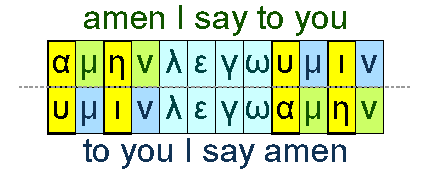
Amen I say to you and to you I say amen
The "verily/amen" "I say" "unto you" means that the before and after should be carefully compared for some form of sameness in meaning.
Where else and in what context does Jesus say "I know you not"?

Information sign More: Deny the bird denial of yourself
Information sign More: Verily, a true beginning and amen
Information sign More: Verily I say to you: connect the dots

121. Matthew 25:11-13 Not known
Matthew 25:11 Afterward came also the other virgins, saying, Lord, Lord, open to us. [kjv]
25:12 But he answered and said, Verily I say unto you, I know you not. [kjv]
25:13 Watch therefore, for ye know neither the day nor the hour wherein the Son of man cometh. [kjv]

Does Jesus ever say that he does not "know" someone?

Information sign More: Deny the bird denial of yourself

122. Matthew 25:12
 All 
KJV: But he answered and said, Verily I say unto you, I know you not.
Greek: ο δε αποκριθεις ειπεν αμην λεγω υμιν ουκ οιδα υμας

123. Matthew 25:13 Watch
Matthew 25:13 Watch therefore, for ye know neither the day nor the hour wherein the Son of man cometh. [kjv]
γρηγορειτε ουν οτι ουκ οιδατε την ημεραν ουδε την ωραν  εν η ο υιος του ανθρωπου ερχεται   [gnt]

Notice that neither the "foolish" nor the "prudent" were actually "watching". This is not the Greek word for "watch" that can mean a "prison" or "sanctuary". These words are often translated in the KJV as "awaken", "watchful", etc. The English name "Gregory" comes from the ancient Greek name "Γρηγόριος""watchful, vigilant". [disciples sleeping in Gethsemane]

Information sign More: Blind goats and prison pits in Matthew
Information sign More: Matthew 23:5 Broad prison boxes and head shackles
Information sign More: Borders as a prison or city wall

124. Matthew 25:13 Day and hour
Matthew 25:13 Watch therefore, for ye know neither the day nor the hour wherein the Son of man cometh. [kjv]
γρηγορειτε ουν οτι ουκ οιδατε την ημεραν ουδε την ωραν  εν η ο υιος του ανθρωπου ερχεται   [gnt]

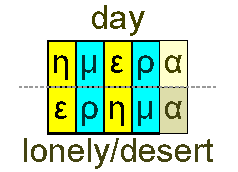
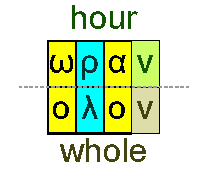
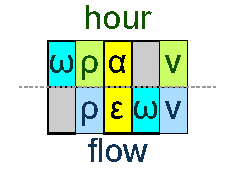
Day and wilderness Hour and whole Hour and flow


Information sign More: Matthew 24:36 Day and hour

125. Matthew 25:13 Watch
Matthew 25:13 Watch therefore, for ye know neither the day nor the hour wherein the Son of man cometh. [kjv]
γρηγορειτε ουν οτι ουκ οιδατε την ημεραν ουδε την ωραν  εν η ο υιος του ανθρωπου ερχεται   [gnt]

Notice that neither the "foolish" nor the "prudent" were actually "watching". This is an emphatic "wake up", before, rather than after, and not just a "watch" or "be vigilant". This verse ends the parable. The next verse starts the Parable of the Talents which is followed by the Parable of the Sheep and Goats.

126. Matthew 25:13
 All 
KJV: Watch therefore, for ye know neither the day nor the hour wherein the Son of man cometh.
Greek: γρηγορειτε ουν οτι ουκ οιδατε την ημεραν ουδε την ωραν εν η ο υιος του ανθρωπου ερχεται

127. Matthew 25:1,3-4,8-9 Verses
Here are selected verses of the parable.

Matthew 25:1 Then shall the kingdom of heaven be likened unto ten virgins, which took their lamps, and went forth to meet the bridegroom. [kjv]
25:3 They that were foolish took their lamps, and took no oil with them: [kjv]
25:4 But the wise took oil in their vessels with their lamps. [kjv]
25:8 And the foolish said unto the wise, Give us of your oil; for our lamps are gone out. [kjv]
25:9 But the wise answered, saying, Not so; lest there be not enough for us and you: but go ye rather to them that sell, and buy for yourselves. [kjv]

A paraphrase is next.

128. Paraphrase with code words
Assume the following as code words. The "take" is allowable for "oneself". 25:1 ... ten virgins who took lamps [swords] and went to meet the bridegroom.
25:3 Those what were foolish took torches [swords] but did not have oil [Holy Spirit] (nor marriage contracts).
25:4 But the prudent had the Holy Spirit in their vessels [marriage contracts].
25:8 The foolish said to the prudent, give us some of your oil [Holy Spirit] for there is none in our torches [swords].
25:9 But the prudent answered, No [sarcastic], lest we not have the Holy Spirit for our lamps. [swords]. But go to them that sell (where you were sold your fake oil) and buy some for yourself.

As a digital or discrete concept, one either has or does not have the "Holy Spirit". It appears that one cannot "give" the "Holy Spirit" to someone else. Like the "manna" in the wilderness, one must "obtain" or "take" the "Holy Spirit" for "oneself". In terms of the parable, one must "obtain" or "take" the "oil" for one's "torch".

[take your cross]

129. Parable of the ten virgins

 1   2   3   4   5   6   +   -   ▶ 

130. Seventh kingdom parable

 1   2   3   4   5   6   +   -   ▶ 

131. Parables compared

 1   2   3   4   5   6   +   -   ▶ 

132. Ten Pin: Vineyards and rewards

 1   2   3   4   5   6   7   8   9   +   -   ▶ 
TenPin 5

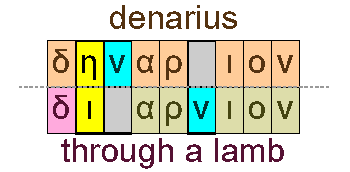
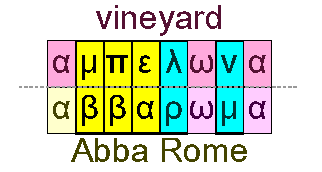
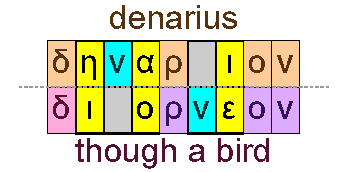
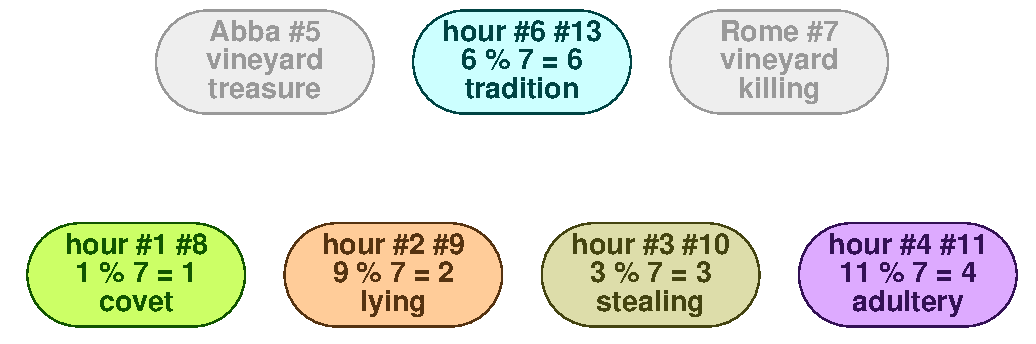
The literal meaning does not exactly match the code word meaning.

Denarius and through a lamb

Abba reward.
Vineyard and Abba Rome

Which vineyard?
Denarius and through a bird

Rome reward.
[parable of the mustard seed]
If five paths to Abba and five paths to Rome are representative, then this model fits well with the Parable of the Ten Virgins.

Information sign More: Matthew 20:1-7 Parable of the vineyard workers 1

133. End of page

by RS  admin@creationpie.org : 1024 x 640