Send
Close Add comments:
(status displays here)
Got it! This site "www.creationpie.org" uses cookies. You consent to this by clicking on "Got it!" or by continuing to use this website. Note: This appears on each machine/browser from which this site is accessed.
Throwing out some true colors of the tree house
1. Throwing out some true colors of the tree house
This content is being developed.
2. Throwing out some true colors of the tree house
The ancient Greek word
"ἐκβάλλω" ≈ "throw out" and many related meanings. The exact word
"ἐκβᾰ́λλει" ≈ "throw out" is indicative third person singular. This word is used five times in Matthew, three times by Jesus, two times in Mark, one time in Luke and one time in 3 John.
Since Jesus often uses nouns as code words and specific inflections of words for special meanings (e.g., like code words), let us
"throw out" some ideas on the use of the word
"ἐκβᾰ́λλει" ≈ "throw out" by Jesus in Matthew, the only place used by Jesus in the
GNT (Greek New Testament). Those three places appear to be related and important.
3. Catch and release: throwing out some ideas
Matthew 9:34 But the Pharisees said, He casteth out devils through the prince of the devils. [kjv]
οι οι δε φαρισαιοι ελεγον εν τω αρχοντι των δαιμονιων εκβαλλει τα δαιμονια [gnt]
The ancient Greek word
"εκβαλλω" ≈ "cast out" comes from the prefix the ancient Greek word
"εκ" ≈ "out of", as in Exodus, and the ancient Greek word
"βάλλω" ≈ "cast, throw, hurl" and is the source of the English word "
ballistic".

In the
GNT, the
"cast out" usually refers to demons. The other uses of
"cast out" can be very interesting.
The entire action consists of two parts.
Catch: take hold of something
Release: throw that something somewhere else
Depending on context, one of the two may be implied, though the usual meaning is that of both parts.
4. Matthew 9:34
Matthew 9:34 But the Pharisees said, He casteth out devils through the prince of the devils. [kjv]
οι οι δε φαρισαιοι ελεγον εν τω αρχοντι των δαιμονιων εκβαλλει τα δαιμονια [gnt]
The
ancient Greek word
"ἐκβάλλω" ≈ "throw or cast out of" as in
"to throw ashore". The
exact word
"ἐκβᾰ́λλει" ≈ "throw out" is used here by the Pharisees as recorded by Matthew. Before the
"casting out" there is some uncertainty. After the
"casting out" it is more certain what was there. This is a fundamental idea of
information. There is a
before and an
after state.
Card games:
You've got to know when to hold'em, know when to fold'em. From the song
The Gambler made popular by Kenny Rogers (1978).
5. Song: The gambler
In the 1978 hit song "
The gambler", Kenny Rogers sings about card game strategy where one needs to know that, without looking (keeping in the game) it may be necessary to fold. The song hit #1 on the country charts and became Kenny Rogers signature song.
You've got to know when to hold 'em, know when to fold 'em,
Know when to walk away, know when to run.
You never count your money when you're sittin' at the table,
There'll be time enough for countin' when the dealin's done.
If "
X" is "
counting your money" then "
X"
does not matter while the game is not done.
6. Matthew 12:24 Throw out
Matthew 12:24 But when the Pharisees heard it, they said, This fellow doth not cast out devils, but by Beelzebub the prince of the devils. [kjv]
οι δε φαρισαιοι ακουσαντες ειπον ουτος ουκ εκβαλλει τα δαιμονια ει μη εν τω βεελζεβουλ βεεζεβουλ αρχοντι των δαιμονιων [gnt]
The exact word
"ἐκβᾰ́λλει" ≈ "throw out" is used here by the Pharisees as recorded by Matthew.
The Pharisees would use this word in the usual sense. Jesus appears to use the word as a code word with additional meaning.
7. Matthew 12:25 House divided
Matthew 12:25 And Jesus knew their thoughts, and said unto them, Every kingdom divided against itself is brought to desolation; and every city or house divided against itself shall not stand: [kjv]
ειδως δε ο ιησους τας ενθυμησεις αυτων ειπεν αυτοις πασα βασιλεια μερισθεισα καθ εαυτης ερημουται και πασα πολις η οικια μερισθεισα καθ εαυτης ου σταθησεται [gnt]
Sometimes the word
"house" can refer to more than just a simple family
"house" as in a
"kingdom" "divided" or a
"house" "divided".
8. Straight flush and full house
Was the "
full" "
house"
full of it?
That sure is a
crappy joke!
Sayings:
A straight flush beats a full house.
Yes sir. Yes sir. Three bags full.
The "
leader" will always want you to say "
aye aye" and agree with them.
Yes sir, yes sir, three bags full. (from the children's poem
Baa baa black sheep, have you any wool.)
9. Matthew 12:26 Satan casting out Satan
Matthew 12:26 And if Satan cast out Satan, he is divided against himself; how shall then his kingdom stand? [kjv]
και ει ο σατανας τον σαταναν εκβαλλει εφ εαυτον εμερισθη πως ουν σταθησεται η βασιλεια αυτου [gnt]
The words for
"Satan" and
"kingdom" will appear later in the discourse in an interesting way.
Here, Jesus uses the usual word for "
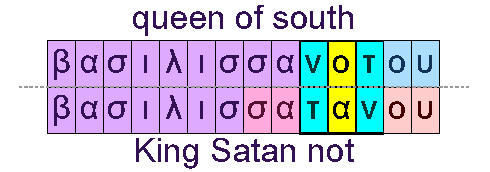
cast out" rather than the word that is a play on words with "
oblivion" since, with
"Satan" that idea would be implicit in what is said.
[thinking outside the box, limits of computation]
10. Matthew 12:26 Division
Matthew 12:26 And if Satan cast out Satan, he is divided against himself; how shall then his kingdom stand? [kjv]
και ει ο σατανας τον σαταναν εκβαλλει εφ εαυτον εμερισθη πως ουν σταθησεται η βασιλεια αυτου [gnt]
| kingdoms |
| perception |
reality |
| heaven (air) |
Satan |
| heaven (heaven) |
God |
Which
"kingdom" is this? All, some, one, none?
The context of the verses talking about the "
strong man" are Jesus talking to the religious leaders after being accused of casting out demons (Satan) by the power of Satan. This accusation by the religious elite is followed in the next chapter with the Kingdom Parables.
11. Matthew 13:52 Like casting out
Jesus
"likens" the "
scribe" instructed about the kingdom of heaven to a
"householder" that
"casts out" (or
"brings forth") of his "
treasure" things "
new" and "
old" - where the "
things" (plural) is inferred from "
new" and "
old".
Matthew 13:52 Then said he unto them, Therefore every scribe which is instructed unto the kingdom of heaven is like unto a man that is an householder, which bringeth forth out of his treasure things new and old. [kjv]
ο δε ειπεν αυτοις δια τουτο πας γραμματευς μαθητευθεις εις την βασιλειαν τη βασιλεια των ουρανων ομοιος εστιν ανθρωπω οικοδεσποτη οστις εκβαλλει εκ του θησαυρου αυτου καινα και παλαια [gnt]
The word
"likens" indicates that an analogy (in some sense) is being made.
The ancient Greek word
"ὅμοιος" ≈ "similar, like, resembling" and comes from the ancient Greek word
"ὁμός" ≈ "same, common" which is related to the English word
"same".
12. Matthew 13:52 House colors
Matthew 13:52 Then said he unto them, Therefore every scribe which is instructed unto the kingdom of heaven is like unto a man that is an householder, which bringeth forth out of his treasure things new and old. [kjv]
ο δε ειπεν αυτοις δια τουτο πας γραμματευς μαθητευθεις εις την βασιλειαν τη βασιλεια των ουρανων ομοιος εστιν ανθρωπω οικοδεσποτη οστις εκβαλλει εκ του θησαυρου αυτου καινα και παλαια [gnt]
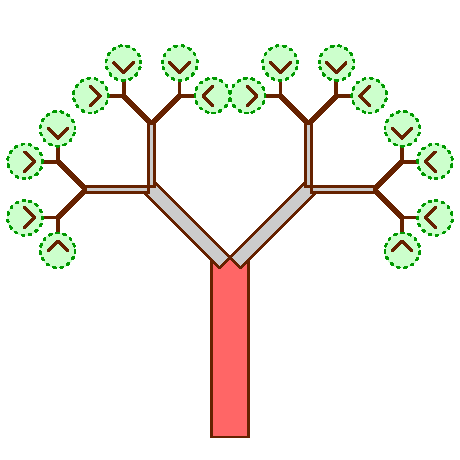
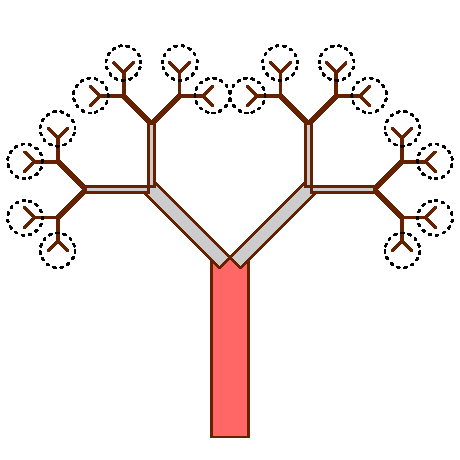
Is there a connection between "
casting out" or "
revealing" the following in a "
house" or "
tree"?
"new" and "old"
"good" and "rotten"
13. Houses
 |
 |
 |
 |
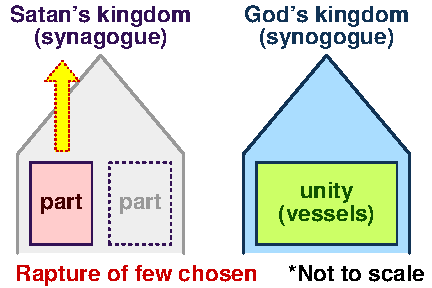 |
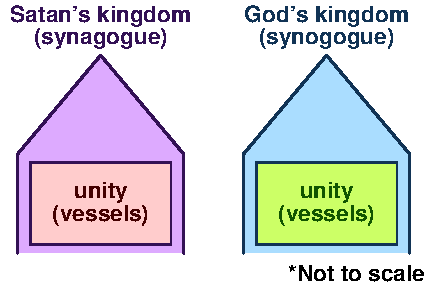
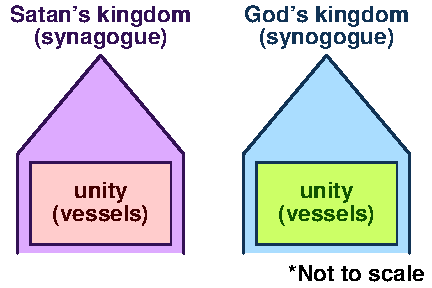
Are the houses
initially united?
What does that mean?
|
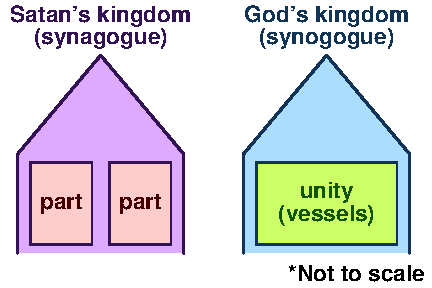
Would Satan create/reveal
a division/separation
in Satan's house?
|
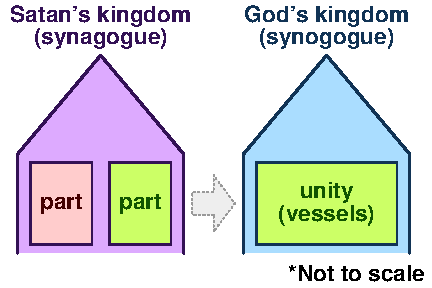
Would Jesus create/reveal
a division/separation
in Satan's house?.
|
|
|
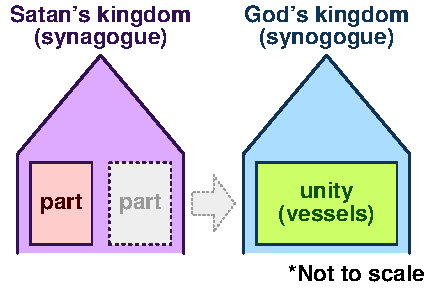
Once the "
vessels" of the "
strong man" are "
snatched up" or "
raptured", a way is needed to "
separate" or "
judge" the remaining.
14. Matthew 12:33 Good and rotten trees
Matthew 12:33 Either make the tree good, and his fruit good; or else make the tree corrupt, and his fruit corrupt: for the tree is known by his fruit. [kjv]
η ποιησατε το δενδρον καλον και τον καρπον αυτου καλον η ποιησατε το δενδρον σαπρον και τον καρπον αυτου σαπρον εκ γαρ του καρπου το δενδρον γινωσκεται [gnt]
It's a tree, wooden you know! Let's make like a tree and get out of here.
Jesus: Freely you have received. Freely give. ... Know the truth and the truth will make you free.
Birds: Treely you have received. Treely give. ... Know the root and the root will make you (a) tree.
15. Matthew 12:33 Good and rotten fruit
Matthew 12:33 Either make the tree good, and his fruit good; or else make the tree corrupt, and his fruit corrupt: for the tree is known by his fruit. [kjv]
η ποιησατε το δενδρον καλον και τον καρπον αυτου καλον η ποιησατε το δενδρον σαπρον και τον καρπον αυτου σαπρον εκ γαρ του καρπου το δενδρον γινωσκεται [gnt]
The statement "
The tree is known by its fruit." is an
ambiguous statement based on the viewpoint of who "
knows" or "
infers" what.
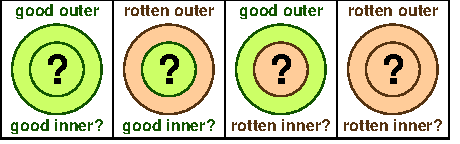
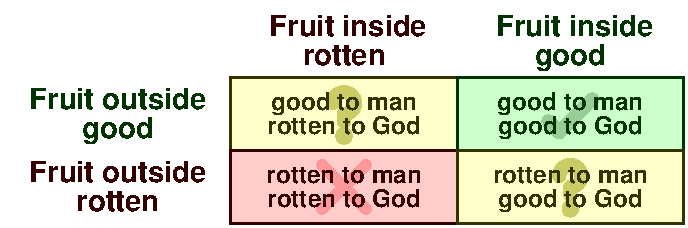 God "knows" (sees) both the inside and the outside of the "fruit".
Man "knows" (sees) only the outside of the "fruit".
God "knows" (sees) both the inside and the outside of the "fruit".
Man "knows" (sees) only the outside of the "fruit".
From computability theory, it may not be possible to always determine in
all cases if the inside is
"good" or
"rotten". An "
accounting" may be necessary for
"idle words" so that a
decision procedure can be used to resolve ambiguities.
The Greek word for
"fruit" is masculine and takes the
grammatical gender of "
his".
16. Matthew 12:33 Good and rotten trees
Matthew 12:33 Either make the tree good, and his fruit good; or else make the tree corrupt, and his fruit corrupt: for the tree is known by his fruit. [kjv]
η ποιησατε το δενδρον καλον και τον καρπον αυτου καλον η ποιησατε το δενδρον σαπρον και τον καρπον αυτου σαπρον εκ γαρ του καρπου το δενδρον γινωσκεται [gnt]
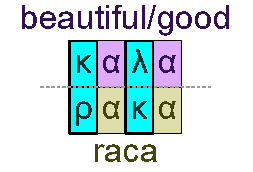
Can one "make" the "tree" and the "fruit" "beautiful" or "raca"?
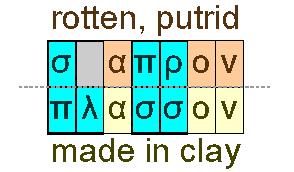
Can one "make" the "tree" and the "fruit" "rotten" or "plastic"?
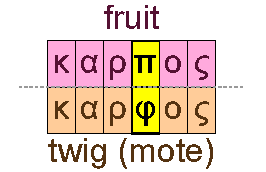
Is the "tree" really "known" by it's "fruit"?
What is the
information content? Whose
POV (Point Of View) is being used?
17. Matthew 12:33 Questionable statement
Matthew 12:33 Either make the tree good, and his fruit good; or else make the tree corrupt, and his fruit corrupt: for the tree is known by his fruit. [kjv]
η ποιησατε το δενδρον καλον και τον καρπον αυτου καλον η ποιησατε το δενδρον σαπρον και τον καρπον αυτου σαπρον εκ γαρ του καρπου το δενδρον γινωσκεται [gnt]
Can one
always know the
tree, good or rotten, by the
fruit?
Statement: ... for the tree is known by his fruit!
Question: ... for (is) the tree known by his fruit?
A
question allows a yes or no answer. A
statement requires a yes answer.
Discuss: Which translation, statement or question, might the church (historically) prefer?
Let us look ahead to verses with this questionable construct.
18. Matthew 12:33 Tree colors
Matthew 12:33 Either make the tree good, and his fruit good; or else make the tree corrupt, and his fruit corrupt: for the tree is known by his fruit. [kjv]
η ποιησατε το δενδρον καλον και τον καρπον αυτου καλον η ποιησατε το δενδρον σαπρον και τον καρπον αυτου σαπρον εκ γαρ του καρπου το δενδρον γινωσκεται [gnt]
Can one "make" the "tree" and the "fruit" "beautiful" or "raca"?
Can one "make" the "tree" and the "fruit" "rotten" or "plastic"?
Is the "tree" really "known" by it's "fruit"?
What is the
information content? Whose
POV is being used?
19. Matthew 12:33 Paraphrase using questions
Matthew 12:33 Either make the tree good, and his fruit good; or else make the tree corrupt, and his fruit corrupt: for the tree is known by his fruit. [kjv]
η ποιησατε το δενδρον καλον και τον καρπον αυτου καλον η ποιησατε το δενδρον σαπρον και τον καρπον αυτου σαπρον εκ γαρ του καρπου το δενδρον γινωσκεται [gnt]
(Either) Can you make the tree good and the fruit good?
(Or) Can you make the tree rotten and the fruit rotten?
Is the tree known by it's fruit?
20. Inside and outside of fruit
God "knows" (sees) both the inside and the outside of the "fruit".
Man "knows" (sees) only the outside of the "fruit".
How often does the case of
"good" inside and
"rotten" outside happen?
From computability theory, it may not be possible to always determine in
all cases if the inside is
"good" or
"rotten". An "
accounting" may be necessary for
"idle words" so that a
decision procedure can be used to resolve ambiguities.
21. Matthew 5:36 Hair color
Matthew 5:36 Neither shalt thou swear by thy head, because thou canst not make one hair white or black. [kjv]
μητε εν τη κεφαλη σου ομοσης οτι ου δυνασαι μιαν τριχα λευκην ποιησαι η μελαιναν ποιησαι [gnt]
Can you
"make" a "
hair" the desired
color? How are the "
white" or "
light" "
hairs" to be separated from the "
black" or "
dark" "
hairs"?
Saying: Take a little off the top please.
Paraphrase: Rapture/snatch a little (wolves), the chosen/elect (roosters) off the top (first) please.
22. Trees with fruit and the head with hairs
If the
"fruit" are "
hairs" of the "
head" (Christ), then can you
"make" even
one "
hair" "
white/light" or "
black/dark"?
(Either) Can you make the tree good and the fruit good?
(Or) Can you make the tree rotten and the fruit rotten?
Is the tree known by it's fruit?
23. Matthew 5:36 Make
Matthew 5:36 Neither shalt thou swear by thy head, because thou canst not make one hair white or black. [kjv]
μητε εν τη κεφαλη σου ομοσης οτι ου δυνασαι μιαν τριχα λευκην ποιησαι η μελαιναν ποιησαι [gnt]
The Greek for
"make" is the
"make" of a "
peacemaker" (verse 9) and requires doing something active and not passive.
"ποιέω" ≈ "make, do" and has and active sense and is the source of the English word "poetry".
"πᾰ́σχω" ≈ "undergo, experience" and has a passive sense. This word is often translated as "suffer" which has the narrowed sense of undergoing something painful or unpleasant and should not be confused with the Greek word for "allow" which is also translated as "suffer".
The Greek for
"make" is the opposite of the Greek for "
undergo". Aristotle would call them "
contraries". What does "
suffer for Christ" mean?
24. Comparison
 |
Caught in the net.
|
 |
Members of the house.
|
 |
Fruit of the tree.
|
 |
Hairs of the head.
|
In each case, what might be the
decision procedure for deciding if the
inside is "
good" or "
rotten"?
25. End of page