Send
Close Add comments:
(status displays here)
Got it! This site "www.creationpie.org" uses cookies. You consent to this by clicking on "Got it!" or by continuing to use this website. Note: This appears on each machine/browser from which this site is accessed.
A blessed sword favor
1. A blessed sword favor
This content is being developed.
2. Ten Pin compact build
1
2
3
4
5
6
7
8
9
10
+
-
▶
|
|
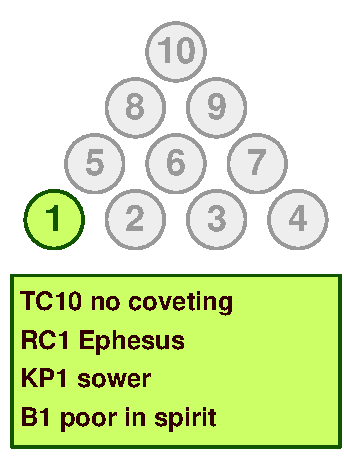
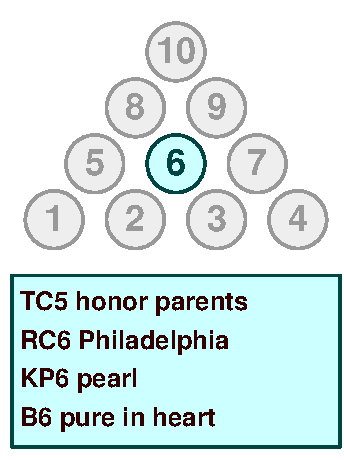
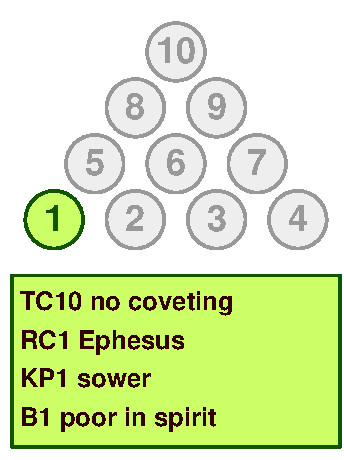
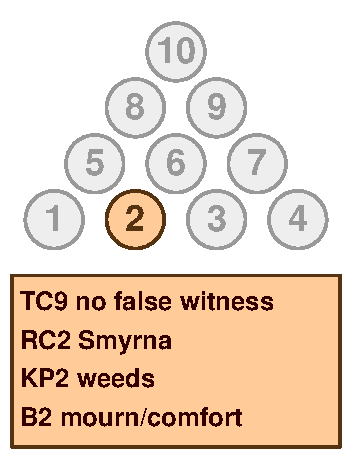
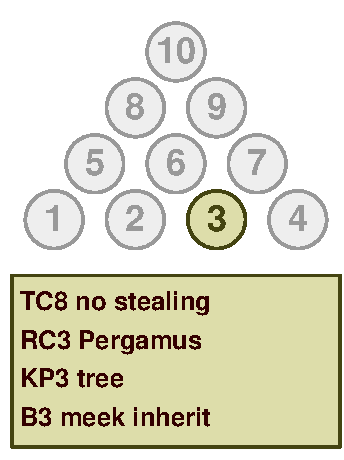
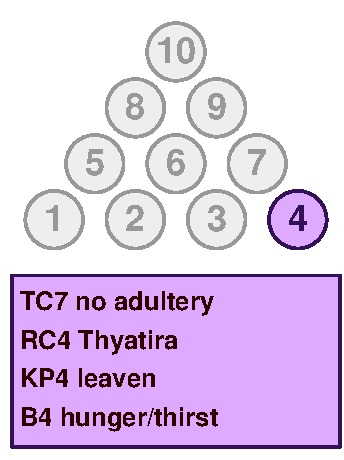
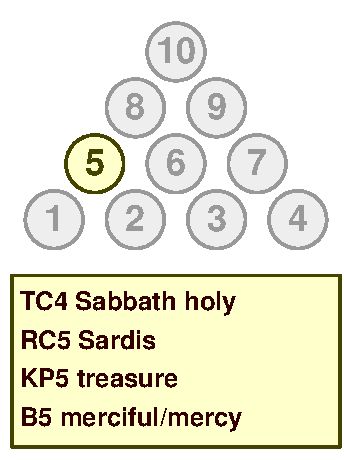
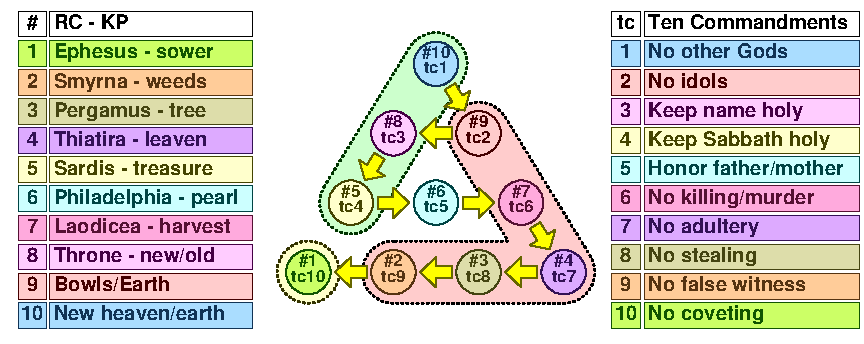
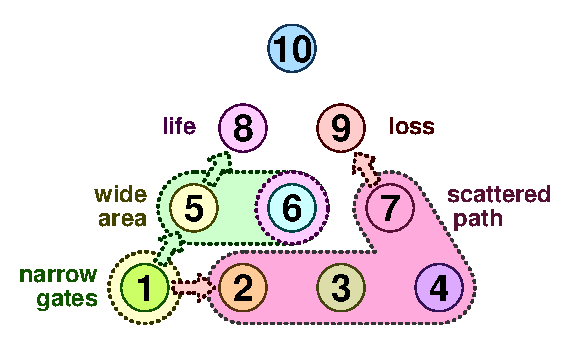
Ten Commandments node order: 10 9 8 5 6 7 4 3 2 1.
|
3. Strongs - happy
4. A blessed sword favor
John 13:17 If ye know these things, happy are ye if ye do them. [kjv]
ει ταυτα οιδατε μακαριοι εστε εαν ποιητε αυτα [gnt]
… beati … [v]
Proverbs 3:13 Happy is the man that findeth wisdom, and the man that getteth understanding. [kjv]
μακαριος ανθρωπος ος ευρεν σοφιαν και θνητος ος ειδεν φρονησιν [lxx]
beatus … sapientiam … prudentia [v]
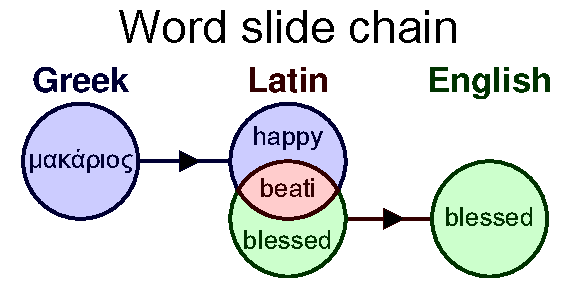
The
ancient Greek word
"μακάριος" ≈ "happy, content" but is
often translated as
"blessed". There is another Greek word that
does mean what today is called
"blessed". The
ancient Greek word
"εὐλογία" ≈ "good speaking, flattery, eulogy, blessing" is the source of the English word
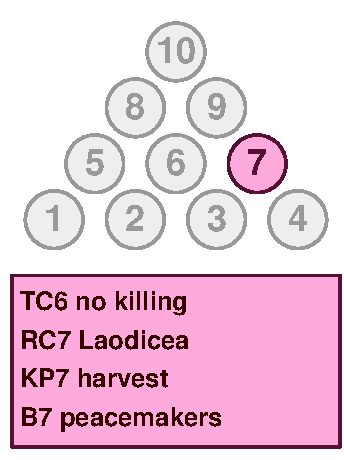
"eulogy" as a
"good word".
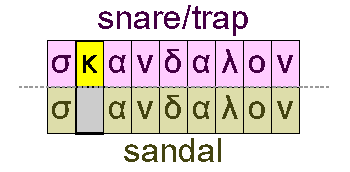
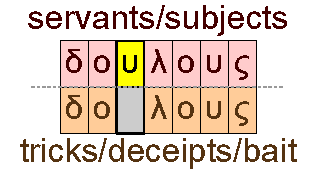
5. Matthew 25:2 Patterns and missing puzzle pieces
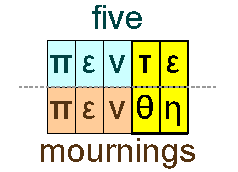
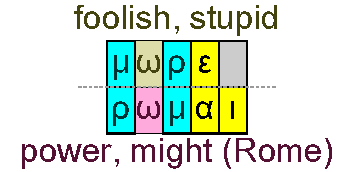
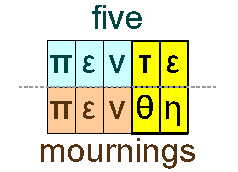
Matthew 25:2 And five of them were wise, and five were foolish. [kjv]
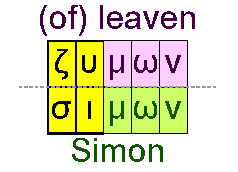
πεντε δε ησαν εξ αυτων φρονιμοι ησαν μωραι και αι πεντε μωραι φρονιμοι [gnt]
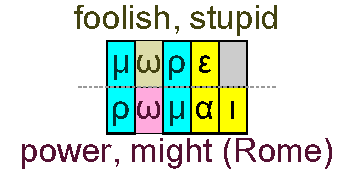
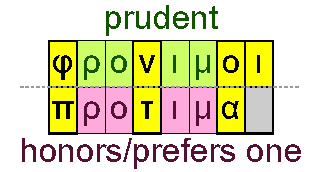
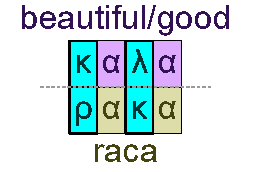
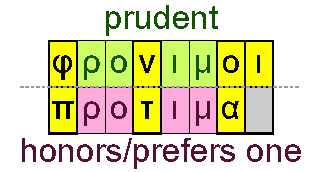
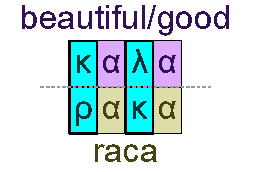
Note that
"foolish" and
"prudent" are
not opposites. The
opposite of
"foolish", in the
"Rome" vineyard, would be better stated as
"good", or
"raka", in the
"Abba" vineyard.
Thus, the
"foolish" are also
"prudent". In the play on words, each group
"prefers one over another". Thus:
"five" were both "prudent" and "good" as in "raca".
"five" were both "prudent" and "foolish" as in "Rome".
[partial to complete functions]
6. Matthew 25:2 Play by play review
Matthew 25:2 And five of them were wise, and five were foolish. [kjv]
πεντε δε ησαν εξ αυτων φρονιμοι ησαν μωραι και αι πεντε μωραι φρονιμοι [gnt]
Note that the
KJV (King James Version), based on the
TR (Textus Receptus), switches the order of
"prudent", translated as
"wise", and
"foolish" which breaks the model.
7. Proverbs 3:13
KJV: Happy is the man that findeth wisdom, and the man that getteth understanding.
Hebrew: אשרי אדם מצא חכמה ואדם יפיק תבונה׃
Greek: μακαριος ανθρωπος ος ευρεν σοφιαν και θνητος ος ειδεν φρονησιν
Latin: beatus homo qui invenit sapientiam et qui affluit prudentia
8. John 13:17
KJV: If ye know these things, happy are ye if ye do them.
Greek: ει ταυτα οιδατε μακαριοι εστε εαν ποιητε αυτα
Latin: si haec scitis beati eritis si feceritis ea
9. Beatitudes: Greek happy
κατα Ματθαίον ε΄:3 μακαριοι οι πτωχοι τω πνευματι … [gnt]
5:4 μακαριοι οι πενθουντες … [gnt]
5:5 μακαριοι οι πραεις … [gnt]
5:6 μακαριοι οι πεινωντες και διψωντες την δικαιοσυνην … [gnt]
5:7 μακαριοι οι ελεημονες … [gnt]
5:8 μακαριοι οι καθαροι τη καρδια … [gnt]
5:9 μακαριοι οι ειρηνοποιοι … [gnt]
5:10 μακαριοι οι δεδιωγμενοι ενεκεν δικαιοσυνης … [gnt]
5:11 μακαριοι εστε οταν ονειδισωσιν υμας … [gnt]
The
ancient Greek word
"μακάριοι" ≈ "happy, content" (
nominative/
accusative masculine
plural) from
"μακάριος" ≈ "happy, content" (
nominative masculine
singular). The
"οι" ≈ "the" is in a somewhat ambiguous position. Note that there are nine verses that start with
"happy". The last two start a reverse Ten Pin sequence (of seven) and are rarely covered in sermon series claiming to cover the
Beatitudes.
10. Beatitudes: Greek happy
Matthew 5:8 Blessed are the pure in heart: for they shall see God. [kjv]
μακαριοι οι καθαροι τη καρδια οτι αυτοι τον θεον οψονται [gnt]
beati mundo corde … videbunt [v]
Notice the word order. Greek has a flexible word order. There is some ambiguity in all the Beatitudes. Consider the first three words in each Beatitude using Beatitude 6 as an example using N for nominative and A for accusative. All words are
plural. Which word orders were intended (including any play on words)? A case would not usually be split with the other case in the middle (meaning only four of eight possibilities are reasonable). The "
are" is inferred in the English. Use A for an inferred accusative where the verb is used as "
is".
| English |
1 |
2 |
3 |
4 |
| happy |
N |
A |
A |
A |
| the |
N |
N |
A |
A |
| (group) |
N |
N |
N |
A |
1. (
the happy) pure ... (are) ...
2.
happy (are) (
the pure) ...
3. (
the pure) (are)
happy ...
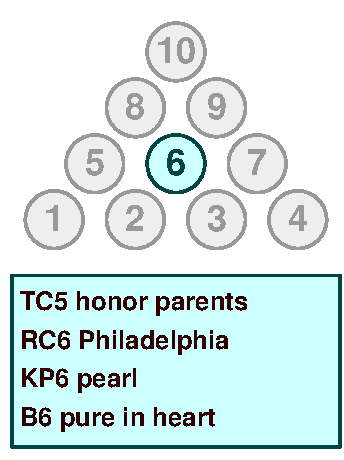
11. Matthew 5:8 B6 Blessed are the pure in heart
Matthew 5:8 Blessed are the pure in heart: for they shall see God. [kjv]
μακαριοι οι καθαροι τη καρδια οτι αυτοι τον θεον οψονται [gnt]
beati mundo corde … videbunt [v]
In the Beatitudes, Jesus talks about the
"pure" or
"clean" in
"heart" and
"seeing" God.
What does it mean to be "pure" or "clean" in "heart"?
What does it mean to "see" God?
It appears that
"pure" in
"heart" refers to not having any ulterior motives used to do "
evil" as in "
oppress" others.
In Exodus Moses is told that if he "
sees" (the face of) God he will die. Is this not true if you are
"pure" in
"heart"?
12. Beatitudes: Latin happy
Matthaeus 5:3 beati pauperes spiritu … [v]
5:4 beati mites … [v]
5:5 beati qui lugent … [v]
5:6 beati qui esuriunt et sitiunt iustitiam … [v]
5:7 beati misericordes … [v]
5:8 beati mundo corde … [v]
5:9 beati pacifici … [v]
5:10 beati qui persecutionem … [v]
5:11 beati … [v]
The Latin word
"beati" ≈ "happy, fortunate" and is the origin of the English word
"beatitude" and the name of the
"Beatitudes". Note that there is no definite article in Latin to represent the "
the" (plural) in the Greek. Is each group
"happy" or
"fortunate"? Note that Latin does
not have a
definite article.
13. Beatitudes: Old English happy
The Old English word used in the Wessex Gospels in the
Beatitudes is
"eadig" ≈ "happy, prosperous" and is the source of the English name
"Edgar".
Matthew 5:3 Eadige synde þa gastlice þearfan. … [wes]
5:4 Eadige syndde þa lyðan. … [wes]
5:5 Eadige sind þa þe nu wepeð … [wes]
5:6 Eadiga synd þa þe rihtwysnissa hingreð … [wes]
5:7 Eadige synd þa mild-heortan. … [wes]
5:8 Eadige synd þa claen-heortan. … [wes]
5:9 Eadige synd þa sibsume. … [wes]
5:10 Eadige synd þa þe hehtnysse þoliað. … [wes]
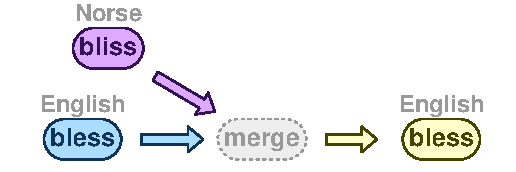
By the time of the
KJV, the
"happy" had changed into
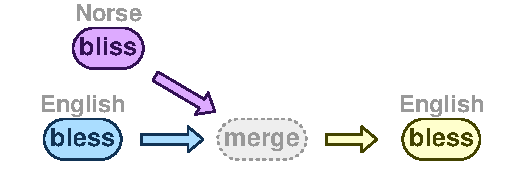
"blessed", the word being conflated with the Norse-based word
"bliss".
14. Beatitudes: English happy
Each
"Beatitude", and some after, starts with
"Blessed" as
nominative plural! The word "
are" is inferred.
Matthew 5:3 Blessed are the poor in spirit: … [kjv]
5:4 Blessed are they that mourn: … [kjv]
5:5 Blessed are the meek: … [kjv]
5:6 Blessed are they which do hunger and thirst after righteousness: … [kjv]
5:7 Blessed are the merciful: … [kjv]
5:8 Blessed are the pure in heart: … [kjv]
5:9 Blessed are the peacemakers: … [kjv]
5:10 Blessed are they which are persecuted … [kjv]
5:11 Blessed are ye, when men shall … [kjv]
Is each group
"happy"? Note that the meaning of many of the English words do not match the Greek meanings of the original Greek.
15. A blessed comparison
Matthew 11:6 And blessed is he, who soever shall not be offended in me. [kjv]
και μακαριος εστιν ος εαν αν μη σκανδαλισθη εν εμοι [gnt]
… happy … offended … [ty]
Latin has one word for which Greek has two separate words:
"blessed" as in "happy" or "content" (used here)
"blessed" as in "fortunate" or receiving a "good word" as in "eulogy".
In English, the word
"blessed" comes from the word for "
bloody" as in a ritual sacrifice. The meaning for
"bliss" was merged with
"blessed" and associated with "
getting something" and with
"joy" (another word mistranslated from the Greek).
16. Matthew 13:20 Bliss as joy
The English word
"bliss" and is from the Middle English word
"bliss" ≈ "bliss" and is from the Old English word
"bliss" ≈ "joy, gladness".
English:
KJV
Matthew 13:20 … with joy receiveth it; [kjv]
Middle English: Wycliffe
… with ioye takith it. [wy]
Old English: Wessex Gospels
… mid blisse onfegð. [wes]
Latin Vulgate:
… cum gaudio accipit illud [v]
17. Greek language translation
The Bible dictionary used by pastors, etc. is often explained away as being a different Greek, the Koine Greek, that the people spoke, with special idioms of Greek.
Changes are often attributed to:
☐ Koine Greek being different than Ancient Greek.
☐ Originally written in Aramaic. Koine Greek had many idioms.
☐ English changing over the years.
A problem arises when ancient, medieval and modern Greek, as one continuous language, have the same meaning for the same word but the Koine Greek definition is different and matches the Latin word used to translate that Greek word in the 4th century. This happens with many important words but not so much with less important words. Suspicion arises when the common Greek meaning makes more sense in the Bible text than the English word based on the Latin word.
[Amplified Bible, Berean Bible, Bible Hub]
[language
ambiguity,
preciseness of Greek language fallacy]
18. Matthew, Mark and Luke
Luke records and correctly reports what people remembered as to the meaning of what Jesus said, sometimes using other words. This often loses the additional meanings as recorded in Matthew.
Consider the accuracy of the following.
What people heard Jesus say. Did they consider what he said important?
What people later described about what was happening around them while Jesus was speaking.
19. Differences
Many of the differences between Matthew and Luke can be explained by the context in which each was written.
Jesus: Jew, spoke Aramaic and Greek.
Matthew: Jew, spoke Aramaic and Greek, eyewitness, took detailed notes.
Peter: Jew, remembered, told Mark, who wrote it down, added what he knew.
Luke: Greek, doctor (historian), spoke Greek, interviewed eyewitnesses about their memory.
John: Jew. Wrote as a computer scientist (top-down backward-chaining).
20. Deuteronomy 33:29 Happy with a short sword
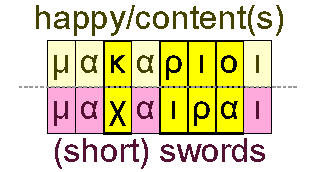
Deuteronomy 33:29 Happy art thou, O Israel: who is like unto thee, O people saved by the LORD, the shield of thy help, and who is the sword of thy excellency ! and thine enemies shall be found liars unto thee; and thou shalt tread upon their high places. [kjv]
μακαριος συ ισραηλ τις ομοιος σοι λαος σωζομενος υπο κυριου υπερασπιει ο βοηθος σου και η μαχαιρα καυχημα σου και ψευσονται σε οι εχθροι σου και συ επι τον τραχηλον αυτων επιβηση [lxx]
Deuteronomy 33:39, in the
LXX (Septuagint), uses the Greek words for
"happy" and
"sword" in the same verse.
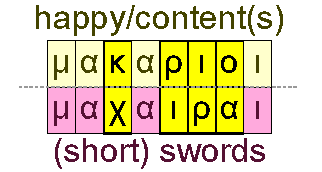
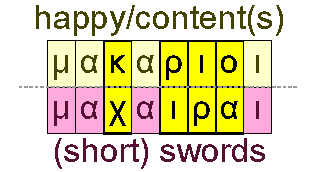
"μακάριοι" ≈ "happy, content" (nominative masculine plural) from "μακάριος" ≈ "happy, content".
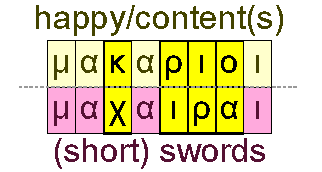
"μᾰ́χαιραι" ≈ "large knifes, short swords" (nominative feminine plural) from "μάχαιρα" ≈ "large knife, short sword".
21. Deuteronomy 33:29 Hebrew idiom
Deuteronomy 33:29 Happy art thou, O Israel: who is like unto thee, O people saved by the LORD, the shield of thy help, and who is the sword of thy excellency ! and thine enemies shall be found liars unto thee; and thou shalt tread upon their high places. [kjv]
μακαριος συ ισραηλ τις ομοιος σοι λαος σωζομενος υπο κυριου υπερασπιει ο βοηθος σου και η μαχαιρα καυχημα σου και ψευσονται σε οι εχθροι σου και συ επι τον τραχηλον αυτων επιβηση [lxx]
Blessed are you, O Israel; who is like to you, O people saved by the Lord? your helper shall hold his shield over you, and his sword is your boast; and your enemies shall speak falsely to you, and you shall tread upon their neck. [bs3]
Are the words for
"high places" and
"neck", as used, an idiom? How was it translated into the
LXX?
[unforgiving servant gabbing someone by the neck, millstone around the neck, etc.]
22. Deuteronomy 33:29
KJV: Happy art thou, O Israel: who is like unto thee, O people saved by the LORD, the shield of thy help, and who is the sword of thy excellency ! and thine enemies shall be found liars unto thee; and thou shalt tread upon their high places.
Hebrew: אשריך ישראל מי כמוך עם נושע ביהוה מגן עזרך ואשר חרב גאותך ויכחשו איביך לך ואתה על במותימו תדרך׃
Greek: μακαριος συ ισραηλ τις ομοιος σοι λαος σωζομενος υπο κυριου υπερασπιει ο βοηθος σου και η μαχαιρα καυχημα σου και ψευσονται σε οι εχθροι σου και συ επι τον τραχηλον αυτων επιβηση
Brenton: Blessed are you, O Israel; who is like to you, O people saved by the Lord? your helper shall hold his shield over you, and his sword is your boast; and your enemies shall speak falsely to you, and you shall tread upon their neck.
23. The security of flaming swords
Genesis 3:24 So he drove out the man; and he placed at the east of the garden of Eden Cherubims, and a flaming sword which turned every way, to keep the way of the tree of life. [kjv]
και εξεβαλεν τον αδαμ και κατωκισεν αυτον απεναντι του παραδεισου της τρυφης και εταξεν τα χερουβιμ και την φλογινην ρομφαιαν την στρεφομενην φυλασσειν την οδον του ξυλου της ζωης [lxx]
… Adam … paradisum voluptatis … flammeum gladium … custodiendam viam ligni vitae [v]
A
key or password provides
passive security to protect a resource.
Active security requires a physical presence of someone or something guarding the resource. Is it a
"tree" or a big stick of
"wood" or
"timber"? How about a
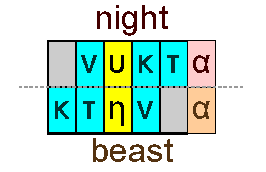
"torch"?
Is the security of the
"flaming" "sword" in Genesis 3:24 "
active", "
passive", both or none of these? Is that
"flaming" "sword" needed to keep access open, to keep access closed, both of these, none of these, or something else? [piece of wood vs. tree as code word]
24. Model of the kingdoms and births
John 3:3 Jesus answered and said unto him, Verily, verily, I say unto thee, Except a man be born again, he can not see the kingdom of God. [kjv]
απεκριθη ο ιησους και ειπεν αυτω αμην αμην λεγω σοι εαν μη τις γεννηθη ανωθεν ου δυναται ιδειν την βασιλειαν του θεου [gnt]
Four parts:
"earth",
"air",
"fire",
"water".
The "
ask", "
seek", "
knock" sequence is part of the "
flame" and "
sword" progression.
25. Details
Put the Kingdom of God outside of space and time and (since the fall) includes the "tree of life". The creation is inside space and time.
The "flaming sword" both protects and keeps the way open.
The "Kingdom of Earth" is for those "of the world".
The "Kingdom of Heaven" is for those "in the world".
The "flaming sword" is provided by Jesus who "throws" the "sword". The Holy Spirit provides the "flame".
Birth#3 is the regeneration or in-processing into the Kingdom of God.
26. Matthew 25:1 Torches and lamps
Matthew 25:1 … which took their lamps, … [kjv]
… αιτινες λαβουσαι τας λαμπαδας αυτων εαυτων … [gnt]
… lampadas … [v]
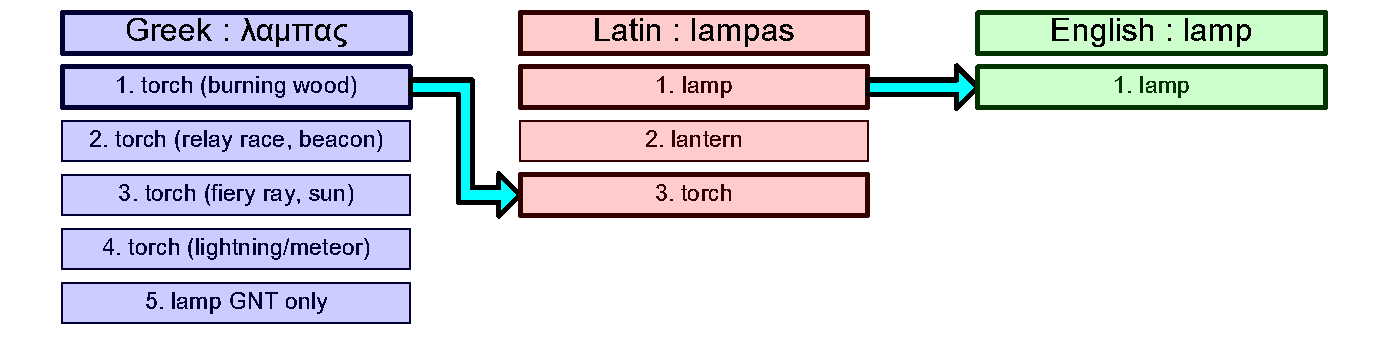
The
ancient Greek word
"λαμπάδας" ≈ "torches" (accusative feminine plural) from
"λαμπάς" ≈ "torch". The Latin word
"lampas" ≈ "lamp, lantern, torch, firebrand".
 |
 |
 |
 |
1. Torch (of burning wood, procession).
2. Torch (relay race as a beacon).
3. Torch (fiery ray, sun).
4. Torches (in the sky, lightning, meteor).
5. Oil lamp. GNT (Greek New Testament).
6. Torch lit (specific festival).
|
CGL
|
Lit
|
Unlit
|
Lit
|
Cambridge Greek Lexicon (p. 868)
|
The meaning of
"oil lamp" appears to be a
GNT specific meaning. How does it change the parable to have the
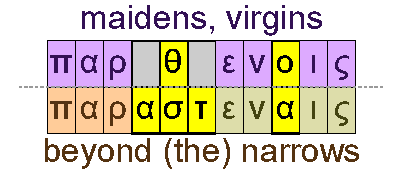
"maidens" with
"torches"?
27. Greek word torch
Note: This is a preliminary diagram. Arrows, sizing, etc., are still needed.
28. Matthew 25:7 Flaming swords
Matthew 25:7 Then all those virgins arose, and trimmed their lamps. [kjv]
τοτε ηγερθησαν πασαι αι παρθενοι εκειναι και εκοσμησαν τας λαμπαδας αυτων εαυτων [gnt]
Do you now see why they would not take
"oil" "
in" their
"torches"?
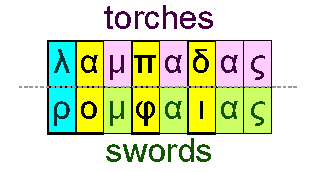
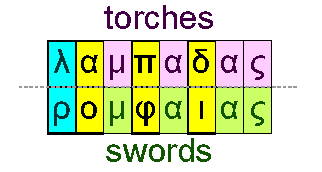
"τᾱ̀ς" ≈ "the" and "λαμπάδας" ≈ "torches" (accusative feminine plural) from "λαμπάς" ≈ "torch".
"τᾱ̀ς" ≈ "the" and "ῥομφαίᾱς" ≈ "(large broad) swords" (accusative feminine plural) from "ῥομφαία" ≈ "(large broad) sword" (from the Tracians).
To get to the
Tree of Life (in the
Garden of Eden) one needs
both a
"sword" and a
"flame" as in the
Holy Spirit, perhaps
"oil". No
"oil", no
"flaming" "sword". In the parable, the
"torches" are never actually stated as
lit. The "
bridegroom" appears to provide the needed
light.
29. Isaiah 40:22 Circle of the earth
Isaiah 40:22 It is he that sitteth upon the circle of the earth, and the inhabitants thereof are as grasshoppers; that stretcheth out the heavens as a curtain, and spreadeth them out as a tent to dwell in: [kjv]
… חוג … [he]
ο κατεχων τον γυρον της γης και οι ενοικουντες εν αυτη ως ακριδες ο στησας ως καμαραν τον ουρανον και διατεινας ως σκηνην κατοικειν [lxx]
The
ancient Greek word
"γυρός" ≈ "round" which went into Latin as
"gyrus" ≈ "circle, circuit" and is the source of the first part of the of the English word
"gyroscope".
Greek:
round and Latin:
circle.
Those who believe in a flat earth still have time to come around.
The
ancient Greek word
"γῦρος" ≈ "ring, circle". The
calque of the Turkish word for
"turn" as in "
cooked on a spit" became the name of the
"gyro" meat in pita bread.
30. Isaiah 40:22 Cameras
Isaiah 40:22 It is he that sitteth upon the circle of the earth, and the inhabitants thereof are as grasshoppers; that stretcheth out the heavens as a curtain, and spreadeth them out as a tent to dwell in: [kjv]
… חוג … [he]
ο κατεχων τον γυρον της γης και οι ενοικουντες εν αυτη ως ακριδες ο στησας ως καμαραν τον ουρανον και διατεινας ως σκηνην κατοικειν [lxx]
… gyrum … nihilum … tabernaculum … [v]
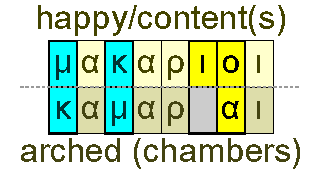
The
ancient Greek word
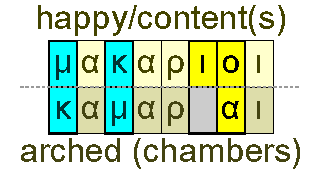
"καμάρα" ≈ "anything with an arched cover"such as a
"chamber",
"vault", etc. The
modern Greek word
"καμάρα" (ka-MA-ra) ≈ "arch" (architecture, anatomy, etc.).
The English word
"camera" comes from the Latin word
"camera" ≈ "chamber, bedchamber" which comes from
"καμάρα" ≈ "anything with an arched cover". Do you get the
picture?
Saying:
I've had enough of you drapes. It's curtains for you.
Legal cases can sometimes be heard in a judge's private chamber. In legal terms this is
in camera.
The Latin word
"nihilum" ≈ "nothing".
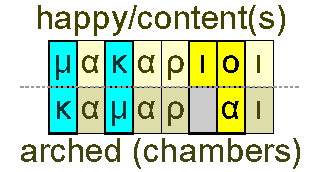
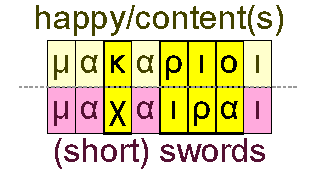
31. Camera swords
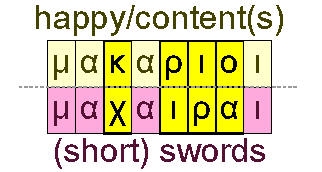
32. Happy camera swords
33. Matthew 5:3 B1 The good news about being poor in spirit
Matthew 5:3 Blessed are the poor in spirit: for theirs is the kingdom of heaven. [kjv]
μακαριοι οι πτωχοι τω πνευματι οτι αυτων εστιν η βασιλεια των ουρανων [gnt]
beati pauperes spiritu … regnum caelorum [v]
Greek has (at least)
two words for "
poor". There is some overlap.
"poor" as in "destitute" (not in this verse)
"poor" as in a "beggar" (used in this verse)
A "beggar" wanting worldly things tends toward deception.
A "beggar" wanting spiritual things tends toward sincerity.
Latin uses
one word for both Greek words, losing
important distinctions.
34. Matthew 5:4 B2 Good grief: the consolation prize of comfort
Matthew 5:4 Blessed are they that mourn: for they shall be comforted. [kjv]
μακαριοι οι πενθουντες οτι αυτοι παρακληθησονται [gnt]
beati qui lugent quoniam ipsi consolabuntur [v]
The important words in this second Beatitude in Matthew 5 are the following.
"blessed" as "happy" and not "fortunate" (different Greek word).
"mourn" and not "grieve". The Latin word "lugeo" ≈ "mourn, lament".
"comforted" and not "consoled" (different Greek word).
The first Beatitude is in the
present tense. The second (here) and the others are in the
future tense. This might be important.
35. Vengeance
Matthew 5:4 Blessed are they that mourn: for they shall be comforted. [kjv]
μακαριοι οι πενθουντες οτι αυτοι παρακληθησονται [gnt]
Isaiah 61:2 To proclaim the acceptable year of the LORD, and the day of vengeance of our God; to comfort all that mourn; [kjv]
… לנחם … אבלים [he]
καλεσαι ενιαυτον κυριου δεκτον και ημεραν ανταποδοσεως παρακαλεσαι παντας τους πενθουντας [lxx]
Since the Greek words are the same in Luke 4, Matthew 5 and Isaiah 61, the exact Hebrew words used in Isaiah 61 for
"mourn" and
"comfort" may be important.
The
"day of vengeance" is also known as the
"day of recompense" as in some getting their "
just desserts". Backwards, "
desserts" is "
stressed".
36. Romans 12:19 Vengeance
Romans 12:19 Dearly beloved, avenge not yourselves, but rather give place unto wrath: for it is written, Vengeance is mine; I will repay, saith the Lord. [kjv]
μη εαυτους εκδικουντες αγαπητοι αλλα δοτε τοπον τη οργη γεγραπται γαρ εμοι εκδικησις εγω ανταποδωσω λεγει κυριος [gnt]
Since ancient times, there have always been those who "
mourn" for the loss of loved ones, etc. After the arrival of the "
Holy Spirit" and the resulting persecutions of Christians by the Romans, there were many believers and survivors that "
mourned" in those days.
How will those believers and survivors who were persecuted for their beliefs be "
comforted"? Whenever we are wronged unjustly, we are not to take
vengeance. That is, "
suffer" as in being "
passive".
Some would say we are to turn the other cheek but that verse appears to refer to something else.
37. Matthew 5:5 B3 Grounds for meekly inheriting humble pie
Matthew 5:5 Blessed are the meek: for they shall inherit the earth. [kjv]
μακαριοι οι πραεις οτι αυτοι κληρονομησουσιν την γην [gnt]
beati mites … possidebunt terram [v]
The important word here are the following:
"blessed",
"meek",
"inherit",
"earth".
Whatever
"meek" means, both
Jesus and
Moses are described as
"meek".
☐ The
"earth" as now exits.
☐ The
new heaven and
new "earth".
The Latin Vulgate and Wycliffe (and Wessex Gospels) switch the verses for "
mourn" and "
meek". This has been adjusted in the verses as used.
38. Matthew 5:6 B4 The righteous type of appetite with which to be gardenized
Matthew 5:6 Blessed are they which do hunger and thirst after righteousness: for they shall be filled. [kjv]
μακαριοι οι πεινωντες και διψωντες την δικαιοσυνην οτι αυτοι χορτασθησονται [gnt]
beati qui esuriunt et sitiunt iustitiam quoniam ipsi saturabuntur [v]
With what will they be
"filled"? The important word here are:
"blessed" happy,
"hunger",
"thirst",
"righteousness",
"filled" (
satisfied).
To what
"righteousness" does the verse refer? Can one be
"satisfied" in either (or
both) ways?
☐ Man's
"righteousness", "
opinion", "
glory", "
law".
☐ God's
"righteousness", "
opinion", "
glory", "
law".
39. Matthew 5:7 B5 Mercy me, full of mercy, mercy me
Matthew 5:7 Blessed are the merciful: for they shall obtain mercy. [kjv]
μακαριοι οι ελεημονες οτι αυτοι ελεηθησονται [gnt]
beati misericordes … misericordiam … [v]
The phrase
"mercy me", or more emphatically,
"mercy mercy me", is an expression of surprise or alarm. It is also the name of a contemporary Christian music group. The French word
"merci" ≈ "thank you" is
not related to
"mercy".
What about
"mercy" in the Bible in general and in the
GNT in particular? Could "
mercy" represent the "
Holy Spirit"? Could it provide a
"flame" for a
"sword"?
We do not just want to ask
Alexa (a computer voice interface) for a definition (as one pastor did on 2021-02-07 as the basis for his sermon).
40. Matthew 5:8 B6 Blessed are the pure in heart
Matthew 5:8 Blessed are the pure in heart: for they shall see God. [kjv]
μακαριοι οι καθαροι τη καρδια οτι αυτοι τον θεον οψονται [gnt]
beati mundo corde … videbunt [v]
In the Beatitudes, Jesus talks about the
"pure" or
"clean" in
"heart" and
"seeing" God.
What does it mean to be "pure" or "clean" in "heart"?
What does it mean to "see" God?
It appears that
"pure" in
"heart" refers to not having any ulterior motives used to do "
evil" as in "
oppress" others.
In Exodus Moses is told that if he "
sees" (the face of) God he will die. Is this not true if you are
"pure" in
"heart"?
41. Exodus 33:20-21 Cannot see the face of God
God is speaking to Moses.
Exodus 33:20 And he said, Thou canst not see my face: for there shall no man see me, and live. [kjv]
και ειπεν ου δυνηση ιδειν μου το προσωπον ου γαρ μη ιδη ανθρωπος το προσωπον μου και ζησεται [lxx]
33:21 And the LORD said, Behold, there is a place by me, and thou shalt stand upon a rock: [kjv]
και ειπεν κυριος ιδου τοπος παρ εμοι στηση επι της πετρας [lxx]
How can the "
pure" in "
heart" in the Beatitudes "
see" God and yet live? Is your answer an inferred (or guessed) opinion? If not, provide support for your answer.
42. Matthew 5:9 B7 Making and appeasing peaceful peacemakers
Matthew 5:9 Blessed are the peacemakers: for they shall be called the children of God. [kjv]
μακαριοι οι ειρηνοποιοι οτι αυτοι υιοι θεου κληθησονται [gnt]
beati pacifici … vocabuntur [v]
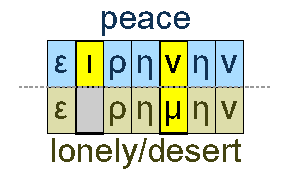
What is peace? What is a peacemaker?
Is being a peacemaker good or bad?
Is making something good or bad?
Who is it doing the calling?
Is there any
conscientious objection to continuing on the topic of making
peace? Let us
piece together some ideas.
Ambiguous request:
Let me be an instrument of your peace. (
A buffoon might play a bassoon.)
[make peace,
Pax Romana, be at peace, living bread and also sweat peas]
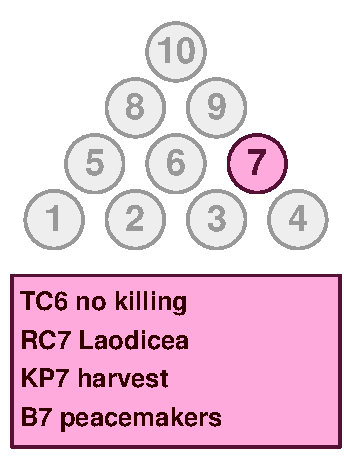
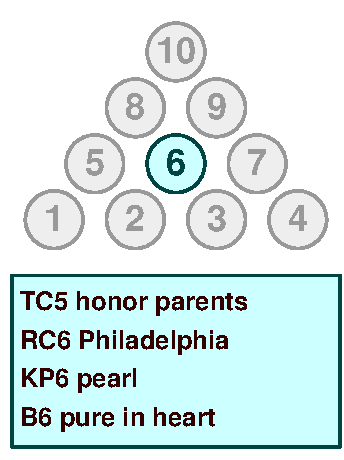
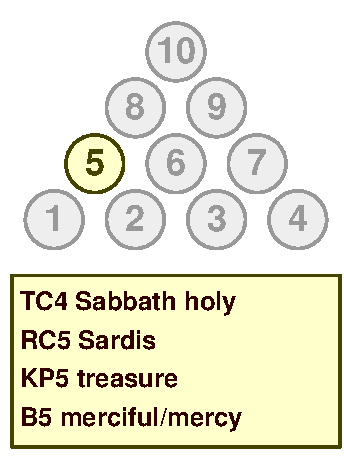
43. Matthew 5:10-12 Persecuted for righteousness sake 1
Matthew 5:10 Blessed are they which are persecuted for righteousness' sake: for theirs is the kingdom of heaven. [kjv]
5:11 Blessed are ye, when men shall revile you, and persecute you, and shall say all manner of evil against you falsely, for my sake. [kjv]
5:12 Rejoice, and be exceeding glad: for great is your reward in heaven: for so persecuted they the prophets which were before you. [kjv]
 |
 |
 |
Matthew 5:10
|
Matthew 5:11
|
Matthew 5:12
|
The first two verses start with
"blessed" but are not usually covered in a sermon series on the
Beatitudes.
In the Ten Pin model, these start a reverse sequence of seven pins. Is "
exceedingly glad" similar to
"happy"? The next four verses starting with the
salt of the earth complete the reverse sequence.
44. Matthew 11:6: Idiomatic misinterpretations that offend
Matthew 11:6 And blessed is he, who soever shall not be offended in me. [kjv]
και μακαριος εστιν ος εαν αν μη σκανδαλισθη εν εμοι [gnt]
… beatus … non … scandalizatus … [v]
Jesus is speaking. The ancient Greek word
"σκάνδαλον" ≈ "trap, snare" as in
entice,
tempt, etc. Star Wars
Admiral Ackbar: "
It's a trap!".
The Greek word
"blessed" here means
"happy". The
"offended" means
"entrapped" as in being
"tricked" or
"deceived" or
"seduced". How could someone be "
deceived" by themselves or someone else about what Jesus really means? A simple
idiom as
"misinterpret" helps to understand this word in the
GNT.
Paraphrase:
Happy is the one who does not misinterpret (entrap themselves) in what I say.
45. Matthew 13:16
Jesus is talking to the disciples as he speaks the kingdom parables in Matthew 13.
Matthew 13:16 But blessed are your eyes, for they see: and your ears, for they hear. [kjv]
υμων δε μακαριοι οι οφθαλμοι οτι βλεπουσιν και τα ωτα υμων οτι ακουει ακουουσιν [gnt]
… beati oculi … vident … aures … audiunt [v]
Do their "
eyes" see as
sharp as a
"sword"?
The
ancient Greek word
"βλέπω" ≈ "see, observe" (a pre-Greek word). That is
"seeing" or
"observing" but not (yet) "
knowing" or "
understanding".
The Greek word for "
hear" assumes "
understanding".
46. Luke 2:34-35
Luke 2:34 And Simeon blessed them, and said unto Mary his mother, Behold, this child is set for the fall and rising again of many in Israel; and for a sign which shall be spoken against; [kjv]
και ευλογησεν αυτους συμεων και ειπεν προς μαριαμ την μητερα αυτου ιδου ουτος κειται εις πτωσιν και αναστασιν πολλων εν τω ισραηλ και εις σημειον αντιλεγομενον [gnt]
2:35 ( Yea, a sword shall pierce through thy own soul also,) that the thoughts of many hearts may be revealed. [kjv]
και σου δε αυτης την ψυχην διελευσεται ρομφαια οπως αν αποκαλυφθωσιν εκ πολλων καρδιων διαλογισμοι [gnt]
Discuss: Might this
"sword" have something to do with the "
flaming"
"sword" that "
keeps" the "
way" (open) to the "
tree" of "
life"?
 |
Details are left as a future topic.
|
47. Matthew 13:16
KJV: But blessed are your eyes, for they see: and your ears, for they hear.
Greek: υμων δε μακαριοι οι οφθαλμοι οτι βλεπουσιν και τα ωτα υμων οτι ακουει ακουουσιν
Latin: vestri autem beati oculi quia vident et aures vestrae quia audiunt
48. Matthew 16:16-17 Flesh and blood
Matthew 16:16 And Simon Peter answered and said, Thou art the Christ, the Son of the living God. [kjv]
αποκριθεις δε σιμων πετρος ειπεν συ ει ο χριστος ο υιος του θεου του ζωντος [gnt]
16:17 And Jesus answered and said unto him, Blessed art thou, Simon Bar–jona: for flesh and blood hath not revealed it unto thee, but my Father which is in heaven. [kjv]
και αποκριθεις δε ο ιησους ειπεν αυτω μακαριος ει σιμων βαρ ιωνα βαριωνα οτι σαρξ και αιμα ουκ απεκαλυψεν σοι αλλ ο πατηρ μου ο εν τοις ουρανοις [gnt]
Note that Jesus uses the name
"Peter" in 16:16 but not in 16:17. Is this important?
49. Matthew 24:46 Happy go lucky
Matthew 24:46 Blessed is that servant, whom his lord when he cometh shall find so doing. [kjv]
μακαριος ο δουλος εκεινος ον ελθων ο κυριος αυτου ευρησει ποιουντα ουτως ποιουντα [gnt]
The Greek for
"blessed" is that of
"happy". In which cases will the servant be
"happy" (with what they are doing)?
☐ The
"servant" is doing things that are good.
☐ The
"servant" is doing things that are not good.
You are happy doing work for the boss thinking it is good and you will be rewarded (get your just desserts).
50. Matthew 10:34 Peace and sword
Matthew 10:34 Think not that I am come to send peace on earth: I came not to send peace, but a sword. [kjv]
μη νομισητε οτι ηλθον βαλειν ειρηνην επι την γην ουκ ηλθον βαλειν ειρηνην αλλα μαχαιραν [gnt]
… mittere pacem … terram … pacem mittere … gladium [v]
The Greek word translated as "
send" is that of "
throw" as in "
throw" a
"sword", "
throw water", etc.
What is "peace"? What is "sword"?
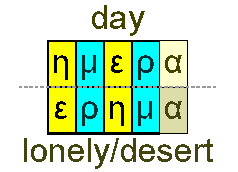
The Greek word for
"peace" comes from either the Greek word for
"say" or
"fasten together" (same word). This origin is disputed, but even if not true, it can be a play on words.
"εἰρήνη" ≈ "peace".
"εἴρω" ≈ "speak, say".
"εἴρω" ≈ "fasten together". Compare this with "better together".
"εἴρων" ≈ "one who feigns ignorance" (e.g., Socrates) and is the source of the English word "irony" but had that different meaning in ancient times.
Jesus will provide more details as to what this verse means in the next few verses.
51. Matthew 10:34
Matthew 10:34 Think not that I am come to send peace on earth: I came not to send peace, but a sword. [kjv]
μη νομισητε οτι ηλθον βαλειν ειρηνην επι την γην ουκ ηλθον βαλειν ειρηνην αλλα μαχαιραν [gnt]
… mittere pacem … terram … pacem mittere … gladium [v]
If Jesus "brings" a "sword", was it there before?
If Jesus "throws", or "turns" or "lights", a "sword", was it there before?
The
Latin word
"mitto" ≈ "send, dispatch, extend". Definition 7 (Wictionary) is that of
"throw". The
ancient Greek word
"λαβεῖν" ≈ "" (aorist active indicative) of
"λαμβάνω" ≈ "take hold of, grasp, seize".
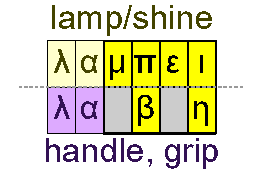
"λάμπει" ≈ "to shine, be bright, give light" (as used).
"λάβη" ≈ "handle, grip, hold" (play on words) from the verb for "take" or "seize". Accusative is "λᾰβήν" ≈ "handle, grip, hold" and could be "eye of a needle".
52. Matthew 10:34 Peace and sword
Matthew 10:34 Think not that I am come to send peace on earth: I came not to send peace, but a sword. [kjv]
μη νομισητε οτι ηλθον βαλειν ειρηνην επι την γην ουκ ηλθον βαλειν ειρηνην αλλα μαχαιραν [gnt]
Peace:
Did "peace", in the sense used by Jesus, exist before Jesus came?
Will Jesus bring "peace" in the second coming?
Did Jesus bring "peace" in the first coming?
Sword:
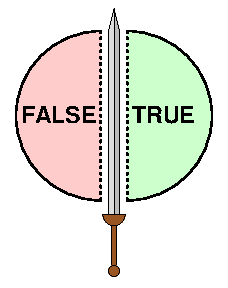
What is the "sword" of "truth"?
Might one purpose of the "sword" be to bring an "awareness" of what is going on (that might need changed)?
The ancient Greek word
"μετάνοια" ≈ "afterthought, repent" where the
"repent" comes from the
GNT (from the Latin).
53. Peace
Matthew 10:34 Think not that I am come to send peace on earth: I came not to send peace, but a sword. [kjv]
μη νομισητε οτι ηλθον βαλειν ειρηνην επι την γην ουκ ηλθον βαλειν ειρηνην αλλα μαχαιραν [gnt]
… mittere pacem … terram … pacem mittere … gladium [v]
Hebrews 13:20 Now the God of peace, that brought again from the dead our Lord Jesus, that great shepherd of the sheep, through the blood of the everlasting covenant, [kjv]
ο δε θεος της ειρηνης ο αναγαγων εκ νεκρων τον ποιμενα των προβατων τον μεγαν εν αιματι διαθηκης αιωνιου τον κυριον ημων ιησουν [gnt]
Jesus says that he did not come to "
throw" "
peace". Hebrews 13:30 talks of the "
God" of "
peace". If Jesus is God, then how might one reconcile these two verses?
54. Luke 12:51
Luke 12:51 Suppose ye that I am come to give peace on earth? I tell you, Nay; but rather division: [kjv]
δοκειτε οτι ειρηνην παρεγενομην δουναι εν τη γη ουχι λεγω υμιν αλλ η διαμερισμον [gnt]
Some pastors want to "
replace division with unity". Jesus does not appear to say this. One can make the case that the
"sword" is the
"sword" of the "
truth" or "
reality". That fits in with the "
reality" of the "
flaming"
"sword".
Notice how Luke, writing in part to the Romans, changes
"sword" to
"division" (the figurative meaning). The Romans were quite adept at
"swords" and might get the wrong idea.
This is similar to the translation of the Bible for the Goths by Wulfila. He did not translate parts of the
OT (Old Testament) because he said the Goths were warlike enough without additional encouragement. Note: Most of that
OT translation has not survived.
[reality sword as essential attributes]
55. Matthew 10:34 Sword
56. Matthew 10:34 Peace
57. Matthew 10:34
KJV: Think not that I am come to send peace on earth: I came not to send peace, but a sword.
Greek: μη νομισητε οτι ηλθον βαλειν ειρηνην επι την γην ουκ ηλθον βαλειν ειρηνην αλλα μαχαιραν
58. Matthew 26:47 Swords and staves
Matthew 26:47 And while he yet spake, lo, Judas, one of the twelve, came, and with him a great multitude with swords and staves, from the chief priests and elders of the people. [kjv]
και ετι αυτου λαλουντος ιδου ιουδας εις των δωδεκα ηλθεν και μετ αυτου οχλος πολυς μετα μαχαιρων και ξυλων απο των αρχιερεων και πρεσβυτερων του λαου [gnt]
The remaining verses in Matthew that use the Greek word for
"sword" are commentary by Matthew on the arrest and crucifixion of Jesus. This is one of them.
"μᾰ́χαιραι" ≈ "large knifes, short swords" (nominative feminine plural) from "μάχαιρα" ≈ "large knife, short sword".
"ξύλον" ≈ "wood, timber" as in the first part of Xylophone.
[tree of life, wood/timber of life, torch of life]
59. Matthew 26:47
KJV: And while he yet spake, lo, Judas, one of the twelve, came, and with him a great multitude with swords and staves, from the chief priests and elders of the people.
Greek: και ετι αυτου λαλουντος ιδου ιουδας εις των δωδεκα ηλθεν και μετ αυτου οχλος πολυς μετα μαχαιρων και ξυλων απο των αρχιερεων και πρεσβυτερων του λαου
60. John 18:3 Lanterns and torches and weapons
John 18:3 Judas then, having received a band of men and officers from the chief priests and Pharisees, cometh thither with lanterns and torches and weapons. [kjv]
ο ουν ιουδας λαβων την σπειραν και εκ των αρχιερεων και εκ των φαρισαιων υπηρετας ερχεται εκει μετα φανων και λαμπαδων και οπλων [gnt]
The
ancient Greek word
"λαμπάδας" ≈ "torches" (accusative feminine plural) from
"λαμπάς" ≈ "torch".
61. Salt and pearls and pigs
Matthew 5:13 Ye are the salt of the earth: but if the salt have lost his savour, wherewith shall it be salted? it is thenceforth good for nothing, but to be cast out, and to be trodden under foot of men. [kjv]
υμεις εστε το αλας της γης εαν δε το αλας μωρανθη εν τινι αλισθησεται εις ουδεν ισχυει ετι ει μη βληθηναι βληθεν εξω και καταπατεισθαι υπο των ανθρωπων [gnt]
7:6 Give not that which is holy unto the dogs, neither cast ye your pearls before swine, lest they trample them under their feet, and turn again and rend you. [kjv]
μη δωτε το αγιον τοις κυσιν μηδε βαλητε τους μαργαριτας υμων εμπροσθεν των χοιρων μηποτε καταπατησωσιν καταπατησουσιν αυτους εν τοις ποσιν αυτων και στραφεντες ρηξωσιν υμας [gnt]
The
"salt" and
"pearls" can be connected with
"pigs" and "
people" via the connecting word of
"trodden" or
"trample" which is the same word in Greek (different verb tense ending). The
"cast" and
"before" words connect with
"salt" of the "
earth".
62. Strongs - pearl
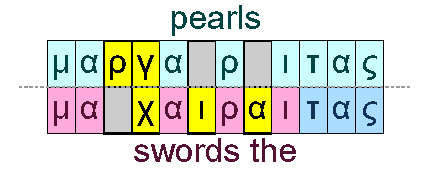
*G3135 *9 μαργαρίτης (mar-gar-ee'-tace) : from margaros (a pearl-oyster); a pearl:--pearl.
 |
Words: μαργαριται μαργαριταις=2 μαργαριτας=2 μαργαριτη μαργαριτην μαργαριτου μαργαριτων
|
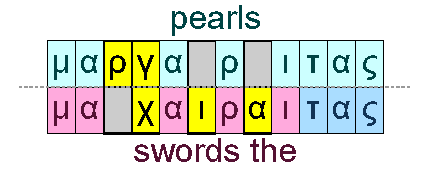
"μαργαρίτης" ≈ "pearl".
"μαργαρίτας" ≈ "pearls".
63. Usage - pearl
- *G3135 *9 μαργαρίτης (mar-gar-ee'-tace) : from margaros (a pearl-oyster); a pearl:--pearl.
- μαργαριτας *2
- Matthew 7:6 ... neither cast ye your pearls before swine, lest ...
- Matthew 13:45 ... man, seeking goodly pearls:
- μαργαριταις *2
- 1 Timothy 2:9 ... or gold, or pearls, or costly array;
- Revelation 17:4 ... precious stones and pearls, having a golden cup ...
- μαργαριτην
- Matthew 13:46 Who, when he had found one pearl of great price, went and sold ...
- μαργαριτων
- Revelation 18:12 ... precious stones, and of pearls, and fine linen, and ...
- μαργαριτη
- Revelation 18:16 ... precious stones, and pearls!
- μαργαριται
- Revelation 21:21 ... gates were twelve pearls; every several gate was of one pearl: and the street ...
- μαργαριτου
- Revelation 21:21 ... gates were twelve pearls; every several gate was of one pearl: and the street ...
64. Swords and pearls
65. Matthew 13:45-46 KP6 Parable of the pearl of great price
Matthew 13:45 Again, the kingdom of heaven is like unto a merchant man, seeking goodly pearls: [kjv]
παλιν ομοια εστιν η βασιλεια των ουρανων ανθρωπω εμπορω ζητουντι καλους μαργαριτας [gnt]
13:46 Who, when he had found one pearl of great price, went and sold all that he had, and bought it. [kjv]
ος ευρων δε ενα πολυτιμον μαργαριτην απελθων πεπρακεν παντα οσα ειχεν και ηγορασεν αυτον [gnt]
The name "
Margaret" comes from the ancient Greek word
"μαργαρίτης" ≈ "pearl". The word
"pearl" appears in the
GNT but not in the
LXX, although the
KJV uses
"pearl" in Job.
What is being
"bought"? [good and raca]
66. Throwing pearls build
This chart build is to summarize on overview of parts of Matthew 7.
The end result of giving what is "
holy", control of the group, to a wolf-dog and having white and then gray "
pearls" cast to "
swine" to be trodden down to become black pearls is to divide the group into "
few" and "
some". Only the "
few" who have otherwise ignored the "
wolf" will find and knock on the gate to life and have it opened.
67. Revelation 21:21 Pearly gates
Revelation 21:21 And the twelve gates were twelve pearls; every several gate was of one pearl: and the street of the city was pure gold, as it were transparent glass. [kjv]
και οι δωδεκα πυλωνες δωδεκα μαργαριται ανα εις εκαστος των πυλωνων ην εξ ενος μαργαριτου και η πλατεια της πολεως χρυσιον καθαρον ως υαλος διαφανης διαυγης [gnt]
In Revelation, we find the verse from which the idea of the "
Pearly Gates" originates. The Latin word
"margarita" ≈ "pearl" and comes from the ancient Greek word
"μαργαρίτης" ≈ "pearl".
The ancient Greek word
"πλατύς" ≈ "wide, flat" and is related to the English word
"flat". The Greek word is the first part of the English word
"platypus" which means, literally, "
flat feet". The Greek in this verse means less of a
"street" and more of a
"plaza" or
"plateau".
68. Revelation 21:21 Pearly gates
Revelation 21:21 And the twelve gates were twelve pearls; every several gate was of one pearl: and the street of the city was pure gold, as it were transparent glass. [kjv]
και οι δωδεκα πυλωνες δωδεκα μαργαριται ανα εις εκαστος των πυλωνων ην εξ ενος μαργαριτου και η πλατεια της πολεως χρυσιον καθαρον ως υαλος διαφανης διαυγης [gnt]
A
"gate" is a passage way from one side to the other. Each
"gate" is a
"pearl". One might conclude that a
"pearl" represents a
"gate" or "
access mechanism" to that passage way. It appears that there are
12 pearls but not
12 different pearls.
The ancient Greek word "πυλών" ≈ "gateway".
The ancient Greek word "πύλη" ≈ "wing of gates, entrance".
69. The security of flaming swords
Genesis 3:24 So he drove out the man; and he placed at the east of the garden of Eden Cherubims, and a flaming sword which turned every way, to keep the way of the tree of life. [kjv]
και εξεβαλεν τον αδαμ και κατωκισεν αυτον απεναντι του παραδεισου της τρυφης και εταξεν τα χερουβιμ και την φλογινην ρομφαιαν την στρεφομενην φυλασσειν την οδον του ξυλου της ζωης [lxx]
… Adam … paradisum voluptatis … flammeum gladium … custodiendam viam ligni vitae [v]
A
key or password provides
passive security to protect a resource.
Active security requires a physical presence of someone or something guarding the resource. Is it a
"tree" or a big stick of
"wood" or
"timber"? How about a
"torch"?
Is the security of the
"flaming" "sword" in Genesis 3:24 "
active", "
passive", both or none of these? Is that
"flaming" "sword" needed to keep access open, to keep access closed, both of these, none of these, or something else? [piece of wood vs. tree as code word]
70. Short swords
71. A peace of the mouth of the sword
Revelation 1:16 And he had in his right hand seven stars: and out of his mouth went a sharp twoedged sword: and his countenance was as the sun shineth in his strength. [kjv]
και εχων εν τη δεξια αυτου χειρι αυτου αστερας επτα και εκ του στοματος αυτου ρομφαια διστομος οξεια εκπορευομενη και η οψις αυτου ως ο ηλιος φαινει εν τη δυναμει αυτου [gnt]

The ancient Greek word
"στόμα" ≈ "mouth" and could mean the "
face", source of a body of water, opening in the earth, the front opening of something, etc. An interesting idiom in the Greek is that of letting the "
mouth of the sword" do the talking. This might be similar to saying "
let my sword do the talking".
The
"sword" here is, literally, a "
two"
"mouth" "sword".
72. Revelation and Laodicea
Revelation 3:16 So then because thou art lukewarm, and neither cold nor hot, I will spue thee out of my mouth. [kjv]
ουτως οτι χλιαρος ει και ουτε ψυχρος ουτε ζεστος ουτε ψυχρος μελλω σε εμεσαι εκ του στοματος μου [gnt]

Consider what Jesus said to the Church at Laodicea as far as being "
yes" or "
no", as in
"hot" or
"cold". There are (at least) two ways to take what Jesus said.
Impose the current view that "hot" means doing what Jesus wants (as in "on fire" for the Lord) and "cold" means not doing what Jesus wants (as in a "cold shoulder"). That leaves the "lukewarm" meaning somewhat unclear.
Take both being "refreshing" (as were the cold and hot water sources at Laodicea) and "lukewarm", as not refreshing, being what is to be avoided.
73. Hebrews 4:12 Piercing sword
Hebrews 4:12 For the word of God is quick, and powerful, and sharper than any twoedged sword, piercing even to the dividing asunder of soul and spirit, and of the joints and marrow, and is a discerner of the thoughts and intents of the heart. [kjv]
ζων γαρ ο λογος του θεου και ενεργης και τομωτερος υπερ πασαν μαχαιραν διστομον και διικνουμενος αχρι μερισμου ψυχης τε και πνευματος αρμων τε και μυελων και κριτικος ενθυμησεων και εννοιων καρδιας [gnt]
74. End of page