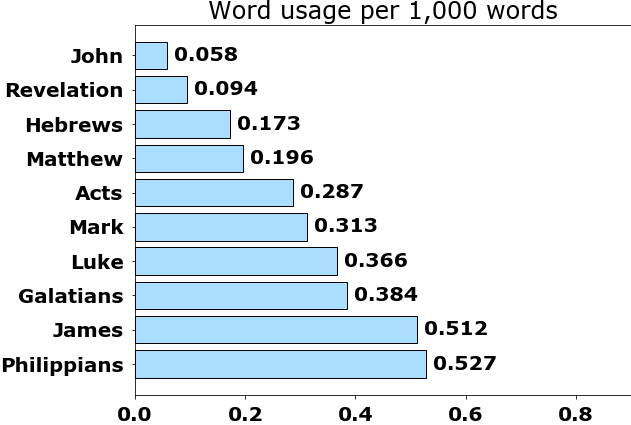
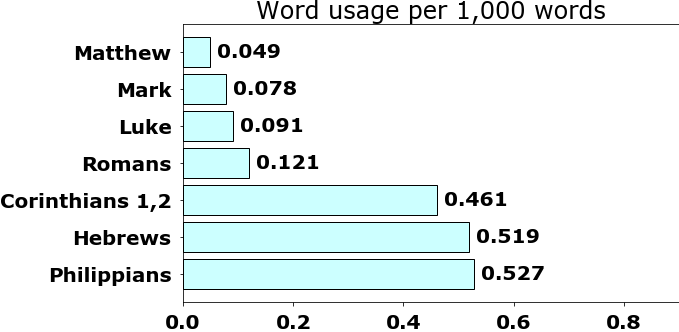
- *G5302 *15 ὑστερέω (hoos-ter-eh'-o) : from G5306; to be later, i.e. (by implication) to be inferior; generally, to fall short (be deficient):--come behind (short), be destitute, fail, lack, suffer need, (be in) want, be the worse.
υστερεισθαι *3 of 15
Luke 15:14 ... and he began to be in want.
1 Corinthians 1:7 So that ye come behind in no gift; ...
Philippians 4:12 ... both to abound and to suffer need.
16. Philippians 4:12-13
Philippians 4:12 I know both how to be abased, and I know how to abound: every where and in all things I am instructed both to be full and to be hungry, both to abound and to suffer need. [kjv]
οιδα δε και ταπεινουσθαι οιδα και περισσευειν εν παντι και εν πασιν μεμυημαι και χορταζεσθαι και πειναν και περισσευειν και υστερεισθαι [gnt]
4:13 I can do all things through Christ which strengtheneth me. [kjv]
παντα ισχυω εν τω ενδυναμουντι με χριστω [gnt]
17. Matthew 19:20 Lag behind
Matthew 19:20 The young man saith unto him, All these things have I kept from my youth up: what lack I yet? [kjv]
λεγει αυτω ο νεανισκος παντα ταυτα εφυλαξαμην εκ νεοτητος μου παντα εφυλαξα τι ετι υστερω [gnt]
"τι" ≈ "what".
"ετι" ≈ "yet, further".
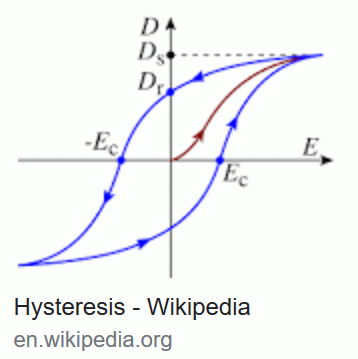
"ὑστερέω" ≈ "behind, late, lag behind" and is the source of the English word "hysteresis", a word coined by Sir James Alfred Ewing to describe magnetic memory. This memory causes the magnetic field to "lag behind".
The Greek word for "
kept" is that of an emphatic "
guard" or "
watch" and is
not the word Jesus uses in saying to "
keep" the "
commandments".
18. Luke 15:14
Luke 15:14 And when he had spent all, there arose a mighty famine in that land; and he began to be in want. [kjv]
δαπανησαντος δε αυτου παντα εγενετο λιμος ισχυρος ισχυρα κατα την χωραν εκεινην και αυτος ηρξατο υστερεισθαι [gnt]
19. Matthew 24:7 Famine and plague
Matthew 24:7 For nation shall rise against nation, and kingdom against kingdom: and there shall be famines, and pestilences, and earthquakes, in divers places. [kjv]
εγερθησεται γαρ εθνος επι εθνος και βασιλεια επι βασιλειαν και εσονται λιμοι και λοιμοι και σεισμοι κατα τοπους [gnt]
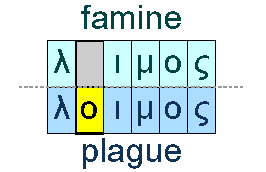
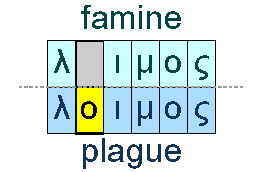
The Greek words for
"famine" and
"plague" can be play on words. Today they would be pronounced the same.
"λιμός" ≈ "famine, hunger, starvation".
"λοιμός" ≈ "plague, pestilence".
Most
modern "famines" are man-made and not natural phenomena. Can there be a
"famine" of the truth of what Jesus actually said and meant?
Matthew records
"famines", and
"earthquakes". It appears that people remembered one or the other and related that to Luke who used both words. The additional word
"pestilence", from the Latin, was then added in Matthew by the
TR (Textus Receptus).
20. Luke 15:14
Luke 15:14 And when he had spent all, there arose a mighty famine in that land; and he began to be in want. [kjv]
δαπανησαντος δε αυτου παντα εγενετο λιμος ισχυρος ισχυρα κατα την χωραν εκεινην και αυτος ηρξατο υστερεισθαι [gnt]
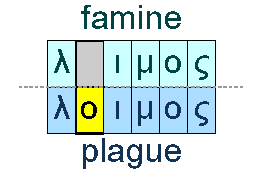
The Greek words for
"famine" and
"plague" can be play on words. Today they would be pronounced the same.
"λιμός" ≈ "famine, hunger, starvation".
"λοιμός" ≈ "plague, pestilence".
21. Luke 15:14 Eat like a cow
22. Luke 15:14
KJV: And when he had spent all, there arose a mighty famine in that land; and he began to be in want.
Greek: δαπανησαντος δε αυτου παντα εγενετο λιμος ισχυρος ισχυρα κατα την χωραν εκεινην και αυτος ηρξατο υστερεισθαι
Latin: et postquam omnia consummasset facta est fames valida in regione illa et ipse coepit egere
Wycliffe: And aftir that he hadde endid alle thingis, a strong hungre was maad in that cuntre, and he bigan to haue nede.
Tyndale: And when he had spent all that he had ther rose a greate derth thorow out all yt same londe and he began to lacke.
Luther: Da er nun all das Seine verzehret hatte, ward eine große Teurung durch dasselbige ganze Land, und er fing an zu darben.
23. Luke 15:15
Luke 15:15 And he went and joined himself to a citizen of that country; and he sent him into his fields to feed swine. [kjv]
και πορευθεις εκολληθη ενι των πολιτων της χωρας εκεινης και επεμψεν αυτον εις τους αγρους αυτου βοσκειν χοιρους [gnt]
[glue]
[shepherd]
24. Luke 15:15
KJV: And he went and joined himself to a citizen of that country; and he sent him into his fields to feed swine.
Greek: και πορευθεις εκολληθη ενι των πολιτων της χωρας εκεινης και επεμψεν αυτον εις τους αγρους αυτου βοσκειν χοιρους
25. Luke 15:16
Luke 15:16 And he would fain have filled his belly with the husks that the swine did eat: and no man gave unto him. [kjv]
και επεθυμει γεμισαι την κοιλιαν αυτου απο χορτασθηναι εκ των κερατιων ων ησθιον οι χοιροι και ουδεις εδιδου αυτω [gnt]
26. Luke 15:16
KJV: And he would fain have filled his belly with the husks that the swine did eat: and no man gave unto him.
Greek: και επεθυμει γεμισαι την κοιλιαν αυτου απο χορτασθηναι εκ των κερατιων ων ησθιον οι χοιροι και ουδεις εδιδου αυτω
27. Luke 15:17
Luke 15:17 And when he came to himself, he said, How many hired servants of my father's have bread enough and to spare, and I perish with hunger ! [kjv]
εις εαυτον δε ελθων ειπεν εφη ποσοι μισθιοι του πατρος μου περισσευουσιν περισσευονται αρτων εγω δε λιμω ωδε απολλυμαι [gnt]
… abundant panibus … fame pereo [v]
The
ancient Greek word
"ὧδε" ≈ "in this way, thus" and comes from
"ὅδε" ≈ "this". Translating the word as
"here" loses the idea of the
manner or
way in which something is done.
This word does not appear to be translated in the
KJV (King James Version). It is not in the Latin.
28. Luke 15:17
KJV: And when he came to himself, he said, How many hired servants of my father's have bread enough and to spare, and I perish with hunger !
Greek: εις εαυτον δε ελθων ειπεν εφη ποσοι μισθιοι του πατρος μου περισσευουσιν περισσευονται αρτων εγω δε λιμω ωδε απολλυμαι
Latin: in se autem reversus dixit quanti mercennarii patris mei abundant panibus ego autem hic fame pereo
29. Luke 15:18
Luke 15:18 I will arise and go to my father, and will say unto him, Father, I have sinned against heaven, and before thee, [kjv]
αναστας πορευσομαι προς τον πατερα μου και ερω αυτω πατερ ημαρτον εις τον ουρανον και ενωπιον σου [gnt]
[into as against]
30. Luke 15:18
KJV: I will arise and go to my father, and will say unto him, Father, I have sinned against heaven, and before thee,
Greek: αναστας πορευσομαι προς τον πατερα μου και ερω αυτω πατερ ημαρτον εις τον ουρανον και ενωπιον σου
31. Luke 15:19
Luke 15:19 And am no more worthy to be called thy son: make me as one of thy hired servants. [kjv]
και ουκετι ειμι αξιος κληθηναι υιος σου ποιησον με ως ενα των μισθιων σου [gnt]
… dignus … [v]
… wurðe… [wes]
… worthi … [wy]
… wairths … [got]
… wert… [lu]
32. Luke 15:19
KJV: And am no more worthy to be called thy son: make me as one of thy hired servants.
Greek: και ουκετι ειμι αξιος κληθηναι υιος σου ποιησον με ως ενα των μισθιων σου
Latin: et iam non sum dignus vocari filius tuus fac me sicut unum de mercennariis tuis
Wessex: nu ich ne eom wurðe. þt ic beo þin sune ge-nemned. do me swa ane of þinen yrðlingen.
Wycliffe: and now Y am not worthi to be clepid thi sone, make me as oon of thin hirid men.
Gothic: ju thanaseiths ni im wairths ei haitaidau sunus theins; gatawei mik swe ainana asnje theinaize.
Luther: und bin fort nicht mehr wert, daß ich dein Sohn heiße; mache mich zu einem deiner Tagelöhner.
33. Luke 15:20
Luke 15:20 And he arose, and came to his father. But when he was yet a great way off, his father saw him, and had compassion, and ran, and fell on his neck, and kissed him. [kjv]
και αναστας ηλθεν προς τον πατερα εαυτου ετι δε αυτου μακραν απεχοντος ειδεν αυτον ο πατηρ αυτου και εσπλαγχνισθη και δραμων επεπεσεν επι τον τραχηλον αυτου και κατεφιλησεν αυτον [gnt]
[far from their reward]
[neck]
34. Luke 15:20
KJV: And he arose, and came to his father. But when he was yet a great way off, his father saw him, and had compassion, and ran, and fell on his neck, and kissed him.
Greek: και αναστας ηλθεν προς τον πατερα εαυτου ετι δε αυτου μακραν απεχοντος ειδεν αυτον ο πατηρ αυτου και εσπλαγχνισθη και δραμων επεπεσεν επι τον τραχηλον αυτου και κατεφιλησεν αυτον
35. Luke 15:21
Luke 15:21 And the son said unto him, Father, I have sinned against heaven, and in thy sight, and am no more worthy to be called thy son. [kjv]
ειπεν δε αυτω ο υιος αυτω πατερ ημαρτον εις τον ουρανον και ενωπιον σου και ουκετι ειμι αξιος κληθηναι υιος σου ποιησον με ως ενα των μισθιων σου [gnt]
36. Luke 15:21
KJV: And the son said unto him, Father, I have sinned against heaven, and in thy sight, and am no more worthy to be called thy son.
Greek: ειπεν δε αυτω ο υιος αυτω πατερ ημαρτον εις τον ουρανον και ενωπιον σου και ουκετι ειμι αξιος κληθηναι υιος σου ποιησον με ως ενα των μισθιων σου
37. Luke 15:22
Luke 15:22 But the father said to his servants, Bring forth the best robe, and put it on him; and put a ring on his hand, and shoes on his feet: [kjv]
ειπεν δε ο πατηρ προς τους δουλους αυτου ταχυ εξενεγκατε την στολην την πρωτην και ενδυσατε αυτον και δοτε δακτυλιον εις την χειρα αυτου και υποδηματα εις τους ποδας [gnt]
… cito … [v]
The ancient Greek word
"ταχύς" ≈ "quick, rapid, soon" where
"soon" requires a context to support that meaning.
The
KJV does not appear to translate this word. The word is in the Latin word
"cito" ≈ "quickly, speedily".
38. Luke 15:22
KJV: But the father said to his servants, Bring forth the best robe, and put it on him; and put a ring on his hand, and shoes on his feet:
Greek: ειπεν δε ο πατηρ προς τους δουλους αυτου ταχυ εξενεγκατε την στολην την πρωτην και ενδυσατε αυτον και δοτε δακτυλιον εις την χειρα αυτου και υποδηματα εις τους ποδας
Latin: dixit autem pater ad servos suos cito proferte stolam primam et induite illum et date anulum in manum eius et calciamenta in pedes
39. Luke 15:23
Luke 15:23 And bring hither the fatted calf, and kill it; and let us eat, and be merry: [kjv]
και ενεγκαντες φερετε τον μοσχον τον σιτευτον θυσατε και φαγοντες ευφρανθωμεν [gnt]
40. Luke 15:23
KJV: And bring hither the fatted calf, and kill it; and let us eat, and be merry:
Greek: και ενεγκαντες φερετε τον μοσχον τον σιτευτον θυσατε και φαγοντες ευφρανθωμεν
41. Luke 15:24
Luke 15:24 For this my son was dead, and is alive again; he was lost, and is found. And they began to be merry. [kjv]
οτι ουτος ο υιος μου νεκρος ην και ανεζησεν και ην απολωλως ην και ευρεθη και ηρξαντο ευφραινεσθαι [gnt]
… mortuus … revixit … [v]
42. Luke 15:24
KJV: For this my son was dead, and is alive again; he was lost, and is found. And they began to be merry.
Greek: οτι ουτος ο υιος μου νεκρος ην και ανεζησεν και ην απολωλως ην και ευρεθη και ηρξαντο ευφραινεσθαι
Latin: quia hic filius meus mortuus erat et revixit perierat et inventus est et coeperunt epulari
43. Luke 15:25
Luke 15:25 Now his elder son was in the field: and as he came and drew nigh to the house, he heard musick and dancing. [kjv]
ην δε ο υιος αυτου ο πρεσβυτερος εν αγρω και ως ερχομενος ηγγισεν τη οικια ηκουσεν συμφωνιας και χορων [gnt]
… audivit symphoniam … chorum [v]
The ancient Greek word
"συμφωνία" ≈ "agreement" and comes from the words for
"same voice". The English word
"symphony" comes from a group of people with the
"same voice". The letters "
M" and "
N" are related linguistically.
The ancient Greek word
"φωνή" ≈ "voice, sound" comes from the ancient Greek word
"φως" ≈ "light" and the ancient Greek word
"νους" ≈ "mind". That is, a
"sound" or
"voice" is
"light" into the
"mind".
The
Latin word
"symphonia" ≈ "agreement (of sounds), symphony (music)".
The
ancient Greek word
"χορός" ≈ "dance with song".
44. Luke 15:25
KJV: Now his elder son was in the field: and as he came and drew nigh to the house, he heard musick and dancing.
Greek: ην δε ο υιος αυτου ο πρεσβυτερος εν αγρω και ως ερχομενος ηγγισεν τη οικια ηκουσεν συμφωνιας και χορων
Latin: erat autem filius eius senior in agro et cum veniret et adpropinquaret domui audivit symphoniam et chorum
45. Luke 15:26
Luke 15:26 And he called one of the servants, and asked what these things meant. [kjv]
και προσκαλεσαμενος ενα των παιδων αυτου επυνθανετο τι αν ειη ταυτα [gnt]
The
ancient Greek word
"εἴη" ≈ "might be".
46. Luke 15:26
KJV: And he called one of the servants, and asked what these things meant.
Greek: και προσκαλεσαμενος ενα των παιδων αυτου επυνθανετο τι αν ειη ταυτα
47. Luke 15:27
Luke 15:27 And he said unto him, Thy brother is come; and thy father hath killed the fatted calf, because he hath received him safe and sound. [kjv]
ο δε ειπεν αυτω οτι ο αδελφος σου ηκει και εθυσεν ο πατηρ σου τον μοσχον τον σιτευτον οτι υγιαινοντα αυτον απελαβεν [gnt]
48. Luke 15:27
KJV: And he said unto him, Thy brother is come; and thy father hath killed the fatted calf, because he hath received him safe and sound.
Greek: ο δε ειπεν αυτω οτι ο αδελφος σου ηκει και εθυσεν ο πατηρ σου τον μοσχον τον σιτευτον οτι υγιαινοντα αυτον απελαβεν
49. Luke 15:28
Luke 15:28 And he was angry, and would not go in: therefore came his father out, and intreated him. [kjv]
ωργισθη δε και ουκ ηθελεν εισελθειν ο ουν δε πατηρ αυτου εξελθων παρεκαλει αυτον [gnt]
50. Luke 15:28
KJV: And he was angry, and would not go in: therefore came his father out, and intreated him.
Greek: ωργισθη δε και ουκ ηθελεν εισελθειν ο ουν δε πατηρ αυτου εξελθων παρεκαλει αυτον
51. Luke 15:29
Luke 15:29 And he answering said to his father, Lo, these many years do I serve thee, neither transgressed I at any time thy commandment: and yet thou never gavest me a kid, that I might make merry with my friends: [kjv]
ο δε αποκριθεις ειπεν τω πατρι αυτου ιδου τοσαυτα ετη δουλευω σοι και ουδεποτε εντολην σου παρηλθον και εμοι ουδεποτε εδωκας εριφον ινα μετα των φιλων μου ευφρανθω [gnt]
The modern Greek word used in this verse is the modern Greek word
"εριφίον" (eh-ree-FEE-on) ≈ "young goat, kid goat". That is, a "
goat" that is not mature.
This type of
"kid goat" appears in the parable of the "
desolate son", the "
prodigal son", the "
two brothers", the "
ever forgiving father", or some other name.
The idea that it is very important to have "
friends" was a main tenet of the Greek philosopher Epicurus whose ideas, not from the Bible, are still heard in sermons at many churches today.
 |
Details are left as a future topic.
|
52. Luke 15:29
KJV: And he answering said to his father, Lo, these many years do I serve thee, neither transgressed I at any time thy commandment: and yet thou never gavest me a kid, that I might make merry with my friends:
Greek: ο δε αποκριθεις ειπεν τω πατρι αυτου ιδου τοσαυτα ετη δουλευω σοι και ουδεποτε εντολην σου παρηλθον και εμοι ουδεποτε εδωκας εριφον ινα μετα των φιλων μου ευφρανθω
53. Luke 15:30
Luke 15:30 But as soon as this thy son was come, which hath devoured thy living with harlots, thou hast killed for him the fatted calf. [kjv]
οτε δε ο υιος σου ουτος ο καταφαγων σου τον βιον μετα πορνων ηλθεν εθυσας αυτω τον μοσχον τον σιτευτον μοσχον [gnt]
54. Luke 15:30
KJV: But as soon as this thy son was come, which hath devoured thy living with harlots, thou hast killed for him the fatted calf.
Greek: οτε δε ο υιος σου ουτος ο καταφαγων σου τον βιον μετα πορνων ηλθεν εθυσας αυτω τον μοσχον τον σιτευτον μοσχον
55. Luke 15:31
Luke 15:31 And he said unto him, Son, thou art ever with me, and all that I have is thine. [kjv]
ο δε ειπεν αυτω τεκνον συ παντοτε μετ εμου ει και παντα τα εμα σα εστιν [gnt]
56. Luke 15:31
KJV: And he said unto him, Son, thou art ever with me, and all that I have is thine.
Greek: ο δε ειπεν αυτω τεκνον συ παντοτε μετ εμου ει και παντα τα εμα σα εστιν
57. Luke 15:32
Luke 15:32 It was meet that we should make merry, and be glad: for this thy brother was dead, and is alive again; and was lost, and is found. [kjv]
ευφρανθηναι δε και χαρηναι εδει οτι ο αδελφος σου ουτος νεκρος ην και ανεζησεν εζησεν και απολωλως ην και ευρεθη [gnt]
58. Luke 15:32
KJV: It was meet that we should make merry, and be glad: for this thy brother was dead, and is alive again; and was lost, and is found.
Greek: ευφρανθηναι δε και χαρηναι εδει οτι ο αδελφος σου ουτος νεκρος ην και ανεζησεν εζησεν και απολωλως ην και ευρεθη
59. End of page