Send
Close Add comments:
(status displays here)
Got it! This site "www.creationpie.org" uses cookies. You consent to this by clicking on "Got it!" or by continuing to use this website. Note: This appears on each machine/browser from which this site is accessed.
Unicorns
1. Unicorns
2. Noah
Where there unicorns on the Ark? Perhaps Noah did not allow them on the Ark, and said "
What part of Noah do you not understand?".
3. Numbers 23:22
Numbers 23:22 God brought them out of Egypt; he hath as it were the strength of an unicorn. [kjv]
… ראם … [he]
θεος ο εξαγαγων αυτους εξ αιγυπτου ως δοξα μονοκερωτος αυτω [lxx]
… rinocerotis [v]
… vnicorn… [wy]
… unicornio. [es]
In Numbers 23:22 a comparisons is made of the "
strength" of God to bring Israel out of Egypt.
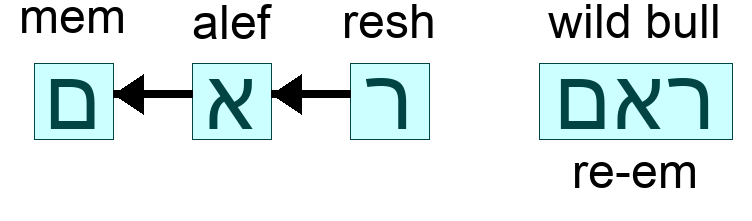
*H7214 רְאֵם רְאֵים רֵים רֵם (reh-ame') : or rieym {reh-ame'}; or reym {rame}; or rem {rame}; from H7213; a wild bull (from its conspicuousness):--unicorn.
4. Numbers 23:22
KJV: God brought them out of Egypt; he hath as it were the strength of an unicorn.
Hebrew: אל מוציאם ממצרים כתועפת ראם לו׃
Greek: θεος ο εξαγαγων αυτους εξ αιγυπτου ως δοξα μονοκερωτος αυτω
Latin: Deus eduxit eum de Aegypto cuius fortitudo similis est rinocerotis
Wycliffe: The Lord God ledde hym out of Egipt, whos strengthe is lijk an vnicorn;
Luther: Gott hat sie aus Ägypten geführet; seine Freudigkeit ist wie eines Einhorns.
Spanish: Dios los ha sacado de Egipto; tiene fuerzas como de unicornio.
Portuguese: Deus fê-lo sair do Egipto, sendo para ele como a força de um búfalo.
5. Numbers 24:8
Numbers 24:8 God brought him forth out of Egypt; he hath as it were the strength of an unicorn: he shall eat up the nations his enemies, and shall break their bones, and pierce them through with his arrows. [kjv]
… ראם … [he]
θεος ωδηγησεν αυτον εξ αιγυπτου ως δοξα μονοκερωτος αυτω εδεται εθνη εχθρων αυτου και τα παχη αυτων εκμυελιει και ταις βολισιν αυτου κατατοξευσει εχθρον [lxx]

In this verse, God not only has the "
strength" of a
"unicorn" but has
"arrows".
6. Numbers 24:8
KJV: God brought him forth out of Egypt; he hath as it were the strength of an unicorn: he shall eat up the nations his enemies, and shall break their bones, and pierce them through with his arrows.
Hebrew: אל מוציאו ממצרים כתועפת ראם לו יאכל גוים צריו ועצמתיהם יגרם וחציו ימחץ׃
Greek: θεος ωδηγησεν αυτον εξ αιγυπτου ως δοξα μονοκερωτος αυτω εδεται εθνη εχθρων αυτου και τα παχη αυτων εκμυελιει και ταις βολισιν αυτου κατατοξευσει εχθρον
Latin: Deus eduxit illum de Aegypto cuius fortitudo similis est rinocerotis devorabunt gentes hostes illius ossaque eorum confringent et perforabunt sagittis
Wycliffe: God ledde hym out of Egipt, whos strengthe is lijk an vnicorn; thei schulen deuoure hethene men, enemyes`of hym, that is, of Israel; and thei schulen breke the boonus of hem, and schulen perse with arowis.
Luther: Gott hat ihn aus Ägypten geführet; seine Freudigkeit ist wie eines Einhorns. Er wird die Heiden, seine Verfolger, fressen und ihre Gebeine zermalmen und mit seinen Pfeilen zerschmettern.
Spanish: Dios lo sacó de Egipto; tiene fuerzas como de unicornio; comerá a las naciones sus enemigas, y desmenuzará sus huesos, y asaeteará con sus saetas.
Portuguese: Deus fê-lo sair do Egipto, sendo para ele como a força de um búfalo. Devora os povos seus inimigos, esmaga-lhes os ossos e quebra as suas flechas.
7. Deuteronomy 33:17 Bullocks
Deuteronomy 33:17 His glory is like the firstling of his bullock, and his horns are like the horns of unicorns: with them he shall push the people together to the ends of the earth: and they are the ten thousands of Ephraim, and they are the thousands of Manasseh. [kjv]
… שורו … ראם … [he]
πρωτοτοκος ταυρου το καλλος αυτου κερατα μονοκερωτος τα κερατα αυτου εν αυτοις εθνη κερατιει αμα εως επ ακρου γης αυται μυριαδες εφραιμ και αυται χιλιαδες μανασση [lxx]
|
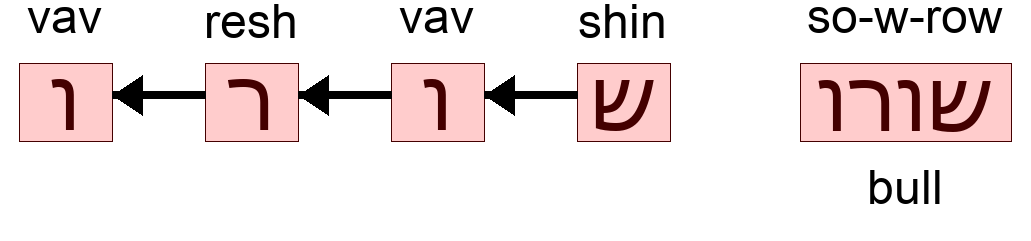
The Hebrew word "שורו" (so-w-row) ≈ "bull". Here, the "horns" of the firstling of a "bull" is compared to the "horns" of the "unicorns".
|
 |
The ancient Greek word
"ταῦρος" ≈ "bull" and is the source of the English word
"Taurus" as the zodiac constellation. Bulls were a symbol of Crete and the Minotaur.
8. Deuteronomy 33:17
KJV: His glory is like the firstling of his bullock, and his horns are like the horns of unicorns: with them he shall push the people together to the ends of the earth: and they are the ten thousands of Ephraim, and they are the thousands of Manasseh.
Hebrew: בכור שורו הדר לו וקרני ראם קרניו בהם עמים ינגח יחדו אפסי ארץ והם רבבות אפרים והם אלפי מנשה׃
Greek: πρωτοτοκος ταυρου το καλλος αυτου κερατα μονοκερωτος τα κερατα αυτου εν αυτοις εθνη κερατιει αμα εως επ ακρου γης αυται μυριαδες εφραιμ και αυται χιλιαδες μανασση
Latin: quasi primogeniti tauri pulchritudo eius cornua rinocerotis cornua illius in ipsis ventilabit gentes usque ad terminos terrae hae sunt multitudines Ephraim et haec milia Manasse
Wycliffe: As the first gendrid of a bole is the feirnesse of hym; the hornes of an vnicorn ben the hornes of hym; in tho he schal wyndewe folkis, `til to the termes of erthe. These ben the multitudis of Effraym, and these ben the thousyndis of Manasses.
Spanish: Su gloria es como la del primogénito de su toro, y sus cuernos, cuernos de unicornio; con ellos acorneará a los pueblos juntos hasta los fines de la tierra; yéstos son los diez millares de Efraín, yéstos los millares de Manasés.
Portuguese: É belo como touro gordo! Seus chifres são chifres de búfalo; com eles derrubará os povos todos, até aos confins da terra: tais são as multidões de Efraim, os milhares de Manassés! »
9. Psalms 22:21 Unicorn sounds
Psalms 22:21 Save me from the lion's mouth: for thou hast heard me from the horns of the unicorns. [kjv]
… רמים … [he]
σωσον με εκ στοματος λεοντος και απο κερατων μονοκερωτων την ταπεινωσιν μου [lxx]
… cornibus unicornium … [v]
Here, the
"horns" of the
"unicorns" make sounds. Perhaps these are musical
"horns".
10. Psalms 22:21
KJV: Save me from the lion's mouth: for thou hast heard me from the horns of the unicorns.
Hebrew: הושיעני מפי אריה ומקרני רמים עניתני׃
Greek: σωσον με εκ στοματος λεοντος και απο κερατων μονοκερωτων την ταπεινωσιν μου
Latin: salva me ex ore leonis et de cornibus unicornium exaudi me
11. Psalms 29:6
Psalms 29:6 He maketh them also to skip like a calf; Lebanon and Sirion like a young unicorn. [kjv]
και λεπτυνει αυτας ως τον μοσχον τον λιβανον και ο ηγαπημενος ως υιος μονοκερωτων [lxx]
Here is a "
young" unicorn in the
KJV as in a "
son" in the
LXX.
12. Psalms 29:6
KJV: He maketh them also to skip like a calf; Lebanon and Sirion like a young unicorn.
Hebrew: וירקידם כמו עגל לבנון ושרין כמו בן ראמים׃
Greek: και λεπτυνει αυτας ως τον μοσχον τον λιβανον και ο ηγαπημενος ως υιος μονοκερωτων
13. Psalms 78:69 High places
Psalms 78:69 And he built his sanctuary like high palaces, like the earth which he hath established for ever. [kjv]
και ωκοδομησεν ως μονοκερωτων το αγιασμα αυτου εν τη γη εθεμελιωσεν αυτην εις τον αιωνα [lxx]
Here, the
LXX uses the Greek for "
unicorn" while the
KJV from the Hebrew uses "
high palaces".
14. Psalms 78:69
KJV: And he built his sanctuary like high palaces, like the earth which he hath established for ever.
Hebrew: ויבן כמו רמים מקדשו כארץ יסדה לעולם׃
Greek: και ωκοδομησεν ως μονοκερωτων το αγιασμα αυτου εν τη γη εθεμελιωσεν αυτην εις τον αιωνα
15. Psalms 92:10 Horns
Psalms 92:10 But my horn shalt thou exalt like the horn of an unicorn: I shall be anointed with fresh oil. [kjv]
και υψωθησεται ως μονοκερωτος το κερας μου και το γηρας μου εν ελαιω πιονι [lxx]
… monocerotis cornu … [v]
Here, a comparison is made of a musical "
horn" that is like that of a "
unicorn".
16. Psalms 92:10
KJV: But my horn shalt thou exalt like the horn of an unicorn: I shall be anointed with fresh oil.
Hebrew: ותרם כראים קרני בלתי בשמן רענן׃
Greek: και υψωθησεται ως μονοκερωτος το κερας μου και το γηρας μου εν ελαιω πιονι
Latin: et exaltabitur quasi monocerotis cornu meum et senecta mea in oleo uberi
Spanish: Pero tú exaltarás mi cuerno como el del unicornio; seré ungido con aceite fresco.
17. Isaiah 34:7 Men
Isaiah 34:7 And the unicorns shall come down with them, and the bullocks with the bulls; and their land shall be soaked with blood, and their dust made fat with fatness. [kjv]
και συμπεσουνται οι αδροι μετ αυτων και οι κριοι και οι ταυροι και μεθυσθησεται η γη απο του αιματος και απο του στεατος αυτων εμπλησθησεται [lxx]
… unicornes … [v]
Here, the
LXX uses the Greek for "
men" while the
KJV from the Hebrew uses "
unicorns".
18. Isaiah 34:7
KJV: And the unicorns shall come down with them, and the bullocks with the bulls; and their land shall be soaked with blood, and their dust made fat with fatness.
Hebrew: וירדו ראמים עמם ופרים עם אבירים ורותה ארצם מדם ועפרם מחלב ידשן׃
Greek: και συμπεσουνται οι αδροι μετ αυτων και οι κριοι και οι ταυροι και μεθυσθησεται η γη απο του αιματος και απο του στεατος αυτων εμπλησθησεται
Latin: et descendent unicornes cum eis et tauri cum potentibus inebriabitur terra eorum sanguine et humus eorum adipe pinguium
19. Job 39:9-10
Job 39:9 Will the unicorn be willing to serve thee, or abide by thy crib? [kjv]
βουλησεται δε σοι μονοκερως δουλευσαι η κοιμηθηναι επι φατνης σου [lxx]
… rinoceros … [v]
39:10 Canst thou bind the unicorn with his band in the furrow? or will he harrow the valleys after thee? [kjv]
δησεις δε εν ιμασι ζυγον αυτου η ελκυσει σου αυλακας εν πεδιω [lxx]
… rinocerota … [v]
Job has references to a "
unicorn" in successive verses. The second verse in the
LXX uses the Greek for a pair - typically of oxen.
In this verse, Jerome, in the Latin Vulgate, used the Latin word
"rinoceros" ≈ "rhinoceros" rather than "
unicorn" or "
wild bull".
This was also done in the following verses (from above) that were later changed to "
unicorn".
Numbers 23:22, 24:8
Deuteronomy 33:17
Psalm 29:6
20. Job 39:9
KJV: Will the unicorn be willing to serve thee, or abide by thy crib?
Hebrew: היאבה רים עבדך אם ילין על אבוסך׃
Greek: βουλησεται δε σοι μονοκερως δουλευσαι η κοιμηθηναι επι φατνης σου
Latin: numquid volet rinoceros servire tibi aut morabitur ad praesepe tuum
21. Job 39:10
KJV: Canst thou bind the unicorn with his band in the furrow? or will he harrow the valleys after thee?
Hebrew: התקשר רים בתלם עבתו אם ישדד עמקים אחריך׃
Greek: δησεις δε εν ιμασι ζυγον αυτου η ελκυσει σου αυλακας εν πεδιω
Latin: numquid alligabis rinocerota ad arandum loro tuo aut confringet glebas vallium post te
22. Rhinoceros
23. Rhinoceros
The plural of unicorn might be a rhinoceros with more than one horn.
The German word
"Weite" (vite) ≈ "wide, width" (i.e., in South Africa) appears to be the source of the English term "
White Rhino" which, was not really "
white" but "
wide". The German "
Weit" sounds like the English "
white".
Note: This is disputed as a folk etymology but is interesting nonetheless.
24. End of page