- *G626 *10 ἀπολογέομαι (ap-ol-og-eh'-om-ahee) : middle voice from a compound of G575 and G3056; to give an account (legal plea) of oneself, i.e. exculpate (self):--answer (for self), make defence, excuse (self), speak for self.
- απολογεισθαι *2
- Acts 19:33 ... beckoned with the hand, and would have made his defence unto the people.
- Acts 26:2 ... king Agrippa, because I shall answer for myself this day before thee ...
- απολογουμενου *2
- Acts 25:8 While he answered for himself, Neither against the law ...
- Acts 26:24 And as he thus spake for himself, Festus said with a loud ...
- απολογησησθε
- Luke 12:11 ... how or what thing ye shall answer, or what ye shall say:
- απολογηθηναι
- Luke 21:14 ... hearts, not to meditate before what ye shall answer:
- απολογουμαι
- Acts 24:10 ... unto this nation, I do the more cheerfully answer for myself:
- απελογειτο
- Acts 26:1 ... Paul stretched forth the hand, and answered for himself:
- απολογουμενων
- Romans 2:15 ... the mean while accusing or else excusing one another;)
- απολογουμεθα
- 2 Corinthians 12:19 Again, think ye that we excuse ourselves unto you? we speak before ...
The following related content needs integrated into the above content.
28. A reproof on the word rebuke
The word "
rebuke" is not the same as "
reproof".
The ancient Greek word
"ἐπιτιμάω" ≈ "honor, censure" so that the word can be good or not good depending on the context. In the
GNT and
LXX (Septuagint) it is in the "
censure" sense.
- The ancient Greek prefix "επι" ≈ "on".
- The ancient Greek word "τιμή" ≈ "honor, value, worth" as in the name "Timothy" which means "honoring God".
An important idea of a "
rebuke" is that the person doing the "
rebuke" is assuming a superior relationship to the one being rebuked who is therefore in a subordinate relationship.
29. Rebuke
Matthew 8:26 And he saith unto them, Why are ye fearful, O ye of little faith? Then he arose, and rebuked the winds and the sea; and there was a great calm. [kjv]
Why can Jesus "
rebuke" the wind?
- What might the "wind" represent?
- Can one logically reason with the wind?
30. Matthew 8:26
KJV: And he saith unto them, Why are ye fearful, O ye of little faith? Then he arose, and rebuked the winds and the sea; and there was a great calm.
Greek: και λεγει αυτοις τι δειλοι εστε ολιγοπιστοι τοτε εγερθεις επετιμησεν τοις ανεμοις και τη θαλασση και εγενετο γαληνη μεγαλη
31. Strongs - show honor to
*G2008 *29 ἐπιτιμάω (ep-ee-tee-mah'-o) : from G1909 and G5091; to tax upon, i.e. censure or admonish; by implication, forbid:--(straitly) charge, rebuke.
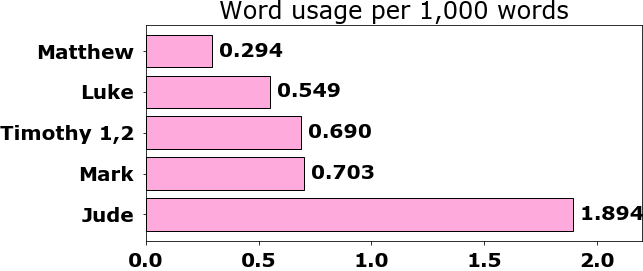 |
Words: επετιμα επετιμησαν επετιμησεν=14 επετιμων=4 επιτιμαν=2 επιτιμησαι επιτιμησας επιτιμησον=3 επιτιμων=2
|
The ancient Greek word
"ἐπιτιμάω" ≈ "show honor to, raise in price, object to one (as blamable)". In the
GNT, this word is usually translated as
"rebuke" unless Jesus in talking in which case it is often translated as
"charge" is an
"warn".
It is not clear how the meaning in the
GNT was decided as decisions appear to conflict with the meanings of the Greek word.
32. 2 Timothy 4:2 Reproof
The word
"reproof" is not the same as
"rebuke".
2 Timothy 4:2 Preach the word; be instant in season, out of season; reprove, rebuke, exhort with all longsuffering and doctrine. [kjv]
κηρυξον τον λογον επιστηθι ευκαιρως ακαιρως ελεγξον επιτιμησον παρακαλεσον εν παση μακροθυμια και διδαχη [gnt]
The word
"rebuke" has more of an official censure from a superior-subordinate relationship.
The word
"reproof" has more of an intellectual logical reasoning interchange. The
ancient Greek word
"ἔλεγχος" ≈ "argument of disproof, reproach". The
"reproach" appears to have been influenced and by subsequent theologians and translations of this word from the
GNT.
33. Matthew 18:15 Refutations
Matthew 18:15 Moreover if thy brother shall trespass against thee, go and tell him his fault between thee and him alone: if he shall hear thee, thou hast gained thy brother. [kjv]
εαν δε αμαρτηση εις σε ο αδελφος σου υπαγε και ελεγξον αυτον μεταξυ σου και αυτου μονου εαν σου ακουση εκερδησας τον αδελφον σου [gnt]
The
"refutation" in the work "
Sophistic Refutations" by Aristotle uses this word for
"logical reasoning". The ancient Greek title
"Σοφιστικοί έλεγχοι" ≈ "Sophistic Refutations".
Aristotle is concerned with using "
good logical reasoning" to
"refute" "
bad logical reasoning" as in "
deception", (deliberate or otherwise).
How many pastors really want people to
logically and
rationally "
reason" about scripture
truth? Do they prefer to promote their own
opinion truth?
34. 2 Timothy 4:2
KJV: Preach the word; be instant in season, out of season; reprove, rebuke, exhort with all longsuffering and doctrine.
Greek: κηρυξον τον λογον επιστηθι ευκαιρως ακαιρως ελεγξον επιτιμησον παρακαλεσον εν παση μακροθυμια και διδαχη
35. Elders
1 Timothy 5:1 Rebuke not an elder, but intreat him as a father; and the younger men as brethren; [kjv]
One might "
reprove" and elder as in reasoning logically about what is being done.
One should not "
rebuke" an elder as in a superior-subordinate relationship.
36. 1 Timothy 5:1
KJV: Rebuke not an elder, but intreat him as a father; and the younger men as brethren;
Greek: πρεσβυτερω μη επιπληξης αλλα παρακαλει ως πατερα νεωτερους ως αδελφους
37. Peter as rebuker
Matthew 16:22 Then Peter took him, and began to rebuke him, saying, Be it far from thee, Lord: this shall not be unto thee. [kjv]
It would be inappropriate for Peter to "
rebuke" the Lord. Why?
38. Matthew 16:22
KJV: Then Peter took him, and began to rebuke him, saying, Be it far from thee, Lord: this shall not be unto thee.
Greek: και προσλαβομενος αυτον ο πετρος ηρξατο επιτιμαν αυτω λεγων ιλεως σοι κυριε ου μη εσται σοι τουτο
39. Devils
Matthew 17:18 And Jesus rebuked the devil; and he departed out of him: and the child was cured from that very hour. [kjv]
Jesus can "
rebuke" the devil. Why?
40. Matthew 17:18
KJV: And Jesus rebuked the devil; and he departed out of him: and the child was cured from that very hour.
Greek: και επετιμησεν αυτω ο ιησους και εξηλθεν απ αυτου το δαιμονιον και εθεραπευθη ο παις απο της ωρας εκεινης
41. Angels
Jude 1:9 Yet Michael the archangel, when contending with the devil he disputed about the body of Moses, durst not bring against him a railing accusation, but said, The Lord rebuke thee. [kjv]
Angels should not "
rebuke" the devil.
Should humans try to "
rebuke" the devil?
42. Jude 1:9
KJV: Yet Michael the archangel, when contending with the devil he disputed about the body of Moses, durst not bring against him a railing accusation, but said, The Lord rebuke thee.
Greek: ο δε μιχαηλ ο αρχαγγελος οτε τω διαβολω διακρινομενος διελεγετο περι του μωσεως μωυσεως σωματος ουκ ετολμησεν κρισιν επενεγκειν βλασφημιας αλλ αλλα ειπεν επιτιμησαι σοι κυριος
43. Beast of burden
2 Peter 2:16 But was rebuked for his iniquity: the dumb ass speaking with man's voice forbad the madness of the prophet. [kjv]
The
KJV uses "
rebuked" but the Greek uses "
reproved".
In 2 Peter 2:16, the "
beast of burden" reproves Balaam who is represented by the "
brute beast". The Greek is a military term for a magnificent "
war horse" bred solely for the purpose of being destroyed as needed during battle.
44. Balaam
Balaam is in the superior position while the beast of burden is in the subordinate position.
In the context, it is inappropriate for a faithful follower of Jesus as a subordinate to "rebuke" the false teacher as the leader and superior. It is not inappropriate to "reprove" the leader is in logically arguing that what was asked should not be done.
45. 2 Peter 2:16
KJV: But was rebuked for his iniquity: the dumb ass speaking with man's voice forbad the madness of the prophet.
Greek: ελεγξιν δε εσχεν ιδιας παρανομιας υποζυγιον αφωνον εν ανθρωπου φωνη φθεγξαμενον εκωλυσεν την του προφητου παραφρονιαν
46. Translation issues
Let us look at other verses where the Greek has "reprove" but the KJV has "rebuke".
Is the meaning of each verse more clear when the proper translation had been used?
47. Timothy
1 Timothy 5:20 Them that sin rebuke before all, that others also may fear. [kjv]
Which is better, if needed?
- Should one "rebuke" a sinner before everyone?
- Should one "reprove" a sinner before everyone?
48. 1 Timothy 5:20
KJV: Them that sin rebuke before all, that others also may fear.
Greek: τους δε αμαρτανοντας ενωπιον παντων ελεγχε ινα και οι λοιποι φοβον εχωσιν
49. Titus
Titus 1:13 This witness is true. Wherefore rebuke them sharply, that they may be sound in the faith; [kjv]
2:15 These things speak, and exhort, and rebuke with all authority. Let no man despise thee. [kjv]
50. Titus 1:13
KJV: This witness is true. Wherefore rebuke them sharply, that they may be sound in the faith;
Greek: η μαρτυρια αυτη εστιν αληθης δι ην αιτιαν ελεγχε αυτους αποτομως ινα υγιαινωσιν εν τη πιστει
51. Titus 2:15
KJV: These things speak, and exhort, and rebuke with all authority. Let no man despise thee.
Greek: ταυτα λαλει και παρακαλει και ελεγχε μετα πασης επιταγης μηδεις σου περιφρονειτω
52. Neighbors
Leviticus 19:17 Thou shalt not hate thy brother in thine heart: thou shalt in any wise rebuke thy neighbour, and not suffer sin upon him. [kjv]
Which is better, if needed?
- Should one "rebuke" a neighbor?
- Should one "reprove" a neighbor?
53. Leviticus 19:17
KJV: Thou shalt not hate thy brother in thine heart: thou shalt in any wise rebuke thy neighbour, and not suffer sin upon him.
Hebrew: לא תשנא את אחיך בלבבך הוכח תוכיח את עמיתך ולא תשא עליו חטא׃
Greek: ου μισησεις τον αδελφον σου τη διανοια σου ελεγμω ελεγξεις τον πλησιον σου και ου λημψη δι αυτον αμαρτιαν
Brenton: You shall not hate your brother in your heart: you shall in any wise rebuke your neighbour, so you shall not bear sin on his account.
54. Proverbs
Proverbs 9:8 Reprove not a scorner, lest he hate thee: rebuke a wise man, and he will love thee. [kjv]
The
LXX uses the same word for "
reprove" and "
rebuke".
The Hebrew uses slightly different words but they have the same Strongs meaning and not the distinction found in the Greek.
55. Proverbs 9:8
KJV: Reprove not a scorner, lest he hate thee: rebuke a wise man, and he will love thee.
Hebrew: אל תוכח לץ פן ישנאך הוכח לחכם ויאהבך׃
Greek: μη ελεγχε κακους ινα μη μισωσιν σε ελεγχε σοφον και αγαπησει σε
56. Strongs - correct, rebuke
- *H3198 יָכַח (yaw-kahh') : a primitive root; to be right (i.e. correct); reciprocal, to argue; causatively, to decide, justify or convict:--appoint, argue, chasten, convince, correct(-ion), daysman, dispute, judge, maintain, plead, reason (together), rebuke, reprove(-r), surely, in any wise.
57. Exchanging views on reconciliation
In Romans and Corinthians, Paul talks of exchanging views on reconciliation. This word is used only a few times in the GNT.
58. Strongs - reconcile
- *G2644 *6 καταλλάσσω (kat-al-las'-so) : from G2596 and G236; to change mutually, i.e. (figuratively) to compound a difference:--reconcile.
- κατηλλαγημεν
- Romans 5:10 ... when we were enemies, we were reconciled to God by the death of his Son, much more, being reconciled, we shall be saved by ...
- καταλλαγεντες
- Romans 5:10 ... when we were enemies, we were reconciled to God by the death of his Son, much more, being reconciled, we shall be saved by ...
- καταλλαγητω
- 1 Corinthians 7:11 ... let her remain unmarried, or be reconciled to her husband: and ...
- καταλλαξαντος
- 2 Corinthians 5:18 ... are of God, who hath reconciled us to himself by ...
- καταλλασσων
- 2 Corinthians 5:19 ... was in Christ, reconciling the world unto himself, not ...
- καταλλαγητε
- 2 Corinthians 5:20 ... we pray you in Christ's stead, be ye reconciled to God.
59. Usage - reconcile
*G2644 *6 καταλλάσσω (kat-al-las'-so) : from G2596 and G236; to change mutually, i.e. (figuratively) to compound a difference:--reconcile.
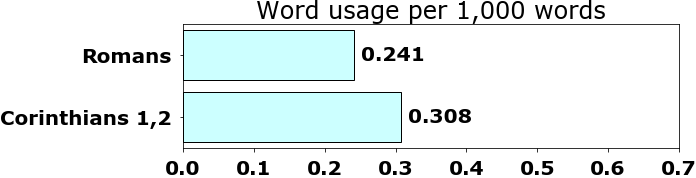 |
Words: καταλλαγεντες καταλλαγητε καταλλαγητω καταλλαξαντος καταλλασσων κατηλλαγημεν
|
60. Romans 5:9-11
Romans 5:9 Much more then, being now justified by his blood, we shall be saved from wrath through him. [kjv]
5:10 For if, when we were enemies, we were reconciled to God by the death of his Son, much more, being reconciled, we shall be saved by his life. [kjv]
ει γαρ εχθροι οντες κατηλλαγημεν τω θεω δια του θανατου του υιου αυτου πολλω μαλλον καταλλαγεντες σωθησομεθα εν τη ζωη αυτου [gnt]
5:11 And not only so, but we also joy in God through our Lord Jesus Christ, by whom we have now received the atonement. [kjv]
61. Romans 5:9
KJV: Much more then, being now justified by his blood, we shall be saved from wrath through him.
Greek: πολλω ουν μαλλον δικαιωθεντες νυν εν τω αιματι αυτου σωθησομεθα δι αυτου απο της οργης
62. Romans 5:10
KJV: For if, when we were enemies, we were reconciled to God by the death of his Son, much more, being reconciled, we shall be saved by his life.
Greek: ει γαρ εχθροι οντες κατηλλαγημεν τω θεω δια του θανατου του υιου αυτου πολλω μαλλον καταλλαγεντες σωθησομεθα εν τη ζωη αυτου
63. Romans 5:11
KJV: And not only so, but we also joy in God through our Lord Jesus Christ, by whom we have now received the atonement.
Greek: ου μονον δε αλλα και καυχωμενοι εν τω θεω δια του κυριου ημων ιησου χριστου δι ου νυν την καταλλαγην ελαβομεν
64. 1 Corinthians 7:10-11
1 Corinthians 7:10 And unto the married I command, yet not I, but the Lord, Let not the wife depart from her husband: [kjv]
7:11 But and if she depart, let her remain unmarried, or be reconciled to her husband: and let not the husband put away his wife. [kjv]
εαν δε και χωρισθη μενετω αγαμος η τω ανδρι καταλλαγητω και ανδρα γυναικα μη αφιεναι [gnt]
65. 1 Corinthians 7:10
KJV: And unto the married I command, yet not I, but the Lord, Let not the wife depart from her husband:
Greek: τοις δε γεγαμηκοσιν παραγγελλω ουκ εγω αλλ αλλα ο κυριος γυναικα απο ανδρος μη χωρισθηναι
66. 1 Corinthians 7:11
KJV: But and if she depart, let her remain unmarried, or be reconciled to her husband: and let not the husband put away his wife.
Greek: εαν δε και χωρισθη μενετω αγαμος η τω ανδρι καταλλαγητω και ανδρα γυναικα μη αφιεναι
67. 2 Corinthians 5:16-17
2 Corinthians 5:16 Wherefore henceforth know we no man after the flesh: yea, though we have known Christ after the flesh, yet now henceforth know we him no more. [kjv]
5:17 Therefore if any man be in Christ, he is a new creature: old things are passed away; behold, all things are become new. [kjv]
These verse are the setup for using the Greek word for "
reconcile" four times in three successive verses.
68. 2 Corinthians 5:16
KJV: Wherefore henceforth know we no man after the flesh: yea, though we have known Christ after the flesh, yet now henceforth know we him no more.
Greek: ωστε ημεις απο του νυν ουδενα οιδαμεν κατα σαρκα ει δε και εγνωκαμεν κατα σαρκα χριστον αλλα νυν ουκετι γινωσκομεν
69. 2 Corinthians 5:17
KJV: Therefore if any man be in Christ, he is a new creature: old things are passed away; behold, all things are become new.
Greek: ωστε ει τις εν χριστω καινη κτισις τα αρχαια παρηλθεν ιδου γεγονεν καινα τα παντα
70. 2 Corinthians 5:18-20
2 Corinthians 5:18 And all things are of God, who hath reconciled us to himself by Jesus Christ, and hath given to us the ministry of reconciliation; [kjv]
τα δε παντα εκ του θεου του καταλλαξαντος ημας εαυτω δια ιησου χριστου και δοντος ημιν την διακονιαν της καταλλαγης [gnt]
5:19 To wit, that God was in Christ, reconciling the world unto himself, not imputing their trespasses unto them; and hath committed unto us the word of reconciliation. [kjv]
ως οτι θεος ην εν χριστω κοσμον καταλλασσων εαυτω μη λογιζομενος αυτοις τα παραπτωματα αυτων και θεμενος εν ημιν τον λογον της καταλλαγης [gnt]
5:20 Now then we are ambassadors for Christ, as though God did beseech you by us: we pray you in Christ's stead, be ye reconciled to God. [kjv]
υπερ χριστου ουν πρεσβευομεν ως του θεου παρακαλουντος δι ημων δεομεθα υπερ χριστου καταλλαγητε τω θεω [gnt]
71. 2 Corinthians 5:18
KJV: And all things are of God, who hath reconciled us to himself by Jesus Christ, and hath given to us the ministry of reconciliation;
Greek: τα δε παντα εκ του θεου του καταλλαξαντος ημας εαυτω δια ιησου χριστου και δοντος ημιν την διακονιαν της καταλλαγης
72. 2 Corinthians 5:19
KJV: To wit, that God was in Christ, reconciling the world unto himself, not imputing their trespasses unto them; and hath committed unto us the word of reconciliation.
Greek: ως οτι θεος ην εν χριστω κοσμον καταλλασσων εαυτω μη λογιζομενος αυτοις τα παραπτωματα αυτων και θεμενος εν ημιν τον λογον της καταλλαγης
73. 2 Corinthians 5:20
KJV: Now then we are ambassadors for Christ, as though God did beseech you by us: we pray you in Christ's stead, be ye reconciled to God.
Greek: υπερ χριστου ουν πρεσβευομεν ως του θεου παρακαλουντος δι ημων δεομεθα υπερ χριστου καταλλαγητε τω θεω
74. End of page
 Many people assume that all scripture is good for "reproof" as in good for "admonishing" someone.

 Engineer: "I'm not arguing. I'm just explaining why I'm right.".
 Some students in geometry class think that the English word "reproof" means that they must do their "proof" over again.
 The English word "reproof" is from the English word "reprove" which is from the Old English word "repreven" ≈ "express disapproval". This word is, through French, from the Latin word "reprobo" ≈ "disapprove, reject, condemn".

 The "proof" or "argument of disproof" fits in with 1 Peter 3:15.
 The important part is "with meekness" but realizing that both Jesus and Moses are described as "meek".