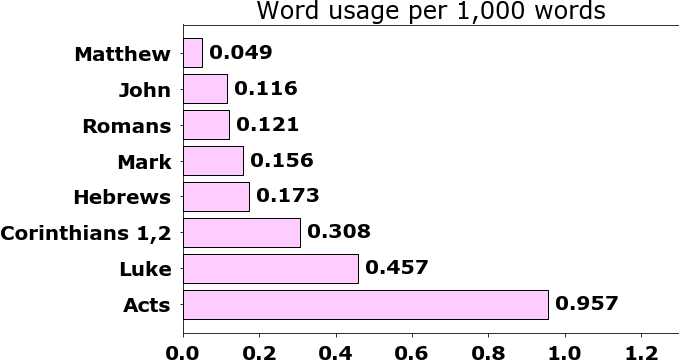
- *G1330 *40 διέρχομαι (dee-er'-khom-ahee) : from G1223 and G2064; to traverse (literally):--come, depart, go (about, abroad, everywhere, over, through, throughout), pass (by, over, through, throughout), pierce through, travel, walk through.
διηρχετο *4 of 40
Luke 5:15 But so much the more went there a fame abroad of him: ...
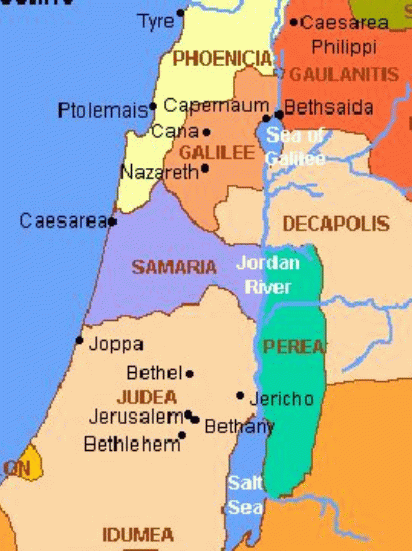
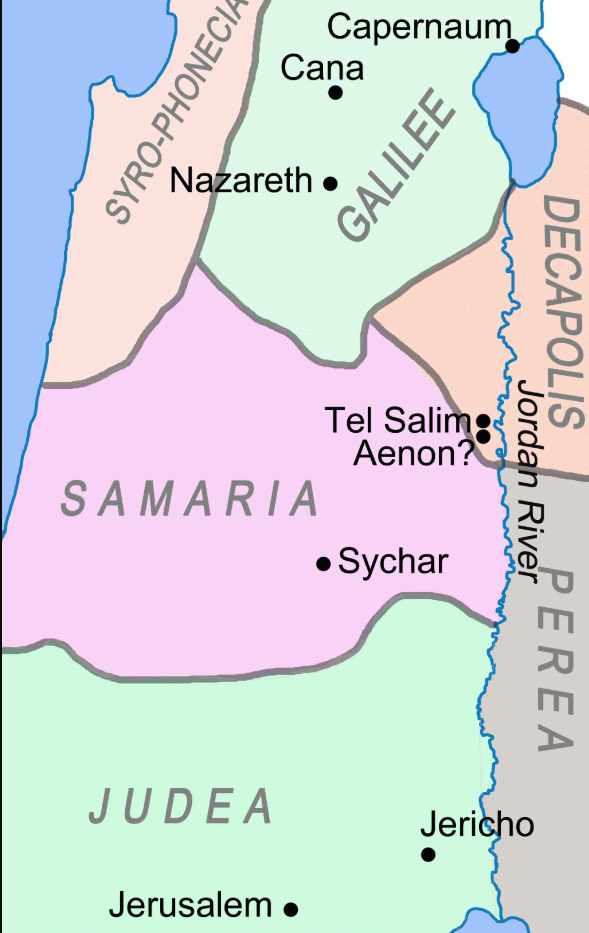
Luke 17:11 ... Jerusalem, that he passed through the midst of Samaria ...
Luke 19:1 And Jesus entered and passed through Jericho.
Acts 15:41 And he went through Syria and Cilicia, confirming the churches.
διερχεται *2 of 40
Matthew 12:43 ... is gone out of a man, he walketh through dry places, ...
Luke 11:24 ... is gone out of a man, he walketh through dry places, ...
10. Luke 17:11 Bottom-up
Luke 17:11 And it came to pass, as he went to Jerusalem, that he passed through the midst of Samaria and Galilee. [kjv]
και εγενετο εν τω πορευεσθαι αυτον εις ιερουσαλημ και αυτος διηρχετο δια μεσου σαμαρειας μεσον σαμαριας και γαλιλαιας [gnt]
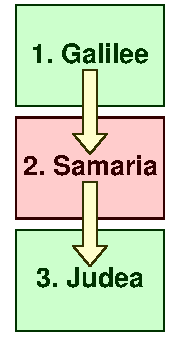
Bottom-up forward-chaining reasoning: (translation errors)
1. Start at Galilee (where you are).
2. Go to Samaria.
3. Go to Jerusalem (the goal).
Might the obvious translation errors be due to trying to reconcile apparent differences using the translators personal view of the world? What else might account for this?
11. Divide and conquer: Top-down and bottom-up
A divide and conquer problem solving method starts with a goal.
The problem is broken down in a top-down or backward-chaining manner as part of the solution design.
The solution is implemented in a bottom-up or forward-chaining manner as part of the solution implementation.
At each point in the implementation, unit testing is added for each part and abstractions made as needed.
12. Tree structures
There are various names for a
top-down backward-chaining divide and conquer problem solving strategy.
Topologically they are all the same since one can rotate and change the length of the branches as desired and it is the same tree.
Computer science: prefers calling it top-down.
Business: prefers calling it backward-chaining.
13. Aristotle: Top down reasoning
English: It is just as the Pythagoreans say, the whole world and all things in it are summed up in the number three; for end, middle and beginning give the number of the whole, and their number is the triad. (Loeb#338)
Greek: Καθάπερ γάρ φασι καὶ οἱ Πυθαγόρειοι, τὸ πᾶν καὶ τὰ πάντα τοῖς τρισὶν ὥρισται· τελευτὴ γὰρ καὶ μέσον καὶ ἀρχὴ τὸν ἀριθμὸν ἔχει τὸν τοῦ παντός, ταῦτα δὲ τὸν τῆς τριάδος. Aristotle: On the Heavens [268a]
Notice how Aristotle says
"end", "middle" and "beginning" (top-down backward-chaining) rather than
"beginning", "middle" and "end" (bottom-up forward chaining).
Aristotle says the
"everything" while the translation says the
"whole world". Some in modern Greek makes a play on words with
"everything" and a panda (animal) since the words are spelled and pronounced the same.
14. Stair analogy
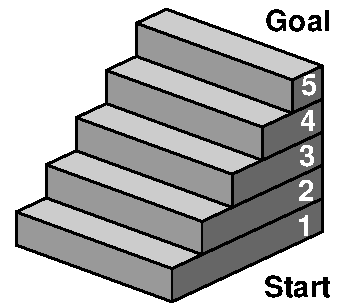
A
stair analogy can be used to help understand
top-down design and
bottom-up implementation.
The goal is the top of the stairs.
The start is the bottom of the stairs.
Identifying the
goal is most important! You do not want to climb the wrong stairs to get to the wrong goal.
Implementation:
Do it: 1 to 2 to 3 to 4 to 5 (same either way)
Design: When it works,
top-down tends to be
better.
Think bottom-up: 1 then 2 then 3 then 4 then 5 (start forward to goal)
Think top-down: 5 if 4 if 3 if 2 if 1 (goal backward to start)
Gospels:
Bottom-up: Matthew, Mark, Luke (goal not clear, a lot of extra material)
Top-down: John (goal clear, no extra material)
15. Getting from here to there
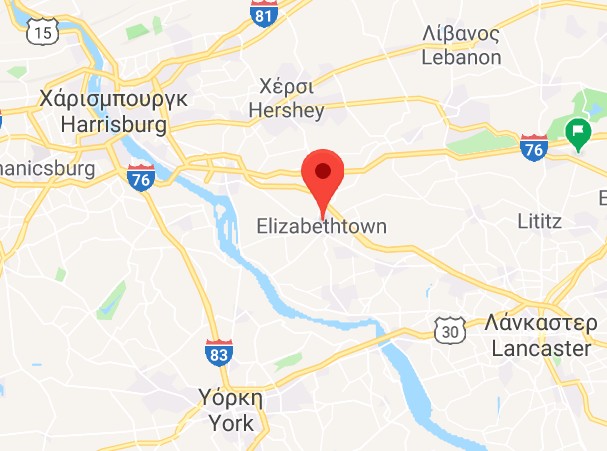
(actual map)
|
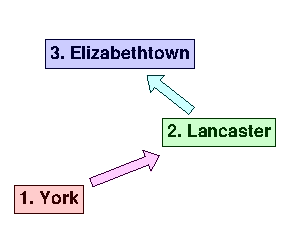
(abstracted map)
|
Bottom-up forward-chaining:
1. Start in York (where you are).
2. Go to Lancaster .
3. Go to Elizabethtown (the goal).
Is that clear?
|
Top-down backward-chaining:
3. The goal is Elizabethtown.
2. You can get to Elizabethtown from Lancaster .
1. You can get to Lancaster from York (where you are).
Is that clear?
|
Which of the above ways would you use to give instructions for someone in
York to get to
Elizabethtown via
Lancaster ? You are in
York and want to go to
Lancaster .
16. Luke 17:11 Top-down
Luke 17:11 And it came to pass, as he went to Jerusalem, that he passed through the midst of Samaria and Galilee. [kjv]
και εγενετο εν τω πορευεσθαι αυτον εις ιερουσαλημ και αυτος διηρχετο δια μεσου σαμαρειας μεσον σαμαριας και γαλιλαιας [gnt]
Top-down backward-chaining reasoning: (no translation errors)
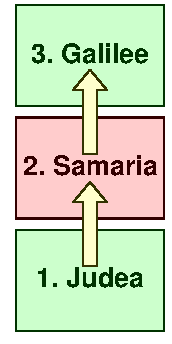
3. The goal is Jerusalem in Judea.
2. You can get to Jerusalem from Samaria.
1. You can get to Samara from Galilee (where you are).
Might top-down backward-chaining reasoning have been more common in ancient times? Today is often limited to some (not all) computer scientists and perhaps a few others.
Discuss: How often does our personal thinking bias (affect) how we interpret scripture?
[declarative meaning]
17. Luke 17:11
KJV: And it came to pass, as he went to Jerusalem, that he passed through the midst of Samaria and Galilee.
Greek: και εγενετο εν τω πορευεσθαι αυτον εις ιερουσαλημ και αυτος διηρχετο δια μεσου σαμαρειας μεσον σαμαριας και γαλιλαιας
Latin: et factum est dum iret in Hierusalem transiebat per mediam Samariam et Galilaeam
18. Acts 15:37
Acts 15:37 And Barnabas determined to take with them John, whose surname was Mark. [kjv]
βαρναβας δε εβουλευσατο εβουλετο συμπαραλαβειν και τον ιωαννην τον καλουμενον μαρκον [gnt]
In Acts, Paul and Barnabas go different ways.
19. Acts 15:37
KJV: And Barnabas determined to take with them John, whose surname was Mark.
Greek: βαρναβας δε εβουλευσατο εβουλετο συμπαραλαβειν και τον ιωαννην τον καλουμενον μαρκον
20. Acts 15:38
Acts 15:38 But Paul thought not good to take him with them, who departed from them from Pamphylia, and went not with them to the work. [kjv]
παυλος δε ηξιου τον αποσταντα απ αυτων απο παμφυλιας και μη συνελθοντα αυτοις εις το εργον μη συμπαραλαβειν συμπαραλαμβανειν τουτον [gnt]
21. Acts 15:38
KJV: But Paul thought not good to take him with them, who departed from them from Pamphylia, and went not with them to the work.
Greek: παυλος δε ηξιου τον αποσταντα απ αυτων απο παμφυλιας και μη συνελθοντα αυτοις εις το εργον μη συμπαραλαβειν συμπαραλαμβανειν τουτον
22. Acts 15:39
Acts 15:39 And the contention was so sharp between them, that they departed asunder one from the other: and so Barnabas took Mark, and sailed unto Cyprus; [kjv]
εγενετο ουν δε παροξυσμος ωστε αποχωρισθηναι αυτους απ αλληλων τον τε βαρναβαν παραλαβοντα τον μαρκον εκπλευσαι εις κυπρον [gnt]
23. Acts 15:39
KJV: And the contention was so sharp between them, that they departed asunder one from the other: and so Barnabas took Mark, and sailed unto Cyprus;
Greek: εγενετο ουν δε παροξυσμος ωστε αποχωρισθηναι αυτους απ αλληλων τον τε βαρναβαν παραλαβοντα τον μαρκον εκπλευσαι εις κυπρον
24. Acts 15:40
Acts 15:40 And Paul chose Silas, and departed, being recommended by the brethren unto the grace of God. [kjv]
παυλος δε επιλεξαμενος σιλαν εξηλθεν παραδοθεις τη χαριτι του θεου κυριου υπο των αδελφων [gnt]
The Greek word translated as "
recommended" is that of "
turned over" (related word is "
betrayed").
25. Acts 15:40
KJV: And Paul chose Silas, and departed, being recommended by the brethren unto the grace of God.
Greek: παυλος δε επιλεξαμενος σιλαν εξηλθεν παραδοθεις τη χαριτι του θεου κυριου υπο των αδελφων
26. Acts 15:41
Acts 15:41 And he went through Syria and Cilicia, confirming the churches. [kjv]
διηρχετο δε την συριαν και την κιλικιαν επιστηριζων τας εκκλησιας [gnt]
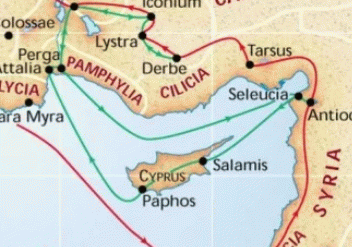
If Paul is in
Pamphylia, why would he go to
Syria and then
Cilicia. Why not go to
Cilicia and then
Syria? [Caesar and pirates]
Perhaps Luke is, again, using
top-down backward-chaining reasoning on the directions. The same verb is used for "
passed through". There is no mention of a "
border" in any translation (that I could find).
Have the translators actually looked at a map?
Discuss: How often does our personal thinking bias (affect) how we interpret scripture?
[declarative]
This ends the chapter.
27. Acts 15:41
KJV: And he went through Syria and Cilicia, confirming the churches.
Greek: διηρχετο δε την συριαν και την κιλικιαν επιστηριζων τας εκκλησιας
28. Luke 17:12
Luke 17:12 And as he entered into a certain village, there met him ten men that were lepers, which stood afar off: [kjv]
και εισερχομενου αυτου εις τινα κωμην απηντησαν αυτω δεκα λεπροι ανδρες οι εστησαν ανεστησαν πορρωθεν [gnt]
29. Luke 17:12
KJV: And as he entered into a certain village, there met him ten men that were lepers, which stood afar off:
Greek: και εισερχομενου αυτου εις τινα κωμην απηντησαν αυτω δεκα λεπροι ανδρες οι εστησαν ανεστησαν πορρωθεν
30. Matthew 10:11 Town hairs as believers
Matthew 10:11 And into whatsoever city or town ye shall enter, enquire who in it is worthy; and there abide till ye go thence. [kjv]
εις ην δ αν πολιν η κωμην εισελθητε εξετασατε τις εν αυτη αξιος εστιν κακει μεινατε εως αν εξελθητε [gnt]
The Greek word for "
town" can be a play on words with "
hair" as in the "
hair" as a
believer on the "
head" as
Christ.
"κόμη" ≈ "well-tended hair" as opposed to "θρίψ" ≈ "hair".
"κώμη" ≈ "un-walled village or town".
"κόμην" ≈ "well-tended hair" (accusative singular).
"κώμην" ≈ "un-walled village or town" (accusative singular)
Today these words would be pronounced the same. At that time, they would have sounded similar.
A "
city", on the other hand, would have a "
wall". Discuss:
Is putting up "walls" good or bad? Explain. How about a "wall" of "laws"?
31. Luke 17:13-14
Luke 17:13 And they lifted up their voices, and said, Jesus, Master, have mercy on us. [kjv]
και αυτοι ηραν φωνην λεγοντες ιησου επιστατα ελεησον ημας [gnt]
17:14 And when he saw them, he said unto them, Go shew yourselves unto the priests. And it came to pass, that, as they went, they were cleansed. [kjv]
και ιδων ειπεν αυτοις πορευθεντες επιδειξατε εαυτους τοις ιερευσιν και εγενετο εν τω υπαγειν αυτους εκαθαρισθησαν [gnt]
They were to go to the priests, but they were healed on the way. It appears that they might have never arrived to show themselves to the priests.
32. Luke 17:13
KJV: And they lifted up their voices, and said, Jesus, Master, have mercy on us.
Greek: και αυτοι ηραν φωνην λεγοντες ιησου επιστατα ελεησον ημας
33. Luke 17:14
KJV: And when he saw them, he said unto them, Go shew yourselves unto the priests. And it came to pass, that, as they went, they were cleansed.
Greek: και ιδων ειπεν αυτοις πορευθεντες επιδειξατε εαυτους τοις ιερευσιν και εγενετο εν τω υπαγειν αυτους εκαθαρισθησαν
34. Luke 17:15-16
Luke 17:15 And one of them, when he saw that he was healed, turned back, and with a loud voice glorified God, [kjv]
εις δε εξ αυτων ιδων οτι ιαθη υπεστρεψεν μετα φωνης μεγαλης δοξαζων τον θεον [gnt]
17:16 And fell down on his face at his feet, giving him thanks: and he was a Samaritan. [kjv]
και επεσεν επι προσωπον παρα τους ποδας αυτου ευχαριστων αυτω και αυτος ην σαμαρειτης [gnt]
One turned back. He did the outward actions of what today is called "
glory". The Greek word would have been that of "
praise". This transformation of the meaning of the word had started to change by the time, some twenty years later, when Luke interviewed people about what they remembered.
The man who returned was a Samaritan. Would a Samaritan have shewed himself to the priest (in Jerusalem)?
What were the other nine?
35. Luke 17:15
KJV: And one of them, when he saw that he was healed, turned back, and with a loud voice glorified God,
Greek: εις δε εξ αυτων ιδων οτι ιαθη υπεστρεψεν μετα φωνης μεγαλης δοξαζων τον θεον
36. Luke 17:16
KJV: And fell down on his face at his feet, giving him thanks: and he was a Samaritan.
Greek: και επεσεν επι προσωπον παρα τους ποδας αυτου ευχαριστων αυτω και αυτος ην σαμαρειτης
37. Luke 17:17-19
Luke 17:17 And Jesus answering said, Were there not ten cleansed? but where are the nine? [kjv]
αποκριθεις δε ο ιησους ειπεν ουχ ουχι οι δεκα εκαθαρισθησαν οι δε εννεα που [gnt]
17:18 There are not found that returned to give glory to God, save this stranger. [kjv]
ουχ ευρεθησαν υποστρεψαντες δουναι δοξαν τω θεω ει μη ο αλλογενης ουτος [gnt]
17:19 And he said unto him, Arise, go thy way: thy faith hath made thee whole. [kjv]
και ειπεν αυτω αναστας πορευου η πιστις σου σεσωκεν σε [gnt]
Perhaps the others will still making their way to Jerusalem and the priests. They were "
not" "
found". [negation by failure logic]
How long was needed to determine that they were not going to return? [halting problem]
What "
faith" or "
persuasion" made the man "
whole" or "
healthy"? The Greek word for "
whole" or "
healthy" is sometimes translated as "
saved".
38. Luke 17:17
KJV: And Jesus answering said, Were there not ten cleansed? but where are the nine?
Greek: αποκριθεις δε ο ιησους ειπεν ουχ ουχι οι δεκα εκαθαρισθησαν οι δε εννεα που
39. Luke 17:18
KJV: There are not found that returned to give glory to God, save this stranger.
Greek: ουχ ευρεθησαν υποστρεψαντες δουναι δοξαν τω θεω ει μη ο αλλογενης ουτος
40. Luke 17:19
KJV: And he said unto him, Arise, go thy way: thy faith hath made thee whole.
Greek: και ειπεν αυτω αναστας πορευου η πιστις σου σεσωκεν σε
41. Thoughts
There were ten healed. One returned and said "
thank you". Sermons have been preached on the importance of saying "
thank you" as if that were the most important part. The Greek word translated "
glory" is that of "
opinion". How many of the ten healed gave or deferred their "
opinion" to God?
Consider the following scenario.
One returned. Gave thanks. Then never did another thing for Jesus or God.
The other nine never returned but, for the rest of their lives, did what Jesus or God desired.
Which one or ones did the will of their Father?
Discuss: Use these verses as context. How can sermons about saying "
thank you" be misleading about what Jesus or God really desire? Explain.
[Matthew reference, John the Baptist reasoning]
42. End of page